Fuel Supply Gap Could Hold Back U.S. Nuclear Energy Renaissance
- The U.S. push to quadruple nuclear capacity by 2050 faces a near-term fuel bottleneck.
- Centrus, Orano, and Urenco are expanding U.S. enrichment facilities, backed by billions in DOE funding.
- Surging electricity needs driven by AI and data centers are accelerating urgency, with enrichment capacity needing to scale dramatically if nuclear power is to play a central role in meeting long-term U.S. energy demand.
By Tsvetana Paraskova Oil Price 25th Feb 2026- https://oilprice.com/Alternative-Energy/Nuclear-Power/Fuel-Supply-Gap-Could-Hold-Back-US-Nuclear-Energy-Renaissance.html
Nuclear energy is a distant prospect – wind and solar are here now
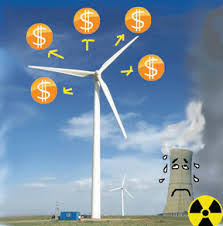
Sceptics don’t outright deny climate change but dismiss solutions as unrealistic
Sadhbh O’Neill, Irish Times 26th Feb 2026
Recent commentary on Ireland’s energy system is a reminder that not everyone is comfortable with change.
For people unconvinced by the potential of renewable energy to provide all our energy needs, the focus of energy policy should still be on large-scale sources of generation, as it was in the glory days of the ESB when it ran everything (and it took up to 18 months to get a grid connection).
Amid nostalgia for a simpler past, there are still voices making the case that fossil fuels and nuclear energy should form the backbone of the grid. This case is made on the basis that renewables can only match demand up to a certain point due to their intermittency, low energy densities and the challenges of integrating them into the grid.
And it is always hard to make the case for energy efficiency and demand management when fossil fuels, on paper at least, are plentiful, and there is no sign yet of the big energy producers slowing down extraction or divesting from fossil energy………………………………………………..
With regard to nuclear energy, there is a lot of interest in small modular reactors (SMRs), which, at approximately 400MW generating capacity, would be much more appropriate in scale for Irish electricity needs. The problem with nuclear energy is that traditional power plants, at about 1.3GW, are too individually large for Ireland, not to mention the likelihood of a nuclear plant taking decades to secure the required approvals and get built.
The ESB in its 2025 Emerging Technology Insights report notes that SMRs remain unproven due to a lack of demonstration projects. None of the SMR projects to date will have a demonstration plant completed before 2030.
Given that we are just four years away from key climate deadlines, nuclear power is so unrealistic in the context of what we need to do right now that it might as well be irrelevant.
The SEAI Energy in Ireland 2025 report highlights that Ireland needs proven, immediate solutions to avoid missing its second carbon budget (2026–2030). Luckily for Ireland, we have abundant renewable resources, which have never been so cheap to develop.
Renewable energy costs have come down so fast and by so much that even when you factor in the grid upgrades required, in 90 per cent of the world they outcompete new fossil fuel infrastructure easily, including the US. This is because wind and solar technologies are proven, scalable and cost-competitive over the long run, making them more attractive to investors…………………………………………. https://www.irishtimes.com/environment/climate-crisis/2026/02/26/nuclear-energy-is-a-distant-prospect-wind-and-solar-are-here-now/
The End of Baseload Power as We Know It
By Leonard Hyman & William Tilles – Oil Price, Feb 23, 2026,
- China and France are retrofitting coal and nuclear plants to operate more intermittently, reflecting how growing renewable penetration is reshaping traditional base-load generation economics.
- Gas remains the dominant new-build fuel in the U.S. for now, but examples like California show renewables plus storage steadily displacing fossil generation.
- Coal plants may see short-term life extensions, while new nuclear looks economically uncompetitive.
……………………………………………………………………………………………………………………………………………………… https://oilprice.com/Energy/Energy-General/The-End-of-Baseload-Power-as-We-Know-It.amp.html
Fuel shortage threatens US nuclear resurgence, warns top supplier.
Centrus Energy says rising demand and ban on Russian imports risks uranium
enrichment ‘supply gap’.
One of the largest suppliers of enriched
uranium fuel to US nuclear power plants has warned of a looming supply
crunch because of fast-rising demand and a ban on Russian imports. Centrus
Energy chief executive Amir Vexler told the FT the company is racing to
build enrichment capacity at its Ohio plant to meet a $2.3bn backlog in
sales of enriched uranium to customers.
But the restart of several US
nuclear plants and upgrading of the reactor fleet to boost electricity
output would put pressure on the handful of western suppliers of enriched
uranium — a critical component in nuclear fuel, he said.
FT 23rd Feb 2026,
https://www.ft.com/content/717ed9ab-d6c0-4d4f-b2c6-386edfa5e71c
Why can’t people grasp that there’s much more to renewables than wind?
L McGregor, Falkirk. https://www.heraldscotland.com/opinion/25860226.cant-people-grasp-much-renewables-wind/
Why do Malcolm Parkin (Letters, February 12) and many others keep going on about the need for small nuclear reactors because the wind does not blow all the time, as if there were no other highly successful ways to produce energy
Have they never heard of the numerous other means of production? What about pumped storage? Nearly 50 years ago, I visited the Cruachan pumped storage site and learned how that could, when demand is high, release the water to produce electricity to fill any shortfall, and pump it back up to store for the next use. There are already places in Scotland where small, local, pumped storage systems are in operation and numerous larger ones are in construction, or operational, such as Foyers on Loch Ness. These systems could power millions of homes, wind or no wind.
Mr Parkin and others seem unaware that there are wave-powered and tidal systems already operating in Scotland and being further developed, for example around Orkney and the Pentland Firth. These have the advantage that there are two tides a day and constant waves all round our coasts, which would never stop providing energy. Such projects could have been much further advanced had Westminster not, years ago, withdrawn the funding for a major one of these schemes, thus retarding progress. Nevertheless, Scotland is a world leader in these technologies, providing 50% of the world’s such energy.
What need is there to consider any form of nuclear reactor? Whilst nuclear power produced may be clean, the building process and materials have an exorbitant cost, take years, and are highly carbon-producing. Storage of waste presents an insurmountable problem, with severe risks for centuries. Witness the ongoing occasional discovery of radioactive particles contaminating the beaches around Dounreay, years after the plant closed.
Small nuclear reactors are not yet fully developed, and our taxes are currently contributing to the “UK-wide” project, Hinckley Point reactor in South-east England, already 10 years late, nearly three times the original cost and still not completed. Moreover, we are now to share the cost of Sizewell C, of the same outdated design in the same area, final cost and operation date still unknown.
Meantime, Scottish renewables producers pay an exorbitant sum to connect to the Grid, whence 40% of their product goes to England, while our consumers pay the highest costs in Europe, and perhaps the world. Rather than moaning about wind energy and supporting nuclear, Mr Parkin and friends might ask why the Scottish Government does not receive payment for this export – an income which could help speed up our transition and make wind turbine eventually obsolete..
Nuclear Power – A White Elephant in the Energy Debate
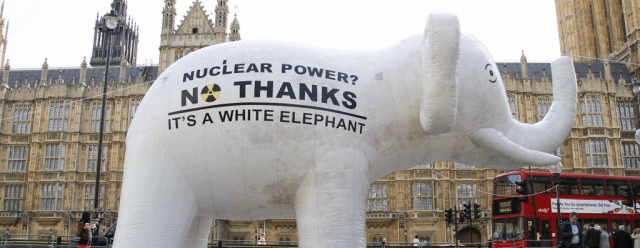
By Pete Roche, David Hume Institute 12th Feb 2026,
https://davidhumeinstitute.org/latest-news/2026/2/12/nuclear-power-a-white-elephant-in-the-energy-debate
As Scotland prepares for elections, pro‑nuclear lobbyists are urging the Scottish Government to lift its ban on new nuclear developments.Yet the evidence shows that building new nuclear power stations would be an expensive white elephant — too slow, too costly, and ultimately unnecessary for tackling climate change.
Investing in nuclear now risks diverting resources from cheaper, faster, and safer renewable alternatives that are ready to deploy and without the risk of hazardous waste.
Nuclear makes us more vulnerable
Recent events in Europe underline nuclear’s vulnerabilities in a warming world. In summer 2025, prolonged heatwaves forced several French nuclear plants to reduce output or shut down entirely because the rivers and coastal waters used for cooling became too warm to operate safely. At sites including Golfech and Blayais operators had to curtail production, while the Gravelines plant faced additional disruption when swarms of jellyfish clogged its cooling systems. These incidents show how our changing climate can turn nuclear plants into operational white elephants at precisely the time electricity demand is high as people try to cool homes and buildings.
All energy sources produce carbon emissions over their lifecycle, but nuclear power stations typically emit more CO₂ per kilowatt-hour than wind or solar when construction, uranium mining, and waste management are included. For example, Sizewell C, currently under construction in Suffolk, is not expected to offset the emissions generated during its build phase until the late 2030s — well after the UK should have largely eliminated fossil fuels from electricity generation. Renewables, by contrast, deliver low-carbon power from day one.
Nuclear increases risk
Nuclear also carries long-term environmental and security risks. Coastal and riverside sites face rising sea levels and heatwave-induced water shortages, creating further potential for nuclear plants to become white elephants. They produce long-lived radioactive waste with no permanent disposal solution, are vulnerable to terrorism or armed conflict, and uranium mining causes serious ecological damage.
Advocates argue nuclear is needed for “baseload” power because wind and solar are variable. But baseload is an outdated concept.
Modern grid operators emphasise flexibility — blending renewables, storage, and demand management — rather than relying on inflexible generators. Large nuclear plants cannot easily ramp output to match demand and risk creating the same mismatch that critics cite for renewable variability. Proposed small modular reactors (SMRs) are similarly problematic: only two operate commercially worldwide, they are unproven at scale, and early evidence suggests they may be even more expensive per unit of electricity while producing more toxic waste — another potential white elephant.
Voters need real solutions, not white elephants
Meeting Scotland’s energy needs with renewables is feasible and cost-effective. Analyses suggest a renewable-first strategy could save the UK hundreds of billions compared to nuclear-centric plans, making the most of Scotland’s wind, solar, and engineering expertise. In contrast, costly nuclear projects risk becoming long-term white elephants — expensive, slow, and unsafe — at a time when voters need solutions that work now, not in a far distant future.
French nuclear modulation to rise 11% to 35 TWh – Kpler
France’s nuclear power modulation – ramping reactors up and down to meet
demand and optimise fuel usage – will likely increase by 11% to 35 TWh this
year, up from 31.5 TWh in 2025, Kpler power analyst Alessandro Armenia said
on Thursday.
Montel 5th Feb 2026, https://montelnews.com/news/0ce52b4f-c919-4c3a-abdf-1ee5a3b67f5f/french-nuclear-modulation-to-rise-11-to-35-twh-kpler
We’re being turned into an energy colony’: Argentina’s nuclear plan faces backlash over US interests
Gioia Claro and Denali DeGraf in Cerro Cóndor, Guardian, Argentina, 10 Feb 26
Push to restart uranium mining in Patagonia has sparked fears about the environmental impact and loss of sovereignty over key resources
On an outcrop above the Chubut River, one of the few to cut across the arid Patagonian steppe of southern Argentina, Sergio Pichiñán points across a wide swath of scrubland to colourful rock formations on a distant hillside.
“That’s where they dug for uranium before, and when the miners left, they left the mountain destroyed, the houses abandoned, and nobody ever studied the water,” he says, citing suspicions arising from cases of cancer and skin diseases in his community. “If they want to open this back up, we’re all pretty worried around here.”
Pichiñán lives in Cerro Cóndor, a hamlet with a sparse Indigenous Mapuche population due to the area’s harsh summers, cold winters and little rain. The National Atomic Energy Commission (CNEA) mined uranium here in the 1970s and it is now in focus as President Javier Milei aims to shift Argentina’s nuclear strategy.
The remote region sees few visitors, but in November, a delegation from the International Atomic Energy Agency visited as part of an Integrated Uranium Production Cycle Review. Cerro Solo, adjacent to the shuttered mines, is one of CNEA’s largest proven uranium deposits, and restarting mining of the ore is the first step in Milei’s new nuclear plan.
The others are to develop small modular reactors, use them to power AI datacentres, export reactors and uranium, and partially privatise Nucleoeléctrica, the state-owned nuclear energy utility.
Yet the plan is facing fierce criticism from both pro- and anti-nuclear voices. Argentina’s non-military nuclear programme is 75 years old. It exports research reactors that produce isotopes for medical radiology and science, and its three nuclear plants – Atucha I and II and Embalse – provide about 5% of the country’s electricity.
Uranium production in Chubut declined in the 1980s, and the mines were closed in the 1990s; since another closed in Mendoza in 1997, Argentina has imported uranium, so many see restarting uranium extraction as a strategic move.
Adriana Serquis, a nuclear physicist, is not so sure. She was president of CNEA until 2024 and was recently elected to congress. She says: “The plan doesn’t seem oriented toward supplying our own plants, but rather exporting uranium directly to the US. It would appear the objective is to satisfy others’ needs while destroying our own capabilities.”
Dioxitek, a state-run subsidiary of CNEA, processes imported uranium into uranium dioxide for use in Argentina’s power stations, but signed a commitment in August last year with the US-based Nano Nuclear Energy to supply it with uranium hexafluoride. As Argentina’s reactors run on natural or low-enriched uranium oxide rather than uranium hexafluoride, it is likely that any uranium extracted in Argentina would be exported to the US rather than be used for local energy production.
In parallel, Nano Nuclear Energy signed a memorandum of understanding with the British-Argentinian company UrAmerica, which has large holdings in Chubut and plans to mine uranium. One of the stated goals of the agreement is “strengthening US energy security by sourcing materials for nuclear fuel from a reliable partner”…………………………………………………………………………………………………………………………………………………………………………………………………………………………….
All this comes in the context of Milei’s chainsaw-style dismemberment of public research and environmental protection agencies. “Milei took office with a potent discourse of stigmatising science and technology, and rapidly defamed them across the board, from CNEA to the National Water Institute to the National Weather Service to public universities,” Hurtado says. “It’s catastrophic.”
Trade unions claim that between 80% and 90% of CNEA workers receive salaries below the poverty line – increasing emigration and brain drain. In 2024, the country’s secretariat for innovation, science and technology only spent 7% of its allocated budget. Public universities have seen budgets slashed.
Partially privatising the public nuclear utility, Nucleoeléctrica, sets off other alarm bells. The plan, formally launched by the economy ministry in November, aims to sell 44% of the state company to a private investor. Although not holding an absolute majority, the buyer would have the largest stake, giving them decision-making control.
Demian Reidel, Milei’s lead on nuclear matters, was the chair of the council of presidential advisers until being appointed as head of Nucleoeléctrica, where he is now facing a scandal about the company’s procurement and alleged overpricing of service and software contracts……………………………………………………………………………………
Chubut has a broad-based and deeply entrenched grassroots anti-mining movement. A 2003 referendum on open-pit gold-mining received an 81% “no” vote, leading to a law prohibiting the practice throughout the province. In 2021, lawmakers tried to open the central steppe to mining but withdrew after protesters blocked highways, swarmed the capital and set fire to government buildings.
The anti-nuclear movement goes back to the 1980s, when a radioactive waste dump was proposed near Gastre, a remote village in central Chubut. After years of popular opposition scuttled the project, cities and towns across Patagonia passed anti-nuclear ordinances banning the presence or transit of nuclear materials.
Now, near the old mine sites in central Chubut, tens of thousands of tonnes of old uranium tailings sit behind only a chain-link fence and a sign that says “Restricted Area”.
Orlando Carriqueo, spokesperson for the Mapuche-Tehuelche parliament of Río Negro, an Indigenous organisation in another Patagonian province, says public opinion in the region is concerned about the consequences of uranium mining for fuel production and about waste management. “We’re being turned into an energy colony,” he says.
Reports by CNEA over the past three administrations show no radiation monitoring at the site. Less than a kilometre away, the Río Chubut flows past on its way to supply drinking water to the towns of Trelew, Gaiman and Rawson on the Atlantic coast.
Pichiñán, riding his horse past the abandoned mines, says he fears that future generations could be deluded by the same broken promises of the past. “What happened back then, when they told us we were going to be rich? Where’s all that wealth? Where are the people who were going to have work and money?” he asks.
“I don’t want my child to be 30, 40 years old one day and have to show them this kind of abandonment,” he says. “Whatever happens, we can’t let them do this.”
The CNEA declined to comment. https://www.theguardian.com/global-development/2026/feb/09/energy-colony-argentina-patagonia-uranium-nuclear-plan-backlash-over-us-interests
How Flexibility, Not Nuclear, Can Secure Ontario’s Electricity Future
Michael Barnard, Clean Technica, 6 Feb 26
Ontario is moving forward with planning for an entirely new nuclear generation site in Port Hope, 100 km east of Toronto, at a moment when its electricity system is already one of the most nuclear-heavy in the world. Nuclear power today provides roughly 55% of Ontario’s electricity, with hydro adding another 25%. Wind, solar, batteries, and demand-side resources together account for a much smaller share, having been cut off at the knees in 2018 when the provincial conservative party took power and summarily cut 758 contracts for renewable generation. Advancing a new site signals how the province understands its future electricity challenge. It reflects an expectation that Ontario will require another large block of firm, always-available capacity to remain reliable as demand grows, particularly during the most constrained hours of the year.
Ontario’s electricity planners, primarily through the Independent Electricity System Operator, frame the case for new nuclear around long-term reliability rather than annual energy supply. Their planning outlook projects electricity demand rising by about 65–75% by 2050—a low energy value not aligned with actual climate or competitiveness goals—with a projected winter peak reaching roughly 36–37 GW. Summer peaks are also expected to rise, but they remain slightly lower, in the range of about 35–36 GW by mid-century. The winter peak, not the summer peak, is treated as the binding constraint, and it is that single cold, dark evening hour that underpins the justification for new nuclear capacity.
This framing matters because of how nuclear is treated in planning models. Nuclear plants supply energy year-round, but the decision to build new nuclear capacity is driven mainly by how much firm capacity planners believe is needed to meet future peak demand. Nuclear units are counted as fully available during peak hours, even though they operate continuously, do not follow demand and are not available when down for maintenance, refueling or refurbishment for months or years. From a reliability perspective, this approach is understandable. System operators are rewarded for avoiding shortages and penalized heavily for blackouts, while overbuilding capacity carries fewer immediate consequences………………………….
The distinction between energy growth and peak growth is critical here. Energy demand, measured in TWh, reflects how much electricity the system produces over a year. Peak demand, measured in GW, reflects the single hardest hour the system must meet. Nuclear plants are not built to follow peaks, but they are sized to peaks. If peaks remain sharp and high, nuclear looks attractive in planning models. If peaks flatten or decline due to significant system component flexiblity, the value of adding large, inflexible, always-on generation falls quickly, even if total energy demand continues to rise.
Electrification without flexibility is genuinely concerning, and planners are right to worry about it……………………………………………………………………………………………………………………………………………………………………………………………………………………………………………………..
Ontario does not lack clean electricity. It lacks a planning framework that fully reflects how electricity systems are changing, why winter peaks appear hard only under outdated assumptions, and how firm capacity is actually used in a flexible, digitized grid. The choice facing the province is not between reliability and decarbonization, but between building infrastructure sized for a winter peak that no longer needs to exist and building a system designed to avoid creating that peak in the first place. https://cleantechnica.com/2026/02/06/how-flexibility-not-nuclear-can-secure-ontarios-electricity-future/
Is nuclear clean, renewable energy?
Nuclear energy has produced electricity in America since 1958. But is nuclear energy clean, renewable energy?
In 1951, in Idaho, researchers powered a lightbulb using nuclear energy for the first time, and the American Atomic Energy Age was born. The Atomic Age came to symbolize progress, modernity and the power of science. By 1958, the first commercial nuclear power plant was up and running in Shippingport, Pennsylvania. In just seven years, research took us from powering a lightbulb with nuclear energy, to powering over a hundred thousand homes.
In 2023, there were 93 operating nuclear reactors in the United States. As concerns over climate change have grown in recent decades, some proponents of nuclear energy characterize it as “clean energy”. The debate over whether nuclear energy is clean, renewable energy often lacks some critical context on how we define what constitutes clean and renewable energy.
What is clean, renewable energy?
While all forms of energy impact our environment, the impacts of some forms of energy are far greater than others.
Truly clean, renewable energy is:
- Virtually pollution-free: It produces little to no planet-warming pollution or health-threatening pollution.
- Inexhaustible: It comes from natural sources that are regenerative or practically unlimited. No matter how much we use, there will always be more.
- Safe: It has minimal impacts on the environment, community safety and public health, and those impacts that do occur are temporary, not permanent.
- Efficient: It is a wise use of resources
There are a lot of ways in which nuclear power does not fit these criteria.
Is nuclear energy renewable?
Take a closer look at the criteria and how nuclear fits into each one:
Nuclear Energy:
When we think of pollution, we often think of oil in our oceans or smog in our skies. But there are lots of different kinds of pollution; when it comes to nuclear energy, there are two main ways pollution is created: mining for nuclear fuel and nuclear waste. While nuclear energy does not directly produce greenhouse gas pollution like carbon dioxide or methane, it does produce other pollution that harms humans and our environment.
Mining nuclear fuel pollutes our environment.
The most common nuclear fuel is uranium. Uranium is a radioactive element that occurs naturally in the earth’s crust. To use it in a nuclear power plant, uranium has to be mined and, like all mining operations, has the potential to pollute the environment. Unlike many mining operations, uranium mines carry the risk of radioactive contamination.
The process of mining uranium unearths other pollutants such as arsenic, mercury, and radioactive uranium itself. From the mining operation, these pollutants can make their way into groundwater and surface water. There are documented cases of pollution in communities as a result of uranium mining.
Nuclear power plants produce radioactive waste.
Nuclear waste is an unavoidable byproduct of the technology used in today’s nuclear reactors. Just like coal turns to ash, or oil gets burned up, nuclear fuel is depleted over time. Eventually the fuel is used or “spent” to the point it is taken out of the reactor, but it still emits radiation. In fact, spent fuel from nuclear power plants remains radioactive for thousands of years. To date, no safe, long-term storage solution has been found for this waste. While the U.S. has regulations for handling nuclear waste, there are already 90,000 metric tons of it to reckon with in the U.S. alone. That’s about 440 times the weight of the Statue of Liberty. Storage of nuclear waste carries the risk of exposure to radiation for people, plants, wildlife, water supplies, and soils.
Nuclear accidents can spread pollution far and wide.
Major nuclear power incidents like Fukushima and Chernobyl produced a great deal of radioactive pollution contaminating air, soil, and water while taking a toll on human health.
Is not inexhaustible…..…………………………………………………………….
Is not safe enough to be considered “safe”………………………………………………….
Is inefficient…………………………………………..
……………………………………………………………………………………. https://environmentamerica.org/articles/is-nuclear-energy-renewable/
Scottish communities need obstacles to local energy removed .

26th January, By Liz Murray, Community Energy Scotland
SINCE locals installed four wind turbines on the Isle of Gigha some years ago, the benefits across the whole community have been huge.
The hundreds of thousands of pounds made from selling their locally generated
electricity to the grid has come directly back into the community and has
been used to help fund housing developments and restorations, business unit
development, moorings and tourism accommodation.
Jane Millar, development
manager of the Isle of Gigha Heritage Trust, said: “The turbine income
has been absolutely essential to the success of Gigha. We have grown our
population from 90 to 170; we have been able to build decent housing that
has retained and recruited young families to live here.
“We are now able
to protect and restore the famous Achamore Gardens and our new camping and
motorhome facilities ensure we provide a much better visitor experience
while reducing vehicle traffic and protecting our beautiful island.”
There are other stories like this in Scotland, where local communities own
and control renewable energy developments. Different communities do
different things with the income – that’s what being in control is
about. But the common factor is that the income generated from
community-owned renewables stays in the community, is invested in things
that benefit people across the community – and in many cases is used to
bring in further income.
Research has shown that community-owned wind
provides 34 times more financial benefit to local communities than
privately owned wind farms. And community energy projects also generate
10-fold additional local employment and income impact, over and above the
energy project itself.’
There’s so much potential but there aren’t
nearly enough stories like that of Gigha. For Scotland to have more stories
like Gigha, we urgently need the obstacles to community-owned energy to be
removed, so the benefits of Scotland’s renewable energy revolution can be
more fairly shared.
The National 26th Jan 2026, https://www.thenational.scot/news/25794945.scottish-communities-need-obstacles-local-energy-removed/
Another miserable year for nuclear power as renewables surge.

All renewables (including hydro) accounted for 47.7 percent while nuclear (which fell by nearly two percent last year) now accounts for less than half that amount (23.4 percent)
Jim Green, Jan 27, 2026, https://reneweconomy.com.au/another-miserable-year-for-nuclear-power-as-renewables-surge/
The latest World Nuclear Industry Status Report has crunched the numbers to show that 2025 was another underwhelming year for nuclear power.
Here are the key 2025 global figures:
- * power reactor startups (grid connections): 4 reactors, 4.4 gigawatts (GW) capacity
- * permanent shutdowns: 7 reactors, 2.8 GW
- * net growth of nuclear capacity: 1.6 GW
- * power reactor construction starts: 11 reactors, 12.0 GW
The four reactor startups were in China (2), Russia and India. That is the lower number of startups since 2017.
The seven permanent reactor shutdowns were in Belgium (3), Russia (3) and Taiwan.
The net decline of three operating reactors makes 2025 the worst year on that criterion since 2012, when many reactors were permanently closed due to the Fukushima disaster in March 2011.
The 11 construction starts in 2025 — the highest number since 2010 — were in China (9), South Korea and Russia.
As of 1 January 2026, according to the World Nuclear status report – WNISR-2026:
- * 404 nuclear power reactors were operating in the world — five less than a year earlier and 34 less than the historic peak of 438 in 2002.
- * Nuclear accounted for 9.0 percent of global electricity generation, barely half its historic peak of 17.5 percent in 1996.
- * 31 countries were operating nuclear power plants worldwide, one fewer than a year earlier as Taiwan closed its last reactor in May 2025.
Taiwan is the fifth country to abandon its nuclear power program following Italy (1990), Kazakhstan (1999), Lithuania (2009) and Germany (2023).
Overall, the 25-year pattern of global stagnation continues, with no end in sight. Installed nuclear capacity of 4.4 GW in 2025 was 180 times lower than the estimated 793 gigawatts of solar and wind capacity (up from 717 GW in 2024).
In China, new nuclear capacity in 2025 amounted to 2.5 GW whereas solar capacity installed in the first 11 months of 2025 amounted to an estimated 275 GW. The nuclear share of electricity generation in China has fallen for four years in a row after peaking at 5.0 percent in 2021.
That’s despite China’s status as the only significant growth market in the world, with a net growth of around 50 reactors over the past 20 years and a net decline of around 50 reactors in the rest of the world.
Conspicuously absent from the lists of reactor startups and construction starts are any small modular reactors or any ‘Generation IV’ reactors such as fast neutron reactors, fusion reactors, molten salt reactors, etc.
Dramatic drop in number of countries building reactors
The number of countries building power reactors has fallen off a cliff. WNISR-2026 notes:
“The number of building countries declined by almost one third, from 16 to 11, in just two years, with several countries having completed their last construction project (France, United Arab Emirates, United States), or suspended if not terminated construction (Argentina, Brazil, Japan), while only one country was added to the list (Pakistan).
“Only eight of the 31 countries currently operating commercial nuclear plants are building new ones, while three are newcomer countries (Bangladesh, Egypt, Türkiye) in the course of building their first reactors, all implemented by the Russian nuclear industry.”
The number of countries operating power reactors reached 32 in the mid-1990s. Since then it has fallen to 31.
Globally, the number of power reactors under construction increased by seven in 2025 — entirely due to China. China has 36 reactors under construction, more than half of the global total of 66.
Not a single power reactor is under construction across the 35 countries of the American continent.
Only one reactor is under construction in the European Union (in Slovakia). Solar and wind (30 percent combined) overtook fossil fuels (29 percent) for EU electricity generation last year.
All renewables (including hydro) accounted for 47.7 percent while nuclear (which fell by nearly two percent last year) now accounts for less than half that amount (23.4 percent).
Over the six-years from 2020-26, Chinese and Russian companies have been the only builders worldwide responsible for reactor construction starts, with the exception of one project in South Korea. Only Russia, China and France are building reactors abroad.
The ‘peaceful atom’
WNISR-2026 notes that of the total of 66 reactors under construction in 11 countries, 63 (95 percent) are either in nuclear-weapon states (50) or are implemented by companies controlled by nuclear-weapon states in other countries (13). Only the three construction projects in South Korea fall outside this category.
Iran’s uranium enrichment program drew attention to the potential to weaponise the ‘peaceful atom’ and the military attacks on Iran’s nuclear facilities last year by Israel and the US added to the long history of nation-states attacking nuclear plants to prevent weapons proliferation (or for that reason among others).
Other examples of conventional military attacks on nuclear plants to prevent weapons proliferation include Israel’s destruction of reactor components awaiting shipment to Iraq, in France in 1979; Israel’s destruction of a research reactor in Iraq in 1981; military strikes by Iraq and Iran on each other’s nuclear facilities during the 1980-88 war; the United States’ destruction of a research reactor in Iraq in 1991; Iraq’s attempted missile strikes on Israel’s nuclear facilities in 1991; and Israel’s bombing of a suspected nuclear reactor site in Syria in 2007.
Russia’s attacks on nuclear plants in Ukraine probably aren’t motivated by weapons proliferation concerns. Nonetheless, the risk of a nuclear catastrophe on top of the ongoing mass murder of conventional warfare highlights the role of nuclear plants as stationary terrorist targets or weapons of mass destruction.
International Atomic Energy Agency chief Rafael Grossi recently said that fighting around the Zaporizhzhia nuclear power plant has left Europe’s largest nuclear plant in an “extremely fragile, volatile condition”.
Apart from the fragile, volatile situation at Zaporizhzhia, low-lights in 2025 included a drone attack which seriously damaged the protective dome over the stricken Chernobyl #4 reactor and, more importantly, more than 10 attacks on nuclear power plant substations in Ukraine which are, according to the IAEA, “essential for nuclear safety and security” and “absolutely indispensable for providing the electricity all nuclear power plants need for reactor cooling and other safety systems.”
Industry hype
Despite the 25-year pattern of stagnation, the World Nuclear Association claims that global nuclear power capacity could more than triple to reach 1,446 GW by 2050. But there’s plenty of fine-print undermining this absurd projection:
* A big chunk of the projected growth (542 GW) “is not yet supported by identified projects”.- * Another big chunk (425 GW) comprises reactors that are planned, proposed or potential … all essentially meaningless categories.
- * A “substantial” share of the required capacity growth depends “on large-scale programmes for proposed, potential, and government-targeted capacity that are not yet supported by firm investment decisions”.
- * The required 65 GW per year from 2046-2050 is “roughly double the historic peak build rate seen in the 1980s”.
- * Achieving the projection will require “unprecedented construction rates, strategic lifetime extension of existing reactors, and significant policy and market reforms”.
- * Several national targets (such as the 293 GW of new capacity required to meet the United States’ 400 GW target) “rely heavily on an expansion of nuclear capacity where there is currently little or no ongoing construction, or identified reactors planned or proposed for deployment”.
Here’s the World Nuclear Association’s decidedly ‘iffy’ conclusion:
“If governments uphold their stated ambitions, if regulatory and market frameworks are adapted to support both existing and new reactors, and if the nuclear industry expands its capacity to deliver at scale, the world’s nuclear fleet can more than triple by 2050.”
It’s all comical nonsense. But put yourself in the position of a spin-doctor employed by the World Nuclear Association … could you do any better than to play make-believe?
A much more likely scenario is that the past 25 years of nuclear stagnation will be followed by another 25 years of stagnation. If there is any growth — and there may not be due to the ageing of the global reactor fleet and the industry’s other challenges — it will be marginal growth.
Nuclear power is staggeringly, stunningly and possibly irretrievably uneconomic
At the top of the list of the industry’s challenges is that it is staggeringly, stunningly and possibly irretrievably uneconomic. Here are the costs of some recent and proposed projects:
| USA — Vogtle (Georgia) US$34 billion / 2.4 GW | A$23.5 billion / GW (completed) |
| UK — Hinkley Point£46 billion / 3.2 GW | $A29.4 billion / GW (under construction) |
| UK — Sizewell C£47.7 billion / 3.2 GW | A$30.6 billion / GW (construction yet to begin) |
| France — Flamanville€19.1 billion / 1.6 GW | A$21.3 billion / GW (completed) |
| SMR — NuScale (USA)US$9.3 billion / 462 MW | A$30.1 billion / GW (cancelled before construction began) |
| SMR — Darlington (Canada)C$20.9 billion / 1.2 GW | A$19.1 billion / GW (construction yet to begin) |
| SMR — CAREM (Argentina)US$750 million / 32 MW | A$34.0 billion / GW (construction began in 2014, abandoned 2025) |
Nuclear stagnation vs. renewables growth
As noted above, installed nuclear capacity of 4.4 GW in 2025 was 180 times lower than new solar and wind capacity.
The International Energy Agency (IEA) predicts the installation of 4,600 GW of new renewable capacity in the five years from 2025-2030, twice as much as in the previous five years. (Current global nuclear capacity is 369 GW.)
The IEA stated in October 2025 that:
- * Renewables will surpass coal at the end of 2025 (or by mid-2026 at the latest) to become the largest source of electricity generation globally. (The World Economic Forum states that renewables overtook coal in the first half of 2025.)
- * The share of renewables in global electricity generation is projected to rise from 32 percent in 2024 to 43 percent by 2030.
- * From 2025-2030, renewables are expected to meet over 90 percent of global electricity demand growth.
Over the past decade we’ve seen renewable electricity generation double then triple nuclear power generation. By the end of this decade renewables will out-generate nuclear by a factor of 5-7.
Dr. Jim Green is the national nuclear campaigner with Friends of the Earth Australia and a member of the Nuclear Consulting Group.
Wind is certainly not the only renewable power source in Scotland
The National 12th Jan 2026, Alexander Potts
I WOULD like to reply to Lyndsey Ward (Letters, Jan 6) to say that it isn’t the SNP that look silly for not wanting nuclear power plants in Scotland, but those who advocate that we build them.
Statistics published last month showed that Scotland produced 115% of electricity by renewables for the previous year (2024/2025). In other words, we produced 15% more than we needed by renewables alone. And yes, we do use other sources to produce electricity when needed. As we export 40% of electricity to England from the above 115% figure, we are certainly way above what our/Scotland’s demands are, so do we actually need more generating capacity?
I of course acknowledge that at times the wind turbines are switched off, but as I have stated, we do have other means to produce electricity. However, I do have to ask Lyndsey why she didn’t mention that we also generate renewable electricity by hydro power, and have been since the 1950s, as well as solar and tidal power? In that respect, Lyndsey has fallen into the same old trap as others in that she assumes we only generate renewables by the one source and that we don’t have back-up facilities.
Lyndsey also forgets to mention one very important fact in Scotland’s renewable project, in that we pump the water back up to the reservoirs at off-peak periods, so the one thing that we aren’t going to run short of is hydro power. In a similar fashion, people assume that solar panels only work in bright light. However, they work when there is a light source available and are producing power from early morning to evening more or less all the time, even in overcast conditions.
Although tidal power is still at the early stages of development, its only drawback is that its doesn’t produce power at slack water periods, which is about two hours per day (two one-hour periods per day). The interesting thing about that, though, is that slack water time is different all around the coast, so the more that potentially come online, the more that minor problem is overcome. As tidal energy production is submerged, then there won’t be visual evidence as with wind turbines………………………………………………………………………. https://www.thenational.scot/business/25756714.wind-certainly-not-renewable-power-source-scotland/
Energy bills to rise on New Year’s Day ‘to fund nuclear in England’
31st December 2025, By Xander Elliards, Content editor
ENERGY bills are set for a slight rise on New Year’s Day as the price cap
increase comes into effect. The 0.2% uplift to Ofgem’s energy price cap
will see an average overall bill of £1758 a year for the average household in England, Wales and Scotland remaining on a standard variable tariff, up
from the current £1755.
While only a small increase, it is £190 higher
than the £1568 average bill in place in July 2024 – when Labour came to
power pledging to cut costs by £300 a year. Regulator Ofgem said
Thursday’s increase in the cap, which was announced in November, was
being driven by the funding of nuclear power projects and discounts to some
households’ winter bills. This included funding the Government’s
Sizewell C nuclear power plant in Suffolk – with an average of £1 added
to each household’s energy bills per month for the duration of the £38
billion construction.
The National 31st Dec 2025,
https://www.thenational.scot/news/25732168.energy-bills-rise-new-years-day-to-fund-nuclear-england/
Elon Musk Slams Nuclear Energy As ‘Super Dumb’, Declares Solar Power The Real Future.

Elon Musk’s solar business, anchored by the 2016 Tesla-SolarCity merger, now operates under Tesla Energy, offering solar panels, Solar Roof systems, and battery storage to promote renewable home energy solutions.
NDTV, Edited by: Nikhil Pandey, Offbeat, Dec 16, 2025
After recently making headlines for his comments on womanhood, Elon Musk has once again stirred the internet, this time with a blunt take on the future of clean energy. The Tesla and SpaceX CEO has taken a jab at nuclear power, calling it inefficient compared to solar energy.
In a viral post on X, Musk dismissed the global obsession with building nuclear fusion reactors on Earth, calling the idea “super dumb.” He argued that instead of chasing complex nuclear solutions, humanity should focus on harnessing solar energy, the very source that powers our entire planet naturally.
He argued that humanity is ignoring the most powerful fusion reactor already available, the Sun.
“The Sun is an enormous, free fusion reactor in the sky. It’s super dumb to make tiny fusion reactors on Earth,” Musk wrote on X. He added, “Even if you burned four Jupiters, the Sun would still account for nearly 100% of all power ever produced in the solar system. Stop wasting money on puny little reactors – unless you’re openly admitting they’re just science experiments.”
At the heart of Musk’s argument is the idea that solar power is vastly underused. He views it as the most abundant, clean, and logical alternative to fossil fuels. His blunt remarks, telling governments and companies to quit investing in miniature fusion projects unless they’re labelled as experimental, quickly gained massive attention online, sparking fresh discussions on the direction of global energy policy…………….
Another user argued that if sunlight were a weapon, humanity would have harnessed solar power centuries ago, noting that just 1/10,000th of the solar energy hitting Earth could meet all global energy need…………………………. https://www.ndtv.com/offbeat/elon-musk-slams-nuclear-energy-as-super-dumb-declares-solar-power-the-real-future-9824354
1 This Month
23-25 October – on Zoom – World BEYOND War’s annual global conferenc


Shut down the radiation-damaged Heysham nuclear reactors now
To see nuclear-related stories in greater depth and intensity – go to https://nuclearinformation.wordpress.com

Say No to NASA’s Reckless Nuclear Reactor on the Moon
Say No to NASA’s Reckless Nuclear Reactor on the Moon

-
Archives
- October 2026 (231)
- September 2026 (339)
- August 2026 (330)
- July 2026 (355)
- June 2026 (287)
- May 2026 (306)
- April 2026 (356)
- March 2026 (251)
- February 2026 (267)
- January 2026 (308)
- December 2025 (358)
- November 2025 (359)
-
Categories
- 1
- 1 NUCLEAR ISSUES
- business and costs
- climate change
- culture and arts
- ENERGY
- environment
- health
- history
- indigenous issues
- Legal
- marketing of nuclear
- media
- opposition to nuclear
- PERSONAL STORIES
- politics
- politics international
- Religion and ethics
- safety
- secrets,lies and civil liberties
- spinbuster
- technology
- Uranium
- wastes
- weapons and war
- Women
- 2 WORLD
- ACTION
- AFRICA
- Atrocities
- AUSTRALIA
- Christina's notes
- Christina's themes
- culture and arts
- Events
- Fuk 2022
- Fuk 2023
- Fukushima 2017
- Fukushima 2018
- fukushima 2019
- Fukushima 2020
- Fukushima 2021
- general
- global warming
- Humour (God we need it)
- Nuclear
- RARE EARTHS
- Reference
- resources – print
- Resources -audiovicual
- Weekly Newsletter
- World
- World Nuclear
- YouTube
-
RSS
Entries RSS
Comments RSS

