A cross-continental electricity interconnector grid system may be a practical option for renewable energy .
One of the key discussions at the COP26 summit in Glasgow has been the practicalities of building a cross-continental electricity interconnector system, and this may be rather more practical than some of the commentators have implied. It could, indeed, eventually turn into a global energy system where solar pv as well as wind power and other renewables, could supply power 24/7 with a much-reduced need for storage for systems dominated by renewable energy. Talking about supplying Europe with solar pv from North Africa, eg via the putative Desertec scheme, has often been a source of debate amongst renewables afficianados.
Some greens have decried the notionas a centralised vision of renewable energy that is little more desirable than centralised nuclear power plant. The traditional preference among greens has been on locally owned plant either on rooftops or at least, in
the case of ground-mounted solar pv, owned by community renewable energy organizations. But in a world where the overall prize is the achievement of net zero carbon energy systems, then two key factors come into play: cost and resource availability (which of course are related to each other).
If solar and wind resources in some countries, especially some of the most landlocked states, are difficult to access at reasonable cost, then international, even intercontinental, supplies could come into play. If it is cost-effective to build plant and build the interconnectors to trade in electricity, then it is quite likely to happen.
100% Renewables 13th Nov 2021
Rapid growth in solar and wind power in UK
| MORE than 10,000 megawatts per hour of renewable energy were produced in Southampton last year. Figures from the Department for Business, Energy and Industrial Strategy show 16,730 megawatts per hour (around 17 gigawatts) of renewable electricity were generated in Southampton in 2020. This was 10% more energy than the 15 GWh produced the year before, and 23% more than the amount produced in 2014 – the earliest year of data available. Across the UK, 134,600 GWh of renewable energy was generated in 2020, a 13% rise on the year before, and above the 9% increase from 2018 to 2019. Climate think tank Ember said huge falls in costs means the growth in offshore wind power is set to go “parabolic” in the coming months. Phil MacDonald, chief operating officer at the organisation, added: “But the Government is still missing the opportunity of cheap onshore wind, and not doing enough to explore earlier-stage technologies like geothermal and tidal. The biggest producer of energy in Southampton last year was solar power, which generated 10 GWh – 62% of the total. Daily Echo 8th Nov 2021 https://www.dailyecho.co.uk/news/19700736.figures-renewable-energy-produced-southampton-yearly/ |
The role of efficiency and smart grids in conserving energy

Australia, Indonesia, Japan and Nigeria have joined a collaborativeinitiative steered by the UK Government and the International Energy Agency (IEA) aimed at drastically improving the energy efficiency of appliances such as lighting, refrigerators and air conditioners.
“IEA analysisclearly shows the importance of energy efficiency for reaching net zero emissions globally,” Fatih Birol, the IEA Executive Director said. “Policies to improve the efficiency of products have already helped halve the energy consumption of major appliances in many markets, allowing consumers to benefit from significant savings while also loweringgreenhouse gas emissions.
Smart grids
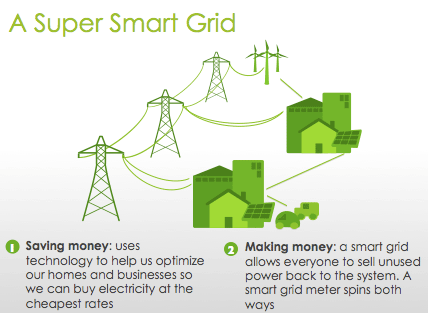
What Is a Smart Grid, and How Might One Protect Our Energy Future? Our electric grid is old and fraying, but new technology could insulate us from the possibility of widespread blackouts and cyberattacks. In February 2021, an electric grid failure in Texas caused more than 4.5 million homes and businesses to lose power. Months later, wide-scale droughts and wildfires threatened the western US with rolling blackouts. With new energy sources such as wind and solar power, maintaining a steady balance gets even more complicated. This is because power from these sources is inconsistent.
“Smart grids” sense small imbalances faster, making adjustments so problems don’t get larger. They use sensors to constantly measure the status of different parts of the grid, and a series of devices that control the current flowing through different points. The sensors and controllersare run by computers that make automatic adjustments to maximize efficiency.
Scientific American 4th Nov 2021
New study throws gloom on hopes for future nuclear energy in Central Europe

 | |||
Experts dampen hopes of Central Europe’s nuclear future https://www.euractiv.com/section/politics/short_news/experts-dampen-hopes-of-central-europes-nuclear-future/
By EURACTIV Network, Aneta Zachová | EURACTIV.cz, edited by Alexandra Brzozowski 3 Nov 2021
As Czechia looks to decarbonise its coal-based economy, it sees nuclear energy as the backbone of its future energy mix. The Czech government plans to build a new nuclear power plant unit that is expected to be operational in 2036. Still, experts warn of delays and high costs, already observed in Slovakia or Hungary.
According to the Industry and Trade Ministry, nuclear energy could solve the Czech need for low-carbon and stable energy sources. The country’s future energy mix is a hot topic due to the EU’s climate ambitions and the recent energy price hikes.
However, a new study published on Tuesday contradicts the current pro-nuclear narrative of the Czech government. “The new nuclear unit would not really contribute to decarbonisation, in terms of replacing the current coal sources,” said Oldřich Sklenář, author of the study and energy analyst at the Association for International Affairs, in an interview for EURACTIV.cz.
“The launch of the new unit should take place after 2036, but we have to phase out coal much earlier. Experience from the Euro-Atlantic area shows that it is a huge problem to meet the deadlines. Basically, everyone faces this problem,” Sklenář warned, adding that the actual costs of the projects could be double those expected.
Czechia is not the only Central European country betting on nuclear energy, but new nuclear projects in Slovakia and Hungary have faced long delays.
New units in Slovakia’s Mochovce were supposed to be in operation in 2012 and 2013 but have been delayed until 2022.
Planned Hungarian Paks II, to be constructed by Rosatom, faces problems as well, as the licensing of the project has been postponed. Hungary has amended its nuclear safety protocols to custom-fit the project, allowing some work to begin before the entire project gets the regulatory nod.
At the same time, the US has also tried to lure Eastern Europe with nuclear power, teasing a $23 trillion market to countries in Central and Eastern Europe by 2030.
In October last year, Poland and Washington signed a 30-year intergovernmental agreement on future cooperation in developing the Polish civil nuclear energy programme. The first nuclear power station could start operating in 2033.
With the currently ongoing energy crisis, a group of primarily Eastern European member states have heaped pressure on the European Commission to grant nuclear energy a ‘green’ label under the EU’s sustainable finance taxonomy, which guides climate-friendly investments.
A proposal from the European Commission is now expected “by the end of the year,” said Kadri Simson, the EU’s energy commissioner said after the recent energy ministerial in October.
Solar and wind keep getting cheaper, and crush coal, gas and nuclear on costs: Lazard

Latest LCOE report from Lazard confirms that wind and solar by far the cheapest of all energy sources, and cost of storage is falling too. The post Solar and wind keep getting cheaper, and crush coal, gas and nuclear on costs: Lazard appeared first on RenewEconomy.
Solar and wind keep getting cheaper, and crush coal, gas and nuclear on costs: Lazard — RenewEconomy Giles Parkinson & Sophie Vorrath 1 November 2021 [GOOD GRAPHS]
As world leaders meet in Glasgow for critical climate talks, they have been given a stark reminder of the lowest cost alternatives to achieve the full decarbonised grid that science says is required of major economies by the middle of next decade, at the latest.
Investment bank Lazard has released the 15th edition of its highly regarded Levelised Cost of Energy Analysis and it reinforces what is pretty much already known: Wind and solar are by far the cheapest forms of electricity generation, storage costs are falling, and now hydrogen is part of the equation.
The best illustration of the cost difference between the various technologies is this following table, which shows the various energy supply sources and their sensitivity to the cost of capital.
All technologies are affected in some way, but wind and solar, which are easily the cheapest form of generation, actually increase their advantage as the cost of capital increases. In all cases, they are five times cheaper than nuclear. Even storage and network costs don’t come close to making up the difference…………………………….. https://reneweconomy.com.au/solar-and-wind-keep-getting-cheaper-and-crush-coal-gas-and-nuclear-on-costs-lazard/—
Positive developments: rise in electric cars, ever cheaper renewables, moves towards energy efficiency

| The climate emergency is the biggest threat to civilisation we have ever faced. But there is good news: we already have every tool we need to beat it. The challenge is not identifying the solutions, but rolling them out with great speed. Some key sectors are already racing ahead, such as electric cars. They are already cheaper to own and run in many places – and when the purchase prices equal those of fossil-fueled vehicles in the next few years, a runaway tipping point will be reached. Electricity from renewables is now the cheapest form of power in most places, sometimes even cheaper than continuing to run existing coal plants. There’s a long way to go to meet the world’s huge energy demand, but the plummeting costs of batteries and other storage technologies bodes well. And many big companiesmare realising that a failure to invest will be far more expensive as the impacts of global heating destroy economies. Even some of the biggest polluters, such as cement and steel, have seen the green writing on the wall. Buildings are big emitters but the solution – improved energy efficiency – is simple to achieve and saves the occupants money, particularly with the cost of installing technology such as heat pumps expected to fall. Guardian 31st Oct 2021 https://www.theguardian.com/environment/2021/oct/31/reasons-to-be-hopeful-the-climate-solutions-available-no |
New Study: Electricity would already be Cheaper today with a Full Supplyof 100% Renewables.
New Study: Electricity would already be Cheaper today with a Full Supply
of 100% Renewables. New short study by the Energy Watch Group (EWG) finds:
Electricity would already be cheaper today with a full supply of 100%
renewables.
In the coalition negotiations for the new German government,
both ambitious climate protection and the reduction of electricity prices
play a central role. The previous government still expects only 45%
renewables in the electricity mix by 2025.
A new short study by the Energy
Watch Group offers an answer to the rising energy costs: The study
calculates that a full supply with 100% renewables would already be
economically competitive today compared to the current energy system based
on coal, natural gas and nuclear. By 2025 at the latest, an energy system
based on 100% renewables would then be significantly cheaper than power
generation with fossil fuels.
Sonnenseite 28th Oct 2021
US military blazes trail for 100 per cent renewable energy economy
| US military blazes trail for 100 per cent renewable energy economy with carbon neutral synthetic fuel. Carbon neutral synthetic fuel whose production is powered by renewable energy is a practical way of long-term storage of renewable energy. But it is no surprise that the big energy corporations with their fossil fuel and nuclear power interests don’t advise Governments to support this – but when it can help the US military, well, it’s just chocks away chaps! The irony is that this system was researched in the UK only a few years ago at a pilot stage, and then – you’ve guessed it – completely ignored by the UK Government in favour of kooky ideas like small nuclear reactors and blue hydrogen – not to mention large nuclear power plant that take forever to be built incredible cost! 100% Renewables 31st Oct 2021 https://100percentrenewableuk.org/us-military-blazes-trail-for-100-per-cent-renewable-energy-economy-with-carbon-neutral-synthetic-fuel |
Portugal’s success in cutting greenhouse emissions through its offshore floating wind and solar plants

Portugal is the EU country that has been most successful at cutting
greenhouse gas emissions since 2005, partly through the use of floating
wind and solar plants located off its coast. Today, 65 percent of all the
electricity consumed in Portugal comes from renewable sources.
France24 30th Oct 2021
Prospects for renewable energy in Japan look good, future for nuclear power uncertain.
Japan looks to renewables; role of nuclear power elusive, Japan Today By Takaki Tominaga, TOKYO, 29 Oct 21,
Japan aims to increase its reliance on renewable energy in achieving net-zero emissions, but the role of nuclear power to be played toward that end appears to be elusive even in the government’s energy plan approved by the cabinet last week ahead of Sunday’s general election.
The plan outlines ways to achieve carbon neutrality by 2050 and cut greenhouse gas emissions 46 percent in fiscal 2030 from fiscal 2013 levels, an ambitious leap from the previous reduction target of 26 percent.
The government aims to have renewables account for 36 to 38 percent of Japan’s total power generation capacity in fiscal 2030, more than double the 18 percent recorded in fiscal 2019, while the percentage of fossil-fuel-fired thermal power has been slashed to 41 percent, down from 76 percent.
But the percentage for nuclear power remains unchanged at 20 to 22 percent from the previous plan, released in 2018………………
To achieve the 2030 emissions cut target, Maeda said nuclear power plants are necessary. However, Japanese political parties cannot agree on what to do with nuclear plants even though they agree on the country’s direction toward carbon neutrality.
Prime Minister Fumio Kishida said his Liberal Democratic Party will restart idled nuclear plants, providing they have adequate safety measures, in order to supply electricity stably and at a reasonable price.
In contrast, the major opposition Constitutional Democratic Party of Japan pledges to abandon nuclear power as soon as possible and will not allow any new nuclear plants to be built.
The Democratic Party for the People, a smaller opposition party, has said it will restart nuclear plants that cleared safety rules but will not allow the construction of new ones.
Following the nuclear crisis in Fukushima Prefecture triggered by a massive earthquake and tsunami, most of the nuclear plants in Japan remain offline under stricter safety regulations.
“Realistically, I think (Japan) cannot help but to heavily rely on nuclear and solar power to achieve that 2030 goal,” said Maeda, a former Foreign Ministry official.
He stressed nuclear should not be a long-term power supply given the tremendous amount of money needed in the event of an accident and falling renewable energy costs.
In the long run, energy experts have high expectations for offshore wind power.
“Producing large quantities of electricity from renewables requires a vast amount of space. Since Japan is a maritime nation with the world’s sixth-largest exclusive economic zone, it’s got to be offshore wind,” he said, adding floating turbines will hold the key.
Solar cells produced by Miyasaka, also a fellow at the University of Tokyo’s Research Center for Advanced Science and Technology, are expected to contribute to improving the space problem for renewables if they overcome durability challenges and go into commercial mass production.
Miyasaka’s perovskite solar modules are thin, flexible, and light yet capable of generating high voltages compared with silicon photovoltaics, with their characteristics enabling them to be installed or applied on unconventional places, including low load-bearing roofs, windows and automobile bodies.
In the not too distant future, Miyasaka believes people will be able to generate power by perovskite solar modules on places such as balcony floors and car bodies, store it in batteries and then use it during the night.
In building such a society, Miyasaka said the reliance on nuclear power could be reduced soon rather than later because disaster-prone Japan faces higher risks than many other countries.
“It is time for us to seriously engage in finding ways to live without nuclear power plants,” he said. https://japantoday.com/category/politics/Japan-looks-to-renewables-role-of-nuclear-power-elusive
The French Négawatt program presents its 2022 scenario for getting France to fully renewable nuclear-free energy system

A nuclear-free future is possible, according to Négawatt. The Négawatt association presented its 2022 scenario for a France with fully renewable and nuclear-free electricity production by 2050. It hopes that its proposals, which are urgently to be implemented, will be taken up by the presidential candidates.
Energy consumption halved, electricity production 100% from renewable sources, 500,000 jobs created… This is what France could look like in 2050, if we are to believe the latest edition of the Négawatt scenario published on Tuesday 26 October .
The trajectory described by the eponymous association is not science fiction, assures its director, Stéphane Chatelin. Developed from detailed modeling of our energy system, this scenario shows that it is possible to achieve carbon
neutrality in 2050 without resorting to nuclear power. And proposes a concrete strategy to achieve it.
Reporterre 26th Oct 2021
Huge study on France’s energy system and scenarios for 2050 includes costs and environmental effects of nuclear and of renewables
Electricity: between nuclear and renewable energies, six scenarios for 2050. The national manager of the Electricity Transmission Network (RTE) published on Monday, October 25, a vast study aimed at defining the future of the French electricity system. It is an understatement to say that this work was expected, and that it will be commented on.
Launched in 2019 at the request of the government, this forward-looking exercise entitled “Energy Futures 2050”
sets out six scenarios that are supposed to make it possible to achieve carbon neutrality within thirty years, and therefore to fight against climate change. For the country’s future electricity production, the various trajectories range from a “100% renewable energy” option to another with another 50% nuclear.
Each time, RTE, majority-owned by EDF and Caisse des Dépôts, describes the technical feasibility conditions, but also the cost and expected impact for the environment and for society. In addition to this first report of some 600 pages, the full result of the modeling should be made public in early 2022.
Le Monde 25th Oct 2021
ULEZ expansion will improve Londoners’ health, but it will also reduce climate risks for all of us — Inside track

This post is by Varya Clark, co-founder of the Climate Acceptance Studios. Today, the London Ultra Low Emission Zone (ULEZ) expands dramatically. It will be eighteen times the size of the previous ULEZ, stretching all the way from the North to the South Circular roads. As Auto Express says: “If you’re unfamiliar with London, that’s most […]
ULEZ expansion will improve Londoners’ health, but it will also reduce climate risks for all of us — Inside track
ICLEI launches its 100% Renewables Cities and Regions Energy Compact

On 24 September 2021, ICLEI’s 100% Renewables Cities and Regions Energy Compact was officially launched at the United Nations High-Level Dialogue on Energy, which calls for local governments to make ambitious voluntary
commitments to catapult themselves towards 100% renewable energy usage at the latest by 2050.
ICLEI’s Energy Compact complements its existing work in the renewable energy space, including the 100% Renewables Cities and Regions Roadmap project, and the 100% Renewables Cities and Regions Network.
On their way to 100% renewable status, cities and regions that join ICLEI’s Energy Compact are encouraged to achieve several milestone targets by 2030 at the latest, such as achieving 100% renewable energy use
in local government operations, and achieving SDG7, among others.
ICLEI 5th Oct 2021
https://iclei.org/en/media/iclei-launches-its-100-renewables-cities-and-regions-energy-compact
l’association négaWatt reports on planned closure of nuclear reactors, and carbon neutrality to be achieved by reducing energy consumption and by renewables.

Caution, efficiency and renewables: the negaWatt scenario for achieving carbon neutrality. The association presents the broad outlines of the 5th edition of its prospective work, which provides for the closure of the last nuclear reactor in 2045. No construction of a new nuclear reactor, energy consumption halved, electricity production 100% from renewable energies …
The fifth edition of the scenario of the negaWatt association will undoubtedly contribute to fueling the debate, more and more lively in the context of the presidential campaign, on the contours of the energy transition. Although the association, led by independent experts, will not publish its detailed report until October 26, it unveiled its broad outlines
on Wednesday October 20.
Le Monde 20th Oct 2021
1 This Month



Shut down the radiation-damaged Heysham nuclear reactors now
To see nuclear-related stories in greater depth and intensity – go to https://nuclearinformation.wordpress.com

Say No to NASA’s Reckless Nuclear Reactor on the Moon
Say No to NASA’s Reckless Nuclear Reactor on the Moon
-
Archives
- October 2026 (256)
- September 2026 (339)
- August 2026 (330)
- July 2026 (355)
- June 2026 (287)
- May 2026 (306)
- April 2026 (356)
- March 2026 (251)
- February 2026 (267)
- January 2026 (308)
- December 2025 (358)
- November 2025 (359)
-
Categories
- 1
- 1 NUCLEAR ISSUES
- business and costs
- climate change
- culture and arts
- ENERGY
- environment
- health
- history
- indigenous issues
- Legal
- marketing of nuclear
- media
- opposition to nuclear
- PERSONAL STORIES
- politics
- politics international
- Religion and ethics
- safety
- secrets,lies and civil liberties
- spinbuster
- technology
- Uranium
- wastes
- weapons and war
- Women
- 2 WORLD
- ACTION
- AFRICA
- Atrocities
- AUSTRALIA
- Christina's notes
- Christina's themes
- culture and arts
- Events
- Fuk 2022
- Fuk 2023
- Fukushima 2017
- Fukushima 2018
- fukushima 2019
- Fukushima 2020
- Fukushima 2021
- general
- global warming
- Humour (God we need it)
- Nuclear
- RARE EARTHS
- Reference
- resources – print
- Resources -audiovicual
- Weekly Newsletter
- World
- World Nuclear
- YouTube
-
RSS
Entries RSS
Comments RSS

