World can make massive energy savings, reduce emissions through energy conservation measures

| With the world facing an almost unprecedented energy crisis, the International Energy Agency (IEA) aims to once again put energy efficiency at the forefront of policymakers’ agenda. During its 7th Global Energy Efficiency Conference hosted in Sonderborg, Denmark, the IEA has sought to convince policymakers worldwide of the merits of energy efficiency policies while providing a policy toolkit to go with it. “Energy efficiency is a critical solution to so many of the world’s most urgent challenges,” said Fatih Birol, the IEA’s executive director. According to an IEA analysis presented during the conference, the world could achieve massive energy savings by the end of the decade through increased ambition while simultaneously reducing CO2 emissions. Euractiv 8th June 2022 https://www.euractiv.com/section/energy/news/iea-presents-energy-efficiency-push-to-make-russias-gas-oil-obsolete/ |
Spain and Portugal stand out from the European Union, in slashing energy bills because of their high renewable energy use
Spain and Portugal have broken ranks with the EU to allow themselves the
space to slash their energy bills by 40 per cent. The move is being allowed
because both southern European countries have a large amount of renewable
energy and aren’t as reliant on fossil fuels as the rest of the Continent.
MSM 31st May 2022
Canada can achieve 100% zero-emission electricity by 2035 – with renewable energy, storage, energy efficiency , and interprovincial transmission
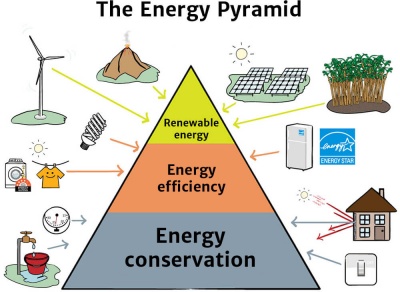
| Canada can achieve 100% zero-emission electricity by 2035 with an electricity system that prioritizes renewable energy, storage, energy efficiency, and interprovincial transmission and avoids the pitfalls of nuclear generation, fossil gas, carbon capture and storage, and carbon offsets, the David Suzuki Foundation (DSF) concludes in a modelling study released this week. And the authors note two equally important dimensions of the transition: decolonizing power to benefit Indigenous peoples, and engaging with communities at the outset to save precious time and money. “At a time when energy security and affordability are top of mind for many Canadians, this report shows that a clean electricity pathway based on renewables offers an affordable option for ambitiously reducing emissions while meeting increasing electricity demand,” the Foundation writes. The Energy Mix 27th May 2022https://www.theenergymix.com/2022/05/27/canada-can-hit-100-zero-emission-electricity-by-2035-without-nuclear-ccs-report-finds/ |
UK’s energy policy (for a nuclear ”renaissance”) ignores the fastest and most cost-effective measure – SAVING ENERGY

| Andrew Warrant: Energy policy is big news again. Initially, because fuel prices are rocketing, and set to rise even more this autumn. Plus the invasion of Ukraine has precipitated a determination to minimise the amount of gas and oil purchased in future from Russia. These two factors have prompted Prime Minister Boris Johnson to devise a new energy security strategy. Published last month, its reception was uniformly dismissive. Not so much because of the energy supply sources it concentrated upon but mainly because it entirely omitted any serious consideration of the policy area deemed most capable of providing swift cost-effective solutions. Saving energy. The Times’ editorial was unsparingly contemptuous. The UK government’s new energy security strategy amounted to “little more than a glorified press release.” The “eye-catching announcement” of eight new nuclear power plants offers “no analysis of why Britain had succeeded in starting construction on just one new reactor in the 16 years since Tony Blair announced a nuclear renaissance.” It added: “What is certain isthis new nuclear programme will not bring energy bills down any time soon. if ever. Instead, it will push bills up as the costs of construction are passed on to consumers. Nor will it do much in the near term to reduce Britain’s reliance on Russian oil and gas given that it takes at least a decade to build a nuclear power station.” While no doubt well-intentioned, Rishi Sunak’s attempts to alleviate the cost of living – including through a £150 council tax rebate for most homes and a £200 loan towards energy bills – have been overly complicated and badly targeted. And, as Helen Barnard of the Joseph Rowntree Foundation has pointed out, the £2.4bn the Treasury lost cutting fuel duty would have covered the cost of insulating a third of all social housing in the country. “Theconsultancy E3G has calculated that new energy efficiency measures could reduce the heating bills for poorly insulated homes by an average of £500 and end the UK’s dependence on Russian gas (which is admittedly quite limited) within a year. There is a very revealing explanation for why no new plans are being proposed. It is that “this is not being imposed on people and is a gradual transition following the grain of behaviour. The British people are no-nonsense pragmatists who can make decisions based on the information.” But if an Englishman’s home really is his castle, then why did fears for COVID 19 lock everybody inside their castle? If we want people to support delivery of a collective good like energy security or climate mitigation, then it is sensible to see it as collective action. And for Government to lead it. The parallel with the pandemic is spot on.Energy in Buildings and Industry 18th May 2022 https://eibi.co.uk/article/collective-spirit-required-to-ensure-energy-security/ |
EU hits fast forward on renewables, including “massive deployment” of solar

Spurred by Russia’s invasion of Ukraine, European Commission unveils massive scaling-up and speeding-up of renewable energy, with solar as the “kingpin.” The post EU hits fast forward on renewables, including “massive deployment” of solar appeared first on RenewEconomy.
EU hits fast forward on renewables, including “massive deployment” of solar — RenewEconomy
Energy saving and renewables to create many more jobs than nuclear could.

Dave Elliott: Renewable energy has the potential to create twice as many
jobs as nuclear, and three times as many jobs per million pounds invested
compared to gas or coal power, while investment in energy efficiency can
create five times as many.
So says a new UK Energy Research Centre study of
Green Job Creation, based on a new review of the literature. It’s an
update to their earlier 2014 low carbon energy & employment study. That was
a bit more cautious about making final pronouncements, since, it said, it
was difficult to assess net economy-wide impacts over time. For example,
though some sectors might benefit more than others, if there was full
employment, new investment was unlikely to create extra jobs net of any
losses. A bit sniffily it said ‘the proper domain for the debate about
the long-term role of renewable energy and energy efficiency is the wider
framework of energy and environmental policy, not a narrow analysis of
green job impacts.’
In reality, we can’t just chase for the optimal
number of green jobs. The choice of technology will be made mostly on the
basis of a range of other issues- although, as UKERC says, job quality is
also important if we want to move to a socially and environmentally
sustainable future, a point I have developed in a recent study. We need
good, sustainable jobs as part of a global ‘just transition’.
Renew Extra 14th May 2022
https://renewextraweekly.blogspot.com/2022/05/renewables-energy-saving-create-most.html
Talen Energy subsidiary files for bankruptcy, company still plans nuclear data center, Company says
Cumulus nuclear data center project unaffected by ‘restructuring’ May 11, 2022 By Dan Swinhoe
Talen Energy, which is developing a data center campus at one of its nuclear power stations, has seen one of its subsidiaries file for bankruptcy.
This week Talen Energy Supply (TES), a unit of Talen Energy Corp (TEC) that holds several of its power plants, filed for Chapter 11 protection………………..
The company is aiming to reduce its $4.5 billion debt pile and bring in $1.65 billion in new equity from bondholders. TES has secured $1.76 billion of debtor-in-possession financing (the “DIP Facilities”) led by Citigroup, Goldman Sachs, and RBC Capital Markets. The DIP Facilities are comprised of a $1 billion term loan, a $300 million revolving credit facility, and a $458 million letter of credit facility. The $1 billion term loan is being provided by an investor group of leading financial institutions.
The company said the process would “advance carbon-free data center growth initiatives, and maximize value to stakeholders.” https://www.datacenterdynamics.com/en/news/talen-energy-subsidiary-files-for-bankruptcy-company-still-plans-nuclear-data-center/
US nuclear power: Status, prospects, and climate implications

that final abdication can’t rescue nuclear power, which stumbles33 even in countries with impotent regulators and suppressed public participation. In the end, physics and human fallibility win. History teaches that lax regulation ultimately causes confidence-shattering mishaps, so gutting safety rules is simply a deferred-assisted-suicide pact.
Science Direct, Amory B.Lovins, Stanford University, USA The Electricity Journal, Volume 35, Issue 4, May 2022,
Abstract
Nuclear power is being intensively promoted and increasingly subsidized in both old and potential new forms. Yet it is simultaneously suffering a global slow-motion commercial collapse due to intrinsically poor economics. This summary in a US context documents both trends, emphasizing the absence of an operational need and of a business or climate case.
In 2020, the world added1 5.521 GW (billion watts) of nuclear generating capacity—just above the 5.491 GW2 of lithium-ion batteries added to power grids. The average reactor was then 29 years old—39 in the United States, whose fleet is the world’s largest—so it’s not surprising that in 2020, maintenance or upgrade costs, safety concerns, and often simple operational uncompetitiveness caused owners worldwide to close 5.165 GW. The net nuclear capacity addition was thus the difference, 0.356 GW. Yet in the same year, the world added3 278.3 GW of renewables (or 257 GW without hydropower)—782× as much. Adjusted for relative US 2020 average capacity factors4, renewables’ net additions in 2020 thus raised the world’s annual carbon-free electricity supply by ~232× as much as nuclear power’s net additions did. That is, nuclear net growth increased the world’s carbon-free power supply in all of 2020 only as much as renewable power growth did every ~38 hours. Renewables also receive5 ~10–20 times more financial capital—mostly voluntary private investments—while nuclear investments used mainly tax revenues or capital conscripted from customers. These ratios look set to continue or strengthen6. Indeed, in 2021, world nuclear capacity fell by 1.57 or 2.48 GW—the seventh annual drop in 13 years9—while renewables were expected to add ~290 GW10.
In a normal industry, such market performance, let alone dismal economics (below), might dampen enthusiasm. Yet the nuclear industry’s immense lobbying and marketing power continues to yield at least tens of billions of dollars in annual public subsidies, still rapidly rising.
This reflects broad bipartisan support among US and many overseas political leaders (strong nuclear advocates lead seven of the ten nations with the biggest economies)—often contrary to their citizens’ preferences and, as we’ll see, to the goal of stabilizing the Earth’s climate. To explore this seeming paradox, here is my frank personal impression of nuclear power’s status, competitive landscape, operational status, prospects, and climate implications in the United States.
1. Status
When nuclear power emerged, from the mid-1950s through the 1960s, US utilities—vertically integrated, three-fourths private, technically and culturally conservative—didn’t want it. Yet powerful Federal actors offered heavily subsidized fuel and let them own it, largely relieved them of accident liability, and ultimately tempted and coerced them into a vast nuclear building spree, under implicit threat of displacing them with Federal nuclear utilities11………………….
As construction costs and durations relentlessly rose12, regulators and customers were assured their initial pain would usher in decades of low-cost generation. This too proved false. Some plants failed early, others’ operating costs rose, and decades later, owners are demanding huge new subsidies to keep running. After these scarifying experiences, capital markets are disinclined to invest in nuclear newbuild in the US or elsewhere. Contrary to a widely cultivated myth, the successive accidents (Three Mile Island, Chernobyl, Fukushima Daiichi) widely blamed for this rejection all occurred after the business case and investor confidence had collapsed13……
………………….The US supply chain to sustain the 93 existing reactors persists, more or less, but of the four original US reactor vendors, all have merged (GE with Hitachi), exited, or failed, most recently Westinghouse19—bought by Toshiba, bankrupted20 by its new US projects, then restructured by a Canadian private-equity partnership (which recently considered selling it21) to maintain the plants it once built. Export markets have proven elusive: as Siemens’ power engineering CEO foresaw in 199122, “The countries that can still afford our nuclear plants won’t need the electricity, and the countries that will need the electricity won’t be able to afford the reactors.” Yet strong government promotion persists…………… Market appetite for big new reactors is anemic overseas and zero at home—and only for as many smaller units as taxpayers will largely or wholly pay for……………….
US public acceptance of nuclear power fluctuates, and depends strongly on how, by whom, and to whom the question is put. Nuclear advocates reported an even split in the 2019 Gallup Poll25 after long and intensive publicity campaigns, though renewables attract far larger and more consistent support…………………..
After decades of intense political pressure, industry capture26 of US nuclear safety and security regulation appears complete, with rules and processes arranged to the operators’ liking. The skill and integrity of some US Nuclear Regulatory Commission technical experts are commendable, but on major matters, their role is only to advise, not decide. ……………… new “reforms” are taking a singularly dangerous turn: as I summarized elsewhere29,
SMRs’ [Small Modular Reactors’] novel safety30 and proliferation31 issues threaten threadbare schedules and budgets, so promoters are attacking bedrock safety regulations. . NRC’s proposed Part 5332 would perfect long-evolving regulatory capture—shifting its expert staff’s end-to-end process from specific prescriptive standards, rigorous quality control, and verified technical performance to unsupported claims, proprietary data, and political appointees’ subjective risk estimates.
Continue readingIn 2021 USA’s renewable power generation exceeded it nuclear generation.
The US Energy Information Administration reports that power sector
generation from renewable sources totalled 795 million MWh in the USA
during 2021, overtaking nuclear generation, which totalled 778 million MWh.
The US electric power sector does not include some electricity generators
in the industrial, commercial, or residential sectors, such as small-scale
solar or wind or some combined-heat-and-power systems. Renewable generation
includes electricity generated from wind, hydropower, solar, biomass, and
geothermal sources.
Natural gas remained the most prevalent source of
energy for electricity generation, accounting for 1474 million MWh in 2021.
Although several US coal-fired power plants retired in 2021, coal-fired
generation increased for the first time since 2014 and was the source of
more electricity than either renewables or nuclear power. Total electricity
generation increased slightly in 2021, but it remained less than its
record-high year of 2018.
Modern Power Systems 3rd May 2022
https://www.modernpowersystems.com/news/newsus-renewables-generation-has-overtaken-nuclear-9670031
Britain’s very wrong turn in energy policy

At least Rishi Sunak would appear to have recognised all this nuclear nonsense for the massive con trick it is. As far as the Treasury is concerned, a few hundred million to prop up Rolls-Royce, and a couple of billion to keep the prospect of Sizewell C alive – that’s acceptable, it would seem. Beyond that, from the Chancellor’s perspective, lies one vast funding black hole. Not least because of nuclear waste.
Courtesy of the mainstream media’s cosy relationship with the nuclear industry, we hardly ever hear about this. But the Treasury writes a cheque to the Nuclear Decommissioning Authority of around £2.5bn every year – to deal with the legacy of our earlier nuclear investments in terms of waste management and decommissioning. The price tag just for cleaning up Sellafield has now risen to an astonishing £97bn! On top of that, the anticipated cost of an underground storage facility to house the high-level waste for thousands of years has now risen to as much as £53bn – according to the Government’s own figures. That’s the cost of old nuclear. It will be no different with any new nuclear.
Why a nuclear power policy is clearly the road not to take
Wrong turn — Beyond Nuclear International The establishment’s obsession with nuclear power just won’t die,
more https://wordpress.com/read/feeds/72759838/posts/3984916370
By Jonathon Porritt 1 May 22,
This is absolutely the right time for a new Energy Strategy. Unfortunately, we’ve got absolutely the wrong politicians in charge of it. In the UK, the combination of Prime Minister Boris Johnson and Chancellor of the Exchequer Rishi Sunak all but guarantees that the new Energy Security Strategy will fail on most counts.
– In Boris Johnson, we have a careless showman, drawn unerringly to ‘big ticket’ announcements, groomed by a nuclear industry that knows exactly how to play to these personality defects.
– In Rishi Sunak, we have a man so detached from the reality of most people’s lives that the prospect of five million UK citizens finding themselves in fuel poverty by the end of the year means literally nothing.
Careless Johnson and callous Sunak is a devastating double-act – with the inconsequential figure of Kwasi Kwarteng (UK Secretary of State for Business, Energy and Industrial Strategy) lurking around to pick up the pieces.
There will, of course, be some welcome commitments in the new UK Strategy, particularly on solar and offshore wind, with a hugely encouraging pipeline of new developments in both now underpinning the UK’s decarbonisation strategy. Onshore wind may well get more encouragement than in the past, but the aesthetic sensibilities of Tory Nimbies will still matter more to Johnson and Sunak than the opportunity to ramp up the single most cost-effective source of renewable electricity – coming in at an astonishing 20% of the cost of new nuclear! Yet again, those ‘hard-working families’ Johnson constantly refers to will pay the price for this appalling policy failure.
The UK establishment’s obsession with nuclear power just won’t die. Boris Johnson is heading off down a well-worn path. Margaret Thatcher promised to build a nuclear reactor every year for ten years at the start of her time in office. In 2006, Tony Blair vowed to bring back nuclear power ‘with a vengeance’. David Cameron’s Government identified opportunities for a massive expansion of nuclear.
However, apart from Sizewell B (which came online in 1995) and EDF’s grotesquely expensive monster emerging at Hinkley Point C, there’s nothing to show for all that overblown nuclear enthusiasm. The industry blames this 40-year failure on everyone else – including a generation of anti-nuclear campaigners. In truth, the blame lies entirely with the industry itself, mendaciously promoting outdated, dangerous, increasingly expensive technologies.
Johnson’s big nuclear bets will almost certainly include big reactors at both Sizewell C and Wylfa, and as many as possible of the so-called ‘small reactors’ being pushed by Rolls-Royce. Regardless of the hype, the economic reality of all of these bets is dire:
Sizewell C – with the Chinese out of the picture, the Government will be looking to its new Regulated Asset Base funding model (with consumers having to pay up front) to persuade private investors to get on board. Backed (so far) by the promise of £1.75bn of taxpayers’ money.
Wylfa – so much effort has gone into trying to get a new reactor at Wylfa over the line over the last ten years! All to no avail – primarily for economic reasons. Any renewed ‘firm commitment’ for Wylfa will mean as little as all previous commitments.
Rolls-Royce’s Small Modular Reactors – apparently, Johnson is particularly excited by this prospect, even though they’re not even remotely small (at 470MW, they’re actually as big as the first generation of Magnox reactors here in the UK!), and no-one has ever done modular construction (offsite in factory settings) before now.
And none of these ‘exciting prospects’ will give Johnson (let alone hard-pressed UK consumers) one single electron in terms of helping to meet the Government’s target to have carbon-free electricity by 2035.
Continue readingIs France really the poster boy for nuclear power? Nearly half of its reactors are shut down for maintenance and safety reasons

Nearly half of France’s nuclear reactors taken offline, adding to
electricity demand on European grid. France’s problems have raised
questions about the UK’s big bets on nuclear, which the government calls a
“necessity, not a luxury”.
Currently 27 of France’s 56 reactors have been
shut down due to routine maintenance or defects, forcing EDF to buy
electricity from the European grid instead, at a time of soaring demand
amid the gas crisis. France’s problems have raised questions from critics
about the reliability of nuclear, and about Britain’s recent big bets on
the energy source.
Sky News 29th April 2022
Photovoltaics vs. nuclear power on Mars

Photovoltaics vs. nuclear power on Mars https://www.pv-magazine-australia.com/2022/04/29/photovoltaics-vs-nuclear-power-on-mars/
Solar might be more efficient than nuclear energy to supply power for a six-person extended mission to Mars that will involve a 480-day stay on the planet’s surface before returning to Earth, according to new US research.
APRIL 29, 2022 EMILIANO BELLINI Researchers at the University of California, Berkeley, have compared how PV or nuclear energy could power a crewed outpost for an extended period on Mars and have determined that solar offers the best performance.
“Photovoltaic energy generation coupled to certain energy storage configurations in molecular hydrogen outperforms nuclear fusion reactors over 50% of the planet’s surface, mainly within those regions around the equatorial band, which is in fairly sharp contrast to what has been proposed over and over again in the literature, which is that it will be nuclear power,” said UC Berkeley researcher Aaron Berliner, noting that two energy sources were compared for the power supply of a six-person extended mission to Mars involving a 480-day stay on the planet’s surface before returning to Earth.
The US team considered four different scenarios: nuclear power generation with the miniaturised nuclear fission Kilopower system, PV power generation with battery energy storage, PV power generation with compressed hydrogen energy storage produced via electrolysis, and hydrogen generation with compressed hydrogen energy storage (PEC).
In our calculations, we assumed a capacity factor of 75% to account for the solar flux deviation throughout the Martian year and sized energy storage systems to enable 1 full day of operations from reserve power,” the group explained. “We then calculated the carry-along mass requirements for each of the power generation systems considered.”
The scientists found that, of the three PV-based power generation options, only the photovoltaics-plus-electrolyser system outcompetes the nuclear system based on carry-along mass. They also said that the optimal absorber bandgaps for the PV systems depend heavily on the location on the surface of Mars, the total depth of the air column above a given location, gradients in dust and ice concentrations, and orbital geometry effects that cause different effective air column thicknesses for locations near the poles.
In our calculations, we assumed a capacity factor of 75% to account for the solar flux deviation throughout the Martian year and sized energy storage systems to enable 1 full day of operations from reserve power,” the group explained. “We then calculated the carry-along mass requirements for each of the power generation systems considered.”
The scientists found that, of the three PV-based power generation options, only the photovoltaics-plus-electrolyser system outcompetes the nuclear system based on carry-along mass. They also said that the optimal absorber bandgaps for the PV systems depend heavily on the location on the surface of Mars, the total depth of the air column above a given location, gradients in dust and ice concentrations, and orbital geometry effects that cause different effective air column thicknesses for locations near the poles.
For the first time, U.S. renewable energy output exceeds nuclear generation, EIA finds

Utility Dive, By Elizabeth McCarthy. 28 Apr 22,
Dive Brief:
- The growing number of large solar and wind energy projects resulted in renewable generation beating out nuclear energy last year, the U.S. Energy Information Administration said on Tuesday.
- The nation has seen a steady rise in renewable generation, with the biggest share from solar, which is expected to continue because of the lower cost and greater safety of this intermittent power resource, clean energy advocates say. That is despite the Biden administration’s multi-billion dollar program to keep online baseload nuclear power plants scheduled to retire.
- Natural gas supplies the biggest share of electricity in the county but its share is also expected to decrease over the next three decades. EIA projects solar will replace it as the dominant source of generation in the U.S. by 2050.
- Dive Insight:Utility-scale renewable generation in the U.S. reached 795 million MWh in 2021, compared to 778 million MWh of nuclear generation.“This is a ‘good news’ story,” said Ralph Cavanagh, Natural Resources Defense Council energy program co-director.
- The news gets better for renewables when considering that private investments in clean technology rose to over $27 billion in 2021, up from about $20 billion in 2020, according to a report by the American Investment Council released last week. Private equity companies over the last decade have invested close to $150 billion and backed more than 1,000 clean technology companies in the U.S., it added.
- The biggest mover on the U.S. generation front has been solar as installation costs have dropped 70% over the last decade. That has led “the industry to expand into new markets and deploy thousands of systems nationwide,” according to a Feb. 11 joint statement by the Edison Electric Institute, NRDC and the Solar Energy Industries Association. Supply chain issues pushed up prices last year “but did not eliminate solar power’s competitive advantages in retail and wholesale markets,” the organizations wrote in their joint statement to the National Association of Regulatory Utility Commissioners. EIA’s April 26 analysis does not include rooftop solar or other smaller renewables serving predominantly onsite demand. Factoring in just “end-use solar, the milestone for surpassing nuclear generation would have been reached earlier,” said Syne Salem, an EIA engineer. The tally also excludes small-scale wind and some industrial and commercial combined-heat-and-power systems.
- U.S. nuclear electricity generation fell to its lowest level in a decade, EIA reported, with the retirement of one reactor in 2021, New York’s Indian Point 1040 MW Unit 3. Nuclear generation made up 19% of the electric generation last year and it’s expected to fall to 12% by 2050, EIA concluded.Since 2013, a dozen nuclear units have retired in the U.S. and the decline is projected to continue despite the Department of Energy’s$6 billion program to help extend their operating life.. The owners of three plants that could tap into those DOE funds, Entergy and Pacific Gas & Electric, are continuing to decommission them. The only new nuclear plant being built is the 2,228 MW Vogtle project in Georgia that has seen big cost overruns and delays……………………….. https://www.utilitydive.com/news/for-the-first-time-us-renewable-energy-output-exceeds-nuclear-generation/622899/
Energy Department’s own survey shows 8 in 10 Britons support onshore wind – and the Nuclear Free Local Authorities says the Government should back it
Whilst government ministers continue to deride onshore wind as
‘unpopular’, the energy department’s recent public survey shows
otherwise – with 8 in 10 Britons surveyed expressing their support for
the technology, over twice the number endorsing new nuclear – leading the
Nuclear Free Local Authorities (NFLA) to urge the UK government to back it.
The Department for Business, Energy & Industrial Strategy (BEIS) has
collected data every quarter since 2012, recording responses from the
public to a range of energy related questions. The latest public attitude
survey was carried out over the Winter of 2021/22 and published at the end
of last month.
The results reveal continued strong support for renewables,
with onshore wind receiving a favourable response. Contrary to the myth
that onshore wind is unpopular, only 4% of those surveyed registered their
opposition, with 8 in 10 saying they supported it. By way of contrast only
37% of participants supported the development of nuclear energy and only
17% supported the resumption of fracking for shale gas. The government’s
own UK Energy Security Strategy concedes that ‘Onshore wind is one of the
cheapest forms of renewable power’, yet there has been no public funding
made available, nor any target for new generation set, with only a vague
promise to ‘consult this year on developing local partnerships for a
limited number of supportive communities who wish to host new onshore wind
infrastructure in return for benefits, including lower energy bills’.
NFLA 20th April 2022
Constant cheap renewable power to Britain – the Sahara wind and solar cables

Within five years, the world’s longest undersea cable will link Devon to
a vast territory of solar panels in the Sahara Desert, supplying
electricity directly into Britain’s grid at a fraction of today’s power
prices. A second cable will land two years later in 2029.
Together they will provide 3.6 gigawatts (GW) of constant baseload power, equivalent to
two Hinkley-sized nuclear reactors. The difference is that we will be able
to afford it.
That, at least, is the plan. The £16bn Xlinks Morocco-UK
Power Project – chaired by former Tesco chief Sir Dave Lewis – has an
elegant feature. It combines wind and solar in perfect geographic
circumstances to make near-constant power for 20 hours a day.
Trade winds on the coast of North Africa raise the average “capacity factor” of
onshore wind turbines to 54pc. A desert convection effect creates a regular
wind current in the early evenings and smooths the handover from solar to
wind. “It picks up every afternoon just as the sun is setting,” said
Simon Morrish, the project’s chief executive.
This overcomes the curse of intermittency, with lithium batteries in the desert to cover the remaining
gaps. Xlinks will be a park of 580 square miles at Guelmim Oued Noun on the
28th parallel south of Agadir, picked because it is at the top of the
global horizontal irradiance index. The yield is three times higher than in
the UK. The sun shines for 10 hours a day in winter. “The space is
unlimited. We could in theory put up 500 of these projects in Morocco,”
he said. The consortium is already planning a second hub to power Benelux.
It could multiply the scale several times over for the UK, constrained only
by the safe limits of energy security.
Telegraph 20th April 2022
1 This Month

of the week – Shut Down Drone Warfare!


Tell the Ukrainian Government to Drop Prosecution of Peace Activist Yurii Sheliazhenko

Petition to revoke the licensing of the Near Surface Nuclear Disposal Facility (NSDF) at Chalk River. https://www.ourcommons.ca/petitions/en/Petition/Details?Petition=e-7247
To see nuclear-related stories in greater depth and intensity – go to https://nuclearinformation.wordpress.com
-
Archives
- April 2026 (44)
- March 2026 (251)
- February 2026 (268)
- January 2026 (308)
- December 2025 (358)
- November 2025 (359)
- October 2025 (376)
- September 2025 (257)
- August 2025 (319)
- July 2025 (230)
- June 2025 (348)
- May 2025 (261)
-
Categories
- 1
- 1 NUCLEAR ISSUES
- business and costs
- climate change
- culture and arts
- ENERGY
- environment
- health
- history
- indigenous issues
- Legal
- marketing of nuclear
- media
- opposition to nuclear
- PERSONAL STORIES
- politics
- politics international
- Religion and ethics
- safety
- secrets,lies and civil liberties
- spinbuster
- technology
- Uranium
- wastes
- weapons and war
- Women
- 2 WORLD
- ACTION
- AFRICA
- Atrocities
- AUSTRALIA
- Christina's notes
- Christina's themes
- culture and arts
- Events
- Fuk 2022
- Fuk 2023
- Fukushima 2017
- Fukushima 2018
- fukushima 2019
- Fukushima 2020
- Fukushima 2021
- general
- global warming
- Humour (God we need it)
- Nuclear
- RARE EARTHS
- Reference
- resources – print
- Resources -audiovicual
- Weekly Newsletter
- World
- World Nuclear
- YouTube
-
RSS
Entries RSS
Comments RSS
 nuclear-news