100% renewables is feasible worldwide at low cost.
Christian Breyer et al, On the History and Future of 100% Renewable Energy
Systems Research. Research on 100% renewable energy systems is a relatively
recent phenomenon. It was initiated in the mid-1970s, catalyzed by
skyrocketing oil prices. Since the mid-2000s, it has quickly evolved into a
prominent research field encompassing an expansive and growing number of
research groups and organizations across the world. The main conclusion of
most of these studies is that 100% renewables is feasible worldwide at low
cost.
IEEE Access 29th July 2022
Further cuts in output predicted, from France’s nuclear reactors as heat wave continues.
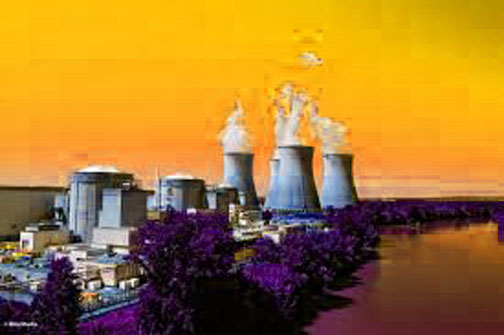
State owned French energy major EDF is reducing output at nuclear power
stations on the Rhône and Garonne rivers as heatwaves push up river
temperatures, restricting its ability to use river water to cool the
plants. EDF, which is Europe’s biggest producer of nuclear energy, has
said it would extend output cuts at several NPPs on the two rivers as the
hot spell continues, but that a minimum level of output, 400 MW, would be
maintained.
Further cuts in output are likely in the near future at nuclear
power plants Tricastin (3.6 GW), St Alban (2.6 GW, but now at 700 MW) and
Golfech (2.7 GW) owing to high temperatures in the Rhône and Garonne
rivers. EDF started imposing production restrictions in mid-July at
Tricastin, St Alban and Bugey on the Rhône and Blayais at the mouth of the
Garonne as temperature rose to unusually high levels.
Modern Power Systems 9th Aug 2022
https://www.modernpowersystems.com/news/newsedf-cuts-output-from-nuclear-generation-9915875
Utility company Eon talks about possibility of delaying the closure of Germany’s last nuclear reactor
German utility Eon is open to discuss the operational extension of its 1.4
GW nuclear reactor Isar 2 as a way for Germany to secure supplies this
winter in the face of an energy crisis, its CFO said on Wednesday.
“Our last nuclear power station will go offline at the end of the year,” said
Mark Spieker, CFO of Eon, in a speech published prior to the presentation
of the company’s interim results. “If, as part of the ongoing stress
test, the federal government reassess the situation, we’re open to
discussions,” he added.
Germany is due to close its last three nuclear
reactors with a total capacity of 4.1 GW by the end of 2022, but the recent
energy crisis caused by Russia’s invasion of Ukraine has spurred calls to
extend the reactors’ lifetimes to avoid blackouts over the winter.
Montel 10th Aug 2022
https://www.montelnews.com/news/1341852/eon-open-to-discussion-on-nuclear-lifetime-extension
Renewables are booming – REN21 Global Review

As the new annual REN21 global review illustrates, renewables are booming
most places, supplying 28% of global electricity, with PV solar especially
lifting off fast, including, at last, in Australia and, crucially, Africa,
north and south. In all, there’s over 1TW of PV in place globally.
The scale and reach of some of the new projects planned is very dramatic. For
example, there is a proposal for a 20GW PV array in north Australia which
would send power to Singapore.
Meanwhile, wind also continues to boom,
offshore especially, with ever larger, taller devices, as well as floating
units. There are some huge projects planned. For example, up to 20GW of
offshore wind has been proposed by Denmark for islands off NE Europe,
including 10GW linked to an artificial ‘hydrogen island’ in the North
Sea, on its part of the Dogger Bank. Denmark also plans two other offshore
wind-based energy islands for the North Sea and Baltic Sea with the
potential for some hydrogen production.
Clearly hydrogen is becoming a
regularly featured energy vector, in part since it can be stored in a range
of ways and the cost of producing it by electrolysis using renewable power
is falling.
However, although, batteries still rule the roost, at least for
short-term storage, there are also other energy storage options, some of
which may offer advantages in the newly emerging flexible energy systems,
including heat stores of various types and some intriguing gravity-based
systems. Bew and updated studies of the long term global potential of
renewables are emerging.
Prof. Mark Jacobson and his team at Stanford
University have produced an updated set of 100% wind, water and solar
energy 2050 scenarios covering 145 countries. Because battery costs have
dropped dramatically and because four-hour batteries are now readily
available, it is now justifiable to include a larger penetration of
batteries than in the previous studies’. So less demand response and very
long term storage is needed, reducing costs.
Renew Extra 6th Aug 2022
https://renewextraweekly.blogspot.com/2022/08/global-renewables-review.html
Nuclear energy vs renewables: which is the best solution for the climate crisis?
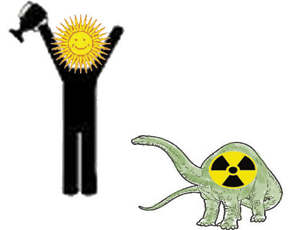
There is no silver bullet to the climate crisis, and renewables
look like a better, cheaper solution.
In addition to safety concerns,
rising costs are a central reason why the number of new plants under
construction remains limited. Since 2011, nuclear power construction costs
globally have doubled or even tripled.
China is, however, notable in its
nuclear ambitions. The country is planning at least 150 new reactors in the
next 15 years, more than the rest of the world has built in the past 35,
though cost could ultimately change this direction of travel. There are
some big nuclear power stations on the cards – think Hinkley Point C or
Sizewell C in the UK.
But the major excitement among many nuclear
enthusiasts, including plenty of UK MPs is around so-called small modular
reactors (SMRs). If you believe the hype, they are the answer to all
climate and energy ills.
So what is the solution? Renewables, renewables
and more renewables? In short, yes. The costs of solar, wind power and
storage continue to fall, and by 2026 global renewable electricity capacity
is forecast to rise by more than 60 per cent, to a level that would equal
the current total global power capacity of fossil fuels and nuclear
combined, says the IEA.
Some argue nuclear can be a clean back-up option
for when the wind doesn’t blow and the sun isn’t shining. But again,
other options already exist, including demand response (for example,
plugging in your electric car when there is lots of energy and not
switching on your washing machine when the system is under strain),
large-scale storage and interconnections between different countries.
New Statesman 4th Aug 2022
Prairie Island Indian Community planning to set up large renewable energy project, keen to be rid of nuclear power plant and nuclear wastes
Prairie Island Indian Community nuclear concern powers net zero carbon emissions plan,
Catharine Richert, Prairie Island Indian Community, Welch, Minn., August 1, 2022 , Growing up on the Prairie Island Indian Community reservation, Calais Lone Elk had a plan — a set of steps burned in her mind and logged with her school to help her find her family in the event of an explosion at the nearby nuclear power plant.
“If you went to school and something happened out here, where do you meet your parents? Where do you reconnect with your family? Because you can’t come back here,” she said. “Those are things that I don’t think are normal.”
Lone Elk is 37 now, and still constantly reviewing her escape plan for an emergency at the nearby power plant.
It sits just 700 yards away from her community of 100 homes, its powerlines lining backyards and main thoroughfares.
For Lone Elk and others living in Prairie Island, concerns about the nuclear power plant’s safety are a source of low-grade daily stress. Despite official assurances, many people believe it’s bad for their health to be living so close.
“We all have a plan, whether we voice it or not. We all have an idea of what we have to do or what we need to do. And we all know that we have to go up-wind of that nuclear plant,” Lone Elk said
But it’s also a physical reminder of the environmental injustices endured by Native people for generations, said tribal council vice president Shelley Buck.
“Since this plant was created, our energy history here has been focused on the power plant and the nuclear waste that is stored right next door to us,” she said.
Today, the Prairie Island Community is seeking to disentangle itself from a power plant it never wanted. It’s created a $46 million plan to produce net zero carbon emissions within the next decade.
Buck said it’s an ambitious step toward being a sovereign nation that’s energy sovereign, too.
“To do a big project like net zero really helps us change that narrative into something positive showing how energy can be used as a positive force,” she said. “By offsetting or eliminating the carbon that we produce, it’s a positive for everybody.”
Why not go big?’
Prairie Island members are descendants of the Mdewakanton Band of Eastern Dakota. They made their home in southern Minnesota, but lost that land in 1851 in the Treaty of Traverse des Sioux.
It wasn’t until 1934 that the land on the banks of the Mississippi just north of Red Wing became a federally recognized reservation.
The Prairie Island power plant was issued its first operating license in 1974, and it was renewed in 2011. Initially, tribal members say the plant was described to them as a steam power plant. It’s one of two nuclear power plants, the second in Monticello, that Xcel says are critical to its plans of producing carbon-free electricity by 2050, and is considered safe by the U.S. Nuclear Regulatory Commission.
In the early 1990s, Xcel Energy asked the Minnesota Pollution Control Agency permission to store nuclear waste there — at least temporarily until a permanent repository at Yucca Mountain opened, a plan that has since stalled due to local opposition.
As a child, Mikhail Childs remembers his father protesting the prospect of storing nuclear waste so close to the reservation.
“Some of the earliest memories I have are of protestors standing in the road, blocking semi-trucks hauling nuclear waste,” he said. “The way [my dad] explained it to me was that all this land we reside on is sacred … We believe that in our creation story, the creation took place just miles down the river.”
But here’s the twist, and it’s an important one: Through all these years of living with a nuclear power plant next door, Prairie Island hasn’t been powered by the energy generated there, said Buck. The community just recently started getting natural gas from Xcel.
It’s a logistical detail that she said prevented the tribal community from being eligible for the Renewable Development Fund, a pot of state money financed by Xcel customers for renewable energy projects for Xcel service areas, she said.
Then in 2020, a legislative change allowed Prairie Island to tap $46 million from the fund for the project.
While the tribe had toyed with doing wind power and other renewable projects in the past, a large amount of funding created the opportunity to do more.
“Why not go big?” said Buck.
One goal, different solutions
And by big, Buck is referring to a plan that aims to eliminate 20 million pounds of carbon annually through a raft of renewable energy and efficiency upgrades. Prairie Island’s Treasure Island Resort and Casino is the largest energy user on the reservation.
The plan involves multiple ways of achieving that goal, said Andrea Thompson, who has been hired by the tribe as the project’s energy program manager. …………………………………..
Their plan involves constructing a 10-to-15 acre solar array that aims to reduce carbon emissions by more than 550,000 pounds annually, phasing out natural gas in favor of geothermal energy and electrification, and promoting zero-emission and energy efficiency residential upgrades………………………….. more https://www.dailymail.co.uk/sciencetech/article-11069613/Global-warming-trigger-nuclear-war-financial-crisis-extinction-level-pandemic-2070.htm
Latest Research – Baseload generators such as Sizewell C nuclear power plants are not needed in an all-renewable future and their use would simply increase costs
Latest Research – Baseload generators such as Sizewell C nuclear power
plants are not needed in an all-renewable future and their use would simply
increase costs. Sizewell C is much more expensive and slower to build than
proven and reliable alternative low carbon solutions say elite Energy Think
Tank. Professor Mark Barrett, from UCL, who has modeled the comparative
costs of nuclear and renewable power, using hour-by-hour wind and solar
data with 35 years of weather data , said: “Nuclear power is more
expensive and slower to build than renewables, particularly offshore wind.
7 GW of wind will generate about 40% more electricity than Hinkley at about
30-50% of the cost per kWh and will be built in half the time. Neither wind
nor nuclear plant operates all the time, so both will need backup. Modeling
shows the total cost of a renewable generation to be less than nuclear and
to be just as able to provide continuous power even with wind and solar
droughts.”
100% Renewables 26th July 2022
Baseload nuclear power not needed in an all-renewable future – Claverton Energy Research Group
Sizewell C is much more expensive and slower to build than proven and
reliable alternative low carbon solutions say elite Energy Think Tank
Latest Research – Baseload generators such as nuclear power plants are
not needed in an all-renewable future and their use will almost certainly
increase overall costs to consumers says elite Claverton Energy Group of
experts.
Professor Mark Barrett, from UCL, who has modeled the comparative
costs of nuclear and renewable power, using hour-by-hour wind and solar
data with 35 years of weather data , said: “Nuclear power is more
expensive and slower to build than renewables, particularly offshore wind.
7 GW of wind will generate about 40% more electricity than Hinkley at about
30-50% of the cost per kWh and will be built in half the time. Neither wind
nor nuclear plant operates all the time, so both will need backup. Modeling
shows the total cost of a renewable generation to be less than nuclear and
to be just as able to provide continuous power even with wind and solar
droughts.”
Claverton Energy Group 20th July 2022
Greencoat Capital UK to greenwash nuclear power?
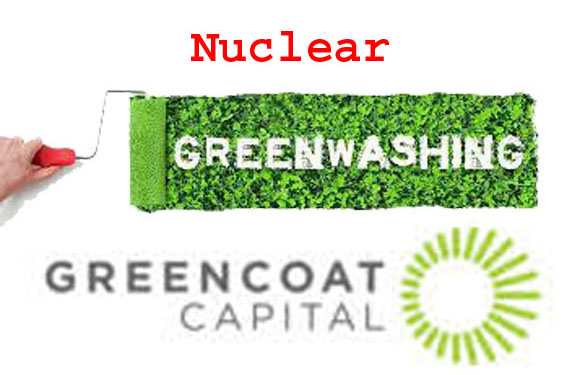
Greencoat Capital is considering creating a nuclear investment fund to take
a stake in EDF’s proposed Sizewell C plant in Suffolk. The renewables
investment manager is eyeing a move into nuclear that could lead to the
fund investing in Hinkley Point C, under construction in Somerset, and the
existing Sizewell B plant. Bankers working for EDF and the UK government
are seeking investors to join them in funding the construction of Sizewell
C, which could power 6 million homes and is expected to cost at least £20
billion. Richard Nourse, Greencoat Capital’s founder, said: “My feeling
is that there’s a huge amount of money required. When you need a huge
amount of money, you normally have to price it to go, and therefore it will
be potentially an interesting investment. Given nuclear will be a
fearsomely complex and technically demanding area for UK pension funds to
evaluate risk, we see an opportunity for Greencoat to be a trusted adviser
and manager of funds.”
Times 16th July 2022
https://www.thetimes.co.uk/article/investment-firm-readies-nuclear-fund-j7xtbdqxl
No need for miracle technologies to rapidly decarbonise energy
Most of the world can switch to renewable energy without destabilizing
power grids, at low cost, and relying almost entirely on existing
technologies, according to a new Stanford University study.
With countries facing record-high fuel prices, energy blackmail from Russia, up to seven
million deaths per year due to air pollution, and an endless parade of
climate disasters, there’s no need for “miracle technologies” to put
things right, writes Stanford civil and environmental engineering professor
Mark Z. Jacobson, in a post for The Hill.
“By electrifying all energy sectors; producing electricity from clean, renewable sources; creating
heat, cold, and hydrogen from such electricity; storing electricity, heat,
cold and the hydrogen; expanding transmission; and shifting the time of
some electricity use, we can create safe, cheap and reliable energy
everywhere.”
Jacobson’s study covered the 145 countries that account
for 99.7% of global carbon dioxide emissions, and relied solely on onshore
and offshore wind, various solar technologies, geothermal, hydropower,
small amounts of tidal and wave energy, and different forms of storage. The
transition would cost about US$62 trillion, he says. With annual energy
cost savings of $11 trillion, the investment would pay back in less than
six years.
The Energy Mix 13th July 2022
Nuclear would do little to solve gas issue in Germany
Germany’s vice chancellor has defended the government’s commitment to ending the use of nuclear power at the end of the year
Independent UK Via AP news wire 12 July 22, Germany’s vice chancellor on Tuesday defended the government’s commitment to ending the use of nuclear power at the end of this year, arguing that keeping its few remaining reactors running would be complex and do little to address the problems caused by a possible natural gas shortfall.
government officials argue that natural gas isn’t so much a factor in generating electricity as in fueling industrial processes and providing heating.
“Nuclear power doesn’t help us there at all,” Vice Chancellor Robert Habeck, who is also the economy and climate minister and is responsible for energy, said at a news conference in Vienna. “We have a heating problem or an industry problem, but not an electricity problem — at least not generally throughout the country.”
Germany shut down three nuclear reactors in December and the remaining three are due to cease production at the end of this year as part of a long-running plan to phase out conventional power plants in favor of renewable energy.
In this year’s first quarter, nuclear energy accounted for 6% of Germany’s electricity generation and natural gas for 13%, both significantly lower than a year earlier. Germany has been getting about 35% of its gas from Russia.
Habeck said the legal certification for the remaining reactors expires at the end of the year and they would have to be treated thereafter as effectively new nuclear plants, complete with safety considerations, and the likely “very small advantage” in terms of saving gas wouldn’t outweigh the complications.
Fuel for the reactors also would have to be procured, and Scholz has said that the fuel rods are generally imported from Russia………….. https://www.independent.co.uk/news/ap-nuclear-green-party-berlin-olaf-scholz-b2121180.html
Greenpeace and other NGOs call for a green reconstruction plan for Ukraine
Activists from Greenpeace raised a replica wind turbine, close to the
venue of the Ukraine Recovery Conference today in Lugano, in a call for
recovery efforts to be based on sustainable energy systems, not nuclear or
fossil fuels. As donors meet to discuss reconstruction after the Russian
invasion, Greenpeace together with Ecoaction and more than 45 Ukrainian
civil society organisations is calling for a green reconstruction plan.
Ukrainian non-governmental organisations have developed guiding principles
to ensure that Ukraine’s green post-war reconstruction delivers
sustainable economic development and is beneficial to people and nature.
Greenpeace 4th July 2022
Renewables supply nearly half of German power demand in first half 2022
Renewable energy has supplied roughly half of Germany’s electricity
demand for the first half of 2022, new data has shown, boosting the amount
of renewables in the mix by six percentage points compared to the same
period in 2021. Germany’s Center for Solar Energy and Hydrogen Research
Baden-Württemberg (ZSW) and the Federal Association of Energy and Water
Management (BDEW) said on Monday that renewables had covered around 49% of
gross domestic electricity consumption over the period. In a joint press
release, the organisations said that the main contributor to the increased
renewables output was a “significant increase” in onshore wind and
solar capacity – each generating around one-fifth more electricity than
in the same period in 2021.
Renew Economy 6th July 2022
In France, drought, and multiple problems in nuclear power plants add energy crisis to the climate crisis.
In the midst of the war in Ukraine, the energy crisis is taking precedence
over the environmental crisis. On Thursday, the government called on the
French to reduce their consumption by 10% in 2 years. On Sunday, EDF, Total
and Engie even deemed it necessary to make efforts “immediately”. Their
fear: a real risk of cuts this winter. when the drought and the multiplication of problems in nuclear power plants add crisis to crisis.
Indeed, it is not only Russian oil and gas that will be missing from the
European energy mix in the future. Declining flow in rivers is a problem
for hydropower plants.
And even worse, the state of the French nuclear
fleet raises many concerns. Called to satisfy 40% of electricity
consumption in France, it has suffered from the health crisis to the point
that production fell by 8.7% in 2020 compared to 2019, falling to a level
that had not been observed since the late 1990s.
All this has delayed maintenance operations. And now we suddenly discover corrosion where we did
not expect it on 12 reactors, which were automatically shut down. It is
therefore half of the 56 French reactors which are out of service for a
certain time. A hard blow impossible to compensate for immediately with the
major projects intended in the long term to increase the share of renewable
energies in our energy mix.
La Depeche 27th June 2022
International Energy Agency stresses that energy efficiency must be at the forefront of climate policies

With the world facing an almost unprecedented energy crisis, the
International Energy Agency (IEA) aims to once again put energy efficiency
at the forefront of policymakers’ agenda. During its 7th Global Energy
Efficiency Conference hosted in Sonderborg, Denmark, the IEA has sought to
convince policymakers worldwide of the merits of energy efficiency policies
while providing a policy toolkit to go with it.
“Energy efficiency is a
critical solution to so many of the world’s most urgent challenges,”
said Fatih Birol, the IEA’s executive director. According to an IEA
analysis presented during the conference, the world could achieve massive
energy savings by the end of the decade through increased ambition while
simultaneously reducing CO2 emissions.
Euractiv 8th June 2022 https://www.euractiv.com/section/energy/news/iea-presents-energy-efficiency-push-to-make-russias-gas-oil-obsolete/
1 This Month

of the week – Shut Down Drone Warfare!


Tell the Ukrainian Government to Drop Prosecution of Peace Activist Yurii Sheliazhenko

Petition to revoke the licensing of the Near Surface Nuclear Disposal Facility (NSDF) at Chalk River. https://www.ourcommons.ca/petitions/en/Petition/Details?Petition=e-7247
To see nuclear-related stories in greater depth and intensity – go to https://nuclearinformation.wordpress.com
-
Archives
- April 2026 (44)
- March 2026 (251)
- February 2026 (268)
- January 2026 (308)
- December 2025 (358)
- November 2025 (359)
- October 2025 (376)
- September 2025 (257)
- August 2025 (319)
- July 2025 (230)
- June 2025 (348)
- May 2025 (261)
-
Categories
- 1
- 1 NUCLEAR ISSUES
- business and costs
- climate change
- culture and arts
- ENERGY
- environment
- health
- history
- indigenous issues
- Legal
- marketing of nuclear
- media
- opposition to nuclear
- PERSONAL STORIES
- politics
- politics international
- Religion and ethics
- safety
- secrets,lies and civil liberties
- spinbuster
- technology
- Uranium
- wastes
- weapons and war
- Women
- 2 WORLD
- ACTION
- AFRICA
- Atrocities
- AUSTRALIA
- Christina's notes
- Christina's themes
- culture and arts
- Events
- Fuk 2022
- Fuk 2023
- Fukushima 2017
- Fukushima 2018
- fukushima 2019
- Fukushima 2020
- Fukushima 2021
- general
- global warming
- Humour (God we need it)
- Nuclear
- RARE EARTHS
- Reference
- resources – print
- Resources -audiovicual
- Weekly Newsletter
- World
- World Nuclear
- YouTube
-
RSS
Entries RSS
Comments RSS
 nuclear-news