Nuclear’s swansong?
 Is This The Death Knell For Nuclear? https://finance.yahoo.com/news/death-knell-nuclear-200000585.html By Haley Zaremba – Jan 18, 2020 It’s nearly impossible to discuss climate change and the future of the energy industry without discussing nuclear energy. Nuclear energy produces zero carbon emissions, [ ed. not so!] it’s ultra-efficient, it’s already in widespread use, and could be scaled up to meet much more of our global energy needs with relative ease, but it is, and will likely always be, an extremely divisive solution.nuclear energy certainly has its fair share of drawbacks. It may not emit greenhouse gases, but what it does produce is deadly nuclear waste that remains radioactive for up to millions of years and we still don’t really know what to do with it other than hold onto it in ever-growing storage spaces. And then there are the horror stories that keep civilians and politicians alike wary if not outright antagonistic toward the technology. Chernobyl, Fukushima, and Three Mile Island loom large in our collective doomsday consciousness, and not without good reason.
We’re still dealing with the aftermath of these nuclear disasters. Japan is in many ways still reeling from 2011’s Fukushima nuclear disaster and recently even threatened to throw radioactive water into the Pacific Ocean or letting it evaporate into the air because they are running out of storage space for the wastewater they have been using to keep the damaged Fukushima reactors from overheating again. So yeah, nuclear isn’t perfect.
As paraphrased by environmental news site EcoWatch, the energy experts at Chatham House “agreed that despite continued enthusiasm from the industry, and from some politicians, the number of nuclear power stations under construction worldwide would not be enough to replace those closing down.” The consensus was that this is nuclear’s swan song, and we are now unequivocally entering the era of wind and solar power.
These conclusions were arrived at during a summit convened to discuss the findings of the World Nuclear Industry Status Report 2019, which concluded that “money spent on building and running nuclear power stations was diverting cash away from much better ways of tackling climate change.”
This echoes the sentiment of many other climate and energy experts, who have long been sounding the alarm bells that renewable energy is not being built up or invested in with nearly enough urgency. Last year the International Energy Agency announced that renewables growth has slumped, and that our current renewable growth rate of 18o GW of added renewable capacity per year is “only around 60 percent of the net additions needed each year to meet long-term climate goals”.
The International Renewable Energy Agency (Irena) did the math, calculating exactly how much renewable energy will need to be installed by 2030 if the world has any hope of meeting the goals set by the Paris climate agreement, and they found that “7.7TW of operational renewable capacity will be needed by 2030 if the world is to limit global warming to ‘well below’ 2C above pre-industrial levels, in line with the Paris Climate Agreement,” according to reporting by Wind Power Monthly. “However, at present, countries’ nationally determined contributions (NDCs) amount to 3.2TW of renewable installations by 2030, up from 2.3TW currently deployed.”
The World Nuclear Industry Status Report succinctly sums up the situation while sounding the death knell for nuclear: “Stabilising the climate is urgent, nuclear power is slow. It meets no technical or operational need that these low-carbon competitors cannot meet better, cheaper, and faster.”
Climate change increases the risk of wildfires confirms new review
Climate change increases the risk of wildfires confirms new review https://www.sciencedaily.com/releases/2020/01/200114074046.htm, January 14, 2020, Source: University of East Anglia
- Summary:
- Human-induced climate change promotes the conditions on which wildfires depend, increasing their likelihood — according to a review of research on global climate change and wildfire risk.
-
In light of the Australian fires, scientists from the University of East Anglia (UEA), Met Office Hadley Centre, University of Exeter and Imperial College London have conducted a Rapid Response Review of 57 peer-reviewed papers published since the IPCC’s Fifth Assessment Report in 2013.
All the studies show links between climate change and increased frequency or severity of fire weather — periods with a high fire risk due to a combination of high temperatures, low humidity, low rainfall and often high winds — though some note anomalies in a few regions.
Rising global temperatures, more frequent heatwaves and associated droughts in some regions increase the likelihood of wildfires by stimulating hot and dry conditions, promoting fire weather, which can be used as an overall measure of the impact of climate change on the risk of fires occurring Observational data shows that fire weather seasons have lengthened across approximately 25 per cent of the Earth’s vegetated surface, resulting in about a 20 per cent increase in global mean length of the fire weather season.
The literature review was carried out using the new ScienceBrief.org online platform, set up by UEA and the Tyndall Centre for Climate Change Research. ScienceBrief is written by scientists and aims to share scientific insights with the world and keep up with science, by making sense of peer-reviewed publications in a rapid and transparent way.
- Dr Matthew Jones, Senior Research Associate at UEA’s Tyndall Centre and lead author of the review, said: “Overall, the 57 papers reviewed clearly show human-induced warming has already led to a global increase in the frequency and severity of fire weather, increasing the risks of wildfire.
“This has been seen in many regions, including the western US and Canada, southern Europe, Scandinavia and Amazonia. Human-induced warming is also increasing fire risks in other regions, including Siberia and Australia.
“However, there is also evidence that humans have significant potential to control how this fire risk translates into fire activity, in particular through land management decisions and ignition sources.”
At the global scale, burned area has decreased in recent decades, largely due to clearing of savannahs for agriculture and increased fire suppression. In contrast, burned area has increased in closed-canopy forests, likely in response to the dual pressures of climate change and forest degradation.
Co-author Professor Richard Betts, Head of Climate Impacts Research at the Met Office Hadley Centre and University of Exeter, said: “Fire weather does occur naturally but is becoming more severe and widespread due to climate change. Limiting global warming to well below 2?C would help avoid further increases in the risk of extreme fire weather.”
Professor Iain Colin Prentice, Chair of Biosphere and Climate Impacts and Director of the Leverhulme Centre for Wildfires, Environment and Society, Imperial College London, added: “Wildfires can’t be prevented, and the risks are increasing because of climate change. This makes it urgent to consider ways of reducing the risks to people. Land planning should take the increasing risk in fire weather into account.”
Further information: https://sciencebrief.org/topics/climate-change-science/wildfires
The oceans are getting hot
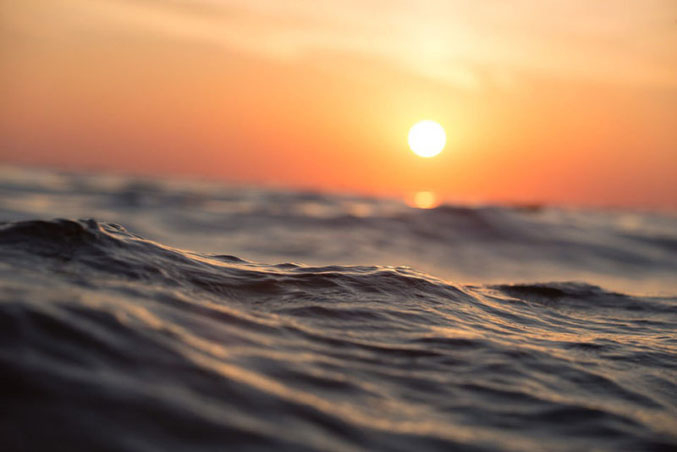
 Oceans are as hot as humans have known them and we’re to blame. We must use energy more wisely going forward and trust in the actions of our youth, https://www.theguardian.com/environment/climate-consensus-97-per-cent/2020/jan/13/oceans-are-as-hot-as-humans-have-known-them-and-were-to-blame [excellent graph] John Abraham Tue 14 Jan 2020 Oceans are as hot as humans have known them and we’re to blame. We must use energy more wisely going forward and trust in the actions of our youth, https://www.theguardian.com/environment/climate-consensus-97-per-cent/2020/jan/13/oceans-are-as-hot-as-humans-have-known-them-and-were-to-blame [excellent graph] John Abraham Tue 14 Jan 2020 Each year, unfathomable amounts of energy are added to the oceans. Scientists measure heat in joules; the amount of heat in the oceans is so large that we report it in zettajoules. What is a zettajoule? It is 1,000,000,000,000,000,000,000 joules. The amount of heat we are putting into the oceans is equivalent to about five Hiroshima atom bombs of energy every second.
I am part of the team of researchers that published a paper on ocean warming that shows the total heat of Earth is increasing with global heating, as scientists have predicted for decades. Each year, we take Earth’s temperature to try to determine what is happening to our climate. Each year the news is worse than the year before. There is hope, which I will discuss later. But first, let’s talk about the new study. As humans emit heat-trapping gases into the atmosphere, it creates an energy imbalance. There is more heat coming in than going out. That means the Earth is out of balance, and temperatures are rising. The vast majority of the excess energy – more than 90% – ends up in the oceans. Consequently, ocean temperatures are rising, and we can measure it. Global warming is really ocean warming, and it has severe consequences. First, it makes ocean levels rise, because warming water expands. Scientists estimate that by the year 2100, oceans will be about 3ft higher than they were in the year 2000, displacing 150 million people around the world. Warmer oceans also make our weather more extreme. They supercharge typhoons and hurricanes. They make rains more deadly and flooding more severe. The rising temperatures are also threatening sea life. We are experiencing major die-offs of coral reefs, which are incredibly important to ocean biodiversity. Rising ocean water is not just a problem for fish and sea life, it is a problem for everyone. The leader of our team, Dr Lijing Cheng, developed an innovative way to measure ocean temperatures. We only get data where we place temperature sensors, and sophisticated mathematics are used to fill in the gaps and create a continuous picture of what is happening. His method of filling in the data gaps has been shown to be very accurate and scientists around the world have adopted the techniques. Often when scientists report climate data, they try to show trends. It isn’t so important what the ocean temperatures were last year or what they will be this year. What really matters is the trend: are the oceans getting hotter or colder? Using the late 1990s as a reference, we see that years prior are colder and years after are warmer. In fact, we see that the oceans have warmed continuously since about 1990. This long-term trend is what climate breakdown looks like, and it is terrible news for the future of the planet. All reasonable people know that the climate is warming and humans are the cause. Sometimes, I am asked for proof of warming, and there are many things I can point to: ice is melting, air temperatures are increasing, sea levels are rising, etc. But the best proof of warming is in the oceans. No one can dispute the data. The oceans are unequivocally warming. So, what do we do about it? Well, we can begin to use energy more wisely. This will not only help with the climate crisis but save money as well. Secondly, we can maximise our energy from renewable sources such as wind, water, and solar. One of the things that gives me hope is that energy from solar and wind power is now cheaper than dirty coal. The benefits of solar and wind depend, of course, on how sunny or windy the conditions are, but with the drop in green energy prices, it no longer makes economic sense to build coal plants. Another bit of hope is represented by the growing actions of our youth. Make no mistake, the Greta Thunbergs of the world will change things in ways that privileged middle-aged white men like me cannot. Their generation will inherit a dire situation, but they have the passion to act, and decades of unarguable evidence that they must. So yes, 2019 set yet another dire record for Earth’s climate. But the fight continues to make the future more habitable for our children and their children.
|
|
Britons want real action on climate change, but Boris Johnson’s govt missing in action on this
  UK Energy Policy, Independent 12th Jan 2020 UK Energy Policy, Independent 12th Jan 2020Boris Johnson was today facing calls to step up action on global warming, after a poll for The Independent found overwhelming support for radical change to end the UK’s net carbon emissions by the end of the decade. Some 70 per cent of those questioned by pollsters BMG said they supported the target of net-zero emissions by 2030, with only 7 per cent opposing it. And support for swift action over the next 10 years was high across all age ranges, social groups and parts of the country, countering perceptions of a generational or urban/rural split on the climate emergency. Independent 8th Jan 2020, Ministers are under fire after revealing their strategy to achieve net-zero carbon emissions by 2050 will not be released until the end of the year. It means the plans – which will require huge and potentially unpopular changes to transport, energy and agriculture – will only emerge more than a year after the legal commitment was made. “If this is true, it doesn’t really smack of a government treating this issue as a climate emergency,” said Clive Lewis, Labour’s Treasury spokesman and a
leadership candidate. And Wera Hobhouse, the Liberal Democrat climate emergency spokesperson, pointing to the wildfire crisis in Australia, said: “While the world is waking up to the dangers of climate change, this Tory government is still on holiday. |
|
‘Error of judgement’: UK police recall guide which listed Extinction Rebellion among extremist groups
‘Error of judgement’: UK police recall guide which listed Extinction Rebellion among extremist groups https://www.sbs.com.au/news/error-of-judgement-uk-police-recall-guide-which-listed-extinction-rebellion-among-extremist-groups
Counter-terrorism police in South-East England say they made an ‘error of judgement’ in adding climate Justice group Extinction Rebellion to a list of extremist ideologies.
The Guardian revealed the group was included in a 12-page guide named ‘Safeguarding young people and adults from ideological extremism’.
The document was designed to help educate people working with youth to “recognise when young people or adults may be vulnerable to extreme or violent ideologies”,
The guide advises people to look out for young people who “neglect to attend school” or “participate in planned school walkouts” – an apparent reference to the global School Strike for climate movement started by Greta Thunberg this year.
It also suggests that young people who engage in non-violent direct action such as writing environmentally-themed graffiti, sit-down protests or banner drops are potentially at risk of radicalisation.
The environmental group featured alongside Neo-Nazi terror operations and a pro-terrorist Islam outfit.
In a statement to The Guardian, Counter Terrorism Policing South East boss Kath Barnes said the guide is being recalled.
“The document was designed for a very specific audience who understand the complexities of the safeguarding environment we work within and who have statutory duties under Prevent. We are in the process of confirming who it has been shared with and recalling it.”
Extinction Rebellion was founded in October 2018 and the group maintains a welcoming, non-violent culture is at the core of its beliefs.
A spokesperson for Extinction Rebellion’s Sydney arm, AJ Tennant, says it was a shock to hear the international movement had made it onto the list in the first place.
“It’s very distressing that a peaceful, environmental organisation that’s trying to advocate for the protection of humanity would be treated with such disdain.”
He says he understands that people may find the extinction rebellion movement confronting, and even frustrating at times, but argues the movement has always been focused on non-violent methods of drawing attention to the climate debate.
“The first word that applies to everything that XR does is non-violent. We talk about being peaceful, we talk about having love in the movement, we talk about apologising to people for any inconvenience we caused, so while we are disruptive, we are always, always peaceful.
London-based human rights lawyer and media commentator Shoaib Khan has taken to Twitter to condemn the actions of British authorities.
Tens of thousands of Australians took to the streets on Friday to demand stronger action on climate, with some in the large crowds carrying the Extinction Rebellion network’s recognisable logo and flag.
Climate protests in London, Berlin, Madrid, Copenhagen and Stockholm target Australian government
Climate action protesters angry over Australia’s bushfires rally across Europe https://mobile.abc.net.au/news/2020-01-11/scott-morrison-labelled-laughing-stock-europe-climate-protests/11859988 BY EUROPE CORRESPONDENT BRIDGET BRENNAN AND ROSCOE WHALAN IN LONDON
Thousands of people have taken part in demonstrations across Europe, taking aim at what they say is the Australian Government’s lack of action on climate change during the bushfire crisis.
- Demonstrations organised by Extinction Rebellion were held in London, Berlin, Madrid, Copenhagen and Stockholm
- The protesters called for stronger action on climate change in response to the Australian bushfires
- Protesters in London rallied outside Australia House, while protesters chanted outside the Australian embassy in Berlin
Protesters stopped traffic in London and turned out at rallies in Berlin, Madrid, Copenhagen and Stockholm to show their support for victims of the disasters.
At the Strand in London, hundreds gathered outside Australia House, where the High Commission of Australia is located, calling for stronger action on climate change as part of a protest organised by Extinction Rebellion.
Anne Coates travelled from Sheffield, north of London, to attend the rally.
She began to cry when she spoke about watching the effect of the disaster on people who had lost relatives and homes.
“It’s just too much for your heart. You just can’t live with it. It just gets worse and worse every day,” she said.”Absolutely devastating to watch it. It’s like hell. And it seems like governments around the world are in a race to drag us down to hell.”
She said Prime Minister Scott Morrison was “a laughing stock around the world”.
“We’re absolutely furious with him. And I don’t know what’s it going to take. Governments should be listening,” she said.
Many people wore koala hats to represent the massive loss of wildlife in New South Wales, Victoria and South Australia.
Fi Radford from Bristol carried a sign which said “koalas not coal”.
“We’re here to say to the Australian people, challenge your Government on the evidence they’re giving you,” she said.
“Australia, you are custodians of precious species that exist nowhere else in the world. Overturn your Government, they’re leading you to destruction.”
Among the protesters were some of the tens of thousands of Australians living in London.
Harley McDonald-Eckersall from Melbourne said she had been watching on in horror at what has been unfolding in Australia.“It’s been so horrible being away … Australians are extraordinarily resilient — like our First Nations people who have survived genocide and are still caring for the environment,” she said.
Australian Dylan Berthier said he believed the catastrophic conditions in Australia were a wake-up call for the world.
“I think a crisis of this magnitude is a global crisis. I think world leaders have a responsibility to call on the Australian Government to enact new policy that will actually prevent this from happening in the future,” he said.
In Germany, protesters chanted outside the Australian embassy in Berlin.
One man carried a sign which read “Aloha from Berlin” in reference to Mr Morrison’s maligned trip to Hawaii when the bushfires were burning in December.
The climate action group Extinction Rebellion organised the protests across Europe.
Bushfires ‘a warning to the whole world’: UK politicians
The bushfire emergency has been front-page news in the UK for weeks — and has forced Tourism Australia to temporarily pull its new $15 million advertising campaign, fronted by Kylie Minogue.
When the UK Parliament returned earlier this week, Speaker Lindsay Hoyle said what had been happening in Australia should act as a “wake-up call for the world”.
Last year, the Conservative Government in the United Kingdom passed legislation to reach net-zero carbon emissions by 2050 — one of the most ambitious targets set by a major economy.
But many environmental groups have said 2050 is not soon enough.
Labour leadership contender Clive Lewis told the House of Commons: “So as Australia burns, as millions in African states face climate-driven famine, and floods have swept the north of England, will this Government give a damn about this existential threat and act, not posture?”
Shadow Foreign Secretary Emily Thornberry, who is vying to become the new opposition leader, has criticised the Morrison Government.
“I hope that the horrendous wildfires in Australia, brought on by record temperatures, with such devastating impacts for the human and animal populations in New South Wales, will not just wake up Scott Morrison’s Government to its wilful inaction over climate change, but serve as a warning to the whole world,” she said.
Earlier this week, outspoken British television presenter Piers Morgan cut short an interview with Liberal MP Craig Kelly on Good Morning Britain.
Climate change and global warming are real and Australia is right now showing the entire world just how devastating it is,” he said.
“And for senior politicians in Australia to still pretend there’s no protection is absolutely disgraceful.”
In an address to Vatican diplomats this week, Pope Francis also criticised climate inaction.
“Many young people have become active in calling the attention of political leaders to the issue of climate change. Care for our common home ought to be a concern of everyone,” he said.
“Sadly, the urgency of this ecological conversion seems not to have been grasped by international politics, where the response to the problems raised by global issues such as climate change remains very weak and a source of grave concern.”
UK’s planned Sizewell power station likely to become a ‘nuclear island’
Rising sea levels could turn new Sizewell power station into ‘nuclear island’ East Anglian Daily Times, 10 January, 2020, Andrew Hirst
Surging sea levels due to climate change could mean new power station Sizewell C is cut off by the water within decades, a top scientist has warned.
World Nuclear Industry Status Report 2019 dispels the illusion of nuclear power as a fix for climate change
 World Nuclear Industry Status Report 2019. (Picture at left is of cover of 2017 report) Tom Burke 8th Jan 2020,
At a time when truth is under systematic political attack and digital technologies are collapsing the public attention span, the publication of long data series such as the Nuclear Industry Status Report becomes
increasingly important.
Nowhere is this more true than when it comes to dealing with nuclear issues where a loss of perspective, a failure of memory, a persistent illusion, can have catastrophic consequences. This remains true whether you arethinking about nuclear energy or nuclear weapons.
high electricity costs for businesses and consumers; a massive waste of
public money; the unproductive diversion of scare engineering talent and
material resources and to an as yet uncounted cost for managing the
back-end of the nuclear fuel cycle.
fuels in the existing electricity system and even more so for the more
electricity intensive global economy we are currently building.
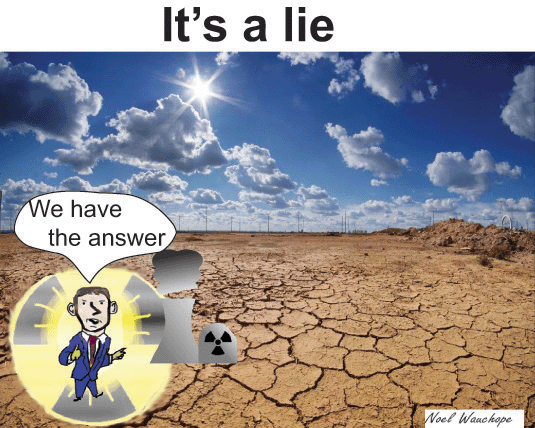
to triple. To build enough to replace fossil fuels would be a global
project far bigger than the Manhattan Project or the us Moonshot.
unsolved problems that nuclear reactors face: affordability, accidents,
waste management, proliferation, special materials and talent scarcity and
system inflexibility. In the real world however, there will not be
unlimited capital and other resources available to deal with climate
change. And there is no time.
energy investment, every further pound invested in nuclear power will delay
the achievement of the government’s net zero by 2050 goal. The Prime
Minister has begun a review of departmental spending. He is looking to
identify unnecessary or inappropriate projects. Cancelling the remainder of
the current nuclear programme would meet this goal admirably. It would also
free up resources for the manifesto commitment to energy efficiency that
would get both carbon emissions and energy bills down.http://tomburke.co.uk/2020/01/08/remarks-by-tom-burke-at-the-launch-of-the-world-nuclear-industry-report-2019-chatham-house/
Small Modular Nuclear Reactors – a wasteful distraction from real efforts to combat climate change

Small modular nuclear reactors – a case of wishful thinking at best, NB Media Cop. by Gordon Edwards, Michel Duguay, Pierre Jasmin, 21 Dec 19“…….3 Climate changes’ valid preoccupation (1)
Many people concerned about climate change want to know more about the moral and ethical choices regarding low-carbon technologies: “Don’t we have a responsibility to use nuclear?” The short reply is: nuclear is too slow and too expensive. The ranking of options should be based on what is cheapest and fastest — beginning with energy efficiency, then on to off-the-shelf renewables like wind and solar energy.
In Germany, Dr. David Jacobs, founder of International Energy Transition Consulting, is proudly mentioning the green energy sector’s contribution in achieving the lowest unemployment rate since reunification of his country in the early 1990s. Post-Fukushima Angela Merkel’s decision to close down all of its nuclear reactors by 2022 has pushed the country to purchase photovoltaic solar panels and 30,000 megawatts of wind energy capacity in only 8 years: an impressive achievement – more than twice the total installed nuclear capacity of Canada. It would be impossible to build 30,000 megawatts of nuclear in only 8 years. By building wind generators, Germany obtained some carbon relief in the very first year of construction, then got more benefit in the second year, even more benefit in the third, and so on, building up to a cumulative capacity of 30,000 MWe after 8 years.
With nuclear, even if you could manage to build 30,000 megawatts in 8 years, you would get absolutely no benefit during that entire 8-year construction period. In fact you would be making the problem worse by mining uranium, fabricating fuel, pouring concrete and building the reactor core and components, all adding to greenhouse gas emissions – earning no benefit until (and IF) everything is finally ready to function. In the meantime (10 to 20 years), you will have starved the efficiency and renewable alternatives of the funds and political will needed to implement technologies that can really make an immediate and substantial difference.
In Saskatchewan, professor Jim Harding, who was director of Prairie Justice Research at University of Regina where he headed up the Uranium Inquiries Project, has offered his own reflection; here is the conclusion of his December 2, 2019 comment:
““In short, small reactors are another distraction from Saskatchewan having the highest levels of GHGs on the planet – nearly 70 metric tonnes per capita. While the rest of Canada has been lowering emissions, those here, along with Alberta with its high-carbon tar sands, have continued to rise. Saskatchewan and Alberta’s emissions are now almost equal to all the rest of Canada. Shame on us!”
In the USA, engineers and even CEOs of some of the leading nuclear companies are admitting that the age of nuclear energy is virtually over in North America. This negative judgment is not coming from people who are opposed to nuclear power, quite the opposite — from people lamenting the decline. See, for example, one major report from the Engineering faculty at Carnegie-Mellon University.
Thousands march in Australian cities protesting government inaction on climate change
 Sydney CBD climate protest attracts over 30,000 people, SMH, By Janek Drevikovsky and Matt Bungard, January 10, 2020 — More than 30,000 protesters brushed off hot and humid conditions to voice their displeasure at the federal government’s handling of the bushfire crisis and its attitude towards climate change.The event in Sydney’s CBD was set up a few weeks ago by Uni Students for Climate Justice, in conjunction with Extinction Rebellion…….
Protesters chanted, “Hey hey, ho ho ScoMo has got to go” as speakers climbed Town Hall’s side steps, and later moved on to “The liar from the shire, the country is on fire”.
She was given a move-on order by police while protesting outside Kirribilli House last September. Her hope is that Friday’s protest will create change……….
Protests also took place in other Australian capital cities. https://www.smh.com.au/environment/climate-change/sydney-cbd-climate-protest-attracts-thousands-20200110-p53qhq.html?promote_channel=edmail&mbnr=MTM2NDAwMjM&eid=email:nnn-13omn655-ret_newsl-membereng:nnn-04%2F11%2F2013-news_pm-dom-news-nnn-smh-u&campaign_code=13INO009&et_bid=292
Bradwell nuclear power plan – foolish, in view of climate change predictions
BANNG 8th Jan 2020, As we enter a new year, Andy Blowers muses on the massive challenge of climate change that lies ahead, globally and locally, in the column for Regional Life, January 2020.
In East Anglia, we are increasingly aware of record heatwaves, milder and wetter winters, retreating coastlines and loss of precious habitats and declining and disappearing species. To an extent, these may be tackled by adaptive measures such as managed retreat of the coastline or hard defences. Even then, land loss and inundation will be unavoidable.
The idea of a massive nuclear power station at Bradwell on a
site threatened by the impacts of climate change seems foolish in the
extreme. Far better to go for cheaper, less risky and easily deployable
renewable options. Concerted action worldwide and locally, by governments,
businesses and individuals, is needed now if we are to reduce carbon
emissions to net zero and avert catastrophe. That was a clear message from
the General Election. Now we must get on with it.
The twin horrors of nuclear weapons and climate change
At a time when major nuclear arms’ treaties are being orphaned and climate disruption is ballooning, many are asking if there are connections between these twin threats to Creation. The answer is an obvious and uncomfortable yes.
Australian government plans to transport nuclear wastes 1000s of kilometres, a dangerous plan in view of bushfires
 Transporting nuclear wastes across Australia in the age of bushfires, Independent Australia, By Noel Wauchope | IN 2020, the final decision on a site for Australia’s interim National Radioactive Waste Facility will be announced, said Resources Minister Matt Canavan on 13 December.
He added: I will make a formal announcement early next year on the site-selection process.”
With bushfires raging, it might seem insensitive and non-topical to be worrying now about this coming announcement on a temporary nuclear waste site and the transport of nuclear wastes to it. But this is relevant and all too serious in the light of Australia’s climate crisis.
The U.S. National Academies Press compiled a lengthy and comprehensive report on risks of transporting nuclear wastes — they concluded that among various risks, the most serious and significant is fire:…..
Current bushfire danger areas include much of New South Wales, including the Lucas Heights area, North and coastal East Victoria and in South Australia the lower Eyre and Yorke Peninsulas. If nuclear wastes were to be transported across the continent, whether by land or by sea, from the Lucas Heights nuclear reactor in Sydney to Kimba in South Australia, they’d be travelling through much of these areas. Today, they’d be confronting very long duration, fully engulfing fires.

Do we know what route the nuclear wastes would be taking to Kimba, which is now presumed to be the Government’s choice for the waste dump? Does the Department of Industry Innovation and Science know? Does the Australian Nuclear Science and Technology Organisation (ANSTO) know? Well, they might, but they’re not going to tell us.
We can depend on ANSTO’s consistent line on this :
‘In line with standard operational and security requirements, ANSTO will not comment on the port, routes or timing until after the transport is complete.’
That line is understandable of course, due to security considerations, including the danger of terrorism.
Spent nuclear fuel rods have been transported several times, from Lucas Heights to ports – mainly Port Kembla – in great secrecy and security. The reprocessed wastes are later returned from France or the UK with similar caution. Those secret late-night operations are worrying enough, but their risks seem almost insignificant when compared with the marathon journey envisaged in what is increasingly looking like a crackpot ANSTO scheme for the proposed distant Kimba interim nuclear dump. It is accepted that these temporary dumps are best located as near as practical to the point of production, as in the case of USA’s sites.
Australians, beset by the horror of extreme bushfires, can still perhaps count themselves as lucky in that, compared with wildfire regions in some countries, they do not yet have the compounding horror of radioactive contamination spread along with the ashes and smoke.
Fires in Russia have threatened its secret nuclear areas……
Many in America have long been aware of the transport danger:
The state of Nevada released a report in 2003 concluding that a steel-lead-steel cask would have failed after about six hours in the fire and a solid steel cask would have failed after about 11 to 12.5 hours. There would have been contamination over 32 square miles of the city and the contamination would have killed up to 28,000 people over 50 years.
The State of Wyoming is resisting hosting a nuclear waste dump, largely because of transportation risks as well as economic risks. In the UK, Somerset County Council rejects plans for transport of wastes through Somerset.
In the years 2016–2019, proposals for nuclear waste dumping in South Australia have been discussed by government and media as solely a South Australian concern. The present discussion about Kimba is being portrayed as just a Kimba community concern.
Yet, when the same kind of proposal was put forward in previous years, it was recognised as an issue for other states, too.
Most reporting on Australia’s bushfires has been excellent, with the exception of Murdoch media trying to downplay their seriousness. However, there has been no mention of the proximity of bushfires to Lucas Heights. As happened with the fires in 2018, this seems to be a taboo subject in the Australian media.
While it has never been a good idea to trek the Lucas Heights nuclear waste for thousands of kilometres across the continent – or halfway around it by sea – Australia’s new climate crisis has made it that much more dangerous. Is the bushfire apocalypse just a one-off? Or, more likely, is this nationwide danger the new normal? https://independentaustralia.net/environment/environment-display/transporting-nuclear-wastes-across-australia-in-the-age-of-bushfires,13465
Australia Will Lose to Climate Change
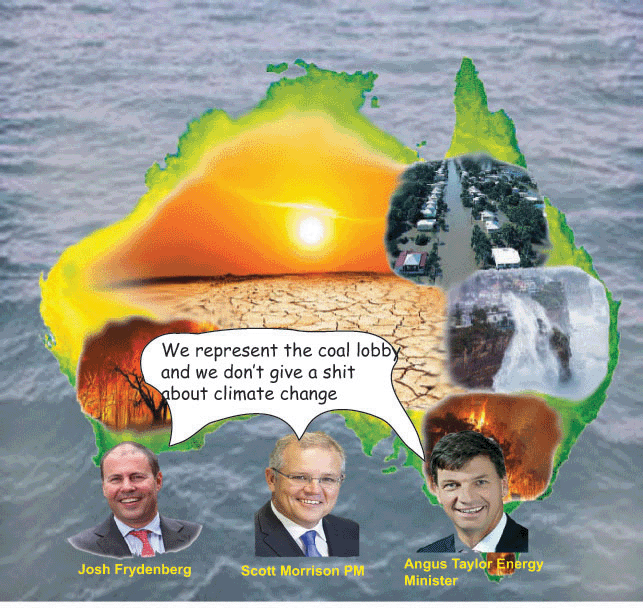
Australia Will Lose to Climate Change https://www.theatlantic.com/science/archive/2020/01/australia-caught-climate-spiral/604423/ Even as the country fights bushfires, it can’t stop dumping planet-warming pollution into the atmosphere.
But now Australia is buckling under the conditions that its fossil fuels have helped bring about. Perhaps the two biggest kinds of climate calamity happening today have begun to afflict the continent.
 The first kind of disaster is, of course, the wildfire crisis. In the past three months, bushfires in Australia’s southeast have burned millions of acres, poisoned the air in Sydney and Melbourne, and forced 4,000 tourists and residents in a small beach town, Mallacoota, to congregate on the beach and get evacuated by the navy. A salvo of fires seems to have caught the world’s attention in recent years. But the current Australian season has outdone them all: Over the past six months, Australian fires have burned more than twice the area than was consumed, combined, by California’s 2018 fires and the Amazon’s 2019 fires.
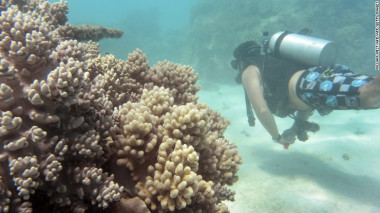 The second is the irreversible scouring of the Earth’s most distinctive ecosystems. In Australia, this phenomenon has come for the country’s natural wonder, the Great Barrier Reef. From 2016 to 2018, half of all coral in the reef died, killed by oceanic heat waves that bleached and then essentially starved the symbiotic animals. Because tropical coral reefs take about a decade to recover from such a die-off, and because the relentless pace of climate change means that more heat waves are virtually guaranteed in the 2020s, the reef’s only hope of long-term survival is for humans to virtually halt global warming in the next several decades and then begin to reverse it.
Meeting such a goal will require a revolution in the global energy system—and, above all, a rapid abandonment of coal burning. But there’s the rub. Australia is the world’s second-largest exporter of coal power, and it has avoided recession for the past 27 years in part by selling coal.
Though polls report that most Australians are concerned about climate change, the country’s government has so far been unable to pass pretty much any climate policy. In fact, one of its recent political crises—the ousting of Prime Minister Malcolm Turnbull in the summer of 2018—was prompted by Turnbull’s attempt to pass an energy bill that included climate policy. Its 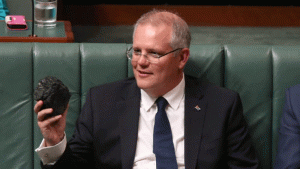 current prime minister, Scott Morrison, actually brought a lump of coal to the floor of Parliament several years ago while defending the industry. He won an election last year by depicting climate change as the exclusive concern of educated city-dwellers, and climate policy as a threat to Australians’ cars and trucks. He has so far attempted to portray the wildfires as a crisis, sure, but one in line with previous natural disasters.
In fact, it is unprecedented. This season’s fires have incinerated more than 1,500 homes and have killed at least 23 people, Prime Minister Morrison said on Saturday.* There were at least twice as many fires in New South Wales in 2019 as there were in any other year this century, according to an analysis by The New York Times. Climate change likely intensified the ongoing epidemic: Hotter and drier weather makes wildfires more common, and climate change is increasing the likelihood of both in Australia. Last year was both the hottest and driest year on record in the country.
Perhaps more than any other wealthy nation on Earth, Australia is at risk from the dangers of climate change. It has spent most of the 21st century in a historic drought. Its tropical oceans are more endangered than any other biome by climate change. Its people are clustered along the temperate and tropical coasts, where rising seas threaten major cities. Those same bands of livable land are the places either now burning or at heightened risk of bushfire in the future. Faced with such geographical challenges, Australia’s people might rally to reverse these dangers. Instead, they have elected leaders with other priorities.
The nuclear danger in wildfires: why the silence on spontaneous ignition, (pyrphoricity), of uranium
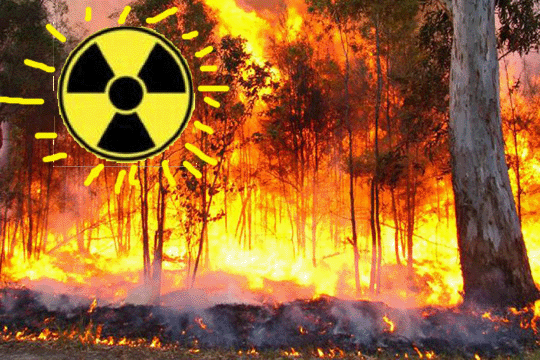 pyrophoric@hush.com– 7 Dec 2020 Why doesn’t anyone care about pyrphoricity and the speading of unquenchable wildfires in populated areas, in industial Countries? Especially around large nuclear complexes like INL, Hanford, Mayak? Fukushima and Chernobyl? The current wildfires in Australia are some the worst catastrophe in History. I have been reading about Uranium and rare earth mining, close to the Amazon. The mining and contamination of areas around and, in the Amazon. The contamination maybe a more important factor in the wildfires there, than climate change. The human encroachment via clearing of forests, heavy metal mining, rare earth mining and uranium mining are certainly important factors.
Most reactors are well beyond their initial licensing dates. More than 30 years old. Corroded, embrittled, cracked with poor to no backup. Poor supervision in countries like the USA, Ukraine, and eastern Europe. Accelerated climate change is significantly increasing the risk of nuclear reactor catastrophe. FROM IAEA PDF on Uranium PDA “Uranium metal can be melted by any of several different techniques. However, because uranium is very reactive when heated in air, melting must be done either under a protective inert atmosphere or in a vacuum.17 Health and safety considerations must be carefully considered when using uranium because of its high toxicity and pyrophoricity. The main hazard to health occurs where finely divided particles can become airborne and inhaled. For this reason, vents and fume hoods should be used, or the workers should use respirator equipment to avoid inhalation. The use of pyrophoric phosphorus to fire bomb dresden, in world war 2 killed 120,000 people and burned Dresden to the ground. Guess what, Uranium is more pyrophoric than phosphorus and takes much less to start fires and keep them burning. The government will not talk about it. Nobody will talk about it primarily because of the implications for storage of nuclear waste, what can happen after nuclear catastrophes, and because of the militaries ongoing uses, of depleted Uranium that is highly pyrophoric and radioactive. |

1 This Month
26 September – International Day for the Total Elimination of Nuclear Weapons





PLEASE OPPOSE HR 8255 AND S.3639 – bills would accelerate satellite deployment, with no environmental review or safeguards – https://ncstd5li.quorum.us/campaign/169331/
To see nuclear-related stories in greater depth and intensity – go to https://nuclearinformation.wordpress.com
-
Archives
- September 2026 (281)
- August 2026 (330)
- July 2026 (355)
- June 2026 (287)
- May 2026 (306)
- April 2026 (356)
- March 2026 (251)
- February 2026 (267)
- January 2026 (308)
- December 2025 (358)
- November 2025 (359)
- October 2025 (375)
-
Categories
- 1
- 1 NUCLEAR ISSUES
- business and costs
- climate change
- culture and arts
- ENERGY
- environment
- health
- history
- indigenous issues
- Legal
- marketing of nuclear
- media
- opposition to nuclear
- PERSONAL STORIES
- politics
- politics international
- Religion and ethics
- safety
- secrets,lies and civil liberties
- spinbuster
- technology
- Uranium
- wastes
- weapons and war
- Women
- 2 WORLD
- ACTION
- AFRICA
- Atrocities
- AUSTRALIA
- Christina's notes
- Christina's themes
- culture and arts
- Events
- Fuk 2022
- Fuk 2023
- Fukushima 2017
- Fukushima 2018
- fukushima 2019
- Fukushima 2020
- Fukushima 2021
- general
- global warming
- Humour (God we need it)
- Nuclear
- RARE EARTHS
- Reference
- resources – print
- Resources -audiovicual
- Weekly Newsletter
- World
- World Nuclear
- YouTube
-
RSS
Entries RSS
Comments RSS

