Global Optimism – The Future We Choose
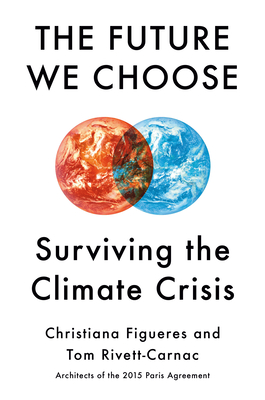 Observer 15th Feb 2020, Christiana
 Figueres is a founder of the Global Optimism group and was head of the UN climate change convention when the Paris agreement was achievedin 2015.
Your new book is called The Future We Choose. But isn’t it too
late to stop the climate crisis? We are definitely running late. We have
delayed appallingly for decades. But science tells us we are still in the
nick of time. We can only choose it this decade.
Our parents did not have this choice, because they didn’t have the capital, technologies and understanding. And for our children, it will be too late.
So this is the decade and we are the generation. If we all reduce our emissions,
collectively we give a signal to the market. Obviously, corporations have
their own responsibilities but it’s helpful to have a strong demand from
the public. Once you get governments, corporations and the public moving in
the same direction towards low carbon, it can grow exponentially [such as
with renewable energy and electric cars]. People reducing their emissions
– by flying less, eating less meat and using clean energy, for example
– is important.
Giant iceberg ‘calves’ from Antarctic ice shelf

Shrinking Antarctic ice shelf Pine Island Glacier sheds giant iceberg, ABC News, Digital Story Innovation Team By Mark Doman 14 Feb 20, In one of the fastest-changing areas of the Antarctic ice sheet, satellites have captured the formation of a giant, 300-square-kilometre iceberg.
Researchers monitoring satellite imagery of the Pine Island Glacier (PIG), in west Antarctica, first noticed two large rifts forming in the shelf in 2019.
Over the next few months, as the glacier moved out towards the Amundsen Sea, the rifts expanded, eventually leading to the splitting of the iceberg from the glacier on February 9.
Within a day, the iceberg had broken up into smaller pieces.
Only one of the pieces was large enough to be named (B-49) and tracked by the United States National Ice Centre.
It comes just days after a station on the Antarctic Peninsula logged its hottest day on record, registering a temperature of 18.3 degrees Celsius.
The peninsula, which juts out to the north-east of the Pine Island Glacier, is among the fastest-warming regions on the planet. Temperatures there have increased almost 3C over the last 50 years, according to the World Meteorological Organisation.
Last month, scientists also recorded unusually warm water beneath the Thwaites Glacier, a neighbour to Pine Island.
While the calving of icebergs from shelves such as the Pine Island Glacier is a natural process in the life of a giant glacier, the rate at which this glacier and others in the region have been disintegrating is a cause of concern for scientists.
Previously the ice shelf calved once a decade. By the early 2000s, it started calving once every five years. But since 2013, the glacier has calved five times, according to Stef Lhermitte, a remote sensing scientist from the Delft University of Technology in the Netherlands……. https://www.abc.net.au/news/2020-02-13/antarctic-ice-shelf-pine-island-glacier-sheds-giant-iceberg/11957770
Sellafield and Drigg, Today and tomorrow’s Flood Warning.
should be no new nuclear wastes arriving at Sellafield, no new so called
Small Modular Reactors on this floodplain ….and no new coal mine deep
under the Irish Sea. Cumbria (and the fallout is planetary) is ALREADY
under intolerable risks. Today’s flood warnings …fingers crossed.
Coronovirus, bats, and the Climate Change connection
 The Wuhan Coronavirus, Climate Change, and Future Epidemics…...TIME, 10 Feb 2020,
Some climate models now predict unexpected , unprecedented spike in global temperatures

A few climate models are now predicting an unprecedented and alarming spike in temperatures — perhaps as much as 5 degrees Celsius, Business Insider, CONNOR PERRETT FEB 9, 2020
- A handful of climate projections are predicting much higher rise in global temperatures than scientists have seen in the models before.
- While there’s concern over the number, some scientists hope the latest projections are outliers.
- A 2-degree rise in temperature could lead sea level to jump, coral reefs to die, and water to become dangerously scarce in some parts of the world. Some models right now predict a 5-degree rise.
The startling anomaly first appeared in models from the National Centre for Atmospheric Research (NCAR), which suggested that if Earth’s atmospheric carbon-dioxide concentration doubles (as it’s expected to do by the end of the century), the planet could wind up 5.3 degrees hotter. That’s 33% higher than the group’s previous estimate.
Scientists hope the models are an “overshot,” Bloomberg reported. It will take scientists a significant amount time – at least months – to figure out how to interpret the results.
The climate models estimate “climate sensitivity,” which tells scientists how much warmer the planet will get as a result of rising CO₂ concentrations. For four decades, the expected temperature rise if CO2 levels double has been about 3 degrees.
These models have a proven track record of accurately forecasting climate change. A recent study from the American Geophysical Union found that climate projections over the past five decades have largely been accurate – actual climate observations aligned with the models’ predictions.
Delhi’s disaster – disappearing water supplies
|
Delhi is facing a water crisis. Ahead of day zero, the city’s residents have turned to the mafia and murder https://www.abc.net.au/news/2020-02-08/delhi-water-crisis-leads-to-mafia-murder-and-mutiny/11931208
By South Asia correspondent James Oaten and Som Patidar
On a crisp Delhi morning, dozens of women, men and children in one of the city’s poorest areas gather on the side of the road holding plastic bottles and buckets. They’re waiting for a water truck to arrive, clearly identifiable with its large tank on the back and hoses sprouting from the top like tentacles. When it does, the residents will have just a few minutes to fill their containers as much as possible to hopefully secure enough water for the day. In winter, when Delhi is cool, the situation is relatively calm. But in summer, when temperatures surge past 40 degrees Celsius, the situation becomes much more desperate. Fights have broken out. People have been killed. What it’s like to live with limited access to waterWe are getting water now as it is winter, but the crisis deepens in summer,” mother-of-three Babli Singh explained. The Delhi government has in recent years tried to supply water to unauthorised colonies by drilling water bores, but this is a short-term solution that exacerbates a bigger problem. Elsewhere, private enterprises — known locally as the “water mafia” — have been able to profit from the despair by building their own bores. The activity is illegal, but there has been little to nothing done to crack down on the practice. The ABC saw one such private enterprise drilling in a street, and the workers explained they were digging deeper than ever in an effort to find new water. Locals have been forced to borrow money to pay for waterMs Singh is one of the many families that had to pay the so-called water mafia to get their home connected to an illegal bore water supply. Her father-in-law, Inder Dev Singh, said he feels forgotten. “We are not getting any help from the government,” he explained. “The government has been promising us a water pipeline for a long time. We paid for our own private pipeline.” “We have to run behind water tankers. Sometimes I do not get water.” Ms Singh and her family of nine live in what’s considered Asia’s largest “unauthorised colony,” Sangam Vihar — which is home to well over 1 million residents and is located in Delhi’s southern outskirts. The buildings and infrastructure here were never designed or approved by a government agency. Rather, residents simply built their homes on a small plot of land with whatever resources they could muster, mostly concrete and brick. It’s a claustrophobic environment, with dusty roads so congested and narrow that cars often cannot enter. Essential services are also lacking, with the vast majority of residents relying on tanker water for drinking and groundwater for cleaning and washing. But with reserves so low, there’s real concern underground supplies will run dry in just a few months. “Our children go to school without a bath for four or five days,” Ms Singh said. “We are suffering. Life is very hard.” The rise of the ‘water mafia’ Delhi is one of 21 Indian cities that could run out of groundwater this summer, according to a 2018 government thinktank report. If and when this happens, it will be known as “day zero”. The water woes are a product of years of booming population growth, drought and mismanagement. During the summer, that pipe is only turned on for two hours, giving the family a small but crucial window to fill up a large underground tank they installed themselves. The water is drinkable if it is boiled first, he explained. Buying extra water is an option, but in an area where work is infrequent and wages are low, people often need to borrow money to buy extra allocations. “Water is supposed to be free,” Mr Singh explained. “[The private providers] do not want us to get a [government] water by pipeline as they are earning lot of money by providing water by tankers. “There will be a time when there will be no water.
A man was shot in a dispute over waterThe issue of water often only gets attention during the summer, when the situation becomes amplified. In the summer of 2018, a man was shot in Sangam Vihar during a dispute over water. In the same year, in another part of Delhi, a group of men and a juvenile were arrested for beating to death a father and son in another water dispute. Videos of skirmishes and violence also regularly emerge in summer on social-media application WhatsApp. This year, the issue is getting unseasonal attention as Delhiites head to the polls for local government elections. Political candidates, keen on securing votes from the city’s poorest, have made sweeping promises to build pipes to deliver water to every house in Delhi. “It does not get the respect it deserves,” explained Jyoti Sharma, who heads up the water security not-for-profit organisation, FORCE. “Water is central to everything we do. But everybody takes it for granted. So, it does not get the attention it deserves. It’s just these few election days that it’s being talked about.” Ms Sharma says there have been some positive steps in recent years, including forcing large homes to capture rainwater, and directing recycled water into rivers and ponds to recharge underground reserves. But it’s not enough to reverse the depleting trend. She worries about “day zero” but thinks it won’t occur this summer. “I am an Indian,” she explains.
“I’m hoping day zero will not happen. I am hoping it will not happen.” |
|
Climate emergency plans must have a ‘no new nuclear’ clause
The nuclear and fossil fuel industry are mutually intertwined.
“There is no such thing as a zero or near-zero-emission nuclear power plant”
the mean value is about 66 grams of carbon dioxide for every kWh produced by nuclear power. This compares to about 9g for wind, 32g for solar and 443 for gas.
“This puts nuclear as the third highest carbon emitter after coal-fired plants and natural gas….

|
No new nuclear https://theecologist.org/2020/feb/06/no-new-nuclear Radiation Free Lakeland, 6th February 2020
Campaigners demand a ‘no new nuclear’ clause in climate emergency planning. Climate activists across the world are uniting to protect the planet from continuing fossil fuel use. There is much talk of a green industrial revolution and a Green New Deal. This sounds good, but what does it mean?
Kevin Frea, co-chair of the Climate Emergency Network and deputy leader of Lancaster City Council has worked hard to sign local councils up declaring a climate emergency. He said: “This movement is being led by every political group and is involving local people in planning the actions needed to cut carbon.” But there’s an important thing missing here. Last September members of Radiation Free Lakeland lobbied Lancaster City Council asking the council to include a No New Nuclear clause in their climate emergency planning. Continue reading |
Arctic ice melt is changing ocean currents

|
Arctic ice melt is changing ocean currents https://www.sciencedaily.com/releases/2020/02/200207095705.htm
|
Permafrost thawing -“fast and dramatic, affecting landscapes in unprecedented ways

|
Arctic permafrost thaw plays greater role in climate change than previously estimated, https://www.eurekalert.org/pub_releases/2020-02/uoca-apt020320.php UNIVERSITY OF COLORADO AT BOULDER ABRUPT THAWING OF PERMAFROST WILL DOUBLE PREVIOUS ESTIMATES OF POTENTIAL CARBON EMISSIONS FROM PERMAFROST THAW IN THE ARCTIC, AND IS ALREADY RAPIDLY CHANGING THE LANDSCAPE AND ECOLOGY OF THE CIRCUMPOLAR NORTH, A NEW CU BOULDER-LED STUDY FINDS. Permafrost, a perpetually frozen layer under the seasonally thawed surface layer of the ground, affects 18 million square kilometers at high latitudes or one quarter of all the exposed land in the Northern Hemisphere. Current estimates predict permafrost contains an estimated 1,500 petagrams of carbon, which is equivalent to 1.5 trillion metric tons of carbon. The new study distinguishes between gradual permafrost thaw, which affects permafrost and its carbon stores slowly, versus more abrupt types of permafrost thaw. Some 20% of the Arctic region has conditions conducive to abrupt thaw due to its ice-rich permafrost layer. Permafrost that abruptly thaws is a large emitter of carbon, including the release of carbon dioxide as well as methane, which is more potent as a greenhouse gas than carbon dioxide. That means that even though at any given time less than 5% of the Arctic permafrost region is likely to be experiencing abrupt thaw, their emissions will equal those of areas experiencing gradual thaw. This abrupt thawing is “fast and dramatic, affecting landscapes in unprecedented ways,” said Merritt Turetsky, director of the Institute of Arctic and Alpine Research (INSTAAR) at CU Boulder and lead author of the study published today in Nature Geoscience. “Forests can become lakes in the course of a month, landslides occur with no warning, and invisible methane seep holes can swallow snowmobiles whole.” Abrupt permafrost thaw can occur in a variety of ways, but it always represents a dramatic abrupt ecological shift, Turetsky added. “Systems that you could walk on with regular hiking boots and that were dry enough to support tree growth when frozen can thaw, and now all of a sudden these ecosystems turn into a soupy mess,” Turetsky said. Why thawing permafrost matters Permafrost contains rocks, soil, sand, and in some cases, pockets of pure ground ice. It stores on average twice as much carbon as is in the atmosphere because it stores the remains of life that once flourished in the Arctic, including dead plants, animal and microbes. This matter, which never fully decomposed, has been locked away in Earth’s refrigerator for thousands of years. As the climate warms, permafrost cannot remain frozen. Across 80 percent of the circumpolar Arctic’s north, a warming climate is likely to trigger gradual permafrost thaw that manifests over decades to centuries. But in the remaining parts of the Arctic, where ground ice content is high, abrupt thaw can happen in a matter of months – leading to extreme consequences on the landscape and the atmosphere, especially where there is ice-rich permafrost. This fast process is called “thermokarst” because a thermal change causes subsidence. This leads to a karst landscape, known for its erosion and sinkholes. Turetsky said this is the first paper to pull together the wide body of literature on past and current abrupt thaw across different types of landscapes. The authors then used this information along with a numerical model to project future abrupt thaw carbon losses. They found that thermokarst always involves flooding, inundation, or landslides. Intense rainfall events and the open, black landscapes that result from wildfires can speed up this dramatic process. The researchers compared abrupt permafrost thaw carbon release to that of gradual permafrost thaw, trying to quantify a “known unknown.” There are general estimates of gradual thaw contributing to carbon emissions, but they had no idea how much of that would be caused by thermokarst. They also wanted to find out how important this information would be to include in global climate models. At present, there are no climate models that incorporate thermokarst, and only a handful that consider permafrost thaw at all. While large-scale models over the past decade have tried to better account for feedback loops in the Arctic, the Intergovernmental Panel on Climate Change (IPCC)’s most recent report only includes estimates of gradual permafrost thaw as an unresolved Earth system feedback. “The impacts from abrupt thaw are not represented in any existing global model and our findings indicate that this could amplify the permafrost climate-carbon feedback by up to a factor of two, thereby exacerbating the problem of permissible emissions to stay below specific climate change targets,” said David Lawrence, of the National Center for Atmospheric Research (NCAR) and a coauthor of the study. The findings bring new urgency to including permafrost in all types of climate models, along with implementing strong climate policy and mitigation, Turetsky added. “We can definitely stave off the worst consequences of climate change if we act in the next decade,” said Turetsky. “We have clear evidence that policy is going to help the north and thus it’s going to help dictate our future climate.” Other coauthors on the paper include researchers from the University of Guelph, Brigham Young University, the United States Geological Survey, University of Alaska Fairbanks, University of Alberta, Northern Arizona University, Alfred Wegener Institute Helmholtz Centre for Polar and Marine Research, University of Potsdam, Stockholm University, Lawrence Berkeley National Laboratory, and the National Center for Atmospheric Research. |
|
Sea-level rise – an Unmanaged climate risks to spent fuel from U.S. nuclear power plants.
 Unmanaged climate risks to spent fuel from U.S. nuclear power plants: The case of sea-level rise https://www.sciencedirect.com/science/article/abs/pii/S0301421519306937?fbclid=IwAR3G1uXQ-mz1KU1_ENXztdqIdICVZPsgO6Rw-qvQ1jHHPiGPUuumd7OHcjw
Weather reporters joining the battle against climate change
 Weathercasters Are Talking About Climate Change—and How We Can Solve It https://www.motherjones.com/environment/2020/02/weathercasters-are-talking-about-climate-change-and-how-we-can-solve-it/
In recent years there’s been a seismic shift on climate change within the weather reporting community. MADDIE STONE THIS piece was originally published in Grist and appears here as part of our Climate Desk PARTNERSHIP.
For many years, as the science of human-caused climate change grew ever clearer, TV meteorologists avoided discussing the topic on air. Today, many weathercasters bring up climate change regularly. By embracing the science and presenting it in a simple, locally-relevant manner, TV meteorologists have managed to become some of the most effective and trustworthy climate change educators in the country.
Now some meteorologists are taking the conversation a step further and talking not just about the science of climate change, but how we can solve it.
At the 100th annual meeting of the American Meteorological Society (AMS) in Boston earlier this month, a panel of broadcast meteorologists, climate communicators, and policy experts assembled to discuss how solutions to the climate crisis can be woven into TV weather reporting. While wading into politics on the air can carry career risks for many meteorologists, weathercasters are also uniquely positioned to educate the public about climate solutions in a nonpartisan way, whether that’s by delivering locally tailored forecasts of renewable power production or discussing climate resilience strategies in the wake of a major storm.
“Broadcasters have an unusually good platform from which to engage,” said Ed Maibach, the director of the Center for Climate Change Communication at George Mason University, during the panel. “You not only have the access but consistency of relationships with an audience.”
In recent years there’s been a seismic shift on climate change within the weather reporting community. In a 2011 survey of AMS members and the National Weather Association, less than 20 percent felt sure humans are the primary driver of global warming, a statistic that Maibach attributes, in part, to an “aggressive misinformation campaign by the Heartland Institute,” a climate change–denying think tank. But by 2017 that figure had jumped to 80 percent. That’s thanks largely to the efforts of the educators who organized Climate Matters, a climate reporting resource developed by the nonprofit Climate Central, the AMS, and various governmental and academic partners
Why Arctic glaciers are melting away at an accelerating rate
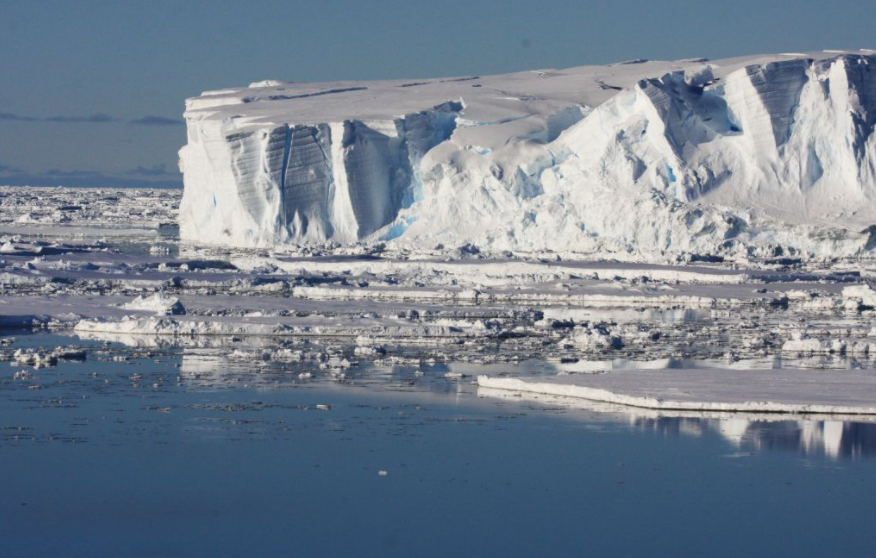
How the ocean is gnawing away at glaciers, https://www.sciencedaily.com/releases/2020/02/200203114350.htm
- Date:
- February 3, 2020
- Source:
- Alfred Wegener Institute, Helmholtz Centre for Polar and Marine Research
- Summary:
- The Greenland Ice Sheet is melting faster today than it did only a few years ago. The reason: it’s not just melting on the surface — but underwater, too. AWI researchers have now found an explanation for the intensive melting on the ice’s underside, and published their findings in the journal Nature Geoscience.
-
The glaciers are melting rapidly: Greenland’s ice is now melting seven times faster than in the 1990s — an alarming discovery, since climate change will likely intensify this melting in the future, causing the sea level to rise more rapidly.
Accordingly, researchers are now working to better understand the underlying mechanisms of this melting. Ice melts on the surface because it is exposed to the sun and rising temperatures. But it has now also begun melting from below — including in northeast Greenland, which is home to several ‘ice tongues’. Each tongue is a strip of ice that has slid down into the ocean and floats on the water — without breaking off from the land ice. The longest ice tongue, part of the ’79° North Glacier’, is an enormous 80 km long. Over the past 20 years, it has experienced a dramatic loss of mass and thickness, because it’s been melting not just on the surface, but also and especially from below.
-
Too much heat from the ocean
A team led by oceanographer Dr Janin Schaffer from the Alfred Wegener Institute, Helmholtz Centre for Polar and Marine Research (AWI) in Bremerhaven has now identified the source of this intense underwater melting. The conclusions of their study, which the experts have just released in the journal Nature Geoscience, are particularly unsettling because the melting phenomenon they discovered isn’t unique to the 79° North Glacier, which means it could produce similar effects elsewhere. For the purposes of the study, the researchers conducted the first extensive ship-based survey of the ocean floor near the glacier, which revealed the presence of a two-kilometre-wide trough, from the bottom of which comparatively warm water from the Atlantic is channelled directly toward the glacier. But that’s not all: in the course of a detailed analysis of the trough, Janin Schaffer spotted a bathymetric sill, a barrier that the water flowing over the seafloor has to overcome. Once over the hump, the water rushes down the back of the sill — and under the ice tongue. Thanks to this acceleration of the warm water mass, large amounts of heat from the ocean flow past the tongue every second, melting it from beneath. To make matters worse, the layer of warm water that flows toward the glacier has grown larger: measured from the seafloor, it now extends 15 metres higher than it did just a few years ago. “The reason for the intensified melting is now clear,” Schaffer says. “Because the warm water current is larger, substantially more warmth now makes its way under the ice tongue, second for second.”
Other regions are also affected
In order to determine whether the phenomenon only manifests at the 79° North Glacier or also at other sites, the team investigated a neighbouring region on Greenland’s eastern coast, where another glacier, the Zachariæ Isstrøm, juts out into the sea, and where a large ice tongue had recently broken off from the mainland. Working from the surface of an ice floe, the experts measured water temperatures near the ocean floor. According to Schaffer: “The readings indicate that here, too, a bathymetric sill near the seafloor accelerates warm water toward the glacier. Apparently, the intensive melting on the underside of the ice at several sites throughout Greenland is largely produced by the form of the seafloor.” These findings will ultimately help her more accurately gauge the total amount of meltwater that the Greenland Ice Sheet loses every year.
Story Source:
Materials provided by Alfred Wegener Institute, Helmholtz Centre for Polar and Marine Research. Note: Content may be edited for style and length.
Europe to be the first carbon neutral continent, and WITH NUCLEAR POWER EXCLUDED

 Renew Extra 1st Feb 2020, Dave Elliott: With Climate Change at the top of the agenda, the EU aims to be the first carbon neutral continent, working towards net zero greenhouse gas emissions by 2050, with a new climate law being enacted soon. That’s taken some fighting for and fiddling, given the opposition from heavy coal users like Poland, but there’s a proposed Just Transition mechanism to help countries like that move to carbon neutrality, with nuclear excluded from support for this.
So renewables should boom even more. Renewables have
certainly been doing well. Germany will soon get around half of its power
from renewables, Portugal is already at over 54%, Denmark near 60%, while
Sweden is at 66% and Austria over 70%. By 2030 some of these countries
could be getting near 100% of their electricity from renewables and should
also be beginning to meet significant shares of their heat and transport
needs using renewables. Sweden already gets around 54% of all its energy
from renewables, Norway and Iceland are both at around 70%.
https://renewextraweekly.blogspot.com/2020/02/there-have-been-divergent-views-on.html
Climate strategies to stave off ecological disaster
 Media on Climate Crisis: Don’t Organize, Mourn, , NEIL DEMAUSE 31 JAN 2920 The year 2019 was, by all accounts, the year of climate awareness. To an unprecedented degree, in the three decades since scientists first warned of the imminent dangers of rising carbon emissions and the resulting global warming, we were transfixed by record-setting heat waves, wildfires in California and Australia, and, of course, Greta Thunberg’s sailboat visit to the US, capped off by her selection as Time‘s Person of the Year (12/23–30/19). Media on Climate Crisis: Don’t Organize, Mourn, , NEIL DEMAUSE 31 JAN 2920 The year 2019 was, by all accounts, the year of climate awareness. To an unprecedented degree, in the three decades since scientists first warned of the imminent dangers of rising carbon emissions and the resulting global warming, we were transfixed by record-setting heat waves, wildfires in California and Australia, and, of course, Greta Thunberg’s sailboat visit to the US, capped off by her selection as Time‘s Person of the Year (12/23–30/19).Yet the newfound attention to climate came with a strange disjunction: Being aware of this massive threat to humanity hasn’t translated into much concerted action to stop it. As Elizabeth Kolbert wrote in the New Yorker (1/13/20):If in the past year (or the past decade) the world began to understand how dangerous climate change is, it certainly didn’t act like it. In the past ten years, more CO2 was emitted than in all of human history up to the election of JFK.
That same disconnect—recognizing the reality of climate change, but not who’s responsible or what could be done about it—is reflected in today’s media coverage of climate. ………….. It’s not that it’s hard to find explanations of which climate strategies would provide the greatest hope for staving off disaster. Project Drawdown, a site that GRADES POTENTIAL SOLUTIONS BY THEIR IMPACT,ranks better management of refrigerants, switching to wind and solar power, and changes in diet and food waste as among the most immediately effective measures. (Electric vehicles, a popular focus for those arguing that technology will save the day, rank a disappointing 26th, in part because they have a large carbon cost to manufacture and won’t help if they’re charged with fossil-fuel-generated electricity; biofuels only made it to 34th, though DRAWDOWN does include them as a possible stopgap measure until more truly renewable energy sources can be brought online.)
The Exponential Roadmap, a study by 22 Swedish scholars, rates switching to solar power, increasing recycling of materials, retrofitting buildings to be more energy-efficient, increasing use of electric vehicles and mass transit, switching to a plant-based diet and reducing deforestation among the most important actions to forestall the climate apocalypse.
None of these methods, climate experts warn, will be possible on a large scale solely by individual action; electric cars, as just one example, are still seen as too expensive and having too few charging stations, two items that are unlikely to be solved without a dramatic shift in government policies. So while that may spare readers from any unnecessary “self-flagellation,” the important corollary is that preventing climate catastrophe will require both individual consumer action and governmental action—as well as addressing the political reasons why governments have been so slow to act.
The media’s shift toward acknowledging the reality of climate change is welcome, if three decades too late, given that the IPCC has been sounding essentially the same alarm about a warming planet since 1988 (Guardian, 3/30/14). But the public presentation of the climate crisis remains carefully constrained to focus on the horrors awaiting us, not on what can be done to ward off the worst, or who stands in the way of doing so. When climate coverage leaves that out, it amounts to mourning the Earth without trying to save it.
|
|
|
Katherine Hayhoe on A BETTER WAY TO TALK ABOUT THE CLIMATE CRISIS
Don’t start with fear, judgment, condemnation, or guilt. And don’t start with just overwhelming people with facts and figures. Do start by connecting the dots to what is already important to both of us, and then offer positive, beneficial, and practical solutions that we can engage in.
climate change affects the economy, the availability of natural resources, prices, jobs, international competition, and more. Failing to account for climate change in future long-range planning could lose us a competitive edge even in a best-case scenario, and potentially mean the end of a product line or an entire business in the worst case. By connecting climate impacts to what we already care about, we can recognize the importance and urgency of taking action.
|
A BETTER WAY TO TALK ABOUT THE CLIMATE CRISIS GRETCHEN GAVETT, Harvard Business Review, JANUARY 30, 2020 Many of us care about the climate, but it can be challenging to talk about. It’s easy to get bogged down in stats and statistics, for one. And it can be nerve-racking to approach someone if you don’t already know what their beliefs on the topic are. Sometimes, it’s easier to just keep our mouths shut. Given the urgency of the climate crisis, however, many of us feel that silence is no longer an option. And Dr. Katharine Hayhoe, a climate scientist at Texas Tech University, is the person to talk to about how to talk about climate change. Continue reading |
1 This Month
26 September – International Day for the Total Elimination of Nuclear Weapons





PLEASE OPPOSE HR 8255 AND S.3639 – bills would accelerate satellite deployment, with no environmental review or safeguards – https://ncstd5li.quorum.us/campaign/169331/
To see nuclear-related stories in greater depth and intensity – go to https://nuclearinformation.wordpress.com
-
Archives
- September 2026 (281)
- August 2026 (330)
- July 2026 (355)
- June 2026 (287)
- May 2026 (306)
- April 2026 (356)
- March 2026 (251)
- February 2026 (267)
- January 2026 (308)
- December 2025 (358)
- November 2025 (359)
- October 2025 (375)
-
Categories
- 1
- 1 NUCLEAR ISSUES
- business and costs
- climate change
- culture and arts
- ENERGY
- environment
- health
- history
- indigenous issues
- Legal
- marketing of nuclear
- media
- opposition to nuclear
- PERSONAL STORIES
- politics
- politics international
- Religion and ethics
- safety
- secrets,lies and civil liberties
- spinbuster
- technology
- Uranium
- wastes
- weapons and war
- Women
- 2 WORLD
- ACTION
- AFRICA
- Atrocities
- AUSTRALIA
- Christina's notes
- Christina's themes
- culture and arts
- Events
- Fuk 2022
- Fuk 2023
- Fukushima 2017
- Fukushima 2018
- fukushima 2019
- Fukushima 2020
- Fukushima 2021
- general
- global warming
- Humour (God we need it)
- Nuclear
- RARE EARTHS
- Reference
- resources – print
- Resources -audiovicual
- Weekly Newsletter
- World
- World Nuclear
- YouTube
-
RSS
Entries RSS
Comments RSS

