Meet the Climate Science Deniers Who Downplayed COVID-19 Risks

|
Meet the Climate Science Deniers Who Downplayed COVID-19 The very next day, the American Council on Science and Health (ACSH) published an article titled, “Coronavirus in the U.S.: How Bad Will It Be?” “Is coronavirus worse than the flu?” it began. “No, not even close.” “It already has spread from person-to-person in the U.S., but it probably won’t go far,” ACSH added. “And the American healthcare system is excellent at dealing with this sort of problem.” ACSH is one of several organizations promoting climate science denial that are now spreading misinformation on the coronavirus, with potentially deadly consequences. American Council on Science and Health?The ACSH presents itself to the public as a proponent of “peer-reviewed mainstream science,” in the words of the organization’s mission. Their experts have frequently been quoted in mainstream newspapers and magazines, and they pen columns criticizing journalists who write critically about companies like Monsanto. The group has received funding from oil giants including ExxonMobil, as well as from the agribusiness, chemical and tobacco industries to name a few. When it comes to climate change, ACSH has published a steady stream of articles downplaying climate science and criticizing efforts to slow carbon emissions — even in the face of a mountain of peer-reviewed research on the climate crisis. ACSH slammed the medical journal The Lancet as “an ideologically driven outlet with a very clear political agenda where being sensationalist and culturally woke trumps evidence and reasonability” (after the Lancet published an article titled “The carbon footprint”). The purported “pro-science” advocacy group has labeled Greta Thunberg’s activism “doomsday prophesying.” It has (falsely) suggested that climate change is less of a concern because “more people die in winter than in summer” (they don’t). And that’s all just in the past nine months. The ACSH’s stance against climate action dates back to at least 1997. When it comes to coronavirus, now a global pandemic, ACSH’s authors rushed to judgment. They assured readers that there was little to worry about, and put some of the same faulty thinking that underlies their stance on climate change on display. ACSH isn’t alone. Other organizations that have also engaged in climate science denial made similar missteps on COVID-19, including prominent organizations that fanned the flames of conspiracy theories or confidently promoted complacency when circumstances required rapid action. To be clear: No one should be faulted for failing to foresee precisely how severe of a problem COVID-19 would prove to be. None of us has a crystal ball and few, if any, expected this situation to unfold in this particular way. But these organizations published positions that not only wound up being laden with false reassurances, but they did so based on claims that they made confidently at the time that now appear to have been false or misleading. Defending Conspiracy Theorists Continue reading |

Global warming influence on extreme weather events has been frequently underestimated

Global warming influence on extreme weather events has been frequently underestimated, Science Daily, March 18, 2020
- Source:
- Stanford University
- Summary:
- Analysis shows global warming is intensifying the occurrence of unprecedented hot spells and downpours faster than predicted by historical trends.
-
A new Stanford study reveals that a common scientific approach of predicting the likelihood of future extreme weather events by analyzing how frequently they occurred in the past can lead to significant underestimates — with potentially significant consequences for people’s lives.
Stanford climate scientist Noah Diffenbaugh found that predictions that relied only on historical observations underestimated by about half the actual number of extremely hot days in Europe and East Asia, and the number of extremely wet days in the U.S., Europe and East Asia.
The paper, published March 18 in Science Advances, illustrates how even small increases in global warming can cause large upticks in the probability of extreme weather events, particularly heat waves and heavy rainfall. The new results analyzing climate change connections to unprecedented weather events could help to make global risk management more effective.
- We are seeing year after year how the rising incidence of extreme events is causing significant impacts on people and ecosystems,” Diffenbaugh said. “One of the main challenges in becoming more resilient to these extremes is accurately predicting how the global warming that’s already happened has changed the odds of events that fall outside of our historical experience.”
A changing world……. https://www.sciencedaily.com/releases/2020/03/200318143722.htm
6 Ways Trump’s Denial of Science Has Delayed the Response to COVID-19 (and Climate Change)
 6 Ways Trump’s Denial of Science Has Delayed the Response to COVID-19 (and Climate Change) https://insideclimatenews.org/news/19032020/denial-climate-change-coronavirus-donald-trump Misinformation, blame, wishful thinking and making up facts are favorite techniques. Katelyn Weisbrod, 20 Mar 20
Wishing Away the Science.
Coronavirus Feb. 28, 2020 “[Coronavirus is] going to disappear. One day—it’s like a miracle—it will disappear.”
Robert Redfield, director of the Centers for Disease Control and Prevention, said in an interview on CNN that the virus was likely here to stay, possibly for months.
Climate Change September 2015“I’m not a believer in global warming, I’m not a believer in man-made global warming. It could be warming and it’s gonna start to cool at some point.”
The scientific consensus is clear that global warming is happening and is a threat to the planet; The New York Times illustrates the basics of global warming and climate change here.
Misusing Scientific Data
Coronavirus Feb. 10, 2020 “Now, the virus that we’re talking about having to do—you know, a lot of people think that goes away in April with the heat—as the heat comes in. Typically, that will go away in April. We’re in great shape though.”
Some coronaviruses are seasonal. But scientists still don’t know whether the virus that causes COVID-19 will be. Findings of a recent study suggest that the virus is spreading most readily in cooler temperature zones, The Washington Post reports; however, the study does not conclude from that evidence that the virus will be significantly reduced in the summer.
Climate Change Nov. 11, 2019 “You know, I actually heard the other day, some pretty good politician. I’ve seen him around for a long time. Nice white hair. Everything is like central casting. You could put the guy in a movie. He was talking. I don’t know if he believes this—but he was a Democrat—he said, ‘We have 11 years.’ It’s the first time I’ve heard it; I heard 12. But now, see, it’s been a year, so now they think we have 11 years to live. I don’t know, folks. I think these people have gone totally loco.”
The Intergovernmental Panel on Climate Change issued a report in 2018 that said global carbon emissions would need to be cut by 45 percent by 2030 to keep temperatures below 1.5 degrees Celsius. This does not mean we have 11 years to live, as Trump asserted, but rather 11 years to shift energy production away from fossil fuels to keep warming within the goals of the Paris accord.
Making Stuff Up
Coronavirus March 6, 2020 “Anybody that needs a test can have a test. They are all set. They have them out there. In addition to that they are making millions more as we speak but as of right now and yesterday anybody that needs a test that is the important thing…”
Contrary to Trump’s assertion, patients and health care workers were complaining that they could not get access to coronavirus tests. A few days later, testifying to a House committee, Dr. Anthony Fauci, director of the National Institute of Allergy and Infectious Diseases, acknowledged tests were not yet widely available. “The idea of anybody getting it
easily the way people in other countries are doing it—we’re not set up for that,” he said.
Climate Change Sept. 4, 2019 In September, 2019, Trump showed the press an image of Dorian’s projected trajectory that had apparently been altered using a Sharpie to include Alabama in the path of the storm.
Earlier, Trump had tweeted that Alabama would probably be hit by Hurricane Dorian. The National Weather Service in Birmingham, Alabama, then contradicted the president with a tweet saying Alabama was not at risk. Trump used the altered image a few days later.
Blaming China
Coronavirus March 18, 2020 on Twitter “I always treated the Chinese Virus very seriously, and have done a very good job from the beginning, including my very early decision to close the ‘borders’ from China—against the wishes of almost all. Many lives were saved. The Fake News new narrative is disgraceful & false!”
Trump has been urged to stop calling COVID-19 the “Chinese Virus,” a term he has used repeatedly and that some have called racist and dangerous. And many public health experts have criticized the administration’s lack of preparation and failure to act quickly when the virus was first recognized.
Climate Change Nov. 6, 2012 on Twitter
“The concept of global warming was created by and for the Chinese in order to make U.S. manufacturing non-competitive.”
There is a widespread scientific consensus about the reality of human-driven global warming.
Blaming the Democrats
Coronavirus Feb. 28, 2020 “Now the Democrats are politicizing the coronavirus. You know that, right? Coronavirus. They’re politicizing it … And this is their new hoax.”
By this time, the U.S. had confirmed 60 cases of coronavirus. The CDC had already warned the public to prepare for the virus to spread, assuring them that this was not a hoax.
Climate Change Sept. 11, 2019 “Over 100 Democrats have signed up to support the $100 trillion Green New Deal. That’s a beauty. No more cows. No more planes. I guess, no more people, right?”
A Washington Post fact check shows that the Green New Deal resolution supported by most Democrats did not include mention of halting air travel or doing away with cows.
Ignoring Expert Advice
Climate Change Nov. 26, 2018, Commenting to reporters on the Intergovernmental Panel on Climate Change report saying climate change would hurt the economy.
“I’ve seen it, I’ve read some of it, it’s fine. Yeah, I don’t believe it.”
The report, produced by climate experts and Trump’s own administration, said climate change would damage the economy.
Coronavirus March 13, 2020 during a press conference on the coronavirus. Trump is seen shaking hands with Walgreens president Richard Ashworth, despite CDC warnings that shaking hands can spread the virus and recommending elbow bumps instead.
Coronavirus Halts Street Protests, but Climate Activists Have a Plan
 Coronavirus Halts Street Protests, but Climate Activists Have a Plan, NYT, 20 Mar 20, Greta Thunberg, protesting in Brussels this month, is now calling for digital strikes. The coronavirus outbreak has prompted climate activists to abandon public demonstrations, one of their most powerful tools for raising public awareness, and shift to online protests.
This week, for example, organizers of the Fridays for Future protests are advising people to stay off the streets and post photos and messages on social media in a wave of digital strikes.
“We are people who listen to the scientists and it would be hypocritical of us to not treat this as a crisis,” said Saoi O’Connor, a 17-year-old Fridays for Future organizer from Cork, Ireland.
Greta Thunberg, the 17-year-old Swedish activist who inspired the Friday youth protest group, last week stayed at home and tweeted a photo of herself and her two dogs, with a message calling on protesters to “take it online.”
Similarly, a coalition of climate movements had planned huge protests around commemorations for the 50th annual Earth Day in April. Those have now been canceled or moved online. One group, Earth Initiative and March for Science New York City, plans to live-stream speakers and performers at an online event.
Dominique Palmer, 20, a Fridays for Future organizer in Britain, acknowledged the challenges of protesting online. Hashtags and snappy videos are good, she said, but really making an impact will require more work. Twitter protests in which activists send out messages aimed directly at selected officials, and phone-banking, in which they telephone them en masse, are two of the ideas under consideration.
The new strategy marks a sharp turnaround for climate activists. A year ago this month, more than a million youth activists took to the streets worldwide in a global day of climate action.
It also comes at a crucial time. With a presidential election in the United States this year, activists had hoped to raise the profile of climate change on the public agenda. And, just days after the election, world leaders are scheduled to gather in Glasgow for United Nations-led climate talks where presidents and prime ministers will face pressure to get more ambitious about reining in greenhouse gas emissions. ….. https://www.nytimes.com/2020/03/19/climate/coronavirus-online-climate-protests.html
Ozone-depleting chemicals appearing again in the atmosphere
 The Global Victory Over Ozone-Killing Chemicals Is Coming Undone https://www.bloomberg.com/news/articles/2020-03-20/the-virus-is-teaching-everyone-what-runaway-growth-really-means The Global Victory Over Ozone-Killing Chemicals Is Coming Undone https://www.bloomberg.com/news/articles/2020-03-20/the-virus-is-teaching-everyone-what-runaway-growth-really-means
Mysterious emissions have been slowing the atmosphere’s healing. Scientists think they’ve finally discovered the source. By Eric Roston, March 18, 2020, Ozone-destroying chemicals once thought to be successfully banished are now making their way into the air again, slowing down our atmosphere’s recovery after those same chemicals effectively ripped a hole in it in the mid-20th century. Slowing things down still further: scientists haven’t been able to figure out where the chemicals are coming from.Before the rapidly changing global climate seized our collective attention, destruction of the Earth’s protective ozone shield became an environmental cause célèbre. Chemists in the 1970s predicted the damage to the atmosphere that could be done by chlorofluorocarbons, which were common in everything from aerosol hairspray to refrigerators. (They won the Nobel Prize in 1995.) The 1987 Montreal Protocol phasing out CFCs was eventually signed by 197 countries—every country in the United Nations, plus entities like the European Union and the Holy See—making it one of the pinnacles of global environmental diplomacy.
Then something funny started to happen. In 2012, two years after the treaty mandated all CFC production should cease, unexpected blips in atmospheric levels of a key chemical, CFC-11, started to appear. They’ve been attributed in part to unauthorized production of the chemicals in China—but that still wasn’t enough to make sense of the concentrations scientists were seeing. Now a team led by scientists at the Massachusetts Institute of Technology have a possible answer. Their research, published Tuesday in the journal Nature Communications, shows that equipment and materials manufactured legally before the phase-out still hold enormous volumes of CFCs. As these products decay, the chemicals leak out. . Emissions from these previously underestimated “banks” of CFC chemicals are enough to slow ozone recovery by about six years if they’re not disposed of, according to the researchers.
CFCs—and their eventual replacements, hydrofluorocarbons—also trap heat. While there’s far less of them in the atmosphere than there is of carbon dioxide, they’re much more potent. The chemicals being released have the warming potential of 9 billion metric tons CO₂, or roughly 30% more than the European Union has pledged to eliminate by 2030.
Given how prevalent CFCs once were, properly disposing of them would be a huge, disruptive challenge. It would mean dismantling buildings with CFC-based foam insulation, replacing old refrigerators and air conditioners, and either destroying or burying the whole lot to lock the CFCs out of the atmosphere. “While 100% destruction of the banks is unrealistic,” the authors write, “certainly some material can be recovered and destroyed.”
|
|
Impact of coronavirus is curbing greenhouse gas emissions
How changes brought on by coronavirus could help tackle climate change Based on projections for economic growth in 2020, there are suggestions that the impact of the coronavirus might significantly curb global emissions. https://www.sbs.com.au/news/how-changes-brought-on-by-coronavirus-could-help-tackle-climate-change
Restrictions in the free movement of people are disrupting economic activity across the world as measures to control the coronavirus roll out.
There is a strong link between economic activity and global carbon dioxide emissions, due to the dominance of fossil fuel sources of energy.
This coupling suggests we might be in for an unexpected surprise due to the coronavirus pandemic: a slowdown of carbon dioxide emissions due to reduced energy consumption.
Based on new projections for economic growth in 2020, we suggest the impact of the coronavirus might significantly curb global emissions.
The effect is likely to be less pronounced than during the global financial crisis (GFC). And emissions declines in response to past economic crises suggest a rapid recovery of emissions when the pandemic is over.
But prudent spending of economic stimulus measures, and a permanent adoption of new work behaviours, could influence how emissions evolve in future.
The world in crisis
In just a few short months, millions of people have been put into quarantine and regions locked down to reduce the spread of the coronavirus. Around the world, events are being cancelled and travel plans dropped.
A growing number of universities, schools and workplaces have closed and some workers are choosing to work from home if they can.
Even the Intergovernmental Panel on Climate Change has cancelled a critically important meeting and will instead hold it virtually.
The International Energy Agency had already predicted oil use would drop in 2020, and this was before an oil price war emerged between Saudi Arabia and Russia.
The unprecedented coronavirus lockdown in China led to an estimated 25 per cent reduction in energy use and emissions over a two-week period compared to previous years (mostly due to a drop in electricity use, industrial production and transport).
This is enough to shave one percentage point growth off China’s emissions in 2020.
Reductions are also being observed in Italy, and are likely to spread across Europe as lockdowns become more widespread.
The emission-intensive airline industry, covering 2.6 per cent of global carbon dioxide emissions (both national and international), is in freefall.
It may take months, if not years, for people to return to air travel given that coronavirus may linger for several seasons.
Given these economic upheavals, it is becoming increasingly likely that global carbon dioxide emissions will drop in 2020.
Coronavirus is not the GFC
Leading authorities have revised down economic forecasts as a result of the pandemic, but so far forecasts still indicate the global economy will grow in 2020. For example, the Organisation for Economic Cooperation and Development (OECD) downgraded estimates of global growth in 2020 from three per cent (made in November 2019) to 2.4 per cent (made in March 2020).
The International Monetary Fund has indicated similar declines, with an update due next month.
Assuming the carbon efficiency of the global economy improves in line with the 10-year average of 2.5 per cent per year, the OECD’s post-coronavirus growth projection implies carbon dioxide emissions may decline 0.3 per cent in 2020 (including a leap year adjustment).
But the GFC experience indicates that the carbon efficiency of the global economy may improve much more slowly during a crisis. If this happens in 2020 because of the coronavirus, carbon dioxide emissions still could grow.
A decomposition of CO2 emissions growth into economic growth (orange) and carbon efficiency improvements (green) to estimate future emissions based on OECD economic growth projections. Glen Peters/CICERO
Under the worst-case OECD forecast the global economy in 2020 could grow as little as 1.5 per cent.
All else equal, we calculate this would lead to a 1.2 per cent decline in carbon dioxide emissions in 2020.
This drop is comparable to the GFC, which in 2009 led to a 0.1 per cent drop in global GDP and a 1.2 per cent drop in emissions.
So far, neither the OECD or International Monetary Fund have suggested coronavirus will take global GDP into the red.
The emissions rebound
The GFC prompted big, swift stimulus packages from governments around the world, leading to a 5.1 per cent rebound in global emissions in 2010, well above the long-term average.
Previous financial shocks, such as the collapse of the former Soviet Union or the 1970s and 1980s oil crises, also had periods with lower or negative growth, but growth soon returned.
At best, a financial crisis delays emissions growth a few years. Structural changes may happen, such as the shift to nuclear energy after the oil crises, but evidence suggests emissions continue to grow.
The economic legacy of the coronavirus might also be very different to the GFC. It looks more like a slow burner, with a drop in productivity over an extended period rather than widespread job losses in the short term.
Looking to the future
The coronavirus pandemic will not turn around the long-term upward trend in global emissions. But governments around the world are announcing economic stimulus measures, and the way they’re spent may affect how emissions evolve in future.
There is an opportunity to invest the stimulus money in structural changes leading to reduced emissions after economic growth returns, such as further development of clean technologies.
Also, the coronavirus has forced new working-from-home habits that limit commuting, and a broader adoption of online meetings to reduce the need for long-haul business flights. This raises the prospect of long-term emissions reductions should these new work behaviours persist beyond the current global emergency.
The coronavirus is, of course, an international crisis, and a personal tragedy for those who have lost, and will lose, loved ones. But with good planning, 2020 could be the year that global emissions peak (though the same was said after the GFC).
That said, past economic shocks might not be a great analogue for the coronavirus pandemic, which is unprecedented in modern human history and has a long way to go.
New research on the global climate impacts of a small nuclear war
How a small nuclear war would transform the entire planet
World food supplies would be severely disrupted by even a “limited” nuclear war
RUTGERS UNIVERSITY A WAR BETWEEN INDIA AND PAKISTAN USING LESS THAN 1 PERCENT OF NUCLEAR WEAPONS WORLDWIDE COULD LEAD TO THE WORST GLOBAL FOOD LOSSES IN MODERN HISTORY, ACCORDING TO A RUTGERS CO-AUTHORED STUDY THAT IS THE FIRST OF ITS KIND.
Sudden global cooling from a limited nuclear war along with less precipitation and sunlight “could disrupt food production and trade worldwide for about a decade – more than the impact from anthropogenic climate change by late (21st) century,” the study says.
While the impacts of global warming on agricultural productivity have been studied extensively, the implications of sudden cooling for global crop growth are little understood, notes the study in the journal Proceedings of the National Academy of Sciences.
“Our results add to the reasons that nuclear weapons must be eliminated because if they exist, they can be used with tragic consequences for the world,” said co-author Alan Robock, a Distinguished Professor in the Department of Environmental Sciences in the School of Environmental and Biological Sciences at Rutgers University-New Brunswick. “As horrible as the direct effects of nuclear weapons would be, more people could die outside the target areas due to famine.”
Robock co-authored a recent study in the journal Science Advances estimating that more than 100 million people could die immediately if India and Pakistan wage a nuclear war, followed by global mass starvation. The study focused on a war scenario that could occur between the neighboring nations in 2025, when they could have a combined 400 to 500 nuclear weapons.
For the new study, scientists used a scenario of 5 million tons of black smoke (soot) from massive fires injected into the upper atmosphere that could result from using only 100 nuclear weapons. That would cool the Earth by 1.8 degrees Celsius (3.2 degrees Fahrenheit) and lead to 8 percent lower precipitation and less sunlight for at least five years.
Scientists included those climate changes in computer simulations by six different crop models for four major crops that account for 90 percent of global cereal production in terms of calories. The scientists found that corn calorie production would fall by 13 percent, wheat by 11 percent, rice by 3 percent and soybeans by 17 percent over five years. Total first-year losses of 12 percent would be four times larger than any food shortage in history, such as those caused by historic droughts and volcanic eruptions.
Analyses of food trade networks show that domestic reserves and global trade can largely buffer the loss of food production in the first year. But multiyear losses would reduce domestic food availability, especially in food-insecure countries.
By year five, corn and wheat availability would decrease by 13 percent globally and by more than 20 percent in 71 countries with a total of 1.3 billion people. Corn production in the United States and Canada – representing more than 40 percent of global production – would drop by 17.5 percent.
Robock said the scenario with 5 million tons of smoke was developed more than a decade ago. Scientists now think that 16 million tons of smoke could arise from a nuclear war between India and Pakistan since they now have more and bigger weapons and their potential targets are larger. This means the impacts could be three-fold larger.
Next steps include analyzing the impacts of more scenarios, including those generating more smoke. Scientists also want to study the economic impacts in greater detail, including food hoarding by countries and refusals to trade it. They will also look into other impacts of nuclear war, using more models and studying more crops, extreme cold snaps and greater fluctuations in ultraviolet light.
Wake up world -to the climate emergency – Naomi Klein’s new book “On Fire”
 To avoid climate catastrophe, it’s going to take a revolution of the mind,
As we approach a turning point in our civilization’s journey, author Naomi Klein has been sounding the alarm about how to shift the current paradigm and loosen our deadly chokehold on the living world. Fast Company, BY ANNA LENZER, 15 Mar 20,
Antarctica just hit 65 degrees, the highest temperature it’s ever recorded, and a sea in Siberia is “boiling” with methane. Major parts of the U.S. drinking water supply are contaminated with “forever chemicals”—so called because they virtually never degrade—that are linked to cancers and liver damage, among other health problems. Climate models used to forecast warming are running red-hot and giving us far less time than we thought to turn things around. And last July was the hottest month in the 140 years that records have been kept, the 415th consecutive month with temperatures above the 20th-century average.
There’s a growing sense that we’re approaching a turning point in our civilization’s journey, in which the path diverges between two extremes—a re-flourishing garden planet and a bleak, burning wasteland of increasingly rationed resources. We’re pushing on dominoes that could fall into a runaway series of irreversible tipping points and feedback loops that will leave us to do emergency triage and run rescue-salvage missions on a dying and incinerated planet for the rest of our days. Peak Life is in sight, possibly already behind us, and our current trajectory is about to fling us off the cliff.
The UN is raising the alarm that the mass extinction of plant and animal species—which has already decimated large swaths of the planet—risks collapsing into a catastrophic point of no return, and that halting this destruction of the web of life (along with our food and water security) requires an unprecedented transformation of civilization beginning immediately.
A series of global summits through the end of this year is intended to kick off  this paradigmatic shift and to loosen our deadly chokehold on the living world.
A few days before the UN’s Climate Action Summit in New York last fall, author Naomi Klein launched her latest broadside against the forces of inertia with the now best-selling On Fire: The (Burning) Case for a Green New Deal, a book designed to inspire a blueprint for the United States’ reemergence as a global climate leader………https://www.fastcompany.com/90475368/to-avoid-climate-catastrophe-its-going-to-take-a-revolution-of-the-mind
Message of climate hope
“So, for me, optimism is not simply the result of having attained something. It is rather a strategy, the input, the approach with which we must face climate change because it is the only way to enhance the probability of success.”
It’s an arresting thought – the only way to succeed, or merely survive, is to hope. Not a passive hope, but a hungry and angry hope, one that will force us to act.

No wonder people are overwhelmed about the future of the planet, feel helpless, overcome with grief and worried nothing is being done, that nothing can be done, that it’s all too late. Our children are having nightmares, wracked with a sense of loss before they full possessed anything. The term “eco-anxiety” was defined by the American Psychological Society as “”a chronic fear of environmental doom” in a 2017 report which cited evidence of people “deeply affected by feelings of loss, helplessness, and frustration due to their inability to feel like they are making a difference in stopping climate change”.
Polar ice melting at an accelerating rate

Polar ice caps melting six times faster than in 1990s https://www.theguardian.com/environment/2020/mar/11/polar-ice-caps-melting-six-times-faster-than-in-1990s
Losses of ice from Greenland and Antarctica are tracking the worst-case climate scenario, scientists warn Damian Carrington Environment editor @dpcarrington,Thu 12 Mar 2020 The polar ice caps are melting six times faster than in the 1990s, according to the most complete analysis to date.
The ice loss from Greenland and Antarctica is tracking the worst-case climate warming scenario set out by the Intergovernmental Panel on Climate Change (IPCC), scientists say. Without rapid cuts to carbon emissions the analysis indicates there could be a rise in sea levels that would leave 400 million people exposed to coastal flooding each year by the end of the century.
Rising sea levels are the one of the most damaging long-term impacts of the climate crisis, and the contribution of Greenland and Antarctica is accelerating. The new analysis updates and combines recent studies of the ice masses and predicts that 2019 will prove to have been a record-breaking year when the most recent data is processed.
The previous peak year for Greenland and Antarctic ice melting was 2010, after a natural climate cycle led to a run of very hot summers. But the Arctic heatwave of 2019 means it is nearly certain that more ice was lost last year.
The average annual loss of ice from Greenland and Antarctica in the 2010s was 475bn tonnes – six times greater than the 81bn tonnes a year lost in the 1990s. In total the two ice caps lost 6.4tn tonnes of ice from 1992 to 2017, with melting in Greenland responsible for 60% of that figure.
The IPCC’s most recent mid-range prediction for global sea level rise in 2100 is 53cm. But the new analysis suggests that if current trends continue the oceans will rise by an additional 17cm.
“Every centimetre of sea level rise leads to coastal flooding and coastal erosion, disrupting people’s lives around the planet,” said Prof Andrew Shepherd, of the University of Leeds. He said the extra 17cm would mean the number of exposed to coastal flooding each year rising from 360 million to 400 million. “These are not unlikely events with small impacts,” he said. “They are already under way and will be devastating for coastal communities.”
Erik Ivins, of Nasa’s Jet Propulsion Laboratory, in California, who led the assessment with Shepherd, said the lost ice was a clear sign of global heating. “The satellite measurements provide prima facie, rather irrefutable, evidence,” he said.
Almost all the ice loss from Antarctica and half of that from Greenland arose from warming oceans melting the glaciers that flow from the ice caps. This causes glacial flow to speed up, dumping more icebergs into the ocean. The remainder of Greenland’s ice losses are caused by hotter air temperatures that melt the surface of the ice sheet.
The combined analysis was carried out by a team of 89 scientists from 50 international organisations, who combined the findings of 26 ice surveys. It included data from 11 satellite missions that tracked the ice sheets’ changing volume, speed of flow and mass.
About a third of the total sea level rise now comes from Greenland and Antarctic ice loss. Just under half comes from the thermal expansion of warming ocean water and a fifth from other smaller glaciers. But the latter sources are not accelerating, unlike in Greenland and Antarctica.
Shepherd said the ice caps had been slow to respond to human-caused global heating. Greenland and especially Antarctica were quite stable at the start of the 1990s despite decades of a warming climate.
Shepherd said it took about 30 years for the ice caps to react. Now that they had a further 30 years of melting was inevitable, even if emissions were halted today. Nonetheless, he said, urgent carbon emissions cuts were vital. “We can offset some of that [sea level rise] if we stop heating the planet.”
The IPCC is in the process of producing a new global climate report and its lead author, Prof Guðfinna Aðalgeirsdóttir, of the University of Iceland, said: “The reconciled estimate of Greenland and Antarctic ice loss is timely.”
She said she also saw increased losses from Iceland’s ice caps last year. “Summer 2019 was very warm in this region.”
Coronavirus poses threat to climate action
IEA warns that Covid-19 could cause a slowdown in world’s clean energy transition, Guardian, Jillian Ambrose, Fri 13 Mar 2020 The coronavirus health crisis may lead to a slump in global carbon emissions this year but the outbreak poses a threat to long-term climate action by undermining investment in clean energy, according to the global energy watchdog.The International Energy Agency (IEA) expects the economic fallout of Covid-19 to wipe out the world’s oil demand growth for the year ahead, which should cap the fossil fuel emissions that contribute to the climate crisis.
But Fatih Birol, IEA’s executive director, has warned the outbreak could spell a slowdown in the world’s clean energy transition unless governments use green investments to help support economic growth through the global slowdown……..https://www.theguardian.com/environment/2020/mar/12/coronovirus-poses-threat-to-climate-action-says-watchdog
Groups question the viability of the three coastal sites for UK’s new nuclear plants
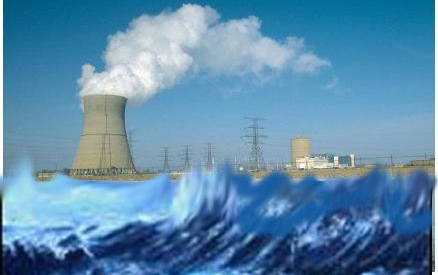 Hinkley, Sizewell and Bradwell, Stop Hinkley 10th March 2020, A meeting between representatives of groups opposing new nuclear development, the Office for Nuclear Regulation (ONR) the independent nuclear safety regulator, and the Environment Agency discussed how the ONR regulates against external hazards.
2018. According to minutes of meetings held by ONR’s group of climate
change experts, projections of sea level rise for the year 2100 contain
“considerable uncertainty” and ” small changes to UK storm systems can
alter the height of storm surges significantly”. Crucially, sea level has a
huge effect on the severity of storm surges. An increase in sea level of
one metre could mean that a storm of a severity currently expected only
once every thousand years is likely to occur once every decade. The meeting
took place in Bridgwater on 28th January 2020. Stop Hinkley was joined by
Together Against Sizewell C (TASC) and Blackwater Against New Nuclear Group
(BANNG). The groups are questioning the viability of the three coastal
sites which are all vulnerable to the impacts of flooding, storm surges and
coastal processes which will inevitably intensify in coming years.
Why don’t we treat the climate crisis with the same urgency as coronavirus?
Why don’t we treat the climate crisis with the same urgency as coronavirus? Owen Jones Guardian, 6 Mar 2020 No Cobra meetings, no sombre speeches from No 10, yet the consequences of runaway global heating are catastrophic, It is a global emergency that has already killed on a mass scale and threatens to send millions more to early graves. As its effects spread, it could destabilise entire economies and overwhelm poorer countries lacking resources and infrastructure. But this is the climate crisis, not the coronavirus. Governments are not assembling emergency national plans and you’re not getting push notifications transmitted to your phone breathlessly alerting you to dramatic twists and developments from South Korea to Italy.More than 3,000 people have succumbed to coronavirus yet, according to the World Health Organization, air pollution alone – just one aspect of our central planetary crisis – kills seven million people every year. There have been no Cobra meetings for the climate crisis, no sombre prime ministerial statements detailing the emergency action being taken to reassure the public. In time, we’ll overcome any coronavirus pandemic. With the climate crisis, we are already out of time, and are now left mitigating the inevitably disastrous consequences hurtling towards us. While coronavirus is understandably treated as an imminent danger, the climate crisis is still presented as an abstraction whose consequences are decades away. Unlike an illness, it is harder to visualise how climate breakdown will affect us each as individuals. Perhaps when unprecedented wildfires engulfed parts of the Arctic last summer there could have been an urgent conversation about how the climate crisis was fuelling extreme weather, yet there wasn’t. In 2018, more than 60 million people suffered the consequences of extreme weather and climate change, including more than 1,600 who perished in Europe, Japan and the US because of heatwaves and wildfires. Mozambique, Malawi and Zimbabwe were devastated by cyclone Idai, while hurricanes Florence and Michael inflicted $24bn (£18.7bn) worth of damage on the US economy, according to the World Meteorological Organization.As the recent Yorkshire floods illustrate, extreme weather – with its terrible human and economic costs – is ever more a fact of British life. Antarctic ice is melting more than six times faster than it was four decades ago and Greenland’s ice sheet four times faster than previously thought. According to the UN, we have 10 years to prevent a 1.5C rise above pre-industrial temperature but, whatever happens, we will suffer.
Pandemics and the climate crisis may go hand in hand, too: research suggests that changing weather patterns may drive species to higher altitudes, potentially putting them in contact with diseases for which they have little immunity. “It’s strange when people see the climate crisis as being in the future, compared to coronavirus, which we’re facing now,” says Friends of the Earth’s co-executive director, Miriam Turner. “It might be something that feels far away when sitting in an office in central London, but the emergency footing of the climate crisis is being felt by hundreds of millions already.”
Imagine, then, that we felt the same sense of emergency about the climate crisis as we do about coronavirus. What action would we take? ….. https://www.theguardian.com/commentisfree/2020/mar/05/governments-coronavirus-urgent-climate-crisis
The world’s Big Oil giants now turn to plastics to grow their industries
PLANET PLASTIC, How Big Oil and Big Soda kept a global environmental calamity a secret for decades, Rolling Stone, By TIM DICKINSON, MARCH 3, 2020
|
As the world begins to wean itself off of fossil fuel for transportation, Big Oil giants from Texas to Saudi Arabia are turning to plastic to support future growth. The International Energy Agency predicts that “oil demand related to plastic consumption overtakes that for road-passenger transport by 2050,” and its top executive warns plastics are “one of the key blind spots in the global energy debate.” The industry is counting on a tidal wave of new demand from emerging economies. A 2018 IEA report underscores that advanced economies use up to 20 times more plastic per capita than consumers do in India or Indonesia. And it warns that increased recycling and single-use bans in places like Europe and Japan “will be far outweighed by developing economies sharply increasing their shares of plastic consumption (as well as its disposal).” Global plastics production and incineration currently creates the CO2 pollution of 189 coal plants. By 2050, that’s expected to more than triple, to the equivalent of 615 coal plants. At that rate, plastics would hog about 15 percent of the world’s remaining “carbon budget,” or what can be emitted without crossing the 2-degrees Celsius threshold in global temperature rise that scientists warn can trigger calamity. The plastic industry’s damage to the planet is vast, but not immeasurable. In fact, the industry has published a detailed accounting that reveals its pollution is on pace to cause trillions in environmental harm by midcentury……… “The environmental cost to society of consumer plastic products and packaging was over $139 billion in 2015,” the report reveals. Without a dramatic change in course, Trucost predicts, that annual figure will soar to “$209 billion by 2025.”……… Much of the world is waking up to the plastics crisis. As China has shut its doors to the global plastic-waste trade, the European Union, Canada, and India are stepping up bans on single-use plastics like cutlery, plates, straws, and ear swabs. “How do you explain dead whales washing up on beaches across the world, their stomachs jam packed with plastic bags?” Canadian Prime Minister Justin Trudeau asked, introducing his country’s initiative. “As a dad, it is tough trying to explain this stuff to my kids.” But under President Trump, the United States is lurching in the opposite direction, promoting the plastic industry’s aggressive expansion. “It’s war,” says Puckett of BAN, “between policies that are totally at odds with each other — of making more plastics and banning plastic.” American fracking is literally fueling the global surge in plastics. The glut of cheap natural gas here has sparked an explosion in new plastics infrastructure. Since 2010, according to the ACC, U.S. companies have ramped up “334 chemical and plastics projects cumulatively valued at $204 billion.” Europe has built new plastics plants fed by fracked U.S. exports. Environmentalists warn that these facilities will lock in demand for fossil-fuel consumption for a generation. Trump is an unabashed booster of plastics — in keeping with his service to the fossil-fuel industry. The former CEO of Dow led Trump’s manufacturing council. And last July, the president visited a new Shell plastics complex outside Pittsburgh. “This facility will transform abundant natural gas — and we have a lot of it — fracked from Pennsylvania wells into plastic,” Trump said. That material, he boasted, would be embossed with “that very beautiful phrase: ‘Made in the USA.’” With the president championing its interests in Washington — and even triggering the libs with Trump 2020 campaign-branded plastic straws — the plastics industry is working to undermine grassroots activism in cities and states across the country. The Plastics Industry Association, or PLASTICS, is a top trade group headquartered on K Street in Washington, D.C. Hiding its handiwork inside a nesting doll of front groups, PLASTICS has worked to thwart state and municipal bans on single-use plastics. PLASTICS has gotten an assist from the American Legislative Exchange Council, or ALEC, which pushes right-wing state legislatures to pass nearly identical bills. In 2013, the plastic trade group wrote a pitch to ALEC members, arguing a ban on plastic “results in the picking of winners and losers in a ‘not-so-free’ marketplace.” By 2015, ALEC began advocating state laws best known for “banning bans” on plastic bags, but which are often far more sweeping, prohibiting limits on styrofoam and “auxiliary containers” — a catchall term for to-go packaging. PLASTICS obscures its involvement in these state fights through a “special purpose” front group called the Progressive Bag Alliance, which rebranded in January as the American Recyclable Plastic Bag Alliance. The organization runs public relations through another front group, Bag the Ban, which touts plastic as “the most environmentally friendly option at the checkout.” (The bag alliance claims it is self-funding, but PLASTICS employs its director, per IRS filings, and the groups share offices and overhead.)…… The success of blue states, from Hawaii to New York, in banning plastic bags has been countered by the industry-led push. PLASTICS says it has parted ways with ALEC, but some 15 red states now have laws pre-empting local plastic bans, with Oklahoma, North Dakota, and Tennessee joining the pack in 2019. (ALEC did not respond to questions from Rolling Stone.) For now, the state bans on bans are holding up in court……. As the global plastics crisis grows — and photos of albatross chicks decomposing around the indigestible plastic waste that killed them go viral — the industry is quietly agonizing over backlash from the metal-straw and Hydroflask-toting members of Generation Z. “The [plastic] water bottle has, in some way, become the mink coat or the pack of cigarettes,” a senior sustainability manager for Nestlé Waters confessed at a conference last year. “It’s socially not very acceptable to the young folks, and that scares me.” In contrast to climate change, the plastics crisis has not been met with corporate denial. The companies of Big Plastic are instead seeking to convince consumers and regulators that — despite having unleashed this torrent of pollution on the planet — they can be trusted to pioneer solutions that will make plastic use sustainable. They’re touting a “circular economy,” in which used plastic doesn’t become waste but, instead, a feedstock for new products. A cynic might translate the concept into: Recycling, but for real this time. “There are a lot of different corporate commitments,” says Shilpi Chhotray, a leader of the Break Free From Plastics movement. While some show promise, others “are just greenwashing,” she insists, with the intent of giving the industry cover for its true aim: “growth.”……… The industry’s voluntary actions to curb plastic pollution are driven by two clear motives: One is protecting the environment, the other is protecting profits from regulation…….. In Washington, the plastics industry is asking government, and American taxpayers, to foot the bill to revitalize the moribund recycling industry. The RECOVER Act — backed by both PLASTICS and the ACC — would offer $500 million in federal-matching funds for investment in new infrastructure……. For Sen. Tom Udall, our involuntary ingestion of plastic waste is proof that the country can’t wait decades for plastic polluters to reform their own practices, or rely on half-measures to bolster the current recycling system. “We are beyond the crisis point on plastic waste,” he says, “and people are starting to wake up.” Udall wants consequences for an industry that has sloughed its environmental harms onto the rest of us for long enough. Washington is late to the game when it comes to plastics regulation, and Udall’s strategy is to adopt best practices from across the globe. . The Break Free From Plastic Pollution Act would mimic Europe in banning commonly polluted single-use plastics, including plastic bags, styrofoam cups and carry-out containers, and plastic utensils. Plastic straws would be allowed only by request. The bill would expand the market for recycled plastics by creating a minimum recycled content for beverage containers, while also imposing a 10-cent deposit on each container sold — roughly nationalizing the models of Michigan and Oregon, where residents return nearly nine in 10 containers for recycling. The bill would create “extended producer responsibility” — making the industry responsible for the waste it creates by requiring that producers “design, manage, and finance programs to collect and process waste that would normally burden state and local governments.” Udall emphasizes that today’s industry is hardly trying, often slapping an unrecyclable label on an otherwise recyclable bottle….. The companies of the plastics industry, Lowenthal says, are ultimately “going to have to deal with the sticker shock that they are now responsible and they’re going to have to pay” to keep plastics out of the environment. The alternative, he insists, has become untenable: “What we have in plastic is something that has made our lives more convenient and easier. But unless we figure out how to keep this out of the waste stream, it’s just going to kill us.” https://www.rollingstone.com/culture/culture-features/plastic-problem-recycling-myth-big-oil-950957/?fbclid=IwAR2i19CqoMXj7HMbvmzM6uGkEx02ESd69vjlxVVgpUZV-VMbhPQJ_iZ3o3w
|
|
1 This Month
26 September – International Day for the Total Elimination of Nuclear Weapons





PLEASE OPPOSE HR 8255 AND S.3639 – bills would accelerate satellite deployment, with no environmental review or safeguards – https://ncstd5li.quorum.us/campaign/169331/
To see nuclear-related stories in greater depth and intensity – go to https://nuclearinformation.wordpress.com
-
Archives
- September 2026 (281)
- August 2026 (330)
- July 2026 (355)
- June 2026 (287)
- May 2026 (306)
- April 2026 (356)
- March 2026 (251)
- February 2026 (267)
- January 2026 (308)
- December 2025 (358)
- November 2025 (359)
- October 2025 (375)
-
Categories
- 1
- 1 NUCLEAR ISSUES
- business and costs
- climate change
- culture and arts
- ENERGY
- environment
- health
- history
- indigenous issues
- Legal
- marketing of nuclear
- media
- opposition to nuclear
- PERSONAL STORIES
- politics
- politics international
- Religion and ethics
- safety
- secrets,lies and civil liberties
- spinbuster
- technology
- Uranium
- wastes
- weapons and war
- Women
- 2 WORLD
- ACTION
- AFRICA
- Atrocities
- AUSTRALIA
- Christina's notes
- Christina's themes
- culture and arts
- Events
- Fuk 2022
- Fuk 2023
- Fukushima 2017
- Fukushima 2018
- fukushima 2019
- Fukushima 2020
- Fukushima 2021
- general
- global warming
- Humour (God we need it)
- Nuclear
- RARE EARTHS
- Reference
- resources – print
- Resources -audiovicual
- Weekly Newsletter
- World
- World Nuclear
- YouTube
-
RSS
Entries RSS
Comments RSS

