Twenty-five years after the disaster, Zibtsev and others predicted that if the forests in the exclusion zone were completely consumed by fire, residents in Kyiv would face an increased risk of dying from cancer and government bans would need to be imposed on foods produced as far as 90 miles away. Although such a large and intense fire is currently unlikely, recent fires have been sizable enough to create similar problems. “If Chernobyl forests burn, contaminants will migrate outside the immediate area,” says Zibtsev. “We know that.”
This April’s fires, which scorched 23 percent of the exclusion zone, were the largest burns ever recorded in the area, nearly four and a half times the size of fires in 2015. Flames torched trees less than three miles from the ruined nuclear reactor, which is now enclosed by an arch-shaped steel shroud.
 Forest Fires Are Setting Chernobyl’s Radiation Free https://www.theatlantic.com/
 science/archive/2020/08/chernobyl-fires/615067/
Trees now cover most of the exclusion zone, and climate change is making them more likely to burn. Story by Jane Braxton Little 10 Aug, 20 In the clear, calm, early hours of May 15, 2003, three miles west of the hulking ruins of the Chernobyl Nuclear Power Plant, Vasyl Yoschenko was bustling around a stand of Scotch pines planted 30 years earlier. The trees were spindly and closely spaced, but he was skinny enough to move easily among them, taking samples of biomass and litter. Just beyond the trees, he tinkered with the horizontal plates he had placed on the ground in a diagonal grid and covered with superfine cloth designed to absorb whatever came their way.
Yoschenko had just finished adjusting his monitoring equipment in the mid-afternoon when the first gusts of smoke billowed from the far side of the pines. Firefighters were torching the edges of an area the approximate size and shape of a football field. Wearing respirators, camouflage pants, and khaki shirts, cloth bandannas covering their heads, the men were systematically setting the woods ablaze. Flames leapt five feet up trunks, racing to the tops of some trees and sending plumes of smoke aloft.
Yoschenko, a Ukrainian radioecologist, had planned the controlled burn to study how radioactive particulates would behave in a fire, and he knew about the risks represented by the nuclear contamination swirling overhead. He prudently scooted to the edge of the forest, donned a gas mask, and began taking photographs. Was it dangerous? Yoschenko shrugs: “Not so much. We were lucky the wind didn’t change direction.”
The forest burned intensely for 90 minutes, releasing cesium-137, strontium-90, and plutonium-238, -239, and -240 in blasts of smoke and heat. In just one hour, the firefighters—and Yoschenko—could have been exposed to more than triple the annual radiation limit for Chernobyl’s nuclear workers.
Continue reading →
August 11, 2020
Posted by Christina Macpherson |
climate change, Reference, safety, Ukraine |
2 Comments
 California’s Wildfires Are 500 Percent Larger Due to Climate Change California’s Wildfires Are 500 Percent Larger Due to Climate Change
“Each degree of warming causes way more fire than the previous degree of warming did. And that’s a really big deal.” The Atlantic,
ROBINSON MEYER
JULY 16, 2019 ”
…….. Californians may feel like they’re enduring an epidemic of fire. The past decade has seen half of the state’s 10 largest wildfires and seven of its 10 most destructive fires, including last year’s Camp Fire, the state’s deadliest wildfire ever.A new study, published this week in the journal Earth’s Future, finds that the state’s fire outbreak is real—and that it’s being driven by climate change. Since 1972, California’s annual burned area has increased more than fivefold, a trend clearly attributable to the warming climate, according to the paper.
The trend is dominated by fires like the Mendocino Complex Fire—huge blazes that start in the summer and feed mostly on timberland. Over the past five decades, these summertime forest fires have increased in size by roughly 800 percent. This effect is so large that it is driving the state’s overall increase in burned area.
Why are summertime forest fires so much more likely? Because climate change has already redefined the seasons in Northern California. Since the early 1970s, summers in Northern California have warmed by about 2.5 degrees Fahrenheit (1.8 degrees Celsius) on average. A few degrees may not sound like much, but heat has an exponential relationship with forest fire.
“Each degree of warming causes way more fire than the previous degree of warming did. And that’s a really big deal,” Park Williams, a climate scientist at Columbia University and an author of the paper, told me. Every additional increment in heat in the environment speeds up evaporation, dries out soil, and parches trees and vegetation, turning them into ready fuel for a blaze. For that reason, Williams said, hot summers essentially overpower anything else happening in Northern California. Even during a wet year, an intense heat wave can choke forests so that it is as though the rain never fell…….. https://www.theatlantic.com/science/archive/2019/07/climate-change-500-percent-increase-california-wildfires/594016/
|
|
|
August 11, 2020
Posted by Christina Macpherson |
climate change, USA |
Leave a comment
|
 Low water levels may curb output at France’s Chooz nuclear reactors -RTE, Low water levels may curb output at France’s Chooz nuclear reactors -RTE,  https://in.reuters.com/article/france-nuclear/low-water-levels-may-curb-output-at-frances-chooz-nuclear-reactors-rte-idINL8N2FC5XG PARIS, Aug 10 (Reuters) https://in.reuters.com/article/france-nuclear/low-water-levels-may-curb-output-at-frances-chooz-nuclear-reactors-rte-idINL8N2FC5XG PARIS, Aug 10 (Reuters) – Production may be reduced at EDF’s Chooz nuclear reactors in northern France on Saturday due to high temperatures lowering the water level on the Meuse River, French grid operator RTE said on Monday.The two reactors produce 1.45 gigawatts (GW) of power each. The shortfall could be equal to the production of one unit, RTE said.
The heat wave is forecast to peak at 37 degrees Celsius in the region on Wednesday, with temperatures falling as the week progresses, according to Meteo France’s weather forecast.
Consumption in France is projected to reach 44.7 GW on Saturday, RTE data showed.
French nuclear availability is currently at 60.6% of total capacity, with 24.6 GW offline. (Reporting by Forrest Crellin and Bate Felix; Editing by Cynthia Osterman)
|
|
August 11, 2020
Posted by Christina Macpherson |
climate change, France |
Leave a comment
Germany’s ‘very, very tough’ climate battleEnvironment Minister Svenja Schulze aims to steer tough talks over upping the bloc’s 2030 climate goal. Politico, By KALINA OROSCHAKOFF, 08/09/2020, BERLIN — EU leaders last week agreed to increase the bloc’s 2030 climate target by the end of the year. Now it’s up to German Environment Minister Svenja Schulze to make it happen.
That’s a big change for Berlin, which has traditionally been wary of higher EU climate targets.
Germany holds the rotating presidency of the Council of the EU, which means Schulze chairs meetings of environment ministers until the end of December. She’ll have to oversee tricky negotiations on raising the bloc’s 2030 emissions reduction goal from 40 percent to as high as 55 percent — something that pits rich countries against poor and East against West.
“We have to deliver an updated [EU climate commitment] in 2020. It’s only six months [but] we have to deliver,” Schulze told POLITICO from her Berlin office after hosting a first informal meeting with her peers in mid-July. “The pressure is huge … We need very, very tough negotiations. There are no summer holidays for anyone.”
The issue will heat up in late September when the European Commission is due to come out with a plan for reaching the 2030 target, and map implications for the energy sector. The 2030 goal is also part of the bloc’s commitment under the Paris Agreement, and there’s pressure for countries to submit updated and ideally higher emissions reduction objectives by the end of the year.
“Not to fulfill the Paris Agreement, not delivering, that’s a global signal the EU shouldn’t give … It’s not an option,” Schulze said. “The Paris Agreement is clear, we need to deliver in 2020 … that’s the challenge for the German presidency.”
Busy fall……
the German minister faces a massively complex political puzzle in the next months.
“Yes, there are some states who worry how they’re supposed to manage it all. They have corona, are dealing with its impacts, they have to revive the economy … and have to do more about climate protection. To bring it all together isn’t easy,” Schulze said. https://www.politico.com/news/2020/08/09/germany-climate-change-goals-393035
|
|
|
August 11, 2020
Posted by Christina Macpherson |
climate change, Germany |
Leave a comment
|
NASA/NOAA Satellites Observe Surprisingly Rapid Increase in Scale and Intensity of Fires in Siberia, SciTech Daily By KASHA PATEL, NASA EARTH OBSERVATORY AUGUST 7, 2020 Abnormally warm temperatures have spawned an intense fire season in eastern Siberia this summer. Satellite data show that fires have been more abundant, more widespread, and produced more carbon emissions than recent seasons.The area shown in the time-lapse sequence above includes the Sakha Republic, one of the most active fire regions in Siberia this summer. The images show smoke plumes billowing from July 30 to August 6, 2020, as observed by the Visible Infrared Imaging Radiometer Suite (VIIRS) on NASA/NOAA’s Suomi NPP satellite and the Moderate Resolution Imaging Spectroradiometer (MODIS) on NASA’s Terra satellite. Strong winds occasionally carried the plumes as far as Alaska in late July. As of August 6, approximately 19 fires were burning in the province……
Estimates show that around half of the fires in Arctic Russia this year are burning through areas with peat soil—decomposed organic matter that is a large natural carbon source. Warm temperatures (such as the record-breaking heatwave in June) can thaw and dry frozen peatlands, making them highly flammable. Peat fires can burn longer than forest fires and release vast amounts of carbon into the atmosphere. ……
“The destruction of peat by fire is troubling for so many reasons,” said Dorothy Peteet of NASA’s Goddard Institute for Space Studies. “As the fires burn off the top layers of peat, the permafrost depth may deepen, further oxidizing the underlying peat.” Peteet and colleagues recently reported that the amount of carbon stored in northern peatlands is double the previous estimates.
Fires in these regions are not just releasing recent surface peat carbon, but stores that have taken 15,000 years to the accumulate, said Peteet. They also release methane, which is a more potent greenhouse gas than carbon dioxide.
“If fire seasons continue to increase in severity, and possibly in seasonal extent, more peatlands will burn,” said Peteet. “This source of more carbon dioxide and methane to our atmosphere increases the greenhouse gas problem for us, making the planet even warmer.”…… https://scitechdaily.com/nasa-noaa-satellites-observe-surprisingly-rapid-increase-in-scale-and-intensity-of-fires-in-siberia/
|
|
August 10, 2020
Posted by Christina Macpherson |
climate change, Russia |
Leave a comment
US could avoid 4.5M early deaths by fighting climate change, study finds
https://thehill.com/policy/energy-environment/510726-us-could-avoid-45m-early-deaths-by-fighting-climate-change-study BY REBECCA BEITSCH – 08/05/20
The U.S. stands to avoid 4.5 million premature deaths if it works to keep global temperatures from rising by more than 2 degree Celsius, according to new research from Duke University.
The same study found working to limit climate change could prevent about 3.5 million hospitalizations and emergency room visits and approximately 300 million lost workdays in America.
“The avoided deaths are valued at more than $37 trillion. The avoided health care spending due to reduced hospitalizations and emergency room visits exceeds $37 billion, and the increased labor productivity is valued at more than $75 billion,” Drew Shindell, a professor at Duke University, told lawmakers Wednesday.
On average, this amounts to over $700 billion per year in benefits to the U.S. from improved health and labor alone, far more than the cost of the energy transition.”
Shindell, who conducted the study alongside researchers at NASA, unveiled the findings during a House Oversight Committee hearing on the economic and health consequences of climate change.
The study aimed to show the benefits to the U.S. if the nation sticks with the goal of the Paris Climate Accord, which President Trump has formally moved to leave. The U.S. cannot officially exit the agreement until Nov. 4 — the day after the presidential election.
Shindell encouraged committee members to transition away from fossil fuels, a move that would help ease climate change while also spurring health benefits from reduced air pollution.
The benefits could be seen in the relatively short term.
“Roughly 1.4 million lives could be saved from improved air quality during the next 20 years. As we’ve seen with the coronavirus lockdowns in many places, air pollution responds immediately to emissions reductions,” he said.
“Our work shows that action now means benefits now.”
Democrats have introduced a number of bills to combat climate change, but they’ve failed to get much traction.
The House passed a $1.5 trillion green infrastructure package in July, but the Republican-led Senate isn’t expected to take it up.
Just one day earlier, the House Select Committee on the Climate Crisis unveiled its road map for solving the climate crisis.
Committee Chair Carolyn Maloney (D-N.Y.) said lawmakers need to focus on tackling the problem despite the current coronavirus pandemic.
“Handling one crisis does not negate our responsibility to face another.”
August 6, 2020
Posted by Christina Macpherson |
climate change, USA |
Leave a comment

Human-induced climate change is causing ‘extreme’ melting in New Zealand glaciers, The study is only the second to draw a direct link between glacier melt and human-induced climate change. SBS NEWS 4 AUG 20 BY BIWA KWAN New analysis of data and photo records of melting glaciers in New Zealand has found human-induced climate change increased the likelihood of mass ice melt.
The new modelling techniques were applied to 10 glaciers in New Zealand to reveal a more detailed picture of what is driving the accelerating rates of ice melt in the region.
Lead researcher Lauren Vargo said the analysis compared ice melt under pre-industrial greenhouse gas emissions and current-day emissions to uncover “a quite extreme result”.
“Some of the glaciers were at least six times more likely to have experienced that high mass loss because of humans,” said Dr Vargo, who is based at the Victoria University of Wellington.
“We’re really confident with that number because that is the low end. The high end is 350 times more likely.
“But with the high ice mass loss event we saw [in 2018], it would not have happened at all without humans.”
The first study to make a direct link between human-induced climate change and glacier melt focused on glaciers in the Northern Hemisphere where more robust data records exist. The study – published in the journal Science in 2014 – looked at records between 1851 and 2010 using a running mean over 20-year periods.
Dr Vargo said the rate of ice melt has resulted in the loss of a quarter of New Zealand’s glaciers since the 1970s.
Rapid melt events in 2011 and 2018 prompted the study. ……
The study accounted for years like 2013 when some glaciers in New Zealand actually gained mass, but not at a rate to combat the overall decline. ……. HTTPS://WWW.SBS.COM.AU/NEWS/HUMAN-INDUCED-CLIMATE-CHANGE-IS-CAUSING-EXTREME-MELTING-IN-NEW-ZEALAND-GLACIERS
|
|
August 4, 2020
Posted by Christina Macpherson |
climate change, New Zealand |
Leave a comment
 A Quarter of Bangladesh Is Flooded. Millions Have Lost Everything.
The country’s latest calamity illustrates a striking inequity of our time: The people least responsible for climate change are among those most hurt by its consequences. NYT, By Somini Sengupta and Julfikar Ali Manik 30 July 20,
Torrential rains have submerged at least a quarter of Bangladesh, washing away the few things that count as assets for some of the world’s poorest people — their goats and chickens, houses of mud and tin, sacks of rice stored for the lean season.
It is the latest calamity to strike the delta nation of 165 million people. Only two months ago, a cyclone pummeled the country’s southwest. Along the coast, a rising sea has swallowed entire villages. And while it’s too soon to ascertain what role climate change has played in these latest floods, Bangladesh is already witnessing a pattern of more severe and more frequent river flooding than in the past along the mighty Brahmaputra River, scientists say, and that is projected to worsen in the years ahead as climate change intensifies the rains.
“The suffering will go up,” said Sajedul Hasan, the humanitarian director of BRAC, an international development organization based in Bangladesh that is distributing food, cash and liquid soap to displaced people.
This is one of the most striking inequities of the modern era. Those who are least responsible for polluting Earth’s atmosphere are among those most hurt by its consequences. The average American is responsible for 33 times more planet-warming carbon dioxide than the average Bangladeshi.
This chasm has bedeviled diplomacy for a generation, and it is once again in stark relief as the coronavirus pandemic upends the global economy and threatens to push the world’s most vulnerable people deeper into ruin.
An estimated 24 to 37 percent of the country’s landmass is submerged, according to government estimates and satellite data By Tuesday, according to the most recent figures available, nearly a million homes were inundated and 4.7 million people were affected. At least 54 have died, most of them children. ……. https://www.nytimes.com/2020/07/30/climate/bangladesh-floods.html
August 3, 2020
Posted by Christina Macpherson |
ASIA, climate change |
Leave a comment
 How Hot Will the Future Feel? New Yorker, 29 July 20, By Bill McKibben
Even among the grim daily toll of pandemic deaths and job losses, the most fateful numbers in the news last week probably came from a huge study carried out by a team of scientists at the World Climate Research Programme. It wove together the warming that we’ve observed so far, the latest understanding of feedback effects from clouds and other systems, and the record of the climate in the deep past to conclude that doubling the amount of carbon in the atmosphere (which, at current rates, will occur toward the middle of the century) will raise the average surface temperature on Earth between two and a half and four degrees Celsius
This is the first significant narrowing of that range in decades—ever since the nineteen-eighties, we’ve been saying one and a half to four and a half degrees. Now, though, researchers are essentially ruling out the bottom end of the range: two and a half degrees, now essentially the best-case scenario, is an enormous number. Dealing with the volume and complexity of data “was such a long and painful process,” one researcher, Kate Marvel, at nasa’s Goddard Institute, said. James Hansen, the former Goddard chief and the world’s premier climate scientist, said, “It is an impressive, comprehensive study, and I am not just saying that because I agree with the result. Whoever shepherded this deserves our gratitude.”
Indeed, they do. But, in truth, the numbers—what we might call pure climatology—can tell us only so much. What will haunt our future are two other variables, both of which are even harder to calculate. The first is: How much damage will that extra heat wreak? So far, scientists—who tend to be conservative in their forecasts—have under-predicted everything from coral die-off to
Arctic ice melt. The past week, during which the Atlantic-hurricane alphabet
hit “H” earlier in the season than ever before, provided more reminders that even the one degree Celsius that the temperature has already risen is an awful lot. In China, record rains were powering remarkably dangerous flooding along the Yangtze River—by last weekend, people were beginning to
raise fears for the Three Gorges Dam, the largest structure of its kind in the world.
But, again, the level of damage that comes from rising temperatures—let’s call it applied climatology—is not as telling, ultimately, as our collective ability to respond to that damage. The brittleness of political systems in the face of change on this scale is even scarier than the brittleness of dams. The Times Magazine offered a remarkable glimpse into such a possibility this week, with a long examination of climate migration—present and future—from Central America. As more and more people find themselves in zones too hot to support life, they will move, and, as we already know, those movements provoke both compassion and demagoguery. “The best outcome requires not only good will and the careful management of turbulent political forces; without preparation and planning, the sweeping scale of change could prove wildly destabilizing,” Abrahm Lustgarten writes. “The United Nations and others warn that in the worst case, the governments of the nations most affected by climate change could topple as whole regions devolve into war.”
The pandemic shows us above all, I think, that twenty-first-century survival depends on an ability to handle chaos: that our political leaders, and our other institutions, have to devote themselves as never before to humane competence. And, as this summer’s racial reckoning should remind us, the pain that’s coming needs to be distributed far more fairly. We’re fast running out of margin. The capacity of political systems to respond to extreme stress can’t be predicted as numerically as the response of physical systems to extra carbon, but it will be measured, as with
covid-19, in deaths. Just on a much larger scale……
https://www.newyorker.com/news/annals-of-a-warming-planet/how-hot-will-the-future-feel
August 1, 2020
Posted by Christina Macpherson |
2 WORLD, climate change |
Leave a comment
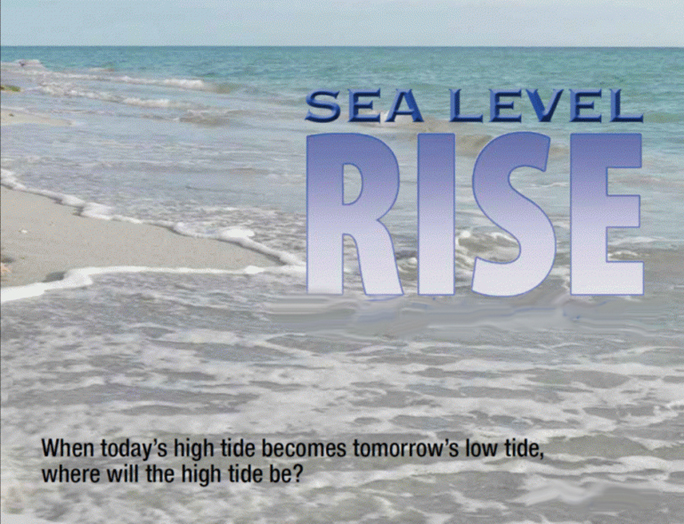
RISING GLOBAL FLOOD RISK DEMANDS ACTION, PURSUIT, 31 Jul 20,
By the end of the century tens of millions more people and trillions of dollars more of the world economy will be at risk of being flooded as sea levels rise We know climate change will cause rising sea levels and increase the frequency of storms and extreme waves, putting large stretches of land at greater risk of flooding. But just how bad will it be?
It is the sort of question that has long frustrated strong policy action on countering and mitigating climate change……
In what is the most comprehensive effort yet to assess the global risks of rising sea levels, researchers have now estimated that in the next 80 years the flood risk across the world will rise by around 50 per cent, putting millions more people and trillions of US dollars more of infrastructure at risk.
In addition, by 2100, extreme floods now thought of as being one-in-100-year events, will be occurring as frequently as every 10 years across much of the world – an increased risk of ten times.
According to the University of Melbourne-led study now published in Nature: Scientific Reports, the land area exposed to an extreme one-in-100-year flood event will increase by more than 250,000 square kilometres, an increase of 48 per cent to over 800,000 square kilometres.
In concrete terms the study’s estimates translate into about 77 million more people being at risk of experiencing flooding, a rise of 52 per cent to 225 million.
The economic risk in terms of the infrastructure exposed will rise by $US3.5 trillion, an increase of 46 per cent to $US11.3 trillion…….
According to the University of Melbourne-led study now published in Nature: Scientific Reports, the land area exposed to an extreme one-in-100-year flood event will increase by more than 250,000 square kilometres, an increase of 48 per cent to over 800,000 square kilometres.
In concrete terms the study’s estimates translate into about 77 million more people being at risk of experiencing flooding, a rise of 52 per cent to 225 million.
The economic risk in terms of the infrastructure exposed will rise by $US3.5 trillion, an increase of 46 per cent to $US11.3 trillion………..
It’s showing that whole coastal communities are at risk of being devastated so we need urgent action.
“Curbing rising greenhouse gases is critical, but much of the predicted sea level rise is already baked-in – it will happen irrespective of what happens with greenhouse gases. So we need to adapt.
“This may mean building coastal defences like those already undertaken in the Netherlands. In other locations it may involve retreating populations from coastal areas.”
And Ms Kireczi notes that like many of the consequences of climate change, some low and middle income countries (LMICs) are particularly exposed.
For example, major populations in South-east and South Asia are at risk. But major populations in wealthier regions are also at risk including parts of China, Northern Europe and the United States.
“We need to start planning now the long-term investments in coastal defences, like dykes and sea walls, that we are going to need to protect vulnerable populations and assets.” https://pursuit.unimelb.edu.au/articles/rising-global-flood-risk-demands-action
August 1, 2020
Posted by Christina Macpherson |
2 WORLD, climate change, oceans |
Leave a comment
EDF warns heatwave may force brief outage for 2.6 GW Golfech reactors, S and P Global, London — Rising temperatures may lead to output restrictions at France’s 2.6 GW Golfech nuclear power plant from July 31, operator EDF warned. “Due to the temperature forecasts on the Garonne, production restrictions are likely to affect EDF’s nuclear power plant at Golfech,” it said July 27. 28 Jul 2020 Author Andreas Franke , Editor Felix Fernandez
Restrictions focus on July 31 to August 3 period.
Mini-heatwave only forecast to last until weekend
July’s nuclear average above expectations at 30 GW
London — Rising temperatures may lead to output restrictions at France’s 2.6 GW Golfech nuclear power plant from July 31, operator EDF warned.
“Due to the temperature forecasts on the Garonne, production restrictions are likely to affect EDF’s nuclear power plant at Golfech,” it said July 27.
This could lead to “unavailability of both units” until August 2.
France’s most southerly reactors, located between Toulouse and Bordeaux on the Garonne river, were some of the most impacted units during an extended heatwave last summer when air temperatures rose above 40 C in late June.
The current spell of hot weather is not forecast to stretch beyond the weekend with Meteo France not yet characterizing it as heatwave despite measuring the highest temperature so far this year at nearby Albi at 39.9 C on July 27.
In 2019, temperatures briefly peaked in late June above 40 C amid extended spells of extreme hot weather, increasing river temperatures above critical levels.
Grid operator RTE forecasts power demand to peak above 55 GW on July 31 with average weighted temperatures 7 C above norms.
In June 2019, French demand spiked close to record summer highs of 59.5 GW as temperatures reached 45 C in some regions of southern France.
Around two-thirds of France’s 56 reactor units are river-cooled, with some restrictions due to high temperatures stretching into autumn during past summers…. https://www.spglobal.com/platts/en/market-insights/latest-news/electric-power/072820-edf-warns-heatwave-may-force-brief-outage-for-26-gw-golfech-reactors.
August 1, 2020
Posted by Christina Macpherson |
climate change, France |
Leave a comment
 Trump Says Nuclear Proliferation Is Scarier Than Climate Change. He’s Failing at Both. Mother Jones
“Enlightened leadership would be treating both as emergencies.”
WILL PEISCHEL 31 Jul 20, On Tuesday morning, President Donald Trump set off a furor when he told Axios reporter Jonathan Swan that during a recent call with Vladimir Putin, he hadn’t bothered to mention US intelligence suggesting that Russia had offered bounties to Taliban fighters for killing American service members. Trump said that instead, the two leaders had discussed nuclear nonproliferation efforts—and then he inexplicably pivoted to downplaying the threat of climate change.
“If we can do something with Russia in terms of nuclear proliferation, which is a very big problem, bigger problem than global warming, a much bigger problem than global warming in terms of the real world, that would be a great thing,” he said told Swan.
Bringing up global climate change—which already affects the lives of millions—was apparently an arbitrary tangent to the conversation. Even if it wasn’t, experts say attempting to rank the two existential threats against each other isn’t exactly a useful way to gauge either of them. …….
New START, a weapons treaty between Russia and the United States to limit nuclear stockpiles, is slated to expire in early 2021. The treaty contains a provision allowing it to be extended for five years, activated by signatures from both presidents. “If there was seriousness to his remarks, he could do that with the stroke of a pen,” Pomper says. Pomper also criticized Trump for abandoning the Iran nuclear deal and for his failed efforts to scale back North Korea’s weapons programs. On top of that, the Under Secretary of State for Arms Control and International Security Affairs is serving only in an acting role. “Basically, it’s hard to find a situation in the nonproliferation arms control world where it’s gotten better after this administration,” Pomper says. “I’m kind of at a loss for words.”
Efforts to confront global climate change—the smaller problem, according to Trump—are in a similar state. That’s perhaps less surprising, given Trump’s long record of dismissing global warming as a Chinese hoax. We’re already dealing with the consequences. “We’re seeing droughts and wildfires,” says Astrid Caldas, a senior climate scientist with Union of Concerned Scientists. “Here we are with the ninth tropical storm this year, about to be named, if it happens. This usually doesn’t happen until September.” And though climate change was a known existential threat long before Trump entered the picture, Caldas says the administration’s stewardship has done additional damage. “The denial of climate change and calling it a hoax, the whole administration rolling back of environmental regulations and the pulling out of the Paris Agreement,” she says, “all of these things signal that there is not a concern about people’s well being.” https://www.motherjones.com/environment/2020/07/trump-says-nuclear-proliferation-is-scarier-than-climate-change-hes-failing-at-both/
August 1, 2020
Posted by Christina Macpherson |
climate change, politics international, USA |
Leave a comment
|
Need for Prediction of Marine Heatwaves, By Tasmanian Times July 29, 2020 There is need for the development of systems to predict marine heatwaves, say an international research team. The phenomena are a growing threat to marine ecosystems and industries as the climate changes.
Unlike terrestrial heatwaves and other extreme weather events such as cyclones, knowledge of marine heatwaves and their causes is relatively crude, so we don’t yet have tools to predict when they will occur and what their impact will be
In a paper published in the journal Nature Reviews Earth and Environment, leading ocean and climate scientists from across Australia and around the world outline the need and potential for marine heatwave prediction.
Lead author Institute of Marine and Antarctic Studies (IMAS) Professor Neil Holbrook said dedicated and coordinated research into marine heatwaves only really began following an extreme event off Western Australia in 2011. Subsequent studies have revealed the range of risks they pose.
“Over the past century, the global average number of marine heatwave days per year has increased by more than 50 per cent – a trend expected to accelerate under future climate change,” Professor Holbrook said…….. https://tasmaniantimes.com/2020/07/need-predict-marine-heatwaves/
|
|
July 30, 2020
Posted by Christina Macpherson |
climate change, oceans |
Leave a comment
Wetter than wet: Global warming means more rain for Asian monsoon regions EurekAlert, Large-scale simulation reveals how Asian monsoons will transform with climate change TOKYO METROPOLITAN UNIVERSITY 26 Jul 20, Tokyo, Japan – Researchers from Tokyo Metropolitan University studied how the weather will change with global warming in Asian monsoon regions using a high-resolution climate simulation. The region is home to a large population, and the monsoons are a major driver of global water cycles. They explicitly simulated cloud formation and dissipation, and found significantly increased precipitation over the monsoon “trough,” with tropical disturbances such as typhoons and concentrated water vapor playing key roles.
As the world braces itself for the impact of global warming, it is now more vital than ever to have an accurate, detailed picture of how exactly the climate will change. This applies strongly to the Asian monsoon regions, where vast amounts of annual precipitation make it an important part of global energy and water cycles. As home to a large proportion of the world population, detailed, local predictions for the scale and nature of monsoons and tropical disturbances such as typhoons/cyclones have the potential to inform disaster mitigation strategies and key policymaking. ………. https://www.eurekalert.org/pub_releases/2020-07/tmu-wtw072220.php
July 27, 2020
Posted by Christina Macpherson |
ASIA, climate change |
Leave a comment

Alaska is getting wetter. That’s bad news for permafrost and the climate. UNIVERSITY OF COLORADO AT BOULDER EurekAlert 26 Jul 20, Alaska is getting wetter. A new study spells out what that means for the permafrost that underlies about 85% of the state, and the consequences for Earth’s global climate.
The study, published today in Nature Publishing Group journal Climate and Atmospheric Science, is the first to compare how rainfall is affecting permafrost thaw across time, space, and a variety of ecosystems. It shows that increased summer rainfall is degrading permafrost across the state.
As Siberia remains in the headlines for record-setting heat waves and wildfires, Alaska is experiencing the rainiest five years in its century-long meteorological record. Extreme weather on both ends of the spectrum–hot and dry versus cool and wet–are driven by an aspect of climate change called Arctic amplification. As the earth warms, temperatures in the Arctic rise faster than the global average.
While the physical basis of Arctic amplification is well understood, it is less known how it will affect the permafrost that underlies about a quarter of the Northern Hemisphere, including most of Alaska. Permafrost locks about twice the carbon that is currently in the atmosphere into long-term storage and supports Northern infrastructure like roads and buildings; so understanding how a changing climate will affect it is crucial for both people living in the Arctic and those in lower latitudes.
……… https://www.eurekalert.org/pub_releases/2020-07/uoca-aig072420.php
July 27, 2020
Posted by Christina Macpherson |
climate change, USA |
Leave a comment