COP26 – Why Nuclear is NOT a Solution.
Don’t Nuke the Climate press conference in Glasgow: https://www.youtube.com/watch?v=LjSMd1pmsqQ
Sasha Gabizon, Executive Director – Women Engage for a Common Future hosts this COP26 panel on why nuclear energy is NOT a climate solution.
The panel members:
— Makoma Lekalakala, Earthlife Africa https://earthlife.org.za/ SEGMENT: https://youtu.be/LjSMd1pmsqQ?t=281
— Ayumi Fukakusa, Friends of the Earth Japan https://www.foejapan.org/en/ SEGMENT: https://youtu.be/LjSMd1pmsqQ?t=868
— Angelika Claussen, International Physicians for the Prevention of Nuclear War (IPPNW) https://www.ippnw.org SEGMENT: https://youtu.be/LjSMd1pmsqQ?t=1168
— Günter Hermeyer, Don’t Nuke the Climate https://dont-nuke-the-climate.org/ SEGMENT: https://youtu.be/LjSMd1pmsqQ?t=111
— Gavan McFadzean, Australian Conservation Foundation https://www.acf.org.au/ SEGMENT: https://youtu.be/LjSMd1pmsqQ?t=1538
——————————————————
Don’t Nuke the Climate statement now signed by 461 organisations around the world (including 50+ in Australia):
https://dont-nuke-the-climate.org/cop-26-statement
Progress report on Glasgow climate talks

The Guardian view on climate progress: now for the detail, Editorial https://www.theguardian.com/commentisfree/2021/nov/05/the-guardian-view-on-climate-progress-now-for-the-detail
Pledges made during Cop26’s first week were encouraging. But without adequate finance and monitoring they don’t mean much
f week one of the climate conference in Glasgow set out a strong outline, the task for next week is to fill in as many details as possible. The long-term ambition of the global environmental policy now being negotiated would have been hard to imagine just a few years ago. While it is not yet clear exactly where the various pledges will get us to in terms of limiting temperature rises, the new agreement on methane spearheaded by President Joe Biden and a commitment by India to get half of its energy from renewable sources by 2030 are highly significant.
Also encouraging is the more integrated approach to the many environmental challenges humanity faces. Previously, conservation and biodiversity were to some extent viewed as separate issues from the changing atmospheric chemistry that drives global heating. Now, with a promise to reverse deforestation and provide funding directly to indigenous people to help them protect their lands, there is greater recognition of the vital part that nature plays in regulating the climate.
The pledges made so far are far from sufficient, and must be viewed as part of a continuing process. The decisions by China’s Xi Jinping and Russia’s Vladimir Putin to stay away inevitably undermine confidence in the overall project. Their refusal, along with India, to join the methane agreement is worrying. The possibility of a return to office by Donald Trump, or the election of a Republican in a similar mould, must be regarded as a serious threat. But there is a sense of momentum in Glasgow, and many climate scientists are relieved that the goal (a net zero planet) is increasingly accepted, even as arguments about how to get there continue to rage.
Investment in new technologies such as “clean” aviation fuel should be encouraged, as subsidies for fossil fuels are cut off. The pace of development in the wind and solar industries has been astonishing. There are some grounds for optimism about the role that the private sector can play in the transition ahead. But nonexistent technology, and the hopes invested in it, played an oversized role in the UK government’s recently launched net zero strategy. One of the challenges of the coming days is to ensure that the plans put forward by governments, known as nationally determined contributions, are not built on wishful thinking. Years of delays mean that the timetable is incredibly tight. Leaders cannot afford to be passive.
Once commitments have been made, mechanisms must be developed to measure and report on progress. This is an enormous task that will not be completed at the first attempt. With regard to the $100bn (£70bn) of climate finance that is supposed to be provided annually by rich countries to poorer ones, for example, more transparency is needed. Poor countries cannot be expected to choose green energy over fossil fuels unless they are supported. Calls from India and African countries for massively increased sums (Narendra Modi has suggested $1tn annually) make the establishment of a trusted carbon accounting system all the more urgent.
After a dip during the pandemic, global emissions have jumped alarmingly. Unless they start to fall dramatically over the next two years, Cop26 will have been a failure. Overshadowing all the technical details is the overwhelming injustice of a situation in which the countries that have contributed least to global heating are already suffering most from its effects. This is a moral point, but also a practical and political one. Eliminating carbon emissions is a collective endeavour in which our civilisation must succeed if it is to continue to thrive. Questions of environmental justice, engaging the past as well as the future, must be confronted head-on in the days ahead.
Nuclear power, fossil fuel companies represented at COP26 climate talks

Revealed: 1,000 fossil fuel and big business reps at COP26, The Ferret, Rob Edwards November 6, 2021,

As many as 141 people registered for COP26 from the nuclear power industry across the globe, including the UK’s Nuclear Industry Association and the World Nuclear Association.
More than 20 were part of the Young Generation Network of nuclear professionals.
Nearly 1,000 representatives from the fossil fuel industry, big business and nuclear power companies have registered to attend the COP26 climate summit in Glasgow, according to an analysis by The Ferret.
They include executives from Shell, BP, Equinor, Chevron, Total, Gazprom and other major oil and gas companies, as well as multinational corporations such as McDonald’s, Bayer, Walmart, HSBC, PepsiCo, Nestlé and Microsoft.
There are also delegations from the coal industry, tobacco companies and pesticide manufacturers. Eleven people from two climate sceptic think-tanks have registered for the summit.
Campaigners are outraged that the oil and nuclear industries were being allowed to influence COP26, and called for polluters to be kept away from the summit. They warned of the “corporate capture of climate policies”….. They include executives from Shell, BP, Equinor, Chevron, Total, Gazprom and other major
oil and gas companies, as well as multinational corporations such as McDonald’s, Bayer, Walmart, HSBC, PepsiCo, Nestlé and Microsoft. There are also delegations from the coal industry, tobacco companies and pesticide manufacturers. Eleven people from two climate sceptic think-tanks have registered for the summit. [details of these participants is given]…………………..
As many as 141 people registered for COP26 from the nuclear power industry across the globe, including the UK’s Nuclear Industry Association and the World Nuclear Association. More than 20 were part of the Young Generation Network of nuclear professionals.
The nuclear industry promotes itself as a low-carbon solution to the climate crisis. But some environmentalists argue that it’s too expensive, unreliable and dangerous, compared to renewable energy……..
This list is described as “provisional”, with a final version due to be issued after COP26 has closed. It does not include so-called “overflow” delegates which under UN rules can been added by countries without their names appearing on the official list of participants.
Friends of the Earth Scotland called for polluters to be kept out of COP26. “Many different groups in society need to talk and work together to tackle the climate crisis,” said the environmental group’s director, Dr Richard Dixon.
“But the last people you want at the COP are the big oil firms who continue to profit from fuelling climate change and the nuclear, carbon capture and carbon market enthusiasts who are peddling solutions that are no solution at all.”
The campaign group, Glasgow Calls Out Polluters, decried “political failure” at COP26. “These big polluters’ climate plans are a death sentence for many, but they are nevertheless appeased by the authorities at the COP,” said the group’s Scott Tully from Glasgow.
“The presence and access of these big polluters is in stark contrast with the exclusion of civil society, which draws into disrepute the legitimacy of these talks.”
The anti-poverty charity, Oxfam Scotland, said it was “worrying” that those who have fuelled the climate crisis were given so much access. “Civil society groups, in particular from poorer countries in the south, have found it so hard to attend or even to observe the talks,” said the group’s head, Jamie Livingstone.
“Unless COP26 prioritises the voices of those facing the consequences of climate inaction, it will be impossible for the talks to deliver climate justice.”
Dr Will Dinan, an expert on lobbying from the University of Stirling, accused fossil fuel companies of lobbying to delay action to cut climate pollution. “Climate campaigners have long been concerned about corporate influence on UN environmental decision-making in general, and the corporate capture of climate policies in particular,” he said………….. https://theferret.scot/1000-fossil-fuel-big-business-cop26/
Positive announcements at COP26 do give some hope
Lang Banks, director of WWF Scotland, compared the start of COP26 to the
weather in Glasgow. He said: “During the opening days, it was overcast
and dreich with too few commitments from countries and too little money on
the table to address the climate crisis. “But as the week progressed, and
the weather improved, so did the signals coming out of COP. “There were
positive announcements from India to ramp up the use of renewables by 2030,
agreements by nations to cut methane emissions by 30% by the same date and
moves by some to phase out use of coal. “Coming in to COP, the UN
estimated the emissions reductions pledges on the table were leading us
to 2.7 degrees of warming.
The National 7th Nov 2021
Nation after nation at Glasgow pledges to abandon use of coal

The floodgates have broken. In shock after shock, diehard coal nations across the developing world have been lining up in Glasgow to forswear use of the dirtiest of fossil fuels. Four of the biggest coal emitters in East Asia have signed the pledge, promising to abandon new projects and shut down existing plants far earlier than almost anybody expected. “It’s a
massive deal.
The whole region is turning around and this really puts the screws on China to do more,” said Dave Jones from the anti-coal group Ember. “The really big surprises for all of us are Indonesia, Vietnam and the Philippines. These were countries that were planning an aggressive expansion of coal and now they are on the list. So is South Korea, which is the fifth biggest coal user in the world. We never thought we’d see this in Glasgow,” he said. Malaysia, Pakistan, Sri Lanka, Bangladesh, Egypt, Morocco, Ukraine, Poland, Chile, Zambia, and Cote d’Ivoire, among others, have signed the global ‘coal to clean power’ statement, vowing never again to issue new coal permits.
Telegraph 5th Nov 2021
https://www.telegraph.co.uk/business/2021/11/05/coal-power-consigned-history-glasgow/
Cop26 week one: the impression of progress – but not nearly enough
Cop26 week one: the impression of progress – but not nearly enough.
Analysis: the ‘significant outcomes’ came thick and fast but there are
question marks about credibility
Guardian 6th Nov 2021
Despite all the criticism, the COP climate process has made historic steps forward
The tidal wave of broadly positive announcements at the COP26 Climate
Summit this week has been met by a storm surge of molten hot media takes,
far too many of which have singularly failed to engage with the historic
significance of what might be happening in Glasgow.
For every potentially transformational net zero pledge, there have been naïve assessments of
whether or not any given announcement represents a ‘win’ for the UK hosts.
For each multi-billion dollar coal phase out plan, there have been
accusations of hypocritical virtue signalling, as if governments and
financiers seek to overhaul entire economies on a whim.
For all the evidence the Paris Agreement has catalysed an era-defining array of clean
tech innovations and a remarkable shift in public opinion, there have been
baseless arguments that the entire COP process is an exercise in futility.
We do not yet know how the denouement to the Glasgow Summit will play out.
But if the media allows the response to COP26 next week to be stripped of
context, shorn of nuance, and shaped by climate sceptic talking points,
then the efforts of thousands of people to deliver an historic step forward
in the global mission to avert climate disaster will have been done a grave
disservice.
Business Green 5th Nov 2021
https://www.businessgreen.com/blog-post/4039877/cop26-taking-takes
Prospects of limiting global heating to 1.8C on the basis of commitmentsmade at the Cop26 climate summit are, though good, only “a hypothesis”
Prospects of limiting global heating to 1.8C on the basis of commitments
made at the Cop26 climate summit are only “a hypothesis”, the godfather
of the Paris climate agreement has warned.
Laurent Fabius, the former
French prime minister who was president of the 2015 Paris summit, said he
was “very impressed” by the commitments made in the first week of the
Cop26 conference, including a deal to reduce the potent greenhouse gas
methane, a net zero target from India, plans from China to reduce emissions
and commitments on coal.
If those plans are fulfilled, according to the
International Energy Agency, global temperature increases could be limited
to 1.8C, which is below the Paris agreement’s upper goal of limiting
rises to 2C but well below its tougher aspiration of capping heating at
1.5C above pre-industrial levels.
Guardian 5th Nov 2021
The EU Taxonomy is designed to identify which activities are green: it’s about science, not promoting business
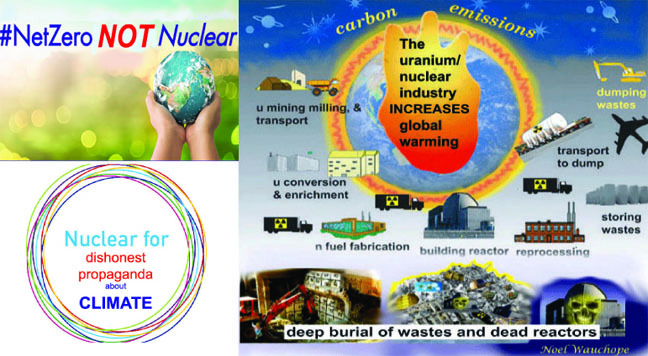
the EU Sustainable Taxonomy’s design is aimed at defining which economic activities are green – not which economic sectors are needed for the transition to a net-zero by 2050 economy
Decision-makers cannot let economic questions on energy security and cost thwart the scientific integrity of the EU Sustainable Taxonomy and still have an opportunity to save the credibility of the EU’s sustainable finance policy framework. It is now up to them to take responsibility
How to save the scientific integrity of the EU’s green finance taxonomy, By Elise Attal and Jan Vandermosten, 29 Oct 21 Decision-makers cannot let economic questions on energy security and cost thwart the scientific integrity of the EU Sustainable Taxonomy, write Elise Attal and Jan Vandermosten.
Elise Attal is Head of EU Policy at the Principles for Responsible Investment (PRI), a United Nations-supported international network of investors. Jan Vandermosten is a Senior Policy Analyst at PRI
It is crunch time for the EU Sustainable Taxonomy; a classification framework developed to help investors direct capital towards sustainable economic activities.
Member states and industry are heavily lobbying to include gas-fired electricity and nuclear energy within the definition of sustainable activities for climate mitigation.
While these sectors may be needed in the short-term to secure energy supply, their inclusion would fundamentally undermine the scientific integrity of the EU Sustainable Taxonomy – the bedrock on which the entire credibility of the EU sustainable finance framework relies.
Policymakers and industry should consider the risks of tarnishing investor confidence in this carefully designed and sophisticated framework aimed at providing long-term certainty.
The EU Sustainable Taxonomy regulation delineates an economic activity as sustainable if it “substantially contributes” to one out of six environmental objectives while at the same time “doing no significant harm” to any of the other five objectives. Screening criteria, based on best performance thresholds and life-cycle analysis, for instance, are under development for each environmental objective by an independent expert group, the Sustainable Finance Platform.
The Platform’s assessment relies on conclusive scientific evidence and – in the case of the climate change objective under the EU Taxonomy – whether the economic activities contribute to the long-term temperature goal of the Paris Agreement. First screening criteria for climate change mitigation and adaptation were adopted by the European Commission in April. Still, a decision on gas-fired power and nuclear was postponed at that time.
The inclusion of gas-fired electricity would seriously compromise the EU Sustainable Taxonomy’s ability to act as an independently and scientifically designed tool for guiding investment into environmentally sustainable activities in line with the EU’s goal of reducing emissions by 55% by 2030.
Research on net-zero by 2050 pathways for the energy sector, including the recent IEA World Energy Outlook, stresses that there is no remaining carbon budget for new gas investments and that existing gas-fired power plants will have to be phased out by 2035 in the OECD and 2040 globally.
The current EU Sustainable Taxonomy screening criteria for climate mitigation state that power generation from different technology sources can only make a substantial contribution to climate change mitigation within an emissions threshold of 100g CO2e/ kWh. Most existing gas production today would even fall above the ‘significant harm’ threshold for climate change mitigation, which has been set at 270g CO2e/kWh.
The merits of including nuclear energy in the EU Sustainable Taxonomy are also debatable.
Nuclear energy’s potential substantial contribution to climate mitigation objectives is clear, but important questions remain over its ability to meet the “do no significant harm” criteria with regards to other environmental objectives. A report by the Joint Research Centre that was commissioned to inform a decision on this matter has been criticised (e.g. SCHEER, Heinrich Böll Stiftung, Austrian Institute of Ecology) for not sufficiently addressing risks related to the storage of nuclear waste, severe incidents and nuclear proliferation.
Proponents of the inclusion of gas-fired electricity and nuclear energy in the EU Sustainable Taxonomy will argue that these economic activities have a role to play in the energy transition.
This argument is beside the point: the EU Sustainable Taxonomy’s design is aimed at defining which economic activities are green – not which economic sectors are needed for the transition to a net-zero by 2050 economy……..
Decision-makers cannot let economic questions on energy security and cost thwart the scientific integrity of the EU Sustainable Taxonomy and still have an opportunity to save the credibility of the EU’s sustainable finance policy framework. It is now up to them to take responsibility. https://www.euractiv.com/section/energy-environment/opinion/how-to-save-the-scientific-integrity-of-the-eus-green-finance-taxonomy/
Nuclear industry pushing its spin and doing deals on the sidelines at COP26

Nuclear Power Is COP26’s Quiet Controversy, TIME BY ALEJANDRO DE LA GARZA NOVEMBER 5, 2021 In the midst of the COP26 climate talks yesterday, U.S. and Romanian officials stepped aside for a session in the conference’s Blue Zone, establishing an agreement for U.S. company NuScale to build a new kind of modular nuclear power plant in the southeastern European country. …….
NuScale CEO John Hopkins sees the agreement as part of a broader recognition that nuclear power has a big role to play as the world decarbonizes. ……
But others at COP26 aren’t convinced that NuScale’s small reactors can help avoid climate catastrophe. Some point to the fact that NuScale has yet to build a single commercial plant as evidence that the company is already too late to the party. “We have to get everything done in the next 25 years,” says Tom Burke, co-founder of climate think tank E3G. “The idea that you’re going to scale up a technology you don’t even have yet, and it’s going to be commercially viable [in that time], just seems to me like la la land.”
( More broadly, the NuScale controversy underscores larger disagreements about nuclear power’s role in bringing the world to a post-carbon future. On one side, institutions like the International Energy Agency say that the nuclear industry, which has been shrinking for years, will need to nearly double in size over the next two decades in order for the world to meet net-zero emissions targets.)
Meanwhile, the U.S. has embraced the power source as a solution for developing countries, announcing yesterday that it will spend $25 million to help build reactors in Kenya, Brazil and Indonesia. Russia’s environment minister told Reuters last month that the country planned to push for other nations at COP26 to acknowledge its nuclear power plants as environmentally friendly, while the Czech Republic, France and a slew of other European nations announced an “alliance” to promote nuclear energy (as well as natural gas) as sustainable investments under the E.U.’s upcoming climate finance rules.
But opposition to the idea of including nuclear power in a green energy roadmap is equally fierce. Germany and Belgium have long been drawing down their nuclear sectors, while nations like New Zealand and Austria have opposed classifying nuclear as a clean power source alongside renewables like wind and solar.
Lukas Ross, Climate and Energy Justice Program Manager at Friends of the Earth U.S., points to ballooning costs for nuclear projects in the U.S. and the U.K., and calls the energy source a “distraction” and a waste of scarce resources compared with renewables like wind and solar. “[Nuclear] is too expensive and too slow to be relevant to the climate crisis,” says Ross.
Still, Sergey Paltsev, deputy director of the MIT Joint Program on the Science and Policy of Global Change and a senior research scientist at the MIT Energy Initiative, says the economics of nuclear energy are improving thanks to new technology like NuScale’s modular reactors, and that fission energy can help the world’s electricity systems meet crucial “baseload” needs, providing a steady current of power even when the sun doesn’t shine and the wind doesn’t blow.
But other experts say that the whole notion of baseload power is an outmoded concept, predicated on old assumptions about the ways that grids work. And Paltsev admits that, despite nuclear’s apparent promise, the industry still must prove that the technology is safe and cost effective. https://time.com/6114156/nuclear-power-is-cop26s-quiet-controversy/
NATO chief advises UK to deal with climate change threat to its Trident nuclear weapons at Faslane

COP26: NATO chief says it is up to UK to address Trident climate change flooding threat. NATO’s secretary general has stressed that it is up to individual nation members of the alliance to take action to protect military resources from the impacts of climate change, amid warnings that Faslane, the home of the UK’s Trident nuclear deterrent, could be
impacted by flooding due to rising sea levels.
Scotsman 3rd Nov 2021
Is it green, or forever toxic? France’s radioactive waste crisis. Nuclear rift at climate talks
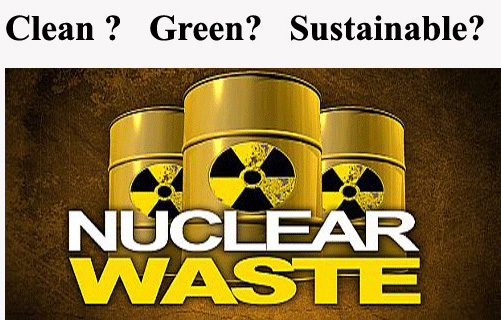
Is it green, or forever toxic? Nuclear rift at climate talks
By ANGELA CHARLTON, 4 Nov 21, SOULAINES-DHUYS, France (AP) — Deep in a French forest of oaks, birches and pines, a steady stream of trucks carries a silent reminder of nuclear energy’s often invisible cost: canisters of radioactive waste, heading into storage for the next 300 years.
As negotiators plot out how to fuel the world while also reducing carbon emissions at climate talks in Scotland, nuclear power is a central sticking point. Critics decry its mammoth price tag, the disproportionate damage caused by nuclear accidents, and radioactive leftovers that remain deadly for thousands of years.
……… Many governments are pushing to enshrine nuclear energy in climate plans being hashed out at the conference in Glasgow, known as COP26. The European Union, meanwhile, is debating whether to label nuclear energy as officially “green” — a decision that will steer billions of euros of investment for years to come. That has implications worldwide, as the EU policy could set a standard that other economies follow.
But what about all that waste? Reactors worldwide produce thousands of tons of highly radioactive detritus per year, on top of what has already been left by decades of harnessing the atom to electrify homes and factories around the world.
Germany is leading the pack of countries, mainly within the EU, standing firmly against labeling nuclear as “green.” …..
nowhere in the world is as reliant on nuclear reactors as France, which is at the forefront of the pro-nuclear push at the European and global level. And it’s among leading players in the nuclear waste industry, recycling or reprocessing material from around the world.
South of the World War I battlefields of Verdun, trucks bearing radioactivity warning stickers pull into a waste storage site near the village of Soulaines-Dhuys. They’re repeatedly checked, wiped and scanned for leaks. Their cargo — compacted waste stuffed into concrete or steel cylinders — is stacked by robotic cranes in warehouses that are then filled with gravel and sealed with more concrete.
……….. The storage units hold 90% of France’s low- to medium-activity radioactive waste, including tools, clothing and other material linked to reactor operation and maintenance. The site is designed to last at least 300 years after the last shipment arrives, when the radioactivity of its contents is forecast to be no higher than levels found in nature.
For longer-life waste — mainly used nuclear fuel, which remains potentially deadly for tens of thousands of years — France is laying the groundwork for a permanent, deep-earth repository beneath corn and wheat fields outside the nearby stone-house hamlet of Bure.
Some 500 meters (yards) below the surface, workers carry out tests on the clay and granite, carve tunnels and seek to prove that the long-term storage plan is the safest solution for future generations. Similar sites are under development or study in other countries, too.
If the repository wins French regulatory approval, it would hold some 85,000 metric tons (94,000 tons) of the most radioactive waste produced “from the beginning of the nuclear era until the end of existing nuclear facilities,” said Audrey Guillemenet, geologist and spokesperson for the underground lab.
“We can’t leave this waste in storage sites on the surface,” where it is now, she said. “That is secure, but not sustainable.”
The 25 billion euro ($29 billion) cost of the proposed repository is already built into budgeting by French utilities, Guillemenet said. But that’s just one piece of the staggering cost of building and operating nuclear plants, and one of the reasons that opposition abounds.
All around Bure, street signs are replaced with graffiti reading “Nuclear is Over,” and activists camp out at the town’s main intersection.
Greenpeace accuses the French nuclear industry of fobbing off waste on other countries and covering up problems at nuclear facilities, which industry officials deny. Activists staged a protest last week in the port of Dunkirk, as reprocessed uranium was being loaded onto a ship for St. Petersburg, demanding an end to nuclear energy and more research into solutions for existing waste.
…….. The current energy crunch is giving nuclear advocates another argument. With oil and gas costs driving an energy price crisis across Europe and beyond, French President Emmanuel Macron has trumpeted “European renewables and, of course, European nuclear.”
The waste, meanwhile, isn’t going away.
To make radioactive garbage dumps less worrying to local residents, Andra organizes school visits; one site even hosts an escape game. Waste storage researchers are readying for all kinds of potential future threats — revolution, extreme weather, even the next Ice Age, Guillemenet said.
Whatever happens in Glasgow, “whether we decide to go on with the nuclear energy or not,” she said, “we will need to find a solution for the management of that nuclear waste” that humankind has already produced. https://apnews.com/article/climate-science-business-environment-accidents-b334c5cddc50c620d53674a5b32518dd
A ”scientific disgrace” – a leaked document pushing nuclear and gas as sustainable will damage the EU’s credibilify on green finance.
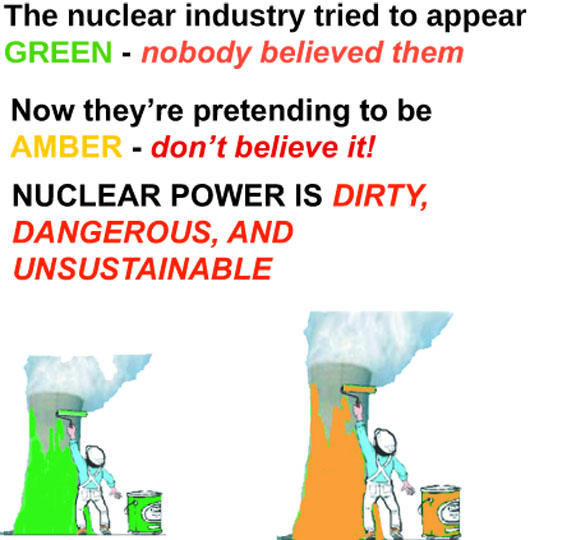
”the EU Sustainable Taxonomy’s design is aimed at defining which economic activities are green – not which economic sectors are needed for the transition to a net-zero by 2050 economy.”
LEAKED: Paper on gas and nuclear’s inclusion in EU green finance rules https://www.euractiv.com/section/energy-environment/news/leaked-paper-on-gas-and-nuclears-inclusion-in-eu-green-finance-rules/
By Frédéric Simon | EURACTIV.com A proposal to bring both nuclear power and natural gas into the bloc’s green finance taxonomy is circulating in Brussels. The paper has been branded as a “scientific disgrace” by campaigners who warned it would damage the EU’s credibility on green finance.
The so-called “non-paper”, obtained by EURACTIV, lays out detailed technical criteria for gas to qualify as a transitional activity under the EU’s sustainable finance rules.
To qualify as a “sustainable” investment, gas power plants or cogeneration facilities must not emit more than 100 grams of CO2 equivalent per kilowatt-hour, according to the draft paper.
It comes in the wake of declarations by European Commission President Ursula von der Leyen, who said the EU executive would soon table proposals on gas and nuclear as part of the bloc’s green finance rulebook.
“We need more renewables. They are cheaper, carbon-free and homegrown,” von der Leyen wrote on Twitter after an EU summit meeting two weeks ago where leaders debated the bloc’s response to rising energy prices.
“We also need a stable source, nuclear, and during the transition, gas. This is why we will come forward with our taxonomy proposal,” she added.
Gas as a ‘transitional activity’
The 100gCO2 emissions criteria is the same as earlier proposals circulated last year, which were rejected as too stringent by a group of 10 pro-gas EU countries who threatened to veto the proposal.
To assuage critics concerns, the paper lays out additional criteria for gas plants to qualify as a “transitional activity”, accompanied by a sunset clause (until 31 December 2030) for the commissioning of new plants…………
Campaigners denounced those criteria as “radically weaker” than previous plans drafted by the European Commission.
“This proposal is a scientific disgrace that would deal a fatal blow to the taxonomy,” said Henry Eviston, spokesman on sustainable finance at WWF European Policy Office.
“It would severely damage the EU’s sustainable finance agenda and the EU Green Deal. It must be firmly rejected by the Commission and opposed by all member states,” he added in a statement.
Campaigners were unsure about the origin of the non-paper. But diplomats who spoke to EURACTIV at an EU summit two weeks ago said France has been working behind the scenes to forge a compromise on the taxonomy that would satisfy supporters of gas and nuclear power.
At the initiative of Paris, representatives from like-minded EU countries held a meeting on 18 October to debate nuclear and natural gas in the context of the taxonomy, the EU diplomat said. The meeting was attended by Bulgaria, Cyprus, Czechia, Finland, France, Greece, Hungary, Malta, Poland, Romania, Slovakia, and Slovenia.
According to the same diplomatic source, participants discussed compromise proposals for technical criteria to assess the sustainability of gas and nuclear power plants.
Nuclear
On nuclear, the “non-paper” builds on the EU’s Joint Research Centre (JRC) recommendations, which concluded in a July report that nuclear power was safe and therefore eligible for a green label under the taxonomy.
The paper does not propose detailed sustainability criteria at this stage and merely divides nuclear power production activities into four categories:
- Nuclear plant operation: Production of electricity, including the construction, commissioning, operation and decommissioning of nuclear power plants.
- Storage or disposal of radioactive waste or spent nuclear fuel (enabling activity).
- Mining and processing of uranium (enabling activity).
- Reprocessing of spent nuclear fuel (enabling activity).
The “non-paper” comes in the wake of a meeting of EU energy ministers last week where twelve EU countries spoke in favour of nuclear’s inclusion in the taxonomy.
Prominent critics of gas and nuclear’s inclusion in the taxonomy include Elise Attal is Head of EU Policy at the Principles for Responsible Investment (PRI), a United Nations-supported international network of investors.
“Proponents of the inclusion of gas-fired electricity and nuclear energy in the EU Sustainable Taxonomy will argue that these economic activities have a role to play in the energy transition,” she wrote in a recent op-ed published on EURACTIV.
“This argument is beside the point: the EU Sustainable Taxonomy’s design is aimed at defining which economic activities are green – not which economic sectors are needed for the transition to a net-zero by 2050 economy.”
Read the full paper below or download here:
With “net zero 2050” and 1.5°C in same breath, Glasgow reeks of cognitive dissonance
Glasgow will not get close to pledges to halve emissions by 2030, and any reputable climate scientist will say that means warming will shoot past 2°C. The post With “net zero 2050” and 1.5°C in same breath, Glasgow reeks of cognitive dissonance appeared first on RenewEconomy.
With “net zero 2050” and 1.5°C in same breath, Glasgow reeks of cognitive dissonance — RenewEconomy So far most of the media coverage and advocacy at COP26 has been poor andseverely misinformed. One after another politicians, business leaders, journalists and NGO advocates talk about “net zero 2050” and the 1.5°C Paris goal in the same breath, and get away with it. This gross underestimation of the climate condition is utterly delusional, and very few seem to be calling it out.
“Net zero 2050” (NZ2050) is a con, as this blog has reported over and over again, as did this Breakthrough report. Central bankers have NZ2050 scenarios in which fossil fuels constitute 50% of primary energy use in 2050. When the Murdoch media endorses the NZ2050 climate goal, you know it is the problem and not the answer. 2050 is so far away it’s a reason for procrastination. Judging by the G20 outcome, even NZ2050 and a coal phase-out may not pass muster in Glasgow. China is on net zero by 2060 and India on net zero by 2070.Current climate models are not capturing all the risks, including the stalling of the Gulf Stream, polar ice melt and the uptick in extreme weather events.
Carbon dioxide and methane release from deep permafrost are not routinely included in climate models; Climate models do not account well for increased warming due to loss of Arctic sea-ice: “Losing the reflective power of Arctic sea ice will advance the 2ºC threshold by 25years”; and rhe IPCC 2021 report gives “a best estimate of equilibrium
climate sensitivity of 3°C” but including factors such as “slow”
feedbacks (carbon stores) and albedo changes (reflectivity), warming may be
as high as 5–6°C for a doubling of carbon dioxide for a range of climate
states between glacial conditions and ice-free Antarctica.
Renew Economy 3rd Nov 2021
Extreme weather events now the new normal – State of the Climate report 2021

Extreme weather events – including powerful heat waves and devastating floods – are now the new normal, says the World Meteorological Organisation. The State of the Climate report for 2021 highlights a world that is “changing before our eyes.” The 20-year temperature average from 2002 is on course to exceed 1C above pre-industrial levels for the first time. And global sea levels rose to a new high in 2021, according to the study. These latest figures for 2021 are being released early by the WMO to coincide with the start of the UN climate conference in Glasgow known as COP26.
BBC 31st Oct 2021
1 This Month
19 February – VIRTUAL EVENT-Decision Time: AI and Our Nuclear Arsenal
12:45 p.m. Central / 1:45 p.m. Eastern
To see nuclear-related stories in greater depth and intensity – go to https://nuclearinformation.wordpress.com
-
Archives
- February 2026 (170)
- January 2026 (308)
- December 2025 (358)
- November 2025 (359)
- October 2025 (376)
- September 2025 (258)
- August 2025 (319)
- July 2025 (230)
- June 2025 (348)
- May 2025 (261)
- April 2025 (305)
- March 2025 (319)
-
Categories
- 1
- 1 NUCLEAR ISSUES
- business and costs
- climate change
- culture and arts
- ENERGY
- environment
- health
- history
- indigenous issues
- Legal
- marketing of nuclear
- media
- opposition to nuclear
- PERSONAL STORIES
- politics
- politics international
- Religion and ethics
- safety
- secrets,lies and civil liberties
- spinbuster
- technology
- Uranium
- wastes
- weapons and war
- Women
- 2 WORLD
- ACTION
- AFRICA
- Atrocities
- AUSTRALIA
- Christina's notes
- Christina's themes
- culture and arts
- Events
- Fuk 2022
- Fuk 2023
- Fukushima 2017
- Fukushima 2018
- fukushima 2019
- Fukushima 2020
- Fukushima 2021
- general
- global warming
- Humour (God we need it)
- Nuclear
- RARE EARTHS
- Reference
- resources – print
- Resources -audiovicual
- Weekly Newsletter
- World
- World Nuclear
- YouTube
-
RSS
Entries RSS
Comments RSS
 nuclear-news