Wildfires: Could this be the worst year ever?
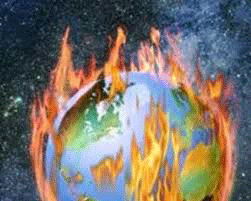
The area of land burnt in Europe this year is significantly higher than the average, and Britain is at risk as well thanks to sustained high global temperatures. Even Britain,
a country with a climate not normally conducive to wildfires, is recording
record amounts of burnt land for this stage of the summer. These fires are
starting abnormally early, and appear to be more severe than previous
years. What is causing them, and could 2025 be the worst year yet?
Times 13th July 2025, https://www.thetimes.com/uk/environment/article/wildfires-could-this-be-the-worst-year-ever-twnx25v7s
SIZEWELL C, RISING SEA LEVELS AND EDF’s SILENCE
The dust has just about settled since Labour’s ‘golden nuclear
moment’ laid out by Rachel Reeves in her recent Spending Review. Plans
for the monstrous Sizewell C took another step forward, nudged along by the
offer of another £14.2 billion of taxpayers’ money, together with a
further £2.5 billion promised for Small Modular Reactors, and roughly the
same amount for fusion, the nuclear industry’s very own black hole.
So
loud were the fanfares, so overblown the hype, that the real story of that
week got lost. EDF’s deeply ingrained habits of secrecy and deceit were
– yet again – exposed to the harsh light of a Freedom of Information
request from the indefatigable Together Against Sizewell C (TASC). One of
the principal concerns that TASC has doggedly pursued over the last few
years is the vulnerability of Sizewell C being built on one of Europe’s
most rapidly eroding coastlines and its lack of resilience to the impacts
of climate change. The evidence regarding future sea level rise goes from
deeply worrying to totally terrifying – with the very real possibility of
at least a 1 metre rise – and possibly as much as 2 metres – by 2100.
Given that the spent fuel used at Sizewell C throughout its operating life
(around 4,000 tonnes) will need to be stored on site until at least 2160
this is clearly a matter of the greatest concern.
Johnathon Porritt 7th July 2025, https://jonathonporritt.com/sizewell-c-flood-risk-and-edf-silence/
The Australia-Tuvalu climate migration treaty is a drop in the ocean

Australia has offered a lifeline to the people of Tuvalu, whose island is threatened by rising sea levels. But the deal comes with strings attached – and there will be millions more climate migrants in need of refuge by 2050
By New Scientist, 2 July 2025, https://www.newscientist.com/article/mg26635502-900-the-australia-tuvalu-climate-migration-treaty-is-a-drop-in-the-ocean/
A lifeline has been extended to the people of Tuvalu, a low-lying Pacific nation where rising sea levels are creating ever more problems. Each year, Australia will grant residency to 280 Tuvaluans. The agreement could see everyone currently living in Tuvalu move within just a few decades.
Effectively the world’s first climate migration agreement, the Australia-Tuvalu Falepili Union will also provide adaptation funds to help those who stay behind.
Is this a model for how climate migration can be managed in an orderly way, before disaster strikes? Far from it. To get this deal, Tuvalu must allow Australia a say in future security and defence matters. Few other countries are likely to agree to similar terms.
Tuvalu’s population is also very small. Taking in around 10,000 climate migrants would be inconsequential for a country of 28 million like Australia. Worldwide, it is estimated that between 25 million and 1 billion people might be forced to move by 2050 because of climate change and other environmental factors. Where will they go?
Many argue that the wealthy countries that emitted most of the carbon dioxide that is warming the planet have a moral duty to help people displaced by climate change. But these kinds of discussions have yet to be translated into the necessary legal recognition or acceptance of forced climate migrants. On the contrary, many higher-income nations seem to be becoming more hostile to migrants of any kind.
There has been a little progress in setting up “loss and damage” funds to compensate lower-income countries for the destruction caused by global warming. This could help limit the need for climate migration in the future – but the money promised so far is a fraction of what is required.
The most important thing nations should be doing is limiting future warming by cutting emissions – but globally these are still growing. Sadly, the Falepili Union is a drop in the ocean, not a turning of the tide.
What Greenland’s Ancient Past Reveals about Its Fragile Future
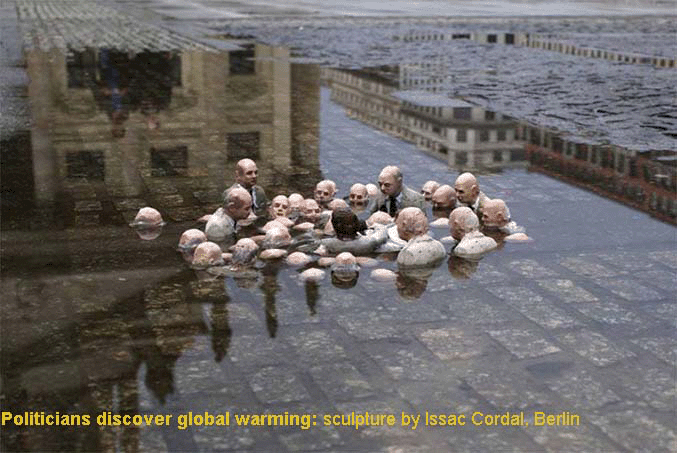
The collapse of the world’s second-largest ice sheet would drown cities
worldwide. Is that ice more vulnerable than we know?
Last year, Scientific American chief multimedia editor Jeffery DelViscio spent a month on the
Greenland ice sheet, reporting on the work of scientists taking ice and
rock cores from the Northeast Greenland Ice Stream (NEGIS) and the bedrock
underneath. This massive flow of ice drains ice into the ocean, and its
melt has been speeding up in the past decade.
Bedrock samples under ice
from an area in northwest Greenland indicate it was ice-free as recently as
about 7,000 years ago when global temperatures were only a few degrees
warmer than they are now. The sheet won’t melt all at once, of course,
but scientists are increasingly concerned by signs of accelerating
ice-sheet retreat. A recent report showed that it has been losing mass
every year for the past 27 years. Another study found that nearly every
Greenlandic glacier has thinned or retreated in the past few decades.
The NEGIS itself has extensively sped up and thinned over the past decade. If
the entire Greenland ice sheet melted, global sea levels would rise by
about 24 feet, inundating coastal cities, farmland and homes. “I have,
for the first time ever in my career, datasets that take my sleep away at
night,” says Joerg Schaefer, GreenDrill’s co-principal investigator.
“They are so direct and tell me this ice sheet is in so much trouble.”
Scientific American 17th June 2025, https://www.scientificamerican.com/article/greenlands-ice-sheet-collapse-could-be-closer-than-we-think/
France and Switzerland shut down nuclear power plants amid scorching heatwave

By Euronews, 02/07/2025, https://www.euronews.com/2025/07/02/france-and-switzerland-shut-down-nuclear-power-plants-amid-scorching-heatwave
To cool down, nuclear power plants pump water from local rivers or the sea, which they then release back into water bodies at a higher temperature. However, this process can threaten local biodiversity if water is released which is too hot.
Due to a scorching heatwave which has spread across Europe in recent days, a number of nuclear power plants in Switzerland and France have been forced to either reduce activity or shut down completely as extreme temperatures have prevented sites from relying on water from local rivers.
To cool down, nuclear power plants pump water from local rivers or the sea, which they then release back into water bodies at a higher temperature.
However, Europe’s ongoing heatwave means that the water pumped by nuclear sites is already very hot, impacting the ability of nuclear plants to use it to cool down. On top of this, nuclear sites run the risk of posing a dangerous threat to local biodiversity, by releasing water which is too hot into rivers and seas.
In light of the heat, Axpo – which operates the Beznau nuclear power plant in Switzerland – said it had shut down one of its reactors on Tuesday, adding that a second reactor was operating at limited capacity.
“Due to the high river water temperatures, Axpo has been increasingly reducing the output of the two reactor units at the Beznau nuclear power plant for days and reduced it to 50 per cent on Sunday,” said the operator.
The Beznau nuclear power plant’s reactors are located directly on the River Aare, where temperatures have reached 25 degrees Celsius in recent days, leading Axpo to curtail its activities to prevent “excessive warming of the already warm water” which could strain local biodiversity.
Although Switzerland has decided to phase out nuclear power by 2033, existing plants are able to continue to operate as long as they are safe.
Meanwhile, on Monday French electricity company EDF shut down the Golfech nuclear power plant, located in the southern department of Tarn-et-Garonne, amid extreme heat warnings in the region and concerns that the local river could heat up to 28 degrees, even without the inflow of heated cooling water.
France has a total of 57 active nuclear reactors in 18 power plants. According to EDF, the country obtains around 65% of its electricity from nuclear energy, which the government considers to be environmentally friendly.
Output has also been reduced at other sites, including at the Blayais nuclear power plant in western France, as well as the Bugey nuclear power plant in southern France, which could also be shut down, drawing their cooling water from the Gironde and Rhône rivers.
Although the production of nuclear power has had to be curtailed in light of extreme heat, the impact on France’s energy grid remains limited, despite the fact that more electricity is being used to cool buildings and run air conditioning systems.
Speaking to broadcaster FranceInfo, French grid operator RTE ensured that “all the nuclear power sites which are running are able to cover the needs of the French population. France produces more electricity than it consumes, as it currently exports electricity to neighbouring countries.”
EDF shuts down Golftech nuclear plant due to high river temperature
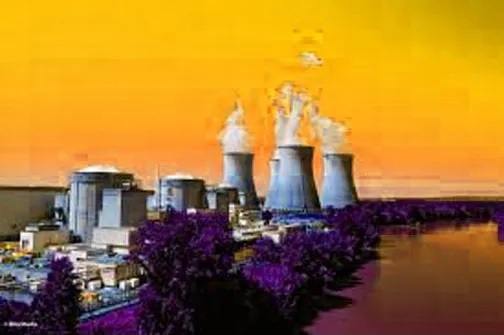
French utility EDF said it shut down the No. 1 reactor at the Golftech
nuclear power plant in southwestern France late on Sunday, ahead of an
anticipated rise in the temperature of the Garonne river that supplies the
plant’s cooling water.
Reuters 30th June 2025, https://www.reuters.com/business/energy/edf-shuts-down-golftech-nuclear-plant-due-high-river-temperature-2025-06-30/
UN expert urges criminalizing fossil fuel disinformation, banning lobbying
Rapporteur calls for defossilization of economies and urgent reparations to avert ‘catastrophic’ rights and climate harms.
Nina Lakhani Climate justice reporter, Mon 30 Jun 2025 , https://www.theguardian.com/environment/2025/jun/30/un-expert-urges-criminalizing-fossil-fuel-disinformation-banning-lobbying
A leading UN expert is calling for criminal penalties against those peddling disinformation about the climate crisis and a total ban on fossil fuel industry lobbying and advertising, as part of a radical shake-up to safeguard human rights and curtail planetary catastrophe.
Elisa Morgera, the UN special rapporteur on human rights and climate change who presents her damning new report to the general assembly in Geneva on Monday, argues that the US, UK, Canada, Australia and other wealthy fossil fuel nations are legally obliged under international law to fully phase out oil, gas and coal by 2030 – and compensate communities for harms caused.
Fracking, oil sands and gas flaring should be banned, as should fossil fuel exploration, subsidies, investments and false tech solutions that will lock in future generations to polluting and increasingly costly oil, gas and coal.
“Despite overwhelming evidence of the interlinked, intergenerational, severe and widespread human rights impacts of the fossil fuel life cycle … these countries have and are still accruing enormous profits from fossil fuels, and are still not taking decisive action,” said Morgera, professor of global environmental law at the University of Strathclyde.
“These countries are responsible for not having prevented the widespread human rights harm arising from climate change and other planetary crises we are facing – biodiversity loss, plastic pollution and economic inequalities – caused by fossil fuels extraction, use and waste.”
Island nations, Indigenous and other vulnerable communities – who have benefited least from fossil fuels – now face the worst and compounding harms caused by the climate crisis and other environmental harms linked to their extraction, transport and use for energy, fuel, plastics and synthetic fertilizers.
The report points to a mountain of evidence on the severe, far-reaching and cumulative damage caused by the fossil fuel industry – oil, gas, coal, fertilizers and plastics – on almost every human right including the rights to life, self-determination, health, food, water, housing, education, information and livelihoods.
Morgera makes the case for the “defossilization” of our entire economies – in other words the eradication of fossil fuels from all sectors including politics, finance, food, media, tech and knowledge. The transition to clean energy is not enough to tackle the widespread and mounting harms caused by the fossil fuels, she argues.
In order to comply with existing international human rights law, states are obliged to inform their citizens about the widespread harms caused by fossil fuels and that phasing out oil, gas and coal is the most effective way to fight the climate crisis.
People also have the right to know how the industry – and its allies – has for 60 years systematically obstructed access to this knowledge and meaningful climate action by peddling disinformation and misinformation, attacks on climate scientists and activists, and by capturing democratic decision-making spaces including the annual UN climate negotiations.
“The fossil fuel playbook has undermined the protection of all human rights that are negatively impacted by climate change for over six decades,” said Morgera in the imperative of defossilizing our economies report.
States must ban fossil fuel ads and lobbying, criminalize greenwashing (misinformation and misrepresentation) by the fossil fuel industry, media and advertising firms, and enforce harsh penalties for attacks on climate advocates who are facing a rise in malicious lawsuits, online harassment and physical violence.
Communities across the world are facing growing threats from sea level rise, desertification, drought, melting glaciers, extreme heat, floods, and other climate-related impacts. This is on top of the deadly air pollution, water scarcity, biodiversity loss, and forced displacement of Indigenous and rural peoples associated with every stage of the fossil fuel lifecycle.
Meanwhile, fossil fuel and petrochemical companies have benefited from huge profits, taxpayer subsidies, tax avoidance schemes and undue protection under international investment law – without ever reducing energy poverty and economic inequalities. In 2023, oil and gas companies globally earned $2.4tn, while coal companies pocketed $2.5tn, according to the report.
Removing fossil fuel subsidies, estimated to have topped $1.4tn for OECD members and 48 other countries in 2023, would alone reduce emissions by up to 10% by 2030.
Redirecting these subsidies would help wealthy fossil fuel-producing states fulfill their legal obligations to aid developing countries to phase out fossil fuels – and provide financial and other remedies for the widespread human rights violations and environmental damage they have caused – and continue to cause.
The compensation could also be funded by enforcing penalties for damages caused by fossil fuel companies, and cracking down on tax evasion and avoidance by the industry, as well as introducing wealth and windfall taxes. States could – and should – require the industry to finance climate adaptation, mitigation and loss and damage through climate superfunds or other mechanisms that are directly accessible to affected communities.
Land unjustly appropriated for fossil fuel operations should be cleaned up, remediated and returned to Indigenous communities, people of African descent and peasants, if they want it back, or they should be fairly compensated, Morgera argues.
The report lays out the human rights case for decisive and transformative political action to limit the pain and suffering from the climate crisis. The recommendations offer a glimpse at a world in which the basic rights of all people are prioritized above the profits and benefits enjoyed by a few, but will probably be dismissed by some as radical and untenable.
“Paradoxically what may seem radical or unrealistic – a transition to a renewable energy-based economy – is now cheaper and safer for our economics and a healthier option for our societies,” Morgera told the Guardian.
“The transition can also lead to significant savings of taxpayers’ money that is currently going into responding to climate change impacts, saving health costs, and also recouping lost tax revenue from fossil fuel companies. This could be the single most impactful health contribution we could ever make. The transition seems radical and unrealistic because fossil fuel companies have been so good at making it seem so.”
‘It looks more likely with each day we burn fossil fuels’: polar scientist on Antarctic tipping points

Despite working on polar science for the British Antarctic Survey for 20 years, Louise Sime finds the magnitude of potential sea-level rise hard to comprehend. Up until 2016, the sea ice
in Antarctica seemed relatively stable. Then everything started to change.
At first, the decline was mostly in line with climate models.
But suddenly, in 2023, there was an enormous drop. About 2.5 million sq km of Antarctic
sea ice went missing relative to the average before 2023. The anomaly was
of such a magnitude that it’s quite hard for scientists to know what to
make of it. It has been described as a five sigma event.
The potential for Antarctica to increase global sea levels is scarier than for Greenland.
Right now, they’re both contributing similar amounts to sea-level rise,
but in future, it could be Greenland goes up a bit and then Antarctica goes
up catastrophically. Greenland has the potential to raise sea levels by
five or six metres, but we don’t expect this will come in the form of an
absolutely catastrophic, abrupt loss. Most of the ice in Greenland is not
below sea level so we can see what is happening and we expect it will melt
in a linear fashion.
By contrast, Antarctica has 80 metres of potential
sea-level rise. We don’t expect all of that, but it is harder to know
exactly what is happening.
Guardian 27th June 2025, https://www.theguardian.com/environment/ng-interactive/2025/jun/27/tipping-points-antarctica-arctic-sea-ice-polar-scientist
Wreckers, money woes and mutirão: 10 things we learned about Cop30 from Bonn climate talks

Key takeaways from two weeks of negotiations aimed at setting out stall
for November’s Cop30 in Brazil. Two weeks of negotiations on the climate
crisis have just concluded in Bonn in preparation for the Cop30 summit
taking place in Brazil this November.
What did we learn?
Limiting global heating to 1.5C above preindustrial levels is vital for a healthy planet,
but hopes of doing so are rapidly vanishing as greenhouse gas emissions
continue to rise, and temperatures soar.
The main task for Cop30 in Belém
this November is for every country to submit a national plan, required
under the 2015 Paris agreement, to cut carbon as far as necessary to hold
to the 1.5C limit. Few countries have submitted their plans, called
nationally determined contributions (NDCs), which set out a target on
emissions to 2035 and an indication of the measures that will be taken to
meet them.
They were due in February, but the US presidency of Donald
Trump, his vacillations over tariffs and the prospect of a global trade war
led many to adopt a “wait and see” approach. Military conflicts in
Ukraine, Gaza and Iran have further frightened governments and taken
attention away from the climate.
Guardian 27th June 2025, https://www.theguardian.com/environment/2025/jun/27/cop30-10-things-we-learned-from-bonn-climate-talks
UK schools and offices not equipped for impact of global heating, report warns
The UK’s schools, care homes and offices are not equipped for the
effects of global heating and face lengthy heatwaves even in optimistic
scenarios, according to a groundbreaking report that calls for climate
resilience to be declared a national emergency.
The report by the UK Green
Building Council also predicts that towns including Peterborough and
Fairbourne will be uninhabitable by the end of the century because of
flooding.
Produced over two years, the roadmap sets out a blueprint for
action and warns that without the adaptation of millions of buildings,
there will be increased injury, health impacts, deaths and untold economic
damage. Five key threats are examined by the roadmap: overheating,
wildfires, flooding, drought and storms. Detailed thermodynamic modelling
on school buildings reveals that schools across London and the south-east
will face 10 weeks of extreme heat a year – defined as 28C and above –
in a low-warming scenario, defined as 2C above preindustrial levels. The
world is on track for 2.7C of heating.
Guardian 26th June 2025, https://www.theguardian.com/environment/2025/jun/26/uk-care-homes-schools-and-offices-not-equipped-to-deal-with-global-heating
As NATO Countries Pledge to Up Defense Spending, Will Food and Climate Security Have a Seat at the Table?

By Siena Cicarelli and Tom Ellison, https://climateandsecurity.org/2025/06/as-nato-countries-pledge-to-up-defense-spending-will-food-and-climate-security-have-a-seat-at-the-table/
This summer marks a critical juncture for European food and climate security. Before heading off on their summer holidays, leaders will attempt to navigate burgeoning crises in the Middle East, an unpredictable US government, growing defense needs, and an unstable global economy.
Several key political decision points are unfolding this summer, starting with this week’s NATO Summit, where a number of member state leaders committed to a new defense and security spending target of 5 percent of GDP by 2035, which, if implemented by the target date, could entail roughly hundreds of billions of dollars in new spending. However, given that the text of the commitment changed from “all Allies” to just “Allies,” in the final hours of negotiations, commitments will likely vary by member state. Furthermore, given the current combination of budget deficits, national politics, and a collective shift towards “competitiveness,” the European Union risks falling prey to false dichotomies and short-termism, placing climate and food security priorities essential to sustainable security on the back burner in favor of “hard” security goals. While 1.5% GDP of the new spending target can come from non-defense resilience, infrastructure, and civil preparedness spending, food and climate security were not prominent at the NATO Summit.
There are some positive signs, however, that countries are considering climate resilience as a core part of their defense and security strategies. This includes an explicit climate security pledge in the recent EU-UK defense partnership announcement and reported plans from some NATO members, like Spain and Southern Mediterranean states, to use the 1.5% resilience carveout for disaster response and climate investments.
A key indicator of how Europe will prioritize and balance food security, climate resilience, and defense needs will be the next five-year EU budget, also known as the Multiannual Financial Framework (MFF) and updates to the Common Agricultural Policy (CAP) – the initial proposals for which are expected to be released in mid-July. The CAP is a complex structure of subsidies and schemes related to farming, environmental protection, and rural development that aims to keep European farmers competitive, enhance food security, and protect biodiversity. It remains the EU’s second-largest budgetary line item at €387/$450 billion in the current MFF period (roughly 25% of the EU budget). The formation of the MFF is notoriously opaque, but initial reporting suggests a limited commitment from national governments to additional expenditures and a strong desire from the largest net contributors to allocate more to joint procurement and defense spending. This raises doubts about whether the bloc’s food security ambitions are feasible, or if policies will be fractured across EU member states in a so-called “27-speed” system.
While the topline goals of the CAP are relatively clear, implementation remains a perennial political challenge for the European Union. In 2024, farmers’ protests spread across Europe over concerns about fuel subsidy reductions, safety net cuts, and environmental regulations in the CAP. The protests at times featured misinformation, threats to political leaders, and property damage, and were exploited by right wing extremists and Russian propagandists to build influence and stoke division. This year, Commissioners have tried to reassure farmers that direct subsidies (which are €291/$338 billion, about three-quarters of the CAP budget) will likely remain protected in the next MFF, but concerns about cuts to rural development and national-level programs have already set top farming groups on edge.
More broadly, Europe cannot afford to ignore food and climate risks amid new defense spending obligations. Staple crops that underpin European food security and local agricultural economies are endangered in the coming decades, even with robust adaptation. In 2024, the European Environment Agency’s European Climate Risk Assessment rated risks from extreme weather disruptions to crop production and climate-driven food price spikes as rising from “substantial” to “critical” over the next two decades. Recent studies have showcased that agricultural vulnerability – and potential losses – are EU-wide. While the risks are severe in southern European states like Spain and Italy, they don’t stop there. The Benelux states, Germany, France, the United Kingdom, as well as southern regions of the Nordics, also face unusually hot and dry conditions. Drought alone currently drives over 50% of agricultural climate risk and is expected to contribute heavily to the EIB-estimated 42-66% increase in annual average crop losses (from EUR 17.4 billion to 24.8-28.9 billion annually) over the next 25 years. When incorporating other agricultural outputs, such as livestock or aquaculture, estimated annual losses reach EUR 40+ billion by 2050. These losses have cascading effects outside of the food and agricultural sector, straining supply chains and potentially boosting prices for consumers across the bloc.
With climate change contributing to rising food, energy, and insurance prices, demands for military disaster relief, and overseas instability risks and migration, turning a blind eye to these risks could intensify a vicious cycle of affordability crises and nativist politics that already constrain Europe’s security investments. Under-resourced or disorderly approaches to these challenges would hinder Europe’s resilience and security, with climate and economic shocks to food exacerbating divisions that could precipitate another round of protests and even political shifts in upcoming elections, undermining European unity.
The Center for Climate and Security (CCS) will be watching for how key issues play out as these challenges come into focus this summer and over the coming years, including:
How does the EU balance its commitments to the CAP and the MFF with the budgetary demands of the new NATO target?- To what extent are any reforms or substantial changes to the CAP structure done in consultations with producers, consumers and other stakeholders navigating the green transition, to insulate against green backlash or disinformation?
- What role can food and climate security investments play in the 1.5% of GDP portion of the NATO spending target that includes non-defense resilience, infrastructure, and civil preparedness?
Why do we pretend heatwaves are fun – and ignore the brutal, burning reality?
An estimated 600 people will die as a result of this one heatwave. Those
kinds of numbers from a virus would spark at least a localised lockdown,
and in a plane crash, a national day of mourning.
But it’s hard to respond to climate fatalities proportionately without confronting global
heating and taking on the underlying inequalities that make some people
more vulnerable than others. High temperatures are much more dangerous when
you’re disabled, when you’re homeless, when you’re incarcerated, when
you’re old. It would be pretty rum to be squeezing disability benefits at
the same time as worrying about whether disabled people are at greater risk
from the weather, and need more care – better to imagine this an act of
God, in which the deaths cannot possibly be prevented.
Guardian 23rd June 2025, https://www.theguardian.com/commentisfree/2025/jun/23/why-do-we-pretend-heatwaves-are-fun-and-ignore-the-brutal-burning-reality
Nuclear power plant warning as heatwave hits France.
Independent Forrest Crellin, Friday 20 June 2025
France’s electricity supply faces potential disruption as soaring river temperatures, driven by an impending heatwave, threaten to curtail nuclear power generation along the Rhone.
Nuclear operator EDF announced on Friday that high water temperatures are expected to impact electricity production from 25 June, particularly at the 3.6-gigawatt Bugey nuclear power plant in eastern France.
This marks the first such warning for high river temperatures in France for 2025.
The issue stems from environmental regulations governing the discharge of cooling water, which can be breached when river temperatures become excessively high due to heatwave conditions.
The alert comes as state forecaster Meteo France predicts a significant heatwave will sweep across the country this weekend.
Why 2024’s global temperatures were unprecedented, but not surprising.
Human-caused greenhouse gas (GHG) emissions in 2024 continued to drive
global warming to record levels. This is the stark picture that emerges in
the third edition of the “Indicators of Global Climate Change” (IGCC)
report, published in Earth System Science Data. IGCC tracks changes in the
climate system between Intergovernmental Panel on Climate Change (IPCC)
science reports. In doing so, the IGCC fills the gap between the IPCC’s
sixth assessment (AR6) in 2021 and the seventh assessment, expected in
2028.
Carbon Brief 18th June 2025, https://www.carbonbrief.org/guest-post-why-2024s-global-temperatures-were-unprecedented-but-not-surprising/
Three years left to limit warming to 1.5C, leading scientists warn
The Earth could be doomed to breach the symbolic 1.5C warming limit in as
little as three years at current levels of carbon dioxide emissions. That’s
the stark warning from more than 60 of the world’s leading climate
scientists in the most up-to-date assessment of the state of global
warming.
Nearly 200 countries agreed to try to limit global temperature
rises to 1.5C above levels of the late 1800s in a landmark agreement in
2015, with the aim of avoiding some of the worst impacts of climate change.
But countries have continued to burn record amounts of coal, oil and gas
and chop down carbon-rich forests – leaving that international goal in
peril. “Things are all moving in the wrong direction,” said lead author
Prof Piers Forster, director of the Priestley Centre for Climate Futures at
the University of Leeds.
“We’re seeing some unprecedented changes and we’re
also seeing the heating of the Earth and sea-level rise accelerating as
well.” These changes “have been predicted for some time and we can directly
place them back to the very high level of emissions”, he added. At the
beginning of 2020, scientists estimated that humanity could only emit 500
billion more tonnes of carbon dioxide (CO2) – the most important
planet-warming gas – for a 50% chance of keeping warming to 1.5C.
But by the start of 2025 this so-called “carbon budget” had shrunk to 130 billion
tonnes, according to the new study. That reduction is largely due to
continued record emissions of CO2 and other planet-warming greenhouse gases
like methane, but also improvements in the scientific estimates. If global
CO2 emissions stay at their current highs of about 40 billion tonnes a
year, 130 billion tonnes gives the world roughly three years until that
carbon budget is exhausted.
BBC 19th June 2025, https://www.bbc.co.uk/news/articles/cn4l927dj5zo
1 This Month


Website of the Week

New book – https://www.amazon.com/dp/1923372157?utm_source=substack&utm_medium=email
Now until to February 10, 2026 Radioactive waste storage in France: the debate is finally open! How to participate?
-
Archives
- January 2026 (106)
- December 2025 (358)
- November 2025 (359)
- October 2025 (377)
- September 2025 (258)
- August 2025 (319)
- July 2025 (230)
- June 2025 (348)
- May 2025 (261)
- April 2025 (305)
- March 2025 (319)
- February 2025 (234)
-
Categories
- 1
- 1 NUCLEAR ISSUES
- business and costs
- climate change
- culture and arts
- ENERGY
- environment
- health
- history
- indigenous issues
- Legal
- marketing of nuclear
- media
- opposition to nuclear
- PERSONAL STORIES
- politics
- politics international
- Religion and ethics
- safety
- secrets,lies and civil liberties
- spinbuster
- technology
- Uranium
- wastes
- weapons and war
- Women
- 2 WORLD
- ACTION
- AFRICA
- Atrocities
- AUSTRALIA
- Christina's notes
- Christina's themes
- culture and arts
- Events
- Fuk 2022
- Fuk 2023
- Fukushima 2017
- Fukushima 2018
- fukushima 2019
- Fukushima 2020
- Fukushima 2021
- general
- global warming
- Humour (God we need it)
- Nuclear
- RARE EARTHS
- Reference
- resources – print
- Resources -audiovicual
- Weekly Newsletter
- World
- World Nuclear
- YouTube
-
RSS
Entries RSS
Comments RSS
 nuclear-news