DOUBLING DOWN ON NUCLEAR POWER IS NO SOLUTION TO CLIMATE CRISIS

https://greens.scot/news/doubling-down-on-nuclear-power-is-no-solution-to-climate-crisis 3 Dec 23
Nuclear power is costly, inefficient and leaves a long and toxic legacy.
Doubling down on nuclear power will not solve the climate crisis, says the Scottish Greens climate spokesperson Mark Ruskell.
Mr Ruskell was responding to the announcement from the COP climate summit that 22 countries, including the US, France and the UK, have signed a declaration to triple nuclear capacity by 2050.
Mr Ruskell said: “Nuclear energy is costly, dangerous and out of date. It’s no kind of solution, and will leave a long and toxic legacy for generations to come. The UK experience of Hinkley Point underlines all of these problems, with delay after delay and ever-ballooning costs.
“The climate emergency is happening all around us. We simply don’t have time to waste on overpriced and dirty solutions like nuclear energy.”
Mr Ruskell welcomed the announcement that 118 countries have pledged to triple renewable energy, saying: “This is a significant step in the right direction and could be key to our shift away from climate-wrecking fossil fuels.
“Locally sourced renewable energy is the cheapest and greenest energy available. We have more and better technology available to us than ever before, all that is missing is the political will.
“I hope that this summit can be when leaders finally turn a corner and start to give renewables the investment and support that they deserve.”
Plot to Triple Nuclear Power by 2050 Decried as ‘Dangerous Distraction’ at COP28
“Investing now in nuclear energy is an inefficient route to take to reduce emissions at the scale and pace needed to tackle climate change,” said one campaigner.
JON QUEALLY, Dec 02, 2023
Climate campaigners scoffed Saturday at a 22-nation pledge to triple nuclear power capacity by mid-century as a way to ward off the increasing damage of warming temperatures, with opponents calling it a costly and “dangerous” distraction from the urgent need for a fossil fuel phaseout alongside a rapid increase in more affordable and scaleable renewable sources such as wind and solar.
The Declaration to Triple Nuclear Energy—backed by the United States, Canada, France, the Czech Republic, and others—was announced as part of the Climate Action Summit taking place in Dubai as a part of the two-week U.N. climate talks known as COP28.
While the document claims a “key role” for nuclear energy to keep “a 1.5°C limit on temperature rise within reach” by 2050 and to help attain the so-called “net-zero emissions” goal that governments and the fossil fuel industry deploy to justify the continued burning of coal, oil, and gas, critics say the false solution of atomic power actually harms the effort to reduce emissions by wasting precious time and money that could be spent better and faster elsewhere.
“There is no space for dangerous nuclear power to accelerate the decarbonization needed to achieve the Paris climate goal,” said Masayoshi Iyoda, a 350.org campaigner in Japan who cited the 2011 Fukushima disaster as evidence of the inherent dangers of nuclear power.
Nuclear energy, said Iyoda, “is nothing more than a dangerous distraction. The attempt of a ‘nuclear renaissance’ led by nuclear industries’ lobbyists since the 2000s has never been successful—it is simply too costly, too risky, too undemocratic, and too time-consuming. We already have cheaper, safer, democratic, and faster solutions to the climate crisis, and they are renewable energy and energy efficiency.”
When word of the multi-nation pledge emerged last month, Mark Jacobson, professor of civil and environmental engineering at Stanford University and co-founder of The Solutions Project which offers a roadmap for 100% renewable energy that excludes nuclear energy, called the proposal the “stupidest policy proposal I’ve ever seen.”
Jacobson said the plan to boost nuclear capacity in a manner to avert the worst impacts of the climate crisis “will never happen no matter how many goals are set” and added that President Joe Biden was getting “bad advice in the White House” for supporting it.
In comments from Dubai, U.S. climate envoy John Kerry said that while he agrees nuclear will be a “sweeping alternative to every other energy source,” but claimed that “science and the reality of facts” shows the world cannot “get to net-zero by 2050 with some nuclear.”
Numerous studies and blueprints towards a renewable energy future, however, have shown this is not established fact, but rather the position taken by both the nuclear power industry itself and those who would otherwise like to slow the transition to a truly renewable energy system.
Pauline Boyer, energy transition campaign manager with Greenpeace France, said the scientific evidence is clear and it is not in favor of a surge in nuclear power.
“If we wish to maintain a chance of a trajectory of 1.5°C, we must massively reduce greenhouse gas emissions over the coming years, but nuclear power is too slow to deploy in the face of the climate emergency,” she said.
Climate campaigners scoffed Saturday at a 22-nation pledge to triple nuclear power capacity by mid-century as a way to ward off the increasing damage of warming temperatures, with opponents calling it a costly and “dangerous” distraction from the urgent need for a fossil fuel phaseout alongside a rapid increase in more affordable and scaleable renewable sources such as wind and solar.
The Declaration to Triple Nuclear Energy—backed by the United States, Canada, France, the Czech Republic, and others—was announced as part of the Climate Action Summit taking place in Dubai as a part of the two-week U.N. climate talks known as COP28.
While the document claims a “key role” for nuclear energy to keep “a 1.5°C limit on temperature rise within reach” by 2050 and to help attain the so-called “net-zero emissions” goal that governments and the fossil fuel industry deploy to justify the continued burning of coal, oil, and gas, critics say the false solution of atomic power actually harms the effort to reduce emissions by wasting precious time and money that could be spent better and faster elsewhere.
“There is no space for dangerous nuclear power to accelerate the decarbonization needed to achieve the Paris climate goal,” said Masayoshi Iyoda, a 350.org campaigner in Japan who cited the 2011 Fukushima disaster as evidence of the inherent dangers of nuclear power.
“There is no space for dangerous nuclear power to accelerate the decarbonization needed to achieve the Paris climate goal.”
Nuclear energy, said Iyoda, “is nothing more than a dangerous distraction. The attempt of a ‘nuclear renaissance’ led by nuclear industries’ lobbyists since the 2000s has never been successful—it is simply too costly, too risky, too undemocratic, and too time-consuming. We already have cheaper, safer, democratic, and faster solutions to the climate crisis, and they are renewable energy and energy efficiency.”
When word of the multi-nation pledge emerged last month, Mark Jacobson, professor of civil and environmental engineering at Stanford University and co-founder of The Solutions Project which offers a roadmap for 100% renewable energy that excludes nuclear energy, called the proposal the “stupidest policy proposal I’ve ever seen.”
Jacobson said the plan to boost nuclear capacity in a manner to avert the worst impacts of the climate crisis “will never happen no matter how many goals are set” and added that President Joe Biden was getting “bad advice in the White House” for supporting it.
In comments from Dubai, U.S. climate envoy John Kerry said that while he agrees nuclear will be a “sweeping alternative to every other energy source,” but claimed that “science and the reality of facts” shows the world cannot “get to net-zero by 2050 with some nuclear.”
Numerous studies and blueprints towards a renewable energy future, however, have shown this is not established fact, but rather the position taken by both the nuclear power industry itself and those who would otherwise like to slow the transition to a truly renewable energy system.
Pauline Boyer, energy transition campaign manager with Greenpeace France, said the scientific evidence is clear and it is not in favor of a surge in nuclear power.
“If we wish to maintain a chance of a trajectory of 1.5°C, we must massively reduce greenhouse gas emissions over the coming years, but nuclear power is too slow to deploy in the face of the climate emergency,” she said.
“The announcement of a tripling of capacities is disconnected from reality,” Boyer continued. Citing delays and soaring costs, she said the nuclear industry “is losing ground in the global energy mix every day” in favor of renewable energy options that are cheaper, quicker to deploy, and more accessible to developing countries.
Climate campaigners scoffed Saturday at a 22-nation pledge to triple nuclear power capacity by mid-century as a way to ward off the increasing damage of warming temperatures, with opponents calling it a costly and “dangerous” distraction from the urgent need for a fossil fuel phaseout alongside a rapid increase in more affordable and scaleable renewable sources such as wind and solar.
The Declaration to Triple Nuclear Energy—backed by the United States, Canada, France, the Czech Republic, and others—was announced as part of the Climate Action Summit taking place in Dubai as a part of the two-week U.N. climate talks known as COP28.
While the document claims a “key role” for nuclear energy to keep “a 1.5°C limit on temperature rise within reach” by 2050 and to help attain the so-called “net-zero emissions” goal that governments and the fossil fuel industry deploy to justify the continued burning of coal, oil, and gas, critics say the false solution of atomic power actually harms the effort to reduce emissions by wasting precious time and money that could be spent better and faster elsewhere.
“There is no space for dangerous nuclear power to accelerate the decarbonization needed to achieve the Paris climate goal,” said Masayoshi Iyoda, a 350.org campaigner in Japan who cited the 2011 Fukushima disaster as evidence of the inherent dangers of nuclear power.
“There is no space for dangerous nuclear power to accelerate the decarbonization needed to achieve the Paris climate goal.”
Nuclear energy, said Iyoda, “is nothing more than a dangerous distraction. The attempt of a ‘nuclear renaissance’ led by nuclear industries’ lobbyists since the 2000s has never been successful—it is simply too costly, too risky, too undemocratic, and too time-consuming. We already have cheaper, safer, democratic, and faster solutions to the climate crisis, and they are renewable energy and energy efficiency.”
When word of the multi-nation pledge emerged last month, Mark Jacobson, professor of civil and environmental engineering at Stanford University and co-founder of The Solutions Project which offers a roadmap for 100% renewable energy that excludes nuclear energy, called the proposal the “stupidest policy proposal I’ve ever seen.”
Jacobson said the plan to boost nuclear capacity in a manner to avert the worst impacts of the climate crisis “will never happen no matter how many goals are set” and added that President Joe Biden was getting “bad advice in the White House” for supporting it.
In comments from Dubai, U.S. climate envoy John Kerry said that while he agrees nuclear will be a “sweeping alternative to every other energy source,” but claimed that “science and the reality of facts” shows the world cannot “get to net-zero by 2050 with some nuclear.”
Numerous studies and blueprints towards a renewable energy future, however, have shown this is not established fact, but rather the position taken by both the nuclear power industry itself and those who would otherwise like to slow the transition to a truly renewable energy system.
Pauline Boyer, energy transition campaign manager with Greenpeace France, said the scientific evidence is clear and it is not in favor of a surge in nuclear power.
“If we wish to maintain a chance of a trajectory of 1.5°C, we must massively reduce greenhouse gas emissions over the coming years, but nuclear power is too slow to deploy in the face of the climate emergency,” she said.
“The announcement of a tripling of capacities is disconnected from reality,” Boyer continued. Citing delays and soaring costs, she said the nuclear industry “is losing ground in the global energy mix every day” in favor of renewable energy options that are cheaper, quicker to deploy, and more accessible to developing countries.
In 2016, researchers at the University of Sussex and the Vienna School of International Studies showed that “entrenched commitments to nuclear power” were likely “counterproductive” towards achieving renewable energy targets, especially as “better ways to meet climate goals”—namely solar, wind, geothermal, and hydropower–were suppressed.
In response to Saturday’s announcement, Soraya Fettih, a 350.org campaigner from France, which relies heavily on nuclear power, said it’s simply a move in the wrong direction. “Investing now in nuclear energy is an inefficient route to take to reduce emissions at the scale and pace needed to tackle climate change,” said Fettih. “Nuclear energy takes much longer than renewable energy to be operational.”
Climate campaigners scoffed Saturday at a 22-nation pledge to triple nuclear power capacity by mid-century as a way to ward off the increasing damage of warming temperatures, with opponents calling it a costly and “dangerous” distraction from the urgent need for a fossil fuel phaseout alongside a rapid increase in more affordable and scaleable renewable sources such as wind and solar.
The Declaration to Triple Nuclear Energy—backed by the United States, Canada, France, the Czech Republic, and others—was announced as part of the Climate Action Summit taking place in Dubai as a part of the two-week U.N. climate talks known as COP28.
While the document claims a “key role” for nuclear energy to keep “a 1.5°C limit on temperature rise within reach” by 2050 and to help attain the so-called “net-zero emissions” goal that governments and the fossil fuel industry deploy to justify the continued burning of coal, oil, and gas, critics say the false solution of atomic power actually harms the effort to reduce emissions by wasting precious time and money that could be spent better and faster elsewhere.
“There is no space for dangerous nuclear power to accelerate the decarbonization needed to achieve the Paris climate goal,” said Masayoshi Iyoda, a 350.org campaigner in Japan who cited the 2011 Fukushima disaster as evidence of the inherent dangers of nuclear power.
“There is no space for dangerous nuclear power to accelerate the decarbonization needed to achieve the Paris climate goal.”
Nuclear energy, said Iyoda, “is nothing more than a dangerous distraction. The attempt of a ‘nuclear renaissance’ led by nuclear industries’ lobbyists since the 2000s has never been successful—it is simply too costly, too risky, too undemocratic, and too time-consuming. We already have cheaper, safer, democratic, and faster solutions to the climate crisis, and they are renewable energy and energy efficiency.”
When word of the multi-nation pledge emerged last month, Mark Jacobson, professor of civil and environmental engineering at Stanford University and co-founder of The Solutions Project which offers a roadmap for 100% renewable energy that excludes nuclear energy, called the proposal the “stupidest policy proposal I’ve ever seen.”
Jacobson said the plan to boost nuclear capacity in a manner to avert the worst impacts of the climate crisis “will never happen no matter how many goals are set” and added that President Joe Biden was getting “bad advice in the White House” for supporting it.
In comments from Dubai, U.S. climate envoy John Kerry said that while he agrees nuclear will be a “sweeping alternative to every other energy source,” but claimed that “science and the reality of facts” shows the world cannot “get to net-zero by 2050 with some nuclear.”
Numerous studies and blueprints towards a renewable energy future, however, have shown this is not established fact, but rather the position taken by both the nuclear power industry itself and those who would otherwise like to slow the transition to a truly renewable energy system.
Pauline Boyer, energy transition campaign manager with Greenpeace France, said the scientific evidence is clear and it is not in favor of a surge in nuclear power.
“If we wish to maintain a chance of a trajectory of 1.5°C, we must massively reduce greenhouse gas emissions over the coming years, but nuclear power is too slow to deploy in the face of the climate emergency,” she said.
“The announcement of a tripling of capacities is disconnected from reality,” Boyer continued. Citing delays and soaring costs, she said the nuclear industry “is losing ground in the global energy mix every day” in favor of renewable energy options that are cheaper, quicker to deploy, and more accessible to developing countries.
In 2016, researchers at the University of Sussex and the Vienna School of International Studies showed that “entrenched commitments to nuclear power” were likely “counterproductive” towards achieving renewable energy targets, especially as “better ways to meet climate goals”—namely solar, wind, geothermal, and hydropower–were suppressed.
In response to Saturday’s announcement, Soraya Fettih, a 350.org campaigner from France, which relies heavily on nuclear power, said it’s simply a move in the wrong direction. “Investing now in nuclear energy is an inefficient route to take to reduce emissions at the scale and pace needed to tackle climate change,” said Fettih. “Nuclear energy takes much longer than renewable energy to be operational.”
Writing on the subject in 2019, Harvard University professor Naomi Orseskes and renowned author and psychohistorian Robert Jay Lifton observed how advocates of nuclear power declare the technology “clean, efficient, economical, and safe” while in reality “it is none of these. It is expensive and poses grave dangers to our physical and psychological well-being.”
“There are now more than 450 nuclear reactors throughout the world,” they wrote at the time. “If nuclear power is embraced as a rescue technology, there would be many times that number, creating a worldwide chain of nuclear danger zones—a planetary system of potential self-annihilation.”
Why the UN Report is right to say we’re heading for at least 3 degrees of warming

100% Renewables 2nd Dec 2023
Despite a flurry of headline-jerking agreements at Dubai’s COP28 a UN Report suggests that global warming will reach 3 degrees. This conclusion, issued by the UN Environment Programme’s ‘Emissions Gap Report’, is based on the continuation of current policies. This assumes, for instance that in the UK and the USA, the targets for net zero greenhouse gas emissions by 2050 not achieved. This, by the way, is by no means an unreasonable assumption. In fact, as things stand at the moment, it’s dead right!
Achieving the 2050 net zero target means that all heating, transport and industrial energy uses need to be decarbonised. Then the production of electricity will have to be greatly expanded. That, actually, is the easier task eg if you consider that the whole of the UK’s energy supply could be supplied by electricity from offshore windfarms occupying less than 10 per cent of the UK’s seawaters……………………………………………….
it does seem likely (on the basis of the UN analysis) that we are facing a temperature increase of 3 degrees above industrial levels. Temperatures have now risen by 1 degree and the effects are apparent. Yes, these COP events are, as Greta Thunberg said, by and large, just ‘blah blah blah’. https://100percentrenewableuk.org/why-the-un-report-is-right-to-say-were-heading-for-at-least-3-degrees-of-warming
How wealthy countries, (like U.S., Canada, Australia, and Norway)evade responsibility for their fossil fuel exports

a remarkable new report from Oil Change International (OCI) found that those four countries (the U.S., Canada, Australia, and Norway), along with the U.K., account for just over half of the planned expansion in oil and gas between now and mid-century. In most cases the project licenses have already been granted, and unless officials intervene, the damage (enough carbon and methane to take us past the Paris climate targets) is locked in.
Bulletin, By Bill McKibben | November 30, 2023
When the world convenes in the United Arab Emirates for the next round of the endless climate slog, much attention will be paid to the pledges of individual nations to cut their emissions. This has been the basic scorecard of climate talks almost since the start. But it’s a wildly incomplete scorecard, in ways that are becoming ever clearer as we enter the endgame of the energy transition. We’ve been measuring it wrong.
That’s because a country’s exports of fossil fuel don’t count against its total. But it’s those exports that are driving fossil fuel expansion around the world, coming as they do from some of the most diplomatically powerful and wealthy nations on Earth.
To give the most obvious, and largest, example: the United States is, fitfully, cutting back on its carbon emissions; its envoys will be able to report, honestly, that the Inflation Reduction Act should soon actually be trimming our domestic use of oil, gas, and coal, as we subsidize heat pumps and build out EV charging networks. But at the very same moment, the U.S. production of fossil fuels is booming. That means, of course, that much of that supply is headed overseas.
And the numbers are truly staggering. If the liquefied natural gas (LNG) buildout continues as planned, for instance, by 2030 U.S. LNG exports will be responsible for more greenhouse gases than every house, car, and factory in the European Union. The emissions, under the U.N. accounting system, will show up on the scorecards of the EU and the dozens of mostly Asian nations that will buy the gas. But if you could see them in the atmosphere, they would be red, white, and blue.
Exactly the same thing is true of a handful of other nations — in fact, some are even more grotesque in their hypocrisy, if not their impact. Norway has, arguably, done as good a job as any country on earth on moving past oil and gas; almost every new car in the country runs on electricity. But it’s planning one of the dozen biggest expansions in national oil and gas production, almost all of it for export. Canada and Australia fall into the same basket. Indeed, a remarkable new report from Oil Change International (OCI) found that those four countries (the U.S., Canada, Australia, and Norway), along with the U.K., account for just over half of the planned expansion in oil and gas between now and mid-century. In most cases the project licenses have already been granted, and unless officials intervene, the damage (enough carbon and methane to take us past the Paris climate targets) is locked in…………………………………………………………………………………………………….
the real question here may be, how do politics work? The fossil fuel industry demonstrated its firm grip on power in the U.S. in 2015 when it got the export ban lifted. Now the industry is flush with cash: Exxon reported a quarterly profit of $9.1 billion last month. It’s using its cash to buy up even more fracking real estate; clearly it concludes it has the political juice to enable it to face Biden down and keep on pumping gas for the planet.
………………………………. Canada’s huge contribution to our global crisis is its exports. Trudeau quite honestly summed up his nation’s position in 2017 in a talk to Texas oilmen, when he told the truth about the country’s vast tar sands complex: “No country would find 173 billion barrels of oil in the ground and just leave them there.” Canada couldn’t burn 173 billion barrels of oil if everyone in the country kept their car idling 24 hours a day, and they couldn’t burn the enormous quantity of natural gas that’s been found further north in Alberta if they all turned their thermostats to 115 and wore bathing suits all winter. That’s why they’re busy building pipelines to take the oil and the gas to the Pacific.
I could do the same math for Australia or the U.K. or Norway. No matter what they stand up and say in the UAE over the next month, remember: They’ve decided to hold a fire sale at the end of the world. https://thebulletin.org/2023/11/how-wealthy-countries-evade-responsibility-for-their-fossil-fuel-exports/?utm_source=Newsletter&utm_medium=Email&utm_campaign=ThursdayNewsletter11302023&utm_content=ClimateChange_WealthyCountries_11302023
TODAY. COP 28 A sorry tale of climate hypocrisy
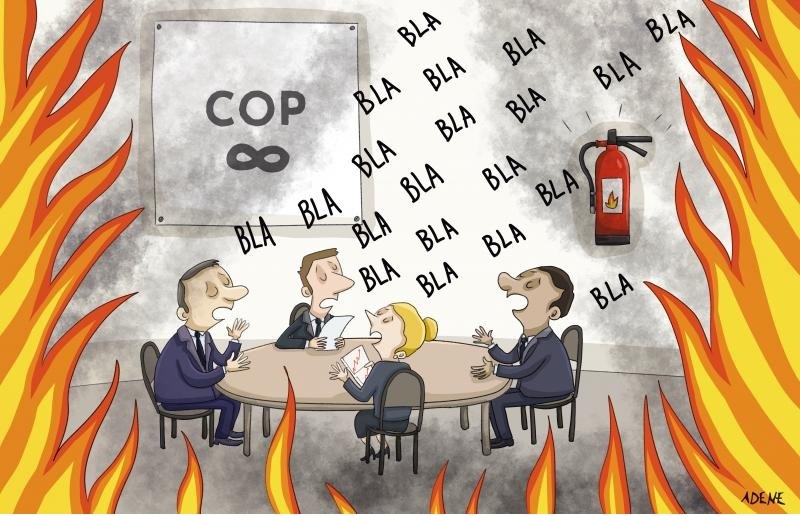
Yeah, we’re all whingeing about United Arab Emirates hosting the COP28 Climate Summit, and quietly making sure that their oil industry booms on.
Because we, the righteous Western nations are doing so much to slow down global heating. And we are. the USA has its worthy Inflation Reduction Act- cuts down on the home use of oil gas and coal, and USA promotes renewable energy, heat pumps, electric cars.
Canada has its Net-Zero Emissions Accountability Act, cutting down on domestic greenhouse gas emissions. Australia is promoting renewable energy and electric cars at home. Norway is big on electric cars, and encouraging climate-friendly systems, at home.
But the reality is- take Australia as an example – the world’s largest exporter of coal, and big exporter of liquefied natural gas (LNG). USA is a huge exporter of LNG. Canada – oil and natural gas exports. Norway – huge supplier of oil and gas.
All of these national governments approve and support the expansion and export of fossil fuels, while sanctimoniously bleating about “net zero” at home.
Sure, let’s criticise Sultan Ahmed Al Jaber and his lot. But the big Western players are in reality even bigger polluters.
Nuclear lobby’s big push to ‘shine’ at COP28
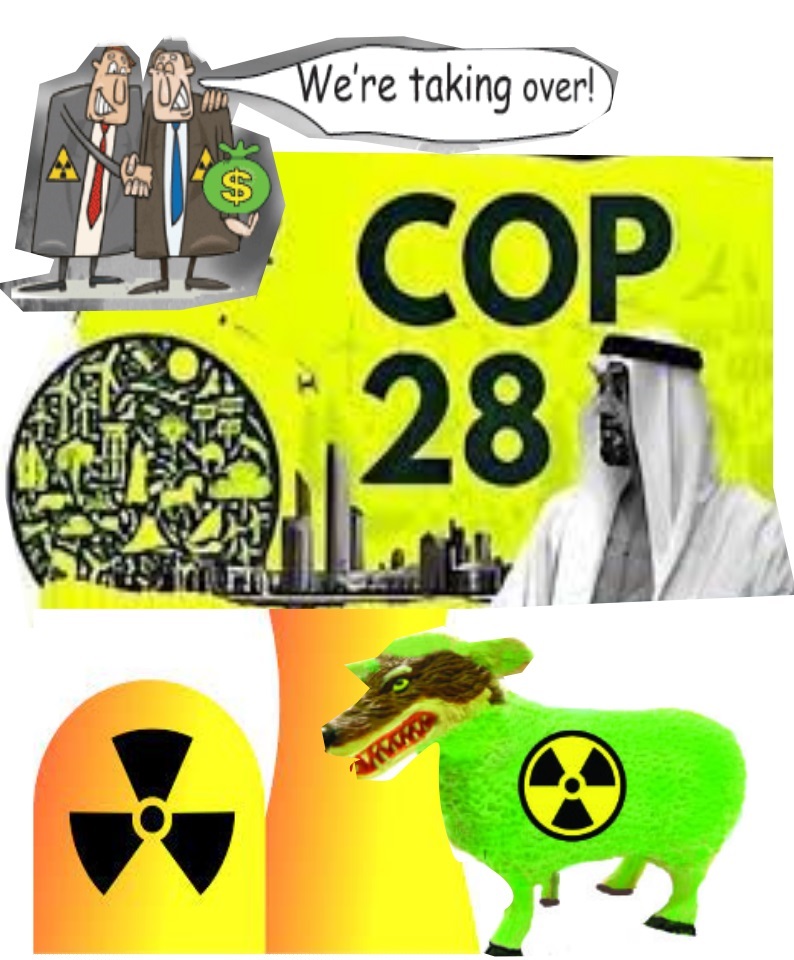
The nuclear energy industry will be highly visible at the 28th Conference of the Parties (COP28), taking place in Dubai over the coming weeks, World Nuclear Association Director General Sama Bilbao y León told delegates at the World Nuclear Exhibition 2023 in Paris.
………..” certainly we are seen as a positive force at the COP meetings”.”
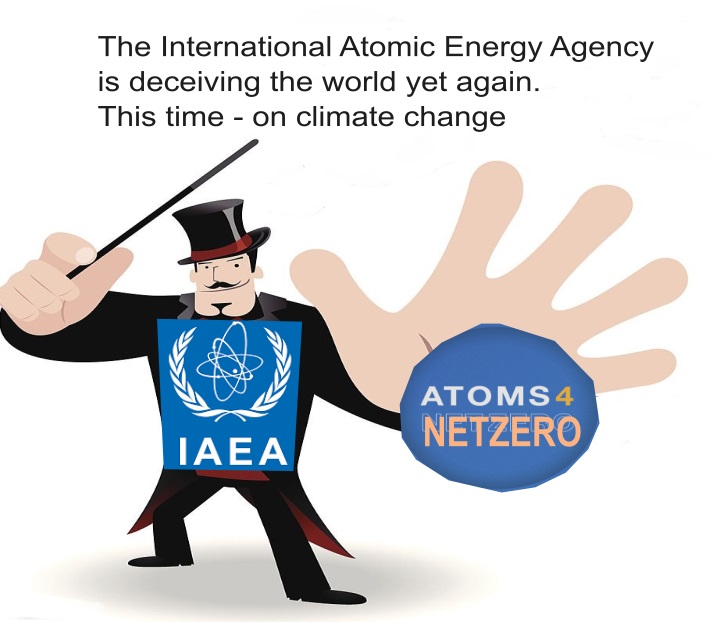
…….. At COP27, held in Sharm El-Sheikh in 2022, there was the first Atoms for Climate Pavilion, a collaboration between the International Atomic Energy Agency and global nuclear trade associations. Bilbao y León said this was “truly a turning point in how nuclear is presented at COP meetings”.
…………….. in order to achieve a trebling in nuclear capacity, the industry needs to “turn this political good will that we are starting to see into actionable and pragmatic policies”. Licensing and regulatory processes need to streamlined and affordable financing must be secured. In addition, the supply chain and human resources must be expanded.
“We are going to need to bring together governments because at the end of the day our policymakers are the ones that are going to set these bold and pragmatic policies and energy markets,”……… https://www.world-nuclear-news.org/Articles/Nuclear-to-shine-at-COP28,-says-Bilbao-y-Leon
Nuclear vs. Climate: Is nuclear power needed to contain the climate crisis?
GLOBAL 2000 publishes fact-checking video on the COP 28 climate
conference – nuclear power more than twice as expensive as renewables,
aging-related nuclear power plant failures endanger security of supply.
At the start of COP 28 in Dubai tomorrow, GLOBAL 2000 and its German partner
organization BUND Umwelt are publishing an animated video that analyzes the
facts about nuclear power as a possible contribution to climate protection.
The explanatory video is intended to appeal particularly to younger people
who are exposed to disinformation campaigns via YouTube and other social
media platforms.
“Many of the nuclear industry’s claims do not stand up
to an objective fact check based on reputable sources such as the
International Energy Agency or the World Report of the Nuclear Industry,”
explains Reinhard Uhrig, nuclear expert at GLOBAL 2000.
“The announcements of ‘new’ or ‘modular’ reactor concepts (SMR and nuclear
fusion) are also coming too late in the next decade relevant to the climate
crisis – if they ever become ready for series production, because,
according to the Nuclear Energy Agency of the International Energy Agency,
this is questionable .”
Global 2000 29th Nov 2023
COP28: Hopes of fossil fuel ‘phase out’ hit by revelations of Saudi plan to boost oil demand.

The scale of the challenge faced by diplomats pushing
for a new global agreement to ‘phase out’ unabated fossil fuels at the
upcoming UN Climate Summit in Dubai was underscored yesterday by reports
detailing how both the United Arab Emirates (UAE) and Saudi Arabia are
privately working to sustain long term demand for oil and gas.
Just hours after the BBC reported yesterday that COP28 hosts the UAE had used
bilateral meetings with governments ahead of the Summit to promote new oil
and gas investments, Channel 4 News and the Centre for Climate Reporting
revealed how Saudi Arabia is using its Oil Demand Sustainability Programme
(ODSP) to drive long term demand for oil from developing economies.
Business Green 28th Nov 2023
Cop28: what to expect from the Dubai climate change conference
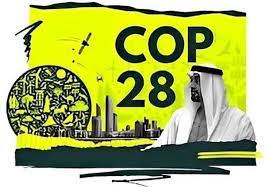
On November 30 officials will begin to discuss an agenda in the UAE that
includes measures on fossil fuels and boosting funds for vulnerable
countries.
We were walking for 12 hours in 37 or 38-degree heat, and you
could feel the heat from the fire,” Joanna Harber said, recounting how
wildfires on Rhodes turned her summer holiday to hell. Images of thousands
of British holidaymakers evacuating the Greek island in July brought home
the widespread impacts of an era of “global boiling”, in a region that
scientists say is experiencing more fires because of climate change.
Across the year, heatwaves have blanketed large areas of the world, causing
burning in unprecedented areas of Canada and record levels of sea ice
melting in Antarctica. November looks set to be the sixth warmest month
globally in a row, with this year almost certain to be the hottest yet.
On Thursday, world leaders will meet in an attempt to slam the brakes on these
extremes. Officials from almost 200 countries will arrive in Dubai, at one
of the planet’s busiest airports, for a fortnight of talks in the
world’s seventh-largest oil-producing state.
The Cop28 summit will be chaired, controversially and for the first time, by the head of an oil
firm, Sultan Ahmed al-Jaber of the United Arab Emirates.
More than 45,000 people attended last year’s Cop27 climate summit in Egypt, which achieved a surprise deal on a “loss and damage” fund for vulnerable countries
hit by global warming. A similar number are expected in Dubai, among them
Rishi Sunak and more than a hundred heads of state.
Times 26th Nov 2023
https://www.thetimes.co.uk/article/cop28-dubai-climate-change-conference-what-to-expect-htjv27l9q
COP28: UAE planned to use climate talks to make oil deals

By Justin Rowlatt, Climate editor, BBC News 27 Nov 23
The United Arab Emirates planned to use its role as the host of UN climate talks as an opportunity to strike oil and gas deals, the BBC has learned.
Leaked briefing documents reveal plans to discuss fossil fuel deals with 15 nations.
The UN body responsible for the COP28 summit told the BBC hosts were expected to act without bias or self-interest.
The UAE team did not deny using COP28 meetings for business talks, and said “private meetings are private”.
It declined to comment on what was discussed in the meetings and said its work has been focused on “meaningful climate action”.
The documents – obtained by independent journalists at the Centre for Climate Reporting working alongside the BBC – were prepared by the UAE’s COP28 team for meetings with at least 27 foreign governments ahead of the COP28 summit, which starts on 30 November.
They included proposed “talking points”, such as one for China which says Adnoc, the UAE’s state oil company, is “willing to jointly evaluate international LNG [liquefied natural gas] opportunities” in Mozambique, Canada and Australia.
The documents suggest telling a Colombian minister that Adnoc “stands ready” to support Colombia to develop its fossil fuel resources.
There are talking points for 13 other countries, including Germany and Egypt, which suggest telling them Adnoc wants to work with their governments to develop fossil fuel projects………………………………………………….
COP28 is the UN’s latest round of global climate talks. This year it is being hosted by the UAE in Dubai and is due to be attended by 167 world leaders, including the Pope and King Charles III.
These summits are the world’s most important meetings to discuss how to tackle climate change.
The hope is COP28 will help limit the long-term global temperature rise to 1.5C, which the UN’s climate science body says is crucial to avoid the worst impacts of climate change. But that will require drastic cuts in greenhouse gas emissions, it says – a 43% reduction by 2030 from 2019 levels.
As part of the preparations for the conference, the UAE’s COP28 team arranged a series of ministerial meetings with governments from around the world.
The meetings were to be hosted by the president of COP28, Dr Sultan al-Jaber. Each year the host nation appoints a representative to be the COP president.
Meeting representatives of foreign governments is one of the core responsibilities of COP presidents. It is the president’s job to encourage countries to be as ambitious as possible in their efforts to cut emissions.
The leaked briefing documents seen by the BBC were prepared for Dr Jaber – who is also CEO of the UAE’s giant state oil company, Adnoc, and of the state renewables business, Masdar.
COP28 must stick to 1.5°C target to save ice sheets, urge scientists
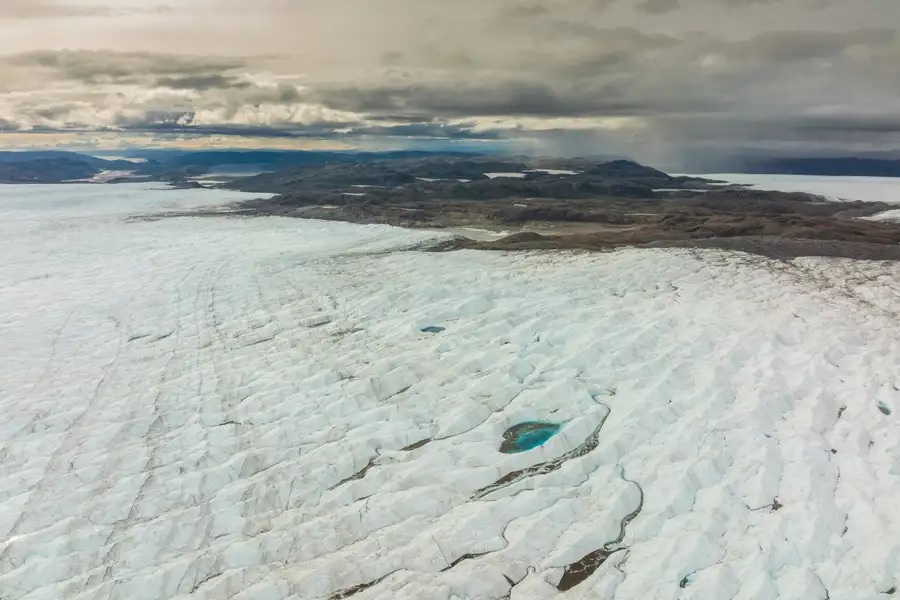
A report warns that 2°C of global warming would mean losing most of the world’s ice sheets and glaciers, leading to catastrophic sea level rise
By Alec Luhn, 16 November 2023
The world must stick to its target to limit climate warming to 1.5°C to avoid catastrophic melting of ice sheets and glaciers, according to a report.
The International Cryosphere Climate Initiative (ICCI), a group of scientists who study ice-covered parts of the world, warns that a rise of 2°C would liquidate most tropical and mid-latitude glaciers and set off long-term melting of the Greenland and Antarctic ice sheets, leading to 12 to 20 metres of sea level rise.
In the 2015 Paris Agreement, all countries committed to holding global average temperature to “well below 2°C” over pre-industrial levels and “pursuing efforts” to limit it to 1.5°C. Our still-rising greenhouse gas emissions have already caused almost 1.2°C of warming and put us on track to exceed 3°C.
More than 350 cryosphere scientists have signed an open letter calling on countries to commit to the 1.5°C limit at the upcoming COP28 climate summit in Dubai.
“From the cryosphere point of view, 1.5°C is not simply preferable to 2°C or higher. It is the only option,” Iceland’s prime minister Katrín Jakobsdóttir said in a statement.
Earth’s regions of snow and ice are melting faster than we expected and already approaching tipping points, says Jonathan Bamber at the University of Bristol, UK, who reviewed the ICCI report, while otherspoint to the rapid uptake of solar and wind energy as reason for continued hope. https://www.newscientist.com/article/2403404-cop28-must-stick-to-1-5c-target-to-save-ice-sheets-urge-scientists/
Energy and Climate Scenarios Paradoxically Assume Considerable Nuclear Energy Growth
DIW Weekly Report 45-49 / 2023, S. 293-301
Christian von Hirschhausen, Björn Steigerwald, Franziska Hoffart, Claudia Kemfert, Jens Weibezahn, Alexander Wimmers
get_app Download (PDF 0.52 MB)
get_app Gesamtausgabe/ Whole Issue (PDF 2.63 MB – barrierefrei / universal access)
Abstract
Most climate and energy scenarios created by international organizations and researchers include a considerable expansion of nuclear energy. In the IPCC Sixth Assessment Report, for example, nuclear energy increases from a current 3,000 terawatt hours on average to over 6,000 terawatt hours in 2050 and to over 12,000 terawatt hours in 2100.
This doubling and quadrupling of nuclear energy production by 2050 and 2100 is contradictory to the technical and economic realities: At no point have newly built nuclear energy plants ever been competitive, nor will they become so in the foreseeable future.
This contradiction, referred to here as the nuclear energy scenario paradox, can be explained by a series of politico- economic, institutional, and geopolitical factors.
In particular, the close relationship between the military and commercial uses of nuclear energy as well as the interest of the nuclear industry and its organizations in self-preservation play a role.
The assumptions and model logic of the scenarios must be critically scrutinized. There is the risk that considerable public and private funds will be invested in developing technologies for the commercial use of nuclear energy despite the fact that other technologies are expected to offer a significantly better cost-performance ratio with fewer economic, technical, and military risks. In light of the urgency of climate change mitigation, continuing to channel personnel and financial resources into nuclear energy is problematic.
The great carbon divide: On the trail of the super-polluters.
With the Cop28 climate conference due to open next week in Dubai, a major
Oxfam report has exposed how the world’s richest 1% cause more carbon
emissions than the poorest 66% combined – a good moment, it would seem, to
reflect on who exactly is responsible for the lion’s share of carbon
pollution.
Global environment editor Jonathan Watts explains why uncovering
the disparity is key to solving the crisis, while environment correspondent
Sandra Laville reveals how just 12 super-rich individuals outpollute 2.1m
homes annually (and more from the great carbon divide series can be found
here).
Guardian 22nd Nov 2023
https://www.theguardian.com/news/2023/nov/22/the-great-carbon-divide-inside-the-24-november-edition
For climate summit the desperate nuclear lobby will pretend that nuclear fusion is a real solution
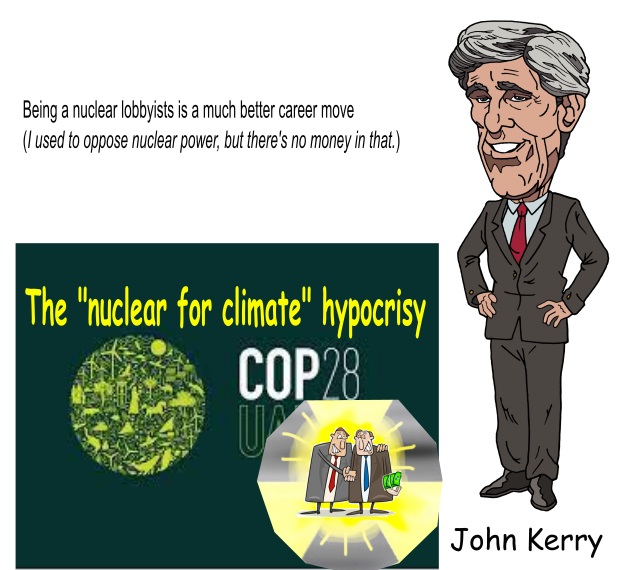
US to announce global nuclear fusion strategy at COP28
By Valerie Volcovici and Timothy Gardner, November 21, 2023
WASHINGTON, Nov 20 (Reuters) – The U.S. will lay out the first international strategy to commercialize nuclear fusion power at the upcoming UN climate summit in Dubai, U.S. Special Envoy on Climate Change John Kerry will say on Monday, two sources familiar with the announcement said………………………………….
Kerry, who as a U.S. senator more than a decade ago backed legislation that would fund fusion research at the Massachusetts Institute of Technology, will tour Commonwealth with Claudio Descalzi, CEO of Italian energy company Eni (ENI.MI). Eni is working on four fusion research partnerships in Italy and the U.S., including one with Commonwealth………………….
Scientists have so far only reached scattered instances of ignition, not the many continuous ignition events per minute needed to generate electricity to power homes and industries.
There are also regulatory, construction and siting hurdles in creating new fleets of power plants to replace parts of existing energy systems.
Some critics say fusion will be too expensive and take too long to develop to help in the fight against climate change in the foreseeable future.
A source familiar with the planned announcement said the fusion strategy will be a framework that lays out plans for the global deployment of the technology that could gain support from international partners………………………………….……..
The source said COP28, which runs from Nov. 30 to Dec. 12, will “be the starting gun for international cooperation” on nuclear fusion, which Kerry will tout as a climate “solution, not a science experiment”……………………….. https://www.reuters.com/sustainability/climate-energy/us-announce-nuclear-fusion-strategy-cop28-2023-11-20/
Is the world warming faster than expected?

Is the world warming faster than expected? There have been historically
high sea temperatures, worrying lows in Antarctic sea-ice, and extreme
weather events hitting every continent – the latest being an “unbearable”
heatwave in Brazil. It’s now “virtually certain” that 2023 will be the
hottest year on record. That’s something that no major climate science body
expected at the start of the year.
Scientists have long known that
temperatures will continue to rise as humans keep releasing record amounts
of planet-heating greenhouse gases like carbon dioxide, mainly through
burning fossil fuels. This is the main cause of global warming. While they
are struggling to fully explain 2023’s “gobsmacking” surge in temperatures,
here are four additional reasons that could be behind the increases. A
‘weird’ El Niño; Cutting aerosols; A large volcanic eruption; An Antarctic
‘radiator’?
BBC 18th Nov 2023
1 This Month
19 February – VIRTUAL EVENT-Decision Time: AI and Our Nuclear Arsenal
12:45 p.m. Central / 1:45 p.m. Eastern
To see nuclear-related stories in greater depth and intensity – go to https://nuclearinformation.wordpress.com
-
Archives
- February 2026 (141)
- January 2026 (308)
- December 2025 (358)
- November 2025 (359)
- October 2025 (376)
- September 2025 (258)
- August 2025 (319)
- July 2025 (230)
- June 2025 (348)
- May 2025 (261)
- April 2025 (305)
- March 2025 (319)
-
Categories
- 1
- 1 NUCLEAR ISSUES
- business and costs
- climate change
- culture and arts
- ENERGY
- environment
- health
- history
- indigenous issues
- Legal
- marketing of nuclear
- media
- opposition to nuclear
- PERSONAL STORIES
- politics
- politics international
- Religion and ethics
- safety
- secrets,lies and civil liberties
- spinbuster
- technology
- Uranium
- wastes
- weapons and war
- Women
- 2 WORLD
- ACTION
- AFRICA
- Atrocities
- AUSTRALIA
- Christina's notes
- Christina's themes
- culture and arts
- Events
- Fuk 2022
- Fuk 2023
- Fukushima 2017
- Fukushima 2018
- fukushima 2019
- Fukushima 2020
- Fukushima 2021
- general
- global warming
- Humour (God we need it)
- Nuclear
- RARE EARTHS
- Reference
- resources – print
- Resources -audiovicual
- Weekly Newsletter
- World
- World Nuclear
- YouTube
-
RSS
Entries RSS
Comments RSS
 nuclear-news