Meeting 1.5C warming limit hinges on governments more than technology, study says

The ability of governments to implement climate policies effectively is the “most important” factor in the feasibility of limiting global warming to 1.5C, a new study says.
The future warming pathways used by the Intergovernmental Panel on Climate Change (IPCC) suggest that holding warming to 1.5C is unlikely, but still possible, when considering the technological feasibility and project-level economic costs of reaching net-zero emissions.
However, the new study, published in Nature Climate Change, warns that adding in political and institutional constraints on mitigation make limiting warming to 1.5C even more challenging.
They find that the most ambitious climate mitigation trajectories give the world a 50% chance of limiting peak global warming to below 1.6C above pre-industrial temperatures. However, adding ”feasibility constraints” – particularly those involving the effectiveness of governments – reduces this likelihood to 5-45%.
The study shows that, thanks to advances such as solar, wind or electric vehicles, “the technological feasibility of climate-neutrality is no longer the most crucial issue”, according to an author on the study.
Instead, he says, “it is much more about how fast climate policy ambition can be ramped up by governments”.
Emissions scenarios
In 2015, almost every country in the world signed the Paris Agreement – with the aim to limit global warming to “well below” 2C above pre-industrial levels, with a preference for keeping warming below 1.5C.
Since then, most countries have set net-zero targets and many are making progress towards achieving them. However, as the planet continues to warm, some scientists are questioning whether it is still possible to limit warming to 1.5C, the new study says.
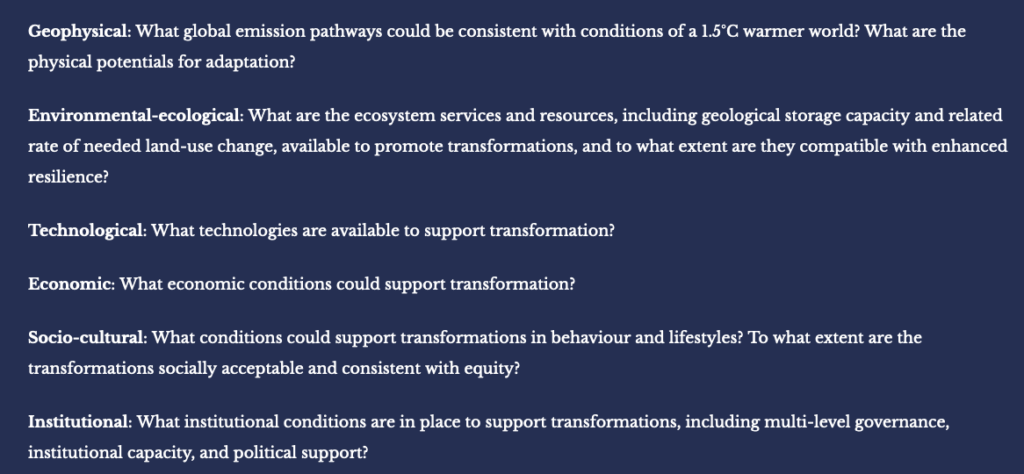
The IPCC’s special report on 1.5C, published in 2018, included a cross chapter box on the “feasibility” of this temperature limit. The report says there are six components of feasibility that could inhibit the world’s ability to limit warming to 1.5C, as shown in the image below.
The IPCC’s working group three report from its sixth assessment cycle explores thousands of different future warming scenarios. These scenarios are mainly generated by integrated assessment models (IAMs) that examine the energy technologies, energy use choices, land-use changes and societal trends that cause – or prevent – greenhouse gas emissions.
Fewer than 100 of these scenarios result in warming of below 1.5C with limited or no overshoot, defined as more than a 50% chance of seeing a peak temperature below 1.6C. These are known as the “C1 scenarios”. However, these scenarios do not consider all of the feasibility constraints outlined by the IPCC.
(Furthermore, these scenarios – which run from 2019 – assume that rapid decarbonisation began almost immediately. However, in reality, emissions have continued to rise since 2020, eating into the remaining “carbon budget” for warming to be limited to 1.5C more quickly than the models assume.)
The new study investigates five constraints. The first two – geophysical and technological – focus on the constraints presented by technologies, such as the growth of carbon capture and storage, nuclear power and solar generation, and the Earth’s total geological carbon storage capacity.
For sociocultural constraints, the study explores behavioural changes that can accelerate decarbonisation, such as reduced energy demand. The authors refer to these as “enablers”. And the “economic constraint” focuses on carbon prices.
However, the authors say the “key innovation” of their study is the inclusion of “institutional constraints”, which measure a government’s ability to “effectively implement climate mitigation policies”.
Policy constraints
All countries have different “institutional capabilities” to enforce policies. Some countries are able to quickly and successfully implement policies, such as taxation changes or environmental regulation. Other countries – which are often less wealthy – have lower levels of governance, making it harder to implement these measures.
Dr Christoph Bertram – an associate research professor at the University of Maryland and guest researcher at the Potsdam Institute for Climate Impact Research (PIK) – is the lead author of the study. He tells Carbon Brief that the paper uses a metric called the “governance indicator” to show how fast countries are expected to decarbonise.
The indicator is based on the speed and success with which they have achieved their past “environmental goals” – for example, reductions in the sulphur emissions of power plants – he explains. Countries that were successful in achieving these targets in the past are given higher governance scores.
Dr Marina Andrijevic, a researcher at the International Institute for Applied Systems Analysis (IIASA), led the study introducing these governance indicators, but was not involved in the new paper.
She tells Carbon Brief that the indicator is originally from the Worldwide Governance Indicators published by the World Bank. (See more on the indicators in the guest post Andrijevic and her co-authors wrote for Carbon Brief.)
The graph below [0n original] , taken from the new study, shows how governance is expected to improve over the 21st century for countries with a population of more than 25 million in 2020, according to this indicator. Each colour indicates a different world region. The grey lines indicate a “pessimistic” scenario in which governance remains frozen at 2020 levels.
The authors use global average carbon prices as a “proxy” for the overall strength of a country’s climate policy, assuming that countries with higher levels of governance will implement higher carbon prices.
They develop a range of scenarios. In their optimistic scenario, carbon prices vary, but this does not explicitly constrain emissions reductions. In the “default” scenario, both carbon prices and emissions reductions are constrained.
In the pessimistic scenario, governance indicator values are “frozen” at their 2020 levels, meaning that governments’ ability to implement new climate mitigation policies does not improve over the 21st century.
Bertram tells Carbon Brief that the measure is “not perfect”, but says that it gives a good approximation of “how fast decarbonisation can happen in different countries”.
Is 1.5C ‘feasible’?
The authors used existing literature to quantify how much each of the five constraints might affect the world’s ability to limit global warming. They then produced a set of different “feasibility scenarios” and assessed their future CO2 emissions using eight IAMs.
The plot below shows the minimum total global CO2 emissions that could be produced between 2023 and the date that net-zero CO2 is reached for these scenarios. In the panel “a”, on the left, each dot indicates a model result.
The column on the far left is a “pessimistic” institutional feasibility scenario, in which governance indicators do not improve beyond 2020 levels. Cumulative global CO2 emissions before net-zero here are the highest of any scenario explored.
The next column is the “default” assumption of carbon prices and emissions-reduction quantities, under four different combinations of constraints.
From left to right within this column, the combinations cover technological and institutional constraints, only institutional constraints, technological and institutional constraints with enablers and then institutional constraints with enablers.
The enablers include measures such as reduced energy demand in high income countries and increased electrification. This helps to “create more flexibility on the supply side and thus further improve the feasibility of implementation”, according to the paper.
The final column shows “optimistic” scenarios, divided between a scenario with technological constraints (left) and a “cost-effective” scenario, as used in the IPCC (right).
Panel “b” shows the likelihood, based on the 14 feasibility scenarios in panel a, of staying below 1.5C, 1.6C, 1.8C and 2.0C peak temperatures. Each bar indicates a different peak temperature. Red indicates a high likelihood of meeting the temperature target, given the level of emissions, and purple indicates a low likelihood.
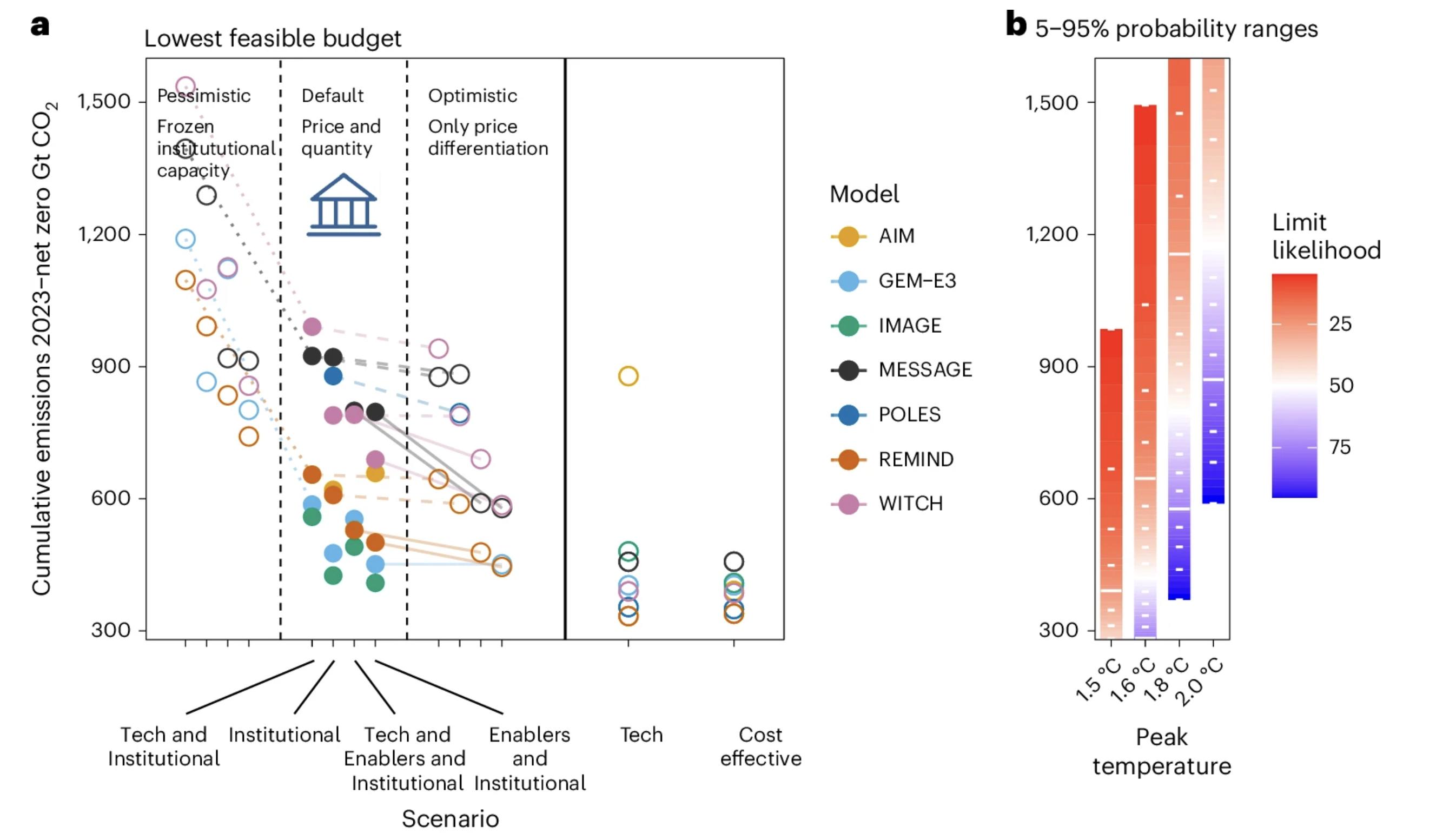
In scenarios without any institutional constraints, nearly all models are able to produce scenarios which line up with the IPCC’s C1 scenarios, which have more than a 50% chance of seeing a peak temperature below 1.6C.
However, adding institutional constraints reduces this likelihood to 5-45%.
(A peak temperature of 1.6C would not necessarily breach the long-term goal of the Paris agreement, as long as temperatures were brought back down below the 1.5C threshold by the end of the century. However, there are risks associated with overshoot – such as crossing tipping points – and it relies more heavily on large-scale implementation of negative emissions technologies.)
Under the “pessimistic” institutional constraints, the ability of countries to cut emissions is “sharply curtailed”, the authors say, resulting in only a 30-50% chance of limiting warming even to 2C above pre-industrial levels.
The study shows that “technological constraints are not a crucial impediment to a fast transition to net-zero anymore,” Bertran tells Carbon Brief.
“Thanks to the latest advances in low-carbon technology deployment, such as solar, wind or electric vehicles, the technological feasibility of climate-neutrality is no longer the most crucial issue,” Prof Gunnar Luderer – a study author and lead of the energy systems group at the PIK – added in a press release.
Instead, he said, “it is much more about how fast climate policy ambition can be ramped up by governments”.
Future warming
The findings of this study have implications for meeting the Paris Agreement 1.5C limit. “Our study does not imply that the 1.5C target needs to be abandoned,” the study says. However, it adds:
“The world needs to be prepared for the possibility of an overshoot of the 1.5C limit by at least one and probably multiple tenths of a degree even under the highest possible ambition.”
“The 1.5C target was always something that, while theoretically possible, was very unlikely given the real-world technical, institutional, economic and political setting that determines climate policy,” says Prof Frances Moore from the department of environmental science and policy at UC Davis, who was not involved in the study.
However, she tells Carbon Brief, the finding that humanity could still limit warming to 2C is “a signal of the progress countries have made in committing to climate action”.
Dr Carl-Friedrich Schleussner – a science advisor to Climate Analytics and honorary professor at Humboldt University Berlin – tells Carbon Brief that the paper is “an important contribution to the literature”.
However, he says the results “need to be interpreted very cautiously”. For example, he notes that the study only considers CO2 emissions and not other greenhouse gases, such as methane.
In addition, he notes that “institutional capacities affect climate action in a myriad of different ways that are not easily representable in the modelling world”. As a result, the study authors had to “settle” on an approach that “may only be partly representative of ‘real world’ dynamics and is very sensitive to modelling assumptions”.
Moore says this is a “valuable initial study”, but makes a similar point, noting that the “implementation of institutional constraints and demand-side effects is somewhat arbitrary and ad-hoc”, such as using carbon prices as a governance indicator.
Dr William Lamb is a researcher at the Mercator Research Institute and was also not involved in the study. He tells Carbon Brief that the study results are “sobering” and says that “we need to start focusing research, policy and advocacy on the underlying institutions and politics that shape climate action”.
He adds that there are other aspects of feasibility that could be considered:
“We know that incumbent fossil fuel interests are politically powerful in many countries and are able to obstruct the implementation of climate policies, or even reverse those that are already in place. In other words, some governments may be capable, but do not want to implement ambitious climate action.”
Project 2025: The right-wing conspiracy to torpedo global climate action

Bethany Kozma, a former Trump-era USAID official, said that future appointees “will have to eradicate climate change references from absolutely everywhere.”
Bethany Kozma, a former Trump-era USAID official, said that future appointees “will have to eradicate climate change references from absolutely everywhere.”
Bulletin, By Michael E. Mann | August 16, 2024
Summer 2024 saw another round of devastating heat waves, droughts, wildfires, storms, and record-setting global temperatures. The window for averting a catastrophic 1.5 degrees Celsius (3 degrees Fahrenheit) warming of the planet is rapidly closing. Can we meet this moment? I suppose it depends on whom you ask. For this is a tale of two worldviews.
In one—based on facts and evidence—environmental policy is motivated by science and reason, with the intent of advancing the common good and the sustainability of our civilization and our planet. The climate crisis is seen as the defining challenge of our time, demanding immediate and urgent action.
In the other—steeped in myth and conspiratorial ideation—environmental threats are an elaborate ruse perpetrated by scientists and politicians on the take, and environmental sustainability is a Trojan horse, a tool used by “globalists” to instill a new socialist world order. Climate change is a hoax perpetrated by environmental extremists.
Nothing better illustrates this yawning chasm in worldview than two deceptively similar-sounding projects known as the fact-based “Agenda 2030” and the conspiracy-rife “Project 2025.”
The first, “Agenda 2030,” is a United Nations program for Sustainable Development unanimously adopted by UN member nations on September 25, 2015. Agenda 2030 supports a set of 17 global Sustainable Development Goals, or “SDGs,” promoting “peace and prosperity for people and the planet” and the social, economic, and environmental sustainability of our civilization. Among its priorities are the health of the planet’s oceans and forests and the overriding threat of human-caused climate change.
I’ve contributed to the program personally. Back in 2018, I developed a free online course for the SDG Academy, which the UN describes as the “premier source of high-quality resources and guidance on education for the SDGs, with the mandate to enrich the field of sustainable development and advance Agenda 2030.” My course, which is still offered today (so far more than 35,000 people have taken it) is entitled “Climate Change: The Science and Global Impact.” Its stated purpose is that “we need to understand the science behind global warming to avoid the most damaging and irreversible climate change impacts on people and planet.”
So perhaps I’m a bit personally invested in Agenda 2030 and its mission to educate the public and policymakers about the climate crisis. But it is objectively disturbing to see that program attacked in such bad faith by the right. Representative of the assault is the plutocrat and dark money-funded Heritage Foundation, which has denounced Agenda 2030 as “hopelessly flawed from the start,” “replete with imprecise goals and targets,” “senseless, dreamy, and garbled,” and “[the] antithesis of a focused development strategy.” They insist, in fact, that “the US should call out the SDGs for their ineffectiveness and call for a re-evaluation of this failed endeavor.” Strong language. We’ll return to the Heritage Foundation and their role in all of this in a bit.
Agenda 2030, indeed, possesses all the elements despised by the bad actors who help manufacture and promote far-right conspiracy theories. Like the much-vilified Intergovernmental Panel on Climate Change (IPCC), Agenda 2030 operates under the auspices of the United Nations, feeding the fears of the “one world government,” right-wing fever swamp.
Its laudable goals of reducing poverty, hunger, and social inequality play into conservative fears of “socialism.” Its focus on environmental sustainability feeds the “watermelon” (green on the outside, red on the inside) framing that has for so long been used by conservative influencers seeking to weaponize their base against environmental action.
As a result, social media is now rife with the claim that Agenda 2030 is part of a left-wing global socialist plot against individual liberty and freedom, an excuse for even more pervasive and long-lasting pandemic-like lockdowns.
Now, let’s talk about “Project 2025,” a 900-page plan drafted by the aforementioned Heritage Foundation to implement a far-right policy agenda in the United States. If implemented—by a second Trump administration, for example—it would shrink the federal government, putting thousands of civil servants out of work. It would further expand the powers of the president. It would dismantle the Department of Education, impose massive tax cuts, and halt the sale of the abortion pill. It would cancel the National Weather Service and privatize all its meteorological data.
Project 2025 would gut the EPA, which is responsible for enforcement of environmental policies, and it would reverse the EPA’s 2009 “endangerment finding” that classified carbon dioxide as a pollutant to be regulated under the Clean Air Act. It would eliminate the National Oceanic and Atmospheric Administration (NOAA), which monitors changes in our atmosphere, oceans and climate. Project 2025 would eliminate clean energy loan programs at the Department of Energy and remove climate change—one of the greatest national security threats we face—from the National Security Council agenda. It supports more oil drilling in the environmentally sensitive Arctic and asserts that the government has an “obligation to develop vast oil and gas and coal resources.”
Trump and Project 2025 are inextricably linked in numerous ways. Project 2025 was written for Trump, by Trump affiliates, who will staff the various agencies in a prospective second term. Six of the report authors are former Trump cabinet officials. Trump’s vice presidential candidate, J.D. Vance, wrote the foreward for a book about it (Dawn’s Early Light: Taking Back Washington to Save America), written by Heritage Foundation president and Project 2025 brainchild Kevin Roberts. Roberts briefed Trump about Project 2025 during its nascent stages back in 2022 on a private flight to a Heritage Foundation conference where Trump went on to say that the effort would “lay the groundwork and detail plans for exactly what our movement will do.”
ProPublica recently obtained more than 14 hours of videos from the Project 2025 Presidential Administration Academy, an online training archive to prepare incoming political appointees in a prospective Trump administration so they can hit the ground running from day one; 29 of the 36 speakers in the series are connected to Trump either through this campaign or his previous presidency. Among the instructions given in the academy, Bethany Kozma, a former Trump-era USAID official, said that future appointees “will have to eradicate climate change references from absolutely everywhere.”
Trump and his co-conspirators were obstructed by their own incompetence during his first term. That proved to be a saving grace from the standpoint of environmental and climate policy. The whole point of Project 2025 is to make sure they don’t repeat that mistake and instead, go in with a detailed, comprehensive blueprint that will allow them to fast track their agenda.
We face a planetary-scale threat in the form of a prospective Trump second term and a radicalized GOP intent on implementing, in Project 2025, the most extreme, anti-environmental policy agenda in American history. In all likelihood, it would mean the end of meaningful global climate action at this critical juncture. The fate of our planet quite literally hangs in the balance. It’s something for all Americans to think about as they prepare for the pivotal 2024 election. https://thebulletin.org/2024/08/project-2025-the-right-wing-conspiracy-to-torpedo-global-climate-action/
Think we don’t have a choice when it comes to saving the planet? Think again.

As temperatures around the world increase, Lord Deben explains why it is still within our collective power to mitigate the effects of climate change – before it’s too late
Climate change is increasingly causing global disruption. Human beings naturally seek certainty and modern societies have long taken for granted the relative certainties of the weather. That assumption underpins everything, from insurance, to food security, to global trade, to mass tourism.
We travel and we trade as if that certainty is a given, and we insure against the once-in-a-hundred-years occasion that it isn’t. Indeed, our whole free enterprise system depends on businesses being able to restrict their risks and limit the call on their capital. Insurance and the limited liability company are the necessary facilitators of capitalism.
However, as each year is hotter than the last; as wildfires rip through whole nations and are followed by floods and hurricanes of unparalleled force and extent; and as no part of the world is spared extreme weather events, the insurance model is fundamentally threatened and the ability to limit risk undermined.
From individual homeowners, no longer able to insure against flooding, to great international businesses that can’t protect their global supply chains, a warming world is disrupting the very system that has brought us unparalleled prosperity and opportunity. And every year it gets worse and more extensive.
2023 was the hottest year on record. Canada experienced its worst fire season and there were catastrophic blazes in Hawaii, the Mediterranean, central Amazonia, and Chile. The ferocity and the spread grows apace – and with it, the indirect effects.
People who have no water for their children invade their neighbours who have. Unparalleled levels of heat drive men and women to move – not for a better life, but just to be able to live. The migration that is already a toxic issue throughout Europe and North America is eclipsed when heat becomes intolerable, state structures collapse, and whole nations like Bangladesh are awash with rising sea levels.
The numbers on the move will be of a different order in a world where the rich nations have already shown themselves unable to deal with immigration. They’ve seen nothing yet!
However, this is not just a human disaster. We are sustained by what may well be a unique environment. Centuries of astronomy have not revealed another world capable of maintaining life as we know it. It seems that planet Earth is a rare phenomenon which may well depend on some delicate balances.
It was once too hot to support life, and it was the emergence of trees and bushes that gradually took carbon out of the atmosphere and enabled the emergence of fish and reptiles, insects and mammals, and finally human beings. Those decaying trees laid that carbon down to become, over millennia, coal, oil, and gas. For 200 years we have been putting that carbon back into the atmosphere, so it isn’t surprising that we’ve reversed the cooling and turned up the heat.
And, if the process continues, we don’t know what that will produce. Already, global warming has shifted the earth’s energy balance with unprecedented flows of heat into the oceans; ice caps; soils; and atmosphere. The rate has doubled in less than 50 years, and, as the melting ice caps move more water towards the centre of the globe, it slows the planet’s rotation and lengthens our days.
Almost imperceptible at the moment but, if we allow the effect to increase, it could begin to counter the moon’s attraction on which we depend for the relative stability of our climate. The sheer scale of what is happening means that the ocean currents, like the Gulf Stream, could change entirely and with them the weather patterns that they control.
This is why scientists have sought to convince the world to keep warming below a 1.5-degree increase. Anything more and we really cannot tell what cataclysmic changes would occur. Although we can go back more than a million years and trace temperatures and the air’s carbon content by analysing the layers of ice, we can find no comparable warming.
The ebb and flow of warm and cold periods continues as it has always done, but nothing like the global heating that has grown persistently since the beginning of the industrial revolution. That is entirely unprecedented, man-made, and already very close to levels that are likely to be catastrophic.
So, as American cities black out because of wildfires; China wrestles with persistent drought; Greece battles to protect its monuments from the flames; Niger swelters with temperatures of more than 40 degrees; and even the East of England is officially designated a semi-arid region – the world has a choice.
If this is what we get with 1.5 degrees warming, do we still cling to business as usual until 3 degrees warming produces results we hardly dare contemplate? Or does humankind rise to the occasion and meet the global threat with a global response, creating a new industrial revolution in which renewable energy powers a society that doesn’t cost the Earth, but builds a cleaner, greener, and fairer world?
It is the fundamental challenge of the human condition. We can rise to the heights or disappear in the depths. We have the choice.
Why Nuclear Energy Is Not the Solution to the Climate Crisis

In this Q&A, Dr. M.V. Ramana discusses key insights from his new book and why nuclear power does not help mitigate climate change.
The Good Men Project, August 19, 2024 by Beyond British Columbia, By Sachi Wickramasinghe
Despite about 20 countries declaring plans to triple nuclear energy by 2050 and the backing of billionaires like Bill Gates, we should not support expanding nuclear power.
That’s according to a new book, Nuclear is Not the Solution: The Folly of Atomic Power in the Age of Climate Change, by Dr. M.V. Ramana, the Simons Chair in Global Disarmament and Human Security at the school of public policy and global affairs at UBC.
We spoke to Dr. Ramana about key insights from the book and why nuclear power does not help mitigate climate change.
What motivated you to write this book?
Just 20 or 30 years ago, talking about nuclear energy as an environmentally friendly source of electricity would probably get you laughed out of the room.
But in the last decade, advocates of nuclear energy – from energy companies to governments and tech billionaires – have advertised the technology as a clean source of electricity that is vital to solving climate change.
Their arguments make no sense given what we know about the history and the technical characteristics of nuclear energy, so one motivation for this book is to lay out those arguments yet again, because they seem to have been forgotten.
How do you respond to claims that nuclear energy is necessary for meeting our carbon reduction goals?
Many technologies have low carbon footprints but we need to consider two other important factors: cost and deployment time.
Nuclear energy is one of the most expensive ways to generate electricity. Investing in cheaper low-carbon sources of energy will provide more emission reductions per dollar. Second, it takes about a decade to build a nuclear plant. If you add the time needed for environmental clearances, community consent and raising the huge amounts of funding necessary, you’re looking at 15-20 years before a nuclear project can even start producing electricity. This timeline is incompatible with the urgent demands of climate science.
Thus, nuclear power fails on two key metrics for evaluating any technology claiming to deal with climate change.
What risks associated with nuclear energy are most overlooked by its proponents?
First, nuclear reactors by their very nature are susceptible to catastrophic releases of energy and radioactivity – we’ve seen that happen with Fukushima and Chernobyl. It’s impossible to guarantee severe accidents won’t happen again.
Second, all activities linked to the nuclear fuel chain, from mining uranium to dealing with the radioactive wastes produced, have significant public and environmental impacts. Some radioactive materials remain hazardous for hundreds of thousands of years. There is no demonstrated solution to managing these wastes.
Third, the technology to generate nuclear power is closely tied to the one to make nuclear weapons. Expanding nuclear energy will increase the potential for nuclear weapons proliferation.
Proponents downplay all these problems. But as I explain in my book, they will afflict new nuclear reactors too.
What renewable energy sources are most promising, and how can we accelerate their adoption?
Solar energy has become the cheapest power source in the past decade, with solar and wind now leading new-electricity generation.
We have learned how to manage grids with high proportions of renewable sources. To balance this variability, we must invest in a mix of renewable energy technologies across various regions, and in battery and other storage technologies to store excess energy. In addition, we need to shape electricity demand to more closely match supply.
These renewables are not a panacea, but they seem to be the best option. Addressing climate change isn’t just about technology; it’s also about making appropriate social and political changes. For reasons discussed in my book, nuclear power is incompatible with the kind of social and political transformations needed to address climate change.
Featured Researcher
M.V. Ramana, PhD, Professor, School of Public Policy and Global Affairs https://goodmenproject.com/featured-content/why-nuclear-energy-is-not-the-solution-to-the-climate-crisis/
When glaciers calve: Huge underwater tsunamis found at edge of Antarctica, likely affecting ice melt.
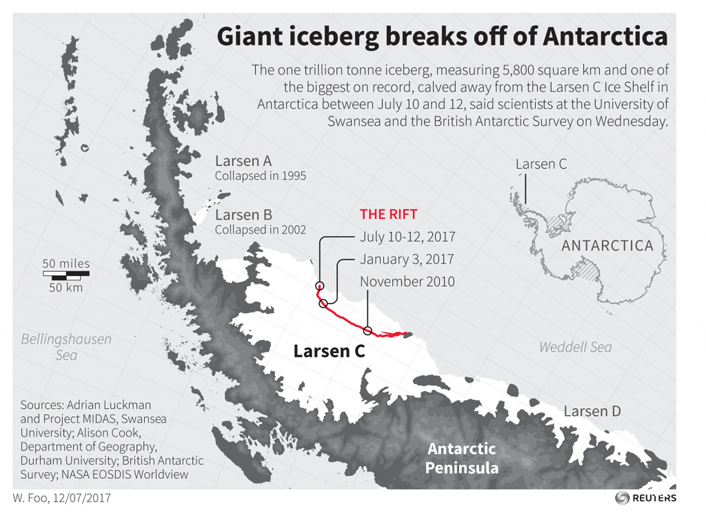
Bulletin, By Michael Meredith | July 15, 2024
Antarctica is huge, it affects pretty much every place and every living thing on our planet, and it is changing. This should be a concern for all of us, and yet we know troublingly little about some key aspects of the great white continent.
Despite its position in the far distant south, Antarctica is a vital component in the functioning of the planet. It is central to global ocean circulation, thus exerting a profound influence on the world’s climate (Figure 1 on original). The vast Southern Ocean that surrounds Antarctica absorbs huge quantities of heat and carbon dioxide from the atmosphere and distributes them around the rest of the world, thereby slowing the rate of global warming elsewhere. This “climate favor” has comes at a cost, however—the Southern Ocean is overheating and acidifying, with marked impacts on the marine ecosystem. The extra heat in the ocean is also melting the fringes of the Antarctic Ice Sheet, destabilizing its glaciers, and increasingly pushing up sea levels worldwide. The sea ice around Antarctica—formed in the fall and winter of the Southern Hemisphere, when the ocean surface freezes—has now reached record low extents, affecting the Earth’s energy budget and acting to further accelerate climate change.
All the information we have from Antarctica comes from sparse networks of sensors and equipment deployed directly, augmented with satellite measurements of the ice and ocean surface and computer simulations. While we know more about Antarctica and the Southern Ocean than ever before, it is still one of the least-well measured places on our planet, with some areas still remaining “data deserts.” We need to know more, so that we can better understand the causes of the changes happening here, how they will continue to change in future, and hence what the global impacts are likely to be.
One feature of the Southern Ocean that is often overlooked is how (and how strongly) it is mixed. This is a key process that redistributes heat, carbon, nutrients, plankton, and all other things in the sea, with profound consequences.
………………………………………glacier calving event had caused a sudden massive burst in the mixing of the ocean, stretching many kilometers from the ice front.
How did it do this? The data revealed that the glacier calving had triggered an underwater tsunami event. In essence, large waves (the height of a two-story house) were generated and moved rapidly away from the glacier, riding the interface between layers in the ocean that were tens of meters down. When these internal tsunami waves finally broke—like surface waves on a beach—they caused massive churn and mixing…………………………………………………………………………
This process—of glacier calving generating internal tsunamis and bursts of ocean mixing—is entirely absent from the computer models that are used to simulate our climate and ecosystem, hampering our ability to reliably project future changes. We need to know more about how this process works, how it will change, and what its consequences will be. ……. https://thebulletin.org/premium/2024-07/when-glaciers-calve-huge-underwater-tsunamis-found-at-edge-of-antarctica-likely-affecting-ice-melt/?utm_source=Newsletter&utm_medium=Email&utm_campaign=ThursdayNewsletter08152024&utm_content=ClimateChange_HugeUnderwaterTsunamis_07152024&utm_source=Newsletter&utm_medium=Email&utm_campaign=ThursdayNewsletter08152024&utm_content=ClimateChange_HugeUnderwaterTsunamis_07152024
How climate change has pushed our oceans to the brink of catastrophe
For decades, the oceans have absorbed much of the excess heat caused by greenhouse gases. The latest observations suggest they are reaching their limits, so how worried should we be?
New Scientist, By Madeleine Cuff, 14 August 2024
…………………………………………………………………….. Something isn’t right in the world’s oceans. From orange algal blooms in the North Sea and a boom in gelatinous Bombay duck fish off China to disappearing “bottom water” in the Antarctic, there is growing evidence that extreme temperatures are wreaking havoc in our waters. After years of the oceans acting as silent sinks for excess human-caused heat, they are starting to creak under pressure – and we are finally waking up to how worried we should be……………………….(Subscribers only) https://www.newscientist.com/article/mg26335040-100-how-climate-change-has-pushed-our-oceans-to-the-brink-of-catastrophe/
EDF cuts nuclear production in reaction to soaring temperatures
euro news, By Eleanor Butler, 14/08/2024
The energy provider insists there are no looming safety risks as three French regions face heatwave warnings.
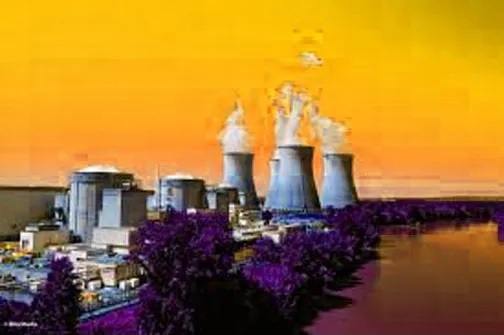
EDF has reduced its electricity production at nuclear sites in France in response to soaring temperatures.
Three reactors are currently affected, although the energy provider has said “there is no safety risk”.
A reactor located at the Bugey nuclear power plant, a site near Lyon, has been closed since 12 August.
Also near Lyon, the Saint-Alban nuclear plant has experienced production cuts since 11 August, and similar measures are being taken at the Tricastin site. This is located in the South East of France, north of Avignon.
Heat-related incidents aren’t a new complication for EDF but rather a recurring problem, as exemplified when the firm published a climate change action plan last month……
High temperatures can interfere with nuclear processes as reactors are heavily reliant on water.
Heat from nuclear reactions is used to transform water into steam, which then drives turbines to produce electricity.
Another current of water, outside of the closed loop system, is then drawn from surrounding rivers to cool the reactor…..
During periods of extreme heat, this can produce a number of complications.
If surrounding water sources are warmer than usual, reactors cannot be cooled as efficiently.
French regulations also prevent sites from discharging water that is too hot back into rivers and lakes, to avoid the accidental killing of fish and other wildlife.
EDF told Euronews that it had temporarily reduced production to “respect regulations relating to thermal discharges”.
The firm explained that “discharge limits are established individually for each plant” by the French Nuclear Safety Authority (ASN).
Three departments in France are currently affected by heatwave warnings, with storms now replacing hot weather in some areas. https://www.euronews.com/business/2024/08/14/edf-cuts-nuclear-production-in-reaction-to-soaring-temperatures
Half a billion children live in areas with twice as many very hot days as in 1960s
Unicef analysis also finds children in eight countries spend more than half the year in temperatures above 35C
Almost half a billion children are growing up in parts of the world where
there are at least twice the number of extremely hot days every year
compared with six decades ago, analysis by Unicef has found. The analysis
by the UN’s children’s agency examined for the first time data on
changes in children’s exposure to extreme heat over the past 60 years. As
the planet continues to warm, people worldwide are facing more frequent and
severe climate threats such as extreme heat and heatwaves. Children are
more vulnerable to such hazards.
Guardian 14th Aug 2024
Mature trees offer hope in world of rising emissions
Older trees are able to accelerate their rates of absorbing planet-warming
emissions, scientists at the University of Birmingham have found. A forest
of mature oak trees was exposed to elevated levels of carbon dioxide for
seven years and in response, the trees increased their production of wood –
locking in the greenhouse gas and preventing it from warming the planet.
The researchers hope the study, published in Nature Climate Change, will
demonstrate the importance of protecting and maintaining mature forests for
tackling climate change.
BBC 12th Aug 2024
How Close Are the Planet’s Climate Tipping Points?
Earth’s warming could trigger sweeping changes in the natural world that would be hard, if not impossible, to reverse.
Right now, every moment of every day, we humans are reconfiguring
Earth’s climate bit by bit. Hotter summers and wetter storms. Higher seas
and fiercer wildfires. The steady, upward turn of the dial on a host of
threats to our homes, our societies and the environment around us.
We might also be changing the climate in an even bigger way. For the past two
decades, scientists have been raising alarms about great systems in the
natural world that warming, caused by carbon emissions, might be pushing
toward collapse.
These systems are so vast that they can stay somewhat in
balance even as temperatures rise. But only to a point. Once we warm the
planet beyond certain levels, this balance might be lost, scientists say.
The effects would be sweeping and hard to reverse. Not like the turning of
a dial, but the flipping of a switch. One that wouldn’t be easily flipped
back.
New York Times 11th Aug 2024
Heat aggravated by carbon pollution killed 50,000 in Europe last year – study
Hot weather inflamed by carbon pollution killed nearly 50,000 people in
Europe last year, with the continent warming at a much faster rate than
other parts of the world, research has found.
The findings come as
wildfires tore through forests outside Athens, as France issued excessive
heat warnings for large swathes of the country, and the UK baked through
what the Met Office expects will be its hottest day of the year.
Doctors call heat a “silent killer” because it claims far more lives than most
people realise. The devastating mortality rate in 2023 would have been 80%
higher if people had not adapted to rising temperatures over the past two
decades, according to the study published in Nature Medicine.
Guardian 12th Aug 2024
EDF extends heat-related warning cuts at 3 nuclear plants
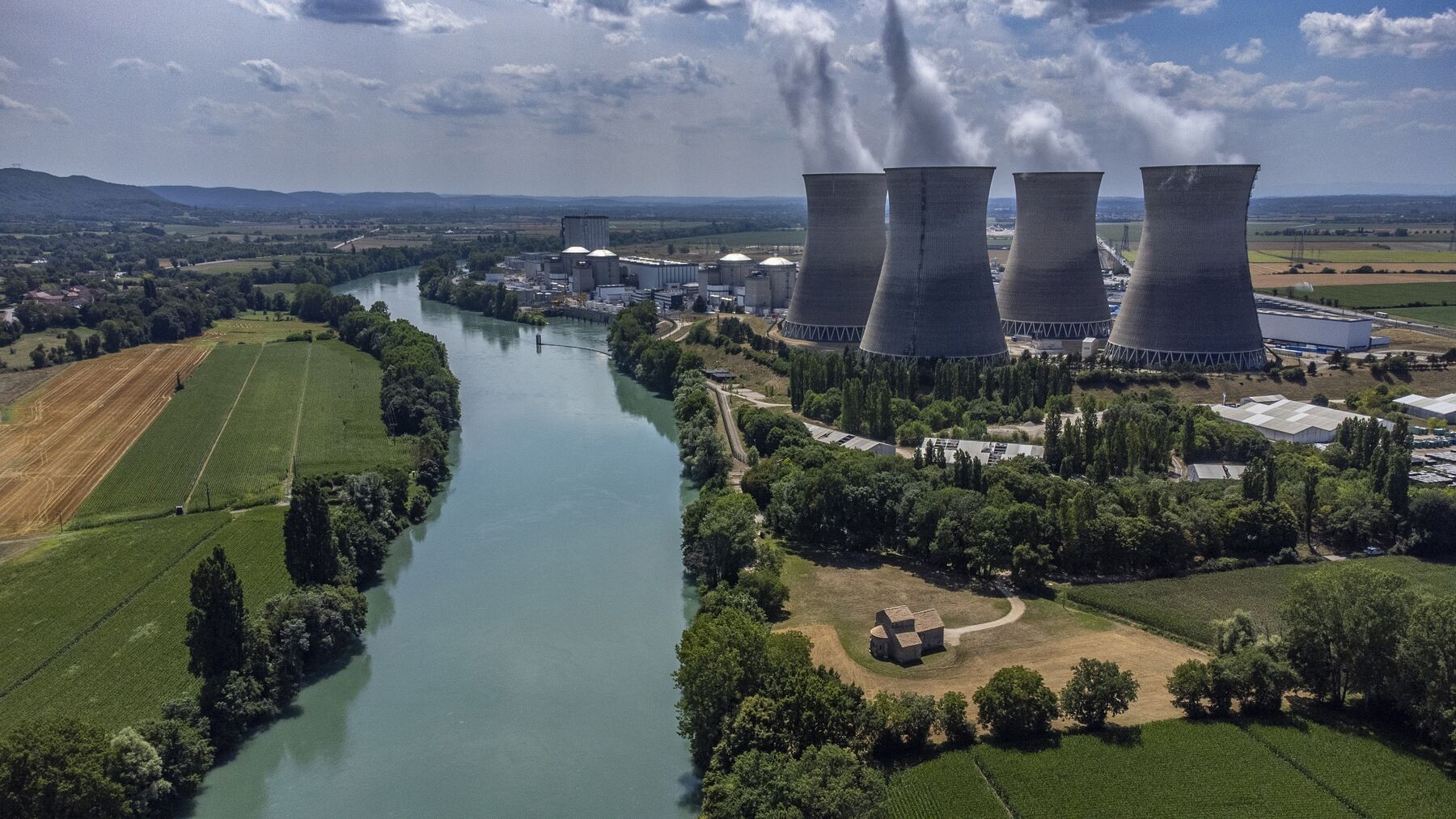
(Montel) French utility EDF has extended by two days a warning of power output curbs at three nuclear power plants – totalling 10 GW – along the river Rhone in southeastern France from tomorrow until Friday next week due to high temperatures.
Reporting by: Muriel Boselli, 08 Aug 2024, https://montelnews.com/news/f1e0a4b4-61b8-4d45-8027-d549192b910e/edf-warns-of-heat-related-cuts-at-3-nuclear-plants-10-gw
EDF could curb output at 3.6 GW Tricastin, 3.6 GW Bugey and 2.6 GW St Alban, the state-owned utility said on Thursday.
Weather service Meteo France has forecast temperatures to intensify in southeast France over the next few days, with peaks reaching 35C.
At some power plants, EDF uses river water to cool reactors. However, it could reduce output if river water temperatures or levels are too warm or too low.
Separately, EDF has extended a capacity cut warning at its 2.6 GW Golfech nuclear power plant in southwest France by three days to 17 August, due to warm temperatures.
IAEA concerned about forest fires near occupied Zaporizhzhia Nuclear Power Plant
Tetyana Oliynyk — Thursday, 8 August 2024, https://www.pravda.com.ua/eng/news/2024/08/8/7469572/
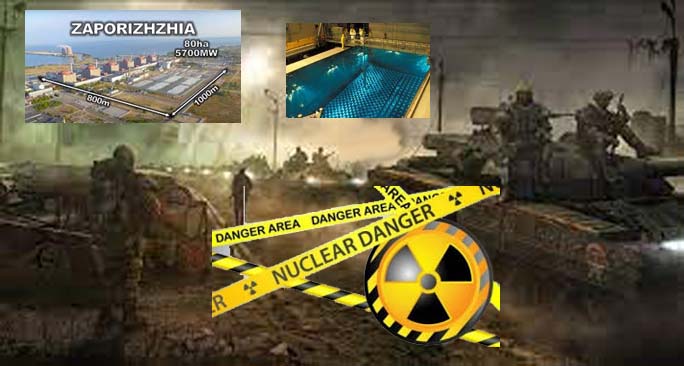
he International Atomic Energy Agency (IAEA) believes that intense fires near the Zaporizhzhia Nuclear Power Plant, which is temporarily occupied by Russia, pose a risk for its external power supply.
Source: IAEA website, as reported by Ukrinform
Quote: “On several occasions over the past week, the IAEA Support and Assistance Mission to Zaporizhzhya (ISAMZ) observed several fires at various distances from the ZNPP and nearby villages. Over the weekend, the IAEA experts observed smoke coming from an area to the north of the ZNPP near the Zaporizhzhya Thermal Power Plant (ZTPP) inlet channel.”
Details: The agency noted that the fire was underneath the remaining overhead power cables that supply power to the plant.
Quote: “As the summer heat continues, such fires along the pathways of the two remaining lines place the ZNPP at risk of loss of external power. While there was no disconnection of either line on this occasion, the situation highlighted the fragility of off-site power at the ZNPP.”
‘Massive disinformation campaign’ is slowing global transition to green energy

UN says a global ‘backlash’ against climate action is being stoked by fossil fuel companies
Fiona Harvey Environment editor, Thu 8 Aug 2024, https://www.theguardian.com/environment/article/2024/aug/08/fossil-fuel-industry-using-disinformation-campaign-to-slow-green-transition-says-un
Fossil fuel companies are running “a massive mis- and disinformation campaign” so that countries will slow down the adoption of renewable energy and the speed with which they “transition away” from a carbon-intensive economy, the UN has said.
Selwin Hart, the assistant secretary general of the UN, said that talk of a global “backlash” against climate action was being stoked by the fossil fuel industry, in an effort to persuade world leaders to delay emissions-cutting policies. The perception among many political observers of a rejection of climate policies was a result of this campaign, rather than reflecting the reality of what people think, he added.
“There is this prevailing narrative – and a lot of it is being pushed by the fossil fuel industry and their enablers – that climate action is too difficult, it’s too expensive,” he said. “It is absolutely critical that leaders, and all of us, push back and explain to people the value of climate action, but also the consequences of climate inaction.”
He contrasted the perception of a backlash with the findings of the biggest poll ever conducted on the climate, which found clear majorities of people around the world supporting measures to reduce greenhouse gas emissions. The survey found 72% of people wanted a “quick transition” away from fossil fuels, including majorities in the countries that produce the most coal, oil and gas. Green parties and plans may have suffered reverses in some parts of the world, he said, but in others they have gained seats, and seen policies that would once have been considered radical enter the mainstream.
Governments must take note, said Hart, who acts as special adviser on climate to the UN secretary general, António Guterres. “This should alert political leaders – those that are ambitious are not only on the right side of history, they’re on the side of their people as well.
“Climate appears to be dropping down the list of priorities of leaders,” he said. “But we really need leaders now to deliver maximum ambition. And we need maximum cooperation. Unfortunately, we are not seeing that at the moment.”
He warned that the consequences of inaction were being felt in rich countries as well as poor. In the US, many thousands of people are finding it increasingly impossible to insure their homes, as extreme weather worsens. “This is directly due to the climate crisis, and directly due to the use of fossil fuels,” he said. “Ordinary people are having to pay the price of a climate crisis while the fossil fuel industry continues to reap excess profits and still receives massive government subsidies.”
Yet the world has never been better equipped to tackle climate breakdown, Hart added. “Renewables are the cheapest they’ve ever been, the pace of the energy transition is accelerating,” he said.
Governments should also take care to ensure that their climate policies did not place unfair burdens on those on low incomes, as poorly designed measures could hurt the poor, according to Hart. “Each country will really need to ensure its transition is well planned to minimise the impact on people and vulnerable populations, because a lot of the so-called pushback comes when there’s a perception that the costs on poor and vulnerable persons are being disproportionately felt,” he said.
For that reason, the UN is calling for new national plans on the emissions reductions required under the 2015 Paris agreement, in which governments must set out clearly not just their targets but how they will be achieved through policy, and what the probable impacts are.
The new national plans, called nationally determined contributions (NDCs), should be “as consultative as possible so that whole segments of society – young people, women, children, workers – will be able to provide their perspective on how the transition should be planned and well-managed, and how it will be financed”, he said.
“Despite everything we see [in the form of extreme weather], we’re still not seeing the level of ambition or action that the world desperately needs.”
‘It made me cry’: photos taken 15 years apart show melting Swiss glaciers
A tourist has posted “staggering” photos of himself and his wife at
the same spot in the Swiss Alps almost exactly 15 years apart, in a pair of
photos that highlight the speed with which global heating is melting
glaciers. Duncan Porter, a software developer from Bristol, posted photos
that were taken in the same spot at the Rhône glacier in August 2009 and
August 2024. The white ice that filled the background has shrunk to reveal
grey rock. A once-small pool at the bottom, out of sight in the original,
has turned into a vast green lake. “Not gonna lie, it made me cry,”
Porter said in a viral post on social media platform X on Sunday night.
Guardian 6th Aug 2024
1 This Month



26 September – International Day for the Total Elimination of Nuclear Weapons


PLEASE OPPOSE HR 8255 AND S.3639 – bills would accelerate satellite deployment, with no environmental review or safeguards – https://ncstd5li.quorum.us/campaign/169331/
To see nuclear-related stories in greater depth and intensity – go to https://nuclearinformation.wordpress.com
-
Archives
- September 2026 (206)
- August 2026 (330)
- July 2026 (355)
- June 2026 (287)
- May 2026 (306)
- April 2026 (356)
- March 2026 (251)
- February 2026 (267)
- January 2026 (308)
- December 2025 (358)
- November 2025 (359)
- October 2025 (375)
-
Categories
- 1
- 1 NUCLEAR ISSUES
- business and costs
- climate change
- culture and arts
- ENERGY
- environment
- health
- history
- indigenous issues
- Legal
- marketing of nuclear
- media
- opposition to nuclear
- PERSONAL STORIES
- politics
- politics international
- Religion and ethics
- safety
- secrets,lies and civil liberties
- spinbuster
- technology
- Uranium
- wastes
- weapons and war
- Women
- 2 WORLD
- ACTION
- AFRICA
- Atrocities
- AUSTRALIA
- Christina's notes
- Christina's themes
- culture and arts
- Events
- Fuk 2022
- Fuk 2023
- Fukushima 2017
- Fukushima 2018
- fukushima 2019
- Fukushima 2020
- Fukushima 2021
- general
- global warming
- Humour (God we need it)
- Nuclear
- RARE EARTHS
- Reference
- resources – print
- Resources -audiovicual
- Weekly Newsletter
- World
- World Nuclear
- YouTube
-
RSS
Entries RSS
Comments RSS
 nuclear-news