Coal Seam Gas – its “fugitive” greenhouse gas emissions are not measured
the sources, and perhaps also the volumes, of fugitive methane releases may differ from those associated with conventional gas production, and that consequently different approaches to the measurement of fugitive emissions may be required.”
 CSG worries hinge on timing of climate change, ABC News 10 Dec 12 by Wendy Carlisle for Background Briefing “……..Fugitive emissions Professor Hultman’s paper was cited by the oil and gas lobby group APPEA in their submission to the Federal Government’s review into the way in which fugitive emissions from coal seam gas are measured.
APPEA has consistently said coal seam gas is 70 per cent cleaner than coal.
But in September the Government released a report which found that the absence of published information about fugitive emissions – greenhouse gases that leak into the atmosphere during the extraction process – was a matter of “public policy concern”. Continue reading
Vague and ineffective – climate change agreement at Doha
Green groups and scientists say while a global treaty to address emissions by 2015 has been agreed upon, it does not go far enough.
“[It’s] a million miles from where we need to be to even have a small chance of preventing runaway climate change,”
Troubled UN climate talks spill over ABC News by Sara Phillips for ABC Environment Dec 8, 2012 International talks aiming to address global climate change have been extended amid fears they may collapse altogether. Continue reading
Runaway global warming will bring climate disasters
Chronic droughts and floods would bite into farm yields, violent storms and sea-level rise would swamp coastal cities and deltas, and many species would be wiped out, unable to cope with habitat loss.
 Climate study predicts 5C warming http://www.heraldsun.com.au/news/breaking-news/climate-study-sees-5c-warming/story-e6frf7k6-1226528644170 AAP December 03, LEVELS of atmospheric carbon dioxide (CO2) are rising annually by around three per cent, placing Earth on track for warming that could breach 5C by 2100, a new study published says.
The figure – among the most alarming of the latest forecasts by climate scientists – is at least double the 2C target set by UN members struggling for a global deal on climate change.
In 2011, global carbon emissions were 54 per cent above 1990 levels, according to the research, published in the journal, Nature Climate Change, by the Global Carbon Project consortium.
“We are on track for the highest emissions projections, which point to a rise in temperature of between 4C and 6C by the end of the century,” said Corinne le Quere, a carbon specialist at the University of East Anglia, eastern England. Continue reading
Doha – the attitude gap between rich and poor nations, on climate change
 Doha Dispatches: Mind the gap… and the science REneweconomy, By Giles Parkinson 3 December 2012 DOHA: The first slogan to greet arrivals at Doha Airport in Qatar are as optimistic as those that greeted delegates to the climate change talks in Copenhagen in 2009: “Welcome to 12 days that could have an everlasting effect,” it pronounces.
Not real catchy, and possibly a direct translation from Arabic. But worthy all the same. Sadly, judging by the lack of ambition, and the lack of progress of these talks, it’s not a likely outcome.
The second thing that attracted my attention on arrival were two payment booths at the exit of the parking lot. Barely big enough for one person to sit inside, they were each equipped with their own 1kW air conditioning system with a large hose attached, like a deep-sea diver with an oxygen supply.
They probably need it. Doha is a city that thrives because of its fossil fuel riches and it has built a western city of stunning shapes and proportions only because it is air conditioned. It has even promised to air condition the World Cup, which it aims to host in 2022 and will have to do exactly that if the competition is to run in the northern summer, where temperatures average 36°C from June to August and have peaked at 53°C, and could hit goodness-knows-what in a decade’s time. (Even the sea-water reached 37°C in 2008).
Qatar is one of a handful of Gulf states that deprives Australia of a most unwanted moniker – the highest emitting state in the world per capita. Australia gets the gong for the category of developed nations, but even it can’t compete with Qatar. Humankind would need more than two planets if the world lived like Australians do. If they lived like the Qataris – the massive buildings, the labyrinth of four lane highways that seem always often clogged, what must be the highest per capita penetration of Toyota Land Cruisers, and its need to desalinate its water – then we would need around five planets. Continue reading
Doha – the gulf in attitudes to climate change, between rich and poor nations
Unless the negotiators in Doha wake up tomorrow and embrace a new green industrial revolution to rapidly change our energy systems, chances to stay below global warming of 2 degrees Celsius are vanishing very fast, if they are not already gone.”
The greenhouse gas emissions path the world is taking “is not a tenable future for the planet – we cannot be that stupid as a species,”
(Diagram below is now out of date – predictions are worse!)
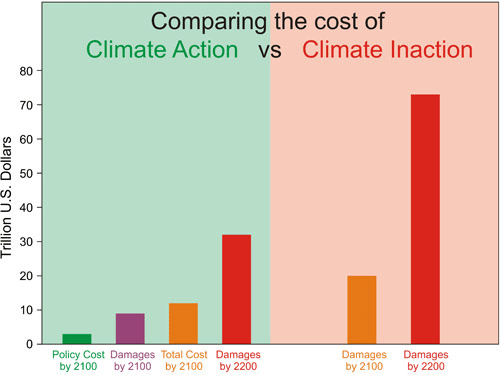
It’s the end of the world as we know it http://www.smh.com.au/environment/climate-change/its-the-end-of-the-world-as-we-know-it-20121202-2ap4l.html#ixzz2E25ixNBg December 3, 2012 Ben Cubby THE world is on track to see “an unrecognisable planet” that is between 4 and 6 degrees hotter by the end of this century, according to new data on greenhouse gas emissions.
As United Nations climate negotiations enter their second week in Doha, Qatar, an Australian-based international research effort that tracks greenhouse gas output will release its annual findings on Monday, showing emissions climbing too quickly to stave off the effects of dangerous climate change.
The new forecast does not include recent revelations about the effects of thawing permafrost, which is starting to release large amounts of methane from the Arctic. This process makes cutting human emissions of fossil fuels even more urgent, scientists say.
The new data from the Global Carbon Project found greenhouse gas emissions are expected to have risen 2.6 per cent by the end of this year, on top of a 3 per cent rise in 2011. Since 1990, the reference year for the Kyoto Protocol, emissions have increased 54 per cent.
“Unless we change current emissions trends, this year is set to reach 36 billion tonnes of carbon dioxide from the combustion of fossil fuels, we are on the way to an unrecognisable planet of 4 to 6 degrees warmer by the end of this century,” said the executive director of the Global Carbon Project, Dr Pep Canadell.
“Unless the negotiators in Doha wake up tomorrow and embrace a new green industrial revolution to rapidly change our energy systems, chances to stay below global warming of 2 degrees Celsius are vanishing very fast, if they are not already gone.”
Emissions are growing in line with the most extreme climate models used by the Intergovernmental Panel on Climate Change, according to a paper in the journal Nature Climate Change that explains the Global Carbon Project’s findings.
The trajectory means a temperature range of between 3.5 and 6.2 degrees by the year 2100, with a “most likely” range of between 4.2 and 5 degrees.Although the climate has changed due to natural influences in the past, human emissions superimposed on top of natural variation is now driving change 20 times faster, according to NASA estimates. Civilisation evolved in a more moderate environment.
The new data is beginning to confirm what scientists had been warning people about for decades, said Andy Pitman, director of the Centre of Excellence for Climate System Science at the University of NSW.
“There are papers that should come with a warning: ‘do not read this if you are depressed’, or ‘please have a stiff drink handy as you read this’. [This] paper is one such example,” Professor Pitman said.
The greenhouse gas emissions path the world is taking “is not a tenable future for the planet – we cannot be that stupid as a species,” he said.
Matthew England, a colleague of Professor Pitman and fellow author of Intergovernmental Panel on Climate Change reports, said: “While the science is clear that emissions reductions are required urgently, each year we are emitting more and more greenhouse gases into the atmosphere. This is like a smoker ramping up the number of cigarettes smoked each day despite grave warnings to stop smoking altogether – sooner or later this catches up with you.”
Thawing of Arctic permafrost leads to irreversible climate change
 Where even the earth is melting, SMH, November 28, 2012 Ben CubbyENVIRONMENT EDITOR THE world is on the cusp of a “tipping point” into dangerous climate change, according to new data gathered by
  scientists measuring methane leaking from the Arctic permafrost and a report presented to the United Nations on Tuesday.
“The permafrost carbon feedback is irreversible on human time scales,” says the report, Policy Implications of Warming Permafrost. “Overall, these observations indicate that large-scale thawing of permafrost may already have started.”
While countries the size of Australia tally up their greenhouse emissions in hundreds of millions of tonnes, the Arctic’s stores are measured in tens of billions. Human-induced emissions now appear to have warmed the Arctic enough tounlock this vast carbon bank, with stark implications for international efforts to hold global warming to a safe level. Ancient
forests locked under ice tens of thousands of years ago are beginning to melt and rot, releasing vast amounts of greenhouse gases into the air. Continue reading
USA’s conservative think-tanks out to crush renewable energy
in the United States, the forces of greed, profit, and power are at work with no regard to the consequences of their actions.
Conservatives in U.S. trying to reverse renewable energy standards in the states, Examiner, NOVEMBER 25, 2012 BY: ROBERT BOWEN As world leaders begin discussions in Qatar Monday on an agreement to reduce carbon pollution, oil companies in the United States are out to repeal the renewable energy standards in the 29 states that have them. They are funding conservative groups to do their dirty work according to an article published Saturday in the Washington Post.
The Heartland Institute, a libertarian think tank that denies climate change science, has joined with the conservative American Legislative Exchange Council (ALEC) to write model legislation aimed at reversing state renewable energy mandates across the country. The Electricity Freedom Act, adopted by ALEC’s board of directors in October, would repeal state renewable energy standards (RES) which require utilities to get a portion of their electricity from renewable sources. ALEC and Heartland are using a tried and true tactic calling it “essentially a tax on consumers of electricity’ and bringing in “freedom.” Continue reading
World Bank calls for action on warming planet
World Bank fears 4-degree warmer planet , Nov 19, 2012 (ABC News: Giulio Saggin) The World Bank has warned global temperatures could rise by four degrees Celsius this century without immediate action, with potentially devastating consequences for coastal cities and the poor. Continue reading
UK’s Conservative Party driven by climate denialism, and anti wind power fervour
Anti-wind zeal already runs through the party…… the objections of many Tories suggest a deeper animus, fuelled by Euroscepticism, climate-change denial
Mr Cameron made a windpower sceptic, John Hayes, energy minister, and appointed yet another, Owen Paterson, as environment secretary.
as turbines get bigger and more efficient, the costs for operating and maintaining them are falling
Wind farms and renewable energy A lot of hot air The government’s energy policy gets mired in politics
http://www.economist.com/news/britain/21566680-governments-energy-policy-gets-mired-politics-lot-hot-air Nov 17th 2012 THE hatred some Conservative MPs feel for windmills is amazing.On November 14th Chris Heaton-Harris, a Tory MP charged with running his party’s campaign for a by-election in Corby, was secretly taped bragging that he had supported a rival, James Delingpole. A climate-change sceptic, Mr Delingpole had briefly stood as an independent on an anti-wind platform. Mr Heaton-Harris suggested this was a put-up job, designed to implant the issue into the “DNA of the Tory party”. Continue reading
Obama to join China and Australia, in action on global warming
 Next year, Guangdong province, which abuts Hong Kong and is itself Australia’s sixth-largest trading partner, will begin a trial Emissions Trading Scheme. China plans to develop a national trading scheme by 2015,
 Obama keen to tackle climate, The Age, November 12, 2012, Peter Hannam THE Australian government has wasted little time to sound out the newly re-elected Barack Obama over his administration’s climate change policies and the potential to work more closely together.
An issue excluded from the US presidential debates, the argument over global warming was revived when superstorm Sandy slammed into north-eastern US states a week before polling day, leaving a damage bill some expect to exceed $US50 billion ($A48 billion).
Mr Obama signalled his intention to tackle climate change in his second term during his acceptance speech in Chicago, where he underlined the issue as among his top priorities.
”We want our children to live in an America that isn’t burdened by debt; that isn’t weakened by inequality; that isn’t threatened by the destructive power of a warming planet,” he said.
Australia’s Minister for Climate Change, Greg Combet, told the Carbon Expo conference in Melbourne on Friday that he was ”very pleased” with Mr Obama’s victory, and said he held already spoken on the issue with his US counterpart since the elections.
”I think the White House will be looking, over the course of the next four years, to be in a position to try to advance action on climate change in the US,” Continue reading
Space junk more dangerous as C02 accumulates in the atmosphere
space junk will accumulate at a faster rate and we will see more collisions between space objects as a result
CO2 build-up risks increasing space junk Herald Sun, AAP November 12, 2012 A BUILD-UP of carbon dioxide in the upper levels of Earth’s atmosphere risks causing a faster accumulation of man-made space junk and resulting in more collisions, scientists say.
While it causes warming on Earth, CO2 conversely cools down the atmosphere and contracts its outermost layer, the thermosphere, where many satellites, including the International Space Station (ISS), operate, said a study published in the journal Nature Geoscience.
A contracted thermosphere, in turn, reduces atmospheric “drag” on satellites – a similar force to that experienced when holding one’s hand out the window of a moving car.
This “drag” is what causes satellite orbits to change, drawing them closer to Earth, which means that orbiters like the ISS have to boost themselves back on course with on-board engines. Continue reading
Praise for Australia’s leadership on climate change and Kyoto Protocol
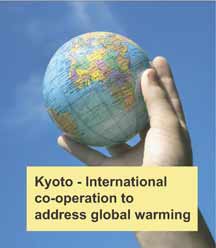 UN leader praises Australia’s climate lead
  http://www.heraldsun.com.au/news/breaking-news/un-leader-praises-australias-climate-lead/story-e6frf7k6-1226514100428 AAP November 10, 2012, UN leader Ban Ki-moon has called for “urgent” action on measures to counter climate change, as he praised Australia for signing on to a new round of the Kyoto Protocol environmental protection treaty.
Ban called on other governments to follow Australia’s example and ”congratulates Prime Minister Gillard for her leadership,” said a UN spokesman, Farhan Haq.
“Addressing climate change is fundamental for achieving sustainable development. Urgent action is needed,” Ban was quoted as saying on Friday. ”The secretary general calls on all governments to take decisive steps against climate change at the upcoming Climate Change Conference” in Qatar, said the spokesman.
Australia, one of the world’s biggest per capita polluters, earlier announced that it was ready to join a second commitment period of the Kyoto Protocol. So far, only the European Union and some smaller economies have signalled they are ready to agree new pledges.
Annual negotiations under the UN Framework Convention on Climate Change (UNFCCC) start in Qatar on November 26.
Climate future is dangerous for nuclear power
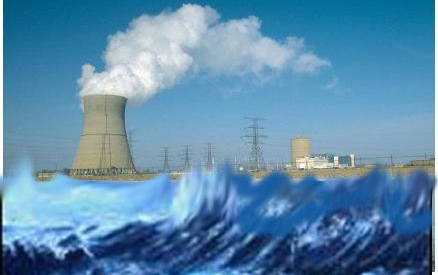 Nuclear Power and Superstorms Don’t Mix, Time, By Lucy Birmingham Nov. 07, 2012 Superstorm Sandy’s unexpected wrath makes a powerful case for revisiting Fukushima and the dangers to nuclear energy from natural disasters. As Sandy made landfall on Atlantic City, Oyster Creek nuclear power plant nearby was fortunately on a scheduled outage. But Indian Point 3 in Buchanan, N.Y., Nine Mile Point 1 in Scriba, N.Y., and Salem Unit 1 in Hancocks Bridge, N.J., all experienced shutdowns because of high water levels or electrical disruption. Last year, the dangerous Fukushima nuclear power plant meltdown was caused by similar conditions after tsunami waves flooded the plant and short-circuited both the regular and back-up electrical systems.
Equally dangerous are drought and record heat conditions the U.S. experienced last summer. In August, one of two reactors at the Millstone nuclear power plant near New London, Conn., not far from where I grew up, was shut down because water in Long Island Sound needed to cool the reactors got too warm. Cool water is necessary to produce electricity.
((MORE: Will We Be Seeing More Superstorms?)
Fukushima has been a worldwide wakeup call, particularly for the United States, the country with the largest number of reactors — 104. The lesson is glaringly obvious: when nature and nuclear energy collide the consequences can be lethal. Unfortunately, Japan is not offering an inspiring example of how to handle this threat. While all but two of the country’s 50 reactors remain offline, government and nuclear industry are proposing plant restarts and construction projects. This muddled move stands against the majority of Japanese citizens who have turned against nuclear power. As we face an increasingly volatile climate, the United States could conceivably lead the way in reducing dependence on nuclear energy.
(MORE: Is Post-Fukushima Japan Safe for Tourists?)
It’s estimated that superstorm Sandy will affect more than one fifth of Americans and cost up to $20 billion in damages. Imagine the addition of a major nuclear accident, potentially more lethal than Three Mile Island. The health, environmental and economic costs would be, simply put, insurmountable. It’s time to face the facts: Mother Nature rules. The best we can do is try to lessen the damage from her wrath. Phasing out nuclear power is the safe answer. : http://ideas.time.com/2012/11/07/nuclear-power-and-superstorms-dont-mix/#ixzz2Bgeqyigt
Global warming – faster and hotter than we thought?
Future warming likely to be on high side of climate projections, analysis finds , Eureka Alert 8 Nov 12 BOULDER—Climate model projections showing a greater rise in global temperature are likely to prove more accurate than those showing a lesser rise, according to a new analysis by scientists at the National Center for Atmospheric Research (NCAR). The findings, published in this week’s issue of Science, could provide a breakthrough in the longstanding quest to narrow the range of global warming expected in coming decades and beyond. Continue reading
A new political momentum with IPCC’s fifth Climate Report
Former UN official says climate report will shock nations into action SMH November 7, 2012 Peter Hannam “…..Yvo de Boer, the UN climate chief during the 2009 Copenhagen climate change talks, said his conversations with scientists working on the next report of the Intergovernmental Panel on Climate Change suggested the findings would be shocking….. Mr de Boer said in the only scheduled interview of his visit to Australia.
“I’m confident those scientific findings will create new political momentum.”
The IPCC’s fifth assessment report is due to be published in late 2013 and early 2014.
Before then is the next end-of-year UN climate meeting in Doha, Qatar. Delegates will discuss a second commitment period for the Kyoto Protocol, the only legally binding accord to cut greenhouse gas emissions. Last December nations agreed in South Africa to work on a bindingagreement that would cover all countries. That work is expected to continue until 2015.
Mr de Boer, who is now special global advisor on climate change for KPMG, said the best prospect may be for nations to settle on targets that they write into their national laws, rather than a binding international deal. The latter would be “almost impossible to get through the US Senate”, he said.
http://www.smh.com.au/environment/climate-change/former-un-official-says-climate-report-will-shock-nations-into-action-20121106-28w5c.html#ixzz2BZ7D4XsR
1 This Month





PLEASE OPPOSE HR 8255 AND S.3639 – bills would accelerate satellite deployment, with no environmental review or safeguards – https://ncstd5li.quorum.us/campaign/169331/
To see nuclear-related stories in greater depth and intensity – go to https://nuclearinformation.wordpress.com
-
Archives
- October 2026 (29)
- September 2026 (339)
- August 2026 (330)
- July 2026 (355)
- June 2026 (287)
- May 2026 (306)
- April 2026 (356)
- March 2026 (251)
- February 2026 (267)
- January 2026 (308)
- December 2025 (358)
- November 2025 (359)
-
Categories
- 1
- 1 NUCLEAR ISSUES
- business and costs
- climate change
- culture and arts
- ENERGY
- environment
- health
- history
- indigenous issues
- Legal
- marketing of nuclear
- media
- opposition to nuclear
- PERSONAL STORIES
- politics
- politics international
- Religion and ethics
- safety
- secrets,lies and civil liberties
- spinbuster
- technology
- Uranium
- wastes
- weapons and war
- Women
- 2 WORLD
- ACTION
- AFRICA
- Atrocities
- AUSTRALIA
- Christina's notes
- Christina's themes
- culture and arts
- Events
- Fuk 2022
- Fuk 2023
- Fukushima 2017
- Fukushima 2018
- fukushima 2019
- Fukushima 2020
- Fukushima 2021
- general
- global warming
- Humour (God we need it)
- Nuclear
- RARE EARTHS
- Reference
- resources – print
- Resources -audiovicual
- Weekly Newsletter
- World
- World Nuclear
- YouTube
-
RSS
Entries RSS
Comments RSS

