Copernicus online portal offers terrifying view of climate emergency

Looking at the mass of information, there is only one conclusion: we are running out of time
Paul Brown, 29 Mar 24, https://www.theguardian.com/news/2024/mar/29/copernicus-online-portal-offers-terrifying-view-climate-emergency
here is so much information on the newly launched Copernicus Climate Change Service atlas that my laptop started to overheat trying to process it all. As well as all the past data, it predicts where the climate is going and how soon we will breach the 1.5C “limit”, and then 2C. You can call up the region where you live, so it is specific to what is happening to you and your family – and all the more disturbing for that.
A separate part called Climate Pulse intended particularly for journalists is easier to operate. The refreshing bit is that the maps, charts and timelines from 1850 to the present day on the main atlas are entirely factual measurements, so there can be no argument on the trends. It then follows those trends into the likely scenarios for the next few years. Examining current temperature increases, it seemed to this observer that scientists have been underestimating for some time how quickly the situation is deteriorating.
Looking at the mass of information all pointing one way makes the current political arguments about how soon the UK should reach net zero seem trivial. We are clearly running out of time. Still, the idea is that people can use the atlas to make up their own minds.
Antarctic sea ice ‘behaving strangely’ as Arctic reaches ‘below-average’ winter peak
Carbon Brief, AYESHA TANDON, 26 Mar 24,
Antarctic sea ice is “behaving strangely” and might have entered a “new regime”, the director of the US National Snow and Ice Data Centre (NSIDC) tells Carbon Brief.
Following an all-time low maximum in September 2023, Antarctic sea ice has been tracking at near-record-low extent for the past six months. Last month, it hit its 2024 minimum extent, tying with 2022 for the second-lowest Antarctic minimum in the 46-year satellite record.
Dr Mark Serreze, director of the NSIDC tells Carbon Brief that more warm ocean water is reaching the surface to melt ice and keep it from forming. He says that we “must wait and see” whether this is a “temporary effect” or whether the Antarctic has entered a “new regime”.
Meanwhile, Arctic sea ice has reached its maximum extent for the year, peaking at 15.01m square kilometres (km2) on 14 March. The provisional data from the NSIDC shows that this year’s Arctic winter peak, despite favourable winds that encouraged sea ice formation, was 640,000km2 smaller than the 1981-2010 average maximum.
This year’s maximum was the 14th lowest in the satellite record…………………………………………………………………………………………………………………………………………………..
Record-breaking Antarctic extent
Antarctic sea ice has been tracking at or near record-low levels for months.
The Antarctic set a record-low maximum on 10 September 2023, with an extent of 16.96m km2. This was “the lowest sea ice maximum in the 1979 to 2023 sea ice record by a wide margin”, and one of the earliest, the NSIDC says.
Antarctic conditions over 2023 were “truly exceptional” and “completely outside the bounds of normality”, one expert told Carbon Brief.
As 2023 progressed, Antarctic sea ice melt was “slower than average”, the NSIDC says. The total decline in Antarctic sea ice extent through October was 903,000km2, while the October average was 985,000km2.
Nevertheless, Antarctic sea ice extent continued to track at a record low. On 31 October 2023, Antarctic sea ice extent was still tracking at a record-low of 15.79m km2. This is 750,000km2 below the previous 31 October record low………….. more https://www.carbonbrief.org/antarctic-sea-ice-behaving-strangely-as-arctic-reaches-below-average-winter-peak/
Oil company chief urges investment in fossil fuels, as world heats at a record pace

Talk about unfortunate timing. At the start of last week, the head of the
world’s largest oil company, Saudi Aramco, was applauded when he told the
CERAWeek energy conference in Houston it was time to “abandon the fantasy
of phasing out oil and gas”. Amin Nasser said the world needed instead to
invest in fossil fuels to meet demand at a time when the clean energy
transition was “visibly failing on most fronts”.
One day later, the head of the UN’s World Meteorological Organization, Celeste Saulo, received no applause for issuing a report that showed climate records had been not
just broken but smashed in 2023, the hottest year on record. More than 90
per cent of the world’s oceans suffered heatwave conditions, glaciers lost
the most ice on record and the extent of Antarctic sea ice fell to by far
the lowest levels ever measured.
To an extent not widely appreciated, the
world is now warming at a pace that scientists did not expect and,
alarmingly, do not fully understand. At a Financial Times conference this
month, Jim Skea, the chair of the UN’s Intergovernmental Panel on Climate
Change, said last year’s spike in temperatures was “quicker than we all
anticipated”. “It was a surprise,” he said. “Ocean temperatures
were just off the scale in terms of historic records. It was completely
unusual and we still need to do more work to explain it.”
FT 24th March 2024
https://www.ft.com/content/6f858196-0a9c-4f0f-9720-a0a81849a998
Hundreds of groups for climate action reject nuclear power at Brussels Summit
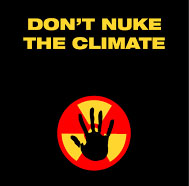
Today, more than 600 civil society groups across the globe working on
climate action, including 130 from Canada launched a declaration in
Brussels, Belgium, stating that nuclear power expansion is not a solution
to the climate crisis. The groups declare: “We are living in a climate
emergency.
Time is precious, and too many governments are wasting it with
nuclear energy fairy tales. What we demand is a just transition towards a
safe, renewable and affordable energy system that secures jobs and protects
life on our planet.” The groups made their declaration public today at
the pro-nuclear Summit in Brussels where countries are meeting to bolster
the industry’s claim that investing in new nuclear plants must be a
priority to save the climate.
The International Atomic Energy Agency
(IAEA), whose principle mandate is to promote nuclear expansion, is
co-hosting the event, along with Belgium, which ironically passed a law in
2003 –still on the books –to phase out nuclear power completely.
Canadian Coalition for Nuclear Responsibility 21st March 2024
Amid all the climate gloom, let’s not ignore the good news
Faith Birol: It’s important also to pay attention to the good news —
the areas where real progress is being made that can still enable us to
avoid the most severe effects of climate change.
Nowhere is this clearer
than in clean energy, where technologies like solar, wind and electric cars
are increasingly replacing the need for fossil fuels and reining in
emissions. Clean energy technologies are already competitive in many key
areas and are getting more so as production scales up. It’s now cheaper
to build onshore wind and solar power projects than new fossil fuel plants
almost everywhere worldwide.
The country leading the growth of clean energy
is China, which installed as much solar capacity in 2023 as the entire
world did in 2022. China is also comfortably the biggest player in global
supply chains for solar panels, wind turbines, electric cars and other
major technologies, and is investing in manufacturing capacity in other
regions, as well. Regardless of where they stand on climate policy, if
countries want to compete with China in the industries of the future, they
need to double down on clean energy plans, not dial back on them.
FT 21st March 2024
https://www.ft.com/content/9ea0566b-ba34-4bd6-be92-a191bad85aa5
Mainstream climate scientists run the risk of becoming the new climate deniers.
“Executive Summary”
- The speed with which the climate is now changing is faster than (almost) all scientists thought possible.
- There is now zero prospect of holding the average temperature increase this century to below 1.5°C; even 2°C is beginning to slip out of reach. The vast majority of climate scientists know this, but rarely if ever give voice to this critically important reality.
- At the same time, the vast majority of people still haven’t a clue about what’s going on – and what this means for them and everything they hold dear.
- The current backlash against existing (already wholly inadequate) climate measures is also accelerating – and will cause considerable political damage in 2024. Those driving this backlash represent the same old climate denial that has been so damaging over so many years.
- The science-based institutions on which we depend to address this crisis have comprehensively failed us. The Intergovernmental Panel on Climate Change is incapable of telling the whole truth about accelerating climate change; the Conference of the Parties (under the UN Framework Convention on Climate Change) has been co-opted by the fossil fuel lobby to the point of total corruption.
- By not calling out these incontrovertible realities, mainstream scientists are at risk of becoming the new climate deniers.
more https://www.jonathonporritt.com/mainstream-climate-science-the-new-denialism/
Buried Nuclear Waste May Soon Rise From the Grave
If we don’t get a handle on climate change soon, we may have a serious radioactive issue on our hands.
BY DARREN ORF MAR 07, 2024 https://www.popularmechanics.com/science/a60067341/gao-nuclear-waste-report/
- During the Cold War, the U.S. stashed nuclear waste—or accidentally dispersed it—in several sites around the world.
- The Government Accountability Office (GAO) recently released an update on three of those sites in Spain, Greenland, and the Marshall Islands.
- Two of those sites are currently under threat from climate change in the form of either melting ice or rising sea levels, which could eventually reveal these dump sites’ deadly contents.
During the Cold War, the U.S. and Soviet Union had the bright idea to irradiate the planet with nuclear bomb testing.
Of the 67 U.S. nuclear tests during this period, Castle Bravo—conducted on the Marshall Islands on March 1, 1954—was the biggest of them all. This denotation, along with all the others, came with an ecological and human toll on the surrounding area. And now, during the era of climate change, the specter of the most dangerous era of the nuclear age is haunting the world once again.
A new report by the Government Accountability Office (GOA) re-evaluated three sites around the world contaminated by U.S nuclear waste. One of these sites included Palomares, Spain—in 1966, a U.S. B-52G bomber carrying four thermonuclear bombs collided with a KC-135 tanker in the area. The collision didn’t cause the bombs to explode (you probably would’ve heard about that one time we accidentally bombed Spain) but it did disperse a lot of radioactive material. The report finds that the U.S. and Spain continue to monitor the contamination to this day.
However, the nuclear waste sites in Greenland and the Marshall Islands are currently a more direct threat to the world due to climate change. Entombed in ice under Greenland is roughly 47,000 gallons of radioactive waste produced by the Portable Mobile-2A (PM-2A) reactor, which powered the “city under the ice” known as the U.S. Camp Century base. Although the reactor was removed, the waste was left behind. Simply put, engineers at the time never thought it’d be exposed, but climate change—a term that wasn’t even coined yet when the base was built in 1960—is slowly melting the ice cap, which could reveal the radioactive waste hiding below.
“The scientists concluded that the contaminants should remain entombed in the ice at least through 2100,” the report reads. “The radioactive isotopes will continue to decay while entombed in the ice sheet and, as a result, will be less of a threat to human health the longer they remain locked in the ice.”
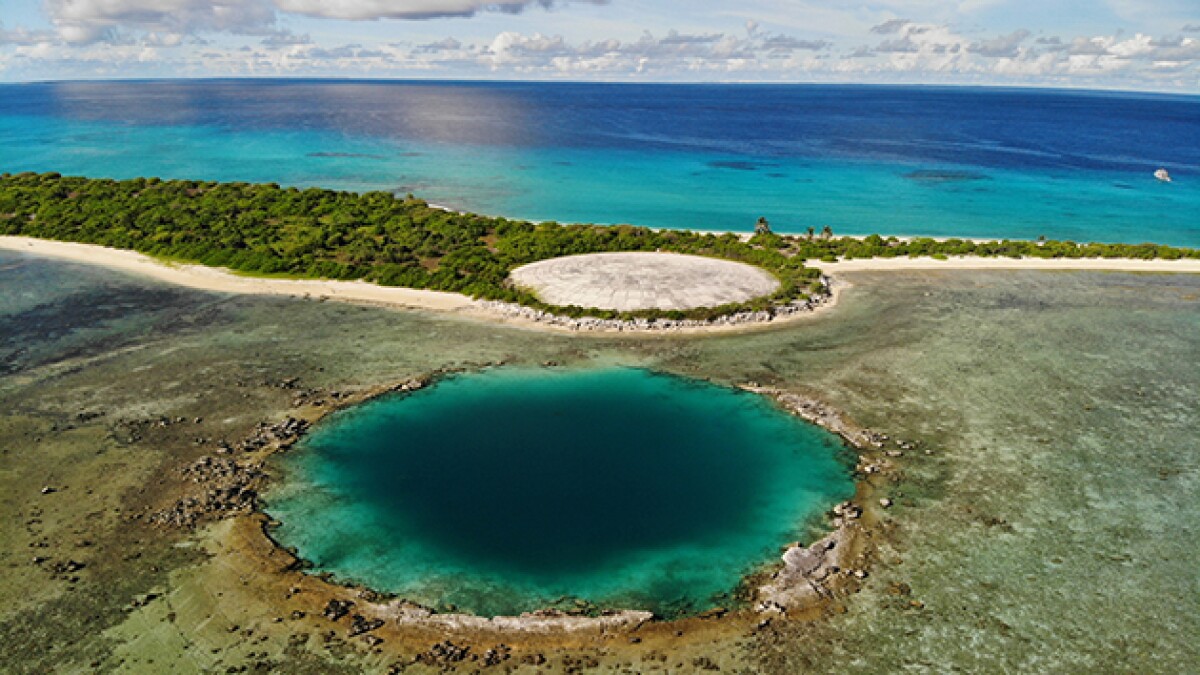
However, of most pressing concern is the nuclear waste currently impacting the Republic of the Marshall Islands. Runit Island houses a “nuclear coffin” that contains 110,000 cubic yards of radioactive contaminated soil and 6,000 cubic yards of contaminated debris, and it’s already been documented that rising sea levels are impacting this coffin. Nuclear radiation can also be measured at several atolls as well, including Bikini, Enewetak, Rongelap, and Utrik Atolls.
The U.S. Department of Energy and the RMI have disagreed over the impacts of the U.S.’s past nuclear testing on the people of this island, and the GOA believes that a new communication strategy could help alleviate mistrust—which isn’t exactly what the Marshallese people want to hear.
“What we need now is action and implementation on environmental remediation,” Ariana Tibon, chair of RMI’s National Nuclear Commission told the environmental website Grist. “If they know that it’s contaminated, why wasn’t the recommendation for next steps on environmental remediation?”
In other words, it’s time for the U.S. to stare down the ghosts of its nuclear past.
Could climate change release 35 swimming pools’ worth of nuclear waste? Or worse… unleash a world-ending pandemic? These are the terrifying unexpected consequences of melting ice
By ROB WAUGH FOR DAILYMAIL.COM, 2 March 2024 https://www.dailymail.co.uk/sciencetech/article-13135571/Could-climate-change-release-35-swimming-pools-worth-nuclear-waste-worse-unleash-world-ending-pandemic-terrifying-unexpected-consequences-melting-ice.html
- Buried ‘nuclear city’ and swimming pools’ worth of nuclear waste
- Frozen viruses have already begun to infect human beings
- READ MORE As melting ice exposes new oil reserves, oil giants move in
Around the world, glaciers and permafrost are melting, and in some places the retreating ice is releasing buried secrets people hoped would remain forgotten.
Rising waters have exposed a secret Greenland nuclear base that engineers thought would never resurface as well as a radioactive ‘Tomb’ at the site of American nuclear tests.
And while it sounds far-fetched, very credible experts have warned that the next pandemic may well come from ancient pathogens buried in the ice, or even from diseases harbored by frozen dead Neanderthals.
The ‘secret nuclear city’ under Greenland’s ice
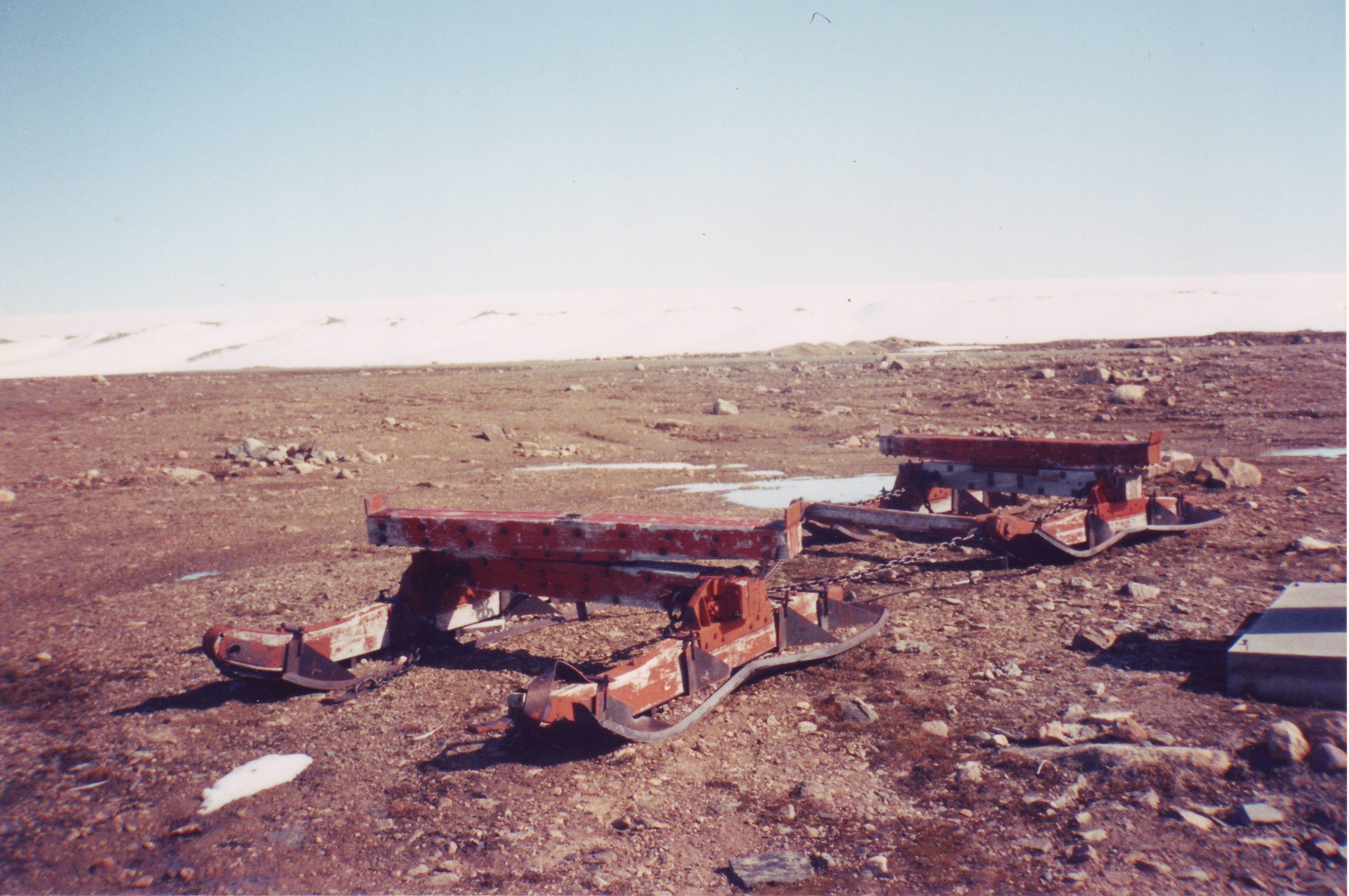
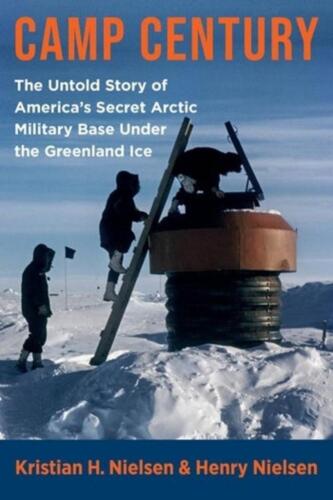
Camp Century in Greenland is a secret nuclear-powered ‘city under the ice’, where U.S. Army engineers carried out weapons research
The base has been abandoned for almost half a century, but now poses a serious concern over nuclear waste.
Powered by a portable nuclear generator, Camp Century was built in 1959, and was built to host 200 soldiers, with a plan to expand the base to hold 600 ballistic missiles.
‘Camp Century’ was abandoned in 1967, but the nuclear reactor at the base – which also had a hospital and a church in its tunnels – has long since been removed, but radioactive waste remains.
When the Army Corps of Engineers (ACE) left the base, they assumed that frigid temperatures and falling snow would keep the nuclear waste there forever.
In total, the waste is equivalent to the mass of 30 Airbus A320 airplanes – and researchers now fear that it could be released into the sea.
A 2016 study suggested that the nuclear waste could be released into the sea this century, but newer measurements at the base suggest that this will not happen until 2100.
‘Tomb’ of poison at nuclear test site
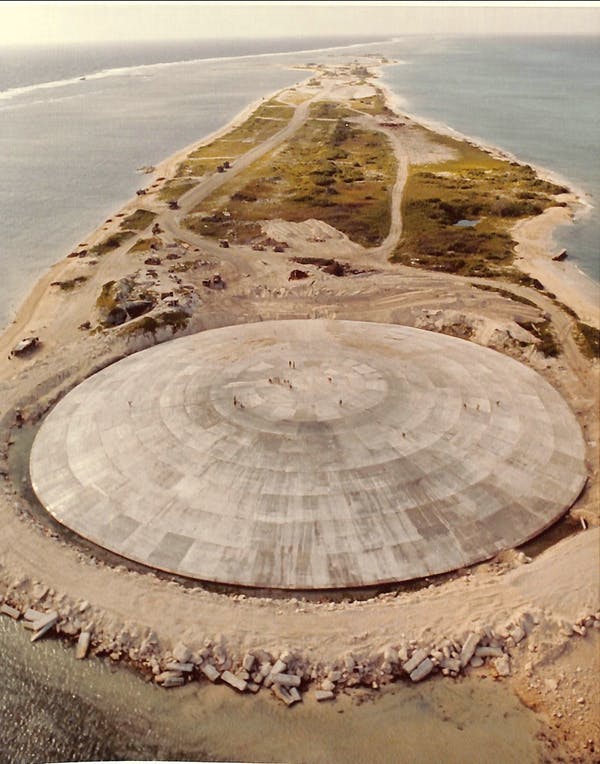
In the Marshall Islands, a huge ‘lid’ which locals know as ‘The Tomb’ covers 31 million cubic feet of nuclear waste – equivalent to the volume of 35 Olympic-sized swimming pools.
The islands were the site of American nuclear tests, but the U.S. military also shipped in waste from the mainland.
From 1946 to 1958, America conducted 67 nuclear tests in the South Pacific.
The concrete ‘lid’ officially known as the Runit Dome was built on Enewetak Atoll in the Marshall Islands to contain radioactive material from American nuclear tests in the 1950s.
Some studies have suggested that radiation levels near the site are similar to those near Chernobyl and the waters around the dome are rising every year.
Changing temperatures are causing the lid to crack, while rising waters are lapping at the atoll.
Plutonium – and a lost hydrogen bomb?
A 1968 plane crash scattered plutonium from American nuclear weapons over the ice in Greenland, which could be released by global warming.
The U.S. military assumed that the Thule air base in Greenland would be rapidly attacked in a nuclear war, so kept nuclear-armed bombers in the air to fly towards Russia in the event of an attack.
The Thule incident saw large amounts of radioactive plutonium dispersed onto the ice sheet, as a cabin fire in a B-52 bomber forced the crew to bail out.
Conventional explosives inside the four B28FI thermonuclear bombs detonated, spreading radioactive waste.
But the uranium-235 fissile core of one of the bombs was never found, despite a search with submarines.
Reports in the decades since have suggested that the lost bomb is lying under the seabed.
Frozen viruses and the next pandemic
Researchers have warned that the next pandemic could come from melting ice.
Genetic analysis of soil and lake sediment near the highest Arctic freshwater lake, Lake Hazen, suggests that the risk of ‘viral spillover’ may be high close to melting glaciers.
‘Spillover’ is where a virus infects a new host for the first time – and analysis of viruses and potential hosts in the lakebed suggests this risk may be higher near to melting glaciers.
Researchers at Ohio State University found genetic material from 33 viruses, 28 of which were unknown, in the Tibetan plateau in China, putting their age at 15,000 years old.
Viruses from Neanderthals
Other researchers have warned of viruses unleashed by melting permafrost: one-quarter of the northern hemisphere sits on top of permanently frozen ground – known as permafrost, but large areas are now melting as the world warms.
There are already examples of this – with a 2016 anthrax outbreak in Siberia attributed to melting permafrost exposing an infected reindeer carcass.
Previously researchers have warned that global warming and thawing ice might unearth diseases such as smallpox frozen into the corpses of victims, with a few infectious particles enough to revive the pathogen.
As permafrost thaws due to climate change, virologist Jean-Michel Claverie has warned that ancient viruses harbored in the long-frozen ground could be released.
Claverie explains that if an ancient pathogen eradicated Neanderthals, for instance, their frozen remains might still contain infectious viruses that could be unleashed as ice melts.
Claverie told Bloomberg News, “With climate change, we are used to thinking of dangers coming from the south.
“Now, we realize there might be some danger coming from the north as the permafrost thaws and frees microbes, bacteria and viruses.”
Claverie’s team previously revived giant viruses from up to 48,000 years ago – and the veteran scientist has warned that there could be even more ancient viruses in the ice, some of which could potentially infect humans.
Frozen poison in the ice
Polar regions have acted as a ‘chemical sink’ for the planet, locking away poisons in the ice – but melting ice could release this.
A study in Geophysical Research Letters found huge reserves of the toxic heavy metal mercury frozen in Arctic permafrost.
The amount may be 10 times higher than all the mercury pumped into the atmosphere from industry in three decades.
Paul Schuster, a U.S. Geological Survey hydrologist, “This is a complete game-changer for mercury. It’s a natural source, but some of it will be released through what we’re doing with climate change.”
Mercury is released by industry, volcanic eruptions and rock weathering – but what’s less clear is what will happen if the ‘pool’ in the Arctic is released.
New Research from Antarctica Affirms the Threat of the ‘DoomsdayGlacier,’ but Funding to Keep Studying It Is Running Out.
In a worst case scenario, rising global temperatures and marine heatwaves could melt enough of the Thwaites Glacier and other Antarctic ice to raise sea levels 10 feet by the early 2100s.

Inside Climate News, By Bob Berwyn, February 26, 2024
“………………………………………………………….. It took a whole day of sailing just to monitor and map the front of the Thwaites Glacier’s floating shelf, he said, with ice cliffs in some places towering several hundred feet above the water, marking the abrupt edge of an ice expanse about the size of Nebraska and averaging between 2,500 and 4,000 feet thick. If all the ice melts, it would raise average global sea level about 2 feet.
The sediment samples Kirkham and other scientists collected four years ago provided the data for a study published Monday in the Proceedings of the National Academies of Sciences that affirms one of the most serious concerns about Antarctica—that an irreversible meltdown of some of the frozen continent’s ice masses has already started.
“You just can’t ignore what’s happening on this glacier,” said lead author Rachel Clark, a University of Houston ice researcher who also works with the International Thwaites Glacier Collaboration, a team that has been trying to figure out just how fast the vulnerable ice will melt. But, she said the new study is important because it shows that the melting is not just random or limited to one glacier.
“It is part of a larger context of a changing climate,” she said.
Not Just Thwaites
After analyzing the chemistry and other characteristics of seafloor sediment grains from various depths and different locations near the floating edge of the glacier, the team’s members were able to show that the glacier had been relatively stable for nearly 10,000 years, since the end of the last ice age, but that it started to retreat in the mid-1940s.
Shifts in regional winds and associated changes in ocean currents are pushing more relatively warm water toward Antarctica’s frozen fringe, melting the ice and loosening it from rocky seafloor anchor points that have held the floating part of the glacier in place for thousands of years. As the ice melts away from the pinning points, it can float to sea and disintegrate faster, allowing the glacier behind it to accelerate toward the ocean. In the last 30 years, the amount of ice flowing out to sea from the Thwaites and Pine Island glacial areas and their associated floating ice shelves has doubled.
……………………………………the Thwaites Glacier, and the neighboring Pine Island Glacier, have kept retreating since the 1940s. …………………..
While the Thwaites Glacier has been identified as being among the most vulnerable to pinning point loss, a similar pattern of melting and retreat in many other Antarctic glaciers and ice shelves at least since the 1970s was documented in a separate study published Feb. 21 in Nature.
………………………………………………………… “We already seem to have pushed the climate and ice sheet system past certain irreversible thresholds, and need to observe and understand more about Thwaites, not less,” said Pam Pearson, founder and director of the International Cryosphere Climate Initiative. “Pleas of ignorance will be little comfort to future generations displaced by Antarctic sea-level rise that we could have stopped had we only acted in time.” https://insideclimatenews.org/news/26022024/new-research-from-antarctica-affirms-threat-of-doomsday-glacier-but-funding-is-running-out/
Texas wildfires continue to pose threat to Pantex nuclear weapons plant, and climate change will bring further threats to nuclear facilities
By Jessica McKenzie, François Diaz-Maurin | February 28, 2024
A wildland fire in the Texas Panhandle forced the Pantex plant, a nuclear facility northeast of Amarillo, to temporarily cease operations on Tuesday and to evacuate nonessential workers. Plant workers also started construction on a fire barrier to protect the plant’s facilities.
The plant resumed normal operations on Wednesday, officials said.
“Thanks to the responsive actions of all Pantexans and the NNSA Production Office in cooperation with the women and men of the Pantex Fire Department and our mutual aid partners from neighboring communities, the fire did not reach or breach the plant’s boundary,” Pantex said in a social media post on Wednesday afternoon.
At a press conference Tuesday evening, Laef Pendergraft, a nuclear safety engineer with the National Nuclear Security Administration production office at Pantex, said the evacuations were out of an “abundance of caution.”
“Currently we are responding to the plant, but there is no fire on our site or on our boundary,” Pendergraft told reporters.
The 90,000-acre Windy Deuce fire burning four to five miles to the north of the Pantex plant was 25 percent contained as of late Wednesday afternoon.
Until the fire is fully contained, it will continue to pose a threat to the nearby Pantex plant, says Nickolas Roth, the senior director of nuclear materials security at the Nuclear Threat Initiative. “I think the sign that the coast is clear is that the fire is no longer burning,” he told the Bulletin. “One can imagine many reasons operations would resume.”……………………………………….
While the specific cause of the Smokehouse Creek fire has not yet been identified, climate change is making explosive wildfires more likely, with serious implications for the country’s nuclear weapons programs.
Since 1975, the Pantex plant has been the United States’ primary facility responsible for assembling and disassembling nuclear weapons. It is one of six production facilities in the National Nuclear Security Administration’s Nuclear Security Enterprise.
In addition to warhead surveillance and repair, the plant is currently working on the full scale production of the B61-12 guided nuclear gravity bomb and 455-kiloton W88 Alteration (Alt) 370 warhead as part of the broader US nuclear weapons life-extension and modernization programs. The plant handles significant quantities of uranium, plutonium, and tritium, in addition to other non-radioactive toxic and explosive chemicals.
If a wildfire were to impact the site directly, the health and safety implications could be enormous.
“I don’t like to speculate in terms of worst-case scenarios,” Roth told the Bulletin. “The potential for danger if a fire ever broke out at a site with weapons usable nuclear material is quite great.”
“The danger from plutonium really comes from inhaling particulates,” Dylan Spaulding, a senior scientist in the Global Security Program at the Union of Concerned Scientists, explained on a podcast in 2023. “So if powder is inhaled, or if somehow powder were to be dispersed through, say, a big fire or some kind of incident at the site, that would certainly pose a risk for surrounding communities.”
Up to 20,000 plutonium cores, or “pits,” from disassembled nuclear weapons can be stored on site. (The exact figure is classified, but experts contacted by the Bulletin said the current number of “surplus” plutonium pits already dismantled is likely to be around 19,000, plus an additional unknown number of backlog pits awaiting disassembly.)
But as Robert Alvarez wrote in the Bulletin in 2018, the plutonium is stored in facilities built over half a century ago that were never intended to indefinitely store nuclear explosives. After extreme rains flooded parts of the facility in 2010 and 2017, some of the containers began showing signs of corrosion.
A 2021 review by the Defense Nuclear Facilities Safety Board of the Pantex plant’s operations found that an increasing number of plutonium pits are stored in unsealed containers. These pits are either “recently removed from a weapon, planned to be used in an upcoming assembly or life extension program, or pending surveillance,” the board explained. The board previously recommended that these pits be repackaged into sealed insert containers for their safe long-term staging. But the plant personnel “stated it is only achieving approximately 10 percent of its annual pit repackaging goals, citing a lack of funding and priority.”…………………………………………………………………………..
A Department of Energy report published in April 2022 on fire protection at the Pantex, which identified several weaknesses within the plant, did not discuss risks from wildland fires.
“The event is obviously a stark reminder of the dangers of climate change on even high security nuclear weapons facilities,” said Kristensen.
But as other authors have previously argued in the Bulletin, climate change is a blind spot in US nuclear weapons policy. “All of these [nuclear] structures were built on the presumption of a stable planet. And our climate is changing very rapidly and presenting new extremes,” Alice Hill, a senior fellow for energy and the environment at the Council on Foreign Relations, told the Bulletin in 2021……….. https://thebulletin.org/2024/02/texas-wildfires-force-major-nuclear-weapons-facility-to-briefly-pause-operations/
USA is littered with nuclear sites that could face danger from natural disasters

Elizabeth Weise, USA TODAY
Massive wildfires in Texas caused operations at the nation’s primary nuclear weapons facility to be paused earlier this week, another reminder that the United States is covered in highly sensitive locations that house nuclear weapons, waste and energy reactors.
The U.S. has more than 3,700 nuclear warheads stockpiled around the country and 54 nuclear power plants in 28 states. And while nuclear energy facilities and weapons sites have always been built with potential natural disasters in mind — whether it was earthquakes, hurricanes, tornadoes or floods — those disasters stress their support systems and create new worries for safety experts.
As of Wednesday evening, the Pantex nuclear weapons plant near Amarillo was not harmed and safely reopened.
Experts told USA TODAY that natural disasters like Texas’ wildfires typically don’t create an immediate nuclear threat, but they do make carefully caring for nuclear materials more expensive and difficult, increasing safety worries over the long term. Those worries are only compounded by disasters that keep getting worse as the planet warms………………………………………………………….
an analysis of the risks at nuclear power plants done in 2020 by business research and risk firm Moody’s found that costs are likely to increase due to the need to increase protections in a changing climate. That’s in part because nuclear power plants use external water sources for cooling, so most are built near rivers, lakes and oceans, putting them at greater risk of flooding, storm surges and sea level rise. https://www.usatoday.com/story/news/nation/2024/02/28/texas-wildfire-burned-near-nuclear-weapons-site-is-that-dangerous/72772407007/
Texas nuclear weapons facility pauses as fires spread
The Standard, By John Crouch, February 28, 2024
A series of wildfires has swept across the Texas Panhandle, prompting evacuations, cutting off power to thousands, and forcing the shutdown of a nuclear weapons facility as strong winds, dry grass and unseasonably warm temperatures fed the blazes.
An unknown number of homes and other structures in Hutchinson County were damaged or destroyed, local emergency officials said.
The main facility that assembles and disassembles America’s nuclear arsenal shut down its operations Tuesday night.
“We have evacuated our personnel, non-essential personnel from the site, just in an abundance of caution,” Laef Pendergraft, a spokesman for National Nuclear Security Administration’s Production Office at Pantex, said during a news conference………………………………………………….
Republican Governor Greg Abbott issued a disaster declaration for 60 counties as the largest blaze, the Smokehouse Creek Fire, burned more than 1000 square kilometres, according to the Texas A&M Forest Service.
That is more than twice its size since the fire sparked on Monday……………………………………more https://www.standard.net.au/story/8539003/texas-nuclear-weapons-facility-pauses-as-fires-spread/
Texas: Disaster declaration issued and nuclear weapons plant shut down as wildfires spread
Sky News, Reemul Balla, 28 Feb 24
A disaster declaration has been issued for dozens of counties in northern Texas as raging wildfires forced evacuations in several towns and a nuclear weapons plant to shut down.
Republican governor Greg Abbott proclaimed 60 counties were in a state of disaster and called for extra emergency services to support local firefighters in tackling the blazes………………………………………………………………………….
Pantex nuclear facility paused operations until further notice due to an out-of-control fire approaching its Panhandle site near Amarillo.
Its 16,000-acre site is home to the plant that builds and disassembles America’s nuclear weapons.
“The fire near Pantex is not contained,” the company said. “Response efforts have shifted to evacuations.”
Pantex confirmed there was no fire on the site as emergency services continued to monitor the situation.
It added “all employees” had been accounted for and “non-essential personnel” were no longer on site………………………………………………………………………………………. more https://news.sky.com/story/texas-disaster-declaration-issued-and-nuclear-weapons-plant-shut-down-as-wildfires-spread-13082651
Buried Nuclear Waste From the Cold War Could Resurface as Ice Sheets Melt
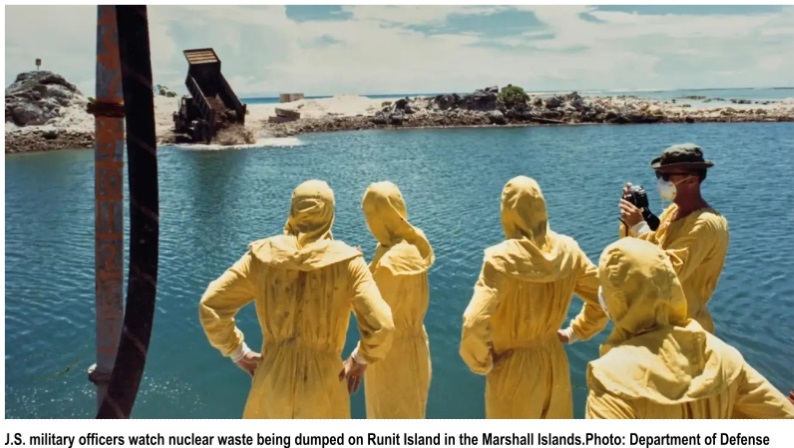
Decades after the U.S. buried nuclear waste abroad, climate change could unearth it.
By Anita Hofschneider, Grist, https://gizmodo.com/buried-nuclear-waste-from-the-cold-war-could-resurface-1851286777
Ariana Tibon was in college at the University of Hawaiʻi in 2017 when she saw the photo online: a black-and-white picture of a man holding a baby. The caption said: “Nelson Anjain getting his baby monitored on March 2, 1954, by an AEC RadSafe team member on Rongelap two days after ʻBravo.ʻ”
Tibon had never seen the man before. But she recognized the name as her great-grandfatherʻs. At the time, he was living on Rongelap in the Marshall Islands when the U.S. conducted Castle Bravo, the largest of 67 nuclear weapon tests there during the Cold War. The tests displaced and sickened Indigenous people, poisoned fish, upended traditional food practices, and wrought cancers and other negative health repercussions that continue to reverberate today.
A federal report by the Government Accountability Office published last month examines what’s left of that nuclear contamination, not only in the Pacific but also in Greenland and Spain. The authors conclude that climate change could disturb nuclear waste left in Greenland and the Marshall Islands. “Rising sea levels could spread contamination in RMI, and conflicting risk assessments cause residents to distrust radiological information from the U.S. Department of Energy,” the report says.
In Greenland, chemical pollution and radioactive liquid are frozen in ice sheets, left over from a nuclear power plant on a U.S. military research base where scientists studied the potential to install nuclear missiles. The report didn’t specify how or where nuclear contamination could migrate in the Pacific or Greenland, or what if any health risks that might pose to people living nearby. However, the authors did note that in Greenland, frozen waste could be exposed by 2100.
“The possibility to influence the environment is there, which could further affect the food chain and further affect the people living in the area as well,” said Hjalmar Dahl, president of Inuit Circumpolar Council Greenland. The country is about 90 percent Inuit. “I think it is important that the Greenland and U.S. governments have to communicate on this worrying issue and prepare what to do about it.”
The authors of the GAO study wrote that Greenland and Denmark haven’t proposed any cleanup plans, but also cited studies that say much of the nuclear waste has already decayed and will be diluted by melting ice. However, those studies do note that chemical waste such as polychlorinated biphenyls, man-made chemicals better known as PCBs that are carcinogenic, “may be the most consequential waste at Camp Century.”
The report summarizes disagreements between Marshall Islands officials and the U.S. Department of Energy regarding the risks posed by U.S. nuclear waste. The GAO recommends that the agency adopt a communications strategy for conveying information about the potential for pollution to the Marshallese people.
Nathan Anderson, a director at the Government Accountability Office, said that the United States’ responsibilities in the Marshall Islands “are defined by specific federal statutes and international agreements.” He noted that the government of the Marshall Islands previously agreed to settle claims related to damages from U.S. nuclear testing.
“It is the long-standing position of the U.S. government that, pursuant to that agreement, the Republic of the Marshall Islands bears full responsibility for its lands, including those used for the nuclear testing program.”
To Tibon, who is back home in the Marshall Islands and is currently chair of the National Nuclear Commission, the fact that the report’s only recommendation is a new communications strategy is mystifying. She’s not sure how that would help the Marshallese people.
“What we need now is action and implementation on environmental remediation. We don’t need a communication strategy,” she said. “If they know that it’s contaminated, why wasn’t the recommendation for next steps on environmental remediation, or what’s possible to return these lands to safe and habitable conditions for these communities?”
The Biden administration recently agreed to fund a new museum to commemorate those affected by nuclear testing as well as climate change initiatives in the Marshall Islands, but the initiatives have repeatedly failed to garner support from Congress, even though they’re part of an ongoing treaty with the Marshall Islands and a broader national security effort to shore up goodwill in the Pacific to counter China.
Antarctica sea ice reaches alarming low for third year in a row

The extent of ice floating around the continent has contracted to below 2m sq km for three years in a row, indicating an ‘abrupt critical transition’
Graham Readfearn, 25 Feb 24 https://www.theguardian.com/world/2024/feb/24/antarctica-sea-ice-reaches-alarming-low-for-third-year-in-a-row
For the third year in a row, sea ice coverage around Antarctica has dropped below 2m sq km – a threshold which before 2022 had not been breached since satellite measurements started in 1979.
The latest data from the US National Snow and Ice Data Center confirms the past three years have been the three lowest on record for the amount of sea ice floating around the continent.
Scientists said another exceptionally low year was further evidence of a “regime shift”, with new research indicating the continent’s sea ice has undergone an “abrupt critical transition”.
Antarctica’s sea ice reaches its lowest extent at the height of the continent’s summer in February each year.
On 18 February the five-day average of sea ice cover fell to 1.99m sq km and on 21 February was at 1.98m sq km. The record low was 1.78m sq km, set in February 2023.
Whether the current level represents this year’s minimum won’t be known for another week or two.
Antarctica sea ice reaches alarming low for third year in a row
The extent of ice floating around the continent has contracted to below 2m sq km for three years in a row, indicating an ‘abrupt critical transition’
Graham Readfearn @readfearnSun 25 Feb 2024
For the third year in a row, sea ice coverage around Antarctica has dropped below 2m sq km – a threshold which before 2022 had not been breached since satellite measurements started in 1979.
The latest data from the US National Snow and Ice Data Center confirms the past three years have been the three lowest on record for the amount of sea ice floating around the continent.
Scientists said another exceptionally low year was further evidence of a “regime shift”, with new research indicating the continent’s sea ice has undergone an “abrupt critical transition”.
Antarctica’s sea ice reaches its lowest extent at the height of the continent’s summer in February each year.
On 18 February the five-day average of sea ice cover fell to 1.99m sq km and on 21 February was at 1.98m sq km. The record low was 1.78m sq km, set in February 2023.
Whether the current level represents this year’s minimum won’t be known for another week or two.
“But we’re confident the three lowest years on record will be the last three years,” said Will Hobbs, a sea ice scientist at the University of Tasmania.
Antarctica’s sea ice reaches its peak each September, but last year’s maximum extent was the lowest on record, easily beating the previous record by about 1m sq km. Scientists were shocked at how much less ice regrew last year, falling well outside anything seen before.
Coverage appeared to recover slightly in December as the refreeze progressed, but then fell away again to the current levels.
There are no reliable measurements of how thick Antarctic sea ice is, but Ariaan Purich, a climate scientist specialising in Antarctica and the Southern Ocean at Monash University, said it was possible the ice that did regrow was thinner than usual.
“It seems plausible, and thinner sea ice could melt back more quickly,” she said.
Scientists are still investigating what is causing the decline in sea ice,, but they are concerned global heating could be playing a role – in particular by warming the Southern Ocean that encircles the continent.
Sea ice reflects solar radiation, meaning less ice can lead to more ocean warming.
Walt Meier, senior research scientist at the National Snow and Ice Data Center, said that since most of the ice melts completely each summer “much of the ice is only 1-2 metres [thick]” – and even less near the ice edge.
“With the very low maximum last September, the ice was probably thinner on average in many areas, but it’s hard to say how much of an effect it has had on the rate of melt and the approaching minimum,” he said.
Antarctica’s ecosystems are tied to the sea ice, from the formation of phytoplankton that can remove carbon from the atmosphere to the breeding sites of penguins.
Purich led research last year that said the continent’s sea ice could have undergone a “regime shift” that was probably driven by warming of the subsurface ocean about 100 metres down.
Research led by Hobbs and colleagues at the Australian Antarctic Program Partnership and other institutions has added evidence to support this claim.
In a paper published this month in the Journal of Climate scientists examined changes in the extent of sea ice and where it was forming each year.
Looking at two periods – 1979 to 2006 and 2007 to 2022 – the researchers found the amount of sea ice had become much more variable, or erratic, in the later period.
This change could not be explained by changes in the atmosphere – mostly winds – which have previously dictated most of the year-to-year variability of the ice.
The study concludes an “abrupt critical transition” has occurred in Antarctica, but Hobbs said they could not say why.
“We don’t know what the driver of change is. It could be ocean warming or a change in ocean salinity,” he said. But it was also possible the change was a natural shift.
Scientists have warned the loss of sea ice is just one of several major changes being observed in Antarctica that is likely to have global consequences – in particular, its loss is exposing more of the continent to the ocean, accelerating the loss of ice on the land, which can push up global sea levels.
Scientists have been increasingly vocal in calling for governments to take the Antarctic changes more seriously and have lamented the comparative lack of data from on and around the continent.
Hobbs said: “What we need is sustained measurements of ocean temperature and salinity underneath the sea ice. We need improvements in our climate models. And we need time.”
1 This Month
To see nuclear-related stories in greater depth and intensity – go to https://nuclearinformation.wordpress.com/
12 February – Webinar The Big Push: New Nuclear Projects in Canada
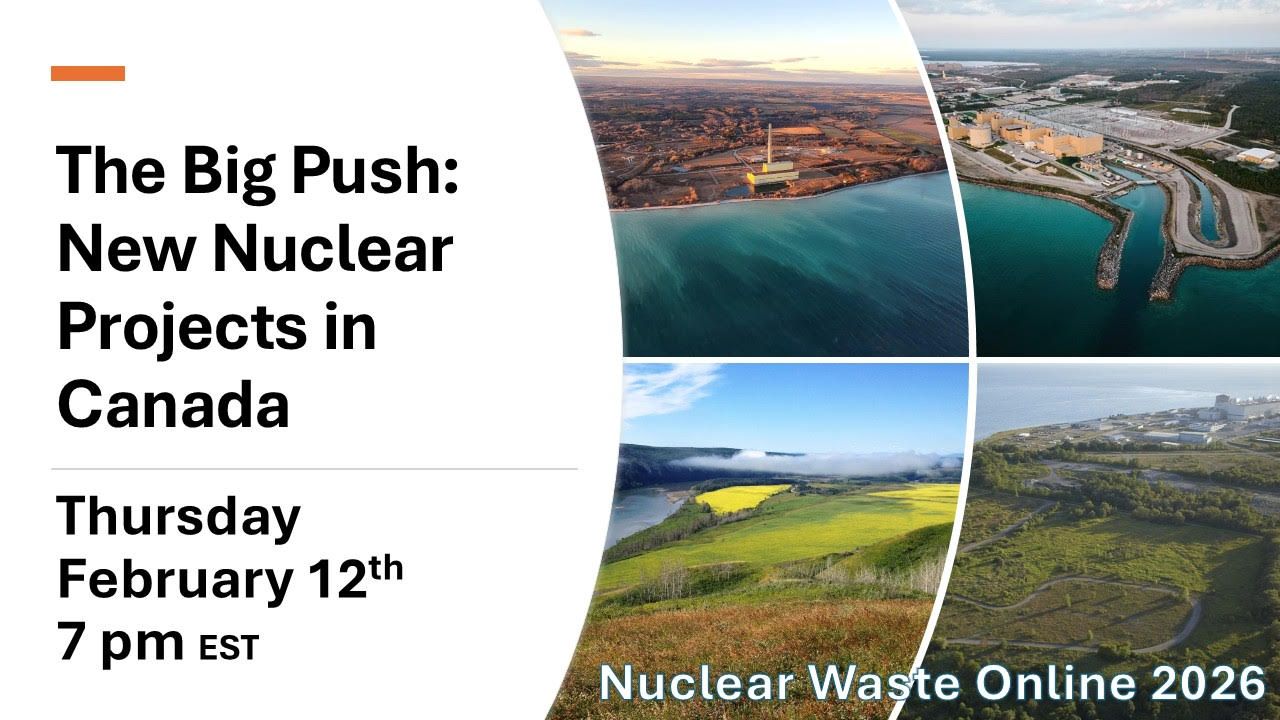
Thursday, February 12, 7 pm Eastern | 2nd of 4 sessions in the 2026 Nuclear Waste Online webinar series
Join a webinar on the push for new nuclear generation in Canada. Go to Northwatch.org to register or use the registration link https://us02web.zoom.us/webinar/register/WN_ZfWOf1GITqSRIZX8CB-A9w

-
Archives
- February 2026 (127)
- January 2026 (308)
- December 2025 (358)
- November 2025 (359)
- October 2025 (376)
- September 2025 (258)
- August 2025 (319)
- July 2025 (230)
- June 2025 (348)
- May 2025 (261)
- April 2025 (305)
- March 2025 (319)
-
Categories
- 1
- 1 NUCLEAR ISSUES
- business and costs
- climate change
- culture and arts
- ENERGY
- environment
- health
- history
- indigenous issues
- Legal
- marketing of nuclear
- media
- opposition to nuclear
- PERSONAL STORIES
- politics
- politics international
- Religion and ethics
- safety
- secrets,lies and civil liberties
- spinbuster
- technology
- Uranium
- wastes
- weapons and war
- Women
- 2 WORLD
- ACTION
- AFRICA
- Atrocities
- AUSTRALIA
- Christina's notes
- Christina's themes
- culture and arts
- Events
- Fuk 2022
- Fuk 2023
- Fukushima 2017
- Fukushima 2018
- fukushima 2019
- Fukushima 2020
- Fukushima 2021
- general
- global warming
- Humour (God we need it)
- Nuclear
- RARE EARTHS
- Reference
- resources – print
- Resources -audiovicual
- Weekly Newsletter
- World
- World Nuclear
- YouTube
-
RSS
Entries RSS
Comments RSS
 nuclear-news