Hurricane Matthew could endanger Florida’s nuclear reactors
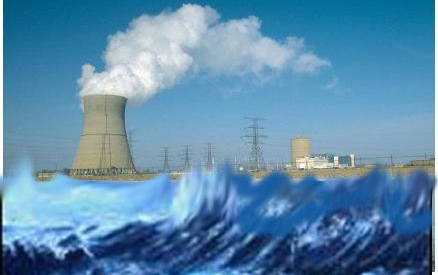 What if Hurricane Matthew Hits Florida’s Nuclear Reactors?, Clean Energy Footprints, October 5th, 2016 Hurricane Matthew has already caused devastation in Haiti and elsewhere in the Caribbean. Tracking this dangerous storm’s path, which Bloomberg reported as a “$15 billion threat,” as it moves towards Florida, Georgia, the Carolinas and potentially up the Eastern seaboard is proving difficult. But despite unclear predictions, communities are wisely mobilizing and calling for evacuations (or are already in the process of doing so) and/or declaring states of emergency.
Extreme weather events have widespread ramifications on our electricity systems. A Department of Energy review of responses to Hurricanes Irene and Sandy from nuclear reactors in the Northeast highlighted a number of strategies to protect the reactors. According to the Department of Energy, “Some reactors were shut as a precaution to protect equipment from the storm; others were forced to shut down or reduce power output due to damage to plant facilities or transmission infrastructure serving the plant; and still others were forced to reduce power output due to reduced power demand caused by widespread utility customer outages.”
Two nuclear power plants exist on Florida’s eastern coast: the St. Lucie and Turkey Point facilities. Based on the current National Hurricane Center projections, it appears that Hurricane Matthew will come closest to the St. Lucie nuclear facility early Friday morning. Storm surge near the St. Lucie nuclear reactors may reach 2-5 feet, and with hurricane force winds of 130 miles per hour. Meanwhile, a significant water quality problem in the Southeast is the ongoing pollution at Florida Power and Light’s (FPL) Turkey Point cooling canal system. It’s unclear what effects high winds and storm surge could have on Turkey Point’s open air industrial sewer.
After flooding caused a nuclear meltdown at the Fukushima Daiichi nuclear reactor in Japan, the Miami News Times published an article, “Five reasons Turkey Point could be the next nuclear disaster.” The article noted: “Just like in Japan, Turkey Point is susceptible to a meltdown caused by a natural disaster. A hurricane-spurred tidal surge from Turkey Point’s neighboring Biscayne Bay could create catastrophic conditions identical to those in Japan. With power down, the plant would be forced to rely on emergency diesel generators to pump water to cool the reactors….those generators would ‘certainly’ become inundated with water from the tidal surge, causing them to drown and fail.” (Southern Alliance for Clean Energy and Tropical Audubon with Friends of the Everglades filed a lawsuit this summer to resolve the pollution problem caused by Turkey Point.)……….http://blog.cleanenergy.org/2016/10/05/nuclearhurricanematthew/
Climate change could bring megadroughts to California
Looming megadroughts in western US would make current drought look minor. Warming temperatures and uncertain rainfall mean if more isn’t done to slow climate change, droughts lasting 35 years could blight western states, study says, Guardian, Oliver Milman, 8 Oct 16, The harsh drought currently gripping California may appear trivial in the future as new research shows that the south-west US faces the looming threat of “megadroughts” that last for decades.
California is in its sixth year of drought, which was barely dented by rains brought by the El Niño climate event and sparked a range of water restrictions in the state. But warming temperatures and uncertain rainfall mean that if more isn’t done to slow climate change, droughts lasting 35 years are likely to blight western states by the end of the century, according to the study, published in Science Advances.

Such a megadrought would impose “unprecedented stress on the limited water resources” of the parched US south-west, researchers found, bringing conditions similar to the 1930s dustbowl to California, Nevada, New Mexico, Colorado and Utah – but over a lengthier period.
Using a combination of temperature and precipitation models, the study predicts a 70% chance of a megadrought by the end of the century, should rainfall levels remain the same, with a 90% chance of an elongated drought should rainfall decrease, as most climate models forecast.
“We can’t rule out there could be a 99.9% chance of a megadrought, which makes it virtually certain,” said Toby Ault, a scientist at Cornell University and lead author of the study………
The new report does proffer a crumb of hope – if greenhouse gas emissions are radically cut then the risk of megadrought will reduce by half, giving a roughly 50:50 chance that a multi-decade stretch of below-average rainfall would occur this century.
But the research found that the emissions cuts would have to be far steeper than those agreed to by nations in Paris last year, where a 2C limit on warming was pledged……..https://www.theguardian.com/environment/2016/oct/05/climate-change-megadrought-california-global-warming
Climate change could become self perpetuating- danger in Indonesia’s peatlands, and fires
How the Earth will pay us back for our carbon emissions with … more carbon emissions, WP, The really scary thing about climate change is not that humans will fail to get their emissions under control. The really scary thing is that at some point, the Earth will take over and start adding even more emissions on its own.
A new study underscores this risk by looking closely at Indonesia, which has a unique quality — some 70 billion of tons of carbon that have built up in peatlands over millennia. In this, Indonesia is much like the Arctic, where even larger quantities of ancient carbon are stored in permafrost, and are also vulnerable.
 In each case, if that carbon gets out of the land and into the atmosphere, then global warming will get worse. But global warming could itself up the odds of such massive carbon release. That’s a dangerous position to be in as the world continues to warm.
In the new study in Geophysical Research Letters, a team of researchers led by Yi Yin of the French Laboratoire des Sciences du Climat et de l’Environnement look at the potential of peat bogs in equatorial Asia — a region that includes Malaysia, Papua New Guinea and several other smaller countries but is dominated by Indonesia and its largest islands, Borneo and Sumatra — to worsen our climate problems. It’s timely, considering that last year amid El Niño-induced drought conditions Indonesian blazes emitted over 1.5 billion tons of carbon dioxide equivalents into the atmosphere. That’s more than the annual emissions of Japan (or, needless to say, of Indonesia’s fossil fuel burning).
And the research finds that over the course of this century, that could keep happening. “The strong nonlinear relationship found between fire emissions and cumulative water deficit suggests a high future risk of peat carbon loss due to fire given that future climate projections indicate a twofold increase in the frequency of extreme El Niño,” the researchers write.
The situation arises because of the unique qualities of peat: In peat bogs, wetlands accumulate large amounts of organic matter — dead plant life — over many, many years. If those bogs are then drained, and fires are allowed to burn on them and deep into them, then it is possible to light up huge stores of ancient carbon and to put it back in the atmosphere much more rapidly than the speed at which it accumulated originally……..https://www.washingtonpost.com/news/energy-environment/wp/2016/10/03/there-are-our-carbon-emissions-and-then-there-are-the-ones-the-earth-will-punish-us-with/?utm_term=.b93ac1c3bb66
Much higher methane emissions from fossil fuels – previously were underestimated
 Fossil fuel industry’s methane emissions far higher than thought https://www.theguardian.com/environment/2016/oct/05/fossil-fuel-industrys-methane-emissions-far-higher-than-thought
Emissions of the powerful greenhouse gas from coal, oil and gas are up to 60% greater than previously estimated, meaning current climate prediction models should be revised, research shows, Guardian, Adam Vaughan, 6 Oct 16, The fossil fuel industry’s emissions of a powerful greenhouse gas are dramatically higher than previously thought.
Researchers who pulled together the biggest database yet of worldwide methane emissions found that, after natural sources were discounted, emissions from gas, oil and coal production were 20-60% greater than existing estimates.
Methane makes up just 16% of global greenhouse gases and is shorter-lived than the CO2 which accounts for three quarters, but has a much more powerful warming effect.
The extra methane estimated by the study is 300 times larger than the amount leaked in California’s Aliso Canyon last year, which was the worst gas leak in US history. While bad news for efforts to tackle climate change, the new study published in Nature also found that methane emissions had fallen as a fraction of industry’s production.
Lead author Stefan Schwietzke, of the University of Colorado and US science agency Noaa, said that methane from fossil fuels had played a significant role in global warming, but the gas’s short lifetime meant acting on it now could pay quick dividends.
“The good news is that reducing methane emissions now will reduce climate forcing in only a few years – it takes much longer for CO2. And since fossil fuel methane emissions are higher than previously thought, the potential to reduce climate forcing from this specific source is also greater,” he told the Guardian.
Experts said the study meant scientists should reconsider their climate models. “Emissions scenarios currently used for climate prediction need to be reassessed taking into account revised values for anthropogenic methane emissions,” wrote Dr Grant Allen of the University of Manchester in a commentary in Nature.
Other studies have suggested the huge growth in the US shale gas industry is to blame for a spike in methane emissions since the mid-noughties. But the new work found methane emissions from natural gas production had declined as a fraction of production from 8% in the mid-1980s to around 2% in the late 2000s and early 2010s.
“There has been anecdotal evidence for a while that the oil and gas industry improved their efficiency. Our data confirms this anecdotal evidence on a global scale,” said Schwietzke.
Methane emissions have been rising since the industrial revolution but paused between 1996 and 2006 – believed by some to be because of decreased fossil fuel emissions in former Soviet Union countries – before marching upwards again. Most is from natural sources, such as wetlands and geological seepage, but humanity’s share is estimated to account for 30-45% of the total.
The study published on Wednesday examined the isotopic “fingerprints” of methane sources, compiling thousands of measurements from public sources and peer-reviewed papers. Allen said it was the largest database of its kind.
Schwietzke said that such models on methane were very sensitive to the data that informed them. “A key message is that the number and comprehensiveness of measurements matter.”
Next month, Paris climate agreement will enter into force
 PARIS AGREEMENT TO ENTER INTO FORCE IN A MONTH Historic climate treaty passes both thresholds The Climate Group 6 Oct 16 LONDON: Today, the Paris Agreement has officially passed the necessary threshold to begin the process for its official entry into force – meaning the Agreement will officially enter into force globally in a month’s time. In doing so, it will become the first comprehensive climate agreement that commits all countries to taking climate action with the goal of keeping global warming “well below” the 2 degrees Celsius limit.
“Much like the adoption of the Paris Agreement itself in December last year, the entry into force of the treaty is a truly historic moment,” comments Damian Ryan, acting CEO, The Climate Group. “Few international agreements have entered into force at such speed and arguably none have been so important to our common future as the Paris Agreement.
“The decision by many world leaders to act quickly and boldly over the past 10 months is to be applauded. Thanks should also go to the business leaders as well as politicians in state and regional governments whose actions and policies, such as committing to 100% renewable power, have helped create the momentum and political belief that a better, safer and more prosperous world can be created through bold climate action.”
A LONG JOURNEY
The first paragraph of article 21 in the Agreement states that it will enter into force on the thirtieth day after the date on which it passes its twin thresholds – namely, when at least 55 parties to the UNFCCC, accounting for at least 55% of global greenhouse gas emissions, have deposited their instruments of ratification, acceptance, approval or accession with the UN. Or in less technical terms, when more than half of the world has ratified the climate deal.
In April, 175 political leaders signed the Agreement in a record-breaking signing ceremony organized in New York. The event built on the climate momentum generated by Paris, but many underlined that signing was just the first step of a much longer journey: there was still the more complicated ratification process, where countries discuss the issue internally and then formally commit to the agreement with a document presented to the UN.
However, just last month, US and China – the two biggest emitters in the world, accounting for about 40% of global carbon emissions – officially ratified the Paris climate agreement, spurring an unstoppable momentum toward the goal of 55% of world’s emissions. Last Sunday, India – the world’s fourth biggest emitter, responsible for 4% of emissions – also ratified the climate deal.
“This is a momentous occasion,” said UN Secretary-General Ban Ki-moon. “What once seemed unthinkable, is now unstoppable. Strong international support for the Paris Agreement entering into force is a testament to the urgency for action, and reflects the consensus of governments that robust global cooperation, grounded in national action, is essential to meet the climate challenge.”
Patricia Espinosa, Executive Secretary of the UN Framework Convention on Climate Change, commented: “Above all, entry into force bodes well for the urgent, accelerated implementation of climate action that is now needed to realize a better, more secure world and to support also the realization of the Sustainable Development Goals.”
The Paris Agreement will entry into force on November 4, just before the Conference of the Parties in Marrakech (COP22), where political leaders will discuss how to implement the ambitious goals set in Paris………https://www.theclimategroup.org/news/paris-agreement-enter-force-month
In USA, Republicans are rejecting reality on climate change – Pew survey
Pew survey: Republicans are rejecting reality on climate change
Only 48% of Americans – and 15% of conservative Republicans – realize that humans are causing global warming, Guardian, Dana Nuccitelli, 6 Oct 16, Climate scientists have 95% confidence that humans are the main cause of global warming over the past six decades. Their best estimate attributes 100% of global warming since 1950 to human activities. 90 to 100% of climate scientists and their research agree on this. Human-caused global warming is as settled as science gets.
Yet most Americans don’t realize it. Moreover, the more conservative a person’s ideology, the less likely they are to accept this scientific reality or to trust the scientific experts.
According to a new Pew Research Center poll, just 48% of Americans realize that the Earth is warming mostly due to human activity. Highlighting a vast partisan reality gap, 79% of liberal Democrats and just 15% of conservative Republicans answer the question correctly………https://www.theguardian.com/environment/climate-consensus-97-per-cent/2016/oct/06/pew-survey-republicans-are-rejecting-reality-on-climate-change
New Zealand moves ahead to ratify Paris climate agreement
NZ takes final step on historic climate change agreement, NZ Herald, Oct 6, 2016 New Zealand has fast-tracked ratification of the Paris Agreement, getting in just before the threshold which brings the historic climate change agreement into force.
New Zealand’s ambassador in New York, Gerard van Bohemen, was to take the formal step to ratify the agreement at the United Nations overnight.
Climate Change Minister Paula Bennett said it was earlier than anticipated but had been fast-tracked with support of Opposition parties.
That was done to beat the European Union and ensure New Zealand was one of the countries to ratify before the threshold at which the agreement will come into force.
To come into force, at least 55 countries accounting for at least 55 per cent of total global greenhouse gas emissions have to ratify it.
Bennett said the European Union was initially not expected to ratify until next year, but had now moved to do so within the next week. The EU’s entry would push it over the 55 per cent of emissions required.
As a result New Zealand moved its own date forward from November when it had aimed to ratify in time for the next major climate change summit in Marrakesh.
“That means we are part of the first tranche. It is as much symbolic as anything else, to be part of that first tranche. But there have been noises that the ’55-club’ may be able to sit in different committees that are deciding accounting processes round forestry and international trading and that sort of thing.”
As of Tuesday night, 62 of the 191 countries to have signed the Paris Agreement had ratified, accounting for 51.89 per cent of total global greenhouse gas emissions.
They included major emitting countries such as China, the United States, India and Brazil……….http://www.nzherald.co.nz/environment/news/article.cfm?c_id=39&objectid=11722496
Thinking about limiting greenhouse emissions to 1.5C limit, and ‘negative emissions’
How to Think About 1.5 Degrees https://theconversation.com/how-to-think-about-1-5-degrees-66412 Professor of Public Ethics, Centre For Applied Philosophy & Public Ethics (CAPPE), Charles Sturt University October 3, 2016 Astonishment was universal last December when the Paris Agreement on climate change included the aspiration to limit warming to 1.5 degrees above pre-industrial levels, a much tougher target than the standard of 2 degrees, now seen as too risky.
It was a remarkable triumph for a long campaign by the small island states, proving that even tiny nations, armed with a powerful moral case, can change the world.
But what does a global aim of 1.5 degrees mean? Is it achievable? How much difference would it make? A conference at the University of Oxford two weeks ago brought together leading scientists to begin to answer these questions.
No one can give firm answers, but some surprising observations emerged at the conference. One thing is clear: given the vast quantity of carbon dioxide already in the atmosphere, with more still to come, limiting warming to 1.5 degrees will require ‘negative emissions’.
Negative emissions technologies aim to draw carbon dioxide out of the atmosphere and store it safely. Some proposed technologies include machines that extract carbon dioxide from the air, concentrate it and then somehow (the answers are vague) store it. At a scale to make a significant difference, a huge infrastructure of carbon-sucking machines, concentrating equipment and pipelines would need to be built.
The most commonly mentioned method of negative emissions entails generating electricity by burning biomass – mainly crop waste, wood waste, and crops grown for the purpose – capturing the carbon dioxide from the emissions and storing them underground.
It’s estimated that to make a substantial difference to global warming huge expanses of land would have to be given over to growing biomass crops. This risks depriving poor people of food crops and destroying ecosystems as swathes of land are converted to growing biomass for energy.
So here is the first troubling prospect. Although warming of only 1.5 degrees would result in much less harm to the climate than 2 degrees, it’s possible that the ecological damage caused by the negative emissions projects needed to get there may exceed the benefits, at least for some. The ecosystem costs of the emission reduction pathways may outweigh the benefits of lower warming.
So while the overall goal of climate negotiations is to avoid ‘dangerous climate change’, perhaps it needs to be changed so that the goal becomes to ‘minimize dangerous change to the Earth System as a whole’, a dramatic shift in how we think about the issue.
It must begin soon
For a 1.5-degree goal, large-scale negative emissions activity would need to begin soon, before 2030, and expand rapidly, so that by 2050 or sooner the amount of carbon sucked out of the atmosphere would have to exceed the amount emitted into it from fossil fuel burning.
No one is confident it can be done. Some suggest that when the Intergovernmental Panel on Climate Change has included negative emissions in its future emissions scenarios it is not much more than a ‘fudge factor’ to make the 2 degrees limit seem possible.
Apart from the cost, the biggest obstacle to negative emissions technologies is what to do with the captured carbon. Although it’s fairly easy to extract carbon dioxide from the air, no one has yet come up with a feasible and economic way of storing billions of tonnes of it. It must be done safely and it must stay there for thousands of years, without leaking out.
Some years ago governments became excited at the idea of pumping it into geological formations, but pilot projects around the world have been abandoned because they ran into technical problems and cost blowouts. Now it’s thought that storing carbon dioxide underground on a large scale is decades away.
Overshooting
The world has already warmed by 1 degree and momentum in the climate system will almost certainly see the world reach 1.5 degrees, perhaps as early as 2030. So if our goal is to limit warming to 1.5 degrees there will be an ‘overshoot’, taking warming to at least 2 and perhaps 3 degrees, before the average global temperature can be brought back down.
Here is the second troubling possibility. If the world warms by 2 or more degrees will feedback effects kick in – such as unstoppable melting of the Siberian permafrost, which could send more greenhouse gases into the atmosphere, making it virtually impossible to stabilize warming at 2 degrees, let alone 1.5.
And if we could overshoot and return to 1.5 degrees, would ecosystems and vulnerable plant and animal species be able to survive the period of perhaps three or four or five decades of overshoot. Scientists hope that ecosystems possess ‘temporary resilience’ during the overshoot period so that they can bounce back when cooler conditions return.
Equally troubling, for those creatures and ecosystems that do manage to adapt to an environment 2 or 3 degrees warmer, could they cope in a cooling environment as the global temperature is wound back to 1.5 degrees?
When the nations of the world in Paris adopted the 1.5 degree aspiration the politicians were well ahead of the scientists. Now the scientists are scrambling to catch up.
This article was first published by Scientific American.
Climate denialists fiddle on, as scientists sound the alarm on climate change
Scientists Sound Alarm on Climate but US Still Toys With Skepticism Monday, 03 October 2016 By Dahr Jamail, Truthout Every month, after I finish writing this climate dispatch, I think that this is the most dire, intense, mind-bending, heartbreaking dispatch I have written to date. And every month, for the more than two years that I’ve been writing them, I am correct.
During the morning I was finishing this dispatch, I conducted an interview with Mike Loso, a physical scientist with the National Park Service (NPS), about ice loss in several US national parks. “We as park rangers are tasked with managing and protecting what is in our National Parks, to protect it so it will be there for future generations,” he told me. “But the glaciers are going away, and we can’t stop climate change. So if the Park Service can’t stop the change, we at least have to bear witness to it.”
The information he provided, which will be used in future writings, caused my heart to feel 50 pounds heavier.
To see more stories like this, visit “Planet or Profit?”
When we finished the interview, all I could do was go outside, stand still, and gaze at the trees. I called a friend and shared some of it with him, and he listened. “Thank you for bearing witness with your dispatches, and for holding all of this information,” he told me.
The news about how rapidly the planet is changing only continues to accelerate in both frequency and intensity, and it’s all for the negative……….
Things have become dire enough that 375 National Academy of Sciences members, (including 30 Nobel Prize winners), frustrated with the ongoing political inaction towards anthropogenic climate disruption (ACD), signed an open letter warning of the “real, serious, immediate” climate threat.
Richard Betts, the head of climate impacts research at the UK meteorological office’s (Met Office) Hadley Centre recently stated that the planet is already two-thirds of the way to the 1.5C benchmark, [the politically agreed upon goal of the upper limit of global temperature increase that is allowable before extreme climate disruption impacts ensue] and could begin to pass it in about a decade.
And the alarm bells continue to ring………..
Meanwhile, the tangible signs of warming abound, all around the planet.
Although the Southern Hemisphere is still technically in its winter season, in early September, temperatures across the Antarctic Peninsula and areas of Western Antarctica reached levels of 15 to 23 degrees Celsius (27-40 degrees Fahrenheit) above normal, with the Larsen C ice shelf experiencing thawing temperatures during winter.
Yes, you read that correctly. Parts of Antarctica are melting during the winter.
Scientists are also now closely monitoring a key ocean current in the North Atlantic to find out if rising seawater temperatures and increasing freshwater from melting ice are combining to alter the “ocean conveyor belt,” which they describe as “a vast oceanic stream that plays a major role in the global climate system.” In their own words, they are studying “how climate change could jam the world’s ocean circulation.”……
Is this how life in our ACD-driven world will be, going forward? How much unpredictability can our planet and its inhabitants take?
Earth Soils around the planet are soaking up far less carbon than we previously believed……..
Water As usual, much is happening in the water realm, when it comes to ACD……..
……..rising oceans are not simply a thing of the future: Noticeable sea level rise has already begun.
In the US, one only need look towards Virginia, Florida and Louisiana, among other places, to see that warnings about sea level rise are not theoretical; it is already causing flooding on a daily basis.
Looking west, sea level rise is now causing increasing numbers of people to move off of the Marshall Islands.
The same can be said for most of the population of the atoll of Takuu, which is in the Bougainville region of Papua New Guinea. Ten years ago, 600 people lived on the atoll. Now there are only 50, and sea level rise is a large part of the reason why.
Lastly, a disconcerting report from Australian Geographic cites two recent studies showing that life in the oceans is diminishing so rapidly that they are literally going quiet, since diminishing nutrients and increasing ocean acidification (driven largely by ACD) are killing off sea life.
Air In addition to the global temperature records mentioned above, another interesting study was published last month about ACD-related atmospheric changes……….
Fire In addition to wildfires burning more often, hotter, and with greater frequency around the planet as ACD advances, a recent report showed that there is an alarming increase of fires across the Brazilian Amazon………
Denial and Reality As usual, there is plenty of material from the ACD-denial camp for this dispatch………
Thankfully, the number of people and organizations recognizing ACD’s reality far outweighs the deniers.
Joining a growing handful of other states, Washington State recently adopted a new rule to limit greenhouse gas emissions from large carbon polluters. The change covers fuel distributors, power plants, oil refineries, pulp and paper mills, and other industries.
A recent report from the US military has called ACD a “significant and direct” threat. More than a dozen retired military and national security officials signed a statementsaying that “climate change presents a strategically significant risk to US national security, and inaction is not a viable option.”
Similarly, a recently released US government report stated that ACD is going to get worse. “The impacts of climate change on national security are only going to grow,” Dr. John Holdren, director of the White House Office of Science and Technology Policy, said of the report. The report noted that over the next 20 years, ACD will pose an increasing security challenge, due to the heightening of social and political tensions which will threaten the stability of some countries and cause increasing risks to human health. The report also said that extreme weather events already have dire implications for humanity, which “suggest that climate-change related disruptions are well underway.”………
it is more important than ever that we see it clearly, so as to make more informed decisions about how we live our lives during this key time. http://www.truth-out.org/news/item/37833-scientists-sound-alarm-on-climate-but-us-still-toys-with-skepticism
European Union to ratify Paris climate agreement
 EU ministers are expected to ratify the agreement, along with India and Cananda, next week meaning enough countries will have signed up for the deal to come into legal force, Guardian, Arthur Neslen, 1 Oct 16, EU ministers have agreed to ratify the landmark Paris climate agreement at an extraordinary summit in Brussels on Friday, all but guaranteeing that it will pass a legal threshold to take effect next week and sparing the bloc’s blushes in the process.
The European Parliament is expected to rubber stamp the decision in Strasbourg next Tuesday, allowing the EU to sign off on it as soon as the following day.
The EU’s president, Jean-Claude Juncker said: “Today, the EU’s member states decided to make history together and bring closer the entry into force of the first ever universally binding climate change agreement. We must and we can hand over to future generations a world that is more stable, a healthier planet, fairer societies and more prosperous economies.
“This is not a dream. This is a reality and it is within our reach. Today we are closer to it.”
The Paris pact to limit global warming to “well below 2C” will enter into force 30 days after 55 countries, accounting for 55% of the planet’s emissions hand their ratification papers to the offices of Ban Ki-Moon in New York.
India is expected to ratify the deal over the weekend, with Canada next week also likely to join the 61 countries that have so far signed up. The EU’s added weight should then tip the treaty into effect……..
One spectre haunting the summit though was the prospect of a victory for the climate-sceptic Republican candidate, Donald Trump, in US elections later this year.
EU sources say that the bloc would aim to stick to its climate commitments if that happened. One told the Guardian: “It can’t be indefinite but our initial reaction would be to try to lead others in anticipation that this was a temporary aberration in US politics and that common sense would prevail, whether in four years time or sooner.”
Europe’s own intentions have been clouded for some by resistance from coal-dependant Poland to any review of the EU’s existing climate pledge in 2018. In the Paris deal, this is seen as an opportunity to scale up ambitions towards a 1.5C target.
The EU has not proposed any new climate actions in line with a 1.5C goal, but new legislation on renewables and energy efficiency is expected later this year, to help meet Europe’s existing climate pledges……..
everal EU countries have formaly signed off on the Paris deal to date, including France, Germany, Hungary, Slovakia, Portugal and Austria.
Theresa May has promised to ratify the agreement by the end of this year. https://www.theguardian.com/environment/2016/sep/30/eu-gives-green-light-to-activate-paris-climate-deal
Looming Trade Deals Threaten Efforts to Keep Fossil Fuels in the Ground
 Is Toxic Trade in Your Backyard? https://www.sierraclub.org/trade/mapping-isds [excellent interactive map]
Looming Trade Deals Threaten Efforts to Keep Fossil Fuels in the Ground
If passed by Congress, two pending U.S. trade deals – the Trans-Pacific Partnership (TPP) and the Transatlantic Trade and Investment Partnership (TTIP) – would give some of the world’s largest fossil fuel corporations broad new rights to challenge our climate protections in private tribunals. For the first time, these corporations could ask unaccountable panels of corporate lawyers to order U.S. government compensation if such protections interfered with their widespread fossil fuel projects.
This interactive map shows more than 400 of these polluting projects across 48 states, each of which would get extraordinary protections under the TPP or TTIP. This includes:
- More than 300 polluting facilities, including over 70 coal mines, 30 oil refineries, and more than 100 gas power plants;
- Tens of thousands of miles of fossil fuel pipelines and oil trains;
- More than 10.8 million acres of oil and gas drilling leases; and
- Fracking operations from California to Pennsylvania.
Click on a fossil fuel project for more information on the corporations that could use these trade deals to try to prevent, or gain compensation for, U.S. efforts to keep fossil fuels in the ground. Using satellite view, zoom in to see pictures of the polluting projects in your backyard. For a full explanation of this new climate threat, click here for Sierra Club’s “Climate Roadblocks” report.
Global warming will impact most people who are alive today
Most people alive today set to witness dangerous global warming in their lifetime, scientists warn
Average temperature could rise to two degrees Celsius above the norm by 2050 or ‘even sooner’, Independent, UK, Ian Johnston Environment Correspondent 30 September 2016 The world could hit two degrees Celsius of warming – the point at which many scientists believe climate change will become dangerous – as early as 2050, a group of leading experts has warned.
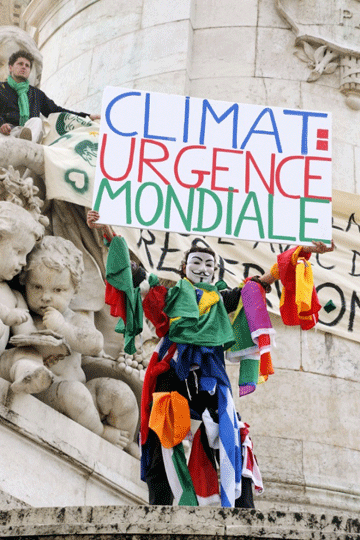
In a report called The Truth About Climate Change, they said many people seemed to think of global warming as “abstract, distant and even controversial”.
But the planet is now heating up “much faster” than anticipated, said Professor Sir Robert Watson, a former chair of the Intergovernmental Panel on Climate Change and one of the authors of the report.
If their analysis is correct, it means the majority of people alive today will experience what it is like to live on a dangerously overheated planet. At the Paris Climate Summit last year, world leaders agreed to try to limit global warming to as close to 1.5C above pre-industrial levels as possible – amid concerns the 2C target may not be safe enough.
But in the same year the level of warming reached 1C after an astonishing 0.15C rise in just three years.
Droughts, floods, wildfires and storms are all set to increase as the world warms, threatening crops and causing the extinction of species. The new report warned the 1.5C target had “almost certainly already been missed”.
Even if all the pledges to cut emissions made by countries at Paris are fulfilled, the average temperature is set to reach that level in the early 2030s and then 2C by 2050, they said. Professor Watson, a chemist who has worked for Nasa, the World Bank, the US president and now at the renowned Tyndall Centre for Climate Change Research in Norwich, said: “Climate change is happening now and much faster than anticipated.
“While the Paris Agreement on Climate Change is an important step in the right direction, what is needed is a doubling or tripling of efforts. “Without additional efforts by all major emitters, the 2C target could be reached even sooner.”
The report said an extra 0.4 to 0.5C of warming was expected to take place because of greenhouse gases that have already been emitted due to the slow response of the ocean and atmosphere.
The report said that full implementation of the pledges made at Paris would require wealthy countries to give a total of $100bn a year – as promised at the summit – to poor countries to help them transition to a zero-carbon economy.
“About 80 per cent of the pledges are subject to the condition that financial and technological support is available from developed countries,” Professor Watson said.
“These conditions may not be met, which means that these pledges may not be realized.”……….http://www.independent.co.uk/environment/global-warming-truth-about-climate-change-dangerous-2c-a7337871.html?utm_source=Daily+Carbon+Briefing&utm_campaign=be1cc22710-cb_daily&utm_medium=email&utm_term=0_876aab4fd7-be1cc22710-303473869
The consequences of a nuclear war between India and Pakistan
What happens if India and Pakistan both fire nuclear warheads at each other? http://www.thenewsminute.com/article/what-happens-if-india-and-pakistan-both-fire-nuclear-warheads-each-other-50604
If India and Pakistan fought a war detonating 100 nuclear warheads (around half of their combined arsenal), each equivalent to a 15-kiloton Hiroshima bomb, more than 21 million people will be directly killed, about half the world’s protective ozone layer would be destroyed, and a “nuclear winter” would cripple monsoons and agriculture worldwide.
As the Indian Army considers armed options, and a Bharatiya Janata Party (BJP) MP urges a nuclear attack, even as the Pakistan Defence Minister threatens to “annihilate” India in return, the following projections, made by researchers from three US universities in 2007, are a reminder of the costs of nuclear war.
According to the study by researchers from Rutgers University, University of Colorado-Boulder and University of California, Los Angeles, about 21 million people – half the death toll of World War II – would perish within the first week from blast effects, burns and acute radiation in India and Pakistan.
This death toll would be 2,221 times the number of civilians and security forces killed by terrorists in India over nine years to 2015, according to an IndiaSpend analysis of South Asia Terrorism Portal data.
Another two billion people worldwide would face risks of severe starvation due to the climatic effects of the nuclear-weapon use in the subcontinent, according to a 2013 assessment by the International Physicians for the Prevention of Nuclear War, a global federation of physicians. Continue reading
Risk of war in Africa escalates with rising temperatures
In 2016 atmospheric carbon dioxide will pass 400 parts per million.
 The World Passes 400 PPM Threshold. Permanently, [good graph and animation] Climate Central, By Brian Kahn September 27th, 2016 In the centuries to come, history books will likely look back on September 2016 as a major milestone for the world’s climate. At a time when atmospheric carbon dioxide is usually at its minimum, the monthly value failed to drop below 400 parts per million.
That all but ensures that 2016 will be the year that carbon dioxide officially passed the symbolic 400 ppm mark, never to return below it in our lifetimes, according to scientists.
Because carbon pollution has been increasing since the start of the Industrial Revolution and has shown no signs of abating, it was more a question of “when” rather than “if” we would cross this threshold. The inevitability doesn’t make it any less significant, though.
September is usually the month when carbon dioxide is at its lowest after a summer of plants growing and sucking it up in the northern hemisphere. As fall wears on, those plants lose their leaves, which in turn decompose, releasing the stored carbon dioxide back into the atmosphere. At Mauna Loa Observatory, the world’s marquee site for monitoring carbon dioxide, there are signs that the process has begun but levels have remained above 400 ppm.
Since the industrial revolution, humans have been altering this process by adding more carbon dioxide to the atmosphere than plants can take up. That’s driven carbon dioxide levels higher and with it, global temperatures, along with a host of other climate change impacts.
“Is it possible that October 2016 will yield a lower monthly value than September and dip below 400 ppm? Almost impossible,” Ralph Keeling, the scientist who runs the Scripps Institute for Oceanography’s carbon dioxide monitoring program, wrote in a blog post. “Brief excursions toward lower values are still possible, but it already seems safe to conclude that we won’t be seeing a monthly value below 400 ppm this year – or ever again for the indefinite future.”
We may get a day or two reprieve in the next month, similar to August when Tropical Storm Madeline blew by Hawaii and knocked carbon dioxide below 400 ppm for a day. But otherwise, we’re living in a 400 ppm world. Even if the world stopped emitting carbon dioxide tomorrow, what has already put in the atmosphere will linger for many decades to come…….http://www.climatecentral.org/news/world-passes-400-ppm-threshold-permanently-20738
1 This Month





PLEASE OPPOSE HR 8255 AND S.3639 – bills would accelerate satellite deployment, with no environmental review or safeguards – https://ncstd5li.quorum.us/campaign/169331/
To see nuclear-related stories in greater depth and intensity – go to https://nuclearinformation.wordpress.com
-
Archives
- October 2026 (10)
- September 2026 (339)
- August 2026 (330)
- July 2026 (355)
- June 2026 (287)
- May 2026 (306)
- April 2026 (356)
- March 2026 (251)
- February 2026 (267)
- January 2026 (308)
- December 2025 (358)
- November 2025 (359)
-
Categories
- 1
- 1 NUCLEAR ISSUES
- business and costs
- climate change
- culture and arts
- ENERGY
- environment
- health
- history
- indigenous issues
- Legal
- marketing of nuclear
- media
- opposition to nuclear
- PERSONAL STORIES
- politics
- politics international
- Religion and ethics
- safety
- secrets,lies and civil liberties
- spinbuster
- technology
- Uranium
- wastes
- weapons and war
- Women
- 2 WORLD
- ACTION
- AFRICA
- Atrocities
- AUSTRALIA
- Christina's notes
- Christina's themes
- culture and arts
- Events
- Fuk 2022
- Fuk 2023
- Fukushima 2017
- Fukushima 2018
- fukushima 2019
- Fukushima 2020
- Fukushima 2021
- general
- global warming
- Humour (God we need it)
- Nuclear
- RARE EARTHS
- Reference
- resources – print
- Resources -audiovicual
- Weekly Newsletter
- World
- World Nuclear
- YouTube
-
RSS
Entries RSS
Comments RSS

