“Aspiration” rather than a genuine plan now for limiting global warming to 2 degrees
 Limiting global warming to 2 degrees now ‘aspirational’: scientists, https://www.theage.com.au/environment/climate-change/limiting-global-warming-to-2-degrees-now-aspirational-scientists-20180604-p4zjeb.htmlThe Age, By Peter Hannam, The chance of limiting human-induced global warming to less than 2 degrees is rapidly disappearing as carbon emissions again ramp up in China while reductions in the US and elsewhere stall, scientists say.
Data from the CSIRO’s Global Carbon Project indicates greenhouse gas emissions in China accelerated to 1.5 per cent growth last year. China is now responsible for about a third of the world’s carbon emissions.
“That was quite significant growth for China because we had seen almost three years of little or no increase,” the project’s director, Pep Canadell, told Fairfax Media.
Early indications are that 2018 could see an even larger rise, with China’s carbon emissions in the first quarter jumping 4 per cent alone, according to a Greenpeace analysis.
2017’s increase was partly caused by a revival of China’s reliance on heavy industrial growth to prop up the economy, and a drop in hydro electric generation amid poor rainfall, Dr Canadell said. This year’s growth, though, is also being spurred by a pick-up in the global economy.
Given China’s emissions are roughly double the next largest polluter – the US – and triple the European Union’s, its acceleration means there is a fast-diminishing chance that the rise in global average temperatures can be restricted to the range of 1.5 to 2 degrees, as agreed at the 2015 Paris climate conference.
“Most climate scientists think 2 degrees [compared with pre-industrial levels] to be aspirational,” said Andy Pitman, director of the ARC Centre of Excellence for Climate Extremes.
Even if emissions ceased globally, it is probable warming would still reach at least 1.5 degrees given the longevity of carbon-dioxide and other heat-trapping gases in the atmosphere, he said.
With increasing evidence of extreme weather events even at the roughly 1 degree of warming so far – including compounding risks of bushfires, heatwaves and droughts – societies can expect impacts to worsen, Professor Pitman said: “The notion that 1.5 degrees is somehow safe is totally incompatible with the evidence.”
‘Not a pretty picture’
News in recent days that the Trump administration plans to bolster the ailing US coal-fired power industry by intervening in markets would worsen the global emissions picture.
The CSIRO’s Dr Canadell said while US carbon emissions had fallen for a decade, last year’s decline will likely be much smaller because of quickening economic growth at home and abroad.
The European Union, too, was likely to register a slower emissions drop. Australia, meanwhile, is on course to increase its carbon pollution for a fourth year in a row, a “remarkable” result for a rich nation, he said.
Bruce Nilles, a former head of the Sierra Club’s “Beyond Coal” campaign, who is visiting Australia, said President Trump’s “brazen efforts” to help coal in US would likely be stymied by a flurry of lawsuits from other energy suppliers.
The US had seen 266 coal-fired power plants shut or set closure dates since 2010, and these “were continuing at the same rate as during the last few years of the Obama administration”, he said.
Filling the gap were more than 10,000 megawatts of new wind and solar capacity each year, a process likely to continue as their technology becomes even cheaper, Mr Nilles said.
Wildfire season has already begun close to Hanford nuclear reservation
 Wildfire Season Starts Off With A Bang At Hanford https://www.opb.org/news/article/northwest-wildfire-season-2018-hanford-nuclear-reservation/ by Anna King June 5, 2018 Firefighters scrambled Sunday night at the Hanford nuclear reservation to corral a 2,800-acre wildfire. Hanford officials said the wildfire started Sunday evening.
The fire, which was put out by midnight, was likely started by lightning and driven by blustery winds. It didn’t burn any buildings at Hanford or any areas where radioactive waste is stored.
Still, Hanford spokespeople said the fire is a good wakeup that the fire season has started in earnest. They’re concerned about tall dried grasses and brush from last year’s wet conditions — and this year’s drier conditions.
Hanford workers have been clearing firebreaks along highways that run through the 586-square-mile reservation.
Last summer, there were two large fires that burned across the Hanford Reach National Monument, BLM, state and private ground near the desert nuclear reservation. The East Saddle Mountain Fire was 17,465 acres and the Silver Dollar Fire burned 30,909 acres.
Stopping coal and nuclear retirements is a priority for President Trump
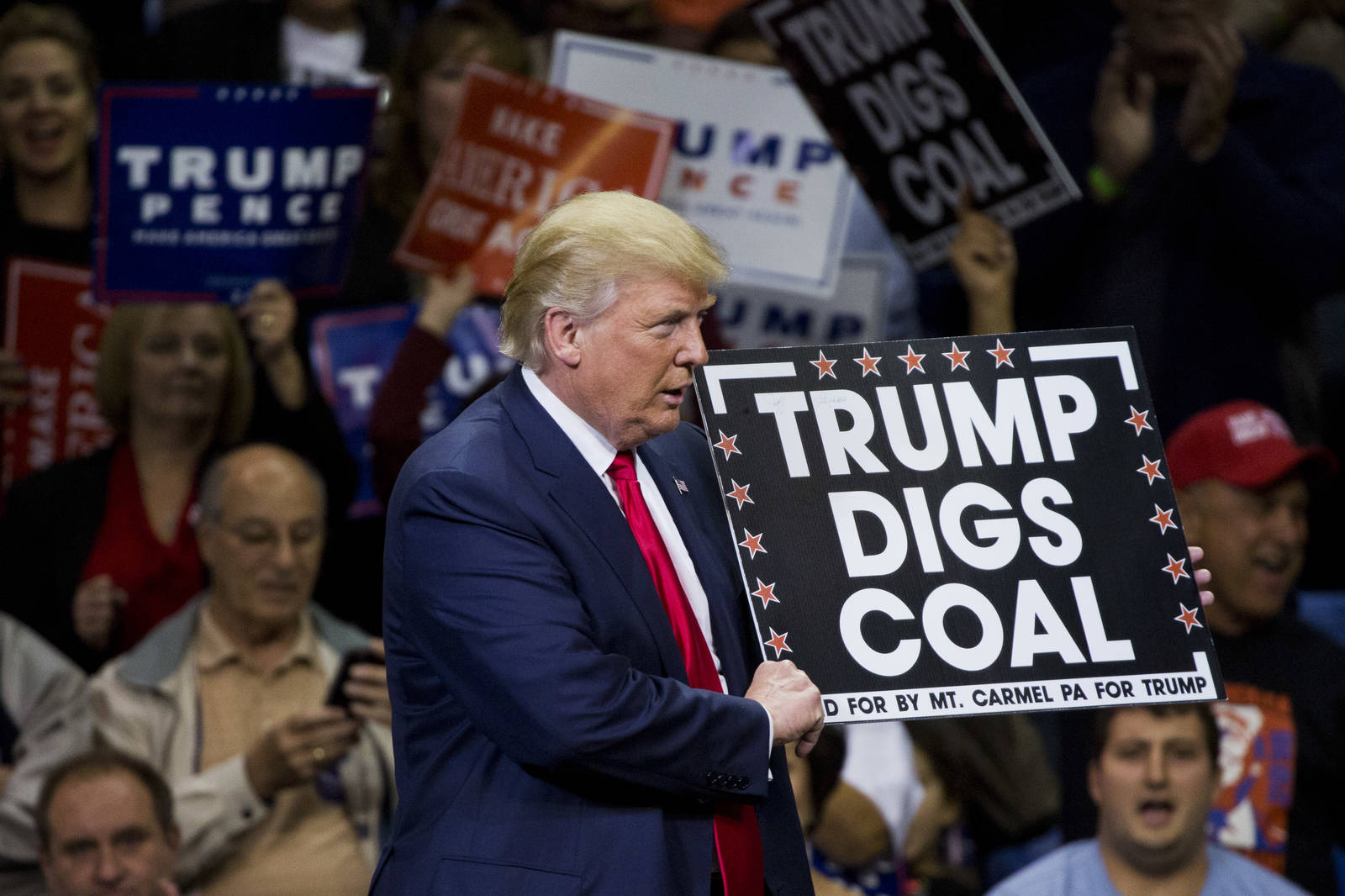 NRDC 1st June 2018 The Trump Administration has made no secret of its desire to prop up coal
and nuclear plants for political purposes and today the White House made it abundantly clear. At the same time, a leaked draft memo unveiled last night repackages a previously rejected idea to bail out coal and nuclear plants, this time arguing that they are needed to protect national security.
The memo proposes that the U.S. Department of Energy (DOE) issue an order requiring electricity grid operators to purchase, for two years, electricity from expensive and uncompetitive coal and nuclear facilities that would otherwise retire. Neither the White House nor DOE have owned up to the memo or its contents.
But White House Press Secretary Sarah Huckabee Sanders stated today that stopping coal and nuclear retirements remains a priority for President Trump, and that he has directed DOE Secretary Rick Perry “to prepare immediate steps to stop the loss of these resources, and looks forward to his recommendations.”
https://www.nrdc.org/experts/john-moore/coal-and-nuclear-bailout-memo-recycled-idea-new-hat
USA government to use Emergency Measures to prop up coal and nuclear industries
Trump orders Energy Secretary Perry to halt shutdown of coal and nuclear plants, https://www.washingtonpost.com/business/economy/trump-officials-preparing-to-use-cold-war-emergency-powers-to-protect-coal-and-nuclear-plants/2018/06/01/230f0778-65a9-11e8-a69c-b944de66d9e7_story.html?utm_term=.5abb572447d6, By Steven Mufson Email the author 1 June 18, President Trump on Friday ordered Energy Secretary Rick Perry to halt the shutdown of ailing coal and nuclear power plants that he said were needed to maintain the nation’s energy mix, grid resilience and national security.
“Unfortunately, impending retirements of fuel-secure power facilities are leading to a rapid depletion of a critical part of our nation’s energy mix, and impacting the resilience of our power grid,” the White House said in a statement.
The Trump administration has been preparing to invoke emergency powers granted under Cold War-era legislation to order regional grid operators to buy electricity from ailing coal and nuclear power plants. There have been meetings this week at the Cabinet deputies’ level and at the National Security Council.
One likely plan, laid out in a 41-page draft memorandum posted online by Bloomberg News and Utility Dive, would favor certain power plants in the name of national security. Those plants are owned by some of the president’s political allies in the coal industry.
According to the draft memo, the Energy Department would exercise its emergency authority to order grid operators to give preference to plants “that have a secure on-site fuel supply” and that “are essential to support the Nation’s defense facilities, critical energy infrastructure, and other critical infrastructure.” Only coal and nuclear plants regularly keep fuel on site.
The Energy Department would also establish a “Strategic Electric Generation Reserve.” The memo added that “federal action is necessary to stop the further premature retirements of fuel-secure generation capacity.” The emergency rules would be a “prudent stopgap measure” that would last two years while the Energy Department did further study.
“President Trump believes in total energy independence and dominance, and that keeping America’s energy grid and infrastructure strong and secure protects our national security, public safety and economy from intentional attacks and natural disasters,” the White House said.
The idea of declaring an emergency under the Defense Production Act of 1950 (used by President Harry S. Truman for the steel industry) and Section 202 of the Federal Power Act has been promoted by the chief executives of the coal-mining firm Murray Energy and the Ohio utility FirstEnergy, both of whom have contributed heavily to Trump’s political activities.
Robert Murray presented a proposal to Energy Secretary Rick Perry in March 2017, the month Perry took office. And on April 2 of this year, FirstEnergy appealed for emergency help after a subsidiary operating ailing power plants filed for bankruptcy protection.
The Federal Energy Regulatory Commission, an independent agency, unanimously rejected an earlier proposal by the Energy Department that would have favored coal and nuclear plants.
In a recent appearance at a Washington Post Live event, FERC Chairman Kevin McIntyre said that using the emergency powers was “perhaps not the most obvious fit.”
He said using that section of the Federal Power Act “tees off the concept of continuance of a war in which the United States is involved as being kind of the baseline circumstance that would justify a DOE order to certain types of facilities to either begin operating or continue operation.”
Environmental groups, natural-gas producers, and Republicans and Democrats who have pushed for greater competition in electricity markets all condemned the latest signal that the administration might be moving closer to imposing the Energy Department’s plan.
They noted that the coal and nuclear power plants that would benefit have failed to compete against natural gas, solar and wind. Many of the plants have operated far longer than anticipated when they were built.
“Uneconomic, dirty coal plants retiring does not represent a national security risk,” Michael Panfil, director of federal energy policy and senior attorney with the Environmental Defense Fund, wrote on his blog. “If Trump chooses to bail out these failing coal plants, he’ll be forcing Americans to pay for dirty energy that pollutes our environment and makes people sick.”
Katie Bays of Height Capital Markets, an investment research firm, wrote in a commentary: “If DOE proceeds as the memo suggests, a selection of coal and nuclear plants, ostensibly those at risk of retirement, would receive subsidized payments . . . under a stitched-together ‘Frankenstein’s monster’ of federal authorities. Above all, the subsidy would be a major victory for FirstEnergy as it negotiates with bondholders over the value of coal and nuclear plants owned by its bankrupt FirstEnergy Solutions subsidiary.”
FirstEnergy’s top lobbyist last year was Jeff Miller, who was campaign manager for the presidential campaign of Perry, now energy secretary. Trump attended a private dinner with Miller and a handful of political advisers in early April.
The unequal impacts of climate change on regions and peoples
 Climate change won’t heat the planet equally, Bulletin of the Atomic Scientists, By Thomas Gaulkin, 1 June 18
“…..In places closer to the equator that usually see only slight variations in temperature, the consequences of global warming are likely to be far more extreme. The outsize vulnerability of the world’s poorest people to damaging effects of climate change like droughts and floods is well established. It’s harder for people to overcome disasters in regions without the resources and infrastructure that are plentiful in wealthier parts of the world.
Now, a new study published in Geophysical Research Letters adds insult to injury. By mapping economic and social development to climate models’ “signal-to-noise ratio”—which compares normal local temperature fluctuation (noise) to overall increases to average local temperatures (signal)—the authors determined that the poorest populations on the planet will experience more perceptible climate change than the richest. In other words, in places with already fragile social and ecological systems, climate change won’t just be harder to deal with, it will actually be more noticeable, and worse.
Not to be outdone, climate researchers at Oxford University offered their own insults this week. Analyzing vehicle use in Scotland, they concluded that top-down efforts to transition society to electric vehicles and phase out vehicle emissions aren’t enough. Without radical changes to lifestyles and increased demand for less harmful transportation systems, the authors say, there’s no chance of hitting the targets set in the Paris climate agreement. …https://thebulletin.org/climate-change-wont-heat-planet-equally11865
Japanese Buddhist priest joins movement to divest from fossil fuels and nuclear power
Lions Roar, BY HALEIGH ATWOOD|
International governments now realising that waves of climate refugees will be happening

The Coming Wave of Climate Displacement https://www.project-syndicate.org/commentary/climate-change-global-compacts-migration-refugees-by-kumi-naidoo-2018-05,
Not since 1951 has the international community produced a treaty to protect the legal status of the world’s refugees. Now, two agreements are currently under discussion at the United Nations, and each offers a rare opportunity to protect global migrants from the biggest source of displacement today.
Earth’s climate would increase by 4 °C, compared to pre-industrial levels, before the end of 21st century.
 Earth’s climate to increase by 4 degrees by 2084 https://www.eurekalert.org/pub_releases/2018-05/ioap-ect052318.php INSTITUTE OF ATMOSPHERIC PHYSICS, CHINESE ACADEMY OF SCIENCES
A collaborative research team from China has published a new analysis that shows the Earth’s climate would increase by 4 °C, compared to pre-industrial levels, before the end of 21st century.
To understand the severity of this, consider the Paris Agreement (https://unfccc.int/process/the-paris-agreement/what-is-the-paris-agreement) of the United Nations. It’s a global effort to prevent an increase of 2°C. Nearly every country on the planet–the United States is the only country to withdraw–has agreed to work to prevent the catastrophic effects of two degrees of warming.
The researchers published their analysis projecting a doubling of that increase in Advances in Atmospheric Sciences (https://link.springer.com/article/10.1007/s00376-018-7160-4 ) on May 18, 2018.
“A great many record-breaking heat events, heavy floods, and extreme droughts would occur if global warming crosses the 4 °C level, with respect to the preindustrial period,” said Dabang Jiang, a senior researcher at the Institute of Atmospheric Physics of the Chinese Academy of Sciences. “The temperature increase would cause severe threats to ecosystems, human systems, and associated societies and economies.”
In the analysis, Jiang and his team used the parameters of scenario in which there was no mitigation of rising greenhouse gas emissions. They compared 39 coordinated climate model experiments from the fifth phase of the Coupled Model Intercomparison Project (https://www.wcrp-climate.org/wgcm-cmip), which develops and reviews climate models to ensure the most accurate climate simulations possible.
They found that most of the models projected an increase of 4°C as early as 2064 and as late as 2095 in the 21st century, with 2084 appearing as the median year.
This increase translates to more annual and seasonal warming over land than over the ocean, with significant warming in the Arctic. The variability of temperature throughout one year would be lower in the tropics and higher in polar regions, while precipitation would most likely increase in the Arctic and in the Pacific. These are the same effects that would occur under 1.5°C or 2°C increases, but more severe.
“Such comparisons between the three levels of global warming imply that global and regional climate will undergo greater changes if higher levels of global warming are crossed in the 21st century,” wrote Jiang.
The researchers continue to investigate the changes associated with 4°C of global warming in extreme climates.
“Our ultimate goal is to provide a comprehensive picture of the mean and extreme climate changes associated with higher levels of global warming based on state-of-the art climate models, which is of high interest to the decision-makers and the public,” said Jiang.
Researchers from the Chinese Academy of Sciences Center for Excellence in Tibetan Plateau Earth Sciences, the Collaborative Innovation Center on Forecast and Evaluation of Meteorological Disasters at the Nanjing University of Information Science & Technology, the Joint Laboratory for Climate and Environmental Change at Chengdu University of Information Technology, and the University of Chinese Academy of Sciences contributed to this study.
This work was supported by the National Basic Research Program of China and the National Natural Science Foundation of China.
Climate change and the dramatic plunge in insect numbers
 Climate change on track to cause major insect wipeout, scientists warn
Insects are vital to ecosystems but will lose almost half their habitat under current climate projections , Guardian, Damian CarringtonEnvironment editor@dpcarrington Fri 18 May 2018
However, if climate change could be limited to a temperature rise of 1.5C – the very ambitious goal included in the global Paris agreement – the losses of insects are far lower.
The new research is the most comprehensive to date, analysing the impact of different levels of climate change on the ranges of 115,000 species. It found plants are also heavily affected but that mammals and birds, which can more easily migrate as climate changes, suffered less.
“We showed insects are the most sensitive group,” said Prof Rachel Warren, at the University of East Anglia, who led the new work. “They are important because ecosystems cannot function without insects. They play an absolutely critical role in the food chain.”
“The disruption to our ecosystems if we were to lose that high proportion of our insects would be extremely far-reaching and widespread,” she said. “People should be concerned – humans depend on ecosystems functioning.” Pollination, fertile soils, clean water and more all depend on healthy ecosystems, Warren said.
In October, scientists warned of “ecological Armageddon” after discovering that the number of flying insects had plunged by three-quarters in the past 25 years in Germany and very likely elsewhere……..https://www.theguardian.com/environment/2018/may/17/climate-change-on-track-to-cause-major-insect-wipeout-scientists-warn
Worst-case climate change scenario could be more extreme than thought, scientists warn
Economic growth could prompt greater greenhouse gas emissions than previously forecast, study says, Independent UK Harry Cockburn , 18 May 18
Scientists may have to recalibrate their projections of what a “worst case” climate change scenario is, as new studies take into account greater global economic growth than previously forecast.
Climate scientists forecasting how the earth’s climate will change over time examine trends in greenhouse gas emissions, which are largely dependent on how the global economy behaves. As countries get richer, the amount they consume goes up, and so too do greenhouse gas emissions.
Scientists use four scenarios called representative concentration pathways (RCPs) that attempt to depict possible futures for our planet.
Global 2 degrees C rise doubles population exposed to multiple climate risks compared to 1.5 degrees C
INTERNATIONAL INSTITUTE FOR APPLIED SYSTEMS ANALYSIS EUREKALERT, 16 MAY 18
New research identifying climate vulnerability hotspots has found that the number of people affected by multiple climate change risks could double if the global temperature rises by 2°C, compared to a rise of 1.5°C.
The team, led by IIASA Energy Program researcher Edward Byers, investigated the overlap between multiple climate change risks and socioeconomic development to identify the vulnerability hotspots if the global mean temperature should rise by 1.5°C, 2°C and 3°C by 2050, compared to the pre-industrial baseline. Since those in poverty are much more vulnerable to climate change impacts, knowing where and how many vulnerable people are at high risk is therefore important for creating policies to mitigate the situation.
The researchers from IIASA, Global Environment Facility (GEF), the United Nations Industrial Development Organization (UNIDO), the University of Oxford, and the University of Washington, developed 14 impact indicators in three main sectors – water, energy, and food & environment – using a variety of computer models. The indicators include a water stress index, water supply seasonality, clean cooking access, heat stress events, habitat degradation, and crop yield changes. They compared the potential risks at the three global temperatures and in a range of socioeconomic pathways, to compare more equitable, sustainable development with pathways characterized by development failures and high inequality……..https://www.eurekalert.org/pub_releases/2018-05/iifa-g2r051518.php
Air conditioning units – electricity guzzlers – a threatening contribution to climate change
FT 15th May 2018 , The spread of air-conditioning in hot countries is set to create a huge
increase in demand for electricity, threatening efforts to curb greenhouse
gas emissions, according to the International Energy Agency, the watchdog
backed by consuming countries. Over the next 30 years, air-conditioning
could increase global demand for electricity by the entire capacity of the
US, the EU and Japan combined, unless there are significant improvements in
the efficiency of the equipment, the IEA warned. In a report released on
Tuesday, the agency urged governments to use regulations and incentives to
improve the efficiency of air-conditioning units, to avoid a surge in
demand that could put strains on energy supplies and increase greenhouse
gas emissions.
https://www.ft.com/content/6c062996-582c-11e8-bdb7-f6677d2e1ce8
India’s dust storms intensified by climate change
Climate change could be intensifying dust storms in India, experts say, Mongabay, by Mayank Aggarwal on 14 May 2018 In the past couple of weeks, severe dust storms, thunderstorms and lightning have hit several parts of India, resulting in the deaths of more than 150 people and injuries to at least 300 others.
With the rise in global temperatures, the intensity of dust and thunderstorms is expected to increase in the future, experts say.
But even though dust storms and thunderstorms are a common feature in India, there has been no focused work on studying the trends related to it.
India could witness an increase in the severity and frequency of dust storms and thunderstorms due to rising global temperatures, experts say.
“[The] intensity of sandstorms is increasing across the world,” said Chandra Bhushan, deputy director general at the Centre for Science and Environment (CSE), a Delhi-based think tank. He cited studies from the U.S. Midwest, the Middle East and the Sahara, all of them linking the phenomenon to sudden increases in surface temperature.
“All of them are saying that as the climate gets warmer the temperature gradient is going to become very steep. This steep increase in temperature gradient will lead to two things — heat waves and sand storms,” Bhushan said.
“There is enough research happening [to predict] that the intensity of sandstorms is going to become more intense as the temperature increases further. It is indeed linked to climate change.”
On May 2, severe dust storms, thunderstorms and lightning hit several parts of India, resulting in the deaths of at least 124 people and injuries to 300 others. More than 10,000 utility poles and hundreds of power transformers were damaged, while farmers suffered losses to their cattle and poultry stocks. Similarly, on May 13, fierce dust and thunderstorms led to the deaths of some 40 people, while several others were injured.
Bhushan said the enormity of losses from dust storms was shocking, but that they would only become more intense in the future. With higher global temperatures, he said, the soil would become drier. That will result in an increase in the amount of dust carried by the wind, and consequently the intensity of dust storms.
“Climate change is intensifying all extreme weather events,” Bhushan said…….https://news.mongabay.com/2018/05/climate-change-could-be-intensifying-dust-storms-in-india-experts-say/
UN climate talks suspended until September
BBC 10th May 2018 , UN talks have been officially suspended as countries failed to resolve
differences about implementing the Paris climate agreement. The
negotiations will resume in Bangkok in September where an extra week’s
meeting has now been scheduled . Delegates struggled with the complexity of
agreeing a rulebook for the Paris climate pact that will come into force in
2020. Rows between rich and poor re-emerged over finance and cutting
carbon. Overall progress at this meeting has been very slow, with some
countries such as China looking to re-negotiate aspects of the Paris deal.
http://www.bbc.co.uk/news/science-environment-44074352
Trump cannot formally pull out of Paris climate deal until 2020 – he has no future plan
“No follow up” from Trump over staying in climate pact-UN by Reuters, 9 May 2018 The rules of the Paris Agreement mean that Trump cannot formally pull out before November 2020, around the time of the next U.S. presidential election
* UN’s Espinosa asked Washington for conditions for staying
* Says still hopes U.S. may stay in Paris pact
* Nearly 200 nations working on ‘rule book’ for 2015 pact
By Environment Correspondent Alister Doyle BONN, Germany, May 9 (Reuters) – U.S. President Donald Trump has yet to outline what changes he wants in a 2015 global climate agreement as the price for dropping his plan to quit, the United Nations’ climate chief said on Wednesday.
Patricia Espinosa said she had asked Washington for its demands after Trump announced last June that he planned to quit the landmark 2015 Paris Agreement, which aims to end the fossil fuel era this century with a shift to cleaner energies.
“There has not been a follow-up” from Washington, she told Reuters during negotiations in Bonn among almost 200 nations on a “rule book” for the 2015 agreement.
Espinosa, a former Mexican foreign minister who leads the U.N. Climate Change Secretariat, said she had stressed that the pact was flexible, allowing all countries to set their own targets for reducing greenhouse gas emissions.
“I would not like to see the U.S. leaving. I certainly hope there is a reconsideration of this decision,” she said of Trump’s plan to pull out.
Trump doubts the view of mainstream science that man-made greenhouse gases are raising global temperatures.
The rules of the Paris Agreement mean that Trump cannot formally pull out before November 2020, around the time of the next U.S. presidential election.
In announcing the U.S. withdrawal, Trump said Paris was a bad deal that would harm the U.S. economy, but added: “We will see if we can make a deal that’s fair. And if we can, that’s great. And if we can’t, that’s fine.”……..
The Bonn meeting, which ends on Thursday, is working on rules for the Paris Agreement due to be in place by the end of the year, such as how to measure and account for greenhouse gas emissions and climate finance for developing nations that is meant to reach $100 billion a year by 2020.
“A good set of rules … should be a way to give comfort and confidence to the concerns they (the United States) could have,” said Espinosa.
Asked if she would be happy for the United States to stay, while watering down deep cuts in emissions promised by former President Barack Obama, Espinosa said: “I think we should not choose between those two scenarios.” (Reporting By Alister Doyle Editing by Gareth Jones) http://news.trust.org/item/20180509154353-w3u79/
1 This Month
26 September – International Day for the Total Elimination of Nuclear Weapons





PLEASE OPPOSE HR 8255 AND S.3639 – bills would accelerate satellite deployment, with no environmental review or safeguards – https://ncstd5li.quorum.us/campaign/169331/
To see nuclear-related stories in greater depth and intensity – go to https://nuclearinformation.wordpress.com
-
Archives
- September 2026 (323)
- August 2026 (330)
- July 2026 (355)
- June 2026 (287)
- May 2026 (306)
- April 2026 (356)
- March 2026 (251)
- February 2026 (267)
- January 2026 (308)
- December 2025 (358)
- November 2025 (359)
- October 2025 (375)
-
Categories
- 1
- 1 NUCLEAR ISSUES
- business and costs
- climate change
- culture and arts
- ENERGY
- environment
- health
- history
- indigenous issues
- Legal
- marketing of nuclear
- media
- opposition to nuclear
- PERSONAL STORIES
- politics
- politics international
- Religion and ethics
- safety
- secrets,lies and civil liberties
- spinbuster
- technology
- Uranium
- wastes
- weapons and war
- Women
- 2 WORLD
- ACTION
- AFRICA
- Atrocities
- AUSTRALIA
- Christina's notes
- Christina's themes
- culture and arts
- Events
- Fuk 2022
- Fuk 2023
- Fukushima 2017
- Fukushima 2018
- fukushima 2019
- Fukushima 2020
- Fukushima 2021
- general
- global warming
- Humour (God we need it)
- Nuclear
- RARE EARTHS
- Reference
- resources – print
- Resources -audiovicual
- Weekly Newsletter
- World
- World Nuclear
- YouTube
-
RSS
Entries RSS
Comments RSS


JOHANNESBURG – Governments around the world are engaged in a series of talks that could fundamentally alter how the movement of people across borders is managed. One dialogue is focused on the protection of refugees; the other on migration.
These discussions, which are being led by the United Nations, will not re sult in legally binding agreements. But the talks themselves are a rare chance to forge consensus on contemporary migration challenges. And, most importantly, they will offer the international community an opportunity to plan for the impact of climate change, which will soon become a key driver of global displacement and migration
At last count, there were some 258 million migrants worldwide, with 22.5 million people registered as refugees by the UN Refugee Agency. These numbers will be dwarfed if even the most modest climate-related predictions are borne out. According to the International Organization for Migration, climate change could displace as many as one billion people by 2050. And yet no international treaty covers climate-induced migration – a gap that must be addressed now.
Not since 1951 have international standards for refugee protection received so much attention. That year, with more than 80 million people displaced after World War II, UN member countries ratified a comprehensive framework to standardize their treatment of refugees. The Global Compact on Refugees that is currently under discussion builds on this framework with strategies to empower refugees and assist host governments. Most significantly, it would commit signatories to protecting “those displaced by natural disasters and climate change.”
The second agreement is even more consequential for the management of climate-induced displacement. There has never been a global treaty governing migration, and past bilateral efforts have focused almost exclusively on violence and conflict as root causes of displacement. The proposed Global Compact for Migration goes beyond these factors, and notes that climate change is among the “adverse drivers and structural factors that compel people to leave their country of origin.”
This type of regulatory language reaffirms what at-risk populations around the world already know: droughts, natural disasters, desertification, crop failure, and many other environmental changes are upending livelihoods and rendering entire communities uninhabitable. In my country, South Africa, a record drought is forcing major cities to consider water rationing. If water shortages persist, migration is certain to follow.
Resource scarcity is particularly dangerous in politically unstable states, where climate change has already been linked to violent conflict and communal upheaval. For example, disputes over fertile land and fresh water fueled the war in Darfur, and even the current crisis in Syria – one of the greatest sources of human displacement today – began after successive droughtspushed Syrians from rural areas into cities. It is not a stretch to predict that climate change will produce more bloodshed in the coming years.
The two UN frameworks could serve as a basis for planning how to manage the coming climate-induced migrations. With scientific modeling to guide decision-making, states could draft orderly, dignified, and equitable relocation strategies. This is certainly a smarter approach than the ad hoc responses to date.
But history tells us that governments are reluctant to seek out collective solutions to forced migration. This failure is visible today in the haunting and inexcusable plight of refugees around the world.
As we enter the final months of the Compact talks, what should we expect of those negotiating the global plan for managing unprecedented movements of people? The causes and consequences of climate change demand close attention. Displaced people must be able to get on with their lives in dignity. The test of world leaders will be whether the global compacts on refugees and migrants can achieve this.