Impending Climate Catastrophe as World Warms
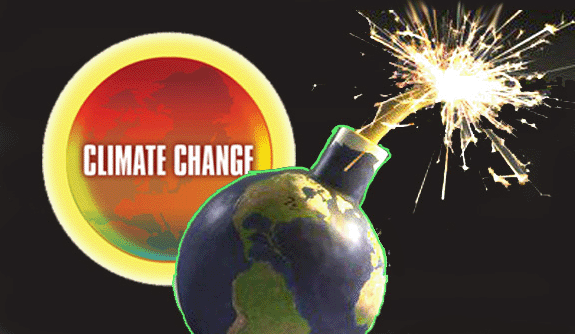
New UN Report Warns of Impending Catastrophe as World Warms, Glaciers Melt, DAHR JAMAIL, TRUTHOUT PART OF THE TRUTHOUT SERIES CLIMATE DISRUPTION DISPATCHES NOVEMBER 2, 2018
“One of the penalties of an ecological education is that one lives alone in a world of wounds. Much of the damage inflicted on land is quite invisible to laymen. An ecologist must either harden his shell and make believe that the consequences of science are none of his business, or he must be the doctor who sees the marks of death in a community that believes itself well and does not want to be told otherwise.” —Aldo Leopold, A Sand County Almanac
Meanwhile, the warnings that the catastrophe is already upon us continue.
A recent study in a paper published August 31 in the journal Science warned that for each degree of rise in global temperature, insect-driven losses to the staple crops of rice, wheat and corn increase by 10-25 percent. Given we are already at 1.1°C warming, we are already seeing these losses, which are sure to increase. “In 2016, the United Nations estimated that at least 815 million people worldwide don’t get enough to eat,” the University of Washington Press wrote of the study. “Corn, rice and wheat are staple crops for about 4 billion people, and account for about two-thirds of the food energy intake, according to the UN Food and Agriculture Organization.”
At the same time, scientists are deeply concerned about the fact that non-pest insect numbers are declining rapidly. Bees, moths, butterflies, ladybugs and other insects are far less abundant, and scientists around the world warn that these insects are crucial to as much as 80 percent of all the food we eat. “You have total ecosystem collapse if you lose your insects,” University of Delaware entomologist Doug Tallamy told the AP. “How much worse can it get than that?”
Meanwhile, in the realm of sea level rise, things are irreversibly catastrophic. A recent study of Antarctic ice sheets shows them to be far more sensitive to temperature increases than previously believed. The study showed that when global temperatures were only slightly warmer than they are currently, sea levels were 20-30 feet higher than they are right now. “It doesn’t need to be a very big warming, as long as it stays 2 degrees warmer for a sufficient time, this is the end game,” David Wilson, a geologist at Imperial College London and one of the authors of the new research told The Washington Post.
Equally disturbingly, lakes in the Arctic are literally bubbling and hissing: They are releasing methane in large quantities as the ground underneath them thaws. Methane is a greenhouse gas 100 times more potent than carbon dioxide on a 10-year timescale, and the widespread release of methane was a key driver of the Permian Mass Extinction event which annihilated more than 90 percent of life on Earth.
Meanwhile, the Arctic sea ice is melting rapidly. Ice extent reached its annual minimum recently, which is normally when the ice would begin reforming rapidly, particularly right in the middle of the Arctic Ocean. Instead, the ice continued to decline.
To underscore how governments are not doing enough to mitigate climate change impacts, Brazil, a major greenhouse gas emitting country, recently elected right-wing extremist Jair Bolsonaro as president. To say he is anti-environment (in addition to homophobic, racist and sexist) would be a gross understatement. Known as the Trump of the Tropics, his plans include disempowering federal environmental agencies, opening up Indigenous reserves in the Amazon to mining and farming, and building hydroelectric dams in the rainforest, where deforestation, already at crisis levels, is set to explode.
EarthImpacts of human-caused climate disruption across the terrestrial plane are becoming increasingly stark………
WaterAs usual, climate change-induced disruptions are glaringly apparent in the watery realms of Earth…….
Fire……A recent report discussed how wildfire tornadoes, record sizes and temperatures of wildfires, and other seeming anomalies will become phenomena we can expect regularly going into the future, thanks to climate change.
Air
Record-breaking warm temperatures beset Anchorage, Alaska, in September, along with unusually dry weather……..
Denial and Reality
In a recent interview, Donald Trump, who had called human-caused climate change “a Chinese hoax,” said it is real, “but I don’t know that it’s manmade.” He also said the climate will “change back again” — whatever that means…..https://truthout.org/articles/new-un-report-warns-of-impending-catastrophe-as-world-warms-glaciers-melt/
Climate change denialism- and the reality

New UN Report Warns of Impending Catastrophe as World Warms, Glaciers Melt, DAHR JAMAIL, TRUTHOUT PART OF THE TRUTHOUT SERIES CLIMATE DISRUPTION DISPATCHES NOVEMBER 2, 2018 “………….Denial and Reality
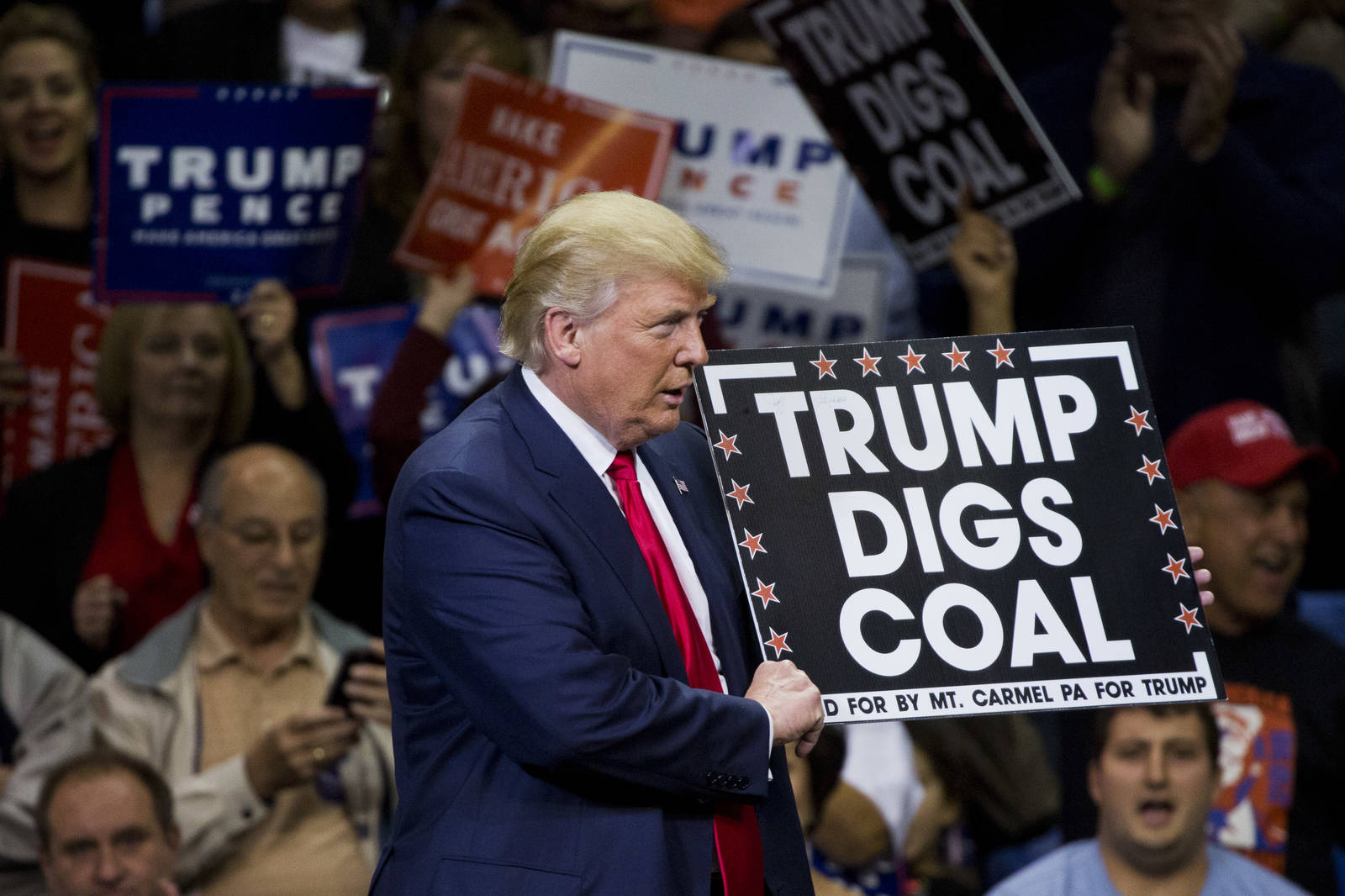 In a recent interview, Donald Trump, who had called human-caused climate change “a Chinese hoax,” said it is real, “but I don’t know that it’s manmade.” He also said the climate will “change back again” — whatever that means.Meanwhile, the ongoing denialism continues unabated in his administration. Climate change information was removed from an important planning document for a national park in New England, with the rationale that it was deemed a “sensitive” topic.
The North Carolina government did not like the science about sea level rise, so literally passed a law banning policies based on such forecasts. The state, of course, is still recovering from flooding from Hurricane Florence.
Meanwhile, Trump’s EPA has abandoned restrictions against hydrofluorocarbons, a chemical that has been linked to climate change. OPEC announced it is predicting a massive increase in oil production over the next five years — enough so that it will offset CO2 reductions from electric cars. On that note, it was recently exposed that the state of Texas, already the leading emitter of greenhouse gasses in the US, has approved 43 petrochemical projects along the Gulf Coast since 2012 — projects that add millions of tons more of greenhouse gas pollution.
Stunningly, despite the terrifying weather events and dire predictions of what’s to come, it has come to light that the Trump administration is aware of and accepts a projected 7-degree rise in global temperatures by just 2100. This came out in a draft statement issued by the National Highway Traffic Safety Administration, which was written to justify Trump’s decision to freeze federal fuel-efficiency standards for cars and trucks built after 2020. “The amazing thing they’re saying is human activities are going to lead to this rise of carbon dioxide that is disastrous for the environment and society,” Michael MacCracken, who served as a senior scientist at the US Global Change Research Program from 1993 to 2002 told The Washington Post. “And then they’re saying they’re not going to do anything about it.”
The Trump administration’s stance on climate change is essentially that we’re doomed, so what’s the point in cutting greenhouse gas emissions?
With regard to the alarming UN climate report, the White House basically shrugged it off, claiming that emissions in the US have dropped since 2005. This is a true statement, but does not explain the reason for that, which is a historic shift away from coal-fired electricity and toward renewables and natural gas.
Fortunately, reality is striking back.
A group of 17 bipartisan state governors representing states that comprise half of the total US GDP has vowed to both fight climate change and fight Donald Trump on the issue. They recently pledged $1.4 billion to support electric cars and institute new policies geared toward reducing greenhouse gas emissions.
Stunningly, even Bloomberg, a business news outlet, is running stories with titles like “New Climate Debate: How to Adapt to the End of the World.”
And of course, the language coming out of the UN is a sign that the international community is beginning to understand the full weight of climate change’s implication.
Alas, this realization has not yet been met with the policy response it deserves. The author of a key UN report on the dangers of breaching the 1.5°C global warming limit recently said that the world is “nowhere near on track” to keep warming below even that already arbitrary level.https://truthout.org/articles/new-un-report-warns-of-impending-catastrophe-as-world-warms-glaciers-melt/
The tide is turning against nuclear power, following the IPCC Report
 NuClear News, Nov 18 Tide Turns Against NuClear News, Nov 18 Tide Turns Against  Nuclear http://www.no2nuclearpower.org.uk/wp/wp-content/uploads/2018/10/NuClearNewsNo112.pdf Nuclear http://www.no2nuclearpower.org.uk/wp/wp-content/uploads/2018/10/NuClearNewsNo112.pdf
Following the recent National Infrastructure Assessment which advised the Government not to build more than two new nuclear stations (about 6GW) (1) and the Committee on Climate Change (CCC) statement that “If new nuclear projects were not to come forward, it is likely that renewables would be able to be deployed on shorter timescales and at lower cost,” (2) we have now seen the International Panel on Climate Change (IPCC) report making some pretty disparaging remarks about nuclear power. Perhaps the tide is finally turning. The IPCC latest findings tell a nightmarish tale—one much worse than in previous reports— surveying the climate-change impacts we’re already experiencing with one degree of warming, and the severity of the impacts to come once we surpass 1.5 degrees of warming. Ten million more people would be exposed to permanent inundation, and several hundred million more to “climate-related risks and susceptible to poverty.” Malaria and dengue fever will be more widespread, and crops like maize, rice, and wheat will have smaller and smaller yields— particularly in sub-Saharan Africa, Southeast Asia, and Central and South America. Security and economic growth will be that much more imperilled. “Robust scientific literature now shows that there are significant differences between 1.5 and 2 degrees,” Adelle Thomas, a geographer from the Bahamas and also one of the report’s lead authors, told the New Yorker. “The scientific consensus is really strong. It’s not just a political slogan: ‘1.5 to stay alive.’ It’s true.” (3) But the IPCC report points out that “the transition from the energy system that would be needed to limit global warming to 1.5 ° C is underway in many sectors and regions of the world. The technical, social, economic and political feasibility of solar energy, wind energy, and electricity storage technologies has improved considerably in recent years, while nuclear energy and Carbon dioxide (CCS) storage in the electricity sector did not show the same improvements.”
Nuclear: too weak, too slow, too expensive and too risky The IPCC report continues saying the timeframe between the date of decision and the commissioning of nuclear power plants is between 10 and 19 years, and current deployment capacity is slowed by public concern about the risk of accidents and problems with nuclear waste. In addition, the IPCC notes, that “the costs of nuclear energy have increased over time in some developed nations, mainly because of the prevailing conditions, where increased investment risks in high-capital-intensive technologies have become important.” The theoretical benefits that nuclear energy could bring in the fight against climate change are therefore far too weak, too slow, too expensive and too risky. While the IPCC report requires us to quickly reduce emissions, it is not possible to choose the slowest and most expensive electric generation technology to deploy, as well as the dirtiest and riskiest. Nuclear power is disqualified from the race of the climatic fight. (4)
The IPCC report also says: “In spite of the industry’s overall safety track record, a non-negligible risk for accidents in nuclear power plants and waste treatment facilities remains. The long-term storage of nuclear waste is a politically fraught subject, with no large-scale long-term storage operational worldwide. Negative impacts from upsteam uranium mining and milling are comparable to those of coal, hence replacing fossil fuel combustion by nuclear power would be neutral in that aspect. Increased occurrence of childhood leukaemia in populations living within 5 No2NuclearPower nuClear news No.112, November 2018 3 km of nuclear power plants was identified by some studies, even though a direct causal relation to ionizing radiation could not be established and other studies could not confirm any correlation”.
An April 2018 report from the International Renewable Energy Agency (IRENA) shows, renewable energy and energy efficiency can, in combination, provide over 90% of the necessary energy-related CO2 emission reductions the world needs. Furthermore, this can happen using technologies that are safe, reliable, affordable and widely available. While different paths can mitigate climate change, renewables and energy efficiency provide the optimal pathway to deliver most of the emission cuts needed at the necessary speed. But renewable energy will need to be scaled up at least six times faster for the world to meet the decarbonisation and climate mitigation goals set out in the Paris Agreement.
The total share of renewable energy must rise from around 18% of total final energy consumption (in 2015) to around two-thirds by 2050. Over the same period, the share of renewables in the power sector would increase from around one-quarter to 85%, mostly through growth in solar and wind power generation. The energy intensity of the global economy will have to fall by about two-thirds, lowering energy demand in 2050 to slightly less than 2015 levels. This is achievable, despite significant population and economic growth, by substantially improving energy efficiency, the report finds. (6)
So what is the UK Government doing? On 15th October the UK Government wrote a joint letter with the Welsh and Scottish governments to the Committee on Climate Change to seek updated advice on meeting the 1.5oC target. (7) Specifically, the governments asked the CCC to report on the date by which they should look to set a net zero target, as well as the range which UK greenhouse gas emissions reductions would need to be within, against 1990 levels, by 2050 as an appropriate contribution to the global goal of limiting global warming to “well below” 2oC above pre-industrial levels. It has also asked for the corresponding emissions range for a 1.5oC target. But the letter said carbon budgets already covering the period 2018-2032 were out of scope of the request.
The Intergovernmental Panel on Climate Change (IPCC) warned that limiting global warming to 1.5oC by the end of the century would require “rapid, far-reaching and unprecedented changes in all aspects of society”, and that the world is currently heading for a 3oC rise in temperature. (8) The exclusion of the period from 2018 – 2032 led to protests from green groups and the opposition. Labour’s Energy Spokesperson, Alan Whitehead, called on the government to strengthen its review of the UK’s long term carbon targets and allow the Committee on Climate Change (CCC) to assess whether existing near-term carbon targets are compatible with keeping temperature increases below 1.5C. CCC chief executive Chris Stark admitted he was surprised the letter explicitly stated that “carbon budgets already set in legislation (Carbon Budgets 3-5 covering 2018-2032) are out of scope of this request”. (9 The Scottish Government has now written separately to the CCC changing its position, and saying the previous request “should not therefore prevent you from advising on all of Scotland’s targets.” (10) No2NuclearPower nuClear news No.112, November 2018 4 Devastating Critique of UK policies on renewables Meanwhile the BBC’s File on Four programme aired an unprecedented critique of the UK government’s undermining of renewables. The government says it is committed to green energy – its recent ‘Clean Growth Strategy’ claims plans are in place to cut greenhouse gases by more than half of 1990 levels by 2030. And yet, research shows investment in green energy fell 56% last year, the biggest drop of any country – with policy change, subsidy cuts and ‘stop-start’ support from ministers being blamed. So, do Britain’s plans for a greener future add up? File on 4 takes to the road to find out. On a trip around the North East of England, Simon Cox asks why, when the offshore wind industry has grown, other cheap, renewable energies like onshore wind, solar power and now biofuels are struggling to survive. He examines whether changes in policy are hitting crucial investment, and if ambitious climate targets will really be met.
While offshore wind expands, it’s not the same story for onshore. Changes to planning laws mean it’s pretty impossible to build them in England and Wales. The CCC has warned of big gaps in the Government’s programme. We are going to need more onshore wind and solar to meet our targets. Gareth Miller of Cornwall Insight told the BBC that “to simply shut out the two undeniably cheapest technologies … from being built to their maximum capacity in the UK seems to be very, very strange indeed … There is a question of how serious the Government is when it says it wants to decarbonise the power sector at the lowest cost to the consumer in a world where they are currently shutting out the cheapest technologies to make that happen … I think we’ll see a significant slowdown if we haven’t already.”
In 2015 the tariff for generating solar electricity was slashed by two-thirds for homeowners and large solar farms. The domestic market has now gone back to the level it was at before the feedin tariff came in. A lot of very good companies have gone bust or shrunk. Next April the remaining tariff for exporting electricity to the grid will disappear – a further blow to investors in solar power – it will ruin the financial case for putting solar panels on your roof. It will be the final end of the domestic solar market in the UK. You are looking at thousands and thousands of job losses across the country. One recent survey found over 40% of UK solar installers are considering quitting the industry. To survive British companies have been forced to look overseas. Solar Century, for example, wouldn’t be able to survive if it was just reliant on the UK. Jeremy Leggett, founder of Solar Century says:
“If I needed any more persuading that we are dealing with hostile forces who basically over many years have taken every opportunity to set us back while promoting the cause of more expensive nuclear and more expensive shale gas then this is it … of all the things they have done to harm our industry over the years this is arguably the worst … the prize for the Government in a country desperate for jobs would have been to build a domestic industry – that is not going to happen because so many big British companies have been driven to bankruptcy.”
The opportunity to build a really healthy British solar industry has been lost. Dr Gem Woods from Imperial College says: “We now know that even what seemed like an impossibly stretching target of reducing our greenhouse gas emissions by 80% by 2050 is not going to be anything like good enough. And so we have to think very fast (and do very fast) about what sort of systems that we need to be deploying over the next 5, 10 and 20 years – not the next 50 years. At the moment we have locked ourselves into a set of processes that in my view are really delaying meaningful implementation of the types of technologies and systems that will allow us and our children to have any kind of meaningfully good future.”
|
Climate change, drought, and the migrant caravan
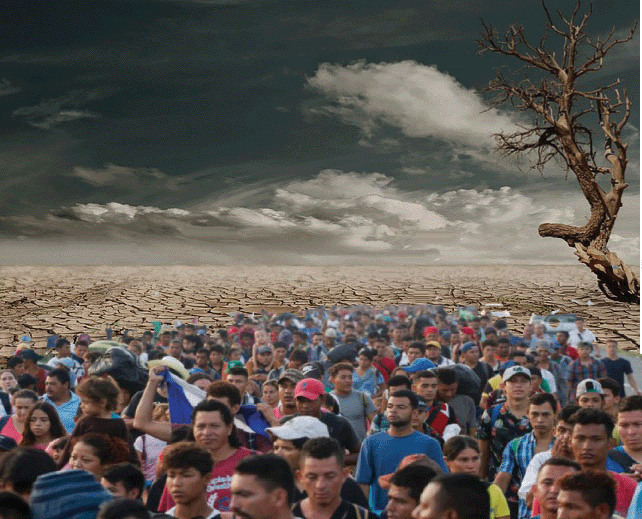
The Climate Implications of the Migrant Caravan, EcoWatch, Olivia Rosane, Oct. 29, 2018 The U.S. military will send as many as 5,000 troops to the country’s Southern border to meet thousands of refugees and migrants who are traveling north through Mexico from Central America, The Independent reported Monday.
Brazil’s new President – a danger to environment and to action against climate change
|
Brazil elects Bolsonaro, who has threatened Amazon and global climate efforts Climate Home News, 29/10/2018,
Rightwing president-elect has pledged to open the rainforest to farming and industry, while slashing environmental protections and democratic rights By Megan Darby Jair Bolsonaro is the next president of Brazil, sparking fears for the future of the Amazon rainforest and the global climate. In Sunday’s run-off, the right-winger won 55% of the vote, beating Fernando Haddad of the Workers’ Party. Bolsonaro has courted the mining and farming lobbies, pledging to roll back environmental protections and gut federal enforcement. Early in the campaign, he threatened to withdraw Brazil from the Paris Agreement, but backtracked last week after an outcry at home and abroad. Scientists have warned his proposed policies will send deforestation soaring, predicting clearances the size of the UK each year within a decade. That would make it “all but impossible” for Brazil to meet its climate commitments, four experts wrote in Mongabay. The authoritarian leader’s praise for dictatorship and hostile comments towards minorities and political activists have also raised concerns about democratic freedoms. ….. Bolsonaro’s victory is raising concerns abroad, including in Norway, a major funder of forest protection efforts in the Amazon. The Norwegian government rebuked the outgoing administration and slashed payments to the $1.1 billion Amazon Fund last year, over an uptick in deforestation rates. Under Bolsonaro, the Brazilian government is expected to be less amenable to international influence. In his comments on the Paris Agreement, the president-elect has expressed that his main concern is preserving Brazilian sovereignty. Norwegian environment minister Ola Elvestuen told Norway’s state broadcaster: “Brazil’s contribution to reducing deforestation in the Amazon has been one of the most important measures to curb climate change in the last decade… We want to continue the good cooperation with Brazil in the future too.” Ines Luna, a campaigner with Rainforest Foundation Norway said: “Of course we are extremely worried that Brazil will change its climate policies.”….http://www.climatechangenews.com/2018/10/29/brazil-elects-bolsonaro-threatened-amazon-global-climate-efforts/ |
|
New research on impacts of climate change in the Mediterranean
 First study on climate change impact in Mediterranean https://www.eurekalert.org/pub_releases/2018-10/cuoh-fso102618.php, The first-ever study synthesizing risks posed by climate and environmental changes in the Mediterranean, CITY UNIVERSITY OF HONG KONG As the Mediterranean Basin is experiencing the impact of climate change more than ever, an international network of scientists has worked together to synthesize the effects of climate change and environmental problems, as well as the incurred risks, in the region, to facilitate decision-making in addressing the issues.This first-ever synthesis of multiple environmental changes and risks affecting the livelihoods of people in the entire region has just been published in the latest issue of Nature Climate Change. First study on climate change impact in Mediterranean https://www.eurekalert.org/pub_releases/2018-10/cuoh-fso102618.php, The first-ever study synthesizing risks posed by climate and environmental changes in the Mediterranean, CITY UNIVERSITY OF HONG KONG As the Mediterranean Basin is experiencing the impact of climate change more than ever, an international network of scientists has worked together to synthesize the effects of climate change and environmental problems, as well as the incurred risks, in the region, to facilitate decision-making in addressing the issues.This first-ever synthesis of multiple environmental changes and risks affecting the livelihoods of people in the entire region has just been published in the latest issue of Nature Climate Change.
The rates of climate change observed in the Mediterranean Basin exceed the global trends for most variables. The impact has further exacerbated the existing environmental problems caused by land use changes such as urbanization and agricultural intensification, increasing pollution and declining biodiversity. Led by Professor Dr Wolfgang Cramer from the Mediterranean Institute for Biodiversity and Ecology, an international team of scientists has just published a review article in Nature Climate Change to address the current and future risks related to these changes, titled “Climate change and interconnected risks to sustainable development in the Mediterranean”. Professor Michael Tsimplis from the School of Law at City University of Hong Kong who is part of the international team and has multidisciplinary background with research in oceanography and climate change said, “this paper suggests that the risks posed by climate change in the Mediterranean Sea were underestimated because each was only examined independently. But in reality, they are interconnected and interact with social and economic problems exacerbating their impacts. So they all have to be addressed at the same time and within the same financial constraints.” The paper reviews the various environmental changes and the risks posed by these changes in the five major interconnected domains, namely water resources, ecosystems, food safety and security, health, and human security. For an instance, average temperatures in this region have already risen by 1.4°C since the pre-industrial era, 0.4°C more than the global average. Even if future global warming is limited to 2°C, as prescribed by the Paris Agreement, summer rainfall is at risk to be reduced by 10 to 30% in some regions, thereby enhancing existing water shortages and decreasing agricultural productivity, particularly in southern countries. Due to climate change alone, the irrigation demands in the region are projected to increase between 4 and 18% by the end of the century. Population growth may escalate these numbers furthers to 22-74%. Tourism development, new industries and urban sprawl may increase water pollution, too. The acidification of sea water, increasing heatwaves in combination with drought and land-use change also affect the natural ecosystems, posing risks in biodiversity and fisheries. Food production from agriculture and fisheries across the Mediterranean region is also changing due to the social, economic and environmental changes. Combined with the ongoing switch to more animal-based food production, southern countries are at risk to increase their dependence on trade. Public health is impacted by multiple trends of change, through heat waves, pollution (higher risk of cardiovascular or respiratory diseases), and the increased spread of disease vectors (West Nile virus, Dengue, Chikungunya). In politically unstable countries, environmental change is an increasingly relevant factor for socio-economic risks, due to famines, migration and conflict. Human security will also be threatened due to extreme weather, such as a rise in sea level posing a higher risk of storm surges for people living in coastal areas in the region. To facilitate decision-making in the face of these risks, the authors call for a pan-Mediterranean integrated risk assessment. Therefore, the Mediterranean Experts on Climate and Environmental Change (MedECC) network has been established, currently involving 400 scientific experts, supported by government agencies and other partners, to produce a full synthesis of risks and present it to decision makers for debate and approval. |
|
Climate change bringing more droughts, more extreme rainfalls, more often

Meteorologist expects severe drought and heavy rain events to worsen globally https://www.sciencedaily.com/releases/2018/10/181025141009.htm, October 25, 2018, University of Oklahoma
- Summary: Meteorologists expect severe drought and long-lasting rainfall events to worsen in the future. Researchers have determined how frequent, intense and long lasting these types of events will be in the future.
- A University of Oklahoma meteorologist, Elinor R. Martin, expects severe drought and long-lasting rainfall events to worsen in the future. In Martin’s new study just published, she determines how frequent, intense and long lasting these types of events will be in the future. Martin looks at both severe drought and rain events, but it is the first time extended heavy rain events have been studied.
-
“In some places, there will be more frequent droughts, and other places can expect more frequent rainfall,” said Martin, professor in the School of Meteorology, OU College of Atmospheric and Geographic Sciences. “The Caribbean and Central America will have more extreme droughts and the north and northeast of North America can expect more extreme heavy rain events. Around the world, some places will see droughts and heavy rain events become more intense, longer lasting and more frequent. For the agriculture and related industries, this is particularly important.”
Globally, there are areas that will overall become wetter and areas that will become drier. When it gets warmer, the water builds up and it rains for long periods, but there will be longer periods between rain events and in places, it will become drier. Even regions that are projected to become drier overall, like the Southwest and South Central United States, are expected to see more severe, longer and frequent periods of heavy rain. Martin refers to the May 2015 rain event in Oklahoma and Texas as one example of what could be expected in the future.
-
“When it gets warmer, water vapor can build up in the atmosphere, so when it does rain it rains a lot and for long periods, but there will be longer periods between rain events so droughts will become worse.” said Martin. She points to a changing climate as the reason these events will worsen, and defines droughts and rain events by using a standardized rainfall index to compare events between regions and seasons. For this study, Martin used the same climate models as the Intergovernmental Panel on Climate Change.
Story Source:
Materials provided by University of Oklahoma. Original written by Jana Smith
Climate change. Prolonged dry weather leads EDF to curb Fessenheim 2 nuclear reactor output

 EDF curbs Fessenheim 2 nuclear reactor output due to dry weather https://www.reuters.com/article/france-drought-nuclearpower/edf-curbs-fessenheim-2-nuclear-reactor-output-due-to-dry-weather-idUSL8N1X63FD
PARIS, Oct 26 (Reuters) – French utility EDF reduced output at its 900 megawatts (MW) Fessenheim 2 nuclear reactor on Friday as prolonged dry weather across west and central Europe has led to low water levels at the Rhine river which it uses to cool the reactor.
French grid operator RTE said EDF cut output at Fessenheim 2 by 130 MW due to environmental issues. EDF use water from the Rhine river as coolant for the plant, France’s oldest, which has two 900 MW reactors.
EDF could not be reached for comment on the situation.
Sea level rise -the threat to nuclear power plants -Pilgrim to move nuclear waste to higher ground
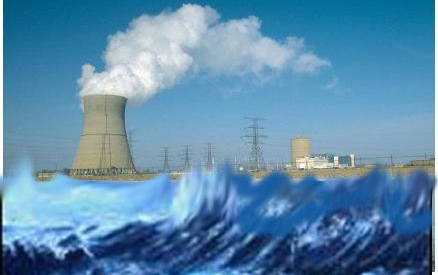 Pilgrim to move nuclear waste to higher ground, http://www.patriotledger.com/news/20181026/pilgrim-to-move-nuclear-waste-to-higher-ground By Joe DiFazio
The Patriot Ledger PLYMOUTH — Officials at the Pilgrim Nuclear Power Station said they want to move nuclear waste at the site to higher ground over the next few years with an eye toward sea level rise.
Patrick O’Brien, spokesman for Entergy, the plant’s owner, said that the new proposed site will be located in what is now a parking lot 75 feet above sea level and 350 feet away from Rocky Hill Road. The site is 700 feet away from the closest point on the shoreline, O’Brien said.
Pilgrim is slated to be shut down by June 1. Entergy announced in August it plans to sell the station to Holtec International who will decommission the plant. O’Brien said the plan to move the waste was made in conjunction with Holtec.
O’Brien said that the proposed site was chosen as the best of three under consideration and that it was evaluated for nine regulatory and technical requirements. O’Brien saidEntergy will apply for the required permits and plans to begin construction on the new site before Pilgrim shuts down.
Nuclear Regulatory Commission spokesman Neil Sheehan said that the move doesn’t need approval from his agency, but it would monitor construction of the new site and movement of the spent nuclear fuel. The NRC will need to approve Pilgrim’s sale to Holtec.
UN’s Intergovernmental Panel on Climate Change (IPCC) focuses on renewables, dismisses nuclear power
Dr Jim Green, Nuclear Monitor #867, 15 Oct 2018
 https://www.wiseinternational.org/nuclear-monitor/867/nuclear-monitor-867-15-october-2018
The UN’s Intergovernmental Panel on Climate Change (IPCC) has issued a landmark report warning that global warming must be kept to 1.5˚C, requiring “rapid and far-reaching” transitions in land, energy, industry, buildings, transport, and cities.1
The world must invest US$2.4 trillion in clean energy every year through 2035 and cut the use of coal-fired power to almost nothing by 2050 to avoid catastrophic damage from climate change, according to the IPCC. To put the US$2.4 trillion figure in context, about US$1.8 trillion was invested in energy systems globally in 2017, of which about 42% was invested in electricity generation and about 18.5% in renewables.2
Unsurprisingly, the World Nuclear Association (WNA) used the IPCC report to promote nuclear power.

WNA Director General Agneta Rising said the IPCC report “makes clear … the necessity of nuclear energy as an important part of an effective global response” to climate change and that it “highlights the proven qualities of nuclear energy as a highly effective method of reducing greenhouse gas emissions, as well as providing secure, reliable and scalable electricity supplies.”3 In a separate statement, the WNA falsely claimed that nuclear power increases under all of the IPCC scenarios compatible with limiting warming to 1.5˚C.4
Almost all of the WNA’s claims are false or exaggerated. The IPCC report raises numerous concerns about nuclear power (discussed below). In general terms, nearly all of the scenarios presented in the IPCC report envisage a decline in nuclear power generation to 2030 followed by an upswing.5 No logical rationale ‒ or any rationale at all ‒ is provided to support the upswing from 2030 to 2050.
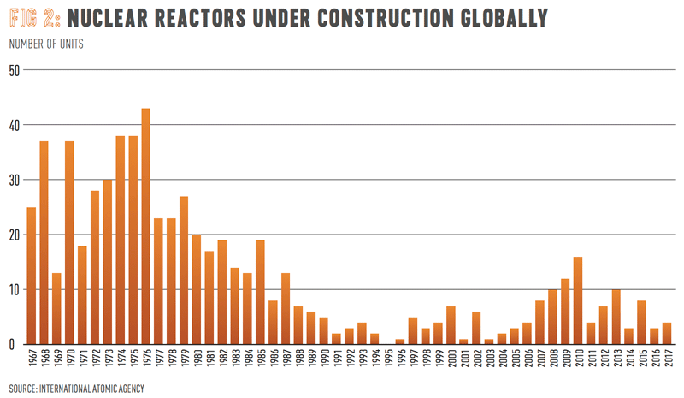
The points that jump out from the IPCC’s low-carbon 1.5°C scenarios are that nuclear accounts for only a small fraction of energy/electricity supply (even if nuclear output increases) whereas renewables do the heavy lifting. For example, in one 1.5°C scenario, nuclear power more than doubles by 2050 but only accounts for 4.2% of primary energy whereas renewables account for 60.8%.6 In another 1.5°C scenario, nuclear nearly doubles by 2050 but its contribution to total electricity supply falls to 8.9%, compared to 77.5% for renewables.7
The IPCC report notes that: “Nuclear power increases its share in most 1.5°C pathways by 2050, but in some pathways both the absolute capacity and share of power from nuclear generators declines. There are large differences in nuclear power between models and across pathways … Some 1.5°C pathways no longer see a role for nuclear fission by the end of the century, while others project over 200 EJ / yr of nuclear power in 2100.”8
Nuclear lobbyist Michael Shellenberger has a very different take on the IPCC report to the WNA … and most of his claims are false as well.9 Shellenberger takes the IPCC to task for stating that nuclear power risks nuclear weapons  proliferation.10,11 That is “unsubstantiated fear-mongering”, he claims, although Shellenberger himself has written at length about the manifold and repeatedly-demonstrated connections between nuclear power and weapons.12 “No nation has used its civilian nuclear plants to create a weapon”, Shellenberger now claims ‒ which is garbage.13
Shellenberger seems troubled by the IPCC’s claims about a possible connection between nuclear power and childhood leukemia ‒ but he doesn’t explain why. The IPCC’s comments are modest: “Increased occurrence of childhood leukaemia in populations living within 5 km of nuclear power plants was identified by some studies, even though a direct causal relation to ionizing radiation could not be established and other studies could not confirm any correlation (low evidence/agreement in this issue).”10 In fact the evidence of a link is stronger than the IPCC suggests.14,15
Shellenberger complains about “biased and misleading cost comparisons” in the IPCC report though the report simply notes that nuclear power provides an example of “where real-world costs have been higher than anticipated … while solar PV is an example where real-world costs have been lower”.16
Shellenberger claims that solar and wind contributed 1.3% and 3.9% to global electricity supply in 2017 ‒ the true figures are 1.9% and 5.6%.17 He fails to note that all renewables combined supplied 26.5% of global electricity supply in 2017 (2.5 times more than nuclear) or that renewable supply has doubled over the past decade while nuclear power has been stagnant.
References: Continue reading
Climate change scientists have “a political agenda” – says Trump
BBC 15th Oct 2018 US President Donald Trump has accused climate change scientists of having a
“political agenda” as he cast doubt on whether humans were responsible for
the earth’s rising temperatures. But Mr Trump also said he no longer
believed climate change was a hoax. The comments, made during an interview
with CBS’s 60 Minutes, come less than a week after climate scientists
issued a final call to halt rising temperatures. The world’s leading
scientists agree that climate change is human-induced.
https://www.bbc.co.uk/news/world-us-canada-45859325
Nuclear power is disqualified from the race of the climatic fight – IPCC climate change report
Greenpeace France (accessed) 14th Oct 2018, Does the IPCC consider nuclear as a solution for climate? The IPCC points out that “the transition from the energy system that would be needed to limit global warming to 1.5 ° C is underway in many sectors and regions of
the world.
The technical, social, economic and political feasibility of solar energy, wind energy and electricity storage technologies has improved considerably in recent years, while nuclear energy and Carbon dioxide (CCS)
storage in the electricity sector did not show the same improvements.”
The current timeframe between the date of decision and the commissioning of nuclear power plants is between 10 and 19 years, and current deployment capacity is slowed by public concern about the risk of accidents and problems with nuclear waste. In addition, the IPCC notes, that “the costs of nuclear energy have increased over time in some developed nations, mainly because of the prevailing conditions, where increased investment risks in high-capital-intensive technologies have become important.”
The theoretical benefits that nuclear energy could bring in the fight against climate change are therefore far too weak, too slow, too expensive and too risky. While the IPCC report requires us to quickly reduce emissions, it is
not possible to choose the slowest and most expensive electric generation technology to deploy, as well as the dirtiest and riskiest. Nuclear power is disqualified from the race of the climatic fight.
https://www.greenpeace.fr/giec-considere-t-nucleaire-solution-climat/
The risk of catastrophic sea-level rise
 What’s Another Way to Say ‘We’re F-cked’? https://www.rollingstone.com/politics/politics-news/climate-change-sea-level-rise-737012/ One of the leading climate scientists of our time is warning of the horrifying possibility of 15-to-20 feet of sea-level rise, By JEFF GOODELL,13 Oct 18
Climate change threat is worse than UN report states: risk of runaway warming
 Climate report understates threat https://thebulletin.org/2018/10/climate-report-understates-threat/?utm_source=Bulletin%20Newsletter&utm_medium=iContact%20email&utm_campaign=October12
By Mario Molina, Veerabhadran Ramanathan, Durwood J. Zaelke, October 9, 2018 The UN’s Intergovernmental Panel on Climate Change’s Special Report on Global Warming of 1.5 degrees Celsius, released on Monday, is a major advance over previous efforts to alert world leaders and citizens to the growing climate risk. But the report, dire as it is, misses a key point: Self-reinforcing feedbacks and tipping points—the wildcards of the climate system—could cause the climate to destabilize even further. The report also fails to discuss the five percent risk that even existing levels of climate pollution, if continued unchecked, could lead to runaway warming—the so-called “fat tail” risk. These omissions may mislead world leaders into thinking they have more time to address the climate crisis, when in fact immediate actions are needed. To put it bluntly, there is a significant risk of self-reinforcing climate feedback loops pushing the planet into chaos beyond human control.
The report does describe how much more serious climatic impacts will be if the world lets warming reach 2 degrees Celsius above pre-industrial levels. Limiting the warming to 1.5 degrees Celsius can, for example, cut many impacts in half, including those of fresh water shortage and losses of many species and of ocean fish catch. The report is relatively optimistic that this can be done, but only with unprecedented commitment and cooperation from governments, industry, religious and secular leaders, and citizens around the world.
So far, average temperatures have risen by one degree Celsius. Adding 50 percent more warming to reach 1.5 degrees won’t simply increase impacts by the same percentage—bad as that would be. Instead, it risks setting up feedbacks that could fall like dangerous dominos, fundamentally destabilizing the planet. This is analyzed in a recent study showing that the window to prevent runaway climate change and a “hot house” super-heated planet is closing much faster than previously understood. Continue reading
Are there any real solutions to escalated greenhouse gases in the atmosphere?
 Do We Really Have the Time and the Tools to Fix Climate Change? BY Rachel Smolker, Truthout, October 11, 2018
As part of the Paris agreement, the International Panel on Climate Change (IPCC) was asked “to provide a special report in 2018 on the impacts of global warming of 1.5 [degrees Celsius] above pre-industrial levels and related global greenhouse gas emission pathways.” That report was released on October 8.
The report’s “Headline Statements” are divided into four main sections: 1.) “Understanding Global Warming of 1.5 [Degrees Celsius]”; 2.) “Projected Climate Change, Potential Impacts and Associated Risks”; 3.) “Emission Pathways and System Transitions Consistent with 1.5 [Degrees Celsius] Global Warming”; and 4.) “Strengthening the Global Response in the Context of Sustainable Development and Efforts to Eradicate Poverty.”
What the Report Says and Does Not Say
In the first chapter, the IPCC points out that human activities have already caused about 1 degree Celsius (1°C) of warming, and that we will reach 1.5°C between 2030 and 2052 at the current pace. They state that what has already been emitted into the atmosphere will result in ongoing warming, sea-level rise and other effects for “centuries to millennia” (even in the absence of ongoing and future emissions), but that the emissions to date on their own will not raise temperatures to 1.5°C. So, the good news then is that reaching and sustaining net zero emissions, even at this late stage in the game, would “halt warming on a multi-decadal time scale.” The IPCC also concludes that impacts generally would be less at a 1.5°C stabilization than a 2°C stabilization.
These numbers are convenient for discussion, but realistically, the atmosphere is not like the thermostat in our living room, where we can simply dial and set in order to heat the house to some desired level. We are not in control for the most part. It is also worth keeping in mind that the IPCC has consistently underestimated the pace and magnitude of global warming. It is probably safe to say that this is still the case. Feedbacks and “tipping points” are not some distant thing to avoid, they are already happening, and their trajectory is impossible to predict. They include things like soil respiration, melting permafrost, warming and acidification of the oceans and loss of ice. The IPCC has shifted its assessments of the warming potential of methane to consistently use the 20-year timeframe comparison with CO2 [carbon dioxide], and revised upward the quantity of methane released by livestock, just as one example. There are most likely some major sources of emissions we are not even aware of. Further, there are some major sources of emissions we are aware of, but have been granted exclusion from consideration, such as the vast quantity of emissions from military activities. ……….
Can We Overshoot the Target and Clean Excess Carbon Out of the Atmosphere? The IPCC uses “integrated assessment models” for their analyses. Those models plug in a suite of assumptions about changes in energy production and use, land use change and other factors, and then use those to provide trajectories (pathways) to a goal — in this report, either 1.5°C or 2°C of warming. Those trajectories are not always straight lines from here to there. Many — in fact, most of them — involve exceeding thresholds for greenhouse gas concentrations in the atmosphere in the near term, with the intention of somehow later removing the excess. This is called “overshoot.” It is an extremely risky proposition. Earlier drafts of the report did not even evaluate models that did not include overshoot to some degree. Fortunately, the final draft does evaluate pathways without or with limited overshoot.
Enabling overshoot is especially problematic because there is currently no technology available for removing carbon dioxide from the atmosphere…………
Ultimately, it is increasingly clear that the real solutions to climate change are not global-scale techno-fixes, but rather the locally adapted and locally controlled solutions that people have been pushing for decades, including preventing buildout of fossil fuel infrastructure, protection of lands, respect for rights of humans and nature. The ruthless pursuit of corporate wealth and power and economic growth at all costs stifles those local, grassroots solutions from reaching fruition. ……….https://truthout.org/articles/do-we-really-have-the-time-and-the-tools-to-fix-climate-change/
1 This Month
26 September – International Day for the Total Elimination of Nuclear Weapons





PLEASE OPPOSE HR 8255 AND S.3639 – bills would accelerate satellite deployment, with no environmental review or safeguards – https://ncstd5li.quorum.us/campaign/169331/
To see nuclear-related stories in greater depth and intensity – go to https://nuclearinformation.wordpress.com
-
Archives
- September 2026 (313)
- August 2026 (330)
- July 2026 (355)
- June 2026 (287)
- May 2026 (306)
- April 2026 (356)
- March 2026 (251)
- February 2026 (267)
- January 2026 (308)
- December 2025 (358)
- November 2025 (359)
- October 2025 (375)
-
Categories
- 1
- 1 NUCLEAR ISSUES
- business and costs
- climate change
- culture and arts
- ENERGY
- environment
- health
- history
- indigenous issues
- Legal
- marketing of nuclear
- media
- opposition to nuclear
- PERSONAL STORIES
- politics
- politics international
- Religion and ethics
- safety
- secrets,lies and civil liberties
- spinbuster
- technology
- Uranium
- wastes
- weapons and war
- Women
- 2 WORLD
- ACTION
- AFRICA
- Atrocities
- AUSTRALIA
- Christina's notes
- Christina's themes
- culture and arts
- Events
- Fuk 2022
- Fuk 2023
- Fukushima 2017
- Fukushima 2018
- fukushima 2019
- Fukushima 2020
- Fukushima 2021
- general
- global warming
- Humour (God we need it)
- Nuclear
- RARE EARTHS
- Reference
- resources – print
- Resources -audiovicual
- Weekly Newsletter
- World
- World Nuclear
- YouTube
-
RSS
Entries RSS
Comments RSS

