The threat to millions of people, as glaciers in Central Asia melt
 Melting glaciers spell trouble for millions in Asia, SMH, By Henry Fountain,19 January 2019 On a summer day in the mountains high above Almaty, Kazakhstan’s largest city, the Tuyuksu glacier is melting like mad. Rivulets of water stream down the glacier’s thin leading edge.
In Central Asia, a warming climate is shrinking many glaciers. The Tuyuksu is losing ice every year. Around the world, vanishing glaciers will mean less water for people and crops in the future. Here, the people need to prepare sooner.
As she has for nearly two decades, Maria Shahgedanova, a glaciologist at the University of Reading in England, has come here to check on the Tuyuksu. As one of the longest-studied glaciers anywhere, the Tuyuksu helps gauge the effect of climate change on the world’s ice.
Glaciers represent the snows of centuries, compressed over time into slowly flowing rivers of ice, up to about 300 metres thick here in the Tien Shan range of Central Asia and even thicker elsewhere. They are never static, accumulating snow in winter and losing ice to melting in summer.
But in a warming climate melting outstrips accumulation, resulting in a net loss of ice. That is what is happening in Kazakhstan and all over the globe.
The world’s roughly 150,000 glaciers, not including the large ice sheets of Greenland and Antarctica, cover about 500,000 square kilometres of the Earth’s surface. During the last four decades they have lost the equivalent of a layer of ice 20 metres thick.
Most are getting shorter, too. Small ones in places like the Rockies and Andes have disappeared. And researchers say that even if greenhouse gas emissions were sharply curtailed immediately, there has already been enough warming to continue shrinking glaciers around the world.
This great global melting contributes to sea level rise. It affects production of hydroelectricity. It leads to disasters like rapid, catastrophic floods and debris flows. It alters rivers and ecosystems, affecting the organisms that inhabit them.
But here in the Tien Shan, the biggest effect may be on the supply of water for people and agriculture. ……..The researchers analyse samples from streams to determine the mix of water sources, which is important for forecasting how the rivers will fare over time. A melting glacier can at first increase stream flow, but eventually the glacier reaches a tipping point, called peak flow, and meltwater begins to taper.
“At some point they cannot produce the water they are providing right now,” said Matthias Huss, a researcher at the Swiss Federal Institute of Technology in Zurich. “It’s really important for water managers to know when this tipping point is reached.”
Across the Tibetan Plateau and in the Himalayan and Karakoram ranges, the glaciers number in the thousands and the people who rely on them in the hundreds of millions, along rivers like the Indus in Pakistan, the Ganges and Brahmaputra in India, the Yellow and Yangtze in China and the Mekong in south-east Asia……… https://www.smh.com.au/environment/climate-change/melting-glaciers-spell-trouble-for-millions-in-asia-20190118-p50sb6.html
Increasing rate of melting in North American glaciers
North American glaciers melting much faster than 10 years ago – study
Satellite images show glaciers in US and Canada, excluding Alaska, are shrinking four times faster than in previous decade , Guardian, Emily Holden in Washington, Sat 19 Jan 2019
Glaciers in western North America, excluding Alaska, are melting four times faster than in the previous decade, with changes in the jet stream exacerbating the longer-term effects of climate change, according to a new study.
The retreat hasn’t been equal in the US and Canada. The famous alpine ice masses in the Cascade Mountains in the north-west US have largely been spared from the trend.
“The losses we would expect were reduced because we got a lot of additional snow,” said David Shean, a co-author at the University of Washington. “Moving forward we may not be so lucky.” The jet stream – the currents of fast-flowing air in the atmosphere that affect weather – has shifted, causing more snow in the north-western US and less in south-western Canada, according to the study released in Geophysical Research Letters, a publication of the American Geophysical Union. Changes in the northern hemisphere jet stream are increasingly firmly linked to global warming.
That warming from humans burning fossil fuels is also expected to continue to melt alpine glaciers, even under scenarios for more moderate greenhouse gas levels.
While some of the fourfold increase in the melting rate in western North America is related to manmade climate change, the researchers can’t say with certainty how much.
“We’re starting to understand these shorter cycles that have real impacts on how the glaciers are behaving and how much water is stored in the glaciers,” Shean explained.
Alaskan glaciers get much of the attention in North America because Alaska is warming faster than the continental US. Mount Hunter in Denali national park, is seeing 60 times more snow melt than it did 150 years ago.
The North American glaciers analyzed in the new study are far smaller than those in Alaska, Asia and elsewhere, so they won’t contribute much to sea-level rise as they melt. The authors say they offer critical lessons for water management, fisheries and flood prevention…….. https://www.theguardian.com/environment/2019/jan/18/north-america-glacier-melt-study-climate-change
Australia bakes as record temperatures nudge 50C

 ‘It’s like hell here’: Australia bakes as record temperatures nudge 50C , Fears rise for homeless and vulnerable people as communities brace for another week of relentless hot weather , Guardian, Naaman Zhou, @naamanzhou, Sun 20 Jan 2019
It was 48.9C last Tuesday in Port Augusta, South Australia, an old harbour city that now harvests solar power. Michelle Coles, the owner of the local cinema, took off her shoes at night to test the concrete before letting the dogs out. “People tend to stay at home,” she said. “They don’t walk around when it’s like this.”It’s easy to see why: in the middle of the day it takes seconds to blister a dog’s paw or child’s foot. In Mildura, in northern Victoria, last week gardeners burned their hands when they picked up their tools, which had been left in the sun at 46C. Fish were dying in the rivers.
Almost every day last week a new heat record was broken in Australia. They spread out, unrelenting, across the country, with records broken for all kinds of reasons – as if the statistics were finding an infinite series of ways to say that it was hot.
The community of Noona – population 14 – reached the highest minimum ever recorded overnight in Australia – 35.9C was the coldest it got, at 7am on Friday. It was 45C by noon.
A record fell on Tuesday in Meekatharra in Western Australia – the highest minimum there ever recorded (33C). Another fell on Wednesday, 2,000 miles away, in Albury, New South Wales – their hottest day (45.6C).
It was 45C or higher for four consecutive days in Broken Hill – another record – and more than 40C for the same time period in Canberra, the nation’s capital. Nine records fell across NSW on Wednesday alone. Back in Port Augusta, Tuesday was the highest temperature since records began in 1962………..
In South Australia, they declared a “code red” across Adelaide, the state capital. Homelessness services were working overtime and the Red Cross started calling round a list of 750 people who were deemed especially vulnerable
At the Australian Open in Melbourne, only the sea breeze kept the temperature below 40C. At Adelaide’s Tour Down Under, a bike race, it was 41C.
On Monday last week the hottest spot in New South Wales was Menindee, a river town that feeds the country’s largest water system, the Murray-Darling basin. It was 45C. It climbed to 47C on Wednesday, and by Thursday the fish were gasping.
Australia’s native Murray cod can live for decades under normal conditions, growing all the while. The oldest are a metre long, with heavy white bellies that have to be held with both hands. Last week, hundreds died, choked of oxygen due to an algal bloom that fed and grew in the heat, and collapsed when temperatures dipped.
Blue-green algae flourishes in hot, slow-moving water. Then, when temperatures inevitably drop, the algae dies and becomes a food source for bacteria, who multiply and starve the river of oxygen. The fish rise to the surface.
The mass fish death has reignited a debate over water management in the region, where cotton farmers upstream have been accused of taking more water than they should.
The heat is not the root cause, the locals stress. But the five punishing days settling over the river have not made it better. Last Thursday the cod were up near the surface and struggling. On Friday, it was 45C again. In Menindee, the locals believe the fish kill will happen again, with temperatures in the 40s expected to continue into this week. The water will be running hot……….https://www.theguardian.com/australia-news/2019/jan/19/australia-swelters-as-relentless-hot-weather-smashes-records
When it comes to heat, Australia is now a climate change leader
 The world’s 15 hottest sites on Tuesday were all in Australia, Brisbane Times, By Peter Hannam16 January 2019 Australia was home to all 15 of the world’s hottest temperatures on Tuesday, a feat it may well repeat on Wednesday and beyond as a huge swath of the nation bakes in 45-degree-plus heat………According to the El Dorado Weather site, the warmest 15 places on the planet in the past 24 hours were all in Australia. These ranged from Tarcoola in inland South Australia, which reached 49.1 degrees, to Yulara in the Northern Territory at 46.1 degrees in 15th slot…… The world’s 15 hottest sites on Tuesday were all in Australia, Brisbane Times, By Peter Hannam16 January 2019 Australia was home to all 15 of the world’s hottest temperatures on Tuesday, a feat it may well repeat on Wednesday and beyond as a huge swath of the nation bakes in 45-degree-plus heat………According to the El Dorado Weather site, the warmest 15 places on the planet in the past 24 hours were all in Australia. These ranged from Tarcoola in inland South Australia, which reached 49.1 degrees, to Yulara in the Northern Territory at 46.1 degrees in 15th slot……
50 degrees?Jacob Cronje, a senior meteorologist with Weatherzone, said he “wouldn’t be shocked” by a 50-degree reading during the current spell, given the scale and intensity of the heat. Certainly the duration of this event and the spatial extent of the heatwave across the southern half of Australia seems to be quite significant,” he said……. The Bureau of Meteorology and the CSIRO’s State of the Climate report identified rising temperatures as among the clearest indications of climate change in Australia.
Globally, last year was the world’s fourth-hottest year, according to the Japan Meteorological Agency. All of the five warmest years on record have happened since 2014, the agency reported this week. https://www.brisbanetimes.com.au/environment/weather/the-world-s-15-hottest-sites-were-all-in-australia-amid-significant-heatwave-20190116-p50rmr.html
|
|

The fossil fuel industries’ successful strategy, conning the media to doubt climate change
 By demanding “balance,” the industry transformed climate change into a partisan issue. We know that was a deliberate strategy because various internal documents from ExxonMobil, Shell, the American Petroleum Institute and a handful of now-defunct fossil fuel industry groups reveal not only the industry’s strategy to target media with this message and these experts, but also its own preemptive debunking of the very theories it went on to support.
many took the industry’s bait, routinely inserting denialist claims into stories about climate science in the interest of providing balance:
How the fossil fuel industry got the media to think climate change was debatable, WP, By Amy Westervelt, Amy Westervelt is an audio and print reporter who covers climate and gender, and sometimes the intersection of the two. Her podcast Drilled is about the creation and spread of climate denial and her first book “Forget ‘Having It All'” was published by Seal Press in November 2018., January 10 2019
Late last year, the Trump administration released the latest national climate assessment on Black Friday in what many assumed was an attempt to bury the document. If that was the plan, it backfired, and the assessment wound up earning more coverage than it probably would have otherwise. But much of that coverage perpetuated a decades-old practice, one that has been weaponized by the fossil fuel industry: false equivalence.
Although various business interests began pushing back against environmental action in general in the early 1970s as part of the conservative “war of ideas” launched in response to the social movements of the 1960s, when global warming first broke into the public sphere, it was a bipartisan issue and remained so for years. On the campaign trail in 1988, George H.W. Bush identified as an environmentalist and called for action on global warming, framing it as a technological challenge that American innovation could address. But fossil fuel interests were shifting as the industry and its allies began to push back against empirical evidence of climate change, taking many conservatives along with them.
Documents uncovered by journalists and activists over the past decade lay out a clear strategy: First, target media outlets to get them to report more on the “uncertainties” in climate science, and position industry-backed contrarian scientists as expert sources for media. Second, target conservatives with the message that climate change is a liberal hoax, and paint anyone who takes the issue seriously as “out of touch with reality.” In the 1990s, oil companies, fossil fuel industry trade groups and their respective PR firms began positioning contrarian scientists such as Willie Soon, William Happer and David Legates as experts whose opinions on climate change should be considered equal and opposite to that of climate scientists. The Heartland Institute, which hosts an annual International Conference on Climate Change known as the leading climate skeptics conference, for example, routinely calls out media outlets (including The Washington Post) for showing “bias” in covering climate change when they either decline to quote a skeptic or question a skeptic’s credibility.
Data on how effective this strategy has been is hard to come by, but anecdotal evidence of its success abounds. In the early 1990s, polls showed that about 80 percent of Americans were aware of climate change and accepted that something must be done about it, an opinion that crossed party lines. By 2008, Gallup found a marked partisan divide on climate change. By 2010, the American public’s belief in climate change hit an all-time low of 48 percent, despite the fact that those 20 years saw increased research, improved climate models and several climate change predictions coming true.
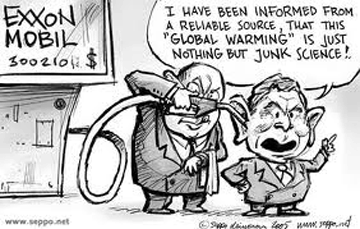 By demanding “balance,” the industry transformed climate change into a partisan issue. We know that was a deliberate strategy because various internal documents from ExxonMobil, Shell, the American Petroleum Institute and a handful of now-defunct fossil fuel industry groups reveal not only the industry’s strategy to target media with this message and these experts, but also its own preemptive debunking of the very theories it went on to support.
It need not have been such a successful strategy: If news purveyors really wanted to be evenhanded on coverage of climate change, they could certainly weave in the insights of more conservative scientists — those whose predictions err on the sunnier side of apocalypse. Instead, many took the industry’s bait, routinely inserting denialist claims into stories about climate science in the interest of providing balance: In an analysis of 636 articles covering climate change that appeared in “prestige U.S. outlets” from 1988 to 2002, researchers from the University of California at Santa Cruz and American University found that 52.65 percent presented climate science and contrarian theories as equal. The practice continued into the mid-2000s. As recently as 2007, PBS NewsHour invited well-known (and widely debunked) former weatherman Anthony Watts on to counterbalance Richard Muller, a former Koch-funded skeptic who had shifted his view…………
It’s well past time the media stopped allowing itself to be a tool in the fossil fuel industry’s information war. Oreskes likens the push for “balance” on climate change to journalists arguing over the final score of a baseball game. “If the Yankees beat the Red Sox 6-2, journalists would report that. They would not feel compelled to find someone to say actually the Red Sox won, or the score was 6-4,” she says. https://www.washingtonpost.com/outlook/2019/01/10/how-fossil-fuel-industry-got-media-think-climate-change-was-debatable/
Australia, (with its climate-sceptic government) getting record heat across the continent

Record-breaking heatwave to hit every state and territory, https://www.sbs.com.au/news/record-breaking-heatwave-to-hit-every-state-and-territory 13 Jan 19, Every state and territory in Australia will experience heatwave conditions on Monday, forecasters say. A cyclone is brewing off Western Australia’s Kimberley coast while much of the country is set to swelter in heatwave conditions.
Every state and territory will cop the heat on Monday when temperatures soar with some regions to experience severe and extreme hot weather.
The Bureau of Meteorology forecasts low intensity heatwave conditions in parts of central WA to southern parts of the Northern Territory, southwestern Queensland and across NSW, Victoria, Tasmania and South Australia.
It will be worst in South Australia where multiple days of temperatures above 40C, an unusual event even for summer, meteorologist Dean Narramore said on Sunday.
Particularly northern South Australia, they’re looking at maybe five days in a row above 45 and normally they might only get five or 10 a year,” he said.
Melbourne can expect to see a few days in the mid to high 30s, while temperatures in Sydney’s west will peak above 40C for four or five days.
Climate change: seal levels are rising at different rates around the globe
Explainer: Why sea levels aren’t rising at the same rate globally, A spinning planet, melting ice sheets and warmer waters all contribute to sea level rise, Science news for Students, KATY DAIGLE, CAROLYN GRAMLING, JAN 10, 2019 The sea is coming for the land. In the 20th century, ocean levels rose by a global average of about 14 centimeters (some 5.5 inches). Most of that came from warming water and melting ice. But the water didn’t rise the same amount everywhere. Some coastal areas saw more sea level rise than others. Here’s why:
Swelling seawater As water heats up, its molecules spread out. That means warmer water takes up slightly more space. It’s just a tiny bit per water molecule. But over an ocean, it’s enough to bump up global sea levels……..
Land a-rising Heavy ice sheets — glaciers — covered much of the Northern Hemisphere about 20,000 years ago. The weight of all that ice compressed the land beneath it in areas such as the northeastern United States. Now that this ice is gone, the land has been slowly rebounding to its former height. So in those areas, because the land is rising, sea levels appear to be rising more slowly.
But regions that once lay at the edges of the ice sheets are sinking. ……..
Land a-falling, Earthquakes can make land levels rise and fall…….
Glaciers begone Melting glaciers also can add water to the oceans. But these huge ice slabs affect sea levels in other ways, too.
Huge glaciers can exert a gravitational tug on nearby coastal waters. ……. https://www.sciencenewsforstudents.org/article/explainer-why-sea-level-rise-rate-varies-globally
Forget party politics- the climate does not care – Katherine Hayhoe
Katharine Hayhoe: ‘A thermometer is not liberal or conservative’ Guardian, Jonathan Watts, 6 Jan 19 Katharine Hayhoe: ‘Fear is a short-term spur to action, but to make changes over the long term, we must have hope.’
Let Science Speak – Dr. Katharine Hayhoe
The award-winning atmospheric scientist on the urgency of the climate crisis and why people are her biggest hope “….. In 2018, we have seen forest fires in the Arctic circle; record high temperatures in parts of Australia, Africa and the US; floods in India; and devastating droughts in South Africa and Argentina. Is this a turning point?
This year has hit home how climate change loads the dice against us by taking naturally occurring weather events and amplifying them. We now have attribution studies that show how much more likely or stronger extreme weather events have become as a result of human emissions. For example, wildfires in the western US now burn nearly twice the area they would without climate change, and almost 40% more rain fell during Hurricane Harvey than would have otherwise. So we are really feeling the impacts and know how much humanity is responsible.
These assessments are important because there is a Schrödinger’s Cat element to studying climate impacts. The act of observing affects the outcome. If people aren’t aware of what is happening, why would anyone change? Assessments like these provide us with a vision of the future if we continue on our current pathway, and by doing so they address the most widespread and dangerous myth that the largest number of us have bought into: not that the science isn’t real, but rather that climate change doesn’t matter to me personally.
Compared to past studies, how much media attention did these reports receive?
Are there any signs that public opinion is shifting in the US and elsewhere?
Trump was dismissive of these reports and has repeatedly tried to deny any link between climate change and extreme weather. What are the politics behind this denial?
On current trends, if you had to give a percentage breakdown of the likelihood of the following three outcomes by 2100, what would you give: a) keeping to 1.5C; b) keeping to 2C; c) rising above 3C; and d) overshooting 4C?
I’d put my money on a gradual bend away from a higher scenario, which is where we are now, until accumulating and worsening climate disasters eventually lead to a collective “oh shit!” moment, when people finally realise climate impacts do pose a far greater threat than the solutions. At that point, I would hope the world would suddenly ramp up its carbon reduction to the scale of a Manhattan Project or a moon race and we would finally be able to make serious progress. The multitrillion-dollar question is simply when that tipping point in opinion will come, and whether it will be too late for civilisation as we know it. I hope with all my heart that we stay under 1.5C, but my cynical brain says 3C. Perhaps the reality will be somewhere between my head and my heart at 2C.
What is the best way out of the climate crisis? What policies would make a difference?
The most important thing is to accelerate the realisation that we have to act. This means connecting the dots to show that the impacts are not distant any more: they are here and they affect our lives. It also means talking about solutions. The technology and knowledge are there. The economics already make sense. In Texas, where I live, the biggest military base, Fort Hood, switched last year to renewables because they were cheaper than natural gas. And finally, it means weaning ourselves off fossil fuels, which is challenged by the fact that the majority of the world’s richest companies have made their money from the fossil fuel economy – so the majority of the wealth and power remains in their hands. ……… https://www.theguardian.com/science/2019/jan/06/katharine-hayhoe-interview-climate-change-scientist-crisis-hope
The debate should now be over: climate change is upon us
 Are we clear about climate change? https://newpittsburghcourieronline.com/2019/01/06/are-we-clear-about-climate-change/
Let’s start with the hurricanes. Florence and Michael have brought tremendous and near apocalyptic damage to the regions that they hit. Entire towns have been wiped out. Looking at pictures of the Florida panhandle in the aftermath of Hurricane Michael brought to mind pictures of areas that had been devastated by carpet bombing.
The warnings, in connection with both hurricanes, were very ominous. The strength of the hurricanes before they hit, with Florence initially off the charts and with Michael the strongest on record to hit the panhandle, should have led even the dimmest light in the room to glow brightly. Something is definitely wrong. Scientists explained this in the immediate aftermath of Michael: yes, they said, there is a direct connection between climate change and the increased intensity and unpredictability of hurricanes. There, it’s been stated.
There were also two reports. The first was from the Trump administration itself, and one, from what I can figure, they did not want the public to see. In essence the report indicated that the Administration expects the temperature of planet Earth to jump 6-7 degrees by the 22nd century. Ironically, they also conclude that nothing can be done, therefore, there is no point in increased regulations on the greenhouse gases that promote climate change! Did I hear that right?
The conclusion that we should take from all of this is that the debate is finally over. There is clear and verifiable evidence of climate change underway and the direct relationship of human activity to this phenomenon. For those who raise the point that there has been climate change in the past and that this is natural, guess again. Yes, there has been climate change and it has taken place over hundreds of years. There is no precedent for what we are currently experiencing. This is something new and it is dangerous. And it is something that may envelope humanity in our current life-times, not to mention the life-times of our children.
Climate change brings a boom in jellyfish, and a threat to nuclear reactors

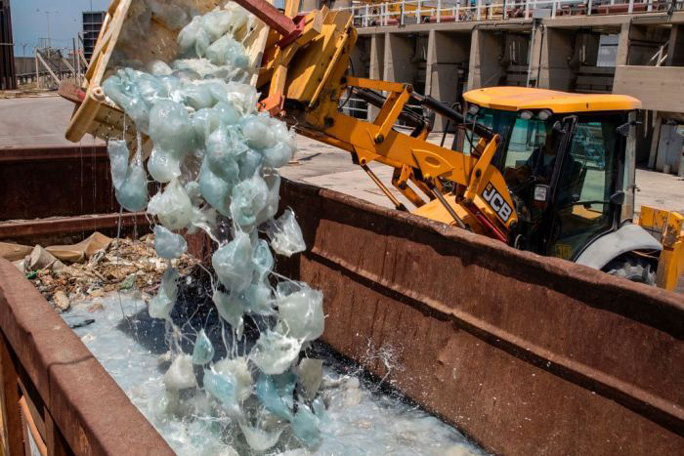
Jellyfish are causing mayhem as pollution, climate change see numbers boom, ABC, RN By Hong Jiang and Sasha Fegan for Late Night Live 6 Jan 19 Jellyfish have been around for at least 500 million years — they’re older than dinosaurs and even trees.Science writer Juli Berwald calls them “ghosts from the true garden of Eden”.
“An intelligence of a sort has allowed them to make it through the millennia,” she says.
And they’re not going anywhere.
In fact, the brainless, spineless, eyeless, bloodless creatures are booming in numbers — and causing mayhem around the world. Their propensity to breed fast and prolifically means jellyfish can disrupt ocean ecosystems in a flash.
And their effects aren’t contained to the sea.
In places like Sweden, Israel, the US and the Philippines, power plants have been affected by blooms of jellyfish.
“So many jellyfish were swept into the power system … that it shut down the power system through much of this one island in the Philippines,” Ms Berwald says. People thought that perhaps there was a coup going on, but there wasn’t, it was just the jellyfish.”
Jellyfish have also caused plants to shut down in Japan.
“One jellyfish scientist from Japan told me that the first threat to the electric system in Japan is earthquakes, but the second is jellyfish,” Berwald says.
“We are dealing with a ubiquitous creature.”
A human cause
Some scientists think jellyfish numbers are increasing as the climate changes — the creatures reproduce well in warmer waters.
Jellyfish also fare better than many other sea creatures in polluted waters, as they don’t need much oxygen.
Berwald says that can give them the upper hand over predators.
“They can sort of slip into polluted waters, into low oxygen waters, and hide from predation there better than a fish that has a higher oxygen demand,” she says…….. https://www.abc.net.au/news/2019-01-06/the-magic-and-mayhem-of-jellyfish/10377112
Historical cooling periods are still playing out in the deep Pacific
https://www.eurekalert.org/pub_releases/2019-01/hjap-hcp010419.php– 4 Jan 19, Whereas most of the ocean is responding to modern warming, the deep Pacific may be cooling, HARVARD JOHN A. PAULSON SCHOOL OF ENGINEERING AND APPLIED SCIENCES The ocean has a long memory. When the water in today’s deep Pacific Ocean last saw sunlight, Charlemagne was the Holy Roman Emperor, the Song Dynasty ruled China and Oxford University had just held its very first class. During that time, between the 9th and 12th centuries, the earth’s climate was generally warmer before the cold of the Little Ice Age settled in around the 16th century. Now, ocean surface temperatures are back on the rise but the question is, do the deepest parts of the ocean know that?
Researchers from the Woods Hole Oceanographic Institution and Harvard University have found that the deep Pacific Ocean lags a few centuries behind in terms of temperature and is still adjusting to the advent of the Little Ice Age. Whereas most of the ocean is responding to modern warming, the deep Pacific may be cooling.
The research is published in Science.
“Climate varies across all timescales,” said Peter Huybers, Professor of Earth and Planetary Sciences in the Department of Earth and Planetary Sciences and of Environmental Science and Engineering at the Harvard John A. Paulson School of Engineering and Applied Sciences and co-author of the paper. “Some regional warming and cooling patterns, like the Little Ice Age and the Medieval Warm Period, are well known. Our goal was to develop a model of how the interior properties of the ocean respond to changes in surface climate.”
What that model showed was surprising.
“If the surface ocean was generally cooling for the better part of the last millennium, those parts of the ocean most isolated from modern warming may still be cooling,” said Jake Gebbie, a physical oceanographer at Woods Hole Oceanographic Institution and lead author of the study.
The model is a simplification of the actual ocean. To test the prediction, Gebbie and Huybers compared the cooling trend found in the model to ocean temperature measurements taken by scientists aboard the HMS Challenger in the 1870s and modern observations from the World Ocean Circulation Experiment of the 1990s.
The HMS Challenger, a three-masted wooden sailing ship originally designed as a British warship, was used for the first modern scientific expedition to explore the world’s ocean and seafloor. During the expedition from 1872 to 1876, thermometers were lowered into the ocean depths and more than 5,000 temperature measurements were logged.
“We screened this historical data for outliers and considered a variety of corrections associated with pressure effects on the thermometer and stretching of the hemp rope used for lowering thermometers,” said Huybers.
The researchers then compared the HMS Challenger data to the modern observations and found warming in most parts of the global ocean, as would be expected due to the warming planet over the 20th Century, but cooling in the deep Pacific at a depth of around two kilometers depth.
“The close correspondence between the predictions and observed trends gave us confidence that this is a real phenomenon,” said Gebbie.
These findings imply that variations in surface climate that predate the onset of modern warming still influence how much the climate is heating up today. Previous estimates of how much heat the Earth had absorbed during the last century assumed an ocean that started out in equilibrium at the beginning of the Industrial Revolution. But Gebbie and Huybers estimate that the deep Pacific cooling trend leads to a downward revision of heat absorbed over the 20th century by about 30 percent.
“Part of the heat needed to bring the ocean into equilibrium with an atmosphere having more greenhouse gases was apparently already present in the deep Pacific,” said Huybers. “These findings increase the impetus for understanding the causes of the Medieval Warm Period and Little Ice Age as a way for better understanding modern warming trends.”
###
This research was funded by the James E. and Barbara V. Moltz Fellowship and National Science Foundation grants OCE-1357121 and OCE-1558939
New nuclear technology is NOT a solution to climate change
 Debate Continues: Can New Technology Save
  Nuclear Power? Power, 01/01/2019 | Kennedy Maize.………Are advanced nuclear reactor designs the answer to the decades-long doldrums for nuclear power? For the U.S., a National Academy of Sciences (NAS) panel led by long-time nuclear advocate M. Granger Morgan of Carnegie Mellon University, issued a pessimistic report last July—US nuclear power: The vanishing low-carbon wedge.
The academy’s report found, “While advanced reactor designs are sometimes held up as a potential solution to nuclear power’s challenges, our assessment of the advanced fission enterprise suggests that no US design will be commercialized before midcentury.” That’s a chilling indictment for all advanced LWRs. The crux of the Morgan report is an assessment that the economic hurdles for nuclear in the U.S. are insurmountable.………
Peter Bradford, a veteran electric utility regulator and nuclear skeptic who served on the U.S. Nuclear Regulatory Commission (NRC) from 1977 to 1982, agrees that nuclear power in the U.S. is priced out of the market. “Even if, for once, they could contain or level out the costs,” he told POWER, “new nuclear is so far outside the competitive range. They have to cut costs and they can’t cut costs without building a bunch [of reactors]. That really isn’t in the cards.”
Nor does Bradford see new nuclear as a way to combat global warming. “Even if it is scaled up much faster than anything now in prospect, it cannot provide more than 10% to 15% of the greenhouse gas displacement that is likely to be needed by mid-century. Not only can nuclear power not stop global warming, it is probably not even an essential part of the solution to global warming,” he wrote in 2006. Since then, he argues, the declining costs of renewables and energy efficiency swamp nuclear economics even further.
While advocates call for setting a price on carbon to reward carbon-free generation, Bradford said that is a weak reed. “At any given level” of carbon prices, he said, “it is going to wind up benefiting renewables and storage,” not nuclear. A reasonable carbon price, he argued, “might not be enough to keep existing plants running.”
 SMRs to the Rescue?….

while smaller nuclear reactors are an appealing technological approach to keeping nuclear in the generating mix, they come with their own set of problems.
On closer inspection, said the NAS panel, “Our results reveal that while one light water SMR module would indeed cost much less than a large LWR, it is highly likely that the cost per unit of power will be higher. In other words, light water SMRs do make nuclear power more affordable but not necessarily more economically competitive for power generation.”
Given the “economic premium” of SMRs, along with “the considerable regulatory burden associated with any nuclear reactor, we do not see a clear path forward for the United States to deploy sufficient numbers of SMRs in the electric power sector to make a significant contribution to greenhouse gas mitigation by the middle of this century,” the report says. Economist Kee echoed that conclusion. When it comes to SMRs, he said there “is a lot of work to do and not much time to do it.”
SMRs also face a challenge of demonstrating their viability: Making an economic or climate impact requires many reactors. Neil Alexander, a Canadian nuclear consultant, wrote recently, “Everything about SMRs such as the cost of construction, availability of fuel, cost of shared services, availability of trained operators, and cost of research needed to resolve emerging challenges, only work economically when the unit is in a fleet. A FOAK [first-of-a-kind] cannot stand alone and the barrier to entry that the industry faces is more akin to the ‘First Dozen of a Kind.’ ”
Portland, Oregon-based NuScale appears to be the leader in developing SMR technology (Figure 4 on original). It is taking Alexander’s advice. NuScale has a customer for a 12-unit (720-MW) station: Utah Associated Municipal Power System (UAMPS), which has a site at the Department of Energy’s (DOE’s) Idaho National Laboratory (INL). UAMPS will own the project and Energy Northwest, a municipal joint action agency that operates the Columbia nuclear station near Richland, Washington, will run the plant. Columbia is a 1,100-MW boiling water reactor.
NuScale recently selected BWX Technologies (BWXT) of Lynchburg, Virginia, to begin engineering work leading up to the manufacture of the 60-MW NuScale reactors. BWXT, created after reactor builder Babcock & Wilcox (B&W) emerged from bankruptcy in 2006, has deep experience in the U.S. naval reactor program. NuScale has received a commitment of some $200 million from the DOE. Global engineering firm Fluor Corp. is the majority investor in NuScale.
Ironically, BWXT was the early leader in the SMR race, with its 195-MW mPower pressurized water reactor design. After spending some $400 million on the mPower venture (including $100 million from the DOE), B&W declared it officially dead in March 2017. Rod Adams, who worked on the project for B&W, had this epitaph for the mPower project, “There was simply too much work left to do, too much money left to invest, and an insufficient level of interest in the product to allow continued expenditures to clear corporate decision hurdles.”
NuScale still has a long way to go to demonstrate the validity of its SMR. The company said it expects the Nuclear Regulatory Commission (NRC) will approve the NuScale reactor design in September 2020. UAMPS will also have to get NRC approval for a combined construction and operating license for the site at INL. Nonetheless, NuScale’s optimistic schedule projects commercial operation “by the mid-2020s.”
Past experience suggests that nuclear construction schedules are made to be broken. SMRs pose unique challenges to federal regulators, both in the reactor designs and in operational issues such as staffing levels and communications among 12 discrete units, particularly if they are used to follow load. Additionally, power prices in the Western U.S. are already low and natural gas is driving them lower.
Recognizing the challenges to deploying SMRs, the DOE in November issued a report suggesting state standards and incentives, modeled on those boosting renewables, be applied to SMR technology. But, as POWER reported, “To make a meaningful impact, nearly $10 billion in incentives would be needed to deploy 6 GW of SMR capacity by 2035.”
Beyond the LWR?
Several efforts are in place to replace conventional LWRs with other approaches to splitting atoms to generate power. Admittedly longshots, these build-on technologies go back to the early days of civilian nuclear power, and were previously abandoned in favor of the proven LWR designs.
The highest profile of the LWR apostates is TerraPower, based in Bellevue, Washington, and backed by Microsoft founder and multi-billionaire Bill Gates. [ Ed note: TerraPower has now abandoned this joint project with China] Founded in 2006, TerraPower is working on a liquid-sodium-cooled breeder-burner machine that can run on uranium waste, while it generates power and plutonium, with the plutonium used to generate more power, all in a continuous process.
Liquid sodium has advantages over pressurized water as a coolant, including better heat transfer. It also does not act as a moderator to slow neutrons, which allows for breeding plutonium. Sodium coolant has its own set of problems. Sodium catches fire when exposed to oxygen so coolant leaks can be devastating, as has happened in the past.
Nuclear power father Adm. Hyman Rickover, after a bad experience with the Seawolf-class submarine sodium-cooled reactor—the second subs to use LWR technology after the USS Nautilus—commented that sodium-cooled systems were “expensive to build, complex to operate, susceptible to prolonged shutdown as a result of even minor malfunctions, and difficult and time-consuming to repair.” TerraPower hopes to have commercial machines operating in the late 2020s, but industry insiders have reported that the company’s prototype reactor being built in China has experienced major problems.
Another approach to bypass LWRs is the molten salt reactor, long a favorite of nuclear pioneer Alvin Weinberg. A Canadian firm, Terrestrial Energy, is pushing a 190-MW SMR design using the technology Weinberg developed at Oak Ridge National Lab in the mid-1960s. Molten salt technology operates at close to atmospheric temperature and combines the fuel and the coolant. Terrestrial plans to use the technology to power an SMR, with a target date for the late 2020s. Molten salt poses new engineering challenges for nuclear reactors. One nuclear observer commented, “I prefer solid fuel” to the liquid fuel-coolant in the molten salt reactor.
Finally, developers are looking at abandoning uranium as the primary nuclear fuel. Instead, the idea is to use thorium, one of the most-common elements on the planet. Thorium is a slightly radioactive metal. But thorium is not fissile—able to undergo nuclear fission—so it has to be irradiated with enriched uranium in order to be transmuted into fissile U-233.
Thorium’s chief attribute is that the fuel is so plentiful. Terrestrial Energy has shown interest in using thorium in its molten salt reactors, along with low-enriched uranium that is used in the design it is pursuing in Canada. Skeptics suggest that thorium is an answer in search of a question, given the easy availability of uranium, particularly in seawater. Uranium shortages, forecast in the 1960s when advocates first suggested using thorium, have never materialized.
The Union of Concerned Scientists (UCS) is currently wrapping up a study of the new, non-LWR reactor designs. Physicist Ed Lyman, a veteran UCS staffer, told POWER, “Our overall conclusion is that vendors, DOE, and advocates are greatly exaggerating the benefits” of the technologies. “The whole landscape is not compelling. We question whether the best direction for nuclear power is to go off on these more exotic tangents,” rather than focus on making LWRs cheaper and safer. “That’s potentially a better near term” investment, he said.
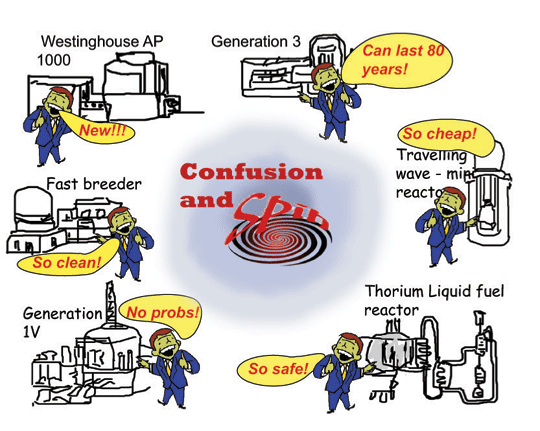
The original generations of civilian nuclear power failed to live up to their promises. The U.S. nuclear industry stalled in the mid-1970s and has not recovered, despite repeated government and industry attempts at a restart.
Gen III reactors were aimed at overcoming the perceived safety and economic shortcomings of the original machines. As those new designs appear to be falling short, attention has shifted to SMRs or new approaches that abandon traditional light-water technology. Whether they will live up to their billing remains a serious, open question. ■
—Kennedy Maize is a long-time energy journalist and frequent contributor to POWER. https://www.powermag.com/debate-continues-can-new-technology-save-nuclear-power/?pagenum=1
Tons of methane being released into atmosphere by melting ice sheets
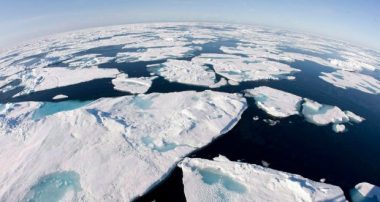 Melting ice sheets release tons of methane into the atmosphere, study finds https://www.eurekalert.org/pub_releases/2019-01/uob-mis010319.php, 3-JAN-2019
The Greenland Ice Sheet emits tons of methane according to a new study, showing that subglacial biological activity impacts the atmosphere far more than previously thought.
An international team of researchers led by the University of Bristol camped for three months next to the Greenland Ice Sheet, sampling the meltwater that runs off a large catchment (> 600 km2) of the Ice Sheet during the summer months.
As reported in Nature, using novel sensors to measure methane in meltwater runoff in real time, they observed that methane was continuously exported from beneath the ice.
They calculated that at least six tons of methane was transported to their measuring site from this portion of the Ice Sheet alone, roughly the equivalent of the methane released by up to 100 cows.
Professor Jemma Wadham, Director of Bristol’s Cabot Institute for the Environment, who led the investigation, said: “A key finding is that much of the methane produced beneath the ice likely escapes the Greenland Ice Sheet in large, fast flowing rivers before it can be oxidized to CO2, a typical fate for methane gas which normally reduces its greenhouse warming potency.”
Methane gas (CH4) is the third most important greenhouse gas in the atmosphere after water vapour and carbon dioxide (CO2). Although, present in lower concentrations that CO2, methane is approximately 20-28 times more potent. Therefore smaller quantities have the potential to cause disproportionate impacts on atmospheric temperatures. Most of the Earth’s methane is produced by microorganisms that convert organic matter to CH4 in the absence of oxygen, mostly in wetlands and on agricultural land, for instance in the stomachs of cows and rice paddies. The remainder comes from fossil fuels like natural gas.
While some methane had been detected previously in Greenland ice cores and in an Antarctic Subglacial Lake, this is the first time that meltwaters produced in spring and summer in large ice sheet catchments have been reported to continuously flush out methane from the ice sheet bed to the atmosphere.
Lead author, Guillaume Lamarche-Gagnon, from Bristol’s School of Geographical Sciences, said: “What is also striking is the fact that we’ve found unequivocal evidence of a widespread subglacial microbial system. Whilst we knew that methane-producing microbes likely were important in subglacial environments, how important and widespread they truly were was debatable. Now we clearly see that active microorganisms, living under kilometres of ice, are not only surviving, but likely impacting other parts of the Earth system. This subglacial methane is essentially a biomarker for life in these isolated habitats.”
Most studies on Arctic methane sources focus on permafrost, because these frozen soils tend to hold large reserves of organic carbon that could be converted to methane when they thaw due to climate warming. This latest study shows that ice sheet beds, which hold large reserves of carbon, liquid water, microorganisms and very little oxygen – the ideal conditions for creating methane gas – are also atmospheric methane sources.
Co-researcher Dr Elizabeth Bagshaw from Cardiff University added: “The new sensor technologies that we used give us a window into this previously unseen part of the glacial environment. Continuous measurement of meltwater enables us to improve our understanding of how these fascinating systems work and how they impact the rest of the planet.”
With Antarctica holding the largest ice mass on the planet, researchers say their findings make a case for turning the spotlight to the south. Mr Lamarche-Gagnon added: “Several orders of magnitude more methane has been hypothesized to be capped beneath the Antarctic Ice Sheet than beneath Arctic ice-masses. Like we did in Greenland, it’s time to put more robust numbers on the theory.”
This study was a collaboration between Bristol University, Charles University (Czechia), the National Oceanography Centre in Southampton, Newcastle University, the University of Toronto (Canada), the Université Libre de Bruxelles (Belgium), Cardiff University (UK), and Kongsberg Maritime Contros (Germany). It was funded by the Natural Environment Research Council (NERC), with additional funds from the Leverhulme Trust, the Czech Science Foundation, the Natural Sciences and Engineering Research Council of Canada, and the Fond de Recherche Nature et Technologies du Québec (Canada).
Paper: ‘Greenland melt drives continuous export of methane from the ice sheet bed’ by Guillaume Lamarche-Gagnon, Jemma L. Wadham, et al. Nature, Doi: 10.1038/s41586-018-0800-0
USA’s new Speaker in Congress, Nancy Pelosi states climate change as ‘The existential threat of our time’
 ‘The existential threat of our time’: Pelosi elevates climate change on Day One, Politico, By ANTHONY ADRAGNA and ZACK COLMAN , 01/03/2019
 Democrats put climate change back on the forefront of their governing agenda Thursday, portraying the issue as an “existential threat” even as the caucus remains split over how forcefully to respond.
Speaker Nancy Pelosi brought up the issue in her opening address while touting a new select panel to come up with ideas on how to solve it, and the Energy and Commerce Committee announced that climate change would be the subject of its very first hearing this year……..
Progressives, led in part by Rep. Alexandria Ocasio-Cortez (D-N.Y.), are tugging the caucus into a more urgent posture that they say best reflects what scientists have called for to avert climate change. The Intergovernmental Panel on Climate Change warned last year that the world has 12 years to put policies in place to avoid irreversible, catastrophic effects of climate change. ……..https://www.politico.com/story/2019/01/03/nancy-pelosi-climate-change-congress-1059148
Climate change: six positive news stories you probably missed this year.
The Conversation 28th Dec 2018
Renewable energy is being set up faster than ever; Chernobyl fights against
climate change; A new mobilising force for climate action; Global economic
growth may have peaked; Glimmer of hope in emissions reduction; Local
community energy is doing well.
https://theconversation.com/climate-change-six-positive-news-stories-you-probably-missed-this-year-108785
1 This Month
26 September – International Day for the Total Elimination of Nuclear Weapons





PLEASE OPPOSE HR 8255 AND S.3639 – bills would accelerate satellite deployment, with no environmental review or safeguards – https://ncstd5li.quorum.us/campaign/169331/
To see nuclear-related stories in greater depth and intensity – go to https://nuclearinformation.wordpress.com
-
Archives
- September 2026 (305)
- August 2026 (330)
- July 2026 (355)
- June 2026 (287)
- May 2026 (306)
- April 2026 (356)
- March 2026 (251)
- February 2026 (267)
- January 2026 (308)
- December 2025 (358)
- November 2025 (359)
- October 2025 (375)
-
Categories
- 1
- 1 NUCLEAR ISSUES
- business and costs
- climate change
- culture and arts
- ENERGY
- environment
- health
- history
- indigenous issues
- Legal
- marketing of nuclear
- media
- opposition to nuclear
- PERSONAL STORIES
- politics
- politics international
- Religion and ethics
- safety
- secrets,lies and civil liberties
- spinbuster
- technology
- Uranium
- wastes
- weapons and war
- Women
- 2 WORLD
- ACTION
- AFRICA
- Atrocities
- AUSTRALIA
- Christina's notes
- Christina's themes
- culture and arts
- Events
- Fuk 2022
- Fuk 2023
- Fukushima 2017
- Fukushima 2018
- fukushima 2019
- Fukushima 2020
- Fukushima 2021
- general
- global warming
- Humour (God we need it)
- Nuclear
- RARE EARTHS
- Reference
- resources – print
- Resources -audiovicual
- Weekly Newsletter
- World
- World Nuclear
- YouTube
-
RSS
Entries RSS
Comments RSS

