The protest comes a month after about 10,000 youngsters staged a nationwide school strike across 60 cities in Britain, showing how a grass roots movement inspired by a Swedish girl last summer had taken off…….
150,000 climate strikers at 60 locations across Australia in schoolchildren’s pprotest
Students strike to demand climate action | ABC News
Climate strikes attract 150,000 supporters, https://www.sbs.com.au/news/climate-strikes-attract-150-000-supporters, 16 Mar 19, About 150,000 people took part in climate strikes across the country on Friday, with students planning more rallies if their demands for more action aren’t met. About 150,000 students, parents and activists have taken to the streets to protest over the federal government’s inaction on climate change.
Strikes were held across the country on Friday at 60 locations, as part of a global effort to shine a light on climate change.
The protests were estimated to be 10 times the size of those held in November. The students have three demands: stop the Adani coal mine in central Queensland, no new coal or gas, and 100 per cent renewables by 2030.
More strikes will be planned if the students don’t see the action they want from the government.
“If the politicians are just going to throw our futures away there’s nothing we can do but be out here and say: we’re not going to let you do that,” 15-year-old Olivia Boddington told AAP at a climate strike in Canberra.
“We’re not going to just go away.”
Huge crowds gathered across the country on Friday, including at Sydney’s Town Hall Square, outside Melbourne’s Old Treasury Building and in Brisbane’s CBD.
The movement was inspired by Swedish teen Greta Thunberg, who has been striking for climate action since last August.
The 16-year-old’s activism has earned her a Nobel Peace Prize nomination.
Senior cabinet minister Christopher Pyne criticised the students for striking, saying the move will damage their education.
However, Labor national president Wayne Swan defended student activism.
Teenage Climate Activist Greta Thunberg Has Been Nominated for Nobel Peace Prize
Greta Thunberg, the 16-year-old from Sweden who started a global movement of schoolchildren striking to demand climate change action, has been nominated for the Nobel peace prize.
The nomination comes a day before thousands of pupils worldwide are expected to walk out of school in more than 1,600 towns and cities across more than 100 countries.
If she won, Thunberg would be the youngest person to become a Nobel peace prize laureate, a title Malala Yousafzai took as a 17-year-old in 2014 for her work on the right to education.
Climate winner
It would also be only the second time an individual had won for work on climate change. The first was former US vice-president Al Gore, who was awarded the prize in 2007 alongside the UN climate science group, the Intergovernmental Panel on Climate Change.
Thunberg tweeted that she was: “Honoured and very grateful for this nomination.”
The nomination was made by Freddy André Øvstegård, a member of the Norwegian parliament, and two colleagues in the Socialist Left Party.
Waste Isolation Pilot Project workers trapped underground during power outage, due to wild weather
WIPP workers trapped underground during power outage
The facility also ceased operations Wednesday due to an ongoing threat of heavy, damaging winds.
Tornadoes were confirmed Tuesday night in the Dexter and Loving areas.
Bobby St. John, spokesman for Nuclear Waste Partnership said an initial investigation showed WIPP’s utility provider lost power due to the “extreme weather.”……..
Work stoppage a safety measure
James Mason, acting public affairs manager with the U.S. Department of Energy’s Carlsbad Field Office said pausing WIPP operations on Wednesday was meant to ensure worker safety for commutes to and from the facility during the ongoing heavy winds.
“The decision not to work today was based the prediction of 80 mph wind gusts,” Mason said. “With the community out there, with high-profile traffic, it’s a safety measure.”…….https://www.currentargus.com/story/news/local/2019/03/13/wipp-workers-trapped-underground-during-power-outage-tornado/3151570002/
It is now inevitable that Arctic temperatures will rise sharply
Earth Spasms from Profoundly Abrupt Climate Change
 Sharp rise in Arctic temperatures now inevitable – UN https://www.theguardian.com/environment/2019/mar/13/arctic-temperature-rises-must-be-urgently-tackled-warns-u–Fiona Harvey, Environment correspondent 14 Mar 2019
 Temperatures likely to rise by 3-5C above pre-industrial levels even if Paris goals met Sharp and potentially devastating temperature rises of 3C to 5C in the Arcticare now inevitable even if the world succeeds in cutting greenhouse gas emissions in line with the Paris agreement, research has found.
Winter temperatures at the north pole are likely to rise by at least 3C above pre-industrial levels by mid-century, and there could be further rises to between 5C and 9C above the recent average for the region, according to the UN.
Such changes would result in rapidly melting ice and permafrost, leading to sea level rises and potentially to even more destructive levels of warming. Scientists fear Arctic heating could trigger a climate “tipping point” as melting permafrost releases the powerful greenhouse gas methane into the atmosphere, which in turn could create a runaway warming effect.
“What happens in the Arctic does not stay in the Arctic,” said Joyce Msuya, the acting executive director of UN Environment. “We have the science. Now more urgent climate action is needed to steer away from tipping points that could be even worse for our planet than we first thought.”
The findings, presented at the UN Environment assembly in Nairobi on Wednesday, give a stark picture of one of the planet’s most sensitive regions and one that is key to the fate of the world’s climate.
Last year’s stark warnings from the Intergovernmental Panel on Climate Change, setting out the dramatic impacts of 1.5C of global warming, did not include the impacts of potential tipping points such as melting permafrost.
If melting permafrost triggers a tipping point, the likely results would be global temperature rises well in excess of the 2C set as the limit of safety under the Paris agreement. Nearly half of Arctic permafrost could be lost even if global carbon emissions are held within the Paris agreement limits, according to the UN study.
Even if all carbon emissions were to be halted immediately, the Arctic region would still warm by more than 5C by the century’s end, compared with the baseline average from 1986 to 2005, according to the study from UN Environment.
That is because so much carbon has already been poured into the atmosphere. The oceans also have become vast stores of heat, the effect of which is being gradually revealed by changes at the poles and on global weather systems, and will continue to be felt for decades to come.
The assembly heard that there was still a need to fulfil the aims of the 2015 Paris agreement on climate change and to take further action that could stave off some of the worst effects of warming in the near term. “We need to make substantial near-term cuts in greenhouse gas emissions, black carbon and other so-called short-lived climate pollutants all over the world,” said Kimmo Tiilikainen, Finland’s environment minister.
Making drastic cuts to black carbon and short-lived pollutants such as methane could reduce warming by more than 0.5C, according to previous research.
Worldwide students strike for climate action, Friday 15 March
Hundreds of Thousands of Students Prepare for Global #ClimateStrike, Truthout Jessica Corbett, , Common Dreams, March 12, 2019 In 92 countries and counting, hundreds of thousands of students are planning to skip school on March 15 as part of the “School Strike 4 Climate” — a growing movement of young people demanding that policymakers worldwide take urgent and radical steps to battle the climate crisis.
For the past several months, students around the world have joined the#FridaysForFuture school strike launched last year by Swedish teenagerGreta Thunberg, whose solitary protests outside her country’s parliament — inspired by the Parkland students advocating for stricter gun laws in the United States — generated headlines that helped spur the global youth climate movement.
“I think we are only seeing the beginning. I think that change is on the horizon and the people will stand up for their future,” Thunberg told theGuardian about the mass mobilization planned for March 15. “It’s going to be very, very big internationally, with hundreds of thousands of children going to strike from school to say that we aren’t going to accept this any more.”
- Visit FridaysForFuture.org for more information.
- Find a protest near you (U.S. protests here).
- Plan and register your own protest.
- Check out this 350.org resource page: “5 ways you can support the school climate strikes.”
- Spread support on social media with the hashtags #FridaysForFuture,#ClimateStrike, and #SchoolStrike4Climate.
Although the movement has elevated public demands for coordinated global efforts to cut planet-warming emissions generated from human activity, Thunberg added: “I am not more hopeful than when I started. The emissions are increasing and that is the only thing that matters. I think that needs to be our focus. We cannot talk about anything else.” https://truthout.org/articles/hundreds-of-thousands-of-students-prepare-for-global-climatestrike/
School students’ Global Strike for Future – March 15
16 Year Old Protester Changes The World | Greta Thunberg | Goalcast
Striking for the future: From Australia to Japan to India, youths will skip school on March 15 to protest against climate change
Students from at least six Asian countries will take part in Global Strike for Future
But authorities in some countries have warned students not to disrupt classes South China Morning Post Zoe Low 10 Mar, 2019 On March 15, students from at least six countries in the Asia-Pacific will be part of a global school strike to demand concrete action from governments to tackle climate change.
The U.S. Youth Climate Strike
Adults won’t take climate change seriously. So we, the youth, are forced to strike. Bulletin of the Atomic Scientists By Maddy Fernands, Isra Hirsi, Haven Coleman, Alexandria Villaseñor, March 7, 2019 Editor’s note: The authors are the lead organizers of US Youth Climate Strike, part of a global student movement inspired by 16-year-old climate activist Greta Thunberg’s weekly school strikes in Sweden and other European countries.
We, the youth of America, are fed up with decades of inaction on climate change. On Friday, March 15, young people like us across the United States will strike from school. We strike to bring attention to the millions of our generation who will most suffer the consequences of increased global temperatures, rising seas, and extreme weather. But this isn’t a message only to America. It’s a message from the world, to the world, as students in dozens of countries on every continent will be striking together for the first time.
For decades, the fossil fuel industry has pumped greenhouse gas emissions into our atmosphere. Thirty years ago, climate scientist James Hansen warned Congress about climate change. Now, according to the most recent Intergovernmental Panel on Climate Change report on global temperature rise, we have only 11 years to prevent even worse effects of climate change. And that is why we strike.
We strike to support the Green New Deal. Outrage has swept across the United States over the proposed legislation. Some balk at the cost of transitioning the country to renewable energy, while others recognize its far greater benefit to society as a whole. The Green New Deal is an investment in our future—and the future of generations beyond us—that will provide jobs, critical new infrastructure and most importantly, the drastic reduction in greenhouse gas emissions essential to limit global warming. And that is why we strike.
To many people, the Green New Deal seems like a radical, dangerous idea. That same sentiment was felt in 1933, when Franklin D. Roosevelt proposed the New Deal—a drastic piece of legislation credited with ending the Great Depression that threatened (and cost) many lives in this country…….
The alarming symptoms of Climate Denialism—a serious condition affecting both the hallways of government and the general population—mark our current historical crossroads of make-it-or-break-it action on climate change. Although there are many reasons for this affliction—such as difficulty grasping the abstract concept of a globally changed climate, or paralysis in the face of overwhelming environmental catastrophe—the primary mode of Climate Denialism contagion involves lies spouted by politicians, large corporations, and interest groups. People in power, like Senator McConnell and the Koch brothers, have used money and power to strategically shift the narrative on climate change and spread lies that allow themselves and other fossil fuel industry beneficiaries to keep the fortunes they’ve built on burning fossil fuels and degrading the environment. …….
We strike because our world leaders haven’t acknowledged, prioritized, or properly addressed the climate crisis. We strike because marginalized communities across our nation—especially communities of color and low income communities—are already disproportionately impacted by climate change. We strike because if the societal order is disrupted by our refusal to attend school, then influential adults will be forced to take note, face the urgency of the climate crisis, and enact change. With our future at stake, we call for radical legislative action—now—to combat climate change and its countless detrimental effects on the American people. We strike for the Green New Deal, for a fair and just transition to a 100 percent renewable economy, and to stop creation of new fossil fuel infrastructure. We strike because we believe the climate crisis should be called what it really is: A national emergency, because we are running out of time. https://thebulletin.org/2019/03/adults-wont-take-climate-change-seriously-so-we-the-youth-are-forced-to-strike/?utm_source=Bulletin%20Newsletter&utm_medium=iContact%20email&utm_campaign=ClimateStrikeOpEd_03072019
Where climate threat and nuclear threat meet: Top Secret US Cold War Nuclear Base in Greenland
Melting Ice Sheets Could Reveal Top Secret US Cold War Nuclear Base https://www.iflscience.com/environment/melting-ice-sheets-could-reveal-top-secret-us-cold-war-nuclear-base/ 11 Mar 19, Among the many Bond villain–esque plans dreamed up during the Cold War, few come stranger than “Project Iceworm,” the shady US program to build a network of top secret nuclear missile launch sites beneath the Danish territory of Greenland. The largest and most impressive of the US bases was Camp Century, a warren of tunnels and labs under northwest Greenland’s ice sheet that was powered by its own portable nuclear reactor.
After just eight years of operation, Camp Century was decommissioned in 1967 due to engineering woes and a political scandal centered on whether Denmark had actually given the US full permission to house nuclear materials in their territory.
As the Cold War ended, the base was largely forgotten, not least because it was hoped to remain “preserved for eternity” under a blanket of snow and ice. However, with climate change knocking at the door, it looks like a different kind of thaw could reveal all.
A study published in 2016 used simulations to show that the ice above and around Camp Century could thaw by 2090 under a “business-as-usual” climate change scenario. Not only would this unearth the once-secret abandoned military base, but it also holds the potential to let loose the huge amounts of chemical and nuclear waste left at the site. These pollutants could leech into the surrounding surface water and spark a plethora of problems for the island’s human population and ecosystem.
Another study, published last year in the journal Global Environmental Politics, took a further look at the situation at Camp Century, arguing it has the potential to fire up some long-frozen geopolitical tensions. It’s not very clear how much Denmark knew about the US’ plans in Greenland. While they agreed the US could have the Thule Air Base in northwest Greenland, the issue of nuclear weapons in Danish territory was a big no-no. To make matters even thornier, Greenland has since transitioned to a self-governing overseas administrative division of Denmark.
If the climatic scenario predicted does hit, as anticipated, who will be responsible for the clean-up of toxic chemicals and radioactive materials?
As the study argues, Camp Century is not the only problem. This scenario serves as just one example of how climate change could trigger a huge number of unforeseen consequences in international politics, especially when it comes to overseas military bases.
“The case could be the proverbial canary in the coal mine for future politics surrounding overseas military bases,” according to study author Jeff Colgan.
“Climate change can create knock-on environmental problems associated with a military base’s infrastructure or waste that disrupt the international politics that govern the base,” he wrote in the study. “Any cleanup costs or compensation related to the knock-on environmental problems create an unfunded liability for the host country, the country operating the base, or both.”
This is just another unexpected fallout of the climate issue we’re facing that needs to be dealt with sooner rather than later.
Melting of Arctic sea ice will greatly enhance warming in Arctic

Atmospheric scientists reveal the effect of sea-ice loss on Arctic warming https://www.eurekalert.org/pub_releases/2019-03/ioap-asr030819.php
Scientists from State University of New York, Albany and Institute of Atmospheric Physics, Chinese Academy of Sciences found the answers by means of historical data analyzation and climate model simulations. Their analyses indicated that AA would not slow down until the 22nd and 23rd centuries, after almost all of the Arctic’s sea ice has melted away with GHGs emissions increasing.
“Rapid Arctic warming and sea ice loss are attracting a lot of attention in the media, public and scientific community. Our study links the two together and suggests that the sea ice loss is causing the rapid warming in the Arctic,” said the lead author, Aiguo DAI, In a news release. “When the sea ice melts away completely, this elevated warming will also disappear and the warming rate in the Arctic will be similar to the rest of the world,”
According to this research, the large AA only occurs in clod season (October to April), and only over the area of prominent sea-ice loss. This is mainly because seasonal sea-ice melting from May to September causes more extensive upper seawater and absorbs more sunlight during the warm season and the heat energy is stored in sea-surface Arctic waters. Most of this energy is released into the atmosphere through longwave radiation, and latent and sensible heat fluxes to heating the atmosphere during the cold season when Arctic Ocean becomes a heat source, leading to the large AA.
Scientists warn that the melting of Arctic sea ice will greatly enhance warming in Arctic for the coming decades and could also impact weather patterns in mid-latitudes, causing more frequent intrusions of winter polar vortex into China and the continental U.S., leading to extreme events including severe winter weather.
This research was published in Nature Communications.
Rising temperatures threaten health of fetuses, researchers say
 March 6, 2019 By Ruth SoRelle, Texas Climate News Climate change evokes images of people swimming out of their flooded neighborhoods, cars bumper-to-bumper as drivers flee burning homes, merciless sun that dries up rivers and lakes. However, climate change is more than these very visible disasters. Of equal or greater danger is the silent, unseen damage that may occur in the gestating fetus – damage that can last a lifetime.
On this warming planet, mosquito-borne diseases are increasing
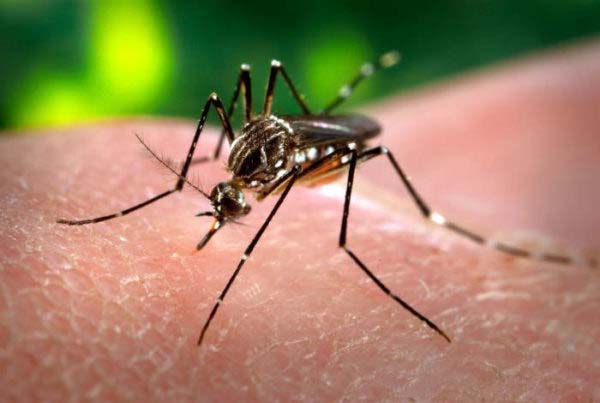 Climate Change Will Expose Half of World’s Population to Disease-Spreading Mosquitoes By 2050 https://e360.yale.edu/digest/climate-change-will-expose-half-of-worlds-population-to-disease-spreading-mosquitoes-by-2050 MARCH 5, 2019 Scientists and public health officials have documented an increasing number of outbreaks of mosquito-borne illnesses across the globe in recent years, including yellow fever, dengue, chikungunya, and Zika. Now, an international team of researchers has found that by 2050, two key disease-spreading mosquitoes — Aedes aegypti and Aedes albopictus — will significantly expand their range, posing a threat to 49 percent of the world’s population.
“If no action is taken to reduce the current rate at which the climate is warming, pockets of habitat will open up across many urban areas with vast amounts of individuals susceptible to infection,” said Moritz Kraemer, an infectious disease scientist at Boston Children’s Hospital and the University of Oxford and a co-author of the new research, published in the journal Nature Microbiology,.
The researchers analyzed historical distribution data from more than 3,000 locations in Europe and the United States, dating back to the 1970s. They then modelled future distribution using projections for climate change, urbanization, and human migration and travel. Kraemer and his colleagues found that in the last five years, Aedes aegypti has spread northward in the U.S. at about 150 miles per year. In Europe, Aedes albopictus has spread at a rate of 93 miles per year.
The scientists also found that within the next 5 to 15 years, human travel and migration will be the largest factors driving the spread of mosquitoes. After that, however, climate change and accelerating urbanization will create new mosquito habitats. Aedes aegypti could reach as far north as Chicago and Shanghai by 2050. However, the species will likely decline in parts of the southern U.S. and Eastern Europe, which are expected to become more arid as global temperatures rise. Aedes albopictus, on the other hand, is forecast to spread widely throughout Europe over the next 30 years, as well as establish small populations in parts of the northern U.S. and the highland regions of South America and East Africa.
Global politics made more dangerous by climate change – Obama

Obama warns climate change will make global politics more toxic https://thehill.com/blogs/blog-briefing-room/news/432773-obama-warns-climate-change-will-make-global-politics-more-toxicFormer President Obama on Tuesday dismissed climate change skeptics and warned that the world’s inability to effectively tackle the issue will toxify global politics. “It is indisputable that although we can’t ascribe any particular kind of weather event to rising temperatures, that at the current pace that we are on, the scale of tragedy that will consume humanity is something we have not seen in perhaps recorded history if we don’t do something about it,” Obama said during a trip to Canada, according to CTV News.
“Imagine when you have not a few hundred thousand migrants who are escaping poverty or violence or disease, but you now have millions. Imagine if you start seeing monsoon patterns in the Indian subcontinent changing so that half a billion people can’t grow food and are displaced,” he added. “Think about what that does to the politics of the world — not just the economics of it, not just the environment.”
Obama was an outspoken proponent of combating climate change while in the White House. Under his leadership, the U.S. was one of the signatories of the historic Paris climate accord, in which world powers agreed to take measurable steps to reduce their man-made footprint on the environment. President Trump announced in 2017 that the U.S. would withdraw from the agreement.
The former Democratic president on Tuesday told a packed crowd in Calgary, Alberta, home to many struggling oil and gas companies, that nobody can escape the impacts of climate change.
“All of us are going to have to recognize that there are trade-offs involved with how we live, how our economy is structured, and the world that we’re going to be passing on to our kids and grandkids. Nobody is exempt from that conversation,” Obama said.
He also noted that rising oceans risk coastal populations and environmental changes have boosted the frequency of insect-borne diseases.
“Moose right now [have] to deal with tick-borne diseases that they didn’t have to do 10, 15 years ago. I really like moose. I assume, Canadians, you do too,” Obama said. “These are just facts.”
Climate change and the uncertain future for migratory birds
Study: Climate change is leading to unpredictable ecosystem disruption for migratory birds, Phys Org, March 5, 2019, Cornell University Using data on 77 North American migratory bird species from the eBird citizen-science program, scientists at the Cornell Lab of Ornithology say that, in as little as four decades, it may be very difficult to predict how climate change will affect migratory bird populations and the ecosystems they inhabit. Their conclusions are presented in a paper published in the journal Ecography.
Climates have natural variation and we’re moving rapidly into territory where the magnitude of climate change will consistently exceed this variation,” says lead author and Cornell Lab researcher Frank La Sorte. “There will be no historic precedent for these new climates, and migratory bird populations will increasingly encounter ‘novel’ climatic conditions. The most likely outcome will be a period of ecological disruption as migratory birds and other species try to respond or adapt to these new conditions.”
Cornell Lab scientists generated new climate models incorporating multiple sources of data. This produced a timeline indicating when and where migratory bird populations are likely to be significantly affected by novel climates during each phase of their annual life cycles. It’s not that far off:
- Last 40 to 50 years of this century. During this period, migrants such as the Black-and-white Warbler, are likely to first experience novel climates on their tropical wintering grounds (regions south of Florida) and also during the late summer on their breeding grounds in the North American temperate zone (above the nation’s midsection).
- First 50 years of the next century. This is when novel climates are likely to emerge for birds that winter in the subtropics—the southern half of the U.S.
The study authors conclude that by the middle of the next century migratory bird populations will experience novel climates during all phases of their annual life cycles………. https://phys.org/news/2019-03-climate-unpredictable-ecosystem-disruption-migratory.html
Major presidential candidate in USA running on climate action policy
Think Progress 1st March 2019 , For the first time in history, a major presidential candidate is putting
climate change center stage in their campaign. Washington Gov. Jay Inslee
(D) announced on Friday he will seek to challenge President Donald Trump in
2020. “This is our moment, our climate, our mission — together, we can
defeat climate change. That’s why I’m running for president,” Inslee
said on Twitter. In a video announcing his presidential campaign, he called
climate change “the most urgent challenge of our time,” adding,
“we’re the first generation to feel the sting of climate change. And
we’re the last that can do something about it.”
Oxygen in oceans declining – climate change brings this threat to marine life
The Ocean Is Running Out of Breath, Scientists Warn
Widespread and sometimes drastic marine oxygen declines are stressing sensitive species—a trend that will continue with climate change, Scientific American , By Laura Poppick on February 25, 2019 Escaping predators, digestion and other animal activities—including those of humans—require oxygen. But that essential ingredient is no longer so easy for marine life to obtain, several new studies reveal.
In the past decade ocean oxygen levels have taken a dive—an alarming trend that is linked to climate change, says Andreas Oschlies, an oceanographer at the Helmholtz Center for Ocean Research Kiel in Germany, whose team tracks ocean oxygen levels worldwide. “We were surprised by the intensity of the changes we saw, how rapidly oxygen is going down in the ocean and how large the effects on marine ecosystems are,” he says.
It is no surprise to scientists that warming oceans are losing oxygen, but the scale of the dip calls for urgent attention, Oschlies says. Oxygen levels in some tropical regions have dropped by a startling 40 percent in the last 50 years, some recent studies reveal. Levels have dropped more subtly elsewhere, with an average loss of 2 percent globally.
Ocean animals large and small, however, respond to even slight changes in oxygen by seeking refuge in higher oxygen zones or by adjusting behavior, Oschlies and others in his field have found. These adjustments can expose animals to new predators or force them into food-scarce regions. Climate change already poses serious problems for marine life, such as ocean acidification, but deoxygenation is the most pressing issue facing sea animals today, Oschlies says. After all, he says, “they all have to breathe.”
A warming ocean loses oxygen for two reasons: First, the warmer a liquid becomes, the less gas it can hold. …… https://www.scientificamerican.com/article/the-ocean-is-running-out-of-breath-scientists-warn/
1 This Month
26 September – International Day for the Total Elimination of Nuclear Weapons





PLEASE OPPOSE HR 8255 AND S.3639 – bills would accelerate satellite deployment, with no environmental review or safeguards – https://ncstd5li.quorum.us/campaign/169331/
To see nuclear-related stories in greater depth and intensity – go to https://nuclearinformation.wordpress.com
-
Archives
- September 2026 (291)
- August 2026 (330)
- July 2026 (355)
- June 2026 (287)
- May 2026 (306)
- April 2026 (356)
- March 2026 (251)
- February 2026 (267)
- January 2026 (308)
- December 2025 (358)
- November 2025 (359)
- October 2025 (375)
-
Categories
- 1
- 1 NUCLEAR ISSUES
- business and costs
- climate change
- culture and arts
- ENERGY
- environment
- health
- history
- indigenous issues
- Legal
- marketing of nuclear
- media
- opposition to nuclear
- PERSONAL STORIES
- politics
- politics international
- Religion and ethics
- safety
- secrets,lies and civil liberties
- spinbuster
- technology
- Uranium
- wastes
- weapons and war
- Women
- 2 WORLD
- ACTION
- AFRICA
- Atrocities
- AUSTRALIA
- Christina's notes
- Christina's themes
- culture and arts
- Events
- Fuk 2022
- Fuk 2023
- Fukushima 2017
- Fukushima 2018
- fukushima 2019
- Fukushima 2020
- Fukushima 2021
- general
- global warming
- Humour (God we need it)
- Nuclear
- RARE EARTHS
- Reference
- resources – print
- Resources -audiovicual
- Weekly Newsletter
- World
- World Nuclear
- YouTube
-
RSS
Entries RSS
Comments RSS

