Uranium waste in New Mexico puts lie to ‘carbon free’
Uranium waste in NM puts lie to ‘carbon free’, Albuquerque Journal, BY DUANE CHILI YAZZIE / SHIPROCK CHAPTER PRESIDENT, NAVAJO NATION, April 26th, 2019 “……..We must understand that abuse of seemingly inanimate matter has consequence. The extraction of uranium and the exploitation of it causes compounded waste and resultant compounded consequence. We have created mountains of radioactive waste; because we have limited knowledge and capacity to conclusively, effectually and permanently deal with this waste, we bury it. Out of sight, out of mind does not ease our minds because we know it is there. My community of Shiprock has one of the largest uranium waste disposal cells in the country sitting in the middle of our community. People who naively exalt science and technology may simultaneously inebriate themselves from the consequence of the devastating reality.The natural law of cause and effect predicates all. With my Navajo people, we have suffered the deaths of hundreds of our uranium miners, millers, transporters and affected family members due to health complications caused by exposure to uranium. In 1979 a United Nuclear Corp. holding pond burst, releasing 94 million gallons of radioactive waste that cascaded through Gallup and on downstream. Women and children who waded in the contaminated Rio Puerco, burning their feet, were told that the radioactive water was a figment of their imagination. … Our lives continue to be at stake. The radioactive levels remain, and we, the contaminated people, continue to develop uranium-related health issues. We die a slow death. The world of science and technology has damaged us and the natural world.
The Public Service Company of New Mexico, which has made an incredible indelible scar of industrial consequence on New Mexico and the Earth, now wants to add more nuclear to its portfolio. By doing so, PNM will only amplify this consequence. Some say that nuclear-generated electricity should be allowed because it is “carbon-free.” From a life-cycle perspective, it is not carbon-free. The semantics are irrelevant; what matters is the eventual and permanent negative impact and consequence to the land, the people and our planet Earth.
(In honor of) this Earth Day, it is imperative we acknowledge the damage done to the integrity of the life of Earth. The seemingly insurmountable effect from the cause of the extractive industry demands our attention. We have a climate crisis that is ebbing the life of our planet. The delicate balance of the equilibrium of the Earth and its life systems have been dangerously upset. We cannot further aggravate this great dilemma with more uranium exploitation and continue to destroy the sanctity of our Earth Mother and all life upon and within her.https://www.abqjournal.com/1307342/uranium-waste-in-nm-puts-lie-to-carbon-free.html
Climate change is already having big impacts on Earth
 The Last Time There Was This Much CO2, Trees Grew at the South Pole, Dahr Jamail, Truthout , 29 April 19, “……… Earth The impact of runaway emissions is already upon us. Several cities in the northern U.S., such as Buffalo, Cincinnati and Duluth, are already preparing to receive migrants from states like Florida, where residents are beset with increasing flooding, brutal heat waves, more severe and frequent hurricanes, sea level rise, and a worse allergy season. City planners in the aforementioned cities are already preparing by trying to figure out how to create jobs and housing for an influx of new residents.
Indications of the climate disruption refugee crisis are even more glaring in some other countries.
Large numbers of Guatemalan farmers already have to leave their landdue to drought, flooding, and increasingly severe extreme weather events.
In low-lying Bangladesh, hundreds of thousands of people are already in the process of being displaced from coastal homes, and are moving into poverty-stricken areas of cities that are already unprepared to receive the influx of people. Given that 80 percent of the population of the country already lives in a flood plain, the crisis can only escalate with time as sea level rise continues to accelerate.
Meanwhile, diseases spread by mosquitoes are also set to worsen in our increasingly warm world. A recently published study on the issue shows that over the next three decades, half a billion more people could be at risk of mosquito-delivered diseases.
Other migrations are occurring as well. In Canada’s Yukon, Indigenous elders told the CBC that caribou and moose are moving further north than ever before in order to escape the impacts of climate disruption like warmer summers, lakes and rivers that don’t freeze, and adjusting their migrations to find more food. This has deep impacts on the survival and culture of the area’s Indigenous residents.
In economic news, a researcher for the Federal Reserve Bank recently penned a letter urging central banks to note the financial risks, and possibly an impending financial crisis, brought about by climate disruption. “Without substantial and sustained global mitigation and regional adaptation efforts,” read the letter, “climate change is expected to cause growing losses to American infrastructure and property and impede the rate of economic growth over this century.”
Another report showed that climate disruption is already negatively impacting fruit breeders, and consumers will soon feel the pain of higher prices. “We are seeing industries that may not survive if we don’t find a solution, and we are only just seeing the consequences of climate change,” Thomas Gradziel, of the University of California at Davis, told The Washington Post.
Underscoring all of this, the Global Seed Vault in Svalbard, Norway, known as the “Doomsday Vault,” has already been altered by climate disruption impacts. The primary impacts thus far have been floodingaround the vault, given how warm temperatures have become across the Arctic. The Doomsday Vault holds nearly one million seeds from around the globe, and functions as a backup in case climate disruption, war, famine, or disease wipes out certain crops. In other words, it’s a backup plan to backup plans. A recent report showed that climate change’s impacts on the seed vault could get worse as snow season shortens, heavier and more frequent rainfalls escalate, and avalanches and mudslides near the vault become more common.
Lastly in this section, researchers recently warned that the Arctic has now entered an “unprecedented state” that is literally threatening the stability of the entire global climate system. Their paper, “Key Indicators of Arctic Climate Change: 1971–2017,” with both American and European climate scientists contributing, warned starkly that changes in the Arctic will continue to have massive and negative impacts around the globe.
“Because the Arctic atmosphere is warming faster than the rest of the world, weather patterns across Europe, North America, and Asia are becoming more persistent, leading to extreme weather conditions,” Jason Box, the lead author of the paper said. ……….. https://truthout.org/articles/the-last-time-there-was-this-much-co2-trees-grew-at-the-south-pole/
Political leaders in Britain are not strong enough to tackle the climate change crisis- Lord Stern
Times 29th April 2019 , Political leaders in Britain are not strong enough to tackle the climate
change crisis, according to one of the country’s leading authorities on the
subject. Lord Stern of Brentford, author of the Stern Review on the cost of
tackling global warming, said that politicians were holding the country
back from making progress on the issue.
“Has the political leadership been
strong enough? No, I don’t think so,” he said. He added that protests by
campaigners such as Greta Thunberg, the 16-year-old climate activist from
Sweden, and Extinction Rebellion, a group that caused disruption in the
capital last week, would help to build awareness and spur politicians into
action.
“Leadership is absolutely fundamental, but that doesn’t come out of
nowhere, it comes as these pressures build,” he said. Lord Stern, a former
chief economist at the Treasury and the World Bank, is among Britain’s most
respected thinkers on the environmental crisis. In 2006 he published The
Stern Review: The Economics of Climate Change, which described global
warming as the “greatest and widest-ranging market failure ever seen”.
He told The Times that policymakers needed to act to avert a catastrophic rise
in global temperatures. If they waited an additional ten to fifteen years
before taking radical steps to reduce carbon emissions, it would be too
late, he said.
https://www.thetimes.co.uk/article/c233cb30-69e1-11e9-95be-9353feb218cd
The Last Time There Was This Much CO2, Trees Grew at the South Pole
Dahr Jamail, Truthout , 29 April 19, It is palpable now. Even the most ardent deniers of human-caused climate disruption can feel the convulsions wracking the planet…..
The signs of our overheated planet abound, and another collection of recent reports and studies shows things are only continuing to accelerate as human-caused climate disruption progresses.
A recently published study showed that Earth’s glaciers are now melting five times more rapidly than they were in the 1960s.“The glaciers shrinking fastest are in central Europe, the Caucasus region, western Canada, the U.S. Lower 48 states, New Zealand and near the tropics,” lead author Michael Zemp, director of the World Glacier Monitoring Service at the University of Zurich told Time Magazine. Glaciers in those places are losing an average of more than 1 percent of their mass each year, according to the study. “In these regions, at the current glacier loss rate, the glaciers will not survive the century,” added Zemp.
Meanwhile, the World Meteorological Organization announced that extreme weather events impacted 62 million people across the world last year. In 2018, 35 million people were struck by flooding, and Hurricanes Florence and Michael were just two of 14 “billion-dollar disasters” in 2018 in the U.S. More than 1,600 deaths were linked to heat waves and wildfires in Europe, Japan and the U.S. The report also noted the last four years were the warmest on record.As an example of this last statistic, another report revealed that Canada is warming at twice the global rate. “We are already seeing the effects of widespread warming in Canada,” Elizabeth Bush, a climate science adviser at Environment Canada, told The Guardian. “It’s clear, the science supports the fact that adapting to climate change is an imperative.”
Another recent report showed that the last time there was this much CO2 in the atmosphere (412 ppm), in the Pliocene Epoch 5.3 to 2.6 million years ago, sea levels were 20 meters higher than they are right now, trees were growing at the South Pole, and average global temperatures were 3 to 4 degrees Centigrade (3°-4° C) warmer, and even 10°C warmer in some areas. NASA echoed the report’s findings.
And if business as usual continues, emissions will only accelerate. The International Energy Agency announced that global carbon emissions set a record in 2018, rising 1.7 percent to a record 33.1 billion tons……….. https://truthout.org/articles/the-last-time-there-was-this-much-co2-trees-grew-at-the-south-pole/
David Attenborough’s strong defence of the school children who strike for climate action

The outrage of the students striking from school over climate change inaction is “certainly justified”, according to Sir David Attenborough, who said older generations had done terrible damage to the planet.In an interview with the former UN climate chief Christiana Figueres, the broadcaster and naturalist dismissed critics of the widely praised global movement of school strikes as cynics.
“[Young people] understand the simple discoveries of science about our dependence upon the natural world,” he said. “My generation is no great example for understanding – we have done terrible things.”
The protests by young people were enormously encouraging, Attenborough said. “That is the one big reason I have for feeling we are making progress. If we were not making progress with young people, we are done.”
The outrage of the students striking from school over climate change inaction is “certainly justified”, according to Sir David Attenborough, who said older generations had done terrible damage to the planet.
In an interview with the former UN climate chief Christiana Figueres, the broadcaster and naturalist dismissed critics of the widely praised global movement of school strikes as cynics.
“[Young people] understand the simple discoveries of science about our dependence upon the natural world,” he said. “My generation is no great example for understanding – we have done terrible things.”
The protests by young people were enormously encouraging, Attenborough said. “That is the one big reason I have for feeling we are making progress. If we were not making progress with young people, we are done.”……
The outrage of the students striking from school over climate change inaction is “certainly justified”, according to Sir David Attenborough, who said older generations had done terrible damage to the planet.
In an interview with the former UN climate chief Christiana Figueres, the broadcaster and naturalist dismissed critics of the widely praised global movement of school strikes as cynics.
“[Young people] understand the simple discoveries of science about our dependence upon the natural world,” he said. “My generation is no great example for understanding – we have done terrible things.”
The protests by young people were enormously encouraging, Attenborough said. “That is the one big reason I have for feeling we are making progress. If we were not making progress with young people, we are done.”……https://www.theguardian.com/environment/2019/apr/26/david-attenborough-backs-school-climate-strikes-outrage-greta-thunberg
Across the world. Extinction Rebellion climate activists stage “die-in”
 Extinction Rebellion activists stage die-in protests across globe https://www.theguardian.com/environment/2019/apr/27/extinction-rebellion-activists-stage-die-in-protests-across-globe Mattha Busby @matthabusby, 28 Apr 2019
Environmental protesters lay on the ground at transport hubs, venues and shopping centres
At the Kelvingrove art gallery and museum in Glasgow, about 300 activists lay down beneath Dippy, the famous copy of a diplodocus skeleton which is currently touring the UK, for 20 minutes on the sound of a violin.
Many held handwritten signs with the question “Are we next?”, while children held pictures they had drawn of their favourite at-risk animals as part of the event organised by Wee Rebellion, a climate-change protest group for young people in Glasgow associated with Extinction Rebellion.
Twelve-year-old Lida said: “We want to raise awareness about climate change. If we keep carrying on the way we are humans may become extinct, like Dippy.” Aoibhìn, 7, said: “Lots of animals are dying out because of climate change.”
The group said industrial agriculture, overfishing and deforestation could lead to food shortages in the UK and serious flooding in parts of Glasgow.
In Lund, a number of people took to the cobbled streets of the southern Swedish city in the rain, urging people to take greater notice of what they called a looming climate catastrophe.
Meanwhile, in Oslo, about 30 people occupied the floor of a shopping centre. Extinction Rebellion Norway tweeted: “Full stoppage at Oslo City while we campaigned against the clothing industry’s wild environmental degradation. It is the world’s second largest polluter after the oil industry.”
The actions were part of worldwide celebration at 12.05pm called by Extinction Rebellion Berlin following the protests that began in London in November 2018, which have since spawned a mass movement.
A spokesperson for the group said in a statement: “Our ecosystem is threatened by collapse, which will not only lead to mass extinction of countless species, the loss of soil fertility and more extreme weather but will also bring with it the social crises of famine, war and migration.
Nuclear power to fix climate change? As likely as catching a unicron

Alberta nuclear energy just a unicorn, EDMONTON JOURNAL
Re. “Fear not, new nuclear reactors can solve Canada’s climate change crises,” David Staples, April 26
David Staples argues nuclear means we don’t have to fear climate change. There are a few assumptions behind his suggestions that I take issue with.
First, is that a consensus on nuclear is politically achievable. It’s as if Fukushima, Chernobyl, Three Mile Island, et cetera, haven’t happened or that we’ll just forget about them and agree to build something better this time. I suggest approval of nuclear is as likely as finding Sasquatch. If you think it’s tough to build a pipeline, just try to sell something with toxic waste that lasts forever but can make terrible weapons.
Nuclear would take years of lobbying, and if successful, be followed by years of construction. The technical complexity, political controversy and financial uncertainty guarantee these projects are always way behind schedule. Reactor projects in the UK and Germany have been cancelled.
The second assumption is that business as usual is fine in the meantime. The Calgary flood, Fort McMurray fire, et cetera, have shown Albertans and Canadians that we are in an emergency.
We do not have time to waste chasing unicorns; carbon capture and storage has certainly taught us that. Time is more valuable than money now. https://edmontonjournal.com/opinion/letters/saturdays-letters-alberta-nuclear-energy-just-a-unicorn
UK Labour aims to declare a national climate emergency
|
Corbyn launches bid to declare a national climate emergency, Guardian, Toby Helm
Sun 28 Apr 2019 Labour will attempt to force Commons vote as it is revealed that the government has failed to spend anti-pollution cash, Labour will this week force a vote in parliament to declare a national environmental and climate change emergency as confidential documents show the government has spent only a fraction of a £100m fund allocated in 2015 to support clean air projects.Jeremy Corbyn’s party will demand on Wednesday that the country wakes up to the threat and acts with urgency to avoid more than 1.5°C of warming, which will require global emissions to fall by about 45% from 2010 levels by 2030, reaching “net zero” before 2050. The move will place Conservative MPs under pressure to back the plan, or explain why they refuse to do so, now fears over the combined problems of air pollution and climate change have risen to the top of the political agenda. On Saturday night Corbyn said the recent wave of protests were “a massive and necessary wake-up call” that demanded “rapid and dramatic action, which only concerted government action and a green industrial revolution can deliver.” He said that if parliament backed the move and became the first national legislature to declare a climate emergency it would “trigger a wave of action from governments around the world”. The motion was welcomed by Greta Thunberg, the 16-year-old Swedish climate activist who has criticised the inaction of the world’s politicians. “It is a great first step because it sends a clear signal that we are in a crisis and that the ongoing climate and ecological crises must be our first priority,” she said. “We can not solve an emergency without treating it like an emergency. “I hope the other UK political parties join in and together pass this motion in parliament – and that political parties in other countries will follow their example.” ….. This week, Pascal Lamy, the World Trade Organisation’s former director general, will add to the pressure on the government, warning a London audience that Brexit risks damaging the UK’s leadership on climate change. Lamy’s intervention accompanies new research from leading lawyers showing that existing preparations would not prevent damaging roll-backs on key climate change and environmental protections. It comes just days before the Committee on Climate Change publishes advice to the government on long-term climate change targets. Lamy will say: “It is vital that any new trade deal or environment treaty between the UK and EU protects the region’s global leadership position on climate change. Without safeguardsto ensure strong continued cooperation and alignment, Brexit could destroy environmental protections – well beyond allowing chlorinated chicken imports.” Writing in Sunday’s Observer shadow business secretary Rebecca Long-Bailey says: “Unless we take rapid action to reduce the amount of carbon dioxide we are releasing into the atmosphere, we face total catastrophe.” https://www.theguardian.com/environment/2019/apr/27/corbyn-declares-national-climate-emergency |
|
“Climate Emergency Independents” emerge from Extinction Rebellion to stand for UK Parliament

 Guardian 26th April 2019, Activists who took part in the Extinction Rebellion protests have announcedthey will stand in the European elections on a “climate emergency” ticket.
Under the name Climate Emergency Independents the new group, which is
separate from Extinction Rebellion, nine candidates will stand in the 23
May polls – seven in London and two in south-west England region. The group
said it was inspired by the mass civil disobedience demonstrations on the
streets of London over the past two weeks as well by Greta Thunberg and the
global school strikes movement she inspired.
Secretive Fossil Fuel Lobby Group, “Global Climate Coalition”, Manipulated UN Climate Programs
 Global Climate Coalition: Documents Reveal How Secretive Fossil Fuel Lobby Group Manipulated UN Climate Programs, https://www.desmogblog.com/2019/04/25/global-climate-coalition-documents-secretive-fossil-fuel-lobby-un-programs By Mat Hope and Karen Savage • , April 24, 2019 A fossil fuel–backed industry group was able to influence the process behind the United Nations climate assessments for decades, using lobbyists and industry-funded scientists to manipulate international negotiations, a cache of recently discovered documents reveals.
The documents include hundreds of briefings, meeting minutes, notes, and correspondence from the Global Climate Coalition (GCC). They were released Thursday by the Climate Investigations Center in collaboration with DeSmog and Climate Liability News. The documents date from 1989 and continue through 2002, when the lobbying group disbanded as its fossil fuel industry backers succumbed to public pressure to disavow its tactics.
The documents show how the GCC influenced international negotiations, manipulated the Intergovernmental Panel on Climate Change’s (IPCC) process, and undertook a disinformation campaign designed to cast doubt on mainstream climate science.
What was the Global Climate Coalition?
The GCC was initially part of the National Association of Manufacturers (NAM), before becoming its own entity in 1995. NAMhas a long history of defending portions of its membership, including tobacco companies that were facing an onslaught of liability litigation, with aggressive tactics that include discrediting science, attacking scientists, and misleading the public.
Founding members of the GCC were mainly fossil fuel producers and utilities, including oil majors Shell, Texaco (now a part of Chevron), and Amoco (now part of BP); oil refiner and retailers ARCO (now a subsidiary of Marathon Petroleum) and Phillips Petroleum; coal miners BHP-Utah International and Peabody; and utilities American Electric Power and Pacific Gas and Electric.
Other companies, including Exxon, joined later — and the international oil giant would go on to be a key player in the group.
Revealed in the documents is a decades-long campaign that continued until 2002, intended to protect its members’ interests by denying and casting doubt on climate science. Internally, the group acknowledged the dangers of climate change and the scientific consensus that it is overwhelmingly driven by the burning of fossil fuels as early as 1995.
Influencing the UN’s Panel of Climate Scientists
The GCC took a particular interest in the operations of the UN’s official scientific advisory body, the Intergovernmental Panel on Climate Change (IPCC), which produces the international climate assessments that form the basis for global climate policy and negotiations.
GCC representatives regularly met with IPCC scientists to lobby the panel to accept industry language in its reports, the documents show. Tax returns show hundreds of thousands of dollars spent on an “IPCC Tracker Fund” to monitor and lobby the IPCC’s meetings.
In one instance detailed in the documents, the GCC boasted its suggested language was “accepted almost in its entirety”after intensive lobbying by its representatives and after “assistance from several countries.”
The GCC also publicly questioned the validity of the IPCC’s peer-review process and launched public attacks on its scientists, while simultaneously using the IPCC’s status as a respected scientific body to promote the credentials of its own climate science denial research.
The GCC went beyond targeting climate science. In 1995, Exxon gave a presentation to the GCC on how to counter the evidence linking climate change to human health impacts.
In 1997, the GCC wanted to expand its reach with a network of state and local committees that would educate the public about their views on climate change and serve as liaisons to other business and public interest groups with similar views. This plan was implemented, the documents show, with the help of Koch Industries, the U.S.’s largest private energy company, which is an infamous funder of climate science denial across the globe.
The Collapse of the GCC
By the mid-1990s, however, the GCC’s aggressive tactics and continuing effort to cast doubt on accepted climate science had started to become a problem for some of its members. Nine corporations left the GCC from 1996 to 2000: two automakers, one chemical manufacturer, one utility, and five oil companies.
BP was the first major oil company to leave in 1997, stating that “the time to consider the policy dimensions of climate change is not when the link between greenhouse gases and climate change is conclusively proven, but when the possibility cannot be discounted and is taken seriously by the society of which we are part. We in BP have reached that point.”
The GCC also publicly questioned the validity of the IPCC’s peer-review process and launched public attacks on its scientists, while simultaneously using the IPCC’s status as a respected scientific body to promote the credentials of its own climate science denial research.
The GCC went beyond targeting climate science. In 1995, Exxon gave a presentation to the GCC on how to counter the evidence linking climate change to human health impacts.
In 1997, the GCC wanted to expand its reach with a network of state and local committees that would educate the public about their views on climate change and serve as liaisons to other business and public interest groups with similar views. This plan was implemented, the documents show, with the help of Koch Industries, the U.S.’s largest private energy company, which is an infamous funder of climate science denial across the globe.
Additional Takeaways: Infiltrating UN Climate Negotiations, Embracing Climate Deniers Publicly But Not Privately
The documents published Thursday on the Climate Investigation Center’s Climate Files archive, also show:
-
The GCC stacked UN meetings with its members. Some attended meetings transparently, registering as GCC members, while others registered with other NGOs. Often GCC members outnumbered delegates from developing nations at the annual Conference of the Parties (COP) meetings.
-
The GCC coordinated to monitor IPCC meetings. After IPCC meetings, GCC notes reveal attendees met to discuss strategies for exploiting scientific uncertainties in IPCC climate models and amplifying scientific differences of opinion. On at least one occasion, a contractor for the Electric Power Research Institute planned to keep tabs on IPCCproceedings.
-
The GCC internally refuted climate deniers, yet continued to publicly cite their work: Exxon scientist Lenny Bernstein, who co-chaired the GCC’s committee on science and technology assessment, called the work of climate deniers Richard Lindzen and Patrick Michaels “not convincing” in a draft document in 1995. The final copy of that document included no mention of Bernstein’s comments and the GCC continued to cite the two — as well as other known deniers — through at least 1998.
-
The GCC aggressively attempted to control media coverage of climate change: Press releases were sent to reporters praising media coverage featuring climate deniers and correcting those that did not. One document encouraged reporters to contact the GCC for “balance in the global climate change debate.”
Climate change poses huge flooding risk to USA’s nuclear stations, but this is ignored by Trump administration
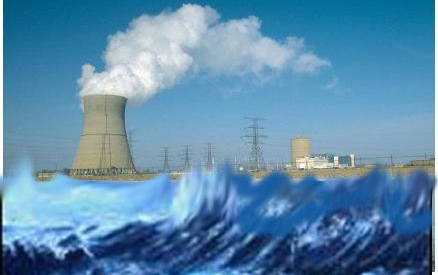 Trump administration is ignoring a massive problem at U.S. nuclear plants Trump administration is ignoring a massive problem at U.S. nuclear plants “54 of the [60] nuclear plants operating in the U.S. weren’t designed to handle the flood risk they face.” https://thinkprogress.org/nuclear-plants-flood-risk-trump-2eb58bc654a7/  At first, the main effort was a direct bailout — Energy Secretary Rick Perry’s failed planto subsidize nuclear (and coal) power plants by raising consumer energy bills. At first, the main effort was a direct bailout — Energy Secretary Rick Perry’s failed planto subsidize nuclear (and coal) power plants by raising consumer energy bills.
Now the administration has started cutting corners in nuclear safety and oversight. Trump appointees, who are a majority at the U.S. Nuclear Regulatory Commission (NRC), are allowing the nuclear industry to avoid costly upgrades to plants that are not designed to withstand current flood risk. What’s especially shocking about this decision, made by the NRC in January, is that a remarkable “54 of the [60] nuclear plants operating in the U.S. weren’t designed to handle the flood risk they face,” as Bloomberg reported last week after reviewing information exchanged between the plant owners and the NRC. Yet, even after examining all of the same information, the three NRC commissioners appointed by President Donald Trump decided to ignore NRC staff recommendations to address the problem. As a result, U.S. nuclear plants weren’t required to upgrade their designs or equipment. The NRC had ordered the original review of the flood risk to U.S. nuclear plants in the wake of the March 2011 Fukushima Daiichi disaster in Japan. In that tragic incident, an earthquake and tsunami led to three nuclear reactors melting down and widespread radiation releases. The cleanup effort will take decades and is currently estimated to cost $470 billion to $660 billion. Nuclear power plants are uniquely vulnerable to flooding because they need to be located next to a river, lake, or ocean since they require a dependable source of vast quantities of water for cooling. But if a major flood event disables the plant’s power and shuts off its cooling systems — as happened at Fukushima — then the reactor will overheat and start melting down, which, in turn can breach the containment vessel, leading to dangerous radioactive releases. Given the terrible cost of such a flood-driven failure, the NRC told all U.S. nuclear plant operators to examine their current flood risk and compare it to what the plants were designed to withstand. After all, since most of the decades-old plants were built, risks have increased thanks to urbanization and climate change. At the same time, flood modeling tools have vastly improved. The results were stunning. Of the 60 U.S. nuclear plants, Bloomberg reports that 53 “weren’t built to withstand their current risk from intense precipitation,” while 25 couldn’t handle current flood projections. Worse, 19 plants — nearly one third of the total — were now at risk of three or more flooding threats that they were not designed to weather, including the maximum storm surge they might face. And this review may actually understate the flood risk because the plant owners were allowed “not only to perform their own estimates of current flood risk but also to decide what assumptions to make.” Even so, some nuclear plants face flood risks of more than 10 feet above their design level. In response to the new flood risks, the NRC staff had proposed that U.S. nuclear plants upgrade their safety equipment. The industry, however, favors simply relying on an existing system called Flex, for Flexible Mitigation Capability, whereby emergency generators and pumps are put in concrete bunkers. On January 24, the three Trump-appointed commissioners overrode objections by the two other commissioners and ruled that U.S. nuclear operators could skip the upgrades required to handle the actual flood risk they face. What’s more, they were not required to routinely update their flood risk analysis as climate science advanced. The Trump appointees also did away with a requirement that U.S. nuclear plants perform Flex drills. That move is especially dangerous considering that as recently as December 2016, one of the emergency generators at the Palo Verde plant near Phoenix “exploded during a routine test,” as AZCentral.com reported in 2017. Nuclear plants clearly need more drills and tests, not fewer. But the Trump appointees appear to support the president’s view that essentially all regulations on industry are bad. The result, as former NRC chair Gregory Jaczko explained to Bloomberg, is that “any work that was done following Fukushima is for naught because the commission rejected any binding requirement to use that work.” Jaczko added, “It’s like studying the safety of seat belts and then not making automakers put them in a car.” So nine out of 10 U.S. nuclear plants are simply unprepared for the flood risk they face today — and they don’t have to plan for the ever-worsening risks posed by climate change. The president is once again failing to protect Americans from a very real threat to their health and safety. |
|
|
Mozambique hit again by a deadly cyclone
Deadly cyclone leaves trail of destruction across Mozambique, Aljazeera, 27 Apr 19
At least one killed as second powerful cyclone in six weeks strikes Mozambique. Cyclone Kenneth has killed at least one person and left a trail of destruction in northern Mozambique, destroying houses, ripping up trees and knocking out power, authorities said on Friday.
The cyclone brought storm surges and wind gusts of up to 280km per hour when it made landfall on Thursday evening, after killing three people in the island nation of Comoros.
It was the most powerful storm on record to hit Mozambique’s northern coast and came just six weeks after Cyclone Idai battered the impoverished nation, causing devastating floods and killing more than 1,000 people across a swath of Southern Africa.
The World Food Programme warned that Kenneth could dump as much as 600mm of rain on the region over the next 10 days – twice of that brought by Cyclone Idai …… https://www.aljazeera.com/news/2019/04/cyclone-kills-leaves-trail-destruction-mozambique-190426121837184.html
London’s Extinction Rebellion climate protestors made an impact, and they’re keeping on
The Greta Thunberg effect: her visit to London in 2 minutes
Why the climate protests that disrupted London were different, Extinction Rebellion skillfully used civil disobedience to sound the alarm on the climate emergency., VOX By Thousands of activists unleashed strategic disorder in London for 10 days to draw attention to the accelerating climate crisis. In costume and in tents, they barricaded roads and bridges at major city landmarks, with more than 1,000 peacefully submitting to arrest.
The coordinated direct actions across the city were organized by Extinction Rebellion, a movement founded last year to demand a more aggressive climate target from the British government: net-zero greenhouse gas emissions by 2025.
With a core message that climate change is an “emergency” that threatens the survival of the human species, Extinction Rebellion sounded a shriller alarm than past climate protests. Members also deployed ostentatious, nonviolent tactics — such as gluing themselves to the Waterloo Bridge — at a scale that “has never been done before,” according to Alanna Byrne, a press coordinator with Extinction Rebellion.
“We know we have disrupted your lives,” the group said Wednesday in a statement. “We do not do this lightly. We only do this because this is an emergency.”
Extinction Rebellion’s urgency and energy on climate change is aligned with a wave of youth climate activism bubbling up in Europe, the United States, and beyond — including a series of student strikes, led by the riveting Greta Thunberg, a 16-year-old from Sweden……..
not all Londoners were unhappy with the disruption, and many tweeted about how much they enjoyed the opportunity to participate.
Extinction Rebellion protesters in London have three key demands
The protestors want three things from the UK government:
- For climate change to be treated as an emergency
- A commitment to net-zero greenhouse gas emissions by 2025
- The creation of a citizen assembly for climate action
“We don’t want to be doom and gloom, but we also think it’s really, really important to use emergency messaging,” said XR’s Byrne. “One of the major problems that we have is that so many people are not aware of the crisis we’re in and we want the government to be talking about it.”
While the UK government is already mired in Brexit negotiations that have continued to drag on, protestors argue that climate change poses an even bigger threat to the long-term health and security of the country and deserves the same, if not more, political attention.
Extinction Rebellion protesters in London have three key demands
The protestors want three things from the UK government:
- For climate change to be treated as an emergency
- A commitment to net-zero greenhouse gas emissions by 2025
- The creation of a citizen assembly for climate action
“We don’t want to be doom and gloom, but we also think it’s really, really important to use emergency messaging,” said XR’s Byrne. “One of the major problems that we have is that so many people are not aware of the crisis we’re in and we want the government to be talking about it.”
While the UK government is already mired in Brexit negotiations that have continued to drag on, protestors argue that climate change poses an even bigger threat to the long-term health and security of the country and deserves the same, if not more, political attention.
………in this moment of crisis, young leaders will keep reminding us of how resourceful humans can be in the face of a challenge. “Sometimes we just simply have to find a way. The moment we decide to fulfill something, we can do anything,” Thunberg said. “And I’m sure that the moment we start behaving as if we were in an emergency, we can avoid climate and ecological catastrophe. Humans are very adaptable: We can still fix this.”
Can the UK fix it to the tune of net-zero emissions by 2025? Why not try? https://www.vox.com/energy-and-environment/2019/4/24/18511491/climate-change-protests-london-extinction-rebellion
Lawmakers and media are being conned, as nuclear industry manipulates climate change rules
|
In state after state, operators have figured out how turn green-power incentives into sweetheart deals. https://www.politico.com/agenda/story/2019/04/23/nuclear-energy-climate-change-000893, By TRAVIS KAVULLA 04/23/2019 Yet these laws remain on the books, and recently some of the nation’s largest energy producers have started to turn them to their own benefit. For the past several years, I’ve been researching clean-energy regulations at the state level, and a troubling pattern has begun to emerge: In numerous states, companies with large investments in nuclear energy — including Exelon, First Energy, Dominion and PSEG — have lobbied states to reconfigure their clean-power incentives to subsidize existing nuclear plants, rather than the emergent technologies that the laws were intended for.
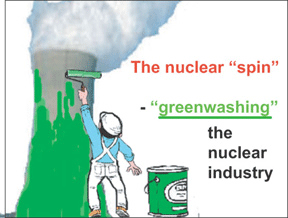
 The result is a contagion of subsidies to nuclear power plants that started in Democratic states like Illinois and New York in 2016, spread to Connecticut in 2017 and New Jersey in 2018. Bills to this effect are now being considered by Republican-led chambers in Ohio and Pennsylvania. If those measures pass, nuclear interests will have executed a clean sweep of the six northeastern states that have the largest quantities of nuclear generation.The state nuclear-handout schemes are all slightly different. But they all take advantage of green-sounding energy incentives, and they share a basic outline intended to avoid the appearance of being a naked subsidy. For example, Illinois’ program creates a commodity called a “zero emission credit,” or ZEC. A ZEC may only be created by a “zero emission facility” — which makes it sound like they are available to any form of zero-carbon energy. But the law defines “zero emission facility” as being a power plant “fueled by nuclear power.” The law then creates an artificial demand for ZECs, requiring utilities to buy a certain quantity. The law sets this number at a level tellingly similar to the total expected output of the state’s nuclear power fleet. All of this is topped off with a requirement that a government commission pass through the costs of these ZECs to customers through a mandatory rate they have no choice (other than cutting the cord entirely) but to pay. The result is a contagion of subsidies to nuclear power plants that started in Democratic states like Illinois and New York in 2016, spread to Connecticut in 2017 and New Jersey in 2018. Bills to this effect are now being considered by Republican-led chambers in Ohio and Pennsylvania. If those measures pass, nuclear interests will have executed a clean sweep of the six northeastern states that have the largest quantities of nuclear generation.The state nuclear-handout schemes are all slightly different. But they all take advantage of green-sounding energy incentives, and they share a basic outline intended to avoid the appearance of being a naked subsidy. For example, Illinois’ program creates a commodity called a “zero emission credit,” or ZEC. A ZEC may only be created by a “zero emission facility” — which makes it sound like they are available to any form of zero-carbon energy. But the law defines “zero emission facility” as being a power plant “fueled by nuclear power.” The law then creates an artificial demand for ZECs, requiring utilities to buy a certain quantity. The law sets this number at a level tellingly similar to the total expected output of the state’s nuclear power fleet. All of this is topped off with a requirement that a government commission pass through the costs of these ZECs to customers through a mandatory rate they have no choice (other than cutting the cord entirely) but to pay.In short, the law seems to be creating a program that promotes adoption of all kinds of clean energy, but in fact creates a direct subsidy for nuclear power plants and guarantees them customers for years to come. Instead of spurring competition between emissions-reducing power sources, it locks in one energy supplier for the foreseeable future. These state policies starkly differ from other carbon-reduction policies, such as a carbon tax or a cap-and-trade program. Those policies have the advantage of aiming directly at their target: carbon emissions. While potentially costly, either would circulate revenue back to consumers or taxpayers, or use that revenue on government spending intended to amplify the program’s core purpose. THAT’S NOT THE case here. The nuclear subsidy schemes are an elaborate greenwashing that neither returns money to the public nor further reduces carbon emissions.
It’s also important to keep sight of the big picture: Lower energy prices are a good thing for consumers, both private citizens and businesses. Lower prices are only a crisis for energy suppliers who can’t compete. In my conversations with state officials, some have struggled to understand how this has emerged as a political issue if the nuclear fleet is not, in fact, facing an existential crisis. This is naïve. Executives at corporations that own nuclear power plants, watching as neighboring states hand out subsidies, have a fiduciary duty to their shareholders to try to get it for themselves—whether or not their plants are already turning a profit. Debra Raggio, senior vice president for regulatory affairs for Talen Energy, admitted as much when she testified before a Pennsylvania legislative committee at an April 8 hearing, saying that if the state’s legislation featured a needs test to determine whether nuclear plants actually needed a subsidy to remain open, her company would oppose the bill. Bowring projects that the company’s only Pennsylvania nuclear plant, located along the Susquehanna River, will be profitable in each of the coming three years. In Ohio and Pennsylvania, the whole drama is unfolding on terms dictated by the nuclear plant owners, with utility corporations making threats to shut down certain facilities to force sweeping legislative action without the time for meaningful scrutiny. BY PROPPING UP older technologies, these state bailouts actually risk doing harm to innovative technologies looking to break into the market. Pennsylvania provides a useful example. In 2004, the state Legislature set aside a relatively modest amount of consumer demand to be served by renewable and other technologies in its Alternative Energy Portfolio Standard. That program constitutes 18 percent of consumer demand. Under the current proposal, a whopping 50 percent would be carved out for existing nuclear plants. In other words, 68 percent of customer demand would be met by power plants preordained by government officials for that purpose. That leaves energy producers who don’t benefit from subsidies left to fight for the scraps. One cannot encourage innovation when the innovators have only one-third of the market share to compete for. Sadly, these handouts are unraveling a successful state policy that has benefited customers and reduced carbon emissions in the process. Pennsylvania and the other nuclear battleground states adopted policies two decades ago to replace government planning and monopolies with competition between generators. The results have been significant. Customers in these so-called restructured states have seen their electricity costs drop an average of 8 percent between 2008 and 2016, according to a 2017 study by Phil O’Connor, the late chairman of the Illinois Commerce Commission. Customers in states where legislatures, government commissions, and monopolies together select the “right” resource mix have seen prices rise 15 percent. Meanwhile, these competitive markets ensured that when the Marcellus natural gas shale supply boomed, that uneconomic coal plants did not hang around. Carbon emissions from the U.S. power sector have declined 3,855 million metric tons between 2005 and 2017, according to the Energy Information Administration. The majority of those savings, 2,360 million metric tons, come from natural gas’ replacement of coal, and not zero-emission facilities. It’s deeply ironic that these competitive markets might become a victim of their own successes. The necessity of acting on climate change is palpable in our politics today. But the answer is a genuine competition between low-emission producers through a market for carbon, not handouts to the nuclear industry. The legislation proposed in the Pennsylvania House of Representatives plays footsie with this issue, suggesting that if a price of $15 per ton of carbon emissions were enacted, the nuclear handout would sunset. This is silly. After all, if you’ve got your subsidy, are you going to be willing to support a law that sets a more level playing field between clean-energy technologies—or where you might lose out to efficient gas generators? It would be next to impossible to obtain a comprehensive carbon policy if technology-specific handouts such as these continue to become law, because the political support that might have existed for a carbon policy would have been sapped. Whatever your view of nuclear energy, it should compete fairly against other electricity sources. In the run-up to this year’s legislative session in Harrisburg, Exelon tripled its lobbying expenditures in Pennsylvania, to $1.7 million, which is a lot of money in state politics. But the company stands to obtain a large portion of the annual $500 million dole of the Pennsylvania nuclear program. That’s a good return on investment—and easier to earn than having to compete for it. Travis Kavulla is director of energy and environment policy at the R Street Institute. |
|

1 This Month
26 September – International Day for the Total Elimination of Nuclear Weapons





PLEASE OPPOSE HR 8255 AND S.3639 – bills would accelerate satellite deployment, with no environmental review or safeguards – https://ncstd5li.quorum.us/campaign/169331/
To see nuclear-related stories in greater depth and intensity – go to https://nuclearinformation.wordpress.com
-
Archives
- September 2026 (291)
- August 2026 (330)
- July 2026 (355)
- June 2026 (287)
- May 2026 (306)
- April 2026 (356)
- March 2026 (251)
- February 2026 (267)
- January 2026 (308)
- December 2025 (358)
- November 2025 (359)
- October 2025 (375)
-
Categories
- 1
- 1 NUCLEAR ISSUES
- business and costs
- climate change
- culture and arts
- ENERGY
- environment
- health
- history
- indigenous issues
- Legal
- marketing of nuclear
- media
- opposition to nuclear
- PERSONAL STORIES
- politics
- politics international
- Religion and ethics
- safety
- secrets,lies and civil liberties
- spinbuster
- technology
- Uranium
- wastes
- weapons and war
- Women
- 2 WORLD
- ACTION
- AFRICA
- Atrocities
- AUSTRALIA
- Christina's notes
- Christina's themes
- culture and arts
- Events
- Fuk 2022
- Fuk 2023
- Fukushima 2017
- Fukushima 2018
- fukushima 2019
- Fukushima 2020
- Fukushima 2021
- general
- global warming
- Humour (God we need it)
- Nuclear
- RARE EARTHS
- Reference
- resources – print
- Resources -audiovicual
- Weekly Newsletter
- World
- World Nuclear
- YouTube
-
RSS
Entries RSS
Comments RSS

