 Dr. Gregory Jaczko served as Chairman of the U.S. Nuclear Regulatory Commission from 2009-2012, and as a commissioner from 2005-2009. As Chairman, he played a lead role in the American government’s response to the Fukushima nuclear accident in Japan. Dr. Jaczko is now an adjunct professor at Princeton University and Georgetown University, and an entrepreneur with a clean energy development company. He is the author of Confessions of a Rogue Nuclear Regulator.
Where climate threat and nuclear threat meet: Top Secret US Cold War Nuclear Base in Greenland
Melting Ice Sheets Could Reveal Top Secret US Cold War Nuclear Base https://www.iflscience.com/environment/melting-ice-sheets-could-reveal-top-secret-us-cold-war-nuclear-base/ 11 Mar 19, Among the many Bond villain–esque plans dreamed up during the Cold War, few come stranger than “Project Iceworm,” the shady US program to build a network of top secret nuclear missile launch sites beneath the Danish territory of Greenland. The largest and most impressive of the US bases was Camp Century, a warren of tunnels and labs under northwest Greenland’s ice sheet that was powered by its own portable nuclear reactor.
After just eight years of operation, Camp Century was decommissioned in 1967 due to engineering woes and a political scandal centered on whether Denmark had actually given the US full permission to house nuclear materials in their territory.
As the Cold War ended, the base was largely forgotten, not least because it was hoped to remain “preserved for eternity” under a blanket of snow and ice. However, with climate change knocking at the door, it looks like a different kind of thaw could reveal all.
A study published in 2016 used simulations to show that the ice above and around Camp Century could thaw by 2090 under a “business-as-usual” climate change scenario. Not only would this unearth the once-secret abandoned military base, but it also holds the potential to let loose the huge amounts of chemical and nuclear waste left at the site. These pollutants could leech into the surrounding surface water and spark a plethora of problems for the island’s human population and ecosystem.
Another study, published last year in the journal Global Environmental Politics, took a further look at the situation at Camp Century, arguing it has the potential to fire up some long-frozen geopolitical tensions. It’s not very clear how much Denmark knew about the US’ plans in Greenland. While they agreed the US could have the Thule Air Base in northwest Greenland, the issue of nuclear weapons in Danish territory was a big no-no. To make matters even thornier, Greenland has since transitioned to a self-governing overseas administrative division of Denmark.
If the climatic scenario predicted does hit, as anticipated, who will be responsible for the clean-up of toxic chemicals and radioactive materials?
As the study argues, Camp Century is not the only problem. This scenario serves as just one example of how climate change could trigger a huge number of unforeseen consequences in international politics, especially when it comes to overseas military bases.
“The case could be the proverbial canary in the coal mine for future politics surrounding overseas military bases,” according to study author Jeff Colgan.
“Climate change can create knock-on environmental problems associated with a military base’s infrastructure or waste that disrupt the international politics that govern the base,” he wrote in the study. “Any cleanup costs or compensation related to the knock-on environmental problems create an unfunded liability for the host country, the country operating the base, or both.”
This is just another unexpected fallout of the climate issue we’re facing that needs to be dealt with sooner rather than later.
Melting of Arctic sea ice will greatly enhance warming in Arctic

Atmospheric scientists reveal the effect of sea-ice loss on Arctic warming https://www.eurekalert.org/pub_releases/2019-03/ioap-asr030819.php
Scientists from State University of New York, Albany and Institute of Atmospheric Physics, Chinese Academy of Sciences found the answers by means of historical data analyzation and climate model simulations. Their analyses indicated that AA would not slow down until the 22nd and 23rd centuries, after almost all of the Arctic’s sea ice has melted away with GHGs emissions increasing.
“Rapid Arctic warming and sea ice loss are attracting a lot of attention in the media, public and scientific community. Our study links the two together and suggests that the sea ice loss is causing the rapid warming in the Arctic,” said the lead author, Aiguo DAI, In a news release. “When the sea ice melts away completely, this elevated warming will also disappear and the warming rate in the Arctic will be similar to the rest of the world,”
According to this research, the large AA only occurs in clod season (October to April), and only over the area of prominent sea-ice loss. This is mainly because seasonal sea-ice melting from May to September causes more extensive upper seawater and absorbs more sunlight during the warm season and the heat energy is stored in sea-surface Arctic waters. Most of this energy is released into the atmosphere through longwave radiation, and latent and sensible heat fluxes to heating the atmosphere during the cold season when Arctic Ocean becomes a heat source, leading to the large AA.
Scientists warn that the melting of Arctic sea ice will greatly enhance warming in Arctic for the coming decades and could also impact weather patterns in mid-latitudes, causing more frequent intrusions of winter polar vortex into China and the continental U.S., leading to extreme events including severe winter weather.
This research was published in Nature Communications.
Rising temperatures threaten health of fetuses, researchers say
 March 6, 2019 By Ruth SoRelle, Texas Climate News Climate change evokes images of people swimming out of their flooded neighborhoods, cars bumper-to-bumper as drivers flee burning homes, merciless sun that dries up rivers and lakes. However, climate change is more than these very visible disasters. Of equal or greater danger is the silent, unseen damage that may occur in the gestating fetus – damage that can last a lifetime.
On this warming planet, mosquito-borne diseases are increasing
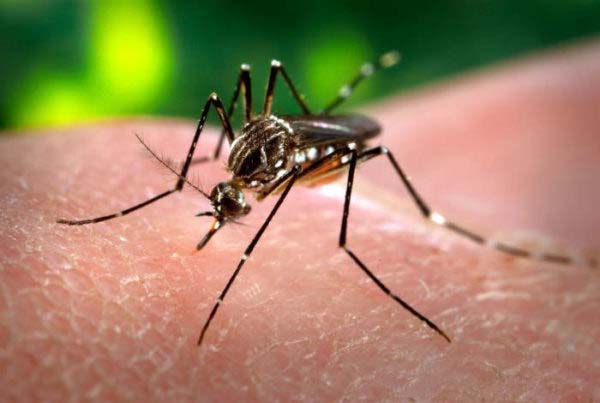 Climate Change Will Expose Half of World’s Population to Disease-Spreading Mosquitoes By 2050 https://e360.yale.edu/digest/climate-change-will-expose-half-of-worlds-population-to-disease-spreading-mosquitoes-by-2050 MARCH 5, 2019 Scientists and public health officials have documented an increasing number of outbreaks of mosquito-borne illnesses across the globe in recent years, including yellow fever, dengue, chikungunya, and Zika. Now, an international team of researchers has found that by 2050, two key disease-spreading mosquitoes — Aedes aegypti and Aedes albopictus — will significantly expand their range, posing a threat to 49 percent of the world’s population.
“If no action is taken to reduce the current rate at which the climate is warming, pockets of habitat will open up across many urban areas with vast amounts of individuals susceptible to infection,” said Moritz Kraemer, an infectious disease scientist at Boston Children’s Hospital and the University of Oxford and a co-author of the new research, published in the journal Nature Microbiology,.
The researchers analyzed historical distribution data from more than 3,000 locations in Europe and the United States, dating back to the 1970s. They then modelled future distribution using projections for climate change, urbanization, and human migration and travel. Kraemer and his colleagues found that in the last five years, Aedes aegypti has spread northward in the U.S. at about 150 miles per year. In Europe, Aedes albopictus has spread at a rate of 93 miles per year.
The scientists also found that within the next 5 to 15 years, human travel and migration will be the largest factors driving the spread of mosquitoes. After that, however, climate change and accelerating urbanization will create new mosquito habitats. Aedes aegypti could reach as far north as Chicago and Shanghai by 2050. However, the species will likely decline in parts of the southern U.S. and Eastern Europe, which are expected to become more arid as global temperatures rise. Aedes albopictus, on the other hand, is forecast to spread widely throughout Europe over the next 30 years, as well as establish small populations in parts of the northern U.S. and the highland regions of South America and East Africa.
Global politics made more dangerous by climate change – Obama

Obama warns climate change will make global politics more toxic https://thehill.com/blogs/blog-briefing-room/news/432773-obama-warns-climate-change-will-make-global-politics-more-toxicFormer President Obama on Tuesday dismissed climate change skeptics and warned that the world’s inability to effectively tackle the issue will toxify global politics. “It is indisputable that although we can’t ascribe any particular kind of weather event to rising temperatures, that at the current pace that we are on, the scale of tragedy that will consume humanity is something we have not seen in perhaps recorded history if we don’t do something about it,” Obama said during a trip to Canada, according to CTV News.
“Imagine when you have not a few hundred thousand migrants who are escaping poverty or violence or disease, but you now have millions. Imagine if you start seeing monsoon patterns in the Indian subcontinent changing so that half a billion people can’t grow food and are displaced,” he added. “Think about what that does to the politics of the world — not just the economics of it, not just the environment.”
Obama was an outspoken proponent of combating climate change while in the White House. Under his leadership, the U.S. was one of the signatories of the historic Paris climate accord, in which world powers agreed to take measurable steps to reduce their man-made footprint on the environment. President Trump announced in 2017 that the U.S. would withdraw from the agreement.
The former Democratic president on Tuesday told a packed crowd in Calgary, Alberta, home to many struggling oil and gas companies, that nobody can escape the impacts of climate change.
“All of us are going to have to recognize that there are trade-offs involved with how we live, how our economy is structured, and the world that we’re going to be passing on to our kids and grandkids. Nobody is exempt from that conversation,” Obama said.
He also noted that rising oceans risk coastal populations and environmental changes have boosted the frequency of insect-borne diseases.
“Moose right now [have] to deal with tick-borne diseases that they didn’t have to do 10, 15 years ago. I really like moose. I assume, Canadians, you do too,” Obama said. “These are just facts.”
Climate change and the uncertain future for migratory birds
Study: Climate change is leading to unpredictable ecosystem disruption for migratory birds, Phys Org, March 5, 2019, Cornell University Using data on 77 North American migratory bird species from the eBird citizen-science program, scientists at the Cornell Lab of Ornithology say that, in as little as four decades, it may be very difficult to predict how climate change will affect migratory bird populations and the ecosystems they inhabit. Their conclusions are presented in a paper published in the journal Ecography.
Climates have natural variation and we’re moving rapidly into territory where the magnitude of climate change will consistently exceed this variation,” says lead author and Cornell Lab researcher Frank La Sorte. “There will be no historic precedent for these new climates, and migratory bird populations will increasingly encounter ‘novel’ climatic conditions. The most likely outcome will be a period of ecological disruption as migratory birds and other species try to respond or adapt to these new conditions.”
Cornell Lab scientists generated new climate models incorporating multiple sources of data. This produced a timeline indicating when and where migratory bird populations are likely to be significantly affected by novel climates during each phase of their annual life cycles. It’s not that far off:
- Last 40 to 50 years of this century. During this period, migrants such as the Black-and-white Warbler, are likely to first experience novel climates on their tropical wintering grounds (regions south of Florida) and also during the late summer on their breeding grounds in the North American temperate zone (above the nation’s midsection).
- First 50 years of the next century. This is when novel climates are likely to emerge for birds that winter in the subtropics—the southern half of the U.S.
The study authors conclude that by the middle of the next century migratory bird populations will experience novel climates during all phases of their annual life cycles………. https://phys.org/news/2019-03-climate-unpredictable-ecosystem-disruption-migratory.html
Major presidential candidate in USA running on climate action policy
Think Progress 1st March 2019 , For the first time in history, a major presidential candidate is putting
climate change center stage in their campaign. Washington Gov. Jay Inslee
(D) announced on Friday he will seek to challenge President Donald Trump in
2020. “This is our moment, our climate, our mission — together, we can
defeat climate change. That’s why I’m running for president,” Inslee
said on Twitter. In a video announcing his presidential campaign, he called
climate change “the most urgent challenge of our time,” adding,
“we’re the first generation to feel the sting of climate change. And
we’re the last that can do something about it.”
Oxygen in oceans declining – climate change brings this threat to marine life
The Ocean Is Running Out of Breath, Scientists Warn
Widespread and sometimes drastic marine oxygen declines are stressing sensitive species—a trend that will continue with climate change, Scientific American , By Laura Poppick on February 25, 2019 Escaping predators, digestion and other animal activities—including those of humans—require oxygen. But that essential ingredient is no longer so easy for marine life to obtain, several new studies reveal.
In the past decade ocean oxygen levels have taken a dive—an alarming trend that is linked to climate change, says Andreas Oschlies, an oceanographer at the Helmholtz Center for Ocean Research Kiel in Germany, whose team tracks ocean oxygen levels worldwide. “We were surprised by the intensity of the changes we saw, how rapidly oxygen is going down in the ocean and how large the effects on marine ecosystems are,” he says.
It is no surprise to scientists that warming oceans are losing oxygen, but the scale of the dip calls for urgent attention, Oschlies says. Oxygen levels in some tropical regions have dropped by a startling 40 percent in the last 50 years, some recent studies reveal. Levels have dropped more subtly elsewhere, with an average loss of 2 percent globally.
Ocean animals large and small, however, respond to even slight changes in oxygen by seeking refuge in higher oxygen zones or by adjusting behavior, Oschlies and others in his field have found. These adjustments can expose animals to new predators or force them into food-scarce regions. Climate change already poses serious problems for marine life, such as ocean acidification, but deoxygenation is the most pressing issue facing sea animals today, Oschlies says. After all, he says, “they all have to breathe.”
A warming ocean loses oxygen for two reasons: First, the warmer a liquid becomes, the less gas it can hold. …… https://www.scientificamerican.com/article/the-ocean-is-running-out-of-breath-scientists-warn/
Arctic ice – summers without it could happen sooner than predicted
Ice-free Arctic summers could happen on earlier side of predictions
A new study in AGU’s journal Geophysical Research Letters predicts the Arctic Ocean will be ice-free in summer by mid-century.EurekAlert, AMERICAN GEOPHYSICAL UNION, 27 Feb 19
WASHINGTON — The Arctic Ocean could become ice-free in the summer in the next 20 years due to a natural, long-term warming phase in the tropical Pacific that adds to human-caused warming, according to a new study.
Computer models predict climate change will cause the Arctic to be nearly free of sea ice during the summer by the middle of this century, unless human greenhouse gas emissions are greatly reduced.
But a closer examination of long-term temperature cycles in the tropical Pacific points towards an ice-free Arctic in September, the month with the least sea ice, on the earlier side of forecasts, according to a new study in the AGU journal Geophysical Research Letters.
“The trajectory is towards becoming ice-free in the summer but there is uncertainty as to when that’s going to occur,” said James Screen, an associate professor in climate science at the University of Exeter in the U.K. and the lead author of the new study………https://www.eurekalert.org/pub_releases/2019-02/agu-ias022719.php
How quickly we ‘normalise’ rising temperatures

Just by the way- Scientists found that frogs DO jump out of the water as it gets hot. They are smarter than we are.  https://tinyurl.com/y3wgyqc7
New research finds that we normalize rising temperatures remarkably quickly. https://psmag.com/environment/as-the-climate-changes-are-we-all-boiling-frogs,TOM JACOBS, FEB 26, 2019
Nuclear power is no solution to the climate crisis
 Nukes Are No Answer To Climate Crisis RALPH NADER RADIO HOUR https://ralphnaderradiohour.com/nukes-are-no-answer-to-climate-crisis/?fbclid=IwAR1WWrHrMbT0bflR2p7fJDw89KeS_qb1fMSRcAX6ESDXanFL6A2hDNbM8To
Climate change taking its toll on the Sea of Galilee and the Jordan River
The Sea of Galilee: A Sea of Miracles Disappearing
 Where Jesus once preached, the holy waters are draining away, Climate change and conflict have left the river Jordan a stagnant stream and the Sea of Galilee critically low, Guardian, Oliver Holmes Sun 24 Feb 2019
Once a raging torrent, the lower Jordan has been starved of water to become a stagnant stream, filled with sewage and dirty run-off from farms. Around 95% of its historical flow has been diverted by agriculture during the past half-century. And the river’s primary source, the Sea of Galilee – where Christians believe the son of God walked on water – has for years been dammed to prevent its demise.
Biblical bodies of water in the Holy Land, eternalised in Christian, Jewish and Muslim ancient texts as godly, are now facing very human threats: climate change, mismanagement and conflict.
Following five consecutive years of drought, the Sea of Galilee has sunk to a 100-year low. A number of small islands have emerged at the water’s surface, and several holiday homes that were built on the shoreline now stand at least 100 metres from the boggy edge.
Overuse has also taken its toll. Last summer, the level of the lake dropped close to a black line, a level at which it could lose its status as a freshwater body. “The black line is our best guess of that point,” says Gidon Bromberg, the Israeli director of EcoPeace, an organisation of Israeli, Palestinian and Jordanian environmentalists. “It was tens of centimetres above the black line,” he says, adding that such a shallow depth has not been seen in records taken over the past century.
As the lake’s level falls, it cannot wash away salt fast enough, and its salinity rises. If the Sea of Galilee’s waters were left to hover around the black line, its flora and fauna would start to perish. A glimpse of the lake’s grim future might be seen 350km downriver at the lowest place on the planet: the Dead Sea, a body almost devoid of fish and plant life. “Once the lake becomes saline, that could be irreversible,” says Bromberg, speaking at the muddy edge of the water, reeds poking up behind him………
As long as the Sea of Galilee is under threat, the river Jordan will be too. And their eventual deaths could have explosive ramifications as water in this region has been a key source of conflict. The river Jordan is shared by Israel, the occupied Palestinian territories, Jordan and Syria, all of which use its depleting reserves………
EcoPeace hopes that good water management will spur on peace to the region. Bromberg is now advocating for a deal in which Israel, which is on the Mediterranean, supplies desalinated water to Jordan. In exchange, Jordan, which is low on water but full of open desert with 320 sunny days a year, will supply solar power.
In the meantime, the river Jordan remains polluted. Most Christian pilgrims who want to be baptised in the holy waters do not venture to the original site where John the Baptist is believed to have led Jesus into the water. That location is in the occupied Palestinian territories next to Jordan, and the Israeli army mined it decades ago. Pilgrims were only allowed to return some years ago……… https://www.theguardian.com/world/2019/feb/23/israel-where-jesus-preached-holy-waters-draining-away-sea-of-galilee-river-jordan?CMP=share_btn_tw
Climate change encroaching on Marshall Islands – drastic effort to “elevate” some of them
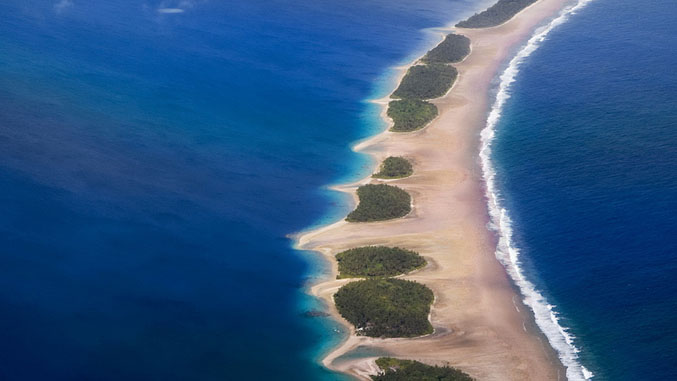 Climate change forces low-lying Marshall Islands to ‘elevate islands’, Climate change has left the low-lying Marshall Islands with little choice but to consider drastic measures. https://www.sbs.com.au/news/climate-change-forces-low-lying-marshall-islands-to-elevate-islands, 24 Feb 19, The far-flung Marshall Islands needs to raise its islands if it is to avoid being drowned by rising sea levels, President Hilda Heine has warned.
Plans are underway for national talks on which of the 1,156 islands, scattered over 29 coral atolls, can be elevated in a dramatic intervention to ensure safety on the islands.
“Raising our islands is a daunting task but one that must be done,” Heine said in an interview with the Marshall Islands Journal published Friday.
“We need the political will, and especially traditional leaders’ commitment, to see this through.
“We must come together as a nation as this is about our survival as a nation, as a people and as a culture.”
A “climate crisis” policy document prepared by the office of the chief secretary painted a bleak outlook for the Pacific Ocean archipelago with a population of 55,000.
It cited an increasing frequency of “inundation events, severe droughts, coral bleaching events, and… looking forward, there is very good reason to believe that conditions and prospects for survival will only worsen.”
Most of the islands are less than two metres (6.5 feet) above sea level and the government believes physically raising the islands was the only way to save the Marshall Islands from extinction.
They have not yet outlined specifics of how this would be achieved expect to have plans formulated by the end of the year. In the meantime, they are keeping a close watch on the ambitious City of Hope project on an artificial island in the Maldives as a viable option.
To lay the foundations of the city – which is expected to accommodate 130,000 people when completed in 2023 – sand is being pumped onto reefs from surrounding atolls and it is being fortified with walls three metres above sea level, which will make it higher than the tallest natural island in the Maldives.
“Whatever approach is selected, it will involve selecting islands to raise, add to, or build upon” Heine said.
“All Marshallese stakeholders, but especially traditional landowners, need to be at the forefront of this discussion if we are ever going to move the conversation forward.”
The Marshall Islands also aims to increase engagement with the three other all-atoll nations – Kiribati, Tuvalu and the Maldives – on climate issues.
“As a group, the atoll nations need to come together to formulate their unique concerns and develop their positions and plans and identify financial needs related to climate impacts,” said Heine, who chairs the Coalition of Atoll Nations Against Climate Change.
Church of England backs further action on climate change
 CofE backs further action on climate change
A motion brought by the dioceses of London and Truro was approved, committing the Church to accelerating its existing environmental programme and calling on every diocese to put in place an environmental programme overseen by a designated member of the bishop’s staff team…… https://www.christiantoday.com/article/cofe-backs-further-action-on-climate-change/131845.htm
New report warns of climate Armageddon in less than 150 years
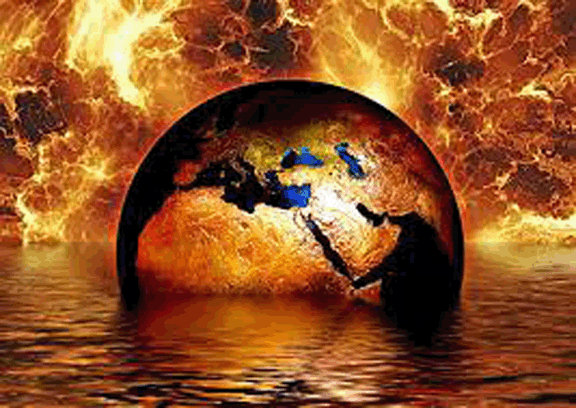 Earth facing ‘global warming Armageddon’ in less than 150 years By Mark Waghorn, SWNS, February 21, 2019 Earth is facing global warming Armageddon in just 140 years, warns a new study.
Scientists say, New York Post the concentration of carbon dioxide is rising faster than at any time since the age of the dinosaurs.
And our planet is just 140 years away from a climate change event similar to one that triggered mass extinctions, according to the research.
It could lead to species being wiped out on a massive scale in fewer than five generations.
Lead author Professor Philip Gingerich, of the University of Michigan, said: “You and I won’t be here in 2159, but that’s only about four generations away.
“When you start to think about your children and your grandchildren and your great-grandchildren, you are about there.”
The study, published in the journal Paleoceanography and Paleoclimatology, found humans are pumping CO2 into the air at a rate ten times higher than 56 million years ago.
That sparked an event known as the Paleocene-Eocene Thermal Maximum (PETM) when temperatures rose by five to eight degrees Celsius (9 to 14 degrees Fahrenheit).
It killed off both land and sea animals — and took more than 150,000 years for the planet to return to normal. This has been used as a benchmark for modern climate change in the past. But the latest finding shows we are on track to meet it much sooner than feared.
The pace of today’s warming far outstrips any climate event that has happened since the extinction of the dinosaurs.
Professor Gabriel Bowen, a geophysicist at the University of Utah who reviewed the research for the journal, said: “Given a business-as-usual assumption for the future, the rates of carbon release that are happening today are really unprecedented, even in the context of an event like the PETM…….. https://nypost.com/2019/02/21/earth-facing-global-warming-armageddon-in-less-than-150-years/
1 This Month

22 June – Virtual Event –Climate Change: New Data, New Debate

Monday, June 22, 2026 2:30 p.m. – 3:15 p.m. CT
YouTube. Register here

Protect Sazan Island from the Trump family! https://secure.avaaz.org/campaign/en/protect_sazan_island_from_the_trump_family_loc/?bqFCVab&v=174511&cl=22707147157&_checksum=5e9dde668860e8231c33699735e16a1fbf22ab2cb01da50c999fe8732b9775ef&utm_source=email&utm_medium=blast_email&utm_campaign=174511

25 June- THE PUKE ON NUKES
Thursday, June 25, 2026
7pm Central Time (8pm ET, 6pm MT, 5pm PT) UTC – 5
From NRC & DOE Deregulation to Techno-Fascist Billionaires Going Nuclear, Plus a Few Songs from Atomic Cabaret REGISTER
26 June – Radiation Trainwreck at the NRC / Join the Protect Better Campaign – https://us02web.zoom.us/meeting/register/4ZlZ5_qLSHGiLSCg8FF6Bg#/registration


Cuba Is Not a Failed State – It Is a Besieged State
PETITION: “Global Appeal to Endorse Palestinian Right of Return of Refugees”
To see nuclear-related stories in greater depth and intensity – go to https://nuclearinformation.wordpress.com
-
Archives
- June 2026 (202)
- May 2026 (306)
- April 2026 (356)
- March 2026 (251)
- February 2026 (268)
- January 2026 (308)
- December 2025 (358)
- November 2025 (359)
- October 2025 (376)
- September 2025 (257)
- August 2025 (319)
- July 2025 (230)
-
Categories
- 1
- 1 NUCLEAR ISSUES
- business and costs
- climate change
- culture and arts
- ENERGY
- environment
- health
- history
- indigenous issues
- Legal
- marketing of nuclear
- media
- opposition to nuclear
- PERSONAL STORIES
- politics
- politics international
- Religion and ethics
- safety
- secrets,lies and civil liberties
- spinbuster
- technology
- Uranium
- wastes
- weapons and war
- Women
- 2 WORLD
- ACTION
- AFRICA
- Atrocities
- AUSTRALIA
- Christina's notes
- Christina's themes
- culture and arts
- Events
- Fuk 2022
- Fuk 2023
- Fukushima 2017
- Fukushima 2018
- fukushima 2019
- Fukushima 2020
- Fukushima 2021
- general
- global warming
- Humour (God we need it)
- Nuclear
- RARE EARTHS
- Reference
- resources – print
- Resources -audiovicual
- Weekly Newsletter
- World
- World Nuclear
- YouTube
-
RSS
Entries RSS
Comments RSS
 nuclear-news