‘A snapshot of climate devastation’: Study claims 2024’s biggest climate disasters cost $200bn.

Ten costliest climate disasters of 2024 each caused more than $4bn in
damage, Christian Aid study finds. The 10 most costly climate disasters of
2024 collectively caused more than $200bn in damages, according to annual
analysis published today by Christian Aid. The charity’s annual assessment
of the 10 most expensive extreme weather events of the past 12 months
estimates every one of the biggest individual disasters this year caused
damages to the tune of more than $4bn each, with no part of the world
spared from such extreme weather events.
Moreover, given most estimates
totted by Christian Aid are based only on insured losses, the true
financial costs are likely to be even higher, while the human costs are
often uncounted for, the charity said. The report suggests the USA bore the
brunt of climate disaster costs in 2024, with October’s Hurricane Milton
the single biggest one-off event at $60bn in damage, while Hurricane Helene
– which struck the US, Cuba and Mexico in September – placed second with
$55bn damages.
Business Green 30th Dec 2024 https://www.businessgreen.com/news/4391020/snapshot-climate-devastation-study-claims-2024s-biggest-climate-disasters-cost-usd200bn
Skiing in France is slowly dying.
Skiing in France is slowly dying and many resorts are expected to close
down in a little over 20 years, industry experts have warned. Climate
change, ageing ski lifts and rising costs are driving smaller, mid-altitude
resorts out of business. Five shut down this year and 186 have gone out of
business since the 1950s, mostly in inexpensive ski areas with relatively
few runs that were popular with French families but never attracted large
numbers of foreign holidaymakers.
Times 29th Dec 2024 https://www.thetimes.com/world/europe/article/france-affordable-ski-slopes-shut-why-nqkb3qrk7
Scientists should break the ice
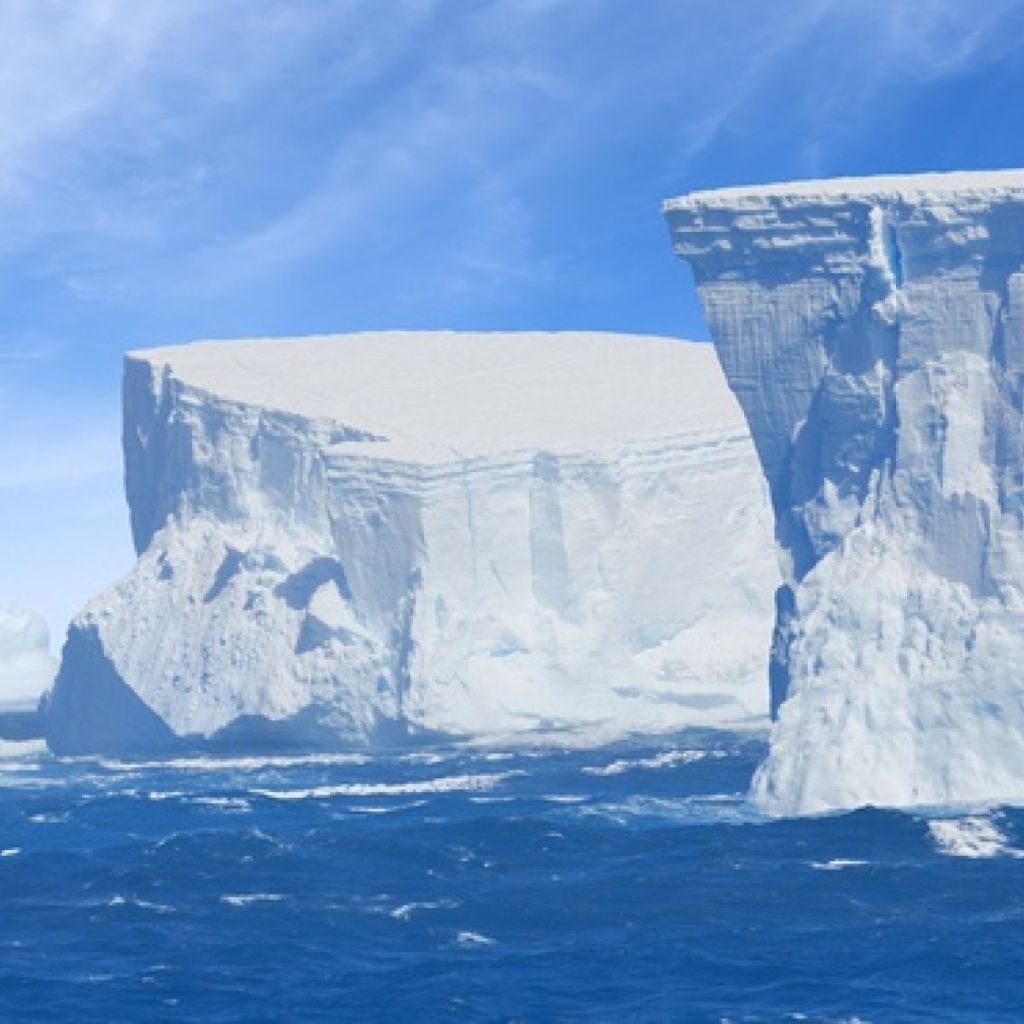
once the ice sheet slides into the ocean, there is no putting it back, even if all carbon emissions ended that day. The ice-sheet holds enough water to raise sea levels by 58 metres. Even if only half of it breaks off, it will be just a waiting game over just a few years for the ice to melt and for us to watch every coastal city on earth to be inundated. In our lifetime.
once the ice sheet slides into the ocean, there is no putting it back, even if all carbon emissions ended that day. The ice-sheet holds enough water to raise sea levels by 58 metres. Even if only half of it breaks off, it will be just a waiting game over just a few years for the ice to melt and for us to watch every coastal city on earth to be inundated. In our lifetime.
Crispin Hull, December 29, 2024
The 2024 award for the biggest disjoin between the importance of a story and the coverage it got must surely go to the science briefing on Antarctica and Sea-Level Rise published by the Australian Antarctic Program Partnership and the ARC Australian Centre for Excellence in Antarctic Science.
It came out in September. The ABC had some coverage, but it seemed to miss some essential points.
Here is what the new science tells us and how it is different from the older science.
The older science tells us that the amount of sea ice in Antarctica is shrinking, but not as badly as in the Arctic. Sea ice expands and contracts quite quickly according to air and sea temperature. So, a gradual reduction in sea ice will mean a gradual and comparatively small rise in sea levels.
This science should be moderately alarming, but the misinformationists in the fossil fuel industry can bat away public fears by saying not much is happening here and it will not happen in your lifetime, so carry on as usual.
This is standard stuff from fossil misinformationists: climate change is not happening, but if it is happening it is part of natural geologic forces and has nothing to do with human-generated carbon, and even if it is caused by human-generated carbon we can develop technologies to capture the carbon and safely store it away.
In short, they base their facts on their desired conclusion that they can continue to make profits from the emission of carbon until ecosystems and economies collapse. When it is too late.
Coming back to Antarctica, earlier science suggested that sea-ice contraction could be reversed if temperatures came down a bit. As it happens sea-ice is an important reflector of solar rays (and heat). Without the sea-ice you have dark ocean which absorbs the rays and increases the heat of the ocean. Nonetheless, it is still a probably reversible process.
Enter the new research. This is about the eastern Antarctic icesheet. Hitherto, this has given climate scientists much less cause for concern. This is because the eastern ice sheet has built up over land. It is anchored.
Unlike sea-ice it is not vulnerable to warmer water melting it.
Picture the land mass and a big thick ice sheet over it. The sea nibbles at the edge and even if the sea is a bit warmer it does not melt much ice. This is not like sea-ice where the warmer water is all around it melting it quickly. So, hitherto scientists have taken some climate solace in the fact that so much ice is safely tied up in the eastern Antarctic ice-sheet (more than 60 per cent of the world’s fresh water) and so will give us more time to slow and reverse the warming of the planet.
Enter the new research. Remove the image of a lump of land mass. Rather picture that the land mass has been forced down by the weight of the ice – heavier at the middle of the land mass and lighter at the edge.
The new science tells us that much of the eastern Antarctic ice-sheet is grounded below sea level. So, one the warmer sea waters get under it, the whole sheet becomes unstable and can slide into the ocean. And even if temperatures are made to fall, the tipping point would have been reached – the warmer sea would have run under the massive ice-sheet, undermining it and making its slide into the ocean inevitable.
And once the ice sheet slides into the ocean, there is no putting it back, even if all carbon emissions ended that day. The ice-sheet holds enough water to raise sea levels by 58 metres. Even if only half of it breaks off, it will be just a waiting game over just a few years for the ice to melt and for us to watch every coastal city on earth to be inundated. In our lifetime.
Once the ice sheet hits the ocean, it is the end of civilisation as we know it.
The ice cannot be put back.
The greater the potential damage the more you should do about it, even if you think the risk is small. This is why people go to a lot of effort to make their houses less exposed to bushfires and cyclones.
It may be that some billionaires might imagine they could set up doomsday retreats to avoid death, injury, and discomfort. They are dreaming. In those circumstances money means nothing and the profit-driven selfishness that drives unnecessarily extending the use of fossil fuel will be brushed aside by the maniac selfishness of those on a desperate if doomed survival mission.
Scientists must change stop their subdued, cautious approach to reporting climate change. It is understandable because scientists do not want to cause panic or unnecessary alarm. But the approach has just given the fossil industry endless free kicks. It is time for alarm and measured panic.
Scientists should stop being scared of publishing scary material in a scary way. It is time to tell people the reality of the biggest security, economic, and existential threat to humans on earth………………………. more http://www.crispinhull.com.au/2024/12/29/scientists-should-break-the-ice/?utm_source=mailpoet&utm_medium=email&utm_campaign=crispin-hull-column
‘We need to be prepared’: China adapts to era of extreme flooding

“The Chinese leadership tends to see the long game,” Li said. “To demonstrate their far-sight and to prevent further risks, more should be done to prepare for the impacts of climate change systematically.”
While some residents take to building houses in trees, officials recognise need for national response to climate disasters
Amy Hawkins , Guardian 24th Dec 2024, https://www.theguardian.com/world/2024/dec/24/we-need-to-be-prepared-china-adapts-to-era-of-extreme-flooding
Every summer, Dongting Hu, China’s second-largest freshwater lake, swells in size as flood water from the Yangtze River flows into its borders. Dams and dikes are erected around the lake’s edges to protect against flooding. But this year, not for the first time, they were overwhelmed.
For three days in early July, more than 800 rescue workers in Hunan province scrambled to block the breaches. One rupture alone took 100,000 cubic metres of rock to seal, according to Zhang Yingchun, a Hunan official. At least 7,000 people had to be evacuated. It was one of a series of disasters to hit China as the country grappled with a summer of extreme weather. By August, there had been 25 large floods, the biggest number since records began in 1998, reported state media.
Xi Jinping, China’s president, “urged all-out rescue and relief work” to safeguard the people affected by the flooding in Hunan, state media reported.
One of those people was Ren Benxin, an archaeologist who lives on a small, forested island in the upper tributaries of Dongting Hu. He calls his idyllic home Soultopia. As well as carrying out archaeological research, he provides accommodation for travellers and looks after the herd of stray cats and dogs that he has adopted over the years.
On 5 July, his home was flooded. “First, I rescued the animals. Then, I rescued the supplies,” he said. “It was the first time in 10 years that I’d experienced something like this.”
The wooden huts in Ren’s corner of the islet were nearly completely submerged in muddy water. Chickens used the remnants of destroyed buildings as rafts to avoid drowning. Ren traversed the island in a small plastic dinghy. One of his dogs, Eason, fell ill after drinking dirty flood water, and died a few days later.
“Two years ago, we had a severe drought, and this year it’s been floods. I think we need to be prepared for anything,” Ren said.
Experiences like Ren’s are becoming more common in China, as
global heating makes extreme weather events more likely, as well as undermining communities’ defences against those disasters.
Dongting Hu exemplifies these challenges. It was once China’s largest freshwater lake. But decades of agricultural development meant that huge swathes of its land were reclaimed for farming, reducing the lake’s storage capacity. Both droughts and floods are becoming more serious and severe.
At least six Chinese provinces experienced major flooding in 2024. As well as the floods in Hunan, heavy rainfall in Guangdong, China’s most populous province, forced more than 110,000 people to relocate. After years of treating weather disasters as isolated incidents that require a local response, Chinese officials are becoming increasingly aware of the need to adapt to extreme weather events on a national scale.
“The harsh reality is here: the lack of climate action will cost China and present a social security threat,” said Li Shuo, director of the China Climate Hub at the Asia Society Policy Institute.
At the Cop29 UN climate crisis conference in November, China published an action plan for climate adaptation, vowing to establish a technical platform to monitor and forecast extreme weather events and to share its knowledge of improving early warning mechanisms.
It marked a shift the country which has long acknowledged the science of the climate crisis, but has focused its environmental cleanup efforts on issues such as air pollution – rather than severe but relatively rare floods and droughts.
“The Chinese leadership tends to see the long game,” Li said. “To demonstrate their far-sight and to prevent further risks, more should be done to prepare for the impacts of climate change systematically.”
For flooding victims like Ren, an official recognition of – and compensation for – the damage wrought by the climate crisis cannot come soon enough. The repair work cost him more than 70,000 yuan (£7,600), although the authorities did send some relief workers to help.
For now, Ren is developing his own ways to adapt to climate breakdown. He shuns electrical appliances after his were destroyed in the flood, and uses wood burners for cooking and heating. He plans to build a new home suspended in trees, so as to be safe from floods.
“I think extreme weather is more frequent now. So I have to be prepared for anything. If I like the place, I’ll stay.”
Additional research by Chi-hui Lin and Jason Tzu Kuan Lu
World’s largest iceberg on the move again after months spinning on the spot
The iceberg is about three times the size of New York City and more than twice the size of Greater London
Rituparna Chatterjee, Independent 15th Dec 2024, https://www.independent.co.uk/climate-change/news/world-largest-iceberg-a23a-moving-antarctic-b2664564.html
The world’s largest iceberg is on the move again after decades of being grounded on the seafloor and more recently spinning on the spot, according to the British Antarctic Survey (BAS).
The mega A23a iceberg has broken free from its position north of the South Orkney Islands and is now drifting in the Southern Ocean, scientists said.
“It’s exciting to see A23a on the move again after periods of being stuck. We are interested to see if it will take the same route the other large icebergs that have calved off Antarctica have taken. And more importantly what impact this will have on the local ecosystem,” Dr Andrew Meijers, an oceanographer at the BAS, said.
The iceberg, known as A23a, split from the Antarctic’s Filchner Ice Shelf in 1986. But it became stuck to the ocean floor and had remained for many years in the Weddell Sea.
Scientists anticipate that A23a will continue its journey into the Southern Ocean following the Antarctic Circumpolar Current, which is likely to drive it towards the sub-Antarctic island of South Georgia. In that region it will encounter warmer water and is expected to break up into smaller icebergs and eventually melt.
Major report joins dots between world’s nature challenges
Helen Brigg,
Environment correspondent, BBC News @hbriggsjourno.bsky.social•@hbriggs BBC 17th Dec 2024
Climate change, nature loss and food insecurity are all inextricably
linked and dealing with them as separate issues won’t work, a major report
has warned. The review of scientific evidence by the Intergovernmental
Platform on Biodiversity and Ecosystem Services (IPBES), external found
governments are underestimating or ignoring the links between five key
areas – biodiversity, water, food, health and climate change. This “siloed”
approach has unintended consequences, such as damaging biodiversity through
tree-planting schemes, or polluting rivers while ramping up food
production, the report said. The latest assessment was approved by almost
150 countries meeting in Windhoek, Namibia.
BBC 17th Dec 2024
https://www.bbc.co.uk/news/articles/cwyxkz41knzo
France’s New Nuclear Power Plant Is a Ticking Bomb

Nuclear power plants are vulnerable to climate change, and the rampant rush to revive the nuclear power industry should be stopped.
President Emmanuel Macron’s ambitious plan to revive France’s nuclear energy industry aims for carbon neutrality by 2050. It highlights significant challenges, including climate risks to nuclear sites, such as the Gravelines plant, which faces flooding threats due to rising sea levels. Additionally, the article points to workforce shortages, economic inefficiencies, and geopolitical risks, such as France’s reliance on uranium from Niger, as critical obstacles.
By Rim Longmeng, December 13, 2024 , https://www.fairobserver.com/more/environment/climate-change-news/frances-new-nuclear-power-plant-is-a-ticking-bomb/
Despite Europe’s growing skepticism of nuclear technology in the wake of Fukushima, in 2021, French President Emmanuel Macron announced the revival of his country’s nuclear energy industry. Macron’s ambitious program aims to end the country’s dependence on fossil fuels and make France carbon neutral by 2050. The plan will require the construction of 14 new nuclear reactors. At first glance, Macron’s plans seem logical, as nuclear energy already accounts for 70% of France’s energy consumption, and cheap nuclear energy has been the backbone of the French economy since the 1970s. However, the populist tactics of the French leader are raising questions among the country’s population and experts, as the problems of the nuclear industry – which will inevitably arise soon – will be left for future generations to solve after Macron leaves office.
No room for improvisation in the face of climate risks
In its report October 3, 2024 Greenpeace harshly criticized the French government’s plans to build two new EPR2 nuclear reactors in northwestern France near Dunkirk due to the risk of flooding. The new units are scheduled to be operational by 2040, but the problem lies in the site chosen for construction. The chosen site is located in a region already at risk of flooding and will become increasingly vulnerable as climate change worsens.
The Gravelines nuclear power plant is currently the most powerful in Western Europe, already consisting of six 900 MW reactors. The French state-owned energy company EDF has promised to build two more reactors at the same plant on an 11-meter-high platform to protect from flooding. According to EDF experts, the NPP project will sufficiently resist climate challenges until 2070. However, this is only the middle of the plant’s lifespan, which is expected to last 60 years until 2100. Its dismantling is scheduled for the middle of the next century, and EDF promises to “adapt” the project to current climate conditions every 10 years after 2070.
It sounds reckless, as the UN Environment Programme warns of a temperature rise of up to +3.1°C in the coming decades, leading to sea level rise and a dramatic increase in extreme climate events. Have the French authorities already forgotten the devastating North Sea flood of 1953 and the numerous disasters in France in recent years? Even today, most of the area around the nuclear power plant is below sea level during high tides, and only protective structures built nearby, turning the NPP into a kind of “island,” have saved the region from disaster. Since 2022, the Gravelines Nuclear Power Station has been surrounded by a 3-kilometer-long protective wall, which costs EDF 35 million euros. How much more will EDF spend to ensure the nuclear plant’s safety, and what will happen if nature proves more potent than the fortifications built?
The EDF project documentation contains too many unanswered questions, which exist only thanks to Macron’s political patronage. The facts indicate that constructing new reactors poses an extreme danger to the local population and the environment. Nuclear power plants are vulnerable to climate change, and the rampant rush to revive the nuclear power industry should be stopped.
New Challenges for Macron’s Nuclear Renaissance

By announcing the revival of nuclear energy in the country, President Macron has formally taken a step toward reviving France’s economic, industrial and military power. However, the French economy is not yet ready to fully support such ambitious plans.
Macron’s ambitious plans to build 14 new nuclear power units will face a glaring shortage of qualified personnel. The French nuclear industry currently employs about 220 thousand people. To achieve Marcon’s objectives, the industry will need a significant influx of skilled workers, particularly in the workforce. By 2030, according to EDF estimates, their number needs to be at least doubled. The proposed construction timeline is also impressive. The first Gravelines unit with the EPR-2 reactor is expected to take only eight years to complete. It is worth mentioning the notorious Flamanville nuclear reactor in Normandy, which ended up costing 4 times its initial budget, reaching €13.2 billion, and was launched more than a decade behind schedule.
The Loss of African Uranium Deposits
France is particularly concerned about the exploitation of uranium from Niger and the potential consequences of losing its supply. For more than four decades, the Orano company, owned by the French state by 45%, has been developing uranium in African countries. Niger is one of the three largest suppliers of this valuable natural resource to France. However, the recent revocation of Orano’s uranium mining license in Niger has cast doubt on France’s energy independence. Representatives of the new Nigerien authorities have stated that uranium has been used to supply Europe with electricity for decades. Still, West Africa remains one of the poorest countries in the world and has not benefited much from exports. Additionally, the economic risks for the French nuclear industry include uranium prices that have reached historical highs, primarily due to European countries’ search for new energy suppliers after 2022.
According to Macron, promoting nuclear technologies in France should lead the country to complete independence from foreign energy supplies and secure France’s status as the flagship nuclear industry in the EU. The problem is that Macron knows it will not be up to him but to future generations of French politicians to address the problems mentioned above regarding his misleading nuclear policy.
[Tara Yarwais edited this piece.]
Climate crisis deepens with 2024 ‘certain’ to be hottest year on record.
This year is now almost certain to be the hottest year on record, data
shows. It will also be the first to have an average temperature of more
than 1.5C above preindustrial levels, marking a further escalation of the
climate crisis.
Data for November from the EU’s Copernicus Climate Change
Service (C3S) found the average global surface temperature for the month
was 1.62C above the level before the mass burning of fossil fuels drove up
global heating. With data for 11 months of 2024 now available, scientists
said the average for the year is expected to be 1.60C, exceeding the record
set in 2023 of 1.48C.
Samantha Burgess, the deputy director of C3S, said:
“We can now confirm with virtual certainty that 2024 will be the warmest
year on record and the first calendar year above 1.5C. This does not mean
that the Paris agreement has been breached, but it does mean ambitious
climate action is more urgent than ever.”
Guardian 9th Dec 2024
https://www.theguardian.com/environment/2024/dec/09/climate-crisis-deepens-with-2024-certain-to-be-hottest-year-on-record
Younger people at greater risk of heat-related deaths this century – study
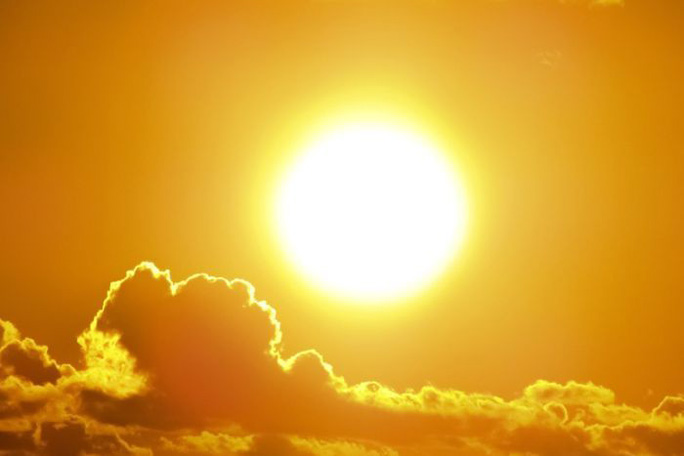
New research estimates a 32% increase in deaths of people under 35 if greenhouse gases not radically cut.
Oliver Milman, Guardian, 7 Dec 24
Extreme heat fueled by the climate crisis is often viewed as primarily a problem for vulnerable segments of the population, such as elderly people. But it is people aged under 35 that are set to suffer the brunt of heat-related deaths as temperatures climb, new research has suggested.
While older people are susceptible to heatwaves, they currently make up the bulk of cold-related deaths. As the world heats up, it will be younger people that will suffer disproportionately as the mortality burden shifts, with the new study estimating a 32% increase in deaths of people under 35 years old this century from heat if greenhouse gases emissions aren’t radically cut.
“Most discussion of vulnerability to heat focuses on the elderly, but we found a surprising source of inequality in that most heat mortality is in younger people,” said Andrew Wilson, a Columbia University researcher who led the study, published in Science Advances, with a group of nine other scientists. “We didn’t think we’d find this.”
The study is based on data drawn from deaths in Mexico, a country of extensive mortality records and high “wet bulb” temperatures, which is a measurement that factors in humidity to ascertain the heat stress level upon people.
The researchers found that in the two decades until 2019, 75% of deaths from heat occurred among people younger than 35 while, conversely, almost all cold-related deaths were of those older than 50.
As most temperature-related deaths in Mexico, like in most countries, currently occur due to cold weather, the growing problem of extreme heat is likely to tip the balance towards more younger people dying, the research suggests. This pattern may well be replicated in other countries such as the US and in Europe, Wilson said, due to fundamental similarities in how different age groups react to temperature.
“We are seeing that cold-related deaths will fall, primarily of older individuals, while heat deaths of younger individuals will increase,” he added. “Climate change is here and how we adapt to it will be a very important determinant of human health in the future. We shouldn’t move resources away from older people but we certainly need to think more about the risk faced by younger people.”
There is no single answer as to why there is heightened risk for younger people but researchers said there are likely a number of factors, such as physiological differences – for example, babies are unable to sweat to release heat and are dependent upon caregivers – as well as occupational risks, such as a working age population that toils outdoors while engaged in agricultural labor and construction.
In the US, the Biden administration has spent the past three years formulating the first federal rules to protect workers from extreme heat, although these regulations are likely to be wound back by the incoming president, Donald Trump.
……………………Khatana said that younger people are exposed to heat through work, school and recreational activities and “therefore may experience a disproportionate impact from climate change”.
“This highlights the importance of thinking of targeted measures, such as work breaks for people working in hot environments, or rescheduling sporting events to avoid extreme heat,” he said. https://www.theguardian.com/us-news/2024/dec/06/young-adults-heat-related-deaths-climate-crisis
Countdown to an ice-free Arctic: New research warns of accelerated timelines
2/3/2024 By Yvaine Ye
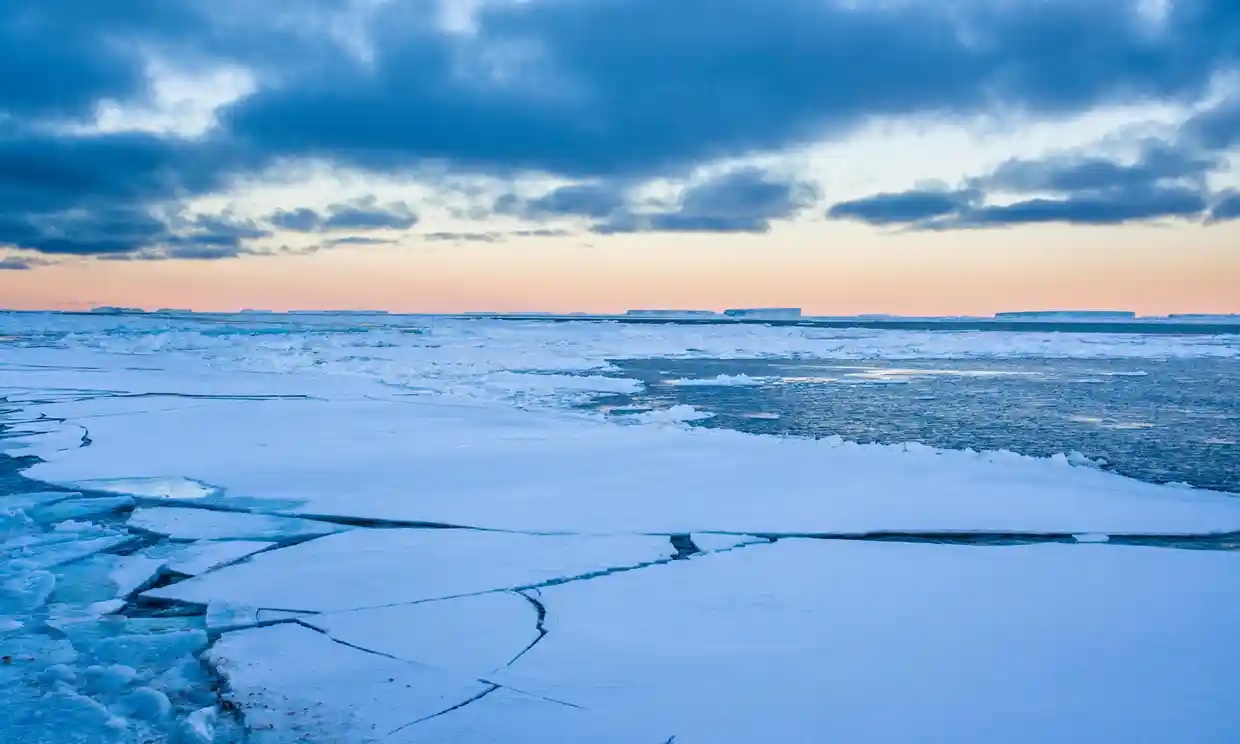
The first summer on record that melts practically all of the Arctic’s sea ice, an ominous milestone for the planet, could occur as early as 2027.
For the first time, an international research team, including CU Boulder climatologist Alexandra Jahn and Céline Heuzé from the University of Gothenburg in Sweden, used computer models to predict when the first ice-free day could occur in the northernmost ocean. An ice-free Arctic could significantly impact the ecosystem and Earth’s climate by changing weather patterns.
“The first ice-free day in the Arctic won’t change things dramatically,” said Jahn, associate professor in the Department of Atmospheric and Oceanic Sciences and fellow at CU Boulder’s Institute of Arctic and Alpine Research. “But it will show that we’ve fundamentally altered one of the defining characteristics of the natural environment in the Arctic Ocean, which is that it is covered by sea ice and snow year-round, through greenhouse gas emissions.”
The findings were published Dec. 3 in the journal Nature Communications. Jahn will also present the results in Dec. 9 at the American Geophysical Union annual meeting in Washington D.C.
A Blue Arctic
As the climate warms from increasing greenhouse gas emissions, sea ice in the Arctic has disappeared at an unprecedented speed of more than 12% each decade.
In September, the National Snow and Ice Data Center reported that this year’s Arctic sea ice minimum—the day with the least amount of frozen seawater in the Arctic—was one of the lowest on record since 1978.
At 1.65 million square miles, or 4.28 million square kilometers, this year’s minimum was above the all-time low observed in September 2012. But it still represents a stark decline compared to the average coverage of 6.85 million square kilometers between 1979 and 1992.
When the Arctic Ocean has less than 1 million square kilometers of ice, scientists say the Arctic is ice free.
Previous projections of Arctic sea ice change have focused on predicting when the ocean will become ice free for a full month. Jahn’s prior research suggested that the first ice-free month would occur almost inevitably and might happen by the 2030s.
…………………………………………………….The researchers found that a series of extreme weather events could melt two million square kilometers or more of sea ice in a short period of time: A unusually warm fall first weakens the sea ice, followed by a warm Arctic winter and spring that prevents sea ice from forming. When the Arctic experiences such extreme warming for three or more years in a row, the first ice-free day could happen in late summer.
Those kinds of warm years have already happened. For example, in March 2022, areas of the Arctic were 50°F warmer than average, and areas around the North Pole were nearly melting. With climate change, the frequency and intensity of these weather events will only increase, according to Heuzé.
Sea ice protects the Arctic from warming by reflecting incoming sunlight back into space. With less reflective ice, darker ocean waters will absorb more heat from the Sun, further increasing temperatures in the Arctic and globally. In addition, warming in the Arctic could change wind and ocean current patterns, leading to more extreme weather events around the world.
But there’s also good news: A drastic cut in emissions could delay the timeline for an ice-free Arctic and reduce the time the ocean stays ice-free, according to the study.
“Any reductions in emissions would help preserve sea ice,” Jahn said. https://www.colorado.edu/today/2024/12/03/countdown-ice-free-arctic-new-research-warns-accelerated-timelines?fbclid=IwY2xjawG_IhlleHRuA2FlbQIxMQABHX8KyQRLhAP2U6lYO1AMgR9kgUX3J1KhOcalDwdskFX_vdF1LEoxQsDBMw_aem_LPnxIx4MdGaxAfZFAm28gw
‘Unprecedented’ climate extremes are everywhere. Our baselines for what’s normal will need to change
November 28, 2024 , https://theconversation.com/unprecedented-climate-extremes-are-everywhere-our-baselines-for-whats-normal-will-need-to-change-244298
Extreme temperature and rainfall events are increasing around the world, including Australia. What makes them extreme is their rarity and severity compared to the typical climate.
A region’s “climate” is defined by a 30-year average of mainly rainfall and temperature. Increasingly, these climate definitions have become less appropriate – we need to look at events over shorter time periods to gain a more accurate picture.
We can see this in the recent worldwide proliferation of extreme flooding and prolonged heatwaves.
Using southern Australia as a prime example, our newly published research in Academia Environmental Sciences and Sustainability shows that machine learning techniques can help identify key climate drivers, supporting a redefinition of climate in a warming world.
Increasing ‘flash’ events
In Australia, eastern coastal regions of Queensland and New South Wales continue to receive record downpours and flash floods, interspersed by dry periods of a few months to a few years.
In stark contrast, southern coastal regions are drying and facing more extreme heatwaves. With already parched vegetation and catastrophic fire dangers, this region is experiencing drought conditions due to decreased cool season rainfall and increased temperatures.
Notably, flash droughts and flash floods have adversely affected both agricultural crop yields and grazing pasture quality. Flash droughts greatly reduce moisture for germination. Flash floods ruin crops close to harvest time.
The problem with these “flash” events is just how difficult they are to forecast. To make more accurate seasonal and annual predictions for rainfall and temperatures, we need to update our climate models. But how do we know which climate drivers need to be included?
Seeking a new normal
To keep track of typical climate conditions and provide context for weather and climate forecasts, the World Meteorological Organization uses a set of data products known as climatological standard normals.
They define climate as averages of monthly, seasonal and annual weather-related variables such as temperature and rainfall, over consecutive 30-year periods.
Climate normals can be used to assess how typical of the current climate a particular event was in a given location. It’s how we arrive at temperature anomalies.
For example, to tell whether a year was relatively “hot” or “cool”, we look at the anomaly – the difference between the average temperature for the calendar year in question, compared to the climate normal.
But extreme variations are now occurring in periods of ten years or even shorter. Consequently, multiple increases and decreases can cancel each other out over a 30-year period. This would hide the large changes in statistics of weather variables within that period.
For example, large rainfall changes in average monthly, seasonal and annual amounts can be hidden within 30-year averages. Global warming often amplifies or diminishes the impacts of multiple climate driver phases within approximately ten-year periods. When averaged over 30 consecutive years, some information is lost.
What did we find?
Over the past decade or so, machine learning (where computers learn from past data to make inferences about the future) has become a powerful tool for detecting potential links between global warming and extreme weather events. This is referred to as attribution.
Machine learning techniques are simple to code and are well-suited to the highly repetitive task of searching through numerous combinations of observational data for possible triggers of severe weather events.
In our new study, machine learning helped us untangle the dominant climate drivers responsible for recent flash flood rainfall on the east coast of Australia, and a lack of rainfall on the southern coast.
Along the southern coast, the cool season from May to October is typically produced by mid-latitude westerly winds. In recent years these winds were farther away from the Australian continents, resulting in the recent drought of 2017–19 and flash drought of 2023–24.
In contrast, after the 2020–22 La Niña, the east coast continues to experience wetter conditions. These come from generally higher than average sea-surface temperatures off the east coast and Pacific Ocean, due to the presence of onshore winds.
Machine learning identified the dominant drivers of the scenario above: the El Niño-Southern Oscillation, the Southern Annular Mode, the Indian Ocean Dipole, and both local and global sea surface temperatures.
A key finding was the prominence of global warming as an attribute, both individually and in combination with other climate drivers. Climate drivers and their combinations can change with increasing global warming over shorter periods that contain extremes of climate. Hence, the use of 30-year periods as climate normals becomes less useful.
Finding regional attributes for better forecasting
Climate models often disagree on the climate drivers likely to be relevant to extreme events.
A key feature of machine learning is the ability to deal with multi-source data by identifying regional attributes. We can combine possible climate-driver predictors with high-resolution climate model predictions, especially after the climate model data are downsized to cover specific regions of concern. This can help with extreme event forecasting at a local scale.
Scientists are continuously developing new methods for applying machine learning to weather and climate prediction.
The scientific consensus is that global warming has dramatically increased the frequency of extreme rainfall and temperature events. However, the impacts are not uniform across the world, or even across Australia. Some regions have been more affected than others.
Currently there is no single alternative definition to the traditional 30-year climate normal, given the variable impacts across the planet. Each region will need to determine its own relevant climate time period definition – and machine learning tools can help.
Huge COP29 climate deal too little too late, poorer nations say
Richer countries have promised to raise their funding to help poorer
countries fight climate change to a record $300bn (£238bn) a year, but the
deal has come under criticism from the developing world.
The talks at the UN climate summit COP29 in Azerbaijan ran 33 hours late, and came within
inches of collapse. The agreement falls well short of the $1.3tr developing
countries were pushing for. The African Group of Negotiators described the
final pledge as “too little, too late”, while the representative from India
dismissed the money as “a paltry sum”.
But after two weeks of often bitter
negotiations in the Azerbaijani capital, Baku, poorer nations did not stand
in the way of a deal. Five key takeaways from COP29 climate talks. The
promise of more money is a recognition that developing nations bear a
disproportionate burden from climate change, but also have historically
contributed the least to climate change.
BBC 24th Nov 2024, https://www.bbc.co.uk/news/articles/cd0gx4przejo
COP29: Baku breakthrough disappoints, but should still trigger a fresh wave of climate finance.
Green groups have condemned the COP29 finance package as a betrayal of
developing nations, but it has the potential to provide a big chunk of the
trillions of dollars of climate investment the world needs. Is new climate
accord delivered in Baku ‘bad deal’? Would no deal have been better? Did
the new finance package agreed at COP29 amount to a ‘global Ponzi scheme’?
As ever, it’s complicated.
Business Green 24th Nov 2024 https://www.businessgreen.com/news/4382153/cop29-baku-breakthrough-disappoints-trigger-fresh-wave-climate-finance
Nuclear reactor cooling systems threatened by global heating.
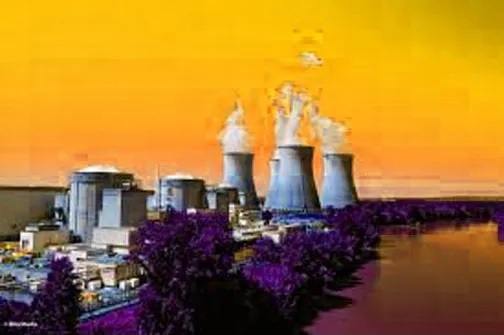
Believing that waterways used as cooling sources for nuclear power plants
could get warmer due to climate change, climate scientists and nuclear
engineering specialists at the US Department of Energy’s Argonne National
Laboratory are joining forces to develop a plan B for nuclear power in
Richland, Washington.
The plan is to use Gateway for Accelerated Innovation
in Nuclear (GAIN) funding from DOE to work with Energy Northwest to inform
the design and selection of future nuclear reactor cooling systems and
assess their impacts on electricity cost.
NS Energy 20th Nov 2024, https://www.nsenergybusiness.com/analysis/determining-optimal-configurations-for-nuclear-plants-and-advanced-reactors-in-local-climates/
The 1.5C Climate Goal Is Dead. Why Is COP29 Still Talking About It?
The battle to keep global warming within 1.5 degrees Celsius has been a
rallying cry for climate action for nearly a decade. Now, with the planet
almost certain to blow past the target, diplomats and campaigners at the
COP29 summit have found themselves awkwardly clinging to a goal that no
longer makes sense.
The evidence has become harder and harder to ignore.
This year will once again be the hottest on record as greenhouse gas
emissions continue to soar and Earth will likely register an average
reading of 1.5C above pre-industrial levels for the first time.
A study released this month using a new technique for measuring the rise in
temperatures suggests the world was already 1.49C hotter at the end of
2023.
“1.5C has been deader than a doornail” for a while now, said Zeke
Hausfather, a climate scientist at Berkeley Earth. Many of his peers agree.
The United Nations has concluded that the world is on track to warm roughly
3.1C before the end of the century if nothing changes. That report was
released just before representatives from nearly 200 countries gathered in
Baku, Azerbaijan for the UN’s annual global climate conference, where
they have been mired in bitter negotiations over how to raise money to help
developing nations combat global warming.
Bloomberg 18th Nov 2024, https://www.bloomberg.com/news/features/2024-11-18/cop29-what-does-1-5c-s-failure-mean-for-climate-negotiations
1 This Month
To see nuclear-related stories in greater depth and intensity – go to https://nuclearinformation.wordpress.com/
12 February – Webinar The Big Push: New Nuclear Projects in Canada
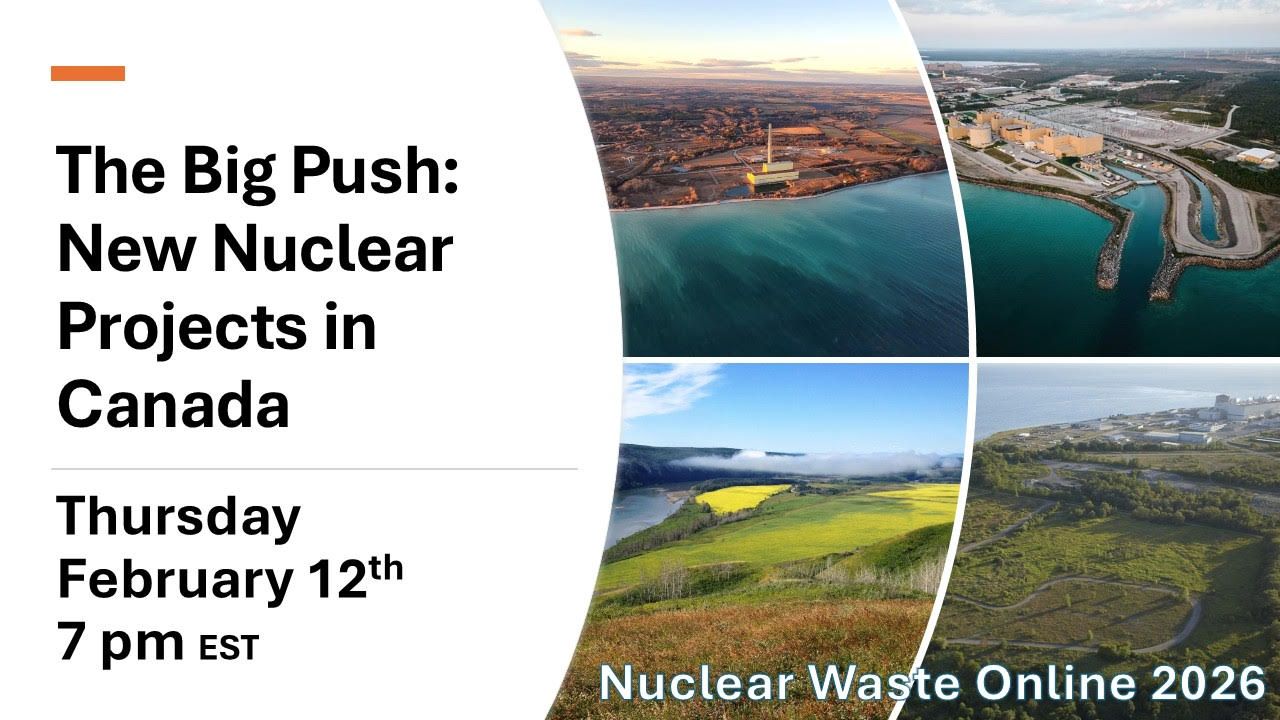
Thursday, February 12, 7 pm Eastern | 2nd of 4 sessions in the 2026 Nuclear Waste Online webinar series
Join a webinar on the push for new nuclear generation in Canada. Go to Northwatch.org to register or use the registration link https://us02web.zoom.us/webinar/register/WN_ZfWOf1GITqSRIZX8CB-A9w

-
Archives
- February 2026 (127)
- January 2026 (308)
- December 2025 (358)
- November 2025 (359)
- October 2025 (376)
- September 2025 (258)
- August 2025 (319)
- July 2025 (230)
- June 2025 (348)
- May 2025 (261)
- April 2025 (305)
- March 2025 (319)
-
Categories
- 1
- 1 NUCLEAR ISSUES
- business and costs
- climate change
- culture and arts
- ENERGY
- environment
- health
- history
- indigenous issues
- Legal
- marketing of nuclear
- media
- opposition to nuclear
- PERSONAL STORIES
- politics
- politics international
- Religion and ethics
- safety
- secrets,lies and civil liberties
- spinbuster
- technology
- Uranium
- wastes
- weapons and war
- Women
- 2 WORLD
- ACTION
- AFRICA
- Atrocities
- AUSTRALIA
- Christina's notes
- Christina's themes
- culture and arts
- Events
- Fuk 2022
- Fuk 2023
- Fukushima 2017
- Fukushima 2018
- fukushima 2019
- Fukushima 2020
- Fukushima 2021
- general
- global warming
- Humour (God we need it)
- Nuclear
- RARE EARTHS
- Reference
- resources – print
- Resources -audiovicual
- Weekly Newsletter
- World
- World Nuclear
- YouTube
-
RSS
Entries RSS
Comments RSS
 nuclear-news