Small or big, new nuclear reactors are not climate solutions.

By David Suzuki with contributions from Senior Editor and Writer Ian Hanington, 2 Oct 25, https://davidsuzuki.org/story/small-or-big-new-nuclear-reactors-are-not-climate-solutions/?utm_source=mkto-none-smSubscribers-readOnline-body&utm_medium=email&utm_campaign=scienceMatters-smallOrBigNewNuclear-en-03oct2025&mkt_tok=MTg4LVZEVS0zNjAAAAGdSLfvwz3-gaAzswU0cR9sbbcB6EK9J4ozsxpnQ5NzdYKwi0T9FyAHMSo5n-WVHWM8P49lrcxTdIEkaadCrd1Fc6v-BTBQ7LotO0zBv-mJVZIfBg
Despite the efforts of industry and its supporters to convince us otherwise, coal, gas and oil are outdated, inefficient, polluting energy sources, especially compared to alternatives. Some people, including politicians, are touting nuclear power as a good alternative. Is it?
Proponents argue it’s “clean,” because it doesn’t generate greenhouse gas emissions. But considering its entire life cycle, it’s far from clean, and it’s rife with problems — from uranium mining and transport to building and eventually decommissioning nuclear power plants to geopolitical issues around fuel supply and site security to radioactive waste disposal and weapons production. Of course, renewable energy also comes with impacts, which is why reducing energy and materials use is critical.
Besides environmental and other issues, building nuclear power plants — even largely untested small modular reactors, or SMRs — is expensive and time-consuming.
As Andrew Nikiforuk writes in the Tyee, “Due to its cost and complexity, it will not provide cheap or low-emission electricity in timeframe or scale that matters as climate change continues to broil an indifferent civilization.” He notes, however, “That is not to say that nuclear technology won’t play a minor role in our highly problematic energy future.”
Nikiforuk points to a recent study of 401 nuclear electricity projects built between 1936 and 2014 in 57 countries. It found the average time to build them was 70 months, and average cost overruns were close to US$1 billion (on top of massive projected expenditures). Because nuclear only supplies about nine per cent of global energy, and many reactors are nearing the end of their average life spans, it’s unlikely to play a major role in bringing emissions down as quickly as needed.
The 2025 “World Nuclear Report” says that, “In 2024, total investment in non-hydro renewable electricity capacity reached a record US$728 billion, 21 times the reported global investment in nuclear energy. Solar and wind power capacities grew by 32 percent and 11 percent, respectively, resulting in 565 GW of combined new capacity, over 100 times the 5.4 GW of net nuclear capacity addition. Global wind and solar facilities generated 70 percent more electricity than nuclear plants.”
Consider that much of the push for SMRs is coming from people like Alberta Premier Danielle Smith, to fuel increased oilsands production, and tech billionaires, to provide the enormous amounts of power required for data centres and artificial intelligence.
Canada is already set to pay more than $1 billion for SMRs and other nuclear projects. But the “World Nuclear Report” notes that the few SMR projects now in play are “in serious financial trouble.”
Nikiforuk writes that “to achieve an economy of scale would require the production of thousands of SMRs, which is not happening anywhere any time soon.” He also notes that “SMRs are not small (they occupy the area of a city block), cheap or, for that matter, any safer than large reactors.” Studies show they can actually produce more waste overall than conventional reactors.
Energy Mix reports that costs for renewable energy and battery storage are dropping rapidly while nuclear plant prices continue to increase.
The “World Nuclear Report” states that renewable energy technologies “are evolving towards a highly flexible, fully electrified energy system with a decentralized control logic, outcompeting traditional centralized fossil and nuclear systems.”
That’s a clue as to why so many hyper-capitalist forces are pushing nuclear over renewable energy: Centralized power systems are easier to control, monopolize and profit from than systems based on energy sources freely available everywhere. And it’s easier to shift costs of fossil fuel and nuclear power plants to the public in the form of subsidies, taxes and higher electricity bills.
Given the urgent need to quickly address global heating, it would be far better to put money into renewable energy and infrastructure, including a modern east-west renewable-powered electricity grid in Canada.
While energy from wind, solar and geothermal, along with storage, also comes with environmental consequences and requires mining and materials, it’s still far cleaner, more efficient and quicker and easier to deploy than fossil fuel or nuclear power. To reduce impacts, we must, as Nikiforuk writes, “systematically reduce our energy and material consumption at an unprecedented pace.”
Like fossil fuels, nuclear is an outmoded, overpriced way to produce power.
Wildfires are getting deadlier and costing more. Experts warn they’re becoming unstoppable.
Guardian 2nd Oct 2025,
Of 200 fires in the past 44 years, half of the fires that cost US$1bn or more were in the last decade
Graham Readfearn Environment and climate correspondentFri 3 Oct 2025 04.00 AESTShare
Wildfires tore through central Chile last year, killing 133 people. In California, 18,000 buildings were destroyed in 2018 causing US$16bn (A$24bn, £12bn) in damage. Portugal, Greece, Algeria and Australia have all felt the grief and the economic pain in recent years.
As the headlines, the death tolls and the billion-dollar losses from wildfires have stacked up around the world, so too have the rising temperatures – fuelled by the climate crisis – that create tinderbox conditions.
For the first time scientists say they have shown unambiguously that the numbers of “societally disastrous” wildfires – the ones that hit economies hard and take lives – have increased around the world as global heating bites.
“We’re witnessing a fundamental shift in how wildfires impact society,” said the Australian scientist Dr Calum Cunningham, who led research published in the journal Science. “Climate change sets the stage for these disasters.”
Looking at the 200 costliest fires between 1980 and 2023 – pulled from a private database maintained by global re-insurer Munich Re – the trends were clear.
Of the 200 most damaging fires since 1980 – that is, the fires with the highest direct costs relative to each nation’s GDP – 43% happened in the last 10 years.
Half of the fires that cost US$1bn or more were also in the last 10 years. Over the 44 years analysed, the frequency of fires causing 10 or more deaths tripled while the population only went up by 1.8 times.
Temperatures and the dryness of the atmosphere and of the vegetation – all factors promoting fires – all got significantly worse between 1980 and 2023.
Half the wildfires happened while local weather conditions were in the worst 0.1% on record for fire danger.
Disturbing regularity
Many studies have found the weather conditions that promote fires around the world are getting worse, and happening more often, because of global heating………………………………………………………………………………………… https://www.theguardian.com/world/2025/oct/02/earths-wildfires-growing-in-number
‘Listen to the cry of the Earth’: Pope Leo takes aim at climate change sceptics.
Associated Press in Rome, 2 Oct 25, https://www.theguardian.com/world/2025/oct/01/pope-leo-climate-change-sceptics-cry-of-the-earth
Pontiff laments that some ‘ridicule those who speak of global warming’, days after Trump’s claims of ‘con job’
Pope Leo XIV has taken aim at people who “ridicule those who speak of global warming” as he embraced Pope Francis’s environmental legacy and made it his own in some of his strongest and most extensive comments on the subject to date.
Leo presided over the 10th-anniversary celebration of Francis’s landmark ecological encyclical, Laudato Si (Praised Be), at a global gathering south of Rome. The encyclical cast care for the planet as an urgent and existential moral concern and launched a global grassroots movement to advocate for caring for God’s creation and the peoples most harmed by its exploitation.
Leo told the estimated 1,000 representatives from environmental and Indigenous groups that they needed to put pressure on national governments to develop tougher standards to mitigate the damage already done. He said he hoped the upcoming UN climate conference “will listen to the cry of the Earth and the cry of the poor”.
He did not name names but history’s first American pope spoke just days after Donald Trump complained, with false statements, to the UN general assembly about the “con job” of global warming. Trump has long been a critic of climate science and polices aimed at helping to transition to green energies such as wind and solar power.
Leo quoted Francis’s follow-up encyclical, published in 2023, in which the Argentinian pope challenged world leaders before a UN conference to commit to binding targets to slow climate change before it was too late.
Citing Francis’s text, Leo recalled that some leaders had chosen to “deride the evident signs of climate change, to ridicule those who speak of global warming and even to blame the poor for the very thing that affects them most”.
He called for a change of heart to truly embrace the environmental cause and said any Christian should be onboard.
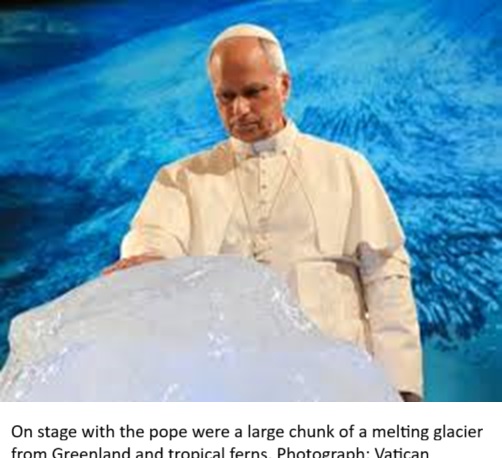
“We cannot love God, whom we cannot see, while despising his creatures. Nor can we call ourselves disciples of Jesus Christ without participating in his outlook on creation and his care for all that is fragile and wounded,” he said, presiding on a stage that featured a large chunk of a melting glacier from Greenland and tropical ferns.
Does the fight against climate change need nuclear power?

Pete Dickenson, Tower Hamlets Socialist Party, 01/10/2025
As the major capitalist powers’ refusal to seriously invest to tackle climate change becomes ever clearer, some are looking again to nuclear energy as an alternative because it does not emit carbon dioxide, the main driver of global warming.
Rising costs and public opposition after a series of disasters has meant that the total energy produced by nuclear has largely flatlined globally since the turn of the millennium. Now several states, including Britain, are turning again to nuclear fission – harnessing the energy released by splitting the atom, the basis of all presently operational reactors.
In desperation at the pressing need to phase out fossil fuel production, prominent environment writer George Monbiot, changed his position on nuclear power fifteen years ago, thinking that capitalist governments would be more willing to adopt nuclear than wind, solar or other renewables. He can now point to Britain’s pro-nuclear change in policy, and that of other governments, to support his case. China for instance, has significantly stepped up its nuclear programme.
Direct action groups such as Extinction Rebellion and Just Stop Oil, do not take a position on the nuclear question, they have members who are both for and against. Also, support for nuclear appears to be spreading to some extent among activists on the socialist left, in particular among younger activists.
It is claimed that, because global warming is correctly seen as the major threat facing the planet, risks associated with nuclear power can be justified, since they are significantly less than those linked to climate inaction – and it is a tried and tested technology.
Risks from nuclear power and climate inaction cannot be balanced in abstract against each other without considering in absolute terms just how dangerous nuclear is. Prolonged climate inaction for a significant period could be truly catastrophic. Nuclear risks, although relatively smaller, nevertheless still pose a major threat.
Nuclear safety
Nuclear power generation has two major sources of risk: from future accidents and from storing spent radioactive material, a by-product of the nuclear reaction, for the indefinite future.
The 1986 Chernobyl disaster in Ukraine, although the worst, was just one of a series of nuclear accidents going back to the 1950s. The first was at Sellafield in Britain, then called Windscale, where there was a large leak of radioactivity, then in 1979 at Three Mile Island in the USA, where a meltdown of the reactor core, with potentially disastrous consequences, was only very narrowly avoided. This was followed by Chernobyl in 1986 where a series of explosions in the reactor building sent a massive radioactive cloud around the world and forced the long-term evacuation of land for hundreds of square miles around the site. The most recent disaster was at Fukushima in Japan in 2011 when, following an earthquake and tsunami, the cooling system failed, leading to a meltdown of the reactor core followed by explosions that contaminated surrounding land and sea…………………………………………………………………………………………………………………………………………
An even bigger long-term danger than a nuclear accident is safely storing spent radioactive nuclear material for the indefinite future, at least 100,000 years while it remains dangerously radioactive. No safe method has yet been devised to do this. If the radioactive waste is stored deep underground or at the bottom of the ocean, it could be vulnerable to earthquakes, undersea volcanic activity, major meteorite strikes or changes in geological conditions over such a long time scale, possibly caused by climate change. The materials used to store waste could deteriorate over 100,000 years. All these factors could cause leakage of radioactivity.
In Britain, existing very radioactive ‘high-level’ waste is stored in the nuclear plants themselves and less dangerous ‘low-level’ waste at Sellafield in Cumbria. The quantities involved are large. The Sizewell C nuclear station in Suffolk, recently given the go-ahead by climate secretary Ed Milliband, will generate an estimated 26,880 tonnes of radioactive waste over its 60-year lifecycle. Also, the plutonium used in making nuclear bombs creates further toxic waste.
In 2023, 88,000 tonnes of spent nuclear fuel was stored in the USA alone.
Considering the nearly 600 plants around the world operational, under construction and planned, some already accumulating waste for up to 60 years, the size of the problem is clear. A solution will have to be found, it would be irresponsible to add to it further.
Does nuclear expansion meet the urgency for climate action?
In its latest report, the IPCC, the UN body that advises on climate change correctly stresses the need for rapid action if the worst effects of global warming are to be avoided. If nothing meaningful is done in the next 20 years, current extreme weather will get far worse and tipping points, where there is an uncontrollable rise in temperature, will become more likely. However, if a massive expansion of nuclear is contemplated to address the situation, experience has shown that very little would be operational within 20 years. For example, planning began in 2007 on the Hinkley Point C reactor in Somerset, construction started in 2016 and it is expected to be operational in 2031, although some observers put it at 2033. It is true there have been particular problems with Hinkley but, even without construction delays, it would still have taken nearly 20 years from inception to completion……………………………………………………………………………………………………………………..
Not just because of the unacceptable danger but also due to the long delay before it can be operational on the scale needed, the use of fission-based nuclear power to tackle climate change should be opposed. Viable alternatives are available. None of the capitalist powers can be trusted to put the need to tackle global warming at the top of their agendas, since, for them, profit and increasingly ‘national energy security’ in the era of trade wars and growing international tensions comes first. Through democratic planning internationally, possible only on the basis of socialist change, with the energy industry, big business and the banks brought into public ownership, investment into a ‘green transition’ can bring an end to deepening climate disaster. https://www.socialistparty.org.uk/articles/143357/01-10-2025/does-the-fight-against-climate-change-need-nuclear-power/
The uphill battle ahead: Four different leaders, four different takes on global warming

By SETH BORENSTEIN and MELINA WALLING, September 26, 2025
UNITED NATIONS (AP) — Four men. Four corners of the globe. Four vastly different visions and experiences on climate change.
At the United Nations this week, a quartet of leaders with distinct personal styles and decidedly different national agendas demonstrated why saving the planet isn’t simple, fast or something they can even agree on.
U.S. President Donald Trump, a real estate tycoon and television personality, kicked off the issue a day early when he played skunk at a garden party. He told fellow leaders at the United Nations not to worry about climate change because it’s a scam and insisted that renewable energy, such as wind and solar, would wreck their economy. He was basically alone on that.
Then, on Wednesday, when more than 100 leaders gathered specifically to work on climate, it was the engineer-turned-president, Xi Jinping of China, who seized the moment, attention and headlines in a controlled video. He announced that for the first time, the world’s top carbon polluter would cut emissions. Though experts called it timid, he positioned his country to amass ever more economic might by cornering the market of the very renewables that Trump denigrated.
Feleti Penitala Teo, the soft-spoken prime minister of the small island nation of Tuvalu, talked of watching the beaches of his childhood get swallowed up by climate change’s rising seas. His role, he said in a Thursday interview, is to be the conscience of his colleagues.
And finally, playing host even though he lives a continent away was Brazilian President Luiz Inacio Lula da Silva, a former trade negotiator who represents a country that acts as a common middle ground for issues between North and South, rich and poor. He will host climate negotiations in Belem, Brazil, in November.
Their differences on the issue tell an important and intricate story…………………………………………………………………………………………………………….. https://apnews.com/article/climate-change-united-nations-trump-lula-xi-8ab619c37a5471fc0de0a063feaf7b9e
Human-made global warming ‘caused two in three heat deaths in Europe this summer’
Human-made global heating caused two in every three heat deaths in Europe
during this year’s scorching summer, an early analysis of mortality in 854
big cities has found. Epidemiologists and climate scientists attributed
16,500 out of 24,400 heat deaths from June to August to the extra hot
weather brought on by greenhouse gases. The rapid analysis, which relies on
established methods but has not yet been submitted for peer review, found
climate breakdown made the cities 2.2C hotter on average, greatly
increasing the death toll from dangerously warm weather.
Guardian 17th Sept 2025, https://www.theguardian.com/environment/2025/sep/17/human-made-global-warming-caused-two-in-three-heat-deaths-in-europe-this-summer-analysis-finds
Aid cuts cast long shadow over key Africa climate talks
For many Africans suffering under climate-driven crises such as drought or flooding, adapting to the climate crisis is seen as a top priority writes Nick Ferris from Ethiopia’s capital Addis Ababa. But aid cuts – particularly from Donald
Trump – mean that funding for such programmes is drying up.
Independent 9th Sept 2025, https://www.independent.co.uk/news/world/africa/trump-cuts-aid-climate-africa-b2823143.html
Protect Arctic from ‘dangerous’ climate engineering, scientists warn.

Plans to fight climate change by manipulating the Arctic and Antarctic
environment are dangerous, unlikely to work and could distract from the
need to ditch fossil fuels, dozens of polar scientists have warned. These
polar “geoengineering” techniques aim to cool the planet in unconventional
ways, such as artificially thickening sea-ice or releasing tiny, reflective
particles into the atmosphere. They have gained attention as potential
future tools to combat global warming, alongside cutting carbon emissions.
But more than 40 researchers say they could bring “severe environmental
damage” and urged countries to simply focus on reaching net zero, the only
established way to limit global warming.
BBC 9th Sept 2025,
https://www.bbc.co.uk/news/articles/c5yqw996q1ko
Kenya’s Ruto says western leaders have broken ‘climate blood pact’.
Africa Climate Summit told that developed countries are failing poorer
nations enduring worst effects of global warming.
Ruto told a gathering of fellow leaders at the Africa Climate Summit in Addis Ababa on Monday he was
“extremely concerned” developed countries were not following through on
their commitments. Overseas assistance budgets have been slashed by the UK,
France, Netherlands as defence spending stretches weak economies,
exacerbated by swingeing cutbacks by the US under President Donald Trump.
“Climate inaction” was costing tens of thousands of lives, Ruto said.
“Lives lost to a crisis Africa did not cause, as the least polluting
continent in the world.” Senegal’s former president Macky Sall also
told the summit that the continent and the rest of the world should prepare
for more shocks, following the “dangerous retreat” of the west from
climate action. “Africa’s crisis is not Africa’s alone,” he said.
“It fuels migration, pandemics, food insecurity, economic shocks,
extremism, and instability.”
FT 8th Sept 2025,
https://www.ft.com/content/c59f1907-4b2c-4f36-886a-60dabbdd29cc
World’s largest iceberg is finally about to disappear 40 years after breaking away from Antarctica
Megaberg twice the size of London could melt away within weeks

Stuti Mishra, Independent, 03 September 2025
A large Antarctic iceberg that calved almost four decades ago is now in its final days, with scientists saying it could vanish within weeks after drifting into warmer seas.
The megaberg, known as A23a, broke off the Filchner Ice Shelf in 1986 and became stuck on the seabed of the Weddell Sea, where it remained grounded for over 30 years.
It set adrift in 2020 and was carried by ocean currents into the “iceberg alley” – the South Atlantic route where most of Antarctica’s giants eventually meet their end.
Earlier this year, A23a still covered nearly 3,100 sq km, making it the world’s largest iceberg, bigger than Long Island and more than twice the size of London.
In recent months, however, enormous sections have splintered away. Satellite images analysed by the EU’s Copernicus programme show it has shrunk to less than half its original size, now measuring about 1,770 sq km.
Some of the breakaway fragments are themselves colossal, including one that is 400 sq km in area, while countless smaller bergs, still large enough to pose hazards to shipping, now litter surrounding waters.
The megaberg is breaking up “fairly dramatically”, Andrew Meijers, a physical oceanographer at the British Antarctic Survey, told AFP……………………………
Despite its size and longevity, researchers said the fate of A23a was inevitable once it left Antarctic waters. Exposed to warmer seas and battered by waves, it started dissolving at speed.
https://www.independent.co.uk/climate-change/news/iceberg-a23a-antarctica-melting-b2819233.html
These countries are sinking into the sea. What happens when they disappear forever?
Can these small island nations still be considered states if their land disappears?
Small island nations such as Tuvalu, Kiribati, the
Maldives and Marshall Islands are particularly vulnerable to climate
change. Rising seas, stronger storms, freshwater shortages and damaged
infrastructure all threaten their ability to support life. Some islands
even face the grim possibility of being abandoned or sinking beneath the
ocean. This raises an unprecedented legal question: can these small island
nations still be considered states if their land disappears? The future
status of these nations as “states” matters immensely. Should the worst
happen, their populations will lose their homes and sources of income. They
will also lose their way of life, identity, culture, heritage and
communities.
Independent 29th Aug 2025, https://www.independent.co.uk/climate-change/climate-change-un-maldives-kiribati-islands-states-icj-b2816719.html
Why New Large and Small Nuclear Reactors are Not Green.
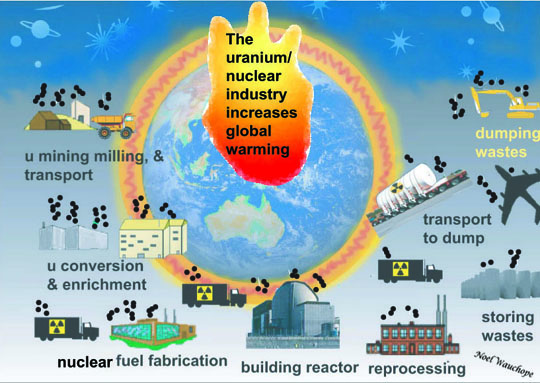
August 20, 2025, By: Mark Z. Jacobson, https://nationalinterest.org/blog/energy-world/why-new-large-and-small-nuclear-reactors-are-not-green
Despite their considerable allure in the eyes of many, and despite being put forth as the cure to the energy crisis, nuclear reactors are not green.

Air pollution, global warming, and energy security are three of the biggest problems facing the world. Many have suggested that new nuclear reactors can help solve these problems. However, due to the long time from planning to operation alone, new reactors are useless for solving any of these problems. This is just one of seven issues with nuclear electricity that illustrate why it can’t be classified as “green.” Developing more clean, renewable energy is a viable solution.
Long Planning-to-Operation Time
The planning-to-operation (PTO) time of a nuclear reactor includes the time to identify a site, obtain a site permit, purchase or lease the land, obtain a construction permit, finance and insure the construction, install transmission, negotiate a power purchase agreement, obtain permits, build the plant, connect it to transmission, and obtain an operating license.
New reactors now require PTO times of seventeen to twenty-three years in North America and Europe and twelve to twenty-three years worldwide. The only two reactors built from scratch in the United States since 1996 were two in Georgia. They had PTO times of seventeen and eighteen years (construction times of ten and eleven years). The Olkiluoto 3 reactor in Finland began operating in 2023 after a PTO time of twenty-three years. A French reactor began operating in 2024 after a PTO time of twenty years. Hinkley Point C in the UK is estimated to have a PTO time of up to twenty-three years. Four UAE reactors had PTO times of twelve to fifteen years (construction times of nine years). A Chinese reactor in Shidao Bay had a PTO time of seventeen years. China’s Haiyang 1 and 2 had PTO times of thirteen and fourteen years. No reactor in history has had a PTO time of less than ten years. Today, that number is twelve years,
Wind and solar take only two to five years. Rooftop PV is down to six months. Thus, new nuclear is useless, but renewables are not, for solving the three world problems, which need an eighty percent solution by 2030 and 100 percent renewable by 2035 to 2050.
Cost
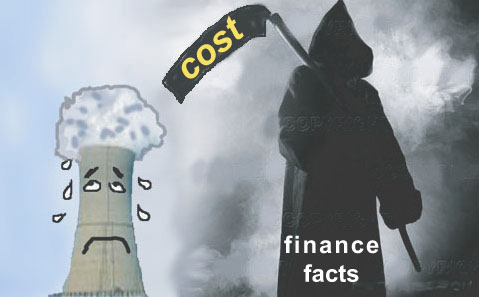
The 2025 cost of electricity for the new Vogtle nuclear reactors is $199 (169 to 228) per megawatt-hour. This compares with $61.5 (thirty-seven to eighty-six) for onshore wind and $58 (thirty-eight to seventy-eight) for utility-scale solar PV. Thus, new nuclear costs three (two to 6.2) times as much as new solar and wind. But nuclear’s cost does not include the cost to clean up the three Fukushima Dai-ichi reactor meltdowns, estimated at $460 to $640 billion, or ten to 18.5 percent of the capital cost of every reactor worldwide. Also, the cost of storing nuclear waste for 200,000 years is ignored. About $500 million is spent yearly in the United States to safeguard waste.
Air Pollution and Global Warming From Nuclear
There is no such thing as a close-to-zero-emission nuclear power plant. Carbon-equivalent emissions per unit of electricity from new nuclear power plants are nine to thirty-seven times those of onshore wind. Higher nuclear emissions are due to emissions from the background electric grid during the long PTO time of nuclear as compared with that of wind, emissions from mining and refining uranium, emissions from constructing and decommissioning a reactor, and heat and water-vapor emissions during reactor operations.
Weapons Proliferation Risk
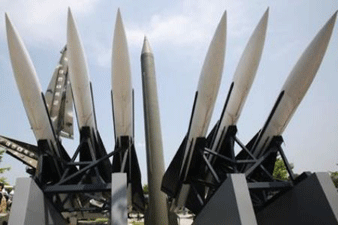
The growth of nuclear electricity has historically increased the ability of several nations, most recently Iran, to enrich uranium or harvest plutonium to build or attempt to build nuclear weapons. The Intergovernmental Panel on Climate Change (IPCC) states, with “robust evidence and high agreement,” that “barriers to and risks associated with an increasing use of nuclear energy include…nuclear weapons proliferation concerns…” Building a reactor allows a country to import and secretly enrich uranium and harvest plutonium from uranium fuel rods to help develop nuclear weapons. This does not mean every country will, but some have. Small modular reactors (SMRs) increase this risk, because SMRs can be sold more readily to and transported to countries without nuclear power.
Meltdown Risk
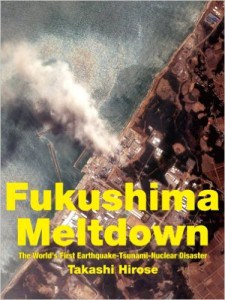
To date, 1.5 percent of all nuclear power plants built have melted down to some degree. Meltdowns have been either catastrophic (Chernobyl, Ukraine, in 1986; three reactors at Fukushima Dai-ichi, Japan, in 2011) or damaging (Three Mile Island, Pennsylvania, in 1979; Saint-Laurent, France, in 1980). The nuclear industry claims that new reactor designs are safe. But new designs are generally untested, and there is no guarantee that a new reactor will survive a disaster.
Waste Risk

Consumed fuel rods from nuclear reactors are radioactive waste. Most rods are stored near the reactor that used them. This has given rise to hundreds of radioactive waste sites that must be maintained for at least 200,000 years. The more nuclear waste that accumulates, the greater the risk of a leak that damages water supply, crops, animals, and/or humans.
Miining Lung Cancer Risk

Underground uranium mining, which is about half of all uranium mining, causes lung cancer in miners because uranium mines contain radon gas, some of whose decay products are carcinogenic. Wind and solar do not have this risk because they do not require continuous fuel mining, only one-time mining to produce the infrastructure, and such mining does not involve radon.
In sum, new nuclear takes seven to twenty-one years longer, costs two to 6.2 times as much, and emits nine to thirty-seven times the pollution per unit of electricity as new wind or solar. Beyond simply not being “green,” nuclear energy also has weapons proliferation risks, meltdown risks, waste risks, and mining lung cancer risks, which clean renewables avoid. SMRs will continue most of these problems and increase the risk of proliferation. In 2024, China added 378 gigawatts of wind, solar, and hydropower, ninety-five times the nuclear power it finished. Thus, even where nuclear is growing fastest, renewables are beating it by two orders of magnitude.
Finally, many existing reactors are so costly, their owners are demanding subsidies to stay open. But subsidizing existing nuclear may increase carbon emissions and costs versus replacing the plants with wind or solar.
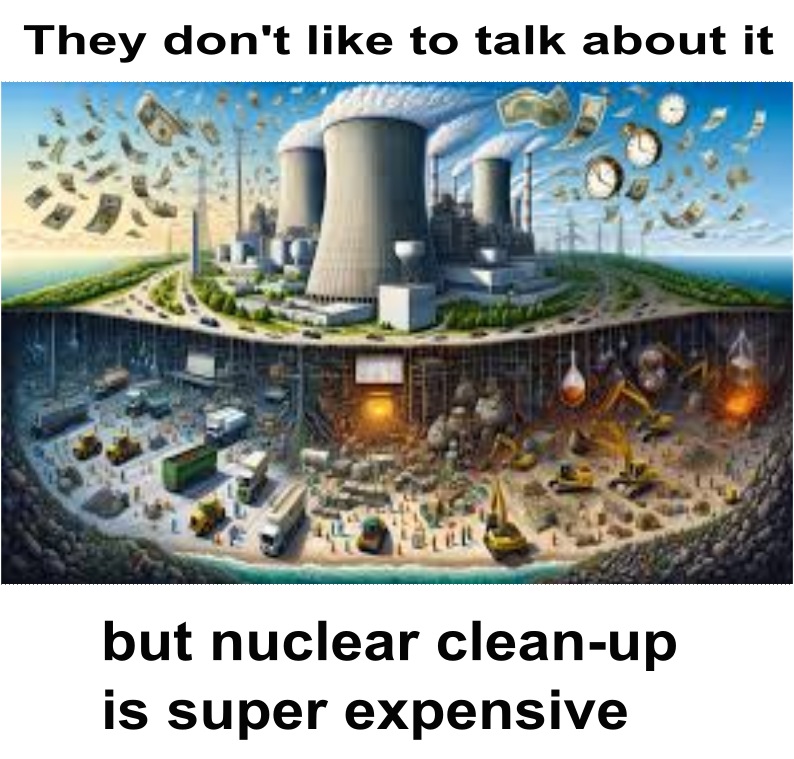
Radiocarbon Dispersion around Canadian Nuclear Facilities
Published online by Cambridge University Press: 18 July 2016, https://www.cambridge.org/core/journals/radiocarbon/article/radiocarbon-dispersion-around-canadian-nuclear-facilities/3BEF0553EC67E4951B9D5EF132D7EDCA
G. M. Milton, S. J. Kramer, R. M. Brown, C. J. W. Repta, K. J. King and R. R. Rao
Abstract
Canadian deuterium uranium (CANDU) pressurized heavy-water reactors produce 14C by neutron activation of trace quantities of nitrogen in annular gas and reactor components (14N(n,p)14C), and from 17O in the heavy water moderator by (17O(n,α)14C). The radiocarbon produced in the moderator is removed on ion exchange resins incorporated in the water purification systems; however, a much smaller gaseous portion is vented from reactor stacks at activity levels considerably below 1% of permissible derived emission limits.
Early measurements of the carbon speciation indicated that >90% of the 14C emitted was in the form of CO2. We conducted surveys of the atmospheric dispersion of 14CO2 at the Chalk River Laboratories and at the Pickering Nuclear Generating Station. We analyzed air, vegetation, soils and tree rings to add to the historical record of 14C emissions at these sites, and to gain an understanding of the relative importance of the various carbon pools that act as sources/sinks within the total 14C budget. Better model parameters than those currently available for calculating the dose to the critical group can be obtained in this manner. Global dose estimates may require the development of techniques for estimating emissions occurring outside the growing season.
Information
TypeIV. 14C as a Tracer of the Dynamic Carbon Cycle in the Current EnvironmentInformation
Radiocarbon , Volume 37 , Issue 2 , 1995 , pp. 485 – 496
DOI: https://doi.org/10.1017/S0033822200030964
References…………………………………………………………………….
Do heatwaves, wildfires and travel costs signal the end of the holiday abroad?

It was a prediction nobody wanted to hear. On the main stage of the world’s
biggest tourism fair, Stefan Gössling, a leading researcher in sustainable
transport, had just calmly announced the looming death of the holiday
industry. “We have already entered the beginning of the age of
non-tourism,” said Gössling, to an uneasy audience of travel agencies,
car rental companies, cruise operators and hoteliers. That prophecy may
sound fanciful to holidaymakers in Europe and North America who have been
jetting off this summer – as well as to industry executives delighted to
see international tourism return to pre-pandemic highs last year – but
Gössling argues that as carbon pollution stokes heatwaves, fuels wildfires
and ruins harvests, the cost of foreign travel will soar, and fewer people
will be able to afford it. Gössling is not short of examples of
destinations already feeling the squeeze. Warm weather is melting snow that
keeps Alpine ski resorts alive. Coastal erosion is stripping sand from
southern European beaches. Droughts are forcing Spanish hotels to ship in
fresh water as swimming pools lie empty, while wildfires are setting scenic
Greek islands ablaze.
Guardian 23rd Aug 2025, https://www.theguardian.com/business/2025/aug/23/do-heatwaves-wildfires-and-travel-costs-signal-the-end-of-the-holiday-abroad
Europe’s nuclear power plants buckle under climate extremes.
Europe’s reliance on nuclear power faces a new climate test as heat waves scorch the continent
Necva Tastan Sevinc |19.08.2025 , https://www.aa.com.tr/en/environment/europe-s-nuclear-power-plants-buckle-under-climate-extremes/3663772
While a lot of the nuclear public relations relates to nuclear as a sort of savior of climate change, unfortunately, the reverse is true,’ says expert Paul Dorfman
Operations of nuclear plants are being strained by warming rivers, storm surges and rising sea levels,
ISTANBUL
As the summer sun scorches Europe, the effects of a warming planet are becoming increasingly tangible – and while nuclear energy is often touted as part of the solution, it too is buckling under the heat.
“While a lot of the nuclear public relations relates to nuclear as a sort of savior of climate change, unfortunately, the reverse is true,” Paul Dorfman, chair of the Nuclear Consulting Group and a senior academic at the University of Sussex, told Anadolu. “Nuclear will be a significant and early climate casualty.”
This year, several European plants have reduced output or shut down altogether – not due to technical faults, but because the rivers that cool them are either too shallow or too hot.
France, where nuclear accounts for around 65% of electricity, has been particularly affected, with nearly all of its 18 nuclear sites reporting capacity reductions this summer.
Cooling crisis: Rivers too warm for reactors
Europe hosts around 166 operable nuclear reactors with a combined capacity of nearly 149 gigawatts (GW), approximately one-third of the global total.
France leads with 57 reactors, followed by the UK with nine. Other major operators include Spain, Sweden, Finland, Switzerland and Belgium, with smaller but strategic fleets in the Czech Republic, Hungary and Slovakia.
Most were designed decades ago without climate resilience in mind, and rely heavily on water – often drawn from nearby rivers – to cool the systems that produce electricity.
After absorbing heat from the reactor, this water is typically returned to the environment. But when river levels drop or water temperatures rise too high, the cooling process becomes less effective, and in some cases, dangerous.
“If that … superheated water is discharged back to the rivers, basically it kills the river ecology,” said Dorfman. “So, there are regulatory temperature thresholds – and France has breached those numbers.”
He explained that inland reactors are already suffering due to “low flow and heating” in rivers such as the Rhone and the Loire, two of the country’s most crucial cooling sources.
While France may be the worst hit, the same situation played out in several countries this summer.
In Switzerland, at the Beznau plant on the Aare River, one reactor was halted entirely and the other reduced to 50% capacity. Other inland reactors across Central Europe, including those in countries like the Czech Republic, Hungary and Slovakia, face similar vulnerabilities.
Europe especially vulnerable
The issue is compounded by projections that Europe’s extreme heat events will only intensify in the coming decades.
According to the European Environment Agency, Europe is the fastest-warming continent in the world, with temperatures rising at roughly twice the global average rate.
Recently, the UK Met Office said that scorching temperatures are becoming the new normal, along with more frequent extreme events like drought, flash flooding and storms.
“We know what will happen in the next 10 to 20 years. We know that inland rivers will suffer. This is absolutely going to happen,” Dorfman said.
He added that even coastal plants are not safe from climate volatility.
“Coastal reactors will be increasingly subject to climate-driven storm surge flooding,” Dorfman warned. “We know that sea level rise, glacier melt, and storm surges will increasingly threaten nuclear sites. This is not speculative. It’s already happening.”
The majority of nuclear power plants were constructed long before climate change was evident. Now, he said, “they’re at greater risk.”
Demand soars, output drops
Europe’s energy dilemma is further complicated by surging electricity demand during heat waves, driven largely by air conditioning. Just as power is needed most, nuclear output often declines.
According to a new report by energy think tank Ember, the June-July 2025 heat wave caused electricity demand to surge by 14% in Spain, 9% in France and 6% in Germany. Peak demand was even higher.
The current energy model is showing its limits during temperature extremes, said Pawel Czyzak, Ember’s interim Europe Program director.
“Any thermal power plant draws water from a lake, river or the sea to cool its systems, like a car engine. But if the river is already hot, then it can’t cool efficiently,” he told Anadolu. “If you have a week of 35C (95F)-plus, rivers warm up, and you have issues with the cooling systems.”
The result, Czyzak explained, is that nuclear output is often scaled back.
“Normally that’s okay in summer, but during a heat wave, demand grows – and that causes a lot of stress for the power system.”
He explained that France is particularly vulnerable since it relies on nuclear for the bulk of its energy. “If nuclear goes down … then you don’t really have anything else to switch on,” he said.
Turning to renewables
But there are signs of a shift. According to Ember, solar power accounted for 22% of the EU’s electricity generation in July, narrowly surpassing output from the bloc’s nuclear power plants.
Combined generation from natural gas and coal fell short of both solar and nuclear. Meanwhile, electricity produced from wind and hydropower sources exceeded that of all fossil fuels combined.
“We know that 94.2% of all new worldwide electricity capacity last year was renewables,” Dorfman said.
“Nuclear takes 13 to 17 years to build, and that’s much too late for our climate needs,” he added.
He argues that renewables, paired with energy efficiency measures and grid innovations like battery storage and improved interconnectors, can help build a more resilient power system.
“It’s looking like a significant investment in renewables of all kinds – and in energy efficiency – is urgently needed,” said Dorfman.
Czyzak added that solar power is a particularly strong ally during heat waves.
“This year, pretty much every year, we’re seeing more solar power deployed and record generation volumes,” he added.
Still, he acknowledges the transition will not happen overnight. “I think maybe the next five years are a bit difficult, and then it will get better,” he said. “Generally, the countries that don’t have very flexible and diversified power systems are at most risk.”
1 This Month



Shut down the radiation-damaged Heysham nuclear reactors now
To see nuclear-related stories in greater depth and intensity – go to https://nuclearinformation.wordpress.com

Say No to NASA’s Reckless Nuclear Reactor on the Moon
Say No to NASA’s Reckless Nuclear Reactor on the Moon
-
Archives
- October 2026 (247)
- September 2026 (339)
- August 2026 (330)
- July 2026 (355)
- June 2026 (287)
- May 2026 (306)
- April 2026 (356)
- March 2026 (251)
- February 2026 (267)
- January 2026 (308)
- December 2025 (358)
- November 2025 (359)
-
Categories
- 1
- 1 NUCLEAR ISSUES
- business and costs
- climate change
- culture and arts
- ENERGY
- environment
- health
- history
- indigenous issues
- Legal
- marketing of nuclear
- media
- opposition to nuclear
- PERSONAL STORIES
- politics
- politics international
- Religion and ethics
- safety
- secrets,lies and civil liberties
- spinbuster
- technology
- Uranium
- wastes
- weapons and war
- Women
- 2 WORLD
- ACTION
- AFRICA
- Atrocities
- AUSTRALIA
- Christina's notes
- Christina's themes
- culture and arts
- Events
- Fuk 2022
- Fuk 2023
- Fukushima 2017
- Fukushima 2018
- fukushima 2019
- Fukushima 2020
- Fukushima 2021
- general
- global warming
- Humour (God we need it)
- Nuclear
- RARE EARTHS
- Reference
- resources – print
- Resources -audiovicual
- Weekly Newsletter
- World
- World Nuclear
- YouTube
-
RSS
Entries RSS
Comments RSS

