Climate change denier makes big donations to Boris Johnson and Jeremy Hunt.
 Open Democracy 12th June 2019 Revealed: Climate change denier makes big donations to Boris Johnson and
Jeremy Hunt. Tory hopefuls under fire for accepting cash from company
linked to major ‘climate science denial’ group. Johnson has yet to
declare the funding, ‘raising questions about who else is bankrolling
him’.
each to both Boris Johnson and Jeremy Hunt’s leadership campaigns,
openDemocracy has discovered. Foreign Secretary Jeremy Hunt’s largest
donation was £25,000 on May 22 from First Corporate Shipping, according to
the register of MPs’ interests.
name of Bristol Port, which is co-owned by Tory donors Terence Mordaunt and
Sir David Ord. Mordaunt is a director of the Global Warming Policy Forum,
the advocacy arm of the climate sceptic Global Warming Policy Foundation.
USA court deliberates on whether or not global warming violates children’s rights

 US court weighs if climate change violates children’s rights Business Mirror, By The Associated Press, June 10, 2019 PORTLAND, Oregon—In a courtroom packed with environmental activists, federal judges wrestled last week with whether climate change violates the constitutional rights of young people who have sued the US government over the use of fossil fuels.
Mike Pompeo thinks that climate change is not really a serious problem, could be good for trade
“The climate’s been changing a long time. There’s always changes that take place,” Pompeo said during an interview with the Washington Times published Friday, when asked whether he thought climate change was man-made and how best to address it. He did not mention anything about man-made pollution in his remarks…..
The comments aren’t Pomepo’s first foray into controversial climate assessments.
In May, Pompeo praised the Arctic’s rapidly shrinking sea levels for their subsequent economic opportunities, despite continued warnings about the catastrophic effects of climate change….. https://myfox8.com/2019/06/09/pompeo-downplays-climate-change-suggests-people-move-to-different-places/
Theresa May will ignore cost warnings and bring in net zero emissions goal
Business Green 7th June 2019 Theresa May will ignore cost warnings and bring in net zero emissions goal before her successor takes over in Downing Street, reports suggest. The Prime Minister will set in law a target for the UK to reach net zero
greenhouse gas emissions by 2050 before she leaves office, although she is
unlikely to bring forward any new policy or detailed action plan for
achieving the goal, according to reports.
As recommended by the Committee
on Climate Change (CCC) in its landmark report last month, Theresa May is
set to announce a net zero goal for 2050 and could do so as soon as next
week, in a move the government expects to garner broad parliamentary
support, reports The Independent.
Extreme heat and humidity a killer combination now affecting one third of the African urban population
 Extreme heat to hit one third of the African urban population, Science Daily
- Date:
- June 5, 2019
- Source:
- Université de Genève
- Summary:
- An international team of researchers has combined demographic projections and climate scenarios across Africa for the first time. Their results reveal the number of people who will potentially be exposed to extreme temperatures.
- Climate change, population growth and urbanisation are instrumental in increasing exposure to extreme temperatures. Researchers at the University of Geneva (UNIGE), Switzerland, — in collaboration with the University of Twente (Netherlands) and the EU Joint Research Centre in Ispra (Italy) — assessed a range of possible scenarios regarding the rate of climate change and socio-economic development in 173 African cities for the years 2030, 2060 and 2090. Their results, which are published in the journal Earth’s Future, show that a third of African city-dwellers could be affected by deadly heat waves in 2090. The projections also highlight the influence of socio-economic development on the impact of climate change.
The effects of climate change are felt specifically in countries with tropical climates, which are characterised by high humidity and very high temperatures. Furthermore, countries in these regions — especially in Africa — are experiencing heavy urbanisation and socio-economic development, leading to an explosion in the size of urban populations. A combination of these two factors is having a major impact on the living conditions of city-dwellers in Africa, especially in terms of exposure to extreme — or even lethal — temperatures. “We consider the critical threshold to be 40.6°C in apparent temperature, taking humidity into account,” says Guillaume Rohat, a researcher at UNIGE’s Institute for Environmental Sciences (ISE). In fact, high outdoor humidity levels disrupt our ability to thermoregulate, with potentially fatal consequences………
https://www.sciencedaily.com/releases/2019/06/190605100340.htm
It is absurd to question whether we can afford to keep our planet liveable
Guardian Fiona Harvey 7 June 19, The chancellor has warned against cutting UK emissions to net zero. But failing to act will have dire consequences.
The chancellor, Philip Hammond, has written to the prime ministerto warn against adopting the strict targets on greenhouse gas emissions recommended by the government’s advisers.
His intervention, first reported by the Financial Times (£), raises the important question of whether or not it makes economic sense to save the planet.
If the question sounds absurd, that’s because it is. If we fail to move to a low-carbon economy, the consequences will be dire. According to the Intergovernmental Panel on Climate Change, the body of the world’s leading climate scientists convened by the UN, we must drastically reduce our emissions in the next decade to avoid a catastrophic situation in which droughts, floods, heatwaves and extreme weather across the globe devastate lives, destroy agriculture, lay waste to wildlife and force millions to flee.
Set against that, the costs – of £50bn a year in investment, according to the Committee on Climate Change(CCC), which set out the case last month for a target of net-zero emissions by 2050, or £70bn a year, according to the Department for Business, Energy and Industrial Strategy – of maintaining our current lifestyles and orderly existences are trivial. The UK’s economy is worth roughly £2tn a year at present, so Hammond’s estimate of a £1tn cumulative cost by 2050 amounts to less than half of one year’s GDP in three decades.
Doug Parr, the chief scientist for Greenpeace UK, said: “The Treasury is putting their ideology before our wellbeing, and trying to shape the public debate for political ends. If you want to know whether a policy is good, include the benefits as well as the costs. In this case, the benefits include an economy fit for the 21st century, cleaner air, warmer homes, and maximising the chances of civilisation surviving. If reality doesn’t fit with the Treasury models, it’s the models that need to change.”…….
When we ask whether we can afford to tackle climate change, we are really asking – as the IPCC report and decades of climate science show us – whether we want humanity to survive in anything like our current structures. If our economic system stands in the way of doing so, perhaps it is the economics that are at fault. And economics, like politics, are just a human construct. The physics of the earth’s atmosphere are not. https://www.theguardian.com/environment/2019/jun/06/it-is-absurd-question-whether-we-can-afford-keep-our-planet-liveable
Arctic is thawing ever faster: permafrost collapse is further accelerating the release of carbon
 Arctic Is Thawing So Fast Scientists Are Losing Their Measuring Tools BY Dahr Jamail, Truthout, June 3, 2019
We’ve never experienced anything like this: We are living with the full knowledge of our collapsing biosphere and watching huge portions of it vanishing before our very eyes. Meanwhile, the industrial growth society (as eco-philosopher, author and Buddhist scholar Joanna Macy calls it) continues to grind on, and this veneer of normalcy persists one more day.
Yet simultaneously, a great awakening is occurring. Millions of people around the world are rising to protect what remains, working to mitigate the damage and to adapt to the drastically changing world. They are working to hold space for that which, despite seemingly overwhelming odds, may continue in the wake of this great collapse……….
dear reader, I urge you to find your own work that reconnects — or to find another way to ground yourself, as you read on, and as we each travel through another crises-ridden day into an increasingly bleak future.
That future is perhaps most visible at the poles. Greenland is melting much faster than previously understood, as melting has increased six-fold in recent decades, according to a study published in the Proceedings of the National Academy of Sciences. “We wanted to get a long precise record of mass balance in Greenland that included the transition when the climate of the planet started to drift off natural variability, which occurred in the 1980s,” study co-author Eric Rignot told CNN. “The study places the recent (20 years) evolution in a broader context to illustrate how dramatically the mass loss has been increasing in Greenland in response to climate warming.” Rignot added, “As glaciers will continue to speed up and ice/snow melt from the top, we can foresee a continuous increase in the rate of mass loss, and a contribution to sea level rise that will continue to increase more rapidly every year.”
The study also shows how sea level rise is accelerating, and will continue to do so with each passing year, as the effects compound upon themselves.
On that note, Indonesia recently announced it will be moving its capital city of Jakarta, partly due to the sinking of the land and sea level rise. This is a city of 10 million people.
Permafrost in the Arctic is now thawing so fast that scientists are literally losing their measuring equipment. This is due to the fact that instead of there being just a few centimeters of thawing each year, now several meters of soil can become destabilized in a matter of days.
Adding insult to injury, another study revealed that this permafrost collapse is further accelerating the release of carbon into the atmosphere, possibly even doubling the amount of warming coming from greenhouse gases released from the tundra.
Already in Greenland, the ice sheet’s melt season began about a month early while in Alaska, several rivers saw winter ice break up on their earliest dates on record.
The recent U.N. report showing that one million species are now in danger of going extinct has grave implications for the future of humanity…..
Earth
Disconcertingly, since 2001 forests in Canada have released more carbon than they have sequestered. This is due largely to climate disruption-fueled drought, higher temperatures and wildfires. ………
Meanwhile, the refugee crisis from rising seas and extreme weather events continues apace in Bangladesh. Already one of the most vulnerable countries in the world to sea level rise, it is now estimated that more than 10 million people there are estimated to lose their livelihoods in the next decade. The larger cities are already overwhelmed with the number of people streaming into them from the submerging coastal areas.
Water
Climate disruption-amplified, flood-inducing extreme weather events continue to make their mark around the planet………….
Fire
Just four months into 2019, the U.K. had already had more large wildfires than it had during the entirety of 2018……….
Air
A recent report shows how much warmer cities across the U.S. will be within one generation (by 2050).
“Every season in every city and town in America will shift, subtly or drastically, as average temperatures creep up, along with highs and lows,” reported Vox, which released the report. “Some of those changes — like summers in the Southwest warming by 4°F on average — will mean stretches of days where it’s so hot, it’ll be dangerous to go outside. Heat waves around the country could last up to a month.”
Denial and Reality
The U.S. is now one of the world’s leaders when it comes to climate change denial………. With the ongoing acceleration of the climate crisis, it is clear that even if we believe the best-case scenarios, governments are not reacting according to the gravity of the situation at hand. Each one of us, knowing what we now know, must take full responsibility for preparing ourselves for the adaptation required to live on this increasingly warming, melting world as civilizations and societies continue to disintegrate. https://truthout.org/articles/arctic-is-thawing-so-fast-scientists-are-losing-their-measuring-tools/
A harrowing scenario analysis of how human civilization might collapse due to climate change
New Report Suggests ‘High Likelihood of Human Civilization Coming to an End’ in 2050 https://www.vice.com/en_us/article/597kpd/new-report-suggests-high-likelihood-of-human-civilization-coming-to-an-end-in-2050 3 June 19
The climate change analysis was written by a former fossil fuel executive and backed by the former chief of Australia’s military. A harrowing scenario analysis of how human civilization might collapse in coming decades due to climate change has been endorsed by a former Australian defense chief and senior royal navy commander.
The analysis, published by the Breakthrough National Centre for Climate Restoration, a think-tank in Melbourne, Australia, describes climate change as “a near- to mid-term existential threat to human civilization” and sets out a plausible scenario of where business-as-usual could lead over the next 30 years.
On our current trajectory, the report warns, “planetary and human systems [are] reaching a ‘point of no return’ by mid-century, in which the prospect of a largely uninhabitable Earth leads to the breakdown of nations and the international order.”
The only way to avoid the risks of this scenario is what the report describes as “akin in scale to the World War II emergency mobilization”—but this time focused on rapidly building out a zero-emissions industrial system to set in train the restoration of a safe climate.
The scenario warns that our current trajectory will likely lock in at least 3 degrees Celsius (C) of global heating, which in turn could trigger further amplifying feedbacks unleashing further warming. This would drive the accelerating collapse of key ecosystems “including coral reef systems, the Amazon rainforest and in the Arctic.”
The results would be devastating. Some one billion people would be forced to attempt to relocate from unlivable conditions, and two billion would face scarcity of water supplies. Agriculture would collapse in the sub-tropics, and food production would suffer dramatically worldwide. The internal cohesion of nation-states like the US and China would unravel.
Even for 2°C of warming, more than a billion people may need to be relocated and in high-end scenarios, the scale of destruction is beyond our capacity to model with a high likelihood of human civilization coming to an end,” the report notes.
The new policy briefing is written by David Spratt, Breakthrough’s research director and Ian Dunlop, a former senior executive of Royal Dutch Shell who previously chaired the Australian Coal Association.
In the briefing’s foreword, retired Admiral Chris Barrie—Chief of the Australian Defence Force from 1998 to 2002 and former Deputy Chief of the Australian Navy—commends the paper for laying “bare the unvarnished truth about the desperate situation humans, and our planet, are in, painting a disturbing picture of the real possibility that human life on Earth may be on the way to extinction, in the most horrible way.”
Barrie now works for the Climate Change Institute at Australian National University, Canberra.
Spratt told Motherboard that a key reason the risks are not understood is that “much knowledge produced for policymakers is too conservative. Because the risks are now existential, a new approach to climate and security risk assessment is required using scenario analysis.”
Last October, Motherboard reported on scientific evidence that the UN’s summary report for government policymakers on climate change—whose findings were widely recognized as “devastating”—were in fact too optimistic.
While the Breakthrough scenario sets out some of the more ‘high end’ risk possibilities, it is often not possible to meaningfully quantify their probabilities. As a result, the authors emphasize that conventional risk approaches tend to downplay worst-case scenarios despite their plausibility.
Spratt and Dunlop’s 2050 scenario illustrates how easy it could be to end up in an accelerating runaway climate scenario which would lead to a largely uninhabitable planet within just a few decades.
“A high-end 2050 scenario finds a world in social breakdown and outright chaos,” said Spratt. “But a short window of opportunity exists for an emergency, global mobilization of resources, in which the logistical and planning experiences of the national security sector could play a valuable role.”
Trump administration to create a “climate review panel” led by climate denialist William Happer
Trump administration’s attack on climate science goes full-Orwell https://thebulletin.org/2019/05/trump-administrations-attack-on-climate-science-goes-full-orwell/?utm_source=Bulletin%20Newsletter&utm_medium=iContact%20email&utm_campaign=FullOrwell_05282019
By John Mecklin, May 28, 2019 The US political divide on climate change couldn’t be starker: Democrats argue over differences on a Green New Deal that would remake the US energy mix and quickly reduce the carbon dioxide emissions that are heating the planet; the Trump administration denies that human-caused climate change exists and tries to ridicule those silly ducks who believe the overwhelming global scientific consensus on the crisis. That divide has, however, taken on a new and ominous dimension with the Trump administration’s decision to attack the methods by which government climate science is produced.
In a ground-breaking piece, the New York Times reports that the federal government will no longer engage in “what scientists say is one of the most urgent jobs of climate science studies: reporting on the future effects of a rapidly warming planet and presenting a picture of what the earth could look like by the end of the century if the global economy continues to emit heat-trapping carbon dioxide pollution from burning fossil fuels.”
This effort to defang official US climate reporting appears aimed at making sure the government does not reproduce anything like the recent National Climate Assessment, which projected drastic results—”higher sea levels, more devastating storms and droughts, crop failures, food losses and severe health consequences”—unless quick action to counteract climate change is taken. If followed through, the administration’s anti-science effort would limit the time frame allowed in government climate projections, so that, in the case of the US Geological Survey, those projections could not extend beyond 2040, even though the most severe effects of climate change are expected to occur in the decades beyond that arbitrary deadline.
In addition to hamstringing climate assessment methodology to make climate change seem a less serious problem than it is, the Trump administration is trying to create a climate review panel that would examine government regulations from, it seems clear, a climate change-denialist vantage. The effort to create the panel is led by 79-year-old physicist William Happer, a deputy assistant on the National Security Council “who had a respected career at Princeton but has become better known in recent years for attacking the science of man-made climate change and for defending the virtues of carbon dioxide—sometimes to an awkward degree,” the Times says, perhaps understating by use of the word “awkward.”
Among other things, Happer has said, “The demonization of carbon dioxide is just like the demonization of the poor Jews under Hitler.”
I have searched my mind to find a proper description of the administration’s most recent, genuinely Orwellian efforts to distort rational truth-seeking on climate change and cannot come up with anything better than the quote given to the Times by Philip B. Duffy, the president of the Woods Hole Research Center, who served on a National Academy of Sciences panel that reviewed the government’s most recent National Climate Assessment: “What we have here is a pretty blatant attempt to politicize the science—to push the science in a direction that’s consistent with their politics.
“It reminds me of the Soviet Union.”
As USA lawsuit approaches, young climate activists ready for a day of action
 Youth climate activists set for nationwide rallies ahead of landmark case, Guardian, Lee van der Vooin Oregon, 2 June 19 Young people to hold day of action on Saturday highlighting lawsuit as youth-driven climate movement grows, Students in Austin, Texas, want you to veg out. Kids in Westport, Connecticut will screen a film. And in rural North Carolina, activists will draw on a toxic spill to commemorate the environmental justice movement.
All of these rallies will be part of an international campaign on Saturday to spotlight environmental issues. Their message: I Am Juliana.
The slogan refers to the landmark court case in Oregon in which 21 youths are suing the United States government over climate change.
Named for Kelsey Juliana, a 23-year-old activist and college student, the case was filed in 2015 and is headed back to court on Tuesday. The campaign to raise its profile – dubbed #IAmJuliana or #AllEyesOnJuliana – is the brainchild of Our Children’s Trust, the organization behind the lawsuit, and Future Coalition, the not-for-profit network forged to empower youth after the Parkland shooting.
What’s unique about the campaign is what it signals: the infrastructure behind the youth climate movement is growing, decentralizing, and gaining momentum, all while activists set sights on the 2020 election. ….. https://www.theguardian.com/environment/2019/may/31/i-am-juliana-climate-protests-youth-activism
Study in National Academy of Sciences proceedings shows that seas are rising faster than expected
 Sea-level rise could be even worse than we’ve been led to expect, WP, By Editorial Board
ONE THING scientists are sure will happen as the world warms is that the seas will rise, putting millions of people at risk of land erosion, flooding and permanent displacement. But ask experts exactly how far oceans will advance, and their answer gets far more qualified. A study published May 20 in the Proceedings of the National Academy of Sciences found that previous estimates of how bad sea-level rise could get were too conservative — and that coastal communities must contemplate more severe, long-term impacts from humans’ addiction to fossil fuels.
Researchers asked leading experts on the Greenland and Antarctic ice sheets to provide their best updated estimates for the future of these frozen masses as temperatures spike. Aggregating these, the researchers concluded that the range of outcomes scientists now consider possible has shifted markedly toward more melting and, therefore, higher seas. ……
President Trump and those in his administration ignore scientists’ increasingly dire warnings to the peril of their children, grandchildren and the rest of humanity. https://www.washingtonpost.com/opinions/sea-level-rise-could-be-even-worse-than-weve-been-led-to-expect/2019/05/30/7eb5a7f8-7d9f-11e9-8ede-f4abf521ef17_story.html?noredirect=on&utm_term=.89ffbe
To the Trump administration, fossil fuels are “Molecules Of U.S. Freedom”
|
In a statement announcing an increase of natural gas exports, energy officials used the surprising new terms. The statement announces the expansion of a facility in Quintana, Texas, that produces liquefied natural gas (LNG) for worldwide export.…… https://www.forbes.com/sites/jamesellsmoor/2019/05/30/trump-administration-rebrands-carbon-dioxide-as-molecules-of-u-s-freedom/#2e2073ff3a24 |
|
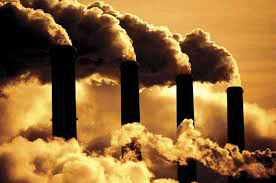
Merkel urges world to do all ‘humanly possible’ on climate change
 SBS, 1 June 19 In her commencement address delivered at Harvard University in the United States, German Chancellor Angela Merkel has urged the world to join together to combat climate change.
German Chancellor Angela Merkel on Thursday urged the world to do “everything humanly possible” to combat climate change and pledged to do her part.
“Climate change poses a threat to our planet’s natural resources,” Ms Merkel said in her commencement address delivered at Harvard University in the United States.
“It and the resulting crises are caused by humans.”,……. https://www.sbs.com.au/news/merkel-urges-world-to-do-all-humanly-possible-on-climate-chang
Volcanoes not the major cause of global warming
Humans and volcanoes caused nearly all of global heating in past 140 years, Guardian, Dana Nuccitelli 30 May 19
New study confirms natural cycles play little role in global temperature trends and tackles discrepancies in previous models, Emissions from fossil fuels and volcanoes can explain nearly all of the changes in Earth’s surface temperatures over the past 140 years, a new study has found.
The research refutes the popular climate denial myth that recent global warming is merely a result of natural cycles….. https://www.theguardian.com/environment/2019/may/30/humans-and-volcanoes-caused-nearly-all-of-global-heating-in-past-140-years
A new way to remove CO2 from the air – (perhaps – or too good to be true?)
“Today, it is technically possible to capture CO2 from the air and, through a number of steps, convert it to commercial products,” says Professor Ted Sargent who led the research team. “The challenge is that it takes a lot of energy to do so, which raises the cost and lowers the incentive. Our strategy increases the overall energy efficiency by avoiding some of the more energy-intensive losses.”
The previous direct-air carbon capture method does so by forcing air through an alkaline liquid solution. The CO2 dissolves in the liquid, forming a carbonate. To use that captured CO2 however, it has to be turned back into a gas, which is the convoluted part. It requires adding chemicals to the carbonate to turn it into a solid salt, and then heat that powder to a whopping 900-degrees Celsius to regain CO2 gas. That heating method is what’s responsible for the energy wastage that makes this sub-optimal.
This team’s new method instead uses an electrolyzer, a device that uses electricity to power a chemical reaction. Electrolyzers are sometimes used to produce hydrogen fuel from water, and this team realised they can also use it to release the CO2 from dissolved carbonate, skipping the heating entirely.
The electrolyzer also has a silver-based catalyst that immediately converts the CO2 into a gas mixture known as syngas. Syngas can be easily turned into a wide variety of products, including jet fuel and plastic precursors.
“This is the first known process that can go all the way from carbonate to syngas in a single step,” says Sargent.
According to the team’s reports, their method has an overall energy efficiency of 35 percent, much higher than current methods. They do believe there’s scope to improve that, and it can of course be scaled up to an industrial level given enough time.
When that happens, we might actually be able to set up giant plants, the sole purpose of which is to scrub carbon dioxide from our air, and turn it into products we can use, helping reverse climate change in the process.
1 This Month

22 June – Virtual Event –Climate Change: New Data, New Debate

Monday, June 22, 2026 2:30 p.m. – 3:15 p.m. CT
YouTube. Register here

Protect Sazan Island from the Trump family! https://secure.avaaz.org/campaign/en/protect_sazan_island_from_the_trump_family_loc/?bqFCVab&v=174511&cl=22707147157&_checksum=5e9dde668860e8231c33699735e16a1fbf22ab2cb01da50c999fe8732b9775ef&utm_source=email&utm_medium=blast_email&utm_campaign=174511
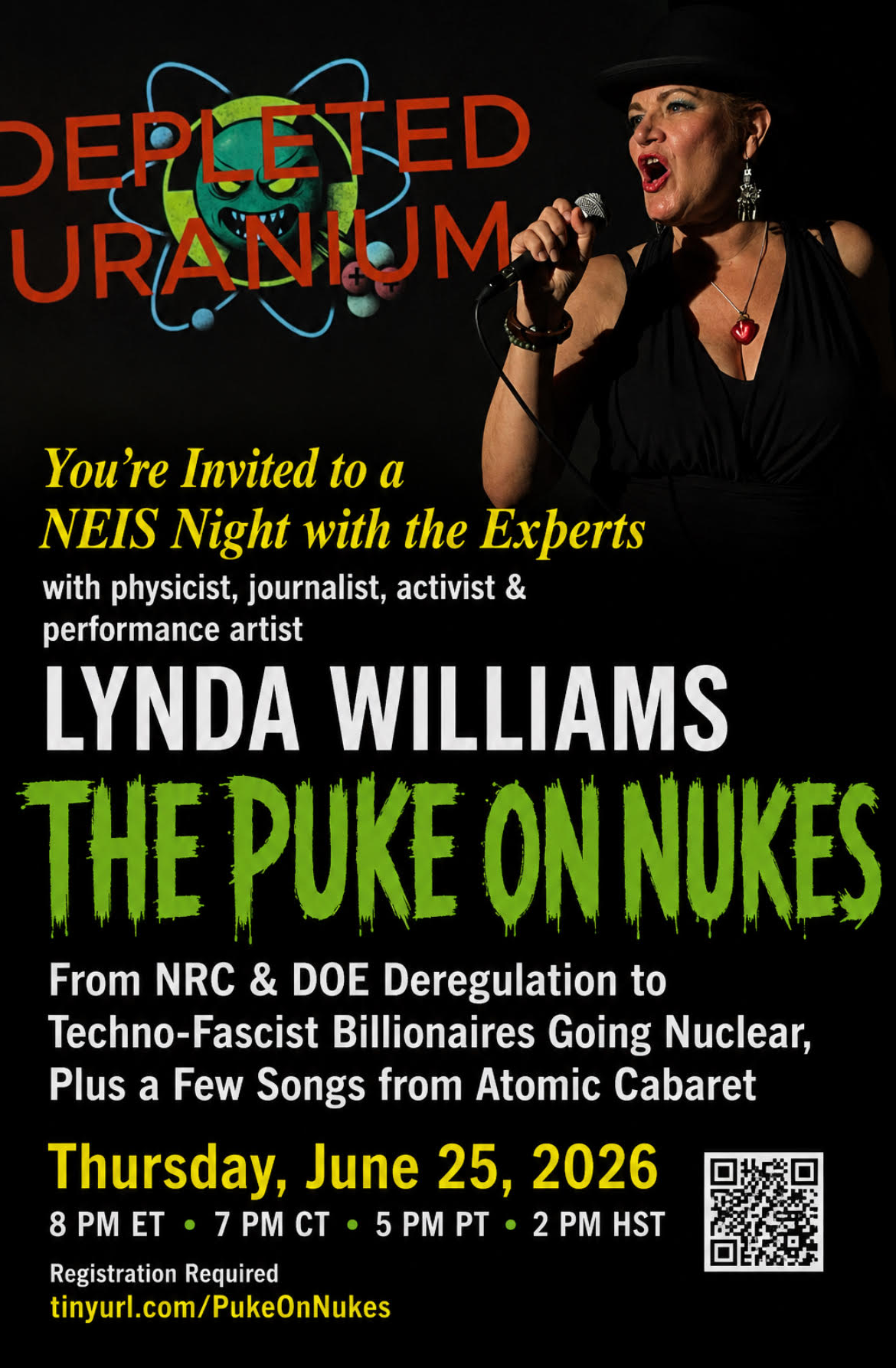
25 June- THE PUKE ON NUKES
Thursday, June 25, 2026
7pm Central Time (8pm ET, 6pm MT, 5pm PT) UTC – 5
From NRC & DOE Deregulation to Techno-Fascist Billionaires Going Nuclear, Plus a Few Songs from Atomic Cabaret REGISTER
26 June – Radiation Trainwreck at the NRC / Join the Protect Better Campaign – https://us02web.zoom.us/meeting/register/4ZlZ5_qLSHGiLSCg8FF6Bg#/registration


Cuba Is Not a Failed State – It Is a Besieged State
PETITION: “Global Appeal to Endorse Palestinian Right of Return of Refugees”
To see nuclear-related stories in greater depth and intensity – go to https://nuclearinformation.wordpress.com
-
Archives
- June 2026 (211)
- May 2026 (306)
- April 2026 (356)
- March 2026 (251)
- February 2026 (268)
- January 2026 (308)
- December 2025 (358)
- November 2025 (359)
- October 2025 (376)
- September 2025 (257)
- August 2025 (319)
- July 2025 (230)
-
Categories
- 1
- 1 NUCLEAR ISSUES
- business and costs
- climate change
- culture and arts
- ENERGY
- environment
- health
- history
- indigenous issues
- Legal
- marketing of nuclear
- media
- opposition to nuclear
- PERSONAL STORIES
- politics
- politics international
- Religion and ethics
- safety
- secrets,lies and civil liberties
- spinbuster
- technology
- Uranium
- wastes
- weapons and war
- Women
- 2 WORLD
- ACTION
- AFRICA
- Atrocities
- AUSTRALIA
- Christina's notes
- Christina's themes
- culture and arts
- Events
- Fuk 2022
- Fuk 2023
- Fukushima 2017
- Fukushima 2018
- fukushima 2019
- Fukushima 2020
- Fukushima 2021
- general
- global warming
- Humour (God we need it)
- Nuclear
- RARE EARTHS
- Reference
- resources – print
- Resources -audiovicual
- Weekly Newsletter
- World
- World Nuclear
- YouTube
-
RSS
Entries RSS
Comments RSS
 nuclear-news