US EU LOOMING CRASH, BILLIONS OF US $$ POURING INTO UKRAINE, WAR BETWEEN THE US AND RUSSIA

Bruce Gagnon interview – 13 September 22, https://www.bitchute.com/video/4zlLVGLWEONw/ Youtube has removed Regis Tremblay’s videos – I suppose, for political reasons. This time he is interviewing Bruce Gagnon – long-time doughty warrior for preventing war in space. I wish I had time to transcribe it
Russian state firm signs $9.1bn loan deal to fund nuclear plant in Turkey

Rosatom, which has been wiring money to Ankara to shore up Turkey’s depleted foreign currency reserves, signs deal with Gazprombank, Ragip Soylu, Antalya, Turkey, 16 September 2022
A Russian state-owned company signed a $9.1bn loan deal with Gazprombank in August to fund the construction and development of Turkey’s Akkuyu nuclear power plant, according to the official documents.
In a public announcement on Wednesday, Rosatom Corp published the deal signed on 3 August, which opens a line of credit to finance Akkuyu Nuclear JSC, its subsidiary in Turkey………………………..
Bloomberg reported last month that Rosatom had decided to wire $15bn to Turkey for the construction of the $20bn Akkuyu nuclear power plant, citing officials who said that an initial $5bn had already been received…………………
The Turkish government is in dire need of foreign funding as a result of its rapidly evaporating foreign currency reserves.
Rosatom is expected to rapidly spend up to $2bn on overdue payments to subcontractors. The company told Bloomberg that it would indeed transfer some funds to Turkey, but an amount much lower than that declared by Turkish officials………….more https://www.middleeasteye.net/news/russia-turkey-gazprombank-akkuyu-plant-loan-fund
Tepco to revise power prices for industry, factoring in nuclear restart
TOKYO, Sept 16 (Reuters) – Tokyo Electric Power Company (Tepco) (9501.T) said on Friday it will revise its pricing for high-voltage industry customers next year to reflect soaring costs, but will take into account the assumed restart of the No.7 unit of its Kashiwazaki-Kariwa nuclear power plant.
Tepco President Tomoaki Kobayakawa told a news conference of the new pricing policy, including the impact of an assumed restart, although Japan’s nuclear regulator is continuing inspections after barring Tepco, operator of the wrecked Fukushima Daiichi nuclear plant, from restarting its only operable atomic power station last year due to safety breaches.
“We plan to revise the pricing scheme next business year as we can’t reflect soaring power procurement cost in the electricity price,” Kobayakawa said.
“But we are factoring in that the No.7 unit will be 75% operational next year, or operating nine months out of 12, in calculating the new electricity price to reduce the burden on customers,” he said, adding that the company itself is not forecasting the unit’s resumption next year.
“We do hope to restart the Kashiwazaki-Kariwa as soon as possible, but we can’t say when it will happen,” he said.
Tepco plans to announce details of the new price scheme for industry customers by the end of this month……..
Tepco had been hoping to restart the world’s biggest atomic power plant, with capacity of 8,212 megawatts, in a quest to slash the utility’s operating costs.
But it drew criticism last year when failings at the plant came to light, including security breaches that led to an unauthorised staff member accessing sensitive areas of the plant.
Japan’s industry minister said at the time the plant would not be restarted any time soon.
https://www.reuters.com/business/energy/tepco-revise-power-prices-industry-factoring-nuclear-restart-2022-09-16/
Fast transition to renewables will save the world up to $12tn (£10.2tn) by 2050

Switching from fossil fuels to renewable energy could save the world as
much as $12tn (£10.2tn) by 2050, an Oxford University study says. The
report said it was wrong and pessimistic to claim that moving quickly
towards cleaner energy sources was expensive. Gas prices have soared on
mounting concerns over energy supplies. But the researchers say that going
green now makes economic sense because of the falling cost of renewables.
“Even if you’re a climate denier, you should be on board with what we’re
advocating,” Prof Doyne Farmer from the Institute for New Economic Thinking
at the Oxford Martin School told BBC News. “Our central conclusion is that
we should go full speed ahead with the green energy transition because it’s
going to save us money,” he said.
BBC 13th Sept 2022
Russia’s uranium exports can continue – exempt from sanctions imposed on other commodities
The German government said Monday that it can’t stop a shipment of Russian uranium destined for French nuclear plants from being processed at a site in Germany because atomic fuel isn’t covered by European Union sanctions on Russia.
Environmentalists have called on Germany and the Netherlands to block a shipment of uranium aboard the Russian ship Mikhail Dudin — currently docked in the French port of Dunkirk — from being transported to a processing plant in Lingen, close to the German-Dutch border.
“We have no legal grounds to prevent the transport of uranium from Russia, because the sanctions imposed by the EU due to the Russian invasion of Ukraine exempt the import of nuclear fuel … to the EU from import bans,” said a spokesman for Germany’s Environment Ministry, Andreas Kuebler. Safety requirements for the shipment had been examined and foundto meet requirements, meaning German authorities had to approve it, he added.
Washington Post 12th Sept 2022
Operator doubts German plan to keep nuclear plants on standby
Germany plans to delay closure of two nuclear power plants amid disruption to Russian gas deliveries to Europe.
Germany’s plans to delay the closure of two nuclear plants were thrown into confusion on Wednesday, with the operator of one saying the request to keep it on standby was not technically possible as the government said it had been misunderstood.
Berlin announced on Monday that it plans to keep two out of three remaining nuclear power stations on standby to have enough electricity through the winter.
The operator of one of the plants, E.ON, said on Wednesday that it believed it is not possible to put its Isar 2 facility in reserve mode beyond its scheduled closure at the end of 2022.
“We communicated on Monday evening that nuclear power plants are not suitable for reserve power plant operation for technical reasons,” said E.ON, adding it was in contact with the government on the issue………………………………
In January, the government called nuclear energy dangerous, objecting to EU proposals that would let the technology remain part of the bloc’s plans for a climate-friendly future. Its energy plan before was to switch off its remaining three nuclear power plants at the end of this year and phase out coal by 2030.
Sizewell C nuclear plant “will never get built” due to impossibility of raising finance for it.

Sizewell C: UK tapping up Saudi and UAE investors as it struggles to bring in nuclear investment funds.
The UK is approaching foreign investors to fill a gaping funding hole in Sizewell C as the Government struggles to attract attention for nuclear investment, i can reveal.
In his final major policy speech as Prime Minister, this week Boris Johnson announced £700m in funding for the nuclear project in Suffolk, urging his successor to “go nuclear and go large and go with Sizewell C”. But the scheme, which is estimated to cost more than £20bn, is struggling to drum up interest amid a diminishing appetite for nuclear investments.
Barclays and Rothschild banks have been hired to help the UK fill the remaining stake, but i understands that negotiations have not yet begun between Barclays and potential investors, and investment is still in the preparatory stages. The UK has approached investors in the UAE, Australia and Saudi Arabia in a bid
to shore up financial support, sources told i. An industry source said the Emirates Nuclear Energy Corporation (ENEC) were “definitely interested” and had already visited the UK to discuss nuclear collaboration, with further meetings planned this month. A Government source confirmed that talks had taken place with ENEC and were set to continue. ENEC is thought to be keen to expand on the launch of the Barakah power plant in Abu Dhabi, the UAE’s first nuclear site.
Another source said that Macquarie, an Australian bank, had also been approached by Rothschild and been given a presentation on Sizewell C.
A finance source said securing investment has proved “not as easy” as No 10 had envisaged and there were not many Western-based funds that would get involved with nuclear. Many investors are understood to be reluctant to invest in Sizewell C over economic considerations, and over ESG – environmental, social and governance – concerns, such as how nuclear waste is dealt with.
Dr Paul Dorfman, a nuclear energy expert at the University of Sussex, said that the “market has fled nuclear.” He added: “There is no nuclear being built without vast public subsidy. The market has said no to nuclear, because it’s completely uneconomic and doesn’t make financial sense. It’s hugely expensive, the learning curve is completely static, the renewable market is off the wall. Last year, 84 per cent of all new power capacity worldwide was renewable, but nuclear is nowhere.
Jérôme Guillet – who has worked in energy for 25 years and was managing director of renewable energy
financial advisory firm Green Giraffe – said that private investment in nuclear power was extremely hard to come by, with renewable energy now cheaper and the infrastructure faster to build. “Nuclear has just become too expensive,” because of the high safety and financing costs, he said. He added that investment was likely only to come from those already involved in nuclear, such as EDF, or those with political interest, such as Chinese companies – and that the funds may never be raised.
“My personal opinion is that this plant will never get built. The delays to Flamanville [a nuclear project in northern France] and Hinkley Point will push any decision into the future, and by the time it could be taken, enough offshore wind will have been built to make the question moot.”
iNews 4th Sept 2022
Exposure to ionizing occupational radiation affects over 24 million workers globally

https://www.ilo.org/global/about-the-ilo/newsroom/news/WCMS_854878/lang–en/index.htm—
3rd International Conference on Occupational Radiation Protection, 5 Sept 22
Over 500 experts from all over the world are to exchange information and experiences on strengthening the protection of workers from radiation. 05 September 2022
GENEVA (ILO News) – The International Labour Organization is co-sponsoring the third international conference on Occupational Radiation Protection , organized with the International Atomic Energy Agency and hosted by the Government of Switzerland.
The conference, which takes place 5 – 9 September in Geneva, will review international standards and recommendations on occupational radiation protection, progress over the past twenty years, and will identify priority actions leading to an improved global occupational radiation protection system.
While radiation exposure is commonly associated with those working in the nuclear field or dealing with radioactive sources, workers in other professions, such as miners, aircrew, researchers, and healthcare professionals can also become seriously affected if adequate measures are not taken.
Moreover, accidents in nuclear power plants can have catastrophic effects not only for the workers but also for communities and the environment. Strict preventive and control measures therefore need to be in place.
“It has been a constitutional objective of the ILO since its establishment in 1919 to protect the health of workers,” said Vic Van Vuuren, Deputy-Director General for Policy Officer in Charge. “Today, we are still a long way away from this objective. Work-related deaths and injuries including those caused by exposure to radiation take a particularly heavy toll, especially in developing countries, where national systems for occupational safety and health are not well established.”
“This conference will serve as an excellent opportunity to exchange knowledge and experience and set the course for further concrete progress in enhancing the radiation protection of workers in all industries and countries and in making working environments safer and healthier, notably though building a global preventative culture.”
In June 1960, the International Labour Conference adopted the Radiation Protection Convention, 1960 (No. 115) , and its accompanying Recommendation (No. 114) . The Convention applies to all activities involving the exposure of workers to ionizing radiation in the course of their work and provides that each Member of the ILO which ratifies it shall give effect to its provisions by means of laws or regulations, codes of practice or other appropriate means.
It is the only international legal instrument that addresses the protection of workers against radiation. The Convention has been ratified by 50 countries .
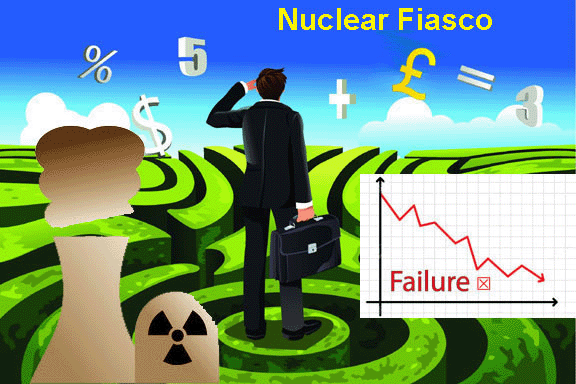
Nuclear power for Britain – a “financial basket case “
Recent days have seen Government ministers blaming opposition parties for
the failure to deploy nuclear power in the UK. But the problem is not
politicians, not the Conservatives, Labour or anyone else; it is the
extreme difficulty of delivering nuclear power itself.
Financially, it is a basket case, and any other technology with similar problems simply wouldn’t
get past the lobbyists’ meetings with politicians. On August 7th Kwasi
Kwarteng produced a tweet blaming Nick Clegg and Labour for delays in
building nuclear power, saying: ‘Thanks to Labour’s 13-year moratorium
and Lib Dem blockers in the Coalition, we made no progress on nuclear.
Supply chains disappeared. Since 2015, we got Hinkley approved and Sizewell
C received planning consent last month. ‘
However, this explanation does
not stand up to serious analysis. In their 2005 manifesto the Conservatives
did not even mention nuclear power, referring instead to renewables and
energy efficiency as a means of protecting energy security. By the 2010
election both Labour and Conservatives were backing the idea of building
more nuclear power plant, but Conservatives ruled out giving nuclear
subsidies. Their manifesto said they would be ‘clearing the way for new
nuclear power stations – provided they receive no public subsidy’ .Of
course the Liberal Democrats were very much opposed to new nuclear power
before they joined the Coalition in 2010.
But then it was the Liberal
Democrat Energy Secretary of State Chris Huhne who proposed a new
electricity market reform consultation paper at the end of 2010. This
allowed, in effect, nuclear power to receive public subsidies under the
cover that this same subsidy would be available to other low carbon
sources. This laid the basis for the current contracts for difference (CfD)
regime which is funding Hinkley C.
But in practice the offer of a generous
CfD for Hinkley C proved not to satisfy the prospective nuclear generators.
This included EDF which was/is backed by the French state who wanted to
promote France’s new European Pressurised Reactor (EPR) design. The most
fundamental problem was that no major British political party was then
willing to underwrite cost overruns – this was seen as giving nuclear
constructors a blank cheque, which it is. Nevertheless this underwriting
has now, latterly, been given EDF for Sizewell C under the so-called
‘RAB’ arrangements.
100% Renewables 3rd Sept 2022
UK’s Nuclear Gambit Faces Long Odds Even With Sizewell Approval
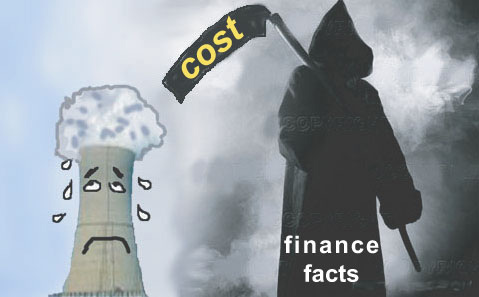
The 24 gigawatt-target is “not viable if each project happens by negotiation that takes five to 10 years,” said Luba Kotzeva de Diaz, managing director European energy & renewables at Lazard Ltd.
- EDF’s Hinkley Point C is over budget and behind schedule
- Government’s 24-gigawatt nuclear target seen as unrealistic
Bloomberg. By Rachel Morison, September 4, 2022 , The UK’s audacious push to triple nuclear power capacity inched forward with the promise of government funding for the Sizewell C station, but doubts remain about the government’s ability to greenlight enough projects by 2030 to meet that goal.
Considering it took about 10 years for Electricite de France SA’s plant to get this far, the government’s “go big” gambit on nuclear energy — to help wean the nation off Russian fossil fuels and reduce emissions — is seen as a long shot. And those odds may get worse for the successor to Prime Minister Boris Johnson.
……….. The government wants to deliver eight new nuclear reactors this decade — needing approval at a pace equivalent to one a year. A construction program of this scale hasn’t been achieved on the continent since the French in the 1970s, prompting calls on leaders to find alternative paths for achieving energy independence and legally binding emissions cuts.
“It will be extremely difficult for the government,” said Asgeir Heimisson, senior associate at Aurora Energy Research Ltd. “Investment would need to occur approximately every three years from 2022, requiring a total of about £180 billion of capital expenditure.”
That’s a challenge for the new prime minister, who will take over in coming days amid a recession spurred by record energy prices and an inflation rate set to hit 14% this winter.
By 2050, a 24 gigawatt-strong fleet of new reactors is supposed to provide stable backup for offshore wind, the most-advanced renewable technology in Britain. The near-term ambition here is massive, too: reaching 50 gigawatts this decade………………………………..
The Sizewell project still needs significant backing from private investors before a final investment decision is made. It would follow on from Hinkley Point C, the UK’s first nuclear plant in three decades. Progress at Hinkley is costing more and taking longer to build than planned, stoking concerns about whether the government is right to rely so heavily on the technology.
Financing is the biggest hurdle for new stations, with the price tag for Sizewell being £20 billion ($23 billion) at the start of this year, but materials costs have surged since. An overhaul of the financing mechanism is meant to attract more funds. The regulated asset base, or RAB, model is supposed to encourage private investors and dilute the construction risk shouldered by the developer and taxpayers.
The government’s £700 million investment is expected to form a 20% stake in the project, with EDF taking another 20%. Greencoat Capital LLC, one of the UK’s biggest managers of renewable-energy funds, is considering investing, founder Richard Nourse said in July.
Sizewell represents a “glimmer of hope” for the nuclear industry, said Vince Zabielski, partner at Pillsbury Winthrop Shaw Pittman LLC. “The investment shows promise, but the decision is about 10 years late.”
…………The 24 gigawatt-target is “not viable if each project happens by negotiation that takes five to 10 years,” said Luba Kotzeva de Diaz, managing director European energy & renewables at Lazard Ltd. — With assistance by Ellen Milligan https://www.bloomberg.com/news/articles/2022-09-04/uk-s-nuclear-gambit-faces-long-odds-even-with-sizewell-approval
Ukrainian government wants to sell nuclear energy to Germany
DW, 4 Sept 22, Kyiv offers nuclear energy to Germany. Ukrainian Prime Minister Denys Shmyhal has said a proposal to export electricity to Germany amid the ongoing energy crisis would be “a very good deal for both sides.” DW rounds up the latest…….
“Currently, Ukraine exports its electricity to Moldova, Romania, Slovakia and Poland. But we are quite ready to expand our exports to Germany,” Ukrainian Prime Minister Denys Shmyhal told the dpa news agency on Saturday.
“We have a sufficient amount of electricity in Ukraine, thanks to our nuclear power plants,” he said. The issue will be discussed during Shmyhal’s visit to Berlin over the weekend, where he will be meeting with Chancellor Olaf Scholz.
Electricity consumption in Ukraine has fallen since the start of the Russian invasion, due to the mass exodus of refugees and an economic slump.
Shmyhal said such a deal “would be very good for both sides.”…….
Ukraine operates four nuclear power plants with a total capacity of more than 14 gigawatts.
However, observers fear Russia’s capture of the Zaporizhzhia facility — the largest nuclear power plant in Europe — could lead to a serious accident if the war intensifies…………. https://www.dw.com/en/russia-ukraine-updates-kyiv-offers-nuclear-energy-to-germany/a-63009289
Radioactive Waste ‘Everywhere’ at Ohio Oilfield Facility, Says Former Worker
Community groups present health and environmental justice concerns to the EPA, alleging workers at Austin Master Services are coated in dangerous levels of radioactive waste.
DeSmog, By Justin Nobel, Aug 31, 2022 ,
As Bill Torbett and his colleagues went about their work, handling the sloppy radioactive detritus of oilfields in a cavernous building in eastern Ohio, their skin and clothing often became smothered in sludge. Waste was splattered on the floor and walls, even around the electrical panels. At the end of their shifts, they typically left their uniforms in the company washing machine, which didn’t always work, and left their sludge-caked boots and hard hats in the company locker room. But when the men arrived home after a long day, the job came with them too.
“We were literally ankle-deep in sludge and a lot of times knee-deep in different spots. All that shit is dripping down on you,” says Torbett, a 51-year-old former employee of Austin Master Services, a radioactive oilfield waste facility in Martins Ferry, Ohio. “You’re saturated in it, your hands are covered in it, the denim of your uniform would hold it, and the moisture would soak right through your under-clothes and into your skin.”
“How wet?” Torbett says. “Like if you got caught outside in the rain without an umbrella. Soaking wet.”
In fact, so alarming are the conditions at Austin Master and so lax is the oversight that workers have taken things into their own hands. In one case, a second former worker has covertly passed along their dirty boots, hard hat, and headlamp for independent radiological analysis. The levels of the radioactive element radium found in the sludge on this worker’s boots was about 15 times federal cleanup limits for the nation’s worst toxic waste sites.
And yet, Austin Master appeared to keep workers in the dark about what they were handling. “They really didn’t tell me the gist of the material, I just knew it came from frack sites,” according to Torbett, who worked at the facility from November 2021 to February 2022. “There was no discussion of the material and its radioactivity.”
In April, DeSmog revealed that Concerned Ohio River Residents, a local advocacy group, had documented elevated levels of radium outside the main entrance to the Austin Master facility, that state inspection reports showed a lengthy history of concerning operating practices, and that rail cars leaving the facility for a radioactive waste disposal site in the Utah desert had arrived leaking on five occasions.
The situation at the Ohio facility appears so severe that top officials from the U.S. Environmental Protection Agency (EPA) Region 5, which covers much of the Midwest, joined local organizers in a conference call in July and made an in-person visit to the area earlier this month.
The state of Ohio has authorized Austin Master Services to receive 120 million pounds of radioactive oilfield waste at its Martins Ferry location each year.
Austin Master has not replied to questions regarding the reported radioactivity levels on worker clothing. “There is nothing unusual or harmful about AMS’s process,” Chris Martin, a company spokesperson, told DeSmog in response to questions sent in March regarding work practices at the facility. “Austin Master Services takes a responsible approach to providing valuable waste remediation services and jobs in the Martins Ferry community.” Martin maintained that “there are no known complaints from AMS employees concerning work conditions.”
On July 1, American Energy Partners, a Pennsylvania-based energy and infrastructure services company, acquired Austin Master Services. In a press release, American Energy Partners describes Austin Master as “a full-service, comprehensive environmental services firm specializing in radiological waste management solutions” that provides “professional safety, industrial hygiene and health physics services.” The company has not replied to questions.
The conditions documented by state inspection reports and the contamination revealed by advocacy groups raise questions about the risks to first responders and the community should the Martins Ferry facility have an accident……………………………………
Welcome to the Messy World of Radioactive Oilfield Waste
The Austin Master facility is located in a former steel mill on the Ohio River, not far from the city of Martins Ferry’s drinking water wells and the football stadium of the local high school team, the Purple Riders. Austin Master receives truckloads of drill cuttings bored out of the Marcellus and Utica shale and of radioactive sludge that forms at the bottom of tanks and trucks that hold toxic liquids brought to the surface of fracked oil and gas wells. Right now, more than a third of America’s natural gas supply comes from wells in Ohio, West Virginia, and Pennsylvania. Some of it is converted to liquefied natural gas, or LNG, and shipped overseas to customers in Europe and elsewhere.
Processing radioactive oilfield waste has proven enormously problematic for the oil and gas industry and its regulators, and given rise to a booming service sector of facilities like those run by Austin Master that collect, treat, and process the waste. Part of the problem is that a significant amount of oilfield waste is too radioactive to be shipped directly to traditional landfills. Instead, it must be “down-blended,” or mixed with material like lime or a corn cob base to lower the radioactive signature. The Ohio Department of Natural Resources (ODNR) does regulate the state’s roughly two dozen oilfield waste processing facilities, but in a limited way. In 2014, Austin Master received an ODNR order, known as a Chief’s Order, giving the company temporary approval to “process, recycle, and treat brine” and other oilfield waste.
At Austin Master’s Martins Ferry facility, Torbett says, trucks regularly dumped the more sludge-like or solid radioactive oilfield waste directly onto the floor of the former steel mill, and workers used common heavy construction equipment like Bobcats to maneuver it into various bins or pits. Waste that was more liquid-like was often dumped into metal containers called half-rounds, says Torbett. In one state inspection photo from August 2018, a worker with bare arms and no face protection or respirator holds a push broom……………………………….
It is work like this that has Massachusetts-based nuclear forensics scientist Dr. Marco Kaltofen deeply concerned about worker health risks. He said any time oilfield waste is moved around in piles at a processing facility such as Austin Master, dust is inevitably created and is likely to contain the radioactive element radium, which is commonly found in oilfield waste..
In addition to dust and wet spatter from the facility’s waste processing practices, Kaltofen voiced worries about the risk of radioactivity exposure to the people interacting with employees outside of work. “Workers’ skin can also become coated with this radioactive material, and either absorb it, or contaminate their families,” he added.
Earlier this year, a second former employee of Austin Master, who prefers to remain anonymous because they still work in the region, provided the boots, hard hat, and headlamp they used while working at the Martins Ferry facility to the organization Concerned Ohio River Residents, members of which have been previously instructed by Kaltofen in how to safely handle such items. The group then sent the worker items along to Kaltofen, who sent sludge from the boots to Eberline Analytical, a radiological analysis lab in Oak Ridge, Tennessee.
The lab returned the results in May, and they were startling, according to Kaltofen. They showed levels of radium-226 at 76.3 picocuries per gram, and levels of another form of radium common in oilfield waste, radium-228, at 8.66 picocuries per gram. This placed the radioactivity values at roughly 15 times EPA cleanup limits for topsoil at uranium mills and Superfund sites. ………………………………….
“Radium is commonly referred to as a bone seeker,” states a report of the National Research Council Committee on the Biological Effects of Ionizing Radiations. If accidentally inhaled or ingested, the radioactive element tends to accumulate in the bones, where it continues emitting radiation and can lead to cancer…………………………..
“These results are alarming and it signifies the need for appropriate radiation protection measures in the oil and gas workplace,” adds Bemnet Alemayehu, a Natural Resources Defense Council (NRDC) staff scientist with a PhD in radiation health physics and co-author of a 2021 report on this issue. DeSmog provided NRDC with Eberline Analytical’s analysis of the worker’s clothing. “Based on the data provided,” says Alemayehu, “it appears the radioactivity levels are high enough to cause” exposure risks to the oil and gas workers…………………………….
Raising Red Flags
Concerned Ohio River Residents, which received the clothing items from the former worker and sampled the soil on the public road outside the facility, has long been worried about the risks the Austin Master facility posed to workers and the community at large and is in touch with a number of former workers. In mid-August, members of the group toured officials with EPA Region 5 around the area, including a drive-by of the Austin Master facility in Martins Ferry.
Despite the dangers this type of oil and gas waste poses, a 1980 provision enacted by Congress has deemed it non-hazardous and therefore exempt from federal rules that would otherwise apply to hazardous waste. ………………………………
Meanwhile Ohio regulatory agencies appear to be equally hamstrung in their ability to manage or even systematically assess the situation. ………………………………
Industry workers and residents across the Marcellus and Utica shale tell DeSmog it is this general tone of dismissal and inaction from regulators that has them feeling aggravated when it comes to oilfield radioactivity and its harms………………………
DeSmog presented the Health Physics Society with information and documents concerning the situation at Austin Master, but the group has not replied to questions.
…………………………………. fixing this issue in the United States goes beyond just personal protective equipment and straight to lawmakers, says Amy Mall, a senior advocate at NRDC. “We need Congress to act to end the dangerous oil and gas loopholes in our federal laws, including the gap for naturally occurring radioactive materials,” says Mall. “In addition, we urge the EPA to investigate this situation and other oil and gas waste sites around the country, and to revise its rules to reflect current knowledge about the risks to human health and the environment.”…………………………
While Waiting for Governments to Act, Citizens Are Stepping in
In July, Concerned Ohio River Residents and other Ohio advocacy groups sent a letter about Austin Master to EPA Administrator Michael Regan.
“We have identified environmental justice and human rights abuse under President Biden’s Executive Order 13985,” the letter stated. “Understanding your values and heavy emphasis on pushing for environmental justice, we call upon the United States Environmental Protection Agency to address disproportionately high and adverse health and environmental impacts on low-income populations here in Appalachia…We call upon your Office to investigate these issues because no other governmental or regulatory agency is stepping up.”……………………………. https://www.desmog.com/2022/08/31/worker-radioactive-waste-austin-master-services-ohio/
A concerted push now for renewable energy would save Britons billions of pounds
The UK would be paying “billions” of pounds less for its energy, if it had
stuck with plans to reduce fossil fuel use, an energy boss has said. Greg
Jackson, chief executive of Octopus energy, told the BBC there should be a
concerted push now. The same “sense of urgency” should be applied to the
switch to green energy, as there was for finding a Covid vaccine, he said.
The government said it had delivered a 500% increase in renewables since
2010. “Without the clean energy we have deployed over the past decade,
bills would be even higher today,” a spokesperson for the Department for
Business, Energy and Industrial Strategy (BEIS) said. There were already
plans to invest further in renewables, BEIS said.
In 2013, the coalition
government led by David Cameron made a series of changes, including cutting
back support for energy efficiency and later ended subsidies for onshore
wind. “If we hadn’t done that, energy bills this year would be billions of
pounds lower than they are,” Mr Jackson told the Big Green Money Show on
BBC Radio 5. “It’s short term behaviour that has left us even more exposed
than we need to be.”
Octopus Energy generates electricity from renewable
sources, including wind and solar and supplies energy to three million UK
customers. A report earlier this year by energy analysis site Carbon Brief
said bills in the UK were nearly £2.5bn higher than they would have been if
climate policies had not been scrapped over the past decade.
BBC 2nd Sept 2022
Gas prices and nuclear outages put European grid at breaking point.

Prices in France and Germany and across Europe have again jumped to unprecedented levels thanks to soaring cost of gas and massive nuclear shortfalls.
Gas prices and nuclear outages put European grid at breaking point — RenewEconomy 1 Sept 22.
The month of August has been confirmed as the most expensive month ever for electricity in Europe, as markets were buffeted by the soaring cost of gas and outages that have taken up to two third’s of France’s nuclear capacity offline at time.
The twin impact of the soaring gas price – largely caused by the Russia invasion but exacerbated by French nuclear outages and reduced output from hydro power due to water shortages – has also prompted the EU to find new ways to shield the market from the impact of soaring fossil fuel prices.
According to analysts Rystad Energy, Italy – heavily dependent on imports from France’s nuclear fleet which have now all but stopped – became the first market to record a monthly average spot price above €500 per megawatt hour, with an average price of €547.
France came close to also breaking the €500 barrier, averaging €492, while Germany followed at €465 and the UK came in at €438.
And it is not going to get any better any time soon. In the past week, the average price surged to more than €600/MWh in the Italy, France and the UK, and on Monday France recorded a new record daily average price of €744/MWh as its nuclear output plumbed to new lows due to planned and unplanned outages.
In the coming winter, the picture looks even more bleak…………………….
the most expensive generator sets the price for the whole market, and for each unit of electricity delivered.
This has already crippled the France’s EdF, majority owned by the state, which is spending an estimated €40 billion buying expensive electricity on market to make up for the staggering shortfalls in production from its nuclear fleet.
France has gone from being a major and often the biggest exporter of electricity to the biggest importer, which is causing pressure on prices all over the continent as it sucks in much needed supply from other countries…………………… more https://reneweconomy.com.au/gas-prices-and-nuclear-outages-put-european-grid-at-breaking-point/
USA’s Inflation Reduction Act a tidy little bonanza for the nuclear industry

Nuclear Fuel for Advanced Reactors Spurred by Climate Bill Funds
https://news.bloomberglaw.com/environment-and-energy/nuclear-fuel-for-advanced-reactors-spurred-by-climate-bill-funds DEEP DIVE, Daniel Moore Aug. 29, 2022,
- Inflation Reduction Act includes $700 million for enrichment
- Energy Department still formulating plan for fuel supply
The Biden administration’s efforts to develop a more energy-dense nuclear fuel got a sudden $700 million windfall in the climate-and-tax bill signed into law this month, a boost for the agency’s plans to demonstrate two next-generation reactors before the end of the decade, energy officials and nuclear supporters said.
The funding—more than 15 times the program’s current annual appropriation—is a down payment for the Energy Department’s efforts to develop fuel supplies for advanced reactors, which are designed to be much smaller than the current fleet of nuclear plants………………..
Energy Secretary Jennifer Granholm told Congress in April the agency was “in final stages” of developing a HALEU strategy, which at that time had just $45 million appropriated by Congress for fiscal year 2022.
1 This Month



26 September – International Day for the Total Elimination of Nuclear Weapons


PLEASE OPPOSE HR 8255 AND S.3639 – bills would accelerate satellite deployment, with no environmental review or safeguards – https://ncstd5li.quorum.us/campaign/169331/
To see nuclear-related stories in greater depth and intensity – go to https://nuclearinformation.wordpress.com
-
Archives
- September 2026 (233)
- August 2026 (330)
- July 2026 (355)
- June 2026 (287)
- May 2026 (306)
- April 2026 (356)
- March 2026 (251)
- February 2026 (267)
- January 2026 (308)
- December 2025 (358)
- November 2025 (359)
- October 2025 (375)
-
Categories
- 1
- 1 NUCLEAR ISSUES
- business and costs
- climate change
- culture and arts
- ENERGY
- environment
- health
- history
- indigenous issues
- Legal
- marketing of nuclear
- media
- opposition to nuclear
- PERSONAL STORIES
- politics
- politics international
- Religion and ethics
- safety
- secrets,lies and civil liberties
- spinbuster
- technology
- Uranium
- wastes
- weapons and war
- Women
- 2 WORLD
- ACTION
- AFRICA
- Atrocities
- AUSTRALIA
- Christina's notes
- Christina's themes
- culture and arts
- Events
- Fuk 2022
- Fuk 2023
- Fukushima 2017
- Fukushima 2018
- fukushima 2019
- Fukushima 2020
- Fukushima 2021
- general
- global warming
- Humour (God we need it)
- Nuclear
- RARE EARTHS
- Reference
- resources – print
- Resources -audiovicual
- Weekly Newsletter
- World
- World Nuclear
- YouTube
-
RSS
Entries RSS
Comments RSS
 nuclear-news