Desperately seeking submariners: why keeping nuclear-powered boats afloat will be Australia’s biggest Aukus challenge.
Ben Doherty, Guardian, 21 Oct 25
A vast and highly trained workforce is needed to command, crew, supply and maintain nuclear submarines. Some say that’s impossible for Australia.
“Vice-Admiral Mead, you’re free to go home … good to see you cracking a smile.”

The head of the Australian Submarine Agency had spent a withering three hours before Senate estimates, parrying a barrage of questions about Australia’s ambitious Aukus nuclear submarine plan: interrogatives on consultants, on hundreds of millions of dollars sent to US and UK shipyards, on sclerotic boat-building on both sides of the Atlantic.
But while so much focus has been on Australia’s nuclear submarines’ arrival, their price tag and their “sovereign” status, the greatest challenge to the Aukus project, Mead told the Senate, would be finding the people to keep them afloat and at sea.
“Ensuring Australia has the workforce to deliver this program remains our biggest challenge,” he said.
If Australia’s nuclear submarines arrive on these shores – and that remains a contested question, with expert opinion ranging from an absolute yes to a certain no – will Australia be able to crew, supply and maintain them?
“It is a challenge we are continuing to meet,” Mead told senators. “Australian industry and navy personnel continue to build critical experience through targeted international placements.”
Others are less sanguine.
“The Aukus optimal pathway is a road to a quagmire,” says a former admiral and submarine commander, Peter Briggs, arguing that Australia’s small submarine arm can’t be upscaled quickly enough. “It’s not going anywhere. It will not work.”
Onshore trades, too, are perilously short. Without an additional 70,000 welders by 2030, that trade’s peak body says: “The Aukus submarine program is at serious risk of collapse.”
Mead was asked directly by senators: “Are you still confident of meeting the government’s agenda and timings?”
“Yes,” he replied, “I am.”
‘An eye-wateringly long process’
Briggs, a past president of the Submarine Institute of Australia, says the Aukus plan reads like one “designed by a political aide in a coffee shop”.
The navy’s submarine arm is approximately 850 sailors and officers (the defence department declined to give exact figures). The former chief of navy previously told parliament it needed to grow to 2,300 by the 2040s.
But Briggs estimates that to crew and support Australia’s Virginia-class, and later, Aukus-class submarines, the navy will need to more than treble its existing complement to about 2,700.
Virginias are massive submarines – nearly 8,000 tons – and carry a crew of 134, more than twice the existing Collins-class crew of 56. The Aukus submarines to be built in Adelaide will be bigger again. More tonnage, more people.
“That’s a huge increase in what is already in very scarce supply,” Briggs argues…………………………………………………………
The new generation of submariners is needed for between three and five Virginia-class submarines, then up to eight Australian-built Aukus boats.
“To get to be chief engineer of a nuclear submarine takes 16 to 18 years,” Briggs says. “It’s an eye-wateringly long process and of course you lose people along the way.
“That’s why you need a broad base, a critical mass, and Australia simply doesn’t have that right now. There is no way a navy the size of ours can manage this mix.”
Briggs does not believe the US will withdraw from Aukus: the presence of nuclear submarine bases on Australian soil is too great a prize for a superpower wanting to project power into the Pacific. But Australia’s unreadiness could lead to nuclear submarines under domestic command being delayed.
“We’ve got no warranty clause, no guarantee of anything. The cop-out could come in 2031, the US might say, ‘Look, you’re not quite ready yet, let’s push everything back three years, check in again in 2034.’ And it’s Australia that’s left exposed.”
‘Beyond frustrating, it’s dangerous’
Beyond the complexity of commanding and crewing a nuclear submarine, the vessels need a vast and highly trained workforce to keep them supplied, afloat and at sea………………………………………………………………………
“This is not just a workforce challenge,” its chief executive, Geoff Crittenden, said in a statement. “It’s a full-blown capability crisis … If we don’t address this issue now, Aukus will fail.”
Aukus represented a “perfect storm”, he said, and failure to address worker shortages was “beyond frustrating, it’s dangerous”.
“A once-in-a-generation opportunity like Aukus demands a long-term, strategic response, not just investment in ships and steel, but in people. We estimate that Australia will be at least 70,000 welders short by 2030. Without immediate action, the project is doomed to delays, cost blowouts, or worse.”…………………………………………………………………………
The first cohort won’t be Australian. “In the short term there will have to be an influx of international talent, as we train and upskill our own people.”
Tier two is a nuclearised workforce of skilled professionals – scientists, electrical and mechanical engineers, technical managers, reactor operators and health physicists – with advanced training and between seven and 10 years’ experience. The majority of a submarine crew would sit in this tier. Obbard estimates that about 5,000 tier-two workers will be needed.
Tier three is a further cohort of “nuclear-aware” workers – between 5,000 and 6,000 again – tradespeople including machinists, fitters and welders, who will require some nuclear training.
“The Aukus plan cannot work without building this workforce and the wider engineering community this workforce is drawn from.”
Does it make sense?’
Jack Dillich is uniquely placed to observe Australia’s transformation to a nuclear submarine power. A former submarine officer, he holds an advanced degree in nuclear engineering and served on the executive of the Australian Nuclear Science and Technology Organisation, where he was responsible for the country’s sole nuclear reactor, and as head of the regulatory branch at the Australian Radiation Protection and Nuclear Safety Agency. He now teaches a nuclear course at the Australian Defence Force Academy………………………………….
[Dillich says] Australia needs to be asking, ‘Does it make sense to try to build a tiny fleet here?’ Maybe 25 years from now, Australia could have eight nuclear-propelled submarines: they would be very, very expensive.”……………………………..https://www.theguardian.com/australia-news/2025/oct/20/aukus-submarine-workforce-nuclear-powered-boats-australia
Deloitte to pay $34mn over audit work on US nuclear fiasco.
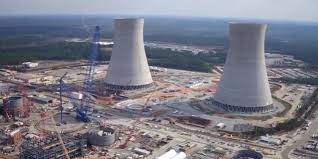
Deloitte has agreed to pay $34mn to investors who blamed the auditor for
losses stemming from the collapse of one of US’s largest nuclear power
projects, a rare legal settlement by a Big Four firm.
Former shareholders in the South Carolina utility Scana said Deloitte failed to spot red flags and allowed management to hide mounting problems with the construction of two nuclear reactors a decade ago. Scana shares tumbled when it eventually abandoned work on the reactors in 2017, leading to its cut-price sale to a rival utility and jail time for its former chief executive, who pleaded guilty to misleading regulators. The fiasco also pushed construction company Westinghouse into bankruptcy.
FT 17th Oct 2025,
https://www.ft.com/content/f9fc0a78-ff10-40f3-8253-220d9acd56bb
Key US nuclear agency to send 80% of workforce home as shutdown drags on.

About 1,400 staff at NNAS, which manages America’s nuclear weapons stockpile, to be furloughed on Monday
Joseph Gedeon , 18 Oct 25, https://www.theguardian.com/us-news/2025/oct/17/government-shutdown-nuclear-agency-nnsa
The agency that maintains the US nuclear arsenal will be sending home 80% of its workforce as the government shutdown drags through its 17th day and into the weekend, now the longest full funding lapse in US history.
House armed services committee chair Mike Rogers said in a Friday press conference that the National Nuclear Security Administration has now exhausted its carryover reserves.
“We were just informed last night that the National Nuclear Security Administration, the group that manages our nuclear stockpile, that the carryover funding they’ve been using is about to run out,” said Rogers, a Republican from Alabama. “These are not employees that you want to go home. They’re managing and handling a very important strategic asset for us.”
The NNSA, which operates as part of the department of energy, does not directly control operational nuclear weapons – a Pentagon responsibility – but plays a strategic role in keeping warheads secure and functional without conducting explosive tests. The agency also runs non-proliferation programs aimed at preventing nuclear materials from reaching hostile nations or terrorist organizations.
Around 1,400 NNSA employees will be furloughed without pay starting on Monday, leaving only 375 staff members designated as essential to continue working, according to an agency notice obtained by Politico. A department of energy spokesperson confirmed the approximate workforce numbers.
The spokesperson also said that NNSA’s office of secure transportation, which is responsible for transporting government-owned nuclear material across the country, is funded through 27 October, and added that Chris Wright, the energy secretary, will be at the NNSA site in Las Vegas on Monday to “further discuss the impacts of the shutdown on America’s nuclear deterrent.
Under the agency’s 2025 contingency protocols in the event of a shutdown, the skeleton crew on duty will focus exclusively on hyperspecific safety operations: monitoring nuclear materials, maintaining unique equipment, ensuring reactor safety for navy vessels, and continuing international nonproliferation work it deems essential for security.
But most scientific research, stockpile maintenance, and global security programs will be suspended, potentially creating delays in sensitive national defense projects that need rigid and consistent oversight.
The current impasse has now become the longest complete government-wide shutdown in US history, surpassing a 16-day funding lapse in 2013. Previous lengthier shutdowns affected only portions of the federal government.
Speaker Mike Johnson blamed Senate Democrats for the crisis, saying earlier this week the country is “barreling toward one of the longest shutdowns in American history, unless Democrats drop their demands”. Republican leaders are also now worried about potential airport disruptions during the upcoming Thanksgiving travel period if the stalemate continues.
Hundreds of thousands of federal employees, including congressional and agency staffers, remain either furloughed or working without pay.
Fears raised that specialist Vulcan MoD work could shift to Sellafield
By Iain Grant, John O’Groat Journal, 16th Oct 2025
Concern has arisen that the plans to put the clean-up of Vulcan in the hands of next-door Dounreay could lead to the break-up of a long-time, specialist Ministry of Defence (MoD) support team in the far north.
The MoD has yet to comment on speculation that the intended transfer of the Rolls-Royce workforce to NRS Dounreay could lead to future work in support of the UK nuclear submarine fleet being switched to the Sellafield plant in west Cumbria.
The suggestion has emerged in the wake of the UK government’s confirmation that the decommissioning of Vulcan is to be undertaken by the Nuclear Decommissioning Authority (NDA), which currently oversees only the clean-up of redundant civil nuclear reactor sites.
A Vulcan worker has told the Caithness Courier that the transfer has triggered a lot of disquiet.
“The majority of the workforce don’t want transferred to the NDA as they would have to re-train to support a general decommissioning role,” said the individual, who wants to remain anonymous.
“They would much rather continue to work on the existing MoD contract to make best use of their specialist skills that they have taken years to develop.”
Rolls Royce had earlier this year been informed by the MoD to expect more work involved with the current submarine programme to come to Vulcan.
But the worker claims that the site management has since been told that this is now scheduled to go to Sellafield.
“We don’t think that is right as it is unlikely that Sellafield will deliver the work on time,” said the individual. “The Sellafield programme has slipped for the last few years whereas Vulcan has been consistently hitting its delivery targets and we have been praised for it.
“If this work goes to Sellafield, the great specialist team that has been built up at Vulcan will be broken up and forced to move into a decommissioning role which does not need the same specialist skill set.”
The worker maintains retaining the work in Caithness represents the best value for the taxpayer.
“The workforce don’t think that it is right that the MoD are going to break up the team at Vulcan when highly skilled people are desperately needed in the nuclear sector and it will take many years to train any other team up to this level of specialism.
“We don’t think that delivers best value to the taxpayers of this country. We think that highly skilled jobs being taken from Scotland to England would be unjustifiable if publicly challenged.
“This work is the next phase of the programme that has already been safely and efficiently been conducted at Vulcan over the last 60 years.”
At the end of March, then-junior defence minister Maria Eagle announced that Vulcan’s nuclear submarine support role would continue until at least April 2027…………………………
Both the MoD and Rolls-Royce declined to respond to the speculation about work being redirected to Sellafield. https://www.johnogroat-journal.co.uk/news/fears-raised-that-specialist-vulcan-mod-work-could-shift-to-416873/
Nuclear stocks mixed after U.S. Army launches program to deploy small reactors.

Spencer Kimball CNBC, Wed, Oct 15 2025
Key Points
- The U.S. Army on Tuesday launched a program to build micro nuclear reactors.
- Investors have speculated heavily on the fortunes of NuScale, Oklo and Nano Nuclear despite the fact that none of the companies have deployed a reactor yet.
Nuclear stocks traded mixed Wednesday after the U.S. Army launched a program to deploy small reactors…………..
The U.S. Army on Tuesday unveiled a program to build micro nuclear reactors in partnership with the Defense Innovation Unit. The microreactors will be commercially owned and operated with the goal of helping developers scale up their businesses, according to the Army.
The Army launched the “Janus Program” in response to President Donald Trump’s May executive orders that aim to speed the deployment of advanced reactors. Trump ordered the Defense Department to have a reactor operating at a domestic military installation no later than Sept. 30, 2028.
Investors have speculated heavily on the fortunes of NuScale, Oklo and Nano Nuclear despite the fact that none of the companies have deployed a reactor yet. Oklo and Nano Nuclear have not generated any revenue…..
Artificial intelligence power demand and Trump’s executive orders have fueled a wave of market enthusiasm about nuclear power. Goldman Sachs recently told investors to exercise caution on Oklo.
https://www.cnbc.com/2025/10/15/army-nuclear-reactor-trump-oklo-nuscale-nano-centrus.html
Why big tech’s nuclear plans could blow up
By Mike Wendling, BBC, 15th October 2025
Eager to find new energy sources to power artificial intelligence, big tech companies are betting on nuclear – even though there are still huge questions over public perception, cost and, perhaps most importantly, the time it will take for a potential new nuclear technology to become viable.
……………………………………………………………………………………………………. Big tech is making a big bet on nuclear – Microsoft has even recently joined the industry’s lobbying group, the World Nuclear Association.
The maker of the Xbox is not alone. Google, Amazon and others are also funding nuclear projects, albeit taking a different tack with a newer technology known as small modular reactors (SMRs).
SMRs run at cooler temperatures, theoretically reducing the risk of a meltdown, and their smaller size also means lower construction costs.
Two such small reactors already provide a relatively small amount of power to electricity grids, one each in China and Russia’s far east. So in some respects, SMRs sound like the perfect solution to the growing energy AI demand – if only it were that simple.
“Most SMRs are on paper” and haven’t progressed beyond the testing stage, says Allison Macfarlane, the former chair of the US Nuclear Regulatory Commission and now a professor at the University of British Columbia in Canada.
Commercialising the technology will be difficult, Macfarlane says, because a smaller reactor core also means a less efficient reactor – producing less energy from the same amount of fuel. She estimates SMRs are years away from being financially viable.
“You just can’t get around economies of scale,” she says. “These are fun ideas. But the tech bros don’t seem to be grounded in reality.”
Undaunted, energy companies and tech giants are ploughing resources into research and pilots.
Kairos Power, Google’s partner, is hoping to generate 50 megawatts of nuclear power by 2030 – equivalent to the amount of energy needed to power a small town.
The company has set up shop in Oak Ridge, Tennessee – another noteworthy American nuclear site, one that provided crucial support to the Manhattan Project which produced the first atomic bomb.
Kairos calls Oak Ridge a “proving ground” and in a statement to the BBC said that advanced construction techniques will increase efficiency and lower costs.
But even though the company aims to boost energy generation tenfold by 2035, practically it still won’t help meet the supercharged energy demands of AI – which is ramping up right now.
“Small modular reactors can provide 24/7 clean [??] energy near data centres,” says Haider Raza, an expert in AI and energy use at the University of Essex. “But they won’t come close to solving the coming demand issue in the next year or two.”
A report released in April by the International Energy Agency noted that the power demand from data centres, which currently account for around 1.5% of the world’s electricity consumption, could double in the next five years. Beyond that, there’s huge uncertainty – both in the amount of future demand and what sources might rise to meet it.
Nuclear reactors, Raza and other experts say, may have a role in meeting the AI energy crunch, but only years into the future – and only if the industry can convince an often-sceptical public………………………………………………………………………………………….
And then there’s the issue of what to do with radioactive waste. Researchers at Stanford found that SMRs actually produce more such waste than larger conventional reactors, because more subatomic particles escape from a smaller nuclear core, contaminating surrounding materials……………………………….. https://www.bbc.co.uk/worklife/article/20251008-why-big-tech-is-going-nuclear
The Troubling Data on Data Centers

Below is an extract from a pro nuclear article. It was rather subtly pro-nuclear. But I decided not to give its rather dubious pro nuclear arguments any publicity on this ste.
One example – the author praises the “cheapness” of France’s nationalised nuclear power, ignoring its downside of debt and climate-accelerated shutdowns.
Nuclear Is Here To Save AI. But What About Your Energy Bills? October 12, 2025, Brian Boyle, The Daily Upside
A nuclear boom is directly downstream from the AI boom, with $350 billion in nuclear spending in the US planned by 2050, per Bloomberg.
The artificial intelligence revolution is officially upon us. If the abrupt improvement in your co-worker’s email grammar didn’t tip you off, the drastic increase in your power bill is a hard-to-miss clue. (And if your bill hasn’t changed much yet, consider yourself lucky.)
As the massive, power-hungry data centers that power AI’s expansion come online, they’re competing for power with everyone else. That’s driving up energy bills for industry and consumers alike, while testing the limits of US energy production capacity and stressing an aging power grid.
Silicon Valley has a solution: nuclear energy. Big Tech is investing heavily in the long-shunned (in the US, at least) energy source to power its AI moment, mostly in the form of so-called small nuclear reactors (SMRs), the next-gen version of nuclear tech that can (theoretically) be mass-produced and strategically deployed. (For the uninitiated, it might be helpful to think of SMRs as gas generators on radioactive steroids.) Now, a nuclear boom is directly downstream from the AI boom: According to a recent Bloomberg Intelligence report, soaring power demand from AI will spur $350 billion in nuclear spending in the US by 2050.
The US government, which views dominance in the AI sphere as crucial to continued economic and geopolitical dominance around the globe, is entirely on board. In a rare instance of bipartisan consensus, both the current and previous administrations have moved fast to cut red tape, overhaul oversight processes, and pour capital into the resurgent nuclear industry.
“We’re in a very serious bind. We’ve already tapped out traditional oil and gas technologies. There’s an eight-, nine-year queue for diesel generators, the most expensive form of energy, and now also gas turbines,” Kevin Kong, founder and CEO of AI-driven nuclear compliance platform Everstar, told The Daily Upside. “Renewables are not dense enough … Data centers run 24/7, and are extremely power-dense. And so the only technology that’s left that was overlooked and under-invested in is nuclear.”
In other words, if we’re going to have an AI revolution, we’ll need plenty of nukes. But will the industry insulate Americans from rising energy bills? Maybe.
The Troubling Data on Data Centers
For years, experts had estimated energy demand growth in the years and decades to come based on banal drivers such as population growth, economic expansion and development of emerging economies, as well as the electrification of everything, including major industries like manufacturing and transportation. It would be predictable and hence manageable, they believed.
Then came ChatGPT. Now? Most estimates predict that global energy demand will nearly double by 2050. A recent report from the International Energy Agency (IEA) found that over 50% of that growth will be driven by AI expansion. For example, a ChatGPT query requires roughly 10 times the energy, on average, needed for a Google search. To put it in even starker perspective, the IEA estimates that a typical AI-focused data center consumes as much electricity as 100,000 homes, while the largest such data centers consume 20 times that amount.
According to a recent Goldman Sachs report, data center power demand is expected to increase 160% by 2030 alone, and meeting 60% of that demand will require new energy generation capacity. Meanwhile, a report produced by Lawrence Berkeley National Laboratory and published by the Department of Energy estimates that data centers will consume more than 12% of total US electricity by 2028, up from 4.4% in 2023.
The triple-digit growth figures are already having a triple-digit impact on those suddenly, and sometimes unwillingly, competing with data centers for electricity. According to a recent Bloomberg analysis of energy data, monthly electricity costs in areas near data centers are now 267% higher than just five years ago, at the dawn of the AI age (that compares with a cumulative overall inflation rate of about 25%).
“Without mitigation, the data centers sucking up all the load is going to make things really expensive for the rest of Americans,” said David Crane, chief executive officer of Generate Capital…………………………………………………………………………………………………..
One Bubble After Another: While SMRs are likely to deliver consistent energy supplies to massive data centers, a valuable proposition in its own right, not everyone is convinced it will be delivered cheaply.
According to data from Wood Mackenzie recently seen by the Financial Times, the “levelised cost of energy” for SMRs, or the cost for power that should be charged for the project to break even, will be around $182 per megawatt hour in 2030. That compares to $133 per megawatt-hour from traditional nuclear power plants, such as Vogtle, $126 for natural gas, and even less for wind and solar. https://www.thedailyupside.com/technology/artificial-intelligence/nuclear-is-here-to-save-ai-but-what-about-your-energy-bills/
UK small businesses and charities say nuclear levy could add thousands to bills.
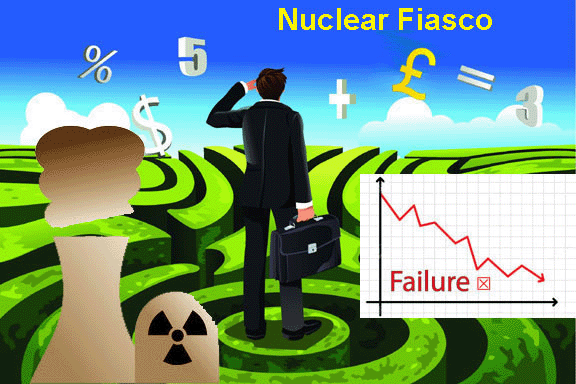
Charge from next month expected to have disproportionate impact after energy-intensive industries given exemption.
Jillian Ambrose Guardian, 13 Oct 25
British charities and small businesses have warned that a new levy on energy bills, intended to support the government’s nuclear power ambitions, could raise their costs by thousands of pounds a year.
The extra charge could mean a significant cost hike for charities and small businesses with high energy use, meaning community services may be cut and economic growth curtailed, according to trade groups.
For most charities, the levy, which takes effect in November, will mean an increase in costs of between £100 and £240 a year, but some could experience increases of up to £2,500, according to Social Investment Business, an organisation that offers loans and financial support to charities.
Nick Temple, the chief executive of Social Investment Business, said: “Adding yet more charges on top of charity electricity bills penalises our most vital community spaces at a time when they are already struggling.”
For small business, including those in hospitality, the extra costs could undermine growth in the UK economy and make the shift from fossil fuels to low-carbon electricity more expensive, according to trade associations.
The levy is designed to pay back investors in the Sizewell C nuclear project in Suffolk while the power plant is under construction.
Households can expect the levy to add about £12 a year to their energy bills, but organisations with high energy use will shoulder a greater cost burden. This will have a disproportionate impact on smaller businesses and charities with high energy demands because energy intensive industries such as steel, cement and glass-making have been granted exemption.
A Bristol-based community arts organisation, Spike Island, has been told to expect a hike of £1,ooo a year from the nuclear levy alone. The company, which provides subsidised studios for underrepresented artists, expects the extra costs to put a strain on its work……………………………………………………..
Business groups have also said that the costs are a “huge concern” for smaller companies, which they say will be forced to carry a disproportionate cost burden because larger companies were given exemptions………………………………………………………. https://www.theguardian.com/business/2025/oct/12/uk-small-businesses-and-charities-say-nuclear-levy-could-add-thousands-to-bills
Italy’s Second General Strike for Gaza Brought 2 Million Workers into the Streets
The next day, one million people joined a demonstration in Rome, which highlighted Italy’s complicity in the genocide.
By Laura Montanari , Truthout, October 11, 2025, https://truthout.org/articles/italys-second-general-strike-for-gaza-brought-2m-workers-into-the-streets/?utm_source=Truthout&utm_campaign=b6b31995af-EMAIL_CAMPAIGN_2025_10_11_04_35&utm_medium=email&utm_term=0_bbb541a1db-b6b31995af-650192793
It seemed impossible for Italy to strike for Palestine more successfully than it did the first time, yet it happened: 2 million people returned to the streets on October 3, blocking everything again. The second general strike was called by Si Cobas labor union on September 18, and circulated broadly after September 22, the date of the first strike.
After Israel attacked the Global Sumud Flotilla on the evening of October 1, CGIL (the biggest Italian union) and USB (the union that called the earlier general strike) joined the call. This landmark event marked the first time that all the leftist labor unions in the country decided to go on strike together.
The days preceding the strike were filled with constant mobilization. People took to the streets as soon as the attack on the flotilla was reported through media channels. A spontaneous rage and a will to act took over, with people rushing to the main squares in different Italian cities. After two years of genocide witnessed through phone and laptop screens, people of all ages gathered together physically in continuous and heterogeneous demonstrations. On October 2, the day after the attacks, people were in the streets again, in a diffuse vibrant and electric atmosphere that foreshadowed what would happen over the next two days.
As Marika Giati — a PhD student at the University of Pisa and part of the Women’s Assembly of the Migrants Coordination in Bologna — told Truthout, “In these demonstrations, a new consciousness could be felt — one that exploded and connected with the massive mobilizations stretching from Spain to France, Germany, the Netherlands, Greece, Tunisia, Mexico, and Morocco.”
People were enraged by the Italian government as well. Deputy Prime Minister Antonio Tajani, speaking about Israel’s illegal control of the international waters adjacent to Gaza, said that international law is important, “but does not always matter” — justifying both the Israeli blockade, and the fact that the Italian frigate accompanying the flotilla abandoned the flotilla while it was being attacked and while Italian citizens were being illegally arrested by Israel.
‘It’s going to be really bad’: Fears over AI bubble bursting grow in Silicon Valley
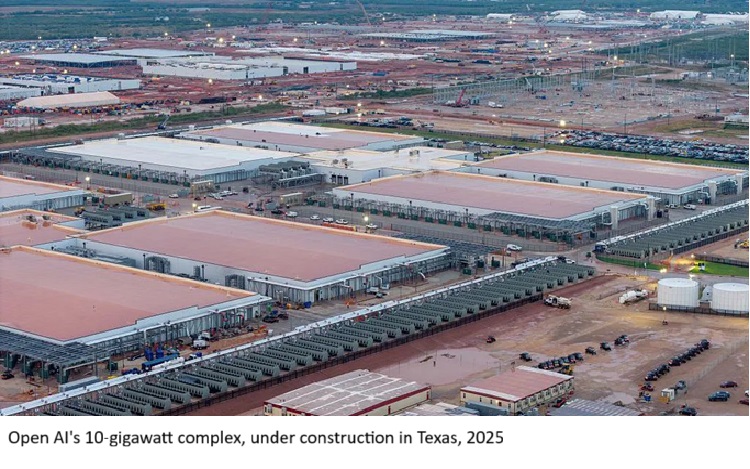
“We’re creating a new man-made ecological disaster: enormous data centres in remote places like deserts, that will be rusting away and leaching bad things into the environment, with no one left to hold accountable because the builders and investors will be long gone,”
He’s especially concerned now given the magnitude of money on the table as compared to the dot-com boom. There’s so much more to lose.
“When [the bubble] breaks, it’s going to be really bad,
BBC, Lily Jamali, Technology correspondent, San Francisco 11 Oct 25
At OpenAI’s DevDaythis week, OpenAI boss Sam Altman did what American tech bosses rarely do these days: he actually answered questions from reporters.
“I know it’s tempting to write the bubble story,” Mr Altman told me as he sat flanked by his top lieutenants. “In fact, there are many parts of AI that I think are kind of bubbly right now.”
In Silicon Valley, the debate over whether AI companies are overvalued has taken on a new urgency.
Sceptics are privately – and some now publicly – asking whether the rapid rise in the value of AI tech companies may be, at least in part, the result of what they call “financial engineering”.
In other words – there are fears these companies are overvalued.
Mr Altman said he expected investors would make some bad calls and silly start-ups would walk away with crazy money.
But with OpenAI, he told me, “there’s something real happening here”.
Not everyone is convinced.
In recent days, warnings of an AI bubble have come from the Bank of England, the International Monetary Fund, as well as JP Morgan boss Jamie Dimon who told the BBC “the level of uncertainty should be higher in most people’s minds”.
And here, in what is often considered the tech capital of the world, concerns are growing.
At a panel discussion at Silicon Valley’s Computer History Museum this week, early AI entrepreneur Jerry Kaplan told a packed audience he has lived through four bubbles.
He’s especially concerned now given the magnitude of money on the table as compared to the dot-com boom. There’s so much more to lose.
“When [the bubble] breaks, it’s going to be really bad, and not just for people in AI,” he said.
“It’s going to drag down the rest of the economy.”………………….
AI-related enterprises have accounted for 80% of the stunning gains in the American stock market this year – and Gartner estimates global spending on AI will likely reach a whopping $1.5tn (£1.1tn) before 2025 is out.
Tangled web of deals
OpenAI, which brought AI into the consumer mainstream with ChatGPT in 2022, is at the centre of the tangled web of deals drawing scrutiny…………………………………………………
Then there’s tech giant Microsoft, which is heavily invested, and cloud computing behemoth Oracle has a $300bn deal with OpenAI, too.
OpenAI’s Stargate project in Abilene, Texas, funded with the help of Oracle and Japanese conglomerate SoftBank and announced at the White House during President Donald Trump’s first week in office, grows ever larger every few months………………………………………
And as these increasingly complex financing arrangements get more and more common, the experts here in Silicon Valley say they may be clouding perceptions on AI demand.
Some people aren’t mincing their words about it either, calling the deals “circular financing” or even “vendor financing” – where a company invests in or lends to its own customers so they can continue making purchases.
“Yes, the investment loans are unprecedented,” Mr Altman told me on Monday……………………………………………….
OpenAI’s revenue is growing quickly, but it has never turned a profit.
And it is hardly a good sign that the people I’ve spoken to keep bringing up Nortel – the Canadian telecom equipment-maker that borrowed prolifically to help finance deals for their customers (and thereby artificially boost demand for their wares)………………………..
Telltale signs
Mr Kaplan says he seesa couple of telltale signs the AI sector – and therefore the wider economy – could be in trouble.
In frothy times, he says, companies announce major initiatives and product plans that they don’t yet have the capital for.
Meanwhile, retail investors clamour to get in on the start-up action.
The surge in AMD stock this week could indicate investors are trying to get a piece of the ChatGPT wealth machine – and while all this is playing out, real physical infrastructure aimed at satisfying the seemingly insatiable hunger for more AI development is being built.
“We’re creating a new man-made ecological disaster: enormous data centres in remote places like deserts, that will be rusting away and leaching bad things into the environment, with no one left to hold accountable because the builders and investors will be long gone,” Mr Kaplan said. ……………………………………….
There are plenty of believers in AI’s potential to transform society.
The question is whether the money to fund the ambitions of the foremost companies in the sector may be drying up………………………………https://www.bbc.com/news/articles/cz69qy760weo
After robbing EU taxpayers, Zelensky uses blackmail to get inside the Bloc

He is demanding that Ukraine be made a member of the EU, and he wants to change the rules of the bloc to speed up the process.
The racket has laundered hundreds of billions of public money to the Western military industrial complex. The racket has destroyed the economies of Europe
Zelensky’s corrupt dictatorship is just a pale reflection of his patrons in Washington, Brussels, Paris, Berlin, and London.
Since the United States-led NATO proxy war against Russia erupted in February 2022, the European Union has doled out $216 billion in aid to Ukraine. That’s equivalent to €186 billion, according to the EU’s latest official count. The true figure is likely to be even more.
The United States has given a similar amount to Ukraine. All paid for by taxpayers.
That’s about $400 billion total in three years, with the EU promising more over the next few years.
To put this in perspective, the EU aid to Ukraine is multiples more than all of the 27 member nations have received – combined – from the bloc’s collective budget and administration. According to Euronews reporting, some of the biggest recipients of EU subsidies each year are Germany (€14 bn), France (€16.5 bn), and Poland (€14 bn). Some of the smaller recipient countries are Austria, Denmark, and Ireland (around €2 bn).
That means Ukraine has received heaps more than all of the EU members combined.
Get your head around that. Ukraine, which is not a member of the European Union, is receiving manifold what actual member states are receiving. And you wonder why people in France are angrily taking to the streets because their shambolic government wants to cut pensions and other social welfare services to save money. Elsewhere, European governments are collapsing from unsustainable debt. And, at the same time, European citizens are constantly being lectured that their states need to spend more and more money on the NATO alliance, even to the insulting point of having to accept the cutting of social benefits and public services
Ukraine and its corrupt Kiev regime of NeoNazis has bled Europe dry. The so-called president, Vladimir Zelensky (who canceled elections last year, so he’s not really a legitimate president), is reported to be funneling €50 million a month to overseas funds for his retirement while his wife goes luxury shopping in New York and Paris. Other members of the regime, like former prime minister and now “defense” minister Denys Shmyhal, are also reportedly up to their eyes in corruption, siphoning off billions in the military aid that Western taxpayers have paid for.
This week, Zelensky took his brassneckery to new levels – if that’s possible. He is demanding that Ukraine be made a member of the EU, and he wants to change the rules of the bloc to speed up the process. The EU has granted Ukraine (and Moldova) a fast-track path to membership, but, to its credit, Hungary has objected to this.
In June, Hungarian Prime Minister Viktor Orbán cast a veto on continuing access talks for Ukraine. According to EU rules, there must be unanimity among member nations for the approval of new members. Orbán said Ukraine is not eligible because of the current war against Russia. “We would be importing a war,” he said.
Also, Budapest objects to Ukrainian language laws that discriminate against a Hungarian minority in the western Zakarpattia region of Ukraine. (The Russian language has been banned, too, in public offices.)
A referendum held in Hungary in June recorded that 95 percent of voters were against Ukraine becoming a member of the EU.
Zelensky is pushing ahead regardless, with his peevish wheedling. In a joint press conference in Kiev on Monday, with the indulgence of the Dutch PM at his side, Zelensky said: “Ukraine will be in the European Union, with or without Orbán, because it is the choice of the Ukrainian people.”
The little dictator flaunted his insufferable presumptuousness by hinting that the European Union would change its rules to bypass Hungary’s veto – all just to accommodate his scrounging regime. “Changing the procedure is called finding a way without Hungary,” he said. And in a further arrogant dismissal of democratic process, Zelensky asserted that the Hungarian people support his EU ambitions, contradicting the referendum back in June.
Orbán responded firmly by telling Zelensky he could not blackmail his way into the European Union.
Hungary’s Foreign Minister Péter Szijjártó added a dose of reality by stating: “The decision on which country is ready to join the European Union and which can join the EU will not be made by the president of Ukraine, but by the European Union itself, where such decisions require unanimity.”
In a further comment, Szijjártó nailed it by saying that Zelensky is “completely detached from reality.” The Hungarian diplomat also reminded that the Kiev regime is blowing up energy infrastructure and jeopardizing the EU members’ vital interests.
Last month, Ukrainian forces exploded the Druzhba oil pipeline from Russia, cutting off energy supplies to Hungary and Slovakia. The Zelensky regime carried out the sabotage as retribution for Budapest’s opposition to Ukraine’s EU application. This is what Orbán was no doubt referring to when he slammed Zelensky this week for using blackmail.
So, there you have it. A corrupt, unelected, Neo-Nazi regime headed up by a Jewish scam-artist who plays piano with his penis while wearing women’s high heels is using terrorist tactics to attack the vital interests of EU members, and is now telling those members that they won’t have a vote in the EU processes, because the regime has decided it will become a member of the bloc. You could not make it up. This, too, after robbing the taxpayers of the bloc of €186 billion to wage a war against Russia – a war that has killed 1.5 million Ukrainian soldiers – which could spiral out of control into a nuclear Third World War.
If this is the kind of ruination that this regime can inflict while not being a member of the EU, one can only imagine the hellscape it will bring after becoming a member……..
the real culprits in this obscene farce are the American and European elites who have fomented the war against Russia. Together, they have weaned and pampered the Kiev regime with largesse and indulgence, paid for by the taxpayers. The U.S.-EU transatlantic ruling class has cultivated the regime of corruption and war since the 2014 CIA-backed coup in Kiev against an elected president. The racket has laundered hundreds of billions of public money to the Western military industrial complex. The racket has destroyed the economies of Europe and is now destroying the semblance of democracy within Europe. (It’s not clear what Trump’s position in all of this is, but he probably doesn’t count anyway.)
The Western imperialist ruling class is so obsessed with its scheme for “strategic defeat” of Russia (and China) and for global domination that it is willing to cultivate any scumbag regime it can make use of for its goals, no matter how much that violates international law and its own professed democratic principles.
Zelensky’s corrupt dictatorship is just a pale reflection of his patrons in Washington, Brussels, Paris, Berlin, and London. They are all detached from reality. https://strategic-culture.su/news/2025/10/10/after-robbing-eu-taxpayers-zelensky-uses-blackmail-to-get-inside-the-bloc/
Ukraine has just generated another cash sink for Western taxpayers
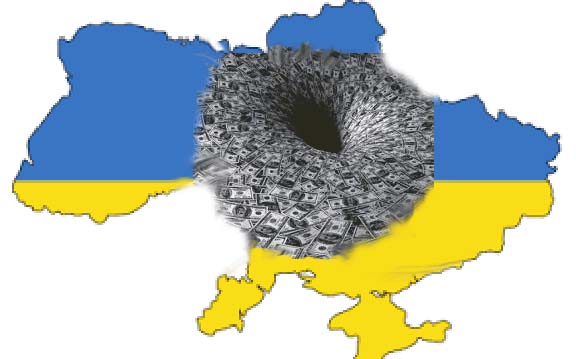
In the meantime, Canadian cash for weapons, “for Ukraine,” is sure pumping up the integrated US/Canada military-industrial complex, which seems to be the go-to Western strategy for boosting their GDP these days
The office of the “Special Representative for the Reconstruction of Ukraine” has been created for Canada’s ex-deputy prime minister
Rachel Marsden, a columnist, political strategist, and host of independently produced talk-shows in French and English. 4 Oct 25
Last month, former Canadian Prime Minister Justin Trudeau’s deputy prime minister, Chrystia Freeland, was dropkicked from newish Prime Minister Mark Carney’s cabinet. He did her a massive favor. Because now she doesn’t have to pretend to represent Canada anymore while following her true passion: representing Ukraine.
Freeland has a new role: “Special Representative for the Reconstruction of Ukraine,” officially speaking. The first question that came to mind when hearing this was, “When does she finally get to move to Kiev, already?” Imagine my disappointment to learn that she doesn’t.
Well, actually, my first question was, “Is Ukraine under reconstruction now? Did I slip into a coma and miss the bomb show wrapping up?” Nope, the conflict is still raging. But I guess it makes it sound like she’s going to be keeping a careful watch over the money that Carney has “pledged” to Ukraine – perhaps in the same way that people “pledged” to pay me a dollar per lap for my childhood swim-a-thons, then bailed when I came back to collect after competing 500 laps. I guess time will tell. Canadian taxpayers can only pray that will be the case, and that Carney is just virtue signaling Canadian cash for Ukraine and not actually sending any there, in the same way that the jokers running the EU make a big stink about the evils of Russian energy while importing it on the down-low through third countries.
In the meantime, Canadian cash for weapons, “for Ukraine,” is sure pumping up the integrated US/Canada military-industrial complex, which seems to be the go-to Western strategy for boosting their GDP these days amid their tanking economies.
Another question: Will Freeland use her experience in blocking Canadian bank accounts as Trudeau’s finance minister during the Covid-era Freedom Convoy anti-mandate protests to block shady cash flowing to Ukraine? I’m guessing not, if only because those Canadian bank accounts were blocked under the ultimately false pretext (as determined by Canadian intelligence) that foreign cash was funding interference with Canadian government decisions. In Ukraine’s case, that foreign cash is considered a plus because it’s coming from the West. Seems like she’d be more likely to tackle anything that got in its way.
Anyway, Freeland has just used her new Canadian taxpayer-funded role to plead Ukraine’s case in the pages of the Financial Times.
She wrote that “the fact is that we need Ukraine to save us,” presumably from the other side of the world, in Ottawa. She then goes on to qualify some murky, contentious drone activity around the Ukraine–EU border as “recent incursions into Central and even Western Europe.” At least I think that’s what she’s referring to. Unless I somehow missed the Russian tanks rolling down the Champs-Élysées. She doesn’t specify. But no matter. All the better, apparently, to argue that these incidents “show NATO needs Ukraine as a shield against Russia.”
Sounds like what Vladimir Zelensky was saying just the other day. The Ukrainian leader was going off about an incident last month of some alleged 90 drones over Ukraine, which he said were heading for Poland. He said that if only 20 of them actually ended up there, it was only because Kiev shot the rest down. The implication? That Ukraine was saving Poland. Trump was asked about it at the time and didn’t exactly praise Zelensky as Poland’s savior. He basically shrugged, saying, look, whatever – could have just been accidental.
Freeland also cited Trump’s tongue-in-cheek remarks from the other week when he rapped on social media about how Ukraine was winning on the battlefield against Russia and probably could even conquer Russian territory. He then offered to sell the Europeans all the American weapons they wanted in that endeavor. What part of Trump’s wishing them “good luck” did Freeland not understand as a commentary on Trump being keen to profit off the EU’s delusions, as long as Washington doesn’t have to get its hands dirty? She grasped none of it, apparently. Because she wrote in the FT that “US President Donald Trump got it right at the UN last week: Ukraine is a winner, and Ukraine can win.”
Freeland literally had just written of Ukraine in the same piece, a bit further up, that “we have assumed it would lose, at least without extraordinary effort from us.” Really? Your whole posse in Canada has been saying otherwise for years. “Ukraine will win and Canada will be there until the end,” said Canadian Foreign Affairs Minister Anita Anand, in early 2023, when she was defense minister.
So now we’ve gone from “Ukraine will win” to “Ukraine will only win if we do everything except pull the trigger” to “we need Ukraine because NATO is so weak.” Yeah, so weak that NATO is actually contemplating blasting Temu-grade drones out of the sky with F-16s, as the Romanian defense minister suggested during a recent Warsaw Security Forum panel.
Freeland adds that the West can learn from Ukraine about “how to fight a 21st-century war, and how to invent, manufacture and then keep reinventing the weapons we need for this new way of war in real time.” Look out, folks! Freeland has just discovered guerrilla warfare – but apparently not the double-edged sword it represents.
It’s all good when Ukrainian Nazis are getting schooled by NATO forces to fight Russia, and when they then graduate to fulfilling Freeland’s fantasy of pretending to teach NATO how to do guerrilla warfare – as though it’s a matter of NATO lacking ability and not just guerrilla warfare being way too cheap for NATO to justify washing tax cash into defense coffers.
What could possibly go wrong with letting Ukraine play asymmetric warfare “teacher” to justify the West turning it into a giant weapons toy box? It’s not like there haven’t been reports lately of Latin American drug cartels getting their drone training in Ukraine to use back home. We’re talking about Mexican and Colombian gangsters, according to Defense News, one of the leading military publications. Just your average start-up, really.
Freeland then proceeds to cheerlead the idea recently promoted by German Chancellor Friedrich Merz of straight-up stealing €140 billion in European-held Russian assets as a “loan” for Ukraine. Ukraine apparently just pays it back once Russia admits fault and writes a check, huh? In other words: never.
It’s one thing for Freeland to justify her new role by bloviating and virtue-signaling in the Western press. It’s another to make taxpayers foot the bill for it when her real job should be to end this war as quickly as possible through diplomacy so some legitimate reconstruction business can be done in Ukraine’s interests that doesn’t just involve perpetuating a taxpayer-funded racket.
EDF Weighs Edison IPO To Boost Nuclear Expansion Funding

Since being fully renationalized in 2023, EDF has been under pressure from President Emmanuel Macron’s government to finance up to six new EPR2 reactors and extend the life of the existing fleet. That program could require more than €60 billion through the 2030s, prompting asset reviews that include potential divestments in renewables and non-core foreign units, the Financial Times reported.
By Charles Kennedy – Oct 08, 2025, https://oilprice.com/Latest-Energy-News/World-News/EDF-Weighs-Edison-IPO-To-Boost-Nuclear-Expansio
French state utility EDF is in talks with banks about a potential initial public offering of its Italian subsidiary Edison, according to sources cited by Reuters, in a move that could unlock billions in capital as EDF ramps up financing for its nuclear revival at home.
EDF has begun sounding out major European lenders including BNP Paribas and Société Générale to assess investor appetite for a Milan listing that would value Edison between €7 billion and €10 billion ($8-11 billion). The group would likely retain a controlling stake while selling a minority portion to the public or strategic investors, according to the Reuters report. Sources told the news agency that the discussions remain preliminary, with a formal mandate expected by the end of October.
Edison, which was fully acquired by EDF in 2012, remains one of Italy’s largest integrated energy companies, operating power generation, retail, and gas units with annual revenue of about €15 billion and EBITDA near €1.7 billion. Its CEO, Nicola Monti, said in September that the company was prepared for a market return if EDF gave it the green light, according to Reuters.
The IPO would fit EDF’s broader capital rotation strategy.
Since being fully renationalized in 2023, EDF has been under pressure from President Emmanuel Macron’s government to finance up to six new EPR2 reactors and extend the life of the existing fleet. That program could require more than €60 billion through the 2030s, prompting asset reviews that include potential divestments in renewables and non-core foreign units, the Financial Times reported.
Bloomberg reported in early September that an Edison relisting could gauge investor appetite for European power assets, as utilities face volatile wholesale electricity prices across the continent.
Edison’s partial flotation would be similar to moves by other European energy peers such as Eni and Iberdrola, which spun off renewables and downstream assets to attract capital while retaining strategic control. A Milan listing would also test investor confidence in Europe’s liberalized power markets at a time of rising grid costs and renewed nuclear investment.
Bloomberg reported in early September that an Edison relisting could gauge investor appetite for European power assets, as utilities face volatile wholesale electricity prices across the continent.
Edison’s partial flotation would be similar to moves by other European energy peers such as Eni and Iberdrola, which spun off renewables and downstream assets to attract capital while retaining strategic control. A Milan listing would also test investor confidence in Europe’s liberalized power markets at a time of rising grid costs and renewed nuclear investment.
US and investors gambling on unproven nuclear technology, warn experts

The US government and investors have made a $9bn gamble on small nuclear
reactors to power the AI boom and lower emissions — but experts warn the
technology could prove too costly to be viable.
Data compiled by the FT
shows that since 2019, government agencies including the energy and defence
departments have committed over $6bn to developers of small modular
reactors (SMRs) through awards, loans and cost sharing agreements. Private
investment has also soared, with over $3bn raised in the same timeframe.
The technology promises a one-stop solution to data centres’ power needs
by providing clean, reliable and cheap electricity for companies to train
and run their AI models. Investor enthusiasm has lifted the share prices
and valuations of companies with little or no revenues or operating
projects.
“There’s a lot of cheerleading happening, but the amount of
capital that you need to cross the finish line is huge,” said Chris
Gadomski, head of nuclear research at BloombergNEF, which estimates data
centre power needs will more than double by 2035. “What I see happening
with SMRs and data centres reminds me of the internet boom and bust of the
early 2000s.”
FT 5th Oct 2025, https://www.ft.com/content/8a18e722-3efa-404e-9f2a-709eed877f18
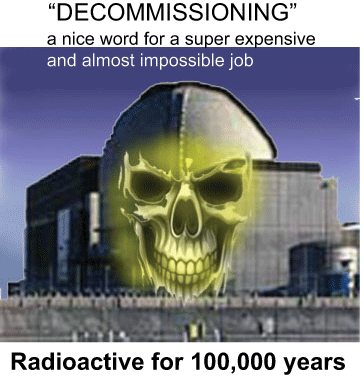
German Nuclear Operator’s Insolvency Could Shift Dismantling Costs to Taxpayers
October 6, 2025, Full Story: Clean Energy Wire, Author: Benjamin Wehrmann, https://www.theenergymix.com/german-nuclear-operators-insolvency-could-shift-dismantling-costs-to-taxpayers/
The insolvency of an operator of a decommissioned nuclear power plant in Germany raises questions about the financial responsibilities for deconstructing the reactor and disposing of its radioactive materials.
HKG, the owner of the nuclear plant Hamm-Uentrop that was opened in 1983 and taken out of service only six years later, filed for insolvency at a court in western state North Rhine-Westphalia, reports Clean Energy Wire, citing the German business weekly WirtschaftsWoche.
The operating company, owned jointly by major energy company RWE and several local utilities, initially had demanded about 350 million euros from the federal and the state government to cover the costs for deconstruction and disposal, but failed to win a lawsuit it filed in 2024. A court in the city of Düsseldorf rejected HKG’s claim in June this year, which led the company to declare itself insolvent. “HKG faces an unchanged situation with unclear financing of the remaining deconstruction work,” said the company’s CEO, Volker Dannert. According to WirtschaftsWoche, the actual costs for dismantling the plant and storing the nuclear waste initially were gauged at 750 to one billion euros.
Co-owner company RWE said the HKG shareholders bear no legal responsibility to fund deconstruction works beyond payments they made in the past. HKG manager Dannert said that talks with the federal and the state government had remained inconclusive, which meant that “it is now a task for the responsible authorities at the federal level and in North Rhine-Westphalia to organize the further dismantling.”
The prototype Thorium-Cycle-High-Temperature-Reactor (THTR) in Hamm-Uentrop was decommissioned due to technical challenges after serving for about 16,500 hours. It was sealed in 1997 and will remain so until at least 2030 to let radioactive contamination diminish before deconstruction works can begin. The process of dismantling is expected to take about one decade.
Germany is in the process of dismantling its nuclear power plants after shutting down the remaining three reactors in 2023 as part of the country’s nuclear phase-out. Dismantling nuclear power stations and safely storing radioactive waste will cost Germany dozens of billions of euros, and take many decades.
In 2017, Germany’s four major nuclear plant operators—E.ON, EnBW, RWE and Vattenfall—handed money earmarked for nuclear waste disposal over to the country’s fund for nuclear waste management, passing all responsibilities to the state. In 2025, over half of the German environment ministry’s budget is spent on managing the country’s nuclear waste, including finding a location for a final nuclear repository.
This post was originally published by Berlin-based Clean Energy Wire.
1 This Month


Website of the Week

New book – https://www.amazon.com/dp/1923372157?utm_source=substack&utm_medium=email
Now until to February 10, 2026 Radioactive waste storage in France: the debate is finally open! How to participate?
-
Archives
- January 2026 (106)
- December 2025 (358)
- November 2025 (359)
- October 2025 (377)
- September 2025 (258)
- August 2025 (319)
- July 2025 (230)
- June 2025 (348)
- May 2025 (261)
- April 2025 (305)
- March 2025 (319)
- February 2025 (234)
-
Categories
- 1
- 1 NUCLEAR ISSUES
- business and costs
- climate change
- culture and arts
- ENERGY
- environment
- health
- history
- indigenous issues
- Legal
- marketing of nuclear
- media
- opposition to nuclear
- PERSONAL STORIES
- politics
- politics international
- Religion and ethics
- safety
- secrets,lies and civil liberties
- spinbuster
- technology
- Uranium
- wastes
- weapons and war
- Women
- 2 WORLD
- ACTION
- AFRICA
- Atrocities
- AUSTRALIA
- Christina's notes
- Christina's themes
- culture and arts
- Events
- Fuk 2022
- Fuk 2023
- Fukushima 2017
- Fukushima 2018
- fukushima 2019
- Fukushima 2020
- Fukushima 2021
- general
- global warming
- Humour (God we need it)
- Nuclear
- RARE EARTHS
- Reference
- resources – print
- Resources -audiovicual
- Weekly Newsletter
- World
- World Nuclear
- YouTube
-
RSS
Entries RSS
Comments RSS
 nuclear-news