Former top U.S. admiral cashes in on nuclear sub deal with Australia
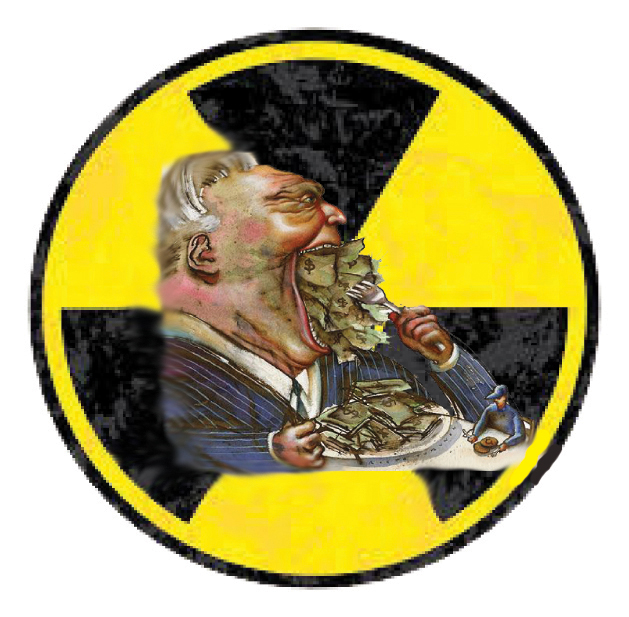
Steele-John, the Australian senator, called Richardson and other American consultants “inherently biased” and said they were primarily representing U.S., not Australian, interests
Washington Post, By Craig Whitlock and Nate Jones, March 7, 2023
In its quest to build nuclear-powered submarines, the government of Australia recently hired a little-known, one-person consulting firm from Virginia: Briny Deep.
Briny Deep, based in Alexandria, Va., received a $210,000 part-time contract in late November to advise Australian defense officials during their negotiations to acquire top-secret nuclear submarine technology from the United States and Britain, according to Australian contracting documents. U.S. public records show the company is owned by John M. Richardson, a retired four-star U.S. admiral and career submariner who headed the U.S. Navy from 2015 to 2019.
Richardson, who declined to comment, is the latest former U.S. Navy leader to cash in on the nuclear talks by working as a high-dollar consultant for the Australian government, a pattern that was revealed in a Washington Post investigation last year. His case brings to a dozen the number of retired officers and former civilian leaders from the U.S. Navy whom Australia has employed as advisers since the nuclear talks began in September 2021, documents show.
The former U.S. Navy officials are profiting from a web of sources with sometimes divergent interests. One retired U.S. admiral charges $4,000 per day to consult for the Australian government while simultaneously advising other foreign defense clients and collecting his U.S. military pension, according to records obtained by The Post under the Freedom of Information Act (FOIA).
The overlapping arrangements cast doubt on whether the U.S. consultants can provide impartial advice and raise questions about whose interests they are representing, said Jordon Steele-John, a member of the Australian Senate whose Green Party opposes the nuclear talks and has been critical of the government’s dependence on American advisers. “If you’re on the payroll of a foreign government, your advice is by definition not independent,” he said.
Under federal law, retired U.S. military personnel must obtain approval from the Pentagon and the State Department before they can accept money or jobs from foreign powers that could compromise their sworn allegiance to the United States. The law applies to retirees — generally those who served at least 20 years in uniform — because they receive a U.S. pension and can be recalled to active duty……………………………………………………………..

Vice Adm. Jonathan Mead, (above) the chief of Australia’s nuclear-powered submarine task force, told an Australian parliamentary committee last month that Richardson had been hired to provide guidance “on stewardship — that is, how to safely and securely manage nuclear technology” and on the training of naval personnel. “When we have specific tasks, questions or complex problems which come our way that we don’t have the subject matter expertise for, we reach in for his assistance,” Mead said during a Feb. 15 hearing.
……………………………….. Since his retirement from active duty, Richardson also has served on the board of directors for major companies in the defense and nuclear sectors, including Boeing, Constellation Energy and BWX Technologies. In 2021, he received more than $900,000 in compensation for his services on corporate boards, records show, plus a six-figure U.S. military pension.
……… “We’ve been very careful to make sure his advice is very specific to the questions that remain within the guidelines,” Mead said.
Steele-John, the Australian senator, called Richardson and other American consultants “inherently biased” and said they were primarily representing U.S., not Australian, interests. “Our government has been paying them handsomely for their advice,” he said. But he added that the arrangement “calls into question” any collaboration between Australia and the United States on military matters.
……………………………. One of the most prominent former officers is retired Vice Adm. William Hilarides, a career submariner who commanded the U.S. Naval Sea Systems Command until 2016. Since then, he has received consulting contracts from the Australian government worth $1.3 million, according to Australian defense officials.
He charges $4,000 per day for his consulting services, according to documents that the U.S. Navy recently released in response to The Post’s FOIA lawsuits. He has also worked for Fincantieri Marine Group, a Wisconsin shipyard company that is majority owned by the government of Italy. He did not respond to an email seeking comment.
Hilarides serves on Australia’s Naval Shipbuilding Expert Advisory Panel along with another American, retired Rear Adm. Thomas Eccles, a former chief engineer for ships and submarines for the U.S. Navy. Eccles had received consulting contracts worth about $820,000 since 2016, according to Australian defense officials………………………………………… more https://www.washingtonpost.com/investigations/2023/03/07/former-top-us-admiral-cashes-nuclear-sub-deal-with-australia/
Britain’s Public Accounts Committee reveals that UK’s nuclear reactors have been a poor investment
It’s almost a year since Boris Johnson’s announcement that a new
nuclear power station will be built at Wylfa, Ynys Môn. ‘Wylfa
Newydd’ is part of the proposed new nuclear scheme, Great British Nuclear
(GBN). But GBN, if it goes ahead, will be the third generation of nuclear
reactors in the UK.
Let’s look back at the past two generations of
nuclear power stations in the UK, and see how they’ve performed, and ask
if Wylfa Newydd is really the boon for Cymru that the Tories claim it is.
As Johnson made his Wylfa announcement in April 2022, the Public Accounts
Committee (PAC) was busy finalising a report on the economic performance of
Britain’s previous, second generation of reactors. The PAC report,
entitled ‘The Future of Advanced Gas-cooled Reactors [AGRs],’ was
released just a month after Johnson’s announcement.
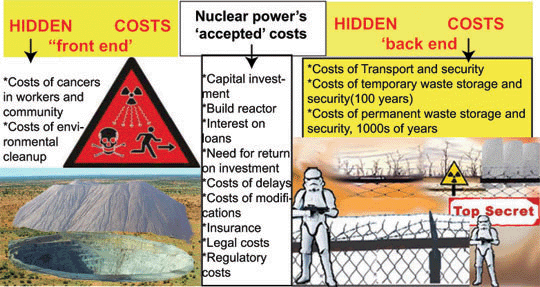
It revealed: hownthese retirement-age AGR reactors have been a poor investment, not serving
Britain well economically; how the estimated cost of decommissioning them
had nearly doubled since 2004, and would likely climb further; and how
these astronomical, escalating costs of decommissioning the AGR sites (now
at £23.5 billion) is being put onto UK tax-payers.
Nation Cymru 7th March 2023 https://nation.cymru/opinion/great-english-nuclear-should-wales-be-involved/
The West hasn’t gone after Russia’s nuclear energy. Here’s why
CNN, Story by Clare Sebastian 7 Mar 23
Much of Russia’s energy exports have been hit by Western sanctions since the country launched its full-scale invasion of Ukraine, with a notable exception — nuclear power.
Russia’s state-owned nuclear energy monopoly Rosatom, which exports and enriches uranium as well as builds nuclear power stations around the world, has been in control of Europe’s largest nuclear plant in Ukraine’s Zaporizhzhia region since Russian forces seized it a year ago.
Kyiv has accused Russian forces of turning the complex into a military base and using it as cover to launch attacks, knowing that Ukraine can’t return fire without risking hitting one of the plant’s reactors……
Petro Kotin, interim president of Ukraine’s atomic energy company, Energoatom, is worried about the militarization of the plant, but also a significant reduction in the number of qualified staff on site. The Russian press service for the plant told CNN that new employees are being recruited, “which ensures [its] safe operation.”…………….
Despite what Kotin described as the rising risk of a mistake or breach of safety protocols at the Zaporizhzhia plant, and repeated calls by Kyiv for sanctions on Rosatom, the Russian company remains largely unscathed, although the United Kingdom sanctioned its top management and several subsidiaries last month, and Finland terminated a power plant deal last May.
Experts say Rosatom remains protected by the vital role it plays in global nuclear power, and the fact it can’t easily be replaced.
The problem is a “Russian doll’s worth of interlocking dependencies,” says Paul Dorfman, chair of Nuclear Consulting Group and a long-time advisor to the UK government and the nuclear industry.
To start with, Rosatom is a key exporter of nuclear fuel. In 2021, the United States relied on the Russian nuclear monopoly for 14% of the uranium that powered its nuclear reactors. European utilities bought almost a fifth of their nuclear fuel from Rosatom. According to Dorfman, the European Union has made little progress since weaning itself off Russia’s nuclear industry.
Rosatom also provides enrichment services, accounting for 28% of what the United States required in 2021.
It has built numerous nuclear plants around the world and in some cases financed their construction. At the end of 2021, almost one in five of the world’s nuclear power plants were in Russia or Russian-built, and Rosatom is building 15 more outside of Russia, according to Columbia University’s Center on Global Energy Policy.
Kacper Szulecki, a research professor at the Norwegian Institute of International affairs, says the cost of building a nuclear power plant is so high that it can only be financed by governments, and in some cases even they can’t afford it. In those cases, Rosatom has often stepped in, offering credit lines guaranteed by the Russian government and in some cases long-term contracts to provide fuel for or even run the plant.
Szulecki, who co-authored a recent paper on Russia’s nuclear industry, says the most extreme of these kinds of deals is the build-own-operate model. It was first used by Rosatom with Turkey’s Akkuyu power plant, which the corporation is building, fully financing and has committed to operating for its entire lifetime.
The Akkuyu nuclear power plant as its construction continues in November 2022 – Serkan Avci/Anadolu Agency/Getty Images
Such dependency can trump other considerations. For example, Hungary has been the European Union’s most vocal opponent of sanctions on Rosatom. It is also one of only several EU countries that rely on nuclear energy for more than 40% of their electricity and it has a long-term financing deal with Rosatom to build a nuclear power plant.
Experts say finding new suppliers to replace Rosatom in the global nuclear industry would take years.
That may be why, far from deterring future customers, Rosatom’s occupation of the Zaporizhzhia plant has coincided with growth in the company’s foreign revenue. Its Director General Aleksey Likhachev told Russian newspaper Izvestiya in December that overseas revenue was on track to rise by about 15% in 2022 compared with 2021.
For his part, Kotin at Energoatom believes Rosatom is maintaining the equipment at the plant so poorly that the Russian occupation may cause irreversible damage.
If it continues for another year, “then I’m sure we won’t be able to restart this plant,” he said…………. https://www.msn.com/en-ca/news/world/the-west-hasn-t-gone-after-russia-s-nuclear-energy-here-s-why/ar-AA18hEL7?ocid=msedgntp&cvid=5ec87a4e668849fcb11470dd5d1a6c35&ei=14
Rolls-Royce Small Modular Reactor project running out of cash

3 March 2023 https://www.neimagazine.com/news/newsrolls-royce-smr-faces-financial-problems-10648145
UK-based Rolls-Royce SMR says its £500m ($600m) small modular reactor (SMR) programme will run out of cash by the end of 2024, Reuters has reported. Alastair Evans, Government & Corporate Affairs Director at Rolls-Royce SMR noted: “We aren’t asking the government to make an order (for the nuclear units) today but we need to start negotiations on a deployment plan by the middle of this year. We are facing a cliff edge, by December 2024 the money will have run out.” This would put at risk UK government plans to use SMRs to boost energy security and achieve climate targets.
The 470 MWe Rolls-Royce SMR design is based on a small pressurised water reactor. The design was accepted for Generic Design Assessment review in March 2022 and Rolls-Royce SMR expects to receive UK regulatory approval by mid-2024. A Rolls-Royce-led UK SMR consortium aims to build 16 SMRs. The consortium – which includes Assystem, Atkins, BAM Nuttall, Jacobs, Laing O’Rourke, National Nuclear Laboratory, the Nuclear Advanced Manufacturing Research Centre and TWI – expects to complete its first unit in the early 2030s and build up to 10 by 2035.
Rolls-Royce’s SMR development business received a commitment of £210m from the UK government in 2021 but talks on how the projects would be funded are yet to start. Rolls-Royce’s new CEO Tufan Erginbilgic said recently that there was a sense of urgency in its engagement with government. “We built a capable team (and) without any project, sustaining that team will be a big challenge,” he told reporters after the group published full-year results. He noted that it was vital to move quickly, given that rival companies were developing similar technology.
“It is important that we engage therefore with the UK government urgently, and for a project that we can deploy as soon as possible,” he said. Rolls Royce and shareholders in the SMR business – advisory firm BNF Resources Ltd, US Energy company Constellation and Qatar Investment Authority have invested a total of around £280m.
This and the government money have been used to build the business, which employs some 600 staff across Derby, Warrington and Manchester. The funds have enabled it to start the regulatory process to approve the reactor design and identify sites for plants and factories. In November 2022, Rolls-Royce identified four sites with the potential to deploy multiple SMR units: Trawsfynydd (requiring agreement with Nuclear Decommissioning Authority (NDA) – and the Welsh Government); Sellafield (NDA land availability to be confirmed); Wylfa-South (requiring agreement with Horizon Nuclear Power); and Oldbury-North (also requiring agreement with Horizon Nuclear Power).
Rolls-Royce hopes to build the reactors in UK factories. In July 2022, the company announced six potential locations for the factory, shortlisted from more than 100 submissions from local enterprise partnerships and development agencies. They were: Sunderland in Tyne and Wear, Richmond in North Yorkshire, Deeside in Wales, Ferrybridge in Yorkshire, Stallingborough in Lincolnshire and Carlisle in Cumbria. David White, newly appointed Chief Operating Officer of Rolls-Royce SMR, said another two locations – Shotton in Deeside (Wales) and Teesworks in Redcar (North East) – had been added to the list.
France Sees ‘No Problem’ Funding Macron’s New Nuclear Reactors
By Ania Nussbaum https://www.bloomberg.com/news/articles/2023-03-01/france-sees-no-problem-funding-macron-s-new-nuclear-reactors#xj4y7vzkg
French President Emmanuel Macron’s government sees “no problem” funding the six new nuclear reactors he has proposed building, a project that by one estimate could cost at least €51 billion ($54 billion).
We trust the nuclear industry, there’s no difficulty ahead to fund nuclear reactors announced by the president,” government spokesman Olivier Veran said after a cabinet meeting on Wednesday. “The funding framework will be introduced, believe me, there’s no problem.”
Macron last year made a U-turn on a previous pledge to cut back France’s reliance on nuclear energy by promising to build at least six new nuclear reactors slated to enter into service from 2035, and up to 14 reactors in total. France gets about 70% of its electricity from nuclear power.
Luc Remont, the chief executive of electricity utility Electricite de France SA, which operates the country’s nuclear reactors, told lawmakers during a hearing on Tuesday that the construction of the six reactors would cost at least €51 billion, cautioning that that was just a “rough estimate.”
EDF is being nationalized by the government, and Remont said the company can’t bear the cost of the new reactors by itself, suggesting the state would have to step in.
Earlier this week, Macron called for the European Investment Bank to invest in low-carbon energy, including nuclear power. On Wednesday, his minister for energy transition, Agnes Pannier-Runacher, who is trying to build an alliance of pro-nuclear countries to weigh in on European Union negotiations, said the funding of future nuclear reactors would be presented by the end of the year. She ruled out higher taxes.
The Dream of NuScale Small Nuclear Reactors Hangs in the Balance

Wired, 27 Feb 23
A cluster of reactors that are just 9 feet in diameter is supposed to start a nuclear energy resurgence. Mounting costs may doom the project.
JORDAN GARCIA, A deputy utilities manager in Los Alamos, New Mexico, is facing an energy crunch that is typical in the American West. For decades, the county-run utility relied on a cheap and steady mix of coal and hydroelectric power. But the region’s dams are aging and drought-parched, and its coal plants are slated to retire.
The county is aiming to fully decarbonize its grid by 2040, and the city has been tapping more solar lately, but batteries are arriving slowly, and Garcia worries about heat waves that strain the grid after the sun goes down. Wind power? He’d take more of it. But there aren’t enough wires stretching from the state’s windy eastern plains to the mesa-top community. “For us it’s pretty dire,” he says.
For the past few years, Garcia has been counting on a unique nuclear experiment to come to the rescue. In 2017, Los Alamos signed up to join a group of other local utilities as an anchor customer of the first small modular reactors, or SMRs, in the US, created by a company called NuScale. The design, which calls for reactors only 9 feet in diameter, had never been built before, but the initial cluster planned in Idaho Falls, Idaho, was promised to be much cheaper than a full-scale reactor and to offer affordable carbon-free energy 24/7.
To Garcia, this felt like a homecoming. Los Alamos, a town with the motto “Where discoveries are made,” is the birthplace of the atom bomb, and experimental reactors ran not far from downtown for much of the 20th century. But it had never actually used nuclear power to keep the lights on.
This month, Los Alamos and other local utilities across the West were facing a weighty decision: whether to pull the plug on their nuclear dream. NuScale had informed members of the group, Utah Associated Municipal Power Systems, or UAMPS, that the estimated costs of building the six 77-MW reactors had risen by more than 50 percent to $9.3 billion. For Garcia, that translated into a jump in the cost of energy from $58 to $89 per megawatt-hour.
…………… Without extra subsidies from the new Inflation Reduction Act—on top of $1.4 billion already committed to the project by the US Department of Energy—the price to energy users in places like Los Alamos would have doubled.
…………. The project’s power output is only 20 percent subscribed, and UAMPS says it will need to reach 80 percent for planning and construction to proceed next year.

Many a “nuclear renaissance” has fizzled.
…………….. Only two [large nuclear] reactors are being built in the US: a pair of 1100-MW units at the Vogtle plant in Georgia, now seven years delayed and $20 billion over their $14 billion budget.
NuScale hopes its smaller reactors can avoid that fate……… Last month, the company was the first of dozens of companies working on SMRs to have a design approved by US regulators. That makes NuScale first in the race to leap from a “paper napkin” reactor, as critics sometimes deride SMRs, to a real one, though the Idaho project involves a revised design that will need its own approval.
The project has hit roadblocks before. It began with 36 utilities signed on, but that number has fluctuated and dropped to 27 last year. In 2020, several municipal utilities dropped out in response to a construction delay and cost increases. Some later rejoined the project after the US Department of Energy upped its commitment to offset some of the costs.
Critics say those price revisions are a sign SMRs are heading down the same path as projects like Vogtle. For nearly a century, the nuclear power industry’s mantra was that building bigger plants would drive down costs. While existing plants aged and new construction withered, SMR companies began promoting a different philosophy, says David Schlissel, an analyst at the Institute for Energy Economics and Fiscal Analysis, claiming that constructing many small reactors would teach builders how to make them more cheaply.
But the evidence for progress is flimsy, says Schlissel, who notes that his 50-year career has spanned many a “nuclear renaissance” that fizzled. When that philosophy was applied in France, where dozens of reactors were built in the 1980s, costs still increased. Claims that “modularity” will help make construction construction more efficient are also suspect, he adds. The new Vogtle reactors involved nearly 1,500 “modular” components that were largely constructed offsite.
Schlissel also believes that NuScale’s current estimates are rosy because they rely on the approval of its newer design that uses less steel, one of the materials driving the cost increases. But regulators may not back that approach, he says. Towns should get out while they can, he advises, before costs climb higher still, and seek out alternatives like geothermal and battery storage. “Let the buyer beware,” he says.
……………….. officials in Morgan, Utah, a small town in the Wasatch Mountains north of Salt Lake City, decided to make a quick exit from the project…….
This year, the city realized it had new alternatives to the rising costs of nuclear power. While the Inflation Reduction Act is expected to help offset the costs of the Idaho plant, it also includes funds to help rural communities start their own energy projects. Bailey wants the city to become more self-reliant, installing its own solar panels and batteries that reserve power overnight.
In this round, Morgan was the only defector, though another Utah city, Parowan, reduced its commitment from 3 MW to 2 MW—just enough to cover the loss of its coal power. But the new agreement with utilities, negotiated during a two-day meeting with UAMPS members this winter, sets the project under a ticking clock. It includes requirements that the price hold steady at $89 per megawatt-hour, and—most worrying to utilities that want the project to succeed—that the project be at least 80 percent subscribed by next year. If it doesn’t hit that threshold, towns will get a refund on most of their expenses so far.
At this point, the utilities have sunk relatively little of their own money into the project, but that will change in 2024 as the project begins to seek site-specific building approvals followed by actual construction. To get the project fully subscribed, the group is talking with utilities elsewhere in the Northwest, where NuScale is competing with other SMR startups, including the Bill Gates–backed TerraPower, which recently signed a feasibility agreement with PacifiCorp, a private utility. Webb of UAMPS says he is optimistic about where the negotiations are headed.
…………………….. For now, the Los Alamos county council voted to formalize a long-planned increase of their share of the NuScale plant’s power, from 1.8 MW to 8.6 MW. Garcia hopes it will help encourage other utilities to take a chance on sparking a nuclear renaissance. https://www.wired.com/story/the-dream-of-mini-nuclear-plants-hangs-in-the-balance/—
South Korea, France keen to sell nuclear reactors to Saudi Arabia (no connection with nuclear weapons OF COURSE!)
Saudi Arabia moves forward with bids for nuclear plant

The kingdom has received bids to build its first nuclear power plant and South Korea is reportedly expressing interest.
AL-MONITOR, February 27, 2023
Saudi Arabia is progressing with its plans to build its first nuclear power plant and has received a number of bids.
The Saudi Ministry of Finance’s 2023 budget statement published Feb. 15 notes that bids to build the plant were received last December, reported the Dubai-based business intelligence outlet Middle East Economic Digest on Monday.
Background: Saudi Arabia has had an interest in nuclear power for decades. The kingdom was a major investor in Pakistan’s nuclear weapons program that began in the 1970s, for example. In 2009, the late Saudi King Abdullah bin Abdulaziz told the Obama administration that the country would obtain nuclear weapons of its own if Iran were to do so. In 2018, Crown Prince Mohammed bin Salman said the same thing to the US news outlet CBS.
More recently, Saudi Arabia has been considering developing nuclear energy for peaceful purposes. In 2018, the Saudi government announced its intention to add nuclear power to its energy mix.
Saudi Arabia’s nuclear ambitions have been gaining momentum. Korea JoongAng Daily reported in November that South Korea was interested in building Saudi Arabia’s first nuclear power plant.
Last December, the International Atomic Energy Agency (IAEA) held a nuclear law workshop with Saudi officials in Riyadh. The IAEA’s purpose was to “support the implementation of its nuclear energy program in a safe, secure and transparent manner,” according to a press release.
In early February, Saudi Arabia signed a memorandum of understanding with France on energy cooperation. The memo noted nuclear energy as well as hydrogen and electricity interconnection, the official Saudi Press Agency reported……………… https://www.al-monitor.com/originals/2023/02/saudi-arabia-moves-forward-bids-nuclear-plant#ixzz7uaRVErTd
Nuclear weapons consortium enthusiastically revving up their business.

Nuclear weapons consortium faces new global threats, JIM CARRIER S The Gazette, Feb 26, 2023
WASHINGTON • Thirty years after the Cold War, the United States is again running in a nuclear arms race.
Officially, no one calls it a race. It is contest between four or five adversaries who could destroy the world, or much of it. But it is shaping up to be a costly, unpredictable, generational competition that will shadow international nuclear geopolitics for decades.
Team USA, which is leading the pack at the moment, gathered in a hotel ballroom in Alexandria, Va., Feb. 14 to hear how it can win. The forum was the 15th Nuclear Deterrence Summit, a gathering of people employed by the “nuclear security enterprise,” the complex of laboratories, factories, corporations and federal branches that make and use nuclear weapons.
The atmosphere was by turns alarming and auspicious as contractors, who operate most of the nuclear enterprise and employ 95% of its 70,000 employees, heard of the growing threats to U.S. security, while contemplating lucrative federal contracts to counter those threats.
“Delivery of mission is becoming paramount while the fiscal environment is evolving from being cost-constrained to being cost-conscious,” reported a new study of the enterprise.
The result of that shift is clear: The first millions of trillions of dollars are flowing toward labs and factories that are designing, and starting to build, new thermonuclear bombs and new fleets of missiles, airplanes and submarines to deliver them.
For the 531 people in attendance the summit at times resembled a pep rally.
In a keynote address, Jill Hruby, administrator of the National Nuclear Security Administration (NNSA), described the U.S. buildup as a “renaissance.”
Nuclear weapons remain the “cornerstone of national defense,” she said. The current stockpile of 3,750 aging warheads — down from more than 31,000 at the height of the Cold War in the mid-1960s — is being “modernized.” They include five existing warheads for gravity bombs, Minuteman and cruise missiles, and the Trident missile for new Columbia-class submarines, now being built. One warhead, the W93, is a new design for the Sentinel, a new intercontinental ballistic missile that will replace the Minuteman III missiles in silos in Colorado, Wyoming, Montana and North Dakota.
To make that warhead, the U.S. will again make plutonium “pits,” the core of hydrogen thermonuclear bombs, at a remodeled plant in Los Alamos, N.M., and a new $10 billion plant in Savannah River, Ga.
The pit factories, which replace the infamous and now cleared from the landscape Rocky Flats factory outside Denver, are still being designed, and are the subject of lawsuits by activist groups who say the government sidestepped required full environmental impact statements. If they become operational, Los Alamos will make 30 pits a year starting in 2026 and Savannah River 50 pits a year — a number that is likely to grow, Hruby said.
In the next five years NNSA, a semi-autonomous agency within the U.S. Department of Energy responsible for applying nuclear science to military weapons, plans to complete five warhead modernizations, build at least six major construction projects and rebuild numerous facilities and capabilities that have “atrophied or disappeared” since the Cold War, she said. Many of the plants and labs are still cleaning up deadly contamination left from the Cold War.
“The American people are hearing more about nuclear issues than at any time since the Cuban Missile Crisis, or the collapse of the Soviet Union,” Hruby said.
At the conclusion of her talk, which began at 8:30 a.m. on Valentine’s Day, moderator DJ Johnson, vice president of Honeywell’s Federal Solutions Business Enterprise, prompted the audience like a cheerleader………………
The audience applauded, a bit halting at first, perhaps because of two sobering messages that accompanied NNSA’s accomplishments. The first involved new international threats that in the last year shattered the foundations of nonproliferation treaties and the delicate balance of power and peace that had prevailed since the 1960s:………………………………………………………………………….
The second sobering message involved the enterprise’s brain deficit. Last year, the complex hired 11,000 people, but lost 7,000……………
Attrition at some plants is as high as 10% a year, nearly a third of the federal overseers are nearing retirement and 40% of the workforce has less than five years’ experience……………….
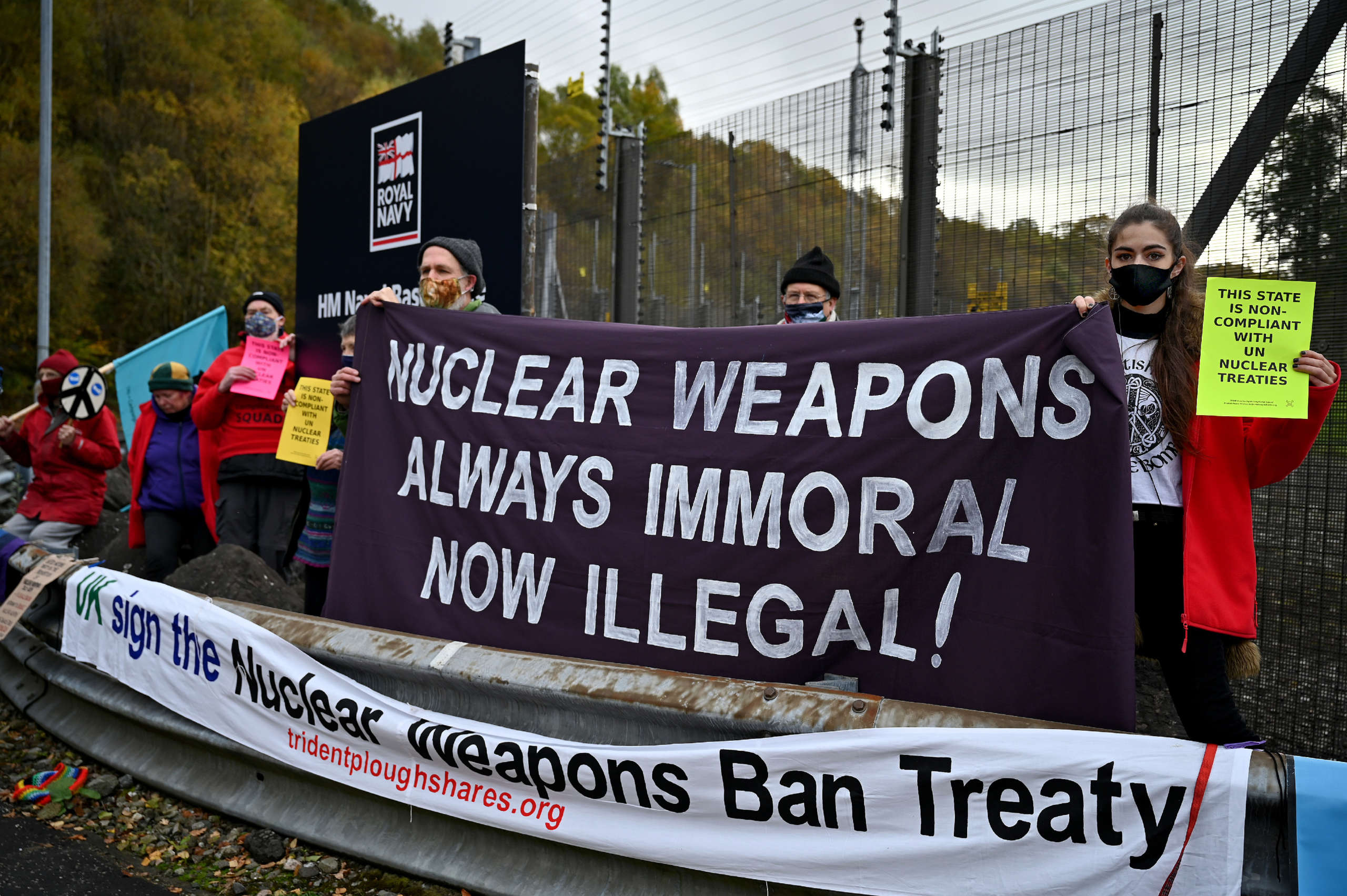
As the 500 enterprise employee met and contemplated a future full of nuclear weapons, two men stood across the street from the hotel, holding hand-painted signs. “Nuclear Weapons are illegal,” said one. “The World Wants Nuclear Disarmament,” said the other.
Seoul aims to use strengthened US ties to expand nuclear plant exports
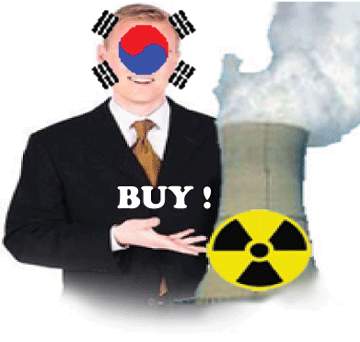
The Yoon Suk Yeol administration has scrapped the former Moon Jae-in administration’s nuclear phase-out policy based on the view that nuclear power is essential for the long-term sustainability of South Korea’s economy and its nuclear power industry
Settlement between Westinghouse and KEPCO is necessary for Washington-Seoul to expand alliance into nuclear energy
Korea Times, By Kim Yoo-chul 26 Feb 23,
Unlike the previous Moon Jae-in administration, President Yoon Suk Yeol and his foreign affairs team are clearly aiming to grow South Korea into a pivotal state given Seoul’s competitive standing to increase interoperability among a range of partners, specifically in the Indo-Pacific region.
This policy drive is backed by his administration’s concerted backing of Washington’s various protectionist industrial policies and regional security agenda items.
South Korea’s support of the Inflation Reduction Act (IRA), CHIPS and Science Act, the country’s participation in a U.S.-initiated Indo-Pacific Economic Framework (IPEF) and Chip 4 alliance are the examples signifying Seoul’s shift toward U.S. policies………………………….
Seoul’s backing of [U.S. President Joe] Biden’s signature industrial and regional security policies illustrates the fact that the country is prepared to withstand any economic and political costs by raising its profile as an advocate of major policy initiatives outlined and being managed by the U.S.’ partners and its like-minded allies,” a senior government official said in a telephone interview, adding that the majority of his comments do not necessarily reflect the official policy or position of South Korea.
Despite Seoul maintaining strategic cooperation with Beijing given its heavy reliance on the Chinese market _ China is the largest trading partner of South Korea _ and China’s huge political influence on North Korea, the Yoon administration’s apparent shift in position favoring the Biden administration’s moves to revive U.S. manufacturing, has so far been successful……………………………………..
Now, as the Biden administration has set its sights on boosting U.S. energy independence, the Yoon administration is hoping to expand its alliance with Washington into nuclear energy, in addition to batteries and chips, security analysts and company officials said.
SMRs emerge as option, legal troubles
The prime goal of the Inflation Reduction Act (IRA) is aimed at addressing rising inflation. However, the IRA also includes several tax incentives for clean energy technologies including advanced small modular reactors (SMRs). This means the IRA will possibly become a game changer for Washington’s participation in the new energy economy……………………
the IRA will have profound effects on South Korean nuclear energy and reactor companies, because they are in a better position to become one of the top beneficiaries of the act,” a trade ministry official said by telephone.
The Yoon Suk Yeol administration has scrapped the former Moon Jae-in administration’s nuclear phase-out policy based on the view that nuclear power is essential for the long-term sustainability of South Korea’s economy and its nuclear power industry. There are hopes that Yoon might reach a consensus with his U.S. counterpart on the sidelines of the Korean leader’s scheduled state-visit to the White House in late April to expand the Washington-Seoul alliance in the area of SMRs, industry sources told The Korea Times………….
U.S.-based Westinghouse and KEPCO, alongside KEPCO’s subsidiary Korea Hydro & Nuclear Power (KHNP), are involved in negotiations over their legal dispute after the U.S. company filed a lawsuit against KHNP in a U.S. federal court to block it from selling reactors to Poland. KEPCO and its subsidiary, KHNP, have been accused of infringing on Westinghouse’s intellectual property rights and Washington’s nuclear export controls.
“Reaching a settlement is highly likely before Yoon’s visit to the U.S. Westinghouse and KEPCO, along with KHNP, have until March 17 this year to address their legal issues. As nuclear technologies have also become a security issue, all parties involved in the legal dispute will have to find a compromise under the principle of reciprocity that won’t hurt national interests,” said Seok Kwang-hoon, a senior analyst at Energy Transition Korea. Westinghouse officials were not immediately available for comment.
“Westinghouse itself has no question about the significance of its commercial partnership with South Korea given the country’s supply chains for future AP1000 nuclear reactors. That means if the ongoing settlement negotiations fail, then this will impact Seoul’s efforts to win reactor deals from Poland and the Czech Republic, the countries categorized as South Korea’s target markets. It’s a plausible idea for South Korean companies to acquire Westinghouse’s property rights,” said Kim Sang-tae, a professor of nuclear engineering at Hanyang University in Seoul. https://www.koreatimes.co.kr/www/tech/2023/02/419_346075.html
Cost of EDF’s new UK nuclear project rises to $40 billion (msn.com).
By America Hernandez, 21 Feb 23 PARIS (Reuters) – EDF’s new nuclear plant in southwest England is likely to cost about 2% more than its last budget estimate as inflation propels the price tag to almost 33 billion pounds ($40 billion), EDF documents show.
Britain plans to build new nuclear plants to boost its energy security and help meet a target for net zero emissions by 2050.
EDF warned in a results presentation on Friday the cost of the Hinkley Point C project, Britain’s first new nuclear plant in more than two decades, “could reach 32.7 billion pounds” based on inflation indexes as of June 30, 2022.
Its previously published cost estimate in May 2022 was 31-32 billion euros when adjusted for inflation.
PARIS (Reuters) – EDF’s new nuclear plant in southwest England is likely to cost about 2% more than its last budget estimate as inflation propels the price tag to almost 33 billion pounds ($40 billion), EDF documents show.
Britain plans to build new nuclear plants to boost its energy security and help meet a target for net zero emissions by 2050.
EDF warned in a results presentation on Friday the cost of the Hinkley Point C project, Britain’s first new nuclear plant in more than two decades, “could reach 32.7 billion pounds” based on inflation indexes as of June 30, 2022.
Its previously published cost estimate in May 2022 was 31-32 billion euros when adjusted for inflation. https://www.msn.com/en-au/money/other/cost-of-edf-s-new-uk-nuclear-project-rises-to-40-billion/ar-AA17IxdK?ocid=msedgntp&cvid=a11054ac2c0c487f9a20627240342227
Yet another £6 billion cost hike for UK’s Hinkley Point C nuclear project
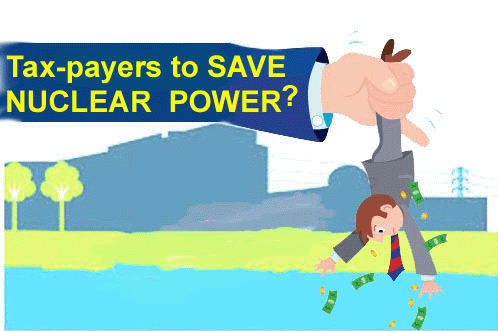
Hinkley C’s £6bn cost hike tests UK’s nuclear resolve. A further £6 billion
cost increase at Hinkley Point C will test the government’s commitment to
funding future large-scale nuclear projects, according to energy industry
experts.
The figure was revealed alongside EDF’s accounts last week, with
construction of the 3.2GW power plant now estimated to cost as much as
£32.7 billion. That is a £6 billion increase on the revised construction
price set last year and is almost double the £18 billion figure set in 2016
when EDF first started work on the project.
The latest cost hike has been
attributed to rising inflation, however engineering problems and complex
ground conditions have previously pushed the cost up, as well as a £500
million cost increase due to Covid-19 and pandemic-related working
restrictions.
Utility Week 21st Feb 2023
https://utilityweek.co.uk/hinkley-cs-6bn-cost-hike-tests-uks-nuclear-resolve/
USA’s Inflation Reduction Act is a game-changer for the nuclear industry -says Public Service Enterprise Group
PSEG to consider nuclear plant investments, capitalizing on the IRA’s production tax credits, CEO says
Utility Dive, Feb. 22, 2023, Stephen Singer
Dive Brief:
- Public Service Enterprise Group will consider “small but important value-added investments” at its nuclear plants, capitalizing on production tax credits in the Inflation Reduction Act, President and CEO Ralph LaRossa said Tuesday…………………
Dive Insight:
The passage of the IRA last August will “help to preserve the financial viability of our carbon-free nuclear fleet into the next decade,” the Newark, New Jersey-based parent company of Public Service Electric and Gas said in a statement.
“While the industry waits for clarifications, we believe the Inflation Reduction Act is a game-changer that should provide the stability required for long-term viability of the U.S. nuclear fleet,” LaRossa said.
Guggenheim analyst Shahriar Pourreza said in a client note Tuesday that “longer term upsides for nuclear” could come from U.S. Treasury Department guidance on production tax credits. Guidance will take time and “further drive strategic decision-making,” he said……….
Daniel Cregg, executive vice president and chief financial officer, said PSEG is engaged in a “waiting game” as the Treasury Department provides details on the nuclear production tax credits. “I don’t even have a date to tell you when Treasury is going to come out with it,” he told analysts.
The IRA, with $369 billion in climate provisions, provides tax credits for existing nuclear power plants and new facilities, advanced reactors and small modular reactors. The law provides a choice between a technology-neutral production tax credit of $25/MWh for the first 10 years of plant operation or a 30% investment tax credit on new zero-carbon power plants that begin operating in 2025 or later.
Tax credits have drawn interest from other energy companies. Constellation announced Tuesday it will spend $800 million for new equipment to increase the output of two nuclear generating stations in Illinois by about 135 MW.
“Support for nuclear in the IRA has made extending the lives of U.S. nuclear assets to 80 years more likely assuming continued support,” Constellation said. “It has caused Constellation to examine nuclear uprate opportunities that were canceled a decade ago due to market forces.”
LaRossa reiterated PSEG’s decision to exit offshore wind generation………… -more https://www.utilitydive.com/news/pseg-ira-nuclear-production-tax-credits/643221/—
Financial disaster looms for France’s nuclear corporation EDF
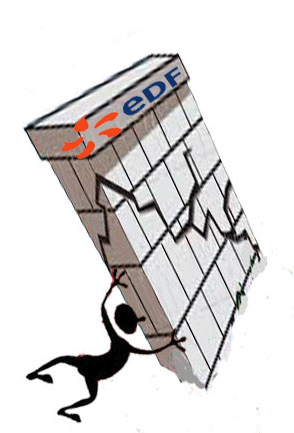
EDF reported one of the biggest losses in French corporate history on
Friday, February 17, as fallout from the Ukraine war and idling nuclear
reactors spelled financial disaster for the state-controlled utility.
EDF struggled with a drop in electricity output last year as it had to close
several of France’s 56 nuclear reactors to fix corrosion problems while a
heatwave led to a diminution of hydro-power production.
While 2022 revenue rose 70% to €143.5 billion, EDF reported a record loss of €17.9 billion
which compared with a net profit of €5.1 billion in 2021. After Russia’s
invasion of Ukraine sent energy prices skyrocketing, the government
required EDF to sell energy under cost to consumers to help them afford
their bills.
Le Monde 17th Feb 2023
Spiralling cost of Hinkley Point C nuclear station
Cost of Hinkley Point nuclear plant backed by France, China spirals to
US$38.5 billion. EDF and its partner in the project, China General Nuclear
Power, will be asked to provide additional funding, but it’s unlikely the
Chinese will agree.
EDF saidElectricite de France said the cost of building
its flagship Hinkley Point C nuclear power station in the UK is set to
spiral further to £32 billion (US$38.5 billion). Higher levels of
inflation have pushed up the estimated spend on the plant, the French
energy giant said in a presentation published alongside its annual results.
The revised estimate is the latest indication of surging costs after the
start of plant was delayed last year. In May, EDF raised the price tag to
build the two reactors at Hinkley to £25 billion (US$30 billion) and £26
billion (US$31 billion).
South China Morning Post 18th Feb 2023
Rolls Royce’s financial problems, as it plans to make small nuclear reactors for the British government.

Rolls is complex: it can’t seem to decide whether it has three, four, or
five divisions. It has its fingers in too many pies.
Among its many projects: it makes engines for luxury yachts. It provides back-up power to
solar farms in the Atacama desert. It has built an enormous new jet engine
called the UltraFan at a cost of hundreds of millions of pounds, without
knowing which model of plane might actually use it (Rolls insists the tech
developed for Ultra Fan is already finding its way into existing engines).
Oh, and it has an arm that wants to build small modular nuclear reactors
(SMRs) for the British government — tech derived from the reactors it
makes for the Royal Navy.
So much for the diagnosis, but what can
Erginbilgic do to heal the patient? This week he is expected to announce
restructuring — though not job cuts, yet — and a strategic review. This
may stop short of selling off divisions, but could see Rolls seek out more
partners.
Times 19th Feb 2023
1 This Month
Chernobyl: The Lost Tapes – A good documentary on Chernobyl on SBS available On Demand for the next 3 weeks– https://www.sbs.com.au/ondemand/tv-program/chernobyl-the-lost-tapes/2352741955560

of the week–London Campaign for Nuclear Disarmament

Tell the Ukrainian Government to Drop Prosecution of Peace Activist Yurii Sheliazhenko
To see nuclear-related stories in greater depth and intensity – go to https://nuclearinformation.wordpress.com
-
Archives
- April 2026 (139)
- March 2026 (251)
- February 2026 (268)
- January 2026 (308)
- December 2025 (358)
- November 2025 (359)
- October 2025 (376)
- September 2025 (257)
- August 2025 (319)
- July 2025 (230)
- June 2025 (348)
- May 2025 (261)
-
Categories
- 1
- 1 NUCLEAR ISSUES
- business and costs
- climate change
- culture and arts
- ENERGY
- environment
- health
- history
- indigenous issues
- Legal
- marketing of nuclear
- media
- opposition to nuclear
- PERSONAL STORIES
- politics
- politics international
- Religion and ethics
- safety
- secrets,lies and civil liberties
- spinbuster
- technology
- Uranium
- wastes
- weapons and war
- Women
- 2 WORLD
- ACTION
- AFRICA
- Atrocities
- AUSTRALIA
- Christina's notes
- Christina's themes
- culture and arts
- Events
- Fuk 2022
- Fuk 2023
- Fukushima 2017
- Fukushima 2018
- fukushima 2019
- Fukushima 2020
- Fukushima 2021
- general
- global warming
- Humour (God we need it)
- Nuclear
- RARE EARTHS
- Reference
- resources – print
- Resources -audiovicual
- Weekly Newsletter
- World
- World Nuclear
- YouTube
-
RSS
Entries RSS
Comments RSS
 nuclear-news