The deceitfulness of the nuclear weapons industry -as it plays the jobs jobs jobs card

World-Ending Maneuvers? Inside the Nuclear-Weapons Lobby Today, TomDispatch, By Hekmat Aboukhater and William D. Hartung August 7, 2024
“……………………………………………………………………………Playing the Jobs Card
The argument of last resort for the Sentinel and similar questionable weapons programs is that they create well-paying jobs in key states and districts. Northrop Grumman has played the jobs card effectively with respect to the Sentinel, claiming it will create 10,000 jobs in its development phase alone, including about 2,250 in the state of Utah, where the hub for the program is located.
As a start, however, those 10,000 jobs will help a miniscule fraction of the 167-million-member American workforce. Moreover, Northrop Grumman claims facilities tied to the program will be set up in 32 states. If 2,250 of those jobs end up in Utah, that leaves 7,750 more jobs spread across 31 states — an average of about 250 jobs per state, essentially a rounding error compared to total employment in most localities.
Nor has Northrop Grumman provided any documentation for the number of jobs the Sentinel program will allegedly create. Journalist Taylor Barnes of ReThink Media was rebuffed in her efforts to get a copy of the agreement between Northrop Grumman and the state of Utah that reportedly indicates how many Sentinel-related jobs the company needs to create to get the full subsidy offered to put its primary facility in Utah.
A statement by a Utah official justifying that lack of transparency suggested Northrop Grumman was operating in “a competitive defense industry” and that revealing details of the agreement might somehow harm the company. But any modest financial harm Northrop Grumman might suffer, were those details revealed, pales in comparison with the immense risks and costs of the Sentinel program itself.
There are two major flaws in the jobs argument with respect to the future production of nuclear weapons. First, military spending should be based on security considerations, not pork-barrel politics. Second, as Heidi Peltier of the Costs of War Project has effectively demonstrated, virtually any other expenditure of funds currently devoted to Pentagon programs would create between 9% and 250% more jobs than weapons spending does. If Congress were instead to put such funds into addressing climate change, dealing with future disease epidemics, poverty, or homelessness — all serious threats to public safety — the American economy would gain hundreds of thousands of jobs. Choosing to fund those ICBMs instead is, in fact, a job killer, not a job creator……………………………… https://tomdispatch.com/world-ending-maneuvers/
Over two hundred jobs may be lost if Haverigg jail is displaced by nuclear dump
Whilst Nuclear Waste Services are keen to promote the number of jobs that might be created by the establishment of a Geological Disposal Facility in West Cumbria, there is less clarity when it comes to identifying the number of jobs that might be lost.
The GDF will be the final resting place for the UK’s current and future high-level nuclear waste. Investigations are underway to identify potential sites in either Mid or South Copeland in West Cumbria, and in Theddlethorpe in Lincolnshire. A GDF would require a surface receiving station of around 1 sq KM, to which regular nuclear waste shipments would be made prior to the waste being moved underground and then pushed out along deep tunnels beneath the seabed.
In Theddlethorpe, a specific site, a former gas terminal, has been identified as the potential hub for a receiving station, but this has so far not been the case in Copeland. One major constraint in the South Copeland Search Area is that it mostly comprises the Lake District National Park and the proposed Southern Boundary Extension which are rightly ‘excluded from consideration’. Consequently, any GDF development would have to be confined to small areas around Drigg, Haverigg and Millom, and for many months there has been speculation that one potential site by the coast might be the location of HMP Haverigg.
Mindful that a GDF would most likely mean the closure of the jail, NFLA Secretary Richard Outram sent several Freedom of Information requests to the Ministry of Justice exploring the impact of the closure of the prison in these circumstances. The NFLAs are particularly keen to identify how many local jobs could be lost, as well as ascertaining the impact on local contractors and suppliers engaged in business with HMP Haverigg. There is also the less quantifiable contribution made by prisoners carrying out work within the local community and the positive impact of the training and support provided by prison staff and support agencies in reducing recidivism and turning around the lives of inmates to enable them to reenter society.
On jobs, Ministry of Justice officials were unable to supply all of the information requested, but advised that they employ a total of 206 full-time (80%) and part-time (20%) staff, both operational (prison officers) and non-operational (ancillary roles). Of these over half, 110, reside in the local LL18 postal district. However this excludes the number of staff engaged at this prison who are employed by other agencies, such as the local and regional NHS, and it was surprising to learn that ‘there is no legal requirement for MoJ to collate data relating to contractors and suppliers that work at HMP Haverigg’ so it is impossible to make a determination as to the dependence of the local supply chain on business with the prison.
6th August 2024
Over two hundred jobs may be lost if Haverigg jail is displaced by nuclear dump
Whilst Nuclear Waste Services are keen to promote the number of jobs that might be created by the establishment of a Geological Disposal Facility in West Cumbria, there is less clarity when it comes to identifying the number of jobs that might be lost.
The GDF will be the final resting place for the UK’s current and future high-level nuclear waste. Investigations are underway to identify potential sites in either Mid or South Copeland in West Cumbria, and in Theddlethorpe in Lincolnshire. A GDF would require a surface receiving station of around 1 sq KM, to which regular nuclear waste shipments would be made prior to the waste being moved underground and then pushed out along deep tunnels beneath the seabed.
In Theddlethorpe, a specific site, a former gas terminal, has been identified as the potential hub for a receiving station, but this has so far not been the case in Copeland. One major constraint in the South Copeland Search Area is that it mostly comprises the Lake District National Park and the proposed Southern Boundary Extension which are rightly ‘excluded from consideration’. Consequently, any GDF development would have to be confined to small areas around Drigg, Haverigg and Millom, and for many months there has been speculation that one potential site by the coast might be the location of HMP Haverigg.
Mindful that a GDF would most likely mean the closure of the jail, NFLA Secretary Richard Outram sent several Freedom of Information requests to the Ministry of Justice exploring the impact of the closure of the prison in these circumstances. The NFLAs are particularly keen to identify how many local jobs could be lost, as well as ascertaining the impact on local contractors and suppliers engaged in business with HMP Haverigg. There is also the less quantifiable contribution made by prisoners carrying out work within the local community and the positive impact of the training and support provided by prison staff and support agencies in reducing recidivism and turning around the lives of inmates to enable them to reenter society.
On jobs, Ministry of Justice officials were unable to supply all of the information requested, but advised that they employ a total of 206 full-time (80%) and part-time (20%) staff, both operational (prison officers) and non-operational (ancillary roles). Of these over half, 110, reside in the local LL18 postal district. However this excludes the number of staff engaged at this prison who are employed by other agencies, such as the local and regional NHS, and it was surprising to learn that ‘there is no legal requirement for MoJ to collate data relating to contractors and suppliers that work at HMP Haverigg’ so it is impossible to make a determination as to the dependence of the local supply chain on business with the prison.
On rates of recidivism, Ministry officials did not supply any specifics for the prison but instead referenced the latest national available statistics[i]. However, in a report which followed an unscheduled prison visit by inspectors in May 2021, it was recognised by HM Chief Inspector Charlie Taylor that Haverigg, in providing specialist accommodation and rehabilitation to older male sex offenders, ‘is fast becoming a very capable establishment and is progressing to a point where it soon may well be one of the better open prisons in the estate.’ It was notable that ‘All eligible prisoners had some form of purposeful activity…The employment hub was a particularly helpful service for prisoners’ and that ‘Prisoners benefited from a high standard of technical training. They developed significant new skills, knowledge and behaviours through vocational training.’[ii]
UK Government advice on the prison record that: ‘All prisoners work or train full time at Haverigg. Training and learning opportunities are focused on skills gaps in the job market and designed to improve prisoners’ chances of getting work on release. Professions include timber manufacturing, building, plastering, plumbing, industrial cleaning and agriculture. Prisoners can also train and work towards qualifications in the leisure industry through the gym’.[iii]
On community activities, Ministry officials advised that prisoners are engaged in litter picking and landscaping which has ‘received positive feedback from various community members for their impact on the local area’. The prison also holds a weekly market in Millom to promote the products made by HMP Haverigg, which has ‘significantly contributed to fostering strong relationships between the prison and the community’. Additionally, prisoners also support the local churches by maintaining church yards.
Lemon socialism? – Rolls Royce might like to gracefully get out of Small Nuclear Reactors (SMRs)?

Lemon socialism is a pejorative term for a form of government intervention in which government subsidies go to weak or failing firms (lemons; see Lemon law), with the effective result that the government (and thus the taxpayer) absorbs part or all of the recipient’s losses.[1][2] The term derives from the conception that in socialism the government may nationalize a company in its entirety, while in lemon socialism the company is allowed to keep its profits but its losses are shifted to the taxpayer. – Wikipedia.

Many sources I had found online over the past half year said Rolls Royce (RR) SMR would be going down soon – because they’d be out of cash before the end of 2024.
This last ditch effort at fundraising appears to be futile.
Because private money (as opposed to public money) looks at the balance sheet….assets vs. liabilities.
A free open competitive energy marketplace will definitely kill SMRs. Even the UK gov’t won’t buy their SMR – so, RR is losing their “Lemon Socialism” card. (Ralph Nader uses that term to describe nuclear power) Oh well, Rolls Royce has many other engineering ventures … which they are very successful at.
This SMR thing could distract from, and draw funds from, those.
A DUBIOUS PROSPECT? Rolls-Royce looks to sell stake in small nuclear reactor business.

I will be following this U.K. story. Similar to here in Canada, the SMR proponents in Europe (in the U.K. the frontrunner is Rolls-Royce) are struggling to find private capital to develop their designs. The big nuclear industry extravaganza in Brussels in March (organized by the IAEA nuclear-boosters) was a flop, with investment bankers telling the SMR companies they lack a business case and need to look for government (taxpayer) dollars.
In Canada, the only SMR design to receive significant government funding is the BWRX-300 project at Darlington, which received $970 million in a “low-interest loan” from the Canada Investment Bank (CIB) shortly after the CIB had its operating scope changed which then allowed it to give money to nuclear companies. Politics. Scam. Anyway, the two designs planned for here in New Brunswick (ARC-100 and Moltex SSR + WATSS) last year said they will each need $500 million to develop their designs, and after six years of looking for it, they have come up with only a fraction of that. To be continued…
By: Guy Taylor, CITY AM, https://www.cityam.com/rolls-royce-looks-to-sell-stake-in-small-nuclear-reactor-business/ 5 Aug 24
Rolls-Royce is preparing to sell off a stake in its mini-nuclear power business as it looks to raise fresh funding.
Chief executive Tufan Erginbilgic said the firm was in discussion with possible investors, with cash set to run out by early next year, The Sunday Telegraph reported.
One source familiar with discussions told the paper that the FTSE 100 giant was looking to raise hundreds of millions pounds.
Some £280m has already been pumped into the operation by its current backers, which include the Qatar Investment Authority and BNF Resources. A further £210m government grant was also announced by the former Conservative government in November 2021.
The company is being advised by bankers at BNP Paribas and is understood to have received approaches from “across the board,” including infrastructure investors, clean energy funds, hedge funds and other nuclear power companies, the report said.
It comes as Rolls-Royce closes in on winning a government tender, led by Great British Nuclear (GBN), to develop so-called Small Modular Reactors, which are essentially scaled-down versions of nuclear power plants. GBN will pick two designs from a host of competitors including Rolls, GE Hitachi, Holtec Britain, Nuscale and Westinghouse.
Asked about the funding situation, Erginbilgic told The Sunday Telegraph he was “very comfortable”.
“I won’t go into specific deals. But obviously our SMR is an attractive proposition and it’s got a great future and some investors potentially recognise that,” he said.
A spokesman for Rolls-Royce SMR added: “Our first mover advantage, combined with the significant growth in demand for small modular reactors, puts Rolls-Royce SMR in a leading position to capitalise on this global decarbonisation opportunity.
“Naturally, this is attracting investor interest and we continue to consider a range of options to support our future growth.”
Rolls-Royce to sell stake in mini-nukes arm.

Engineering giant seeks fresh funds as backers’ £280m and government’s £210m due to run out.
Rolls-Royce is poised to sell a stake in its mini-nuclear power stations
venture as it races to become the first company to deploy the technology in
Britain. Tufan Erginbilgic, the chief executive of the FTSE 100 engineering
giant, said it was talking to potential investors about its small modular
reactor (SMR) business as it looks to raise fresh funding.
Around £280m has
been put into the venture by the current backers including Rolls, BNF
Resources, Constellation and the Qatar Investment Authority. On top of
this, the company has received £210m in grant funding from the Government.
But funds are due to run out by early next year, meaning Rolls and its
fellow backers must either put in more money, sell equity to outside
investors or potentially do a combination of both. One source familiar with
the discussions said Rolls-Royce SMR would look to raise hundreds of
millions of pounds, probably based on a valuation of at least $2bn (£1.6bn)
– the current market value of US rival NuScale.
Interest in the business
has grown since Rolls emerged as the unofficial frontrunner in the
Government’s SMR design competition, which is being run by Great British
Nuclear (GBN) and is expected to conclude in late autumn. The GBN
competition is expected to select two viable designs before awarding them
contracts next year to build the first demonstrator SMRs at as-yet-unnamed
sites. They would be expected to come online in the early 2030s. Along with
Rolls, the other contenders are GE Hitachi Nuclear Energy, Westinghouse,
Holtec Britain and NuScale. However, Rolls has also advanced further
towards regulatory approval than any other SMR developer so far.
Telegraph 3rd Aug 2024
https://www.telegraph.co.uk/business/2024/08/03/rolls-royce-sell-stake-mini-nukes-arm/
Rolls Royce – the “burning platform”?

There aren’t many obvious similarities between Rachel Reeves and Tufan
Erginbilgic, but the use of the “burning platform” metaphor is
something that binds them. For Erginbilgic’s actual use of the phrase to
describe Rolls-Royce soon after he became chief executive 19 months ago,
read the chancellor of the exchequer’s discovery this week of a “£22
billion black hole” in the public finances.
Times 1st Aug 2024
https://www.thetimes.com/article/rolls-royce-growth-needed-by-rachel-reeves-98sw9l952
Government partnership is needed if Dutch pension fund PME is to make “risky” nuclear investment.

Dutch pension fund PME keen for nuclear power investments
European Pensions , By Natalie Tuck, 30/07/24
The Dutch pension fund PME is keen to invest in nuclear investment but this must be in partnership with the Dutch government, due to it being such a “risky investment”.
The pension fund, for those working in the tech and metal industry, has published a position paper on investing in nuclear energy in the wake of the publication of the Dutch National Energy System Plan, which looks to scale up the use of nuclear energy in the Netherlands………………………….
Making the case for nuclear energy, PME said the “manageable disadvantage” of radioactive waste and the high level of safety of nuclear power plants weigh into PME’s positive view of nuclear energy as a stable addition to the energy mix……………
When it comes to financing, PME said the “high cost of construction and the long duration of construction make nuclear power plants a very risky investment”.
The paper continued: “Financing nuclear power plants requires a leading role of the state, which will have to assume a significant part of the risk in all phases of the nuclear power plant’s life. Security of return is a basic requirement for PME so that funding also contributes to participants’ pension accrual and pensioners.
“The construction of nuclear power plants takes a very long time and is very costly. It is precisely for these reasons that risk-return requirements are paramount in any financing of nuclear power.”
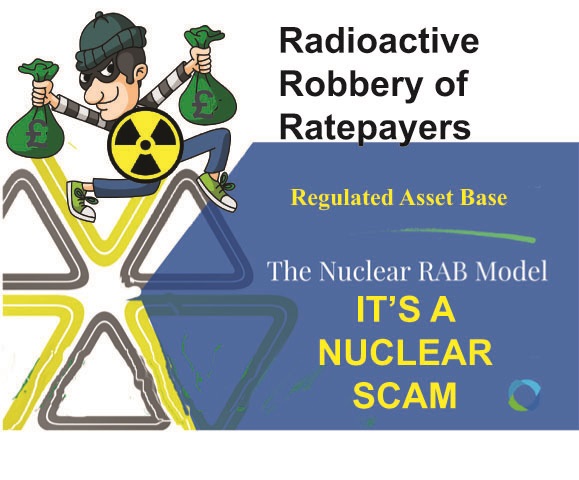
It therefore advocates for the use of a Regulated Asset Base (RAB) model to finance the construction of nuclear power plants. In this model, private parties bear the investment, and receive a fixed ‘fair return’ (the RAB fee) from the start of construction.In the RAB model, at each stage, the primary risk is shared between the state and the financing market party or parties.
……………………….“In addition to the quantitative participant survey, PME holds focus groups with participants, retirees and employers. PME also organises retiree meetings where the topic of nuclear energy was discussed recently. The basic attitude toward nuclear energy is almost always positive among the majority of constituents. However, there are concerns about the yield, the risks, the safety of nuclear power plants and the problem of radioactive waste,” PME stated. https://www.europeanpensions.net/ep/Dutch-pension-fund-PME-keen-for-nuclear-power-investments.php
Point Lepreau nuclear station – a heavy financial burden that keeps getting heavier.
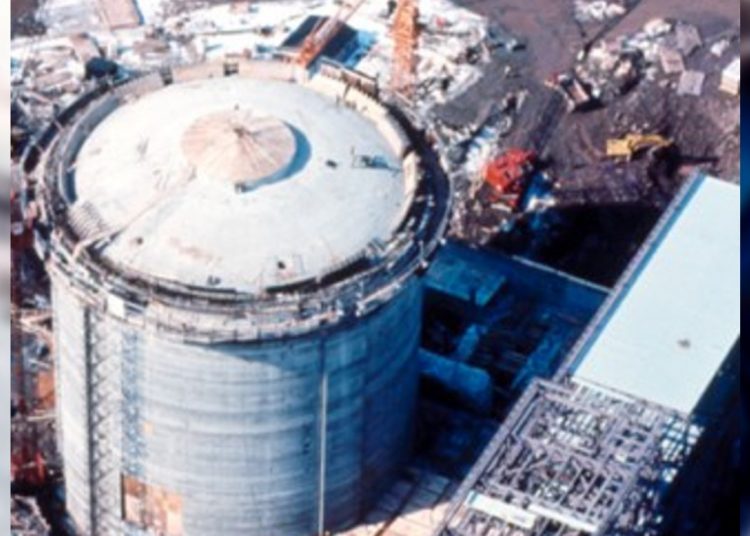
Point Lepreau has become a heavy financial burden
the station will remain at risk of unplanned outages because of aging equipment.
NB Power’s latest financial plan forecasts its debt will continue to grow. In the utility’s base case model, debt will keep rising for the rest of this decade, reaching nearly $6.3-billion by 2029. It keeps rising even in more optimistic scenarios.
Point Lepreau station is among North America’s worst-performing nuclear power plants. Can New Brunswick Power turn it around?
Globe and Mail, MATTHEW MCCLEARN , July 29, 2024
In the early hours of Dec. 14, 2022, New Brunswick’s Point Lepreau Nuclear Generating Station lost power after an electrical fault. Just hours later, at 4:40 a.m., an alarm sounded: The plant had suffered a small coolant leak and NB Power, the facility’s owner, detected radioactivity. The station was locked down to prevent that radioactivity from escaping, and an emergency response team was readied.
Somehow, two unrelated pieces of equipment had failed simultaneously, touching off a costly and time-consuming recovery. Workers needed to bring the reactor to a guaranteed shutdown state. They had to regain entry to the reactor building and decontaminate it. And they needed to find the leak and stop it. The station would remain out of service for 42 days.
This outage was just one of several in recent years that, in combination, point to severe reliability problems at Atlantic Canada’s only nuclear power plant. The latest, which was planned to end after 100 days on July 12 and cost more than $100-million, included installing a new 9,000-horsepower primary heat transport pump and motor, which moves heat generated by the reactor to the station’s steam generators.
But NB Power spokesperson Dominique Couture said workers discovered a problem with the station’s main generator, which provides electricity to the province’s grid. At a rate hearing before the New Brunswick Energy and Utilities Board, company officials said the plant is expected to remain offline until at least September. And the station will remain at risk of unplanned outages because of aging equipment.
It will be many years before we have put those risks behind us,” said Jason Nouwens, the station’s director of regulatory and external affairs.
Point Lepreau is one of North America’s worst-performing nuclear stations. Intending to keep it running until at least 2039, NB Power has struggled unsuccessfully for the past several years to rehabilitate the station and expects to spend hundreds of millions of dollars more on it in the next few years.
The utility is not too proud to ask for help: It wants Ontario Power Generation to effectively incorporate the plant into OPG’s large fleet of Candu reactors. Key senior leadership positions at the station are now held by OPG employees.
But there’s no guarantee OPG will agree to take over the stricken station on favourable terms, or at all. And it’s not clear NB Power can afford the steep repair bill.
New Brunswick’s dilemma points to challenges that other provinces, such as Alberta and Saskatchewan, should consider as they look to build new reactors………………………………………………………………………….
According to NB Power, Point Lepreau has roughly 115,000 components. The December, 2022, outage illustrated how the failure of just one of them, however inconsequential it may seem, can knock it out. The culprit for the water leak turned out to be a crack in a small instrument line near the reactor core, about the diameter of a finger. This line had been deemed necessary for the plant’s commissioning more than 40 years earlier, but was useless thereafter.
NB Power concluded that when the station lost power, other systems fired up that increased vibration throughout the plant. “This was essentially the final straw that propagated the crack to a failure point,” Mr. Nouwens explained to the federal safety regulator during a hearing after the incident. “It had been coming for some time.”
Outages are expensive. Point Lepreau’s 900 workers must be paid regardless of how much electricity the plant generates. Each day it’s out of service, NB Power also incurs hundreds of thousands of dollars in overtime costs.
NB Power must purchase energy to cover the shortfall as well, at an average cost of $900,000 a day.
Repeated outages have forced NB Power to divert capital to the station. This thwarted efforts to repay debts, most of which were incurred at Point Lepreau. This year’s extended outage also forced the utility to delay work at other power plants…………………………………………………………………..
NB Power’s latest financial plan forecasts its debt will continue to grow. In the utility’s base case model, debt will keep rising for the rest of this decade, reaching nearly $6.3-billion by 2029. It keeps rising even in more optimistic scenarios.
Heeding nuclear’s siren song
When Point Lepreau was still being planned, some experts doubted how suitable nuclear power was for a small province. Andrew Secord, an economics professor at St. Thomas University, found a March, 1972, memo by Myles Foster, an official at the federal Finance Department, that said that NB Power’s decision to go nuclear was “the equivalent of a Volkswagen family acquiring a Cadillac as a second car.”
Since then, Point Lepreau has become a heavy financial burden. At various times, the province has considered shuttering it or selling it. Ultimately, though, NB Power’s board of directors decided in 2005 to double down and extend the station’s life.
Refurbishments compel utilities to make crucial decisions about which equipment to replace, and what to keep. Pressure tubes, the Candu’s main life-limiting components, are a given, but many other components must be carefully assessed. Misjudgments can be costly.
Point Lepreau’s refurbishment began in March, 2008, and was scheduled to wrap up by October, 2009, at an expected cost of $845-million. According to a 2002 NB Power document, even if all two dozen of the worst disasters the utility could envision came to pass – everything from delays to strikes to unexpected additional work – it would add up to a combined maximum overrun of $623-million.
But things went worse – far worse – than NB Power imagined possible. It called in OPG to assist. The reactor finally returned to service in November, 2012, three years late and massively over budget.
Even this might have been salvageable had the plant operated reliably thereafter. NB Power was counting on Point Lepreau reaching a capacity factor of 89 per cent. Instead, NB Power found itself playing a game of Whac-A-Mole with recurring maintenance issues…………………………
NB Power has acknowledged that while the 2008-12 refurbishment focused on the reactor itself, equipment in the rest of the plant – sometimes referred to as the “conventional” side – typically was not replaced. Some of that equipment, such as the problematic generator that recently delayed the station’s return to service, is now breaking down. The utility made bad calls and is now paying a terrible price.
Recovery plan
NB Power is now drawing up a recovery plan for its ailing station, which features greatly increased maintenance spending: more than $87-million in 2025, tapering off thereafter.
But according to ScottMadden, this likely won’t suffice. Spending less than $80-million a year is “slightly more likely than not to result in performance declines,” whereas spending $100-million to $120-million is expected to deliver “the highest marginal returns in expected improvements.” Under current plans, ScottMadden warned, Point Lepreau’s performance will likely decline again beginning in 2030.
OPG sent a delegation to the stricken station last year to assess its condition, examine maintenance plans and interview NB Power employees. Last September, the utilities signed a three-year agreement under which OPG has seconded staff to the Point Lepreau station. NB Power says it has received support from OPG’s chief nuclear officer, a vice-president who’d supervised refurbishments and outages, and a chief nuclear projects officer.
OPG and NB Power are now in talks that might lead to Point Lepreau becoming part of OPG’s reactor fleet. At a hearing before the New Brunswick Energy and Utilities Board in June, Ms. Clark said OPG would likely assume majority ownership and would bring “some capital to the table to help with some of the investments that are required in the station over the longer term.”
She added, however, that given the difficulty of reaching “even general agreement on things,” a deal likely wouldn’t be reached before late 2025.
Even as NB Power officials struggle to fix Point Lepreau, they continue to offer their services to provinces such as Alberta and Saskatchewan, which possess little prior experience with nuclear technology. At an industry conference in Calgary in April, officials offered to help such provinces evaluate new reactor technologies and work with regulators…………..
They did not share any sense of the pitfalls of nuclear power – a topic for which NB Power has unfortunately gained formidable expertise. https://www.theglobeandmail.com/business/article-point-lepreau-station-is-among-north-americas-worst-performing-nuclear/
A $36.8 billion lesson from Georgia- “The most expensive electricity in the world”

In May, the plaintiffs along with four other prominent Georgia consumer groups released a report, Plant Vogtle: The True Cost of Nuclear Power in the United States. The analysis detailed how the U.S. Department of Energy, Georgia Power, and the Georgia Public Service Commission (PSC), conspired to force Georgians into purchasing the most expensive electricity in the world, costing ratepayers $10,784 per kilowatt, compared to $900 to $1,500 per kilowatt (KW) for wind or solar. Recent Georgia Power electricity bills have shown the bill increase to be in the 30-40% range.
Again and again, the Georgia Public Service Commission (PSC) was warned about the astronomical cost of the Vogtle reactors and the financial toll it will bear on Georgians for decades to come.
Ratepayers beware. New nuclear power plants will gouge customers
From Georgia Conservation Voters Education Fund and Georgia WAND
Georgia consumer groups have filed a major lawsuit against the State of Georgia [AF1] in federal court, alleging Georgia lawmakers violated the state’s constitution by unilaterally postponing Georgia Public Service Commission (PSC) elections. According to the lawsuit, the PSC election’s unlawful postponement allowed the sitting commission members to rubberstamp the largest utility rate increases in Georgia history and grant utility companies the authority to charge Georgians for cost-overruns and mishaps. The groups argue that the charges may not have been passed onto consumers if elections were held as regularly scheduled.
House Bill 1312, which Georgia legislators passed in April, delays the election of new PSC members until at least 2025, giving multiple sitting PSC members an extra two years in office. Georgia’s constitution requires that PSC terms shall be six years, and therefore cannot be lengthened without a constitutional amendment. All PSC members have had their office terms extended to eight years, and one nine years as a result.
…………………………………….Brionté McCorkle, plaintiff and executive director of Georgia Conservation Voters Education Fund, said: “Georgians are fighting every month to stay ahead of rising costs for food, housing, and now energy. These aren’t optional costs. They’re things we need to survive. Public Service Commissioners like Tricia Pridemore, Fitz Johnson, and Tim Echols have allowed Georgia Power to take money out of the pockets of hard-working Georgians – and it has to end.”
In May, the plaintiffs along with four other prominent Georgia consumer groups released a report, Plant Vogtle: The True Cost of Nuclear Power in the United States. The analysis detailed how the U.S. Department of Energy, Georgia Power, and the Georgia Public Service Commission (PSC), conspired to force Georgians into purchasing the most expensive electricity in the world, costing ratepayers $10,784 per kilowatt, compared to $900 to $1,500 per kilowatt (KW) for wind or solar. Recent Georgia Power electricity bills have shown the bill increase to be in the 30-40% range.
Additional Key findings in the May Vogtle report included:
- Plant Vogtle allowed Georgia Power to expand its rate base, the assets on which they earn a guaranteed rate of return, by over $11 billion. Yet their share of Vogtle is 1,020 megawatts, making it the most expensive electricity in the world at $10,784/KW. Normal (wind, solar, natural gas) generation prices range from $900 to $1500/KW.
- Vogtle Units 3 & 4 took 15 years to build and cost $36.8 billion, well over twice the projected timeline and cost.
- Vogtle independent construction monitors documented that Georgia Power provided materially false cost estimates for at least ten years, falsehoods used to justify expanding Plant Vogtle. Similar false cost estimates sent South Carolina utility executives to jail for that state’s failed nuclear plant, which started construction at the same time as Plant Vogtle.
Patty Durand, consumer advocate, founder of Cool Planet Solutions and a recent candidate for the Georgia PSC, said:
“Again and again, the Georgia Public Service Commission (PSC) was warned about the astronomical cost of the Vogtle reactors and the financial toll it will bear on Georgians for decades to come. Commissioners repeatedly declined to protect ratepayers from cost overruns and ignored PSC staff recommendations to cancel the project. People went to prison for actions like this in South Carolina, yet we have had no accountability for the same, and worse, behavior here. Instead, the state legislature decided to shield current commissioners from facing voters by delaying PSC elections indefinitely. This is clearly unconstitutional. This is un-American.” https://beyondnuclearinternational.org/2024/07/28/a-36-8-billion-lesson-from-georgia/
French nuclear giant ORANO slips into the red following Niger-French breakup
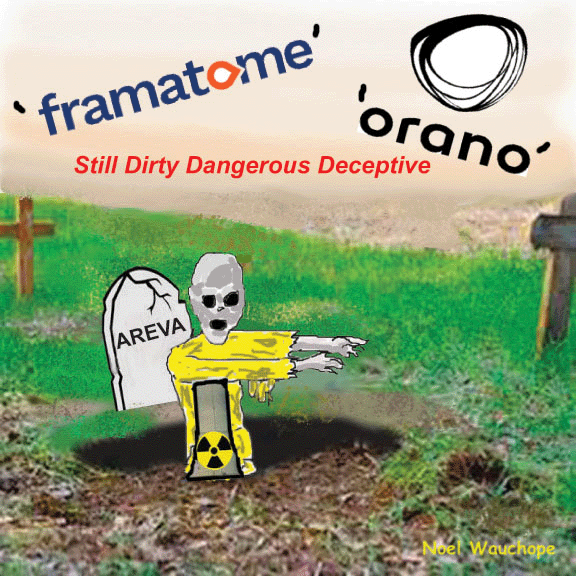
French nuclear giant Orano ended the first half of the year with a loss of €133 million, weighed down by difficulties in its mining activities in Niger due to a “highly degraded” political context since a military regime came to power a year ago.
Radio Free Europe: 29/07/2024 –
At the end of June 2024, the group noted “the deteriorated situation affecting mining operations in Niger,” Orano’s chief financial officer, David Claverie, said in a statement.
The coup d’état in Niger on 26 July last year led to a halt in imports of critical materials necessary for uranium exploitation in Orano’s Somaïr mine, such as soda ash, carbonate, nitrates and sulphur.
And although uranium extraction continued in the first quarter of 2024 “after several months of early maintenance,” Somaïr’s sales were unable to resume “due to a lack of logistics solutions approved by the Niger authorities”.
The blockage led the mine into “financial difficulty … weighing on its ability to continue its operations”, the statement read.
In late June, Niger decided to withdraw the licence of Imouraren SA, a company jointly operated by Orano, Niger Mining and Korea Electric Power, and which ran the Somaïr mine.
The situation could eventually lead to “insolvency in the short to medium term, in the coming months”, Claverie said……………………………… https://www.rfi.fr/en/international/20240729-french-nuclear-giant-slips-into-the-red-following-niger-french-breakup
EDF looks towards future projects after flagging tough second half
French energy giant EDF aims to meet its schedule for future nuclear
reactor projects, its CEO said on Friday, with final tests ahead of the
start-up of its newest French reactor imminent after years of delays. The
group earlier reported a jump in first-half profit on higher electricity
production, but said regional market prices had fallen and warned core
earnings in the second half would decline year-on-year.
In Britain, EDF is continuing talks with the newly elected Labour government over its Hinkley
Point C and Sizewell C nuclear projects, Remont told reporters, adding it
is “a bit early” to give a date for a final investment decision on
Sizewell.
Reuters 26th July 2024
Spain: Nuclear Industry Reels After Tax Increase
Energy Intelligence Group, Fri, Jul 26, 2024, Author, Grace Symes, London, Editor, Phil Chaffee
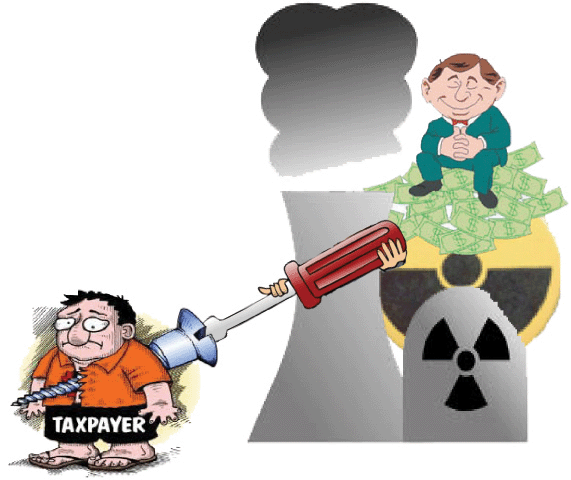
Spain’s nuclear operators are warning that last month’s move by Madrid to significantly raise a tax on these utilities may undermine the commercial viability of Spain’s seven operating reactors, even as they approach a government-mandated nuclear phaseout by 2035.
\The 30% tax rise is meant partly to cover the costs of seven separate interim nuclear waste storage facilities for spent fuel and high-level waste, a strategy mandated after the government discarded plans for a controversial single centralized facility. Owners argue they had no say in the storage decision, and should not be required to pay the significant added costs it will entail…………… (Subscribers only) https://www.energyintel.com/00000190-bb7f-db32-ad93-bb7ff87a0000
‘ Regulated Asset Base’ system mulled in Japan to add nuke plant construction costs to rates
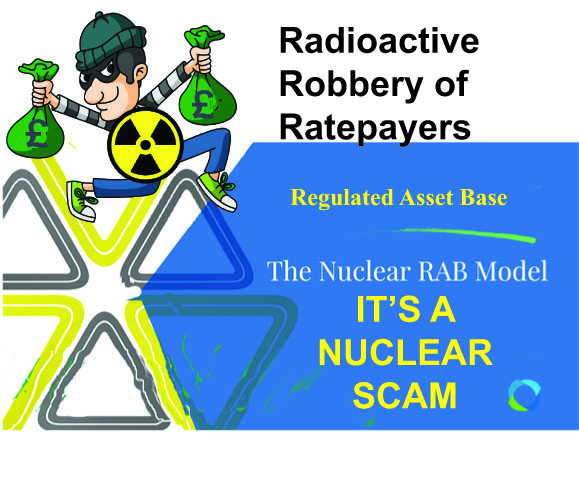
THE ASAHI SHIMBUN, by Chinami Tajika and Aki Fukuyama. July 24, 2024, https://www.asahi.com/ajw/articles/15359689
The Finance Ministry is considering introducing a system that would allow construction costs of new nuclear power plants to be added to electricity rates, which could be passed onto consumers.
By doing so, the ministry aims to promote the construction of new nuclear plants.
Electric power companies are reluctant to invest in nuclear plants because the cost of safety measures is ballooning due to the 2011 disaster in Fukushima, and they no longer have the means to ensure recouping construction costs.
The central government has said that it will increase decarbonized power sources to prepare for future increases in demand, but that could lead to a major increase in the burden on the public.
According to sources, the “RAB model,” a nuclear plant support measure devised in Britain, will be used as a reference.
When construction of a nuclear plant is approved by the government, the construction and maintenance costs are borne by the retail electricity company once construction has begun. The cost will be recovered through a hike in electricity rates.
Under the model, any increase in construction costs can be included in the fee if the cost is deemed necessary. If the project is suspended, the government will compensate by providing funds.
If the system is introduced directly to Japan, it will be up to retail companies, including new power companies, to decide whether to pass the charge directly to customers.
However, even those who opt for a 100 percent renewable electricity supply may pay for the construction of a nuclear power plant.
In the past, there was a mechanism to ensure that the construction costs of power plants and transmission and distribution networks could be recovered by factoring them into electricity prices.
But with the deregulation of the electric power industry that began in 2000, this system was gradually eliminated, and power plants that were not cost-effective were closed and investment in new power plants was suppressed.
Elon Musk attends Netanyahu’s congressional address as his guest

A day after activating Starlink internet in Gaza, Tesla CEO appears at Israeli PM’s controversial joint session
Nick Robins-Early, Thu 25 Jul 2024
Elon Musk attended Benjamin Netanyahu’s address to Congress on Wednesday as a guest of the embattled Israeli prime minister.
A day earlier, the tech billionaire announced that his Starlink internet service was now active in a Gaza hospital, with the support of Israel’s government.
Netanyahu’s congressional visit was met with thousands of protesters gathering near Capitol Hill to demonstrate against Israeli abuses during its war in Gaza. Lawmakers were divided over whether he should have been invited to speak.
Musk has a history of courting rightwing leaders in countries that have overlapping business interests with his various enterprises. He previously hosted Javier Millei, Argentina’s president, at his Tesla factory and has been a cheerleader for his policies, while also cozying up to Narendra Modi, India’s prime minister, and Jair Bolsonaro, the former Brazilian president.
Musk previously met with Netanyahu during a visit to Israel last year, as the tech leader sought to quell accusations of antisemitism after personally endorsing a post on his social network X, formerly Twitter, that claimed Jews hate white people. Far-right content on the platform has also increased.
Musk’s visit also appears to have helped pave the way for SpaceX to provide its Starlink satellite internet to Gaza, which he announced on Tuesday was now in service at a hospital. The single location, which was supported by Israel and the United Arab Emirates, also reflects the tight controls that Israel has put on communications technology in the area.
In recent weeks, Musk has also thrown his support behind Donald Trump’s election campaign and played a direct role in advising the former president to select JD Vance, Ohio senator, as his running mate.
Although Musk has continued to post conservative content and attacks against the presumptive Democratic nominee Kamala Harris, he appears to have tempered some of his support for Trump following Joe Biden dropping out of the race. Musk pushed back against a report he was set to donate $45m per month to a pro-Trump political action committee.
Musk’s appearance as a guest of Netanyahu further aligns him with the Republican party line, which has thrown its support behind the Israeli leader as many Democrats condemn his actions. A number of progressive Democratic lawmakers declined to attend Netanyahu’s speech, with New York representative Alexandria Ocasio-Cortez denouncing him as a “war criminal.
A New Brunswick reaction to the exorbitant costs of Point Lepreau nuclear power station.
When the Point Lepreau Nuclear Generating Station was refurbished over three years and re-opened in 2012, NB Power did not complete a number of associated repairs, despite the lengthy time and high cost of the refurbishment.
As a result, the nuclear plant has experienced many problems since the refurbishment and has been performing poorly. Since 2023, the NB nuclear plant has been managed by Ontario Power Generation, three managers costing $2 Million per year, under a three-year contract. I’m unsure if these people actually live in New Brunswick and pay taxes here or if New Brunswick is sending the money directly to Ontario.
At the start of April, the Lepreau nuclear plant was shut down for a scheduled 100 days to do the associated upgrades/repairs that NB Power hopes will improve the performance. The cost of the repairs was estimated at more than $300 million including the replacement power for this year’s repairs and another scheduled repair session in 2025. The first repairs were scheduled to end last week but instead of starting up again, the engineers noted a major problem with the main generator. Note that most of these engineers and workers doing this scheduled upgrade / repair are from Ontario, so it’s unclear how much of this cash is staying in the province.
Today we learned that the repair to the generator will cost an extra $70 million and the plant is down at least till September, which they say is a best case scenario.
So, when all this is over, what can New Brunswickers expect? At the end of the story below is this kicker: “Even by 2030, NB Power still thinks the plant will be mired in the basement, performance wise.”
What a F*** disaster. It’s absolutely nuts that our small province with a population of only 800,000 people has a nuclear reactor. In addition to the nuclear waste and other problems the reactor creates, we can’t afford it and we do not have the capacity in-province to look after it!
1 This Month

26 September – International Day for the Total Elimination of Nuclear Weapons


PLEASE OPPOSE HR 8255 AND S.3639 – bills would accelerate satellite deployment, with no environmental review or safeguards – https://ncstd5li.quorum.us/campaign/169331/
To see nuclear-related stories in greater depth and intensity – go to https://nuclearinformation.wordpress.com
-
Archives
- September 2026 (199)
- August 2026 (330)
- July 2026 (355)
- June 2026 (287)
- May 2026 (306)
- April 2026 (356)
- March 2026 (251)
- February 2026 (267)
- January 2026 (308)
- December 2025 (358)
- November 2025 (359)
- October 2025 (375)
-
Categories
- 1
- 1 NUCLEAR ISSUES
- business and costs
- climate change
- culture and arts
- ENERGY
- environment
- health
- history
- indigenous issues
- Legal
- marketing of nuclear
- media
- opposition to nuclear
- PERSONAL STORIES
- politics
- politics international
- Religion and ethics
- safety
- secrets,lies and civil liberties
- spinbuster
- technology
- Uranium
- wastes
- weapons and war
- Women
- 2 WORLD
- ACTION
- AFRICA
- Atrocities
- AUSTRALIA
- Christina's notes
- Christina's themes
- culture and arts
- Events
- Fuk 2022
- Fuk 2023
- Fukushima 2017
- Fukushima 2018
- fukushima 2019
- Fukushima 2020
- Fukushima 2021
- general
- global warming
- Humour (God we need it)
- Nuclear
- RARE EARTHS
- Reference
- resources – print
- Resources -audiovicual
- Weekly Newsletter
- World
- World Nuclear
- YouTube
-
RSS
Entries RSS
Comments RSS
 nuclear-news