Former Mayor Rudy Giuliani the paid advertising man for nuclear plant
 Aging nuclear power plant near NYC hires Rudy Giuliani to do ad campaign vouching for safety, Washington Post, October 6, NEW YORK — The operator of an aging nuclear power plant near New York City has hired former Mayor Rudy Giuliani to vouch for its safety in a new ad campaign.
According to a spokesman for Entergy, the ads for the Indian Point plant will begin running next week on cable television and in newspapers.
The operator is seeking to renew its licenses for its two reactors.
Gov. Andrew Cuomo has called for the plant to be shut down due to safety concerns.
Entergy spokesman James Steets tells The New York Times the campaign is aimed to reassure the public about the plant’s safety. A spokesman for Giuliani’s consulting firm, Giuliani Partners, declined to comment.Giuliani has previously done promotional work for Indian Point. http://www.washingtonpost.com/business/industries/aging-nuclear-power-plant-near-nyc-hires-rudy-giuliani-to-do-ad-campaign-vouching-for-safety/2011/10/06/gIQAIyImPL_story.html
Down, down, into the abyss goes the uranium industry
 Over the last month, these companies have lost between 25 and 29 percent, and they have lost between 57 and 84 percent so far this year. These significant losses proliferate uranium miners and producers, as can be seen from the Global X Uranium ETF (URA), which tracks the Solactive Uranium Index and is down over 60% so far this year…..
An Abysmal Month For Uranium Producers Extends Their 2011 Pain, Seeking Alpha 4 Oct 11, The uranium industry is not what it used to be, nor are the share values of the uranium producers. This may well go down as the worst year for uranium in the modern era, even though several nuclear power experts continue to claim that uranium use is sensible and safe.
This first quarter of 2011 started off with Japanese nuclear concerns following the destruction caused by the earthquake and tsunami that hit the nation, and uranium prices entered a tailspin shortly thereafter. In the wake of tsunami, Germany opted to discontinue nuclear power plant development and reveal plans to eventually eliminate nuclear power as an energy source.
It also appears likely that Japan may be hesitant to build more nuclear power plants in the near future. For many years, Japan and Germany have been significant users of nuclear power. This perceived vacuum to demand weakened the price of uranium. It also weakened the shares of those companies that produce and/or provide uranium…..
In the third quarter, which just ended last week, uranium and its producers continued to drop along with the broader market, only mostly to a broader extent as the investment was deemed more and more speculative. Most uranium producers ended the third quarter at their 2011 lows.
Below are the 1-month, 3-month, 6-month, and 2011-to-date performance rates for several companies that mine and/or provide uranium for energy production: Continue reading
Rio Tinto, uranium miners, and nuclear colonialism
situation isn’t all rosy for the multinational, which has long faced allegations of widespread environmental destruction and labor and human rights abuses in Africa, Asia and even the U.S.
Foreign control of metals and other natural resources in African and other developing countries is increasingly seen as a new form of colonialism, wherein locals work for relatively low wages and often in grueling, repressive conditions for companies that take most of the profit from the resources and labor out of the country.
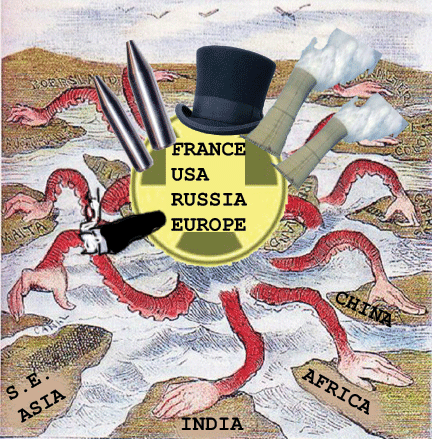
Namibian Uranium Miners vs. Rio Tinto, IN THESE TIMES, BY KARI LYDERSEN, OCT 3, 2011 Namibian union uranium miners on strike against international mining giant Rio Tinto alleged in late September that a week into the strike, the company was violating mutually agreed upon conditions of the strike by hiring nonunion workers at its Rossing uranium mine.
Rio Tinto says it is not hiring nonunion workers and is demanding written proof from the Namibian Miners Union.
Miners have demanded payments of $2,557 (USD) each to end the strike over union allegations of unfair bonus payments and other grievances. Rio Tinto has asked the country’s labor court to rule that the union’s complaints are not grounds for a strike. Continue reading
USA nuclear companies up against India’s Nuclear Liability Law
 India-U.S. Nuclear Growth May See More Delays, WSJ, By ERIC YEP MUMBAI – U.S.-based companies hoping to cash in on India’s plans to increase its number of nuclear reactors could face more delays despite the government’s efforts to bring the country’s liability rules for nuclear accidents in line with global norms.
U.S. companies had expected big contracts to flow from India’s nuclear expansion after a New Delhi-Washington agreement in 2005 and a subsequent waiver from the Nuclear Suppliers’ Group on the transfer of nuclear technology to India.
But last year India’s parliament passed a liability law making both equipment suppliers and reactor operators liable to accident compensation claims, stalling the entry of companies like GE Hitachi Nuclear Energy and Westinghouse Electric Co. Continue reading
Double digit share price falls for uranium mining companies
 Shares of Denison Mines and Uranium Resources Face Strong Downward Pressure, MarketWatch, NEW YORK, NY, Sep 30, 2011 (MARKETWIRE via COMTEX) –– Uranium stocks have struggled this month as prices for the radioactive material have plunged. According to the latest quarterly report by Resource Capital Research, uranium prices are down 27 per cent over the past three months and 23 per cent over the past year….
Nuclear industry winding down, just look at Flamanville
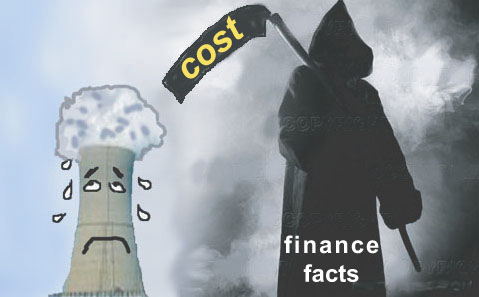 It has to be acknowledged that, irrespective of Fukushima, new nuclear build was never going to be plain sailing from a technical or financial standpoint.
Just ask EDF, the French state-controlled utility which is currently building the first new nuclear plant in that country for 15 years …
 Bailing out on nuclear, The Engineer, [UK] 30 September 2011 | By Andrew Czyzewski “………according to the International Atomic Energy Agency (IAEA) six developing countries interested in developing a civil nuclear programme have notified it that they have abandoned their plans….
It’s not only politicians and their subjects getting nervous though. Continue reading
Taiwan moves to increase the liability of nuclear operators
 the draft proposes that operators be responsible for natural disaster damage. The draft also raises the time in which an injured individual can seek compensation from nuclear power plant operators to 10 years from the current three years.
 Time for rigourous scrutiny of nuclear loan guarantee program
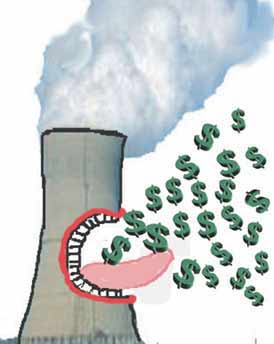 The nuclear industry successfully pushed to put reimbursement for private investors ahead of taxpayers in the event of a bankruptcy or liquidation….
“We should subject the nuclear loan-guarantee program to the same level of rigorous scrutiny as we are now insisting the solar loan-guarantee program undergo,”
Markey Calls for Scrutiny of Nuclear-Power Loan Guarantees, Bloomberg By Brian Wingfield – Sep 23, 2011 Congress should examine whether the U.S. nuclear industry pressed lawmakers and the Energy Department to alter loan-guarantee requirements for reactors, Representative Edward Markey said. Continue reading
UK’s nuclear power plan looking gloomy as utility pulls out
 SSE’s withdrawal from a major nuclear project in its home market casts a shadow over U.K. government plans to build a fleet of new nuclear reactors ……
Furthermore, public opinion has turned against nuclear power following the Fukushima disaster.
 SSE Pullout From UK Nuclear Casts A Pall Over Sector
-Scottish & Southern Energy selling stake in NuGen nuclear group to partners
–SSE move casts a shadow over U.K. government plans for new nuclear power in U.K.
–SSE to focus on renewables, gas-fired power stations and carbon capture and storage
–Analysts see the U.K. building less new nuclear than originally planned
WSJ, By Selina Williams 23 Sept 11 LONDON (Dow Jones)–U.K. utility Scottish andSouthern Energy PLC (SSE.LN) Friday exited a major new nuclear project in the U.K.,announcing it would sell its 25% stake in the NuGeneration Ltd. consortium topartners Iberdrola SA (IBE.MC) and GDF Suez SA (GSZ.FR) for an undisclosed sum. Continue reading
Nuclear energy got huge startup subsidies, renewable energy gets pittance
Early subsidies to nuclear dwarf all others
Energy subsidy showdown: Fossil fuels, nuclear, biofuels vs. renewables, Smart PlanetBy Kirsten Korosec | September 23, 2011 Renewable energy has snagged just a fraction of the federal subsidies that fossil fuels and nuclear received when they were emerging technologies, according to a new report from venture capital firm DBL Investors. Continue reading
Strike at Rio Tinto’s Rossing uranium mine
Strike at Rio Tinto’s Rossing mine, IOL, September 23 2011 Workers at Rio Tinto’s Rossing mine in Namibia on Friday started an indefinite strike at the uranium mine after rejecting management’s latest offer that was meant to settle a dispute over production incentives, a union official said.
“Workers have shot down the management offer. The strike has started as planned at 0800 (10:00 SA time) this morning,” Mineworkers Union of Namibia Rossing branch representative Ismael Kasuto told Reuters. – http://www.iol.co.za/business/international/strike-at-rio-tinto-s-rossing-mine-1.1143719
Florida’s nuclear power project – long delay, skyrocketing costs
 the online date, if the reactors ever even come online, has bumped back to 2021 and 2022 and the estimated cost has skyrocketed to upper estimates of $22.5 billion!…
Round 3 – Florida Paying for Risky Nuclear Costs, Clean Energy Footprints, 22 Sept 11, Last month, SACE again participated in the nuclear cost recovery hearings for Progress Energy Florida (PEF) and Florida Power & Light (FPL) at the Florida Public ServiceCommission (PSC) in Tallahassee. This is the third consecutive year that these Florida utilities have asked the PSC to approve millions of dollars in ratepayer increases to pay in advance for proposed nuclear power projects that have an uncertain future, especially in a post-Fukushima world.
Utilities gained this ability in 2006 when the Florida Legislature passed anti-consumer legislation. SACE has intervened on behalf of Florida consumers every year to highlight the risks of these proposed nuclear power projects and the resulting unfairness in charging Florida ratepayers in advance. And every year the PSC has unfortunately granted the utilities’ wishes in full.
Could the third time be the charm? The PSC is set to vote in just over a month, on October 24, 2011. Continue reading
Rossing uranium mine first hit by rains, now by union strike
Namibia mine union readies for strike at Rossing Reuters 21 Sept 11, – Namibia’s Mineworkers Union of Namibia (MUN) on Wednesday served Rio Tinto’s Rossing uranium mine with a strike notice after failing to reach a deal in talks over output incentives, with a stoppage expected to start on Friday. Continue reading
Giant industrial company Siemens abandons nuclear energy, favors renewables
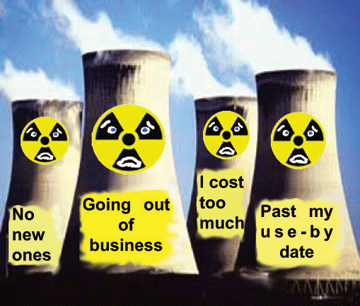 Siemens to quit nuclear industry BBC News, 19 Sept,11, German industrial and engineering conglomerate Siemens is to withdraw entirely from the nuclear industry… chief executive Peter Loescher said, announcing that the firm will no longer build nuclear power stations. ”The chapter for us is closed,”
Sadety worries delay nuclear power in South Africa
 South Africa Delays Bids for Nuclear Plants on Safety Concerns, Bloomberg By Jana Marais – Sep 15, 2011 South Africa postponed the opening of bids for its nuclear power-plant build program to next year because of safety concerns following the meltdown of reactors in Fukushima, Japan, South African Energy Minister Dipuo Peters said.
Eskom Holdings SOC Ltd., the state-owned South African power utility, will be the main driver of the country’s nuclear power plants and will invite partners, Peters told reporters in Johannesburg today…http://www.bloomberg.com/news/2011-09-15/south-africa-delays-bids-for-nuclear-plants-on-safety-concerns.html
1 This Month





PLEASE OPPOSE HR 8255 AND S.3639 – bills would accelerate satellite deployment, with no environmental review or safeguards – https://ncstd5li.quorum.us/campaign/169331/
To see nuclear-related stories in greater depth and intensity – go to https://nuclearinformation.wordpress.com
-
Archives
- October 2026 (39)
- September 2026 (339)
- August 2026 (330)
- July 2026 (355)
- June 2026 (287)
- May 2026 (306)
- April 2026 (356)
- March 2026 (251)
- February 2026 (267)
- January 2026 (308)
- December 2025 (358)
- November 2025 (359)
-
Categories
- 1
- 1 NUCLEAR ISSUES
- business and costs
- climate change
- culture and arts
- ENERGY
- environment
- health
- history
- indigenous issues
- Legal
- marketing of nuclear
- media
- opposition to nuclear
- PERSONAL STORIES
- politics
- politics international
- Religion and ethics
- safety
- secrets,lies and civil liberties
- spinbuster
- technology
- Uranium
- wastes
- weapons and war
- Women
- 2 WORLD
- ACTION
- AFRICA
- Atrocities
- AUSTRALIA
- Christina's notes
- Christina's themes
- culture and arts
- Events
- Fuk 2022
- Fuk 2023
- Fukushima 2017
- Fukushima 2018
- fukushima 2019
- Fukushima 2020
- Fukushima 2021
- general
- global warming
- Humour (God we need it)
- Nuclear
- RARE EARTHS
- Reference
- resources – print
- Resources -audiovicual
- Weekly Newsletter
- World
- World Nuclear
- YouTube
-
RSS
Entries RSS
Comments RSS

