One nuclear reactor restarts in Japan
First nuclear power plant restarted in Japan since tsunami, Herald Sun November 02, 2011 A NUCLEAR reactor in southern Japan was to begin producing electricity again today, its operator company said, in the first restart of a stalled atomic power plant since the Fukushima disaster. Continue reading
Downward plunge of prices and shares for uranium mining company
 Paladin chief slashes his pay, SMH, Peter Ker,November 1, 2011 PALADIN Energy boss John Borshoff has taken the knife to his $2.5 million salary, in the latest chapter of a miserable year for the struggling uranium miner.
Barely 10 months after enjoying a 5 per cent pay rise, Mr Borshoff has agreed to reduce his pay by 25 per cent as part of a drive to reduce administration costs at the Africa-focused company. The pay cut coincided with a lacklustre quarterly report from Paladin, which has earned a reputation for over-promising and under-delivering. ……… mine production targets were missed by 15 per cent over the past three months, while the company’s forecasts for the uranium price also proved too optimistic.
But the cut to Mr Borshoff’s pay was the stand-out item in the report, and comes after much agitation from investors who have watched the share price plummet since the Japanese nuclear disaster in March. Mr Borshoff’s remuneration package was worth $2.522 million in the year to June 2011, up from $1.9 million the year before.
That increase to his remuneration, which included a 5 per cent rise in fixed pay, came in a year when Paladin made an increased trading loss of $US82.3 million. The company sought to justify Mr Borshoff’s remuneration by describing him as a ”recognised global authority” on nuclear power, whose expertise was in ”extremely limited supply” around the world….
Paladin shares fell 6.5¢ to $1.50 yesterday. The stock was fetching $5 in March before the Fukushima nuclear disaster damaged investor confidence in the uranium sector…. http://www.smh.com.au/business/paladin-chief-slashes-his-pay-20111031-1ms4l.html#ixzz1cV3q88BL
Dutch energy utility doubts the financial viability of planned nuclear power
 Dutch Utility Concerned About Nuclear Profitability; RWE Still Committed,Fox Business, By Patrick Buis and Archibald Preuschat October 31, 2011 Dow Jones Newswires AMSTERDAM — German power giant RWE AG (RWE.XE) said Monday it is still committed to its stake in a nuclear plant in the Netherlands, after the majority stakeholder expressed doubts about the financial viability of the multi-billion investment….
a spokesman for Dutch energy provider Essent, a unit of RWE, told Dow Jones Newswires Monday. He acknowledged, however, that the social acceptance of nuclear power had changed after the Fukushima nuclear disaster in Japan in March…. the Financieele Dagblad reported Monday that Dutch public utility Delta was having doubts about the investment in the plant….
Delta’s future stake in the project will be 70%, while RWE will hold the remaining 30%.The second Dutch nuclear power plant would require an EUR4.5 billion investment http://www.foxbusiness.com/industries/2011/10/31/dutch-utility-concerned-about-nuclear-profitability-rwe-still-committed/#ixzz1cUjmbB4k
Nuclear industry admits that it cannot compete on costs
Is Nuclear Energy a Fuel with a Future?, Huffington Post, Andy Mannle, : 10/28/11 “……… Powerful industry lobbies in the U.S. and elsewhere will continue to support nuclear as a fuel source, of course, but even the industry recognizes that a major expansion is unlikely.
Speaking at an American Nuclear Society conference in August 2011, John Rowe, CEO of Exelon, the country’s largest nuclear utility said 3 of the 4 conditions necessary for expanding nuclear cannot be met. While newer designs offer the right technology, Rowe argues that the government has not resolved waste disposal issues. Additionally, there is currently excess generation capacity because the economic recession has slowed energy consumption. While this will likely change as we retire more coal plants and the economy grows, the influx of cheap natural gas from shale has undercut nuclear’s higher prices.
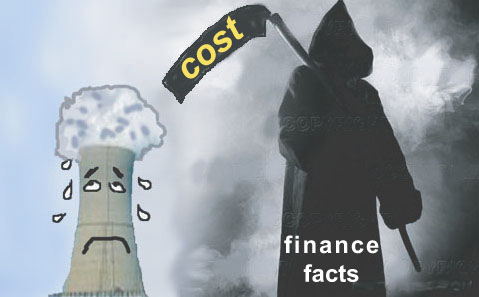
Today, nuclear cannot compete on cost with fossil fuels, and cannot compete on quality with renewables. Going forward, renewables offer rapid growth and innovation combined with falling costs, which will make it harder for nuclear to compete in the future. And as fossil fuel prices rise, they will also likely drive up nuclear’s construction costs, offsetting any price advantage there.
Without a major breakthrough, it seems safe to say nuclear will never be cheaper than coal or natural gas; nor will it be as safe, clean, and attractive to consumers and investors as renewables. In the end, the most likely option for nuclear energy is neither renaissance nor retreat, but continued slow growth, with heated arguments on all sides…. http://www.huffingtonpost.com/andy-mannle/nuclear-energy-a-fuel-with_b_1032727.html
Russian nuclear experts have left India’s Kudankulam nuclear project site
 Russian team leaves Kudankulam site,THE HINDU 28 Oct 11A team of experts from Atomstroyexports, the Russian firm that supplies technology and the equipment for the 2 X 1,000 MWe nuclear reactors of Kudankulam Nuclear Power Project, who had camped at Kudankulam to inspect the quality of the work completed so far and witness the functioning of the equipment installed, have left the site. The Russians took this decision as they could not get permission to go to the KKNPP site from Anu Vijay Township, where they were staying in the wake of the ongoing protest against the nuclear power project…. http://www.thehindu.com/news/cities/Madurai/article2574703.ece
Florida residents will fund nuclear power’s future, or lack of future!

the users pay upfront, make the investment and yet somehow the shareholders end up getting the profits
FPL rates will rise to pay for nuclear projects, State utility regulators rejected arguments from consumer advocates and agreed to allow utility companies to charge customers so they can invest in plans for nuclear power. MIAMI HERALD, BY MARY ELLEN KLAS, TALLAHASSEE , 24 oct 11, — Florida Power & Light got the go-ahead Monday to tack a new charge to the average household electric bill that will go towards investing in nuclear energy — even if the utility never ends up building any new nuclear power plants. Continue reading
Iran’s troubled nuclear program
Iran’s nuclear program suffering new setbacks, diplomats and experts say, Washington PostBy Joby Warrick, October 17 Iran’s nuclear program, which stumbled badly after a reported cyber attack last year, appears beset by poorly performing equipment, shortages of parts and other woes as global sanctions exert a mounting toll, Western diplomats and nuclear experts say. Continue reading
Employment prospects bright in renewable energy and sustainability
Focus on Renewable Energy May Be One Bright Spot in Today’s Job Market Market Watch, HOUSTON, Oct. 14, 2011 /PRNewswire via COMTEX/ — The 2011 jobs market has certainly left much to be desired for many Americans. Rising jobless reports and a bleak economic forecast can make finding a career that feeds a person’s passion and their wallet seem beyond reach. However, for those committed to the environment, green living and sustainability, the outlook may be brighter than you might think, according to MXenergy, a Constellation company and leading energy provider.
“The focus on renewable and clean energy and sustainability has led to tremendous growth in these industries over the past several years,” says Marjorie Kass, MXenergy managing director of marketing. “All indications are that growth is expected to continue which will mean the need for trained, experienced personnel.”

According to the Rocky Mountain Institute, U.S. solar photovoltaic installation increased 64 percent between 2005 and 2010. The institute estimates that the U.S. already has more than 90,000 direct or indirect jobs in the manufacturing and installation of solar panels, with another 85,000 jobs in wind power.
Previously solar panel installation was too cost prohibitive for most homeowners. However many energy providers, including MXenergy’s parent company Constellation Energy, are now launching residential solar panel leasing programs making the transition to solar financially attainable to many homeowners for the first time.
“The increase in affordability and attainability through these programs is a benefit not only to homeowners but also to workers,” continues Kass. “As more people take advantage of solar leasing programs the need for licensed installers will increase as well.”…
Propaganda drive in effort to win Poles over to nuclear power
 Poland’s PGE Launches Campaign to Rally Support for Nuclear Power, WSJ By Marynia Kruk, 13 Oct 11 WARSAW — Poland’s largest power utility, PGE Polska Grupa Energetyczna SA, Thursday launched a campaign to boost support for nuclear power in the coal-reliant country.
PGE plans to build Poland’s first nuclear power plant by 2020. Public opinion polls this year showed about half of the nation opposes the plan, while only a minority of about one third of respondents supported it, according to an August poll by TNS OBOP.
PGE is hoping to stimulate a dialog with the public in order to bolster support for nuclear power, said Chief Financial Officer Marzena Piszczek. ….
Poland plans to build two nuclear power plants, each with a 3,000-megawatt capacity, as part of a strategy to diversity its energy sources away from coal and an over-reliance on Russian natural gas. Polish Prime Minister Donald Tusk said in June there was no need for a referendum on the plan.
Poland’s communist-era government began construction of a nuclear power plant in the 1980s, but the project was deeply unpopular, especially after the 1987 Chernobyl disaster in Ukraine, and was never completed.
“New Generation” Olkiluoto 3 nuclear plant delayed yet again, as nuke companies squabblee
 Olkiluoto 3 nuke plant may be delayed further –TVO Oct 12, 2011
* TVO says Olkiluoto 3 may start in 2014
* Areva says plans fuel load by end 2012
* Both blame each other for delays
HELSINKI/PARIS, Oct 12 (Reuters) – Finnish utility firm Teollisuuden Voima (TVO) blamed supplier Areva for further delays to the construction of its Olkiluoto 3 nuclear power plant which may further push back operations to 2014.
The 1,600 megawatt plant Olkiluoto 3, Finland’s fifth nuclear reactor, was originally scheduled to start operations in 2009 but delays and soaring costs meant TVO revised its start date to 2013.
TVO said its plant supplier, a consortium originally formed by France’s Areva and Siemens AG (SIEGn.DE), had informed it of delays in building the reactor’s automation system and in installing piping and electrical systems.
TVO and Areva-Siemens disagree over who is responsible for the delays and have taken a dispute over payment to the International Chamber of Commerce. Siemens has withdrawn from the consortium….http://www.reuters.com/article/2011/10/12/finland-nuclear-idUSL5E7LC0M620111012
Questions on the huge costs likely for consumers in effort to fix nuclear plant
the total cost of fixing the plant and buying electricity from someone else that the nuke plant should be generating? About $2.5 billion. Progress Energy’s Florida customers will pay hundreds of millions of dollars of that bill…..
Honey, I broke the nuclear power plant, Tampa Bay.com By Robert Trigaux, Times Business Columnist , October 11, 2011 If you missed staff writer Ivan Penn’s investigative piece in Sunday’ St. Petersburg Times, you need to go back and read it. Carefully. (You can find it online at this address: http://tinyurl.com/3u96hk2.) It’s about a misguided decision by Progress Energy to try to repair its one and only nuclear power plant in Florida. Continue reading
AREVA ahead in the scramble to sell off nuclear reactors to India
 Areva In ‘Full-Scale’ Talks To Build Nuclear Power Plants In India, WSJ, By Eric Yep MUMBAI (Dow Jones)-–Areva S.A. (ARVCY) is “in the middle of full-scale discussions” to build nuclear power plants in India, said Arthur De Montalembert, chairman of its local unit, despite its U.S. rivals going slow on their Indian plans due to concerns over a nuclear liability law.
Areva’s talks with Nuclear Power Corp. of India Ltd. may give an edge to the French state-controlled nuclear equipment supplier over its U.S. rivals, GE Hitachi Nuclear Energy and Westinghouse Electric Co., whose plans were delayed after the Indian government adopted the law that makes both equipment suppliers and plant operators liable to accident compensation claims.
Equipment suppliers, which are eyeing India’s multi-billion-dollar nuclear power market, have sought changes in the law. Continue reading
Britain’s nuclear power plans in doubt, as companies try to get out

 Britain’s nuclear future is not so bright as firms look for exit strategy, This Is money, By PETER CAMPBELL, 6th October 2011, The future of Britain’s nuclear power is at risk, with one of the three groups looking to build the next generation of reactors on the brink of splitting up. Continue reading
Florida and Georgia – renewables and energy efficiency cheaper than new nuclear plants

 Energy Efficiency, Renewable Energy Cheaper and Safer than Building New Nuclear Plants in Florida and Georgia, Report Finds,Union of Concerned Scientists, WASHINGTON (October 6, 2011)—According to a new report, ratepayers in Florida and Georgia would be better served by investments in energy efficiency and renewable energy resources, rather than building new nuclear reactors in those states. The report, “Big Risks, Better Alternatives,” (PDF) was released today by Synapse Energy Economics, a Cambridge, Massachusetts-based consulting and research firm. Continue reading
Deputy Director General of World Nuclear Association not optimistic about new uranium mines
with demand lower than was expected before, the price outlook is also down in both the medium and long-term..
It is clear that some of the anticipated new mines, heavily promoted by financial backers, will be ‘out of the money’—in other words, too expensive to develop in the new environment. Future uranium projects are very sensitive at prices in the $50 to $70 per pound level, and many may need more than $70 for viability.
Uranium – what are the prospects post-Fukushima?, Nuclear Engineering, Steve Kidd Deputy Director General of the World Nuclear Association, 06 October 2011“………..Falling uranium demand in the short-term is likely to delay some new projects, particularly those in Africa where financial requirements are heavy. But the reaction of producers will largely depend on the continuation of China’s new build programme and its willingness to finance new mines abroad. Continue reading
1 This Month





PLEASE OPPOSE HR 8255 AND S.3639 – bills would accelerate satellite deployment, with no environmental review or safeguards – https://ncstd5li.quorum.us/campaign/169331/
To see nuclear-related stories in greater depth and intensity – go to https://nuclearinformation.wordpress.com
-
Archives
- October 2026 (39)
- September 2026 (339)
- August 2026 (330)
- July 2026 (355)
- June 2026 (287)
- May 2026 (306)
- April 2026 (356)
- March 2026 (251)
- February 2026 (267)
- January 2026 (308)
- December 2025 (358)
- November 2025 (359)
-
Categories
- 1
- 1 NUCLEAR ISSUES
- business and costs
- climate change
- culture and arts
- ENERGY
- environment
- health
- history
- indigenous issues
- Legal
- marketing of nuclear
- media
- opposition to nuclear
- PERSONAL STORIES
- politics
- politics international
- Religion and ethics
- safety
- secrets,lies and civil liberties
- spinbuster
- technology
- Uranium
- wastes
- weapons and war
- Women
- 2 WORLD
- ACTION
- AFRICA
- Atrocities
- AUSTRALIA
- Christina's notes
- Christina's themes
- culture and arts
- Events
- Fuk 2022
- Fuk 2023
- Fukushima 2017
- Fukushima 2018
- fukushima 2019
- Fukushima 2020
- Fukushima 2021
- general
- global warming
- Humour (God we need it)
- Nuclear
- RARE EARTHS
- Reference
- resources – print
- Resources -audiovicual
- Weekly Newsletter
- World
- World Nuclear
- YouTube
-
RSS
Entries RSS
Comments RSS

