Hinkley Point C: Building Britain’s first nuclear reactor in 30 years
The government revised the strike prices for renewable generation in December 2023, the strike price for offshore wind is £73 and PV £61 so nuclear remains an expensive zero carbon option. The current price for electricity is approximately £83mWhr.
Building, By Thomas Lane, 17 September 2024
Like its Finnish and French twins, Hinkley Point C has suffered from cost overuns and delays. What are the team doing to claw back the losses and what does this mean for Sizewell C?
Nothing on the drive from Taunton to Hinkley Point C hints at the scale of the project at the destination. The journey is along picturesque minor roads, through woods and up and down steep-sided, intimate valleys before the terrain flattens out to reveal Europe’s largest construction site.
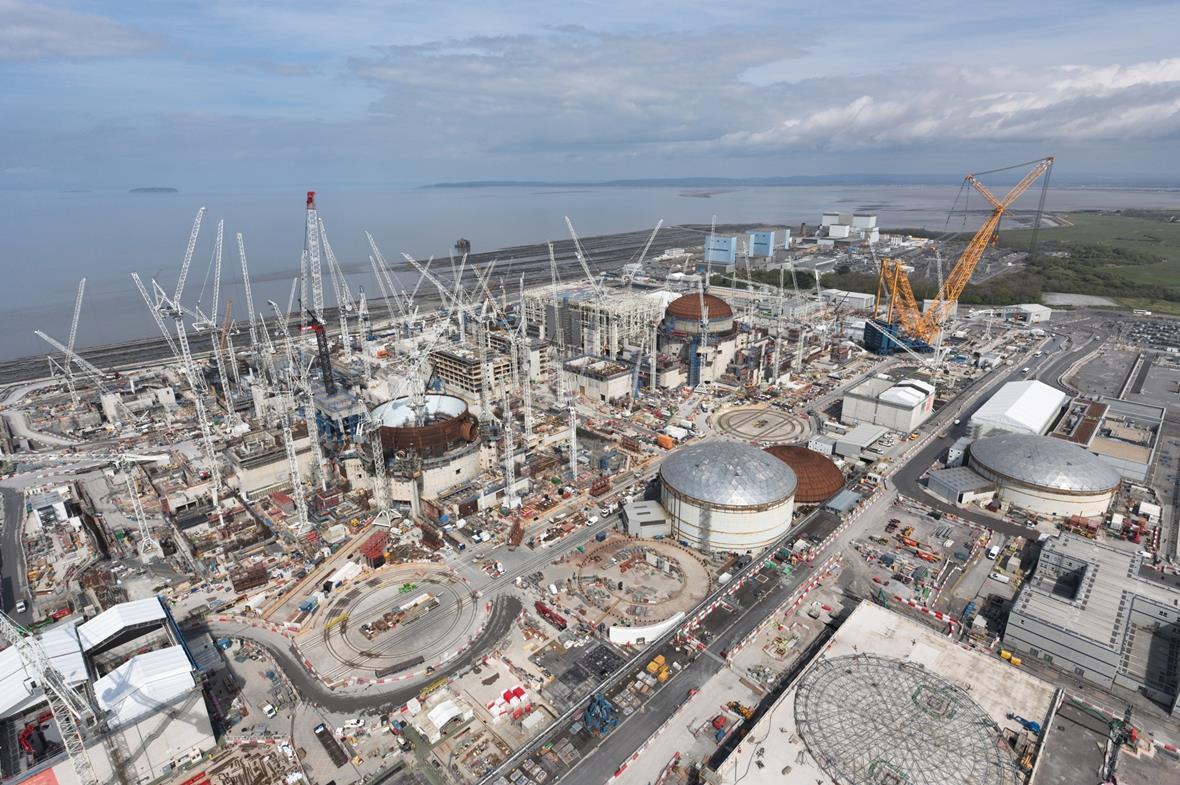
The huge location, which is deliberately situated miles away from major population centres, sprawls across a flat plain next to the Bristol Channel on the Somerset coast. Everything about this project is supersized.
There are 58 cranes on this job, one of which is Big Carl, the world’s largest land-based crane. Powered by 12 engines and rolling on 96 wheels, this monster can lift 5,000 tonnes and needs dedicated tracks to move it to the different parts of the nuclear island, where the reactors are being built.
A dedicated bus company was set up to avoid thousands of workers clogging up the lanes with traffic. It brings up to 11,000 of them from around the area and home again on a fleet of 176 buses. This includes a route to transport people around the 176-hectare site. The site even has a doctor’s surgery, a fire service and police station.
The civil engineering works are well advanced, with one of the two reactors close to fit-out and construction on the second coming along. Works elsewhere are progressing with the project about to move from the civil engineering phase to the complex mechanical, electrical and heating fit-out stage (see box).
Getting to this point has been long, slow and expensive. Hinkley Point C is the first nuclear reactor to be built since Sizewell B was completed in 1995. Called the European pressurised water reactor (EPR), Hinkley Point C is the third example to be built in Europe. The first was built at Olkiluoto in Finland and the second at Flamanville in France.
Each of these projects has gone massively over budget and taken much longer to build than envisaged (see box). The latest estimates suggest that Hinkley Point will cost as much as £34bn, nearly double the original budget of £18bn.
Originally scheduled to complete in 2025, the plant could come online as late as 2031. Why is Hinkley proving so expensive to build, despite the lessons from two earlier projects? And what are the cost and programme implications – and therefore the likelihood of it going ahead – for the proposed Sizewell C and beyond?.
There are many reasons for the cost increases and delays. These include the impact of the pandemic, which has delayed construction by 15 months, inflation and the challenge of finding people with the skills to meet the exacting standards demanded by nuclear construction. Different nuclear regulatory regimes across Europe are a big reason why the third EPR reactor is still costing more and is taking longer to build than originally envisaged.
“We had to substantially adapt the EPR design to satisfy British regulations, requiring 7,000 changes, adding 35% more steel and 25% more concrete,” explains Simon Parsons, EDF’s delivery director for the nuclear island.
According to Parsons, the French regulatory approach is very prescriptive, whereas in the UK it is up to EDF to prove that its design meets UK requirements. The UK is more focused on the consequences of failure than in Europe.
The main components inside the reactor building such as the reactor pressure vessel and steam generators are made to the same design by the same manufacturers but are subject to a UK specific safety regime. “We’ve been asked to do more FMEA (failure mode and effects analysis), material analysis and fracture toughness testing of welds over a piece of equipment,” Parsons says.
Progress at Hinkley Point…………………………………………………………………………………………………………………………………….
………………………….The digital data will be used for building operation, maintenance and – in 60 years after the plant starts operating – decommissioning. The data has a second important function: it will be used to build Sizewell C assuming funding is confirmed by the new government. Crucially for the future of UK nuclear, this will incorporate the lessons learnt from the construction of each reactor.
Will Hinkley Point and Sizewell provide value for money?
……………………….Hinkley Point and Sizewell will produce 14% of the UK’s electricity, the same as generated in 2022. This is considerably less than during nuclear’s 1990s heyday when it generated 24.5% of the UK’s electricity.
When Sizewell and Hinkley Point C start generating power, the only operational nuclear power station will be Sizewell B, which means nuclear’s total contribution to UK electricity generation will be 17%.
The argument against nuclear is the cost, with critics saying it is poor value for money compared with renewables. All three EPR nuclear power stations built in Europe have suffered from serious cost overruns and delays.
…………………Hinkley Point C got the green light in 2016 with an estimated £18bn build cost and completion by 2027. The most recent estimates put costs as high as £34bn at 2015 prices, £46bn in today’s money. The poor budgetary track record of the EPR begs the question, is new nuclear good value for money?
Hinkley Point was originally a privately financed joint venture between EDF and China General Nuclear with EDF owning two-thirds and CGN the remaining third. The station was to be financed using the Contracts for Difference mechanism which is used to support forms of electricity generation which can’t compete with gas.
This government guarantees a minimum payment for the electricity, the so-called strike price. In 2012 a strike price of £93.50mWhr was agreed for Hinkley Point C at a time when electricity cost £40mWhr, provoking criticism that nuclear was too expensive. The strike price is inflation linked meaning it is worth approximately £139 at 2023 prices.
The government revised the strike prices for renewable generation in December 2023, the strike price for offshore wind is £73 and PV £61 so nuclear remains an expensive zero carbon option. The current price for electricity is approximately £83mWhr.
As the cost of Hinkley Point has increased, the backers have had to provide more funding. The souring of relations between Britain and China saw CGN stop providing any more money, leaving EDF to fund the shortfall. EDF has called upon the UK government to help out with the escalating cost but it has refused. EDF was fully nationalised in 2023, leaving the French taxpayer to pick up the tab for the cost overruns.
Like Hinkley Point, Sizewell was a joint venture between EDF and CGN but concerns over Chinese involvement meant the UK government took over from CGN in 2022. The cost overruns on Hinkley mean EDF wanted a different funding arrangement to avoid picking up the construction risk for Sizewell.
It will be funded using the regulated asset base model, which is the same as used for Thames Tideway; a surcharge is placed on electricity bills to fund the plant. EDF’s role would be to build and operate the plant without taking the construction risk.

A development consent order for the project was granted in January 2024 and the nuclear site licence approved in May 2024. The final investment decision will be made at the end of this year.
Sizewell C may cost less to build than Hinkley Point thanks to the experience gained constructing the latter, but the British consumer could end up paying more thanks to the different funding arrangement…………………………………………………………………………………………………………………………………………………………………………………………………. https://www.building.co.uk/buildings/hinkley-point-c-building-britains-first-nuclear-reactor-in-30-years/5130997.article
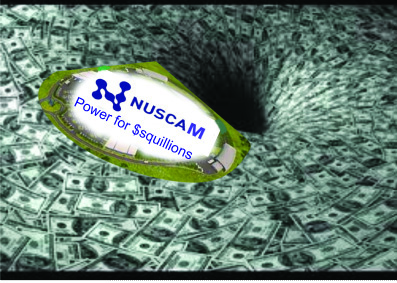
NuScale Power Is Great. Here’s Why You Shouldn’t Buy It.
The Motley Fool, By Reuben Gregg Brewer – Sep 14, 2024
NuScale Power (SMR 12.17%) is at the leading edge of the nuclear power sector. It is doing great things and making important progress toward its goal of mass-producing small-scale modular nuclear reactors. In a world increasingly looking toward carbon-free energy sources, it is positioning itself well for a bright future. But it won’t be a good fit for every investor. Here’s why you might want to buy the stock and why you might not want to buy it.
NuScale is moving (slowly) toward the nuclear future
Today, nuclear reactors are giant infrastructure assets that cost huge sums of money to build and years of effort to get up and running. NuScale Power is working to upend that inefficient model by offering small, modular reactors that would be built in a factory and then delivered where they are needed.
If one reactor isn’t enough, they can be linked to create a larger reactor………….
Adding to the allure here is a balance sheet with zero debt and $136 million in cash. In other words, it is working from a strong financial position. Also, NuScale Power’s largest shareholder is Fluor (FLR 2.21%), a large construction company.
Clearly, Fluor has its own motives in backing NuScale, like supporting the growth of a new market (small-scale nuclear power plant construction), but it means that NuScale has a strong parent to help it along. That’s showing up right now, too, as a project from Fluor is going to help add revenue to NuScale’s earnings statement, helping the upstart nuclear power company pay for its own product development plans.
There are indeed some good reasons to like the future prospects for NuScale power, including that, as management likes to highlight, it is “the only SMR certified by the U.S. Nuclear Regulatory Commission.” So, it basically has a leg up on the competition right now.
NuScale Power comes with some big risks
Despite the positives, NuScale Power is not going to be a good fit for every investor. In fact, only aggressive types should really be looking at the stock today. There are a host of reasons.
For starters, NuScale Power’s product plans are approved by U.S. regulators, but not fully approved to the point where it can start building and selling units. So, there’s more work to be done before NuScale Power even has a product to sell. And while it has inked a tentative deal to sell its first units, it can’t actually do that yet. It has to spend even more money on the effort to get the final government nod to start building and delivering a product.
That, in turn, means more red ink. NuScale Power is basically still in start-up mode, so it isn’t unusual that more money would be going out the door than coming in. The revenue from the work with Fluor will help, but the income statement is likely to look ugly for years to come. That’s because it will still have to ramp up its production abilities even after it gets all the approvals it needs. All in all, NuScale Power has a great story, but that story is still in its early chapters.
NuScale Power is an acquired taste
To highlight the risks here, it helps to look at the stock price. Over the past year, the stock has gone from a low of roughly $2 per share to a high of just over $15, and it currently sits at around $7. If you can’t handle price swings like that, you definitely don’t want to own this nuclear power start-up.
That said, investors with a high tolerance for risk might be interested in NuScale power, given that it has achieved a great deal on its path to producing small-scale modular nuclear reactors. But for most investors, the risks are likely too great at this point in time to justify hitting the buy button. https://www.fool.com/investing/2024/09/14/nuscale-power-is-great-heres-why-you-shouldnt-buy/
Why SMRs Are Taking Longer Than Expected to Deploy
Oil Price, By Felicity Bradstock – Sep 14, 2024
“…………………………………………..Several energy companies and startups, such as Terrapower – founded by Bill Gates, are developing SMR technology. The founders of Terrapower decided the private sector needed to take action in developing advanced nuclear energy to meet growing electricity needs, [?] mitigate climate change and lift [?] billions out of poverty.
Several SMR projects are also being backed by government financing. For example, in the U.S., the Department of Energy announced $900 million in funding to accelerate the deployment of Next-Generation Light-Water SMRs. In addition, many companies, such as Microsoft, have signed purchase agreements with energy companies to use SMRs, or are developing their own SMR strategies, to power operations with [?]clean energy.
While there is huge optimism around the deployment of SMR technology, many of the companies developing the equipment have faced a plethora of challenges, which has led to delays and massive financial burdens. At present, only three SMRs are operational in the world, in China and Russia, as well as a test reactor in Japan. Most nuclear energy experts believe SMRs won’t reach the commercial stage in the U.S. until the 2030s.
NuScale cancelled plans to launch an SMR site in Idaho in 2023 after the cost of the project rose from $5 billion to $9 billion owing to inflation and high interest rates. This is a common issue, as companies must predict the costs of a first-of-a-kind project. Once one SMR site is launched and companies can establish tried-and-tested methods of deployment, a second site is expected to be cheaper and faster to develop. A trend that will continue as companies gain more experience. Eric Carr, the president of nuclear operations at Dominion Energy, explained, “Nobody exactly wants to be first, but somebody has to be.” Carr added, “Once it gets going, it’s going to be a great, reliable source of energy for the entire nation’s grid.”
Another issue is access to uranium. Russia is currently the only commercial source of high-assay low- enriched uranium (HALEU), which companies require to power their reactors. In late 2022, Terrapower announced it would be delaying the launch of its first SMR site in Wyoming due to a lack of fuel availability. However, the U.S. is developing its domestic production capabilities. The Biden administration is expected to award over $2 billion in the coming months to uranium enrichment companies to help jumpstart the supply chain. Meanwhile, Terrapower announced this summer that it is finally commencing construction on its Wyoming SMR site and is working with other companies to develop alternate supplies of HALEU. https://oilprice.com/Energy/Energy-General/Why-SMRs-Are-Taking-Longer-Than-Expected-to-Deploy.html
Serbia picks EDF, Egis for study on introduction of nuclear energy
The Ministry of Mining and Energy of Serbia awarded a contract to French
state-owned energy utility EDF and engineering company Egis Industries for
a preliminary technical study for considering the peaceful use of nuclear
energy. Following an agreement last month between Serbia and EDF to assess
the potential for developing a civil nuclear program, the French
state-owned energy utility and engineering firm Egis Industries won a
tender for the country’s first study.
The government in Belgrade adopted
changes to the Law on Energy in August as well, aiming to abolish a 1989
moratorium on the construction of nuclear power plants.
Balkan Green Energy News 13th Sept 2024
Why nuclear power plants are so expensive, especially in the West
David Toke, Sep 13, 2024,
https://davidtoke.substack.com/p/why-nuclear-power-plant-are-so-expensive
An explanation for a lot of the reason for nuclear power’s high costs can be found in the so-called ‘Baumol effect’. This is named after a US economist who discussed how it is that some sectors of the economy do not improve their productivity, yet sell their services at increasing cost. This includes nuclear power because, as an industry that is, essentially, an exercise in large-scale construction, it does not improve its productivity. In fact, it has been dragged by the need to make it safer away from increases in productivity towards the opposite direction. It became more focused on achieving safety standards rather than improving production efficiency. There’s little potential for production efficiency anyway since it is based on steam generation technology which has long ago achieved all it can. All attempts to build nuclear power plant in the West this century, in the USA, France, Finland and now, it seems in the UK, have involved massive delays and cost overruns. But then large-scale construction projects of all types in the West often suffer the same fate.
Economist Andrew Sissons describes the Baumol effect (see HERE) thus:
‘when productivity rises in one part of the economy — often the manufacturing sector — wages rise in all parts of the economy, even in industries where productivity does not grow. This helps to explain why musicians, hairdressers, economists have seen their wages rise dramatically even if they produce no more output than they did 100 years ago’. He also lists construction as one of the areas where productivity has not risen.
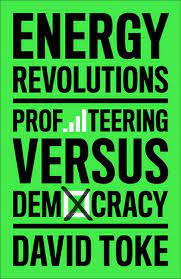
In my book ‘Energy Revolutions’ (see HERE: Pluto Press, page 30), I talk about reasons why nuclear power is so expensive:
‘Among the problems facing efforts to develop new nuclear power plants, there are four big issues. First is the fact that nuclear power plant designers have incorporated safety features designed to minimise the consequences of nuclear accidents, but in doing so the plants have become much more complicated and difficult to build without great expense. A second reason is that large construction projects of whatever type, at least in the West, tend to greatly overrun their budgets.40 In the West, improvements in health and safety regulations to protect construction workers have no doubt played a part in this. A third factor is that, in the West at least, the cheap industrialised labour force that dominated the industrial economies of the past and which could be used to develop nuclear programmes (in the way that France did in the 1980s) has ceased to exist. A fourth factor is simply that renewable energy technologies, especially wind and solar power, can be largely manufactured offsite in a modular fashion and their costs have rapidly fallen, leaving nuclear power increasingly uncompetitive.’
The point, with respect to nuclear power, is that as other parts of the economy improve their productivity, the (massively) construction-based nuclear power becomes more and more expensive. Meanwhile, those energy technologies that have the benefit of improvements through manufacturing and a rapidly expanding market – such as solar pv and batteries – become relatively cheaper. Supporters of nuclear power will always claim that the next plant will be cheaper, but the reverse will happen – it becomes ever more expensive, a consequence of its stagnating productivity. It is claimed that nuclear plant outside the West are being delivered more cheaply. To the extent that might be true it is a simple reflection of the relatively lower wage levels, apart from anything else, in these countries. The cost will go upwards in these countries as wage levels rise.
Advocates of ‘small modular reactors’ get the benefit of wishful thinking that there will be an advance in productivity based on mass manufacturing. But there will be no mass manufacturing. Probably hardly any apart from, if they are lucky, single, demonstration plant heavily underwritten by the state.
The logic of the Baumol effect is indeed that nuclear power is on a path to oblivion through ever-rising costs.
Support for nuclear is “money down the drain” – Rystad

(Montel) The expansion of solar energy will make nuclear power obsolete and push it out of the electricity market by the 2030s, making financial support for nuclear power a waste of money, the CEO of consultancy Rystad Energy told Montel on Tuesday.
Reporting by: Elias Huuhtanen, Montel News 27th Aug 2024
Support schemes for nuclear, like the financing model recently mulled by Sweden, was throwing “money down the drain”, said Jarand Rystad on the sidelines of the ONS conference in Stavanger.
Even newer technologies like small modular reactors (SMR) would become “very irrelevant, very fast” because of the changing electricity markets, Rystad said.
“In the 2030s and 40s energy will actually be much cheaper than today and integrated into the system with storage in a different manner. I think [nuclear] is a technology of the past,” he said.
As well as being “tremendously expensive”, nuclear did not have the same flexibility as renewables, Rystad noted, as ramping down nuclear production during periods of low demand did not bring the same cost savings as solar.
Renewables support
Instead, renewables combined with flexible demand had “cracked the code” to create “energy abundance”, he said.
“The big problem now is you have too much energy. It will be irrelevant to have this kind of baseline [from nuclear],” Rystad said………………………………. https://montelnews.com/news/1aa921fb-7184-4eb1-8dcd-2e1ad45de3df/support-for-nuclear-is-money-down-the-drain-rystad
Claims that UK’s Wylfa mega-nuclear site is ‘under-review’ with potential switch to mini-nuke plants
Previous UK Government named the Anglesey site as the next “preferred” location for the next large nuclear development.
Owen Hughes, Daily Post, Business correspondent, 9 Sept 24
There are reports that the UK’s nuclear plans are under review – with Wylfa’s status as the next potential site for a ‘mega-nuclear’ project under threat. Ahead of the General Election this year the previous UK Government named the Anglesey site as the “preferred” location for the next large nuclear development.
It followed the purchase by the government of the site and a nuclear location at Oldbury, Gloucestershire, for £160m from Hitachi. The news brought hope of a revival of a new major nuclear plant that would bring thousands of jobs. But after a number of false dawns there was also scepticism locally that the scheme would ever happen.
Now it is being reported the new UK energy secretary Ed Miliband has asked his department to review all nuclear plans over concerns that proposals set out by the last Conservative government were rushed out ahead of the general election, with insufficient due diligence.
There are reports that instead of a ‘mega-nuclear’ site the land next to the last Wylfa plant could instead host small nuclear reactors (SMRs). It is stated that officials believe they could be built and switched on more quickly (mid-2030s) and potentially provide the best value for money.
A government spokesman said: “No decisions have yet been taken on the projects and technologies to be deployed at sites and any decision will be made in due course.”
Ynys Môn MP Llinos Medi last week called on the UK Government to provide clear commitments and timelines regarding the future of the Wylfa site and the broader energy strategy for Wales. Speaking during a debate on the Great British Energy Bill on Thursday, Ms Medi highlighted the island’s rich natural energy potential and criticised the ongoing political uncertainty surrounding the Wylfa nuclear site.
She criticised the previous Conservative government for playing a “political game” and offering local communities a “false dawn” regarding the future of the nuclear site……………………………….. https://www.dailypost.co.uk/news/north-wales-news/claims-wylfa-mega-nuclear-site-29895174
“Subsidy for UK nuclear build calls funding into question”

“It’s not a great argument for public ownership. Doing it because private investors won’t touch it“
(Montel) The UK’s decision to pump an additional GBP 5.5bn into getting the 3.2 GW Sizewell C nuclear power station to a financial investment decision has triggered more uncertainty about its financing and cost, said industry sources.
Reporting by: Kelly Paul, 03 Sep 2024
“I think there’s a lot of uncertainty about it,” Paul Dorfman, visiting professor at the UK’s University of Sussex, told Montel.
“There are questions around what does it actually mean and will that money be drawn up before 2025 [when a final investment decision is expected].”
“Clearly the decision is already made,” said Steve Thomas, emeritus professor of energy policy at Greenwich University.
Won’t abandon project
“The government is not going to spend GBP 8.5bn [including an original cost estimate and additional payments] then abandon the project. The uncertainty is what proportion investors will take and on what terms, or will we just make it 100% public.”
The UK’s new Labour government is proposing a GBP 5.5bn subsidy scheme aimed at covering Sizewell C’s costs up to and including a final investment, subject to next month’s spending review.
It comes amid a protracted process of trying to attract private investors to Sizewell C, namely via the regulated asset base financing model launched last year, designed to ensure a significant proportion of capital is secured before the construction phase to shore up the contribution of the lead developer, EDF of France.
Yet doubt surrounds the status of private investment into the project, with financially strapped EDF’s share capped at 19.99% after a final decision is taken. The total cost of Sizewell is estimated at GBP 20bn.
“I don’t feel like this equity round has been a resounding success,” Alison Downes, a director at campaign group Stop Sizewell C, told Montel, citing anonymous government sources and pointing to the apparent absence of sovereign wealth and pension funds.
The lack of clarity around final costs and timeline also called into question the role of nuclear in the country’s bid to achieve a decarbonised economy by 2030 and in terms of contributing to its energy security, she added.
“2030 is not the be all and end all but it is a critical part in terms of the government’s goals,” she said.
Greater costs?
Meanwhile, the government could find itself saddled with greater costs as potential investors seek to minimise their share of the risk, the sources said.
“It’s not a great argument for public ownership. Doing it because private investors won’t touch it,” Thomas said.
When contacted by Montel, an energy ministry spokesperson said: “We are committed to Sizewell C, which will play an important role in helping the UK achieve energy security and net zero, while securing thousands of good, skilled jobs and supporting our energy independence beyond 2030.
“Subject to all the relevant approvals, we aim to reach a final investment decision before the end of the year.
“Any investment from the [GBP 5.5bn subsidy] scheme will be subject to approvals and in line with the project’s spending plans, as agreed by the government and its co-shareholders.”
Sizewell C, the company managing the nuclear project, was unavailable for comment when contacted by Montel.
UK unveils GBP 5.5bn subsidy plan for 3.2 GW nuclear plant

The UK government has approved a GBP 5.5bn subsidy scheme aimed at getting the planned 3.2 GW Sizewell C nuclear power plant in southeast England to a final investment decision (FID) later this year.
Reporting by: Kelly Paul, 30 Aug 2024 ,
https://montelnews.com/news/4f3631b9-b370-4dda-a878-61850539b094/uk-unveils-gbp-55bn-subsidy-plan-for-32-gw-nuclear-plant
The so-called Sizewell C Development Expenditure (Devex) Scheme will enable the government to increase equity injections into the project, giving it greater flexibility to cover development costs up to and including an FID, it said in a statement on Friday.
Funding for the Devex scheme will be subject to the Labour government’s forthcoming spending review.
The UK is targeting 50 GW of nuclear capacity by 2050 as part of its plans for energy security. Currently, the country’s eight nuclear power sites have a total combined capacity of about 6.5 GW.
The government is seeking private investors for Sizewell C via a regulated asset base (RAB) financing mechanism.
Sizewell C received a nuclear site licence from the country’s Office for Nuclear Regulation in May.
White elephant?
However, in the wake of today’s announcement, campaign group Stop Sizewell C questioned where the money was going to come from.
“Sizewell C has already chewed through GBP 2.5bn and now we learn that there is the potential for a staggering GBP 5.5bn more of our taxpayers’ money to be thrown at this white elephant,” it said in a statement.
“Labour complained about a black hole in the country’s finances, yet now they are proposing to dig still further. Where would this cash come from?”
Last Energy nabs $40M to realize vision of super-small nuclear reactors
These investors are joining the wave in public and private financing of nuclear energy that has swelled to $14 billion so far this year — double last year’s total, according to Axios. Investment in new fission technologies, such as microreactors, has increased tenfold from 2023.
The startup wants to mass-manufacture 20MW nuclear reactors that can be built and shipped within 24 months. It’s looking to get its first reactor online in Europe.
By Eric Wesoff, 29 August 2024
A startup looking to build really small nuclear reactors just announced a big new funding round.
Last Energy, a Washington, D.C.–based next-generation nuclear company, announced that it closed a $40 million Series B funding round, a move that will add more financial and human capital to the reinvigorated nuclear sector.
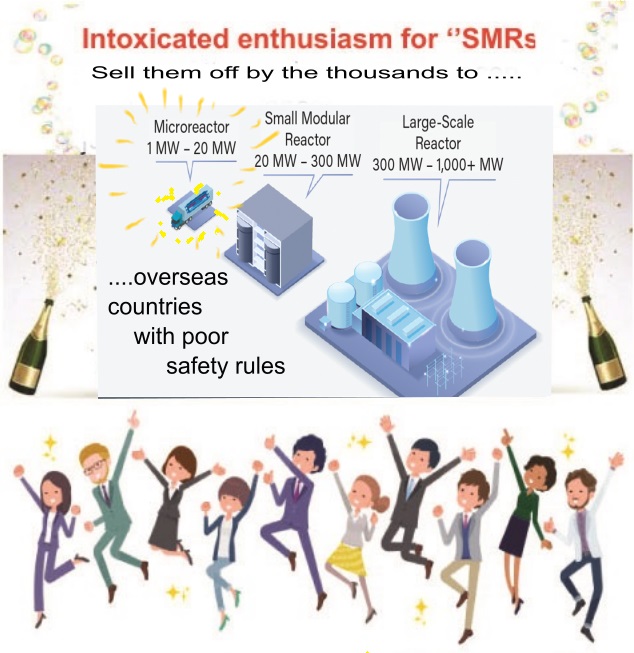
The startup aims to eventually deploy thousands of its modular microreactors, though to date it has not brought any online. The first reactor might appear in Europe as soon as 2026, assuming Last Energy manages to meet its extremely aggressive construction, financial, and regulatory timelines — not a common occurrence in the nuclear industry. Venture capital heavyweight Gigafund led the round, which closed early this year but was revealed only today. The startup has raised a total of $64 million since its 2019 founding.
Last Energy is part of a cohort of companies betting that small, replicable, and mass-produced reactors will overcome the economic challenges associated with building emissions-free baseload nuclear power — and restore the moribund U.S. nuclear industry to its former glory. But the microreactor dream has yet to be realized; few of these small modular reactors (SMRs) have been built worldwide. None have been completed in the U.S., though one design from long-in-the-tooth startup NuScale Power has gotten regulatory approval.
The 20-megawatt size of Last Energy’s microreactor stands in stark contrast to that of a conventional nuclear reactor like the recently commissioned Vogtle units in Georgia, which each generate about 1,100 megawatts. A Last Energy microreactor, the size of about 75 shipping containers, might power a small factory, while a Vogtle unit can power a city.
Instead of the cathedral-style stick-built construction of modern large reactors, SMRs and microreactors are meant to be manufactured at scale in factories, transported to the site, and assembled on location. Rather than develop an advanced reactor design with exotic fuels — an approach taken by other SMR hopefuls, including the Bill Gates–backed TerraPower — Last Energy chose to scale down the well-established light-water reactor technology that powers America’s 94 existing nuclear reactors.
“We came to the conclusion that using the existing, off-the-shelf technology was the way to scale,” CEO Bret Kugelmass said in a 2022 interview with Canary Media. “We don’t innovate at all when it comes to the nuclear process or components — we do systems integration and business-model innovation.”
The startup claims that its microreactor is designed to be fabricated, transported, and built within 24 months, and is the right size to serve industrial clients. Under its business model, Last Energy aims to build, own, and operate its power plant at the customer’s site, avoiding the yearslong wait times to plug a new generation project into the power grid.
Like an independent power producer, Last Energy doesn’t sell power plants; instead, it sells electricity to customers through long-term power-purchase contracts.
“Data centers and heavy industry are trying to grapple with a very complex set of energy challenges, and Last Energy has seen them realize that micro-nuclear is the only capable solution,” said Kugelmass, who claims in today’s press release that the startup has inked commercial agreements for 80 units — with 39 of those units destined to serve power-hungry data center customers.
Last Energy isn’t the only microreactor company attracting venture funding. There are several other examples from this month alone: Aalo Atomics raised $27 million from 50Y, Valor Equity Partners, Harpoon Ventures, Crosscut, SNR, Alumni Ventures, Preston Werner, Earth Venture, Garage Capital, Wayfinder, Jeff Dean, and Nucleation Capital to scale up a 85-kilowatt design from the U.S. Department of Energy’s MARVEL program. While Deep Fission, a startup aiming to bury arrays of microreactors 1 mile underground, just raised $4 million led by 8VC, a venture firm founded by Joe Lonsdale.
These investors are joining the wave in public and private financing of nuclear energy that has swelled to $14 billion so far this year — double last year’s total, according to Axios. Investment in new fission technologies, such as microreactors, has increased tenfold from 2023.
Investors happen to be backing startups in a heavily subsidized market. Tens of billions of dollars from the Bipartisan Infrastructure Law, the U.S. DOE’s Loan Programs Office, and the Inflation Reduction Act support the development of a non-Russian supply of enriched uranium; the IRA also introduced a ridiculously generous $15-per-megawatt-hour production tax credit, meant to keep today’s existing nuclear fleet competitive with gas and renewables, as well as a similarly charitable investment tax credit to incentivize new plant construction.
The flood of funding comes as nuclear power enjoys the most public support it has had in years. Nuclear now has a favorable public opinion, with the majority of Americans supporting atomic energy and its record of safety and performance. And nuclear energy is one of the few topics that Democrat and Republican politicians have been able to agree on in recent memory.
Still, despite the rising financial, political, and public support, the U.S. nuclear industry remains frozen, plagued by a legacy of cost and timeline overruns for conventional reactors and regulatory challenges around new designs. It’s unclear when the country will get another nuclear reactor online — as of last year, the leading contender was an SMR project from NuScale, but that fell apart due to cost. In all likelihood, the next reactor to plug into the grid will be the mothballed Palisades nuclear plant in Michigan, which won government support for an unprecedented effort to recommission the plant by the end of next year.
For its part, Last Energy is not banking on the U.S. to lead the charge; it’s targeting industrial customers in Poland, Romania, and the U.K. for its initial sites, in the hopes that it will find a more favorable regulatory and financial environment.
Ryan McEntush of investment firm a16z suggests in an essay that “the success of nuclear power is much more about project management, financing, and policy than it is cutting-edge engineering or safety.”
That’s Last Energy’s philosophy too — and it’s going to need more money and more years to prove it’s the right one.
South Korea pushes to export nuclear reactors to Europe

Asian nation seeks to become leading player in market dominated by China and Russia
Ft.com Song Jung-a and Christian Davies in Seoul, Raphael Minder in Warsaw, Sarah White in Paris and Alice Hancock in Brussels , 29 Aug 24,
South Korea is accelerating its push to export nuclear reactors to Europe as it seeks to become a leading player in a global market dominated by China and Russia.
After beating Westinghouse of the US and France’s EDF to become preferred bidder on a $17bn project in the Czech Republic in July, state-run utility Korea Hydro & Nuclear Power is set to sign a contract early next year for two reactors in the central European country.
The deal, if completed, will mark Korea’s first major overseas nuclear power project in 15 years, since a consortium led by KHNP parent Kepco won a $20bn contract in 2009 to build and operate four nuclear plants in the United Arab Emirates.
Whang Joo-ho, the president of KHNP, said the company was conducting a feasibility study for a nuclear power plant in the Netherlands and was in talks to build reactors in Finland and Sweden as it aims to export 10 more reactors globally by 2030.
Kepco has also held early-stage discussions with British officials about building a new station on the island of Anglesey off the coast of Wales. ……………………………………………………………………………………………………
There could be bumps along the way for the South Koreans, however. KHNP faces claims from Westinghouse that they used its proprietary technology for their APR1400 reactors. A US district court last year dismissed Westinghouse’s lawsuit that argued that the Korean companies violated US export regulations requiring US government approval for technology sharing. However, the dispute remains unresolved as the court did not rule on the issue of intellectual property infringement.
The Czech deal has highlighted South Korea’s efforts at a time when projects run by western competitors including EDF remain mired in construction delays and cost overruns.
Although Ahn, the South Korean industry minister, said earlier this month that the two companies were “in last-stage talks” to settle the disputes, the US company this week filed an appeal with the Czech anti-monopoly office in protest at the selection of KHNP as the preferred bidder.
“KHNP neither owns the underlying technology nor has the right to sub-licence it to a third party without Westinghouse consent,” the US company said……………………………………………………………
Please use the sharing tools found via the share button at the top or side of articles. Copying articles to share with others is a breach of FT.comT&Cs and Copyright Policy. Email licensing@ft.com to buy additional rights. Subscribers may share up to 10 or 20 articles per month using the gift article service. More information can be found here.
https://www.ft.com/content/85a7e313-6089-4ba9-8f5b-f45adcbc5074
Suh Kyun-ryul, a nuclear expert and a former professor at Seoul National University, said KHNP would probably have to reach a financial settlement with Westinghouse. “This could even end up as a lossmaking deal,” he said. Suh also noted that South Korea was constrained by a long-standing agreement with the US that was signed in the 1950s to restrict Seoul’s ability to develop a nuclear weapons programme.
Under the agreement, South Korea’s access to raw material supplies is limited and it is not allowed to conduct uranium enrichment or the reprocessing of used fuel. Long-term buyers were likely to ask for a one-stop service ranging from nuclear fuel supply to waste disposal, he said, adding the US agreement remained “South Korea’s Achilles heel”. https://www.ft.com/content/85a7e313-6089-4ba9-8f5b-f45adcbc5074
Ukraine doubles down on Russian reactors in nuclear power push
Politico, August 27, 2024, By Gabriel Gavin
Ukraine will push forward with controversial plans to spend hundreds of millions of dollars on aging Russian-made nuclear reactors despite growing opposition from lawmakers, the country’s energy minister said, amid warnings of a major power crisis this winter.
German Galushchenko told POLITICO that the government still intends to pursue the expansion of the Khmelnytskyi nuclear power station in western Ukraine, buying two VVER-1000 reactors currently in storage in Bulgaria. The proposal has drawn criticism from the ruling party’s own MPs, who say there are quicker ways to help prop up the electricity grid, which has been hit hard by Russian bombing…………………..
Last week, Ukrainian MPs told POLITICO that the government had been forced to acknowledge it did not have sufficient support in the parliament to pass a draft law legislating for the purchase of the reactors.
According to Andrii Zhupanyn, a lawmaker from President Volodymyr Zelenskyy’s Servant of the People Party, such defeats are “extremely rare.”
MPs questioned whether the mothballed reactors, bought by Bulgaria more than a decade ago, would be able to be quickly brought into service, and whether the funds could be better spent on renewable power and other sources of electricity. The costs, they said, would likely balloon and open the door to corruption…………………………………………………………………………. https://www.politico.eu/article/ukraine-russia-reactor-khmelnytskyi-nuclear-power-station/
China keeps door firmly closed to Japanese seafood imports
Japan Times, Zhoushan, China – 24 Aug 24
China is keeping its door tightly shut to Japanese fishery products after imposing an import ban a year ago in protest against the discharge of treated water into the sea from a crippled nuclear power plant in Japan.
Despite Tokyo’s repeated assurances that the procedure is safe, Chinese officials still refer to the treated water, which contains small amounts of radioactive tritium, as “nuclear-contaminated water.”
Tokyo and Beijing are in talks over the issue but there are no clues yet as to how the situation could be resolved.
In a meeting with Japanese Foreign Minister Yoko Kamikawa late last month, Chinese Foreign Minister Wang Yi reiterated Beijing’s demand that an international system to monitor the water release be established.
China imposed the blanket ban on fishery products from Japan on Aug. 24 last year immediately after the Fukushima No. 1 nuclear power plant started releasing treated water.
Chinese trade statistics show that no fishery products, except aquarium fish, have been imported from Japan since September last year…………………………………………..
The Japanese food company’s sales in China have yet to return to normal levels. “The situation remains tough,” the food company official said.
The impact of the import ban has spread further than Beijing had anticipated.
A woman in her 40s in Beijing said she has not eaten marine products for a long while.
……………………………………………Beijing has said seafood sold in China is safe because strict radiation inspections are conducted in China.
But a dealer in fishery products in Zhoushan said that the ocean is connected. It is illogical that Japanese products are dangerous and Chinese products are safe, the dealer said.
In China, experts’ views that the treated water would reach the Chinese coast as early as this spring spread in state media and on social media. ……………………………………………… https://www.japantimes.co.jp/business/2024/08/24/china-ban-japan-seafood/—
SMRs and nuclear renaissance: Learning from past to avoid over promising on low costs
NS Energy 26 Aug 24, Dr Charles McCombie, Independent nuclear advisor
“………………….It is yet to be shown that the economies of scale which led to nuclear power plants becoming ever larger can be outweighed by the economies of multiples which are expected from factory line production – assuming that full order books can keep these lines busy. But for how many of the over 80 SMR designs being developed will there be a large enough market to feed a factory production line?
Already 50 years ago, physicists and engineers designing large nuclear power plants were focused on the interesting challenges of proposing ever more reactor variants that looked – on paper – to be more efficient, safer or cheaper. But even the comparatively limited variety of designs proposed back then proved to be more an obstacle than an advantage. The UK, for example, dithered for years in making hard choices, while building and operating expensive first-of-a-kind units of many different types. The most successful large reactor programme was in France where an early decision was taken to narrow in to a standardised PWR design. Today, the clear lesson is that only a handful of SMR designs can hope to benefit from economics of multiples and thus reach commercial success.
A further mistake from the past which also affects the economics is the long timescales required for implementation of nuclear power plants. Many of the delays have been due to technical or project management weaknesses but a large contributor has often been the time needed by regulators to license a new design. …………………………….
But getting the economics of SMRs right and shortening licensing and construction times will not on their own solve the problem. There are other challenges which large reactor designers ignored until too late. The clearest example here is neglecting to address the issue of safe disposal of spent fuel and/or highly radioactive wastes. Even today, although safe geological disposal facilities are being implemented, for example in Finland, the “unsolved waste problem” is still put forward by many as an objection to expanding nuclear power. SMR developers should, already at the design stage be considering what wastes will be produced and at the tendering stage should be offering specific help and advice to their potential customers, most especially if these are small or new nuclear nations.
In addition to these potential impediments to wide deployment of SMRs, there are some novel issues to be addressed. One of these is related to the nuclear proliferation and security concerns which might arise in a scenario where hundreds of SMRs are distributed around the globe in many countries with no nuclear experience and, in some cases, in remote regions within these countries. In the end, because of their smaller fissile inventories and compact designs, the nuclear security concerns with widespread SMR deployment may be less than with current nuclear power plants with their much larger inventories of fissile materials. However, the issue should be discussed now by the nuclear community and not ignored until it is brought up as an impediment by nuclear opponents in potential SMR user countries.
If we want to learn from the bitter lessons of past hoped-for nuclear renaissances, then we should learn from the mistakes made back then and also anticipate any new and novel issues that will arise with widespread SMR deployment. https://www.nsenergybusiness.com/analysis/smrs-and-nuclear-renaissance-learning-from-past-to-avoid-over-promising-on-low-costs/
“Final Investment Decision (FID) ” in Sizewell C nuclear station might never happen

There are media reports that a Final Investment Decision (FID) “risks
dragging into 2025″ over negotiations with investors. See Bloomberg’s
report, also New Civil Engineer and Energy Live News. These articles do not
consider whether a FID might not in fact ever happen, but we are keeping up
the pressure. Interestingly, while Bloomberg mentions four of the known
possible investors (see list below on original), USS and Equitix are absent. It’s
unclear what, if anything, this means but we are attempting to find out. If
you have not yet written to these companies to urge them not to invest, now
would be an excellent time to do so.
Stop Sizewell C 22nd Aug 2024
1 This Month

of the week – Shut Down Drone Warfare!


Tell the Ukrainian Government to Drop Prosecution of Peace Activist Yurii Sheliazhenko

Petition to revoke the licensing of the Near Surface Nuclear Disposal Facility (NSDF) at Chalk River. https://www.ourcommons.ca/petitions/en/Petition/Details?Petition=e-7247
To see nuclear-related stories in greater depth and intensity – go to https://nuclearinformation.wordpress.com
-
Archives
- April 2026 (79)
- March 2026 (251)
- February 2026 (268)
- January 2026 (308)
- December 2025 (358)
- November 2025 (359)
- October 2025 (376)
- September 2025 (257)
- August 2025 (319)
- July 2025 (230)
- June 2025 (348)
- May 2025 (261)
-
Categories
- 1
- 1 NUCLEAR ISSUES
- business and costs
- climate change
- culture and arts
- ENERGY
- environment
- health
- history
- indigenous issues
- Legal
- marketing of nuclear
- media
- opposition to nuclear
- PERSONAL STORIES
- politics
- politics international
- Religion and ethics
- safety
- secrets,lies and civil liberties
- spinbuster
- technology
- Uranium
- wastes
- weapons and war
- Women
- 2 WORLD
- ACTION
- AFRICA
- Atrocities
- AUSTRALIA
- Christina's notes
- Christina's themes
- culture and arts
- Events
- Fuk 2022
- Fuk 2023
- Fukushima 2017
- Fukushima 2018
- fukushima 2019
- Fukushima 2020
- Fukushima 2021
- general
- global warming
- Humour (God we need it)
- Nuclear
- RARE EARTHS
- Reference
- resources – print
- Resources -audiovicual
- Weekly Newsletter
- World
- World Nuclear
- YouTube
-
RSS
Entries RSS
Comments RSS
 nuclear-news