Cost of EPR2 : Reporterre publishes a censored alert.

By Émilie Massemin April 4, 2025 https://reporterre.net/Cout-des-EPR2-Reporterre-publie-une-alerte-censuree
The guarantor of the public debate on the EPR2 project in Bugey (Ain) was alarmed by the lack of economic information provided by EDF . His letter was removed from the website of the National Commission for Public Debate three hours later… Reporterre reveals it.
The public debate on the project for two EPR2s at the Bugey nuclear power plant (Ain) is becoming explosive. On February 27, David Chevallier, the guarantor who headed the team responsible for organizing the debate [1] , sent a letter to the president of the National Commission for Public Debate ( CNDP ), Marc Papinutti. In this letter , revealed by Reporterre , he openly raises the question of the continuation of the debate and believes that, if it can continue, ” its modalities must evolve “ .
Mr. Chevallier’s annoyance stems from a lack of information on the cost and financing of the EPR2 program —the daily newspaper Les Échos had just revealed that the estimate for the future reactors had been pushed back to the end of the year—and on the ” decision-making and legislative framework “ that governs the program of six EPR2s . This letter was posted on the public debate website on March 10 at around 10 a.m. and, in a rare occurrence, was unpublished three hours later.
Great uncertainty surrounding the cost
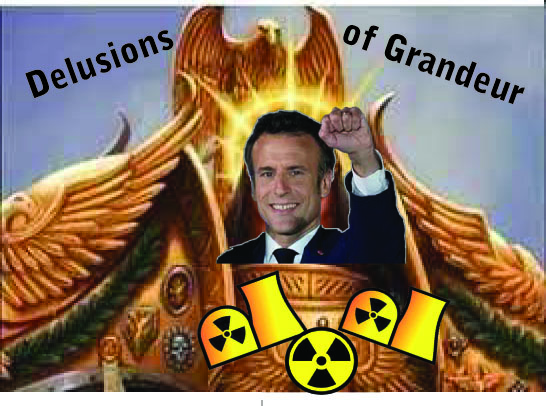
Let’s rewind. The construction program for six EPR2 reactors in France was announced by Emmanuel Macron during his speech in Belfort on February 10, 2022. These new 1,670 megawatt ( MW ) reactors are to be built in pairs on existing nuclear sites, in Penly (Seine-Maritime), then in Gravelines (Nord) and finally in Bugey. Preparatory work for this last pair could begin in the second half of 2027, with a target of commissioning at the beginning of the 2040s. The public debate on this project opened on January 28 and will end on May 15.
It seemed possible and important […] that the public debate on Bugey would finally provide clarification on two key issues that were not addressed in the two
previous public debates in Penly and Gravelines , “ wrote David Chevallier in his letter to the CNDP :
” clarification of the decision-making and legislative framework “ and
” clarification of the costs and financing of this six EPR2 program. “
Regarding the first point, the president of the special public debate commission ( CPDP ) on the EPR2 project in Bugey notes the absence of an energy and climate programming law .
” How can we work in dialogue if we don’t have this information ? “
But it is especially on the second point that he dwells. The estimate of the overall cost of these new reactors continues to be revised upwards: from 51.3 billion euros in April 2021, it rose to 67.4 billion euros in February 2024. The Court of Auditors, in
a January 2025 report , mentioned a bill of 79.9 billion euros. Its president even spoke of a cost ” likely to exceed 100 billion euros “ .
” EDF had assured us that the cost update would take place during the debate “
, writes Mr. Chevallier. The CPDP had even planned a public meeting by videoconference on April 29, on the theme ” What costs ? Who finances ? “ .
This is why the announcement of the postponement of the cost estimate fell like a hammer blow to the guarantors, both in substance and in form.
” On the same day, we had indicated during a public forum that the debate would continue on the question of costs. We are in dialogue with the director of public debate at
EDF every day. And it is through the press that we learned that there will be no update. How can we work in dialogue if we don’t have this information ? “ , the guarantor was indignantly interviewed by Reporterre .
Hence the letter to the CNDP , written in an unfriendly tone, and its publication on the debate website.
” We said to ourselves that we had to make our thoughts within the team public. We had started the public debate by asking the public about trust, both in this procedure and with regard to the project leader. It emerged that this debate had to provide information ,
“ continues David Chevallier. The letter also emphasizes the need to debate
” the appropriateness of the EPR2 program “ and alternatives to the project,
” including without nuclear energy. “
” The State and EDF must provide transparent and sincere answers to the public “
Was it under pressure from the CNDP , EDF , or both, that this famous letter was unpublished from the site three hours later ? ” Before publishing it, we sent it to EDF and
RTE , who did not appreciate it, because they were working on what they could say in the context of this debate. That is also why we removed the letter, it was worth remaining in dialogue, “ replied Mr. Chevallier, while specifying that unpublishing a document ” is not usual . “ Asked about this episode, the CNDP replied that ” it was an internal letter, which is why [it] was unpublished. “
It nevertheless responds in an opinion published on Tuesday, March 25, in which it reaffirms that ” the public debate must in particular guarantee the public respect for its right to access complete, objective and qualitative information “ and that ” the State and
EDF must provide transparent and sincere answers to the public concerning the cost and progress of each of the EPR2 pairs , as well as the financing scheme .
“ Also contacted, EDF sent an email to Reporterre in which the letter is not mentioned and which simply says that ” the public debate is an essential step for the integration of the project into the territory . “
” Serious and serious failings on the part of EDF “
The CPDP is not the only one to question the possibility of organizing a quality public debate.
” We note serious and serious failings on the part of
EDF , which is incapable, on the one hand, of providing studies concerning the state and flow of the Rhône by 2100 and, above all, of producing a definitive overall cost and a financing plan for the entire project , “ warned eleven associations [2] in
an open letter to the guarantors of the public debate dated March 19, in which they request a ” postponement “ of the debate pending this information. Jean-Pierre Collet, president of Sortir du nucléaire Bugey, clarified to Reporterre that when sending this letter, the associations were not aware that the CPDP had itself written to the CNDP to share its concerns.
The CPDP responded to this letter with a letter sent on Monday, March 31, in which it rejected the associations’ proposal.
” Not knowing the cost and financing of such a program – and therefore the projected price of the electricity produced by this equipment – constitutes, in our view, a significant gap in the public’s right to information and participation, “ wrote Mr. Chevallier.
However, ” suspending the debate would mean waiting for the right moment when information on costs and financing would be sufficiently advanced and reliable to be able to be put up for debate, and we do not control this timetable. Furthermore, the debate would suffer from this interruption: resuming it would be difficult in terms of organization and communication with the public
These warnings come at a time when participatory democracy and the public’s right to information are under particular strain . A decree aimed at removing all industrial projects from the scope of the CNDP was rejected by the Council of State, the media outlet Contexte revealed on March 21. But the executive does not intend to stop there and is expected to try again by way of an amendment to the
so-called economic simplification bill , which began to be examined by a special committee on March 24.. “
Although nuclear projects are not affected by this reform, this letter affair shows that public information and participation during public debates remain largely insufficient.
” The post-debate and the possible ongoing consultation that would take place following the public debate must already be considered, “ the guarantor wrote in his letter.
Miliband pours £2.7bn into nuclear power plant after EDF cuts stake
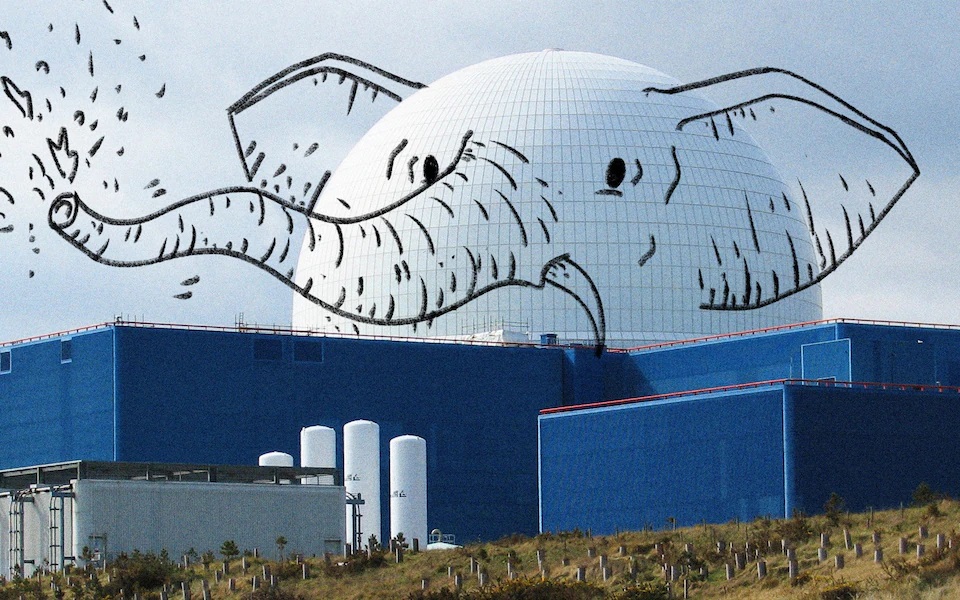
Sizewell C’s funding boost means UK taxpayers have now spent £8bn on the project
Ed Miliband has sunk an extra £2.7bn into Sizewell C after EDF slashed
its stake in the nuclear power project. The Energy Secretary said the
additional money would boost energy security, jobs and the race for net
zero.
However, anti-Sizewell campaigners questioned the wisdom of pouring
billions into a project that the Government has still not taken a final
decision to build.
UK taxpayers have so far spent a total of £8bn on the
nuclear power station. The latest cash is thought to be aimed at building
confidence in the project, potentially attracting other investors as EDF
steps back. The French energy giant recently reduced its stake from 24pc to
16pc amid pressure from Emmanuel Macron, the French president, to cut back
on risky overseas commitments.
EDF was told it should instead focus on
making a success of multibillion-euro projects at home, ensuring they were
profitable and built on time. Sizewell C is a proposed 3.2-gigawatt nuclear
power station planned for the Suffolk coast, potentially generating power
for 6m homes. Its design would be similar to the Hinkley Point C power
station being built by EDF in Somerset, whose start date has been delayed
by a decade to the mid-2030s (sic?) with costs that have doubled to £40bn.
EDF’s decision to trim its involvement has forced the UK Government into
an undignified search for alternative investors. Those approached are said
to include Centrica, the owner of British Gas, Emirates Nuclear Energy,
Amber Infrastructure Group and Schroders Greencoat, with Barclays advising
the Government.
Telegraph 4th April 2025 https://www.telegraph.co.uk/business/2025/04/04/miliband-pours-27bn-into-nuclear-power-plant-after-edf-cuts/
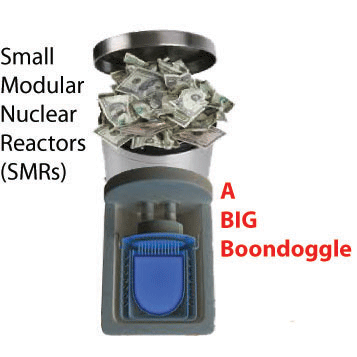
SMRs most expensive of all electricity technologies per kW generation
31 Mar, 2025 By Tom Pashby
Small modular reactors (SMRs) are projected to be the most expensive source per kW of electricity generated when compared with natural gas, traditional nuclear and renewables.
(behind a paywall)
Mini nuclear reactor rush has a short half-life.

By Rob Cyran,
The rush to produce mini nuclear reactors on the cheap might have a short
half-life. In search of vast quantities of power for the data centers
fueling artificial intelligence, Meta Platforms, Alphabet and Amazon have
backed a goal, to triple the world’s nuclear power capacity by 2050.
The prospects for nuclear are indeed brightening, but it is still more
expensive and far slower to build than renewables. The upstart approach of
making smaller, identikit reactors will struggle even harder to close that
gap. Theoretically, SMRs can reduce costs by simplifying the underlying
design into a set of mass-produced, standard parts made off-site. About 95
companies are actively chasing this dream, according to John Ketchum, chief
executive of NextEra, the nation’s largest power developer.
Big names are in the fray, like OpenAI chief Sam Altman and his side project Oklo, or
Google and Amazon, which have invested in Kairos and X-energy,
respectively. UK-based engineering giant Rolls-Royce is urging the British
government to begin moving ahead with new projects.
This idea isn’t entirely new. The U.S. built some small commercial reactors in the 1960s.
But bigger reactors benefit from economies of scale, requiring
proportionately less material and fewer operating staff, resulting in a
one-third advantage versus smaller plants in costs per kilowatt of power,
Reuters 31st March 2025
https://www.reuters.com/breakingviews/mini-nuclear-reactor-rush-has-short-half-life-2025-03-31/
UPDATE ON THE BANKRUPTCY OF USNC – Ultra Safe Nuclear.
Paul Richards 2 April 2025
In March 2025, NANO Nuclear Energy Inc. acquired the major assets of the bankrupt Ultra Safe Nuclear Corporation (USNC), including microreactor technology and advanced nuclear fuel, renaming the Micro Modular Reactor (MMR) Energy System as the KRONOS MMR.
Ultra Safe Nuclear Corporation (USNC) – Stakeholder Loss Breakdown
1] Estimated Liabilities vs. Assets
Liabilities: $50M – $100M
Assets: $10M – $50M
2] Asset Fire Sale Proceeds
Standard Nuclear, Inc. (Initial Offer – Stalking Horse Bid): $28M (for selected assets)
NANO Nuclear Energy Inc. (MMR® System & IP): $8.5M
Other minor asset liquidations (estimated): $5M
3] Total Asset Sale Revenue
Estimated total recovery: ~$41.5M
4] Estimated Stakeholder Losses
Uncovered Liabilities [after asset sales]: $8.5M – $58.5M
Equity Investors [USNC shareholders]: Likely 100% loss
Creditors [unsecured debt holders]: Majority loss expected
Government Grants & Subsidies: Unrecoverable investments
5] Key Observations
USNC’s core intellectual property, including its Micro Modular Reactor (MMR®) system, was sold at a deep discount to NANO Nuclear Energy Inc. ($8.5M).
Despite an initial $28M stalking horse bid, the final liquidation resulted in a total sale value well below USNC’s peak valuation.
Significant capital losses for early investors, especially venture capital firms and institutional stakeholders.
This reflects a fire-sale scenario, where strategic assets were sold at fractions of their development costs due to financial distress.
Buyer sought for nuclear energy developer as it collapses into administration

By Adam Beech, 31 Mar 2025, https://www.insidermedia.com/news/midlands/buyer-sought-for-nuclear-energy-developer-as-it-collapses-into-administration
A nuclear energy developer based in the West Midlands has been placed into administration, with a buyer now sought.
Jonathan Amor and Richard Oddy of Azets were appointed as administrators of Moltex Energy Ltd on 17 March following “the failure to achieve the majority shareholder consent to new investments” or “the sale of its assets”.
While the company is in administration, the subsidiary undertakings of Moltex Energy Canada Inc and MoltexFLEX Limited will continue to trade as usual and are unaffected.
The administrators intend to market the business and assets for sale, including the intellectual property and shareholdings of the subsidiary operations.
The intention is to seek an acquirer that is “well-positioned and suitably funded to develop the technology interests of the company further for the benefit of all stakeholders”.
UK Treasury confident Sizewell C nuclear power investors will soon be‘teed up’ – crunch time for Sizewell.
Ministers will decide whether to proceed with delayed
Suffolk scheme in June spending review. A senior Treasury minister has said
he is confident private financing for the Sizewell C nuclear power station
will be “teed up” in time for a final investment decision in June over
whether to proceed with the delayed project.
Darren Jones, chief secretary
to the Treasury, told the Financial Times that the crunch point for the
planned project in Suffolk was coming in just 10 weeks, at the time of the
government’s three-year spending review. “We have to make the final
investment decision [FID] which we will do at the spending review,” he
said. “FID will be taken in June.” Jones added: “You wouldn’t take
FID unless you’ve got all of your investors teed up. We will do.”
The UK government and French energy group EDF, the initial backers of Sizewell
C, have been trying to raise billions of pounds from investors and had
previously hoped to reach a final decision on investment last year. But the
process has dragged on and the price tag has soared since its £20bn
estimate given as recently as 2020.
Government officials and industry
executives expect Sizewell C will get billions of pounds of funding from
British taxpayers alongside investment from sovereign wealth funds and
institutional investors. The government has been negotiating with investors
including Centrica, Emirates Nuclear Energy Company, Amber Infrastructure
Group and Schroders Greencoat. They may not invest and ministers could yet
balk at the huge costs of the project. But Jones said the government had
already released a couple of billion pounds for the current year for
enabling works at the site.
FT 1st April 2025, https://www.ft.com/content/4a889ad7-6d41-47a9-a946-c2535ae2aaa6
‘Greedy landlords are cashing in and forcing us out of town’.
The construction of the Sizewell C nuclear power plant on the Suffolk
coast is a key part of the government’s growth programme. But some locals
fear being forced out, accusing landlords of cashing in on a jobs boom by
evicting tenants and raising rents to unaffordable levels. The plant is due
to open in 2031, and although a final investment decision has not yet been
made, groundwork is already well under way.
The construction project will
require a predicted workforce of 7,900, of which about two-thirds will be
from outside the area. About 2,400 workers will be based on site with 500
others living at the former Pontins holiday park at Pakefield, near
Lowestoft. The remaining contractors, however, will have to move into
properties in or around the town of Leiston – population 5,508 – where some
rents have doubled to more than £3,000 a month.
BBC 31st March 2025,
https://www.bbc.co.uk/news/articles/ce98ljn1gzno
Why the nuclear renaissance is far from certain.
NEW RESEARCH: A new report from consultancy ICF found a nuclear
renaissance was “far from certain”, citing doubts over economic
viability, technological scalability and long timelines. SMRs are the most
expensive source.
FT 28th March 2025, https://www.ft.com/content/82d77aa5-c4cc-47b6-833a-0a1f2c188b0c
UK Government investment continues squeeze on EDF’s share of Sizewell C
By Tom Pashby
EDF’s stake in Sizewell C has decreased by a further 1.6% following investment by the UK government using its Devex (development expenditure) subsidy scheme. Two days ago NCE reported EDF’s share had dropped to
16.2%. This has now dropped a further 1.6%
New Civil Engineer 27th March 2025, https://www.newcivilengineer.com/latest/uk-government-investment-continues-squeeze-on-edfs-share-of-sizewell-c-27-03-2025/
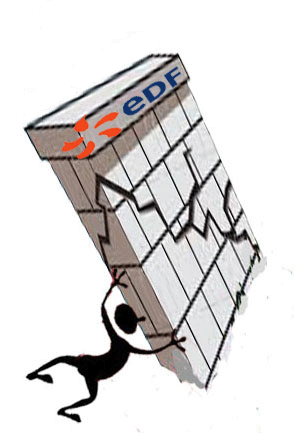
EDF reduces stake in Sizewell C as boss sacked
the sacking raises “further fundamental questions about the wisdom of proceeding with the Sizewell C ‘Replica’ project of Hinkley Point C in which EDF is set to be deeply involved”
“Clearly Sizewell C could not reach a Final Investment Decision without taxpayers shouldering the bulk of the project’s massive cost – a hugely controversial choice given that the Chancellor is currently scrabbling around to save as much money as possible.“
25 Mar, 2025 By To s-sacked-25-03-2025/ https://www.newcivilengineer.com/latest/edf-reduces-stake-in-sizewell-c-as-boss-sacked-25-03-2025/
EDF’s ownership of Sizewell C has decreased to 16.2% and the UK government’s stake increased to 83.8%. Meanwhile, the French company’s chief executive has been axed and its financial stability has been called into question.
The UK’s flagship gigawatt-scale new nuclear projects under construction – Hinkley Point C in Somerset and Sizewell C in Suffolk – are both subject to intense scrutiny as costs rise and timelines slip.
Hinkley Point C is late and over budget, and Sizewell C is awaiting its delayed final investment decision (FID) which is scheduled to be made at the Spending Review on 11 June. The FID will reveal the final determination of who will fund the project and how. The government has already invested several billion pounds in developing it.
Hinkley Point C’s costs rose from around £25bn in 2015 to up to £34bn in 2024, and Sizewell C is projected to cost £40bn – double what it was estimated by EDF and the UK Government to cost in 2020. However, the Treasury disputes this latter figure.
EDF Sizewell C ownership stake reduced
On 24 February 2024, NCE reported that EDF was appearing to scale back its proposed ownership ambitions of Sizewell C.
EDF’s 2024 Annual results document laid out its contribution to the power plant, which is “subject to some conditions, including […] a share in ownership of the project of 10 to 19.99%, including a cap on financial exposure in value.” It also requires “a return on capital expected by EDF as an investor in line with market return for this type of assets, risk allocation profile and its investment policy.”
It is understood that the reason for selecting 19.99% rather than 20% is because a company buying 20% would have to set up a subsidiary entity to take the ownership.
Credit ratings agency Fitch Ratings announced in a ‘Rating Action Commentary’ on 21 March 2025 that the Sizewell C’s owners – the UK Government and EDF – had changed their ownership stakes.
EDF previously confirmed in its 2024 half year results that Sizewell C is owned 76.1% by the UK Government and 23.9% by EDF.
Fitch’s announcement said: “As of end-2024, the project was owned 83.8% by the UK government and 16.2% by EDF, down from 49.4% at end-2023.”
This marks a fresh drop in EDF’s ownership by 7.7 percentage points.
The decrease comes after French public spending watchdog Cour des comptes said EDF should scale back involvement in UK nuclear projects.
Macron sacks EDF chief and funds EDF reactors
In France, where the government has political control of the entirely state-owned EDF (Électricité de France), Macron fired the company’s chief executive Luc Rémont.
The UK’s Daily Telegraph linked Rémont’s ousting to EDF’s planned electricity price hikes for French industrial customers, of which Macron had promised to “take back control”.
Adding further pressure to EDF’s leadership, French building materials company Saint-Gobain chairman and chief executive officer Benoit Bazin, speaking to French business news channel BFM Business, accused EDF of “giving the middle finger to French industry”.
It has also been reported that the French state has agreed to issue a single subsidised loan “covering at least half the construction costs of six nuclear reactors”, according to the president’s office. It is understood that the six reactors are at the pairs at Penly, Gravelines and Bugey in France.
Former energy secretary reacts to ‘extremely concerning’ developments‘.
Backbench Conservative peer Lord Howell of Guildford reacted to the news. Howell was energy secretary in Margaret Thatcher’s government which supported the construction of nuclear power plants.
He described the reduced stake in Sizewell C as “one more development in growing concern about EDF’s capacity or ability to continue with Hinkley Point C project or take a large (20%+) position in the Sizewell C proposed project.”
Reflecting on the sacking of the EDF boss, he said this is “An extremely worrying development.”
He went on to say the sacking raises “further fundamental questions about the wisdom of proceeding with the Sizewell C ‘Replica’ project of Hinkley Point C in which EDF is set to be deeply involved”
Anti-Sizewell C groups say ‘alarm bells should be ringing’
Stop Sizewell C executive director Alison Downes said: “EDF has not contributed a single penny financially to Sizewell C for well over a year now, and is under growing pressure in France, not only having lost its boss but to scale back its international commitments across the board.
“Clearly Sizewell C could not reach a Final Investment Decision without taxpayers shouldering the bulk of the project’s massive cost – a hugely controversial choice given that the Chancellor is currently scrabbling around to save as much money as possible.
“Rachel Reeves should cancel Sizewell C now and redirect those funds to the Warm Homes Plan, which would lower energy bills and create jobs in every constituency.”
Chancellor Rachel Reeves has proposed austerity measures for the welfare state, which she says are needed to fund infrastructure developments, ahead of the Spring Statement and Spending Review.
Cuts to welfare, particularly covering disability and unemployment support, are proving to be unpopular with dozens of MPs on the left of the Labour party.
A Together Against Sizewell C (TASC) spokesperson said: “Alarm bells should be ringing as the UK government stake in Sizewell C increases to 84% with only the UK taxpayer currently funding Sizewell C’s development costs.
“This begs the question, ‘Why are EDF refusing to put any further money into Sizewell C?’ EDF have decided to build no more of this reactor design in France, indicating they have no confidence in the EPR design destined for Sizewell.”
The spokesperson went on to say: “EDF are broke, as evidenced by their desperate search for cash to finish Hinkley Point C’s construction.
“This is hardly a secure basis for the UK government to continue in partnership with EDF and certainly not a good advert to encourage potential investors.”
Referencing EDF’s plans for a final stake to be as low as 10%, TASC said: “This evidences that even the developer considers the Sizewell C development to be inherently
EDF and the Department for Energy Security and Net Zero did not respond to requests for comment.
Finland’s Fortum says building new nuclear power is too expensive, for now
New nuclear power production capacity is not commercially viable to
build for now, based on the current Nordic power market outlook of low
prices. The company on Monday concluded a two-year study into the
feasibility of new nuclear power but said it would focus on renewable
energy and nuclear lifetime extensions to cover growing electricity demand
in the Nordics for now.
“New nuclear could provide new supply to the
Nordics earliest in the second half of the 2030s, if market and regulatory
conditions are right,” Fortum CEO Markus Rauramo told reporters. He said
Fortum would continue to explore new nuclear generation and pumped
hydropower as long-term options in Sweden and Finland. Fortum said building
new nuclear reactors would require a solid risk sharing framework similar
to the one being prepared by the Swedish government.
Reuters 24th March 2025,
https://www.reuters.com/business/energy/finlands-fortum-explores-long-term-options-new-nuclear-power-2025-03-24/
It’s time to stop Sizewell C to generate ‘Warm Homes’ jobs instead
March 24 2025, Funding th Future – Tax Research UK.
Campaigners have called on Rachel Reeves and Ed Miliband to stop Sizewell C, and redirect its funding to generate ‘Warm Homes’ jobs in every constituency by the next election.
Their report’s summary says:
There is a clear political advantage from halting Sizewell C and redirecting the billions saved into making millions of homes more energy efficient, thus reducing fuel poverty. This approach will benefit every city, town, village and hamlet in Britain.
It will generate long-term, secure jobs, particularly for young people. It will be quick to implement, so by the next election new jobs and cheaper, warmer, healthier homes will have appeared in every constituency. By contrast, continuing to build Sizewell C and, post 2030, the development of new small modular nuclear reactors, will affect a limited number of constituencies.
Should Sizewell C go ahead, it is expected to cost around £40bn between now and when it opens, potentially around 2040: an average of £2.7bn per year for the next 15 years. Deducting money already spent, if Sizewell is cancelled now, the public money saved by 2030 is £7.1bn, assuming (as seems likely) no private investors are found to share the costs.
We propose that this £7.1bn should be added to the £6.6bn to be spent over the current Parliament on home energy efficiency, as promised in Labour’s 2024 manifesto. This shift of funds would massively increase the chances of achieving the Government’s aim to ‘Make Britain a clean energy superpower to cut bills, create jobs and deliver security with cheaper, zero-carbon electricity by 2030, accelerating to net zero‘. https://www.taxresearch.org.uk/Blog/2025/03/24/its-time-to-stop-sizewell-c-to-generate-warm-homes-jobs-instead/
France delays EPR2 reactors to 2038
The 4th meeting of France’s Nuclear Policy Council (CPN – Conseil de
politique nucléaire), chaired by President Emmanuel Macron, decided to
delay the commissioning of EPR2 reactors to 2038 – a postponement of
three years. The CPN, which has been held regularly since 2022, defines the
main orientations of national nuclear policy.
The EPR2 programme, announced
in February 2022, envisages the construction of six upgraded EPR reactors
with an option for eight more. The first three pairs of EPR2 reactors are
planned for the Penly, Gravelines and Bugey NPP sites. Construction is
expected to start in 2027. The cost was originally estimated at €51.7bn
($56.4bn), but this was revised upwards to €67.4bn in 2023, according to
the Court of Auditors. Taking inflation into account, a total budget of
nearly €80bn is now being considered.
Nuclear Engineering International 21st March 2025, https://www.neimagazine.com/news/france-delays-epr2-reactors-to-2038/
Macron ousts EDF boss accused of giving French industry ‘the middle finger’
Luc Rémont will be replaced in a reshuffle with factory energy prices set to soar
Alex Singleton, Business Reporter, https://www.telegraph.co.uk/business/2025/03/21/macron-ousts-boss-state-run-edf-french-energy-prices-surge/
Emmanuel Macron has ousted the boss of the state-run EDF after French industrialists revolted over its high electricity prices.
Luc Rémont is to be replaced in a surprise reshuffling of the company’s top ranks, Mr Macron’s office said on Friday. Mr Rémont has run the the state-owned energy giant since November 2022.
The shake-up follows an outcry over the high energy prices EDF is poised to charge factories. Benoît Bazin, the boss of building materials giant Saint-Gobain, had accused EDF of “giving the middle finger to French industry” by increasing prices.
Rules that force EDF to sell energy to major industrialists at below-market prices are set to expire at the end of the year and the generator had announced plans to raise its prices.
Industry group Uniden, which represents dozens of France’s biggest manufacturers including Renault and steelmaker ArcelorMittal, claimed EDF was “deliberately turning its back” on French businesses at a time when manufacturers were “exposed to unprecedented non-European competition that threatens the very survival of many sites”.
The row is embarrassing for Mr Macron, who had pledged to “take back control of electricity prices” and who sees cheap electricity as a way of securing the French economy. Two years ago, he fully nationalised EDF by buying the 16pc of the company the government did not already own.
The shake-up comes days after the Macron administration said it had agreed state financing for six new nuclear reactors to be built by EDF over the coming decades.
Anger over high industrial energy prices is rising in the UK too. UK factories pay 50pc more for electricity than rivals in France and Germany, and four times as much as American plants. High prices have been blamed on net zero and slow-moving plans to expand nuclear power.
Warnings from industrialists that net zero energy policies are damaging the economy have fallen on deaf ears. Ed Miliband, the Energy Secretary, said this week the UK Government was “absolutely up for the fight” over net zero.
EDF is one of the largest players in the UK nuclear power market, after buying three formerly nationalised regional electricity boards and the nuclear operator British Energy.
It is currently building the UK’s first new nuclear power station for over 20 years, Hinkley Point C, and plans to embark on the construction of another, Sizewell C. But in January, the future of this new project was thrown into doubt after the French state auditor warned it against embarking on risky new foreign projects.
EDF declined to comment. The French government has been approached for comment.
1 This Month



Shut down the radiation-damaged Heysham nuclear reactors now
To see nuclear-related stories in greater depth and intensity – go to https://nuclearinformation.wordpress.com

Say No to NASA’s Reckless Nuclear Reactor on the Moon
Say No to NASA’s Reckless Nuclear Reactor on the Moon
-
Archives
- October 2026 (256)
- September 2026 (339)
- August 2026 (330)
- July 2026 (355)
- June 2026 (287)
- May 2026 (306)
- April 2026 (356)
- March 2026 (251)
- February 2026 (267)
- January 2026 (308)
- December 2025 (358)
- November 2025 (359)
-
Categories
- 1
- 1 NUCLEAR ISSUES
- business and costs
- climate change
- culture and arts
- ENERGY
- environment
- health
- history
- indigenous issues
- Legal
- marketing of nuclear
- media
- opposition to nuclear
- PERSONAL STORIES
- politics
- politics international
- Religion and ethics
- safety
- secrets,lies and civil liberties
- spinbuster
- technology
- Uranium
- wastes
- weapons and war
- Women
- 2 WORLD
- ACTION
- AFRICA
- Atrocities
- AUSTRALIA
- Christina's notes
- Christina's themes
- culture and arts
- Events
- Fuk 2022
- Fuk 2023
- Fukushima 2017
- Fukushima 2018
- fukushima 2019
- Fukushima 2020
- Fukushima 2021
- general
- global warming
- Humour (God we need it)
- Nuclear
- RARE EARTHS
- Reference
- resources – print
- Resources -audiovicual
- Weekly Newsletter
- World
- World Nuclear
- YouTube
-
RSS
Entries RSS
Comments RSS

