Google, Constellation near deal for nuclear power, Bloomberg News reports
By Reuters, October 6, 2026, https://www.reuters.com/legal/litigation/google-constellation-near-deal-nuclear-power-bloomberg-news-reports-2026-10-06/
Google’s parent Alphabet (GOOGL.O)
, opens new tab is nearing a multi-year deal to buy nuclear energy from Constellation Energy (CEG.O)
, opens new tab for $1 billion or more, Bloomberg News reported on Monday, citing people familiar with the matter.
- The deal could be announced as soon as this week, the report said.
- Google could not immediately be reached for comment outside regular business hours, while Constellation Energy declined to comment.
- Rising electricity demand from AI computing has renewed interest in nuclear power, which offers steady, carbon-free energy.
- Last year, search giant Google partnered with NextEra Energy (NEE.N), opens new tab to restart an Iowa nuclear power plant. It also signed a deal last month with Southern Co (SO.N), opens new tab to support upgrades at two of its nuclear plants.
- Constellation has also signed power deals with Amazon.com(AMZN.O), opens new tab and Microsoft(MSFT.O), opens new tab previously.
Reporting by Fabiola Arámburo in Mexico City, Editing by Subhranshu Sahu
Nuclear energy could double by 2050, but AI-driven power demand does not change the economic case

New global assessment finds nuclear is not cost-competitive with solar and wind in most countries, despite renewed interest arising from AI datacentres and energy security concerns
Key findings:
- Global nuclear capacity could grow 2–3x to ~550–1,000 GW by 2050, holding a ~10% share as electricity demand also grows 2–3x. Reaching ETC’s central estimate of ~750 GW requires new build to rise 3–5x, from 5 GW/year over the past 20 years to 15–25 GW/year, and investment to rise from ~$50bn to ~$200bn a year.
- Small modular reactors remain 1-2 decades away from wide deployment, despite attracting large investment and political attention amid surging AI-driven power demand. Early US cost estimates range from ~$140–270 per MWh, well above the large reactor cost range of $40–190 per MWh.
- Similar reactor designs can cost 4–9 times more to build in the US and Europe than in China and South Korea – financing costs are key factor.
- Russia controlled 40% of global uranium enrichment capacity in 2025, and key nuclear equipment manufacturing is concentrated in just five countries. Nuclear supply chain concentration poses the greatest risk, rather than safety and waste management.
London, 6 October 2026 — Surging power demand from AI data centres and energy security fears sharpened by the Russia-Ukraine war and the Strait of Hormuz crisis have revived interest in nuclear power. A new report from the Energy Transitions Commission, The Role of Nuclear in the Energy Transition: Complementary but Limited, offers a measured assessment: nuclear could provide up to 10% of global electricity supply by 2050 — roughly doubling today’s 380 GW capacity to 750 GW — but expansion only makes economic sense in a limited number of countries. Delivering this share requires average new nuclear capacity to grow to 15–25 GW annually until 2050, from an average of 5 GW per year over the past 20 years, backed by $200bn annually compared to $50bn today. This high deployment rate was previously achieved in the 1970-80s across the US and EU, in part driven by an oil crisis.
The vast majority of the remaining 90% of decarbonised electricity will come from solar and wind, which are cheaper and faster to build in almost every country. In most developed countries, new solar and onshore wind are typically 20–50% cheaper than new nuclear, while offshore wind costs are comparable or lower. Cost reductions in battery storage are increasingly enabling solar and wind to provide cost-competitive ‘round the clock’ power.
“The nuclear debate has been too binary for too long: reject it outright over safety and waste concerns or insist it must carry the whole transition. This report settles it with evidence: extend existing plants where safe, and build new ones where costs can be managed to competitive levels. On average this might mean 10–20% of a country’s future power generation coming from nuclear plants. In most places, however, solar and wind win decisively on cost, speed and security. So for countries without existing nuclear delivery capabilities, diverting resources to nuclear will increase costs and delay the transition.” said Adair Turner, Co-Chair of the Energy Transitions Commission.
“SMR investor hype was built on cost assumptions that have not materialized. US SMR CAPEX estimates have inflated from $3,000–10,000 per kilowatt to $12,000–15,000 per kilowatt in just a few years, hit by the same cost overruns as large reactors. Costs will only fall with manufacturing scale and standardisation, but with over 70 competing designs, achieving either will take time. SMRs may have a role in the 2040s, but deployment at scale in the 2020s is unlikely. For businesses needing reliable clean power, grid-scale renewables plus storage and power purchase agreements with existing nuclear are proven, cheaper alternatives.” said Jules Kortenhorst, Co-Chair of the Energy Transitions Commission.
SMR hype is outpacing the technology’s readiness
Small modular reactors (SMRs) are attracting heavy investment amid AI’s power surge, and pilot projects are underway in China and Canada, but the ETC estimates widespread deployment will not occur until the late 2030s and 2040s and only if costs decline. Early US cost estimates range from ~$140–270 per MWh, well above the large reactor cost range of $40–190 per MWh. While modular reactor designs could reduce costs by 20–30%, this depends on design consolidation from over 70 competing SMR designs globally and standardisation across regulations in different countries to enable sufficient project pipelines and cross-border learning effects.
Why nuclear is economic in some countries, but not most
A country’s optimal nuclear share depends on two factors: the nation’s ability to deliver projects quickly at competitive costs, and the benefit to the electricity system. Similar nuclear designs cost 4-9 times more in US and Europe than in China and South Korea, and result in over 3 times higher final electricity prices. The gap reflects: higher standardisation and replication in recent Chinese and South Korean projects, leading to shorter construction timelines compared to “first-of-a-kind” Western projects; more effective regulatory architecture in fleet-build programmes; and lower financing costs. Chinese state-backed projects raise capital at around 1–3%, compared with 8–10% for privately financed projects.
Benefits to the grid vary greatly by country. The UK, with expensive offshore wind and high balancing costs, could economically support up to 20% nuclear generation instead of increasing reliance on ultra-long duration storage and overbuilding renewable capacity. In India, the optimal share of nuclear is only roughly 10%-20%, as abundant solar resources paired with batteries provide the cheapest source of electricity. Countries with lots of renewable resource and no established nuclear industry—for example, most of Sub-Saharan Africa, Latin America and Australia—have no economic case for nuclear; the same institutional and financial resources devoted to renewables deliver faster, cheaper decarbonisation.
Lifetime extensions are safe and the most cost-effective new capacity
The cheapest path to maintaining nuclear capacity is safely extending existing reactor lifetimes from 60 to 80 years. Life extensions cost $500–$1,100 per kilowatt versus $2,000–$18,000 per kilowatt for new builds, yielding electricity costs below $40 per megawatt-hour. 12 US plants have been approved for 80-year operation since 2019. Extending existing global capacity to 80 years could retain 230 GW that would otherwise retire by 2050, reducing new-build requirements by a third.
Russia’s stronghold on supply chains is nuclear’s vulnerability
Approximately 40% of global uranium enrichment capacity in 2025 ran through Russia. It supplied around 20% of EU enriched uranium in 2024, even after the EU took measures to reduce Russian imports after the invasion of Ukraine. Reactor pressure vessels, turbines and control systems are manufactured in just six countries: France, South Korea, Japan, the US, China and Russia. While in aggregate, supply chain capabilities can meet the ramp up in nuclear build rates needed to reach up to 1,000 GW by 2050, it could take a decade or more to diversify these capabilities to reduce nuclear supply chain concentration.
Download the report: https://www.energy-transitions.org/publications/nuclear-in-the-energy-transition/
Will there ever be a new nuclear power station at Bradwell?

4. Speculation
With large ‘mega-reactors’ seemingly out of the picture, a prevailing misconception is that so-called Small Modular Reactors (SMRs) might be built at Bradwell. SMRs are anything but small! Typical proposals would take up more space than the closed Bradwell does and introduce yet more toxic waste. And no design that the UK Government has considered has ever been built and tested. No company or developer has indicated it is considering the Bradwell site, although other closed sites in England have been mooted.
6 October 2026 https://www.banng.info/news/regional-life/new-nuclear-at-bradwell-ever/
Peter Banks, BANNG Co-ordinator, answers this question for the October 2026 edition of Regional Life magazine
Several factors come into play when attempting to answer that big question.
1. Current State of Play
The withdrawal of the Chinese General Nuclear Company (CGN) indicated that the Bradwell site is highly unlikely to be further considered for large ‘mega-reactors’ like the Hualong One Reactor design.
2. Political Implications
In existing (albeit awaiting updates) UK Government documentation, the Bradwell site is still listed as “potentially suitable” for nuclear development. With frequent changes in ministers and proposed regulatory changes, it is unclear whether this will change, especially as the onus has shifted to potential developers to choose a “suitable site” themselves. BANNG continues to maintain that the site is wholly unsuitable for any type of nuclear power station and its long-term legacy of dangerous radioactive wastes.
3.Legacy
There are areas of the former power station that give cause for concern. The two highly visible buildings covered in shiny cladding house the reactor containment vessels with the graphite moderator blocks still inside. These will remain too dangerous to decommission for another 100 years from now. Also Bradwell Intermediate Level Waste (ILW), along with inbound ILW from Dungeness and Sizewell A, is housed in a relatively new (built 2013-14) Intermediate Storage Facility (ISF). Further, when demolition of the storage pond building started, it was found it was too radioactive and another shell was built around it. Any new nuclear power station next door would vastly add to the dangerous legacy.
4. Speculation
With large ‘mega-reactors’ seemingly out of the picture, a prevailing misconception is that so-called Small Modular Reactors (SMRs) might be built at Bradwell. SMRs are anything but small! Typical proposals would take up more space than the closed Bradwell does and introduce yet more toxic waste. And no design that the UK Government has considered has ever been built and tested. No company or developer has indicated it is considering the Bradwell site, although other closed sites in England have been mooted.
5. Probability
At the time of writing, no developers have proposed building any sort of nuclear power plant at Bradwell. In addition to BANNG’s resolute stance that the site is not suitable, regulators may also be reluctant to recognise it as meeting the criteria to be “potentially suitable”.
To conclude, the chances of building a new nuclear power station at Bradwell are minimal. The answer to the question must be NO.
Bangladesh nuclear plant draws hope — and worry
Daily Mail, By AFP, 7 October 2026
Bangladesh is preparing to switch on its first nuclear power plant, a long-delayed project promising relief from chronic electricity shortages — even as some fear living beside it.
The 2.4-gigawatt Rooppur nuclear plant, a $13-billion project more than a decade in the making, has transformed the once sleepy nearby village of the same name, bringing Russian workers, new businesses and jobs.
Once fully operational, its two reactors are expected to supply more than 10 percent of electricity demand in the South Asian nation of 170 million people, which has been hit hard by the fuel crisis sparked by the conflict in the Middle East.
For Md Zahedul Hasan, managing director of state-owned Nuclear Power Plant Company Bangladesh, the giant complex represents the culmination of a decades-old ambition to bring nuclear power to the country.
The plant’s first reactor is scheduled to be turned on by the end of this year, and the second unit “will be operational within a year”, Hasan said at the site on the banks of the Padma River, 150 kilometres (93 miles) west of Dhaka.
Bangladesh’s power sector is dominated by fossil fuels, particularly natural gas, with coal, oil and renewables making up the rest.
The project, built with Russian state nuclear corporation Rosatom, has also brought an unlikely Russian enclave to rural Bangladesh.
Thousands of Russian workers have spent years building and installing equipment, with a residential complex, shops and restaurants springing up around them.
Shop signs appear in Bangla, English and Russian, while some restaurants serve borscht soup alongside local dishes.
Alexander Vladimirovich Skvortsov, a Russian installation technician, said he had a choice between working in Turkey or Bangladesh. He chose Rooppur, moving there with his family in 2024.
“When I first saw the construction site at Rooppur, I realized how much work lay ahead on this project… honestly, Rooppur changed me and my life,” he told AFP………………………………………….
Md Yunus Ali, 80, whose home is a 15-minute walk from the plant, said opposition to building a nuclear facility in the densely populated area dates back decades.
“A few days ago, they ran a compressor test with a big bang… even the children who were asleep woke up in fear,” said Ali, a retired paper mill worker.
“I am old now, and I am not afraid for my life… but I have children and grandchildren, and I want safety for them.”
The ambition to build a nuclear power plant at Rooppur dates back to the 1960s.
Several attempts came after independence, including approaches to Saudi Arabia and France, and talks with China and South Korea. No deals materialised.
Bangladesh finally signed an agreement with Moscow in 2015, with the Russian state offering a loan covering about 90 percent of the project’s original cost.
Construction began in 2017.
The project has since faced delays, including disruption from the Covid-19 pandemic and sanctions on Russia after its invasion of Ukraine, which complicated equipment deliveries and payments.
There have also been corruption allegations surrounding the project, including against ousted former prime minister Sheikh Hasina and members of her family. They have rejected the accusations……………… https://www.dailymail.com/wires/afp/article-16188867/Bangladesh-nuclear-plant-draws-hope–worry.html
Big Reactors in Saskatchewan: What could go wrong?

The implication of these experiences and proposals is that a new 1,000-MW reactor could carry a price tag of $15 to $26 billion. That would put the total cost for a two-reactor project, like Saskatchewan is proposing, in the $30-$50 billion range. Estimates of the costs of electricity needed to cover the capital costs of new nuclear plants, if they’re financed through electricity rates, range from the mid-20¢ to more than 40¢ per kilowatt-hour.
October 3, 2026, By Mark Winfield and Susan O’Donnell, https://energi.media/opinion/big-reactors-saskatchewan-what-could-go-wrong/
The Saskatchewan government’s recent announcement of its intention to build two large nuclear reactors has again raised questions of the role of large nuclear energy projects in relatively small provincial economies.
The last new full-scale nuclear reactor project in Canada, the Darlington nuclear power plant east of Toronto, was completed more than 30 years ago. The enormous cost overruns on that project contributed significantly to the effective bankruptcy of the province’s utility, Ontario Hydro, leading to its eventual break-up.
As the memories of these previous experiences with large nuclear construction projects have faded, new projects are now being proposed. These projects, and experiences with the handful of new-build nuclear projects initiated in Europe and the United States in the last two decades, give us some indication of the large reactor options, and their potential costs.
New Brunswick’s experience with its long- troubled Point Lepreau reactor, should give Saskatchewan further cause for reflection on the wisdom of such a pathway. The Lepreau plant is Canada’s lone experience with a large nuclear power plant in a relatively small provincial electricity system and economy, New Brunswick Power is still carrying a C$3.6 billion nuclear debt from the reactor’s original 1975-1983 construction, and the costs of a 2008-2012 refurbishment that was a billion dollars over budget. Since the refurbishment, the poor performance of the Lepreau reactor has been the primary reason New Brunswick Power loses money almost every year.
In Ontario and Alberta, two reactor designs, the CANDU MONARK and the Westinghouse Electric AP1000, have been considered for the expansion of the Bruce Nuclear power plant on Lake Huron, a proposed 10,000-MW Ontario Power Generation plant at Wesleyville on Lake Ontario, and the proposed 4,800-MW Peace River Nuclear Project in Alberta.
The 1,000-MW CANDU MONARK is intended as a successor to the existing CANDU reactors in Ontario and New Brunswick. Although it’s being aggressively promoted to potential international customers, the MONARK design remains incomplete. The situation has already led the Alberta project’s proponents to switch their proposal to favour the AP1000 design by Westinghouse Electric.
Cost information is available on the AP1000 reactor, as two units were completed in 2024 at the Vogtle nuclear power plant in Georgia. The total estimated cost of those two 1,100-MW reactors was US$36 billion, or about $26 billion per reactor in 2026 Canadian dollars. The plant has been described as “the most expensive power plant ever built on Earth.” When it went into service, Vogtle resulted in a nearly 24% increase in Georgia Power’s electricity rates, the largest jump in the utility’s history.
AtkinsRéalis (formerly SNC Lavalin) is currently pitching the CANDU MONARK to Poland, with a reported estimated cost of $45 to $50 billion for a three-reactor plant, or about $15 billion per unit.
The implication of these experiences and proposals is that a new 1,000-MW reactor could carry a price tag of $15 to $26 billion. That would put the total cost for a two-reactor project, like Saskatchewan is proposing, in the $30-$50 billion range. Estimates of the costs of electricity needed to cover the capital costs of new nuclear plants, if they’re financed through electricity rates, range from the mid-20¢ to more than 40¢ per kilowatt-hour.
In the case of New Brunswick, another smaller province considering a large new reactor project, it has been estimated that the project would nearly double to even triple current consumer electricity costs. Such increases would undermine energy affordability, economic competitiveness, and any plans for decarbonization through electrification.
A province could also try to finance the costs through its general tax base. That is the approach that Ontario been taking, at an estimated cost to the provincial treasury of $7 to $8.5 billion per year. Electricity subsidies now account for more than half of Ontario’s deficit, exceeding annual capital expenditures on education and health care by wide margins.
In the case of New Brunswick, the annual costs of that approach, even spread over the decade or more of construction, could exceed the province’s current, record $1.39 billion deficit, and match or exceed its entire annual capital spending plans in all other areas. Although the Saskatchewan economy is almost double the size of New Brunswick, the scale fiscal impacts of trying to finance two reactors out of general provincial tax revenues would be comparable.
Saskatchewan, for its part, has had another idea – asking the federal government to pay three-quarters of the cost of the province’s first nuclear reactor, a contribution of between $11 to $20 billion from federal taxpayers.
In addition to the financial risks a single large reactor in a relatively small electricity system would repeat and magnify a key problem associated with the original Point Lepreau project in New Brunswick —putting very higher portion of a province’s electricity supply eggs in a single, very expensive and high-risk basket.
All of this should suggest a high degree of caution among provinces considering adding large nuclear components for their electricity systems, and a need to think about other ways of decarbonizing their electricity systems while ensuring their affordability and sustainability.
Mark Winfield is a professor at the Faculty of Environmental and Urban Change at York University in Toronto, and co-chair of the faculty’s Sustainable Energy Initiative. Susan O’Donnell is adjunct research professor and lead researcher on the CEDAR project in Sustainability and Environmental Studies at St. Thomas University.
Uranium Prices Just Broke a 19-Year Record, but Nuclear Stocks Are Collapsing Anyway
Yaho/Finance, Rich DupreySat, October 3, 2026
Quick Read
- Despite uranium hitting a 19-year record of $96/lb, CCJ is down 7% and UEC is down 20% in 2026 as utilities balk at signing new contracts.
- OKLO and SMR have collapsed 50% and 45% year to date as hyperscalers prioritize near-term megawatts over long-term gigawatt nuclear capacity.
- Cameco’s realized price of $65/lb lags spot near $88, and term contracting volumes fell 15%, so the record means little until utilities actually sign.
The long-term uranium price reached $96 per pound, an all-time record that passes the $95/lb high from mid-2007, according to ZeroHedge’s report on uranium term prices. The term price sets the multiyear contracts utilities sign to fuel their reactors, and it is up roughly 12% year to date. That should be good news for Cameco (NYSE:CCJ), a leading uranium producer. Instead, Cameco shares closed at $85.18 on October 2, down 6.9% for 2026.
Cameco and Nuclear Stocks Slid as Uranium Hit a Record
Cameco fell 11.62% over the past month, from $96.38 to $85.18. It also fell Friday and underperformed the market. Its 52-week high is $135.24.
The rest of the sector has done worse:
- Uranium Energy (NYSEAMERICAN:UEC) is down 20.38% year to date, even after selling uranium at a weighted average of $93.13/lb. The stock reversed course after an earnings spike.
- Denison Mines (NYSEAMERICAN:DNN) is down 20.19% over the past month.
- Oklo (NYSE:OKLO) is down 50.01% year to date.
- NuScale Power (NYSE:SMR) is down 45.31% year to date.
- Leading uranium and nuclear ETF VanEck Uranium Nuclear Energy ETF (NYSEARCA:NLR) is down 16.4% year to date. Cameco was its second-largest holding as of Oct. 1.
………………………………………………………….. https://finance.yahoo.com/markets/stocks/articles/cameco-stock-down-below-90-122800554.html
Constellation, Amazon agree nuclear-focused power purchase deal
WNN, Thursday, 1 October 2026
A 20-year power purchase agreement signed by tech giant Amazon will enable Constellation to add 190 MW of capacity and extend the operating life of the Calvert Cliffs nuclear power plant in Maryland in the US.
Constellation said that the agreement will allow USD3 billion of investment, with the additional 190 MW being added to the existing 1,790 MW output of the Calvert Cliffs Clean Energy Center between 2030 and 2032.
It said: “In addition to making the uprate possible, Amazon’s long-term commitment will help provide Constellation with the revenue certainty to relicence the plant for another 20 years and make progress toward the development of new [?] clean energy power plants at the site.”
The agreement with Amazon covers 690 MW of power and “the parties have also entered into a related retail supply agreement to support Amazon operations” in the 13-state PJM regional grid………………………….
n November last year Constellation outlined plans for the Calvert Cliffs Clean Energy Center, including the power uprates for the two pressurised water reactors, and 20-year life extensions for the units which were connected to the grid in 1975 and 1976, respectively, and which would otherwise shut down in 2034 and 2036. Calvert Cliffs is Maryland’s only nuclear power plant and produces about 40% of Maryland’s total power generation and 80% of the state’s [?] clean power generation……………………
The agreement with Constellation, which operates the largest fleet of nuclear facilities in the US, is the latest in a series of power purchase deals and other investments in nuclear energy by tech giants and other end users, who need reliable 24/7 low-carbon power for things like data centres. Amazon was among a group of major energy users that signed a pledge last year supporting the goal of at least tripling global nuclear capacity by 2050.
https://www.world-nuclear-news.org/articles/constellation-amazon-agree-nuclear-focused-power-purchase-deal
Nuclear power’s quarter-century of stagnation has no end in sight, and has been overtaken by solar PV

Jim Green, Oct 1, 2026, https://reneweconomy.com.au/nuclear-powers-quarter-century-of-stagnation-has-no-end-in-sight-and-has-been-overtaken-by-solar-pv/
The annual World Nuclear Industry Status Report has been released. Across 596 pages it details the glum state of nuclear power worldwide.
As of 1 July 2026, a total of 411 power reactors were operating in 31 countries, up three from a year prior, but still 27 fewer than the historic peak of 438 reactors in 2002. Another 30 reactors are in long-term outage, including 18 in Japan.
As of the end of 2025, operating nuclear capacity stood at 369 gigawatts (GW) and as of mid-2026 the figure reached 375 GW. That’s a record — something for the industry to celebrate.
But in fact nuclear power has been stagnant for a quarter-century and there’s no possibility that there will be significant growth in the foreseeable future. That contrasts sharply with the renewables’ records being broken every year due to strong, sustained growth.
In 2025, the world nuclear fleet generated a record 2,703 net terawatt-hours (TWh) of electricity, a 1.1 percent annual increase but a drop of 0.2 percent outside of China. Global nuclear generation exceeded the 2006 record by a modest 40 TWh in 2025, but outside of China it fell 369 TWh below the 2006 level — a 14 percent drop.
Nuclear power’s share of global electricity generation fell from 9 percent to 8.8 percent in 2025, the lowest value in nearly half a century.
The current nuclear share is just half the peak of 17.5 percent in 1996 and further decline is certain. Conversely, the International Energy Agency projects that the share of renewables in global electricity generation will rise from 32 percent in 2024 to 43 percent by 2030.
Reactor startups vs closures
In 2025, four reactors were connected to the grid, two in China and one each in India and Russia.
In the first half of 2026, two reactors were connected to the grid, both in China. Seven reactors were permanently closed in 2025, with no further closures in the first half of this year. So there was a net decline of one reactor over 18 months — a sobering thought for those celebrating nuclear power’s recent records.
Fourteen countries are building power reactors, down from 16 as of mid-2023 but up from 11 as of mid-2025 with construction starts in Canada, Hungary, and Uzbekistan. Seven percent of the world’s countries are building reactors; 93 percent are not. Thirty years ago, 32 countries operated power reactors; now it is 31 countries.
Four countries are building their first reactor — Bangladesh, Egypt, Türkiye and Uzbekistan. All four projects are being built by the Russian nuclear industry.
Of the 16 reactors connected to the grid in nine countries in the three years from 2023-2025, the average time between construction start and grid connection was 10.9 years. Or 9.1 years if an outlier is excluded.
Sluggish growth, ongoing stagnation or slow decline?
There were 12 reactor construction starts in 2025 — nine in China, two in Russia, and one in South Korea — plus another eight in the first half of 2026. As of 1 July 2026, 73 reactors were under construction, 10 more than a year prior and the highest number since 1987.
That is less than one-third of the 234 reactors listed as under construction in 1979, but the number is higher than in recent years and, if sustained, the industry can look forward to sluggish growth instead of ongoing stagnation or slow decline. Of the 73 reactor construction projects, 37 are in China and 36 elsewhere.
The average age of operating reactors has been increasing since 1984 and as of mid-2026 stands at 32.9 years. More than a third of the world’s reactors have operated for at least 41 years. In 12 of the 31 countries operating reactors, the average age is over 40.
Of the 29 reactors permanently closed in the five-year period from 2021-25, the mean age at closure was 44.2 years. The ageing of the reactor fleet means that just to maintain its long pattern of stagnation, the industry will have to build reactors at a greater rate to match the greater rate of closures.
This problem of ageing reactors is particularly acute for Australia’s AUKUS partners, the UK and the US. Unless further lifetime extensions are granted, the UK fleet will be reduced to one reactor by the end of the decade. In the US, the mean age of operating reactors (44.7 years) exceeds the mean age of reactors closed worldwide from 2021-25 (44.2 years).
In the UK, renewables (52 percent) generate more than four times as much electricity as nuclear reactors (12 percent). In the US, solar and wind combined out-generated nuclear for the first time in 2025.
Russia and China dominate
Russia is by far the dominant supplier on the international market, with 29 reactors under construction as of mid-2026. Of those, seven are domestic and 22 are being built in nine other countries (China, Egypt, India, Türkiye, Bangladesh, Hungary, Iran, Uzbekistan, and Slovakia). Direct and indirect sanctions since Russia’s invasion of Ukraine in 2022 have delayed some of these projects.
Apart from Russia’s Rosatom, only France’s EDF, China’s CNNC and the US-Japan consortium GE Vernova Hitachi are building reactors abroad — for a total of four reactors compared to Russia’s 22.
Over the six years between January 2020 and the end of 2025, all 52 construction starts in the world, except one in South Korea, were implemented by the Chinese or Russian nuclear industries at home or abroad.
Small modular reactors
The World Nuclear Industry Status Report includes a chapter on global progress with small modular reactors (SMRs). But in truth there’s little progress to report.
Using the standard definition of SMRs — modular factory-line construction techniques, reactor capacity of <300 megawatts — no SMRs exist. Using a loose definition — excluding modular construction — two SMRs exist, one each in China and Russia. The combined capacity of those SMRs is around 0.2 GW. Nearly 10 times as much renewable capacity is being added every day.
Using the standard definition of SMRs, none are under construction. Using a loose definition, there are five construction projects — two in Russia and one each in China, Canada and Uzbekistan. Their combined capacity is under 1 GW. Nearly twice as much renewable capacity is being added every day.
A 2025 report by the OECD’s Nuclear Energy Agency states that “verified SMR financing announcements” outside of China and Russia total US$15.4 billion, of which US$10 billion has come from public sources. That funding is scattered across dozens of projects.
If it was consolidated into a single project, US$15.4 billion might suffice to build about 1 GW of SMR capacity. Nearly twice as much renewable capacity is being added every day.
Nuclear vs renewables
Solar PV and wind capacity grew by 510 GW (27 percent) and 159 GW (14 percent) in 2025. The UN’s International Renewable Energy Agency states that renewable capacity installed in 2025 amounted to 693 GW.
Nuclear capacity increased by 1.5 GW in 2025 including both new reactor startups and the restart of reactors in long-term outage. That’s a ratio of 462:1.
In 2021, solar and wind combined generated more electricity than nuclear for the first time. In 2025, solar and wind generated twice as much power as nuclear reactors. Solar alone out-generated nuclear in 2025 and wind power will out-generate nuclear in the next year or two.
Investments in renewables in 2025 amounted to US$690 billion. Nuclear power investments were almost 20 times lower at US$35.6 billion.
The World Nuclear Industry Status Report states:
“The battery revolution is increasingly functioning as an enabler for variable renewables. Their growth rate is spectacular. Globally, grid-scale batter“The battery revolution is increasingly functioning as an enabler for variable renewables. Their growth rate is spectacular. Globally, grid-scale battery power capacity grew by 104 GW or 79 percent in 2025, exceeding the 75-percent average Compound Annual Growth Rate (CAGR) during 2020–2025 and bringing the total power capacity from less than 17 GW in 2020 to just over 263 GW in 2025.”
China to the rescue?
Over the 20 years from 2006-2025, there were 104 reactor startups and 106 closures worldwide. Of these, 53 startups were in China with no closures. Outside of China there has been a net loss of 55 reactors with a capacity of 30.7 GW.
Even in China, the only country with a significant nuclear power expansion program, renewables are galloping far ahead. In 2025, wind (1,117 TWh) and solar (1,162 TWh — a “breathtaking” 40 percent annual increase) combined generated nearly five times as much electricity as nuclear (461 TWh).
Since 2010, the output of solar has increased by a factor of over 1,000, wind by a factor of 23, and nuclear by a factor of 6.5.
Dr Jim Green is the national nuclear campaigner with Friends of the Earth Australia and a member of the Nuclear Consulting Group.
World Nuclear Industry Status Report 2026 is out
29 September 2026, https://www.worldnuclearreport.org/World-Nuclear-Industry-Status-Report-2026
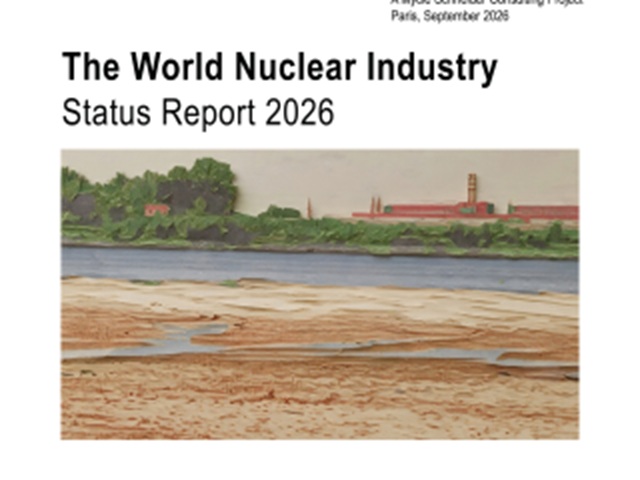
The World Nuclear Industry Status Report 2026 (WNISR2026) assesses on 596 pages the status and trends of the international nuclear industry. It provides a comprehensive overview of nuclear power plant data, including information on operation, production, fleet age, construction, and decommissioning of reactors.
Special focus is drawn to the status of the existing fleet and newbuild programs in China, France, Hungary, Japan, Russia, South Korea, Sweden, Ukraine, the United Kingdom, and the United States, as well as Poland which is planning to build its first nuclear power plant, Türkiye which is currently doing so, and Taiwan which initiated a potential reversal of its nuclear phaseout (completed last year).
WNISR2026 examines the prospects of the sector by addressing the very diverse status of nuclear power programs in some Potential Newcomer Countries, a redesigned chapter on the state of licensing and deployment of Small Modular Reactors (SMRs), and the traditional comparative analysis of Nuclear Power vs. Renewable Energy Deployment.
The fully updated chapter on Russia Nuclear Interdependencies scrutinizes not only supplies from Russia but also western industries’ dependence on Russia as a client for their nuclear products and services.
The Fukushima Status Report evaluates persistent onsite/offsite challenges, 15 years after the disaster began, and provides an overview of the controversy around direct and indirect health effects. The Decommissioning Status Report looks at the current status of the now 224 closed nuclear power reactors. Annex 1 provides an overview by region and country of all operating nuclear programs not covered in the focus chapters.
Eighteen interdisciplinary authors based in Canada, France, Germany, India, Japan, Lithuania, South Africa, South Korea, Taiwan, Türkiye, the UK, and the US, at prestigious academic institutions like the Nagasaki University, University of British Columbia, Technical University of Berlin, and the University of Johannesburg, as well as esteemed foundations such as Bellona and Sasakawa Peace Foundations have contributed to the report, along with senior writers that spent decades at prestigious publications like the Wall Street Journal or the Washington Post. The project coordinator, a data engineer, numerous proofreaders, and two artistic designers complete the project team.
The foreword to WNISR2026 was provided by KONO Taro, Member of the House of Representatives and former Minister for Foreign Affairs of Japan.
You can download the PDF version of the 2026 Report: World Nuclear Industry Status Report 2026PDF – 14.8 MiB Download
What is the Saudi nuclear deal really about?

What is clearly in Trump’s Saudi deal is approval to provide Westinghouse AP1000 reactors to Saudi Arabia, a deal worth tens of billions of dollars to the company.
But all of the fanfare about how great this deal is for American business appeared to ignore the fact that Westinghouse is no longer actually an American company.
Today, Westinghouse is owned by two Canadian companies, Cameco and Brookfield Asset Management, a US-based company that is a subsidiary of Brookfield Corporation (formerly Brookfield Asset Management Inc.), a Canadian multinational investment company. Needless to say, the road from there leads straight back to the White House.
by beyondnuclearinternational, https://beyondnuclearinternational.org/2026/09/26/what-is-the-saudi-nuclear-deal-really-about/
Is it actually a boon for US companies, or another scheme to enrich Trump, his family and cabinet colleagues, asks Linda Pentz Gunter
On August 25, Trump sent his nuclear deal with Saudi Arabia to the US Senate for consideration. This started a 90-day clock during which time the Senate could choose to accept or reject the proposal.
But what exactly was in it? The usual Trump White House opacity — which often includes word not matching deed — prompted a letter on September 16 from 18 US senators, including two Republicans and one independent, asking for more details.
”Access to the full text is required for the Senate and the public to have a clear understanding of the commitments being made on the nation’s behalf and those being made by Saudi Arabia to the United States,” said the letter, led by Senators Ed Markey (D-MA) and Jeff Merkley (D-OR) and addressed to Secretary of State Marco Rubio and Energy Secretary Chris Wright
By September 25, six of the Democrats who had signed the first letter wrote again to Rubio and Wright.
“We are gravely disappointed to see the Trump Administration enter a deal to provide nuclear technology to Saudi Arabia that fails the Gold Standard nonproliferation test. The Gold Standard has longstanding bipartisan support and reflects internationally recognized best practices. By abandoning it the agreement would allow Riyadh to acquire the means to potentially produce weapons-grade nuclear materials without the strictest nonproliferation safeguards the U.S. has long championed as a condition of such cooperation.
“The U.S.-Saudi nuclear deal calls for a study lasting up to two years on uranium enrichment in Saudi Arabia. After that, the United States could build a uranium enrichment plant on Saudi soil. The United States has never directly transferred an enrichment plant to a non-nuclear-weapon state, let alone one whose leaders have threatened to pursue nuclear weapons. The recklessness of this arrangement underscores the importance of utilizing the most stringent safeguards and protections, as reflected by the Gold Standard.”
The reference to Saudi leaders threatening to pursue nuclear weapons refers to a statement made by Saudi Crown Prince Mohammed bin Salman during a March 15, 2018 interview with CBS News, during which he stated: “Saudi Arabia does not want to acquire any nuclear bomb, but without a doubt, if Iran developed a nuclear bomb, we will follow suit as soon as possible.”
In theory, the Saudi nuclear deal is what is known as a “123” agreement, a legally binding 30-year bilateral pact required by Section 123 of the U.S. Atomic Energy Act of 1954 that establishes the framework for significant civil nuclear cooperation between the United States and another nation.
What is clearly in Trump’s Saudi deal is approval to provide Westinghouse AP1000 reactors to Saudi Arabia, a deal worth tens of billions of dollars to the company.
Westinghouse is most notorious for going bankrupt and coming close to handing the same fate to its parent company at the time, Toshiba, while attempting to build four AP 1000s in South Carolina and Georgia. Construction began in 2013 but the South Carolina reactors were abandoned mid-constriction and the Georgia pair arrived seven years late and cost $36 billion, well above the original $14 billion estimate.
What is at issue, and which disturbed the senators, is whether the deal would allow for uranium enrichment within Saudi Arabia. Wright was quick to dismiss that concern at a press conference held the same day the deal was sent to the Hill.
“There’s no reason to bring uranium enrichment to Saudi Arabia,” Wright said at the press conference, which was announcing the equally reckless ATLAS project that would put nuclear reactors on commercial shipping as well as develop floating reactors. But, added Wright about the Saudi Westinghouse deal,“They don’t even have a nuclear reactor yet. So I would say that’s something many years down the road.”
The Westinghouse reactors are also likely to be “many years down the road” given the company’s track record. But all of the fanfare about how great this deal is for American business appeared to ignore the fact that Westinghouse is no longer actually an American company.
Today, Westinghouse is owned by two Canadian companies, Cameco and Brookfield Asset Management, a US-based company that is a subsidiary of Brookfield Corporation (formerly Brookfield Asset Management Inc.), a Canadian multinational investment company. Needless to say, the road from there leads straight back to the White House.
As the New York Times reported in July, Brookfield Asset Management “is a frequent business partner with Newmark, the real-estate firm run and owned in part by the sons of Commerce Secretary Howard Lutnick.”
Brookfield Asset Management also has connections with White House ‘senior envoy for peace’ and Trump son-in-law, Jared Kushner. In 2018, the Kushner family was struggling to maintain control of a Manhattan luxury property —the somehow appropriately numbered 666 Fifth Avenue tower block. It was Brookfield Asset Management that came to the rescue. As the New York Times revealed then, “The deal will be a boon to the Kushners, who are struggling to recoup their investments in their flagship building.”
Of further concern in the deal is that Saudi Arabia is not required to adopt the IAEA Additional Protocol. This is significant because without that extra power for the International Atomic Energy Agency to check Saudi Arabia’s nuclear sites for covert nuclear weapons activities, the pathway is of course a lot easier to do precisely that.
It’s also significant because Saudi Arabia has already talked about developing a full uranium fuel cycle, including uranium mining as well as making its own reactor fuel. Verifications and inspections are important to ensure that any country with a civil nuclear program is not developing nuclear weapons.
In addition to the genuine proliferation concerns surrounding the Saudi nuclear deal, it is also patently obvious that if Saudi Arabia really wanted to replace the oil it is currently burning with an alternative, less carbon-emitting energy source, it has absolutely no need to choose nuclear power, the most expensive, slowest and most dangerous energy source with an unsolved radioactive waste problem.
The kingdom is more than 90 percent desert, making solar and potentially also wind the obvious choice as an energy replacement for oil, which the Saudis claim they want to burn less of (or, more realistically, export more of abroad.) In fact, the Saudis already know this, given they have a 600-megawatt solar project that is currently supplying electricity at 1.04 US cents per kilowatt-hour, a world record for the lowest contracted price for solar power generation.
As Massachusetts Senator Ed Markey, then a Congressman, asked pointedly of then Energy Secretary Samuel Bodman back in 2008 during a hearing before the House Select Committee on Energy iIndependence, “But aren’t you suspicious that the Saudis don’t want a solar agreement? Saudi Arabia is the Saudi Arabia of solar. There it is. It sits there as a desert with sun 12 months a year, blistering hot. Why wouldn’t this administration be suspicious that they are asking for nuclear rather than solar power exchange in order to meet their long-term energy needs?”
Of course, it’s not clear whether, even if the deal is approved by Congress, the Saudis are actually going to sign off. Trump has made it a condition that the Saudis sign on to the Abraham Accords, which force them to normalize relations with Israel. Saudi Arabia has flatly rejected that demand so far, absent a viable path to an independent Palestinian state.
Renewable jobs growth in Scotland

Letter Dr Paul Dorfman: Based on information from the Nuclear Information
Association, Scotland has added only 661 nuclear jobs whilst England gained
almost 47,500. However, in contrast, it has to be noted that according to a
recent Confederation of British Industries (CBI) report, net-zero and
renewable industries supports more than 105,000 jobs in Scotland and
contribute £10.2 billion to the economy, representing 4.9 per cent of
total economic output via 28,473 direct jobs, 57,153 supply chain roles,
providing an average salary of £41,800, paying 5.2 per cent higher than
the national average.
John O’Groat Journal 26th Sept 2026,
https://www.johnogroat-journal.co.uk/news/renewable-jobs-growth-in-scotland-thurso-wig-service-for-ca-445913/
UP FOR GRABS: Button pushed for new SMR spending round
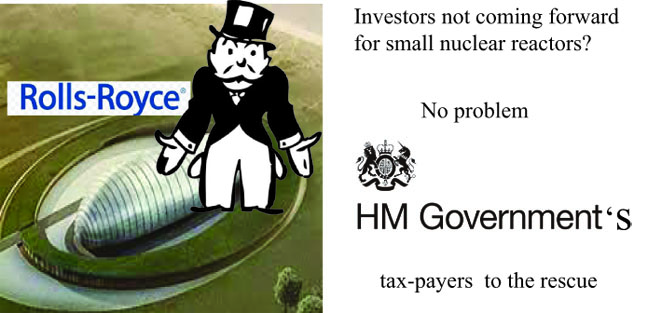
energy economists point out that fixed costs (such as 24/7 security, exclusion zones and
energy economists point out that fixed costs (such as 24/7 security, exclusion zones and regulatory licensing) do not diminish proportionally with a smaller reactor…………….. “economies of scale come by making something bigger, not by making something smaller.”
By Simon Hacker | 25th September 2026
Businesses across Gloucestershire and the Cotswolds are being urged to throw in their hats for a share of £1.4bn in contracts to supply Rolls-Royce SMR‘s pathway for small nuclear reactors.
Rolls-Royce SMR said its new Supplier Programme gives UK firms a chance to bid for a slice of the contracts pie over the next year, the move aiming to support the company and Great British Energy-Nuclear (GBE-N) in its quest to achieve more than 70% UK fleet content for the Gwyndod (Wylfa) project in North Wales.
The invitation comes as SMR technology remains, as yet, unapproved for final implementation in Western markets: two demonstration operations in China and Russia (a floating project on the Arctic) are active as pilots, but elsewhere, while technical viability is proven, Rolls-Royce SMR remains engaged in a process to steal a lead on US rivals by concluding a Generic Design Assessment stage with regulators.
Since being formed in 2021, Rolls-Royce SMR said it had already spent more than £300m with UK based suppliers – equivalent to 88% of its total spend to date – and held three UK supplier events, formally engaging with more than 650 UK firms.
It hailed this launch as a “major milestone in establishing a resilient, high-value UK supply chain, capable of delivering at scale and supporting our export programme”.
Funding for SMR development is a mixed picture of streams from private investment and the UK taxpayer, with government documents showing that the £1.4bn reported here is derived from general taxation (via government spending), the ultimate goal of the SMR programme being to transition to a mix of private investment and consumer energy bills.
To date, the amount that Rolls-Royce SMR has drawn down and spent from the taxpayer is not isolated to a single figure, given that government funding shifts between committed grants, commercial loans and site purchases.
But in terms of money the government has formally spent or legally committed to Rolls-Royce SMR so far, the taxpayer footprint is reported to stand at around £830m in direct development funds, within a wider £2.6bn total programme allocation…………………
Chris Cholerton, CEO of Rolls-Royce SMR, said the scale of the opportunity in unlocking £1.4bn that is now available to UK suppliers from the Rolls-Royce SMR programme was significant.
“As the only SMR provider with multiple contractual commitments in Europe, we want to partner with the best of UK industry, to maximise their opportunity to contribute to our growing European fleet.”
It’s not quite over the line, but Rolls-Royce SMR has successfully completed Step Two of the GDA which makes it the leading SMR vendor in Europe in the race to provide the continent’s required legal paperwork for the technology……………………….
Rolls-Royce SMR said: “Through workshops, industry events and expert guidance, the Programme will demystify the sector, help suppliers understand regulatory and commercial requirements, and make it easier for companies to explore opportunities within the Rolls-Royce SMR supply chain.Participating suppliers will benefit from greater visibility of future supply chain requirements and access to potential opportunities across the programme. They will also have opportunities to engage directly with Rolls-Royce SMR and supply chain procurement teams through briefings, networking events and meet-the-buyer sessions.”
WIth the economic viability remaining as yet untested advocates of SMRs maintain that by building reactors in factories, rather than on-site, costs will plummet. However, energy economists point out that fixed costs (such as 24/7 security, exclusion zones and regulatory licensing) do not deminish proportionally with a smaller reactor.
Here in Gloucestershire, Stroud-based Ecotricity boss Dale Vince has taken a leading role as an ardent critic of the SMR concept, having argued that “economies of scale come by making something bigger, not by making something smaller.”
Trying to make cheap “mini nukes”, Mr Vince said, ignores the fact that miniaturising complex, highly regulated technology naturally drives costs up, not down.………
https://www.punchline-gloucester.com/articles/aanews/button-pushed-for-new-smr-spending-round
Who will foot the bill? The opportunity cost of prioritising nuclear power over renewable energy for the case of Finland

Science Direct, Rasul Satymov a, Salvatore Ruggiero b, Björn Steigerwald cd, Jens Weibezahn e, Neven Duić f, Jero Ahola a, Dmitrii Bogdanov a, Christian Breyer 15 November 2025
Highlights
- •Tripling nuclear power is more expensive than optimised renewables in Finland.
- •Tripling nuclear power costs over 71% more, equal to 2.3% of Finland’s GDP.
- •Tripling nuclear power exacerbates local social inequalities.
- •Renewables meet energy demand more cost-effectively and avoid nuclear risks.
- •Timely insights for policymakers quantifying the costs of nuclear power expansion.
Abstract
In an effort to decarbonise their energy systems, several countries have declared intentions to triple their nuclear power capacity by 2050 at the United Nations Framework Convention on Climate Change Conference of the Parties 28. The expansion of nuclear power includes plans for so-called small modular reactors, intended for electricity generation as well as combined heat and power production. This study aims to demonstrate the cost differences between nuclear-based and renewables-based energy-industry systems using the Finnish energy system as a case study. Four nuclear power expansion scenarios are examined, imposing 13.2 GW of nuclear power capacity into Finland’s energy supply mix, with various capacities of small- and large-scale nuclear power plants alongside combined heat and power production from small-scale nuclear plants. These nuclear tripling scenarios are compared to a reference scenario that simulates a free cost optimisation with zero emissions target. The nuclear scenarios show 71–84% higher annualised system cost of 18.4–19.7 b€ compared to a renewables-based system costing 10.7 b€ in 2050. The reference scenario does not include the installation of new nuclear power capacities, indicating that new nuclear power plants are not part of a cost-optimal system. Additionally, the energy-industry system outlined in the reference scenario possesses fewer risks compared to nuclear tripling scenarios, particularly given that SMR technologies are not yet commercially available. The findings have important implications for energy justice, especially in terms of the significant opportunity cost presented by the nuclear decarbonisation pathway.
1. Introduction
There is a growing discourse on energy transition to low-carbon sources, with proponents advocating for both highly renewable energy (RE) systems [1] and the expansion of nuclear power [2,3]. At the United Nations Framework Convention on Climate Change Conference of the Parties 28 (COP28) 25 countries have declared their intent to triple their nuclear energy capacity by 2050 [4]. This commitment comes in spite of the risks associated with nuclear power in terms of cost, long lead times, waste disposal challenges, safety concerns, proliferation, considerable operational risks in war zones, and uranium supply uncertainties [[5], [6], [7], [8], [9]].
The COP28 declaration commits to triple global nuclear energy capacity from 2020 to 2050 by mobilising investments and supporting the construction of various nuclear power technologies, including small-capacity reactors, known as small modular reactors (SMR), although these technologies are not yet commercially viable [10].
New nuclear power plants may struggle to secure sufficient fuel for their entire operational lifetimes due to rising demand for uranium and limited reserves [11]…………………………………………………………………………
While many studies advocate for 100% RE-based systems [19,20], others see nuclear power as a viable option or a necessary complement to RE [[21], [22], [23], [24]]. However, nuclear power is unlikely to meet the expectations for rapid capacity expansion to align with climate goals [5,25,26]. SMRs have been proposed as a cost-effective alternative to conventional reactors, but their lack of large-scale deployment and limited operational experience presents challenges. SMRs, akin to traditional nuclear power plants, require lengthy regulatory approvals, licensing, and operational testing to ensure safety [25], and their economic viability remains uncertain [27,28]. ………………………………………………………. over-insistence on nuclear power may ultimately delay the energy transition.
Conversely, 100% RE-based systems are increasingly recognised as a more affordable option for decarbonisation [20] than nuclear power-centric systems, relying on improved energy storage and grid management, as documented for increasing periods of 100% RE in California [35]………………………………………………………..
With growing calls to deploy SMRs to address climate change [40] and energy security [41,42], it is essential to evaluate the economic costs and energy justice [43] implications of decarbonisation pathways. This study conducts a techno-economic assessment of scaling up nuclear power versus transitioning to a highly RE system using Finland as a case study………………………………………………………………………………………………………………………………………………………………………
Several studies have shown the feasibility of a highly RE-based system in Finland [[57], [58], [59], [60], [61], [62], [63], [64]]. Child and Breyer [58] and Pilpola et al. [61] show that carbon-neutrality can be achieved without nuclear power, and adding nuclear power increases energy system costs.
COMMENT – Lengthy discussion here, with excellent tables and graphs
6. Conclusion
Tripling nuclear energy capacity by 2050, as proposed by the COP28 declaration, would lead to significantly higher annualised costs and levelised costs of electricity compared to a cost-optimised system that prioritises renewable energy sources. …………………………………………………………………………………………. https://www.sciencedirect.com/science/article/pii/S0360544225042720
Bechtel splits with Bill Gates-backed Natrium nuclear project, files layoff notice
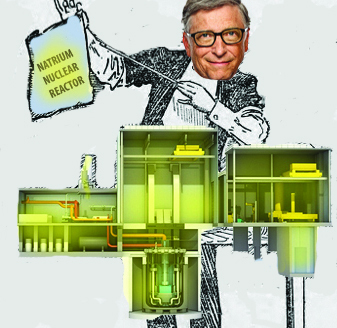
Bechtel and TerraPower couldn’t agree on a way to move forward to the next phase of the project
The move impacts about 200 employees at the company’s Reston, Virginia-based headquarters, according to a WARN notice the firm filed with the state.
Construction Dive Sept. 18, 2026, Matthew Thibault
Dive Brief:
- Bechtel, one of the largest contractors in the U.S. by revenue, has moved on from work on nuclear energy firm TerraPower’s high-profile Natrium Demonstration Project in Kemmerer, Wyoming, and plans to lay off approximately 200 employees, according to a Worker Adjustment and Retraining Notification filed with the state of Virginia.
- The split occurred as Bechtel and TerraPower couldn’t agree on a way to move forward to the next phase of the project, per the WARN notice.
- The affected employees will be laid off on or around Nov. 16, according to the notice. Bechtel will aim to help these employees find new positions on other projects, which may reduce the total number of laid-off workers. For those who don’t find other positions, the layoffs will be permanent.
Dive Insight:
The Natrium Demonstration Project is an advanced nuclear reactor that uses sodium as a coolant instead of water. Bechtel broke ground on the project in 2024 for TerraPower, which is chaired by Microsoft founder Bill Gates. It began construction on Unit 1 in 2026, according to the contractor.
On Aug. 31, TerraPower announced 12 new supplier awards for the project, according to a news release.
Molly Edwards, head of global media relations for Bechtel, told Construction Dive via email that the firm planned to move many of the impacted employees to other nuclear projects in its worldwide construction portfolio………………………………… https://www.constructiondive.com/news/bechtel-splits-terrapower-nuclear-project-layoffs/830793/
Wall Street sounds alarm on nuclear stock with 40% downside
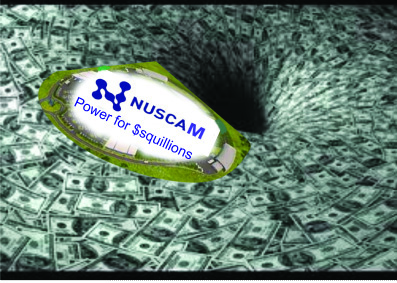
making a choice to invest and having a nuclear power plant that is up and running are completely different achievements.
NuScale has lost money since company was founded and recorded a cumulative deficit of $824.4 million as of June 30.
Cash spent in operating operations was $372.9 million during the first six months of 2026, compared with $56.1 million for the same period in 2025.
making a choice to invest and having a nuclear power plant that is up and running are completely different achievements.
NuScale has lost money since company was founded and recorded a cumulative deficit of $824.4 million as of June 30.
Cash spent in operating operations was $372.9 million during the first six months of 2026, compared with $56.1 million for the same period in 2025.
A key analyst has slashed its price target for the stock.
Sep 16, 2026,The Street, By Faizan Farooque
Nuclear energy has become one of Wall Street’s more closely watched investment themes as artificial intelligence and data centers put new pressure on the U.S. power grid.
Due to data centers, AI, and industrial growth, the U.S. Department of Energy expects electricity demand to rise significantly.
The federal government has supported that forecast with dollars.
In March of 2025, the Energy Department published a request for $900 million to assist the development of American-made Generation III+ small modular reactors.
The market opportunity is so much bigger.
The Energy Department has predicted the U.S. may need as much as 200 gigawatts of new nuclear capacity by 2050 to fulfill rising energy demand.
That suggests a potentially huge opportunity for those that can get new reactors into commercial operation.
One company aiming to get there is NuScale Power (SMR).
But Wall Street doesn’t think every nuclear stock will necessarily emerge as a winner.
UBS downgraded NuScale Power to Sell from Neutral and cut its price target to $6 from $10.
That implied roughly 40% downside from the stock’s level when the analyst call was issued.
And the questions raised by UBS go to the heart of the conundrum hanging over the growing small modular reactor industry: How soon can promising reactor technology be turned into a working commercial power plant?
UBS slashes NuScale Power stock price target
UBS’s negative argument is about execution.
Competitors are going into construction, whereas NuScale has an expected build time of more than five years and no concrete client commitments, the analyst said.
UBS said such circumstances presented “meaningful challenges.”
The bank now forecasts just one NuScale project breaks ground in 2028 and sees a cumulative cash burn of $700 million from 2026 through 2028.
That provides a stark contrast between excitement for nuclear power and the dangers of actually bringing a new reactor design to market.
Those dangers are not exclusive to NuScale.
Energy Department officials have recognized utilities’ and other prospective consumers’ worries about cost overruns in development and abandonment of projects.
DOE has also projected that order books of five to 10 deployments of at least one reactor type may be required to support advanced nuclear and reach commercial scale.
NuScale has already passed a big regulatory barrier.
NuScale’s US460 standard plant design received approval from the U.S. Nuclear Regulatory Commission in May 2025.
The design has six modules each generating 77 megawatts of power, making the overall plant capacity 462 megawatts.
The NRC said its clearance means the design may be cited in applications for building permits, operating licenses and combination licenses.
The agency finished its review in 22 months, two months ahead of schedule.
The NRC also has the underlying regulatory documentation for the approval of NuScale’s US460 design, giving investors the key record of the company’s regulatory development.
That gives NuScale a distinctive position.
We see concrete regulatory progress.
The bigger issue is the commercial timeframe.
NuScale Power has substantial liquidity but is burning cash
The $700 million cash-burn estimate from UBS is more substantial against NuScale’s most recently disclosed balance sheet.
NuScale reported $766.5 million in cash and cash equivalents as of June 30, 2026, in its quarterly filing with the Securities and Exchange Commission.
The company also held $305.7 million of short-term investments and $820.8 million of investments.
The total of these three categories is over $1.89 billion.
NuScale reported no debt and stated it anticipates that its cash, investments, and continuous access to capital markets would be adequate to satisfy its cash needs for at least the next 12 months and beyond.
But the other side of the company’s financials provides insight into why cash burn is critical to UBS’s theory.
NuScale has lost money since company was founded and recorded a cumulative deficit of $824.4 million as of June 30.
Cash spent in operating operations was $372.9 million during the first six months of 2026, compared with $56.1 million for the same period in 2025.
The increase was mostly due to a $259.9 million payment to commercialization partner ENTRA1 and reduced collections from customers and vendor prepayments for long-lead supplies, NuScale said.
NuScale too has gone to its stockholders for a big financial infusion.
The corporation sold roughly 89.7 million Class A shares via an at-the-market program in the first six months of 2026.
Those sales yielded $1 billion in gross profits, or around $984.5 million after issuance expenses, the document said.
The weighted average price of sales was $11.14 per share.
That funding gave NuScale a major cash boost but also speaks to a key portion of the investment equation.
Until commercial projects generate sufficient cash, access to capital markets remains an important source of funding.
NuScale’s annual report also gives further insight on the company’s commercialization agreements including its ties with RoPower Nuclear and ENTRA1 Energy.
NuScale’s Romania project offers a counterpoint to UBS concerns
The bearish thesis isn’t without important counterarguments.
But there are significant counterarguments to the pessimistic view. One of the biggest is Romania.
NuScale has been collaborating with RoPower Nuclear on a planned 6-module small modular reactor project at the old Doiceşti coal-power facility.
Next came a milestone of greater importance.
On Feb. 12, 2026, shareholders approved the final investment decision for the Doicești small modular reactor project.
That is substantial development for a corporation that is being challenged on its ability to transform technology into practical projects.
But making a choice to invest and having a nuclear power plant that is up and running are completely different achievements.
Nuclear plants take years to license, finance, build and complete before they generate power.
And that is the gap UBS regards as a concern.
NuScale also has a potentially far bigger possibility in the US.
TVA and NuScale have announced support for an ENTRA1 Energy initiative, with plans to install up to 6 gigawatts of NuScale small modular reactor capacity throughout TVA’s seven-state area in September 2025.
The size is substantial, but investors need to differentiate a projected deployment program from reactors currently under construction or in operation.
That divergence is especially noteworthy in light of UBS’s concern regarding solid customer agreements.
So whether NuScale can turn theoretical deployments into commercial off-take agreements and ultimately construction might be one of the most
NuScale Power faces competitors moving toward construction
The rivalry makes NuScale’s timeframe extremely relevant.
The Nuclear Regulatory Commission’s advanced-reactor docket shows other developers and utilities pushing projects through construction-related regulatory milestones.
For example, in May 2025, TVA filed the last part of its building permit application for a BWRX-300 small modular reactor at its Clinch River plant in Tennessee.
That helps explain why UBS is focused not simply on whether NuScale can eventually deploy its technology but on when that deployment can happen.
Timing is key in a market where utilities, IT corporations, and other big electrical consumers are looking for more dependable power.
The Department of Energy’s advanced-nuclear study projects the U.S. will require around 200 gigawatts of new nuclear power by 2050.
The agency also cautioned that the time it would take to ramp up deployment might make the ultimate buildout substantially harder.
A DOE scenario that begins large-scale deployment by 2030 and reaches 13 gigawatts per year by 2040 could put the U.S. on track to add 200 gigawatts of nuclear capacity by 2050.
A five-year delay might mean more than 20 gigawatts a year of deployment and could raise capital needs by as much as 50%.
Thus, the opportunity is potentially immense.
But speed counts.
Wall Street downgrade raises stakes for NuScale Power stock
The downgrading by UBS has left NuScale’s investors with two very different views of the company’s tale………………………………………………………………………………………………..
For NuScale stockholders, the more pressing issue is whether this specific nuclear business can transform regulatory clearances, alliances and planned projects into running reactors swiftly enough to justify its value.
UBS isn’t buying it. https://www.thestreet.com/investing/wall-street-sounds-alarm-on-nuclear-stock-with-40-downside
1 This Month
23-25 October – on Zoom – World BEYOND War’s annual global conferenc


Shut down the radiation-damaged Heysham nuclear reactors now
To see nuclear-related stories in greater depth and intensity – go to https://nuclearinformation.wordpress.com

Say No to NASA’s Reckless Nuclear Reactor on the Moon
Say No to NASA’s Reckless Nuclear Reactor on the Moon

-
Archives
- October 2026 (247)
- September 2026 (339)
- August 2026 (330)
- July 2026 (355)
- June 2026 (287)
- May 2026 (306)
- April 2026 (356)
- March 2026 (251)
- February 2026 (267)
- January 2026 (308)
- December 2025 (358)
- November 2025 (359)
-
Categories
- 1
- 1 NUCLEAR ISSUES
- business and costs
- climate change
- culture and arts
- ENERGY
- environment
- health
- history
- indigenous issues
- Legal
- marketing of nuclear
- media
- opposition to nuclear
- PERSONAL STORIES
- politics
- politics international
- Religion and ethics
- safety
- secrets,lies and civil liberties
- spinbuster
- technology
- Uranium
- wastes
- weapons and war
- Women
- 2 WORLD
- ACTION
- AFRICA
- Atrocities
- AUSTRALIA
- Christina's notes
- Christina's themes
- culture and arts
- Events
- Fuk 2022
- Fuk 2023
- Fukushima 2017
- Fukushima 2018
- fukushima 2019
- Fukushima 2020
- Fukushima 2021
- general
- global warming
- Humour (God we need it)
- Nuclear
- RARE EARTHS
- Reference
- resources – print
- Resources -audiovicual
- Weekly Newsletter
- World
- World Nuclear
- YouTube
-
RSS
Entries RSS
Comments RSS

