Rio Tinto’s losses mean that Rossing uranium mining’s future is precarious
Rössing Uranium fights on for survival INFORMANTE BY FLORIS STEENKAMP 12 JUNE 2013 Rio Tinto Rössing Uranium incurred an operational loss of N$474 million in 2012, some N$10 million more than the losses the mine made in 2011. Despite this, the mine will continue to battle on and bolster cost savings and operational efficiency to ensure its long term survival.
This was the message of the outgoing managing director of Rio Tinto Rössing, Chris Salisbury, on 6 June Swakopmund.
Uranium mines globally continues to operate in adverse economic conditions…… Since Japan and many other nations started to shy away from nuclear power generation as the future of clean energy, uranium market prices plummeted by more than 36%.
Uranium mines globally continues to operate in adverse economic conditions…… Since Japan and many other nations started to shy away from nuclear power generation as the future of clean energy, uranium market prices plummeted by more than 36%.
At the Rössing mine not even a production output increase of 36% and drastic cost-saving measures could avert the 2012 losses, as this market dip was too severe….. Salisbury confirmed that he will be assuming another position in the Rio Tinto Group in Australia and said a successor would be sourced within months.http://www.informante.web.na/index.php?option=com_content&view=article&id=12165:roessing-uranium-fights-on-for-survival&catid=1:coastal&Itemid=103
Crisis developing as shortage of Fukushima clean-up workers gets worse

“We’re headed toward a real crisis “
Under the worst scenario, experienced workers capable of supervising the work will be gone as they reach their radiation-exposure limits
Stricken nuke plant struggles on, Yahoo 7 Finance, AAP Jun 10, 2013 Keeping the meltdown-stricken Fukushima nuclear plant in north-eastern Japan in stable condition requires a cast of thousands.
Increasingly the plant’s operator is struggling to find enough workers, a trend that many expect to worsen and hamper progress in the decades-long effort to safely decommission it.
Tokyo Electric Power Co (TEPCO), the utility that runs the Fukushima Dai-ichi plant that melted down in March 2011 after being hit by a tsunami, is finding that it can barely meet the headcount of workers required to keep the three broken reactors cool while fighting power outages and leaks of tons of radiated water, said current and former nuclear plant workers and others familiar with the situation at Fukushima…….less risky, better paid decontamination projects in the region irradiated by the Fukushima meltdown are another draw.
Some Fukushima veterans are quitting as their cumulative radiation exposure approaches levels risky to health, said two long-time Fukushima nuclear workers who spoke to The Associated Press.
They requested anonymity because their speaking to the media is a breach of their employers’ policy and they say being publicly identified will get them fired………….. Continue reading
Future of American nuclear industry hangs on Vogtle new nuclear plant construction
Nuclear power could become a bypassed technology — like moon landings, Polaroid photos and cassette tapes……..
with construction now roughly one-third complete, it is clear that much is not going as planned, and that the schedule — which is closely linked to cost because of growing interest expense on the incomplete asset — has slipped by at least 14 months and possibly more…

The reason that utilities choose nuclear plants, is that they can collect profits on their investments. In Georgia they can do so even before the plant is finished.
Nuclear Power’s Future May Hinge on Georgia Project NYT, By MATTHEW L. WALD June 11, 2013WAYNESBORO, Ga. — The two nuclear reactors rising out of the red Georgia clay here, twin behemoths of concrete and steel, make up one of the largest construction projects in the United States and represent a giant bet that their cost – in the range of $14 billion – will be cheaper than alternatives like natural gas. But something else is at stake with the reactors called Vogtle 3 and 4: the future of the American nuclear industry itself. Continue reading
Uranium market looking sicker than ever
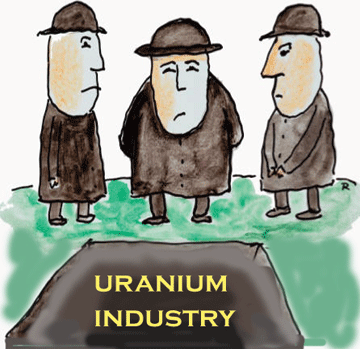 Spot uranium drops below US $40.lb 9 News Finance, 11 June 13 – Uranium spot price falls below US$40/lb – Spot market slow – Activity, but no sales in term markets.. By Andrew Nelson Stubborn uranium sellers have been holding off speculative buyers for a while now, unwilling to drop prices to get deals done. Consumers, on the other hand, have little short term requirement and many are out there cherry picking the market. That has been the way of things for quite a while now, that is until last week.
There were only four sales booked in the spot market last week, which saw 500,000 pounds of U308 change hands. More importantly, sellers finally started to buckle in their resolve and in turn, the spot price fell below what has been key psychological support at US$40/lb. This is the first time we’ve seen sub 40 price since March 2006…..with the price dropping to US$39.75/lb, one wonders whether the drop, at least in psychological terms, will turn into something much greater. US$40 has been tested time and time again, and now it’s finally been broken.
TradeTech reports that current spot demand remains thin and the only way to conclude deals at the moment is to drop prices, grin and bear it. …
no new transactions were concluded, leaving TradeTech’s Mid-Term U3O8 Price Indicator at US$44.00/lb, while the Long-Term Price Indicator was flat at US$57.00/lb.
There are still a number of analysts out there spruiking …. http://finance.ninemsn.com.au/newscolumnists/other/8672944/spot-uranium-drops-below-us40-lb
San Onofre nuclear closure an added blow to nuclear industry’s investment hopes
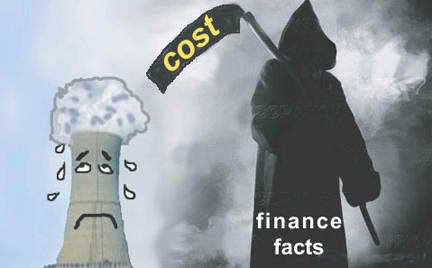 “It’s difficult to get Wall Street to loan money against so much uncertainty,” “The four closures this year make Wall Street more apprehensive, not less apprehensive.”
Other facilities are nearing the end of their projected lifespans and may need costly renovations while cheap natural gas has siphoned off market share. Potentially expensive regulations to bolster safety in response to a triple meltdown at Japan’s Fukushima Dai-Ichi plant in 2011 have raised the concerns of investors.
“The decision to shut down San Onofre is another sign that the economics of nuclear are under pressure given the low cost of alternative sources,” Travis Miller, a Chicago-based analyst forMorningstar Inc. (MORN), said in a phone interview. “Just five years ago, nuclear power plants looked like a gold mine.”…..
Dominion Resources Inc. (D) and Duke Energy Corp. (DUK) have announced in recent months that they will retire a unit each. Exelon Corp. (EXC) of Chicago plans to shut its 44-year-old Oyster Creek reactor, the oldest in the U.S. fleet, at the end of 2019.
The economic climate, coupled with an increase in renewable energy sources like solar and wind generation, may not bode well for new units, said David Lochbaum, director of the Nuclear Safety Project for the Union of Concerned Scientists, a Cambridge, Massachusetts-based environmental group.
“It’s difficult to get Wall Street to loan money against so much uncertainty,” he said in a phone interview. “The four closures this year make Wall Street more apprehensive, not less apprehensive.”…….
“The decision to shut down rather than retrofit the San Onofre nuclear plant shows the changing economics of the power market,” Howard Learner, executive director of the Environmental Law and Policy Center, a Chicago-based advocate of cleaner energy, said in a telephone interview. “We suspect other nuclear plant owners may start reaching the same decision.” http://www.bloomberg.com/news/2013-06-10/san-onofre-seen-as-latest-setback-for-u-s-nuclear-power.html
Shortage of Fukushima cleanup workers will be worse if Japan’s nuclear power push goes ahead
Stricken nuke plant struggles on, Yahoo 7 Finance, AAP Jun 10, 2013“…….One Fukushima Dai-ichi worker, who has gained a big following on Twitter because of his updates about the state of the plant since the meltdowns, said veteran workers are quitting or forced to cut back on working in highly radiated areas of the plant as their cumulative exposure rises…………. Known as Happy-san to his 71,500 Twitter followers, he has worked in the nuclear industry for 20 years, about half of that at Fukushima.
He has worked at bigger contractors before, but is now at a mid-level contractor with about 20 employees, and has an executive level position.
“If things continue the way they are going, I fear decommissioning in 40 years is impossible. If nuclear plants are built abroad, then Japanese engineers and workers will go abroad. If plants in Japan are restarted, engineers and workers will go to those plants,” he said in a tweet………..
Other jobs are already so plentiful that securing enough workers for even the more lucrative work decontaminating the towns around the plant is impossible, according to Fukushima Labour Bureau data.
During the first quarter of this year, only 321 jobs got filled from 2,124 openings in decontamination, which involves scraping soil, gathering foliage and scrubbing walls to bring down radiation levels……….
“We’re headed toward a real crisis,” said Ryuichi Kino, a freelance writer and photographer who has authored books about the nuclear disaster and has reported on TEPCO intensively since March 2011.
Under the worst scenario, experienced workers capable of supervising the work will be gone as they reach their radiation-exposure limits, said Kino.
He believes an independent company separate from TEPCO needs to be set up to deal with the decommissioning, to make sure safety is not being compromised and taxpayer money is spent wisely. http://au.finance.yahoo.com/news/stricken-nuke-plant-struggles-000105277.html
Prime Minister Abe increases drive to export Japanese nuclear reactors
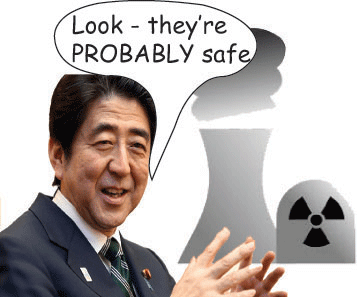
 JAPAN PM TO STEP UP NUCLEAR EXPORT DRIVE: REPORT Yahoo 7 News, 8 June 13, TOKYO (AFP) – Japan’s prime minister is expected to sign a nuclear cooperation deal with the Czech Republic this month, a report said Saturday, as Tokyo looks to build up its exports of the technology.
Prime Minister Shinzo Abe and Czech President Milos Zeman have all but agreed to sign a memorandum of understanding on mutual nuclear technology cooperation when they meet in Poland on June 16, the Nikkei business daily said.
Nuclear power has been a sensitive issue in Japan since a quake and tsunami wiped out the Fukushima atomic plant in 2011, sparking the world’s worst nuclear disaster in 25 years, but Abe has been keen to promote the industry since taking office in December. The memorandum is expected to include a statement that the Czech Republic will use Japanese nuclear technology.
It will also make US nuclear plant builder Westinghouse Electric, a unit of Japan’s Toshiba Corp., the top candidate to win a $10 billion contract to build two nuclear reactors in the Central European country, the daily said.
Abe is due to meet the leaders of Poland, the Czech Republic, Slovakia and Hungary in Poland while on his way to the June 17-18 Group-of-Eight summit in Northern Ireland, the Nikkei added…….
After talks in Tokyo on Friday, Abe and French President Francois Hollande said they would cooperate in developing nuclear power technologies and promoting the sector’s exports to emerging economies. http://au.news.yahoo.com/latest/a/-/latest/17529581/japan-pm-to-step-up-nuclear-export-drive-report/
No nuclear renaissance- instead, a nuclear terminal illness
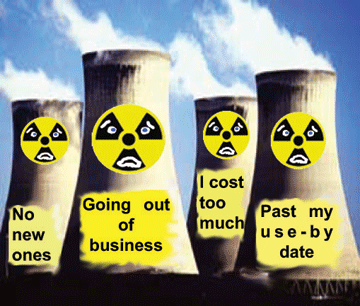 Nuclear plant closures show industry’s struggles, Anchorage Daily News, 8 June 13, LOS ANGELES — The decision to close California’s San Onofre nuclear plant is the latest setback for an industry that seemed poised for
growth not long ago.
In Wisconsin, a utility shuttered its plant last month after it couldn’t find a buyer. In Florida – and now California – utilities decided it was cheaper to close plants rather than spend big money fixing them and risk the uncertainty of safety reviews.
Meanwhile, the low cost of natural gas is discouraging utilizes from spending billions of dollars and lots of time to build nuclear reactors…………In places where utilities sell power into the open market, the low prices don’t offset the financial risk of buildingexpensive and time-consuming nuclear plants……….
Only three nuclear construction projects have moved forward, and they
are all under financial pressure. The Tennessee Valley Authority is finishing a long-mothballed reactor at its Watts Bar plant. Initially budgeted at $2.5 billion, the utility has said finishing the project could cost up to $2 billion
more.
Atlanta-based Southern Co. owns a 46 percent share of two new reactors being constructed at Plant Vogtle in eastern Georgia, a project originally estimated at $14 billion. Southern Co. subsidiary Georgia Power recently asked regulators to raise its share of the construction budget by $737 million to roughly $6.85 billion.
It may cost more. Georgia Power and the companies designing and building the plant are in a legal fight that may cost the utility more money. Separately, an independent monitor hired by Georgia regulators has warned of additional potential costs.
SCANA Corp. announced this week that it expects its costs to rise by around $200 million and the construction schedule to slip while building two reactors at the V.C. Summer Nuclear Station in SouthCarolina.
http://www.adn.com/2013/06/08/2931913/nuclear-plant-closures-shows-industrys.html#storylink=cpy
Safety upgrades required will cost U.S. nuclear plant operators $billions
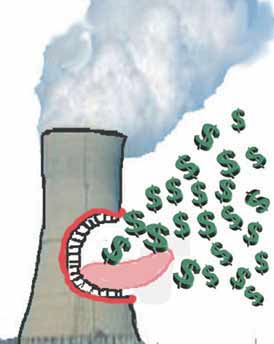 U.S. plants covered under the directive are older, boiling-water reactors mainly similar in design to the Fukushima facility…..
Plant operators may have to spend nearly $3.6 billion over the next three to five years on modifications to the nation’s 102 nuclear facilities in response to the Fukushima accident, according to a Platts survey released on Thursday.
U.S. orders new safety upgrades at nuclear plants By CNN Staff June 7, 2013 –– Washington — U.S. regulators are directing 31 nuclear reactors similar in design to the Fukushima Daiichi plant in Japan, where an earthquake and tsunami caused a meltdown two years ago, to take additional steps to help contain radiation and other damage from any accident that is not quickly halted.
The Nuclear Regulatory Commission directive on Thursday requires enhancements to systems for venting accumulated pressure from containment structures during an emergency. Vents must also be able to safely handle rising temperatures, hydrogen concentrations and radiation levels.
The changes also aim to ensure that plant personnel can continue to operate vents safely if a reactor core melts down, the agency said. Continue reading
Nuclear economics; a fourth American nuclear plant bites the dust
California nuclear plant to shut: a case of unforgiving nuclear economics, Christian Science Monitor, Peter Spotts, 7 June 13 Southern California Edison is shutting the remaining two reactors at San Onofre, citing high repair costs and an NRC ruling that the utility says would delay reactor restarts.
The San Onofre Nuclear Generating Station (SONGS), a nuclear power plant set into the seaside bluffs in northern San Diego County, is closing after the high cost of repairs and a Nuclear Regulatory Commission board ruling prompted its owner, Southern California Edison, to pull the plug on the 45-year-old facility.The announcement Friday that San Onofre’s two functioning reactors were being shut down brings to four the number of reactors that nuclear utilities have slated for closure since last November. Meanwhile, nuclear utilities have three new reactors on the drawing boards.
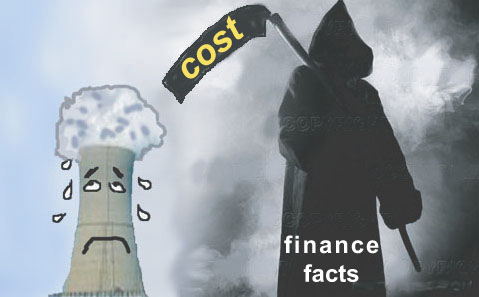
At least for now, “we’re losing them faster than we’re building them,” quips David Lochbaum, a nuclear engineer by training who focuses on nuclear-energy issues at the Union of Concerned Scientists in Washington…..
n early May, the utility Dominion shuttered its single-reactor Kewaunee nuclear plant in Carleton, Wis., a casualty of cheaper sources of electricity and an inability to build additional reactors to take advantage of what the company called economies of scale.
“Nuclear economics is tenuous at best,” Mr. Lochbaum says. “If you do everything right, you can make money at this. But if you stumble, there’s a big price to pay, and not just from a Fukushima-type tragedy.”
Financial setbacks can take their toll as well, he says, whether a setback comes from lost business or from hardware failures or human error that sets the stage for costly repairs……..
What looked to the utility to be a sensible $780 million investment in 2009 and ’10 to extend the lifetime of the two reactors turned into an economic albatross, Continue reading
Cameco’s Australian uranium project in doubt, with 4 year record low price
Spot Uranium Falls Below $40/Pound Benchmark for First Time in Four Years http://uraniuminvestingnews.com/14766/spot-uranium-falls-below-40pound-benchmark-for-first-time-in-four-years.html June 7, 2013,The West Australian reported that spot uranium prices fell to below $40/pound for the first time since August 2009, placing pressure on uranium explorers.
As quoted in the market report:
A hearty increase in the spot price is needed to force WA’s fledgling uranium sector into first gear, with Canadian giant Cameco indicating a price of more than $70/lb is needed before it can give the green light to its massive Yeelirrie or Kintyre deposits.
Japan and France in a marketing frenzy to sell nuclear technology
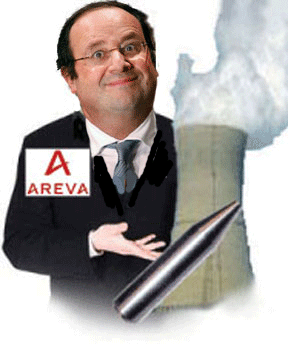 Hollande is on a three-day visit to Tokyo accompanied by several cabinet ministers and
  more than 30 executives, including the head of France’s nuclear energy giant Areva, Luc Oursel.
As well as agreeing to boost the exports of nuclear technology, Tokyo and Paris confirmed plans to cooperate on Japan’s troubled nuclear spent fuel reprocessing and fast-breeder projects,
France, Japan join forces for larger share of nuclear market http://www.reuters.com/article/2013/06/07/us-japan-france-nuclear-idUSBRE9560C720130607 By Antoni Slodkowski TOKYOJun 7, 2013 Japan and France on Friday agreed to boost nuclear cooperation to secure a larger share of global atomic energy markets as Tokyo’s pro-nuclear government looks to restart reactors despite public unease in the wake of the Fukushima disaster. Continue reading
All of Tennessee Valley Authority.s nuclear power plants have notices of safety violations
All of TVA’s nuclear power plants operating under notices of safety violations http://enformable.com/2013/06/all-of-tvas-nuclear-power-plants-operating-under-notices-of-safety-violations/ Lucas W Hixson The Tennessee Valley Authority (TVA) is a federally owned corporation in the United States, which is already facing the threat of being sold as it carries some $25 billion in debt -just under the $30 million debt limit set by Congress, is facing increased oversight after having been found to having improperly assessed safety violations at two nuclear power plants. TVA owns and operates the Browns Ferry, Sequoyah, and Watts Barr nuclear power plants, all of which are operating under notices of safety violations. In 2011, the Browns Ferry nuclear power plant was issued a red finding due to the failure of a safety valve and TVA’s failure to recognize the problem.
This week, the Nuclear Regulatory Commission put the Sequoyah nuclear power plant and Watts Bar nuclear power plant on increased oversight after determining that TVA violated nuclear safety standards in how the utility analyzed and prepared its flood assessment risk at the two nuclear power plants, both of which are located on the Tennessee River.
In late April of this year, the NRC staff held a conference with TVA officials to discuss the risk significance of the issues with the flood protection area. After reviewing information presented by TVA and previous NRC inspections, the NRC staff concluded that the licensee had not met safety standards in multiple areas at both nuclear power plants. The NRC concluded that TVA did not adequately establish flooding protection for scenarios involving the failure of upstream dams and also had not taken necessary measures to prevent water from flooding the intake pumping station. Additionally, TVA was cited for an additional violation for not promptly notifying the NRC after discovering that the potential failure of upstream dams could result in an unanalyzed condition affecting plant safety.
In response to the violations, the Nuclear Regulatory Commission also increased its oversight at the nuclear power plants, an expense that TVA will have to pay for, putting all three nuclear facilities operated by TVA under increased oversight due to safety violations. The NRC did not choose to impose further civil penalties and fines on TVA beyond the expense of the additional inspections and oversight.
Energy firm pulls out of its $billion nuclear power plans
$1 Billion Nuclear Power Plans Abandoned In Iowa Clean Technica, June 6, 2013 Jake Richardson Plans for Iowa’s second nuclear power plant have been dropped by Mid American Energy. No design has been approved for the type of nuclear plant the company had intended, so they have let the idea go. It was reported that ratepayers will be refunded the $8.8 million they paid for a completed feasibility study. Sites not far from Council Bluffs and Davenport were being considered for the plant….
. Friends of the Earth interpreted the decision more broadly saying it is an indication that massive public subsidies for new nuclear power might not be as popular an idea any longer. A poll of Iowans conducted in 2012 found 77% were against a funding arrangement that would have required residents to have to pay the energy company up front for construction of the nuclear plant. Proposed legislation could have made such an arrangement possible, but it was opposed by a number of non-profit advocacy organizations, so it didn’t go through. t http://cleantechnica.com/2013/06/06/1-billion-dollar-nuclear-plant-dropped-in-iowa/#pAxzd7cFlUlp1crh.99
USA marketing nuclear technology to Vietnam
 Obama’s Nuclear Vietnam National Review Online By Henry Sokolski June 4, 2013 In Washington, learning comes hard. Officials may know when to back off when they’ve crossed wires with Congress, but in most cases, and in less time than you’d think, they’re back at it again.
Take the State Department’s rush three years ago to seal a civilian nuclear deal with Vietnam. Secretary of State Hillary Clinton announced that the U.S. had initialed a draft agreement in July of 2010. It featured nuclear-nonproliferation provisions far looser than what Congress wanted. When the Hill found out, it threw a fit, the White House withdrew the deal, and State promised to lead a government-wide review of U.S. nonproliferation policies.
That was 33 months ago. Last September, State completed the review and forwarded its recommendations to the White House. The president has yet to focus on them. Instead he’s gotten excited about promoting U.S. nuclear-reactor exports to — you guessed it — Vietnam.
Last month he sent a U.S. nuclear-export delegation to Hanoi. It included the White House director for nuclear-energy policy, the under secretary of commerce, the assistant secretary of energy for nuclear energy, and 18 nuclear-industry representatives. Their mission: to persuade Vietnam to buy Westinghouse reactors. Continue reading
1 This Month





PLEASE OPPOSE HR 8255 AND S.3639 – bills would accelerate satellite deployment, with no environmental review or safeguards – https://ncstd5li.quorum.us/campaign/169331/
To see nuclear-related stories in greater depth and intensity – go to https://nuclearinformation.wordpress.com
-
Archives
- October 2026 (19)
- September 2026 (339)
- August 2026 (330)
- July 2026 (355)
- June 2026 (287)
- May 2026 (306)
- April 2026 (356)
- March 2026 (251)
- February 2026 (267)
- January 2026 (308)
- December 2025 (358)
- November 2025 (359)
-
Categories
- 1
- 1 NUCLEAR ISSUES
- business and costs
- climate change
- culture and arts
- ENERGY
- environment
- health
- history
- indigenous issues
- Legal
- marketing of nuclear
- media
- opposition to nuclear
- PERSONAL STORIES
- politics
- politics international
- Religion and ethics
- safety
- secrets,lies and civil liberties
- spinbuster
- technology
- Uranium
- wastes
- weapons and war
- Women
- 2 WORLD
- ACTION
- AFRICA
- Atrocities
- AUSTRALIA
- Christina's notes
- Christina's themes
- culture and arts
- Events
- Fuk 2022
- Fuk 2023
- Fukushima 2017
- Fukushima 2018
- fukushima 2019
- Fukushima 2020
- Fukushima 2021
- general
- global warming
- Humour (God we need it)
- Nuclear
- RARE EARTHS
- Reference
- resources – print
- Resources -audiovicual
- Weekly Newsletter
- World
- World Nuclear
- YouTube
-
RSS
Entries RSS
Comments RSS

