Tepco rushes effort to restart two nuclear reactors, ignores local councils
TEPCO gets harsh response from Niigata gov. over restarting reactors Global Post 5 July 13 Tokyo Electric Power Co. faced a harsh response on Friday from Niigata Gov. Hirohiko Izumida in its attempt to swiftly apply for a state safety assessment of two reactors there as a step toward resuming their operations.
After meeting with Izumida and the mayors of two municipalities that the Kashiwazaki-Kariwa plant straddles, TEPCO President Naomi Hirose admitted it is “difficult” to join other utilities’ moves to apply for safety assessment of reactors next Monday, when a set of new regulations for atomic power plants take effect.
Izumida said TEPCO did not offer any explanation to local people before announcing the company’s plan to file for the assessment of the plant’s Nos. 6 and 7 reactors.
“Why did you rush (to make a decision to file for application)?” the governor said in the meeting, while also refusing to accept a paper in which TEPCO sought approval on a plan to install a safety system which is essential to restart the two units under the new safety standards…… http://www.globalpost.com/dispatch/news/kyodo-news-international/130705/tepco-gets-harsh-response-niigata-gov-over-restarting-
Shutdown in September for Japan’s only two operating nuclear power units
Japan’s only two operating nuclear units to shut in September: regulator Tokyo (Platts)–4 Jul 2013 Kansai Electric Power Co can continue operating Ohi-3 and -4, the only nuclear units running in Japan, until they will have to be shut for maintenance in September, Nuclear Regulation Authority commissioners agreed unanimously Wednesday.
Ohi-3 and -4 can run until September 2 and 15, respectively. Japanese law allows reactors 13 months of continuous operation before they must shut for maintenance.
The units, each with gross capacity of 1,180 MW, are sometimes referred to as Ooi and are the largest of Kansai EPC’s 11 power reactors.
Ohi-3 and -4 were assessed against NRA’s safety requirements, which will come into force Monday. The assessment of the units, including an inspection of the site June 15, found they “will not cause serious safety problems immediately,” a 46-page NRA staff document said.
Japan’s other 48 operational nuclear units have remained down after completing maintenance and refueling outages following the March 11, 2011 earthquake and tsunami that resulted in permanent shutdowns of units 1 through 4 at Tokyo Electric Power Co.’s Fukushima I……….http://www.platts.com/latest-news/electric-power/Tokyo/Japans-only-two-operating-nuclear-units-to-shut-26076364
Australian uranium mining company Paladin in trouble in Namibia, as well as in Malawi
Some of the issues pertain to female worker’s miscarriages; [CEO] Duvenhage’s apparent failure to engage with the union; the company’s reluctance to give workers a “single cent” for an annual increment; unfair performance bonuses; nepotism and corruption.
Australian-based Paladin Energy Ltd. (TSE:PDN) owns 100% interest in the mine.
Protests hit second largest uranium mine in Namibia http://www.mining.com/protests-hit-second-largest-uranium-mine-in-namibia-85919/ Vladimir Basov | July 2, 2013 About 300 workers, including mine staff and contractor employees, picketed at Langer Heinrich Uranium (LHU) mine last Thursday over pay and working conditions, The Namibian reported.
Workers and media were barred from the minesite where the demonstration was supposed to take place although the protesters had organized the peaceful demonstration at the beginning of last week and had announced it to the mine’s management.
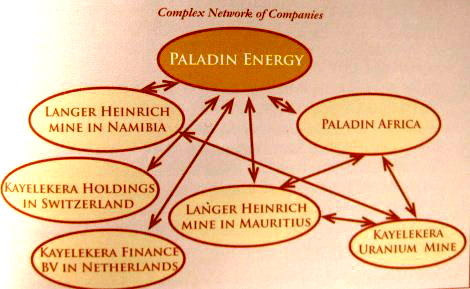
As a result, all day shift buses were forced to stop inside the concession area where workers then had to disembark – about five kilometres away from the actual site. To their dismay, the protesters were forced to picket at the concession area. The Mineworkers Union of Namibia (MUN) branch executives felt that the mine’s management snubbed what it termed a legal and democratic action. Continue reading
Paladin uranium’s losses, but its CEO does very well financially
Paladin boss earnings increase while Kayelekera cut jobs http://www.nyasatimes.com/2013/02/14/paladin-boss-gets-massive-pay-hike-after-malawi-job-cuts/ By Nyasa Times Reporter February 14, 2013 Despite uranium miner, Paladin Energy limited claiming that its Malawi operations in the northern district of Karonga at Kayelekera are operating on massive losses and that world uranium prices are low, the company’s managing director John Borshoff elected to cash in his leave entitlementment, Nyasa Times has established.
Paladin’s annual report reveals that despite Borshoff honouring a promise to cut his salary by 25% between November 2011 and November 2012 – a promise he extended to June 2013, the CEO was able to boost his remuneration after a review of annual leave entitlements thereby pocketing a 52% rise in earnings. The review focused on annual and long-service leave in a bid to cut Paladin’s liabilities, and Borshoff responded by cashing out 220 days of leave.The transaction approaved by the remuneration Committee and the board netted Borshoff $1,717,000 and helped increase his remuneration to $3,464,000, from $2.26 million in 2012.
The uranium miner recently retrenched 110 staff from its Kayelekera mine in Malawi in an austerity drive which others commentators fault Boshoff for excercising his right to cash in the leave entitlement when local staff just had their calls for a 66 per cent pay rise rejected.
”Its total mockery to the Malawian workers at Kayelekera who were retrenched but have not had their benefits yet. These people are suffering. That’s a wake-up call to Malawi Government that Paladin is making profits despite plunge in prices” Karonga Business Community Chairperson Wavisanga Silungwe said in a statement made available to Nyasa Times.
“While production has gone up, the uranium price has not; hence Kayelekera continues to operate at a loss. We had warned government that this situation was unsustainable and would lead to job losses unless the uranium price improved, which it has not,” said Paladin’s (African) Ltd General Manager, international affairs, Greg Walker.
Walker said the staff reduction is in “response to economic pressures on the company caused by the continuing depressed uranium price” Borshoff’s contract with Paladin has one year left, and provides him with three months’ long-service leave for every five years of service. He is entitled to two years of double base salary when he retires or has his employment terminated.
The exploding costs of the Savannah River MOX plant
The explosive costs of disposing of nuclear weapons WP,By Walter Pincus, July 3 Costs can explode like fireworks when it comes to nuclear weapons disposal.
For example, it could cost more money and take longer to get rid of just 37.5 tons of excess, weapons-grade plutonium than it did for the Manhattan Project to produce the atomic bombs that ended World War II. Four weapons — the Trinity plutonium implosion device tested in the New Mexico desert; the Little Boy uranium bomb dropped on Hiroshima; the Fat Man plutonium bomb that hit Nagasaki, and an unused uranium bomb — were produced within six years in current dollars of some $24.1 billion, according to Stephen I. Schwartz’s book, “Atomic Audit.”
In comparison, it will cost more than $24.2 billion and take until 2036 for the United States to get rid of those 37.5 tons of plutonium, according to a Government Accountability Office estimate. It appears in the Senate Armed Services report on the fiscal 2014 defense authorization bill.
Costs have skyrocketed for the Mixed Oxide Fuel Fabrication Facility at the Savannah River plant in South Carolina. The facility is designed to blend the surplus plutonium with uranium oxide to make mixed oxide (MOX) that can be used as fuel in some U.S. commercial reactors. That would make the plutonium unusable for future nuclear weapons.
When the National Nuclear Security Administration (NNSA) originated this MOX program in 2002, design and construction were to cost $1 billion.
By 2005, the estimate was $3.5 billion. When project construction began in 2007, it was three years behind schedule with a $4.8 billion price tag.
According to NNSA’s fiscal 2014 budget request, construction will hit $7.78 billion.
The annual cost to run the facility has also exploded. NNSA estimated in 2002 that it would cost $100.5 million a year to operate the MOX plant. Annual operating costs are now expected to be $543 million. The planned 2017 completion date has slipped another two years, according to a recent Congressional Research Service report.
Here’s another ticking time bomb. A federal facilities agreement in 2002 with South Carolina called for Washington to pay up to $100 million a year to the state if the plant did not produce 1 ton of MOX fuel annually, starting in 2009. That was to compensate the state for the storage of excess plutonium.
Sen. Lindsay Graham (R-S.C.), a main project booster, has used amendments to delay the fines until 2016, according to a study by the Center for Public Integrity.
The cost prompted the Obama administration to propose slowing construction while it reviews the MOX program, including assessing other ways to get rid of the plutonium……… http://www.washingtonpost.com/world/national-security/the-explosive-cost-of-disposing-of-nuclear-weapons/2013/07/03/64f896e0-e287-11e2-80eb-3145e2994a55_story.html
Plummeting share price, with glut of uranium
Spot uranium price falls to lowest levels in seven years on ample supply Washington (Platts)–Jasmin Melvin, 2 July 13 An ample supply of uranium in the spot market resulting from Japan’s shutdown of all but two of its 50 operational reactors after the nuclear accident at Fukushima I in 2011 dragged the uranium spot price to its lowest levels in seven years, price publisher TradeTech said in reports released Friday and Sunday.
In its weekly report Friday, TradeTech said sellers “with near-term cash-flow concerns and anxious over the drop in the spot price” have concluded deals for “small lots at prices low enough to encourage discretionary buying.” They remain hesitant, however, to part with large quantities of material at prices below $40 a pound U3O8, the once-accepted price barrier among market participants.
Sellers last month began to ease once-firm offer prices in efforts to offload uncommitted material in small volumes, pulling the uranium spot price below $40/lb for the first time since March 2006, according to data from price publishers Ux Consulting and TradeTech……
The Platts NuclearFuel range for the week is $39.25-$40/lb.
TradeTech lowered its weekly uranium spot price by 20 cents to $39.55/lb Friday, while Ux’s weekly price dipped 15 cents to $39.50/lb Monday.
TradeTech’s daily spot price remained $39.55/lb Monday, unchanged from Friday…..http://www.platts.com/latest-news/electric-power/washington/spot-uranium-price-falls-to-lowest-levels-in-21235399
Nuclear waste cleanup a financial bonanza for UK firm
 Nuclear waste: Clean-up Quandary.FT, By Sylvia Pfeifer, 1 July 13, More reactors are to be built but a permanent solution for high-level waste remains elusive …….
More than 50 years after the world’s first commercial nuclear power plants started operating in the UK and the US, the tens of thousands of tonnes of spent nuclear fuel in the world still has to find a permanent home.
The absence of a permanent solution for high-level waste is one of the biggest challenges facing the industry as it tries to recover from the deadly disaster at Japan’s Fukushima plant in 2011. Several governments scaled back their expansion plans, with Germany announcing plans to close all its reactors. The International Energy Agency last year predicted that global nuclear generating capacity would reach 580GW in 2035 – a 10 per cent drop from its forecast a year before.
Yet new reactors, and more waste, are not far off…..
Alvin Weinberg, an American nuclear pioneer, famously said that atomic power represents a Faustian bargain: a valuable source of electricity that carries with it an obligation to deal with the waste. “New nuclear should not go ahead until we have sorted out the waste problem,” says Doug Parr, chief scientist at Greenpeace, adding that the environmental organisation is “concerned about a new round of spent fuel set to be created”…..
“We have an obligation to get it right . . . We are like a shopfront for the nuclear industry,” admits Tony Price, brought in recently by Nuclear Management Partners (NMP),as the managing director of Sellafield Limited. “It’s time now to really focus on delivery,” he adds………

In the short term, the pressure is on NMP to deliver at Sellafield. Yet the potential prize is much bigger than just cleaning up one of the world’s most polluted sites. There are potential export contracts for companies involved in the decommissioning work and for west Cumbria it offers much-needed employment opportunities. Success at Sellafield would also mean success on a wider scale.http://www.ft.com/cms/s/0/77c177ba-dcba-11e2-b52b-00144feab7de.html#axzz2XvB1ouop
Radiation exposure to workers at Hanford
 Workers at U.S. nuclear site exposed — Levels “well above threshold for a High Contamination Area” #Hanford http://enenews.com/workers-at-u-s-nuclear-site-exposed-levels-well-above-threshold-for-a-high-contamination-area-hanford
Title: PNNL staffers exposed to radioactive tritium in Richland
Source: The Bellingham Herald
Author: Annette Cary
Date: June 27, 2013
Two Pacific Northwest National Laboratory employees inhaled small amounts of radioactive tritium while doing work in the Hanford 300 Area last month. […]
Tritium inadvertently spread outside the fume hood, including along the routes to radiological trash disposal.
“Contamination levels on the floor immediately adjacent to the fume hood were well above the threshold for a High Contamination Area,” according to the defense board staff report. […]
The event is still under investigation and it’s too soon to say if any changes will be made to laboratory procedures, [PNNL spokesman Greg Koller] said.
See also: TV: “It appears the worst case scenario has happened” at U.S. nuclear site — Most dangerous material on earth “out of control”? — A whopping 800,000 dpm measured outside tank (VIDEO) #Hanford
Public needs to know the full costs of new Darlington nuclear plans
 Make proposed nuclear bids public: NDP http://www.oyetimes.com/news/canada/45664-make-proposed-nuclear-bids-public-ndp Oye! News from Canada, 28 June 2013 by Justin Stayshyn NDP Energy critic Peter Tabuns urged the Liberal government to make public the full costs of two bids to build new nuclear reactors, including information about whether taxpayers will be on the hook for cost overruns.
Bids to build two new nuclear reactors next to the existing Darlington nuclear plans were submitted to the government today by Westinghouse and CANDU/SNC Lavalin. “The government must be open and transparent about the full costs and risks of building new nuclear reactors so that there can be an informed public discussion about whether the government’s nuclear-first energy plan is cost-effective,” said Tabuns, MPP for Toronto-Danforth.
A 2008 proposal to build a new nuclear plant at Darlington was said to total about $26 billion, and hence was abandoned by the McGuintygovernment.
“The government argues that nuclear power is affordable even though nuclear costs have soared since the Fukishima disaster and every nuclear project in Ontario has gone over budget by millions if not billions of dollars,” said Tabuns. “Ontarians need to know the full costs and terms of the two bids, including who will pay the inevitable cost overruns, so that potentially lower cost alternatives like importing hydro power from Quebec are considered before the government signs another misguided private energy deal.”
America’s nuclear industry disintegrating
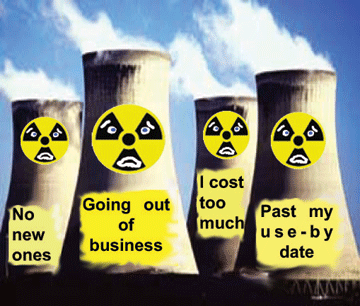 Activists See U.S. Nuclear Industry Starting to Crumble By Matthew Charles Cardinale ATLANTA, Georgia, Jun 27 2013 (IPS) –
“……According to Glenn Carroll, coordinator of Nuclear Watch South, a grassroots organisation that raises awareness about nuclear issues, the four closures bring the total number of nuclear reactors in the United States down to an even hundred, from 104 at the beginning of the year and 114 at the industry’s peak.
— Glenn Carroll
“There haven’t been any new reactors built in over 30 years. A small number of them are under construction, and none of them are going well,” Carroll told IPS. “They’re expensive…and meanwhile, solar and wind are…garnering small wins every day.”
“[The nuclear industry] is crumbling under its own weight,” Carroll said
A gradual deterioration
Just a few years ago, dozens of proposals for possible new nuclear reactors existed. Today, two nuclear projects in Georgia and South Carolina are the only ones still going forward, Carroll noted.
“If there are four reactors being built instead of 44, your economy of scale has just evaporated,” Carroll pointed out, adding that Georgia would be “strapping itself” to rising costs for parts for the plant.
“They’re going to be essentially hand-crafted. No company is going to be set up to create these parts,” she said.
Carroll predicted that other reactors would soon be slated for closure, including those at Vermont Yankee in Vernon, Vermont and at Indian Point in Buchanan, New York. In both cases, state governments have sought to shut down the plants.
Meanwhile, billionaire investor Warren Buffett has completely divested from the nuclear industry. Earlier this month, one company owned by Buffett, MidAmerican Energy, has abandoned a proposal to open a new nuclear facility in Iowa.http://www.ipsnews.net/2013/06/activists-see-u-s-nuclear-industry-starting-to-crumble/
Nuclear power – it’s just not cost effective
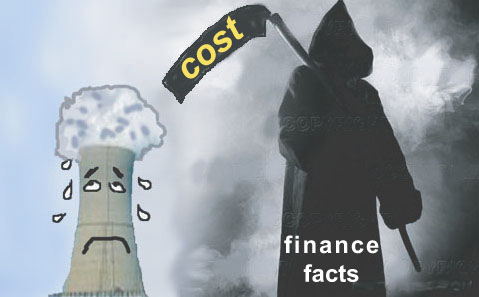 Activists See U.S. Nuclear Industry Starting to Crumble By Matthew Charles Cardinale ATLANTA, Georgia, Jun 27 2013 (IPS) -“……. The costs of nuclear power According to Mark Cooper, a senior research fellow for economic analysis at the Institute for Energy and the Environment at Vermont Law School, history has proved that nuclear power is not economical.
The industry likes to say once you build them, they just hum along and they’re cash cows, producing low cost electricity, and then the industry takes that claim and uses that as a pillar [on which] they try to build the case for new nuclear reactors,” Cooper told IPS.
The nuclear industry maintains that once construction is complete, plants are inexpensive to operate and “last forever”, according to Cooper.
“The reality of old reactors does not support those claims,” he argued, and “the construction costs for new nuclear reactors go through the roof.”
He said one-fifth of reactors built before 2013 that received commercial licenses have retired early and called the 60-year life span of reactors “inconsistent with reality”.
“When [reactors] age, they have the tendency of being more and more costly to keep online,” he added. “When they break, they are too expensive to fix,” he said, citing over two dozen reactors that have closed down for those reasons.
Subsidised construction
In his speech on global warming earlier this week, U.S. President Barack Obama pointed to nuclear reactors under construction in Georgia and South Carolina as examples of new clean energy supported by his administration.
As reported by IPS in 2008, Obama has long been supportive of – and received campaign contributions from – the nuclear industry, beginning with his term in the U.S. Senate.
However, through charges applied to their monthly energy bills, taxpayers in Georgia and South Carolina are shelling out in advance to heavily subsidise nuclear projects in those states, even as Georgia Power and Scana are guaranteed profits because of decisions made by their legislatures and public service commissions.
“At the great pain imposed on ratepayers in Georgia and South Carolina, they can finish those reactors,” Cooper said, but “those reactors will tell us nothing about building another one because they are so incredibly subsidised.”
He believed that other states would not adopt such an approach that shifts risk to taxpayers, predicting, “Summer in South Carolina and Vogtle in Georgia will be monuments for folly, not launch points for the future.” http://www.ipsnews.net/2013/06/activists-see-u-s-nuclear-industry-starting-to-crumble/
Share price falls as Paladin’s sale of Langer Heinrich uranium mine is delayed
Uranium producer Paladin’s shares slide after stake sale delay BY:BARRY FITZGERALD The Australian June 27, 2013 SHARES in African uranium producer Paladin have been pulled back to near 52-week lows because of a delay in a planned debt-reducing sale of a minority equity position in the group’s flagship Langer Heinrich operation in Namibia.
It had been hoped that Paladin would make inroads into its $US740 million debt pile by making the sale the news of which pushed the shares from an April low of 70c to more than $1 a share in late May. But recent concerns that the previously advised June 30 target date would not be met have sent the shares lower.
The concerns were well placed, with Paladin saying yesterday that the planned sale had been delayed until mid-to-late August. Paladin shares closed 6c, or 6.8 per cent, lower at 82c.
The fall came despite Paladin managing director John Borshoff remaining confident a sale will be achieved. The planned deal is with two unnamed nuclear groups……http://www.theaustralian.com.au/business/mining-energy/uranium-producer-paladins-shares-slide-after-stake-sale-delay/story-e6frg9df-1226670445221
Big nuclear construction companies set to make $billions from nuclear deconstruction
How Your Grandchildren can Reap Profits with These Nuclear Power Stocks , The Market Oracle Jun 24, 2013 — A contract for decommissioning a nuclear plant can bring decades of business to many different companies, each specializing in a different aspect of the decommissioning process. The worldwide trend away from nuclear power means a generational payday for investors and corporations all over the world….
Global nuclear player Westinghouse Electric Company, a subsidiary of Toshiba Corporation (TYO:6502, LSE:TOS) is being courted by governments wishing to decommission their reactors. Westinghouse has been in the nuclear game for close to 80 years.
The Sellafield site in the UK has become a virtual corporation unto itself, and has contracted with huge providers to accomplish the 100-year task of shutting down the facility. Consultants AMEC plc (LSE:AMEC) operate in the UK and throughout Europe and North America. They contract with a variety of large energy businesses and are on the Sellafield decommissioning in a project management capacity.
Multibillion dollar URS Corporation (NYSE:URS) is one of the top hazardous waste disposal handlers in the world – that’s just part of their business. URS, too, has large operations at the Sellafield site. Both AMEC and URS are close to the end of five-year contracts inked in 2008, but they enjoy 17-year extension options – just a glimpse of the longevity of nuclear decommissioning contracts.
Areva SA (EPA:AREVA) rounds out the large trio of companies working at Sellafield. Areva is a veritable one-stop nuclear shop and is just as happy to build a nuclear reactor as it is to decommission one. Areva’s nuclear technology group, Areva NP, took over Siemens’ nuclear business and absorbed a great deal of technology and know-how along the way.
All of these companies and more will be working on the decommissioning problem for decades to come. The opportunities for profit, and for a safer world, are there for the taking. For ourselves and any who come after us…..http://www.marketoracle.co.uk/Article41058.html
USA scrambling to sell off nuclear technology to India
 India assures U.S. a share of nuclear pie, THE HINDU, 24 June 13 SANDEEP DIKSHIT India and the U.S. on Monday agreed to set a timeline for operationalising the civil nuclear agreement. The Fourth Strategic Dialogue co-chaired by U.S. Secretary of State John Kerry and External Affairs Minister Salman Khurshid here reviewed several issues ranging from the status of civil nuclear ties between the two countries through defence trade to education and cultural exchanges — through some 30 bilateral panels.
The two ministers felt further high-level meetings should be held to achieve convergence and progress, especially in strategic issues. An example of such meetings will be the visit of U.S. Vice President Joe Biden scheduled for mid-July………. At the press conference, Mr. Kerry almost let slip America’s chagrin at not having tasted the fruits of the India-U.S. civil nuclear agreement by drawing attention to the enormous domestic political capital invested by Democrats and Republicans to ensure New Delhi was given a special exemption by the Nuclear Suppliers Group (NSG).
The Kerry-Khurshid meeting set September as a possible timeline for resolving two issues that have thwarted Westinghouse from setting up six reactors in Gujarat. Another company GE will set up an equal number in Andhra Pradesh but its reactor design has not yet been cleared by the U.S. nuclear regulator. India had promised these multi-billion bonanzas in exchange for supporting its case at the NSG and the International Atomic Energy Agency……http://www.thehindu.com/news/national/india-assures-us-a-share-of-nuclear-pie/article4846708.ece
Japan nuclear restart is in no way a sure thing
Japan’s atomic regulator will take a tough stance when its new safety guidelines take effect on July 8, and amid fierce local opposition.
“The problem for the banks is that it is very hard to give additional loans to the utilities in the current situation because from a private business perspective they are bankrupt,”

 Japan nuclear safety upgrades dazzle, mask industry woes Reuters By Aaron Sheldrick and Kentaro Hamada (Additional reporting by Risa Maeda; Editing by Michael Urquhart) TOKYO Jun 23, 2013– Japan’s nuclear utilities face shareholders this week promising restarts of idled plants as soon as next month after costly safety upgrades, plans that look wildly optimistic given they are yet to secure either regulatory or local approval.
A glaring example is the Hamaoka nuclear plant, once dubbed the world’s most dangerous for its location near a major earthquake fault zone. Continue reading
1 This Month





PLEASE OPPOSE HR 8255 AND S.3639 – bills would accelerate satellite deployment, with no environmental review or safeguards – https://ncstd5li.quorum.us/campaign/169331/
To see nuclear-related stories in greater depth and intensity – go to https://nuclearinformation.wordpress.com
-
Archives
- October 2026 (10)
- September 2026 (339)
- August 2026 (330)
- July 2026 (355)
- June 2026 (287)
- May 2026 (306)
- April 2026 (356)
- March 2026 (251)
- February 2026 (267)
- January 2026 (308)
- December 2025 (358)
- November 2025 (359)
-
Categories
- 1
- 1 NUCLEAR ISSUES
- business and costs
- climate change
- culture and arts
- ENERGY
- environment
- health
- history
- indigenous issues
- Legal
- marketing of nuclear
- media
- opposition to nuclear
- PERSONAL STORIES
- politics
- politics international
- Religion and ethics
- safety
- secrets,lies and civil liberties
- spinbuster
- technology
- Uranium
- wastes
- weapons and war
- Women
- 2 WORLD
- ACTION
- AFRICA
- Atrocities
- AUSTRALIA
- Christina's notes
- Christina's themes
- culture and arts
- Events
- Fuk 2022
- Fuk 2023
- Fukushima 2017
- Fukushima 2018
- fukushima 2019
- Fukushima 2020
- Fukushima 2021
- general
- global warming
- Humour (God we need it)
- Nuclear
- RARE EARTHS
- Reference
- resources – print
- Resources -audiovicual
- Weekly Newsletter
- World
- World Nuclear
- YouTube
-
RSS
Entries RSS
Comments RSS

