Nuclear power ambitions fade, as Duke Energy’s plans delayed
 “The latest delay in Duke Energy’s bid to build a nuclear plant in South Carolina puts its embattled nuclear ambitions even further behind cost and over budget,”
 Duke nuclear plans delayed Greenville Online 31 July 13 Hearing on 2 reactors on hold until 2016 Duke Energy’s plans to build a new nuclear power station in the Upstate have been delayed by federal regulators who say limited resources and changes to the construction plans require more time.
The U.S. Nuclear Regulatory Commission told Duke in a letter that a final hearing on plans to build two reactors at the W.S. Lee site outside Gaffney would have to wait until 2016.
The original target for a final hearing had been this past March…………..
Nuclear watchdogs say the delay shows that Duke isn’t sure about the future of nuclear power and construction of a plant the company has never said for sure it will complete. Continue reading
Nuclear company switching to renewable energy in USA
 EDF exits US nuclear, focuses on renewables, Climate Spectator Reuters 31 Jul, French utility EDF, the world’s biggest operator of nuclear plants, is pulling out of nuclear energy in the United States, bowing to the realities of a market that has been transformed by cheap shale gas.
Several nuclear reactors in the US have been closed or are being shuttered as utilities baulk at the big investments needed to extend their lifetimes now that nuclear power has been so decisively undercut by electricity generated from shale gas.
“The spectacular fall of the price of gas in the US, which was unimaginable a few years ago, has made this form of energy ultra competitive vis a vis all other forms of energy,” EDF Chief Executive Henri Proglio told a news conference.
EDF agreed with its partner Exelon on an exit from their Constellation Energy Nuclear Group (CENG) joint venture, which operates five nuclear plants in the United States with a total capacity of 3.9 gigawatts………
International Energy Agency analyst Dennis Volk said CENG’s eastern US power plants were located in some of the most competitive power markets in the country, with high price competition, growing wind capacity and cheap gas.
“It is simply not easy to invest in nuclear and recover your money there,” Volk said.
Focus on renewables in US
Proglio said EDF would now focus on renewable energy in the United States. EDF employs 860 people in US solar and wind, and since 2010 its generating capacity has doubled to 2.3 gigawatts. It manages another 7 gigawatts for other companies……… http://www.businessspectator.com.au/news/2013/7/31/renewable-energy/edf-exits-us-nuclear-focuses-renewables
EDF abandons USA nuclear power project, turns to renewable energy instead
EDF to exit US nuclear power over impact of shale gas FT, By Hugh Carnegy in Paris , 31 July 13,
EDF, the world’s biggest producer of nuclear-powered electricity, is to pull out of nuclear production in the US, citing the “revolution” in US energy markets caused by the advent of shale gas……
EDF, majority owned by the French state, announced that it was pulling out of CENG, its joint venture in the US withExelon which operates five nuclear plants. Exelon will take over operation of the CENG plants while EDF will exercise a put option to sell its 49.9 per cent stake in the venture between 2016 and 2022. EDF will also receive an immediate special dividend of $400m…….
Mr Proglio said the prospects for nuclear power in the US had been hit by “a true revolution” caused by the exploitation of shale deposits, which had “completely reshaped the landscape of electric power generation in favour of gas”.
Mr Proglio said EDF would switch its focus in the US to renewable energy sources.
The “disorderly exit” of uranium from the share market
Uranium spot price sinks amid ‘disorderly exit’ Financial Post Peter Koven 13/07/29
Over the past few years, the uranium spot price found support whenever it fell to US$40 a pound. But not this time.
Uranium has plunged 14% over the last two months, and now sits at US$34.50 a pound after dropping another US$1.50 last week. It’s the lowest level since 2006.
“It appears that by the end of last week, a disorderly exit from the spot market was underway,” TD Securities analyst Greg Barnes said in a note…..
Duke Energy scraps plan to build Florida nuclear powerplant
 Duke Energy won’t build Fla. nuclear plant News Observer August 1, 2013 By MITCH WEISS and TAMARA LUSH — The Associated Press ST. PETERSBURG, FLA. — Duke Energy is scuttling plans to build a $24.7 billion nuclear power plant in a small Gulf Coast county in Florida, the company announced Thursday.
In a news release sent late in the afternoon, Duke officials said the company made the decision because of delays by the Nuclear Regulatory Commission in issuing licenses for new plants, and because of recent legislative changes in Florida. The proposed plant — and how the company was raising money for it — have been debated for some time in Florida.
Duke Energy Corp. has been charging its customers nuclear cost recovery fees for the two, planned 1,100-megawatt nuclear units in Levy County. Through these fees, Duke customers have paid $1.5 billion for the plant so far.
Florida State Rep. Mike Fasano, R-Pasco County, said Thursday that he wasn’t surprised by Duke’s announcement.
“I’ve been saying for years that Duke had no intention of building these power plants yet they continue charging the customers for it,” Continue reading
Terminal state of uranium prices!
Uranium Nearing Terminal Velocity 9 News Finance By Andrew Nelson, 30 July 13 The steady and significant retreat of the uranium price over the month of July gathered even more pace last week. Volumes were steady, with six transactions involving around 700,000 pounds of uranium being reported, but the spot uranium price still fell 5% over the five days.
We are now looking at levels last seen in November 2005. This was just before that time everyone thought uranium would make for a great investment, pushing the price up to US$138 a pound by June 2007. The GFC interrupted, then we had the Fukushima incident in March 2011 and uranium has been moving steadily south ever since……
Former TVA chief ‘s advice – shut down all nuclear power plants
This is the first in EON’s series of ‘preview interviews’ of participants in the forthcoming documentary SHUTDOWN: The Case of San Onofre – a look at the reborn Nuclear Free California movement.
S. David Freeman, legendary former Tennessee Valley Authority (TVA) and the Sacramento Municipal Utility District (SMUD) administrator, who has shutdown many a nuke in his career – and is now working in his 85th year to help local residents and Friends of the Earth decommission San Onofre – explains why we have to ‘kill nuclear power before it kills us.’
Future SHUTDOWN ‘Preview Interviews’ will include SanOnofreSafety.org Founder, Donna Gilmore; San Clemente Green co-founders Lauri & Gary Headricks; Emergency Response Expert Deanna Polk; Investigative Reporter Harvey Wasserman; Urban Planner Torgen Johnson; WomensEnergyMatters.org Founder Barbara George and others-to-be-posted. Stay tuned….
Effect of public opposition to nuclear power, USA project in India cancelled
 US company nukes Rs 2724 cr nuclear parts project at Vizag Manish & Swati Rathor, TNN | Jul 26, 2013, “….. US player Brighton Energy Corporation Ltd’s Rs 2724 crore megaproject to make forged steel components for use in nuclear power plants was to come up inVisakhapatnam district. According to officials of the Andhra Pradesh Industrial Infrastructure Corporation (APIIC), the project planned by US player in Nakkapalli mandal of the district has been shelved. ….
Fukushima nuclear plant cleanup costs – $50 billion and climbing
 With Fukushima nuclear plant still leaking, Japan clean-up bill soars to $50bn Many are sceptical that government-led effort will make area habitable again THE INDEPENDENT, DAVID MCNEILL TOKYO
WEDNESDAY 24 JULY 2013 Japanese researchers say the cost of cleaning up from the Fukushima nuclear disaster could top $50bn (£32.6bn), more than four times the amount allocated by the government.
The figure does not include compensation for those affected by the explosion and the subsequent fallout, or the multibillion-dollar price tag for decommissioning the Fukushima Daiichi plant, which the
government and regulators say will take at least 40 years to complete…….. Continue reading
Religious faith of uranium industry in the face of financial doom
Elemental: How some people are playing the uranium glut 24 Jul 2013 | By: Anna Andrianova | Special to CNBC.com With Japan shuttering its nuclear reactors and Europe pulling away from the nuclear power, the world has more uranium than it needs. But that’s not stopping some people from betting on the radioactive element in the longer term. ……
Nuclear bulls
Despite those low prices—or perhaps because of them—some investors are putting bets on a uranium turnaround.
Uranium Energy Corp, an exploration and production company, said it expects demand to pick up faster than production can respond.
“With the uranium prices falling so low post-Fukushima, they are well below the economic incentive level needed to see new mine construction,” said Amir Adnani, CEO of Uranium Energy Corp.
As mines struggle because of the low prices, now is the time to buy them, Adnani said………….
All the acquisitions could gain value when demand revives, which could be triggered by the Japanese reactors’ coming back—at least that’s what investors hope………..
Demand for uranium is expected to grow less than 1 percent this year, leaving the industry with a net oversupply of 7 million pounds, said Nicolas Carter, senior vice president for uranium at Ux Consulting, a nuclear industry consultancy.
The world’s net oversupply of uranium may reach 18 million pounds this year, according to Ux. The difference between demand (185 million pounds) and the supply from mining (155 million pounds) is covered by 48 million pounds from secondary sources.
Those sources include government stockpiles, as well as recycled uranium from a U.S.-Russia treaty that lets U.S. utilities acquire uranium from former Soviet nuclear weapons. That treaty is set to expire this year.
However, USEC is a buyer of that Soviet uranium, and Donald said that even the expiration of the treaty will not create a shortage in the near term. The market has been prepared for the change, so it is unlikely to have a big impact on prices, he added.
Exelon, a utility company with 10 power plants and 17 reactors in Illinois, Pennsylvania and New Jersey, said that it does not expect any uranium shortage soon and that it has planned its purchases with the cessation of the Russian treaty in mind. http://www.cnbc.com/id/100901959
Rapid fall in uranium spot AND TERM prices
 The week ended with TradeTech’s Weekly U3O8 Spot Price Indicator sitting at $36.50 a pound, a decline of $1.75 over the prior week’s value. This is the lowest price that has been seen in more than seven years
The weakness was not isolated to the spot market and is starting to spill over into the term market.
Uranium Market Marches South at Double Time 9 News Finance byFN Arena By Andrew Nelson Tuesday, July 23, 2013 The crack appeared the week before last. Sellers started to buckle under the strain and gave in to lower prices. A US$1.30 drop ensued. That’s the way last week started and from there things only got worse for the uranium spot price. Continue reading
Paladin Energy “screwing” Malawians in uranium mining deal
all a fat lie. Paladin and many other foreign multinational mining countries are least interested to contributing to the Malawi economic growth. They are here to milk the country – exploiting all that it has rich in minerals and dump us when the time is right even poorer.
Killing Malawians through the rotten extractives deals: The case of Paladin’s uranium mining Nyasa Times, by Patrica Masinga, 24 April 13, Malawi has in the few weeks been engaged by a plethora of stakeholders discussing strategies to revive, or more on the ground, reclaim the benefits that Malawians are been milked of by the so-called extractive industry multi-national corporations.
They call themselves investors, and government believes that the Malawi Development Goals (MDGs – who cares if it’s the second phase) will be boosted, particularly that mining alone through Kayerekera of Paladin Energy Limited group of companies (trading as Paladin (Africa) Ltd in Malawi?) could provide a large economic base.
But that is all a fat lie. Paladin and many other foreign multinational mining countries are least interested to contributing to the Malawi economic growth. They are here to milk the country – exploiting all that it has rich in minerals and dump us when the time is right even poorer.
Imagine, to screw Malawians of their rightful economic gains, the company, incorporated in Australia first listed on the Australian Stock Exchange (ASX) on March 29, 1994 under code ‘PDN’, and quickly changed its name from Paladin Resources NL to Paladin Resources Ltd in 2000 and listed under the Toronto Stock Exchnage (TSX) in Canada April 29, 2005, and again changed its name to Paladin Energy Ltd in November 2007 and listed on the Namibian Stock Exchnage on February 2008.
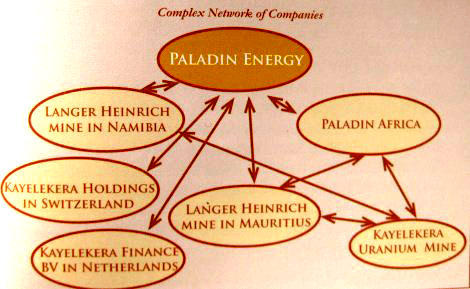
By such trends, one is compelled to question the motive, considering also that in Namibia itself the company owns the Langer Heinrich Uranium Mine where it started production in 2008 and has Kayerekera Uranium Mine as its second largest mining venture in this part of Africa acting also as a good supllment to the Langer Heinrich Uranium Mine.They call themselves investors, and government believes that the Malawi Development Goals (MDGs – who cares if it’s the second phase) will be boosted, particularly that mining alone through Kayerekera of Paladin Energy Limited group of companies (trading as Paladin (Africa) Ltd in Malawi?) could provide a large economic base.
But that is all a fat lie. Paladin and many other foreign multinational mining countries are least interested to contributing to the Malawi economic growth. They are here to milk the country – exploiting all that it has rich in minerals and dump us when the time is right even poorer. Continue reading
Now double – the cost of upgrading Monticello nuclear plant
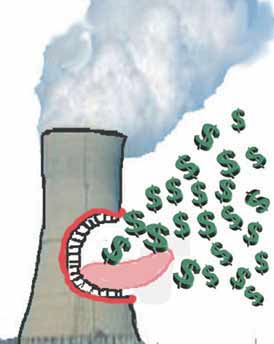 Cost of upgrading Monticello nuclear plant doubles http://www.kare11.com/news/article/1032273/391/Cost-of-upgrading-Monticello-nuclear-plant-doubles Jul 18, 2013 ST. PAUL, Minn. – Xcel Energy says the costs of upgrading its Monticello nuclear plant have doubled to $640 million.
The utility revealed the cost in a filing Wednesday with the state Public Utilities Commission, after previously saying the figure was a trade secret.
The project was originally expected to cost $320 million. The recently completed five-year project included replacement of aging equipment and boosting electricity output by 12 percent. The upgrades are intended to extend the life of the 43-year-old reactor another two decades.
Xcel expects to restart the plant this month after a four-month shutdown.
The utility has asked the PUC for a rate hike for 1.2 million Minnesota customers because of the cost overruns, which it blames on the complexity of the project. The commission is expected to decide this fall.
The nuclear industry is waking up to its gloomy future
The U.S. Nuclear Power Industry’s Dim Future Bloomberg Business Week By Matthew Philips July 18, 2013 ”……optimism has given way to despair. Four reactors have closed so far in 2013—a record for the industry. Because of the shale energy boom, natural gas prices crashed, followed by coal. Electricity demand fell during the recession and has yet to regain its 2007 peak. Bolstered by billions of dollars in green energy subsidies in the 2009 stimulus package, renewables, especially wind, have come on faster than many anticipated. Cap and trade never happened. And Japan’s Fukushima disaster in 2011 reminded the world just how dangerous nuclear power can be.
The industry hasn’t done itself any favors. A radioactive steam leak and a botched repair job have led to the permanent closure of three reactors in the last several months, two in California operated by Southern California Edison (EIX), and another in Florida run by Duke Energy (DUK). Faced with growing political opposition, billions of dollars of estimated repair costs, and cheaper alternatives, utility executives in both cases decided to pull the plug rather than fix the plants.
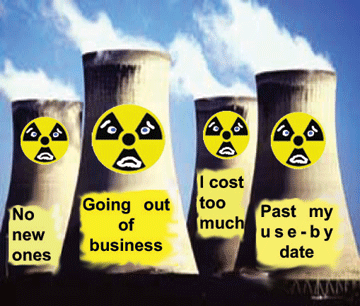
More troubling for the industry is the decision thatDominion Generation (D) made in May to close its Kewaunee reactor in Wisconsin. Squeezed by cheap coal and natural gas and unable to find a buyer after looking for more than a year, Dominion shut down the facility rather than keep operating it at a loss. Continue reading
The end is nigh for 38 USA nuclear reactors: shock wave to Wall St
“Recent developments have sent what are truly shock waves through the industry and Wall Street. The spate of early retirements and decisions to forego uprates magnify the importance of the fact that the ‘nuclear renaissance’ has failed to produce a new fleet of reactors in the U.S.
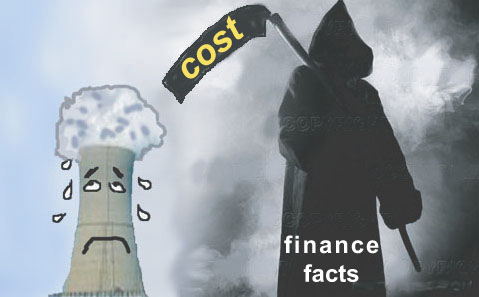
 Report: Over Three Dozen U.S. Nuclear Reactors At Risk Of Early Retirement, 12 Face Greatest Shutdown Pressure http://www.sacbee.com/2013/07/17/5573488/report-over-three-dozen-us-nuclear.html By Mark Cooper, Vermont Law School, Jul. 17, 2013 WASHINGTON, July 17, 2013 — In Wake ofSan Onofre, Crystal River & Kewaunee Shutdowns, Cooper Outlines Next Nuclear Reactors Under the Greatest Pressure to Close Down; Reactors in AL CA, CT, FL, IL, IA, KS, MD, MA, MI, MN, MO, NE, NH, NJ, NY, OH, PA, SC, TN, TX, VT, and WI on “At Risk” List. WASHINGTON, July 17, 2013 /PRNewswire-USNewswire/ — The tough times the U.S. nuclear power industry faces today are only going to get worse. In the wake of nine major nuclear reactor closures or uprate cancellations in recent months, a review of the remaining U.S. fleet reveals that 38 reactors in 23 states are at risk of early retirement, with 12 facing the greatest risk of being shutdown, according to a major new analysis by Mark Cooper, senior fellow for economic analysis, Institute for Energy and the Environment, Vermont Law School. Continue reading
1 This Month





PLEASE OPPOSE HR 8255 AND S.3639 – bills would accelerate satellite deployment, with no environmental review or safeguards – https://ncstd5li.quorum.us/campaign/169331/
To see nuclear-related stories in greater depth and intensity – go to https://nuclearinformation.wordpress.com
-
Archives
- October 2026 (10)
- September 2026 (339)
- August 2026 (330)
- July 2026 (355)
- June 2026 (287)
- May 2026 (306)
- April 2026 (356)
- March 2026 (251)
- February 2026 (267)
- January 2026 (308)
- December 2025 (358)
- November 2025 (359)
-
Categories
- 1
- 1 NUCLEAR ISSUES
- business and costs
- climate change
- culture and arts
- ENERGY
- environment
- health
- history
- indigenous issues
- Legal
- marketing of nuclear
- media
- opposition to nuclear
- PERSONAL STORIES
- politics
- politics international
- Religion and ethics
- safety
- secrets,lies and civil liberties
- spinbuster
- technology
- Uranium
- wastes
- weapons and war
- Women
- 2 WORLD
- ACTION
- AFRICA
- Atrocities
- AUSTRALIA
- Christina's notes
- Christina's themes
- culture and arts
- Events
- Fuk 2022
- Fuk 2023
- Fukushima 2017
- Fukushima 2018
- fukushima 2019
- Fukushima 2020
- Fukushima 2021
- general
- global warming
- Humour (God we need it)
- Nuclear
- RARE EARTHS
- Reference
- resources – print
- Resources -audiovicual
- Weekly Newsletter
- World
- World Nuclear
- YouTube
-
RSS
Entries RSS
Comments RSS

