Russia keen to sell nuclear reactors to UK, as long as UK subsidises price

 RUSSIA’S ROSATOM EYES NUCLEAR CONTRACTS IN BRITAIN YAHOO NEWS, BY SVETLANA BURMISTROVA , 13 Aug 13, MOSCOW (Reuters) – Russian state nuclear company Rosatom is considering selling reactors in Britain and will soon decide whether to apply for a UK reactor licence, a senior company executive said.
Rosatom is now building more atomic power plants than any other vendor and has been marketing the legacy of the former USSR’s own nuclear disaster, at Chernobyl in 1986, as a lesson learned in nuclear safety.
A major player in developing markets such as China, Vietnam and India, Rosatom has long been interested in building reactors in the European Union, where it is already a supplier of nuclear fuel…… Russian nuclear technology has been unpopular in western Europe since the Chernobyl disaster, but Britain is in dire need of investors willing to replace its ageing nuclear fleet after a series of utility companies, including Germany’s RWE and E.ON and Britain’s Centrica , have dropped out…….
Before entering the UK market, Komarov said, Rosatom would wait to see whether EDF reaches a deal with the British government on a guaranteed minimum power price for its proposed Hinkley Point project, Britain’s first new nuclear plant in almost 20 years.
The guaranteed price, also known as a contract-for-difference (CfD), is part of a major electricity market reform, currently being assessed by Parliament, to encourage types of energy that emit little or no carbon.
Through the CfDs, the government guarantees to top up prices to reach an agreed ‘strike price’ for power generated by the nuclear plants, should market prices fall after they are commissioned.

“This is a very comfortable scheme that guarantees return on investments,” Komarov said. EDF expects to announce by year-end whether it has reached a deal with the British government and plans to hold talks on partnering with a Chinese state-run firm.
“We are waiting to see what agreements EDF reaches,” Komarov said. “If we see that we can get a return on our investments, we will enter the project with great desire……. http://au.news.yahoo.com/world/a/-/world/18488685/russias-rosatom-eyes-nuclear-contracts-in-britain/
Entergy’s finances being probed by Nuclear Regulatory Commission
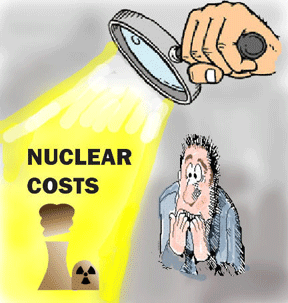 NRC to probe Entergy’s nuclear plant finances Rutland Herald, By Susan Smallheer
Deb Katz, executive director of the Citizens Awareness Network, said Saturday that the NRC accepting the petition for review was a major accomplishment for the groups. She said she hoped the NRC would get answers to many people’s questions about Entergy’s financial status.
Katz made her remarks during the “Flotilla 2013” rally and protest Saturday on the banks of the Connecticut River, directly across from the Vermont Yankee plant in Vernon, Vt. Entergy, the corporate parent of Vermont Yankee, announced last month it was laying off 800 employees out of its workforce of 15,000 nationwide. The cuts translate to a 4.6 percent staff cut at Yankee, which will lose 30 employees out of a total of 650.
Earlier in the year, the company announced it had been forced to write down the value of Vermont Yankee from $517 million to $162 million due to ongoing financial problems.
The NRC announced late last week that it was accepting the petition and would delve into Entergy’s finances. Continue reading
Escalating costs at Nuclear Plant Vogtle as Public Service Commission dilly dallies
 State defers showdown on Ga. nuclear plant costs News Tribune, : August 11, 2013 By RAY HENRY — Associated Press ATLANTA — A debate over the rising cost of building a first-of-its-kind nuclear plant in Georgia will be pushed far into the future.
Regulators at the Public Service Commission were facing a legal dilemma ever since Southern Co. subsidiary Georgia Power asked in February to raise its construction budget for building two more nuclear reactors at Plant Vogtle by $737 million to $6.85 billion. That request raised expectations that PSC staffers would seek this month to block the utility from passing along some of its costs to customers, but that didn’t happen. Instead, Southern Co. and Georgia utility officials recently reached a preliminary deal that would postpone a major budget debate until at least January 2018, when the first reactor is projected to come online.
A glimmer of the state’s strategy emerged Friday in a report filed by nuclear engineer William Jacobs Jr. and PSC analyst Steven Roetger. Their report lays out the reasons why regulators could try to force the utility to absorb losses because of construction mishaps, but it stops short of recommending that regulators reject any spending now…….
Former Commissioner Robert Baker, who has represented a consumer watchdog group critical of the utility’s spending, said regulators should object to spending now, not wait years into the future. Baker said he believes the preliminary agreement might delay a major review until 2020.
“The new commission in 2020 that looks at this is not going to have the institutional memory, have gone through the entire process up to that time,” he said. “They’re not going to want to second guess what happened seven years ago or eight years ago.” http://www.thenewstribune.com/2013/08/11/2725340/state-defers-showdown-on-ga-nuclear.html
America desperate to sell off nuclear technology to India?
 Unfortunate that Indo-US nuclear trade has stalled, says Washington NDTV by Pallava Bagla | August 09, 2013 Washington: The Indo-US civilian nuclear deal was billed as the corner stone of the burgeoning strategic partnership between the countries. However, five years later, the deal has not gone according to the script, and the US says the nuclear commerce has not benefitted the Americans who did most of the global diplomatic heavy lifting.
India’s people-friendly nuclear liability regime has reportedly irked the US.
“The nuclear issue is complex. US is not frustrated but India’s nuclear liability law is a concern and it is unfortunate that nuclear trade has not commenced,” said Richard Stratford, director of nuclear energy, safety and security at the US state department….. http://www.ndtv.com/article/india/unfortunate-that-indo-us-nuclear-trade-has-stalled-says-washington-403342
EDF, largest nuclear company in the world, turns from nuclear to renewable power
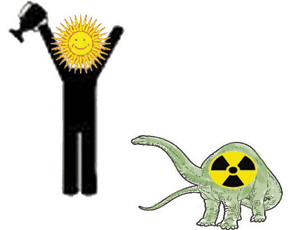 Nuclear Power Company Turns To Renewables http://www.energymatters.com.au/index.php?main_page=news_article&article_id=3877 7 Aug 13 The world’s biggest operator of nuclear plants is exiting the nuclear power sector in the USA; turning instead to renewable energy.
According to Reuters, French utility EDF recently struck an agreement partner Exelon with regard to EDF’s exit from their Constellation Energy Nuclear Group (CENG) joint venture, which operates five nuclear power stations totalling 3.9 gigawatts capacity.
EDF’s US operations will now focus on developing renewables-based generation, primarily solar power and wind energy, through EDF Renewable Energy. The company currently has a portfolio of over 5 gigawatts of projects and 2.3 gigawatts of installed capacity.
In July, EDF Renewable Energy also announced it had entered into a Membership Interest Purchase Agreement with Lincoln Renewable Energy to acquire the first phase of the Hereford Wind Project in Texas.
The nuclear power industry has fallen on very tough times in the USA; primarily due to cheap gas and wind power.
Perception of nuclear energy also took a major hit after the Fukushima nuclear crisis, which worried many Americans. Approximately 18 million people live within a 30 kilometre radius of a nuclear power plant in the USA – an area the same size as the initial Fukushima evacuation zone.
The Fukushima disaster continues to generate crises on a regular basis. A new emergency has recently been declared; triggered by radioactive groundwater breaching a barrier built to contain it.
Contaminated water could rise to the surface within three weeks and if it should do so, the flow could be “extremely fast“.
TEPCO, operator of the Fukushima facility, says it has been slow to deal with the subterranean water leaks as it was focused on cooling the damaged reactors that posed greater risks.
Faith in TEPCO’s abilities to address the situation is fragile and the company’s apologies are being received coolly by the people of Japan – and more nasty surprises are certainly possible during the massively expensive cleanup.
Nearly 1000 Fukushima workers have increased risk of getting leukaemia
 9,640 Fukushima plant workers reach radiation level for leukemia compensation http://ajw.asahi.com/article/0311disaster/fukushima/AJ201308050104 August 05, 2013 By MIKI AOKI/ Staff Writer Nearly 10,000 people who worked at the stricken Fukushima No. 1 nuclear plant are eligible for workers’ compensation if they develop leukemia, but few are aware of this and other cancer redress programs. Continue reading
Florida residents to pay more for abandoned nuclear power plants
Fla. regulators OK Duke nuclear rate hike News Observer, : August 5, 2013 By GARY FINEOUT — Associated Press TALLAHASEE, FLA. — Duke Energy’s nearly 2 million customers in Florida will keep paying for the utility giant’s now-shuttered and abandoned nuclear power plants for the next several years.
And on Monday, that cost went up higher. State utility regulators voted to let Duke Energy Florida raise rates 89 cents a month for the average customer to pay for its Crystal River Plant, in Citrus County.
The charge, which would take effect in January 2014, would last up to seven years. It would be in addition to a separate charge customers have been paying to build a nuclear power plant in Levy County in north Florida.
Last week the Charlotte, N.C.-based company announced it was scuttling its plans to build the $24.7 billion plant, citing changes in the energy market and regulatory hurdles at the state and federal level.
The company announced in February that it was closing the Crystal River nuclear plant, located near the Gulf of Mexico. Workers cracked a concrete containment building during an attempt to upgrade the plant in 2009. An attempt to fix the problem in 2011 resulted in more cracks.
State Rep. Mike Fasano, R-New Port Richey, blasted the decision to let Duke — formerly known as Progress Energy — collect even more money for the Crystal River plant.
“Every customer of Duke Progress Energy should be absolutely outraged,” Fasano said…….
Expenses normally cannot be passed on to customers until power plants go into service, but the Legislature made an exception for nuclear reactors in the 2006 law. It was designed to encourage the expansion of nuclear energy. That law was changed this past year…… http://www.newsobserver.com/2013/08/05/3084374/fla-regulators-ok-duke-nuclear.html
No sign of recovery in plummeting uranium market
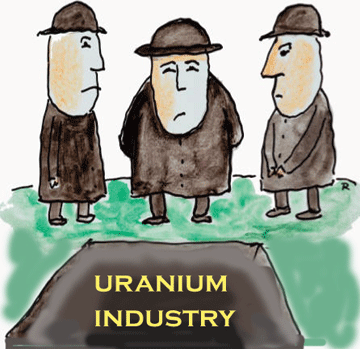 No rebound for uranium seen as Japan idle plants Prices have sunk to the lowest in more than 7 years amid a glut of the radioactive metal and speculation Japan will delay restarting its nuclear reactors. MineWeb, Ben Sharples (Bloomberg) , 02 Aug 2013 (BLOOMBERG) Uranium prices are showing little sign of recovery after sinking to the lowest in more than seven years amid a glut of the radioactive metal and speculation Japan will delay restarting its nuclear reactors.
Prices may average $42.82 a pound this year, according to Morgan Stanley, while Bank of America Corp. is predicting $43.80. BMO Capital Markets, which cut its price estimate by 10 percent in July, forecasts $43 a pound. Uranium has averaged $40.94 so far in 2013 after sliding to $34.50 last month, the lowest since November 2005.
While Japanese power producers, including Tokyo Electric Power Co., are seeking to restart reactors as soon as possible as the cost of other fuels escalates, operations may not resume until next year, according to Deutsche Bank AG. That’s threatening to delay a rebound in demand for uranium, hurting miners such as Australia’s Paladin Energy Ltd. as supplies outstrip demand. There is about 60 million pounds of surplus uranium around the world, according to Cantor Fitzgerald LP.
“The process for restarts is clearly going to take some time,” said Jonathan Hinze, a senior vice president at Roswell, Georgia-based Ux, which provides research on the nuclear industry. “Japanese utilities are unlikely to require any new fuel until 2014 at the earliest. There is a realization that the uranium demand from Japan is unlikely to dramatically change anytime soon, especially this year.”
Price Weakness
Uranium for immediate delivery has dropped as much as 21 percent this year, extending a 17 percent decline in 2012, according to data from Ux. Prices slumped 12 percent in July, the biggest monthly loss since March 2011. They climbed as high as $152 in June 2007…
Economics of nuclear power rapidly getting worse

 US natgas boom sucks nuclear power into downdraft , 4 Aug 2013 By: Javier E. David CNBC.com One of the biggest contributors to the ongoing decline of the U.S. nuclear industry is booming natural gas development, according to a new study.
In a study published in March, the Institute for Energy and Environment identified cost overruns, slowing demand and plunging natgas prices—which this week fell to a five month low—as key forces behind nuclear’s decline.
Cheap and abundant natural gas is eating away at nuclear energy’s traditional role in generating electricity in a way that has made the sector’s prospects increasingly precarious, according to the institute and others. Even as the U.S. renews its push for climate change policies that could give nuclear a new lease on life, some observers are doubtful much can be done to arrest the sector’s spiral……..
Hill said the long-term prospects of the nuclear industry are uncertain at best, especially in a sector operating in the shadow of Japan’s 2011 nuclear disaster. “The economics and the environment are driving development and the use of shale oll and gas to provide power,” she said.
Furthermore, “the economics of nuclear plants are very difficult to maintain, and very costly to do so,” she said. Hill pointed to issues that have for years dogged Yucca Mountain’s nuclear facility in Las Vegas, Nevada, the site of vociferous environmental opposition……………. the landscape remains dotted with failing projects, with four reactors having been retired this year alone.
Just a few years ago, there were prospects for a nuclear revival, said Blank Rome’s Hill. However, the resurgence of oil and gas production is changing all that.
“Some of it is definitely safety-related, such as [Japan’s] Fukushima, but the primary driver has been the advent of shale gas in the last few years,” Hill said. “I think we’re just seeing the beginning of what’s happening with shale development.”
Dimming future for nuclear industry in Florida
A utility pulls plug on Florida nuclear plans — but it’s not FPL Miami Herald, BY CURTIS MORGAN, 3 Aug 13, CMORGAN@MIAMIHERALD.COM The future of the nuclear energy industry in Florida appears to be dimming.
Duke Energy Corp. on Thursday announced it had indefinitely postponed plans to build two new reactors in sparsely populated Levy County on the Gulf Coast, citing federal licensing delays and economic concerns.
Those are topped by spiraling construction costs and uncertainty over whether Florida regulators and lawmakers will continue supporting controversial “cost-recovery’’ policies allowing utilities to bill
customers in advance for plants with multibillion-dollar price tags.
The decision by the nation’s largest utility is the latest sign of cooling enthusiasm for nuclear power nationwide. Continue reading
Africa, a future nuclear insurance “gravy train”
Posted by nuclear-news.net
Date 5 August 2013
by Arclight2011part2
On Nuclear-news.net we have covered many stories concerning Africa and the Nuclear aspirations of this dark continent. I say dark because at night it is the only continent not lit up by street lighting and advertisements.
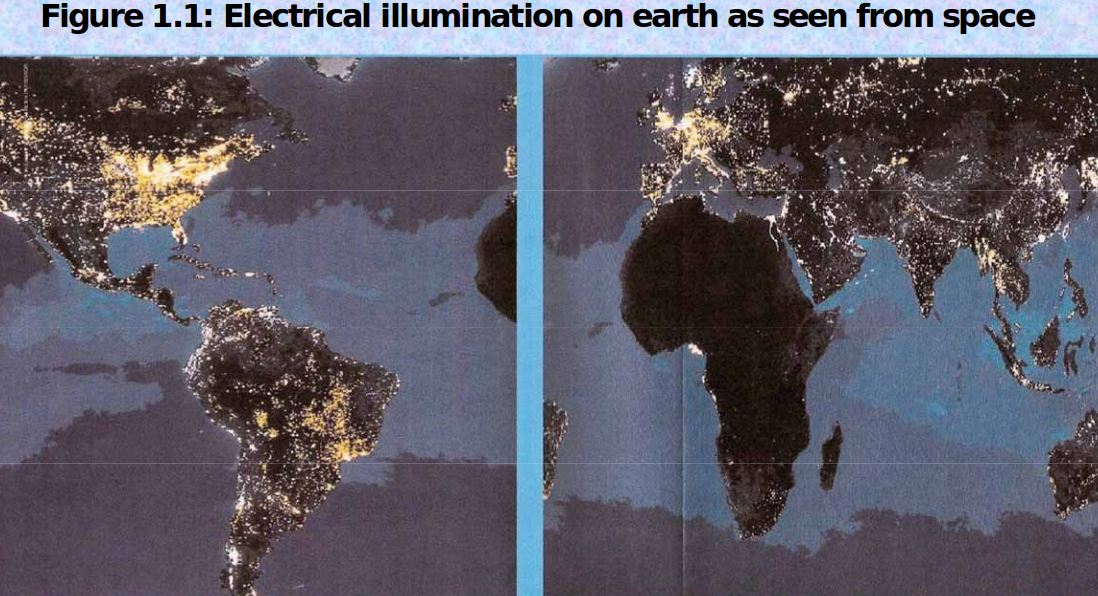
From the corporations point of view this is a new continent to develop using western choices of energy that that includes nuclear power options.
The IAEA is even going to approve a nuclear reactor in Ghana, that is one of the few earthquake zones in NW Africa (information on link)
https://nuclear-news.net/2013/07/04/ghana-lines-up-for-nuclear-cash-hand-outs/
And here is an example of how the Nuclear/mining industries have contaminated large areas of Africa and in these articles ;
But nuclear materials are already proliferate over Africa in the form of food irradiation processes, medical and industrial uses to name but a few. And many wonder of the security implications of this.
Of course the nuclear industry is bigger than just the technology.
There are Insurance, financial services, military and security corporations connected to having nuclear power and a lot of money can be made by these organisations.
https://nuclear-news.net/2013/05/09/the-naked-truth-about-nuclear-accident-insurance/
https://nuclear-news.net/2010/09/30/how-tax-payer-money-funds-the-nuclear-industrys-expansion/
The IAEA has been helping to develop nuclear technology in Africa and sets the ground for these corporations to step in. The IAEA works with the big nuclear powers in a bid to solve the waste crisis with the MOX fuel system.
Selling hundreds of reactors to light up the African night, running off the waste products of the domestic, medical and military uses of nuclear materials from the west. Even as western energy companies such as EDF are being forced to invest in wind and solar energy due to financial and environmental concerns;
https://nuclear-news.net/2013/08/02/nuclear-company-switching-to-renewable-energy-in-usa/
https://nuclear-news.net/2010/12/27/off-grid-small-scale-solar-energy-in-huts-in-africa/
The Insurance companies do well on these deals as there is a cap on the amount that needs to be paid out to victims of the nuclear fuel cycle. To give an example of this payment system at work, the British Nuclear Test Veterans got around £6,000-$12,000 per head for their radiation induced damages (including genetic damage to future off spring) Link to the BNTV report to be found here ;
https://nuclear-news.net/2013/07/22/british-nuclear-test-veterans-silenced/
The affected Japanese from Fukushima expect to receive under £3000 or-$6000 per head in a country that is more expensive to live in than th UK and has higher cost implications for future health problems.
However the children and pregnant women will get under £5000 or $10,000 as they are likely to develop thyroid problems including cancer and have miscarriages etc.
It is interesting to note the similarity in the payments to those victims affected in the UK and Japan. I have seen no quotes for Miyagi prefecture so far though;
https://nuclear-news.net/2013/06/04/compensation-for-fukushima-evacuees-radiation-anxiety/
In fact, the Insurance liability caps system are not welcome everywhere and it is a point of contention that the insurance companies want to limit the costs to them, so that the nuclear financial and insurance “gravy train” is not interrupted.
Here is an example of dissension against the western corporate nuclear insurance/finance industry;
Uranium glut pile rises, with doubts over Japan’s much-touted nuclear restart
.All but two of Japan’s 50 reactors remain idle due to the Fukushima disaster and must meet stricter safety standards set by the NRA before they can be restarted………The reactor review process is likely to take six months for each one, Deutsche Bank said in a July 15 note, citing NRA Chairman Shunichi Tanaka. An evaluation of all of Japan’s reactors may take more than three years
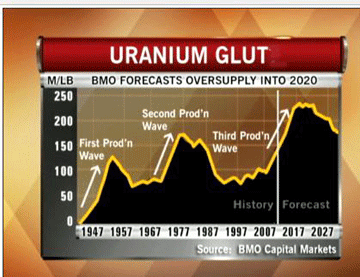
Slow reactor restart process rattles energy markets as uranium piles up, Japan Times, BLOOMBERG AUG 2, 2013 MELBOURNE – Uranium prices are showing little sign of recovery after sinking to their lowest levels in more than seven years amid a glut of the radioactive metal and speculation Japan will delay restarting its reactors……….. Uranium has averaged $40.94 so far in 2013 after sliding to $34.50 in July, the lowest price since November 2005.
While Japanese power producers including Tokyo Electric Power Co. are seeking to restart reactors as soon as possible as the cost of other fuels escalates, operations may not resume until next year, according to Deutsche Bank AG.
That’s threatening to delay a rebound in demand for uranium, hurting miners such as Australia’s Paladin Energy Ltd. as supplies outstrip demand. There is about 60 million pounds of surplus uranium around the world, according to Cantor Fitzgerald LP.
“The process for restarts is clearly going to take some time,” said Jonathan Hinze, a senior vice president at Ux, which provides research on the nuclear industry. “Japanese utilities are unlikely to require any new fuel until 2014 at the earliest. There is a realization that the uranium demand from Japan is unlikely to dramatically change anytime soon, especially this year.”
Uranium for immediate delivery has dropped as much as 21 percent this year, extending a 17 percent decline in 2012, according to data from Ux. Prices slumped 12 percent in July, the biggest monthly loss since March 2011. They climbed as high as $152 in June 2007.
“The weakness in uranium prices is partially attributable to uncertainty surrounding the timetable for reactor restarts in Japan,” John Borshoff, the chief executive officer of Australia-based Paladin Energy, said in the company’s quarterly production report July 16…..All but two of Japan’s 50 reactors remain idle due to the Fukushima disaster and must meet stricter safety standards set by the NRA before they can be restarted………The reactor review process is likely to take six months for each one, Deutsche Bank said in a July 15 note, citing NRA Chairman Shunichi Tanaka. An evaluation of all of Japan’s reactors may take more than three years…..Deutsche said.http://www.japantimes.co.jp/news/2013/08/02/business/slow-reactor-restart-process-rattles-energy-markets-as-uranium-piles-up/#.Uf2iE9Jwo6I
Sale of Namibian uranium mine cancelled, prices way too low
Paladin shares plummet after mine sale cancelled Proactive Investors, by Fiona MacDonald 2 August 13, Paladin Energy’ s (TSE:PDN) (ASX:PDN) stock lost 15 cents on the Toronto Stock Exchange Friday from prior close of 92 cents to fall more than 16 per cent on the back of the news that the uranium miner had terminated negotiations with all parties for the sale of a minority interest in the Langer Heinrich Mine.
The announcement, released after the close of North American trading Thursday night, sparked intraday trading that saw share prices dip as low as 65 cents, marking a new bottom for the Subiaco, Australia-headquartered miner’s 52 week range.
The mine, located in Malawi in southern Africa, is owned 100 per cent by Paladin and was taken off the table as a result of low uranium prices – a legacy of the disaster at Japan’s Fukushima-Daiichi atomic power plant after the 2011 earthquake and tsunami — undercutting the company’s chances of collecting the pay day it had in mind….. It is a long fall for the miner, which was trading at $1.00 per share as recently as a week ago. http://www.proactiveinvestors.com/companies/news/46789/paladin-shares-plummet-after-mine-sale-cancelled-46789.html
Australian uranium miner Paladin’s share price tumbles
Shares of uranium miner Paladin dive after cancelled sale Reuters, Aug. 02 2013, Shares of Australian uranium miner Paladin Energy Ltd. fell as much as 29 per cent in Toronto on Friday after the company cancelled plans for now to sell a minority interest in an African mine, and instead raised funds through a private placement of shares. Paladin said it ended negotiations with a potential investor on Thursday and all other parties for a stake in its Langer Heinrich mine in Namibia. The company said it was unlikely to get the price it wanted because of low uranium prices….. Trading of Paladin stock was halted in both Canada and Australia on Thursday, pending news.
Paladin’s stock was down 28 per cent, or 26 Canadian cents to 66 Canadian cents in early trading on the Toronto Stock Exchange. http://www.theglobeandmail.com/report-on-business/industry-news/energy-and-resources/shares-of-uranium-miner-paladin-dive-after-cancelled-sale/article13572589/
Cameco to sell less uranium
Cameco lowers uranium sales projections STARPHOENIX BY CHRISTOPHER DONVILLE, POSTMEDIA NEWS AUGUST 2, 2013 Cameco Corp., the world’s third-largest uranium producer, will sell less of the nuclear fuel via its German trading unit than previously planned because of the decline in the price of the commodity.
Sales volumes will be 8 million to 10 million pounds, down from an earlier projection of 9 million to 11 million, the Canadian company said Thursday in a statement. It now sees the unit’s 2013 sales at $450 million to $550 million, from $500 million to $600 million previously……..Uranium spot prices have fallen 27 per cent in the past year amid delays in resuming electricity output from nuclear power plants in Japan following the March 2011 earthquake and tsunami.http://www.thestarphoenix.com/business/Cameco+lowers+uranium+sales+projections/8740104/story.html
1 This Month





PLEASE OPPOSE HR 8255 AND S.3639 – bills would accelerate satellite deployment, with no environmental review or safeguards – https://ncstd5li.quorum.us/campaign/169331/
To see nuclear-related stories in greater depth and intensity – go to https://nuclearinformation.wordpress.com
-
Archives
- October 2026 (10)
- September 2026 (339)
- August 2026 (330)
- July 2026 (355)
- June 2026 (287)
- May 2026 (306)
- April 2026 (356)
- March 2026 (251)
- February 2026 (267)
- January 2026 (308)
- December 2025 (358)
- November 2025 (359)
-
Categories
- 1
- 1 NUCLEAR ISSUES
- business and costs
- climate change
- culture and arts
- ENERGY
- environment
- health
- history
- indigenous issues
- Legal
- marketing of nuclear
- media
- opposition to nuclear
- PERSONAL STORIES
- politics
- politics international
- Religion and ethics
- safety
- secrets,lies and civil liberties
- spinbuster
- technology
- Uranium
- wastes
- weapons and war
- Women
- 2 WORLD
- ACTION
- AFRICA
- Atrocities
- AUSTRALIA
- Christina's notes
- Christina's themes
- culture and arts
- Events
- Fuk 2022
- Fuk 2023
- Fukushima 2017
- Fukushima 2018
- fukushima 2019
- Fukushima 2020
- Fukushima 2021
- general
- global warming
- Humour (God we need it)
- Nuclear
- RARE EARTHS
- Reference
- resources – print
- Resources -audiovicual
- Weekly Newsletter
- World
- World Nuclear
- YouTube
-
RSS
Entries RSS
Comments RSS

