AREVA and EDF need to clean up their organisational mess ASAP – says France’s nuclear watchdog

 French nuclear watchdog urges quick resolution of Areva rescue plan, Reuters, PARIS | BY MICHEL ROSE AND BENJAMIN MALLET 12 June 15 Areva’s (AREVA.PA) financial situation is worrying, the head of France’s ASN nuclear watchdog said on Thursday, urging the loss-making nuclear company and utility EDF (EDF.PA) to wrap up a rescue plan for Areva as soon as possible.
The French government last week approved EDF’s plan to take a majority stake in Areva’s nuclear reactor business and gave the two state-owned companies a month to do a deal.
“Areva’s current financial situation, it could get better, (it) can be considered as preoccupying in terms of safety,” ASN Director Pierre-Franck Chevet told Reuters in an interview.
“That’s why we have formally asked to hear them … to ask what kind of organisation they are putting in place to fulfils the commitments they have made in terms of safety for the incoming period,” he added, noting a meeting was scheduled by the end of June.
An EDF spokeswoman declined to comment, while an Areva spokeswoman pointed to comments made by Areva Chairman Philippe Varin on Wednesday, that safety remained an absolute priority.
ASN, an independent regulatory authority, last year imposed on Areva a requirement to recondition radioactive waste stored at its La Hague facility in northern France, which could cost several billion euros and which must be provisioned for, Chevet said.
However the watchdog has no power on the merger per se and its only remit is safety. It can shut down a nuclear plant if it sees a safety issue or fine companies for any transgressions……..http://uk.reuters.com/article/2015/06/11/uk-france-nuclear-asn-idUKKBN0OR2EU20150611
Rio Tinto pulls out of loss-making Australian uranium mine

 Shares in Rio Tinto’s Australian uranium unit halve, Ft.com , 12 June 15 Jamie Smyth in Sydney Rio Tinto has withdrawn its support for the expansion of one of the world’s biggest uranium mines, causing shares in its separately listed subsidiary Energy Resources of Australia to almost halve in value.
The decision by the Anglo-Australian miner underscores the difficulties in the nuclear industry following the Fukushima meltdown in 2011, which prompted Japan to mothball its 43 operable reactors.
Since soaring to a record high of US$137 per pound in 2007, uranium prices have fallen to US$35 per pound — a level at which many miners are losing money and new investment does not make economic sense.
“After careful consideration, Rio Tinto has determined that it does not support any further study or the future development” of ERA’s proposed underground uranium mine “due to the project’s economic challenges,” the miner said.
Shares in ERA were down 46 per cent at A$0.70 in mid-afternoon trading in Sydney on Friday.
Up until 2008, the Ranger mine in Australia’s Northern Territory was producing almost 10 per cent of the global supply of uranium. But the open cut mine is now exhausted and ERA was conducting feasibility studies on developing an underground mine, Ranger 3 Deeps.
This week, ERA, which is 68 per cent owned by Rio, said it was committed to revisiting the underground project once the uranium market has recovered. But the decision by Rio to rule out support for the future development of the mine casts serious doubt on whether the project will ever happen………..http://www.ft.com/intl/cms/s/0/f24a6a9a-10b7-11e5-b4dc-00144feabdc0.html#axzz3csmrhS7I
Costs of Enriching Uranium Have Hurt Iran – Iranian Professor Sadegh Zibakalam
Iranian Professor: The Costs of Enriching Uranium Have Hurt Iran http://www.thetower.org/2156-iranian-professor-the-costs-of-enriching-uranium-have-hurt-iran/ by TheTower.org Staff | 06.12.15 In a public debate last month against an advisor to Iranian Supreme Leader Ayatollahi Ali Khamenei, Prof. Sadegh Zibakalam of Tehran University, who is associated with the reformist movement in Iran, argued that Iran’s enrichment program has been expensive for the country with little benefit. His remarks were translated Tuesday by the Middle East Media Research Institute (MEMRI).
“I’m not saying that the nuclear [program] is bad; it’s good. But at what cost? Now they will say ‘Zibakalam said we don’t need a nuclear [program]’… The political, partisan, and factional conduct on this [nuclear] issue must be resolved. Does the nuclear [program] exist for the sake of the state, or does the state exist for it? Must Iran be sacrificed for the sake of the nuclear [program], or should we sacrifice the nuclear [program] for the sake of Iran?”Zibakalam argued that enriching uranium has huge direct operating costs, but the penalties for having an illicit enrichment program has hurt Iran even more. Zibakalam suggested that Iran would have been better off buying enriched uranium and incurring neither cost.
Zibakalam, who was sentenced to prison last year for questioning Iran’s nuclear program, made several references during the debate to not being allowed to express an opinion about the nuclear program. In a different forum last year, Zibakalam said that Iran’s threats against Israel were the reason Iran’s nuclear program is viewed with suspicion.
Renewable energy looking good for institutional investors
Institutional Investor Appetite For Renewable Energy, Forbes.com, Christopher P Skroupa, 12 June 15 “…..Richard Rankin: Most people do not know how substantial renewable energy is or that, in a global context, renewable energy is competitive with and can replace conventional energy entirely.
 In the Great Plains and Southwest USA, several companies have signed contracts, known
as power purchase agreements, for solar and wind energy at prices lower than that of natural gas. Renewable energy can be a cheaper alternative to fossil fuels because of the ability to harness sources of energy that are prevalent to certain locations. It is a young industry with room for growth and improvement.
However, globally, it is already as big as the apparel and fashion industry worldwide and four times the size of the semi-conductor industry. Navigant Research, in their Advanced Energy Now 2015 Market report, observed that in the US, the market for advanced energy is bigger than the airline industry, equal to pharmaceuticals and four times the size of the semi-conductor industry.
With newly available forms of financing such as YieldCos which lower the cost of capital, and policies in place that would put the industry on par with traditional carbon energy producers, there appears to be no limit to renewable energy. Demand is strengthening for renewables at a faster pace than ever before and I cannot wait to see where it takes us.
Skroupa: What sector of renewable energy is the most promising?
Rankin: Electricity generation from solar looks to me to be one of the most promising segments. Continue reading
Falling electricity prices are hitting France’s nuclear corporation EDF

 EDF Nuclear Power Struggles to Compete With Falling Market Price, Bloomberg Business, by Tara Patel June 10, 2015 Electricite de France SA’s sale of atomic power to competitors for the second half of the year has sunk to a fraction of what it was in 2014, signaling nuclear energy may be losing competitiveness.
The state-controlled utility sold a quarter of the volume, or 4 terawatt-hours, to rivals, according to energy regulator Commission de Regulation de l’Energie. The 12.3 terawatt-hours sold for the first half was also less than half the 34.6 terawatt-hours for the second half of 2014.
The drop signals obstacles ahead for Chief Executive Officer Jean-Bernard Levy, who is pushing for higher power prices to help pay for tens of billions of euros of maintenance and safety upgrades on EDF’s aging fleet of French nuclear reactors, which account for three-quarters of the country’s electricity production.
“There is an imbalance between nuclear generation costs and wholesale power market prices,” said Louis Boujard, a utilities analyst at Oddo Securities in Paris. “Nuclear energy is less competitive than it was in the past.”Market Price
French electricity is bought and sold in the market on a year-ahead basis for 38.15 euros, or 9.2 percent below the Arenh price, according to broker data compiled by Bloomberg. The contract has dropped 4.6 percent since January and is trading at its lowest level for the time of year since at least 2007 when Bloomberg began tracking the data.
The government is reviewing how it calculates the rates charged for Arenh nuclear power. While EDF argues that it needs to increase the rate to better reflect the cost of generation, other power distributors such as Direct Energie and industrial consumers want a reduction. In the meantime, they are shunning the volumes in favor of cheaper power on the market………http://www.bloomberg.com/news/articles/2015-06-10/edf-nuclear-power-struggles-to-compete-with-falling-market-price
Economically unwise decision for Hungary to buy nuclear reactors from Russia
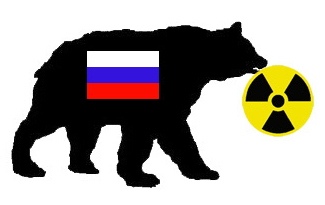 Hungary challenged on nuclear choice with Russia By Nick Thorpe BBC News, Hungary 11 June 15 Environmentalists in Hungary are hoping the European Commission will scupper a €12.5bn (£9bn) Hungarian-Russian deal to build two new 1,200 megawatt (MW) reactors at the Paks nuclear power station on the River Danube.
The expansion, they argue, will produce expensive energy, far beyond market prices, plunge Hungary into debt, and deepen dependence on Russia….
Mr Orban based his 2014 election victory on promises to keep utility prices low.
Months earlier he struck a deal with Russian President Vladimir Putin that saw Russia agree to loan Hungary around 80% of the estimated construction cost of the new reactors at Paks. Hungary will pay Russia back from the electricity generated.By the time Hungary has to start paying for this next generation of reactors, in 2025, Mr Orban should be in comfortable retirement.
Nevertheless, the decision to sign a deal with Russia took even his own Fidesz party by surprise.
Built by the Soviet Union in the 1980s, the working life of the four existing reactors at Paks will run out between 2032 and 2037.
That means that no new decision on replacing them would actually be necessary until 2020 at the earliest……….
opponents hope the European Commission will rule that Hungary’s 20% share of the construction costs will be judged to be a direct subsidy, which is illegal under competition rules.
A decision is expected in October http://www.bbc.com/news/world-europe-33078832
US nuclear industry lobbying hard to sell its reactors to China
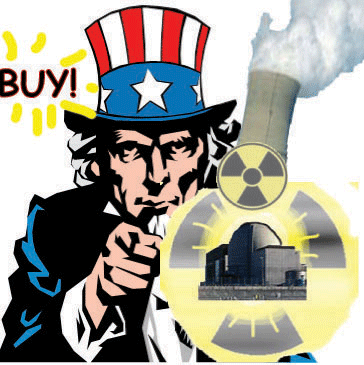 Nuclear industry pushing for renewal of U.S.-China agreement, The Hill, By Devin Henry – 06/08/15The nuclear energy industry is pushing to keep a critical export agreement with China on the books beyond the end of this year.
A nuclear cooperation agreement that allows United States companies to export their products and technologies to China expires in December. President Obama proposed a 30-year extension of that agreement in April, which the American nuclear industry says will allow it to continue working in the country.
Congress has the right to block or modify that agreement, and concerns about nuclear nonproliferation could hinder it at some point. But key lawmakers on both sides of the aisle say they support the idea of a nuclear cooperation pact, and industry officials are hopeful the new version takes hold this year.
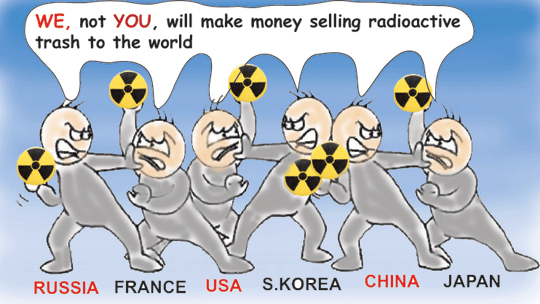
“Even where the Russians may have brought in financing, or the Koreans may have underbid folks, there is still the desire to have the American supply chain come in,” said David Blee, the executive director of the U.S. Nuclear Infrastructure Council, a business group. Continue reading
Uranium Energy reports 3Q loss
Uranium Energy posts third-quarter loss of $5.3 million
VANCOUVER, British Columbia (AP) _ Uranium Energy Corp. (UEC) on Tuesday reported a loss of $5.3 million in its fiscal third quarter…….http://finance.yahoo.com/news/uranium-energy-reports-3q-loss-101556220.html
Uranium promise turned to poverty for Dominionville, South Africa
Uranium mining town hopes long turned to dust, Mail & Guardian 05 DEC 2014 PHILLIP DE WET Dominionville residents expected a boom town when Shiva Uranium foretold promises of riches, but white poverty and black despair remain years later. The people of Dominionville in North West have seen it before, and those who were not around have heard the stories. The residents tell it among themselves like a sort of fairy tale – the pre-Disney kind, full of darkness and foreboding – warning against hope.
In 2006, it was Uranium One, they say, that sold the idea that riches would return to their town. In Canada and Europe, the company sold the story of the rich shafts – almost within sight of the residents – and they sold it well.
The people of Dominionville, more than half resigned to the idea that the tide would never turn their way again, read the articles about hundreds of millions of dollars being poured into the company, and dared to dream……
That was so many years ago that the signboards for the Shiva Uranium mines have been bleached almost illegible by the sun. As yet, the money has not materialised. Dominionville barely clings on, a place of white poverty and black despair……http://mg.co.za/article/2014-12-04-uranium-mining-towns-hopes-long-turned-to-dust
Wikileaks reveals another corporate friendly global trade plan – Trade in Services Agreement (TISA)
 WikiLeaks Strikes Again: Leaked TISA Docs Expose Corporate Plan For Reshaping Global Economy,FDL, CTUTTLE JUNE 3, 2015 Leaked Docs reveal that little-known corporate treaty poised to privatize and deregulate public services across globe. By Sarah Lazare
An enormous corporate-friendly treaty that many people haven’t heard of was thrust into the public limelight Wednesday when famed publisher of government and corporate secrets, WikiLeaks, released 17 documents from closed-door negotiations between countries that together comprise two-thirds of the word’s economy.
Analysts warn that preliminary review shows that the pact, known as the Trade in Services Agreement (TISA), is aimed at further privatizing and deregulating vital services, from transportation to healthcare, with a potentially devastating impact for people of the countries involved in the deal, and the world more broadly. Continue reading
Burnout and stress in Fukushima’s 7,000 nuclear cleanup workers
Stress on The Front Lines of Fukushima Cleanup, NHK, 12 March 2015 Four years ago, crews at Fukushima Daiichi in Japan were racing to keep the nuclear plant from spiraling out of control following the earthquake and tsunami. Today, that sense of urgency has dissipated. But the situation remains serious as workers juggle a host of problems as they decommission the facility. Given the risks involved, health concerns and other worries weigh heavily on their minds……Every day about 7,000 workers help decommission the reactors. In heavy protective clothing, they carry out such tasks as collecting and storing contaminated water. However, the decommissioning work is expected to take up to 40 years to complete. Keeping stress levels down and morale up is proving difficult.
Maeda says a change of mood has definitely come over his staff. He also says it’s getting harder to find new skilled workers. His company now has only one-third the number of experienced workers it had before the accident. “If it carries on like this, we’ll go out of business,” he says.
Four years after the disaster, the decontamination of land around the plant continues. But it is hard to predict when places like Maeda’s hometown of Namie will be habitable again. He says many residents are losing hope of returning home……… http://www3.nhk.or.jp/nhkworld/english/news/nuclearwatch/20150312.html
Meltdown in France’s nuclear dream – taxpayers to cop the costs
External factors may have precipitated the crash of Areva, but the cause is internal. Areva and the French nuclear industry is controlled by engineers and state officials and the market comes as an afterthought.
The problems of time and cost overruns in China, Finland and now in France at Flamanville are self-made and part of the “esprit de corps” arrogant attitude of the organisation.
Now, 13 years later, the problem needs to be addressed and risks costing billion of euros and thousands of jobs
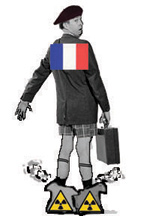 France’s Nuclear Industry Dream Faces Melt-Down At Expense Of State Coffers, Tax Payers Forbes, Marcel Michelson, 3 June 15 France has decided to rescue its Areva nuclear energy company once again, this time by combining the nuclear power station creation business with state-controlled power operator EDF , its biggest client.
Only a few years back, in 2010, Areva’s finances had been restored by the forced sale of its transport and transmission activities to industrial group Alstom and electrical engineer Schneider . Meanwhile, GE of the United States controls the Alstom power activities as part of its own rescue recapitalisation.
The rest of Areva includes uranium mines, nuclear waste recycling, transport, storage and some alternative energy activities.
For all intents and purposes, Areva is dead. Continue reading
France pins its nuclear hopes on exporting reactors
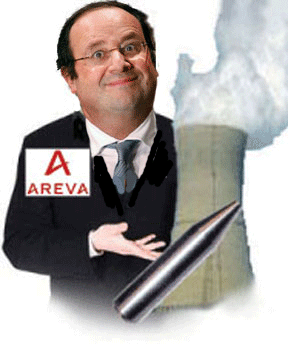 Rescued Areva faces uncertain future as nuclear fuel group By Geert De Clercq (Reuters) 5 June 15 – France‘s Areva faces an uncertain future as a specialised nuclear fuel supplier, as a state rescue moves its core nuclear reactor activities to its utility customer EDF. Shares in the state-owned firm briefly rose almost 6 percent on Thursday after the government said late on Wednesday it would recapitalise Areva and approved EDF’s plan to take over Areva’s reactor unit.
The government plan unwinds Areva’s much-vaunted model of an integrated nuclear group that mines and enriches uranium, produces nuclear fuel, builds reactors and recycles spent fuel. Created fifteen years ago from the nuclear fuel group Cogema and reactor builder Framatome, Areva had ambitions to sell as many as 16 of its massive EPR reactors to energy-hungry developing countries.
But it has not sold a reactor since 2007 and the four it did sell have been plagued by delays and cost overruns. More than two decades after it was designed, not a single EPR is in operation today.
Still, the French government said it hopes an EDF-led nuclear industry could win the export contracts that have proved so elusive for Areva.”The French camp must work together abroad,” Economy Minister Emmanuel Macron told France Info radio on Thursday. Continue reading
France’s AREVA-EDF nuclear merger – easier said than done
France Grapples With a Knotty Nuclear Problem http://blogs.wsj.com/corporate-intelligence/2015/06/04/france-grapples-with-a-knotty-nuclear-problem/ By AMBROISE ECORCHEVILLE
The reconstitution of France’s nuclear industry is officially underway. Under orders from President François Hollande, atomic-power utility Electricité de France ‘sEDF.FR -0.45% is going to invest in the nuclear-reactor business of Areva to help refinance the troubled engineering group. The two state-controlled companies have a month to clinch a comprehensive deal.
That’s going to be easier said than done.
Leaving aside the questions about the future of nuclear energy in a world of fast-changing energy markets and geopolitical uncertainty, the interests of the French state, EDF and Areva are far from convergent.
Take Areva’s finances. The group, whose operations run from uranium mining to treating nuclear waste, needs a cash injection of €6 billion ($6.6 billion) to €8 billion. EDF, according to people familiar with the matter, has offered to invest €2 billion in Areva’s reactors unit. Some analysts question the willingness of the government to make up the difference. They note France’s stretched public finances and long-term risks associated with Areva’s unfinished, much-delayed, and over-budget nuclear reactor projects in Finland and France.
The future commercial ties between EDF and Areva also leave unanswered questions. The government wants to reset them. EDF’s success in diversifying its sources of nuclear fuel for its park of French reactors, responsible for about three quarters of the country’s electricity, has squeezed margins at Areva.
True, France could try to lure foreign investment but outside investors can only ever hope to be junior partners in such a strategic industry. Areva sees itself best placed to pick up business from the €55 billion investment program EDF is considering to extend the average life of its nuclear power plants to 60 from 40 years.
As for EDF, there are financial and commercial risks in being a more vertically integrated nuclear business. Building reactors is capital intensive, while foreign customers may not fancy have the prospect of EDF bidding to build, operate and now equip new projects.
The government could dull the pain by letting EDF raise electricity prices at home. That would bring a smile to the faces of shareholders, not least the state given its 84.5% stake, just not necessarily to those of President Hollande’s electorate
Bulletin of the Atomic Scientists launches Cost Calculator for the nuclear fuel chain
 John Mecklin: Introducing the Nuclear Fuel Cycle Cost Calculator http://thebulletin.org/introducing-nuclear-fuel-cycle-cost-calculator8361
… Over the last two years, the Bulletin of the Atomic Scientists and the University of Chicago have created an online tool that will help countries understand the true cost of choosing the reprocessing route—and perhaps also help limit the spread of nuclear reprocessing.

The Nuclear Fuel Cycle Cost Calculator estimates the full cost of electricity produced by three configurations of the nuclear fuel cycle. This calculator is the first generally accessible model to provide a nuanced look at the economic costs of nuclear power, particularly in regard to the reprocessing of spent nuclear fuel. Among many other things, the calculator clearly demonstrates that in most cases, reprocessing results in electricity that is considerably more expensive than other nuclear power, when all costs are added in.
1 This Month




PLEASE OPPOSE HR 8255 AND S.3639 – bills would accelerate satellite deployment, with no environmental review or safeguards – https://ncstd5li.quorum.us/campaign/169331/
To see nuclear-related stories in greater depth and intensity – go to https://nuclearinformation.wordpress.com
-
Archives
- September 2026 (339)
- August 2026 (330)
- July 2026 (355)
- June 2026 (287)
- May 2026 (306)
- April 2026 (356)
- March 2026 (251)
- February 2026 (267)
- January 2026 (308)
- December 2025 (358)
- November 2025 (359)
- October 2025 (375)
-
Categories
- 1
- 1 NUCLEAR ISSUES
- business and costs
- climate change
- culture and arts
- ENERGY
- environment
- health
- history
- indigenous issues
- Legal
- marketing of nuclear
- media
- opposition to nuclear
- PERSONAL STORIES
- politics
- politics international
- Religion and ethics
- safety
- secrets,lies and civil liberties
- spinbuster
- technology
- Uranium
- wastes
- weapons and war
- Women
- 2 WORLD
- ACTION
- AFRICA
- Atrocities
- AUSTRALIA
- Christina's notes
- Christina's themes
- culture and arts
- Events
- Fuk 2022
- Fuk 2023
- Fukushima 2017
- Fukushima 2018
- fukushima 2019
- Fukushima 2020
- Fukushima 2021
- general
- global warming
- Humour (God we need it)
- Nuclear
- RARE EARTHS
- Reference
- resources – print
- Resources -audiovicual
- Weekly Newsletter
- World
- World Nuclear
- YouTube
-
RSS
Entries RSS
Comments RSS

