Japn to market nuclear reactors to India?
 Abe, Modi to confer on nuclear deal / Meeting eyed for mid-Nov. in Tokyo The Yomiuri Shimbun, 14 Aug 16 The government is considering hosting India Prime Minister Narendra Modi for a meeting with Prime Minister Shinzo Abe in Tokyo in mid-November, according to sources, with nuclear cooperation on the agenda.
During the meeting, Abe and Modi intend to sign a nuclear cooperation accord that allows for trade in equipment and technology related to nuclear power plants. In preparation, both sides will soon start full-fledged talks to decide on wording in the accord, the sources said. Also likely to be discussed in the meeting will be the strengthening of security cooperation.
In recent years, the leaders of both nations have made mutual annual visits. In the summit meeting in December 2015, Abe and Modi reached a basic agreement on the signing of a nuclear cooperation accord. Should the accord be signed in November, it will allow Japanese companies to receive orders for nuclear power plant construction projects in India, which will lead to a possible solution for India’s serious electricity shortage.
As India is not a signatory to the Nuclear Nonproliferation Treaty, the Japanese and Indian governments are coordinating to decide on wording in the accord regarding nonproliferation and prohibition of nuclear tests…….http://www.the-japan-news.com/news/article/0003148491
The costs of New York nuclear bailout – both financial and environmental
N.Y. Public Service Commission OKs multi-billion dollar nuclear industry bailout funded by ratepayers statewide, Riverhead Local, by Karl Grossman Aug 12, 2016 Riverhead and Southold Town residents, indeed people throughout Suffolk County and New York State, will be getting higher utility bills because the State Public Service Commission this month approved — despite strong opposition — a $7.6 billion bailout of aging nuclear power plants in upstate New York. Their owners have said are uneconomic to run without government support.
As a result, there will be a surcharge for 12 years on electric bills paid by residential and industrial customers through the state.
Governor Andrew Cuomo — who appoints the members of the PSC — has called for the continued operation of the nuclear plants in order to, he says, save jobs at them.
The bailout would be part of a “Clean Energy Standard” advanced by Mr. Cuomo. Under it, 50 percent of electricity used in New York by 2030 would come from “clean and renewable energy sources” — with nuclear power considered clean and renewable.
A North Fork resident, PSC member Patricia Acampora of Mattituck, joined the other three members of the commission in voting Aug. 1 for the bailout and “Clean Energy Standard.” She is a former New York State assemblywoman representing a district including Riverhead and Southold Towns. She is also ex-chairwoman of the Suffolk County Republican Party.
“Nuclear energy is neither clean nor renewable,” testified Pauline Salotti, vice chair of the Green Party of Suffolk County, at a recent hearing in Riverhead on the plan.
“Without these subsidies, nuclear plants cannot compete with renewable energy and will close. But under the guise of ‘clean energy,’ the nuclear industry is about to get its hands on our money in order to save its own profits, at the expense of public health and safety,” Jessica Azulay, program director of the Syracuse-based Alliance for a Green Economy, declared. Moreover, she emphasized, “Every dollar spent on nuclear subsidies is a dollar out of the pocket of New York’s electricity consumers—residents, businesses and municipalities” that should “instead” go towards backing “energy efficiency, renewable energy and a transition to a clean energy economy.”
The “Clean Energy Standard” earmarks twice as much money for the nuclear power subsidy than it does for renewable energy sources such as solar and wind. Its claim is that nuclear power is comparable because nuclear plants don’t emit carbon or greenhouse gasses—the key nuclear industry argument for nuclear plants nationally and worldwide these days because of climate change. What the industry does not mention, however, is that the “nuclear cycle” or “nuclear chain”—the full nuclear system—is a major contributor to carbon emissions. Numerous statements sent to the New York PSC on the plan pointed to this.
“Nuclear is NOT emission-free!” Manna Jo Greene, environmental director of the Hudson River Sloop Clearwater, wrote the PSC. The claim of nuclear power having ‘zero-emission attributes’ ignores emissions generated in mining, milling, enriching, transporting and storing nuclear fuel.” Further, “New York no longer needs nuclear power in its energy portfolio, now or in the future.
“Nuclear power is not carbon-free,” wrote Michel Lee, head of the Council on Intelligent Energy and Conservation Policy. “If one stage,” reactor operation itself, “produces minimal carbon…every other stage produces prodigious amounts.” Thus the nuclear “industry is a big climate change polluter…Nuclear power is actually a chain of highly energy-intensive industrial processes which—combined—consume large amounts of fossil fuels and generate potent warming gasses. These include: uranium mining, milling enrichment, fuel fabrication, transport” and her list went on. Further, “New York no longer needs nuclear power in its energy portfolio, now or in the future. Ten years ago the transition to a renewable energy economy was still a future possibility. Today it is well underway.”

In opposing the New York nuclear subsidy, Dr. Mark Z. Jacobson, professor of civil and environmental engineering and director of the Atmosphere/Energy Program at Stanford University, wrote in an op-ed in Albany Times Union, the newspaper in the state’s capitol, that he was “shocked” by the PSC’s “proposal that the lion’s share of the Clean Energy Standard funding would be a nuclear bailout.” He said “allowing the upstate nuclear plants to close now and replace them with equal energy output” from offshore wind and solar power “would be cheaper and would create more jobs.” The closure of the upstate plants “would jeopardize fewer than 2,000 jobs” while a “peer-reviewed study” he has done “about converting New York State to 100 percent clean, renewable energy – which is entirely possible now — would create a net of approximately 82,000 good, long-term jobs.”
The upstate nuclear power plants to be bailed out under the plan would be FitzPatrick, Nine Mile Point 1 and 2 and Ginna.
Reported Tim Knauss of the Post-Standard of Syracuse: “Industry watchers say New York would be the first state to establish nuclear subsidies based on environmental attributes, a benefit typically reserved for renewable energy sources such as wind and solar.” The ‘zero emission credits’ would be paid to nuclear plants based on a calculation of the economic value of avoiding greenhouse gas emissions that contribute to climate change.” Cuomo “directed the PSC to create subsidies for upstate reactors,” he wrote.
Reuters has reported that the nuclear “industry hopes that if New York succeeds, it could pressure other states to adopt similar subsidies” for nuclear plants. The headline of the Reuters story: “New York could show the way to rescue U.S. nuclear plants.”
The two Indian Point nuclear power plants 26 miles north of New York City are not now included in the plan but it “leaves the door open to subsidies” for them, Azulay says.
This would mean “the costs [of the bailout] will rise to over $10 billion.”…….http://riverheadlocal.com/2016/08/12/n-y-public-service-commission-oks-multi-billion-dollar-nuclear-industry-bailout-funded-by-ratepayers-statewide/
Carefully considered findings are the basis for Diablo Canyon nuclear shutdown plan
 Huge Step for Zero-Carbon Replacement of Diablo Canyon, NRDC August 11, 2016 Ralph Cavanagh Operating California’s Diablo Canyon nuclear power plant past its 2025 license expiration would cost more than twice what many had anticipated, and significantly more than replacing it with energy efficiency and renewable resources, according to an analysis submitted today to the California Public Utilities Commission (CPUC) by the plant owner. The filing can be found here. NRDC continues to believe that substituting those zero-carbon resources for Diablo Canyon will save electricity users at least $1 billion.
 The operating cost estimate (more than 10 cents per kilowatt-hour) is among the important new details that Pacific Gas & Electric Company (PG&E) filed with the CPUC on the widely supported Joint Proposal to retire and replace Diablo Canyon. NRDC helped negotiate and joined that proposal, announced in late June, and while critics claim that polluting natural gas will fill the gap, today’s filing reaffirms that this is incorrect (as has been clearly stated from the start)……..
Important information in today’s filing
The PG&E analysis concludes with a telling statement : “Finally, as California continues to move closer to a cleaner energy future, a large non-dispatchable unit such as Diablo Canyon no longer ‘fits’ the needed generation profile of the changing energy landscape.”
PG&E reinforces this point with specific references to California’s climate and clean energy leadership, which the utility fully embraces. Important excerpts from the filing include:
- “Over the course of the past decade, California has continued to lead in creating a new energy future for the State, a future that is focused on reducing greenhouse gas emissions by providing additional energy supply options . . . Policies to support this vision have accelerated in the past several years, including the passage of Senate Bill (SB) 350, which calls for a doubling of energy efficiency goals and achieving a 50 percent Renewable Portfolio Standard (RPS) by 2030.”
- “PG&E has conducted extensive analysis on the cumulative impacts of these policy changes . . . These forecasts show that a substantial portion of [Diablo Canyon’s] energy output is anticipated to not be needed to serve PG&E’s [customers] beyond 2025. In addition, if [Diablo Canyon] were not retired but instead its license renewed, the generation from Diablo Canyon could exacerbate the challenges of integrating increasing amounts of wind and solar into the system . . . PG&E’s analysis projects that it would be more expensive from a consumer perspective to continue to operate Diablo Canyon . . . than to retire Diablo Canyon when the licenses expire in 2024 and 2025 and implement the joint proposal.”
- In conclusion: “the most efficient and effective path forward for achieving California’s SB 350 policy goal for deep reductions in GHG (greenhouse gas) emissions would be to retire Diablo Canyon at the expiration of its current operating licenses and replace it with a portfolio of GHG-free resources, as provided in the Joint Proposal.”
These are not quotes from NRDC, remember, although we are in full support: these are the carefully considered findings of one of the nation’s largest natural gas and electric utilities, with more than three decades of experience in nuclear power generation……
Comments on the filing are due in 30 days. NRDC will work with other supporters, including PG&E and its workers, to encourage CPUC approval of the Joint Proposal at the earliest possible date. https://www.nrdc.org/experts/ralph-cavanagh/huge-step-zero-carbon-replacement-diablo-canyon
Plan filed for shutdown of California’s last nuclear power plant – Diablo Canyon
 PG&E files plan to shut down Diablo Canyon nuclear power plant, http://www.latimes.com/business/la-fi-nuclear-power-pacific-gas-20160811-snap-story.html Rob Nikolewski , 11 Aug 16 A joint proposal calling for the shutdown of California’s lone remaining nuclear power plant was formally submitted by Pacific Gas & Electric to the California Public Utilities Commission on Thursday.
A number of environmental organizations and labor unions joined PG&E in the proposal to close both units at the Diablo Canyon nuclear facility near San Luis Osbispo by 2025. The plan would replace Diablo Canyon’s 2,160 megawatts of electricity generation with a combination of renewable sources, energy storage, better energy efficiency and changes to the power grid.
“Today’s action represents a major milestone,” PG&E President Geisha Williams said in an email to the utility’s employees. The proposal was first announced on June 21.
PG&E plans to pay nearly $50 million to San Luis Obispo County to help offset property taxes that would decline because of the plant closing.
“Retiring nuclear power plants and replacing them with energy efficiency and solar is good for California’s environment and good for our economy,” said Dan Jacobson, legislative director for Environment California, one of the environmental groups involved in crafting the joint proposal.
PG&E officials say they don’t expect long-term customer rates will increase if Diablo Canyon is shut down. They believe re-licensing the plant and operating it through 2044 will be more expensive than adopting the joint proposal. The proposal anticipates declining costs for renewable power, as well as lower demand from customers.
Following the shuttering of the San Onofre Nuclear Generating Station in January 2012, Diablo Canyon is the last nuclear power plant in California. According to the most recent data from the California Energy Commission, nuclear power accounted for 9.2% of the state’s power mix. rob.nikolewski@sduniontribune.com
Bulgaria hoping for private investors to revive Belene nuclear power project
Bulgaria to revive Belene nuclear power project with private help http://www.reuters.com/article/us-bulgaria-nuclear-idUSKCN10N154 Bulgaria wants private investors to help it restart the Belene nuclear power project after a court ruled Sofia must pay hefty compensation to Russia over equipment ordered for it, Prime Minister Boiko Borisov said on Friday.
The Balkan country had canceled the 2,000 megawatt project on the Danube River in 2012 due to financial constraints and after pressure from Brussels and Washington, who said it would only increase Bulgaria’s dependence on Russian energy imports.
An international arbitration court ruled in June that Sofia should pay more than 550 million euros ($623 million) in compensation to Russian nuclear giant Rosatom over the two nuclear reactors ordered.
“We have a very changed situation,” Borisov told local media. “We are obliged to pay for these two reactors.”
Borisov, however, said that the Black Sea state still does not have enough financial resources to build the nuclear plant.”Let us make it a private project through the privatization agency with various options for the state’s share. This is the solution,” he said.
Bulgaria had been hoping to sell the equipment or the whole project to Iran and Borisov visited Tehran in July to test the ground for a possible deal, for which the consent of Rosatom was also needed. (Reporting by Tsvetelia Tsolova and Angel Krasimirov)
Time to pull the plug on unaffordable Hinkley Point nuclear power project

 UK must pull the plug on the exorbitant Hinkley Point nuclear power project Do we submit to blackmail or do we risk losing Chinese trade? IBT, By Michael Toner , 11 Aug 16, “…..Today we’re witnessing a folly so shambolic, so expensive, so eye-poppingly spectacular that it puts all others in the shade. It goes by the name of Hinkley Point, the proposed new nuclear power station in Somerset. And it’s the misbegotten creation of our entire political establishment, with Labour, Lib-Dem and Tory MPs all complicit.
One of the few politicians who emerges with some credit from this unfolding disaster is our new Prime Minister Theresa May, who stunned everybody when immediately on entering Downing Street she refused to rubber-stamp the deal and instead ordered a review of the whole project. As we shall see, her reasons for delaying a decision were eminently sensible.
But what howls of anguish it has provoked. The French-owned energy company EDF, which will build Hinkley Point, is appalled. President Hollande’s government makes no secret of its displeasure. And now China, which is providing billions to finance the project, is weighing in with threats of dire consequences for Britain if the deal doesn’t go ahead.
August 9, 2016……It’s time to examine how we ever came to be in this mess. And for that we must go back to the last Labour Government and an Energy Secretary named Ed Miliband. Remember him?………
, it enthused the then Energy Secretary Ed Davey of the Lib Dems, “For the first time, a nuclear power station in this country will not have been built with money from the British taxpayer. This is an excellent deal for Britain and British consumers”.
Oh dear. Let’s examine the details of Mr Davey’s “excellent” deal……
then there’s the eye-watering expense of this scheme. Hinkley Point will cost at least £18billion and will probably end up costing much more. The sums are so huge that ministers could only persuade EDF to accept such a burden by allowing it to charge sky-high prices for the electricity it produces. British consumers will end up paying for the world’s most expensive electricity for decades.
And for what? The plant won’t be built for at least another eight years, even if everything goes to plan – a big “if”, given the record so far. And if ever it eventually runs at full capacity, it would provide power only for six million homes – a pitiful return for such a huge and risky investment.
Theresa May has every right to re-examine this whole misconceived project. And given the reaction of the Chinese ambassador, wouldn’t the rest of us be equally right to re-examine the wisdom of sucking up to the bullies of Beijing? http://www.ibtimes.co.uk/uk-must-pull-plug-exorbitant-hinkley-point-nuclear-power-project-1575151
Stop the nuclear industry welfare programme
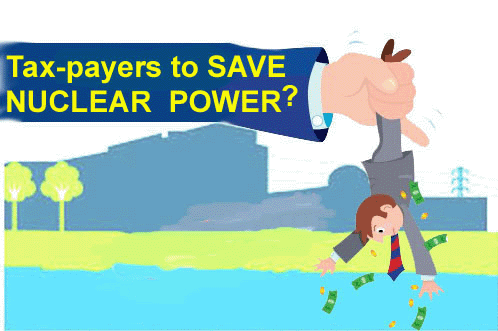 After 60 years, the taxpayer should not continue to subsidise multibillion-dollar corporations in the nuclear energy sector Guardian, Bernie Sanders and Ryan Alexander, 13 Apr 2012 “……Nuclear welfare started with research and development. According to the non-partisan Congressional Research Service, since 1948 the federal government has spent more than $95bn (in 2011 dollars) on nuclear energy research and development (R&D). That is more than four times the amount spent on solar, wind, geothermal, biomass, biofuels, and hydropower combined. But federal R&D was not enough; the industry also wanted federal liability insurance too, which it got back in 1957 with the Price-Anderson Act. This federal liability insurance programme
 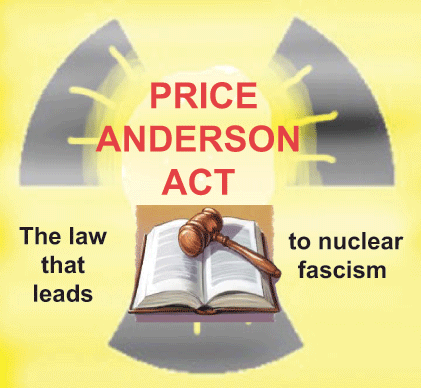 for nuclear plants was meant to be temporary, but Congress repeatedly extended it, most recently through 2025. Price-Anderson puts taxpayers on the hook for losses that exceed $12. 6bn if there is a nuclear plant disaster. When government estimates show the cost for such a disaster could reach $720bn in property damage alone, that’s one sweetheart deal for the nuclear industry!
R&D and Price-Anderson insurance are still just the tip of the iceberg. From tax breaks for uranium mining and loan guarantees for uranium enrichment to special depreciation benefits and lucrative federal tax breaks for every kilowatt hour from new plants, nuclear is heavily subsidised at every phase. The industry also bilks taxpayers when plants close down with tax breaks for decommissioning plants. Further, it is estimated that the cost to taxpayers for the disposal of radioactive nuclear waste could be as much as $100bn……https://www.theguardian.com/commentisfree/cifamerica/2012/apr/13/nuclear-industry-us-welfare
Subsidizing Nuclear Will Only Make Our Grid Problems Worse

 http://www.forbes.com/sites/ucenergy/2016/08/11/subsidizing-nuclear-will-only-make-our-grid-problems-worse/2/#20c51fcc386e Steve Cicala, While low natural gas prices are something to celebrate for consumers, the mood among the owners of America’s nuclear power fleet is not so cheerful as low energy prices threaten their bottom line. In turn, the owners of nuclear plants are threatening to shut down unless the government (and ultimately the ratepayer) steps in to close the shortfall. They have even announced plant closings to show they mean business.
Ordinarily, this kind of thing might be left solely up to markets to sort out. But with nuclear accounting for almost 60% of the carbon-free electricity in the United States, it’s fair to say that losing nuclear plants make it a lot tougher to meet goals to avoid catastrophic climate change. So there is a compelling case that there is a public interest at stake with the potential closure of these plants.
The result: a high-stakes game of chicken is playing out between producers, consumers, and state regulatory commissions in capitols across the country to keep these plants open. New York made history last week when it decided it couldn’t do without nuclear and gave in to providing subsidies. The news came just a couple months after California decided the opposite—putting all its chips into renewables. Illinois continues to wrestle with the very same decision but has yet to place its bet.
First, if the amount of the subsidy is tied to how much the operator requests, you should assume that they’re going to ask for more than they need (obvious, I hope).
Second, the companies at the center of these negotiations have multiple plants, so they make decisions on a particular plant keeping in mind the impact of that decision on the rest of its fleet. Closing a plant in one state after being denied subsidies is a way of signaling to regulators in other states that they seriously risk suffering the same fate. This means that companies may close profitable plants (and pay the cost), because it maximizes the total subsidy they will receive across all of their plants. It also means that firms may actually be eager to close plants as a means of driving up the price of electricity that their remaining plants will receive. Thus, their demands are less about unprofitability than about market power.
The final strategic consideration in these negotiations is about option value. Firms should be willing to endure periods of losses if keeping the plant open preserves the ability to make it all back and more when times are good. Thus, a subsidy that covers the operating cost of the plant is paying more than what the plant actually requires to make staying open in its best interest. It’s making the plant profitable in every year, rather than on average from now until the end of its useful life. Firms would love to be profitable every year, but only require the expectation of future profitability to stay open for business.
So should regulators take the industry at its word?
It’s important to note that—in spite of announced or actual “closing” of plants—hardly a screw has been removed from any of the nuclear plants recently “retired.” Decommissioning is a long-term process with many opportunities to change course as long as the operating license remains valid. This makes announcing closure a lot like convincing a child you’ll leave without them if they don’t get in the car: “I’m putting my shoes on….I’m putting my coat on…I’m getting the keys…I really mean it…” Regulators should not be so naïve.
Although pitched as temporary, urgent subsidies to expedite passage, these negotiations should be viewed as setting a long-term policy approach. If, in five years, natural gas prices remain low and renewables continue to expand (as there’s every reason to believe), we’ll be right back at the negotiating table with an industry on proclaimed life support. There are few policies that deliver less innovation than guaranteed payment, no matter the prevailing economics of the industry.
Is there a better approach? Let’s put aside finally putting a price on carbon (the easy way). I’ve crunched some numbers for Illinois’ Clinton Nuclear Power Station, which Exelon EXC -1.14% recently declared will “close.” It appears the root of the problem is less about low natural gas prices or the growth in renewablesthan our woefully inadequate transmission system.
Lack of transmission capacity underlies nuclear’s inability to recover their fixed operating costs in two ways. When demand is high, a congested system prevents distant nuclear generators from delivering power to profitable markets, leaving them on the sidelines upstate instead of making money in the city (note that it’s security, not economics that threatens to close the Indian Point plant in downstate New York).
The Clinton plant is an example of what nuclear has to look forward to without transmission capacity to deliver wind power to market. In the chart above, I plot the congestion loss at Clinton against hourly wind generation in 2015 (controlling for demand). In other words, this is by how many dollars per megawatt-hour Clinton is earning below the broader Illinois market, and how it varies with the amount of wind being generated on the wider Midwest system. A future with increased wind generation is not a bright one for the Midwestern nuclear fleet.
Of course, transmission infrastructure is not free—but regulators should be deciding between those one-time costs remedying the cause of a $70 million shortfall per year at Clinton alone, or writing a check every year for the foreseeable future to paper over the real problem.
Want to learn more? Listen to my Off the Charts podcast. And, follow me at@SteveCicala.
U.S. electricity consumers could end up paying more than $2.5 billion for nuclear plants that never get built.
 Customers Could Pay $2.5 Billion for Nuclear Plants That Never Get Built http://www.bloomberg.com/news/articles/2016-08-08/customers-could-pay-2-5-billion-for-nukes-that-never-get-built, Mark Chediak markchediak August 9, 2016 —
-
Only two of 18 plants proposed since 2007 under construction
-
At least seven states allow billing before building starts
-
U.S. electricity consumers could end up paying more than $2.5 billion for nuclear plants that never get built.
Utilities including Duke Energy Corp., Dominion Resources Inc. and NextEra Energy Inc. are being allowed by regulators to charge $1.7 billion for reactors that exist only on paper, according to company disclosures and regulatory filings. Duke and Dominion could seek approval to have ratepayers pony up at least another $839 million, the filings show.
The practice comes as power-plant operators are increasingly turning to cheaper natural gas and carbon-free renewables as their fuels of choice. The growth of these alternatives is sparking a backlash from consumers and environmentalists who are challenging the need for more nuclear power in arguments that have spilled into courtrooms, regulatory proceedings and legislative agendas.
“Anything that hasn’t gotten off the ground yet isn’t getting built,” said Greg Gordon, a utility analyst at Evercore ISI, a New York-based investment advisory firm. “There is no economic rationale for it.” - Only two of 18 nuclear projects proposed since 2007 are under construction. Those units, being built by Southern Co. in Georgia and Scana Corp. in South Carolina, are billions of dollars over budget and years behind schedule. In the meantime, the price of natural gas has dropped 38 percent since 2010. It’s now used to generate more than a third of the nation’s power, up from 24 percent six years ago.
- Utilities that are moving forward with their nuclear plans say they want to preserve the option to build if market or regulatory conditions change. Nuclear power offers around-the-clock, carbon-free electricity that becomes more valuable if federal rules limiting greenhouse gases take hold, the utilities say.“One way to mitigate these risks is to spend money now, so that you have a license to build a nuclear plant if and when you need to,” said Richard Myers, vice president of the Nuclear Energy Institute, an industry trade group.
Critics of policies that allow utilities to bill for planned reactors say they’re likely unneeded, and the practice shifts upfront financial risks from shareholders to customers.
“The rich get richer and the ratepayers get poorer,” said Mark Cooper, a research fellow at Vermont Law School who submitted testimony in July opposing Dominion’s planned reactor in Virginia on behalf of the Virginia Citizens Consumer Council.
Duke fell 1 cent to $84.73 in New York. NextEra rose 8 cents to $126.07 and Dominion fell 26 cents to to $74.73.
-
Nuke Spending
Money collected from ratepayers so far has gone for items including federal licensing, permitting, land purchases, financing and equipment. Nuclear developers have sunk at least $1.2 billion of their own cash into proposals where they aren’t allowed or won’t ask to recover expenses from consumers, the disclosures and filings show.
At least seven states including Florida allow utilities to collect nuclear licensing and planning costs from customers before any construction begins.
In Virginia and Florida, utilities are seeing increased scrutiny of their plans. The Virginia attorney general has raised concerns about the rising expense of Dominion’s proposed new reactor at its North Anna facility, estimating the total cost at $19 billion.
“If Dominion proceeds on this ruinous path, it will extract $6 billion to $12 billion in needlessly higher energy bills,” said Irene Leech, president of the Virginia Citizens Consumer Council.
Shareholder Vote
In May, Dominion faced a shareholder resolution that would have required the company to analyze the financial risks of not getting regulatory approval for the new reactor. The proposal didn’t pass.
- Dominion intends to spend $647 million to get a federal nuclear license next year and $302 million of that has already been collected from ratepayers.“We’ve done a lot of work for licensing North Anna 3, which is prudent and valuable to our customers to maintain a diverse, carbon-free baseload source of electricity,” said Richard Zuercher, a Dominion spokesman.
- In Florida, multiple efforts in the state legislature to repeal a law that allows advanced collection of nuclear costs have failed.“I just never thought nuclear power plants made sense,” said Florida State Representative Michelle Rehwinkel Vasilinda, a Democrat, who has proposed bills to overturn the advance fee collection law.
In February, a federal lawsuit was filed on behalf of consumers that seeks to overturn the Florida statute and recover fees charged by Duke and NextEra for nuclear power plants that might not be completed. The suit alleges the companies overcharged customers for projects including Duke’s proposal for two reactors in Levy County and NextEra’s plan for two units at Turkey Point.
Legal Action
Duke and NextEra have asked a judge to dismiss the suit. Four other lawsuits challenging the state law have been rejected by Florida courts, said Rita Sipe, a Duke spokeswoman. The suits were filed on behalf of an environmental group and customers, according to court records.
As part of an agreement with Florida regulators in 2013, Duke was allowed to collect $926 million from customers to cover expenses including land and equipment purchases for its Levy facility, Sipe said. Duke also canceled its engineering, procurement and construction contract for the site in 2013.
- The company is pursuing a federal license for the plant but won’t charge customers for the costs of doing so, said Chris Fallon, vice president for nuclear development for Duke. The company sees the option to build as a hedge against pending environmental rules and possible natural gas price hikes, Fallon said.
Carolina Plants
Separately, Duke said it hasn’t decided if it will ask regulators for permission to collect $494 million in planning expenses for two proposed reactors in South Carolina.
Regulators have allowed NextEra to recoup $282 million of federal licensing costs for two new units at its Turkey Point facility, said Peter Robbins, a company spokesman. NextEra doesn’t see getting a license until the end of 2017 and will delay pre-construction work until at least 2020, Robbins said.
Critics say the issue is still whether companies should be allowed to bill for facilities that may never get finished.
“Customers can get stuck with the bill long before a single kilowatt of power is produced and may never recoup anything if the nuclear project is later abandoned,” said Jeremiah Lambert, an energy attorney and author of “The Power Brokers,” a history of the electric power industry.
Following $1 billion subsidy, Exelon buys failing Fitzpatrick nuclear station
 Exelon buys upstate New York nuclear plant http://thehill.com/policy/energy-environment/290879-exelon-buys-upstate-new-york-nuclear-plant Exelon Generation has agreed to buy an upstate New York nuclear power plant that seemed on the verge of closing just last year.
Entergy Corp. will sell its James A. FitzPatrick plant outside of Syracuse to Exelon for $110 million, officials announced on Tuesday. The companies expect regulatory approval by early next year, when Exelon plans to refuel the plant.
In a statement, Exelon President and CEO Chris Crane specifically thanked New York Gov.Andrew Cuomo (D) for his work on the Clean Energy Standard.
“We look forward to bringing Fitzpatrick’s highly-skilled team of professionals into the Exelon Generation nuclear program, and to continue delivering to New York the environmental, economic and grid reliability benefits of this important energy asset,” Crane said.
In a statement announcing the deal Tuesday, Cuomo said the deal is important for both the local economy and the state’s environmental policies.
“This state needs a clean energy policy that is realistic and can be implemented before we destroy this planet and I believe that nuclear plays an important rule in that clean energy policy,” he said, according to a video of his speech from the Syracuse Post-Standard. Entergy in November said it would be forced to close the 838-megawatt FitzPatrick plant by 2017, citing cheap natural gas and state policies that made nuclear plants expensive to operate.
Officials and the nuclear industry had looked for ways to keep the plant operating. The state’s Public Service Commission last week approved a clean energy standard requiring half the state’s electricity to come from renewable sources by 2030, and provided $1 billion over two years to subsidize FitzPatrick and two other nuclear plants in the state.
Exelon and Entergy have been negotiating a potential sale of the plant since last year. Regulatory agencies — including the Public Service Commission and the federal Nuclear Regulatory Commission — still need to sign off on the deal.
Horizon nuclear company funds college in Wales
 Wylfa Newydd nuclear firm funds Anglesey engineering centre 9 August 2016
The company behind an £8bn nuclear power plant will pay £1m towards an engineering centre on Anglesey.
Horizon Nuclear Power, the firm behind Wylfa Newydd, will pay towards Grwp Llandrillo Menai’s Llangefni building…….
- Horizon will provide technical support to Coleg Menai, one of the colleges under Grwp Llandrillo Menai, and apprentices will move from the Bangor campus to Llangefni once the new centre is finished.
The Welsh Government pledged £5m to the centre in 2015.…..
- Duncan Hawthorne, Horizon’s chief executive officer, said: “I’m delighted to announce this landmark funding provision to Grwp Llandrillo Menai.
The Military Industrial Complex – death merchant of the world
 “We are the death merchant of the world”: Ex-Bush official Lawrence Wilkerson condemns military-industrial complex http://www.salon.com/2016/03/29/we_are_the_death_merchant_of_the_world_ex_bush_official_lawrence_wilkerson_condemns_military_industrial_complex/ The military-industrial complex “is much more pernicious than Eisenhower ever thought,” says the retired US colonel BEN NORTON Col. Lawrence Wilkerson is tired of “the corporate interests that we go abroad to slay monsters for.”
“I think Smedley Butler was onto something,” explained Lawrence Wilkerson, in an extended interview with Salon.
In his day, in the early 20th century, Butler was the highest ranked and most honored official in the history of the U.S. Marine Corps. He helped lead wars throughout the world over a series of decades, before later becoming a vociferous opponent of American imperialism, declaring “war is a racket.”
Wilkerson spoke highly of Butler, referencing the late general’s famous quote: “Looking back on it, I might have given Al Capone a few hints. The best he could do was to operate his racket in three districts. I operated on three continents.”
“I think the problem that Smedley identified, quite eloquently actually,” Wilkerson said, “especially for a Marine — I had to say that as a soldier,” the retired Army colonel added with a laugh; “I think the problem is much deeper and more profound today, and much more subtle and sophisticated.”
Today, the military-industrial complex “is much more pernicious than Eisenhower ever thought it would be,” Wilkerson warned. In his farewell address in 1961, former President Dwight D. Eisenhower famously cautioned Americans that the military and corporate interests were increasingly working together, contrary to the best interests of the citizenry. He called this phenomenon the military-industrial complex.
As a case study of how the contemporary military-industrial complex works, Wilkerson pointed to leading weapons corporations like Lockheed Martin, and their work with draconian, repressive Western-allied regimes in the Gulf, or in inflaming tensions in Korea.
“Was Bill Clinton’s expansion of NATO — after George H. W. Bush and [his Secretary of State] James Baker had assured Gorbachev and then Yeltsin that we wouldn’t go an inch further east — was this for Lockheed Martin, and Raytheon, and Boeing, and others, to increase their network of potential weapon sales?” Wilkerson asked.
“You bet it was,” he answered.
“Is there a penchant on behalf of the Congress to bless the use of force more often than not because of the constituencies they have and the money they get from the defense contractors?” Wilkerson continued.
Again, he answered his own question: “You bet.”
“It’s not like Dick Cheney or someone like that went and said let’s have a war because we want to make money for Halliburton, but it is a pernicious on decision-making,” the former Bush official explained. “And the fact that they donate so much money to congressional elections and to PACs and so forth is another pernicious influence.”
“Those who deny this are just being utterly naive, or they are complicit too,” Wilkerson added.
“And some of my best friends work for Lockheed Martin,” along with Raytheon, Boeing and Halliburton, he quipped.
Wilkerson — who in the same interview with Salon defended Edward Snowden, saying the whistle-blower performed an important service and did not endanger U.S. national security — was also intensely critical of the growing movement to “privatize public functions, like prisons.”
“I fault us Republicans for this majorly,” he confessed — although a good many prominent Democrats have also jumped on the neoliberal bandwagon. In a 2011 speech, for instance, Secretary of State Hillary Clinton declared, “It’s time for the United States to start thinking of Iraq as a business opportunity” for U.S. corporations.
Wilkerson lamented, “We’ve privatized the ultimate public function: war.”
“In many respects it is now private interests that benefit most from our use of military force,” he continued. “Whether it’s private security contractors, that are still all over Iraq or Afghanistan, or it’s the bigger-known defense contractors, like the number one in the world, Lockheed Martin.”
Journalist Antony Loewenstein detailed how the U.S. privatized its wars in Iraq and Afghanistan in another interview with Salon. There are an estimated 30,000 military contractors working for the Pentagon in Afghanistan today; they outnumber U.S. troops three-to-one. Thousands more are in Iraq.
Lockheed Martin simply “plans to sell every aspect of missile defense that it can,” regardless of whether it is needed, Wilkerson said. And what is best to maximize corporate interest is by no means necessarily the same as what is best for average citizens.
“We dwarf the Russians or anyone else who sells weapons in the world,” the retired Army colonel continued.
“We are the death merchant of the world.”
UK govt accidentally published list of preferred bidders for funding for Small Modular Nuclear Reactors
 Chinese firm with military ties invited to bid for role in UK’s nuclear future
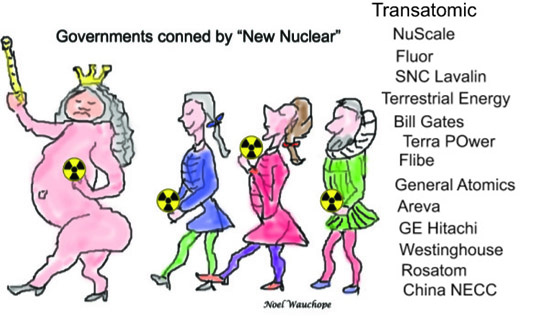
China National Nuclear Corporation on government list of preferred bidders for development funding for next-generation modular reactors, Guardian, Adam Vaughan, 8 Aug 16“……….The list of companies accepted for the competition was published briefly, apparently accidentally, on the website of the new Department for Business, Energy and Industrial Strategy on Friday before being deleted. It reads as a who’s-who of US, British, Japanese and Chinese industry players hoping to develop and build small modular reactors. These are much smaller than conventional nuclear plants with a capacity of less than 300MW – or a 10th of what Hinkley Point C should provide.
They are pitched by industry as a cheaper and quicker way to provide low-carbon energy capacity than conventional big nuclear plants because they could be built in a factory and transported to where their power is needed. The US and UK are racing to be the most attractive home for the first of the new designs to be commissioned.
Last November, George Osbornepromised £250m over five years for a nuclear research and development programme to “revive the UK’s nuclear expertise and position the UK as a global leader in innovative nuclear technologies”. An undisclosed amount of that sum is for a competition to find the best value SMR design for the UK, to “pave the way” towards building one in the UK in the 2020s.
CNNC sits alongside US companies such as NuScale; British ones including Rolls-Royce, Sheffield Forgemasters and Tokamak Energy; Japanese-owned Westinghouse; and the US-Japanese partnership GE-Hitachi, as participants the government considers eligible for phase one of its competition.
CNNC’s chief designer of small nuclear plants visited a conference in London last year to pitch a plan for cooperating with UK industry, and is already partnering with Rolls-Royce. It hopes to build the first SMR in the UK, with future ones sold around the world.
NuScale Power put itself forward for the competition in the spring. Its design, said its managing director, Tom Mundy, “answers the particular needs of the UK’s energy market and the wider UK economy, and we intend to participate fully in the government’s competition”.
The 33 participants will be whittled down in several phases, with the announcement of the eventual winners scheduled for late 2017……
When asked about the list published on Friday, a spokeswoman for the Department of Business, Energy and Industrial Strategy, said: “In March 2016, the government launched the first phase of a competition to identify the best value SMR for the UK. The ambition is to create an opportunity for the UK to become a world leader in SMRs.
“Those companies which are eligible to participate in the competition have been aware for over two months.” https://www.theguardian.com/environment/2016/aug/07/chinese-firm-with-military-ties-invited-to-bid-for-role-in-uks-nuclear-future
Economic and Public Health Impacts of Fukushima nuclear situation
 Fukushima: A Nuclear War Without A War: The Unspoken Crisis Of Worldwide Nuclear Radiation Fukushima Watch 1 Aug 16 “………Public Health Disaster. Economic Impacts What prevails is a well organized camouflage. The public health disaster in Japan, the contamination of water, agricultural land and the food chain, not to mention the broader economic and social implications, have neither been fully acknowledged nor addressed in a comprehensive and meaningful fashion by the Japanese authorities.
Japan as a nation state has been destroyed. Its landmass and territorial waters are contaminated. Part of the country is uninhabitable. High levels of radiation have been recorded in the Tokyo metropolitan area, which has a population of 39 million (2010) (more than the population of Canada, circa 34 million (2010)) There are indications that the food chain is contaminated throughout Japan:
Radioactive cesium exceeding the legal limit was detected in tea made in a factory in Shizuoka City, more than 300 kilometers away from the Fukushima Daiichi nuclear power plant. Shizuoka Prefecture is one of the most famous tea producing areas in Japan.
A tea distributor in Tokyo reported to the prefecture that it detected high levels of radioactivity in the tea shipped from the city. The prefecture ordered the factory to refrain from shipping out the product. After the accident at the Fukushima nuclear power plant, radioactive contamination of tea leaves and processed tea has been found over a wide area around Tokyo. (See 5 More Companies Detect Radiation In Their Tea Above Legal Limits Over 300 KM From Fukushima, June 15, 2011)
Japan’s industrial and manufacturing base is prostrate. Japan is no longer a leading industrial power. The country’s exports have plummeted. The Tokyo government has announced its first trade deficit since 1980.
While the business media has narrowly centered on the impacts of power outages and energy shortages on the pace of productive activity, the broader issue pertaining to the outright radioactive contamination of the country’s infrastructure and industrial base is a “scientific taboo” (i.e the radiation of industrial plants, machinery and equipment, buildings, roads, etc). A report released in January 2012 points to the nuclear contamination of building materials used in the construction industry, in cluding roads and residential buildings throughout Japan.(See FUKUSHIMA: Radioactive Houses and Roads in Japan. Radioactive Building Materials Sold to over 200 Construction Companies, January 2012)
A “coverup report” by the Ministry of Economy, Trade and Industry (May 2011), entitled “Economic Impact of the Great East Japan Earthquake and Current Status of Recovery“ presents “Economic Recovery” as a fait accompli. It also brushes aside the issue of radiation. The impacts of nuclear radiation on the work force and the country’s industrial base are not mentioned. The report states that the distance between Tokyo -Fukushima Dai-ichi is of the order of 230 km (about 144 miles) and that the levels of radiation in Tokyo are lower than in Hong Kong and New York City.(Ministry of Economy, Trade and Industry, Impact of the Great East Japan Earthquake and Current Status of Recovery, p.15). This statement is made without corroborating evidence and in overt contradiction with independent radiation readings in Tokyo (se map below). In recent developments, Sohgo Security Services Co. is launching a lucrative “radiation measurement service targeting households in Tokyo and four surrounding prefectures”.
“A map of citizens’ measured radiation levels shows radioactivity is distributed in a complex pattern reflecting the mountainous terrain and the shifting winds across a broad area of Japan north of Tokyo which is in the center of the of bottom of the map.”
“Radiation limits begin to be exceeded at just above 0.1 microsieverts/ hour blue. Red is about fifty times the civilian radiation limit at 5.0 microsieverts/hour. Because children are much more sensitive than adults, these results are a great concern for parents of young children in potentially affected areas.”
The fundamental question is whether the vast array of industrial goods and components “Made in Japan” — including hi tech components, machinery, electronics, motor vehicles, etc — and exported Worldwide are contaminated? Were this to be the case, the entire East and Southeast Asian industrial base –which depends heavily on Japanese components and industrial technology– would be affected. The potential impacts on international trade would be farreaching. In this regard, in January, Russian officials confiscated irradiated Japanese automobiles and autoparts in the port of Vladivostok for sale in the Russian Federation. Needless to say, incidents of this nature in a global competitive environment, could lead to the demise of the Japanese automobile industry which is already in crisis.
While most of the automotive industry is in central Japan, Nissan’s engine factory in Iwaki city is 42 km from the Fukushima Daiichi plant. Is the Nissan work force affected? Is the engine plant contaminated? The plant is within about 10 to 20 km of the government’s “evacuation zone” from which some 200,000 people were evacuated……….. http://fukushimawatch.com/2016-07-21-fukushima-a-nuclear-war-without-a-war-the-unspoken-crisis-of-worldwide-nuclear-radiation.html
AREVA- not making money from nuclear build, but cleaning up from waste cleanup?
New facility in Moyock makes massive spent nuclear fuel storage casks By Jeff Hampton The Virginian-Pilot MOYOCK, N.C., 7 Aug 16 Marlin Stoltz put on a hard hat and bright yellow vest before walking out into the four-acre work area of the Moyock Casting Facility, a new operation in the business of spent nuclear fuel storage.
A line of concrete cases, each 21 feet long and weighing 100 tons, rested along a rail spur, ready for shipment. Several men stood atop a steel form where hydraulic power vibrated and settled four truckloads of concrete for the next case. A concrete plant operated less than 100 yards away.
“This allows us to work very efficiently,” said Stoltz, supervisor of the Moyock Casting Facility and a deputy of the services business line for parent company Areva TN, a division of Areva, Inc, based in Charlotte.
Areva, Inc. has operations within the entire nuclear cycle, including uranium mining.
The Moyock facility with 25 employees opened in January. It makes concrete modules that encase steel canisters containing spent nuclear fuel. From here, the modules head to nuclear plants elsewhere……
demand for spent fuel storage remains strong, Stoltz said. The Moyock plant means to deliver.
“The back end of the business is growing,” he said. http://pilotonline.com/news/local/new-facility-in-moyock-makes-massive-spent-nuclear-fuel-storage/article_82fb08bd-19f9-5c03-b976-47eeeb130604.html
1 This Month




PLEASE OPPOSE HR 8255 AND S.3639 – bills would accelerate satellite deployment, with no environmental review or safeguards – https://ncstd5li.quorum.us/campaign/169331/
To see nuclear-related stories in greater depth and intensity – go to https://nuclearinformation.wordpress.com
-
Archives
- September 2026 (323)
- August 2026 (330)
- July 2026 (355)
- June 2026 (287)
- May 2026 (306)
- April 2026 (356)
- March 2026 (251)
- February 2026 (267)
- January 2026 (308)
- December 2025 (358)
- November 2025 (359)
- October 2025 (375)
-
Categories
- 1
- 1 NUCLEAR ISSUES
- business and costs
- climate change
- culture and arts
- ENERGY
- environment
- health
- history
- indigenous issues
- Legal
- marketing of nuclear
- media
- opposition to nuclear
- PERSONAL STORIES
- politics
- politics international
- Religion and ethics
- safety
- secrets,lies and civil liberties
- spinbuster
- technology
- Uranium
- wastes
- weapons and war
- Women
- 2 WORLD
- ACTION
- AFRICA
- Atrocities
- AUSTRALIA
- Christina's notes
- Christina's themes
- culture and arts
- Events
- Fuk 2022
- Fuk 2023
- Fukushima 2017
- Fukushima 2018
- fukushima 2019
- Fukushima 2020
- Fukushima 2021
- general
- global warming
- Humour (God we need it)
- Nuclear
- RARE EARTHS
- Reference
- resources – print
- Resources -audiovicual
- Weekly Newsletter
- World
- World Nuclear
- YouTube
-
RSS
Entries RSS
Comments RSS

