South Africa’s parliamentary budget office warns on high cost of nuclear power

 Government quibbles over true cost of nuclear – but it’s going to be very expensive http://mg.co.za/article/2016-09-08-government-quibbles-over-true-cost-of-nuclear-but-its-going-to-be-very-expensive Phillip de Wet 08 Sep 2016 Any decision to proceed further with the nuclear build programme will only take place after the request for proposal process has been completed,” Deputy President Cyril Ramaphosa told the National Council of Provinces (NCOP) in Parliament during a question session on Wednesday afternoon.
Almost simultaneously, Energy Minister Tina Joemat-Pettersson told Parliament’s other house, the National Assembly: “As far as I’m concerned, a request for proposal will be issued on September 30 for the procurement process in which we have Cabinet approval to test the market on the procurement of nuclear.”
Both insisted that there is, as yet, no firm commitment to buy a fleet of nuclear power stations, which it is estimated will cost more than R1-trillion, despite long-standing signals of an obstinate political will to do so.
“Within the range of conventional technologies considered, nuclear energy is the most expensive,” the parliamentary budget office said in a report it delivered to Parliament’s standing committee on appropriations, also on Wednesday.
Its 23-page report, Electricity Generation Technology Choice: Costs and Considerations, the office said “present the key factors that need to be considered by Members of Parliament concerned with public finances in considering technology choice”. The standing committee had requested the report.
Throughout its study, the office steered scrupulously clear of recommending or denigrating any type of electricity generation. Selection of technology is complicated, it explained, and needs to take into account everything from the carbon footprint to local industrialisation.
But nuclear fares very poorly, indeed, in the office’s analysis.
Nuclear is 16% more expensive than the most expensive type of coal electricity production, the office said, drawing on figures more current than any the department of energy has released and 67% more expensive than the most costly way of using natural gas to generate power.
Eskom, which was once excluded from the nuclear preparations, has recently claimed in a series of statements by its CEO, Brian Molefe, that nuclear generation is the cheapest way for South Africa to build additional base-load capacity.
The plans that supposedly underpin the plans to build new nuclear power stations are wildly out of date, the parliamentary budget office said. The official integrated resource plan (IRP) dates from 2010 and its 2013 update does not yet have official status — because, some have speculated, it provided an insufficiently rosy picture to justify a nuclear build.
“Using an out-of-date IRP will result in a sub-optimal mix of generation plants and higher electricity prices,” the office said, with graphs showing how electricity demand declined as prices soared and the economy stalled. Even the most pessimistic integrated resource plan projection had forecast fast-growing demand.
Overbuilding generation capacity based on mistaken assumptions can be costly, the office warned gently. And past experience shows that nuclear and hydropower projects are most prone to high cost overruns and delays — and are almost impossible to adjust once ground is broken.
“It may be prudent in situations of high uncertainty to avoid very large capital investments where the repayments of loans are certain but returns from the project are uncertain and possibly volatile,” it said.
“In pursuance of a suitable energy mix, government is determined that our investment in generation capacity should be evidence-based,” Ramaphosa told the NCOP.
India and Canada hoping to market nuclear technology together?
 India, Canada discuss civil-nuclear cooperation The two leaders discussed a wide range of issues of mutual interest, including civil-nuclear cooperation between the two countries, an official release issued said today. Indian Express By: PTI | New Delhi September 8, 2016 India and Canada have discussed a wide range of issues of mutual interest, including the civil-nuclear cooperation between the two countries. The discussion was held during a meeting between Union Minister Jitendra Singh and visiting Canada Minister for Natural Resources, James Gordon Carr, here on Wednesday.
The two leaders discussed a wide range of issues of mutual interest, including civil-nuclear cooperation between the two countries, an official release issued said today. As a country with large energy requirements, India looks forward to promoting nuclear energy production at a significant scale and the two nations can jointly work to achieve this, said Singh, Minister of State in Prime Minister’s Office.
He referred to a common technological base of Pressurised Heavy Water Reactor (PHWR) in which India and Canada are global leaders and it is an area offering opportunity of potential bilateral cooperation between the two countries……….
Singh referred to the visit of Prime Minister Narendra Modi to Canada in April 2015 during which a long term uranium procurement contract was signed by Department of Atomic Energy, Government of India with the Canadian Uranium producer CAMECO…….http://indianexpress.com/article/india/india-news-india/india-canada-discuss-civil-nuclear-cooperation-3020552/
The Dead Nuclear Plant Society – in nuclear trash burial business
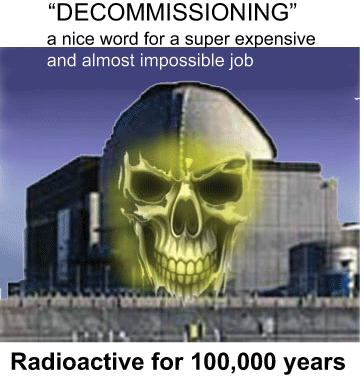 ‘Dead Plant Society’ lobby group booms as reactors close Hannah Northey, E&E reporter Greenwire: September 6, 2016 “……..Reactors are closing as nuclear utilities struggle to compete with cheap natural gas, low demand for power and no national energy policy. And when the behemoth nuclear plants close, the Dead Plant Society grows.
As the teacher played by Robin Williams in the movie famously tells his young students, “We are food for worms, lads. Because, believe it or not, each and every one of us in this room is one day going to stop breathing, turn cold and die.”
The group of doomed-reactor owners has doubled from its original five members to 10 and now includes Exelon Corp., the nation’s largest nuclear utility.
Operators who climb aboard are eager to weigh in on a high-profile rulemaking at the Nuclear Regulatory Commission for decommissioning reactors and to find solutions — on or off Capitol Hill — for growing amounts of radioactive waste piling up across the country, said Smith, the president of Governmental Strategies Inc.
Exelon came to the society five years ago. The nuclear giant is deactivating reactors — or is planning to do so — at three sites in Illinois and one in New Jersey, Smith said. Entergy Corp. signed after it bought the shuttered Big Rock Point nuclear power plant near Charlevoix, Mich. And Pacific Gas & Electric Co. was next when it decided to close the Diablo Canyon nuclear reactors in California.
Following years would see Southern California Edison join with the closure of the San Onofre reactors in California and Duke Energy Corp. as it shuttered the Crystal River nuclear plant in Florida.
All told, the tight-knit club represents more than a dozen reactors that have been closed or are about to be snuffed out in eight states. And nuclear executives have warned that an additional 15 to 20 reactors could close in coming years.
Many of the companies are either suing the federal government or involved in legal settlements after the Department of Energy failed to uphold its 1980s agreements and take possession of spent reactor fuel destined for the stalled repository at Yucca Mountain, Nev. So far, DOE has paid out more than $5 billion, and the lawsuits are still mounting.
And like the industry implementing cost-cutting measures to keep reactors afloat, Smith said the Dead Plant Society is on a tight budget, spending under $160,000 a year on lobbying since its inception, according to the Center for Responsive Politics. Working with Smith is Michael Callahan, president of CCMSC Corp. and a former NRC congressional affairs officer….
‘Real security and safety issues’
Smith isn’t thrilled about the group’s growth.
The former Hill staffer and Nuclear Energy Institute executive said he’d rather be promoting a growing industry, not burying cooling waste.
“I hope not to grow it; I don’t like being in the nuclear trash burial business,” said Smith, who worked for former Louisiana Sen. John Breaux (D), a former Entergy lobbyist. “I had a lot more fun when I was lobbying to get new plants up and running.”
Then again, most members of the Dead Plant Society would rather not belong to the group, either.
Owners of the three Yankee reactors in New England, for example, recently sued the federal government after DOE failed to pick up spent reactor fuel stored in concrete casks at the site of former reactors in Connecticut, Maine and Massachusetts.
Connecticut Yankee Atomic Power Co., Maine Yankee Atomic Power Co. and Yankee Atomic Electric Co. said they existed as corporations only because DOE had failed to pick up the waste, forcing the companies to build, staff and oversee on-site storage. The court awarded the companies $76.8 million in damages.
Tim Smith, a lobbyist and president of Governmental Strategies Inc., has represented the Decommissioning Plant Coalition since 2001, better known in industry as the “Dead Plant Society.” Photo courtesy of Governmental Strategies Inc.
 The dispute, like many others, stems from the Nuclear Waste Policy Act, which required DOE to remove spent nuclear fuel and high-level radioactive waste from reactors. The agency signed contracts with the companies to remove the waste by January 1998 and store it in a permanent repository, but the department failed to do so. The Obama administration later pulled support for building a waste repository under Yucca Mountain, forcing utilities across the nation to store spent nuclear fuel in wet pools or dry storage casks on-site……
DOE will see its legal problems grow should more reactors go dark.
The department could face between $29 billion and $50 billion in legal fees if it begins accepting waste by 2025, according to a recent study by the Kleinman Center for Energy Policy at the University of Pennsylvania. If the decadeslong debacle slips past that date, costs could continue to grow by $500 million a year, said Christina Simeone, the report’s author. There are currently 19 lawsuits pending in federal court, according to a DOE report.
But the real losers are the ratepayers and taxpayers who have paid for a repository and may not realize that radioactive waste may live in their communities for ages, long after a reactor is snuffed out, she said.
What’s more, federal funds to move the process forward are off-limits unless the law is changed, she added. The $34 billion Nuclear Waste Fund — a cache nuclear customers have fed over years — is untouchable under statute for repository-related activities, and DOE legal fees are taken out of a federal fund made up of taxpayers’ contributions, she said.
“I don’t think these communities realize that when these plants close, the waste is going to stay there,” Simeone said. “The plant may be remediated, but there’s a portion of the land that’s going to remain under license at the NRC and is going to store waste indefinitely. There are real security and safety issues.”……..
The commission’s work — slated to be complete by 2020 — has spurred passionate debate between the industry and host communities, public advocates and environmental groups over funding for multibillion-dollar cleanups. Central to those discussions is what happens to pools and casks full of radioactive waste, the sizes of security forces and evacuation zones, and what role the host communities play.
As it stands, there are no such federal rules for dead nuclear plants.
Instead, companies must seek “exemptions” from regulations for operating plants as they power down the units.
Smith said the Dead Plant Society is supporting the NRC’s work to streamline the process and make it transparent, adding that operators set aside money to ensure they can remove or reduce radiation from the former plant sites so the land can be released or repurposed — a process that can cost as much as $400 million……..
The Vermont Yankee decommissioning panel has said host communities — people living near the nuclear plant within the 10-mile evacuation zone — need a voice on par with industry. The group has called on the NRC to take a closer look at the effect on communities hit by the multimillion-dollar loss in tax revenues after reactors close.
In their comments to the NRC, neighbors of nuclear reactors are asking the agency to ensure that decommissioning funds aren’t used for lobbying or operating expenses, and not to reduce evacuation zones. ……http://www.eenews.net/stories/1060042350
European financiers very worried about Ukraine’s dire nuclear industry problems

 HomeNews MediaBlogUkraine’s nuclear energy fixation puts its European financiers to a test http://bankwatch.org/news-media/blog/ukraines-nuclear-energy-fixation-puts-its-european-financiers-test
Ukraine’s nuclear energy fixation puts its European financiers to a test In a meeting today, the Espoo Convention’s Implementation Committee will again discuss Ukraine’s compliance with the Convention’s rules. A look back at the last months does not suggest a positive outcome.
Earlier this year Bankwatch approached the Commission’s Directorate General for Economic and Financial Affairs, and made a request for documents related to the EUR 300 million Euratom loan for the project. Specifically, we asked for the evidence used by the Commission in making the first EUR 100 million disbursement from the loan.
A decision in this case can take some time, but old nuclear power plants could soon see their lifetimes extended, not only in Ukraine but across the EU. Yet, as we argued in a recent letter to the Espoo Convention’s Implementation Committee, any decision on prolonging the operations of nuclear power units beyond their design lifespan should be subject to a transboundary environmental impact assessment (EIA) and transboundary public consultations.
The Committee is the only body with the power to rule on violations of the Espoo Convention. It is currently preparing a report for the June 2017 Meeting of the Parties on Ukraine’s adherence to the convention and will meet today, Monday, September 5, in Geneva to discuss the Ukrainian government’s progress (or lack thereof) with implementing the Committee’s requests.
And there is reason to worry. In April 2013 the Committee ruled that Ukraine’s decision to extend the lifetime of its two oldest nuclear units in the Rivne power plant was in breach of the convention and, as argued in our letter, this decision should be considered a precedent applicable to similar cases for the sake of legal certainty and equal treatment.
Unmet loan conditions
International treaties on their own are not the only reason Ukraine is expected to carry out transboundary EIAs before rewriting the expiry dates of its Soviet-era nuclear reactors. Each of the two EUR 300 million loans Ukraine’s nuclear safety upgrade program has received, from Euratom and from the European Bank for Reconstruction and Development, is explicitly conditioned on full compliance with international environmental law, include the Espoo Convention that obliges the engagement with neighbouring countries in decisions on matters related to nuclear energy, such as nuclear units’ lifetime extensions. The European Commission has reiterated this obligation on several occasions.
Nevertheless, so far neither the Espoo Convention ruling in the Rivne case, nor the conditions to the European loans, have stopped Kiev from going ahead with lifetime extensions for two more nuclear units in the South Ukraine station without applying international requirements.
One other nuclear unit, in the Zaporizhia power plant, could see its lifetime extended as early as next week, and the state nuclear regulator contends these decisions fall outside the jurisdiction of the Espoo Convention.
In fact, Ukraine does not even have proper legislation on EIAs at national level. This has allowed Energoatom to release an “EIA report” for the Zaporizhia nuclear power plant which ruled out any significant transboundary impacts from the plant’s operations.
Yet, Energoatom’s claims look even more invalid with the latest Espoo Implementation Committee’s ruling on the planned nuclear power plant Hinkley Point C in the UK, stating that a worst-case scenario should be taken into account when considering transboundary impacts.
Moreover, a recent incident in the 29 years old Khmelnitski nuclear power plant is but the latest reminder for the risks in Ukraine. Following a leak of radioactive water, the power station’s unit 1 was shut down for two months. This unit will reach the end of its projected lifetime next year.
According to the state nuclear regulator, the reason for the leak might have been a micro-crack in a tube in the heat exchanger. An expert report released in March 2015 by Bankwatch’s Ukrainian member group NECU has warned of the possible appearance of micro-cracks in the reactor vessel of unit 1 of the South Ukraine nuclear power plant which has been granted a lifetime extension earlier.
The dire financial troubles facing Ukraine’s nuclear operator Energoatom raise additional questions about the government’s blind reliance on this source of energy, and should be another warning sign for Ukraine’s European allies in Brussels and across its borders.
Saudi Arabia, vulnerable to terrorist attacks, is buying 16 nuclear power plants from Russia
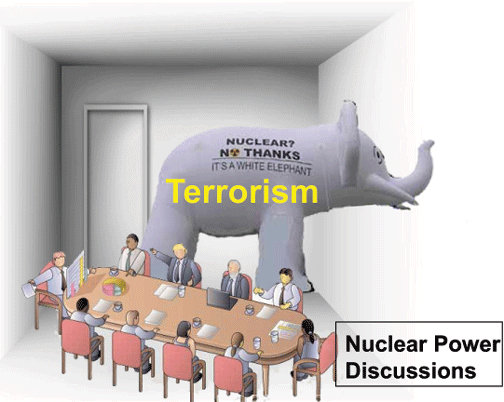 Saudis Buy 16 Nuclear Plants From The Russians, Terrorists Rejoice : http://dailycaller.com/2016/09/06/saudis-buy-16-nuclear-plants-from-the-russians-terrorists-rejoice/#ixzz4JViTS5aX ANDREW FOLLETT Energy and Environmental Reporter Saudi Arabia will buy 16 nuclear power plants from Russia for $100 billion despite terrorism concerns, according to a Monday announcement from a government-controlled nuclear power company.
Saudi Arabia has a long history of terrorist attacks within its borders, and the country itself has been accused of directly funding Islamic terrorism. The planned reactors would be incredibly vulnerable to terrorist attacks.
Saudi Arabia’s new reactors would not produce the weapons-grade plutonium necessary to make a nuclear weapon, but materials from them could be used to create dirty bombs. A dirty bomb combines radioactive material with conventional explosives that could contaminate the local area with high radiation levels for long periods of time and cause mass panic, though it would be millions of times weaker than an actual nuclear device. The Islamic State wants to steal this kind of radioactive material for a dirty bomb.
“There are prospects for cooperation in the field of nuclear energy,” Yury Ushakov, aide to Russian President Vladimir Putin, told journalists. “Our company, which has the most advanced technologies, is ready to join the project on construction of 16 nuclear power reactors in the kingdom of Saudi Arabia. The project is provided until 2030, its cost is $100 billion,”
Russia and Saudi Arabia signed an agreement last year to work together on “peaceful” nuclear energy projects. The stated purpose of these reactors is to generate electricity, power desalination plants and reduce domestic oil consumption so Saudi Arabia can sell the oil abroad. The reactors will be built by the Russian government controlled Rosatom State Nuclear Energy Cooperation.
Russia has supported the development of nuclear power in other countries with terrorism problems, such as Algeria, Iran and Egypt.
Coal lobby is urged to copy tactics of the tobacco lobby!
 Here we go again: Fossil fuel industry takes a play from Big Tobacco’s playbook. http://www.dailyclimate.org/t/1692193038704125011 August 31, 2016 by Sen. Sheldon Whitehouse (D-R.I.)
Last year, coal mining executives attending the annual meeting of the Rocky Mountain Coal Mining Institute were treated to a presentation on the future of American mining titled:“Survival Is Victory: Lessons From the Tobacco Wars.” As the title implies, the presentation laid out a path for the fossil fuel industry to weather a barrage of lawsuits and new safety and health regulations, modeled on the efforts of the tobacco industry in the 90s and early 2000s. (See John Schwartz’s story in The New York Times.)
Richard Reavey, the Cloud Peak Energy vice president who delivered the presentation, described the similarities between what Big Tobacco went through and the challenges facing coal today as “remarkable and eerie.” (We should take his word for it. Before working for Cloud Peak, a mining company, Reavey was an executive at tobacco giant Philip Morris for 17 years, according to his LinkedIn profile.) His advice to the coal execs: do what tobacco did and “cut a deal while we are still relevant.” After all, “a much more heavily regulated tobacco industry is still viable and profitable.”
Ironically, Reavey’s presentation on these similarities between tobacco and fossil fuel strategies has a much deeper parallel.
For decades, cigarette makers hid from the public and from policymakers the scientific evidence they had of their product’s dangers. The Justice Department brought, and ultimately won, a civil racketeering lawsuit against the major tobacco companies for carrying out that fraud. Today, researchers often compare this tobacco fraud on the public to the fossil fuel industry’s suppression of its research on the dangers of carbon pollution.
Dr. Michael Mann of Pennsylvania State University has written about the pattern followed by both industries: hiring their own scientists to churn out favorable research; creating (and bankrolling) front groups to sow doubt in the public debate about scientific consensus, while obscuring the hand of the industry; and even attacking and harassing individual scientists whose work may discredit the industry propaganda. Professor Mann himself has been the target of vexatious “investigations” and efforts to intimidate and harass him, including death threats—just for producing peer-reviewed academic research shedding light on the effects of increasing concentrations of carbon dioxide in the atmosphere.
Dr. Robert Brulle of Drexel University has documented an intricate propaganda web of climate denial, with over one hundred organizations, from industry trade associations to conservative think tanks to plain old phony front groups. The purpose of this sophisticated denial apparatus, he says, is “a deliberate and organized effort to misdirect the public discussion and distort the public’s understanding of climate.” These are tactics that were developed, tested, and proven effective by the tobacco industry—and in some cases the very same front groups were involved.
Public lawyers demanded that the “tobacco files”” behind this fraud be made a public record. A recentanalysis by the Center for International Environmental Law of millions of documents from these tobacco industry archives reveals close collaboration over the better part of a century between cigarette manufacturers and oil producers on research, lobbying, and public relations. The new bookPoison Tea, by Climate Nexus Executive Director Jeff Nesbit, chronicles this same relationship.
In the book and film Merchants of Doubt, Drs. Naomi Oreskes and Erik Conway identify spin doctors, spokespeople and even scientists-for-hire who were involved in the tobacco and now fossil fuel campaigns. Not only has the energy industry recycled tobacco’s strategies and front groups, it’s redeploying some of the same personnel, like Mr. Reavey, the coal convention presenter.
Sharon Eubanks, lead counsel on behalf of the United States in United States v. Phillip Morris, the federal tobacco litigation, has said she believes the government could make a case against fossil fuel producers very similar to the one she led against tobacco under federal civil racketeering laws. That’s not just because coal companies are openly taking cues from tobacco’s legal and regulatory fight. It’s because mounting evidence indicates that, like tobacco, the fossil fuel industry may have engaged in a deliberate, protracted fraud to mislead the public, to protect their profits, to the peril of us all.
Taxpayers left with costs of mines cleanup as coal companies go bankrupt
 As coal companies sink into bankruptcy, who will pay to clean up their old mines? Peabody is the latest to make big promises to a bankruptcy judge. VOX David Roberts on September 2, 2016, In the context of US capitalism, corporate bankruptcy has become less an admission of failure or a final chapter than a kind of R&R, a chance to shed some flab and come back stronger. As anyone who has followed Donald Trump’s career knows, a big company declaring Chapter 11 bankruptcy is like Lindsay Lohan checking into rehab. They’ll be back.
So it is with Peabody Energy, the world’s largest private coal company, which entered bankruptcy back in April. It is currently undergoing its bankruptcy spa treatment — shedding workers and retirees, their health and pension benefits — and preparing to get back to work (or so it hopes).
Put more simply: Who’s going to pay to clean up all those old mines?
Coal companies promise to pay for mine cleanup, really and for true
The Surface Mining Control and Reclamation Act of 1977 says that coal companies have to clean up old mines and reverse their environmental damage, costs which can run to the hundreds of millions. Before they receive a permit for a new mine, coal companies have to prove that they can afford to clean it up. They do so by posting a bond.
These days, however, coal companies rarely have to meet this requirement. Instead, they are allowed to “self-bond,” which amounts to promising the states they operate in that they can pay for mine cleanups.
This cozy arrangement between coal companies and state regulators is longstanding, but it has come under increased scrutiny lately, as coal companies have tried to use bankruptcy to squirm out of those obligations. Wyoming just struck a deal with (bankrupt) Arch Coal to “accept up to $75 million in place of the company’s $486 million in bonding obligations.” That means if Arch Coal liquidates, Wyoming is first in line to collect at least $75 million in assets.
And it’s not an isolated case; there’s a lot of dough at stake. In addition to the $9 billion in mine cleanup costs already outstanding under the Abandoned Mine Land Program(covering mines abandoned before 1977), “officials estimate that roughly $3.6 billion in self-bond liabilities could fall to taxpayers.”
That would amount to a $3.6 billion subsidy to big coal, the latest (maybe the last?) in a century-long tradition of subsidies.
Worries about self-bonding led WildEarth Guardians and other environmental groups tofile a petition to the Office of Surface Mining Reclamation and Enforcement (OSMRE) in March, asking the agency to ensure that “companies with a history of financial insolvency are not allowed to self-bond coal mining operations.”……..http://www.vox.com/2016/9/2/12757074/coal-bankruptcy-mine-cleanup
Russia continues its frantic nuclear marketing – to Jordan this time
Russia expects feasibility study for Jordan in early 2017, WNN 02 September 2016 
A
feasibility study on the construction of nuclear power plants in Jordan is to be prepared in the first half of next year, Sergey Kirienko,
director general of the Russian state nuclear corporation Rosatom said today. Kirienko spoke to reporters at the second Eastern Economic Forum that opened today in the Russian city Vladivostock…….http://tinyurl.com/hh5mgty
Talen Energy abandons proposed Bell Bend nuclear power plant
Enformable, 1 Sept 16 , Talen Energy, the company that owns the Susquehanna Steam Electric Station in Pennsylvania, has informed the Nuclear Regulatory Commission (NRC) that it sees no “viable path” forward and is abandoning its application to construct a new nuclear power plant next to the Susquehanna facility…….. http://enformable.com/2016/09/talen-energy-abandons-proposed-bell-bend-nuclear-power-plant/
South Korea keen to market nuclear reactors to Kenya
 Kenya pens nuclear power deal with South Korea By Anthony Mugo, Citizen Digital2 September 2016 “……Kenya Nuclear Electricity Board (KNEB) penned a Memorandum of Understanding with the Korea Electric Power Corporation, (KEPCO), Korea Nuclear Association for International Cooperation (KNAIC) and the KEPCO International Graduate School (K-INGS).
This partnership deal will help Kenya to obtain important knowledge and expertise from Korea by way of capacity building, specialized training and skills development, as well as technical support for its intended nuclear power program……….This development comes as KNEB is gearing up for feasibility studies to identify potential sites for Kenya’s nuclear power plants as well as undertaking reactor technology assessment aimed at settling on the best option in terms of nuclear power plant model.
Keter has been leading a Kenyan delegation for a four-day nuclear power cooperation visit to South Korea which included a visit to Doosan Heavy Industries and Construction Company and the Kori Nuclear Power Plant Complex in Busan.
In May 2016 during the visit by president Park Gun-Hye in the country, the ministry of energy entered into an agreement with the Korea’s ministry of Trade Industry and Energy
The agreement facilitated the exchange of technical information, three specialists as well as training opportunities for Kenyans in Korea’s vast nuclear power industry……..Other than the agreement with South Korea, Kenya has previously signed nuclear power cooperation pacts with Russia, China and Slovakia. https://citizentv.co.ke/business/kenya-pens-nuclear-power-deal-with-south-korea-139655/
Global nuclear lobby desperate to sell reactors to Asia (Europe and North America don’t want them)

IAEA sees Asia as driver of nuclear energy WNN 02 September 2016 Asia is one of the regions where nuclear energy is “high on the agenda” and could be one of the drivers for global nuclear power deployment, according to the deputy director general of the International Atomic Energy Agency (IAEA).
Speaking at a conference in Manila, Mikhail Chudakov said, “There are several member states already operating nuclear power plants, and many more aspiring states [are] exploring the potential for developing nuclear power programs in this region.”
The conference – titled The Prospects for Nuclear Power in the Asia Pacific Region – was held 30 August to 1 September. It was organized by the IAEA in collaboration with the International Framework for Nuclear Energy Cooperation and hosted by the Philippines Department of Energy. More than 120 participants attended the event, including representatives from 14 member states.
The conference covered issues such as the legal, regulatory and government support for nuclear power, the management of used fuel and radioactive waste, human resource development and capacity building, and other related technical issues……
There are currently 128 nuclear power reactors operable in five Southeast Asian countries plus Taiwan with a total generating capacity of more than 100 GWe. There are also 40 units under construction and firm plans in place to build dozens more. In addition, there are about 56 research reactors in 14 countries of the region. http://www.world-nuclear-news.org/NP-IAEA-sees-Asia-as-driver-of-nuclear-energy-0209166.html
China, USA, Russia, Japan all vying to sell nuclear reactors to Turkey
Sealing the Deal: Turkey, China Launch Nuclear Cooperation Partnership,http://sputniknews.com/middleeast/20160901/1044832084/turkey-china-nuclear.html , 1 Sep 16 The news follows last week’s ratification by the Turkish parliament of the Sino-Turkish Agreement for Cooperation in Peaceful Uses of Nuclear Energy.
Russia flogging nuclear reactors to Ghana
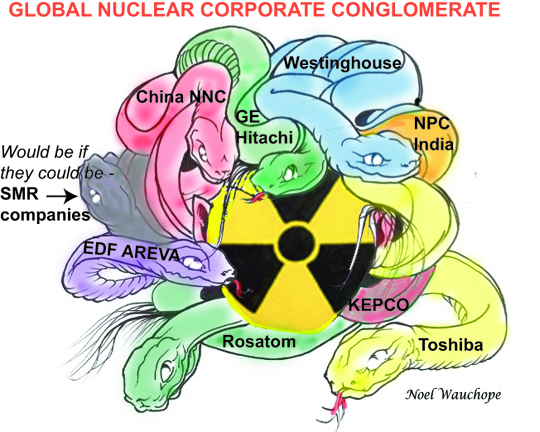
 Ghana, Rosatom in Talks Over Possible Future Nuclear Program, http://www.bloomberg.com/news/articles/2016-09-01/ghana-rosatom-in-talks-over-possible-future-nuclear-program Bloomberg, Andre Janse Van Vuuren, 2 Sep 16 andrejvvuuren , Russia’s nuclear utility Rosatom Corp. said it held talks with Ghana to prepare for the future use of atomic energy in the West African nation.
Ghana is preparing to accept its first review mission from the International Atomic Energy Agency as it “may be expected to become one of the countries that makes use of nuclear power” in future, Rosatom said Thursday in an e-mailed statement.
Talks are ongoing between the parties over regulation, infrastructure, training and the construction of facilities which Ghana will require to implement its own nuclear power program, Rosatom said. A next round of talks will be held at the end of September.
Fort Calhoun nuclear power plant to shut down permanently on October 24
| OPPD announces shutdown date for Fort Calhoun nuclear power plant http://enformable.com/2016/08/oppd-announces-shutdown-date-fort-calhoun-nuclear-power-plant/?utm_source=feedburner&utm_medium=email&utm_campaign=Feed%3A+Enformable+%28Enformable%29 31 Aug 2016 The PWR reactor at the Fort Calhoun nuclear power plant in Nebraska will shut down for good on October 24th, 2016. The reactor first went online in September, 1973 and was the smallest nuclear reactor in the United States in terms of power generation (476 MW). The Nuclear Regulatory Commission received a letter from Omaha Public Power District (OPPD) that notified them of the utilities decision to decommission the lone reactor at the power plant.In June, the OPPD announced that it had reached a decision to shut down the plant, but an exact date had not been announced. The utility estimated that it would save $1 billion over the next 20 years if it decommissioned the power plant.
The plant was the focus of international concern after the Missouri River flooded and surrounded the facility with rising water. The reactor was forced to remain offline for nearly three years while OPPD responded to a wide range of deficiencies identified in inspections by the NRC after the flooding event.
|

Big corporations are the biggest buyers of renewable energy
Corporate America Is Buying More Clean Energy Than Power Utilities Are https://www.fastcoexist.com/3063266/corporate-america-is-buying-more-clean-energy-than-power-utilities Want to get solar and wind power off the ground? It might be smarter to turn to Apple or Google rather than the power company. These days, the biggest buyers of renewable energy aren’t utilities. They’re corporations like Google, Walmart, and Owens Corning. Over the last year and a half, there’s been a surge of power purchases first by tech companies and more recently by more mainstream businesses, such as General Motors and Steelcase.
And, in some cases, companies are not only buying up power from a solar field or wind farm operator. They’re actually investing and running the plant themselves, or selling on power they don’t need. Ikea has invested in wind turbines in Texas and Illinois. And Apple has applied to sell on excess electricity as part of its $848 million California solar project (the new company would be called Apple Energy LLC).
Analysts say corporate players are increasingly driving decision-making in the large-scale energy market. “We’ve now reached the point where these companies that have shown leadership on renewables are doing that at a greater scale than utilities,” says Ian Kelly, manager of Rocky Mountain Institute’s Business Renewables Center. “It puts pressure on utilities to either offer renewable energy or see these companies go out and secure it directly themselves and leave utilities out of the picture.”
1 This Month




PLEASE OPPOSE HR 8255 AND S.3639 – bills would accelerate satellite deployment, with no environmental review or safeguards – https://ncstd5li.quorum.us/campaign/169331/
To see nuclear-related stories in greater depth and intensity – go to https://nuclearinformation.wordpress.com
-
Archives
- September 2026 (323)
- August 2026 (330)
- July 2026 (355)
- June 2026 (287)
- May 2026 (306)
- April 2026 (356)
- March 2026 (251)
- February 2026 (267)
- January 2026 (308)
- December 2025 (358)
- November 2025 (359)
- October 2025 (375)
-
Categories
- 1
- 1 NUCLEAR ISSUES
- business and costs
- climate change
- culture and arts
- ENERGY
- environment
- health
- history
- indigenous issues
- Legal
- marketing of nuclear
- media
- opposition to nuclear
- PERSONAL STORIES
- politics
- politics international
- Religion and ethics
- safety
- secrets,lies and civil liberties
- spinbuster
- technology
- Uranium
- wastes
- weapons and war
- Women
- 2 WORLD
- ACTION
- AFRICA
- Atrocities
- AUSTRALIA
- Christina's notes
- Christina's themes
- culture and arts
- Events
- Fuk 2022
- Fuk 2023
- Fukushima 2017
- Fukushima 2018
- fukushima 2019
- Fukushima 2020
- Fukushima 2021
- general
- global warming
- Humour (God we need it)
- Nuclear
- RARE EARTHS
- Reference
- resources – print
- Resources -audiovicual
- Weekly Newsletter
- World
- World Nuclear
- YouTube
-
RSS
Entries RSS
Comments RSS

