Talen Energy abandons proposed Bell Bend nuclear power plant
Enformable, 1 Sept 16 , Talen Energy, the company that owns the Susquehanna Steam Electric Station in Pennsylvania, has informed the Nuclear Regulatory Commission (NRC) that it sees no “viable path” forward and is abandoning its application to construct a new nuclear power plant next to the Susquehanna facility…….. http://enformable.com/2016/09/talen-energy-abandons-proposed-bell-bend-nuclear-power-plant/
South Korea keen to market nuclear reactors to Kenya
 Kenya pens nuclear power deal with South Korea By Anthony Mugo, Citizen Digital2 September 2016 “……Kenya Nuclear Electricity Board (KNEB) penned a Memorandum of Understanding with the Korea Electric Power Corporation, (KEPCO), Korea Nuclear Association for International Cooperation (KNAIC) and the KEPCO International Graduate School (K-INGS).
This partnership deal will help Kenya to obtain important knowledge and expertise from Korea by way of capacity building, specialized training and skills development, as well as technical support for its intended nuclear power program……….This development comes as KNEB is gearing up for feasibility studies to identify potential sites for Kenya’s nuclear power plants as well as undertaking reactor technology assessment aimed at settling on the best option in terms of nuclear power plant model.
Keter has been leading a Kenyan delegation for a four-day nuclear power cooperation visit to South Korea which included a visit to Doosan Heavy Industries and Construction Company and the Kori Nuclear Power Plant Complex in Busan.
In May 2016 during the visit by president Park Gun-Hye in the country, the ministry of energy entered into an agreement with the Korea’s ministry of Trade Industry and Energy
The agreement facilitated the exchange of technical information, three specialists as well as training opportunities for Kenyans in Korea’s vast nuclear power industry……..Other than the agreement with South Korea, Kenya has previously signed nuclear power cooperation pacts with Russia, China and Slovakia. https://citizentv.co.ke/business/kenya-pens-nuclear-power-deal-with-south-korea-139655/
Global nuclear lobby desperate to sell reactors to Asia (Europe and North America don’t want them)

IAEA sees Asia as driver of nuclear energy WNN 02 September 2016 Asia is one of the regions where nuclear energy is “high on the agenda” and could be one of the drivers for global nuclear power deployment, according to the deputy director general of the International Atomic Energy Agency (IAEA).
Speaking at a conference in Manila, Mikhail Chudakov said, “There are several member states already operating nuclear power plants, and many more aspiring states [are] exploring the potential for developing nuclear power programs in this region.”
The conference – titled The Prospects for Nuclear Power in the Asia Pacific Region – was held 30 August to 1 September. It was organized by the IAEA in collaboration with the International Framework for Nuclear Energy Cooperation and hosted by the Philippines Department of Energy. More than 120 participants attended the event, including representatives from 14 member states.
The conference covered issues such as the legal, regulatory and government support for nuclear power, the management of used fuel and radioactive waste, human resource development and capacity building, and other related technical issues……
There are currently 128 nuclear power reactors operable in five Southeast Asian countries plus Taiwan with a total generating capacity of more than 100 GWe. There are also 40 units under construction and firm plans in place to build dozens more. In addition, there are about 56 research reactors in 14 countries of the region. http://www.world-nuclear-news.org/NP-IAEA-sees-Asia-as-driver-of-nuclear-energy-0209166.html
China, USA, Russia, Japan all vying to sell nuclear reactors to Turkey
 Sealing the Deal: Turkey, China Launch Nuclear Cooperation Partnership,http://sputniknews.com/middleeast/20160901/1044832084/turkey-china-nuclear.html , 1 Sep 16 The news follows last week’s ratification by the Turkish parliament of the Sino-Turkish Agreement for Cooperation in Peaceful Uses of Nuclear Energy.
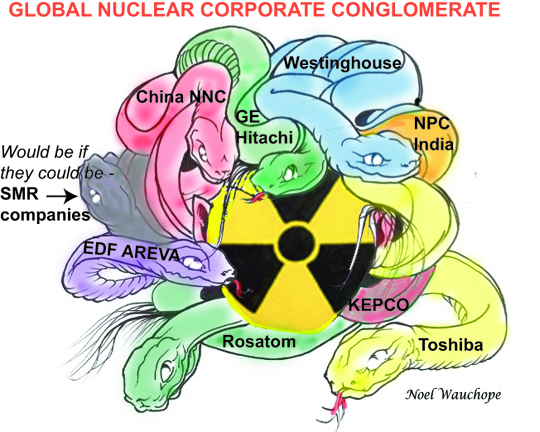
Russia flogging nuclear reactors to Ghana
 Ghana, Rosatom in Talks Over Possible Future Nuclear Program, http://www.bloomberg.com/news/articles/2016-09-01/ghana-rosatom-in-talks-over-possible-future-nuclear-program Bloomberg, Andre Janse Van Vuuren, 2 Sep 16 andrejvvuuren , Russia’s nuclear utility Rosatom Corp. said it held talks with Ghana to prepare for the future use of atomic energy in the West African nation.
Ghana is preparing to accept its first review mission from the International Atomic Energy Agency as it “may be expected to become one of the countries that makes use of nuclear power” in future, Rosatom said Thursday in an e-mailed statement.
Talks are ongoing between the parties over regulation, infrastructure, training and the construction of facilities which Ghana will require to implement its own nuclear power program, Rosatom said. A next round of talks will be held at the end of September.
Fort Calhoun nuclear power plant to shut down permanently on October 24
| OPPD announces shutdown date for Fort Calhoun nuclear power plant http://enformable.com/2016/08/oppd-announces-shutdown-date-fort-calhoun-nuclear-power-plant/?utm_source=feedburner&utm_medium=email&utm_campaign=Feed%3A+Enformable+%28Enformable%29 31 Aug 2016 The PWR reactor at the Fort Calhoun nuclear power plant in Nebraska will shut down for good on October 24th, 2016. The reactor first went online in September, 1973 and was the smallest nuclear reactor in the United States in terms of power generation (476 MW). The Nuclear Regulatory Commission received a letter from Omaha Public Power District (OPPD) that notified them of the utilities decision to decommission the lone reactor at the power plant.In June, the OPPD announced that it had reached a decision to shut down the plant, but an exact date had not been announced. The utility estimated that it would save $1 billion over the next 20 years if it decommissioned the power plant.
The plant was the focus of international concern after the Missouri River flooded and surrounded the facility with rising water. The reactor was forced to remain offline for nearly three years while OPPD responded to a wide range of deficiencies identified in inspections by the NRC after the flooding event.
|

Big corporations are the biggest buyers of renewable energy
Corporate America Is Buying More Clean Energy Than Power Utilities Are https://www.fastcoexist.com/3063266/corporate-america-is-buying-more-clean-energy-than-power-utilities Want to get solar and wind power off the ground? It might be smarter to turn to Apple or Google rather than the power company. These days, the biggest buyers of renewable energy aren’t utilities. They’re corporations like Google, Walmart, and Owens Corning. Over the last year and a half, there’s been a surge of power purchases first by tech companies and more recently by more mainstream businesses, such as General Motors and Steelcase.
And, in some cases, companies are not only buying up power from a solar field or wind farm operator. They’re actually investing and running the plant themselves, or selling on power they don’t need. Ikea has invested in wind turbines in Texas and Illinois. And Apple has applied to sell on excess electricity as part of its $848 million California solar project (the new company would be called Apple Energy LLC).
Analysts say corporate players are increasingly driving decision-making in the large-scale energy market. “We’ve now reached the point where these companies that have shown leadership on renewables are doing that at a greater scale than utilities,” says Ian Kelly, manager of Rocky Mountain Institute’s Business Renewables Center. “It puts pressure on utilities to either offer renewable energy or see these companies go out and secure it directly themselves and leave utilities out of the picture.”
USA determined to market nuclear reactors to India
 India, US set the ball rolling for Westinghouse’s nuclear plants By Dipanjan Roy Chaudhury, ET Bureau | Sep 01, 2016, NEW DELHI: India and the US moved closer to the planned construction of six reactors by American company Westinghouse at a proposed nuclear plant in Andhra Pradesh, with the two sides deciding to immediately commence the work on engineering and site design, and make an early conclusion of a competitive financing package.
Nuclear subsidies: will Pennsylvania be the next to prop up failing nuclear industry?
 The nuclear option After New York props up nuclear power generation sector, is Pennsylvania next?,
 The towers of the Beaver Valley nuclear plant in Shippingport loom over the region in this view from nearby Midland.
As part of that state’s Clean Energy Standard, utilities will be required to buy “zero emission credits,” providing what is estimated to be a $500 million annual subsidy to keep the nuclear plants open. Nuclear power comprises nearly 30 percent of New York’s electricity supply.
The move came after nuclear operators warned they might be forced to shut down reactors early if they didn’t receive financial support for the zero-carbon fuel. Already, more than half a dozen nuclear plants across the country have been pegged for early retirement because they are losing money.
With victory in New York, it’s only natural for nuclear operators to use the momentum to go after subsidies in other states, wrote Kit Konolige, a senior utility industry analyst at Bloomberg Intelligence, in a recent note.
“Companies probably will end up seeking billions of dollars from Pennsylvania, New Jersey, Ohio and Connecticut,” he wrote. “Closing nuclear plants could lead to higher carbon emissions and thousands of layoffs. Subsidizing them would boost electric bills and hurt rival generators’ margins.”
He speculated that the three operators of Pennsylvania’s five nuclear plants — Akron-based FirstEnergy, Illinois-based Exelon, and Talen Energy, based in Allentown — “could unite in Pennsylvania aid push” on the heels of the New York decision.
It’s not yet clear what the ask will look like and if it will rely on regulations or laws to prop up struggling nuclear plants.
Mr. Konolige noted that while Exelon, which operates two plants in New York, was successful in getting support through that state’s public utility commission, efforts to push nuclear subsidies through the legislature in its home state of Illinois did not pan out.
“It’s too early to tell which route will be taken in Pennsylvania,” Mr. Konolige wrote.
Nuclear plants, for decades a source of baseload generation and 20 percent of the electricity in the U.S., are falling victim to the same market dynamics pushing out coal plants: the low price of natural gas, which tends to set the electricity price paid to all sources on the grid.
Natural gas power plants also can ramp up and down fairly quickly, while nuclear plants must run continuously. That means when the grid price is lower than the operating costs, nuclear reactors have no choice but to run and lose money…..
During a company earnings call last month, FirstEnergy’s CEO Chuck Jones said the company is considering selling off its nonregulated generation plants, such as Beaver Valley, because the market dynamics don’t reward their reliability. He also said FirstEnergy is delaying by two years replacing the steam generator at one of the Beaver Valley reactors……http://powersource.post-gazette.com/powersource/policy-powersource/2016/08/30/After-New-York-props-up-nuclear-power-generation-sector-is-Pennsylvania-next/stories/201608300009
More nuclear marketing. USA determined to sell nukes to India
India US to advance talks on building six nuclear reactors Under the Indo-US nuclear cooperation agreement signed in October 2008, two US companies would build 12 atomic reactors, each with a capacity of 1000 MWs. Indian Express By: PTI | New Delhi :August 30, 2016 India and the US on Tuesday agreed to move forward on building six nuclear reactors and discussed ways to enhance cooperation in the field of atomic power and space.
John Kerry, US Secretary of State, who is here for the 2nd Indo-US Strategic and Commercial Dialogue (S&CD), said his country would want its civil nuclear cooperation with India to take shape in setting up of reactors.
“We have agreed now to move forward on six Westing House nuclear reactors which will provide energy for six million Indians, not to mention the enormous number of jobs (it will create)……
Under the Indo-US nuclear cooperation agreement signed in October 2008, two US companies would build 12 atomic reactors, each with a capacity of 1000 MWs. However, the US has often raised concern about hurdles faced by American companies over a series of issues.
Its major concerns like the liability clause in the Civil Liability for Nuclear Damage Act, 2010 has already been addressed and talks between the WestingHouse Co, which will build six reactors, and the Indian side are on, sources said. The two sides are also cooperating in the field of space. http://indianexpress.com/article/india/india-news-india/india-us-to-advance-talks-on-building-six-nuclear-reactors-3004675/
Manila nuclear power conference: Philippines consider restarting nuclear power project
MANILA – The Philippines is looking into operating the country’s only nuclear power plant, built four decades ago at more than $2 billion but never used, to ensure the long-term supply of clean and cheap electricity, its energy minister said.
The Southeast Asian country is joining more than two dozen other countries looking to add nuclear power to their energy mix, including neighbors Indonesia, Vietnam, Malaysia and Thailand.
Energy Secretary Alfonso Cusi said on Tuesday reviving the mothballed 620-megawatt nuclear plant in Bataan province, northwest of Manila, will require a $1 billion investment.
Nuclear generation is one of the options for the Philippines to meet its growing power needs, with annual electricity demand expected to rise by an average 5 percent until 2030, he said. “We have to weigh all our options, with emphasis not just on meeting capacity requirements, but sustainability and environmental obligations as well,” Cusi said, speaking at the opening of a three-day international conference on nuclear power in Manila.
Cusi will revive a government task force created in 2007 to study nuclear power as an alternative to imported fuel oil and coal, which currently provide more than half of the country’s energy mix.
He said technical experts, including those from the International Atomic Energy Agency, have been invited to help the country identify the next steps and come up with a “well-informed” decision.
Cusi is not committing any timetable for the study, but he expects the move to reignite protests against the project, especially by environmentalists and the Catholic Church arguing restarting the plant is unsafe and expensive.
“We need to move away from fossil fuels like coal but nuclear energy is not safe and will also harm the people and environment,” said Zaira Patricia Baniaga of the Philippine Movement for Climate Justice in a statement issued before the conference.
The late Philippine dictator Ferdinand Marcos order the plant built in 1976 in response to rising energy prices and it was finished in 1984.
The facility never started generating electricity after it was declared unsafe because it sits on a major earthquake fault line and lies near the Pinatubo volcano, which was dormant at that time.
Pinatubo’s 1991 eruption had no effect on the Bataan plant, 70 km (45 miles) away, but the project was mothballed in the wake of the Chernobyl disaster in 1986.
A decade ago Manila looked into reopening the plant but the 2011 Fukushima nuclear incident renewed concerns about safety.
China’s aggressive nuclear marketing is causing it some problems
 Ambitious Nuclear Expansion Is Causing Problems For China. Oil Price, By Irina Slav – Aug 29, 2016, China General Nuclear Power Corp. has been indicted by the FBI on allegations that it has been trying to illegally acquire nuclear technology secrets from its U.S. consultants. According to the indictment, the country has been working with said consultants for years – and has been pressuring them into handing over sensitive trade information – pursuing Beijing’s international nuclear expansion ambitions.
Last month, Britain’s PM Theresa May postponed the go-ahead for the construction of the country’s biggest NPP in several decades, Hinckley Point, citing concerns about Chinese interference in British national security. The Chinese company behind Hinckley Point is China General Nuclear Power Corp.
These two cases have highlighted China’s growing ambitions in the nuclear field – not just domestic but international. They have also highlighted the inherent suspicion that Western governments feel towards China. In the case with the U.S. consultants, it’s very likely that the charges are legitimate, despite CGNP issuing a statement that said it “always sticks to the principle of following laws and regulations.”……
China has very aggressive international nuclear ambitions. The country’s state-owned nuclear power companies have been working with international leaders such as France’s Areva and EDF, and Westinghouse, on developing its own nuclear reactor that Beijing hopes to start exporting on a large scale.
The reactor in question is Hualong One, and it has been exported to two countries to date, Pakistan and Argentina. Both deals include financing for the construction of the power plants from Chinese sources, which is the model China used to get into road construction and other infrastructure in Africa an the Middle East, AP notes.
CGNP’s investment in the $24-billion Hinckley Point is yet another aspect of China’s international nuclear ambitions. Experts, however, are wary of the success of this ambition. Many warn that China has yet to win the trust of its potential clients – even though no Chinese nuclear plant has so far made headlines by causing a disaster, general sentiment towards nuclear energy is suspicious, and as a result, safety standards are very stringent. In addition to this stringency, they also vary from country to country, so Chinese reactor builders will have to be very flexible in their offer if they want to convince their potential clients to become actual ones.
What’s more, this market is extremely competitive, and there are clear global leaders, such as the aforementioned French and U.S. companies. These companies have the experience, the track record, and the reputation that ensure their place at the top. China lacks all of these, so pushing into the international nuclear reactor market may prove difficult.
Still, it has enough to do at home, with 20 reactors in construction and more planned in order to raise the country’s nuclear generation capacity to at least 58 GWe over the next five to six years, and further to 150 GWe by 2030……http://oilprice.com/Energy/Energy-General/Ambitious-Nuclear-Expansion-Is-Causing-Problems-For-China.html
Ukraine’s nuclear powered electricity system near to collapse
When and Why Will Ukrainian Power Grid Collapse – UA Nuclear Reform Group Fort Russ, August 29th, 2016 Translated by Tatzhit Mihail Umanets, co-director of the reform committee for the atomic-industrial complex of Ukraine, and the former director of Chernobyl nuclear power plant:
China marketing nuclear reactors to Saudi Arabia
China nuclear developer, Saudi’s Falih meet on nuclear cooperation By Reuters | Aug 30, 2016,BEIJING: China’s leading state nuclear project developer China National Nuclear Corp (CNNC) said it met on Monday with Saudi energy minister Khalid Al-Falih to discuss cooperation in the nuclear power sector.
CNNC chairman Sun Qin told Al-Falih that China is ready to cooperate fully with Saudi Arabia over nuclear power, according to a short statement posted on the CNNC website late on Monday.
The statement said the Saudi energy ministry welcomed CNNC in expanding its business in the kingdom, including research and development of nuclear technology, uranium mining and the building of nuclear power stations, but gave no further details. The two countries signed a memorandum of understanding on training nuclear personnel, the statement said. http://economictimes.indiatimes.com/articleshow/53924844.cms?utm_source=contentofinterest&utm_medium=text&utm_campaign=cppst
$8.8 Trillion Climate Tab left for next generation, if climate “business as usual”
Report Shows Whopping $8.8 Trillion Climate Tab Being Left for Next Generation
26 August 2016 http://www.skepticalscience.com/9-trillion-climate-tab.html This is a re-post from Common Dreams by Lauren McCauley
“We do not inherit the Earth from our ancestors, we borrow it from our children,” is an oft-quoted proverb, frequently used to explain the importance of environmental preservation. Unsaid, however, is how much it will impact the next generation if the Earth is bequeathed in a lesser state.
Environmental campaigners NextGen Climate and public policy group Demos published a new study that attempts to quantify the true cost of not addressing climate change to the millennial generation and their children.
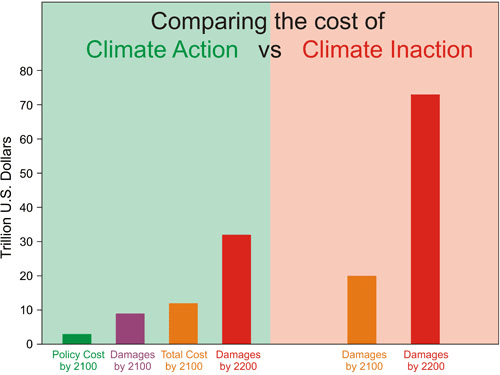
The Price Tag of Being Young: Climate Change and Millennials’ Economic Future (pdf) compares some of the high costs millennials will face in the “new inequality economy”—such as student debt, child care costs, stagnant wages, as well as financial and job insecurity—against the fiscal impacts of unmitigated global warming.
“The fact is,” the report states, “unchecked climate change will impose heavy costs on millennials and subsequent generations, both directly in the form of reduced incomes and wealth, and indirectly through likely higher tax bills as extreme weather, rising sea levels,drought, heat-related health problems, and many other climate change-related problems take their toll on our society.”
The impacts from climate costs alone, the report finds, are “comparable to Great Depression-era losses.” The study employs a model developed by researchers from Stanford University and University of California at Berkeley that measures the effects of rising temperatures on long-term economic growth and national productivity drawing on 50 years of data from 166 countries.
“no climate action” scenario found that by 2100 global per capita GDP will shrink by 23 percent relative to a scenario without climate change. The U.S. is estimated to take a 5 percent hit by 2050 that jumps to 36 percent by 2100 should no climate action occur.
This adds up to a loss of nearly $8.8 trillion in lifetime income for millennials and tens of trillions for their children.
“For the millennial generation, today’s status quo on climate and inequality is not only unjust but it is also unsustainable.”
In comparison, the cost of climate inaction overshadows the significant losses from other economic burdens, such as student debt. The report states:
According to Demos calculations, for a median- earning college graduate with median student debt, the lifetime wealth loss due to student debt is approximately $113,000, which is 40 percent less than the $187,000 lifetimewealth loss of a college- educated, median-earning 21-year-old if we fail to act on climate change.
But when these myriad forces are stacked together, they add up to a staggering burden. The report further highlights how climate inaction only exacerbates preexisting inequality:
Communities of color and low-income communities will be hit the hardest, as these communities have fewer resources to deal with the impacts of climate change […]. Further, these same communities have always had the highest exposure to coal-burning power plants and other sources of fossil fuel pollution, with sharply negative health impacts […]
If the transition to a clean energy economy is delayed, or if it is implemented unequally in keeping with historical patterns of racial exclusion, the fossil fuel economy will only deepen its toll on the health and well-being of America’s poorest and most vulnerable communities.
What’s more, the report notes, “the economic risks are compounded even further since inaction on climate change means that we are missing out on a major opportunity for much-needed new investment and millions of new jobs by transitioning to clean energy.”
-
Archives
- May 2026 (72)
- April 2026 (356)
- March 2026 (251)
- February 2026 (268)
- January 2026 (308)
- December 2025 (358)
- November 2025 (359)
- October 2025 (376)
- September 2025 (257)
- August 2025 (319)
- July 2025 (230)
- June 2025 (348)
-
Categories
- 1
- 1 NUCLEAR ISSUES
- business and costs
- climate change
- culture and arts
- ENERGY
- environment
- health
- history
- indigenous issues
- Legal
- marketing of nuclear
- media
- opposition to nuclear
- PERSONAL STORIES
- politics
- politics international
- Religion and ethics
- safety
- secrets,lies and civil liberties
- spinbuster
- technology
- Uranium
- wastes
- weapons and war
- Women
- 2 WORLD
- ACTION
- AFRICA
- Atrocities
- AUSTRALIA
- Christina's notes
- Christina's themes
- culture and arts
- Events
- Fuk 2022
- Fuk 2023
- Fukushima 2017
- Fukushima 2018
- fukushima 2019
- Fukushima 2020
- Fukushima 2021
- general
- global warming
- Humour (God we need it)
- Nuclear
- RARE EARTHS
- Reference
- resources – print
- Resources -audiovicual
- Weekly Newsletter
- World
- World Nuclear
- YouTube
-
RSS
Entries RSS
Comments RSS
 nuclear-news