 Toshiba may face still heavier losses in U.S. nuclear business: source http://www.japantimes.co.jp/news/2017/01/12/business/corporate-business/toshiba-may-face-heavier-losses-u-s-nuclear-business-source/#.WHfi9NJ97Gg KYODO Toshiba Corp. anticipates that total losses at its nuclear business in the United States could be larger than earlier stated due to a write-down at its subsidiary Westinghouse Electric Co., a source familiar with the matter said Wednesday.
The development may further taint the financial standing of the company that has been battling to overcome a massive window-dressing scandal.
Toshiba is finalizing the size of an impairment loss at Westinghouse, which could reach tens of billions of yen, ahead of the release of its group earnings report for the April to December period in mid-February, the source said.
Last month Toshiba said it may need to write down the value of assets at CB&I Stone & Webster Inc., a nuclear plant builder Westinghouse obtained in 2015, possibly by several hundred billion yen.
Toshiba believes the devaluation of CB&I Stone & Webster may have seriously undermined the value of Westinghouse, the source said.
The source said Toshiba estimated the final write down in connection with U.S. nuclear plant operations may reach up to ¥500 billion as of the end of last year, but the total amount could change as the company combed through their financial data.
Toshiba has been focusing on nuclear energy operations as its core business but has been struggling to win orders for new power plants both at home and abroad, particularly after the 2011 Fukushima nuclear disaster.
The company booked an impairment loss of about ¥250 billion in its U.S. nuclear business in the last fiscal year through March 2016.
January 13, 2017
Posted by Christina Macpherson |
business and costs, Japan, USA |
Leave a comment
British nuclear weapons workers to go on strike over Atomic Weapons Establishment pensions dispute The Independent, 12 Jan 17 Staff manufacture and maintain nuclear weapons including the Trident programme Lizzie Dearden @lizziedearden Employees responsible for manufacturing and maintaining the UK’s nuclear weapons are to go on strike.
Workers at the Atomic Weapons Establishment (AWE) are to stage two 48-hour walk-outs as part of a long-running dispute over pensions.
Unite said 600 of its members, who work as managers, craft and manual workers at the AWE’s two sites at Aldermaston and Burghfield in Berkshire, will strike on 18 and 30 January.
A spokesperson said workers felt “deeply betrayed” by promises made decades ago guaranteeing their pensions, when they were transferred from the Ministry of Defence (MoD) to the private sector, being broken………
“The four days of strike action later this month are not being taken lightly. It is not a ‘political’ strike, but one taken reluctantly by our members who have no desire to see thousands of pounds wiped off their retirement incomes.”
Unite claimed new pensions proposals, which would see the AWE’s pension contributions lowered, violated pledges made in a ministerial statement to the Commons in the 1990s. The AWE, owned by a consortium of Lockheed Martin, Jacobs Engineering and Serco, is contracted by the MoD to build and maintain nuclear warheads for Royal Navy submarines. http://www.independent.co.uk/news/uk/home-news/british-nuclear-weapons-factory-workers-berkshire-go-on-strike-prospect-union-awe-atomic-weapons-a7523516.html
January 13, 2017
Posted by Christina Macpherson |
employment, UK, weapons and war |
Leave a comment
 Nuclear Energy Dangerous to Your Wallet, Not Only the Environment http://www.counterpunch.org/2016/01/01/nuclear-energy-dangerous-to-your-wallet-not-only-the-environment/ Pete Dolack writes the Systemic Disorder blog and has been an activist with several groups. His book, It’s Not Over: Learning From the Socialist Experiment, is available from Zero Books.
by PETE DOLACK The ongoing environmental disaster at Fukushima is a grim enough reminder of the dangers of nuclear power, but nuclear does not make sense economically, either. The entire industry would not exist without massive government subsidies.
Quite an insult: Subsidies prop up an industry that points a dagger at the heart of the communities where ever it operates. The building of nuclear power plants drastically slowed after the disasters at Three Mile Island and Chernobyl, so it is at a minimum reckless that the latest attempt to resuscitate nuclear power pushes forward heedless of Fukushima’s discharge of radioactive materials into the air, soil and ocean.
There are no definitive statistics on the amount of subsidies enjoyed by nuclear power providers — in part because there so many different types of subsidies — but it amounts to a figure, whether we calculate in dollars, euros or pounds, in the hundreds of billions. Quite a result for an industry whose boosters, at its dawn a half-century ago, declared that it would provide energy “too cheap to meter.”
Taxpayers are not finished footing the bill for the industry, however. There is the matter of disposing radioactive waste (often borne by governments rather than energy companies) and fresh subsidies being granted for new nuclear power plants. None of this is unprecedented — government handouts have the been the industry’s rule from its inception. A paper written by Mark Cooper, a senior economic analyst for the Vermont Law School Institute for Energy and the Environment, notes the lack of economic viability then:
“In the late 1950s the vendors of nuclear reactors knew that their technology was untested and that nuclear safety issues had not been resolved, so they made it clear to policymakers in Washington that they would not build reactors if the Federal government did not shield them from the full liability of accidents.” [page iv]
Nor have the economics of nuclear energy become rational today. A Union of Concerned Scientists paper, Nuclear Power: Still Not Viable Without Subsidies, states:
“Despite the profoundly poor investment experience with taxpayer subsidies to nuclear plants over the past 50 years, the objectives of these new subsidies are precisely the same as the earlier subsidies: to reduce the private cost of capital for new nuclear reactors and to shift the long-term, often multi-generational risks of the nuclear fuel cycle away from investors. And once again, these subsidies to new reactors—whether publicly or privately owned—could end up exceeding the value of the power produced.” [page 3]
The many ways of counting subsidies
Among the goodies routinely given away, according to the Concerned Scientists, are: Continue reading →
January 9, 2017
Posted by Christina Macpherson |
business and costs, politics, Reference, USA |
Leave a comment
Climate change threatens ability of insurers to manage risk
Extreme weather is driving up uninsured losses and insurers must use investments to fund global warming resilience, says study, Guardian, Damian Carrington, 7 Dec 16, The ability of the global insurance industry to manage society’s risks is being threatened by climate change, according to a new report.
The report finds that more frequent extreme weather events are driving up uninsured losses and making some assets uninsurable.
The analysis, by a coalition of the world’s biggest insurers, concluded that the “protection gap” – the difference between the costs of natural disasters and the amount insured – has quadrupled to $100bn (£79bn) a year since the 1980s.
Mark Carney, the governor of the Bank of England, warns in the new report that: “Over time, the adverse effects of climate change could threaten economic resilience and financial stability [and] insurers are currently at the forefront.”
The ClimateWise coalition of 29 insurers, including Allianz, Aon, Aviva, Lloyd’s, Prudential, Swiss Re and Zurich, conclude that the industry must use more of its $30tn of investments to help fund increased resilience of society to floods, storms and heatwaves.
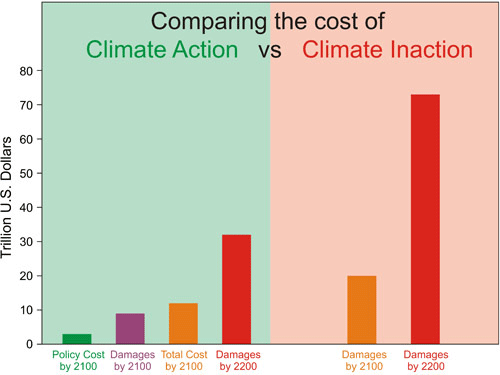
The Bank of England warned in 2015 that insurance companies could suffer a “huge hit” if their investments in fossil fuel companies were rendered worthless by action on climate change and some insurershave already shed investments in coal.
The ClimateWise report, published on Wednesday, also says the industry must also use its risk management expertise to convince policymakers in both the public and private sector of the urgent need for climate action.
The industry’s traditional response to rising insurance risks – raising premiums or withdrawing cover – would not help deal with the rising risks of global warming, it said……..
The economic impact of these natural catastrophes is growing quickly, according to Swiss Re, with total losses increasing fivefold since the 1980s to about $170bn today. This increase is partly due to an increase in extreme weather but also due to an increase in assets as cities and towns have grown, especially in vulnerable locations such as on coasts……. https://www.theguardian.com/environment/2016/dec/07/climate-change-threatens-ability-insurers-manage-risk?CMP=share_btn_tw
January 7, 2017
Posted by Christina Macpherson |
2 WORLD, business and costs, climate change |
Leave a comment
 NuGen ‘remains committed’ to Moorside nuclear plant http://www.in-cumbria.com/NuGen-remains-committed-to-Moorside-nuclear-plant-b026a08f-7adb-4f7a-b6ff-c67aa3026e0a-ds by Duncan Bick January 5, 2017 NUGEN says it “remains committed” to plans for a nuclear power station in Cumbria, despite the crisis affecting its majority shareholder Toshiba. Forty per cent was wiped off the Japanese company’s value in the last week of 2016 after it said that its US subsidiary, Westinghouse Electric, may have overpaid by several billions of dollars for another nuclear construction and services business.
To compound matters, the company is embroiled in an accounting scandal.
Its shares plunged to 259 yen (£1.81) on Thursday before staging a modest recovery on Friday. Yesterday they settled at slightly more than 277 yen when the Tokyo stock exchange closed.
Toshiba holds a 60 per cent stake in developer NuGen, alongside ENGIE of France.
They are due to decide next year whether to proceed. If the do, a £10bn power station will be constructed at Moorside, Sellafield. The credit agency Moody’s has downgraded Toshiba’s ratings and warned that the writedown could affect the company’s ability to pay its debts.
But a spokesman for NuGen said: “NuGen’s shareholders [Toshiba and ENGIE] remain committed to the development of our Moorside project.
“NuGen is actively engaged in exploring a universe of investment opportunities to bring in additional investments, including debt and equity, to help fund the construction of Europe’s largest new nuclear power station.”
He added: “NuGen welcomed the recent signing of a memorandum of cooperation between the UK and Japanese governments.
“The agreement shows confidence in the progress and deliverability of Moorside and commitment to nuclear as a solution to meeting the UK’s low carbon electricity requirements.”
NuGen has been seeking further backers for the scheme and is understood to have held talks about investment from the Korea Electrical Power Corporation.
If Moorside does go ahead, Westinghouse, once owned by British Nuclear Fuels, would supply three reactors.
They would have a capacity of up to 3.8GW, enough to supply 7.5 per cent of the UK’s electricity.
January 6, 2017
Posted by Christina Macpherson |
business and costs, UK |
Leave a comment
 Toshiba admits to a ruinous overpayment for an American nuclear firm Its share price plunged by 40% in three days as investors worried about its financial viability, The Economist, Jan 7th 2017 | TOKYO THE probe in 2015 into one of Japan’s largest-ever accounting scandals, at Toshiba, an electronics and nuclear-power conglomerate that has been the epitome of the country’s engineering prowess, concluded that number-fiddling at the firm was “systemic”. It was found to have padded profits by ¥152bn ($1.3bn) between 2008 and 2014. Its boss, and half of the board’s 16 members, resigned; regulators imposed upon it a record fine of $60m.
Now its deal-making nous is in doubt too. In December 2015—the very same month that it forecast hundreds of billions of yen in losses for the financial year then under way, as it struggled to recover from the scandal—Toshiba’s American arm, Westinghouse Electric, bought a nuclear-construction firm, CB&I Stone & Webster. One year on, on December 27th, Toshiba announced that cost overruns at that new unit could lead to several billions of dollars in charges against profits.
Part of the $229m that Westinghouse paid for CB&I Stone & Webster included $87m of goodwill (a premium over the firm’s book value based on its physical assets). It is that initial estimate that is now being recalculated.
Toshiba had looked to be bouncing back from its accounting nightmare………
Toshiba’s central part in a plan by the government of Shinzo Abe, the prime minister, to pep up growth by exporting nuclear-power technology to emerging countries may help. In June Westinghouse clinched a deal in India to build six new-generation AP1000 reactors, Toshiba’s first order since the triple meltdown at the Fukushima Dai-ichi nuclear plant in 2011. Toshiba is also involved in that site’s costly and complex clean-up. Some think that Japanese banks, known for keeping zombie firms on life support, will stand behind it, come what may. Shares in Toshiba’s two main lenders, Sumitomo and Mizuho, slid last week after the profit warning. Investors expect more big bank loans or a debt-for-equity swap, which allows a bank to turn bad loans into shares.
The consensus on Toshiba’s latest screw-up is that a long-standing culture of poor management is to blame…..http://www.economist.com/news/business/21713896-its-share-price-plunged-40-three-days-investors-worried-about-its-financial
January 6, 2017
Posted by Christina Macpherson |
business and costs, Japan, secrets,lies and civil liberties, USA |
Leave a comment
The future of nuclear energy in Japan, nearly six years after the 2011 Fukushima disaster http://www.abc.net.au/news/2017-01-05/the-future-of-nuclear-energy-in-japan-after-fukushima/8162686 By Tokyo correspondent Rachel Mealey Japan has been pursuing a dream of nuclear energy since the 1960s.
The country’s first nuclear reactor was completed in 1965 and between then and 2011, Japan invested hundreds of billions of dollars into the industry.
Money is still being funnelled into the industry, but these days it is mostly just for upkeep of idle reactors.
When disaster struck the Fukushima nuclear plant in Japan in March 2011, there were 54 nuclear reactors operating in the country and generating about one third of Japan’s power.
But with the triple, reactor-core meltdown at Fukushima came concerns about nuclear power in other areas of Japan. The government of the day ordered an immediate review of the safety aspects of the remaining reactors.
Today, there are just four reactors in operation across Japan (although one is “paused” while a legal challenge is heard).
Eleven are in the process of being decommissioned — six of these are at Fukushima — and decisions are yet to be made about 42 other reactors.
Tom O’Sullivan, an energy sector analyst in Japan, said five or six other reactors should come back online in 2017, but there were localised protests to some of those planned restarts.
“Some of the polling that has been done indicates that 60-70 per cent of the Japanese people actually oppose the restarting of the reactors,” Mr O’Sullivan said.
In April 2016, a major earthquake struck Japan’s southern-most island of Kyushu.
An operating nuclear reactor was just 120 kilometres from the epicentre of the quake. Roads and bridges were damaged and landslides cut off access to some areas — aggravating the fears of local people about how they would evacuate if another nuclear disaster was to occur.
Future energy needs questioned
In the years to come, the Japanese Government has major decisions to make about the future of the nuclear industry. Nuclear reactors have a natural operating life of 40 years.
“The average age of the Japanese reactors is now close to 30 years, so most of them have only a remaining operating life of 10 years,” Mr O’Sullivan said.
“Once they start hitting the 40-year time limit, they’re going to have to write off some of the residual costs associated with them. Then of course you have the additional, significant issue of having to decommission them and the costs in that regard are very, very significant.”
The Government has had very little to say in recent months about its energy policy.
The most recent utterings of Prime Minister Abe were back in March — when Japan was marking the five-year anniversary of the nuclear disaster. He said his Government was aiming to achieve 20-22 per cent of energy needs met by nuclear by 2030.
Environmental group Greenpeace said that aim would be close to impossible to achieve.
“The reality is, they will never get to that 20 or 22 per cent. I think inside Government, there are factions that basically believe that maybe we can reach that target, but a more realistic assessment says maybe it will be a lot less,” Greenpeace nuclear spokesman Shaun Burnie said.
“I think the Japanese Government will be forced to change its energy policy. This cannot go on indefinitely. Nuclear utilities are unable to operate their reactors.”
January 6, 2017
Posted by Christina Macpherson |
business and costs, Japan, politics |
Leave a comment
 As a U.S. Business, Nuclear Power Stinks http://www.powermag.com/blog/as-a-u-s-business-nuclear-power-stinks/ 01/01/2017 | Kennedy Maize Regardless of one’s views of the social values of nuclear power — compelling cases can be made all around — as a business proposition nuclear stinks.
The latest evidence comes from the giant Japanese conglomerate Toshiba, which saw a third of its market value vanish in two days of trading (20% in one day, a free-fall stopped only by a limit to trading losses imposed by the Japanese stock market). Credit rating agencies promptly downgraded the company’s debt.
Toshiba’s stock crash was a result of billions in reported losses from its Westinghouse Electric subsidiary and Westinghouse’s ruinous investment last year in nuclear engineering and construction behemoth CB&I Stone & Webster, itself the product of an ill-fated merger. Toshiba’s nuclear business has been hemorrhaging money at its U.S. construction projects in Georgia and South Carolina. Westinghouse is years behind schedule and billions of dollars over budget at its two construction projects: Southern’s Vogtle and Scana Corp.’s Summer units, a total of four Westinghouse AP1000 reactors under construction. Toshiba faces the possibility that its nuclear troubles will lead the company to a negative net worth.
My colleague Aaron Larson describes the gory business details well. The bottom line is that Westinghouse threatens to bring Toshiba to its financial knees, although the firm is too large to fail entirely. It may well require a Japanese government bailout.
Then there is France’s Areva, which has been bleeding red ink for more than a decade and would have expired but for its French government owners, and a recent bailout.
The company is far behind schedule and vastly over budget on construction projects in Finland and France. Late last year, discovery of quality control problems in carbon steel forgings from Areva’s Le Creusot Forge shocked the company. The allegations closed 20 of France’s 58 operating reactors, which also could jeopardize regulatory approval for extended operation at the aging plants.
In late December reports surfaced that Areva employees for decades hid problems in reactor parts it manufactured at Le Creusot Forge. Inspectors from the U.S., France,
China, and the U.K. descended on Areva to examine records and investigate the allegations. “I’m concerned that there keep being more and more problems unveiled,” Kerri Kavanagh, who leads the U.S. Nuclear Regulatory Commission’s unit inspecting Le Creusot, told the Wall Street Journal.
The business case for existing nukes in the U.S. is also ominous. Just last week, an Ohio newspaper reported that Akron-based FirstEnergy will close or sell its long-troubled, 900-MW Davis-Besse nuclear unit this year or next, without counting on a state bailout. “We have made our decision that over the next 12 to 18 months we’re going to exit competitive generation and become a fully regulated company,” CEO Chuck Jones said. “We are not going to wait on those states to decide what they are going to do there.” This comes on top of multiple closings of U.S. nukes unable to compete in competitive markets in recent years, state subsidies in Illinois and New York to keep uneconomic plants open, and threats of even more shutdowns.
At the same time as the Davis-Besse warning, Environmental Progress, a pro-nuclear group, released an analysis that concluded that a quarter to two-thirds of operating U.S. nuclear plants could face premature closure. If it weren’t for actions by state governments in Illinois and New York, the picture would look worse.
The Environmental Progress analysis counts 35 GW of nuclear capacity as at “triple risk” because “they are in deregulated markets, uneconomical (according to Bloomberg New Energy Finance) and up for relicensing before the end of 2030.” Facing greatest jeopardy for early closure? D.C. Cook in Michigan, Seabrook in New Hampshire, Millstone in Connecticut, and Davis-Besse in Ohio.
January 6, 2017
Posted by Christina Macpherson |
business and costs, USA |
Leave a comment
Nuclear workers in strike threat at Wylfa and Trawsfynydd, Daily Post 4 Jan 17 Union leaders are to meet to discuss potential action over a pensions row Union leaders representing nuclear workers at Wylfa and Trawsfynydd are to consider strike action over pensions.
The unions said 16,000 workers at 19 sites across the UK face cuts under plans by the Nuclear Decommissioning Authority to make savings of £660 million.
They include hundreds of Magnox staff at Wylfa on Anglesey, which is currently de-fuelling after ending operations at the end of 2015, and Trawsfynydd in Gwynedd, which is being decommissioned.
The unions said the Government’s expectation is that the final salary pension schemes in place across the NDA estate will be reformed by April 2018.
Justin Bowden, GMB national officer, said: “There is no justification for this attack on the pensions of these nuclear workers and their communities.
“These pension funds are in a sound state and underwent considerable reform 10 years ago…….http://www.dailypost.co.uk/business/business-news/nuclear-worker-strike-threat-wylfa-12409439
January 6, 2017
Posted by Christina Macpherson |
employment |
Leave a comment
 China is also seeking market dominance in clean energy technology.
The nation’s ambient air pollution and its greenhouse gas emissions would both decline if China could produce more electricity using clean renewables rather than relying on coal. It has been the largest producer of solar photovoltaic cells in the world since 2007, and overtook Germany as the nation with the largest installed photovoltaic capacity in 2015.
As the price of renewable power equipment declines, the law of demand predicts that more U.S. companies will go green.
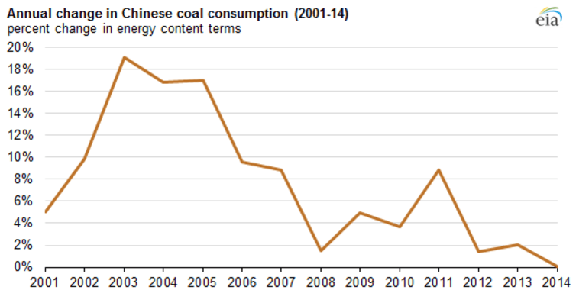
For China, Climate Change Is No Hoax – It’s a Business and Political Opportunity Desmogblog, , December 31, 2016 By Matthew Kahn, University of Southern California
In mid-November, while Americans were preoccupied with election returns, China sent some of its clearest signals yet that it will continue to pursue an international leadership role on issues including climate.At an international climate change summit in Marrakech, the Chinese government reasserted its commitment to reduce its greenhouse gas emissions. The government announced that its aggregate emissions will peak by 2030 or earlier, and that its emissions per dollar of economic output will decline sharply.
For 25 years I have taught my economics students that climate change represents the ultimate “free rider problem.” To slow global climate change, we need to reduce aggregate global emissions.
Yet each individual nation’s efforts are too small to “solve” the problem, so it has only weak incentives to take costly mitigation actions, and strong incentives to “free ride” on the benefits of emission reductions by other countries.
From this perspective, President-elect Trump’s pledges to “cancel” the Paris Agreement and dismantle President Obama’s carbon mitigation initiatives follow standard economic logic. If the United States backs out of commitments to reduce national emissions, it still benefits from other countries’ efforts.
Why, then, is China is pressing ahead with low-carbon initiatives?
My research suggests several motives. Chinese leaders want to improve the quality of life in their nation’s cities by reducing air pollution; win large shares of promising export markets for green technologies; and increase China’s “soft power” in international relations.
Taking aggressive action to cut carbon emissions helps China in all three areas.
Reducing Coal’s Cruel Impacts
Much of the staggering rise in China’s carbon dioxide emissions in recent decades came from burning coal to produce electricity for the nation’s industrial sector. While this growth has created millions of jobs and wealth for the nation, coal-fired power plants are major sources of greenhouse gases and conventional air pollutants that affect millions of people.
A large body of research, including joint work by U.S. and Chinese scholars, has demonstrated that air pollution in China causes thousands of premature deaths yearly. Coal also provides winter heating in China’s colder cities. Recent epidemiology research has found that coal use for heating greatly increases fine particulate air pollution, which has raised morbidity and mortality rates.
Using data from around the world, economists have found that when countries develop economically they move up an “energy ladder.”
The richer a country grows, the more likely it is to swap out cheap polluting fuels in favor of cleaner, more expensive fuels. A natural experiment that occurred in Turkey as natural gas pipelines were built throughout the nation between 2001 and 2014 showed as people gained access to natural gas, air quality improved and mortality rates declined.
China has more coal than natural gas resources, but as its citizens grow wealthier, their willingness to pay to avoid pollution increases. This trend will encourage substitution toward cleaner fuels. As such, China’s political leaders will likely prioritize policies that substitute natural gas for coal, which should reduce air pollutants and greenhouse gas emissions……….
China is also seeking market dominance in clean energy technology.
The nation’s ambient air pollution and its greenhouse gas emissions would both decline if China could produce more electricity using clean renewables rather than relying on coal. It has been the largest producer of solar photovoltaic cells in the world since 2007, and overtook Germany as the nation with the largest installed photovoltaic capacity in 2015.
U.S industrial regulators have accused China of engaging in predation and dumping low-cost solar panels that compete with U.S products.
But environmentalists should cheer that potential buyers in importing nations now face lower prices — especially global companies like Wal-Mart which are pledging to shrink their carbon footprints. As the price of renewable power equipment declines, the law of demand predicts that more U.S. companies will go green.
There is a key synergy between electric vehicles and green power generation.
As studies have shown, driving an electric vehicle that runs on electricity generated from coal can produce more greenhouse gas emissions than operating a conventional gasoline vehicle. If Chinese exports of electric vehicles and renewable generating technologies lead to their joint adoption by suburbanites, greenhouse gas emissions from both transportation and power generation will fall.
Investing in Soft Power
For decades, the world’s media have portrayed China as a bully and trade cheat abroad and a repressive power at home. In cutting carbon emissions, the Communist Party seeks to boost its own political legitimacy in the international arena as well as with the Chinese people.
By committing to pursue ambitious environmental goals, Chinese leaders hope to signal to both domestic constituents and international actors that China is an international leader and cares about its own people. A “leading nation” plays an active role in international relations, helps to keep the peace and promotes global public goods.
At a time when the United States appears to be stepping back from its leadership role, the CCP may see a chance to fill the vacuum, and make money in the process. https://www.desmogblog.com/2016/12/31/china-climate-change-no-hoax-business-political-opportunity
January 2, 2017
Posted by Christina Macpherson |
business and costs, China, renewable |
Leave a comment
 Toshiba hit by nuclear plant delays , THE AUSTRALIAN, BRIAN SPEGELE, The Wall Street Journal. January 2, 2017 Toshiba’s ambitions to make nuclear power a centrepiece of its future have instead led to an accounting scandal and billions of dollars in potential losses.
For clues to what happened, the reactor being built by its Westinghouse Electric division in a seaside town south of Shanghai offers an illuminating Exhibit A.
The Sanmen reactor was meant to be the showcase of a new technology that Westinghouse hopes will revolutionise the nuclear industry by making power plants safer, less labour-intensive and quicker to build.
Instead, the first so-called AP1000 reactor has been bedevilled by delays. In one instance, a critical component in its cooling system failed, slowing work by more than two years. Meanwhile, Westinghouse struggled for years to complete its design work for the AP1000, adding to delays and angering its Chinese state-owned customer. The reactor is now at least three years behind schedule.
Westinghouse said it aimed to load enriched uranium fuel in the reactor early next year, pushing back its previous year-end goal.
The troubles in Sanmen mirror those at nuclear projects around the world — including four by Westinghouse in the US — that led to this week’s announcement by Toshiba that it is looking at billions of dollars in potential losses, triggering a massive sell-off by investors……….
State Nuclear Power Technology assistant president Zhang Fubao said the company was committed to working with Westinghouse.
Mr Benjamin said proving that the AP1000 works was vital to the company’s future. “The eyes of the world and the eyes of the industry are watching,” he said. http://www.theaustralian.com.au/toshiba-hit-by-nuclear-plant-delays/news-story/86ebad9b6a7e359f7c8d0a6f38f0eca4
January 2, 2017
Posted by Christina Macpherson |
business and costs, Japan |
Leave a comment
 Toshiba puts UK’s nuclear power plans under threat: Fears that crisis will halt Japanese firm’s investment in British plant http://www.thisismoney.co.uk/money/markets/article-4074492/Toshiba-puts-UK-s-nuclear-power-plans-threat-Fears-crisis-halt-Japanese-firm-s-investment-British-plant.html By Rachel Millard For The Daily Mail 30 December 2016 Britain’s nuclear power plans have been thrown into doubt as a financial crisis grips the company behind one of the country’s biggest projects.
Japanese company Toshiba owns a 60 per cent stake in the planned £10billion NuGen nuclear power project in Moorside, Cumbria, which aims to supply power for about 6million homes from 2025.
But shares plunged at Toshiba for the third day running yesterday after it warned of a multi-billion dollar write-down involving its US nuclear subsidiary.
Forty per cent has been wiped off the company’s value since it said on Monday that its US nuclear subsidiary Westinghouse Electric may have overpaid by several billions of dollars for another nuclear construction and services business.
Westinghouse UK is providing the reactors for the planned project in Cumbria, the rest of which is owned by French company Engie, and would be one of Europe’s largest nuclear power plants.

Moody’s investor service has downgraded Toshiba’s ratings and warned the writedown could affect the company’s ability to pay its debts, little over a year after its finances were seriously hit by an accounting scandal.
Justin Bowden, the GMB union’s national secretary for energy, said: ‘It needs to be established as soon as possible whether or not the collapsing Toshiba share price, in particular in relation to its Westinghouse operation, has any implications, and if so what these are for the extremely important Westinghouse project.’
Masako Kuwahara, a Moody’s vice-president, said: ‘The downgrade of Toshiba’s ratings principally reflects Moody’s deepening concerns over the sustainability of Toshiba’s near-term liquidity, as well as the substantive and rapid erosion of its equity base.
‘Although Toshiba is still assessing the exact amount of the impairment loss, its financial metrics will likely deteriorate further, potentially resulting in a negative equity position.’
Moody’s added that if Toshiba breached its debt obligations, its ability to stay solvent would depend on banks’ support.
‘The availability of such support in such a situation, is currently uncertain,’ Moody’s added.
Bankers and analysts said the latest shock could force Toshiba to trim down its businesses.
‘If the company wants to survive, it needs to go through a scrap-and-build process,’ said Norihiro Fujito, senior investment strategist at Mitsubishi UFJ Morgan Stanley Securities.
Toshiba’s problems come after NuGen said it was in talks with potential investors for the Cumbria site, with a final investment decision due in 2018.
It is potentially a blow to the Government after ministers had described 2016 as a ‘year for the industry to look back on’ following backing for a new plant at Hinkley Point in Somerset.
Then UK energy minister Lucy Neville-Rolfe said Hinkley Point would ‘trigger this country’s nuclear renaissance’. But the GMB’s Bowden said: ‘We are one step away from the lights going out.’
NuGen yesterday declined to comment and Toshiba could not be reached for comment.
A Department for Business, Energy and Industrial Strategy spokesman said: ‘We are working closely with developers on a number of proposed new nuclear projects in the UK, as they develop their plans.’
December 30, 2016
Posted by Christina Macpherson |
business and costs, politics, UK |
Leave a comment
 Investors wipe $6.6 billion off Toshiba’s market value http://www.wfmz.com/news/investors-wipe-66-billion-off-toshibas-market-value/238091402
Losses over last 3 trading sessions total 42% By: SHERISSE PHAM Dec 30, 2016 HONG KONG (CNNMoney) – Toshiba’s dreams of becoming a nuclear energy leader have turned into a nightmare.
December 30, 2016
Posted by Christina Macpherson |
business and costs, Japan |
Leave a comment
Toshiba’s nuclear power hopes in meltdown The Australian, REBECCA SMITH, KOSAKU NARIOKA, The Wall Street Journal, December 30, 2016 Toshiba seemed poised to profit from a global nuclear power revival when it paid $US5.4 billion to win a bidding war for Westinghouse Electric in 2006.
Today, that bet threatens to sink the venerable Japanese conglomerate, as cost overruns and missed deadlines on nuclear-reactor projects around the world have forced it to warn investors that it may soon have to report billions of dollars in losses.
Toshiba lost a fifth of its market value on Wednesday and its stock fell another 15 per cent early yesterday in Tokyo as panicked investors rushed to sell shares. The news of the nuclear writedowns came just as Toshiba was beginning to emerge from an earlier accounting scandal……
Westinghouse’s woes help explain why the nuclear industry has seen its dreams of global growth sputter. Until recently, the company was regarded as the industry’s front-runner, the only nuclear supplier to have landed contracts for its next-generation reactor in both the US and China.
But a series of missteps and unexpected problems have snarled nuclear projects by Westinghouse and rivals including Areva and General Electric.
Fifty-four reactors are under construction in 13 nations, and 33 are badly delayed, according to the World Nuclear Industry Status Report, an independent annual assessment. Blunders have afflicted projects regardless of location, reactor design or construction consortiums.
To lower costs and speed construction times, Westinghouse and its competitors came up with cookie-cutter plant designs in which major sections would be built as modules in factories and then hauled to plant sites for final assembly. Gone was the customisation that added expense.
But the strategy appears to have backfired. “Supply-chain issues just moved from the plant sites to the factories. It didn’t solve the basic issue of quality control,” said Mycle Schneider, a nuclear expert based in Paris. And cookie-cutter designs meant flaws got replicated.
In France, Areva is trying to get to the bottom of a scandal involving falsified records for critical components that have wound up in nuclear plants there and in other countries, including the US. The problems appear to stretch back decades and to have gone unnoticed despite supposedly strict government supervision. Areva has said it is co-operating with investigators from France and other nations.
“There’s a world-wide problem with managing these megaprojects,” said Edwin Lyman, senior scientist for the Union of Concerned Scientists in Washington, DC. “Managers grossly underestimated the time and cost of construction.”………
It isn’t clear if Toshiba’s difficulties would have an impact on the eight reactors it is trying to complete in the US and China, but its disclosure suggests the situation is worse than previously understood.
In the US, Westinghouse was providing reactor components for nuclear plants in Georgia and South Carolina being built by utilities Southern and SCANA.
At the site of Southern’s Vogtle 3&4 reactors going up in rural Georgia, there have been rumours of financial problems for months, said Will Salters, business manager for the union IBEW Local 1579.
He said the site now employs about 500 of his electricians but the union recently received notice that there would be a hiring freeze pending a review.
“We’ve been hearing for months they were broke and had to meet certain milestones by Southern to get paid,” Mr Salters said……
Toshiba is already on a Tokyo Stock Exchange watchlist because of the accounting scandal that forced it to take a $US1.3bn writedown for its nuclear business in November 2015.
At the time, it acknowledged that it had overstated its profit for seven years. http://www.theaustralian.com.au/business/wall-street-journal/toshibas-nuclear-power-hopes-in-meltdown/news-story/1ba4929c61e94f528062d1aa44ab1b30
December 30, 2016
Posted by Christina Macpherson |
business and costs, Japan |
Leave a comment
10 Reasons Trump Won’t Lead A Nuclear Renaissance http://oilprice.com/Energy/Energy-General/10- Reasons-Trump-Wont-Lead-A-Nuclear-Renaissance.html By Leonard Hyman & William Tilles – Dec 28, 2016 Donald Trump in the White House and Theresa May in 10 Downing Street. They will open the door to more nuclear spending, no doubt. Prime minister May has already given a green light to Britain’s most expensive energy project, a heavily subsidized nuclear power station at Hinkley Point. Based on the most recent federal budgeting approvals, we expect that no U.S. nuclear weapons programs will want for funds. But, despite all the post-election industry euphoria, should we anticipate a full renaissance for U.S. commercial nuclear power? Is that just a bridge too far, so to speak? Let’s look at the what will go into some of these decisions.
1.Need for the product. With no growth in the market for electricity, the industry needs new power plants only to replace old ones and to decarbonize output in order to mitigate global warming. The Trump administration has declared an end to the so-called war on coal, which makes it less likely that the electric industry will have to close old coal fired generating stations soon and it has categorized global warming as a hoax, which removes an excuse to build non-carbon producing nuclear units. The nuclear industry will need another rationalization for expansion.
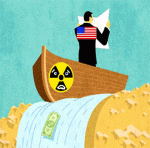 2.Economics. Nuclear power looks like an expensive means of producing base load electricity with significant known risks and ongoing waste storage/disposal issues. A new 1,000 MW nuclear plant ordered today for 2025 in service would cost about $10 billion. New renewables can produce power at no higher a cost per kwh, without the same long construction schedule and need to build so large a unit. A new base load gas fired unit of the same size capacity could be completed in a few years and cost one fifth as much per MW and produce at a lower cost per kwh. Producing a commodity like electricity at a relatively high price in a competitive market is not a winning business strategy. Nuclear has to offer something else.
3. Base load generation. Nuclear plants run as base load units, something renewables cannot do — at least not until economical energy storage comes into the picture– because of the intermittency of their output. Still, renewables, particularly wind in the U.S. midwest and Texas, will temporarily displace more large central station power generation, forcing more units to “cycle”. Nuclear plants are less well suited for this duty. Flexibility and load following may become more highly valued than base load. This also reflects a change in the electric industry itself. The former command and control or paternalistic relationship between utility and consumer is changing. At a minimum consumers are dictating how their energy is produced, agreeing for example to pay premiums for “greener” forms of electricity. In other words, nuclear has something to sell in the base load market, but that market may be in decline.
4. Power markets. Neither U.S. nor UK power markets will support unsubsidized or non-mandated new generation. To the extent that the U.S. wholesale power markets remain both deregulated and regulated in parts, this is also a negative for new nuclear capacity. Deregulated power markets, both here and in the UK, aren’t permitting wholesale prices high enough to finance new gas fired capacity much less new nukes. Regulators will want a cost benefit analysis before approving a new nuclear facility. Basically, this means that a new nuclear project in order to proceed will need a subsidy of one sort or another. A carbon tax would do the job even better. But what GOP politician would vote for that tax, especially if some of their constituents view the issue of global warning as a hoax?
5. Nuclear as infrastructure. As currently built, nuclear projects require a large contingent of well paid labor and massive amounts of steel and concrete. A handful of qualified engineering firms, the usual suspects, also build other infrastructure and one can only think that these politically connected firms can lobby for nuclear projects as hard as they lobby for new bridges or highways. Nuclear construction then could play a role as a component of the as part of the infrastructure program needed to boost the economy. The problem, however, is that nuclear infrastructure has some drawbacks.
6. Resilience needed. Infrastructure should be resilient and anti-fragile. In battle, would we rather attack our enemy in a swarm formation as part of a horde of thousands or ponderously approach the fields of honor as a monolithic “death star”. The former is anti-fragile. The latter, as we all know from the movies (no spoiler intended), is powerful but most definitely fragile. The “enemy” here approaches from two sides: technological obsolescence (which is slowly confronting all central station power generators) and simple obsolescence from a harsher operating environment. In plain terms, stuff just wears out faster. It’s a riskier business that’s for sure.
7. Investor-owned operators needed. The two major U.S. electric utilities with an outsized presence in nuclear power, Entergy and Exelon, could be characterized as the Dogs of the UTY, thanks to their less than stellar stock performances. EDF, the builder of the new British station, almost didn’t get to a positive decision on the new plant due to a revolt on the part of concerned directors. Do investors want more nuclear power? Probably not without subsidies or guarantees.
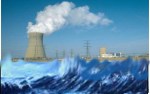 8. Coastal locations needed. One problem with commercial nuclear power is not that it produces expensive electricity via fission, but that its voracious need for cooling water requires mostly coastal or riparian sites. Ignore the technology for a moment. Rising seas, hurricanes, storm surges and the like could render an ever broader swath of coastline unsuitable for infrastructure of any sort. Even if the Trump administration sees no issues, property and casualty insurors as well as and bond investors might.
9. Using nuclear subsidies as corporate welfare. New York and Illinois both launched
programs best described as Welfare for the Nuclear Elderly. It’s heart-warming to see such generosity just prior to the holiday season aimed at aging, uneconomic nuclear plants. This sounds to us like a job creation/preservation program for rural areas (where high paying jobs are scarce) masquerading as an environmentally beneficial, carbon mitigating proposal. There is nothing inherently evil about subsidizing private sector jobs in the electric utility industry. We just wish they’d drop the low carbon fig leaf as a rationale or change the market so it pays for the supposed virtues of nuclearinstead of making this a political handout. But note that handouts to old nukes do not encourage the building of new ones.
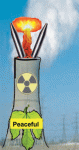 10. Nuclear for defense. Defense spending may crowd out civilian needs.Themilitary already plans to modernize its nuclear warfare capability over comingdecades. In fact, if we think about where nuclear power as an energy source has worked best, it is in military-maritime applications, things like submarines and arctic icebreakers. If a nuclear accident on a naval vessel at sea occurs resulting in all hands lost–that is clearly a tragedy. If Indian Point goes full metal Fukushima, rendering significant parts of Westchester County, NY uninhabitable, we don’t even have the adjectives much less the liability coverage. We also doubt that military applications will take a back seat in the new administration. Beyond that, there are two big nuclear related projects in the U.S.: completion of the Yucca Mountain nuclear waste repository in Nevada and construction of a vitrification facility at the Hanford, WA site now holding significant amounts of highly radioactive materials in less than perfect circumstances. More than likely, the military, Yucca and Hanford will absorb the lion’s share of new nuclear-related infrastructure monies.
Without a rationale rooted in decarbonization or in shortage of alternative fuels or energy sources, the new administration in the U.S. can only make a weak case for commercial nuclear power. If it will not embrace direct subsidies (which the incoming Congress may be reluctant to do as a matter of principle), the administration may have a hard time finding private partners for nuclear projects. But it can, and probably will, make a strong case for completing the huge nuclear tasks already on the government’s plate. That spending could boost the economy just as much as putting up new nuclear power stations,
December 30, 2016
Posted by Christina Macpherson |
business and costs, USA |
Leave a comment