Hitachi to take big loss, after U.S nuclear project fails,
Hitachi to take a 70 billion yen hit after U.S nuclear project fails, Asahi Shimbun By SATOSHI SEII/ Staff Writer February 2, 2017 Electronics giant Hitachi Ltd. is set to lose tens of billions of yen this fiscal year due to the withdrawal from a project to develop a new method of uranium enrichment by a joint venture in the United States.
The loss, forecast by Hitachi on Feb. 1, was disclosed shortly after Toshiba Corp. made a similar announcement last month of deficits brought on by its nuclear power business.
Hitachi is expected to report a 70 billion yen ($620 million) non-operating loss by the time books are closed for fiscal 2016 at the end of March, said Mitsuaki Nishiyama, a senior vice president of the Tokyo-based conglomerate, in a news conference on the company’s performance through the third quarter.
The deficit is largely attributed to the joint venture GE Hitachi Nuclear Energy Inc. withdrawing from the uranium enrichment project. Due to this decision, Hitachi no longer expects any profits from the North Carolina-based company, of which it owns 40 percent and the rest by General Electric.
After allocating the losses, the value of Hitachi’s share of the joint venture comes to only about 11 billion yen……
Hitachi and GE were expecting more nuclear power plants to be built when they launched the joint fuel enrichment business, but orders have been sluggish across the globe, forcing the project to be shelved……http://www.asahi.com/ajw/articles/AJ201702020042.html
Only government-owned nuclear companies have responded to Eskom on nuclear marketing

 Strong response on Nuclear – Eskom , AFRICAN NEWS AGENCY 1 February 2017 Johannesburg – Eskom said on Wednesday that it was receiving positive response from the market to the Request for Information (RFI) issued in relation to the proposed South African Nuclear New Build Programme.
Britain’s Moorside nuclear project might not go ahead, now that Toshiba is in such a financial mess
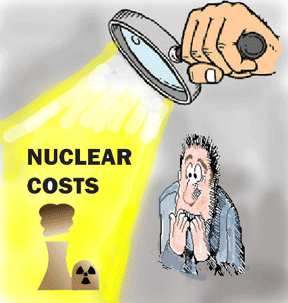
 Doubts on Cumbrian nuclear project, InCumbria, by Duncan Bick , 31 Jan
 17 THE future of a new Cumbrian power plant is in doubt, after one of the key players admitted it is reviewing its involvement. A spokesman for Toshiba – which holds a 60 per cent stake in Moorside developer NuGen, alongside ENGIE of France – told the News & Star it is re-examining all of its nuclear projects outside Japan.
This includes the proposed nuclear new build at Moorside, near Sellafield.
Last month Toshiba announced its US subsidiary, Westinghouse Electric, may have overpaid – by several billion dollars – for another nuclear construction and services business. Following this, its shares fell dramatically.
Toshiba confirmed yesterday it is now reviewing its involvement in all other overseas projects as a way of dealing with this situation. It also plans to sell its semiconductor business.
Its president and chief executive Satoshi Tsunakawa said: “Going forward, we will revise the positioning of the nuclear business as our main focus business in the energy sector, and review the future of nuclear businesses outside Japan.”…….
Stewart Young, leader of Cumbria County Council, said: “I would be very concerned if this had any impact on NuGen.
“We will be seeking further information about their position and will be concerned if they is any effect on what would be the biggest single private sector investment that Cumbria has ever seen.”
To compound matters, Toshiba is also embroiled in an accounting scandal and it was yesterday announced that several Japanese banks may be about to launch a lawsuit against it.
A decision on whether to proceed with Moorside is due in 2018……http://www.in-cumbria.com/Doubts-on-Cumbrian-nuclear-project-bad89e7b-4e16-4895-b1ad-7c48a357166e-ds
Toshiba’s financial woes continue – about to be sued by trust banks
 Trust banks preparing to sue Toshiba – report http://www.channelnomics.com/channelnomics-us/news/3003570/trust-banks-preparing-to-sue-toshiba-report Vendor also preparing to sell part of its memory business, Scharon Harding, 30 Jan 17, Toshiba may be hit with lawsuits from Japanese trust banks that could total over 1 billion yen ($8.8 million) over the accounting scandal it endured in 2015, Reuters reports.
According to the report, Mitsubishi UFJ Trust and Banking Corp. said today it is getting ready to sue the Japanese vendor in the name of its clients’ pension funds after revelations the vendor had been exaggerating profits caused share prices to drop.
Reuters added that Sumitomo Mitsui Trust Bank Ltd and Mizuho Trust & Banking Co. are organizing “similar” lawsuits, according to anonymous sources.
News of the potential lawsuits comes three days after Toshiba announced plans to sell parts of its memory business, including its SSD business, by 31 Marcch. The move is an attempt to minimize damage from an upcoming writedown for its U.S. nuclear business that could reach billions, according to CNBC.
Toshiba is already facing a pile of cases in relation to findings that the company’s bookkeeping practices led to the overstating of profits by over 170 billion yen (about $1.4 billion) by 45 institutional investors for 16.7 billion yen ($146 million) and 15 Japanese entities totaling 15.3 billion yen ($134 million), Reuters said.
Britain’s offshore wind power turns out to be much cheaper than expected
UK offshore wind power falls below £100/MWh 4 Years ahead of schedule, REneweconomy By James Ayre on 27 January 2017 Cleantechnica

A new report has shown the cost of UK offshore wind power has fallen below the joint UK Government and industry target of £100 per megawatt-hour four years ahead of schedule, putting offshore wind on target to become one of the cheapest large-scale clean energy sources
The third annual Cost Reduction Monitoring Framework report was delivered this week by ORE (Offshore Renewable Energy) Catapult to the Offshore Wind Programme Board, showing that the levelized cost of offshore wind has fallen by 32% since 2012, and now sits under £100 per megawatt-hour (MWh), four years ahead of the scheduled target set by the UK Government with the UK’s offshore wind industry.
Specifically, offshore wind projects reaching a Final Investment Decision in 2015 and 2016 were done at an average levelized cost of electricity (LCOE) of £97/MWh, compared to £142/MWh in 2010/11.
The report also highlights that high industry confidence exists for offshore wind’s ability to continue delivering cost savings as a result of technological innovation and continued collaboration across the sector.
Additional key findings from the report include:
- Technology developments have made the largest contribution to cost reduction.
- Competition at developer level has driven down costs in the supply chain.
- Risk profile and the cost of capital is reducing as confidence in the sector develops.
- The level of UK content in projects is an increasingly important consideration for developers……..http://reneweconomy.com.au/uk-offshore-wind-power-falls-below-100mwh-4-years-ahead-of-schedule-90926/
Strong business case to go 100 % renewable – leading global companies
LEADING COMPANIES MAKE BUSINESS CASE TO GO 100% RENEWABLE, The Climate Group, 24 Jan 17 Ilario D’Amato LONDON: Leading global companies have confirmed the strong business case for sourcing 100% renewable electricity in the newly published RE100 Annual Report 2017.
RE100, led by The Climate Group in partnership with CDP, brings together “a growing group of major, influential companies from around the world who are setting targets to go 100% renewable energy in their electricity procurement,” says Jim Walker, Co-Founder of The Climate Group.
Growing rapidly, RE100 now has 87 members across a wide range of sectors – including globally recognized businesses like IKEA, Hewlett Packard Enterprise, and Tata Motors.
The report shows how RE100 companies are now creating demand for approximately 107 terawatt/hour (TWh) of renewable power annually, which is around the same amount of electricity as consumed by The Netherlands.
“Why are companies doing this? The cost of energy is coming down, rapidly,” continues Jim Walker in a video produced by CBS EcoMedia. “When you are using on-site renewables, you are managing volatility and the price of your energy supply, you are generating your own electrons and you are buying it from yourself – you don’t have to buy it at a retail price, so it’s cheaper. Just makes good business sense. Also, it’s just the right thing to do – contributing to better air quality.”
34 RE100 members have reported that they are generating renewable energy at their facilities – with wind and solar photovoltaics clearly the most popular technologies.
“We did a deal with a Texas wind farm,” confirms Nick Gunn, SVP, Global Corporate Services, Hewlett Packard Enterprise: “We’re procuring now 112 megawatts of power from wind farms, which is actually enough to provide enough electricity for our entire IT infrastructure.”
“Businesses have a huge impact on the ability to inspire an energy revolution. The more companies like Hewlett Packard Enterprise demand renewable energy, the more creation of renewable energy sources there will be.
The company has the goal of raising the use of renewable energy from its current levels of 13% globally to 40% by 2020, with the ultimate target of achieving 100%. Its strategy focuses on reducing energy consumption and increasing energy efficiency, while both generating on-site clean energy and purchasing it through agreements with off-site.
“RE100 importance lies in two factors,” says Rachel Kyte, CEO of Sustainable Energy for All and Special Representative of the UN Secretary-General for Sustainable Energy for All. “One is that the purchasing of renewable energy in the long run positions companies to be at the leading edge of their own sector of industry. On the second hand, its importance lies in the message that sends to the financial sector.” “OUR HOPE IS THAT RE100 JUST BECOMES THE NORM. BY 2020, THIS IS WHAT EVERY BUSINESS DOES.”
Amy Davidsen, North America Executive Director, The Climate Group………https://www.theclimategroup.org/news/leading-companies-make-business-case-go-100-renewable
Uranium market outlook: not all that good
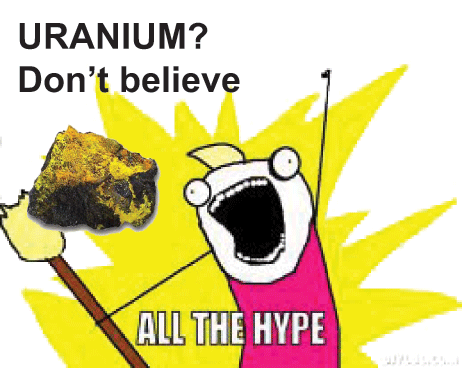 Profit Margins : Once again, without positive earnings, it’s tough to calculate a meaningful profit margin for Uranium Resources. We have to ding it here again.
 Return on Equity : The nuclear power stock falls short in terms of return on equity. Its early-stage investors have lost 54.65% in the last year. The equity situation isn’t great for other energy stocks, but it’s not this bad.
Is Uranium Resources a Nuclear Power Play?, I nvestment U by Samuel Taube, Investment U Research Team Wednesday, January 25, 2017 Nuclear power has seen better days. In recent decades, pressure from environmentalist groups, the high cost compared to fossil fuels and the perceived risk to public safety has beaten the industry down.
Then along came President Trump, reverser of trends. Our new president is big on nuclear development – both the military and energy varieties. . And that means that beaten-down nuclear stocks like Uranium Resources (Nasdaq: URRE) could heat up again soon.
As you can see, Uranium Resources stock has been declining for much of the year. Other nuclear power stocks showed similarly drab performances before the election.
Now President Trump has spurred a revival in this industry. And Investment U readers are wondering whether or not it’s too late for a recovery. After such a long bear market, is Uranium Resources a good buy?
To find out, we ran Uranium Resources stock through the Investment U Fundamental Factor Test. (As a reminder, our checklist looks at six key metrics to diagnose the financial health of a stock.)
 Earnings-per-Share (EPS) Growth: Uranium Resources has a great earnings-per-share growth rate of 77.38%. That’s well above the average of 13.21% in the energy space. However, we should note that the nuclear power stock can post such impressive earnings growth because its earnings are still below zero.
Price-to-Earnings (P/E): And since Uranium Resources has negative earnings, we can’t calculate its P/E ratio. We’re giving it the red X in this metric by default.
Debt-to-Equity : The stock outperforms most other energy companies in terms of debt-to-equity ratio. Uranium Resources has a frugal 17.72% debt burden. That’s much less than the industry average of 41.87%.
Free Cash Flow per Share Growth : Uranium Resources really blows other energy companies out of the water in terms of cash flow. It has grown free cash flow per share by 96.27% in the last year. Its competitors saw it shrink by -28.82% in that time.
Profit Margins : Once again, without positive earnings, it’s tough to calculate a meaningful profit margin for Uranium Resources. We have to ding it here again.
Return on Equity : The nuclear power stock falls short in terms of return on equity. Its early-stage investors have lost 54.65% in the last year. The equity situation isn’t great for other energy stocks, but it’s not this bad. ……http://www.investmentu.com/article/detail/53391/stockgrader-uranium-resources-nuclear-power#.WIpYkNJ97Gh
Closure of Fessenheim nuclear plant approved by EDF
 EDF board approves closure of oldest nuclear power station in France
Decision on Fessenheim plant comes after pressure from Berlin and need to comply with legal cap on atomic energy generation, Guardian, Adam Vaughan, 25 Jan 17, EDF has voted to begin the process of closing France’s oldest nuclear power station after pressure from Germany and a law capping the country’s reliance on atomic power.
The French energy firm’s board approved plans on Tuesday to close the 39-year old Fessenheim plant in north-east France, near the German border, allaying fears that the company, which is 85%-state owned, would drag its heels until President François Hollande left office later this year.
Hollande had promised in his manifesto to shut the site in an effort to build an alliance with the Green party. Fessenheim has also been the subject of complaints about safety from the German and Swiss governments.
Under Hollande, France has pledged to reduce its reliance on nuclear from 78% of electricity generation to 50% by 2025 and increase its use of renewables, such as wind and solar. The country’s nuclear plants are ageing, with many expected to come to the end of their life in the 2030s.
France’s energy transition law caps the amount of nuclear power at 63.2 gigawatts, meaning the Fessenheim plant needs to close in 2018 to pave the way for a new one at Flamanville.
Under the deal agreed by EDF, the company will be paid €490m (£420m) in compensation for dismantling the plant and retraining its 850 workers.
“With this decision on the part of its board of directors, EDF is guaranteeing compliance with legislation imposing a ceiling for France’s installed nuclear electricity generation capacity, while at the same time safeguarding to the utmost the interests of the company and its customers,” said Jean-Bernard Lévy, its chief executive……..https://www.theguardian.com/world/2017/jan/24/edf-board-approves-closure-of-oldest-nuclear-power-station-france-fessenheim-plant
On February 14, Toshiba will reveal extent of U.S. nuclear business writedown
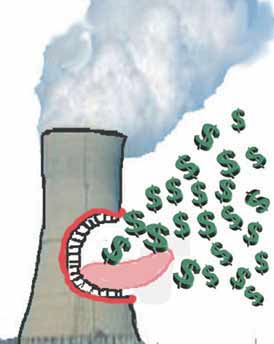 Toshiba to unveil extent of U.S. nuclear business writedown on February 14 , Reuters 24 Feb 17 Japan’s Toshiba Corp (6502.T) said it will unveil the extent of the writedown on its U.S. nuclear business on Feb. 14 when it reports its results for the quarter ended Dec. 31.
The laptops-to-engineering conglomerate, still recovering from a $1.3 billion accounting scandal two years ago, shocked investors in December by announcing major cost overruns at the U.S. nuclear business it bought in 2015. …….
Last week, media reported the troubled Japanese firm may unveil a writedown of as much as 700 billion yen ($6.18 billion) for its nuclear business……… rating agency Standard and Poor’s downgraded Toshiba’s debt to CCC+, or vulnerable to nonpayment, from B, and put the company’s credit watch on negative. http://www.reuters.com/article/us-toshiba-accounting-writedown-idUSKBN1580QV
Russia keen to market nuclear power to South Africa
 Russia’s Rosatom submits bid for South African nuclear project – TASS, Reuters Jan 24 Russian state nuclear agency Rosatom has submitted a bid for a nuclear power project in South Africa, TASS news agency cited the company’s General Director Alexei Likhachev as saying on Tuesday.
Rosatom had been considered the leading candidate for a tender to build 9.6 gigawatts of nuclear power capacity in South Africa by 2030, but South African nuclear state agency Necsa said last year it was no longer “the frontrunner”. (Reporting by Alexander Winning; Writing by Jack Stubbs) http://www.reuters.com/article/russia-safrica-nuclear-idUSR4N1F7023
Toshiba desperately seeking funding for UK nuclear project, seeks tax-payer subsidy
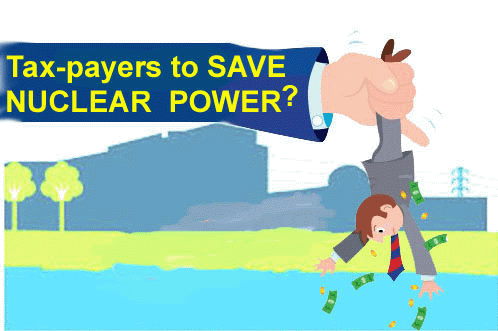 Toshiba faces pressure to secure funding for UK nuclear project, Ft.com by: Andrew Ward and Jim Pickard in London, 22 Jan 17 Toshiba is facing pressure to secure investment from a South Korean energy group and the UK government to keep afloat a multibillion-pound British nuclear power project as the Japanese conglomerate struggles with mounting financial difficulties.
Toshiba’s nuclear power-related debts grow – hasty effort to sell part of its core business
Analysis – As nuclear loss grows, Toshiba needs chip investors, soon Reuters 22 JAN 17 TOKYO
With mounting writedowns from its nuclear business, Japan’s Toshiba Corp (6502.T) is looking to sell part of its core semiconductors business, a world No.2 in the flash memory chips used in smartphones.
But its rush to plug a hole in its U.S. nuclear business that Japanese media now estimate at as much as $6 billion may complicate any asset sale.
Toshiba, which warned last month of multi-billion dollar charges for U.S. nuclear project cost overruns, wants to boost its capital base by the end of the financial year in March.
Failure to offset the nuclear hit could wipe out already thin shareholder equity and push the company into negative net worth – jeopardising its role in public infrastructure projects and its place on the Tokyo Stock Exchange’s ‘first section’, for larger companies.
Following a 2015 accounting scandal, the conglomerate is barred from raising fresh funding on equity markets. Selling assets, though, could help it win broader financial support from its main banks.
Toshiba could sell 20-30 percent of its chip business, according to media reports.
The business, worth more than $10 billion, is the world’s second largest after Samsung Electronics (005930.KS) in flash memory chips – and it’s Toshiba’s most profitable.
Operating profit is forecast at 130 billion yen (913.35 million pounds) for the year to end-March, accounting for the bulk of overall group profit, forecast at 180 billion yen. Those forecasts were made before its December warning of the U.S. nuclear charges.
People with knowledge of the matter said Toshiba has begun preparations to sell a minority stake in its chip business. One person said non-disclosure agreement forms have been sent to some private equity funds……..
As Toshiba has ruled out ceding control of the chips business, it may also seek state help, as other troubled Japanese technology companies have done in previous restructurings, the sources said.
Another person familiar with the matter said the state-run Development Bank of Japan is among several funds Toshiba may approach for possible investment in its chip business, though the bank could be put off by the size of investment needed.
(Reporting by Makiko Yamazaki and Kentaro Hamada; Writing by Miyoung Kim; Editing by Ian Geoghegan) http://uk.reuters.com/article/uk-toshiba-accounting-semiconductors-ana-idUKKBN156009
South Korea to market nuclear fuel to United Arab Emirates
 UAE gets licence to transport, store nuclear fuel, Gulf News 22 Jan 17
Nuclear fuel to be shipped from South Korea to the UAE before being transported to the Barakah Nuclear Power Plant “….the Federal Authority for Nuclear Regulation (FANR) announced on Sunday that it approved the licensing for transporting and storing nuclear fuel at the Barakah Nuclear Power Plant.
The two licences have been granted to the Emirates Nuclear Energy Corporation (ENEC) and Nawah Energy Company respectively, with the former getting the licence to transport the nuclear fuel, and the latter getting the licence to store the nuclear fuel at the Barakah site…..
Ian Grant, Deputy Director General for Operations at FANR, explained that the nuclear fuel would be shipped in transport casks from South Korea to the UAE, and then loaded onto trucks to transport the fuel to the nuclear reactor site.
“The fuel assemblies are loaded into transport casks and shipped from the Republic of Korea, [afterwards they are] trucked by road from the UAE port to the Barakah site. The transport casks are unloaded, checked and opened. [The] fuel assemblies are inspected individually and moved to the storage locations.”……http://gulfnews.com/news/uae/environment/uae-gets-licence-to-transport-store-nuclear-fuel-1.1966008
Toshiba’s rush to save itself from financial doom, caused by its nuclear market failure
Analysis – As nuclear loss grows, Toshiba needs chip investors, soon Reuters 22 JAN 17 TOKYO With mounting writedowns from its nuclear business, Japan’s Toshiba Corp (6502.T) is looking to sell part of its core semiconductors business, a world No.2 in the flash memory chips used in smartphones.
But its rush to plug a hole in its U.S. nuclear business that Japanese media now estimate at as much as $6 billion may complicate any asset sale.
Toshiba, which warned last month of multi-billion dollar charges for U.S. nuclear project cost overruns, wants to boost its capital base by the end of the financial year in March.
Failure to offset the nuclear hit could wipe out already thin shareholder equity and push the company into negative net worth – jeopardising its role in public infrastructure projects and its place on the Tokyo Stock Exchange’s ‘first section’, for larger companies.
Following a 2015 accounting scandal, the conglomerate is barred from raising fresh funding on equity markets. Selling assets, though, could help it win broader financial support from its main banks.
Toshiba could sell 20-30 percent of its chip business, according to media reports.
The business, worth more than $10 billion, is the world’s second largest after Samsung Electronics (005930.KS) in flash memory chips – and it’s Toshiba’s most profitable.
Operating profit is forecast at 130 billion yen (913.35 million pounds) for the year to end-March, accounting for the bulk of overall group profit, forecast at 180 billion yen. Those forecasts were made before its December warning of the U.S. nuclear charges.
People with knowledge of the matter said Toshiba has begun preparations to sell a minority stake in its chip business. One person said non-disclosure agreement forms have been sent to some private equity funds……..
As Toshiba has ruled out ceding control of the chips business, it may also seek state help, as other troubled Japanese technology companies have done in previous restructurings, the sources said.
Another person familiar with the matter said the state-run Development Bank of Japan is among several funds Toshiba may approach for possible investment in its chip business, though the bank could be put off by the size of investment needed.
(Reporting by Makiko Yamazaki and Kentaro Hamada; Writing by Miyoung Kim; Editing by Ian Geoghegan) http://uk.reuters.com/article/uk-toshiba-accounting-semiconductors-ana-idUKKBN156009
Russia trying to sell nuclear power to Kuwait
Russia, Kuwait Discuss Possible Construction of Nuclear Power Plant MOSCOW (Sputnik) – Russia and Kuwait discussed possible construction of a nuclear power plant (NPP) as well as cooperation in the spheres of petroleum services and gas, Russian Energy Minister Alexander Novak said in an interview with the Rossiya-24 broadcaster on Sunday…….https://sputniknews.com/business/201701221049880931-russia-kuwait-nuclear-power-plant/
1 This Month
26 September – International Day for the Total Elimination of Nuclear Weapons





PLEASE OPPOSE HR 8255 AND S.3639 – bills would accelerate satellite deployment, with no environmental review or safeguards – https://ncstd5li.quorum.us/campaign/169331/
To see nuclear-related stories in greater depth and intensity – go to https://nuclearinformation.wordpress.com
-
Archives
- September 2026 (323)
- August 2026 (330)
- July 2026 (355)
- June 2026 (287)
- May 2026 (306)
- April 2026 (356)
- March 2026 (251)
- February 2026 (267)
- January 2026 (308)
- December 2025 (358)
- November 2025 (359)
- October 2025 (375)
-
Categories
- 1
- 1 NUCLEAR ISSUES
- business and costs
- climate change
- culture and arts
- ENERGY
- environment
- health
- history
- indigenous issues
- Legal
- marketing of nuclear
- media
- opposition to nuclear
- PERSONAL STORIES
- politics
- politics international
- Religion and ethics
- safety
- secrets,lies and civil liberties
- spinbuster
- technology
- Uranium
- wastes
- weapons and war
- Women
- 2 WORLD
- ACTION
- AFRICA
- Atrocities
- AUSTRALIA
- Christina's notes
- Christina's themes
- culture and arts
- Events
- Fuk 2022
- Fuk 2023
- Fukushima 2017
- Fukushima 2018
- fukushima 2019
- Fukushima 2020
- Fukushima 2021
- general
- global warming
- Humour (God we need it)
- Nuclear
- RARE EARTHS
- Reference
- resources – print
- Resources -audiovicual
- Weekly Newsletter
- World
- World Nuclear
- YouTube
-
RSS
Entries RSS
Comments RSS

