Georgia Power suspends work on proposed Stewart County nuclear plant, Atlanta Business Chronicle Dave Williams Mar 2, 2017, Georgia Power Co. is suspending plans for a new nuclear power plant south of Columbus, Ga., the Atlanta-based utility announced in a letter to the state Public Service Commission (PSC).
The PSC voted last summer to authorize Georgia Power to spend up to $99 million to cover the early stages of the project in Stewart County through the second quarter of 2019.
But since then, Toshiba Corp. has announced that subsidiary Westinghouse Electric Co. – the chief contractor currently building nuclear plants in South Carolina and at Georgia Power’s Plant Vogtle – will stop constructing nuclear reactors. Last month, Toshiba blamed a projected $6.3 billion write-down on losses from its U.S. nuclear operations.
In a letter dated March 1, a lawyer representing Georgia Power wrote that the work in Stewart County is being suspended because demand projections show there will be no need for new nuclear generation of electricity until outside the utility’s three-year planning process.
But critics of nuclear power blamed the decision to suspend the Stewart project on Toshiba’s financial meltdown.
“We appreciate that [Georgia Power parent] Southern Co. has pulled back on the Stewart County nuclear proposal, which was clearly a bad deal for the citizens of Georgia,” said Stephen Smith, executive director of the Tennessee-based Southern Alliance for Clean Energy. “[But] it’s outrageous that Southern Co. already has spent more than $50 million [in] ratepayer dollars on this proposal. … Southern Co. already has ratepayers paying too much for the over-budget and behind-schedule Vogtle nuclear units.”….http://www.bizjournals.com/atlanta/news/2017/03/02/georgia-power-suspends-work-on-proposed-stewart.html
March 4, 2017
Posted by Christina Macpherson |
business and costs, USA |
Leave a comment
http://www.miamiherald.com/opinion/op-ed/article135578328.html BY RACHEL SILVERSTEIN rachel@miamiwaterkeeper.org As a nonprofit organization that works to safeguard South Florida’s clean water, we’ve been hearing a lot of public concerns about Florida Power & Light’s plans for Turkey Point. FPL has been trying to expand its nuclear power plant, with the addition of two new reactors — Units 6 and 7 — for many years. However, FPL has not yet received a Combined Operating License from the federal government’s Nuclear Regulatory Commission (NRC), which authorizes FPL to operate the plant.
Licensing and constructing a nuclear power plant is an arduous process. No new nuclear plants have been built in the United States since the 1990s, although a handful are under construction and have been for many years. It’s so risky, in fact, that most banks will no longer finance the licensing and construction of such plants, shifting costs to ratepayers who shoulder the risks instead.
Florida’s Public Service Commission (PSC) has, for almost a decade, allowed FPL to charge the public, via rate increases, for the cost of licensing and permitting these new reactors. If the reactors are never approved or built, FPL simply keeps the public’s money. So far, FPL has charged its ratepayers more than $280 million for its anticipated construction of the new reactors at Turkey Point. The total cost of the new reactors is now estimated to be between $13 billion and $20 billion.
In order for the PSC to approve such rate increases through this advanced cost recovery process, FPL must demonstrate each year that their proposed reactors are still feasible. This burden just got a lot more difficult, if not impossible, to meet. In late December, technology giant Toshiba made public its mounting financial woes. These woes, it is now clear, are related to problems with its nuclear reactor business — a business it runs through a global nuclear power plant construction company called Westinghouse.
In February, Toshiba reported $6 billion in losses, accrued over time from its involvement in the nuclear construction business. These losses are largely attributable to problems with Westinghouse’s current construction of its model AP1000 nuclear reactors in South Carolina and Georgia. As a result, Toshiba announced that Westinghouse would be leaving the nuclear reactor construction business. Why should this matter to Miami? It matters because the new reactors at Turkey Point are supposed to be Westinghouse designed and constructed AP1000 reactors.
In short, Westinghouse will not be building FPL’s new reactors. So the plan, already beset by environmental and safety concerns, has been put in even more jeopardy. Amazingly, we are still paying for the construction of these new plants — that, it is now clear, will never be constructed as planned.
The PSC should immediately stop funneling advanced cost recovery funds from our wallets into FPL’s pocket. This project is likely no longer feasible, and as ratepayers, we should not be footing the bill. The PSC and the NRC must investigate how Westinghouse’s collapse will affect FPL’s plans for new reactors at Turkey Point. In the meantime, all licensing and permitting at the state and federal level should be suspended. FPL owes it to ratepayers, at an absolute minimum, to report on the feasibility of this project to the PSC and to cease charging Floridians for a project that looks less and less likely to be built.
March 4, 2017
Posted by Christina Macpherson |
business and costs, politics, USA |
Leave a comment
Nuclear Shutdown News – February 2017, San Diego Free PressMARCH 2, 2017 BY AT LARGE“…….Most likely US nukes to shut down in 2017?
Last October Bloomberg News reported that the following US nuclear plants are likely to shut down this year, some as early as May:
-First Energy’s Davis Besse nuke in Ohio. It started up in 1978.
– First Energy’s almost 40 year old Beaver Valley nuke in Pennsylvania.
-Exelon’s Three Mile Island reactor (the one that didn’t melt down in 1979), which started up in 1974.
– Exelon’s two Byron reactors in Illinois, whose startups were in 85 and 87.
Bloomberg explained that these 4 nuke plants are no longer money makers, but are submitting bids to an electrical distribution company for an auction this spring. If their bids are no accepted, “they could face closure.”
Sources: Bloomberg News, bloomberg.com;chemical info.com http://sandiegofreepress.org/2017/03/nuclear-shutdown-news-february-2017/
March 4, 2017
Posted by Christina Macpherson |
business and costs, USA |
Leave a comment
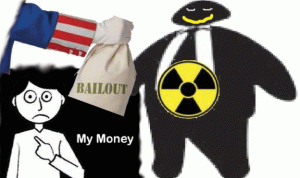 New York’s nuclear subsidies contradict economic principles Credits to keep nuclear generation online will not lower emissions, argues the R Street Institute’s Devin Hartman, Utility Dive, 28 Feb 17 In New York State’s massive zero-emission credits (ZECs) program kicks off in April, it will begin a 12-year process of unloading $7 billion in subsidies on unprofitable nuclear plants. Astoundingly, this staggering price tag will yield minimal, if any, immediate climate benefit. Indeed, after factoring in the damage ZECs will do to competitive electricity markets, the plan may actually undermine the long-term goal of reducing greenhouse gas emissions.
The main reason ZECs are unlikely to yield incremental emissions reductions is New York’s participation in the Regional Greenhouse Gas Initiative (RGGI), a regional carbon dioxide emissions trading program. Imposing new policies under a binding emissions-trading program will affect the market price of allowances without changing emissions levels. Should RGGI remain binding, subsidizing nuclear will merely avoid emissions reductions elsewhere…….
The underlying market failure is that pollution is underpriced, not that clean energy is overpriced. Unsurprisingly, economists overwhelmingly prefer emissions pricing (e.g., tax) as the means to address pollution.
As a mirror image of taxes, subsidies can, in theory, provide incentives to reduce emissions, but in practice, they often encourage economically inefficient and environmentally unsound decisions. The ability of nuclear generators to displace emissions from fossil plants varies dramatically by time and location. ……
For example, nuclear generation in wind-heavy areas with transmission constraints generally reduce emissions less than in locales with high coal generation. Emissions pricing accounts for this by building pollution costs into dynamic, sub-regional supply curves. Subsidies do not, resulting in inaccurate compensation for nuclear or other low-emissions resources.
Subsidies are grossly inferior in application, as well as in design. Markets pick different, lower-cost winners than governments……….
Unlike emissions pricing, subsidies create a public financial burden and encourage poor economic behavior from recipients. Production subsidies like ZECs lower the effective costs of operating a power plant. This encourages owners to offer into electricity markets below their true cost, which can artificially suppress market-clearing prices and distort market signals for resource investment……..
Subsidies also encourage poor political behavior. They establish entrenched interests that contribute to an ongoing cycle of subsidization. An examination of bailout policy history reveals that “early bailouts set a stage that makes subsequent requests for assistance more difficult to resist.” This underscores the challenge of using nuclear subsidies as a transitional policy to efficient emissions pricing. Ignoring the political economy of subsidies obscures the complete economic picture.
The economist Frédéric Bastiat once remarked that “the bad economist confines himself to the visible effect; the good economist takes into account both the effect that can be seen and those effects that must be foreseen.”
Beyond the visible price tag, the foreseen effects of ZECs will severely undermine the health of competitive wholesale electricity markets administered by the New York Independent System Operator (NYISO). Investors in competitive markets make decisions based on forward price expectations. Healthy price formation requires quality market design and minimal political interference. New York’s nuclear subsidies unexpectedly retain massive blocks of electric capacity that has already disrupted forward prices. This renders once-profitable investments uneconomic overnight, upends investor confidence and deters or requires a risk premium for new investment……
If New Yorkers truly care about reducing emissions and providing a model for the world, they should remain committed to emissions pricing and embrace competitive electricity markets. http://www.utilitydive.com/news/new-yorks-nuclear-subsidies-contradict-economic-principles/436978/
March 1, 2017
Posted by Christina Macpherson |
business and costs, politics, USA |
Leave a comment

 Russia, Tajikistan to cooperate in nuclear energy field, AZER News, 1 March 17 By Kamila Aliyeva
Tajikistan and Russia have agreed to cooperate in atomic energy and border security. The relevant agreements were achieved within the framework of the visit of Russian leader Vladimir Putin to Tajikistan on February 27.
Thus an agreement on cooperation in peaceful uses of atomic energy was signed by Farhod Rakhimov, President of the Academy of Sciences of the Republic of Tajikistan, on behalf of the Government of the Republic of Tajikistan, and Alexey Likhachev, Director General of ROSATOM, on behalf of the Government of the Russian Federation.
The deal has provided the legal basis for interaction between Tajikistan and Russia in the nuclear power sector for the first time in history while determining a wide range of cooperation areas including design, construction, operation and decommissioning of research reactors; spent fuel and radioactive waste management; rehabilitation of tailing storage areas and utilization of decommissioned uranium mining and reprocessing facilities; production of radioisotopes; use of nuclear technology in industry, medicine, agriculture; education and training of highly skilled personnel for the nuclear power industry, etc.
Besides, the agreement envisages the formation of joint coordination commission with the view of further consulting in the issues relating to the implementation of the above mentioned peaceful uses of atomic energy and search for mutually beneficial opportunities…….http://www.azernews.az/region/109545.html
March 1, 2017
Posted by Christina Macpherson |
marketing, Russia |
Leave a comment
Meanwhile, OPG continues to tell MPPs and other decision makers that nuclear power is our lowest cost option for keeping the lights on and that it is simply not possible to import low-cost power from Quebec. Both of these claims are false.
According to Hydro Quebec’s CEO, Eric Martel, Quebec has 3,000 megawatts of surplus power available for export. Furthermore, according to Mr. Martel, Hydro Quebec is more than willing to sign long-term fixed-price export contracts.
Hydro Quebec has power available to export for at least 99% of the hours in a year. It can further increase the power it has for export by improving energy efficiency in Quebec and continuing to develop its significant low-cost wind power potential.
Our public utility and the nuclear lobby should stop spreading “alternative facts.” We need an honest discussion based on transparent information about whether keeping the 46-year-old Pickering Station running and re-building the 30-year-old Darlington Station makes sense.
And instead of playing shell games designed to hide the rising cost of nuclear power, our government should be looking at grabbing some real cost savings – by making a deal with Quebec.
Please send an email to Premier Wynne premier@ontario.ca or call her at 416 325 1941. Tell her you want to see Ontario secure some real cost savings by making a long-term deal with Quebec to permit the closing of the Pickering Nuclear Station in 2018 when its licence expires.
You can also contact your MPP and tell them you want to see real savings. You can find your MPPs contact info here. If you don’t know your electoral district, click here.
March 1, 2017
Posted by Christina Macpherson |
business and costs, Canada, politics |
Leave a comment
Nuclear Power Is In Crisis As Cost Overruns Cripple Industry Giants, New Matilda., By Jim Green on February 26, 2017 Failed reactor projects have brought giant energy companies to their knees and even pro-nuclear lobbyists now acknowledge that the industry is in crisis,
writes Jim Green from Friends of the Earth.
Four global nuclear industry giants ‒ French utilities Électricité de France (EDF) and Areva, US-based Westinghouse and Japanese conglomerate Toshiba ‒ face crippling debts and possible bankruptcy because of their investments in nuclear power.
The French government is selling assets so it can prop up its heavily indebted nuclear utilities. EDF plans to sell $13.8 billion of assets to rein in its $51.8 billion debt, and to sack up to 7,000 staff. Areva has accumulated losses of over $14 billion over the past five years.
French EPR reactors under construction in France and Finland are three times over budget ‒ the combined cost overruns for the two reactors amount to about $17.5 billion. Bloomberg noted in April 2015 that Areva’s EPR export ambitions are “in tatters“, and now Areva itself is in tatters.
A government-led rescue of the nuclear power industry may cost the French state as much as $14 billion, Reuters reported in January, and in addition to its “dire financial state, Areva is beset by technical, regulatory and legal problems”.
Meanwhile, Japanese industrial giant Toshiba would like to sell indebted, US-based nuclear subsidiary Westinghouse, but there are no buyers so Toshiba must instead sell profitable assets to cover its nuclear debts and avoid bankruptcy.
One site where these problems come together is Moorside in Cumbria, UK. A Toshiba/Engie consortium was planning to build three AP1000 reactors, but Toshiba wants to sell its stake in the consortium in the wake of Westinghouse’s massive losses from AP1000 construction projects in the US.
Engie reportedly wants to sell its stake in the Moorside consortium, and the French government has already sold part of its stake in Engie… to help prop up EDF and Areva!
Deck-chairs are being shuffled. Cumbrians will be glad to see the back of corruption-plagued Toshiba ‒ but corruption-plagued South Korean utility KEPCO might take its place.
Another site where these problems come together is Hinkley Point in the UK, where EDF has a contract to build two EPR reactors at an estimated cost (including finance) of $40 billion ($20 billion for each reactor). Industry literature is replete with references to ‘learning-by-doing’, but all EDF and Areva have learnt over the past decade is how to fuck things up ‒ in which case Hinkley Point could be the fuck-up that kills nuclear power in the UK.
The French nuclear industry is in its “worst situation ever“, former EDF director Gérard Magnin said last November. He said: “A lot of people in EDF have known for a long time the EPR has no future – too sophisticated, too expensive – but they assume their commitments and try to save the face of France… Renewable energies are becoming competitive with fossil fuels and new nuclear, such as Hinkley Point, where EDF will try to build the most expensive reactors in the world and provide electricity at an unprecedented cost.”
EDF Vice President Mark Boillot may be preparing to jump ship ‒ he recently wrote an article saying that the centralised model of power production is dying, to be replaced by local renewables supplemented by batteries and intelligent management of supply and demand.
The Carbon Commentary Newsletter said: “In most jurisdictions Mr Boillot would have been asked to clear his desk. What will EDF do about one of its most senior people openly forecasting the end of the large power station as it tries to raise the ten billion euros necessary to pay for its share of Hinkley?” ………..https://newmatilda.com/2017/02/26/nuclear-power-is-in-crisis-as-cost-overruns-cripple-industry-giants/
February 27, 2017
Posted by Christina Macpherson |
2 WORLD, business and costs |
Leave a comment
 Nuclear Power Is In Crisis As Cost Overruns Cripple Industry Giants, New Matilda., By Jim Green on February 26, 2017 “……….Utilities in crisis everywhere
Toshiba’s demise would not greatly concern the nuclear industry if it was an isolated case, but it is symptomatic of industry-wide problems. Nick Butler from Kings College London wrote in a Financial Times online post: “Toshiba is just one company in the global nuclear industry, but its current problems are symptomatic of the difficulties facing all the private enterprises in the sector. Civil nuclear power involves huge up-front capital costs, very long pay-back periods and high risks that are compounded by a lack of experience, especially in managing nuclear construction projects after a long period with few new plants. For all those reasons, private investors avoid the sector and prefer to put their money where they see faster and safer returns.”
Nuclear utilities around the world are in deep trouble ‒ their problems were summarised in the July 2016 World Nuclear Industry Status Report:
“Many of the traditional nuclear and fossil fuel based utilities are struggling with a dramatic plunge in wholesale power prices, a shrinking client base, declining power consumption, high debt loads, increasing production costs at ageing facilities, and stiff competition, especially from renewables.
- In Europe, energy giants EDF, Engie (France), E.ON, RWE (Germany) and Vattenfall (Sweden), as well as utilities TVO (Finland) and CEZ (Czech Republic), have all been downgraded by credit rating agencies over the past year. All of the utilities registered severe losses on the stock market.
- French utility AREVA has accumulated €10 billion (US$10.9 billion) in losses over the past five years. Share value 95% below 2007 peak value. Standard & Poor’s downgraded AREVA shares to BB+ (‘junk’) in November 2014 and again to BB- in March 2015. …
- The AREVA rescue scheme could turn out to be highly problematic for EDF as its risk profile expands. EDF struggles with US$41.5 billion debt, downgraded by S&P, shares lost over half of their value in less than a year and 87% compared to their peak value in 2007.
- RWE shares went down by 54% in 2015.
- In Asia, the share value of the largest Japanese utilities TEPCO and Kansai was wiped out in the aftermath of the Fukushima disaster and never recovered. Chinese utility CGN (EDF partner for Hinkley Point C), listed on the Hong Kong stock exchange since December 2014, has lost 60% of its share value since June 2015. The only exception to this trend is the Korean utility KEPCO that operates as a virtual monopoly in a regulated market.
- In the US, the largest nuclear operator Exelon has lost about 60% of its share value compared to its peak value in 2008.”…….. https://newmatilda.com/2017/02/26/nuclear-power-is-in-crisis-as-cost-overruns-cripple-industry-giants/
February 27, 2017
Posted by Christina Macpherson |
2 WORLD, business and costs |
Leave a comment
Energy Innovation utilized the
Energy Policy Simulator (EPS) to analyze the effects of repealing the CPP. The EPS is an open-source computer model developed to estimate the economic and emissions effects of various combinations of energy and environmental policies using non-partisan, published data from the U.S. Energy Information Administration (EIA), U.S. EPA, Argonne National Laboratory, U.S. Forest Service, and U.S. Bureau of Transportation Statistics, among others. The EPS has been peer reviewed by experts at MIT, Stanford University, Argonne National Laboratory, Berkeley National Laboratory and the National Renewable Energy Laboratory. It is
freely available for public use through a user-friendly web interface or by downloading the full model and input dataset.
Our analysis compared a business-as-usual (BAU) scenario (based on existing policies as of mid-to-late 2016, not including the Clean Power Plan) to a scenario that includes a set of policies that narrowly achieve the Clean Power Plan’s mass-based emissions targets. Three important notes:
- First, the EPS works at national scale, so policies are represented as nationwide averages; that is, without individually modeling U.S. states.
- Second, a variety of different policies might be used to achieve the CPP targets. We analyzed a mixed package representative of how the EPA expects states to achieve their targets.
- Third, the EPS calculates results through 2050, but the CPP targets only extend through 2030. The policy package we use to represent the CPP includes continued policy improvement through 2050 at the same rate as in earlier years (that is, policies strengthen by the same amount each year from 2017 to 2050), rather than CPP policies becoming frozen at their 2030 levels.
We find that repealing the CPP would result in an increase of carbon dioxide equivalent (CO2e) emissions of more than 500 million metric tons (MMT) in 2030 and 1200 MMT in 2050, contributing to global warming and severe weather events, such as hurricanes, floods and droughts.
Nearly $600 Billion in Economy-Wide Costs
Cumulative net costs to the U.S. economy (in increased capital, fuel, and operations and maintenance (O&M) expenditures) would exceed $100 billion by 2030 and would reach nearly $600 billion by 2050.
It may seem ironic that removing regulations can result in increased costs to the economy, but regulations can help to overcome market barriers and similar problems that prevent certain economically-ideal outcomes from being achieved in a free market (for instance, under-investment in energy efficiency technologies).
120,000 New Premature Deaths
Although the CPP’s focus is on reducing carbon emissions, the same policies also reduce particulate pollution, which is responsible for thousands of heart attacks and respiratory diseases each year. Repealing the CPP would increase particulate emissions, causing more than 40,000 premature deaths in 2030 and more than 120,000 premature deaths in 2050.
Far More New Coal Capacity, Far Less New Renewables Capacity
Without the CPP, the U.S. electric grid would feature a larger capacity of coal power plants, while the capacity of wind and solar on the system would be smaller, as shown in the following table. [on original]
This finding is echoed by a new forecast from the U.S. Energy Information Administration, which predicts that without CPP implementation, coal will become America’s leading source of electricity generation by 2019.
This slow-down in the transition to clean energy would cost the U.S. technological leadership in the rapidly-growing solar and wind industries and would cost the U.S. many jobs. Even today, when wind makes up 6.6 percent and solar 1.8 percent of total U.S. installed capacity, the solar industry employs 374,000 people and wind industry 101,000 workers, roughly two and a half times the 187,000 combined workers in the coal, natural gas and oil industries.
The stellar contribution of renewables to the U.S. economy was recently highlighted as
an “American success story” by a group of 20 Republican and Democratic governors who urged Trump to support renewables.
Clean Power Plan Repeal A Terrible Mistake For America
Repealing the Clean Power Plan would be a terrible mistake. A repeal would increase costs to the U.S. economy by hundreds of billions of dollars, cut years off the lives of tens of thousands of Americans and sacrifice U.S. technological leadership and job creation. For the future prosperity and strength of the country, the CPP should be preserved, and its targets should continue to strengthen through 2050 and beyond.
February 27, 2017
Posted by Christina Macpherson |
business and costs, health, renewable, USA |
Leave a comment
Nuclear Power Is In Crisis As Cost Overruns Cripple Industry Giants, New Matilda., By Jim Green on February 26, 2017 ‘ The EU, the US and Japan are busy committing nuclear suicide’
“………..The nuclear industry and its supporters have responded in varying ways to the crises facing nuclear utilities and the industry’s broader malaise. Some opt for head-in-the-sand delusion and denial. Others are extremely pessimistic about the industry’s future. Others paint a picture of serious but surmountable problems.
There is agreement that the nuclear industries in the US, Japan and the EU ‒ in particular their nuclear export industries ‒ are in deep trouble. A February 2017 EnergyPostWeekly article says “the EU, the US and Japan are busy committing nuclear suicide.” Michael Shellenberger from the pro-nuclear Breakthrough Institute notes that: “Nations are unlikely to buy nuclear from nations like the US, France and Japan that are closing (or not opening) their nuclear power plants.”
Shellenberger said: “From now on, there are only three major players in the global nuclear power plant market: Korea, China and Russia. The US, the EU and Japan are just out of the game. France could get back in, but they are not competitive today.”
That’s good news for the nuclear industries in South Korea, China and Russia. But they might end up squabbling over scraps ‒ there were just three reactor construction starts last year around the world.https://newmatilda.com/2017/02/26/nuclear-power-is-in-crisis-as-cost-overruns-cripple-industry-giants/
February 26, 2017
Posted by Christina Macpherson |
2 WORLD, business and costs |
Leave a comment
 FirstEnergy Corp. to sell or close its nuclear power plants By John Funk, The Plain Dealer February 22, 2017 AKRON, Ohio — FirstEnergy made it clear Wednesday that it is leaving the competitive power plant business, closing or selling all of its plants, including its nuclear plants, by the middle of next year.
The sale of the nuclear plants to another company would have little immediate impact on customer bills.
Closing the plants, which would probably take several years, would also have little impact on customer bills or power supplies….
The company’s acknowledgement Wednesday during a teleconference with financial analysts that it plans to sell or close its three nuclear plants came 24 hours after an Ohio lawmaker revealed that the FirstEnergy is seeking what amounts to additional and unprecedented rate increases.
The money from these first-of-a-kind charges would be earmarked for Davis-Besse, located east of Toledo, Perry, located east of Cleveland, and Beaver Valley, northwest of Pittsburgh.
FirstEnergy is proposing that the state create a program awarding “Zero Emission Credits” to the three plants ……
If lawmakers approve the plan, consumers would see an estimated 5 percent increase in their monthly bills. Commercial and industrial customers would see bills increase by 5-to-9 percent to reflect the value of the millions of megawatts the nuclear plants generate.
The Zec program would give the company’s nuclear fleet an increase of about $300 million a year, maybe enough to offset the losses competitors running gas turbine power plants have inflicted. …….
Even if the state creates a Zec program to subsidize FirstEnergy’s nuclear plants, the company acknowledges that it intends to try to sell them because it no longer wants to operate in competitive markets……
The company’s background materials accompanying Wednesday’s financial report show that FirstEnergy Solutions has a total value of $1.6 billion But the subsidiary carries a long-term debt of $3 billion.
The nuclear power plants are now valued at $900 million — with a debt of about $1.3 billion, the documents show. …..
The new charges would be “non-bypassable,” meaning a customer could not avoid the ZEC charges by purchasing power from another supplier.
The Ohio Zecs would be similar to a program Illinois created last fall to assist nuclear plant owners there. Opponents immediately sued in federal court, claiming an unconstitutional subsidy because the state is deregulated and power prices are set on competitive markets.
A piecemeal state-by-state Zec program to bail out nuclear plants could pose a problem for PJM, said PJM’s top executive in an interview earlier this week. …….http://www.cleveland.com/business/index.ssf/2017/02/firstenergy_corp_to_sell_or_cl.html
February 25, 2017
Posted by Christina Macpherson |
business and costs, USA |
Leave a comment
 Connecticut girds for nuclear power debate as critics line up against Millstone support bill Independent generators say allowing the Dominion plant to bid into renewable energy solicitations would undermine competition. Utility Dive, 23 Feb 17 The bill to provide support for Connecticut’s sole nuclear power plant has yet to be drafted, but the opposition is already lining up.
Connecticut legislators are picking up where they left off last year and drafting a bill that would essentially make nuclear power a Class Irenewable resource, making it eligible to participate in state solicitations for renewable energy resources.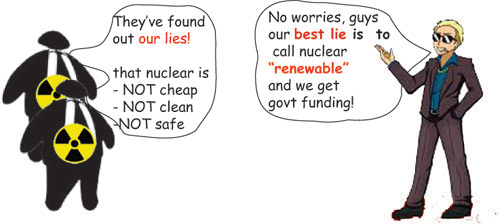
The nuclear plant is not named – indeed, the legislation is not even drafted – but there is only one nuclear plant in Connecticut, Dominion Energy’s 2,110 MW Millstone plant in Waterford.
Dominion has not been as vocal as other nuclear operators such as Exelon, which has for years said that it would have to close at least two of its nuclear plants in Illinois if it did not get some form of financial relief……
Nuclear subsidies and their discontents
As some have analysts have predicted, Illinois and New York’s success with ZECs has emboldened other states to follow suit.
In 2016, the Connecticut Senate passed SB 344, which would have allowed nuclear plants to bid into state RFPs as a renewable resource, but the bill did not make it through the state’s House of Representatives.
Legislators in the state are now drafting a bill, SB 106, that would take up those same issues again.
In its Feb. 7 testimony filed with Connecticut’s General Assembly, the Electric Power Supply Association, a trade group for independent generators, used SB 344 as the basis of its comments on the assumption that the bill will provide the “framework” for the new SB 106.
SB 344 would have expanded the definition of “renewable” so that nuclear power could bid into the state’s clean energy solicitation and be eligible to be awarded a 10-year power purchase agreement……..http://www.utilitydive.com/news/connecticut-girds-for-nuclear-power-debate-as-critics-line-up-against-mills/436685/
February 25, 2017
Posted by Christina Macpherson |
business and costs, politics, USA |
Leave a comment
 Skyrocketing costs bury Southern Co. Kristi E. Swartz, E&E News reporter Energywire: Thursday, February 23, 2017 The financial fallout of Toshiba Corp.’s nuclear construction business has now hit Southern Co.’s nuclear expansion project in Georgia.
Meanwhile, the Atlanta-based energy giant said its next-generation coal project in Mississippi still needs a couple of weeks before it is fully operational.
Those were just two of the major announcements from Southern as it reported its 2016 earnings yesterday. The company also filed a 900-plus-page annual report with the Securities and Exchange Commission, and its Mississippi Power subsidiary submitted an economic viability analysis on the Kemper County energy facility………
There is much discussion over Vogtle’s [nuclear plant’s] cost and schedule after Toshiba said last week it would book a $6.3 billion write-down from its nuclear construction business, which is tied to Vogtle and a project in South Carolina.
Scana Corp.’s South Carolina Electric & Gas Co. announced its units at V.C. Summer were roughly eight months behind.
Executives also said they were reviewing all options on how to finish the reactors if Westinghouse cannot. Toshiba and Westinghouse have told Scana and Southern that they intend to see the projects through……http://www.eenews.net/stories/1060050444
February 25, 2017
Posted by Christina Macpherson |
business and costs, USA |
Leave a comment
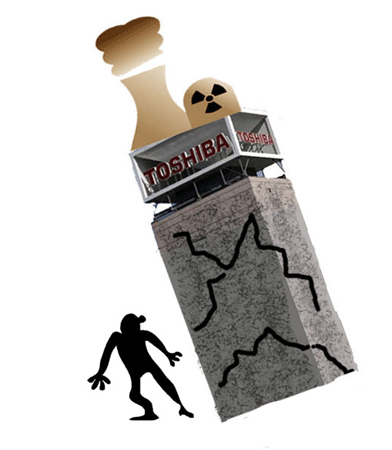 Overseas nuclear business a huge burden on Toshiba ,
  Japan News, February 22, 2017 By Miho Yokoi / Yomiuri Shimbun Staff Writer Toshiba Corp. has been facing a need to review its nuclear business because it has been a drag on the company’s reconstruction efforts, mostly caused by the huge loss booked in reactor building projects in the United States and construction delays in other countries.
Nonetheless, it will not be easy for the major electronics and machinery maker to considerably shrink its nuclear business overseas because there are only a handful of entities that can build such facilities.
Toshiba will likely book a loss of more than ¥700 billion for the April-December 2016 period, and U.S. subsidiary Westinghouse Electric Co. is a major factor behind the result…….
It is likely that Toshiba will face a ballooning loss if construction for the reactors [Plant Vogtle in Georgia, USA) continues to be delayed. “It would be a lie if we say there’s no risk at all,” said Corporate Vice President Mamoru Hatazawa.
Toshiba won contracts for building two reactors in Texas in 2009, but their construction has not yet started. The projects have been affected by the increase in the amount of U.S. shale gas production, which has caused fuel prices for thermal power generation to nosedive, thereby boosting needs for a method with cheaper running costs.
Meanwhile, Toshiba’s nuclear businesses in countries other than the United States have also been facing an uphill battle.
In China, for example, Westinghouse has undertaken construction of four nuclear reactors, originally with an aim to put them into operation between 2013 and 2015. However, none of them has been completed because of delays in the work.
The U.S. subsidiary also hoped to win contracts for developing six reactors in India, but the plan has been stalled because it is so risky for a builder to sign a contract under the current Indian law, which obliges the entity to assume liability for compensation in the event of a nuclear accident……..http://the-japan-news.com/news/article/0003536775
February 24, 2017
Posted by Christina Macpherson |
business and costs, Japan |
Leave a comment
 Nuclear power’s rapidly accelerating crisis, REneweconomy, By Jim Green on 22 February 2017 A fire-sale is underway as the punch-drunk nuclear power industry tries to stop the rot.
The French government is selling assets so it can prop up its heavily indebted nuclear utilities. Électricité de France (EDF) announced in 2015 that it would sell A$13.8 billion of assets by 2020 to rein in its debt, which now stands at A$51.8 billion.
EDF is purchasing parts of its bankrupt sibling Areva, which has accumulated losses of over A$14 billion over the past five years. French EPR reactors under construction in France and Finland are three times over budget ‒ the combined cost overruns amount to about A$17.5 billion. Bloomberg noted in April 2015 that Areva’s EPR export ambitions are “in tatters“, and now Areva itself is in tatters.
Meanwhile, Japanese industrial giant Toshiba would like to sell indebted, US-based nuclear subsidiary Westinghouse, but there are no buyers so Toshiba must instead sell profitable assets to cover its nuclear debts and avoid bankruptcy.
One site where these problems come together is Moorside in the UK. A Toshiba / Engie consortium was planning to build three AP1000 reactors, but Toshiba wants to
sell its stake in the consortium in the wake of its massive losses from AP1000 construction projects in the US.
Engie reportedly wants to sell its stake in the consortium, and the French government has already sold part of its stake in Engie … to help prop up EDF and Areva! Deck-chairs are being shuffled.
The latest dramas occur against a backdrop of deep industry malaise, with the receding hope of even the slightest growth resting squarely on the shoulders of China. A February 15 piece in the Financial Times said: “Hopes of a nuclear renaissance have largely disappeared. For many suppliers, not least Toshiba, simply avoiding a nuclear dark ages would be achievement enough.”
Toshiba and Westinghouse are in deep trouble because of massive cost overruns building four AP1000 reactors in the US ‒ the combined overruns are about A$14 billion and counting. The saga is detailed in Bloomberg pieces titled ‘Toshiba’s Nuclear Reactor Mess Winds Back to a Louisiana Swamp‘ and ‘Toshiba’s Record Fall Highlights U.S. Nuclear Cost Nightmare‘.
Toshiba said on February 14 that it expects to book a A$8.2 billion writedown on Westinghouse,(on top of a A$3 billion writedown in April 2016. These losses exceed the A$7.1 billion Toshiba paid when it bought a majority stake in Westinghouse in 2006.
The four AP1000 reactors are the only ones under construction in the US. “There’s billions and billions of dollars at stake here,” said Gregory Jaczko, former head of the US Nuclear Regulatory Commission. “This could take down Toshiba and it certainly means the end of new nuclear construction in the US.”
Bankruptcy looms for Toshiba, with the banks circling and the risk heightened by the likelihood of further delays and cost overruns with the AP1000 reactors in the US, and unresolved litigation over those projects.
Toshiba says it would likely sell Westinghouse if that was an option ‒ but there is no prospect of a buyer. The nuclear unit is, as Bloomberg noted, “too much of a mess” to sell. And since that isn’t an option, Toshiba must sell profitable businesses instead to stave off bankruptcy.
Toshiba planned to make nuclear operations and microchips its two growth areas. But now the company plans to sell most ‒ perhaps all ‒ of its profitable microchip business to prop up the nuclear carcass and avoid bankruptcy. The company might get A$17‒22 billion by selling its entire stake in its microchip business, said Joel Hruska from ExtremeTech. “That would pay off the company’s immediate debts,” Hruska said, “but would leave it holding the bag on an incredibly expensive, underwhelming nuclear business with no prospects for near-term improvement.”
Toshiba
plans to exit the high-risk reactor construction business and focus its nuclear business on design, equipment supply and engineering services.
Plans for three AP1000 reactors at Moorside in the UK are in doubt. Toshiba hopes to sell its 60% stake in the project consortium NuGen. Cumbrians will be glad to see the back of corruption-plagued Toshiba ‒ but corruption-plagued South Korean utility KEPCO might take its place. Cumbrians Opposed to a Radioactive Environment (CORE) commented: “KEPCO is itself still emerging from a major scandal that surfaced in 2012 involving bribery, corruption and faked safety tests for critical nuclear plant equipment which resulted in a prolonged shut-down of a number of nuclear power stations and the jailing of power engineers and parts suppliers.”
Plans for six AP1000 reactors in India may not survive the Toshiba / Westinghouse meltdown. The project is now almost impossible according to Reuters’ sources. India is said to be one of the countries leading the ‘nuclear renaissance’ but hasn’t seen a single reactor construction start since 2011.
Toshiba’s demise would not greatly concern the nuclear industry if it was an isolated case, but it is symptomatic of industry-wide problems. Nick Butler from Kings College London wrote in a Financial Times online post: “Toshiba is just one company in the global nuclear industry, but its current problems are symptomatic of the difficulties facing all the private enterprises in the sector.
Civil nuclear power involves huge up-front capital costs, very long pay-back periods and high risks that are compounded by a lack of experience, especially in managing nuclear construction projects after a long period with few new plants. For all those reasons, private investors avoid the sector and prefer to put their money where they see faster and safer returns.”http://reneweconomy.com.au/nuclear-powers-rapidly-accelerating-crisis-26711/
‘The EU, the US and Japan are busy committing nuclear suicide’ Nuclear power’s rapidly accelerating crisis, REneweconomy, By Jim Green on 22 February 2017 The nuclear industry and its supporters have responded in varying ways to the crises facing nuclear utilities and the industry’s broader malaise. Some opt for head-in-the-sand delusion and denial. Others are extremely pessimistic about the industry’s future. Others paint a picture of serious but surmountable problems.
There is agreement that the nuclear industries in the US, Japan and the EU ‒ in particular their nuclear export industries ‒ are in deep trouble. A February 2017 EnergyPostWeekly article says “the EU, the US and Japan are busy committing nuclear suicide.” Michael Shellenberger from the pro-nuclear Breakthrough Institute notes that: “Nations are unlikely to buy nuclear from nations like the US, France and Japan that are closing (or not opening) their nuclear power plants.”
Shellenberger said: “From now on, there are only three major players in the global nuclear power plant market: Korea, China and Russia. The US, the EU and Japan are just out of the game. France could get back in, but they are not competitive today.”
That’s good news for the nuclear industries in South Korea, China and Russia. But they might end up squabbling over scraps ‒ there were just three reactor construction starts last year around the world. South Korean companies have failed to win a single contract since the contract to build four reactors in the UAE. Likewise, China has made no inroads into export markets other than projects in Pakistan and Argentina.
Russia’s Rosatom has countless non-binding agreements to supply reactors, mostly in developing countries. But Russia can’t afford the loan funding promised in these agreements, and most of the potential customer countries can’t afford to pay the capital costs for reactors. Former World Nuclear Association executive Steve Kidd says it is “highly unlikely that Russia will succeed in carrying out even half of the projects in which it claims to be closely involved”.
The pro-nuclear Breakthrough Institute’s Michael Shellenberger presents cataclysmic assessments of nuclear power’s “rapidly accelerating crisis” and a “crisis that threatens the death of nuclear energy in the West“.
Likewise, pro-nuclear commentator Dan Yurman says that a “sense of panic is emerging globally” as Toshiba exits the reactor construction industry. He adds: “After nine years of writing about the global nuclear industry, these developments make for an unusually grim outlook. It’s a very big rock hitting the pond. Toshiba’s self-inflicted wounds will result in long lasting challenges to the future of the global nuclear energy industry. Worse, it comes on top of the French government having to restructure and recapitalize Areva …”
Yurman notes that Westinghouse may struggle to keep its nuclear workforce intact: “Layoffs and cost cutting could reduce the core competencies of the firm and its ability to meet the service needs of existing customers much less be a vendor of nuclear technologies for new projects.” Likewise, Will Davis, a consultant and writer for the American Nuclear Society, explains the failure of the Japanese/US AP1000 projects and the French EPR projects with reference to the “loss of institutional knowledge, industrial capability and construction capability” over the past generation.
As recent history has repeatedly shown, this loss of capability leads to reactor project delays and cost overruns, and that in turn leads one after another country to abandon plans for new reactors. Vast numbers of staff, skilled across a range of disciplines, need to be trained and employed if the nuclear power industry is to move ahead (or even survive). But utilities and companies are firing, not hiring, vast numbers of staff and making a perilous situation much worse … possibly irretrievable. EDF, for example, plans to cut 5,200 to 7,000 staff by 2019 (including 2,000 sacked last year) ‒ about 10% of its total workforce.
Ironically, Westinghouse, the villain in Toshiba’s demise, may have made the best strategic decision of all the nuclear utilities. In 2014, Westinghouse announced plans to expand and hopefully triple its nuclear decommissioning business. The global reactor fleet is ageing and the International Energy Agency anticipates an “unprecedented rate of decommissioning” ‒ almost 200 reactor shut-downs between 2014 and 2040. http://reneweconomy.com.au/nuclear-powers-rapidly-accelerating-crisis-26711/
February 22, 2017
Posted by Christina Macpherson |
2 WORLD, business and costs |
Leave a comment







 nuclear-news