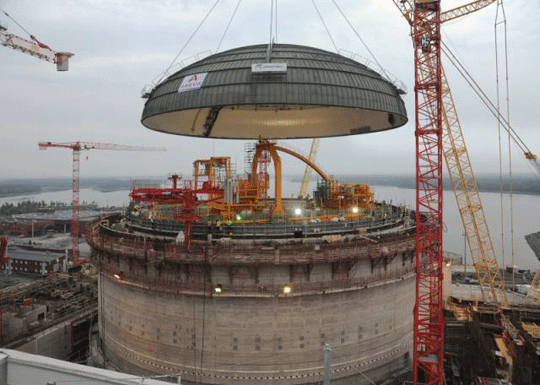
Dave Toke’s Blog 27th May 2017 It’s now the middle of 2017 and still, after 12 years of trying to build the French European Pressurised Reactor, there is still no model in operation. Even in China, which has, according to some of its domestic critics, let us say a more relaxed attitude to safety requirements compared to western agencies, the EPR at Taishan is still not generating electricity.
It was 16 months ago that the constructors announced that ‘cold start’ tests had been successful and that the whole of the plant (including two sets) would be fully functional this year (2017). Now they say that this will not happen, although one set ‘will’ be running sometime in the second half of this year. But then the plant, which begun construction in 2009, was supposed to be finished in 2013. This failure does present the question of how it is that other nuclear plant built in
China have not been subject to this much delay.
How can we explain this? The obvious reason is that the EPR is a turkey that is widely regarded as bordering on, if not actually, ‘unconstructable’. The difference with other nuclear plant built in China may simply be that the EPR was designed to suit western safety standards.
It’s an easy guess to say what this means for Chinese plans to build nuclear power plant in the UK! In France
construction at the EPR at Flamanville began in 2007 and completion by 2019 seems possible but uncertain. The other EPR at Olkiluoto started in 2005 and is about, so they say. to undergo ‘cold tests’. On the basis of what has happened in Taishan this doesn’t mean that it is about the generate electricity, though. http://realfeed-intariffs.blogspot.co.uk/2017/05/more-delays-in-epr-signals-more.html
May 31, 2017
Posted by Christina Macpherson |
business and costs, China, France |
Leave a comment
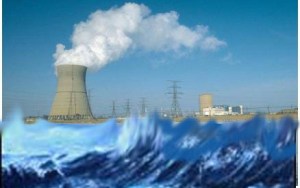 Critics have pointed to the rising seas from climate change, risks of storm surge, radioactive waste and threats to drinking water and wildlife at the site, nestled near Everglades National Park, as reasons to stop nuclear expansion.
Complaints have also centered on the difficulty of evacuating the densely populated area around the plant in case of emergency. Miami-Dade County is home to 2.6 million people.
“Investing tens of billions of dollars on a power plant that will be underwater one day, along with the highly radioactive waste it will produce, makes no sense,”
Why nuclear could become the next ‘fossil’ fuel, Afp, Homestead, United States, Daily Star 29 May 17 A gray dinosaur statue outside south Florida’s largest power plant is meant to symbolize two decommissioned fossil fuel reactors, but it also could be seen to represent a nuclear industry crumpling under mounting costs.
Almost a decade ago, Turkey Point was aiming to become one of the country’s largest nuclear plants.Florida Power and Light had argued that such expansion was needed to maintain diverse energy sources and to supply Florida’s booming population for years to come, while touting nuclear as a clean form of energy.
But now, just three reactors are in operation – one natural gas and two nuclear reactors, built in the 1970s. And plans to build two more nuclear reactors — first announced in 2009 — are essentially on hold for at least four years, according to filings with the state’s Public Service Commission……
The project has been controversial from the start, and casts the spotlight on wider concerns about nuclear power.
Critics have pointed to the rising seas from climate change, risks of storm surge, radioactive waste and threats to drinking water and wildlife at the site, nestled near Everglades National Park, as reasons to stop nuclear expansion.
Complaints have also centered on the difficulty of evacuating the densely populated area around the plant in case of emergency. Miami-Dade County is home to 2.6 million people.
“Investing tens of billions of dollars on a power plant that will be underwater one day, along with the highly radioactive waste it will produce, makes no sense,” said fishing captain Dan Kipnis, one of the activists who is fighting to stop the project.
Legal challenges to the plant’s planned expansion began in 2010, and continued this month with a hearing before the Atomic Safety Board.
Over the course of the two-day hearing, environmental scientists and lawyers wrangled over whether the porous limestone in Florida could really contain wastewater injected underground, without allowing toxic chemicals to seep upward into drinking water.
Currently, Turkey’s Point’s two nuclear reactors use a series of cooling canals to treat wastewater.
These canals were confirmed last year to be leaking into a nearby national park, after a radioactive isotope, tritium, was found at up to 215 times the normal levels in the waters of Biscayne Bay.
The three-judge safety board panel is expected to rule by year’s end on whether an operating license should be granted by the Nuclear Regulatory Commission (NRC).
Throughout Florida, FPL is expanding its solar installations, and is shuttering coal plants.
Its energy mix is 70 percent natural gas, 17 percent nuclear, with the rest divided between solar, oil and coal.
Meanwhile, the ever-dropping cost of natural gas is making nuclear less attractive every day, analysts say.
“Most people think Turkey Point will never get built,” said Mark Cooper, senior research fellow at the Institute for Energy and the Environment, Vermont Law School, referring to FPL’s proposed two new nuclear reactors. “It turns out it was not the environmentalists, it was not the lawsuits,” Cooper told AFP.
“They could not deliver a safe, economically viable product. They couldn’t do it in the ’80s and they can’t do it today,” said Cooper.
“Nuclear power is a technology whose time never came.”http://www.thedailystar.net/business/why-nuclear-could-become-the-next-fossil-fuel-1412248
May 29, 2017
Posted by Christina Macpherson |
business and costs, climate change, USA |
Leave a comment
 Philippines, Russia forge nuclear cooperation deal, ABS-CBN News, May 26 2017 MANILA – The Philippines and Russia have agreed to develop cooperation on nuclear energy under an agreement signed in Moscow, Russia’s state nuclear agency said Friday.
Under the memorandum of cooperation, the two nations will pursue the “development of the nuclear infrastructure” in the Philippines, including personnel training and securing public acceptance of nuclear power, Rosatom State Atomic Energy Corp said in a statement……Duterte has approved a study on the feasibility of nuclear power to augment the country’s electricity supply.
The Philippines has a nuclear power plant in Bataan, which has never been used.http://news.abs-cbn.com/business/05/26/17/philippines-russia-forge-nuclear-cooperation-deal
May 27, 2017
Posted by Christina Macpherson |
marketing, Philippines, Russia |
Leave a comment
Russia, Philippines forge Defense Cooperation Agreement, UPDATE PH, May 26, 2017 Caleb Velasquez The defense cooperation will expand exchanges in terms of training, seminars and best practices between the two countries, with the end to develop relations in the field of military education, including military medicine, military history, sports, and culture as well as experiences in consultation, observer participation in military training exercises, and military port calls…..
Memorandum of Agreement between the Department of Science and Technology of the Philippines and the State Atomic Energy Corporation, otherwise known as ROSATOM on Cooperation on the Use of Nuclear Energy for Peaceful Purposes was also forged. https://www.update.ph/2017/05/russia-philippines-forge-defense-cooperation-agreement/17735
May 27, 2017
Posted by Christina Macpherson |
marketing, Philippines, Russia |
Leave a comment
Nuclear Reactor Involved In US History’s Worst Meltdown At Risk Of Shutting Down, Daily Caller ,ANDREW FOLLETT, Energy and Science Reporter, 24 May 17 THE PENNSYLVANIA POWER PLANT RESPONSIBLE FOR THE LARGEST NUCLEAR MELTDOWN IN U.S. HISTORY FACES EARLY RETIREMENT, ACCORDING TO NUCLEAR INDUSTRY OFFICIALS.
Exelon Corporation announced Wednesday that it would have trouble selling electricity generated by the Three Mile Island (TMI) and Quad Cities nuclear power plants in 2020. Exelon didn’t sell any of the stations’ power during advanced auction in Pennsylvania, New Jersey and Maryland.
Exelon’s other nuclear plants in the region were able to sell their power for the 2020-2021 planning year, but the company says TMI hasn’t been profitable for five years — the site of a partial nuclear meltdown in the 1970s.
“The failure of the TMI plant, in particular, to clear the PJM capacity auction is the latest data point that all is not well with the U.S. electricity marketplace and that nuclear energy plants are at risk for premature closure if the current market is not reformed and innovated,” David Blee, executive director of the Nuclear Infrastructure Council, told The Daily Caller News Foundation.
In March 1979, TMI’s number 2 reactor partially melted down, causing the most serious accident in U.S. commercial nuclear operating history. The event spurred environmentalist campaigns to prevent other nuclear power plants from being built, and has tarnished the industry’s reputation ever since….
…..TMI’s possible closure is not an isolated incident. About half of U.S. nuclear reactors are at risk of closing early…In the past two years, six states have shut down nuclear plants, and “dozens” of other plants across the U.S. are facing challenging economic conditions, placing them at risk of imminent retirement. Decommissioning reactors can cost up to $1.5 billion and take up to 60 years to complete….
May 26, 2017
Posted by Christina Macpherson |
business and costs, USA |
Leave a comment
 Renewable Energy Powers Jobs for Almost 10 Million People https://www.bloomberg.com/news/articles/2017-05-23/renewable-energy-powers-jobs-for-almost-10-million-people [excellent graphs, diagrams) by Mahmoud Habboush May 24, 2017,
- Solar industry has 3.09 million people vs 1.2 million in wind

The renewable energy industry employed 9.8 million people last year, up 1.1 percent from 2015, led by the solar photovoltaic business, according to the International Renewable Energy Agency’s annual report on the industry.
Growth has slowed in the past two years, while the solar photovoltaic category, with 3.09 million jobs, and wind business more than doubled their respective employee numbers since 2012, the first year assessed, Irena said in the report.
“The nature of jobs is changing a little bit, with more emphasis on the installation, operational and maintenance side,” Adnan Amin, Irena’s director general, said Wednesday in an interview in Abu Dhabi. “That doesn’t grow as fast as the growth in manufacturing, which was very quick because the technology cost was coming down and you had this huge explosion in equipment.”
Jobs will continue to grow in developing countries, especially in Asia, he said.
Here are some of the highlights from the report:
- Global renewables employment has climbed every year since 2012, with solar photovoltaic becoming the largest segment by total jobs in 2016.
- Solar photovoltaic employed 3.09 million people, followed by liquid biofuels at 1.7 million. The wind industry had 1.2 million employees, a 7 percent increase from 2015.
- Employment in renewables, excluding large hydro power, increased 2.8 percent last year to 8.3 million people, with China, Brazil, the U.S., India, Japan and Germany the leading job markets. Asian countries accounted for 62 percent of total jobs in 2016 compared with 50 percent in 2013.
Renewables jobs could total 24 million in 2030, as more countries take steps to combat climate change, Irena said.
May 26, 2017
Posted by Christina Macpherson |
2 WORLD, employment, renewable |
Leave a comment
Buoyed by State Aid, U.S. Nuclear Plant Still Fails at Auction, Bloomberg, by Jim Polson, May 25, 2017
- Quad Cities fails to submit winning bid at PJM auction
-
Three Mile Island at risk of early retirement: Exelon
Even the promise of state subsidies wasn’t enough to help a struggling nuclear power plant in the biggest electricity market emerge a victor in a closely watched auction.
Exelon Corp. said its Quad Cities plant in Illinois didn’t clear at the annual auction of capacity rights by PJM Interconnection LLC. It was the first time the grid operator had held a sale since a handful of nuclear reactors in Illinois and New York won subsidies to stay open.
 In the run-up to the auction, opponents of subsidies had feared Exelon might undercut rivals in the knowledge that Quad Cities would be a recipient of state aid. With reactors reeling under competition from cheap shale gas and renewables, more states could now face pressure to help out ailing nuclear plants, according to Kit Konolige, a utilities analyst for Bloomberg Intelligence.
“Exelon could make the other argument, that even with the subsidy it wasn’t able to clear,” Konolige said by phone on Wednesday. “That’s how bad its economics were.”……..
Exelon said the plant has not yet been selected to receive zero emissions credits under the Future Energy Jobs Act, which is designed to promote a clean energy future for Illinois, and is expected to come into force in June…..
Exelon’s Three Mile Island station, scene of the worst accident in the history of U.S. commercial nuclear energy, may not be so lucky. After failing to clear at the past three PJM auctions, the plant is at risk of early retirement. It hasn’t made a profit in five years and remains “economically challenged” given the lack of federal or Pennsylvania energy policies that value zero-emissions nuclear power, the company said.Exelon’s other nuclear plants in PJM cleared in the auction. Oyster Creek didn’t take part, since it’s scheduled to shut in 2019. https://www.bloomberg.com/news/articles/2017-05-24/buoyed-by-state-aid-u-s-nuclear-plant-still-fails-at-auction
May 26, 2017
Posted by Christina Macpherson |
business and costs, USA |
Leave a comment

 Times 21st May 2017 A Chinese state-owned power giant has set its sights on the £15bn nuclear plant planned for the Cumbrian coast. State Nuclear Power Technology Corporation (SNPTC) is considering investing in Toshiba’s troubled NuGen
project at Moorside — risking a collision with Theresa May and her new interventionist approach to foreign takeovers.
Industry sources said a delegation from SNPTC and its parent, State Power Investment Corporation, was due in London. Eight senior officials will meet executives from NuGen and Britain’s atomic power trade body, the Nuclear Industry Association, on Tuesday.
It is unclear whether the election hiatus will hinder meetings with Whitehall officials. The talks underline China’s ambitions in nuclear power after another state-owned giant, China General Nuclear, bankrolled the £18bn Hinkley Point plant in Somerset. CGN took a 33% stake in Hinkley but its ultimate ambition is to build a power station, fuelled
with its own home-grown reactors, at Bradwell in Essex.
Sources said SNPTC could seek to power NuGen with its own reactor — a derivative of Westinghouse’s AP1000 model, which is planned for the site. SNPTC could not be reached for comment. NuGen said it was exploring a “universe of
options” for investment. https://www.thetimes.co.uk/edition/business/chinese-eye-rescue-of-nuclear-plant-qlj09k5wn
May 22, 2017
Posted by Christina Macpherson |
business and costs, China, politics international, UK |
Leave a comment
 SCANA executives received $3.5 million in bonuses since 2008, May 20, 2017
May 22, 2017
Posted by Christina Macpherson |
business and costs, USA |
Leave a comment
 Plant Vogtle: Georgia’s nuclear ‘renaissance’ now a financial quagmire By Russell Grantham and Johnny Edwards – The Atlanta Journal-Constitution May 19, 2017
Southern Company’s chief executive has said more than once that the giant utility’s project to build two more nuclear reactors at Plant Vogtle would be history-making.
He may be right, but not in the way he meant.
Years behind schedule, billions over budget, and with a key contractor’s bankruptcy clouding its future, the troubled Vogtle project near Augusta is fast becoming Exhibit A for why no U.S. utility before Atlanta-based Southern had tried building a new reactor in 30-plus years.
Most Georgians who get electric bills could eventually pay for overruns on the project that are likely to grow. Customers of Southern subsidiary Georgia Power already pay a Vogtle-related surcharge that adds about $100 a year to the average residential bill, with the ultimate effect on ratepayers yet to be determined.
Also uncertain is how the project will get done.
On March 29, Westinghouse Electric, the company that designed the new Vogtle reactors and eventually became the primary contractor on the project, filed for bankruptcy. As part of its Chapter 11 restructuring, the company is expected to ditch the fixed-cost contracts that led to billions in losses on its work at Plant Vogtle and a similar nuclear project in South Carolina.
Under an interim deal announced a week ago, Southern and Georgia Power plan to take over running the Vogtle expansion, which is not quite half-done. Westinghouse will still help, but in a smaller role.
Beyond that they face a more elemental decision: spend billions more finishing the reactors, convert the project to another type of power plant such as natural gas, or just abandon it — leaving two dormant cooling towers and skeletal buildings.
A Georgia Power spokesman said the company is doing a “full-scale” study to “determine the best path forward.”
The utility has acknowledged that Westinghouse’s bankruptcy will mean more delays and costs. The elected members of the Georgia Public Service Commission eventually will determine the actual construction costs to be borne by ratepayers.
Meanwhile, Southern CEO Thomas Fanning, who as recently as last year said the project was going “beautifully,” got a 2016 compensation package worth $15.8 million, including a $2.7 million bonus………
Richard Nephew, a senior research scholar at the Center on Global Energy Policy at Columbia University, said the utility underestimated the costs of replacing a vanished industry of nuclear construction workers and suppliers.
……….Westinghouse’s financial meltdown has rattled even the most loyal Plant Vogtle supporters – those living in the shadows of the towers in rural Burke County, population 23,000, who rely on the plant for a stable economy and a flush tax digest……..
History repeats itself
Delays, cost overruns and contractor snarls were not part of the picture government and industry officials painted in 2009 when state regulators approved the project to add the new reactors.
In addition to arguing it was needed to help power Georgia’s growth, Fanning called the Vogtle expansion a “national priority” to help revive the U.S. nuclear power industry. It would be a “renaissance,” he said.
But construction of Plant Vogtle’s first two reactors had provided a vivid example of the potential complications.
Plant Vogtle was conceived around 1970, with an original cost estimate of about $660 million. Construction was expected to take about eight years. Then, Three Mile Island happened. Regulations tightened. Demand for materials and interest rates shot up in the 1980s.
Construction took 13 years. The final price tag: around $9 billion…….
However the Vogtle expansion plays out from here, it won’t likely be held up as the model it was intended to provide.
Of the dozens of new reactor projects once being considered for licensing by the Nuclear Regulatory Commission, all have been shelved except the Vogtle and South Carolina projects. Georgia Power has tabled plans to study a new nuclear plant south of Columbus, citing slowing demand growth……. http://www.myajc.com/business/plant-vogtle-georgia-nuclear-renaissance-now-financial-quagmire/5l16IFMFICknSCeI7RXG6J/
May 20, 2017
Posted by Christina Macpherson |
business and costs, USA |
Leave a comment

 FirstEnergy CEO Discusses Possible Bankruptcy For Generation Company http://wvxu.org/post/firstenergy-ceo-discusses-possible-bankruptcy-generation-company#stream/0 By ANDY CHOW, 19 MAY 17, The CEO of one of Ohio’s largest energy providers made a rare appearance before state lawmakers, pleading for nuclear plant subsidies. This push comes as the company is nearing a major decision
FirstEnergy CEO Chuck Jones personally went before the Ohio Senate, saying subsidies would prop up their two struggling nuclear plants.
If passed, FirstEnergy customers would see about a $5 increase to their monthly electric bills.
Time might be running out to save these plants. As Jones explains, the subsidiary FirstEnergy Solutions which controls all the power generation could soon declare bankruptcy.
“They’re looking at that right now. That decision could happen anywhere between today and six months from now.”
Jones pointed out that he does not make decisions for FirstEnergy Solutions.
The nuclear credits bill has stalled in the House and Senate and will likely not come back up until the fall.
May 20, 2017
Posted by Christina Macpherson |
business and costs, politics, USA |
Leave a comment
Fennovoima nuclear project faces delays over safety clearance, building permit yle uutiset , 19 May 17, The Finnish Radiation and Nuclear Safety Authority STUK will not deliver a safety assessment and related building permit for the Fennovoima nuclear project slated for Pyhäjoki in northwest Finland this year. According to the daily Kaleva, the nuclear watchdog has said that the evaluation and permit will be delayed by one year to the end of 2018.
Finland’s nuclear safety watchdog STUK will not provide a safety assessment and building permit this year for the Fennovoima nuclear power plant to be built by Russian state-owned nuclear contractor Rosatom in northwest Finland, reports the daily Kaleva. Rosatom also owns 34 percent of the venture.
Finland’s Ministry of Economic Affairs originally hoped that STUK would be able to provide the clearances this year. However the authority now says that it won’t be able to deliver them before the end of 2018. It noted that completing the safety assessment depends on factors such as Fennovoima’s ability to update information about the project’s delivery timetable. STUK’s ability to furnish the approvals will also depend on the adequacy and comprehensiveness of the information provided……..
Investor haemorrhage
Meanwhile on Wednesday, the Helsinki city council launched moves to disconnect Vantaa Energy – in which it owns 40 percent of shares — from the Fennovoima nuclear power plant. However, Vantaa Energy chief executive Pertti Laukkanen said that the city of Vantaa, which owns the remaining 60 percent of the power company, is not likely to support selling off its holdings in the project.
A number of other Finnish investors have also bailed on the project over the years. The German-based power behemoth E.ON as well as duopolist retailer S Group both shed their stake in the project in 2012. Later in 2013, 15 members of the power consortium Voimaosakeyhtiö SF pulled out of the venture, while a subsidiary of the other duopolist retailer K Group left in 2014. Meanwhile local dairy giant Valio exited in 2015 during a rocky period caused by losses over western sanctions applied against Russia, one of its main markets.
Financing controversy
The Fennovoima nuclear power plant has faced a rocky road since it received a decision-in-principle for construction during the administration of ex-PM Matti Vanhanen back in 2010. The contentious project also saw the departure of the Green Party from Alexander Stubb’s coalition government in 2014, when it decided to proceed with the proposed plant.
The project also stirred up controversy over financing arrangements when a murky Croatian firm – later found to be a front for Russian investors — emerged as a backer to help Fennovoima make up the 60-percent domestic- EU ownership required by the Finnish government. There was also speculation that state energy giant Fortum had been pressured to come forward as an investor following initial resistance to the project.
The project has faced opposition from environmentalists in Finland and Sweden and has also come under intense scrutiny over concerns about Finland’s energy dependence on Russia. http://yle.fi/uutiset/osasto/news/daily_fennovoima_nuclear_project_faces_delays_over_safety_clearance_building_permit/9622096
May 20, 2017
Posted by Christina Macpherson |
business and costs, Finland |
Leave a comment
 EDF set to win EU approval for Areva nuclear reactor deal – source , Reuters, By Foo Yun Chee | BRUSSELS, 19 May 17, French utility EDF (EDF.PA) is set to gain unconditional approval from the EU competition authorities for its plan to acquire a controlling stake in ailing nuclear power engineering group Areva’s (AREVA.PA) reactor business, a person familiar with the matter said on Friday.
State-controlled EDF wants to acquire 51 to 75 percent of Areva NP, which designs, manufactures and services nuclear reactors and is worth about 2.5 billion euros ($2.8 billion).
The deal is crucial for France, which has Europe’s largest network of nuclear plants, and uses EDF and Areva to spearhead its export efforts against competition from Russia’s Rosatom and Japan’s Hitachi Ltd (6501.T).
The European Commission, which is scheduled to decide on the deal by May 29, declined to comment. EDF and Areva had no immediate comment….http://www.reuters.com/article/us-areva-m-a-edf-eu-idUSKCN18F23I
May 20, 2017
Posted by Christina Macpherson |
business and costs, France, politics international |
Leave a comment
 Nuclear plant nears completion after huge delays, Western Europe’s first atomic power station in 15 years is test of Areva technology FT.COM 18 MAY 17 by: Andrew Ward, Energy Editor On the shores of the Baltic Sea, beneath the big azure sky of a Nordic spring, Finland’s Olkiluoto-3 nuclear plant looks almost complete.
A team of painting contractors streaming out of the red reactor building at the end of their shift are the only external sign that this is still a work in progress. Yet, as the final touches are made to western Europe’s first new nuclear power station for 15 years, its owners have a blunt assessment of progress. “If the nuclear industry wants to have a future it cannot afford more projects like this,” says Pekka Lundmark, chief executive of Fortum, the Finnish power company which owns a 26 per cent stake in TVO, the consortium behind Olkiluoto-3.
Areva, the French reactor manufacturer, began building Olkiluoto in 2005 with a target for completion by 2009 at a cost of €3.2bn. The latest timetable would see it open almost a decade late at the end of 2018 and nearly three times over budget at €8.5bn. The project is the most extreme example of the delays and cost overruns which have become commonplace in the nuclear industry, plunging reactor companies such as Areva and Toshiba’s Westinghouse subsidiary into financial crisis………
Olkiluoto is entering a crucial phase with “cold functional testing”, the first operational trials of the reactor system, due to start in June. Several further important milestones must be cleared in the months ahead before the Finnish nuclear regulator can issue an operating licence…….
TVO facing an awkward balancing act, between co-operating with Areva to finish the project while simultaneously pursuing the French company and its former partner, Siemens, for billions of euros of compensation for the delays.
Talks aimed at a settlement broke down a year ago and the International Court of Arbitration made a “partial award” last November in favour of TVO. It has yet to rule how much Areva and Siemens, which exited the consortium in 2009, must pay. Olkiluoto liabilities were among the main factors which led the French government to arrange a €5bn bailout of Areva, 87 per cent owned by the state, and force it into a tie-up with EDF, the French utility, due for completion this year. Responsibility for Olkiluoto will remain in a separate “old Areva” to protect state-controlled EDF from TVO’s compensation claim, which would ultimately be borne by French taxpayers. The restructuring has raised alarm in Finland that Areva might neglect Olkiluoto in favour of projects at Flamanville in France and Hinkley Point in the UK which are both led by EDF. All three projects involve the European Pressurised Reactor, technology conceived by French and German engineers in the 1990s that was supposed to herald a new era of international growth for the French nuclear industry. Instead, it has turned into a nightmare as construction problems, along with renewed safety fears after the meltdown in 2011 at Japan’s Fukushima nuclear plant, have combined to curb demand.
The EPR was designed with safety as the top priority after the Chernobyl meltdown in Ukraine a decade earlier spewed radioactive fallout across Europe. But extra safeguards, such as a concrete dome over the reactor strong enough to withstand an aircraft strike, have proved ruinously expensive to build.
……..The Flamanville plant is six years late and €7bn over budget, with the risk of further delays beyond the current 2018 opening target as French regulators scrutinise potential faults with reactor components…….
EDF and Areva are hoping for a smoother experience at Hinkley Point, where
concrete was poured for the first permanent structures in March…..
After heavy losses elsewhere, EDF and Areva desperately need to make money from Hinkley’s two reactors. The £18bn project has been criticised in Britain for the £92.50 per megawatt hour price guaranteed to EDF for electricity from the plant, rising with inflation for 35 years. That is more than twice the current wholesale price, but it will only prove a good deal for EDF if it can control construction costs better than has been the case at Flamanville and Olkiluoto……..
https://www.ft.com/content/36bee56a-3a01-11e7-821a-6027b8a20f23
May 19, 2017
Posted by Christina Macpherson |
business and costs, Finland |
Leave a comment
 Global News Wire 17th May 2017
 EDF Group’s Board of Directors has approved the creation of the company EDVANCE which brings together EDF and AREVA NP engineers. This is a significant milestone in the reconstruction of the nuclear industry, announced in June 2015.
EDVANCE will be in charge of the basic design and implementation (studies, procurement support, assembly and commissioning) for projects involving nuclear islands and control systems for new reactors being built, both in France and around the world.
May 19, 2017
Posted by Christina Macpherson |
business and costs, France |
Leave a comment