New nuclear power station for Virginia? Clean Technica examines the financial realities

 No, Virginia, There Is No Nuclear Santa Claus https://cleantechnica.com/2017/06/09/no-virginia-no-nuclear-santa-claus/June 9th, 2017 by Michael Barnard Virginia is about to receive approval for the most expensive nuclear reactor ever built in the USA. It’s been a 10-year hunt with reactor technologies changing at least twice to add a third unit to the North Anna nuclear generation plant. But they are closing in on regulatory approval.
How much would its electricity cost if it actually goes forward?
Nuclear math is hard. That’s not the math behind nuclear physics, by the way. That’s actually straightforward compared to the financial black arts accounting that occurs with nuclear plants. A tremendous amount of the costs are typically swept under the rug as overruns occur and governments and utilities try to save face. Ontario, as one example, is on its 30th year and 4th administration of pushing its nuclear debt down the road to future politicians and taxpayers.
But let’s pretend the numbers will be relatively transparent and do some simple math.
Let’s make a few assumptions:
-
- Capital costs are $19 billion USD as per the economic analysis cited.
- The $600 million USD already spent as per the reference is included in the cost of electricity.
- Capacity is 1.6 GW as per the reference, which is higher than the 1.52 GW originally specified in 2007 when this process started.
- Capacity factor on most years of operation would be 90%, but 60% for the first year of operation and after refurbishment. Obviously, it would be 0% during construction and during the two years of refurbishment.
- Operational costs are 5% to 10% of capital costs per year. That would be $0.95 billion to $1.9 billion per year.
- At 20 years of operation, the reactor would be refurbished, taking two years and costing $5 billion, approximately 25% of original capital outlay.
- It would take 8 years of actual construction and be on time and on budget.
- Lifespan of the reactor before decommissioning would be 40 years.
Let’s see what the numbers tell us for 5% operating costs for the cost of electricity per MWh: Continue reading
Workers at £18bn Hinkley C nuclear project hope for higher bonuses, in new pay deal
Construction News 8th June 2017, Workers building the Hinkley Point C nuclear power plant in Somerset can look forward to higher bonuses after the Unite union and the plant’s employers agreed a fresh pay deal for staff on the £18bn project.
STRIKES by workers building the new Hinkley Point nuclear power plant were“taken off the agenda” yesterday after an interim agreement over bonus pay. Unite had warned of strikes over bonuses, but the issue will now be considered by a panel made up of a union official and an EDF Energy executive.
As part of the agreement, interim bonuses will be paid until the end of August. Unite officer Jerry Swain said: “I am pleased that, following consultation with our stewards and members, we have been able to agree a clear path forward and that the prospect of industrial action, which is always a last resort, can be taken off the agenda in order to allow the panel to deliberate. https://www.constructionnews.co.uk/10020594.article
New Nuclear in UK: Moorside & Wylfa
 No2NuClear No 96 June 2017 The future of Moorside has been thrown into doubt by the financial troubles of Japanese giant Toshiba which owns the company developing the scheme – Nugen. Nugen is undertaking a strategic review of its options following what it calls “vendor challenges”, (1) although the company says it is “110 per cent certain” it will be built. (2)
Nuclear jobs in decline – renewable energy jobs rising fast – 13 times more jobs than in nuclear power.

 No2Nuclear No 96 June 2017 According to the Office for National Statistics the number of full-time equivalent (FTE) direct jobs in the nuclear industry had declined to 12,400 by 2015, but about 9,400 of these workers do not produce electricity at all. They are engaged mostly in legacy nuclear waste management.
In 2015 ONS reported that the number of FTE direct jobs in the renewable forms of electricity generation had increased to 48,900 – about 16 times the number of jobs in nuclear electricity generation. (2) In 2015, 338 TWh of electricity was produced in the UK (DECC data). This comprised 70 TWh from nuclear, 85TWh from renewables and the rest from fossil fuels. (3) That amounts to about 43 jobs per TWh for nuclear and about 575 jobs per TWh for renewables. So not only are renewables cheaper than nuclear, but they also create around 13 times more jobs than nuclear power.
Offshore wind is becoming a double win for policymakers, according to Ray Thompson, Head of Business Development at Siemens Gamesa Renewable Energy. He says offshore wind is coming to represent a major challenge to competing technologies. The new Siemens blade manufacturing facility and project execution harbour in Hull which opened in December 2016 has already created 800 new jobs and the numbers on site will rise to over 1,000 when full production is reached. (4)
Renewable energy jobs could “offset” fossil-fuel job losses by 2030 according to the International Renewable Energy Agency (IRENA). Renewable Energy and Jobs – Annual Review 2017 presents the status of renewable energy employment, both by technology and in selected countries, over the past year. In this fourth edition, IRENA finds that renewable energy employed 9.8 million people around the world in 2016 – a 1.1% increase over 2015. Jobs in renewables, excluding large hydropower, increased by 2.8% to reach 8.3 million in 2016. China, No2NuclearPower nuClear news No.96, June 2017 8 Brazil, the United States, India, Japan and Germany accounted for most of the renewable energy jobs. The shift to Asia continued, with 62% of the global total located in the continent. (5) Nuclear Power and Jobs
A policy which promotes nuclear power significantly diminishes the prospects of creating new jobs in renewable energy industries – in establishing an offshore wind manufacturing base for instance.
Nuclear power is a capital intensive industry, which means it requires a much higher injection of money to produce its final product – it is not a very efficient way of creating jobs. If there were an alternative way of providing or saving the same amount of electricity, but at the same time creating more jobs, clearly that would be a strategy worth pursuing.
One way of comparing the number of jobs created by different energy sources is to calculate the number of jobs for each Terawatt hour (TWh–1 billion kilowatt hours) generated annually. This, of course, will depend on the performance of the generating station. So a new 1.6GW reactor employing 500 people which operates an average of 80% of the time will be providing 45 jobs per TWh. Goldemberg has estimated the number of jobs created per TWh of power generated and found that nuclear produces around 75 jobs per terawatt hour (TWh), whereas wind power produces 918 – 2,400 per TWh. Solar photovoltaics provides 29,580 – 107,000 jobs/TWh. (1) http://www.no2nuclearpower.org.uk/nuclearnews/NuClearNewsNo96.pdf
Distress and disarray in the U.S. nuclear industry
 Distress in the US nuclear industry, https://www.financierworldwide.com/distress-in-the-us-nuclear-industry#.WTSVQZKGPGh BY Fraser Tennant June 2017
 Financier Worldwide Magazine A US nuclear industry in distress is a development likely to cause concern among even the hardiest – yet ‘distress’ does not quite do justice to the extent of the issues currently troubling the industry stateside.
The origin of this elevated distress is the plight of Westinghouse Electric Company (WEC), the Toshiba Corporation-owned US nuclear company which has been haemorrhaging billions of dollars due to severe difficulties with a number of key projects and, as a result, has now filed for Chapter 11 bankruptcy.
Indicative in many ways of the struggles facing the global nuclear industry, WEC’s indigenous operations – in the main, four nuclear plants under construction in Georgia and South Carolina – have been hit by massive cost overruns and delays of nearly four years, leaving the Japanese conglomerate with a forecasted annual loss of 1.01 trillion yen ($9.1bn).
Satoshi Tsunakawa, Toshiba’s chief executive, has stated there is no risk of additional losses from overseas nuclear projects (which includes the £10bn Moorside nuclear project in the UK, Europe’s largest planned nuclear power plant). “The filing by WEC is an important step toward recovery,” said Mr Tsunakawa. “It is also in-line with our goal of limiting risk from overseas nuclear operations.”
On the other hand, Dr Paul Dorfman, from University College London’s Energy Institute, concludes that Toshiba’s nuclear gamble with Westinghouse has been the cause of the nuclear company’s financial problems. “Both corporations are in dire straits and face a relatively dismal future without significant public and governmental financial input,” he says. “In this sense, the situation mirrors that of new nuclear worldwide – because of the sheer expense of nuclear construction, without huge public and government subsidy, new nuclear is being left behind by the renewable evolution.”
Irreversible dark age
Considered to be something of a coup at the time, the $5.4bn purchase of Pittsburgh-based WEC by Toshiba in 2006 was swiftly followed by deals to build four reactors in 2008 – the first US nuclear plants to be approved by regulators since the controversial Three Mile Island incident in 1979. Today, WEC’s major power plant problems, not to mention its bankruptcy filing, threaten to plunge the US nuclear industry into an irreversible dark age.
“The Westinghouse bankruptcy is a huge blow to the US nuclear industry,” says Steve Clemmer, director of energy research for the Union of Concerned Scientists (UCS) Climate and Energy Program. “After three decades of not building new nuclear plants in the US, only a handful of companies are left in the world with the expertise to build new reactors. Westinghouse is building all four reactors currently under construction in the US and the bankruptcy will make it much harder for power companies in Georgia and South Carolina to finish these projects and collect money Westinghouse owes them. It will also have reverberations across the nuclear supply chain, because Westinghouse is holding $508m in claims from its top 30 creditors.”
More renewable, less new nuclear
As one might expect, the huge losses being incurred by WEC/Toshiba is serving to prompt the exploration of renewable energy opportunities rather than the pursuit of new nuclear projects. “Westinghouse’s recent experience clearly shows that building new nuclear plants in the US is considerably more expensive than new natural gas, wind and solar projects,” says Mr Clemmer. “Increased energy efficiency in homes and businesses is also reducing electricity demand and the need for new power plants. Utilities in South Carolina have already raised consumer electricity rates by nearly 20 percent since 2009 to pay for the construction of the new reactors, even though they have not generated any electricity yet.”
Concurrently, and bolstering the case for a renewed focus on renewable energy opportunities, the cost of wind and solar projects installed in the US has fallen by more than two-thirds since 2009. Furthermore, over the same period, US wind and solar capacity has almost tripled, adding 86,000 megawatts of new capacity – a quantity equivalent to the electricity produced by more than 23 new nuclear reactors.
“The key problem with new nuclear is cost-effectiveness,” states Dr Dorfman. “Solar costs have fallen by 50 percent in the last five years, and now significant new offshore wind projects will be built in Germany without any subsidy. With these very significant drops in renewable costs, nuclear is simply not cost-effective.”
Making nuclear competitive
Across the globe, the outlook for the nuclear industry looks bleak in the near-term, with the construction of new reactors hindered by significant cost and time overruns, and a number of existing nuclear plants economically vulnerable due to historically low natural gas prices. “Over the long-term, if new nuclear plants are to play a role in achieving deep reductions in global warming emissions by 2050 under the Paris Agreement, policies that put a price on carbon and invest in research and development will likely be needed to make nuclear competitive,” concludes Mr Clemmer.
In the US, while bankruptcy proceedings continue, Toshiba and WEC have been working with the owners of the Georgia and South Carolina projects to develop arrangements for the continuation of construction during an interim period – an arrangement which, although keeping work at the sites going and preventing further distress, is likely to do little toward finding a comprehensive solution that can reinvigorate the prospects of new nuclear in the US in the long-term.
Escalating costs for South Carolina’s nuclear reactor project
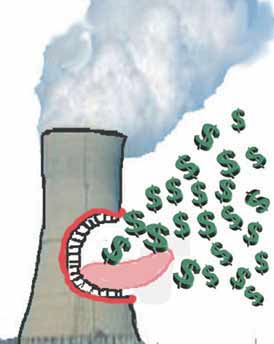 Once-secret records reveal pattern of costly mistakes at troubled nuclear project, Since 2009, companies working to build twin nuclear reactors in Fairfield County have made nearly three dozen changes to the project that drove up costs by about $325 million, according to recently released records and a state agency tracking the work’s progress.
The amount is a fraction of the escalating costs of the $14 billion V.C. Summer expansion project, but documents released May 24 by state utility regulators provide insight into why some of the costs have risen at a time of increasing concern by ratepayers.
The $325 million worth of changes represents the costs of additional work that was not expected when Westinghouse Electric and South Carolina Electric & Gas Co. launched the project about eight years ago. Some of the changes were to improve training for those who would operate the new reactors, while others were for better equipment and construction upgrades, the documents show.
SCE&G customers already have paid at least $1.4 billion for the reactor project. About 18 percent of a customer’s current bill goes toward the plant’s construction. Customers have been hit with nine rate hikes to finance the work, and critics predict efforts to raise rates further if the project continues…….http://www.thestate.com/news/local/article154261279.html
The high cost of Units 5, 6 at Kudankulam Nuclear power – most of it owed to Russia
 Units 5, 6 at Kudankulam Nuclear power plant to cost Rs 50,000 crore: The New Indian Express, NPCIL 2 June 17 ST. PETERSBURG: The construction of the fifth and sixth units of India’s largest nuclear power plant in Tamil Nadu will cost about Rs 50,000 crore with half of the amount being funded by Russia as loan.
The project will take seven years to start generating electricity, Nuclear Power Corporation of India (NPCIL) Chairman and Managing Director S K Sharma told PTI here.
India and Russia yesterday signed an agreement for the two new reactors for the Kudankulam Nuclear Power Plant (KNPP) on the sidelines of the annual summit between Prime Minister Narendra Modi and Russian President Vladimir Putin.
“The entire project will cost about Rs 50,000 crore. The first unit will be commissioned in 66 months and the second six months thereafter,” Sharma said.
Atomstroyexport, a unit of Russian state nuclear corporation Rosatom, will build the reactors.
“The project will be funded in 70:30 debt-equity ratio (70 per cent debt, 30 per cent equity),” he said.
The Russian government will lend India USD 4.2 billion to help cover the construction cost……http://www.newindianexpress.com/states/tamil-nadu/2017/jun/02/units-5-6-at-kudankulam-nuclear-power-plant-to-cost-rs-50000-crore-npcil-1612150.html
Trump’s pullout from Paris climate accord is NOT a good sign for the nuclear industry
Cameco’s uranium business is NOT a promising investment
 it is highly unlikely that its financial performance will improve drastically, making it an unappealing investment.
Don’t Try to Catch This Falling Knife https://www.fool.ca/2017/06/01/dont-try-to-catch-this-falling-knife/ Matt Smith | June 1, 2017 The world?s second-largest uranium producer Cameco Corp. (TSX:CCO)(NYSE:CCJ) continues to suffer, posting a first-quarter 2017 net loss which dragged its stock lower; it’s almost 13% down for the year to date. This has attracted the usual bargain hunters who believe that Cameco is now an appealing, undervalued investment but this couldn?t be further from the truth.
Now what?
Cameco?s woes can be directly attributed to the prolonged slump in uranium which has lasted for longer than a decade; prices fell to a 13-year low late last year. The embattled uranium miner posted a first-quarter adjusted net loss of $29 million. According to some analysts, wind power is now cheaper than nuclear power, while solar and geothermal electricity generation can have lower costs. These forms of power generation don’t produce highly toxic waste or the potential to create catastrophic environmental damage in the event of failure.
For these reasons, it is difficult to see a huge upswing in demand for uranium over coming years, especially with renewables technology advancing at a rapid rate. This means that Cameco may find itself in the position where it is producing a product that is suffering from a terminal decline in demand. Worse yet, uranium prices remain under pressure because of high global inventories and a growing supply which is expected to expand by over 40% to reach 80,383 tonnes by 2020.
Cameco’s woes can be directly attributed to the prolonged slump in uranium which has lasted for longer than a decade; prices fell to a 13-year low late last year. The embattled uranium miner posted a first-quarter adjusted net loss of $29 million, which was 3.5 times greater than the net loss reported for the same quarter in 2016 and that predicted by analysts.
A key reason for the massive net loss was the decision by Tokyo Electric Power Company, the operator of Japan’s disabled Fukushima nuclear plant, to terminate its contract with Cameco for the supply of 9.3 million pounds of uranium through to 2028. The contract was worth $1.3 billion in revenue.
Nonetheless, Cameco has pitched its hopes on a surge in demand for uranium as the 57 reactors currently under construction across the globe come online. While there won’t be an immediate ramp-up in demand, according to industry consultants, it will lead to cumulative uncovered requirements for uranium to total around 800 million pounds of the fissile material over the next nine years.
This may be a positive for company that has been battling significant headwinds for some time, but it does not necessarily guarantee a return to profitability.
You see, nuclear power has been falling into disfavour for some time, and this only gained momentum in the wake of the Fukushima disaster in 2011. While nuclear plants do not emit pollutants, there are the serious issues associated with the leakage of radiation and the disposal of fissile waste.
Radiation can have a catastrophic impact on the environment, animals, and humans. High-level nuclear waste such as a spent fuel assembly, according to the United States Nuclear Regulatory Commission, produces 20 times the fatal dose of radiation for humans for 10 years after being removed from a reactor.
This makes the correct handling and storage of this waste essential, costly, and highly onerous.
The Fukushima disaster highlighted just how vulnerable nuclear plants can be to environmental catastrophes, although, fortunately, there was no leakage of fissile material or polluted water in that case.
However, these aren’t the only reasons for the growing unpopularity of nuclear power.
The cost of safer forms of renewable energy continues to fall.
According to some analysts, wind power is now cheaper than nuclear power, while solar and geothermal electricity generation can have lower costs. These forms of power generation don’t produce highly toxic waste or the potential to create catastrophic environmental damage in the event of failure.
For these reasons, it is difficult to see a huge upswing in demand for uranium over coming years, especially with renewables technology advancing at a rapid rate. This means that Cameco may find itself in the position where it is producing a product that is suffering from a terminal decline in demand. Worse yet, uranium prices remain under pressure because of high global inventories and a growing supply which is expected to expand by over 40% to reach 80,383 tonnes by 2020.
So what?
The loss of the Tokyo Electric Power Company contract is a major blow for Cameco, costing it around $1.3 billion in revenue in what is already a difficult operating environment. When considered with the growing unpopularity of nuclear power, the inexorable advance of renewable energy, and growing uranium supplies, it is difficult to see any significant bounce in the price of uranium occurring.
This makes difficult to see Cameco ever returning the halcyon days when uranium traded at US$67 per pound, meaning that it is highly unlikely that its financial performance will improve drastically, making it an unappealing investment.
Some big business leaders abandoning Donald Trump
Paris climate deal: Donald Trump to lose Elon Musk, Disney boss from advisory council, ABC News, 2 June 17 Billionaire entrepreneur Elon Musk and Disney chief executive Bob Iger say they will leave President Donald Trump’s advisory councils after he confirmed the United States would withdraw from the Paris climate accord…..
While the move was welcomed by conservative groups and Republicans, several business leaders — including Mr Musk and Mr Iger, and the heads of companies including Google, Facebook Shell and Amazon — have spoken out against the decision.
“Climate change is real. Leaving Paris is not good for America or the world,” Mr Musk said in a Twitter post. Mr Musk, who founded SpaceX and Tesla among other companies, had been a member of Mr Trump’s infrastructure council, manufacturing jobs council and his strategic and policy forum……
A couple of hours after Mr Musk’s announcement, Mr Iger also said he will be stepping down from the advisory council “as a matter of principle”. Other business leaders, such as Google chief executive Sundar Pichai, Microsoft president Brad Smith and General Electric CEO Jeff Immelt have tweeted that they were “disappointed” with the decision.
Facebook founder Mark Zuckerberg said stopping climate change is “something we can only do as a global community”.
Withdrawing from the Paris climate agreement is bad for the environment, bad for the economy, and it puts our children’s future at risk,” he wrote on Facebook.
Other global companies, including Intel, HP, Dell, Amazon and oil giant Shell have released statements expressing support for the Paris agreement.
“We believe that robust clean energy and climate policies can support American competitiveness, innovation, and job growth,” Amazon wrote on Twitter.
Meanwhile, the governors of three US states — New York, California and Washington — announced they would form a “United States Climate Alliance” to convene states “committed to upholding the Paris climate agreement”.
“If the President is going to be AWOL in this profoundly important human endeavour, then California and other states will step up,” a joint statement read…….http://www.abc.net.au/news/2017-06-02/paris-climate-deal-donald-trump-to-lose-elon-musk-as-adviser/8582560
Chris Yelland on the disadvantages of nuclear power for South Africa
Is nuclear the best option for SA? Flexibility is key in an unpredictable world. Money Web, Roger Lilley / 1 June 2017 Eskom appears to be more concerned with building new nuclear power stations than in signing power purchase agreements with independent power producers that use renewable energy sources. Energize caught up with energy analyst and managing director of EE Publishers, Chris Yelland, for his opinion on what generation technologies South Africa should opt for.
The high, upfront capital costs, and associated financing and affordability of such mega-projects, is an issue, and one really has to deal with this issue, because it is one of the big drawbacks of nuclear.
We must also fully understand the levelised cost of electricity (LCOE) from nuclear power over the economic lifetime of the plant, taking into account the overnight capital cost, interest during construction, the fixed and variable operating, maintenance and fuel costs, and the costs of decommissioning and waste disposal. The LCOE indicates the overall cost, in R/kWh of the electricity delivered from a nuclear power plant, in order to be able to compare it properly on a similar basis with other technologies.
Nuclear power stations take a long time to build – up to ten to 12 years per reactor – and mega-projects are prone to high cost and time overruns. These realities cannot simply be ignored.South Africa needs flexibility in an uncertain and unpredictable world, where electricity demand is difficult to predict in the years ahead, and disruptive technologies are on the horizon. Technologies such as wind, solar PV and energy storage may change the rules of the game……..
A tipping point was reached as the price of wind and solar PV energy came crashing down. All of a sudden there are now lower-cost alternatives to new nuclear and new coal power. Nuclear is no longer the least-cost option, and a blend of wind, solar PV, gas and pumped storage can deliver reliable, despatchable, baseload power at lower cost than new nuclear and even new coal power…….
there’s the option of wind, solar PV, gas and pumped storage. This is a low carbon option, just as nuclear is a low carbon option. But it is also an option to deliver reliable, despatchable baseload power in a flexible way at lower cost than the nuclear option. This is what is termed “flexible power”…….
CHRIS YELLAND: In my view, the decline of the coal sector is inevitable, as the world moves away from coal to a cleaner, low-carbon future, both locally and globally.
We live in a global village, and South Africa simply cannot continue to burn coal regardless of the consequences to water use, pollution, health and climate change. The world is expecting us to move to cleaner options, and South Africa has made international commitments to do just this. We need to plan ahead and address these matters going forward. ……
The growth of rooftop solar PV in domestic, commercial and industrial applications has not been considered in the Draft IRP 2016 at all, and yet is a growing and inevitable reality, both globally and in South Africa.
The Department of Energy, Eskom and municipal electricity distributors ignore this growing alternative and supplement to conventional grid electricity at their peril. This is potentially a huge disruptor to the traditional business models of power utilities.
Customers are choosing cleaner and cheaper sources of energy to reduce both their costs and dependency on public utilities. Thus I expect very significant growth in this market as solar PV and battery storage prices continue to drop, while the price of grid electricity continues to rise.Utilities have to sit up and take note. Otherwise they may find themselves in a death spiral, where rising costs of grid power drive their customers away to alternatives. As people move to these alternatives in greater numbers, so the costs of the new alternative technologies come down due to increasing economies of scale. At the same time, in a vicious circle, this further pushes up the price of grid power, as utilities try to recover their fixed cost structure from declining kWh sales volumes.
This really needs to be taken seriously. It has happened in other parts of the world, and it’s not unthinkable that it could happen in South Africa. https://www.moneyweb.co.za/news/south-africa/nuclear-energy-the-best-option-for-south-africa/
As solar costs plunge, India rethinks coal projects
Cheaper Solar in India Prompts Rethink for Coal Projects, Bloomberg, by Anindya Upadhyay and Rajesh Kumar Singh June 1, 2017,
-
Power from solar panels now half the cost of a new coal plant
-
Shift in electricity economics helps Modi’s goal on pollution
India’s coal-power plant developers are growing more pessimistic about their projects after a plunge in the cost of electricity from solar panels improved the economics of renewable energy.
After a string of federal auctions, solar is suddenly the cheapest source of electricity in India. That’s darkening the outlook for the coal-fired power industry as projects struggle to find customers or face cancellation amid a glut of capacity.
“The crashing solar tariffs are creating a mental block for distribution companies and holding them back from signing long-term purchase agreements with conventional power producers,” said T. Adi Babu, chief operating officer for finance at Lanco Infratech Ltd., an Indian power producer. “A couple of years back, when people talked of solar reaching grid parity, people were skeptical. Now the solar tariffs have gone well below that. It is definitely making conventional players sit up and take notice.”……
evidence of a shift away from coal is gathering by the day.
- State-run NTPC Ltd., India’s largest power producer, along with RattanIndia Power Ltd. are considering installing solar panels over land initially intended for thermal projects.
- NTPC said in February it’s aiming to have 30 percent of its capacity come from non-fossil fuel by 2032
- The Indian subsidiary of Hong Kong-listed CLP Holdings Ltd., which owns both coal and renewable projects, is debating whether to participate in another round of conventional projects. “A transition from coal to solar is a generic direction that all utilities are taking. We are an early mover into the renewables space so our journey continues,” Mahesh Makhija, business-development director for renewables, said in a phone interview.
- The government of the sunny state of Rajasthan expects more conventional power to be replaced by clean energy as higher renewable purchase targets are fulfilled. “At the rate the renewable power tariffs are decreasing, the time is not far when renewable power will start replacing costlier conventional power,” Sanjay Malhotra, principal secretary for energy in the Rajasthan government, said by phone.
Solar is now as much as 50 percent cheaper than new coal power, according to solar research firm Bridge to India.
“That’s why we have seen many new coal power tenders being suspended or canceled in the last three months,” said Vinay Rustagi, managing director at Bridge to India…….
renewables are expanding quickly in India. Solar capacity has surged fourfold since December 2014 to about 12 gigawatts, while wind farms now provide 32 gigawatts, up from 22.5 gigawatts over the same period. Modi is seeking an additional 88 gigawatts of solar and 28 gigawatts more of wind by 2022. And those projects are crowding coal out of the power market…….https://www.bloomberg.com/news/articles/2017-06-01/cheaper-solar-in-india-prompts-rethink-for-more-coal-projects
Manufacturing and energy to information technology businesses concerned at Trump’s climate pullout
FT 1st June 2017 US companies in industries from manufacturing and energy to information technology have reacted with dismay to the prospect of President Donald Trump withdrawing from the Paris climate agreement, warning that pulling out of the accord would hit jobs and investment.
Businesses have raised concerns about the impact on markets for products that can help cut greenhouse gas emissions, and warned that countries remaining in the accord could impose retaliatory tariffs on American goods.
However, some groups have said they will press ahead with investments in emissions-reducing technologies, saying they expect continued long-term growth in demand despite the lack of support from the US administration. Leading US
companies including Apple, Facebook, Google, Intel and Microsoft have taken out an advertisement in US newspapers on Thursday with an open letter to Mr Trump arguing that the Paris agreement generates jobs and economic growth
by expanding the markets for innovative environmentally friendly technologies. It warns that withdrawal would limit US access to those markets. https://www.ft.com/content/5f2b6e06-4663-11e7-8519-9f94ee97d996
Free program to train coal miners as wind farm technicians
Ecowatch 30th May 2017. Despite President Donald Trump’s pledge to bring back U.S. coal jobs, hundreds of laid off miners in Wyoming—the nation’s largest coal-producing state—are still seeking work.
But these ex-miners might find hope with a most unlikely employer: a wind power company. The American arm of Goldwind, a Chinese wind turbine maker, has announced a free program to retrain miners to become wind farm technicians, The New York Times reported. https://www.ecowatch.com/wind-jobs-coal-miners-goldwind-2426715170.html
Notorious Three Mile Island nuclear power station to close
1 This Month
26 September – International Day for the Total Elimination of Nuclear Weapons





PLEASE OPPOSE HR 8255 AND S.3639 – bills would accelerate satellite deployment, with no environmental review or safeguards – https://ncstd5li.quorum.us/campaign/169331/
To see nuclear-related stories in greater depth and intensity – go to https://nuclearinformation.wordpress.com
-
Archives
- September 2026 (313)
- August 2026 (330)
- July 2026 (355)
- June 2026 (287)
- May 2026 (306)
- April 2026 (356)
- March 2026 (251)
- February 2026 (267)
- January 2026 (308)
- December 2025 (358)
- November 2025 (359)
- October 2025 (375)
-
Categories
- 1
- 1 NUCLEAR ISSUES
- business and costs
- climate change
- culture and arts
- ENERGY
- environment
- health
- history
- indigenous issues
- Legal
- marketing of nuclear
- media
- opposition to nuclear
- PERSONAL STORIES
- politics
- politics international
- Religion and ethics
- safety
- secrets,lies and civil liberties
- spinbuster
- technology
- Uranium
- wastes
- weapons and war
- Women
- 2 WORLD
- ACTION
- AFRICA
- Atrocities
- AUSTRALIA
- Christina's notes
- Christina's themes
- culture and arts
- Events
- Fuk 2022
- Fuk 2023
- Fukushima 2017
- Fukushima 2018
- fukushima 2019
- Fukushima 2020
- Fukushima 2021
- general
- global warming
- Humour (God we need it)
- Nuclear
- RARE EARTHS
- Reference
- resources – print
- Resources -audiovicual
- Weekly Newsletter
- World
- World Nuclear
- YouTube
-
RSS
Entries RSS
Comments RSS

