-
Scana decision may signal ‘beginning of the end’ of industry
-
Half of operating reactors could be retired in 17 years
-
The U.S. nuclear power industry could be out of business by the middle of the century.
The entire existing fleet of reactors may disappear by 2055 when the last operating license expires, S&P Global Ratings said in a report. That’s assuming there will be no license extensions. Half of the country’s 99 nuclear units may be retired in 17 years, S&P said.The report comes on the heels of a decision by Scana Corp. to abandon plans to build two new reactors in South Carolina after costs soared to more than $20 billion and the contractor Westinghouse Electric Co. went bankrupt. Nuclear operators have been shutting plants as their profits have been eroded by generators burning cheap natural gas and by weak demand for electricity.
Private equity bids on bankrupt nuclear power player Westinghouse
Private equity bids on bankrupt nuclear power player https://www.axios.com/private-equity-bids-on-bankrupt-nuclear-power-player-2490581123.html Private equity firms Apollo Global Management and The Blackstone Group are bidding on the business of Westinghouse Electric Co., the bankrupt U.S. nuclear power plant company that is currently owned by Japan’s Toshiba Corp., as reported by Reuters and confirmed by Axios.
Details: A sale could be valued at around $4 billion, with other private equity firms reported to be picking the tires. PJT Partners is managing the process.
Connections: Apollo already is tied into this deal via a debtor-in-possession financing, while Blackstone owned a nuclear power plans more than a decade ago via its purchase of Texas Genco.
Propping up stagnant nuclear industry with govt subsidies is simply bad energy policy
The push now is for the industry to receive special subsidies to remain economically viable
Nuclear power has been doomed by cost escalation, while gas, efficiency, and renewables continue to get cheaper. And subsidizing nuclear plants isn’t popular in the states where ratepayers would have to foot the bill
Simply put, political intervention in the U.S. electric power system distorts the market and is bad energy policy.
 Nuclear Subsidies Are Bad Energy Policy, https://www.forbes.com/sites/judeclemente/2017/09/29/nuclear-subsidies-are-bad-energy-policy/#669a1ac17b2c Forbes, ,
I cover oil, gas, power, LNG markets, linking to human development , 29 Sept 17, “The nuclear species is going extinct,” Mycle Schneider, lead author, World Nuclear Industry Status Report, September 12, 2017
The “nuclear renaissance” that we have long waited for is falling short. In the wake of the 2011 Fukushima disaster, the number of new projects has drastically dropped. Among other things, they’ve been plagued by huge cost overruns, lower cost competitors, public fear, an aging workforce, rare required materials, and often unmanageable waste problems.
According to the World Nuclear Industry Status Report, the number of construction starts of nuclear reactors worldwide has sunk from a high of 15 in 2010, to 10 in 2013, to 8 in 2015, to 3 in 2016, and to just 1 in the first half of 2017. And most tellingly, premature nuclear shutdowns are occurring in even the richest nations.
Here in the U.S., a massive supply of low cost natural gas from shale, established low and stable cost coal fleets, and mushrooming wind and solar farms have left many nuclear plants unprofitable. Down from 104 just a few years ago, there are now 99 nuclear reactors in the country. It’s a rapidly aging fleet, with the average age for a U.S. nuclear plant now 36 years. This is obsolete by modern technology standards and closing in on the end of 40-year operating licenses. In fact, nearly 20% of our nuclear fleet is over 42 years old.
On March 29, 2017, Westinghouse, the only company that was actually building nuclear plants in the country, declared bankruptcy. And in July, after $9-10 billion had already been spent on construction, two South Carolina utilities abandoned two new Westinghouse reactors that were just 40% complete.
Even the two states proudest of their anti-CO2 agenda, which as I document here and here are inevitably turning to more natural gas, are joining in. California has shuttered San Onofre Nuclear Generating Station in the South, and Diablo Canyon nuclear power plant in the north will close by 2025. New York will shut down the Indian Point nuclear plant near NYC by 2021.
The push now is for the industry to receive special subsidies to remain economically viable. The idea really started in Illinois, where Exelon said that without subsidies, it would have to shutter three nuclear plants after the company lost $700 million in the last few years operating the plants.
And Exelon has also threatened to close other nuclear units in New York and its Three-Mile Island nuclear plant in Pennsylvania, which became infamous with a partial meltdown in 1979. It’s become uncompetitive: Three-Mile Island didn’t clear PJM capacity auction in May and has lost $300 million over the last eight years.
Legislatures in New York and Illinois have approved as much as $10 billion in special subsidies through zero-emission credit programs to keep older nuclear plants operational. Pennsylvania, Ohio, New Jersey, and Connecticut are considering similar special subsidies.
Naturally, competitors have filed lawsuits claiming that nuclear subsidy schemes intrude on federal authority over wholesale energy prices. Subsidies give an unfair, seemingly manufactured advantage to nuclear generators in regional wholesale markets. Zero-Emission Credits distort energy price formation and increase uncertainty.
And we know that state and/or federal governments “choosing winners and losers” through direct subsidies bring higher utility bills for our homes and businesses. One study here finds that higher utility costs from the nuclear subsidy program in Illinois would eliminate 43,000 jobs in the state by 2030 and slash state revenues by $420 million.
All across our energy space, American homes and businesses win when there’s more free market competition, not less. This helps explain why at 12-13 cents per kWh, we enjoy some of the lowest power rates in the world and why nearly two-thirds of the states have deregulated electricity and/or natural gas in recent years. While gas will continue to remain abundant with low prices (I document that here), nuclear subsidies could continue to grow as plants inevitably age: U.S. nuclear capacity has been flat in the 105 gigawatt range since 1990.
Nuclear power has been doomed by cost escalation, while gas, efficiency, and renewables continue to get cheaper. And subsidizing nuclear plants isn’t popular in the states where ratepayers would have to foot the bill. Recent headlines tell the story:
- “Subsidies for Nuclear Reactor Projects Waste Taxpayer Money,” U.S. News & World Report, August 17, 2017 (here)
- “Poll: Overwhelming majority of Pennsylvanians oppose nuclear bailout by Legislature,” The Beaver County Times, August 16, 2017 (here)
- “Nuclear Subsidies Distort Competition And Increase Power Prices,” Investors.com, May 31, 2017 (here)
- “Manufacturers oppose proposed $7 billion nuclear power subsidy,” Albany Business Review, August 1, 2016 (here)
Simply put, political intervention in the U.S. electric power system distorts the market and is bad energy policy. Carnegie Mellon University’s Electricity Industry Center has documented this fact for years, here. Now our main source of electricity, the fast growing incremental market share of gas is mostly why U.S. CO2 emissions are at their lowest levels in decades (here). Since 2000, gas has about doubled its total generation to 1,200 TWh, while nuclear has stagnated in the 750-800 TWh range. Indeed, the Federal Energy Regulatory Commission’s mission to be “fuel neutral” speaks against nuclear subsidies. This would support gas because it’s the most affordable of the most reliable sources (see Figure below on original ).
Trump offers $3.7 billion to save Georgia’s troubled Vogtle nuclear power project
 Trump govt offers nuclear plant $3.7B support
Market Watch : Sept 29, 2017 The Trump administration on Friday offered an additional $3.7 billion in loan guarantees to a troubled nuclear power plant project in Georgia that is billions over budget and years behind schedule, raising the total federal loan guarantees to $12 billion.
Energy Secretary Rick Perry said it was important for the U.S. government to support the Alvin W. Vogtle Electric Generating Plant, which would be the first new nuclear reactors built in the country in more than three decades…….
It is the only remaining nuclear plant under construction in the U.S., after Scana Corp. in July pulled the plug on a similar project using Westinghouse reactors in South Carolina. That facility also encountered delays and cost increases, which raised its projected completion costs above $25 billion…….http://www.marketwatch.com/story/trump-govt-offers-nuclear-plant-37b-support-2017-09-29
UK government intransigent – pursues Hinkley nuclear project despite rise of much cheaper offshore wind energy
 Cheap Offshore Wind Won’t Make UK Give Up on Nuclear, Nukes to play “an important role for many years to come,” says the government. Greentech Media, by Jason Deign September 29, 2017 A pricing record for offshore wind this month won’t change Britain’s nuclear plans, government sources confirmed.
“We need a diverse energy mix to ensure that demand for energy can always be met, and both nuclear and renewables will play an important role in this for many years to come,” a spokesperson for the U.K. Department for Business, Energy & Industrial Strategy said.
The statement follows widespread speculation about the future of the U.K.’s new nuclear program in the wake of an auction that saw offshore wind prices drop to just £57.50 (USD $76.34) per megawatt-hour.
That’s almost 38 percent below what the U.K. government has agreed to pay for nuclear generation at Hinkley Point C, a contentious 3.2-gigawatt plant slated for construction in Somerset, southwest England.
The project, which has already been criticized for increasing costs, was called into question after the renewables auction result, which awarded 11 competitive projects that ranged from offshore wind to waste-to-energy conversion.
As renewable energy becomes more affordable, the government’s decision on the new nuclear project may come under additional scrutiny,” Bloomberg reported.
Since Hinkley Point C was approved in September 2015, developer Électricité de France has increased the cost estimate for the project from £18 billion ($24 billion) to more than £20 billion ($27 billion), said Bloomberg.
In contrast, said Giles Dickson, CEO of industry body WindEurope: “Offshore wind has now shown it provides excellent value for taxpayers’ money.”
“In light of these latest price reductions, we call on the U.K. and other European governments to make ambitious commitments on future deployment volumes for offshore wind. To sustain these cost reductions, the industry needs to be able to plan ahead,” said Dickson.
Caught off-guard by the auction result, the nuclear industry hit back against the narrative…….
It remains to be seen whether Hinkley Point C will make it into that [energy] mix. The project, based on a French design which has seen cost and schedule overruns in France and Finland, has been beset by other problems.
This month, workers threatened to walk out over a pay dispute. And the BBC slammed plans to dump potentially radioactive waste from dredging works near Hinkley Point’s two existing reactors. https://www.greentechmedia.com/articles/read/cheap-offshore-wind-wont-make-uk-give-up-on-nuclear#gs.ThDT6VE
UK politician criticises nuclear workers’ union as “the voice of big business”
 Politics Home 28th Sept 2017, A powerful trade union has labelled Clive Lewis “anti-working class” after
he launched an extraordinary attack on their defence of the nuclear
industry. The GMB said the former Shadow Cabinet member’s remarks were
“offensive to our members”.
Speaking at a fringe event at the Labour party
conference, Mr Lewis said the unions, and the GMB in particular, had become
“the voice of big business”. He also accused them of fighting “to the
bitter end” for the arms industry, but failing to speak up for the
renewable energy sector because it didn’t generate union members.
The Labour MP for Norwich South said: “One of the problems with where trade
unions are at the moment is that they have been so weakened that I think
they have become, and have been used by big business as, a voice for big
business.
“Because big business understands that if you have a unionised
workforce they also become spokespeople for you. They create a situation
where you have a wide and broad spectrum politically of people supporting
your particular position.
“On nuclear, yes, GMB and other unions are staunchly supporting it because the jobs there generate union members.
Contrast that to the highly self-employed solar sector: the unions have no
trade unions there. They are not speaking up at all for them…
https://www.politicshome.com/news/uk/political-parties/labour-party/news/89369/clive-lewis-accused-being-%E2%80%98anti-working-class%E2%80%99
Britain terminates nuclear decommissioning contract for Cavendish Fluor Partnership (CFP)
 Reuters 29th Sept 2017, Britain’s Nuclear Decommissioning Authority (NDA) has given a notice of
termination to Cavendish Fluor Partnership (CFP) for its management and
decommissioning of the country’s 12 Magnox nuclear power reactors and
research sites, it said on Friday.
The termination notice was effective
from Sept. 1 and allows for a 24-month notice period, ending CFP’s
contract on Aug. 31, 2019.
CFP – a joint venture between British firm
Cavendish Nuclear, a subsidiary of Babcock International, and U.S. company
Fluor Inc. – was awarded the contract in 2014. But earlier this year the
government said there was a “mismatch” between the work specified in
the contract and the work that actually needed to be done.
http://uk.reuters.com/article/britain-nuclear/uk-nuclear-authority-gives-notice-to-end-cfps-magnox-decommissioning-contract-idUKL8N1MA129?rpc=401&
The U.S. nuclear power industry could be out of business by the middle of the century.
 Entire U.S. Nuclear Power Fleet Could Disappear in 38 Years: S&P https://www.bloomberg.com/news/articles/2017-09-25/entire-u-s-nuclear-power-fleet-could-disappear-in-38-years-s-p
By Mark Chediak
Entire U.S. Nuclear Power Fleet Could Disappear in 38 Years: S&P https://www.bloomberg.com/news/articles/2017-09-25/entire-u-s-nuclear-power-fleet-could-disappear-in-38-years-s-p
By Mark Chediak
Time to cancel Britain’s Hinkley Point C nuclear power project – says energy expert
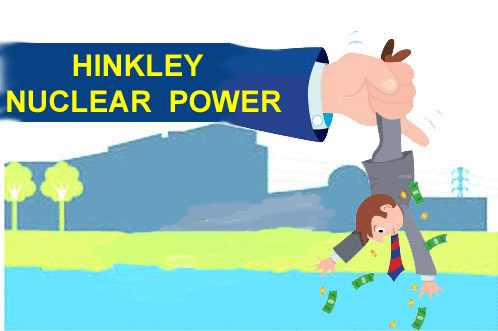 No2 Nuclear Power 25th Sept 2017, A new report by Emeritus Professor of Energy Policy, Steve Thomas, says it
is time to cancel Hinkley Point C. EDF and the French and UK governments
may try to suggest that it’s too late to stop and will talk up the costs
which have already been incurred. But the start of construction, when the
first structural concrete is poured, is still between 2 and 4 years away.
Preliminary works are conspicuous but relatively cheap. EDF Energy will
have incurred expenses since signing the deal with the UK Government in
October 2016 and some of these may be compensatable. But these costs would
be dwarfed by the costs of going ahead.
http://www.no2nuclearpower.org.uk/news/campaign-update/time-to-cancel-hinkley-point-c/
Holtec planning to build small nuclear reactors in Ukraine
 HOLTEC TO START ACTIVE PHASE OF BUILDING SMALL REACTORS SMR-160 IN 2023 WITH POSSIBILITY OF LOCALIZATION IN UKRAINE http://open4business.com.ua/holtec-start-active-phase-building-small-reactors-smr-160-2023-possibility-localization-ukraine/ 11 SEP , 2017
 KYIV. Sept 11 (Interfax-Ukraine) – Holtec International (the United States) in 2023 will start the active phase of building small module reactors SMR-160, President of Ukrainian National Nuclear Generating Company Yuriy Nedashkovsky said at a ribbon-cutting ceremony for a new plant of the company in New Jersey (the United States).
According to a posting on the website of Energoatom, Nedashkovsky said that earlier President of Holtec International Chris Singh made a proposal to Ukrainian President Petro Poroshenko to create a hub in Ukraine to sell small module reactors to Europe, Asia and Africa with localization of production facilities and the large amount of equipment at Ukrainian enterprises.
Nedashkovsky said that Kharkiv-based Turboatom has turbines suiting SMR-160. There is a chance of attracting other Ukrainian enterprises to the project.
He said that the start of licensing of SMR-160 could start in 2018.
He said that SMR-160 reactors are rather cheap compared to more powerful reactors. They can be installed in small areas and do not require powerful lines. Nedashkovsky said that the need in SMR-160 after 2025 is estimated at $1 trillion.
“These reactors have an increased level of safety due to the fact that they use passive safety systems: that is it has no pumping equipment, reinforcement and other things which require external power supply,” the president of Energoatom said.
The plant, built by Holtec in New Jersey, is mainly focused on two spheres: production of container fleet for spent nuclear fuel, as well as vessels for small modular reactors of the SMR-160 project.
Construction workers at Hinkley Point C nuclear project reject pay offer, will support industrial action
Bridgwater Mercury 21st Sept 2017, CONSTRUCTION workers at Hinkley Point C have overwhelmingly rejected a
renewed pay offer in the long-standing dispute over pay and bonuses on the
project. Industrial action is now likely after 95 per cent of staff
rejected the new deal from EDF which was understood to be about a five per
cent increase on their gross pay. A worker at the power plant site, who did
not want to be named, expects the same proportion of the workforce will
support industrial action. He said: “Considering it is the biggest
project in Europe strike is an absolute catastrophe”.
http://www.bridgwatermercury.co.uk/news/15550499.Strike_action_at_Hinkley_Point_C_would_be__absolutely_catastrophic___power_plant_worker_says/
South Korea’s nuclear phaseout might put a damper on its nuclear export plans
 Nuclear phase-out puts burden on S. Korea’s export drive By Kim Eun-jung SEOUL, Sept. 23 (Yonhap) –– South Korea’s nuclear phase-out policy may create a boom for the renewable energy initiative and allay public safety concerns, but it may also send an unwanted signal to the outside world that could hurt the country’s push to expand into the global atomic power generation market.
Since taking office in May, President Moon Jae-in has scrapped plans for new nuclear power plants and vowed not to extend the life cycles of 24 existing reactors, in a bid to end decades of reliance on the controversial energy source.
The latest move was aimed at addressing safety concerns after the 2011 Fukushima disaster and is in line with actions taken by other advanced economies that are turning to renewable energy sources, including the U.S., France and Germany.
This drastic turn from past administrations’ pro-nuclear policies, however, raises questions over South Korea’s status in the global nuclear market, which has seen spike in competition with the rise of state-backed Russian and Chinese companies in recent years.
Seoul policymakers have pledged continued support for overseas projects separate from its domestic energy policy, but industry insiders worry that less enthusiasm for nuclear power could shrink investment in advanced nuclear technologies and give South Korea less bargaining power on the global stage…….http://english.yonhapnews.co.kr/business/2017/09/22/0503000000AEN20170922008800320.html
Trump at UN negotiates big weapons sales to South Korea
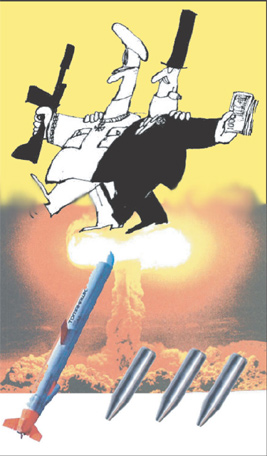
| Moon and Trump agree on South Korea purchase of state-of-the-art US weaponry during summit |
Why is Niger still losing out to Areva?
Extract-a-fact, By Quentin Parrinello 18th Sept 2017, In 2014, Niger announced it had successfully renegotiated uranium
extraction contracts with French state-owned company Areva to secure a
greater share of the wealth deriving from their uranium resources.
Three years later, an analysis carried out by Oxfam based on data released by
Areva calls into question the benefits for Niger in the contract
renegotiation.
http://www.extractafact.org/blog/why-is-niger-still-losing-out-to-areva
Scana Corp slides, as criminal investigation begins into $21 billion nuclear power project failure
Scana Plunges to Lowest in Almost Two Years on Criminal Probe, Bloomberg, By
-
Scana received federal subpoena related to canceled reactors
-
Utility faces questions on how much customers will be billed
Scana Corp. slid to the lowest level in almost two years as the U.S. began a criminal investigation into the $21 billion nuclear power project in South Carolina that the utility owner abandoned two months ago.
The U.S. Attorney’s office in South Carolina is carrying out a grand jury probe that involves agents at the Federal Bureau of Investigation, a Sept. 7 subpoena disclosed on Friday by Scana’s partner on the nuclear project, Santee Cooper, shows. The government asked for copies of correspondence, notes and reports related to the V.C. Summer nuclear plant, including a study engineering firm Bechtel Corp. drafted last year suggesting Scana was aware of challenges plaguing the project since early last year.
Scana declined on Friday to release the subpoena it had received or comment on the one Santee Cooper disclosed. Shares of the utility owner were down as much as 3.2 percent at $55.33 as of 2:46 p.m. New York time, the lowest since October 2015.
The federal probe and intensifying backlash from South Carolina legislators doesn’t bode well for Scana as the utility owner seeks to recoup billions of dollars it spent on the project from South Carolina’s utility customers. The company’s battle to recover costs may become a flash point in the debate over who should pay for nuclear power projects that have failed to be built across the U.S. in the past decade…….https://www.bloomberg.com/news/articles/2017-09-22/a-failed-21-billion-u-s-nuclear-project-still-haunting-scana
Sellafield chairman resigns after only half of his 3 year tenure in nuclear decommissioning firm
Sellafield chairman to step down, The Mail, 22 September 2017
THE boss of a nuclear decommissioning site will be stepping down from his role later this month, sparking a search for his replacement.
Tony Fountain will exchange his role as chair at Sellafield after completing only half of his three year tenure in the plant’s hot seat, in favour of the international company Essar Oil.
Mr Fountain first took up the role in April last year when Sellafield Ltd became a wholly owned subsidiary of the Nuclear Decommissioning Authority (NDA), taking the management of the site away from international consortium Nuclear Management Partners.
Nigel Smith, a senior independent Non-Executive Director with Sellafield Ltd, will cover the role in the interim until a replacement is found by the NDA…..http://www.nwemail.co.uk/news/millom/The-search-begins-for-Sellafields-new-chair-bd0712fa-774a-4beb-8678-43354a273f6a-ds
1 This Month
26 September – International Day for the Total Elimination of Nuclear Weapons





PLEASE OPPOSE HR 8255 AND S.3639 – bills would accelerate satellite deployment, with no environmental review or safeguards – https://ncstd5li.quorum.us/campaign/169331/
To see nuclear-related stories in greater depth and intensity – go to https://nuclearinformation.wordpress.com
-
Archives
- September 2026 (305)
- August 2026 (330)
- July 2026 (355)
- June 2026 (287)
- May 2026 (306)
- April 2026 (356)
- March 2026 (251)
- February 2026 (267)
- January 2026 (308)
- December 2025 (358)
- November 2025 (359)
- October 2025 (375)
-
Categories
- 1
- 1 NUCLEAR ISSUES
- business and costs
- climate change
- culture and arts
- ENERGY
- environment
- health
- history
- indigenous issues
- Legal
- marketing of nuclear
- media
- opposition to nuclear
- PERSONAL STORIES
- politics
- politics international
- Religion and ethics
- safety
- secrets,lies and civil liberties
- spinbuster
- technology
- Uranium
- wastes
- weapons and war
- Women
- 2 WORLD
- ACTION
- AFRICA
- Atrocities
- AUSTRALIA
- Christina's notes
- Christina's themes
- culture and arts
- Events
- Fuk 2022
- Fuk 2023
- Fukushima 2017
- Fukushima 2018
- fukushima 2019
- Fukushima 2020
- Fukushima 2021
- general
- global warming
- Humour (God we need it)
- Nuclear
- RARE EARTHS
- Reference
- resources – print
- Resources -audiovicual
- Weekly Newsletter
- World
- World Nuclear
- YouTube
-
RSS
Entries RSS
Comments RSS

