Global nuclear decommissioning services to be valued at USD 8.90 billion by 2025
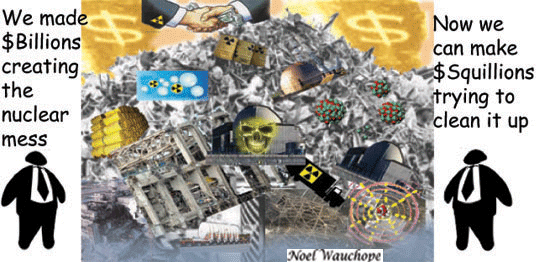 The global nuclear decommissioning services market size is expected to be valued at USD 8.90 billion by 2025
Nuclear Decommissioning Services Market Size, Share & Trends Analysis Report By Reactor Type (PWR, BWR, PHWR, GCR), By Strategy (Immediate and Deferred Dismantling, Entombment), And Segment Forecasts, 2018 – 2025 BY Sarah Smith Research Advisor at Reportbuyer.com Email: sarah@reportbuyer.com ReportBuyer LONDON, April 3, 2018 /PRNewswire/ –According to a new report by Grand View Research, Inc., exhibiting a 6.8% CAGR during the forecast period. Global nuclear phase out and rising support from governments post nuclear accidents are among major factors expected to fuel market growth over the years to come.
Rise in public safety concerns due to hazardous consequences of nuclear accidents is set to actuate market demand over the coming years.In addition, increasing sustainability concerns are likely to positively impact market growth.
The transitioning trend toward renewable energy thanks to various government initiatives and regulations is also projected to promote nuclear decommissioning services over the forecast period.
With extensive research and development underway, various novel decommissioning technologies to enable efficient dismantling of nuclear facilities have been developed. Furthermore, in order to enable sustainable development, government authorities are providing various incentives and support schemes for efficient dismantling of nuclear plants. …….
The global nuclear decommissioning services market size is expected to be valued at USD 8.90 billion by 2025, according to a new report by Grand View Research, Inc., exhibiting a 6.8% CAGR during the forecast period. Global nuclear phase out and rising support from governments post nuclear accidents are among major factors expected to fuel market growth over the years to come.
Rise in public safety concerns due to hazardous consequences of nuclear accidents is set to actuate market demand over the coming years.In addition, increasing sustainability concerns are likely to positively impact market growth.
The transitioning trend toward renewable energy thanks to various government initiatives and regulations is also projected to promote nuclear decommissioning services over the forecast period.
With extensive research and development underway, various novel decommissioning technologies to enable efficient dismantling of nuclear facilities have been developed. Furthermore, in order to enable sustainable development, government authorities are providing various incentives and support schemes for efficient dismantling of nuclear plants.
Key market players include Orano Group; Babcock International Group PLC; Westinghouse Electric Company LLC; AECOM Group; Studsvik AB; Bechtel Group Inc.; GE Hitachi Nuclear Energy; and Magnox Ltd. These companies mainly focus on innovation to improve service quality and meet global demand.
Download the full report: https://www.reportbuyer.com/product/5360564 https://www.prnewswire.com/news-releases/the-global-nuclear-decommissioning-services-market-size-is-expected-to-be-valued-at-usd-890-billion-by-2025-300623629.html
FirstEnergy files for bankruptcy for its uneconomic coal and nuclear subsidiaries
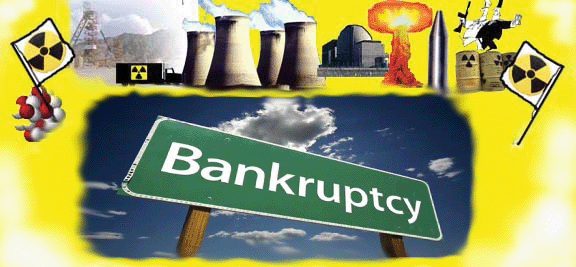 FirstEnergy Seeks Bankruptcy Protection for Ailing Coal and Nuclear Subsidiaries, The move follows FirstEnergy’s request for a federal bailout. Greentech Media, APRIL 02, 2018
China expanding its nuclear marketing overseas, with the help of Bill Gates

Chinese nuclear giant continues to expand overseas cooperation, 2018-03-03 Editor: Xiang Bo BEIJING, March 3 (Xinhua) — China National Nuclear Corporation (CNNC), one of the country’s two leading nuclear power companies, is stepping up its overseas cooperation, the chairperson said Saturday.
Progress is being made in cooperation with CNNC’s local partners in countries like Pakistan, Argentina, Saudi Arabia, Ghana and the United States, CNNC chairperson Wang Shoujun said on the sidelines of the annual session of the country’s top political advisory body…….
Last year, the CNNC signed a joint venture agreement with TerraPower, LLC to form the Global Innovation Nuclear Energy Technology Co., Ltd. to work together on the Travelling Wave Reactor technology, marking a new stage in China-U.S. nuclear cooperation, Wang added. ……http://www.xinhuanet.com/english/2018-03/03/c_137013831.htm
Collapse of USA’s nuclear industry: more shutdowns and bailouts to come
 More Nuclear Power Plant Shutdowns, Bailouts In The Works, WSKG, 1 Apr 18 STATE IMPACT
 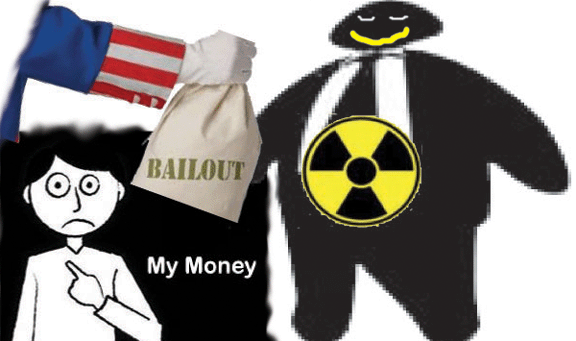 PENNSYLVANIA – Citing market challenges,” electric utility FirstEnergy says it will close three nuclear plants in Ohio and Pennsylvania, while at the same time asking the Department of Energy for immediate help to keep its fleet of coal and nuclear plants open.
The company, which could be near bankruptcy according to a report at cleveland.com, gave regional grid operator PJM interconnection notice that it will deactivate Beaver Valley Power Station and two other plants — Davis-Besse in Oak Harber, Ohio, and Perry Nuclear Power Plant in Perry, Ohio — by 2021.
……. Natural gas and renewable energy have been making up a larger amount of the country’s electric grid, eating into coal and nuclear power on wholesale markets. With that backdrop, FirstEnergy is also asking the Department of Energy to issue an immediate emergency order to PJM Interconnection, the grid operator for mid-Atlantic states, to provide “just and reasonable” compensation to its fleet of aging coal and nuclear power plants in order to keep them open.
“Nuclear and coal-fired generators in PJM have been closing at a rapid rate — putting PJM’s system resiliency at risk — and many more closures have been announced,” the company said, in a letter to Energy Secretary Rick Perry. “PJM has demonstrated little urgency to remedy this problem any time soon — so immediate action by the Secretary is needed to alleviate the present emergency.
…..The order would be similar to one that Perry’s own Department of Energy proposed last year, which would have made ratepayers pay more for energy produced at coal and nuclear plants. In January, the Federal Energy Regulatory Commission rejected the proposal.
Environmental groups were swift to label the plan a “bailout” for the coal industry.
“If Rick Perry and Trump Administration take the bait and actually issue this ill-advised and illegal emergency order, that means they’re happy to let energy bills and pollution skyrocket, just to bail out a handful of rich coal and nuclear executives,” said Mary Anne Hitt, Director of Sierra Club’s Beyond Coal campaign, in a statement.
The oil and gas industry was no less harsh in its criticism……..
In addition to looking for federal assistance, FirstEnergy is asking states for help, too.
Don Moul, president of FirstEnergy Solutions, the company’s power generation subsidiary, called on legislators in Ohio and Pennsylvania to help keep the nuclear plants open……..https://wskg.org/news/more-nuclear-power-plant-shutdowns-bailouts-in-the-works/
Britain’s uncompetitive electricty marke: big electricity companies don’t want the competition from renewables
Dave Toke’s Blog 1st April 2018, The media is awash with stories of the imminent emergence of ‘subsidy free’
wind and solar power in the UK, but the reality is that the uncompetitive nature of the British electricity market mostly undermines that prospect.
In theory onshore wind power and maybe some solar power projects would be able to generate power to sell at competitive prices on the British
wholesale electricity market.
In practice most of the potential buyers of energy from new renewable energy projects will not be interested in buying
the energy even at cheap prices simply because it conflicts with their own generation portfolios. True, there is a limited possibility for some very
large corporate consumers who are interested in buying green electricity to fund new projects by issuing corporate power purchase agreements (PPAs).
But in reality this market is small, and I have heard this estimated to be no larger than 100 MW a year. That means it would take around 20 years for
not quite 1 per cent of electricity to be supplied this way. PPAs are needed for new renewable energy projects that offer the generators the
certainty that they can be paid a minimum amount for each MWh that they produce for the long term. The UK Government’s PPAs, called contracts for
differences (CfDs), last 15 years. However they are no longer available for onshore wind and solar.
The problem is that most of the market for offering PPAs that can fund new renewable energy projects comes from the big
electricity suppliers, who have been known in the past as the ‘Big Six’.
Only PPAs offered by really large companies will be usually taken seriously enough by banks and and other institutions to enable renewable energy
projects can obtain long term loans or equity. The trouble is that the Big Energy suppliers will usually have little interest in offering long term
PPAs to new renewable energy projects since. For a start they can buy in power at much the same price as the renewable energy generator can offer
without needing to commit themselves to long term agreements.
Crucially, the big electricity companies are struggling to keep their own power stations in business, and are not going to sign up competition from other people for their own business!
http://realfeed-intariffs.blogspot.co.uk/2018/04/why-britains-distorted-electricity.html
Vogtle nuclear reactors, years overdue, $billions overbudget – who pays?

 Savannah Now 30th March 2018, The first of two new nuclear reactors at Plant Vogtle near Waynesboro was
supposed to open two years ago today, with the second following last year.
Instead, what’s now the nation’s only new nuclear project grinds on,
five years behind schedule and billions of dollars overbudget.
Construction continues at a pace of $91 million a month, with ratepayers largely on the
hook for those costs. But the issue of who pays for Vogtle isn’t yet a
done deal, with legal challenges pending, including one challenge brought
to court by a former Georgia governor. And ethics watchdogs are examining
the regulators, finding what they say are cozy relationships with the
utility and slack record keeping.
http://www.savannahnow.com/news/20180330/as-plant-vogtle-build-continues-so-do-appeals-to-stop-it
Toshiba to own Nuclear Fuel Industries, join Hitachi Ltd. and Mitsubishi Heavy Industries ?
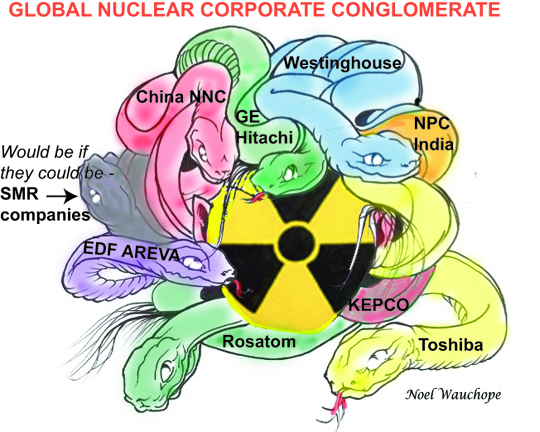 Japan News 31st March 2018, Toshiba Corp. said Friday that it will take full control of Nuclear Fuel
Industries Ltd., a Japanese nuclear fuel supplier, by the end of June.
Toshiba, which last October agreed to acquire 52 percent of Nuclear Fuel
Industries from Westinghouse Electric Co., newly signed agreements to
purchase the remaining stake from Sumitomo Electric Industries Ltd. and
Furukawa Electric Co.
Sumitomo Electric and Furukawa Electric own 24
percent each of Nuclear Fuel Industries. Toshiba’s move to fully own
Nuclear Fuel Industries is expected to help accelerate its talks with
Hitachi Ltd. and Mitsubishi Heavy Industries Ltd. on integrating their
respective nuclear fuel operations in Japan.
Nuclear fuel suppliers owned by Japanese nuclear plant makers have been struggling with sluggish demand
as many nuclear plants in the country remain suspended. Toshiba, Hitachi
and Mitsubishi Heavy previously aimed to merge their domestic nuclear fuel
operations in spring last year, but the talks have been stalled due to
Toshiba’s financial crisis. http://the-japan-news.com/news/article/0004340845
Nuclear colonialism: nuclear nations keen to sell uneconomic nuclear power – e.g South Korea to United Arab Emirates
 Arab world’s first nuclear reactor completed in UAE, in cooperation with South Korea, Arab Weekly 1 April 18 LONDON – Construction of the Arab world’s first commercial nuclear reactor has been completed in the United Arab Emirates. The plant is part of the country’s long-term strategy to decrease its reliance on fossil fuels.
The Barakah nuclear power plant, in western Abu Dhabi, is a joint project between the UAE’s Emirates Nuclear Energy Corporation (ENEC) and South Korea’s Korea Electric Power Corporation (KEPCO).
UAE Crown Prince Sheikh Mohammed bin Zayed al-Nahyan toured the $20 billion facility with South Korean President Moon Jae-in and announced on March 26 the completion of the construction“This is a historic moment in our nation’s development as we celebrate the construction completion of Unit 1 of the Barakah nuclear energy plant,” Sheikh Mohammed said……
Emirati officials said Barakah was the world’s largest single nuclear project. ……https://thearabweekly.com/arab-worlds-first-nuclear-reactor-completed-uae-cooperation-south-korea
Another nuclear power station to bite the dust- Davis-Besse
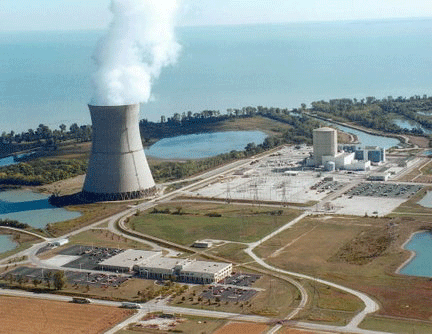 Davis-Besse nuclear power plant to shut down permanently in 2020, The Blade, By | BLADE STAFF WRITER
FirstEnergy Solutions, a subsidiary the corporation founded to manage anticipated bankruptcy filings for its economically failing nuclear and coal divisions, has confirmed in a news release distributed Wednesday that Davis-Besse will be shut down permanently in 2020 and that FirstEnergy’s other nuclear stations will be shut down permanently in 2021 if there are no buyers or remedies found by their respective dates.
The timetable for each permanent closure is determined by refueling schedules.
Commercial-scale nuclear reactors must be refueled every 18 months to two years, depending on the isotope of uranium in their fuel. Davis-Besse emerged this week from what a senior FirstEnergy executive previously described as its last refueling outage.
AREVA – failed company exhumed – now called “ORANO” and STILL losing money

Romandie 29th March 2018, Orano, a company resulting from the restructuring of giant Areva and refocused on the nuclear fuel cycle, has slightly widened its loss during
the year 2017, she said Thursday, in a context of nuclear market that remains difficult. The group’s net loss widened 4.5% to 252 million euros
compared to last year, according to a statement. EBITDA was down 29.3% to 946 million euros, mainly due to the impact of reduced volumes sold. Sales
reached € 3.9 billion, down 10.8%. These results, “in line with expectations” according to the text.
https://www.romandie.com/news/903937.rom
China’s progress in nuclear power is not as sure as it used to be
Is China losing interest in nuclear power? China Dialogue Feng Hao 19.03.2018 Slowing demand for 
 electricity and competition from renewables have halted new reactor approvals.Globally, the outlook for new, large nuclear reactors is gloomy, according to the International Energy Agency’s (IEA) World Energy Outlook. A lot of countries have backed away from nuclear power in recent years due to concerns over public safety, cost and the complex challenge of getting plants built.
This year, five reactors are expected to come online in China, with the IEA predicting that by 2030 the country will overtake the United States as the world’s biggest generator of nuclear power.
Pushing nuclear
Increasingly, China’s decision to move ahead with new nuclear seems at odds with other countries that are abandoning the technology in favour of other low carbon options, such as wind and solar.
Xu Jiangfeng is a researcher at the Planning Research Centre of the China National Offshore Oil Corporation’s Research Institute. He told chinadialogue that the government’s concern with energy security has resulted in a diverse mix of energy resources and technologies being pursued, including nuclear……….
Policymakers may cite various strategic reasons for backing nuclear power but there is a question mark hanging over the sector’s future growth.
China has 20 gigawatts of nuclear power capacity under construction but plans for additional capacity are being delayed. A 2020 target of 58 gigawatts of installed nuclear capacity now looks out of reach.
The National Energy Administration did not approve any new nuclear plants between 2016 and 2017. In 2017, only three new reactors started operating.
Reasons for the shift, according to Shi, include mixed attitudes towards new nuclear power within government, and the over-supply that’s affecting China’s power generation sector.
As China’s economic growth has eased, so too has the growth in electricity demand. In 2015, electricity consumption rose just 0.5%, the lowest in 40 years.
“Work out supply and demand and you can see that the market is unable to absorb any more nuclear power,” Kang Junjie, chief engineer with Dongdian Wanwei Technology (Beijing) told chinadialogue.
This leaves little room for expansion of electricity generation, meaning fierce competition between nuclear, solar, wind and hydropower. Globally, solar and wind are replacing nuclear power as the first choice for new power generation. This is true in China, too.
Cost is a key factor: the earlier nuclear power plants are now in the mid-to-late stages of their lifecycle, with operational and maintenance costs rising, according to Kang Junjie. Meanwhile, renewables are in the ascendant, with costs continuing to fall.
Analysis by Bloomberg New Energy Finance predicts that the cost of power from China’s onshore wind and solar will drop below that of coal in 2019 and 2021, respectively, suggesting that the cost advantage of nuclear power over renewables will only last a few more years…………. https://www.chinadialogue.net/article/show/single/en/10506-Is-China-losing-interest-in-nuclear-power-?mc_cid=e08503abda&mc_eid=da6e209b80
Another aging nuclear reactor in western Japan to be scrapped
Who REALLY benefits from uranium mining in Grand Canyon country?
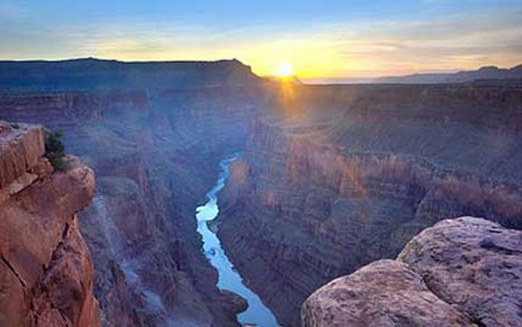 Uranium in Canyon Country: Part 2 of 2: Who benefits from uranium mining? Grand Canyon News, By Erin Ford , 27 Mar 18, GRAND CANYON, Ariz. — There are currently 831 mining claims in the roughly 1 million acres withdrawn by former Interior Secretary in 2012, according to the Bureau of Land Management (BLM).
There may be a healthy profit to be made on the claims, as legal action by mining industry groups and a recommended review of the ban by the Forest Service seems to indicate. But who is making the profit?
The BLM’s report indicates that only about 2 percent of the 831 mining claims are held by U.S.-based companies – those belong to Liberty Star Uranium and Metals in Tucson, Arizona. The rest, discounting privately-held claims (5 percent), belong to foreign-based companies. Of the remaining 93 percent, companies based out of Canada hold 712 claims (86 percent) and a UK-based Vane Minerals holds 60 claims (7 percent).
Uranium production in the U.S. has not been a profitable enterprise since the bottom fell out of the uranium market in the early 1990s. According to the Energy Information Administration (EIA), there are currently 61 nuclear-based power plants in the U.S. — no new plants have been commissioned since the near-catastrophic incident at Pennsylvania’s Three Mile Island facility in 1979. The end of the Cold War in 1991 meant that proliferation of nuclear weapons was suspended, a pact that remains largely in place. As a result, demand for uranium fell sharply, prices bottomed out and uranium extraction became a pricey enterprise with low return on investment.
………Where’s the profit?
In a petition filed with the U.S. Department of Commerce (DOC), Energy Fuels Inc., a Canadian company with a 12 percent stake in uranium mining claims around Grand Canyon, asserts that the commercial uranium stockpile was 6 percent higher than 2015 levels.
If demand is lower and supplies are higher, how do these companies plan to profit off increased mining activity?
The answer may lie in three things: President Donald Trump’s energy dominance agenda, potential U.S. Supreme Court ruling and Energy Fuels’ petition to the DOC……….
Who benefits?
Energy Fuels, Inc. recently filed a petition with the DOC for relief under Section 232 of the Trade Expansion Act of 1962. In simplest terms, the company is asking the administration to issue a buy American requirement by limiting uranium imports as a threat to national security. The premise is the same as the tariffs to be potentially imposed on steel and aluminum imports — to revive a U.S.-based industry by steeply taxing competitors or eliminating them altogether.
But Reimondo points out that uranium mining isn’t a strong economic driver in northern Arizona, and even if it was, the U.S. doesn’t reap any rewards. The government, which receives royalty payments from industries that extract minerals or other commodities from federal lands, doesn’t receive royalties from uranium mining.
Comparatively, the tourism and travel economy pumps more than 900 million into the region each year, and supports nearly 20,000 jobs, according to a joint 2011 report by the U.S. Geological Survey, U.S. Fish and Wildlife Service, National Park Service, Forest Service and BLM. The report also estimates that uranium mining could support only about 650 local jobs — and those jobs aren’t permanent. Once a mine is depleted, on-site jobs will evaporate. Energy Fuels says its Canyon mine, which is currently permitted to operate near Red Butte about six miles from the South Rim, is expected to employ about 60 people at peak production.
“Mining does not drive our economy here,” said Coconino County Supervisor Art Babbott in an interview. “Access to public lands, that’s what is our important economic driver here.” https://www.grandcanyonnews.com/news/2018/mar/27/uranium-canyon-country-part-2-2-who-benefits-urani/
4 firms on International Campaign to Abolish Nuclear Weapons list now ban nuclear arms investment
 4 firms on ICAN list ban nuclear arms investment https://www3.nhk.or.jp/nhkworld/en/news/20180324_11/ NHK has learned that at least 4 Japanese financial institutions listed by a nuclear-weapons watchdog as investing in firms involved in the production of nuclear weapons have internal policies forbidding such ties.
The International Campaign to Abolish Nuclear Weapons, or ICAN, says 329 banks and asset management firms in 24 countries and regions invested in companies involved in nuclear weapons production over a 3-year period starting in 2014.
NHK contacted 7 Japan-based banks and other institutions listed by the Nobel Peace Prize-winning group. Asked about ICAN’s findings, 3 of the firms said they do not currently deal with such companies. Four institutions did not reply.
At least 4 said their internal regulations restrict them from investing or providing loans to businesses related to nuclear weapons production.
ICAN says 30 non-Japanese companies have suspended such investments following the adoption last year of the UN Treaty on the Prohibition of Nuclear Weapons.
Yuki Tanabe, an official at the Japan Center for a Sustainable Environment and Society, says banks and other institutions could be accused of lacking social responsibility by doing business with such companies — even when they have no direct deals with them, or have policies against such investments.
Trump to sell over $1 billion in weapons to Saudi Arabia

1 This Month
26 September – International Day for the Total Elimination of Nuclear Weapons





PLEASE OPPOSE HR 8255 AND S.3639 – bills would accelerate satellite deployment, with no environmental review or safeguards – https://ncstd5li.quorum.us/campaign/169331/
To see nuclear-related stories in greater depth and intensity – go to https://nuclearinformation.wordpress.com
-
Archives
- September 2026 (305)
- August 2026 (330)
- July 2026 (355)
- June 2026 (287)
- May 2026 (306)
- April 2026 (356)
- March 2026 (251)
- February 2026 (267)
- January 2026 (308)
- December 2025 (358)
- November 2025 (359)
- October 2025 (375)
-
Categories
- 1
- 1 NUCLEAR ISSUES
- business and costs
- climate change
- culture and arts
- ENERGY
- environment
- health
- history
- indigenous issues
- Legal
- marketing of nuclear
- media
- opposition to nuclear
- PERSONAL STORIES
- politics
- politics international
- Religion and ethics
- safety
- secrets,lies and civil liberties
- spinbuster
- technology
- Uranium
- wastes
- weapons and war
- Women
- 2 WORLD
- ACTION
- AFRICA
- Atrocities
- AUSTRALIA
- Christina's notes
- Christina's themes
- culture and arts
- Events
- Fuk 2022
- Fuk 2023
- Fukushima 2017
- Fukushima 2018
- fukushima 2019
- Fukushima 2020
- Fukushima 2021
- general
- global warming
- Humour (God we need it)
- Nuclear
- RARE EARTHS
- Reference
- resources – print
- Resources -audiovicual
- Weekly Newsletter
- World
- World Nuclear
- YouTube
-
RSS
Entries RSS
Comments RSS

