Duke Energy Has Squandered Billions in Failed Natural Gas and Nuclear Projects,
Report: Duke Energy Has Squandered Billions in Failed Natural Gas and Nuclear Projects, Alex Formuzis, alex@ewg.org, EWG, 31 Aug 20, WASHINGTON – Since 2013, Duke Energy and its partners have scrapped natural gas pipelines and nuclear power plants totaling $11.6 billion, according to a new report by the Environmental Working Group.
For most businesses, this record of blowing billions of dollars on one failed project and boondoggle after another would send finances reeling and the executives in charge packing.
But not when you are the nation’s largest investor-owned electric utility, with a captive ratepayer base of 7.7 million across six states, and state lawmakers and regulators in your pocket who let you pass those losses onto customers through new fees and rate increases………………
Failed, costly projects like the ACP and the Edwardsport plant are business as usual for Duke, from the cancelled Lee nuclear plant in South Carolina to the cancelled Levy and shuttered Crystal River nuclear plants in Florida.
Plans for the construction of the Levy plant first began in 2006 under Progress Energy, which merged with Duke in 2012. The original estimate was $5 billion to $6 billion. By the time of the merger, the price tag had grown to $24 billion and the in-service date was pushed back eight years, to 2024.
Even in the face of overruns nearly five times higher than the original cost estimates, Duke was unfazed, pressing the Nuclear Regulatory Commission for a license to build and operate the plant. The NRC granted Duke’s request in 2016, but that same year the utility announced it would halt production. Florida regulators allowed Duke to charge customers $800 million for a plant that never delivered a kilowatt of electricity.
To drag Duke and other utilities into the clean energy future, politicians and regulators must disrupt the monopoly model that has ceded control of energy to profit-first corporations. Electricity rates should be tied to efforts to increase efficiency and promote renewables like rooftop and community solar – both of which Duke has fought to deny the captive ratepayers in its vast expansive service area. And stockholders, not ratepayers, should bear the costs and risks of big capital projects.
###
The Environmental Working Group is a nonprofit, non-partisan organization that empowers people to live healthier lives in a healthier environment. Through research, advocacy and unique education tools, EWG drives consumer choice and civic action. Visit www.ewg.org for more information. https://www.ewg.org/energy/release/23293/report-duke-energy-has-squandered-billions-failed-natural-gas-and-nuclear
The closure of Hunterston B will not cause power network outages
|
Insider Media 28th Aug 2020, The closure of Hunterston B will not cause power network outages,
Scotland’s energy minister Paul Wheelhouse has insisted. The nuclear power station is to close by January 2022, according to operator EDF Energy, almost two years earlier than expected. Last year, Scottish Gas owner
Centrica blamed interruption of electricity supply from Hunterston for loss of income. Wheelhouse reiterated the Scottish Government’s position that no new nuclear power stations should be built in Scotland, with energy generated by renewable sources instead. He said that for a two-month period
in 2018, Hunterston B was entirely offline and the Torness nuclear power station in East Lothian was operating at reduced capacity, but it caused no issues for the energy supply. Wheelhouse told the BBC: “Scotland, in the last year for which we got full statistics, exported a net 15.9 terawatt hours of energy – which dwarfs the output of Hunterston.” https://www.insider.co.uk/news/energy-minister-hunterston-closure-not-22593000 |
|
If the arms treaty with Russia ends USA will spend even more than the planned $1.2 trillion on nuclear weapons
 US nuclear weapons budget could skyrocket if Russia treaty ends, Defense US nuclear weapons budget could skyrocket if Russia treaty ends, Defense News, 27 Aug 20 News, 27 Aug 20
By: Joe Gould WASHINGTON ― The New START nuclear pact’s demise could cost the Department of Defense as much as $439 billion for modernization, plus $28 billion in annual maintenance costs, the Congressional Budget Office said in a report published Tuesday.
That price estimate, as the United States and Russia remain at odds over the treaty, reflects a threefold increase in weapons production costs. With Washington and Moscow’s responses to the expiration of New START unclear, CBO explored several possible paths, including other less expensive options. “If the New START treaty expired, the United States could choose to make no changes to its current plans for nuclear forces, in which case it would incur no additional costs,” the CBO study found. “If the United States chose to increase its forces in response to the expiration of the treaty, modest expansions could be relatively inexpensive and could be done quickly. Larger expansions could be quite costly, however, and could take several decades to accomplish.” The New START treaty limits each country to no more than 1,550 deployed nuclear warheads and 700 deployed missiles and bombers. Signed in 2010 by then-U.S. President Barack Obama and then-Russian President Dmitry Medvedev, the pact would expire Feb. 5, but includes an option to extend it for another five years without needing the approval of either country’s legislature. The analysis comes amid predictions of flattening defense budgets and as the United States and Russia concluded two days of arms control talks in Vienna last week with some signs of a possible willingness to extend the existing New START deal. A key sticking point is the U.S. demand to include China in any new treaty, even as China has repeatedly refused…….. Russia has offered an extension without any conditions. U.S. negotiator Marshall Billingslea indicated the U.S. was willing to talk about an extension but only if there were a politically binding framework for making changes to New START, which he called “deeply flawed.” House Armed Services Committee Chairman Adam Smith, D-Wash., and Senate Foreign Relations Committee ranking member Sen. Bob Menendez, D-N.J., said a failure to renew would drive the U.S. toward a dangerous and unaffordable arms race, as Russia would use a U.S. exit to “quickly expand its arsenal.” “Extending the New START Treaty for a full five years is clearly the right financial and national security choice,” they said in a joint statement. “America cannot afford a costly and dangerous nuclear arms race, particularly in the middle of our current financial, political, and health crises. We again call on the Trump Administration to extend the New START Treaty today.” Arms control advocates have likewise warned against the U.S. allowing the treaty to lapse with no limits on their nuclear arsenals, after both Moscow and Washington withdrew from the 1987 Intermediate-range Nuclear Forces Treaty last year. “Ever-increasing spending on nuclear weapons without an arms control framework that bounds U.S. and Russian nuclear forces is a recipe for budget chaos, undermining strategic stability, and damaging the health of the global nonproliferation regime,” said the Arms Control Association’s director for disarmament and threat reduction policy, Kingston Reif. “Such an approach also flies in the face of longstanding bipartisan Congressional support for the pursuit of modernization and arms control in tandem.” An expansion in nuclear weapons spending would likely place pressure on other parts of the national defense budget. CBO previously concluded the U.S. will spend $1.2 trillion over the next three decades on nuclear-weapons. Meanwhile, the Pentagon is not budgeting for New START’s expiration, according to a recent GAO report. U.S. lawmakers of both parties are pressuring the White House to extend the pact. ………. https://www.defensenews.com/congress/2020/08/25/cbo-us-nuclear-weapons-budget-could-skyrocket-if-russia-treaty-ends/ |
|
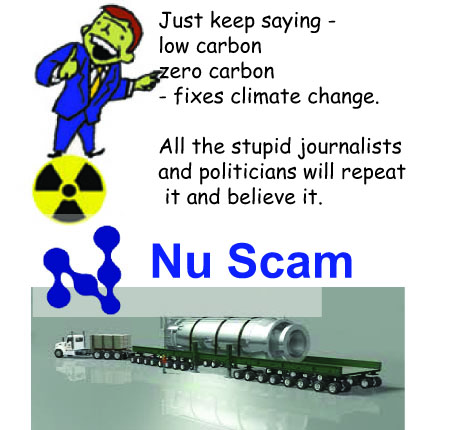
Lehi City Council backs out of NuScam ‘small’ nuclear reactor project
 Daily Herald 26 Aug 20,
The Lehi City Council voted unanimously Tuesday to withdraw the city from a multiagency nuclear power project that would provide nuclear power to cities across Utah, citing concerns over increasing costs.
The Carbon Free Power Project is an initiative by Oregon-based NuScale Power, the Utah Associated Municipal Power Systems and the United States Department of Energy to build a small modular reactor power plant at the Idaho National Laboratory………
Earlier this month, the Utah Taxpayer Association called on cities to withdraw from the project ahead of the Sept. 14 deadline after a closed-door virtual town hall meeting on July 21 where officials warned of project delays, increased costs to cities and towns involved, and “dependence on unpredictable federal subsidies.”
“The UAMPS project will lock in 27 municipalities in Utah and several in surrounding states for a share of billions of dollars in costs and unclear risk in the pursuit of a cluster of small modular reactors (SMRs) touted by Oregon-based NuScale Power, which repeatedly has delayed timelines and increased costs associated with its SMRs,” Utah Taxpayer Association Vice President Rusty Cannon said in an Aug. 4 news release. “The risky project with massive cost escalations is being conducted largely out of the public eye.”
Earlier this month, the Utah Taxpayer Association called on cities to withdraw from the project ahead of the Sept. 14 deadline after a closed-door virtual town hall meeting on July 21 where officials warned of project delays, increased costs to cities and towns involved, and “dependence on unpredictable federal subsidies.”
“The UAMPS project will lock in 27 municipalities in Utah and several in surrounding states for a share of billions of dollars in costs and unclear risk in the pursuit of a cluster of small modular reactors (SMRs) touted by Oregon-based NuScale Power, which repeatedly has delayed timelines and increased costs associated with its SMRs,” Utah Taxpayer Association Vice President Rusty Cannon said in an Aug. 4 news release. “The risky project with massive cost escalations is being conducted largely out of the public eye.”
In November 2017, the total cost of the project was estimated at $3.6 billion. By November 2019, that number had increased to $4.2 billion. By July, the estimated cost had gone up to $6.1 billion.
That would cost Lehi $466 million at the city’s current subscription levels, Eves said. UAMPS would be responsible for paying $4.8 billion, while the DOE would pay $1.3 billion and NuScale Power would pay $5 million. ………… https://www.heraldextra.com/news/local/govt-and-politics/lehi-city-council-votes-to-back-out-of-nuclear-power-project-contract/article_0af6e67c-24e5-5427-9029-e52b9f9d63ae.html
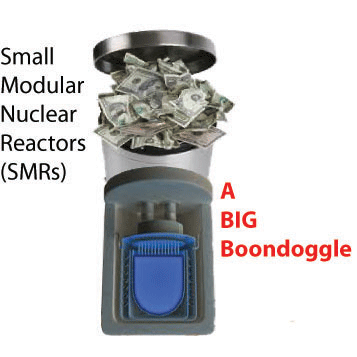
City in Northern Utah pulls out of NuScam small nuclear reactors project
Northern Utah city opts out of planned nuclear power project over money concerns Deseret News, Amy Joi O’Donoghue @Amyjoi 16 Aug 24, 2020,
SALT LAKE CITY — Cost concerns over Logan’s participation in a next-generation nuclear power plant planned at Idaho National Laboratory led the city to withdraw from the project, and Lehi is considering a similar move in its council meeting Tuesday.
“My concerns were many and varied,” Logan Finance Director Richard Anderson said of last week’s decision
……. changes in funding by the U.S. Department of Energy for the Carbon Free Power Project caused Anderson concern, as it did for Mark Montgomery, the city’s light and power director, and prompted both of them to recommend Logan withdraw its participation.
Ultimately, the energy department committed to spend $1.4 billion on the project with an eye toward reducing carbon emissions, combating climate change and to position the country as a world leader in nuclear technology.
But critics say the proposed 720-megawatt plant is too risky and ratepayers — hence taxpayers — should not be footing the cost for technology they say is yet to be proven.
LaVarr Webb, spokesman for the municipal power association, said the investment schedule was specifically designed with these exit opportunities if cities or special districts become nervous.
The project, he added, will not proceed if costs prove too high.
The project has also come under criticism for what some say is a lack of transparency.
Earlier this month, the Utah Taxpayers Association urged cities to withdraw ahead of the deadline and complained about meetings in which groups were turned away unless they were project participants.
Rusty Cannon, vice president of Utah Taxpayers Association, said because the municipal power association is exempt from Utah’s open meeting laws, it can close its doors to others.
“We asked to observe a recent meeting and were denied access. That is the same response many others have also received,” Cannon said.
While association leaders have spent hours on video calls with the association and others, Cannon said that format does not provide the same answers.
Webb said meetings in which non-project participants were turned away, with perhaps the exception of one, are in line with why other governmental entities can close meetings under Utah law, such as contractual issues, litigation or personnel issues.
On Tuesday in Lehi, the City Council will consider a resolution outlining the city’s withdrawal from the project……. https://www.deseret.com/utah/2020/8/24/21399537/northern-utah-city-opts-out-of-planned-nuclear-power-project-over-money-concerns
Philippines wary of nuclear power: costs to be borne by tax-payer
|
Ahmed said that of the top 10 major nuclear developments in the world, most of them were 10 to 15 years behind schedule, “and they are double or triple the original investment and the cost to consumers are prohibitively expensive without a lock-in subsidy.” |
|

Installing solar PV can increase house prices by an average of £32,459 across the UK.
 Solar Power Portal 21st Aug 2020, The value of residential solar has been touted after new research revealed
that the technology can boost the value of houses by over £30,000. The
research comes from EffectiveHome.co.uk, a website dedicated to providing
information and guidance for homeowners regarding solar. It found that
installing solar PV can increase house prices by an average of £32,459
across the UK. Houses in London see the biggest increase, with the value
jumping by £90,000. The country’s capital therefore has the largest
increase in value of the ten largest cities in the UK, followed by Bristol
(£45,142), Edinburgh (£40,095) and Leicester (£31,577).
https://www.solarpowerportal.co.uk/news/residential_solar_boosts_house_prices_by_average_of_30000
City of Logan cuts its losses, withdraws from risky NuScam “small” nuclear reactor project
Logan withdraws from risky nuclear power project, Cache Valley Daily Charlie Schill August 19, 2020 LOGAN – Members of the Logan City Council voted Tuesday to end the city’s partnership in an increasingly expensive nuclear power project.
As a member of the Utah Associated Municipal Power Systems (UAMPS), Logan City owned a partial interest in a first-of-its-kind nuclear plant proposed to be constructed at the Idaho National Laboratory.
Faced with Sept. 15 deadline to ante up more funding for the risky project, both Mark Montgomery, the city’s light and power director, and Logan Finance Director Richard Anderson recommended that Logan withdraw from the Carbon Free Power Project…….
Montgomery told city council members that Logan had invested about $400,000 in the Small Modular Reactor (SMR) project since 2017. If the city had opted to continue its participation in the project into its initial licensing phase through 2023, the price tag would have been another $654,000.
In early August, the Utah Taxpayers Association urged all Utah cities to reconsider their participation in the SMR project due to its potential for out–of-control costs………
In the original CFPP proposal, the U.S. Department of Energy was to foot the bill for the development of the project’s first module. After pledging up to $1.4 billion for those expenses, federal officials have since backed out of that agreement, leaving UAMPS holding the bag for the project’s first-of-its-kind risks.
Montgomery added that estimated cost of the project have also escalated since 2017, jumping from $3.6 billion to $6.1 billion as of July of this year……… https://www.cachevalleydaily.com/news/archive/2020/08/19/logan-withdraws-from-risky-nuclear-power-project/#.X0BMOOgzbIU
UK relations with China at a low point; bad news for nuclear power projects
|
UK nuclear power: The next Huawei? DW, 21 Aug, 20Once a key part of the UK’s energy plans, nuclear power faces rising costs, cheaper renewables and domestic opposition. It also finds itself at the center of a row between London and Beijing that could prove fatal.
London’s relations with China — hailed as entering a “golden era” only four years ago — have deteriorated badly over Hong Kong, hitting a nadir when the UK finally bowed to US pressure to ditch Huawei’s involvement in its new-generation internet (5G) rollout. In late 2019, the US published a list of companies linked to the Chinese military, and after Huawei came the China General Nuclear Power Group (CGN). The state-owned Chinese firm has invested 3.8 billion pounds (€4.1 billion, $4.3 billion) in Britain to date, mainly in the Hinkley Point nuclear plant under construction in Somerset, southwest England, and the Sizewell plant in eastern England. It is also seeking UK regulatory approval to build its own nuclear reactor at Bradwell in Essex, east of London. China warned the UK it would face “consequences if it chooses to be a hostile partner” after London announced its Huawei’s decision. Liu Xiaoming, the Chinese ambassador to the UK, reportedly said China could cut its backing for UK nuclear plants altogether. Years of Chinese involvement in UK nuclear industryCGN’s involvement in the UK nuclear industry began in 2016 when a deal was signed with French state-owned utility Electricite de France (EdF) to collaborate on three reactors totaling 8.7 gigawatts (GW) of power generation, starting with Hinkley Point. The agreement spoke of CGN’s “progressive entry” into the UK’s “resurgent” nuclear ambitions. The UK currently has 15 operational nuclear reactors at seven locations. At its height in 1997, 26% of the country’s power was generated from nuclear, but this has slipped since to 19%. In the Sizewell and Hinkley projects, CGN is providing cash, holding 66% stakes, but with Bradwell it wants to build the reactor itself, using its own technology, and it wants to operate it. Observers say Bradwell is the prize CGN is really seeking: the first Chinese-built nuclear plant outside China. In May, EdF outlined its plans to start work on Sizewell by the end of next year. The project would create 25,000 jobs, it said. But EdF’s continued involvement could be thrown into doubt if no other investor came forward to replace CGN. This is especially troubling given the project is also expected to result in cost overrun. Hinkley Point now costs about 3 billion pounds more than the 20 billion pounds originally planned. Sizewell is also slated to cost 20 billion pounds. “Several projects were planned but only Hinkley Point will likely go ahead,” Jonathan Marshall, Energy and Climate Intelligence Unit (ECIU), told DW. “Bradwell would be a Chinese project, but is now unlikely for political reasons.” Bradwell looks surplus to requirements for the reasons the National Infrastructure Assessment (NIC), a government advisory body, outlined in its most recent long-term assessment: “Given the balance of cost and risk, a renewables-based system looks a safer bet at present than constructing multiple new nuclear power plants,” it read. Financing of nuclear plans unclear“Sizewell is not dependent on CGN investment,” a spokesman from the the Department for Business, Energy and Industrial Strategy (BEIS) said. But not many agree. “Equity funding for nuclear power stations is very difficult for private actors,” Rob Gross, director of the UK Energy Research Centre, told DW. The government’s offer in 2018 to Hitachi to take a third of the equity at the Wylfa nuclear project wasn’t enough to keep the company interested, for example. As Paul Dorfman of University College London’s energy institute and founder of the Nuclear Consulting Group told environmental news platform electrictyinfo.org, it was hard to see who else might invest in Sizewell if the Chinese pull out. “The market won’t touch nuclear with a barge pole. You only see nuclear being built in command-and-control economies, like China and Russia, and a few outliers,” he said. One option would be for the government to take either a majority or minority stake in Sizewell. Another option is a Regulated Asset Base (RAB) model, where consumers are charged a fixed price to cover infrastructure costs. But this would hike energy prices in the long term and make it politically hard to justify. …….https://www.dw.com/en/uk-nuclear-power-the-next-huawei/a-54631808 |
|
Climate, weather extremes, threaten nuclear reactors, and costs of preparing for them are increasing

Dozens of US nuclear power plants at risk due to climate change: Moody’s, S and P Global, Author Steven Dolley Washington Editor, Keiron Greenhalgh 19 Aug 20
37 GW of nuclear capacity at risk from flooding
48 GW at risk from heat, water stress
Merchant plants have fewer options to recover mitigation costs
Washington — Dozens of US nuclear power plants, comprising nearly half the country’s operational nuclear generating capacity, “will face growing credit risks” in the next 10 to 20 years due to flooding, hurricanes, heat stress and other predicted impacts of climate change, Moody’s Investors Service said in a report Aug. 18.
“The consequences of climate change can affect every aspect of nuclear plant operations – from fuel handling and power and steam generation to maintenance, safety systems and waste processing,” the report said, noting that “the severity of these risks will vary by region, with the ultimate credit impact depending on the ability of plant operators to invest in mitigating measures to manage these risks.”
Moody’s did not specify mitigation measures that are being, or should be, taken.
Water cooling needs expose plants to the risk of flooding, sea-level rise and hurricanes, and “about 37 gigawatts (GW) of US nuclear capacity [have] elevated exposure to flood risk,” Moody’s said.
Also, the report noted, “rising heat and water stress can have an adverse impact on plant operations,” with “about 48 GW of nuclear capacity [having] elevated exposure to combined rising heat and water stress.”
“Regulated or cost-based nuclear plants,” comprising about 55 GW of capacity in the US, “face elevated heat and water stress across most locations, with moderate to high risk of floods, hurricanes, and sea level rise for certain coastal plants,” Moody’s said. However, it added: “The credit impact of these climate risks is likely to be more modest for operators of these nuclear plants, relative to market-based plants, because they have the ability to recoup costs through rate recovery mechanisms.”
By contrast, “market-based plants,” with a total of about 44 GW of capacity, “face elevated heat stress and more water stress than regulated/cost-based plants, with fewer plants at risk of floods and hurricanes,” it said.
The highest risk, or “red flag,” category includes plants that are “highly exposed to historical and/or projected risks, indicating high potential for negative impacts,” Moody’s said.
According to the report, five plants with a combined capacity of about 9.1 GW are in the red flag category for floods. Some 13 plants with a combined capacity of about 23.8 GW were found to be at red-flag risk for heat stress. The categories of hurricanes, sea level rise and water stress each had one plant expected to be at red-flag risk.
Because some US nuclear units “are seeking to extend their operations by 20, or even 40 years,” Moody’s said, “operators will have to consider these risks when implementing resilience measures.”………. https://www.spglobal.com/platts/en/market-insights/latest-news/electric-power/081820-dozens-of-us-nuclear-power-plants-at-risk-due-to-climate-change-moodys
Hitachi renews interest in Wylfa nuclear project, wants government assurance on funding
 Hitachi seeks to resurrect Welsh nuclear plant plans, Ft.com, 16 Aug 20,
Japanese industrial group wants clarity from UK ministers on financing model,
Hitachi is talking to the UK government about resurrecting plans for a nuclear power plant in north Wales, which were frozen at the start of last year.
Nothing is more expensive than nuclear power
 Readers sound off on the costliness of nuclear power, By VOICE OF THE PEOPLE, NEW YORK DAILY NEWS |AUG 15, 2020
Manhattan: Re “The inconvenient truth: We need nuclear” (op-ed, Aug. 10): Nothing is more expensive than nuclear power. Estimates for the cleanup of Japan’s 2011 Fukushima disaster range as high as $300 billion, albeit total removal of radioactivity from that land, and ocean, is impossible. In Japan, as everywhere, the costs of such disasters are born by the taxpayer, not the utility companies: There is no such thing as a $300 billion insurance policy.
Alberta premier’s small nukes pipe dream makes no economic sense.
 Look Over There! Jason Kenney’s Phoney Nuclear Power
  Distraction Why the Alberta premier’s small nukes pipe dream makes no economic sense., David Climenhaga 14 Aug 20, | TheTyee.ca
When Alberta Premier Jason Kenney says small nuclear reactors “could be a game changer in providing safe, zero-emitting, baseload power in many areas of the province,” as he did this week in a tweet, he’s pulling your leg…….
No electrical utility is ever going to buy one unless they are forced to by government policy or regulation — the kind of thing Alberta’s United Conservative Party purports to oppose……..
Small nuclear reactors are not as cheap to build as the premier’s fairy tale suggests.
Bringing an acceptable small nuclear reactor design all the way from the drawing board to approval by a national nuclear regulatory authority will cost hundreds of millions of dollars.
While dozens of speculative companies are printing colourful brochures with pretty pictures of little nukes being trucked to their destinations, very few are serious ventures with any possibility of building an actual reactor. The United Nations International Atomic Energy Agency says diplomatically there are about 50 concepts “at different stages of development.” Those that are serious, like NuScale Power in the United States, have huge amounts of government money behind them.
The only small nuclear reactor plant known to be operating in the world now is the Akademik Lomonosov, Russia’s floating power barge with two 35-megawatt reactors aboard. From an original estimate of US$140 million in 2006, its cost had ballooned to US$740 million when the vessel was launched last year.
The kind of small reactors Kenney is talking about won’t be cheap by any yardstick.
Small reactors are less economical to run than big reactors…….
This is why nobody wanted to buy the scaled-down CANDU-3 reactor, development of which was paid for by Canadian taxpayers in the 1980s. At 300 megawatts, they were just too small for commercial viability. A working CANDU-3 has never been built.
The cost of small reactors would have to come down significantly to change this. And remember, the research and development requirements of small reactors are just as high as for big ones. With nobody manufacturing modules, there are no existing economies of scale. In other words, dreamy brochures about the future of small reactors are just that — dreams.
By the way, in 2011 the Harper government privatized the best commercial assets of Crown-owned Atomic Energy of Canada Ltd. to… wait for it… SNC-Lavalin Group Inc. Think about that every time you hear Conservatives in Ottawa screeching about the goings on at SNC-Lavalin!
Small reactor designs mostly require enriched uranium, and Canada doesn’t produce any……
Small reactors might be safer than big ones, but we don’t really know.
Kenney and Savage talk about small reactors as if it were a fact they’re safer than big reactors. Maybe they are. But we don’t really know that because nobody but the Russians actually seems to have built one, and in most cases they haven’t even been designed.
Remember, the Russians’ small reactors are both on a barge. For what it’s worth, critics have called it “Floating Chernobyl.”
Small reactors won’t be safe without public regulation……..
Then there’s the matter of waste disposal.
Nuclear plants don’t produce a lot of waste by volume, but what there is sure has the potential to cause problems for a very long time. Thousands of years and more. So safe storage is an issue with small nukes, just like it is with big ones.
Where are we going to store the waste from all these wonderful small nuclear reactors Kenney is talking about?
How many jobs is it likely to create here in Western Canada? Well, Saskatchewan’s Ministry of Environment recently posted a job for a director of small modular reactors. That person will supervise four people. That’s probably about it for jobs for the foreseeable future.
If Alberta ever ends up with the same number of people working on this, we’ll be lucky https://thetyee.ca/Analysis/2020/08/13/Kenney-Nuclear-Power-Plant-Distraction/
Nuclear blackmail in Illinois — Beyond Nuclear International

Ratepayers robbed of renewables as well as cash
Nuclear blackmail in Illinois https://wordpress.com/read/feeds/72759838/posts/2851460456
Exelon stranglehold on energy legislation runs long and deep
By David Kraft, 9 Aug 20
The recent Illinois lobbying corruption scandal involving Exelon Corporation, its subsidiary Commonwealth Edison and Democratic House Speaker, Michael Madigan, demonstrates the extent to which nuclear “power” is about more than electrons.
The FBI arrests of the Ohio House Speaker and five others in a $60 million bribery/corruption scheme; the $10 billion Exelon nuclear bailout in New York; the questionable circumstances surrounding Exelon’s 2016 PepCo merger; and the South Carolina $9 billion SCANA fraud case, suggest that this may be a national pandemic.
All of this was summarized nicely in a recent New York Times opinion column, “When Utility Money Talks,” (8/2/20).
However, the situation in Illinois with Exelon, and its subsidiary ComEd, has been longstanding and particularly egregious.
For decades, Exelon’s stranglehold on Illinois energy legislation, in cooperation with the currently investigated Mr. Madigan, has stuck Illinois with more reactors (14) and high-level radioactive waste (>11,000 tons) than any other state. It has also severely stifled expansion of renewable energy and energy efficiency, and hampered the Illinois energy transformation to renewables needed to deal with the worsening climate crisis.
For decades, the Illinois environmental community has seen renewables expansion thwarted because no significant renewable energy buildout could occur without concessions to either Exelon or ComEd, and without Speaker Madigan’s approval. The most recent instance was the 2016 $2.35 billion bailout of three uncompetitive Exelon reactors.
This “nuclear blackmail” politics has forced environmentalists wanting to see new legislation pass that would expand renewables, into a reluctant and grudging alliance with Exelon, but on Exelon’s terms, with capacity market “reform” rewarding both renewables and ten of the company’s operating reactors.
If passed in its presently proposed form, this new legislation would provide yet another nuclear bailout under the disguise of “market-based reform.”
To ratchet up the pressure to enact this nuclear prop-up even more, Exelon CEO Chris Crane, in Exelon’s 2Q quarterly earnings call with analysts, once again dangled the prospect of closing up to six reactors if this market-based-bailout is not granted in 2021.
Under the current ongoing FBI corruption investigation, this reluctant alliance of necessity has turned disastrous, given the political toxicity of any current association with either ComEd or Exelon.
It is just and reasonable that ComEd executives (and the so-called “bad apples” who “retired” already), should be penalized and prosecuted for their misdeeds, even if they are reportedly “cooperative.”
However, a $200 million “settlement” penalty for a $34 billion corporation, which for decades has gouged billions from Illinois ratepayers through admittedly corrupt illegal practices, is a slap on the wrist.
Further, the $200 million penalty agreement provides no restitution for the decades-long societal damage done via nuclear pay-for-play.
Illinois rate payers deserve restitution from these and any predatory, corrupt companies that would engage in such activities. This may require explicit legislation. How can one logically or ethically assert that ill-gotten gains (e.g., the 2016 $2.35 billion nuclear bailout) are still “good for the public” when bribery and corruption were used to get them?
Last Fall, a spokesperson for Illinois Gov. JB Pritzker stated, “The governor’s priority is to work with principled stakeholders on clean energy legislation that is above reproach.” Gov. Pritzker – your moment of truth has arrived.
We urge the governor and the legislature to begin the restitution process by repealing the $2.3 billion 2016 nuclear bailout. Further, and as others like Crain’s Joe Cahill have suggested, Crane must step down completely from all functions at Exelon.
The legislature should also enact explicit utility ethics legislation, with transparent oversight of utility contracting and philanthropic giving activities, to insure that this kind of corrupt behavior is not repeated.
And if Crane’s threat of imminent reactor closure is true, then community just-transitions legislation to protect those negatively impacted communities should be a priority of the legislature.
As NEIS has maintained — and advocated since 2014 — it’s the reactor communities (and equally adversely affected coal mining and power plant communities) that need state support and bailouts when plants are threatened with closure, not profitable private corporations like Exelon.
Finally, we support the FBI’s continued investigation into the activities of Speaker Madigan, his associates, and other legislators if necessary, to ferret out the remaining political corruption that has abetted this corporate larceny.
This is the only way to send a significant and lasting message that nuclear pay-for-play in Illinois is over.
David Kraft is the director of Nuclear Energy Information Service
Conservative politicians in UK gathering opposition to China’s involvement in nuclear projects
|
China tensions raise doubts over UK nuclear projects
After Huawei’s ban, rebel Tory MPs turn their sights on CGN and its plans to build a new plant Ft.com
Jonathan Ford and Jim Pickard in London and Nathalie Thomas in Edinburgh AUGUST 6 2020 Flushed with their success at changing UK government policy towards Huawei, rebel Conservative MPs are now turning their attention to a proposed Chinese project to build a nuclear power station at Bradwell-on-Sea in the south-east of England.
In their sights is an agreement forged by the government of David Cameron, that would allow the Chinese nuclear group CGN to build its own nuclear plant in return for backing two giant French-led nuclear projects in Britain. The first of those French projects — a plant at Hinkley Point in the south west of England that could cost £22.5bn — is well under way and CGN has already pumped billions into the scheme.
“There are an awful lot of Tory MPs who will use their summer break to get their heads around the CGN situation,” said one person close to the rebel MPs. “Bradwell will be the focus of attention.” Just as with the decision to remove telecoms company Huawei from Britain’s 5G mobile phone networks by 2027, they are being encouraged by a US administration vocal in its opposition to China’s involvement in Britain’s nuclear programme.
In 2018, the US assistant secretary for international security and non-proliferation, Christopher Ashley Ford, warned the UK against partnering with the company, saying Washington had evidence it was taking civilian technology and converting it to military uses. CGN declined to comment.
At a private meeting with MPs last month, the subject of CGN’s activities was raised by US secretary of state Mike Pompeo, according to one person in the room. The senior Tory MP, Iain Duncan Smith has called for a review of nuclear contracts on the grounds that China is not a “trusted vendor”, and has likened Britain’s commercial dealings with Beijing to 1930s appeasement.
The closer scrutiny of China’s role in Britain’s nuclear programme comes at a crucial moment. The UK’s Committee on Climate Change has said that the country might need 38 per cent of its power from non-weather-dependent sources to help achieve “net zero” carbon emissions by 2050. Supporters of nuclear say it is the only proven technology capable of delivering that target. Yet despite this, plans to build a fleet of new reactors using private sector funding have stalled. ……..
Some MPs believe that Britain no longer needs CGN’s money because Boris Johnson’s government may be willing to contemplate public subsidies. The government last year launched a consultation on an alternative funding model, Regulated Asset Base (RAB), which is used for other infrastructure such as the Thames Tideway “super sewer” and would see consumers pay for nuclear plants upfront via their energy bills. Some experts have also floated the idea of the state taking direct stakes in schemes. …….
So far CGN has invested £3.8bn in the UK, the majority in Hinkley. CGN is funding a third of the construction costs for Hinkley and 20 per cent of the development costs of Sizewell C in Suffolk. ………
Ministers are yet to deliver their verdict on the RAB funding model and have continuously delayed a white paper on energy, originally expected last year, and which nuclear industry executives hope will emerge in October.
Last week the managing director of Hinkley Point C, Stuart Crooks, said the UK government “needs to decide if it wants nuclear or not.” ……..
environment groups such as Greenpeace insist there are far cheaper, greener ways of meeting the future country’s energy needs, such as offshore wind power. …… https://www.ft.com/content/9d0d3a75-d3f4-4cab-9176-be582140987c
|
|
1 This Month



26 September – International Day for the Total Elimination of Nuclear Weapons


PLEASE OPPOSE HR 8255 AND S.3639 – bills would accelerate satellite deployment, with no environmental review or safeguards – https://ncstd5li.quorum.us/campaign/169331/
To see nuclear-related stories in greater depth and intensity – go to https://nuclearinformation.wordpress.com
-
Archives
- September 2026 (281)
- August 2026 (330)
- July 2026 (355)
- June 2026 (287)
- May 2026 (306)
- April 2026 (356)
- March 2026 (251)
- February 2026 (267)
- January 2026 (308)
- December 2025 (358)
- November 2025 (359)
- October 2025 (375)
-
Categories
- 1
- 1 NUCLEAR ISSUES
- business and costs
- climate change
- culture and arts
- ENERGY
- environment
- health
- history
- indigenous issues
- Legal
- marketing of nuclear
- media
- opposition to nuclear
- PERSONAL STORIES
- politics
- politics international
- Religion and ethics
- safety
- secrets,lies and civil liberties
- spinbuster
- technology
- Uranium
- wastes
- weapons and war
- Women
- 2 WORLD
- ACTION
- AFRICA
- Atrocities
- AUSTRALIA
- Christina's notes
- Christina's themes
- culture and arts
- Events
- Fuk 2022
- Fuk 2023
- Fukushima 2017
- Fukushima 2018
- fukushima 2019
- Fukushima 2020
- Fukushima 2021
- general
- global warming
- Humour (God we need it)
- Nuclear
- RARE EARTHS
- Reference
- resources – print
- Resources -audiovicual
- Weekly Newsletter
- World
- World Nuclear
- YouTube
-
RSS
Entries RSS
Comments RSS

