|
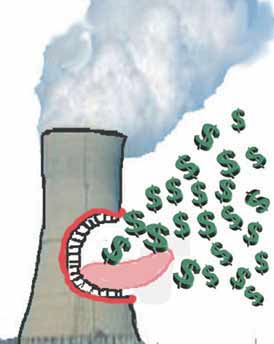
Greater Cleveland Partnership calls for repeal of Ohio nuclear bailout law, By staff | cleveland.com28 Sept 20, CLEVELAND, Ohio – The Greater Cleveland Partnership is calling on Ohio lawmakers to repeal and possibly replace House Bill 6, the $1.3 billion nuclear plant bailout law that federal authorities say was the product of a massive corruption scheme.
“We recommend a repeal and replace stance on HB 6 to remove the alleged stain of corruption on the law and to enable the restoration of the energy efficiency programs supported by our members,” said Joe Roman, President and CEO of the GCP. “Our membership continues to encourage policies that provide incentives for businesses to leverage energy programming to foster growth. We recognize a level of flexibility may be needed to meet those goals, reverse HB 6, and balance Ohio’s energy environment……….
A select committee of lawmakers is considering whether to repeal and replace the law. The committee has held hearings but hasn’t yet recommended specific actions.
The nuclear bailout is funded by new monthly surcharges ranging from 85 cents for residential customers to as much as $2,400 for large industrial plants. In addition to the nuclear plant bailout, House Bill 6 provides subsidies to specific coal and solar plants around the state, dismantles the state’s green-energy standards for utilities, and allows FirstEnergy Corp. and other utilities to lock in a guaranteed level of ratepayer revenue for years to come. https://www.cleveland.com/open/2020/09/greater-cleveland-partnership-calls-for-repeal-of-ohio-nuclear-bailout-law.html
|
|
September 29, 2020
Posted by Christina Macpherson |
business and costs, politics, USA |
Leave a comment
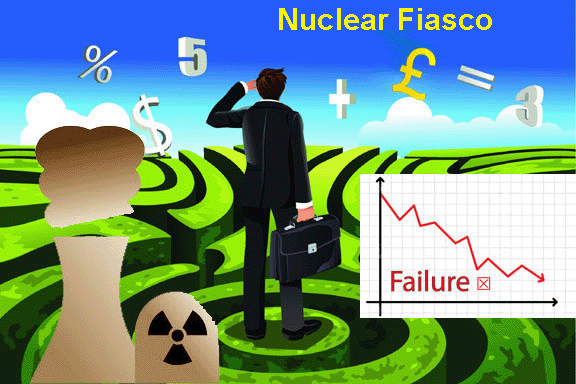
‘Nuclear power is now the most expensive form of generation, except for gas peaking plants’
The latest edition of the World Nuclear Industry Status Report indicates the stagnation of the sector continues. Just 2.4 GW of new nuclear generation capacity came online last year, compared to 98 GW of solar. The world’s operational nuclear power capacity had declined by 2.1%, to 362 GW, at the end of June.
SEPTEMBER 25, 2020 EMILIANO BELLINI PV MAGAZINE AUSTRALIA The levelized cost of energy (LCOE) from nuclear power rose from around $117/MWh in 2015 to $155 at the end of last year, according to the latest edition of the World Nuclear Industry Status Report, published annually by French nuclear consultant Mycle Schneider.
By contrast, the LCOE from solar power decreased from $65/MWh to approximately $49 and that of wind from $55 to $41.
“What is remarkable about these trends, is that the costs of renewables continue to fall due to incremental manufacturing and installation improvements while nuclear, despite over half a century of industrial experience, continues to see costs rising,” stated the report, citing a recent study from financial advisory and asset management firm Lazard. “Nuclear power is now the most expensive form of generation, except for gas peaking plants,” added the study, which did not provide an LCOE for gas peaker generation.
The cost difference is having a huge impact in new generation capacity deployment, with just 2.4 GW of new nuclear plants installed last year, compared to 98 GW of solar and 59.2 GW of wind, according to the report. The world’s operational nuclear capacity fell 2.1% to 362 GW by the end of June. “The number of operating reactors in the world has dropped … to 408 as of mid-2020, that is below the level already reached in 1988 and 30 units below the historic peak of 438 in 2002,” the study reported.
Six nuclear reactors were grid-connected last year: three in Russia, two in China and one in South Korea. At the same time, five nuclear plants closed last year and three more were shuttered in the first half of this year, with no nuclear facilities added from January to June. An additional eight facilities, which had ceased operations, were decommissioned in 2019………. https://www.pv-magazine-australia.com/2020/09/25/nuclear-power-is-now-the-most-expensive-form-of-generation-except-for-gas-peaking-plants/
September 29, 2020
Posted by Christina Macpherson |
2 WORLD, business and costs |
Leave a comment
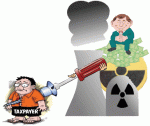 Where’s the proof that nuclear power plants need a bailout? This Week in the CLE, By Laura Johnston, cleveland.com 28 Sept 20, CLEVELAND, Ohio — How do Ohioans know Energy Harbor’s nuclear power plants need a $1.3 billion bailout? Cleveland.com
The company hasn’t said, and we’re talking about the lack of disclosure on This Week in the CLE…….
Here are the questions we’re answering today:
The owner of the nuclear plants getting our $1.3 billion bailout won’t show proof that it actually needs the money: The Wake Up podcast, Sep 28, 2020, By Staff, cleveland.com, CLEVELAND, Ohio — A bill to bail out Ohio’s two nuclear power plants has led to one of the state’s biggest scandals … and it’s unclear if the plants really needed the money.
September 29, 2020
Posted by Christina Macpherson |
business and costs, politics, USA |
Leave a comment

As fossil fuel jobs falter, renewables come to the rescue, BY JEFF BERARDELLI CBS News, SEPTEMBER 25, 2020 “…………. Professor Jay Johnson runs the Wind Energy Technician Program at Lake Region State College in eastern North Dakota, and recently he’s seen a big increase in demand. “Wind energy development has been on a tear the last few years as wind turbines have become unbelievably efficient,” he said.
According to Logan Goldie-Scot, the head of clean power research at Bloomberg New Energy Finance (BNEF), combined solar and wind power capacity has quadrupled since 2010. And in that time, installed wind capacity has increased by 260%, from 41 gigawatts to 106. BNEF expects another 60 gigawatts of wind power to be added in just the next five years.
“The amount of money being invested in wind is staggering, and people don’t realize it, but there is a 100% renewable revolution going on right underneath our feet,” says Johnson, “This all means the cost of wind-generated electricity to homeowners and businesses is the low-cost solution.”
Prices of renewable energy have indeed fallen dramatically. According to BNEF, the cost of generating power from solar photovoltaic (PV) modules has fallen by 90% since 2010, and the price of wind power has been cut in half. In fact, the prices of onshore wind and solar are now even with gas and cheaper than coal and nuclear.
Professor Jeffrey Sachs, a world-renowned economist and sustainable development expert at Columbia University, says clean energy now has several advantages over traditional fuels.
“Renewable energy now is at what is called grid parity. That means it is no more expensive to put up a solar field than it is to put up a coal plant,” explains Sachs. “The only difference is the coal plant will pollute the air, kill the people nearby and create incredible climate damage, while the solar will enable clean air and a safe and stable environment and actually put a lot more people to work.”
Recent figures show renewable energy employs about 850,000 people in the U.S. (not including some 2.3 million jobs in energy efficiency), as compared to a little more than 1 million in traditional oil, gas and coal. But most of the future job growth is projected to come from clean energy sources.
In fact, the fastest growing occupation in the U.S., according to the U.S. Bureau of Labor Statistics, is wind turbine service technician, with a median salary of about $53,000 per year. In total, the wind industry employs 120,000 U.S. workers. Solar installer is the third fastest growing occupation on the list, with a median salary of nearly $45,000.
The growth in renewable energy jobs can be explained by the fact that it is a newer, expanding industry and requires more workers per unit of energy than fossil fuels. Research shows that job creation is inherent in the transition required to combat climate change. “Such episodes of ‘creative destruction’ are often associated with innovation, job creation and growth,” as one study put it. A report by the UK Energy Research Centre concluded that for the same amount of energy produced, renewables required two to five times as many workers as compared to fossil fuels.
A poll released this week by Climate Nexus, conducted by Yale and George Mason University, finds that a large majority of registered voters in the U.S. believe combating climate change would be good for the economy. About 7 in 10 people surveyed expressed the view that government action on climate change would bolster renewable energy, create jobs and help the economy. Only about one-third thought government action on climate would impose burdensome regulations, weakening the economy and job creation.
CBS News asked Goldie-Scot how much the outcome of the 2020 presidential election would matter for the future of renewables. He says that while the industry would undoubtedly benefit more from a Democratic administration due to Joe Biden’s pledge to invest $2 trillion in clean energy and related infrastructure, “the fundamental advantages of renewables will persist despite politics. Renewables are the lowest [cost] form of generation in much of the country and renewables are popular in a number of Republican, and windy, states.”
As just one example, the typically red state of Texas is the clear leader in wind energy, generating three times as much as its nearest competitor. Sachs agrees that Republican-leaning states have the most to gain from the surge in renewables. “They could be the leaders in building the new green economy,” he said. “This is exactly a heartland issue for the United States.”
And back in the heartland, as Johnson sees more and more trainees walking through his door, he says the renewable revolution is well underway. “That’s where the jobs are, that’s where the wind energy is. It’s just free money flying across the sky.” https://www.cbsnews.com/news/renewable-energy-jobs-replacing-fossil-fuel-jobs-oil-wind/?fbclid=IwAR1aPeyOQTnh5UlpQKkRvonfkMOxT4cFwLn7uYMO-T1ckd-ldGCkOGlNNeU
September 28, 2020
Posted by Christina Macpherson |
employment, renewable, USA |
Leave a comment
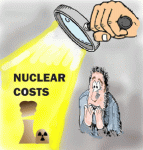 France’s EDF demands clarity on British nuclear power plans Times John Collingridge 27 Sept 20
, French energy giant EDF is set for a showdown with the Treasury over state funding for nuclear power stations as Britain’s atomic future faces a make-or-break moment.Jean-Bernard Lévy, chairman and chief executive of Électricité de France, will speak to chancellor Rishi Sunak via video link on Wednesday to demand clarity over Britain’s plans for funding nuclear power.
The industry was left reeling this month when Japan’s Hitachi quit its Horizon project to build a £20bn plant on Anglesey.
That shock retreat, after years of prevarication by Westminster over state support for nuclear power and turmoil in the Japanese nuclear industry, left only EDF and China General Nuclear with plans for atomic power stations in the UK.
EDF and China are building the delayed and over-budget £22.5bn Hinkley Point C power station in Somerset, but Paris has balked at
the prospect of French taxpayers funding the next nuclear project in Britain.
Instead, EDF, which is 84% owned by the French state, wants British taxpayers to underwrite a new plant at Sizewell in Suffolk. A
proposed new financial structure, the regulated asset base, would levy a tax on UK household energy bills to help pay for the project.
Other options include the British government taking a stake — although that has worried the Treasury, which is anxious about adding to its debt mountain.
EDF declined to comment. With most of Britain’s ageing reactors due to close by the end of the decade, Sunak and Boris Johnson face the dilemma of whether to fund more big nuclear plants, or rely on wind, solar, gas, small reactors and imported power to keep the lights on.
The American government has warned Hitachi against selling the Anglesey site to China, and is understood to be considering bankrolling US companies to take it over. Westinghouse, which makes the AP1000 nuclear plant, and NuScale Power,
which is developing small, modular reactors, are both believed to be
exploring options for the site. South Korea’s Kepco is also understood to
be interested, as is EDF.
https://www.thetimes.co.uk/edition/business/frances-edf-demands-clarity-on-british-nuclear-power-plans-00t6gbmlg
September 28, 2020
Posted by Christina Macpherson |
business and costs, France, politics, UK |
Leave a comment
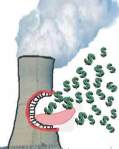 Suffolk’s Sizewell C too expensive, says Sir Ed Davey, BBC, By Vikki Irwin & Chris Bond
28 Sept 20, Former energy secretary Sir Ed Davey has said building a new nuclear power station at Sizewell is “too expensive”.
Instead the new Liberal Democrat leader argues the government should invest more in renewable energy to help boost the economy.
“The economic case for nuclear power is not there any more,” said Sir Ed.
Energy firm EDF, which is behind the £20bn proposals, said the plant on the Suffolk coast would deliver low-carbon electricity.
Sir Ed, energy minister during the 2010-15 coalition government,
approved plans for a new nuclear plant at Hinkley Point in 2013 and secured Chinese investment for the site on the Somerset coast.
But now he said: “The cost of offshore wind energy has fallen dramatically and renewables are cheaper than nuclear.
“We can build them locally, we don’t need Chinese investment. Let’s tap into this energy source that we control, that is clean, green and that creates green jobs in the region.”
Next week sees the deadline for interested parties to register their interest in the planning inquiry into Sizewell C.
It is expected to be about 18 months before a final planning decision is made and the plant would then take 10 years to build………..
September 28, 2020
Posted by Christina Macpherson |
business and costs, politics, UK |
Leave a comment
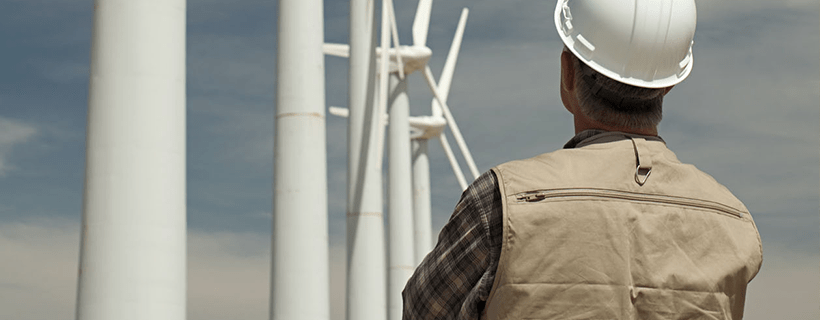 As fossil fuel jobs falter, renewables come to the rescue, BY JEFF BERARDELLI CBS News, SEPTEMBER 25, 2020 In 2011, Don Williams made the long trip from Michigan to North Dakota hoping to capitalize on the Bakken oil boom — to, as he says, “chase oil and make quick cash.” It paid off; for years Williams worked in operations on the oil fields, watching over production and maintaining pump jacks.
To say that Williams worked hard would be an understatement. Putting in 12-hour days, 7 days a week — 84-hour work-weeks were typical. And the work was lucrative. The money flowed as fast as the oil did — until it didn’t. In May, Williams was laid off, along with most of the Bakken workforce, when boom went bust.
But within a week, he made a huge career leap — 300 feet up, to be exact — ascending from the firm grounds of the Bakken Oil Fields to the top of a giant wind turbine to take part in a 12-week training course to become a wind energy technician. In his words, he no longer wanted to “ride the oil waves, the highs and lows,” anymore.
While the jobs are on opposite ends of the energy spectrum — from dirty to clean and from old to new — the mechanical skills Williams gained from his time working in oil helped him navigate the career transition. And lately, many ex-oil workers are taking that same leap in hopes of finding long-term stability — something that is becoming scarcer in fossil fuels.
In the past year, two seismic shocks — a price war between Russia and Saudi Arabia, followed by global pandemic lockdowns — tanked oil demand and prices too, devastating oil and gas production in the Bakken Formation.
From June 2019 through June 2020, U.S. crude oil production fell 38% and natural gas production fell 31%. The unemployment rate in North Dakota rose to 11.3% in June. For the month of August, continued claims of unemployment in North Dakota were nearly 100,000, and about a quarter of those were tied directly to mining, quarrying and oil & gas extraction — the highest unemployment of any sector in the state.
But as luck would have it, fossil fuels aren’t the only energy source North Dakota is rich in. With an average wind speed of 20 mph 300 feet above the ground where the wind turbines churn, North Dakota is prime real estate for wind power. It ranks 10th in wind production in the U.S. with more than 3,000 megawatts (MW) of installed capacity.
Williams says he sees evidence of a renewable revolution right in his backyard, with wind turbines popping up all around his community.
He received his wind technician training at Lake Region State College, a couple hours’ drive east from the Bakken oil fields. To earn a one-year college credit certificate, the cost of the course is about $5,000. Less than a month out of the training program, Williams has already landed a wind technician job at Gemini Energy Services.
Although he says the starting salary does not quite measure up to what the oil fields paid, the trade-off of more time with his family and more stability is well worth it to him. Besides, he’s optimistic about his future financial prospects because he says the industry offers a lot of upward mobility and areas to specialize in…….. https://www.cbsnews.com/news/renewable-energy-jobs-replacing-fossil-fuel-jobs-oil-wind/?fbclid=IwAR1aPeyOQTnh5UlpQKkRvonfkMOxT4cFwLn7uYMO-T1ckd-ldGCkOGlNNeU
September 28, 2020
Posted by Christina Macpherson |
employment, renewable, USA |
Leave a comment
|
‘Nuclear power is now the most expensive form of generation, except for gas peaking plants’
The latest edition of the World Nuclear Industry Status Report indicates the stagnation of the sector continues. Just 2.4 GW of new nuclear generation capacity came online last year, compared to 98 GW of solar. The world’s operational nuclear power capacity had declined by 2.1%, to 362 GW, at the end of June. https://www.pv-magazine-australia.com/2020/09/25/nuclear-power-is-now-the-most-expensive-form-of-generation-except-for-gas-peaking-plants/
The levelized cost of energy (LCOE) from nuclear power rose from around $117/MWh in 2015 to $155 at the end of last year, according to the latest edition of the World Nuclear Industry Status Report, published annually by French nuclear consultant Mycle Schneider.
By contrast, the LCOE from solar power decreased from $65/MWh to approximately $49 and that of wind from $55 to $41.
“What is remarkable about these trends, is that the costs of renewables continue to fall due to incremental manufacturing and installation improvements while nuclear, despite over half a century of industrial experience, continues to see costs rising,” stated the report, citing a recent study from financial advisory and asset management firm Lazard. “Nuclear power is now the most expensive form of generation, except for gas peaking plants,” added the study, which did not provide an LCOE for gas peaker generation.
The cost difference is having a huge impact in new generation capacity deployment, with just 2.4 GW of new nuclear plants installed last year, compared to 98 GW of solar and 59.2 GW of wind, according to the report. The world’s operational nuclear capacity fell 2.1% to 362 GW by the end of June. “The number of operating reactors in the world has dropped … to 408 as of mid-2020, that is below the level already reached in 1988 and 30 units below the historic peak of 438 in 2002,” the study reported.
Six nuclear reactors were grid-connected last year: three in Russia, two in China and one in South Korea. At the same time, five nuclear plants closed last year and three more were shuttered in the first half of this year, with no nuclear facilities added from January to June. An additional eight facilities, which had ceased operations, were decommissioned in 2019.
“The ‘big five’ nuclear generating countries – by rank: the United States, France, China, Russia and South Korea – again generated 70% of all nuclear electricity in the world in 2019,” the report stated. “Two countries, the U.S. and France, accounted for 45% of 2019 global nuclear production, that is two percentage points lower than in the previous year, as France’s output shrank by 3.5%.”
The report added, the average age of the world’s nuclear reactor fleet has reached 30.7 years, with two-thirds of reactors operating for more than 31 years.
The number of reactors under construction rose from 46 to 52 – of which 15, with a total generation capacity of 14 GW, are in China. Most of those projects, however, have suffered years-long delays. Last year, construction started on four plants in China and one each in Russia and the U.K. and work began on a Turkish nuclear plant in the first half of this year.
“The ‘big five’ nuclear generating countries – by rank: the United States, France, China, Russia and South Korea – again generated 70% of all nuclear electricity in the world in 2019,” the report stated. “Two countries, the U.S. and France, accounted for 45% of 2019 global nuclear production, that is two percentage points lower than in the previous year, as France’s output shrank by 3.5%.”
The report added, the average age of the world’s nuclear reactor fleet has reached 30.7 years, with two-thirds of reactors operating for more than 31 years.
The number of reactors under construction rose from 46 to 52 – of which 15, with a total generation capacity of 14 GW, are in China. Most of those projects, however, have suffered years-long delays. Last year, construction started on four plants in China and one each in Russia and the U.K. and work began on a Turkish nuclear plant in the first half of this year.
|
|
September 26, 2020
Posted by Christina Macpherson |
2 WORLD, business and costs |
Leave a comment
 Northampton shuns business with companies involved in creating nuclear weapons, https://www.gazettenet.com/Governor-signs-home-rule-petition-36428827 By GRETA JOCHEM, Staff Writer, 9/24/2020
NORTHAMPTON — Under a new state law, Northampton is allowed to refuse contracts with companies involved in the creation of nuclear weapons.
The act comes from a home rule petition recommended by Mayor David Narkewicz and approved by the the City Council in 2019.
“Basically, under Massachusetts contracting law, you are not allowed to discriminate against one sector or industry,” Narkewicz said, explaining the need for the change.
In July, Gov. Charlie Baker signed an act into law that reads, “the city of Northampton may disqualify from an award of a contract a bidder or vendor who participates in the design, manufacture or maintenance of nuclear weapons.”
Saturday marks the United Nations’ International Day for the Total Elimination of Nuclear Weapons. Rallies will be held in Northampton, Springfield, Sunderland and Greenfield, according to Massachusetts Peace Action. In western Massachusetts, they are hosted by a number of organizations, including The Resistance Center for Peace and Justice and Arise for Social Justice. In Northampton, for example, The Resistance Center for Peace and Justice is holding a rally at L3Harris Technologies at 11 a.m. at 50 Prince Street in Northampton. When L3 Technologies and Harris Corp. merged into L3Harris Technologies last year, the company said it created the sixth-largest defense company in the country and a top 10 defense company worldwide.
Saturday will also be “Nuclear Ban Day” in Northampton, as Narkewicz read a proclamation Thursday declaring it.
Greta Jochem can be reached at gjochem@gazettenet.com.
September 26, 2020
Posted by Christina Macpherson |
business and costs, USA, weapons and war |
Leave a comment

Amid debate over repealing House Bill 6, Energy Harbor still won’t say whether its nuclear plants are profitable
Cleveland. com Sep 25, 2020, By Jeremy Pelzer,
COLUMBUS, Ohio—State lawmakers are looking at whether to keep in place a $1.3 billion public bailout for the Davis-Besse and Perry nuclear power plants along Lake Erie, a law that federal authorities say was corruptly enacted.
But throughout the debate, there’s still a glaring problem: the owner of the nuclear plants refuses to disclose whether they are profitable or not. And so far, there’s been no attempt by state lawmakers to compel the company to release its numbers before the bailout takes effect.
During last year’s debate over whether to pass the bailout as part of House Bill 6, Energy Harbor – then known as FirstEnergy Solutions – asserted it needed public subsidies or it would close the plants. But the company wouldn’t open its books to lawmakers or the public to prove that it actually needed the money, leading legislators to rely on estimates, industry averages and company officials’ word.
|
|
|
September 26, 2020
Posted by Christina Macpherson |
business and costs, politics, USA |
Leave a comment
 A look at Exelon’s 4 economically challenged nuclear plants in Illinois, S & P Global, Author, Anna Duquiatan, 25 Sep 20, Exelon Corp.-owned nuclear power plants in Illinois eyed for early retirement have had declining financial margins of late, according to an analysis using S&P Global Market Intelligence’s plant-level production cost model. ………
Exelon Generation Co. LLC announced Aug. 27 that it plans to retire its 2,346-MW Byron and 1,805-MW Dresden nuclear power stations in September 2021 and November 2021, respectively.
The Exelon Corp. subsidiary added that the 2,384-MW Braidwood Generating Station and 2,313-MW LaSalle County Generating Station are “also at high risk for premature closure,” though the company has not yet projected any closure dates for those plants………
The two-unit Dresden plant in Grundy County, the first of the four northern Illinois plants to enter service, in the early 1970s, is licensed to operate until 2029 and 2031. Braidwood in Will County, Byron in Ogle County, and LaSalle in LaSalle County all began operating in the mid- to late 1980s and are licensed to operate until the 2040s. …………..
Q2: U.S. Solar and Wind Power by the Numbers
Wrestling with the COVID-19 pandemic, solar project developers installed nearly three times as much solar power capacity in Q2’20 compared to the same period a year ago. Meanwhile, the U.S. wind industry posted one of its strongest second quarters on record in 2020, adding 2,369 MW of capacity, and the 2020 development pipeline stands strong at 30,554 MW.
Q2: U.S. Wind Power by the numbers
Essential Energy Insights – September, 2020
Numbers Utility-Scale Solar Surge Reaches 1.6 GW in Q2
Utility-Scale Solar Surge Reaches 1.6 GW in Q2
September 26, 2020
Posted by Christina Macpherson |
business and costs, USA |
1 Comment
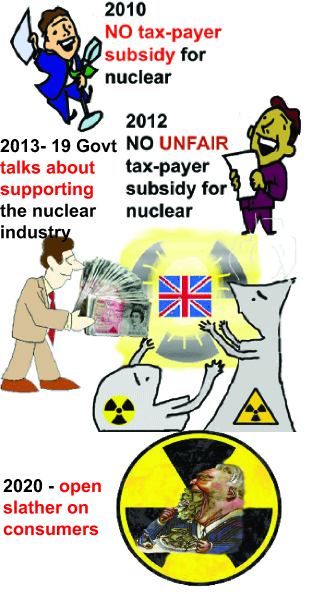 Ministers urged to support new nuclear at a critical time for the industry
The energy giant is pressing the case for a plant at Sizewell but backing from a cash-strapped government could be limited, Sky News, Ian King 23 Sept 20, This is a critical time for the UK’s nuclear energy industry.
The construction of the UK’s first new nuclear power station for a generation, Hinkley Point C in Somerset, is well advanced and EDF Energy, the French-owned energy giant building the plant, is keen to pick up the pace on its next big infrastructure project.
Sizewell C, in Suffolk, is envisaged as a replica project to Hinkley Point C.
..But The future of new nuclear build in the UK has again been thrown into doubt by
last week’s decision by Hitachi, the Japanese company, to abandon the Horizon project – which would have seen new nuclear power stations built at Wylfa Newydd on Anglesey and at Oldbury on Severn in south Gloucestershire.
Meanwhile, a cash-strapped government is unlikely to want to provide the financial support that its predecessors have given Hinkley Point C, under which EDF Energy was guaranteed a minimum price of £92.50 per megawatt hour (MWh), inflation-linked, for 35 years.
September 26, 2020
Posted by Christina Macpherson |
business and costs, politics, UK |
Leave a comment
 NB Media Co-op 22nd Sept 2020,
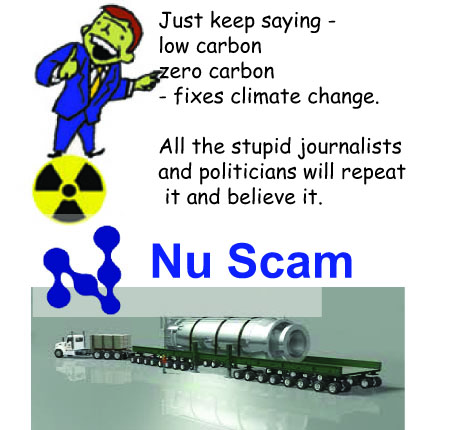
Premier Blaine Higgs has endorsed so-called “small modular nuclear reactors” or SMRs. SMRs represent an untested technology but what we know on the basis of technical characteristics and historical precedent is that they will be expensive and any electricity they generate will not be economical. The nuclear industry is pushing small reactors because large reactors are simply not economical. Constructing nuclear plants is just too expensive—as Ontario’s government found out after its call in 2008 for bids to build two more reactors at the Darlington site.
 Sierra Club Canada (accessed) 23rd Sept 2020
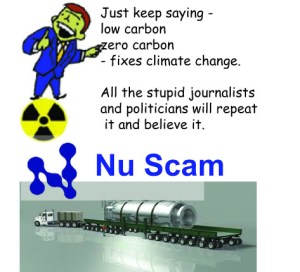
, No plan that gets us to net zero in a reasonable time frame includes new nuclear reactors. Nuclear is far too slow and expensive to deal with the climate emergency. Just like fossil fuel energy, nuclear produces wastes that pose unacceptable health hazards and economic costs.
Radioactive wastes from nuclear power plants have been piling up for over 70 years. Canada still has no long-term strategy to deal with either nuclear or fossil fuel wastes. Building Canada back better means major investments in conservation and renewable energy, providing hundreds of thousands of good green jobs. Global investment in renewable energy and newly-installed renewable capacity has far surpassed nuclear in recent years. Investors are smart: they put their money where it will yield good returns.
https://www.sierraclub.ca/en/new-nuclear-is-not-part-of-path-to-net-zero
September 24, 2020
Posted by Christina Macpherson |
business and costs, Canada, climate change, Small Modular Nuclear Reactors, wastes |
Leave a comment
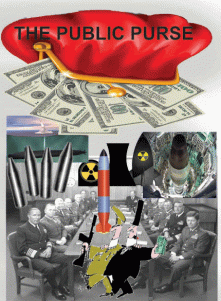 NUCLEAR WEAPONS: NNSA Should Further Develop Cost, Schedule, and Risk Information for the W87-1 Warhead Program, https://www.gao.gov/products/GAO-20-703 NUCLEAR WEAPONS: NNSA Should Further Develop Cost, Schedule, and Risk Information for the W87-1 Warhead Program, https://www.gao.gov/products/GAO-20-703
GAO-20-703: Sep 23, 2020. The National Nuclear Security Administration plans to replace the W78—an older type of nuclear warhead used in intercontinental ballistic missiles—with the W87-1, starting in 2030. But it’s unclear if NNSA can produce enough of the W87-1’s fissile cores in time to meet its planned production schedule.
NNSA estimated that the new warhead could cost up to $14.8 billion, which could make it the most expensive program of this type to date. Upcoming design decisions for the weapon could affect cost. But the agency didn’t have formal plans to assess the costs and benefits of these decisions.
Our recommendations address these and other concerns.
|
|
|
September 24, 2020
Posted by Christina Macpherson |
business and costs, public opinion, weapons and war |
1 Comment
Climate News Network 23rd Sept 2020, The decision by the Japanese company Hitachi to abandon its plan to buildtwo large nuclear plants in the United Kingdom leaves the British government’s energy plans in tatters, and the UK nuclear industry
reeling.
The UK’s official plan is still to build ten nuclear stations in
Britain, but only three schemes remain. Most have now been cancelled by the
companies that planned to build them, principally because they cannot raise
the capital to do so.
This leaves only the debt-laden French giant EdF and
the Chinese state-owned industry still in the field. At the same time,
Britain’s existing nuclear plants are in trouble. They are not ageing
gracefully, cracks in their graphite cores and rust in their pipework
causing ever-lengthening shutdowns and retirement dates to be brought
forward.
The plants at Hunterston B in Scotland, Hinkley Point B in
Somerset in the West of England, and Dungeness B in Kent on the south-east
coast, are all struggling to survive.
https://climatenewsnetwork.net/uk-nuclear-industry-seeks-subsidies-for-survival/
September 24, 2020
Posted by Christina Macpherson |
business and costs, politics, UK |
Leave a comment